Quick Review – Warhammer: The Horus Heresy: Eidolon: The Auric Hammer by Marc Collins

Publisher: Black Library (Audiobook – 22 October 2024)

Series: Warhammer: The Horus Heresy

Length: 6 hours and 26 minutes

My Rating: 4 out of 5 stars

Amazon

2024 was a great year for Warhammer fiction, especially as the Black Library released a ton of awesome books across the various sub-series and franchises, including The Horus Heresy series, which serves as a major prequel to the Warhammer 40,000 books I usually look at.  One of the last releases of the year was The Horus Heresy character novel, Eidolon: The Auric Hammer.  Written by Marc Collins, who previously impressed me with his Warhammer Crime novel, Grim Repast, Eidolon: The Auric Hammer was a fast-paced and compelling read that dove into the twisted mind of an ambitious traitor as he travels to the final battle of the great war.


Plot Synopsis:

A Horus Heresy Novel

Lord Commander Primus Eidolon has claimed many titles along the annals of his infamy. He is the Exemplar and the Risen, the Soul-Severed, and the Auric Hammer. Now, fallen far from his primarch’s grace, he carves a path to Terra, where the culmination of Horus’ grand heresy awaits.

READ IT BECAUSE

Eidolon has been a key figure of the Emperor’s Children Legion from the beginning. Now, on the eve of the Siege of Terra, he’s fallen far from grace and is facing a long overdue reckoning for his many misdeeds during the Horus Heresy. Can he come to terms with his tainted legacy?

THE STORY

Coaxed and goaded by the wiles of the warp – and an entity whose whispered truths stretch even his credulity – Eidolon finds himself stranded around the world of Tatricala, where the ghosts of his past haunt every fated step. Now he must choose which life he wants to lead… and how much of his soul he is willing to sacrifice for it.

If Eidolon cannot banish his daemons, then they will surely take him for their own.


Eidolon: The Auric Hammer
was an excellent addition to the canon, and one that will really appeal to those readers who dove into the extended Horus Heresy series.  Like many of the Horus Heresy character books, The Auric Hammer focuses on one of the interesting supporting characters in the larger franchise and provides a compelling story around them, while also diving into their past.  In this case, Marc Collins tells a quick and entertaining story around Eidolon, one of the commanders of the now fallen Emperor’s Children legion, who has given in to the hedonism and worship of Slaanesh, the Chaos God of pleasure and obsession.

Collins does a great job effectively introducing the character of Eidolon and thrusting readers into his personal madness.  I must admit that I haven’t read any of the other Horus Heresy novels before, so I wasn’t especially familiar with the character of Eidolon, which did slightly reduce my appreciation for this book.  However, readers with even moderate knowledge of Warhammer 40,000 lore and the Horus Heresy can easily follow along with Collin’s quick story without too much difficulty.  Collins breaks this into a couple of fun parts, with a fight against daemons on the protagonist’s ship leading to an impromptu invasion of an isolated planet alongside “allies”.  However, nothing goes to plan as Eidolon and his comrades find themselves best by the dark plots of a daemonic entity who desires to destroy him.

This last third of the book is probably the best, as Collins envisions a series of daemonic encounters that play in the ravaged psyches of the various Emperor’s Children characters.  While I had a hard time connecting to some of the supporting cast members (Collins might have been better off with a more tightly focused narrative), it was interesting to see their various struggles, especially as it effectively showed how far their legion had fallen.  Eidolon’s personal inner struggle was the strongest part of the book, especially as Collins dove into his many issues, including his ambition, resentments and the anger he has with the various father figures in his life.  The protagonist comes out of this book stronger, and I particularly loved the reveal about who was behind everything at the end of the novel.  The confrontation that Eidolon had with this figure was extremely entertaining, and you come away appreciating just how suicidally stubborn Eidolon can be.

As is my habit with most Warhammer fiction, I chose to check out The Auric Hammer on audiobook, mainly because it was voiced by one of my favourite audiobook narrators, Toby Longworth.  A very effective narrator, Longworth perfectly captures the various elaborately dark characters featured with The Auric Hammer, and I love how he brings readers into the outrageous and grim Warhammer universe.  Longworth’s already impressive voice is enhanced in various sequences by cool sound effects that help to showcase the various daemonic creatures that the protagonist encounters.  These effects and Longworth’s fantastic voicework really make you appreciate the eldritch power and inherent evilness the various figures they represented, and I felt it did wonders on bringing me further into the narrative.  Combine that with the excellent way in which Longworth captures the intense dark emotions of Eidolon, including his frustration and disgust at his Primarch’s actions and abandonment of him, and this proves to be an outstanding and addictive audiobook.  Featuring a relatively short runtime of just under six and a half hours, The Auric Hammer is an easy audiobook to get through quickly, and I had a lot of fun knocking it off in a couple of enjoyable sessions.

Overall, Eidolon: The Auric Hammer was an awesome and exciting Warhammer audiobook from Marc Collins that is worth checking out.  Cleverly focusing on an intriguing figure in the canon while also expanding on the massive Horus Heresy series, The Auric Hammer really grabbed my attention, and I had a great time getting through it.  An excellent Warhammer book to check out, especially if you have been enjoying the other Horus Heresy books.

Amazon

Warhammer 40,000: Daemonbreaker by Jude Reid

Publisher: Black Library (Audiobook – 24 August 2024)

Series: Warhammer 40,000

Length: 7 hours and 27 minutes

My Rating: 4.25 out of 5 stars

Amazon

Gird yourself in faith, fury and fire, as fantastic author Jude Reid presents her latest Warhammer 40,000 novel, Daemonbreaker, which follows a complex figure as she blazes forth into the darkness of the Warhammer 40,000 universe.

After having a wonderful time with Warhammer 40,000 novels like Deathworlder by Victoria Hayward, Lord of Excess by Rich McCormick, Siege of Vraks by Steven Lyons and Oaths of Damnation by Robbie MacNiven, there was no way I was going to stop loving this franchise this year, so I eagerly dove into the cool new audiobook, Daemonbreaker by Jude Reid.  Reid, who really impressed me last year with Creed: Ashes of Cadia (one of my favourite debuts of 2023), presents an intriguing and dark novel that follows members of the Adepta Sororitas, the Warhammer 40,000’s resident nuns-with-guns.

On the battlefields of faith and fury, few warriors in the Imperium of Man can match the battle prowess of Celestian Sacresant Aveline of the Order of the Sacred Rose.  A deadly sister of the Adepta Sororitas, devoted to killing the mutants, witches, heretics and daemons that oppose the Emperor, Aveline is always eager for greater combat, and soon finds the ultimate opportunity she has been waiting for, defending the fortress world of Cadia from the ravening forces of Chaos as they embark on their 13th Black Crusade.

However, before Aveline can join her sisters in the massive battle for Cadia, she has been assigned final sacred duty.  Sent to Orrison VIII, a minor shrine world in the Cadia Gate system, Aveline is tasked with securing the desert world for the Emperor and scouring the forces of Chaos from its surface.

Desperate to find glory on Cadia, Aveline chafes at the slow speed of the mission on Orrison VIII, especially as their primary target, a deranged Chaos sorcerer, is content with playing a slow game of cat-and-mouse with her.  However, when Aveline finally gets her chance to face the enemy, she finds herself confronting a dark foe who knows her name and has a sinister scheme to destroy her and her sisters through her own arrogance.  If Aveline is unable to stop the dark Chaos forces before her, a deadly foe will be unleashed upon Holy Terra that could destroy the heart of humanity as it faces its darkest moment.

Daemonbreaker was a fantastic and compelling Warhammer 40,000 novel that expertly features an iconic faction and looks at the faith and emotions lying beneath their militant surface.  Jude Reid continues to impress with this cool novel and I had an excellent time getting through the intense and exciting story, which seeks to bring to life the figure of Celestian Sacresant Aveline who recently got her own model in the game.

I must admit, before diving too far into this review, that I sometimes found it a little hard to connect with Daemonbreaker at times, primarily because I’ve never been a massive fan of the Adepta Sororitas as a faction.  They’re honestly a little too one-note for me at times, and I never been especially drawn to their fiction as a result.  However, I felt that Reid was able to lift her narrative above some of the inherent limitations of this faction throughout the course of the book.  It helped that Daemonbreaker was a relatively shorter Warhammer 40,000 novel, so Reid sped up the plot, which in turn kept the reader from getting bogged down.  The resulting story is exciting and intriguing, as author quickly sets up the primary plot of the hunt for Chaos on Orrison VIII, while some initial compelling action set pieces help grab the reader’s attention.

The main narrative moves at a quick pace, with the protagonist leading her force into several encounters out in the desert while battling her own emotional turmoil and disappointment.  However, everything in the story changes around the halfway point of Daemonbreaker, when the author decides to throw the entire status-quo of the book on its head.  Thanks to a combination of the protagonist’s mistake and a major Warhammer 40,000 universe event, everything gets substantially more desperate for the protagonists, and Reid goes a little nuclear stacking the odds against them.  While there are a few gaps in the storytelling, the second half of Daemonbreaker is extremely fun and exciting, as the protagonists face impossible odds and encounter the very worst the universe has to offer.  There is a ton of tragedy and some horrifying moments as the reader races towards the end of the book, and it proves harder and harder to put it down as you near the conclusion.  Reid loads up some big final battles that showcase just how grim things can get in this universe, before the expected miracle brings things to a close.  Readers come away from Daemonbreaker feeling pretty satisfied with how things come to an end, although I did feel that part of the plot was a bit thin in places.

Reid has a great handle on writing Warhammer 40,000 fiction, and this is on display again in Daemonbreaker.  There is a notable cutdown in the exposition and Reid brings the reader right into the action and carnage which made it an easier book to get through, especially considering the faction focus.  The various action sequences come across as gritty and powerful, and you can feel the raw emotions of the protagonists as they encounter their dark opponents and the dreadful things they need to overcome.  Reid ensured that this was a concise and well-contained narrative through her use of two point-of-view characters, and I appreciated the excellent alternating perspectives.  Both protagonists were very well written, with the main story around Celestian Sacresant Aveline being the most prominent.  A deadly, if arrogant, sister of the Emperor, Aveline finds her devotion challenged by her own selfish desires and issues, which leads to dark things in the middle of the book.  While I didn’t always connect with Aveline as a character, I felt that Reid wrote a rather good redemption arc around her, and she becomes a lot more likeable and relatable in the second half of the book, especially as she comes to recognise her hubris and flaws.  Recognising these things allows her to fully appreciate her fellow sisters and leads her into the right place for the final arc of the plot to unfold.

Aveline is well balanced by the second perspective character, Novitate Gwineth, a young, keen and determined figure, whose eagerness to become a member of the Adepta Sororitas is drawn from her impending doom.  Reid writes an interesting and unique Warhammer storyline around Gwineth having haemophilia, which ensures that her days on the battlefield and in life are limited.  Wishing to die as a full sister, Gwineth’s keenness becomes a key part of the plot, and I loved seeing her grow into the role she wishes, especially as her innocence and determination are a driver for the rest of the cast.  The rest of the characters within Daemonbreaker are also very fun, if sparingly used.  I do perhaps wish that the author had added in additional perspective, preferably from a villain’s point of view, as I feel that would have enhanced the narrative to a degree, especially to provide some missing plot answers or explain the motivation and plans of the antagonists.  However, for the most part, this was a very well-written story with some intriguing protagonists, and one that I had an excellent time getting through.

The author has really gotten the hang of showcasing the grim and intriguing Warhammer 40,000 universe, and I loved some of the directions and figures that she featured within Daemonbreaker.  I especially felt that Reid does an excellent job examining Adepta Sororitas faction, the Sisters of Battle, within the book.  The various different units and figures of the faction are dropped into the plot fairly seamlessly, and even someone unfamiliar with the Adepta Sororitas unit types can easily appreciate their role in the plot.  I must also once again emphasise that Reid was able to overcome my disinterest in the classic Adepta Sororitas depictions with her clever narrative and compelling writing.  While this was a great Warhammer 40,000 novel, I feel that Daemonbreaker is perhaps a book best left to established Warhammer fans, as Reid does feature some heavy lore elements, and Adepta Sororitas players will probably get the most out of it.  Still, a new reader can easily come along and have a lot of fun with Daemonbreaker, as Reid’s story gets quite intense, personal and brutal.  You may have to ignore the fact that Daemonbreaker mainly written to promote a new model released in the tabletop game, but if you can get past that, this is a book well worth checking out.

Naturally, I ended up grabbing Daemonbreaker on audiobook, as this format is the absolute best way to enjoy a Warhammer book.  I really cannot emphasise how much more epic a Warhammer 40,000 tale comes across when it is read out to you, and I always have so much more fun listening to it.  This is particularly true when it comes to all the epic action, and I felt that the carnage in Daemonbreaker was very strongly enhanced by the audiobook format, with listeners also able to appreciate the compelling characters and intriguing lore while it’s being read out to you.  With a runtime of around seven and a half hours, this is a relatively short audiobook, and one that listeners can really power through, especially when they get caught up in the action and compelling character arcs.

One of the big highlights of this audiobook for me was the fact it was narrated by the appropriately named Faith Alabi, who really dives into the complex Adeptus Sororitas characters with her voice.  Each of the key protagonists is given their own unique voice, and I liked how well Alabi expressed their holy rage, and personal issues.  Alabi’s excellent voice work is cleverly supported by some fun additional audio enhancements, which I thought was a fun way to express some unique elements of the Warhammer 40,000 canon.  For example, the cybernetic figures, such as members of the Adeptus Mechanicus, have a noticeable robotic voice modulation that really tries to capture their machine nature, while communication occurring over vox-casters (radios), are filled with static and sound effects to emulate how the voices would sound in real life.  In addition, certain audio effects give dark and otherworldly voices to the antagonists, such as a particularly booming tone that makes the dialogue of a Chaos sorcerer antagonist that more impactful, or freaky vocal effects that make a major daemon seem even more powerful.  These audio effects work extremely well alongside Alabi’s narration, and I really appreciate the effort the producers made to drag listeners further into the story.  As such, those who decide to check out Daemonbreaker on audiobook are in for a very fun treat and this is such an awesome way to enjoy this fantastic addition to the Warhammer 40,000 canon.

Daemonbreaker was another amazing Warhammer 40,000 outing from Jude Reid, and one I was very glad I checked out.  The author effectively brings the main character to life in this book while also showcasing a compelling and intense Warhammer narrative of sacrifice, tragedy and holy war.  As such, Daemonbreaker is an excellent read for all fans of Warhammer 40,000 fiction, and I cannot wait to see what Reid takes on in the future.

Amazon

Warhammer 40,000: Renegades: Lord of Excess by Rich McCormick

Publisher: Black Library (Audiobook – 6 April 2024)

Series: Warhammer 40,000: Renegades – Book Two

Length: 14 hours and 17 minutes

My Rating: 5 out of 5 stars

Amazon

Prepare to break the bounds of sensation, desire and treachery in the amazing Warhammer 40,000 novel, Lord of Excess by Rich McCormick, the second book in the fantastic Renegades series.

I have been having a great time with the huge variety of unique and elaborate Warhammer 40,000 books coming out in recent years, and it is always fun to see the impressive reads the franchise is producing.  One of the things I particularly enjoy about the Warhammer 40,000 fiction machine is the way in which it gives new authors the chance to shine, with several talented authors writing their very first book as part of the Warhammer canon.  I have already talked about one particularly good Warhammer 40,000 debut this year with Deathworlder by Victoria Hayward, but another incredible first novel I had the great pleasure of reading was Lord of Excess by new author Rich McCormick.

Lord of Excess was an exceptional book that was released as part of the loosely connected Renegades series that looks at a different band of traitor Space Marines as they make their dark way through the universe.  For example, the first Renegades book, Harrowmaster by Mike Brooks, looked at the nefarious Alpha Legion, and I am sure that future entries will dive into the other traitor legions with some fun stories.  Lord of Excess is the second Renegades book, and it provides the reader with an outstanding and unique story focussed on the ultimate beings of excess, the Emperor’s Children.

At the dawn of the Imperium, the Emperor’s Children were the master of mankind’s most loyal and revered Space Marine Legions, dedicated to the fight for humanity while seeking perfection in all things.  However, during the tumultuous events of the Horus Heresy, the Emperor’s Children followed their Primarch into treachery, and turned against their Emperor, falling into the service of the ruinous powers of Chaos.

Now, millennia later, the Emperor’s Children are a twisted remnant of their former glory.  Scattered into smaller warbands, the Emperor’s Children now only seek pleasure and sensation in hedonistic service to the Chaos God Slaanesh, the lord of obsession and excess.  One such band is the feared and infamous group known as the Adored.  Lead by the tainted Space Marine Xantine, the Adored has ravaged the galaxy for centuries, taking slaves and bringing untold torment, but Xantine has never found what he truly desires, until now.

Suddenly dropped out of the Warp, the Adored find themselves in orbit about the isolated planet of Serrine.  A wealthy and corrupt planet of the Imperium, Serrine has been long cut off from the rest of humanity due to corrupted currents of the Warp.  Sensing the opportunity to carve out a place for himself, Xantine decides to take control of Serrine, and turn it into the perfect society, dedicated to loving him.  However, making true perfection is an impossible task, and Xantine soon finds his rule challenged by both the population of Serrine and those closest to him.  Worse, there are darker forces at work within the bowels of Serrine, and soon the world will be engulfed in perfect destruction.

Lord of Excess was an exceptional and impressive Warhammer 40,000 novel that achieved so very much for the reader.  Featuring a complex and compelling tale of betrayal, deceit and corruption, loaded with fun characters and larger-than-life personalities, Lord of Excess was an entertaining and elaborate read from the very start, and I could not get enough of it.

I really loved the story contained with Lord of Excess, and I find it hard to believe that this was McCormick’s very first novel.  The plot of Lord of Excess is an elaborate and continuous tale of woe and failed ambition as it charts main character, Xantine of the Emperor’s Children, as he attempts to bring perfection to the world of Serrine.  Starting off by introducing Xantine and his renegade Space Marines, you are soon shown the world of Serrine, an isolated and mismanaged Hiveworld with plenty of its own problems, including an uprising from a genestealer cult.  Taking advantage of these chaotic events, an obsessive Xantine leads his mostly apathetic Emperor’s Children to the planet’s surface, telling the locals they are there to save them.  This proves to be an intriguing start, as the reader is shown a battle between two very different group of villains, which is essentially the equivalent of the cenobites from Hellraiser facing off against xenomorphs from Alien (with both sides using a lot of purple).  This fight against the genestealers is a fun first part of the book, and I honestly thought that McCormick was going to stretch that conflict out for the entirety of Lord of Excess.  However, the author instead chooses to cleverly end this conflict about a third of the way through the book, and the rest of the novel goes in some very interesting directions.

Following this introduction, Lord of Excess than goes through a series of time skips, as you follow the unlucky course of Serrine under the “benevolent” rule of the Emperor’s Children.  Each new version of Serrine you see is somehow worse the previous version, and it proves extremely entertaining to watch the inherent downsides of the protagonist’s twisted version of perfection.  The plot cleverly rotates between the machinations of Xantine and his Adored as they fight over the course of their warband, and several intriguing human inhabitants of Serrine, whose reaction to the fate of their planet varies across the emotional spectrum.  The plot goes in some very interesting and entertaining directions, as Xantine finds himself continuously beset by betrayal, mostly of his own making, while many others are driven to extreme lengths by Xantine’s actions, and other malign foes hiding beneath Serrine’s surface.  Things continuously get darker and darker as the plot continues, leading up to a brutal and amusing conclusion.  I loved the various elaborate twists and captivating revelations that McCormick cleverly worked into the plot, and his accompanying character work really helps to sell it.  The book ends on a fantastic note, with devilish and deserved endings for many members of the cast, and the ultimate fates of everyone really reminds you that Lord of Excess is a grimdark book focussing on deranged villains.

McCormick really showcased his effective and powerful writing style in Lord of Excess, and I loved the elaborate and multifaceted book that he ended up creating.  The fantastic story has so many deep elements to it, and it transcends the typical action-focused Warhammer fiction by providing nuanced portrayals of society, human nature, and the impossible search for perfection.  That’s not to say that there isn’t action in Lord of Excess, as McCormick loads the book with multiple over-the-top and entertaining fight sequences that prove hard not to love.  However, he also balances these battles with intriguing character work, long-running elaborate story elements, and complex depictions of intriguing Warhammer features.  The way in which the author cleverly shifts the narrative around several fantastic characters works to create a fun and layered story with many moving parts to it.  I also love how descriptive and visual McCormick got at times.  The author clearly had fun describing the many excesses and mutations of the Adored, and you really got a clear and vivid sense of the twisted nature of the beings involved.  This ended up being such an outstanding read, and McCormick did such a great job bringing his elaborate story to life in the absolute best way.

I felt that Lord of Excess was a pretty awesome Warhammer 40,000 novel, that will really appeal to a varied audience.  Established Warhammer fans will love the fantastic depictions of the Emperor’s Children featured within this book, and I love how well McCormick captured the complexities of these renegade Space Marines and the depths to which they have sunk.  While he doesn’t do a full deep dive into the history of the Emperor’s Children, McCormick provides some detailed flashbacks into their past, that Warhammer readers will appreciate, which also providing some good context for new readers.  While this book did spend a lot of time examining the Emperor’s Children, it also featured its own unique and clever narrative, which really utilised the grimdark nature of the wider Warhammer setting to its advantage.  Readers are gifted by a truly complex and intense read, and I felt that Lord of Excess is an amazing example of just how good a Warhammer 40,000 novel can be.  This would be a pretty good entry point for new readers keen to check out the elaborate Warhammer 40,000 fictional universe, especially as you can get an amazing sense of the overall cruel, deadly and often ironic nature of this fantastic overarching setting.

Easily the key strengths of Lord of Excess were the elaborate, distinctive and damaged characters that McCormick centred his story around.  There are some brilliant characters featured in this book, from ancient traitor Space Marines lost in their own obsessions, to the normal inhabitants of Serrine, whose lives are irrevocably turned upside down by the arrival of the Adored.  These elaborate character arcs are very intriguing, and McCormick expertly features them throughout his story, ensuring that the reader becomes intrigued by the fates of these various figures.  The most prominent character is the Adored leader, Xantine.  An ambitious and twisted being, Xantine finds himself drawn to the world of Serrine and sees it as an opportunity to create a perfect world, much like the previous planets the Emperor’s Children called home.  Xantine proves to be an intriguing central figure for the book, especially as you get drawn into his obsession and the disdain of his followers for his vision.  Thanks to the machinations of the daemon S’janth, who shares Xantine’s body, you get some fascinating insights into this character’s mind, and you soon appreciate the depths of his determination to be perfect, which stems from his daddy issues and dark personal history.  I loved seeing how the events of the book were driven with this figures love of perfection, and Xantine proved to be an excellent dark heart to this entire story.

In addition to Xantine, Lord of Excess features several other great characters, all of whom are damaged in fantastic and intriguing ways.  This includes the various members of the Adored, each of whom has their own unique obsessions and focuses.  McCormick really had fun when it came to these corrupted figures, and there are some delightfully over-the-top characters as a result.  These other members of the Adored often come into conflict with Xantine, primarily due to their incompatible obsessions, and I loved the barbed interactions that followed, especially as Xantine both loves and hates his fellow renegades.  While several of these characters stood out, the best one was probably Vavisk.  Vavisk, a Noise Marine, is obsessed with finding the perfect sound, and often finds himself lost in his horrifying music.  However, Vavisk is also Xantine’s closest friend, and the unique bond of brotherhood between these two figures, proves to be a key part of the book, especially as the potential for it to break is always there.

Other major characters include several inhabitants of Serrine who attempt to survive the actions of Xantine.  Due to a creation myth, many people on Serrine initially see Xantine as a destined saviour, and the eventual revelation of his true nature leads to much heartache for them.  These characters provide an outstanding alternative perspective to that of Xantine and the other Adored, and I loved seeing the various reactions to the evil that came to their planet.  Key figures include the young man Arqat, whose rage at the injustices performed against him drives him to some dark places.  The mysterious Cecily founds salvation and escape thanks to the patronage of Xantine, although her loyalty costs her deeply.  While the foppish noble Pierod, seeks to take advantage of the arrival of the Adored, which has blistering ups and downs for him.  I really enjoyed these three human characters, and their unique storylines, some of which were nearly as extensive as Xantine’s, helped to turn Lord of Excess into a particularly brilliant read as you get drawn into their various tales of woe and opportunity.  While Pierod’s story was probably the most entertaining, due to his naked ambition and greed, you honestly connect to all three of them, and it proves fascinating to see where their encounters with the Adored takes them.  McCormick writes some grim and fitting fates for all three of them, and the other humans of Serrine, and seeing the journey they take to get there, is so damn entertaining.

As with most Warhammer 40,000 novels I enjoy, I ended up grabbing Lord of Excess on audiobook, which is just the best way to appreciate a piece of Warhammer fiction.  Coming in with a runtime of over 14 hours, the Lord of Excess audiobook is a decent length, but one you can get through quickly once you become caught up in the outstanding plot.  I love how well this format highlighted the epic narrative featured with Lord of Excess, and you get a real sense of the plot’s chaotic delights, unnatural horrors, and devilish figures when they are read out to you.  It helped that the Lord of Excess audiobook was helmed by one of the very best Warhammer 40,000 narrators, Richard Reed.  Reed has been killing it in recent years with his work in Warhammer 40,000 fiction, including The Infinite and the Divine by Robert Rath, Ruin and Reign by Nate Crowley and Grim Repast by Marc Collins, all of which were greatly enhanced by his impressive voice work.  His work in Lord of Excess is particularly awesome, as he once again produces an impressive range of unique voices to fit the big personalities of the plot.  This includes multiple mutated and utterly corrupted Space Marines, and Reed provides very fitting voices for them, as well as the unlucky humans caught up in their machinations.  The over-the-top story comes out so much better because of Reed’s compelling narration, and I love how effectively he captured the various insane figures.  This amazing voice work turned the Lord of Excess audiobook into something very special, and I had an exceptional time getting through it.

Lord of Excess by Rich McCormick is an absolutely brilliant and amazing piece of Warhammer 40,000 fiction that I could not get enough of.  Expertly combining elaborate elements of the Warhammer 40,000 canon with a complex narrative and darkly damaged characters, Lord of Excess was so much fun to read, and it proves impossible not to get caught up in this epic debut.  This might be one of the smartest and most compelling pieces of Warhammer 40,000 fiction release so far in 2024.  A truly outstanding Warhammer 40,000 book from a particularly amazing new author, Lord of Excess comes very highly recommended, and Rich McCormick is an author with big things in his future.

Amazon

Warhammer 40,000: The Fall of Cadia by Robert Rath

Warhammer 40,000 - The Fall of Cadia Cover

Publisher: Black Library (Audiobook – 5 August 2023)

Series: Warhammer 40,000

Length: 19 hours and 42 minutes

My Rating: 5 out of 5 stars

Amazon

Cadia Stands!  I ended 2023 on a very high note with one of the best Warhammer 40,000 novels of the year that follows one of the biggest events in the franchise’s recent lore, The Fall of Cadia by Robert Rath.

There were several amazing Warhammer 40,000 novels released in 2023, with some of my favourites including The Lion: Son of the Forest and Warboss by Mike Brooks, The King of the Spoil by Jonathan D. Beer and Cypher: Lord of the Fallen by John French, just to name a few.  However, in terms of sheer scale, epic battles, and larger-than-life characters, my favourite will have to be The Fall of Cadia.  As the name suggests, The Fall of Cadia follows the final battle for the planet of Cadia at the end of the 13th Black Crusade, which was a major campaign in the Warhammer 40,000 tabletop game.  The original 13th Black Crusade campaign happened back in 2003, with the official result being something of a draw.  However, in 2017, Games Workshop retconned the campaign to result in a much more substantial Chaos victory, which ended up having substantial impacts on the wider lore of the franchise, effectively reshaping the entire Warhammer 40,000 universe.

This change ended up being a pretty significant event, and Games Workshop provided some major write-ups about it that summarised the events and their explosive aftermath.  Indeed, the lore events initiated in this event have already been featured in several novels, and most of the current Warhammer 40,000 fiction examines the consequences of this campaign.  However, there has yet to be a novel solely dedicated to trying to capture the entirety of the action at the end, until now with The Fall of Cadia by Robert Rath.  Rath was a great choice of author to write this book as he is a truly amazing author of Warhammer 40,000 fiction.  His previous novels, Assassinorum: Kingmaker (one of my favourite books and audiobooks of 2022) and The Infinite and the Divine, have both been exceptional five-star reads, telling elaborate, character-driven stories that cleverly capture complex aspects of Warhammer 40,000 lore and turn them into impressive and addictive reads.  As such, he was the perfect choice to write The Fall of Cadia and he succeeded in creating a deeply moving and epic novel that perfectly brought the chaotic events that ended this infamous war to life.

In the far future of the 41st Millenium, few battlefields are more significant or more soaked in blood than that of Cadia.  A fortress world for the Imperium of Man, Cadia stands in the shadow of the Eye of Terror, a blazing rift that serves as a gateway into the Warp and the realm of the Chaos gods.  For any substantial invasion by the forces of Chaos into the Imperium to be successful, Cadia needs to be taken and destroyed, and for that task the Chaos Gods have chosen the Warmaster of the Black Legion, Abaddon the Despoiler.  Abaddon is a legendary warrior of hatred and spite who alone is capable of welding together the unruly and contentious forces of Chaos.  Over the millennia, Abaddon has launched 12 Black Crusades against Cadia, leading an unholy alliance of monsters, daemons, cultists and traitor Space Marines to battle.  However, each time Cadia has held, at great cost to the desperate Imperial defenders.  But now, as the forces of Chaos appear stronger than ever before, a 13th Black Crusade has been declared, one that looks set to destroy Cadia forever.

The Fall of Cadia starts well into the 13th Black Crusade, as, after weeks of heavy fighting, the forces of Cadia and humanity once again appear victorious, with the armies of Chaos retreating on all fronts.  However, despite the apparent victory over the heretics and the dark gods of Chaos, Lord Castellan Ursarkar Creed is uneasy, believing that the victory was too easy.  As the celebrations continue, Creed is soon proved right, as the Eye of Terror disgorges a new enemy force unmatched in size and deadly potential since the legendary Horus Heresy.

At its head flies a dread Blackstone Fortress, an alien superweapon capable of intense destruction and now crewed personally by Abaddon.  Faced with this threat, Creed attempts to bring together the various elements of humanities defenders, including legendary Space Marines, virtuous Sisters of Battle, the inhuman soldiers of the Adeptus Mechanicus, and the outmatched by steely rank-and-file troops of Cadia, determined to save their home.

As the final invasion of Cadia begins, Creed organises the defence the best he can to hold back the oncoming horde on land, in the sky, in space, and even far behind Cadian lines in their seemingly safe cities.  If Creed has any hope of succeeding, he will need to bring together the scattered armies of the Imperium on Cadia into a single cohesive force, but not all of the defenders are fighting for the same goals.  Even if these armies come together, can the legendary Creed hold off the fury of Abaddon and his dark gods?  Cadia’s last stand has begun, but who will be left alive at its end?

Robert Rath continues to showcase just how varied and impressive his talent for writing Warhammer 40,000 fiction is as he captures the incredible events of the last siege of Cadia.  The Fall of Cadia is epic in every way possible, as it presents the reader with a great coverage of these key lore events and the characters involved.  Elaborate, intense, and featuring so much damn carnage and war, The Fall of Cadia is an incredibly addictive read that got a very easy five-star rating from me.

I think it is important to point out that Robert Rath had a difficult task ahead of him when he was chosen to novelise the events surrounding the end of the 13th Black Crusade.  A lot of detailed lore has been written around this event, not only in the various guides, rulebooks and other material associated with the tabletop game but also in several years worth of novels and extended fiction that focused on the aftermath of the war.  Any novelisation about these events ran the risk of being a stale retelling of events that all Warhammer 40,000 fans already know about.  However, Rath rose to the challenge and presented a powerful, intense and memorable depiction of the events that really drags the readers in while showing just how incredible and epic a piece of Warhammer fiction can be.

To tell the events of The Fall of Cadia, Rath elected to cover everything in a massive, multilayered, character-driven narrative, told from every perspective imaginable.  Starting towards the final days of the battle, when Abaddon unleashes his true invasion of Cadia, the reader is soon engrossed a range of different storylines that cover many different angles of the battle.  Not only do we get to see the overall strategy of both sides but the reader is also thrust into personal wars and fights across the theatre.  So many amazing moments are covered, including a desperate last stand in the mountains, battles in the sky and space, Chaos infiltration in the cities, criminal enterprises, even internal dissension amongst the Chaos command.  These scenes are usually shown through the eyes of a complex characters, whose desperate fight for Cadia helps to define them and presents the reader with some impressive and captivating character arcs.  All these varied conflicts are expertly portrayed by Rath, who does a wonderful job capturing the intensity, brutality and lack of humanity involved in warfare, as his characters suffer on every battlefield imaginable.  The sheer epic and destructive nature of these conflicts really come across in Rath’s writing style, and I honestly visualised many of the scenes being described in cinematic detail in my head.

The first half of the book primarily focuses on these various scattered storylines, and it was a lot of fun to see the different theatres of war, especially as you start to get attached to the major characters.  All the battles featured are pretty awesome and intense in their own way, and I really have to emphasise just how skilled Rath is at bringing all the different elaborate bits of combat to life.  The complex story pieces start to come together in the second half, especially as each of the characters find themselves drawn to the same battlefields.  I really appreciated how the storylines tied together, and there are some brilliant moments featured here.  I also felt that the multiple deus ex machina moments towards the conclusion of a big battle sequence that Rath needed to include because they were part of the lore was handled about as well as they could be.  Rath did some good set-up for the most important of them earlier in the plot, and I liked how in many instances he tried to examine it from the perspective of the common soldier looking for miracles, so it often did not seem too ridiculous.

Everything leads up to the big final battle in the last third of the novel, and despite knowing how it was going to end, I still was extremely invested in the plot and eager to see how everything came about.  A lot of this was because I deeply enjoyed the compelling character arcs of the newer protagonists, but I was also very interested in seeing how Rath envisioned some of the more essential events.  The author really did not disappoint, as these epic and groundbreaking moments were expertly showcased to the reader in a powerful and captivating way.  The big deaths were pretty shocking and hurtful, especially if you did not know they were coming, and the major conflicts were so damn epic in their scope and impact.  The final devastating blows of the war really hit hard, especially as the climatic events featured some deeply personal moments alongside the mass devastation, which made everything that much more powerful.  I really loved how everything came together, and the poetic conclusion that highlighted the final fights of the surviving protagonists is going to stay with me for some time.  I am so damn impressed with how much passion and emotion that Rath was able to stick into this massive war story, and I honestly loved every single second spent reading The Fall of Cadia.

In addition to the amazing story, I really need to highlight the impressive array of characters featured throughout The Fall of Cadia.  Rath did a wonderful job of presenting the massive events of this book through a range of intriguing character perspectives on every side of the conflict, and there is a fantastic combination of new characters and established Warhammer 40,000 figures.  The author really tried to cover The Fall of Cadia’s narrative from every single angle he possibly could, and the resulting combination of generals, common soldiers, legendary warriors, ancient traitors and other interested onlookers, helped to make this Warhammer 40,000 story even more powerful and layered.  This includes several Chaos characters, whose tainted perspectives allow for a compelling view of both sides of the conflict.  The Fall of Cadia’s character arcs are mostly self-contained for the majority of the book, with their focus usually on that particular figure or theatre of the war.  However, there are some clever and moving interactions between the characters as the novel continues, and it is testament to Rath’s writing style and ability to create a massive web of overlaying character storylines that these interactions fit together so well into a cohesive and powerful narrative.  Rath really dove into the complex lives and personalities of every character he featured, even those that died quite quickly, and the resulting character arcs really added to the emotional impact of The Fall of Cadia.  You become heavily invested in these characters as a result, and waiting to see who survives the war is an important part of experiencing this novel.

So many big personalities were expertly featured throughout The Fall of Cadia and every reader is going to come away with their own favourites.  The better character arcs I personally loved included that of Major Marda Hellsker, who is forced to lead a desperate last stand for much of the book and grows into the leadership position thrust upon her.  Captain Hanna Keztral’s exploits in the sky also make for great reading, especially as she desperately tries to gain respect whilst flying an unarmed aircraft.  You also have to love the storylines surrounding Salvar Ghent, Cadia’s premier gangster, as he tries to exploit the war to his advantage before finding himself thrust into a much more prominent role.  I particularly loved how well Ghent interacted with some of the major figures in the book, and his entire storyline was one of the most entertaining.  The insatiable Necron collector Trazyn the Infinite was also a great inclusion in the plot, and Rath clearly had fun bringing back this hilarious character after featuring him so heavily in The Infinite and the Divine, and I got a good laugh at several of his pivotal scenes and petty moments.

However, the best characters in The Fall of Cadia had to be the opposing leaders of the war, Lord Castellan Ursarkar Creed and Abaddon the Despoiler.  Both are major figures in Warhammer 40,000 lore and Rath ensured that they were done justice in this novel.  Creed is shown to be a rough but brilliant commander, capable of inspiring an entire world while also suffering from the stresses of constantly being on the losing side.  I particularly enjoyed the subsequent inclusion of Colour Sergeant Jarran Kell alongside Creed as his long-suffering aide and best friend, and the two make for a very powerful character combination for many of the scenes shown from the defenders’ perspective.  Abaddon on the other hand is presented as the absolute beast that he is, and his obsessive desire to destroy Cadia is palpable.  I deeply appreciated that Rath showcased Abaddon as the ultimate villain in this universe, and his appearances were always exceedingly impactful.  Many of Abaddon’s appearances were cleverly shown through the eyes of his loyal servant, Dravura Morkath, whose rose-tinted opinions of her master barely covered the restrained evil within this figure.  I quite enjoyed Dravura as a character, especially as she has the most intriguing insights into the Chaos ranks, and the resolution of her storyline with Abaddon might be one of the most heartbreaking in the entire book.  These characters, and so much more, were such a brilliant part of The Fall of Cadia, and they helped turn what could have been a simple retelling of the lore into a particularly powerful and moving novel.

As with most Warhammer 40,000 novels, I feel that The Fall of Cadia is going to appeal to those fans of the franchise who already have a grip on the basics of the lore and main characters and can fully appreciate just how massive an event this book was.  Due to the material the book is based on, there were a lot of crazy events and characters featured here, some of which would be obscure even to casual fans of the game.  While Rath does an outstanding job of explaining and exploring the most important of these elements, some readers might occasionally be confused at what is going on or how certain characters came into being.  Still, I feel that most new readers can still have an exceptional time with this book, especially as the epic battles, impressive characters, and heartfelt military focused story, is so damn good.  The Fall of Cadia might even be a great gateway novel for those people trying to get into Warhammer 40,000 fiction, and it sure as hell encouraged me to read more Warhammer fiction.

One of the other things that I really appreciated about The Fall of Cadia was the way that Rath tried to paint a more nuanced picture of the planet of Cadia itself.  Cadia is usually portrayed as a bastion of military prowess and resistance without some of the issues other planets in the Imperium had, so it was quite interesting to see Rath’s different take on the subject, showing Cadia to be a planet with hidden issues and dissent.  In particular, Rath examines the problematic social structure of Cadia, where the active military are notably prioritized and those people who could not fight or be assigned other roles were considered a second-class citizen.  I loved how well Rath examined and focused on the issues surrounding this unique military class system, and it became a surprising key part of the book.  Indeed, the motivations of several characters are highly tied into these issues, with many seeking to prove themselves after being considered lesser for their contributions.  It also serves as an intriguing motivation for several antagonistic figures, and I loved just how well Rath was able to weave the structure of a planet into these intriguing character traits.  This, and more, really showcased Rath’s inventiveness and appreciation for the little details of the Warhammer 40,000 universe, and it is one of the reasons why I really enjoy his novels.

As with most Warhammer 40,000 novels, I chose to enjoy The Fall of Cadia on audiobook, which proved to be a very smart decision on my behalf as it was one of my favourite audiobooks of the year.  Coming in with a runtime of just under 20 hours, The Fall of Cadia is a bit longer than your typical Warhammer 40,000 audiobook, which reflects the massive story Rath came up with for this epic read.  I really loved how well this audiobook format brought the epic nature of this narrative to life and the many battles, wars, and unique characters felt even more impressive when read out.  I enjoyed the narration of Mark Elstob, who has previously lent his voice to other great Warhammer audiobooks, including Kal Jerico: Sinner’s Bounty by Josh Reynolds.  Elstob’s narration of The Fall of Cadia is extremely good, and I loved how passionately he presented every big event and piece of action.  I really enjoyed some of the great voices he came up with for the cast of The Fall of Cadia, and every larger-than-life character was gifted a fitting tone that perfectly captured their personalities and intensity.  His voices for the opposing leaders of the battle, Abaddon the Despoiler and Ursarkar Creed, are amazing examples of this, and you really get awesome impressions of both character’s opposing determination and charisma in some outstanding sequences.  I really cannot emphasise just how incredible this audiobook version of The Fall of Cadia is and it is definitely the best way to enjoy this world-shattering story.

Overall, The Fall of Cadia is a pretty exceptional piece of Warhammer 40,000 fiction that did such an impressive job of capturing this intriguing event from the game’s substantial lore.  Robert Rath is such an impressive author, and I am really glad he had the opportunity to cut loose and present this massive inclusion to the Warhammer 40,000 franchise.  The Fall of Cadia is easily one of my favourite books of 2023, and I loved how Rath told such an epic war tale in such a powerful and memorable way.  I honestly hope they make a movie based around this book in the future, because it would be so damn spectacular.  A highly recommended read that no Warhammer 40,000 fan should be without.

Amazon

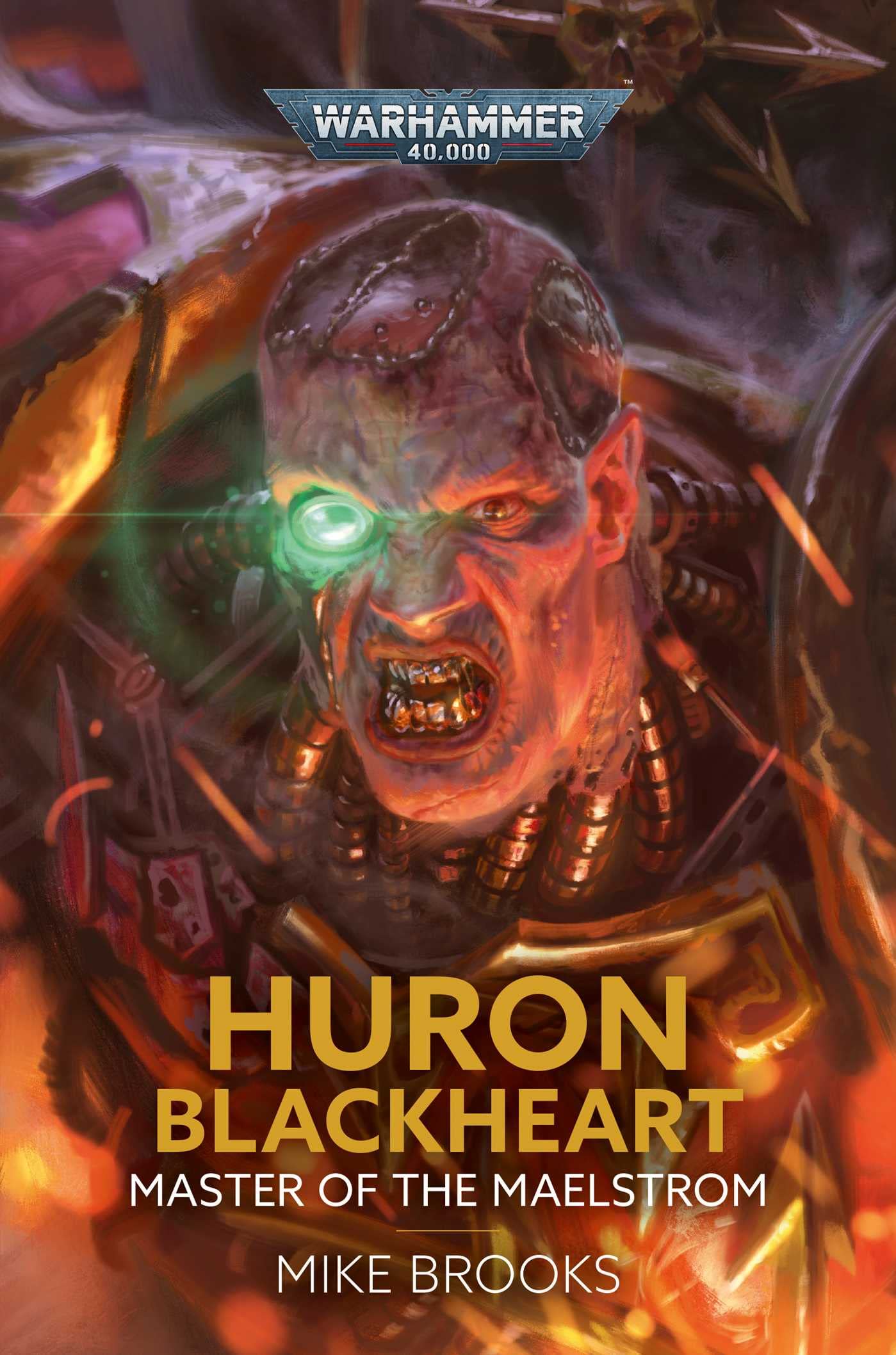
Quick Review – Warhammer 40,000: Huron Blackheart: Master of the Maelstrom by Mike Brooks

Huron Blackheart Cover

Publisher: Black Library (Audiobook – 7 May 2022)

Series: Warhammer 40,000

Length: 6 hours and 23 minutes

My Rating: 4.25 out of 5 stars

Amazon

I am really in love with the Warhammer 40,000 universe at the moment as they are producing some incredible books.  While many feature huge casts or examine vast conflicts, some of the very best Warhammer 40,000 novels provide greater context and insight into the game’s legendary characters.  These major character driven novels often result in some intriguing and powerful reads, and I love the complex stories that they tell.  One of the more interesting ones recently was the epic Huron Blackheart: Master of the Maelstrom by rising Warhammer 40,000 fiction author Mike Brooks.  This was a great and exciting read from last year, which I unfortunately never got the chance to properly review.  However, as I have just started listening to one of Brooks’s more recent novels, Warboss, I thought it would be beneficial to do a quick review of Huron Blackheart.

Plot Synopsis:

Huron Blackheart is the lord of the Red Corsairs, master of the lawless Maelstrom and its piratical denizens – but oathbreakers and renegades can seldom rely on the loyalty of their followers. With the galaxy thrown into turmoil by the return of Roboute Guilliman, the former Tyrant of Badab faces a renewed Imperium and fresh challengers emerging within his own ranks.

Huron must call on every trick he knows to stay in control – and alive. Yet even a warrior as ferocious and opportunistic as the Blood Reaver must be wary, for although there are many bargains he can strike, all power comes at a price…

Brooks has produced a very awesome and enjoyable read with Huron Blackheart which drags you in with its intense and entertaining story.  As the name suggests, the book primarily focuses on one of the more interesting characters from the wider Warhammer 40,000 canon, Huron Blackheart.  Huron Blackheart is a particularly cool character with a well-established background as a former loyal space marine who turned traitor and become a notorious pirate lord, haunting vast swathes of the Imperium.  Rather than diving into the full history of the character, Brooks instead tells a more contemporary narrative that shows the current actions of Huron Blackheart in the aftermath of the return of Roboute Guilliman.

The story sees Huron planning his next great offensive against the hated Imperium when one of his subordinates suddenly becomes a threat when he arrives with a mighty war prize, a legendary Ultramarines battle cruiser and Roboute Guilliman’s personal flagship, which the canny underling had managed to capture.  Now faced with a potential rival, Huron is further blindsided when several of his underlings ensure that a powerful daemonic relic falls out of his hands, further weakening his hold on his minions.  Forced into a corner, Huron soon finds himself caught between his murderous minions and the dark powers that surround him, and he’ll need to make a deadly decision that could change his existence and the remnants of his soul forever.

This is a pretty enjoyable and compelling overall narrative, and it is always quite a lot of fun to see events unfold from a villain’s perspective.  The author did a good job of balancing out some of the elements of the story, and the reader is treated to a great mix of Chaos politics, intense action, and a focus on the always awesome figure of Huron Blackheart.  Brooks makes good use of a multi-character perspective throughout Huron Blackheart, which is mostly effective in telling the fun and enjoyable narrative.  The main one of course is from Huron itself, which gives you some very interesting views into his mind, but several other characters are also well featured, including a captured Tech Priest who is forcibly recruited into Huron’s ranks at the start of the novel.  She provides a great outsider perspective to the entire story, and, when combined with Huron’s own cynical observances, you get a great view of the book’s events, especially all the backstabbing, politicking and carnage that emerges.  Not every character is given this great treatment however, as several of the supporting cast end up being a bit one-dimensional in places, which make their subsequent perspective shots a bit hard to care about.  Still, Brooks’s great use of perspective does capture the novel’s slightly darker and more bloody tone that some of the other Warhammer 40,000 novels out there as Brooks attempts to capture the villainous edge to every character.  I particularly enjoyed several of the scenes that showed the entire elaborate nature of Huron’s corsair organisation, and it was a lot of fun to see all the different factions, as well as several different groups of Chaos Space Marines, working together for piratical purposes.  I did think that the story itself was a little basic in places, especially when it came to its direction, and several of the twists or reveals were well telegraphed.  Still, I was pretty entertained the entire way through Huron Blackheart, and readers are guaranteed a pretty good time with the story.

Naturally for a book titled Huron Blackheart, a lot of the story is built around the exploration of who Huron is and what role he fills in the galaxy.  I must admit that this was one of those established Warhammer characters that I wasn’t particularly familiar with, so I was quite keen to see how the author would feature them.  Unsurprisingly, Brooks does a good job of setting Huron up as a particularly intense and ghastly central character for the novel, and you soon get a good idea of his motivations and the rage burning within him.  While Brooks was a little light on Huron’s full character history, readers fully understand his hatred, as well as other intriguing aspects of his character, such as his pragmatism, his deep-seated rage, and an actual understanding of the powers he has bound himself to.  I loved seeing the world through Huron’s eyes in parts of the book, especially as you see all his canny and cynical insights into the motivations of his minions and the key players of the Warhammer 40,000 universe.  Watching Huron attempt to manipulate every situation to his advantage is a ton of fun, and he cuts quite a distinctive figure in this book, even when on the losing end of a potential scheme.  Despite some of the setbacks he suffers in this novel, Huron comes away as a particularly strong and intelligent character, and it was fun to follow a Chaos leader that can control so many naturally treacherous beings.  Brooks also does a good job of tying Huron’s story into the wider current canon of the Warhammer 40,000 universe and it was fascinating to see what role Huron envisions his raiders having in the current wars of the galaxy.  There are some great references to other recent books and events, particularly when it comes the events around the captured Ultramarines ships, and I felt that this entire novel slid in nicely into this wider canon.

I ended up listening to Huron Blackheart on audiobook, which is always my preferred medium for Warhammer stories.  The Huron Blackheart audiobook ended up being a pretty awesome listen, especially with the impressive narration of Andrew Wincott.  Wincott captured every dark and bloody setting perfectly with his narration, and you got a real sense of the scale and menace of every scene, especially those focused on Huron himself.  Wincott made sure to also feature some great voices which really showed the full range of crazed figures that made up the supporting cast.  However, the best voice work was saved for Huron Blackheart himself, as Wincott wanted to inject some intensity into him.  Wincott gives him a deep, loud, and croaky voice, that perfectly captures his inhuman nature and helps readers to envision his mutilated flesh.  As such, the Huron Blackheart audiobook is an outstanding way to the enjoy the story, and with a run time of just under six and a half hours, it is one that you can power through pretty quickly.

Overall, Huron Blackheart: Master of the Maelstrom was a great Warhammer 40,000 book and I am glad that I got the chance to listen to it last year.  Mike Brooks had a lot of fun bringing the intriguing central protagonist to life in this new book, and his subsequent story of treachery and survival was interesting and easy to get through.  This was a particularly solid entry in the Warhammer canon, and all established fans of the franchise will have an excellent time with Huron Blackheart, especially in its audiobook format.

Amazon

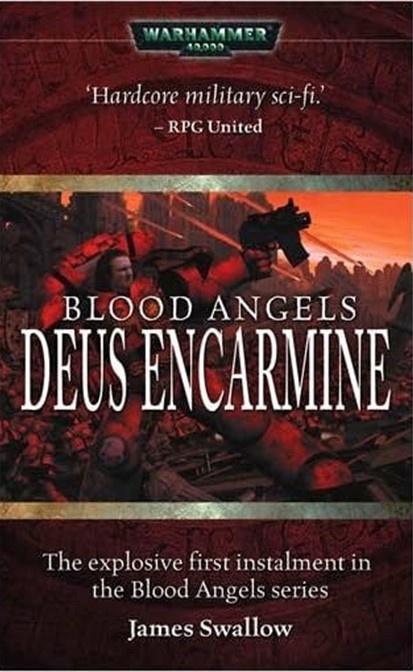
Throwback Thursday – Warhammer 40,000: Blood Angels: Deus Encarmine by James Swallow

Deus Encarmine

Publisher: Black Library (Paperback – 1 December 2004)

Series: Blood Angels – Book One

Length: 252 pages

My Rating: 4.5 out of 5 stars

Amazon

Welcome back to my Throwback Thursday series, where I republish old reviews, review books I have read before or review older books I have only just had a chance to read.  This is actually my second Throwback Thursday post today as I also put up a review for the Warhammer 40,000 novel Xenos by Dan Abnett.  However, I have been in an extreme Warhammer mood lately so I figured I would do a double feature and review the other Warhammer 40,000 book I finished this week, the first entry in James Swallow’s Blood Angels series, Deus Encarmine.

One of the main things that really draws me into the Warhammer extended universe is that it contains works from a ton of awesome authors who have experience across the writing spectrum.  For example, James Swallow is a highly regarded thriller author who also contributed his talents to several extended universes, including the elaborate Warhammer universe.  While many readers may be familiar with his entries in the Horus Heresy sub-series, Swallow’s other major contribution to the Warhammer canon is the Blood Angels books, which provide dark adventures for one of the most iconic Space Marines chapters, the Blood Angels.  I managed to grab the first two books in this series from a second hand shop a few months ago and I just finished off the first entry, Deus Encarmine, this week.  It proved to be a fantastic and dark read that showcases the Blood Angels in a whole new light.

Out of all the Space Marines chapters who faithfully defend the Imperium of Man, few are as revered, respected or feared as the legendary Blood Angels.  The genetic descendants of the angelic primarch Sanguinius, the Blood Angels are proud warriors whose martial prowess and resolve are known across the galaxy.  However, their strength comes at a great cost, as the traumatic death of Sanguinius millennia before during the Horus Heresy still lingers in their shared genes and has the potential to drive even the best of them mad.

As the Imperium once again finds itself invaded by the forces of Chaos, one of the Blood Angels’ greatest tests is about to begin on the planet of Cybele.  A grave world dedicated to the memory of fallen Imperial warriors, Cybele is brutally invaded by Chaos Space Marines of the traitor Word Bearers legion, who overwhelm the Blood Angels honour guard stationed there and a relief force from the Blood Angels battle barge Bellus.  Only an ambitious plan by a young Battle-Brother, Arkio, turns the tide against the forces of Chaos, a victory that is considered by many to be a miracle.

As the Blood Angels follow the Word Bearers back to their base of operations, the conquered planet of Shenlong, more miracles seem to surround Arkio, leading his fellow Space Marines to believe that he is the blessed reincarnation of Sanguinius himself.  The only Blood Angel who doubts is Arkio’s older brother, Rafen, who notices strange changes in his sibling that his fellows are too blinded to see.  Only Rafen can discover whether Arkio’s gifts are a Chaos plot or the divine will of Sannguinius, but will he find out the truth before humanity’s greatest protectors are torn apart from within?

This was an excellent and captivating Warhammer novel from Swallow that tells a bleak and compelling story of faith, betrayal and family.  Making full use of the grim Warhammer 40,000 universe and the focus on the iconic Blood Angels, Deus Encarmine set up this first part of this series perfectly and you come away from this book extremely satisfied.

I really enjoyed the complex and dark story that Swallow featured in Deus Encarmine, especially as there are multiple layers to the narrative that drag you in with clever twists and turns.  Starting quickly and effectively with an extended and bloody war sequence, you really get a sense of the Blood Angels’ determination and resolve, as well as some of the deeper elements that impact them.  However, the real story doesn’t begin until after the massive battle at the start, as the characters are drawn into a deadly plot based around the Blood Angels’ history and beliefs.  Thanks to the efforts of a manipulative Inquisitor, as well as their own arrogance and faith, the Blood Angels are led to believe that the young Battle-Brother Arkio is the reincarnation of their founder, and they decide to follow him on a doomed quest to a Chaos controlled planet.  The build up to the invasion is amazing, especially as you get to see the various enemy moves to confuse the Blood Angels, as well as the failed attempts by the protagonists to discover what exactly is going on with Arkio.  Everything comes to a head when they reach their target, and the massive and brutal battle that follows reveals some dark truths about the despicable plans to destroy the Blood Angels.

I really got drawn into this awesome and compelling narrative and I loved the many impressive layers that Swallow added to it.  While many readers will be drawn in by the detailed and bloody war sequences, the real joy is in the intense manipulations and deceits that the villains unleash as the protagonists find themselves confronted by their own beliefs in dark times.  Swallow makes perfect use of the grim setting and the interesting history of the Blood Angels to turn this into an intense read, and you really get drawn in as you attempt to discover the truth behind Arkio and the enemy plan.  The author features various character perspectives to really showcase the differing views of the Blood Angels, as wells as the moves of the antagonists, and I loved how everything unfolded.  Readers come away from Deus Encarmine very satisfied, although the bleak cliff-hanger ending makes you instantly want to get out and grab the sequel.  I also felt that this was a pretty good entry novel for those readers looking to get into Warhammer fiction, as Swallow expertly introduces key elements of the wider universe and showcasing just home grim and deadly the war between Chaos and humanity can be.

Unsurprisingly, this first book in the Blood Angels series spends quite a bit of time focused on the titular chapter of Space Marines, the Blood Angels, who proved to be as awesome as always.  The Blood Angels are one of the most iconic and beloved factions in the entire Warhammer universe.  While all Space Marines are compelling and contain great potential for exciting stories (see my reviews for Deathwatch: Shadowbreaker by Steven Parker and Space Wolf by William King), the Blood Angels are particularly complex and striking figures.  Deadly and honourable warriors, the Blood Angels have a religious obsession with blood which borders on the vampiric, as well as major psychic daddy issues from their dead progenitor that can potentially drive them mad.  All this has tugged at the imagination of generations of Warhammer fans and Swallow uses that to full effect in Deus Encarmine.  Not only do you see these deadly warriors in multiple battle sequences, but Swallow dives into the history, culture and spirit of the chapter, including all the factors that helped turn them into such efficient and unstoppable killers.  All the key aspects of the Blood Angels experience are artfully captured and utilised throughout Deus Encarmine and fans of this chapter will be particularly excited, especially as Swallow adds in a ton of references and homages to various parts of the lore and previous fictional releases (I spotted a couple from Bloodquest).  I particularly loved that Swallow featured a Death Company in one of the battles, which was so damn cool as you got to see Blood Angels inflicted with the Black Rage tear apart their enemies one last time.  I also really appreciated how Swallow utilised the past and trauma of the Chapter as a key story point, and their faith and dedication to their primarch is used against them by their enemy.  All these elements, and more, make Deus Encarmine a must-read for all Space Marines fans, especially those who love to field/read about the Blood Angels, and Swallow had a wonderful time showcasing this faction.

I had a great time with the characters featured in Deus Encarmine and Swallow perfectly set them up and then inserted them into the complex tale.  Nearly all the major characters are members of the Blood Angels, and they share a joint history of suffering and bloodshed that binds them together.  While their training and history ensures some similarities, Swallow ensures that the central cast had some key differences and personalities.  The main character of Rafen was particularly compelling, and Swallow puts an interesting history around him.  His constant battle between the needs of his chapter and his loyalty to his brother is a major part of the book’s drama, and it is hard not to feel for him when he is the only one able to see that something is going terribly wrong.  The character of Arkio was also a fantastic addition to the cast, and I loved his gradual change throughout Deus Encarmine from a humble warrior to a dangerous religious figure.  Other characters, including the arrogant Sanguinary Priest Sachiel, the grizzled and suspicious veteran Koris, and even the entertaining Word Bearers characters who acted in counterpart to the protagonists, were all well written and I loved the elaborate narrative threads that Swallow wove around them.  However, my favourite character in Deus Encarmine was probably Inquisitor Stele.  Initially shown as an effective, if arrogant, ally, it is slowly revealed that Stele is a manipulative and callous being who is leading the Blood Angels towards a darker objective.  Watching him carefully and effectively divide and control the various Blood Angels characters was really awesome and I loved watching his dark scheme unfold.  I deeply enjoyed how Swallow utilised his characters in Deus Encarmine, and it will be intriguing to see who survives the deadly events of the next book.

Overall, I felt that Deus Encarmine was a pretty epic read and a powerful addition to the Warhammer canon.  James Swallow has written an excellent and captivating read here that perfectly blended intrigue, betrayal and an intense war story with the complex history and culture of the iconic Blood Angels Space Marines chapter.  An intense and addictive read, I absolutely loved this first Blood Angels and I plan to check out the sequel, Deus Sanguinius next, especially as I want to see how Swallow ends this fantastic duology.

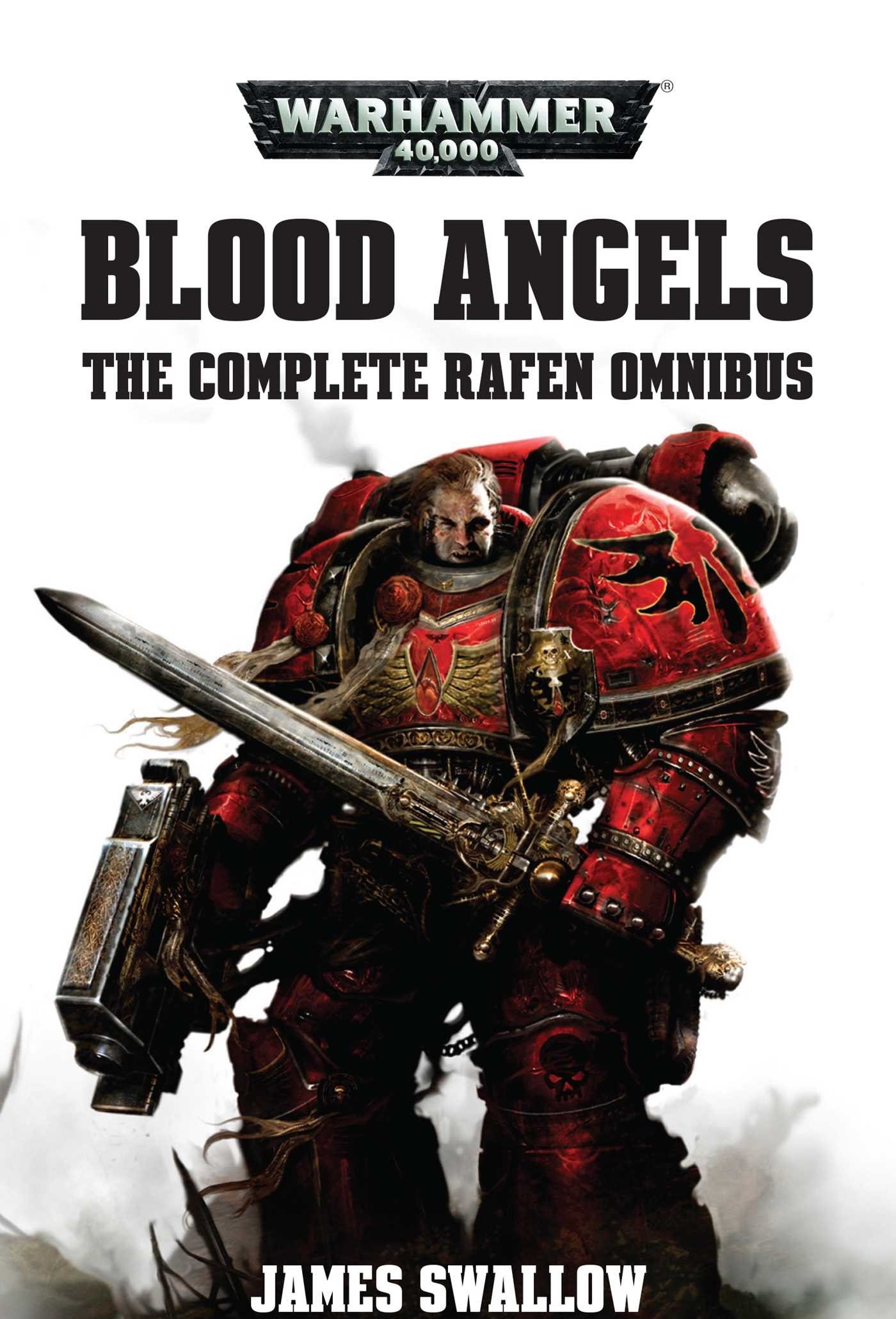
Blood Angels Cover

Amazon

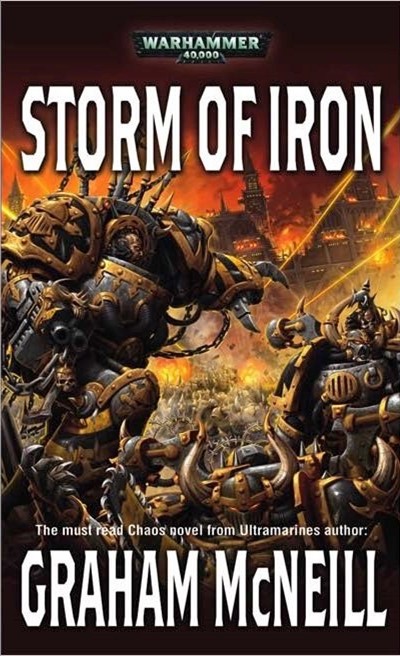
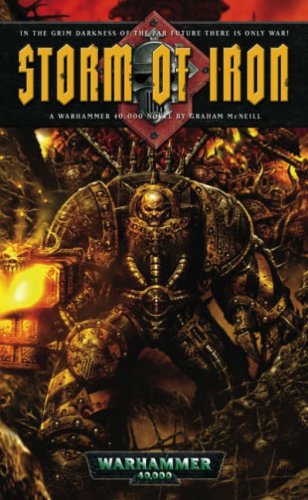
Throwback Thursday – Warhammer 40,000: Storm of Iron by Graham McNeill

Storm of Iron Cover 2

Publisher: Black Library (Audiobook – July 2002)

Series: Warhammer 40,000

Length: 11 hours and 3 minutes

My Rating: 4.5 out of 5 stars

Amazon

Welcome back to my Throwback Thursday series, where I republish old reviews, review books I have read before or review older books I have only just had a chance to read.  For this latest Throwback Thursday, I dive into some old-school Warhammer 40,000 fiction with the exceptional Storm of Iron by one of the most prolific Warhammer authors, Graham McNeill.

Readers of this blog will know that I have been really getting back into Warhammer fiction in the last few years, and I have had an outstanding time reading all the exciting and captivating reads the franchise’s extended universe contains.  I have been particularly impressed by the sheer number of talented authors who contribute to this extended universe, and I already have a few favourites due to how epic and complex their novels have turned out to be.  However, one of the main contributors to the current Warhammer canon I had not really explored yet is the superbly talented Graham McNeill.  McNeill has been writing Warhammer fiction for 20 years now, and he has produced multiple books for both the Warhammer 40,000 and Warhammer Fantasy sub-franchises.  Best known for The Ambassador Chronicles, Legend of Sigma, Ultramarines and Forges of Mars series, as well as his entries in the massive Horus Heresy series, McNeill has produced some outstanding sounding books throughout his career (including several books I really want to read) and had an incalculable impact on Warhammer fiction universe.  I however, have not had too much experience with his works, although I do have several of his novels sitting on my shelf.  I am hoping to read more of his stuff in the future, but I ended up starting with one of his earlier books, the standalone Warhammer 40,000 novel, Storm of Iron.

The Adeptus Mechanicus Forge World of Hydra Cordatus is a barren and desolate place, garrisoned by Imperial Guard of the 383rd Jouran Dragoons and members of Adeptus Mechanicus, who rule from one of the mightiest and seemingly impregnable fortresses in the galaxy.  No-one ever expected that the many wars that plague the universe would ever come to a planet as seemingly inhospitable as Hydra Cordatus, but hell has descended upon the planet in the form of Chaos Space Marines from the feared Iron Warriors legion.

Under the leadership of the dread Warsmith Barban Falk, the Iron Warriors have arrived on Hydra Cordatus in substantial numbers, determined to destroy all the Imperial defenders and take the planet’s main citadel.  After a blistering landing upon the surface of the planet that cuts off all hope of relief, the Iron Warriors deploy their full force of warriors, slaves, labourers and even several corrupt Titans to assault the enemy.  But they have not chosen an easy target, as the citadel of Hydra Cordatus is no ordinary fortress.  It is an ancient and mysterious stronghold, whose walls are designed to stymy any attack, and few foes would have a chance of defeating its defences.

However, the Iron Warriors have long been considered the greatest siege warfare specialists in all the universe.  Having honed their bloody craft for millennia since their betrayal of the Emperor, the corrupt Iron Warriors soon embark on an ambitious and fast campaign that soon threatens to completely destroy the Imperial forces.  Only the arrival of members of the Iron Warrior’s greatest enemies, the Space Marines of the Imperial Fists, gives any hope to the defenders.  But can even the legendary Imperial Fists stand against the ancient fury of the Iron Warriors?  And what secrets truly lay hidden in the depths of Hydra Cordatus’s citadel?

Well, this was a pretty damn awesome Warhammer book.  McNeill did a remarkable job with Storm of Iron, producing an intense and action-packed novel that might be one of the best siege novels I have ever had the pleasure of reading.  Loaded with impressive battle-sequence after impressive battle-sequence, as well as a ton of intriguing and fun characters, Storm of Iron was an outstanding read, and I had so much fun getting through it.

I will admit that one of the things that really drew me to Storm of Iron is that it showcases a massive siege in the gothic future of the Warhammer 40,000 universe.  I have always deeply enjoyed books with sieges in them, and the Warhammer universe is naturally filled with some good examples of this, although these mostly occurred in the fantasy focussed books.  As such, I was quite intrigued to see how a science fiction siege would occur, and McNeill really did not disappoint, painting a powerful and captivating picture and using the Iron Warriors and Imperial Fists, both of whom are known for their siege craft, as central figures in the narrative.

McNeill starts Storm of Iron off with a bang, showing the Iron Warrior’s initial move as they launch a lightning-fast raid and landing upon Hydra Cordatus in the opening chapters.  From there, the siege of the citadel starts in earnest as the Iron Warriors deploy their entire army towards it.  Told from multiple character perspectives of both the attackers and defenders, you swiftly get to know all the key players of the book and see their various personal and military struggles as the siege unfolds.  The author sets everything up perfectly, and you are soon engrossed in the novel-spanning siege, which McNeill explores in intricate detail, examining the various moves and countermoves that the two sides are doing.  You get some awesome scenes throughout Storm of Iron, and it really has everything you could want from a siege book, including artillery barrages, trench warfare, sapping, sallies, reinforcements, counterattacks and desperate fighting in breaches.  The entire story moves pretty quickly, and there are barely any pauses in between battle scenes.  Any delays that do occur serve an essential part of the plot, showing the various personal issues impacting the participants, introducing new characters, or exploring some of the hidden intrigue going on within the besieged citadel.

The story picks up even further around the middle, with the arrival of the Imperial Fists Space Marines who give the defenders more of a fighting chance.  As such, you are never quite certain how the book is going to unfold, and the battle really could go any way.  I liked how McNeill balanced the book between the Chaos and Imperial characters (or the attackers and defenders), and I deeply enjoyed seeing how each side conducted their war, especially as both had to deal with internal dissension and setbacks.  I think that the narrative had a great blend of cool story elements, and the combination of action, intrigue and character work fit the story very well.  Naturally, the best part of the book is the exceptional battle scenes, and thanks to author’s detailed depictions, it is extremely easy to envision all the intense fight sequences that unfold.  There are some outstanding scenes here, and there is a little bit of everything, included destructive ranged warfare, brutal close combat fights, desperate last stands and even some over-the-top battles between the massive Titans (essentially intense mecha warfare).  This entire story comes together pretty well, and I really liked the fantastic and dark notes that McNeill left it on.  While I wasn’t too shocked by one of the book’s main twists, there honestly wasn’t a moment where I wasn’t entertained by Storm of Iron’s story, and I had such a fantastic time seeing this entire epic siege unfold.  I managed to power through this book extremely quickly, and I had so much fun seeing how this protracted battle unfolded.  As such, this is a must-read for all those who love a good siege book, and I really appreciate the awesome story that McNeill featured here.

I love all the cool Warhammer 40,000 elements that McNeill was able to fit into this awesome book, and fans of the franchise will appreciate his attention to detail and fun depictions of the various factions and their iconic regiments/toys.  While the Imperial Guard, Adeptus Mechanicus and Imperial Fists are all featured here, this book is mainly about the Iron Warriors, and it was fascinating to see them in action.  These traitorous and corrupt siege specialists have a rich history of hatred, and while the author doesn’t go completely into their fall from grace, you get a good idea of why they turned and some of the terrors they have inflicted.  Indeed, all the depictions of the Chaos side are extremely powerful, and you get an impressive view of just how twisted and dangerous they and their dark gods are.  That being said, you get a much more nuanced viewpoint of the Chaos side here than most Warhammer books have, and it was utterly fascinating to see their views on the conflict.  That, combined with some of the secrets that the Adeptus Mechanicus are hiding, continues to reinforce one of the key concepts of the Warhammer 40,000 universe: that there really are no good guys here, just winners and dead people.  Thanks to author’s ability to highlight key universe and faction details, this is one of those Warhammer 40,000 books that could serve as a great introduction to Warhammer fiction, and if a massive and bloody siege doesn’t get your attention and make you interested in this franchise, nothing will.  As such, you don’t need to come into Storm of Iron with too much pre-knowledge of the Warhammer 40,000 universe to enjoy this book, although established fans will naturally get a lot more out of it.  I am personally glad that, of all of McNeill’s books, I chose to start with Storm of Iron, especially as it apparently sets up some of his future Warhammer entries.  In particular, it introduces one of the key antagonists of his Ultramarines series, which has long been on my to-read list, and I look forward to enjoying more of McNeill’s epic Warhammer books in the future.

I also deeply appreciated some of the excellent character work that was featured within Storm of Iron.  Due to how McNeill writes the story, the book features a huge range of different point-of-view characters, broken up between the Iron Warriors and the members of the 383rd Jouran Dragoons who are defending the citadel.  While the quick-paced story and multiple character perspectives cuts down on development a little, you do get to know all the key characters very quickly, and McNeill fits in some absolutely fascinating character arcs that I deeply enjoyed.  Three of the most interesting characters are the Iron Warriors captains who are leading the assault on Hydra Cordatus, Honsou, Forrix and Kroeger.  All three are pretty interesting in their own right, with Honsou the true believer ostracised by his comrades due to his heritage, Forrix the disillusioned veteran, and Kroeger the mad berserker who is slowly going insane serving the Blood God Khorne.  Their personal storylines are all amazing, but the real fun is seeing their interactions, especially as they all hate each other and are vying for their master’s favour.  McNeill spends a lot of time with these three villains, and you really get a sense of whole Iron Warrior’s legion through their disparate viewpoints.  I will say that I didn’t think any of the Imperial characters quite measured up to these Chaos characters, especially as McNeill really worked to make them as compelling as possible.  I did deeply enjoy the character of Guardsman Julius Hawke, a slacker who finds himself alone in the wilds and serves an interesting role in the battle.  I was also quite intrigued by Lieutenant Larana Ultorian, a defiant soldier who is captured by the Chaos forces and slowly driven insane by her forced service to them.  These characters, and more, all help to turn Storm of Iron into a much more complex and powerful read, and I had a great time explore all their unique stories and histories here.

I doubt anyone is going to be too surprised that I made sure to grab the recently released audiobook version, which in my opinion is one of the best ways to enjoy a cool Warhammer book.  The Storm of Iron audiobook was a pretty good example of this, as I quickly got drawn into it, especially as the awesome action sequences became even more epic when they are read out.  With a run time of just over 11 hours, this was a decent length Warhammer audiobook, although I managed to power through it in less than a week, mainly because of how much I got caught up in the story.  I was also pretty impressed by the narration from Michael Geary, who really dove into the various roles contained within Storm of Iron’s story.  Geary clearly had a lot of fun telling this dark tale, and I felt his fast-paced narration really added the intensity and excitement of the story.  I also felt that he did a great job bringing the various characters of Storm of Iron to life, and each of the main figures is given a unique voice or accent to help set them apart.  While I liked all the cool voices he did, Geary’s take on the various Chaos Space Marines was very memorable, especially as he really captures the cruelty, hatred and dark demonic influences that affect them.  An overall excellent Warhammer audiobook, I had such an exceptional time listening to this version of Storm of Iron, and this format comes highly recommended.

Overall, I am extremely happy that I chose to read this fantastic Warhammer 40,000 novel, and it was one of the more interesting older entries in the franchise I have so far read.  The extremely talented Graham McNeill did a wonderful job on Storm of Iron, and I had such an amazing time getting through its elaborate and action-packed narrative.  This book featured such an impressive depiction of a siege in the gothic far future, and readers are in for an intense and captivating time as they see this complex battle between besiegers and defenders unfold.  Clever, compelling, and filled with pulse-pounding fun, Siege of Iron was an excellent book and I look forward to reading more of McNeill’s Warhammer books in the future.

Storm of Iron Cover

Amazon

Throwback Thursday – Daemonslayer by William King

Daemonslayer Cover

Publisher: Black Library (Audiobook – October 2000)

Series: Gotrek and Felix – Book Three

Length: 9 hours and 38 minutes

My rating: 4.75 out of 5 stars

Amazon     Book Depository

Welcome back to my Throwback Thursday series, where I republish old reviews, review books I have read before or review older books I have only just had a chance to read.  For this Throwback Thursday, I am doing a bit of a double feature by reviewing two of the outstanding entries from the iconic Warhammer Fantasy franchise’s Gotrek and Felix series by the brilliant William King.  I have just published a review for the second book in the series, Skavenslayer, and, after some rapid audiobook listening, I have also pulled together a review for the third book, Daemonslayer.

After the epic conclusion of the battle of Nuln in Skavenslayer, Dwarf Slayer Gotrek Gurnisson receives a mysterious message and immediately sets out on the road, convinced that this missive may be the key to finding his much desired glorious death.  Accompanied as always by his companion, the former poet turned reluctant adventurer Felix Jaeger, Gotrek marches to the northern parts of the Empire to meet his destiny.

Arriving at their destination, Gotrek and Felix learn that a group of dwarfs are planning an expedition to find the lost dwarf stronghold of Karag Dum, and they want Gotrek to accompany them.  Destroyed in ages past, Karag Dum now lies in the middle of the Chaos Wastes, the most dangerous place in the entire world.  Wracked by the shifting winds of magic, marauding war bands, mutating warpstone and the foul essence of Chaos, no one can cross the Chaos Wastes and survive, and only death, madness or mutation awaits those who try.  However, expedition leader Borek Forkbeard has come up with an ambitious plan to fly over the Chaos Wastes in a giant, experimental airship, designed by an unstable engineer turned Slayer.

Determined to make up for previous failed attempt to reach Karag Dum, Gotrek agrees to accompany the expedition, with an inspired Felix accompanying him.  However, even with all the advantages that the airship provides, this will still be a perilous journey.  Many dangerous things lurk in the Chaos Wastes that will not hesitate to destroy the dwarven company for their dark gods.  At the same time, Gotrek and Felix’s old foe, Grey Seer Thanquol, plots from the shadows, determined to claim the airship for the Skaven cause.  But the very worst dangers will be found at Karag Dum.  A terrible foe lies within, waiting for revenge and determined to destroy all before him.  Can even the legendary Gotrek and Felix stand up to the wrath of a deadly Bloodthirster of Khorne, especially one who appears destined to kill Gotrek and destroy all who stand with him?

I am having so much fun getting through this cool series and I really wish I had checked it out many years ago.  Daemonslayer is another incredible read that continues the fantastic Gotrek and Felix adventures that started in Trollslayer and were continued in Skavenslayer.  William King has come up with a pretty intense story for this third entry in the series, and I loved the change in writing style featured within it.  An exciting and character-driven tale, this was easily the best entry in the series so far, and I deeply enjoyed the time I spent getting through it.

Daemonslayer contains an impressive and intense narrative that proves to be extremely addictive and a lot of fun to read.  Unlike the previous novels in the series, which featured a collection of short stories, Daemonslayer is actually a complete story with one continuous narrative.  This is an interesting change of pace, and one that I think works extremely well, especially as it cut down on some of the repetition that was an issue in Trollslayer and to a lesser extent in Skavenslayer.  King writes a fantastic story that quickly gets into the action and adventure as the protagonists embark on an epic and potentially lethal quest.  While not a collection of short stories, King does break the book up into several distinctive sections, each filled some unique plot points and antagonists.  These sections are pretty linear and flow into each other extremely well, resulting in a very cohesive and entertaining narrative.  Like the rest of the novels in the Gotrek and Felix series, readers do not need a lot of background knowledge about the Warhammer Fantasy world to enjoy this book.  While I would probably suggest reading Skavenslayer first, Daemonslayer can be read as a standalone book, and all readers are generally in for a good time with this novel.

The action and adventure flies pretty fast and thick throughout Daemonslayer, with highlights including a lengthy battle against an army of Skaven towards the start of the novel, exploration in the dark tunnels of Karag Dum and the final epic fight sequence against the hordes of Chaos.  King is particularly skilled at writing exciting and powerful battle sequences, and I loved how he managed to bring the uniqueness of a large-scale Warhammer battle to life.  Part of this is because the author makes great use of multiple character perspectives throughout Daemonslayer, which allows for a richer narrative as you get to see many different angles of the same story.  This works particularly well in the first battle against the Skaven, as you get to see Grey Seer Thanquol controlling his forces, as he desperately tries to kill Gotrek and Felix.  I did think that some of the Thanquol scenes in the second half of the novel were a bit weak, especially as they were more concerned with setting up his appearance in the next novel, Dragonslayer, than influencing the plot of Daemonslayer.  Still, these scenes were great, and you are always guaranteed a laugh when dealing with this ruthless Skaven.  While there is a noticeable focus on action and death, King also works in some fantastic comedy and humour, which makes this book an absolute treat to read.  I also appreciated how dark and emotional several scenes became, especially when the protagonists are faced with the grim realities of certain terrible situation.  All of this is worked into quite an impressive adventure story, which ends up being extremely addictive and enthralling to get through.

I loved the great use of setting throughout Daemonslayer, especially as King features some of the darkest and most dangerous locations in the entire Warhammer Fantasy canon.  The most notable of these is the notorious Chaos Wastes, a dark and dangerous wasteland, completely corrupted by the Chaos gods and filled with all manner of mutants, monsters, beastmen, worshipers of Chaos and Daemons, who gather and fight throughout the wastes.  While the Chaos Wastes are primarily shown from above, King makes sure to produce some gruesome and disturbing depictions of the landscape and its inhabitants, and it proves to be a pretty horrific backdrop for a good part of the story.  I do wish that a little more of the story had been spent on the ground within the Wastes, but it was probably a wise choice to avoid, as the story could easily become bogged down there.  I also really enjoyed the lost dwarf hold of Karag Dum, where the last third of the book takes place.  King was clearly drawing some inspirations from Tolkein’s Mines of Moria when he came up with this location (Moria is also known as Khazad-dûm), with hidden doors, ancient treasures, despoiling opponent, and a giant fiery demon boss.  The scenes set within this hold are pretty claustrophobic, and King makes sure to use the dark location to its full advantage during fight scenes.  You really get a sense of the decay and destruction that has occurred within this setting over the years, and it is pretty easy to feel the despair of the various dwarf characters.  Both these major settings are really impressive, and they prove to be an excellent and fitting backdrop to a very fun and intense story.

A major strength of this book is its characters, as King continues to produce a range of complex and distinctive figures to populate his tales.  This includes protagonists Gotrek and Felix, who find themselves on their most dangerous mission yet.  Felix continues to be used as the novel’s primary point-of-view character, and it is fascinating to see his continued evolution from cowardly fop to dangerous warrior.  Despite his continued caution and reluctance to engage in fights, Felix is now regarded by everyone as a heroic figure, and he accompanies Gotrek on this latest quest with only a minimum of forbearance, despite being given an out by his friend.  King has really hit his groove when it comes to portraying Felix, and the character reigns supreme as a sarcastic, but loyal friend.  I have really grown to like Felix, and readers will become pretty invested in his tale.

After being overlooked a bit in Skavenslayer, Gotrek has a lot more focus on him in Daemonslayer, as he re-visits one of his old failures and reunites with some of his dwarf kin.  For most of the novel, Gotrek is his usual gruff and battle-hardened self, still searching for his doom while managing to kill anything that he comes across.  While this is always a lot of fun, King makes sure to feature some deeper character elements in this novel, by highlighting some of his inner feelings and giving hints at his past.  There are several compelling mentions of Gotrek’s pre-Slayer life in this book, as well as some early hints at the character’s true destiny and the dark fate surrounding him.  King also shows a surprising amount of emotion in the character for this book, and Gotrek has some moving scenes with Felix as he contemplates the mistakes of his past and his many regrets.  I really enjoyed seeing how the character’s friendship with Felix has developed over the course of the last few books, and there is even a scene where Gotrek admits he is apprehensive about journeying to the Chaos Wastes and even lets Felix know he does not have to follow him.  While all this character development is great, King also makes sure to continue to portray Gotrek as an absolute badass in Daemonslayer, as he goes up against a ton of different enemies and opponents.  The various fight scenes with Gotrek are so much fun, although I do worry that King is perhaps making Gotrek a little too overpowered, especially as he manages to defeat a Bloodthirster, literally the most dangerous creature in the entire Warhammer canon (admittedly Felix helps a lot).  I still really love this great character and I cannot wait to see what other crazy adventures he goes on in the future.

Just like his previous books, King loads Daemonslayer up with a great range of supporting characters, and several of the characters introduced in this novel end up becoming major recurring figures in the Gotrek and Felix series.  Probably my favourite was Snorri Nosebiter, a fellow dwarf Slayer, who has had way too many blows to the head.  Snorri proves to be a fun companion to Gotrek and it was interesting to see a character who makes the titular protagonist seem sane in comparison.  There was also a fun character in Varek Varigsson, who is essentially the dwarf version of Felix, except with a range of explosive devices.  In addition, you cannot overlook the dwarf engineer turned Slayer, Malakai Makaisson, and I had a good chuckle when the characters discuss the fates of his previous, unfortunately named ships.  I also really liked that King reused two of his most entertaining characters from the previous novel, the Skavens Grey Seer Thanquol and Lurk Snitchtongue.  Both serve as secondary antagonists in the story, and prove to be excellent comic reliefs, especially as their schemes constantly go against them.  It looks like King has some fun plans for Snitchtonuge in the future, and I liked the fun changes he went through.

As I did for Skavenslayer, I really need to point out the extreme lack of female characters in this book.  Daemonslayer literally had only one named female character, Ulrika Magdova, who naturally falls in love with Felix the first time they lay eyes on each other.  While this is pretty lazy writing on King’s part, at least Ulrika is a much better written character than the females featured in Skavenslayer.  Ulrika is a badass Kislev fighter, who proves to be a dangerous fighter (of course, Felix has to be just a little bit better).  Still, I have a feeling she is going to be a bit of a damsel in distress in some of the future novels, and I hope that King balances it out with some additional female characters in the future.  Overall, there are some great characters featured throughout Daemonslayer and I look forward to seeing the ones who survive in some of the other Gotrek and Felix novels.

I ended up grabbing the audiobook format of Daemonslayer, narrated by Jonathan Keeble.  With a relatively short runtime of 9 hours and 38 minutes, the Daemonslayer audiobook is an easy audiobook to get through, and I managed to finish it off quickly.  The audiobook format proves to be a great way to enjoy this excellent book, especially as it allows the fantastic and chaotic landscape and characters to come to life in all their ghastly glory.  Keeble continues to impress as the narrator of this series, and I love the amazing array of voices he brings to the table.  Daemonslayer really highlights just how varied his voice can be as Keeble produces a substantial number of different accents and vocal tones to capture the rich and unique cast.  This includes Scottish-sounding dwarfs, Russian-esque Kislev lancers, humans with cultured British accents and the mad, loud voice of Snorri Nosebiter.  Keeble also has to voice the various inhuman monsters that the protagonists encounter, from the great Skaven characters, to the monstrous daemons and warriors of Chaos, all of which prove very fitting and amusing.  He also brings an immense amount of passion to his narration that deeply enhances the experience of anyone listening to the book.  The way in which he gets into the various fight sequences is amazing, and you can hear the sheer excitement in his voice as he reads.  This is especially true in the final epic fight scene, and the listener soon finds themselves on the edge of their seat as Keeble works his way up to the conclusion.  This is really an impressive and amazing format to enjoy Daemonslayer in, and I cannot recommend this audiobook enough.

Daemonslayer by William King is an exceptional and amazing entry in the fantastic Gotrek and Felix tie-in series.  This awesome novel contains an epic and intense story, as its two iconic protagonists continue to explore the dark and deadly Warhammer Fantasy world.  Filled with action, adventure, comedy and some dramatic character moments, Daemonslayer is an outstanding novel that comes highly recommended for all Warhammer fans.  I look forward to seeing how the rest of the series turns out and I am really enjoying my current jaunt into the world of Warhammer tie-in fiction.

Daemonslayer 2 Cover

Amazon     Book Depository

Throwback Thursday – Trollslayer by William King

Trollslayer Cover 2

Publisher: Games Workshop (Audiobook – August 1999)

Series: Gotrek and Felix – Book One

Length: 9 hours and 55 minutes

My Rating: 4.5 out of 5

Amazon     Book Depository

Welcome back to my Throwback Thursday series, where I republish old reviews, review books I have read before or review older books I have only just had a chance to read.  In this latest Throwback Thursday article, I review a classic Warhammer Fantasy novel, the iconic Trollslayer by William King.

Over the last year or so, I have started to get back into the exciting and captivating extended universe that surrounds the Warhammer tabletop game franchise.  The Warhammer games are a lot of fun to play, but I have always deeply enjoyed the rich and extensive universe that has formed around it.  This is particularly true when it comes to the extensive literary world that has been created, with a huge collection of unique novels added every year.  I personally have barely scratched the surface of this franchise, having only recently read the exciting Space Marine novel Deathwatch: Shadowbreaker, and the fun crime novel Kal Jerico: Sinner’s Bounty.  For this review, however, I veer away from the science fiction based Warhammer 40,000, and instead look at a book in the Warhammer Fantasy universe.

The Warhammer Fantasy universe is set on a fantasy world where various races and factions fight for power, immortality, dark deities, and a general desire for bloodshed (Blood for the Blood God, Skulls for the Skull Throne!) in both large-scale battles and smaller skirmishes.  I love the fantastic and thrilling world of Warhammer Fantasy, especially as I used to play (my preferred factions were the Empire and the Lizardmen).  While there are many great novels set in this universe, the most recognisable and well-established series are the Gotrek and Felix books.

The Gotrek and Felix novels are some excellent dark fantasy books that follow the titular heroes, Gotrek Gurnisson and Felix Jaeger, as they traverse their world, facing every single monster, demon or villain they can find.  Created by William King, this long-running series has also been authored by fellow writers Nathan Long, Josh Reynolds and David Guymer, the last of whom has just released the latest entry, Gitslayer.  I have always heard good things about this series over the years, and I have previously enjoyed some of the short stories featured online or in the White Dwarf magazine.  As a result, when I had the brainwave to expand my knowledge of the Warhammer canon, this is one of the main series I wanted to check out, and to do so properly, I had to start with the original novel, TrollslayerTrollslayer, which was originally released in 1999, is an interesting novel that features seven original Gotrek and Felix short stories, including Geheimnisnacht, which was originally written as a one-off in 1988.  These seven stories have been bundled together into one continuous narrative, which proves to be an excellent and entertaining fantasy adventure.
Trollslayer Cover

Felix Jaeger, the son of a wealthy merchant and student in the Imperial capital Altdorf, used to live a blameless and dull life until he met the deranged Gotrek Gurnisson.  The son of a wealthy merchant and student in the Imperial capital Altdorf, Felix’s life was changed forever when Gotrek saved his life.  Gotrek is a Slayer, a dwarf who, after committing a terrible crime, has sworn to seek out a glorious death in battle, and who now wanders the world to find a foe worthy of killing him.  After a particularly damaging night of drinking, Felix drunkenly swears to follow him on his adventures to compose an epic ballad about Gotrek’s glorious death.

Bound by his oath, Felix now reluctantly accompanies Gotrek wherever he goes.  Their latest adventures will take them far and wide, as they venture throughout the Empire and beyond, travelling to the notorious holdings of the Border Princes, the mountainous realms of the dwarves and even under the halls of the conquered dwarf city of Karak Eight Peaks.  While they experience many unique discoveries and locations, one thing remains the same: enemies lurk around every corner, and Gotrek and Felix are forced to battle against some of the most dangerous creatures in existence, including orcs, goblins, trolls, the undead, mutants, beastman and more.

However, the most dangerous foe they face may be something far more insidious and unknowable.  The fell powers of Chaos are gathering throughout the land, and Gotrek and Felix seem to constantly become wrapped up in their plots and vile missions.  With danger and deadly foes all around, will Gotrek find the glorious death he seeks, and will Felix be able to survive whatever might foe eventually manages to kill his companion?

Wow, that was a cool novel I really should have read years ago.  Trollslayer was a fantastic and exciting novel that does a great job exploring some of the more dangerous settings in the Warhammer Fantasy world with two amazing characters.  Featuring seven dark and compelling short stories, Trollslayer is an outstanding book, and I had an incredibly fun and entertaining time getting through its audiobook format.  Banded together by some journal entries which bring the separate stories together, Trollslayer has a fantastic joint narrative that presents the reader with a collection of epic adventures.
TrollSlayer-john-gravato-Gotrek-and-Felix-1st-edition-cover

The book begins with the original Gotrek and Felix short story, Geheimnisnacht (Night of Secrets).  The two companions are stuck out in the dangerous forests of the Empire during Geheimnisnacht, an auspicious night of the year.  After nearly being run over by a dark carriage on the road, Gotrek and Felix investigate the actions of a dangerous Chaos coven out in the woods, and find more than they bargained for.  This is a rather entertaining and short entry in Trollslayers that serves as a fun introduction to the main protagonists and their quest.  King does a great job setting up both characters and you soon get a fantastic glimpse into their compelling personalities.  The author presents a very dark story within this first tale, as the heroes discover and fight the true horrors of chaos.  An excellent and intense opening story that will get you pumped up for the rest of the book.

The next entry contained within Trollslayer is called Wolf Riders, which sees Gotrek and Felix at the very edge of the Empire with plans to venture to the fallen dwarf stronghold of Karak Eight Peaks.  After encountering a beautiful young woman, Felix convinces Gotrek to join the doomed expedition of a cursed, banished noble family as they journey to the Border Lands to set up their own settlement.  Hired on as guards, the two heroes are forced to protect the caravan against a ravenous Greenskin horde, who are determined to destroy every one of them.  However, the true threat may lie within the convoy, as it soon becomes clear that someone has their own nefarious plans to kill everyone journeying with them.  Wolf Riders is an incredible second entry in the collection of stories, and it is easily one of the best tales in Trollslayer.  Not only does it reinforce the likeability of the two protagonists, but it also contains its own compelling and impressive narrative.  King manages to achieve a lot in Wolf Riders, introducing a cohort of great characters, showing several intense action sequences, and even presenting a clever and malicious mystery.  The entire narrative comes together extremely well, and readers are soon wrapped up in the compelling tale of redemption and bloodshed, which culminates in a tragic and memorable ending that forever changes one protagonist.

The third story is The Dark Beneath the World, which follows on immediately after Wolf RidersThe Dark Beneath the World sees Gotrek, Felix and some new companions journey into the dwarf stronghold of Karak Eight Peaks, which was infamously conquered by greenskins and Skaven in ages past.  Seeking treasure, holy relics and a glorious battle, the adventurers will face untold horrors in the halls beneath the city.  However, nothing will prepare them for the true dangers of Karak Eight Peaks, as the restless dead are stirring in response to a monstrous presence.  This was another great story that really highlights have exciting and action packed one of these stories can be.  I love how King takes his great characters right into the heart of one of the most iconic and dangerous settings in the entire Warhammer canon, and it proves to be an amazing backdrop to this compelling story.  A brutal hack and slash epic with some very intense moments, this is an excellent and fast-paced addition to Trollslayer that was an extremely thrilling read.

From powerful action to great humour, the next entry is the slightly shorter The Mark of Slaanesh.  This story sees Gotrek and Felix return to the Empire, where they encounter some malicious cultists of the Chaos god Slaanesh in a small town.  Unfortunately for Felix, Gotrek is suffering from amnesia after a blow to the head.  Forced to shepherd a docile Slayer through the town’s many dangers, Felix takes drastic action to bring his friend back to his senses.  The Mark of Slaanesh represents a very intriguing change of pace, with more of a focus on humour, as a weary Felix is forced to contend with a pacifist Dwarf Slayer, an eccentric doctor, and comedic mutants.  There are several extremely funny moments in this short story, which helped to turn The Mark of Slaanesh into one of the most entertaining entries in the entire novel.  I particularly appreciate how King was able to craft together such a despicable central antagonist in quite a short period of time, and it was great to see his implied comeuppance towards the end of the story.

King again rapidly switches gears with the next entry in the book, Blood and Darkness, a grim war story set in the darkest forest in the Empire.  This story sees Gotrek and Felix come across a ravished village within the Drakwald Forest, which has been utterly destroyed by beastmen.  Finding a young survivor, Kat, Gotrek and Felix escort her through the woods to the next village.  However, a vengeful and ambitious champion of Chaos is close behind them, with unholy plans for Kat and anyone else she comes across.  Blood and Darkness is another exceptional entry in the series, which is probably my overall favourite Trollslayer story.  Loaded with action, fantastic new characters and a particularly gruesome premise, Blood and Darkness really stands out from some of the other stories in this book, and I was blown away by how dark King made the narrative.  I really loved the story’s complex antagonist, and the entire plot surrounding Kat comes full circle in a great way.  While it is a tad creepy to see just how young Kat is in this story, especially as Felix apparently falls in love with her in a future novel (she gets aged up like 20 years before this happens, but it is still weird), this was an impressive and powerful story that really showed how complex, powerful and mature a Warhammer story can be.

The penultimate story in Trollslayer is The Mutant Master, which again switches pace and has a more humorous tilt to it.  After being attacked on the road by a swarm of mutants, the protagonists arrive at a struggling village and soon discover that the mutants are being controlled by a sorcerer in a nearby tower.  Betrayed by the villagers, Gotrek and Felix find themselves as prisoners and soon must deal with an insidious sorcerer who shares a history with Felix.  This was another great short story that places the protagonists into a uniquely dangerous position.  King includes some excellent humour in this novel, especially in the scene where Felix and the sorcerer have a very entertaining encounter, which proves that everyone, even dark sorcerers, fall to pieces when encountering former classmates.  While much of this story is dedicated to humour, the author fits in a particularly dark moment towards the end of the novel, which pushes one protagonist further than ever.  Another awesome and memorable story, I powered through this one extremely quickly.

The final entry in this book is the intense Ulric’s ChildrenUlric’s Children sees Felix trudging through a snowed-in forest, attempting to escape the cold and the wolves.  When they hear the sounds of a fight up ahead, Felix gets separated from Gotrek, and ends up getting captured by a dangerous group of soldiers.  The soldier’s leaders end up being revealed as cultists of the Chaos god Tzeentch, who are desperate to capture a mysterious family living nearby, who have strange powers and strengths.  Caught up in their conflict, Felix soon finds himself trapped in a manor house with two very different monsters and must try to overcome the powers of Chaos that threaten to consume him.  This was another fantastic story that serves as a great conclusion to the entire novel.  While I think that Ulric’s Children was one of the weaker stories in Trollslayer, it was still a compelling and thrilling tale which readers will enjoy.  I loved the inclusion of werewolves in this novel and it was fun to see Felix attempt to overcome a dangerous foe without Gotrek’s determined backup.  With some intriguing foes and an exciting story, this is a fun and fantastic entry in the book which will leave readers wanting more Gotrek and Felix in the future.

King really has loaded Trollslayer with an amazing range of different stories that highlight the gritty adventures of two memorable and loveable characters.  I had a great time getting through each of the short stories contained within this novel, and I think that the author did a good job combining seven shorter stories together into one cohesive tale.  I love how each of the stories has some impressive action set pieces, and readers are given an in-depth look at the true dangers and darkness that inhabits the Warhammer world.  King has also ensured that each tale contains a compelling blend of humour, dramatic character development and dark fantasy elements, all of which produce an outstanding overall narrative.  It was also very cool to see just how dark and gruesome King could make his narratives, and quite a few elements of this book closely bordered the horror genre.  Since the stories were originally published in instalments, readers are in for some repetition, especially as King rehashes Gotrek and Felix’s origin in every entry, and you also get quick summaries of their prior adventures.  While this and other pieces of repetition (for example, Gotrek runs his finger over his axe blade in every tale) can be a bit annoying at times, I personally thought it was a small price to pay for such an awesome and epic book.

One of the most impressive things about Trollslayer is the complex and distinctive characters.  Naturally, the main characters are series protagonists Gotrek Gurnisson and Felix Jaeger, both of whom prove to be really fantastic and exciting characters.  King has come up with an exceptional pairing in these two characters, and I absolutely love the combination of a doomed dwarf Slayer and a disgraced human with a penchant for poetry.

As the primary narrator of the separate stories in this book, Felix gets a great deal of attention, and you really get to grips with his superb character throughout the book.  I loved the depiction of a former arrogant dandy who finds himself in a situation well over his head, and Felix has a “fun” time facing off against all sorts of monsters in this book.  While most of the novel depicts him as a bit of a coward, Felix does manage to achieve some major heroics and you cannot help but sympathise with the terrible situations he finds himself in.  While the use of multiple short stories does tend to backslide Felix’s character at times (he reverts to a coward at the start of each story), I did enjoy seeing some of the excellent development that occurs around Felix.  Not only does he grow more confident in his own abilities, but he also becomes harder with each adventure, especially as he experiences tragedy and despair around every corner.  It was actually hard to see how some of the more tragic events of the book affected him, but I really appreciated the amazing character work that King worked around him.

The titular Trollslayer, Gotrek Gurnisson, is one of the most beloved figures in Warhammer Fantasy lore, and a magnificent character who I really enjoyed.  Much of Gotrek’s past is shrouded in mystery, and all you really know is that he is a mighty warrior who previously committed some great crime that still haunts him to this day.  Determined to find a glorious death, Gotrek willingly walks into the most dangerous of places, but always survives, much to his displeasure (even doomed dwarves are far too stubborn and proud to simply let an enemy kill them).  King mostly paints Gotrek as a crude, rude and bloodthirsty being, which is a lot of fun to see.  However, there is so much more to Gotrek than killing and fighting, and you see several glimpses of his true inner self in this book, especially when he thinks about the past.  I loved how King keeps Gotrek as a mostly enigmatic figure, mostly by not showing any of the story from his point of view, and the reader is never quite sure what he is thinking or planning.  All of this results in an excellent and memorable protagonist, and I am deeply intrigued to see what sort of adventures he has in the future, as well as any revelations about his past.

Aside from Gotrek and Felix, Trollslayer contains a range of interesting and compelling characters, several of whom act as point-of-view figures at various parts of the book.  King does a really good job of introducing and utilising so many unique figures throughout his various stories, and it is simply amazing how well he can develop and establish his character in such a short amount of time.  Even though you only see some characters for a few pages, you quickly become quite invested in their stories, which is the sign of a really good author.  However, readers are advised not to get too attached to anyone, as most of the side characters will come to a gruesome and tragic end.  Still, these supporting characters are really fun, and I look forward to seeing what unique figures are introduced in future Gotrek and Felix books.

Trollslayer also features the dark and well-established background setting of the Warhammer Fantasy world, with the protagonists adventuring through many iconic locations.  King makes excellent use of this fantastic background throughout his story, and I loved seeing all the cool locations, interesting factions and dangerous monsters contained within the story.  This actually serves as a really good introduction to the Warhammer Fantasy world, and readers unfamiliar with the various aspects of Warhammer will learn a lot here.  King can really craft together some dark and dangerous locations with his writing, and I love how spooking and claustrophobic some of his settings felt, especially the ancient dwarven catacombs and the haunted, monster infested forests.  I also loved the sheer range of different creatures and races featured within Trollslayer, as the author includes as many foes as possible.  It was extremely awesome to see Gotrek and Felix cut their way through various greenskins, monsters, and servants of Chaos, and there is something for all fantasy fans within this book.  I am extremely keen to see what other monsters and races are utilised in the future novels, and I am sure they will be pretty amazing.

I ended up listening to the Trollslayer audiobook format, which was an outstanding way to experience the awesome adventures contained within this book.  With a decent run time of just under 10 hours, I powered through this audiobook in a matter of days, especially once I got caught up in the fantastic depictions of intense action and dark creatures.  I was also really drawn in by the impressive narration of Jonathan Keeble, who has lent his voice to all the Gotrek and Felix audiobooks, as well as several other Warhammer projects and some of my favourite historical fiction novels, such as the Eagle of the Empire series.  Keeble has an epic voice, and the sheer passion that he brings to Trollslayer is immediately obvious, especially during the action scenes, where his excited voice captures the intensity and movement of the fights.  I also felt that Keeble did an exceptional job bringing all of the characters to life in an impressive way.  I particularly loved the gruff voice that he used for Gotrek, which fit the doomed dwarf warrior perfectly, and he also does a really good job voicing the often terrified Felix.  I also found some of the voices that he used for the supporting characters to be really fun and fitting, and I had a lot of love for a couple of the crazed sorcerers/alchemists they encounter, which were quite amusing.  All of this helps to turn the Trollslayer audiobook into an outstanding experience, and I think that this will be the format I check out the future Gotrek and Felix novels out in.  I might also have to consider listening to some historical fiction novels on audiobook in the future, especially as I know that Keeble will do a wonderful job narrating them.

Trollslayer by William King is an exceptional and clever Warhammer Fantasy novel that showcases the exciting and powerful adventures of the iconic Gotrek and Felix.  Serving as the main introduction to these two iconic heroes, Trollslayer contains seven outstanding and wildly entertaining short stories with some fantastic and wacky plots.  Readers who check out Trollslayer are in for a heck of a lot of fun and will swiftly become fans of this great duo and their outrageous adventures.  A highly recommended read, I suddenly have some major plans to check out more Gotrek and Felix novels in the future.

Amazon     Book Depository