Death to the Emperor by Simon Scarrow

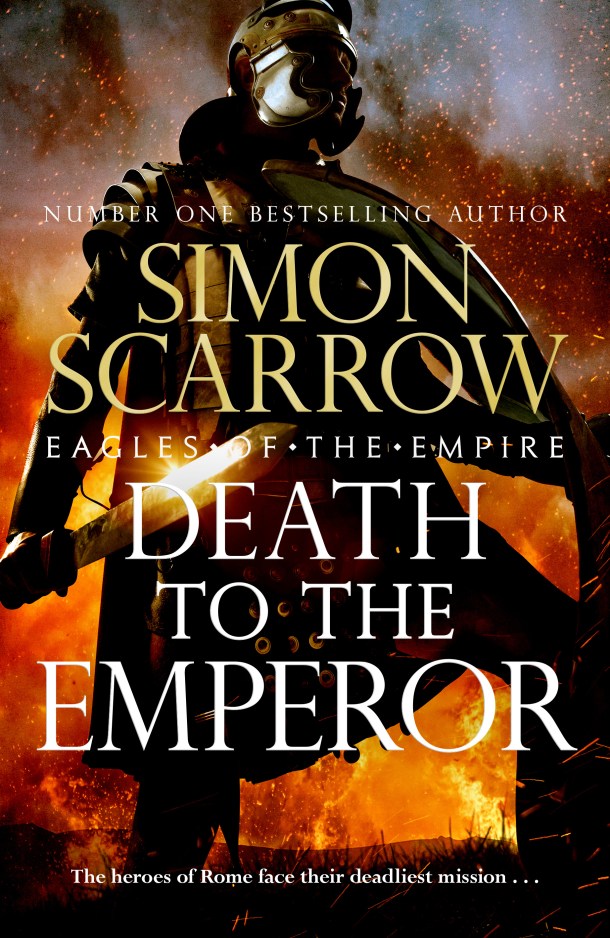
Death to the Emperor Cover

Publisher: Headline (Trade Paperback – 15 November 2022)

Series: Eagles of the Empire – Book 21

Length: 466 pages

My Rating: 4.75 out of 5 stars

Amazon

One of the world’s best historical fiction authors, Simon Scarrow, returns with another epic instalment in his brilliant long-running Eagles of the Empire Roman history series, Death to the Emperor.

I have made no secret of my deep appreciation for the works of Simon Scarrow, who is easily one of my favourite historical fiction authors.  A talented and compelling author, Scarrow has written several great series and standalone reads that cover historical subjects such as the Napolenic wars, World War II and even a cool historical crime fiction novel, Blackout.  However, his most substantial body of work is his Eagles of the Empire series, which is one of the best historical fiction series I have had the pleasure of reading.  Set during the reigns of some of Rome’s most infamous emperors, Eagles of the Emperor follow two Roman soldiers, Prefect Cato and Centurion Marco, who have fought on multiple battlefields across the empire.  I have had a wonderful time reading this series over the years, and it features some outstanding books, including the last four novels, The Blood of Rome, Traitors of Rome, The Emperor’s Exile and The Honour of Rome.  Naturally I started reading the latest book in the series (the 21st book overall), Death to the Emperor, pretty much as soon as I got it, and boy did that prove to be a smart decision.

60 AD, Britannia.  After years fighting side by side together, Prefect Cato and Centurion Marco are back in Britannia, the land they helped conquer at the start of their partnership.  Since their first time there, their lives have been transformed in ways they could have never believed.  While Marco is retired, serving a senior administrative role amongst the other retired veterans in Britannia, Cato is hiding out on the island, attempting to avoid Nero’s wrath for rescuing the Emperor’s former mistress from exile.  Determined to make their new lives in Britannia work, Cato and Marco are once again thrust into danger as tensions escalate throughout the island.

While the usual malcontents and druids stir rebellion and conflict against the Romans, tensions are higher than ever, especially as rumours spread that Emperor Nero wishes to pull out of the savage province.  However, Nero is also determined to squeeze the island for every bit of wealth it has, and he dispatches a ruthless and dangerous procurator to do this.  Worried that this move may destabilise an already fragile Britannia, Cato and Marco attempt to help their ally, the recently widowed queen of the Iceni, Boudica, whose tribe has caught the eye of the Emperor and his Procurator.

However, soon duty separates the two old friends again, as Cato is conscripted by Britannia’s ambitious governor, Gaius Suetonius Paulinus, in his latest campaign to destroy the druid stronghold at Mona.  Left alone, Marco can only watch as outrage and disrespect brings the Iceni to the brink of war with Rome, one that he and his forces cannot possibly defeat.  Soon, the fate of Britannia lays in hands of one woman, Boudica, who can bring peace to the lands.  However, when Boudica is pushed too far, will she declare war on Rome, its Emperor, and her old friends Cato and Marco?

Death to the Emperor was an outstanding and fantastic read that once again highlights Scarrow’s impressive ability as a historical fiction writer.  Continuing the long-running story of Cato and Marco, Scarrow expertly dives into a major historical event and brings it to life in a compelling way.  I had a wonderful time reading Death to the Emperor and I felt that it was one of Scarrow’s better novels in recent years.

I loved the incredible story that Scarrow wove around Death to the Emperor, especially as it provides the reader with an excellent blend of action, adventure, character development and a ton of historical detail.  Set shortly after the events of the last book, The Honour of Rome, Scarrow continues several threads from there, with Cato and Marco attempting to settle down in their old stomping ground of Britannia and find some peace.  However, the death of Boudica’s husband soon leads to chaos as the disgruntled locals start to push back against the increasing control and greed of Rome.  After a good introduction, which sets much of the scene for the rest of the book, the protagonists are split up, with Cato forced to accompany Governor Paulinus on his campaign to eradicate the druids, while Marco remains behind to attempt to keep the peace.  This results in a great split of storylines, and both of their exciting character arcs really paid off.  Cato’s story arc is a pretty typical Scarrow narrative, as Cato takes control of a new regiment and leads them into several battles as part of his campaign.  This results in several impressive action sequences, including a great and highly exciting extended siege sequence at the druid stronghold of Mona, which was one of the best battle scenes in the entire book.  At the same time, Marco bears witness to all the key events that lead up to Boudica’s rebellion, as the villainous Catus Decianus antagonises the tribes, despite Marco’s best efforts to stop him.  Marco’s storyline is a lot more intense and emotionally rich as the protagonist attempts to save all his friends against heavy odds.  However, despite his best efforts, Marco and his fellow veterans find themselves forced to fight Boudica’s army, which results in a pretty memorable ending.

I deeply enjoyed how this compelling narrative came together, and Scarrow was on excellent form as he provided the reader with everything they needed.  While the start of the book is a little slower, it sets the scene perfectly, before all the action and deadly developments ensue at a faster and more intense pace.  The author really built up the tension throughout the narrative, and you really knew that everything was going to go wrong, and boy did it.  The resulting battles, which includes several very fun sieges, were well worth the wait, and Scarrow did a wonderful job of showcasing all the carnage of these fights.  Separating the main characters created a much more complex and wider narrative, and I liked the excellent contrasts between the battles, as Cato’s successes with his forces are mirrored by Marco’s desperate fights with the small band of retired fighters under his command.  The intensity of the plot got even more pronounced as the narrative continued, and the reader really gets drawn in as a result.  I personally powered through the second half of the book in very short order as I wanted to see how everything would unfold.  The desperate and bloody conclusion to the narrative was pretty shocking, especially as there are some major series moments featured here.  The resulting cliff hanger finisher was just perfect, and you are left wanting more.  I am not entirely sure I’ll be able to wait a whole year to see how this series continues, but I am sure that the reader is for even more excitement and shocks when Scarrow brings out his next book.

One of things that really impressed me about Death to the Emperor was the level of historical detail that Scarrow put into it as he covers some of the early events of Boudica’s uprising.  The author does a remarkable job showcasing all the events that lead up to the rebellion, and he paints a compelling and unique picture around it.  Many events are discussed or shown in intriguing detail, including the general oppression of the local tribes, the attempts to embezzle money from the Iceni, the capture and humiliation of Boudica, and the disregard that Nero had for Britannia and his rumoured plans to abandon the province.  All these events, eventually lead up to the rebellion and it was fascinating to see them come about, especially through the eyes of a common soldier character like Marco.  The subsequent early battles of this rebellion, including the fight at Camulodunum, are very dark and brutal, and I deeply appreciated how Scarrow put his protagonists in the centre of these bloody conflicts, as they really raise up the intensity of the narrative.  At the same time, Scarrow also spends a good part of the book highlighting Governor Paulinus’s invasion of the druid stronghold of Mona.  This compelling campaign is often overshadowed by Boudica in history books, but it was an important part of the events at that time, especially as it left the rest of the province undermanned.  Scarrow covers this campaign extremely well through the book, especially as Cato is the officer usually at the front of the fighting, and it became quite a key part of the book.  I loved seeing this blend of historical events throughout Death to the Emperor, especially as Scarrow brings his usual flair for showcasing the Roman war machine throughout this book, highlighting the strategies and martial techniques of the Romans in exquisite detail.  I can’t wait to see the rest of Boudica’s rebellion in the next Eagles of the Empire book, as it is going to be epic.

Scarrow does another awesome job with the characters in Death to the Emperor, as he tells some intriguing character arcs that really helped to shape the narrative.  The primary focus as always is one of the series’ main protagonists, Prefect Cato and Centurion Marco.  Both have some intriguing character moments in this book which I had a great time with here.  Cato’s arc is pretty typical for much of the series, with the prefect forced back into combat, this time leading an auxiliary cohort on the campaign to Mona.  Cato’s arc is filled with a huge amount of action and intense battles as he fights from one end of Britain and back again.  It is always fun to see Cato in action, especially as he takes his units into some bloody battles, using a range of unique tactics to win.  While Cato is fun, the most intense character moments is focused on Macro, who remains behind and watches over the province while the army is gone.  Marco, who is mostly retired at this point, finds himself in a unique leadership position, and must work his force of reservists into a coherent force.  At the same time, he also finds himself greatly conflicted as he finds his loyalty to Rome tested due to his friendship with Boudica.  Forced to take military action against them, Marco tries to protect Boudica and her family, however, his orders and his slimy commander make that impossible, and he must decide whether he should continue to blindly follow Rome or do what is right.  His decision will have huge impacts on the story, and it places him in some dark situations.

Aside from Cato and Marco, who tend to be the primary point-of-view characters, Death to the Emperor has an awesome cast of supporting characters who really add a lot to the overall narrative.  This includes Boudica, who serves as Rome’s main antagonist in this arc of the series.  Boudica has actually been a friendly supporting character for many of her previous appearances, having formed a relationship with the two protagonists.  However, this book sees all that change as she is pushed too far, becoming the warrior queen we all know.  Scarrow handled her transformation from friend to deadly enemy extremely well, and it was fascinating to see her interact with Marco, especially as he keeps trying, but failing, to help her.  Aside from Boudica, I also liked seeing more of the fun supporting character, Apollonius.  Apollonius has been an interesting figure for the last few books, serving as Cato’s spy and advisor, and generally being a good secondary protagonist.  He has a very interesting time in Death to the Emperor as he remains behind to help Marco.  I loved seeing the continued relationship between the two, as Marco generally disapproves of Apollonius, and it was also quite intriguing to get some insights into why Apollonius chooses to stay and help Cato.  The final character I need to point out is Catus Decianus, the Roman Procurator who is generally considered responsible for Boudica’s rebellion.  Scarrow does an amazing job with Decianus, a real historical figure, and he turns him into a very despicable villain in Death to the Emperor.  The author paints him as an arrogant, greedy fellow, whose arrogance and general dislike of the Britannia locals, leads to the resulting war.  You really cannot help but hate Decianus, especially as he really is the main villain of this story.  These great characters, and more, turn out to be an amazing cast, and I had a wonderful time seeing the outstanding and dramatic narrative Scarrow wove around them.

Simon Scarrow continues to showcase why he is one of the best historical fiction authors in the world with the latest entry in his exceptional Eagles of the Empire series, Death to the Emperor.  Expertly showcasing the brutal events of Boudica’s rebellion with his long-running protagonists right in the middle, Scarrow tells a powerful and action-packed story that takes his characters into some dark direction.  Captivating, exciting and oh so bloody, Death to the Emperor will keep you relentlessly entertained and ensure you come back for more books in this epic series.  Highly recommended!

Amazon

The Honour of Rome by Simon Scarrow

The Honour of Rome Cover

Publisher: Headline (Trade Paperback – 9 November 2021)

Series: Eagles of the Empire – Book 20

Length: 431 pages

My Rating: 4.5 out of 5 stars

Amazon

One of the best authors of Roman historical fiction, Simon Scarrow, returns with another exceptional adventure back in time with The Honour of Rome.

2021 has been a particularly good year for Simon Scarrow readers, as this acclaimed historical fiction author has released two fantastic novels.  The first of these, Blackout, was a clever historical murder mystery novel set in pre-war Nazi Germany, which contained a fantastic and impressive story.  While I deeply enjoyed Blackout, I was a little more excited for the next awesome entry in Scarrow’s long-running Eagles of the Empire series.  The Eagles of the Empire books follow two officers in the Roman army, Centurion Marco and Prefect Cato, as they fight in multiple battle fields across the Roman Empire.  I have been a major fan of this series for years and have had the pleasure of reading every prior entry in it, while also reviewing some of the latest entries, including The Blood of Rome, Traitors of Rome and The Emperor’s Exile.  As such, I was very excited when I received the latest entry in this series, The Honour of Rome, a couple of days ago, and instantly started reading it.  The Honour of Rome is the 20th novel in this series and takes its great protagonists on another intense adventure.

Britannia, 59 AD.  After retiring from the Roman Legions, former Centurion Marco has travelled back to Britannia 15 years after he helped conquer it.  Now a married man, Marco is hoping for a quiet life, enjoying the fruits of the successful inn in Londinium that he half-owns with his mother.  However, not everything is as calm as he hoped.  There are rumours about the tribes being restless once again, and the streets of Londinium are alive with criminal gangs.

Upon arriving at his mother’s inn, Marco discovers that she is being extorted for protection money by a ruthless gang.  Determined to stop this, Marco attempts to resist the gangsters, only to find himself outmatched and a potential pawn into the middle of a vicious gang war.  At the same time, Marco finds himself drawn into the defence of the colony, especially when one of the local tribes refuses to pay any more taxes.

After a bloody punitive raid with a group of veteran reserve soldiers, Marco returns to Londinium, only to face the consequences for his defiance.  Beaten and bloodied, Marco is unsure how to fight back until his old friend Cato appears.  Cato, who has left Rome without leave to hide Nero’s exiled mistress, is always willing to back Marco up in any sort of fight, and he has an ambitious plan to end the gang problem once and for all.  Will the team of Marco, Cato, and their veteran allies be enough to overcome the city’s vicious gangs, or have these proud war heroes finally met their match?

This was another awesome novel from Scarrow, who has once again produced an exciting and fast-paced historical fiction read that perfectly envisions the landscape of Roman-occupied England.  The Honour of Rome is a great read, and I loved the cool combination of historical and crime fiction elements throughout it.  I ended up reading this book in only a few short days and loved every second of it.

Scarrow has come up with another amazing and entertaining story for this compelling book, which takes his long-running protagonists on another intense and bloody adventure.  One of the things that I have always enjoyed about the Eagles of the Empire series is the range of different subgenres that can be blended with its historical fiction elements.  The Honour of Rome is a great example of this as Scarrow utilises a crime fiction based storyline that blends with the overarching historical elements extremely well.  The protagonist is swiftly drawn into a vicious confrontation with two warring gangs of criminals upon his arrival in Londinium, which proves to be an outstanding basis for the main storyline.  At the same time, he once again becomes involved in the Roman garrison’s ongoing conflicts with the local Britons.  This combination of crime and military elements is very effective throughout the novel, and I liked seeing the conflicts with both gangsters and rebellious natives.  This also allows Scarrow to bring in several solider characters into the main crime-fiction storyline as backup as the story progresses, and it was pretty fun to see a bunch of retired soldiers taking on the antagonists.  The author really sets up everything extremely well in this book, and there isn’t a moment of calm or quiet throughout the entire novel, as the protagonist gets involved in several intense and well-written fights and battle sequences.  I found the last third of the novel to be particularly exciting, especially as the protagonists attempt an ambitious and risky strategy.  This results in the predictable satisfying, if bloody, conclusion, and Scarrow has made sure to set up some cool new storylines that will no doubt be the basis for the next few books.  An enjoyable and action-packed thrill-ride from start to finish, I had a fantastic time reading this latest historical adventure.

One of the more interesting things about The Honour of Rome was the noticeable change in character focus that helped set it apart from the other Eagles of the Empire books, namely that it spent most of the narrative focusing on only one of the series’ protagonists.  This is not too surprising, especially as the previous book in the series, The Emperor’s Exile, focused on Cato to such a degree that I kind of assumed that Scarrow was planning to permanently retire Marco.  However, I’m pleased to say I was wrong about this, as two-thirds of this latest book is exclusively told from Marco’s perspective.  I had a great time following Marco in this novel, and it is always a lot of fun to see the gruff and hard-headed Centurion in action.  There are some great moments surrounding Marco in this novel, from being out of his depth when it comes to combating criminals rather than enemy soldiers, to his great camaraderie with the fellow veterans in the colony.  You also have to love the fun interactions that occur around him as he finds himself stuck between his strong-willed wife and his equally strong-willed mother.  This ended up being a really good Marco novel, and I deeply enjoyed it.  Of course, Cato does show up towards the end of the book, and the novel is soon back to its typical dynamic, with Cato taking tactical lead.  There are also some interesting long-term storylines surrounding Cato, especially as he has fled from Rome with the Emperor’s exiled mistress.  It was great to see this team in action once again, especially as they enact another madcap scheme, and I had another fun time following them.

I also rather enjoyed the cool historical setting featured within this great novel, as the protagonists once again return to Britannia.  Historical Britannia is a well-utilised setting in the Eagles of the Empire books, having been the location of several of the earlier novels, including the first five entries in the series.  It made me a little nostalgic to see this damp and gloomy setting once again, especially as it proves to be just as chaotic and violent as ever.  This book makes full use of its clever move from the more traditional battlefields of Britannia to the city of Londinium, and I loved the inclusion of a crime-ridden, early London, especially as Scarrow tries his best to show it in all its dark and rapidly expanding glory.  I also enjoyed the inclusion of the veterans’ colony that was a major secondary setting for much of the book.  It proved to be fascinating to follow these characters who have chosen to settle in this harsh country and spending time conquering it, and I liked their inclusion in the novel.  It was pretty cool to see these retired soldiers in reserve taking on enemies, both on a proper battlefield and against the criminal element, and I thought it was a fun and compelling inclusion to the story.  I also appreciated that, after several books, we finally get a continuation of the Boudica storylines that were set up in some of the earlier novels.  Scarrow is also clearly setting up Boudica’s rebellion for later in the series, and I cannot wait to see how our protagonists, with their established history with Boudica and her people, will fit into it.

With this awesome 20th entry in his amazing Eagles of the Empire series, Simon Scarrow continues to highlight why he is one of the absolute best authors of historical fiction in the world today.  The Honour of Rome has a brilliant and compelling story that perfectly blends historical and crime fiction elements together into one thrilling tale.  I had a wonderful time reading this great book, and I deeply appreciated the way in which Scarrow continues the adventures of his compelling characters by once again returning them to the familiar setting of occupied Britannia.  The Honour of Rome is another highly recommended historical read, and I cannot wait to see what happens next in this series.

Amazon

The Emperor’s Exile by Simon Scarrow

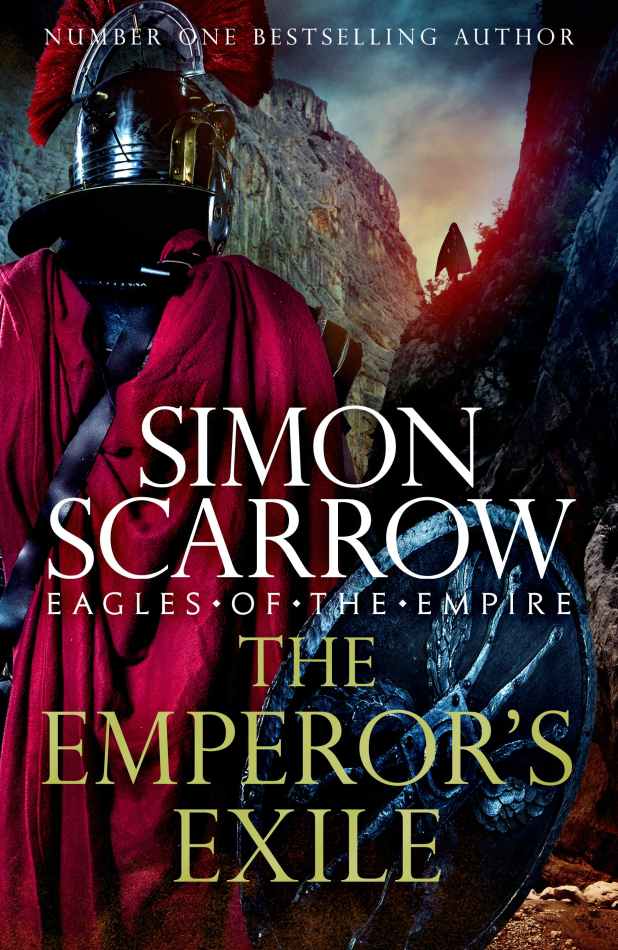
The Emperor's Exile Cover

Publisher: Headline (Trade Paperback – 10 November 2020)

Series: Eagles of the Empire – Book 19

Length: 434 pages

My Rating: 4.5 out of 5 stars

Amazon

One of the top authors of Roman historical fiction, Simon Scarrow, returns with the latest exciting novel in his Eagles of the Empire series, The Emperor’s Exile.

Rome, 57 A.D.  Following their adventures in Parthia, Legionary veterans Tribune Cato and Centurion Marco return to Rome with the remnants of their Praetorian Cohort.  Thanks to the ever-shifting politics of Rome and the fickleness of Emperor Nero’s court, Cato faces a hostile reception from some of Nero’s advisors, who hold him responsible for the military disasters experienced in the Parthian campaign.  Soon Cato has his command taken away from him, while Marco decides to resign from the Legions in protest, determined to live out his retirement in Britain.

Isolated in Rome, Cato is forced by one of Nero’s advisors to take on a new and dangerous mission.  Nero’s mistress, the beautiful Claudia Acte, has risen too high too quickly, and Nero’s political enemies have manipulated him into sending her into exile.  Travelling with a select group of Praetorian officers and his new advisor, the spy Apollonius, Cato must escort Claudia to the location of her exile, the island province of Sardinia, where he has another mission to accomplish.

Sardinia has long been plagued by tribes of bandits living wild in the centre of the island.  These proud decedents of the original inhabitants of Sardinia have been causing problems in recent months, raiding the local villages and ambushes caravans.  Taking command of Sardinia’s entire garrison, Cato begins to work out a strategy to defeat the locals and regain his position in Rome.  However, this proves harder than originally anticipated as Cato needs to contend with a disorganised military force, a dangerous plague that is beginning to overwhelm the island and a surprisingly competent group of bandits with unparalleled knowledge of the local landscape.  Worse, Cato begins to have dangerous feelings for Claudia, feelings which his enemies will exploit and which could set the entirety of Rome against him.  Can Cato pacify Sardinia before his entire force is decimated, or have his adventures finally come to an end?

This was another fantastic and highly enjoyable historical fiction novel from one of my favourite authors, Simon Scarrow, who has produced an impressive new entry in his long-running Eagles of the Empire series.  The Eagles of the Empire books are easily among the best Roman historical fiction series out there at the moment, and I have had an amazing time reading every single entry in this series, including the last two novels, The Blood of Rome and Traitors of RomeThe Emperor’s Exile is the 19th Eagles of the Empire book and the author has produced another impressive story, featuring great historical elements and some fantastic character work.  I had an awesome time reading this book and it is definitely worth checking out.

The Emperor’s Exile contains an extremely fun and captivating narrative which follows Cato work to defeat a new enemy in a new historical setting.  Scarrow sets up an exciting and fast-paced story for this latest book, with the protagonist forced to deal with all manner of politics, intrigue and various forms of deadly peril in rather quick succession as he is assigned his mission and attempts to complete it.  This naturally results in all manner of impressive action sequences which are a lot of fun to watch unfold, including one particularly good extended siege sequence.  It is not all action, adventure and historical undertakings, however, as the book also has an intriguing focus on its central protagonist, Cato.  Cato, who has been evolving as a character over the last 18 books, continues to develop in The Emperor’s Exile in several dramatic and emotionally rich ways.  Not only does he have to adapt to a major change in his personal circumstances with the retirement of a great friend but he continues to question his role in the Roman army and whether he wants to remain a brutal killer.  Throw in an ill-conceived romance, his continued regrets about his past actions and his disastrous first marriage, as well as a certain major change in his appearance for the future, and this becomes quite a substantial novel for Cato which also opens up some intriguing storylines in the future.  I had a wonderful time reading this book and, once I got wrapped up in the story, I was able to power through the book extremely quickly.

In addition to having a great story, The Emperor’s Exile also serves as a key entry in this impressive, long-running series.  While readers who want to check out this book do not particularly need to have read any of the previous Eagles of the Empire books, mainly because Scarrow does an excellent job of revisiting story aspects and characters from prior novels, those established fans of the series are going to find this book particularly significant and memorable.  This is because one of the main protagonists of this series, Centurion Marco, who has been a major part of all 18 previous novels, retires from the Legions 100 or so pages into the book then subsequently disappears off to Britain, leaving Cato to his own adventure in Sardinia.  Scarrow has been telegraphing Marco’s plans to retire for the last couple of books, and it is a natural consequence of the author realistically aging his characters (15 years have elapsed within the series at this point).  While it was somewhat expected, it was still weird and a bit sad not to have Marco fighting along Cato in this latest adventure, especially as their comradeship is one of the defining aspects of this series.  That being said, Cato has grown a lot over the last 18 books and the natural progression of Cato and Marco’s dynamic as characters did necessitate them splitting off at some point.  It will be interesting to see how Scarrow features Marco in the future, especially if he plans to continue the Eagles of the Empire series for several more books (I personally would love it if he goes all the way into The Year of the Four Emperors, as it would wrap up the Vitellius and Vespasian storylines from the earlier books quite nicely).  Based upon how The Emperor’s Exile ends, it looks like Marco is going to appear in the next book, but it is uncertain whether he will continue on as a central protagonist, become an occasional character or go down in a final blaze of glory.  I personally think that Scarrow is planning to permanently retire Marco as a character soon, potentially replacing him with new character, Apollonius.  Apollonius is the dangerous and insightful spy who Cato teamed up with during the previous novel, and who followed Cato back to Rome in this book.  Apollonius served as Cato’s aide, scout and confident during The Emperor’s Exile in place of Marco, and it looks like he will be a major character in the next book as well.  I quite liked Apollonius as a character and it will be interesting if he ends up as Marco’s replacement, especially as he shares a very different dynamic with Cato than Marco did.  All of this makes The Emperor’s Exile quite an intriguing entry in the overall series and I am extremely curious to see what is going to happen to these amazing protagonists next year in the 20th book in the series.

As always, this novel is chock full of fantastic historical detail and storytelling as the author sets his story in some intriguing parts of Roman history.  Not only does the reader get a great view of Rome under the control of Emperor Nero (whose chaotic rule as described in this novel has some interesting modern parallels) but the main story takes place in the island province of Sardinia, off the Italian coast.  Sardinia is a fascinating province that I personally have never seen used before in Roman historical fiction novels and which proved to be a fantastic setting for most of this book’s story.  Scarrow really dives into the history, culture and geography of the island, explaining how it became a Roman province, examining some of the key towns and ports and highlighting the difference between the locals and the Roman settlers.  There is a particularly compelling focus on the tribes who controlled the centre of the island and it was rather interesting to see how a group of rebellious barbarians managed to survive so close to Italy during this period.  Scarrow also provides the reader with his usual focus on the Roman legions/auxiliaries, providing impressive details and depictions of how the Roman war machine operated and what their usual tactics and strategies are.  All of this really helps to enhance the novel and I had an amazing time exploring Sardinia with the Roman protagonists.

Another intriguing aspect of The Emperor’s Exile was the plague storyline that saw the inhabitants of Sardinia, including Cato and his soldiers, have to contend with a deadly infectious sickness.  This plague added an excellent edge to the storyline, serving as a hindrance to the protagonists and ensuring that they constantly have to change their plans while dealing with their enemy.  Not only does this serve as a clever handicap for the Romans but readers cannot help but make some comparisons to modern day events.  While I could potentially be reading a little too much into this and it is possible that Scarrow always intended to feature a plague in this book, I cannot help but think that this was a deliberate choice by the author.  Either way, it proved to be an extremely fascinating part of the book and it was fun to compare the reactions of these historical characters to the actions of people in the real-world.  While this story inclusion may potentially prove to be a little tiring for readers sick of any mentions of disease, infection and quarantine in their day-to-day lives, I thought it was a great addition to the novel, especially as it raised the dangerous stakes of this exciting novel.

With his latest novel, The Emperor’s Exile, Simon Scarrow continues to show why he is one of the top authors of Roman historical fiction in the world today.  This latest novel serves as a key entry in his amazing Eagles of the Empire series and it takes the reader on an outstanding, action-packed adventure, loaded with some great character moments and some impressive historical settings.  I had a fantastic time reading this book and I cannot wait to see how Scarrow continues this epic series next year.  Luckily, I only have to wait a few more months for my next dose of this author’s work as his World War II crime fiction novel, Blackout, is set for release next March.

Amazon

Waiting on Wednesday – The Emperor’s Exile and War Lord

Welcome to my weekly segment, Waiting on Wednesday, where I look at upcoming books that I am planning to order and review in the next few months and which I think I will really enjoy.  I run this segment in conjunction with the Can’t-Wait Wednesday meme that is currently running at Wishful Endings.  Stay tuned to see reviews of these books when I get a copy of them.  For this week’s Waiting on Wednesday I take a look at upcoming releases from two of my favourite authors, historical fiction masters Simon Scarrow and Bernard Cornwell.  Both of these upcoming books are the latest entries in two of my favourite long-running series and should prove to be some of the top books of 2020.

The Emperor's Exile Cover

The first entry in this article is The Emperor’s Exile by Simon Scarrow, the 19th novel in The Eagles of the Empire series.  The Eagles of the Empire novels focus on two Roman officers, Tribune Cato and Centurion Marco, as they battle across the Roman Empire, taking on all manner of different enemies and getting involved in some of the pivotal historical events of the period, such as the invasion of Britain or the rise of Nero as Emperor.  This is easily one of the best Roman historical fiction series out there and I have had an amazing time reading all of the entries in this series.  The last few Eagles of the Empire novels, The Blood of Rome and Traitors of Rome, have been really compelling reads and I am always extremely eager to get my hands on a new entry in the series when it comes out.

The Emperor’s Exile is a fantastic sounding new addition to the series which is currently set for release on 10 November 2020.  This next novel will once again place the protagonists in the middle of another dangerous situation, with some rather unique and enjoyable new elements to it.

Synopsis:

A.D. 57. Battle-scarred veterans of the Roman army Tribune Cato and Centurion Macro return to Rome. Thanks to the failure of their recent campaign on the eastern frontier they face a hostile reception at the imperial court. Their reputations and future are at stake.

When Emperor Nero’s infatuation with his mistress is exploited by political enemies, he reluctantly banishes her into exile. Cato, isolated and unwelcome in Rome, is forced to escort her to Sardinia.

Arriving on the restless, simmering island with a small cadre of officers, Cato faces peril on three fronts: a fractured command, a deadly plague spreading across the province…and a violent insurgency threatening to tip the province into blood-stained chaos.

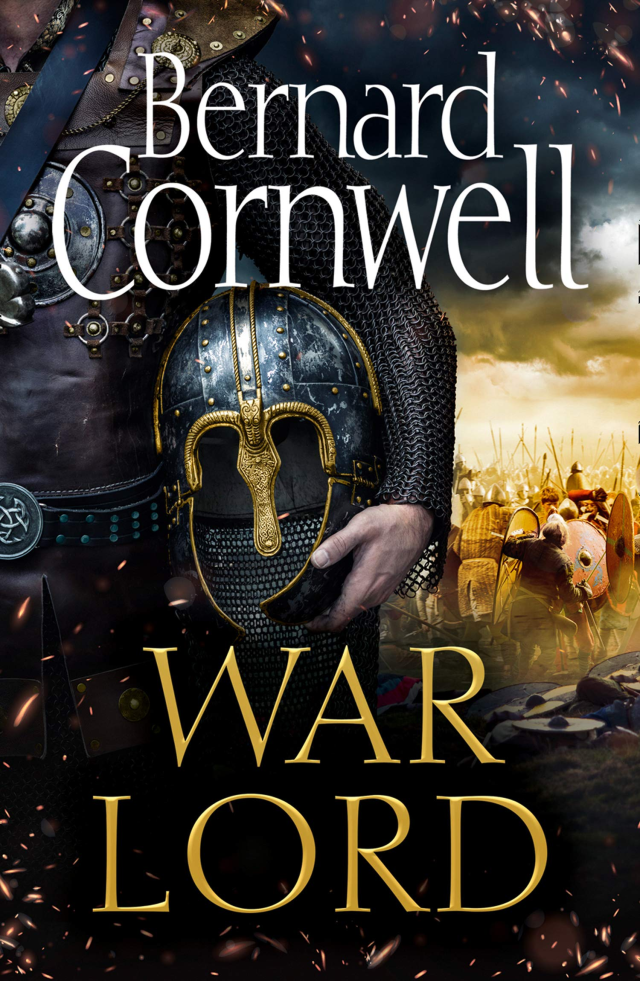
War_Lord_cover.PNG

The other book that I will be looking at in this post is War Lord by Bernard Cornwell, the 13th and final novel in the acclaimed The Last Kingdom series.  The Last Kingdom books follow the fictional character, Uhtred of Bebbanburg, a feared and respected warrior who is involved in some of the pivotal moments of the early formation of England.  This series has so far followed a number of key events in the life of Uhtred and has seen him get involved in the deadly conflict between the Christian Saxons and the pagan Danes.  Uhtred, a pagan raised by Danes, often finds himself fighting on behalf of the Saxon kingdoms, despite having more in common with and more respect for his enemies than his allies.  This is another series I have so far read all the books in, although I am particularly keen to get my hands on War Lord as I am extremely curious to see how The Last Kingdom series ends.  War Lords will be coming out in late October and it looks like Uhtred will once again be thrust into the midst of a deadly war which he probably will not survive.

Synopsis:

After years fighting to reclaim his rightful home, Uhtred of Bebbanburg has returned to Northumbria. With his loyal band of warriors and a new woman by his side, his household is secure – yet Uhtred is far from safe. Beyond the walls of his impregnable fortress, a battle for power rages.

To the south, King Æthelstan has unified the three kingdoms of Wessex, Mercia and East Anglia – and now eyes a bigger prize. To the north, King Constantine and other Scottish and Irish leaders seek to extend their borders and expand their dominion.

Caught in the eye of the storm is Uhtred. Threatened and bribed by all sides, he faces an impossible choice: stay out of the struggle, risking his freedom, or throw himself into the cauldron of war and the most terrible battle Britain has ever experienced. Only fate can decide the outcome.

The epic story of how England was made concludes in WAR LORD, the magnificent finale to the Last Kingdom series.

Both upcoming books sound like they are going to be a lot of fun, and I am excited to see how they turn out.  Based on all my experiences with every prior book in these two series, I know that I am going to have an amazing time reading The Emperor’s Exile and War Lords, especially as I am already very invested in both series.  It will be great to see how the various characters and established storylines continue to progress and I am particularly keen to see how Cornwell concludes The Last Kingdom series.  The Emperor’s Exile and War Lords both have an amazing amount of potential, and I already know that they will be some of the strongest and most enjoyable pieces of historical fiction in 2020.