
Throwback Thursday – Justice League: The Flashpoint Paradox

The Flashpoint Paradox Poster

Studio: Warner Bros. Animation and DC Entertainment

Series: DC Universe Animated Original Movies – Film 18 / DC Animated Movie Universe – Film One

Director: Jay Oliva

Writer: Jim Krieg (Based on the comic by Geoff Johns and Andy Kubert)

Producer: James Tucker

Length: 81 minutes

My Rating: 5 out of 5 stars

Welcome back to my Throwback Thursday series, where I republish old reviews, review content I have enjoyed before or review older books I have only just had a chance to read.  For this week’s Throwback Thursday, I dive into a pretty damn awesome DC Comics animated film that is highly relevant at the moment with the awesome Justice League: The Flashpoint Paradox.

Like many comic book fans in the world, I went out last weekend for the epic new film offering, The Flash, which ended up being pretty damn good.  The film had a lot of great elements to it, including the return of Michael Keaton as Batman, the introduction of a great new Supergirl, and a fantastic examination of the Flash mythos.  I was also very happy to see a fresh new take on the iconic Flashpoint comic, and it will be interesting to see how that impacts any upcoming live action DC films.  While I liked what they did with the Flashpoint story, I don’t think that The Flash was the absolute best adaptation of the Flashpoint comic; instead that honour goes the focus of this article, the 2013 animated film, Justice League: The Flashpoint Paradox.

Before we talk about the film, I should give a little background about the Flashpoint comic.  Flashpoint was a major 2011 comic event, written by Geoff Johns, whose work I have deeply enjoyed in comics like Rogues’ Revenge and Teen Titans, and pencilled by Andy Kubert.  Flashpoint was a compelling alternate timeline story that ended up resetting the main DC Universe in a big way.  While I honestly have very little love for the resulting changes it caused (I will never forgive DC for The New 52), the Flashpoint comic itself is pretty good, featuring some unique and stunning ideas within it.

Flashpoint has been adapted a few times in recent years, including in several seasons of The Flash television series, and the current The Flash film takes a lot from it.  While these other adaptations are pretty good, I think that The Flashpoint Paradox did the most with it, mainly because it sticks a lot closer to the source material and provides a very gritty animated film with a brilliant cast behind it.  Directed by veteran animated film director Jay Oliva (who has directed several of my favourite animated comic book films) and written by Jim Krieg, The Flashpoint Paradox is pretty damn awesome film and it is one that I have rewatched multiple times over the years.

Barry Allen is the Flash, founding member of the Justice League, the fastest man alive and the greatest hero Central City has ever known.  However, despite all he has done and everyone he has saved, Barry still cannot shake the trauma of his mother’s murder, a tragedy that has haunted him since his childhood.  After defeating several of his greatest foes, including his archenemy, the Reverse-Flash Eobard Thawne, Barry awakens to find himself in a new world, one where his mother is still alive and the Flash never existed.  Despite the joy he feels about his mother, this new world is no paradise, instead it is on the brink of ruin.  The Atlanteans, under the command of Aquaman, and the Amazons, led by Wonder Woman, are at war, and their relentless battling and disdain for humanity, has seen the destruction of much of Europe and the death of hundreds of millions of people.

Determined to find out what is happening and to stop the war between the Atlanteans and the Amazons before it destroys the world, Barry seeks out the one man who he thinks can help him, Batman.  However, the Batman he encounters is far different from the one he knows and has very little desire to save the world.  Worse, it soon becomes apparent that the changes to the world have been caused by Thawne, whose obsession with destroying the Flash could lead to unbelievable destruction.  To save the day, Barry needs to find a way to regain his powers and unite the scattered heroes of this reality.  But with all-out war in front of him, and his own trauma catching up behind, can the Flash stop Thawne before it’s too late?  And even if he succeeds, is he truly ready for the revelations that await him?

The Flashpoint Paradox was a pretty epic film that I have a lot of love for, especially as it blends a compelling story with great aesthetics, slick animation and a brilliant cast to produce something pretty damn awesome and a lot of fun to check out.

The creative team behind The Flashpoint Paradox did an outstanding job bringing this film together and one of the main reasons it works is the fantastic and intense story behind it.  The film itself is an exceptional adaptation of the original Flashpoint comic and much of it is a close and deliberate match to the source material.  That being said, it’s not a straight adaption as they needed to make it more accessible and take the story out of the main comic universe.  The film starts off with an exceptional sequence where the Flash faces off against the Rogues and the Reverse-Flash, who ambush him at the Flash Museum.  This scene, which sees a series of bombs threaten Flash and Central City, manages to achieve a lot of essential story points, including introducing Flash, showcasing his bitter rivalry with the self-destructive Thawne, and presenting the established version of the various Justice League characters who will later appear in the alternate timeline.  It’s also a very entertaining scene in several great ways, not only because the banter between Flash and Thawne is pretty brutal, but because it shows each member of the Justice League in action as they disarm a bomb in their own unique way.  This great intro really sets up the rest of the film, especially thanks to the clever references to Barry’s mothers’ death, and while it does make it a little more obvious whose ultimately responsible for events, it was a pretty damn epic start.

The middle part of the film is where the meat of the story is developed, as Barry arrives in the alternate universe and attempts to find out what is going on.  This part of the film resembles the source material the closest as they are pretty much doing a straight adaptation of the Flashpoint comic at this point.  However, they manage to really show off the grim reality of this new timeline very effectively in a short amount of time, and you really get to appreciate just how murderous the Amazons and the Atlanteans are, as well as how dark a world without the Justice League can be.  The creative team tell a very impactful story in this part of the film, and you must love the powerful interactions between Barry and the new Batman, as well as the emotional impacts of Barry realising just how much his universe has changed.  Everything is well capped off by the infiltration into the lab holding Superman, which is honestly way darker than what they did in the recent Flash film, especially with the horrifying aesthetics around the captured Superman.  At the same time, the growing sense of doom in the world is intensifying as the two superhuman armies prepare for war in London, and the tension is well and truly ratcheted up before the final phase of the film.

Everything leads up perfectly to the final act of The Flashpoint Paradox, which frankly is the best and most impactful part of this entire exceptional film.  The final third of the film is essentially an all-out war sequence, as the various characters descend into a three-way battle in the ruins of London, with the Atlanteans, the Amazons, and the human resistance, which includes the protagonists, fighting to kill as many enemies as possible.  This sequence is dominated by several excessively brutal fights between the heroes, and so many characters end up dead in some pretty horrible ways.  Not only are these action scenes highly polished and exciting, but they are also emotionally powerful, as the various character arcs and elements come full circle.  The best scenes are probably shared between Barry and Thawne, as they fight through the battle, debating what has happened to the world.  There are some outstanding revelations here, especially if you aren’t familiar with the source material or the other Flashpoint adaptations, and the moment when Barry figures out what truly happened is just heartbreaking, especially with Thawne’s taunting.  There is so much dramatic tension floating around, especially as Barry witnesses the full onslaught of the battle in front of him, and everything tilts on the edge of destruction.  The final brutal moments of this fight are so damn epic, and it leads up to some painful farewells and some tough decisions from Barry that will shake him forever.  This built-up emotion remains to the very end of the movie, especially as Flash manages to get closure for himself and others, and I really appreciated just how well the film ended.

On top of the epic plot and amazing concluding third, I also need to really highlight the impressive animation, stylistic choices, and fantastic musical score that accompanied it.  The animation in particular is awesome, and I loved the brilliant and iconic character designs that it depicted, especially as there is a mixture of classic character depictions, and the alternate versions that appeared in the Flashpoint universe.  The grim nature of the Flashpoint timeline serves as a powerful backdrop to the plot of The Flashpoint Paradox, and it was fantastic to see the DC universe in an even darker and more desperate light.  The best animation is naturally saved for the multiple impressive fight sequences scattered throughout the film, especially in the big war sequence at the end, and the brutality and sheer ferocity of the fights and battles are quite distinctive.  The animators honestly show no hesitation in showing blood, gore, death and even brains throughout this film, and it is even more brutal than The Flash film or the original comics, as there is barely a second in the final war where someone isn’t dying in some dramatic fashion.  There is some outstanding attention to detail during these various battles, whether it be a brutal fight in the sky, an intense duel between Cyborg and Aquaman in the middle of a warzone, or a high-speed fight through the midst of over combatants, and these are expertly portrayed and guaranteed to keep your interest with its high concept impact.  The cool time travel sequences are also a great highlight, and the clever animation around them really dial up the intensity of the film, especially during certain seminal scenes.  I’m also a big fan of the way that the major characters are presented throughout this film, and I appreciated how their designs change at various points of the film depending on which timeline is being watched.  The alternate costumes or depictions are well contrasted by the classic costumes shown at the start of the film, and I also love the subsequent subtle changes that appear at the end of the film to represent the further changes that have been created.

I also must talk about the fantastic use of music throughout this film, which works perfectly in concert with the animated sequences.  There are some great orchestral scores and tunes that are featured throughout the film, often in the most impact scenes, and I really liked how well they were used to enhance emotion or drama in a very powerful way.  Some of the very best scenes, including several particularly tense or pivotal sequences at the end come across as so much better thanks to the music that was overscoring it, and this really drew me further into the plot.  Combined this great music with the excellent graphics and The Flashpoint Paradox turns out to be an exceptional watch that I cannot get away from.

While the adapted plot and amazing stylistic choices help to turn this film into something special, I cannot walk away from this review without talking about the incredible cast of actors who bring this elaborate story to life.  The Flashpoint Paradox features a pretty hefty and impressive group of voice actors who each dive into their respective characters and bring forth some of the more iconic figures from the DC universe, as well as their alternate versions, in some pretty epic ways.  There is a great combination of classic character depictions, as well as the more nuanced and, in many cases, evil versions from the alternate timeline, that are featured in The Flashpoint Paradox, and the creative team brilliantly balanced the two throughout the plot.

At the centre of The Flashpoint Paradox is the Barry Allen version of the Flash, who embarks upon one of the most important missions of his life.  Expertly voiced by Justin Chambers (of Grey’s Anatomy fame), this version of the Flash is much more closely related to the classic comic portrayals (rather than Ezra Miller’s quirky version) and is an experienced and competent crime fighter.  Despite being one of the more stable superheroes out there, Barry is still haunted by the murder of his mother and his failure to save her.  Chambers really dives into this role and perfectly voices the full emotional spectrum out of Barry, showing all the deep inner pain, as well as his inherent hope, all of which really comes out throughout the film.  There are so many powerful scenes featuring Barry in the film, from his initial confusion over the new timeline, the emotional meeting with his mother, the despair at how the world turned out, and his absolute shocked resignation at who is responsible.  I also felt that the writers did an outstanding job of capturing the entire personality, key history and mythos of the Flash within this film, and you really understand his decisions and how he interacts with the other heroes.  I particularly loved his shock and pain at seeing what his friends have become in this alternate timeline, and it is so damn compelling.  Honestly, there are so many powerful moments here and I have a whole new level of respect for Chambers thanks to this film as he honestly was just magical here.

On top of the Flash, I really need to highlight two figures from the new timeline who perfectly mesh with the main character and show off just how dark events are.  The most prominent of these is easily this universes Batman, who was voiced by another Grey’s Anatomy alumni, Kevin McKidd.  Rather than being an older version of Bruce Wayne, this version of Batman is his father Thomas Wayne, who took on the cowl after Bruce was killed in Crime Alley and Martha became this universe’s Joker.  McKidd goes full on growly here for Batman, and the result is a grizzled, violent, and very murderous Dark Knight who has given up on the world in many ways.  I loved this fantastic and clever take on Batman in The Flashpoint Paradox, and it is so damn epic to watch Barry attempt to work with this very different Batman.  The shared connection of knowing Bruce gives these characters a powerful emotional bond, and McKidd kills it in several emotionally charged scenes, showcasing this Batman’s hidden heart.

I also have a lot of love for the cool version of Cyborg that appears in The Flashpoint Paradox, and honestly this is probably the grimmest and most powerful portrayal you are likely to see.  Voiced by a young Michael B. Jordan, this Cyborg is the only real superhero left in America and has been modded out into a massive tank figure who runs national security.  Out of all the figures in the film, Cyborg has the most impressive change in characterisation between timelines, especially as he goes from teenage figure to actual adult, and this is one of the first animated films that really showed what he could offer the wider DC universe.  Jordan provides a pretty good and slightly robotic voice for Cyborg here, and I loved how he was portrayed as a level-headed peacemaker, trying to save the world.  While still a little naive and idealistic, he really lives up to all the hype surrounding him in his initial introductions, especially during the final bloody battle scenes.  He honestly goes full out in this war, and it was so damn cool to see just how dangerous he could be.

While the more heroic (or anti-heroic for Batman) characters above were great, this film would be nothing without its villains.  The most prominent of these is easily Flash’s archnemesis Eobard Thawne, better known as the Reverse Flash.  Voiced by the very talented C. Thomas Howell, Thawne is a brilliant and powerful figure in The Flashpoint Paradox, mainly because he has such a tangible hatred for Barry and his legacy.  While he is the main villain of the story, he only appears in a few short scenes, but Howell makes each and every one of them count.  The sheer contempt and bile that drips from every sentence is so important for the performance, and you quickly understand just how much he wants to destroy him, even if that means losing his own life.  Thawne’s best sequence occurs at the end of the film when he finally appears to mock Barry and reveal everything that has been done.  The joy, satisfaction and mocking appreciation for Barry is just perfect, and he has such a great villain monologue here.  Howell has one of the strongest performances in The Flashpoint Paradox and I deeply appreciated how he brought such a fun and compelling villain to life.

In addition to Thawne, The Flashpoint Paradox features two other outstanding and particularly unique antagonists in the form of militarised and anti-human versions of Aquaman and Wonder Woman.  Both characters have been twisted by a failed romance and the hatred that followed Wonder Woman’s slaying of Aquaman’s wife, and they are now brutally engaged in war to kill each other and the rest of the world.  I loved these darker and more murderous forms of these iconic characters, especially after they are shown in their more heroic guises at the start of the film, and their complex war is a destructive backdrop to the intense narrative.  Like Reverse-Flash, both are consumed by hatred, and they are willing to destroy the world rather than lose.  Despite that, there is still an obvious, if twisted, love between them, which makes their fight even more tragic.  I loved how both characters are portrayed, although I especially like how badass they make Aquaman here, especially as this was released in the pre-Jason Momoa days when Aquaman was still a bit of a joke.  Watching him destroy everyone in The Flashpoint Paradox really sets him up as a massive threat, and I deeply appreciated this fantastic change to the character.  I also loved the great casting behind these characters as well.  Aquaman is portrayed by legendary actor Cary Elwes, who honestly disappears into the role, providing a much more gruff and commanding voice than I have heard in his previous works.  The voice of Wonder Woman is provided by veteran voice actor Vanessa Marshall (Hera Syndulla from Star Wars Rebels), who is reprising the role she previously portrayed in Justice League: Crisis on Two Earths.  Both actors really get these iconic characters down perfectly, especially in their darker moments, and I loved how well they were utilised in the film, especially as they enhance the emotional power and looming threat of the narrative.

On top of the great performances above, I also must commend the use of several excellent supporting actors in smaller roles who did an outstanding job.  I as particularly happy that several actors who had previously voiced certain characters in other films and shows revisited their roles here, including some big names.  The most noticeable of these is the late great Kevin Conroy, who does an exceptional (as always) job of voicing the Bruce Wayne Batman at the beginning and end of the story.  Conway has several amazing scenes, including a particularly emotional sequence at the end that will have you in tears.  Other performers include Nathan Fillion providing a cocky voice to the Hal Jordan Green Lantern, Dana Delany once again voicing Lois Lane after voicing her the DC Animated Universe (Superman: The Animated Series, Justice League and Justice League Unlimited), and Ron Perlman revisiting his epic Teen Titans performance as Deathstroke for a short scene.  Other notable actors and characters include Danny Huston doing a quick dash as General Sam Lane and Dee Bradley Baker (the voice of all the clones in Star Wars animation, as well as several hundred other credits) doing a fantastic Etrigan the Demon.  However, my favourite of these side characters is Danny Jacobs’s portrayal of the Wildstorm Comics character Grifter.  Grifter is a brutally effective figure in the final third of the film, and he has some outstanding interactions with other characters like Batman.  This cast, and more, all add so much to the film with their brilliantly portrayed characters, and I am still blown away by the calibre of the cast that was brought together here.

I think it is pretty obvious from the lengthy rant above that I have a lot of love for Justice League: The Flashpoint Paradox, and it is one of those animated films that I have watched so many times.  Thanks to its amazing cast, fantastically adapted story, intense animation and general darker vibe, The Flashpoint Paradox is a pretty spectacular animated film, and I honestly think it has the best execution of the Flashpoint comic.  It also has an awesome legacy, especially as it sets up the DC Animated Movie Universe and has impacts that range all the way to the final film, Justice League Dark: Apokolips War.  As such, I really must give this film a full five-star rating and it is a must-watch for all comic fans, especially those who like their animation a little more adult and emotionally charged.
Throwback Thursday – Batman: Under the Red Hood

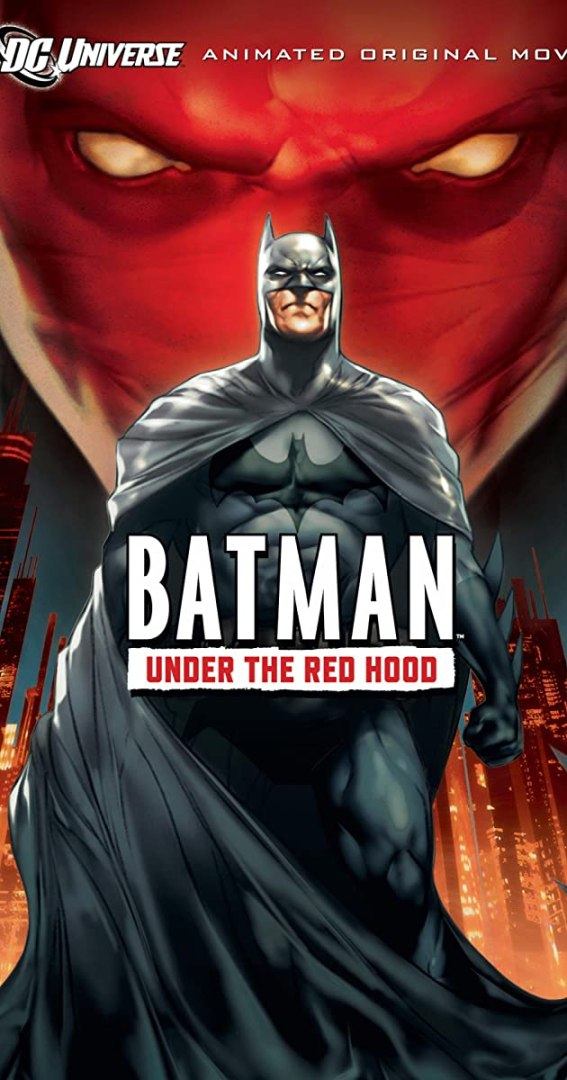
Under the Red Hood Cover

Studio: Warner Bros. Animation and DC Entertainment

Series: DC Universe Animated Original Movies – Film Eight

Director: Brandon Vietti

Writer: Judd Winick

Producers: Bruce Timm and Bobbie Page

My Rating: 5 out of 5 stars

Welcome back to my Throwback Thursday series, where I republish old reviews, review content I have enjoyed before or review older books I have only just had a chance to read.  For this latest Throwback Thursday, I am going to keep following a recent trend of looking at animated movies and review Batman: Under the Red Hood.

Ever since I reviewed Justice League Dark: Apokolips War last year, I have been focusing a little more on one of my favourite forms of entertainment, animated films based on comic books.  Not only did I have a great time listing my favourite comic book based animated films and television shows, but I have also done some cool reviews for Batman: Soul of the Dragon and Batman: Assault on Arkham.  After I got some positive responses to my review for Assault on Arkham last week, I thought I would use this Throwback Thursday to highlight the incredibly awesome Batman: Under the Red Hood, which is probably my absolute favourite DC Comics inspired animated film.

Released in 2010, Under the Red Hood was an early entry in the DC Animated Originals Movies range, and it remains one of the best that they have ever done.  Directed by Brandon Vietti and written by Judd Winick, this film is an adaptation of the iconic Batman comics storyline Under the Hood, which was also written by Winick.  Not only does this film contain an excellent story that does an amazing job capturing the original comic but it also features an all-star voice cast and some excellent animation, resulting in a dark and exciting film that is also rich in emotion and tragedy.

Years ago, Batman suffered the greatest defeat in his entire crime-fighting career when the Joker did the unthinkable by brutally killing his sidekick, Jason Todd, the second Robin.  Despite this terrible loss, Batman left the Joker alive and continued his non-lethal mission for justice, fighting from the shadows to save Gotham City from its criminal element.

In the present, Gotham is controlled by the ruthless crime boss, Black Mask, who has managed to take over the entire criminal underworld.  But a new player in town, the mysterious Red Hood, is making moves to disrupt Black Mask’s interests and take control of the city.  With some incredible skills, brilliant manoeuvring and intense violence, Red Hood soon becomes a major thorn in Black Mask’s side, taking parts of the city from him.  At the same time, Red Hood has placed himself right in the path of Batman and his former sidekick, Nightwing, determined to test his abilities against those of the Dark Knight.

As Batman attempts to stop the latest wave of violence sweeping the city, he notices something disturbingly familiar about the Red Hood.  His skills and training are too familiar, and even more shocking, he knows that Batman is Bruce Wayne.  With Black Mask on the warpath, the mysterious Ra’s al Ghul watching from the shadows, and the Joker always a menacing presence in Arkham, Batman gets closer to finding out the terrible truth about who Red Hood truly is.  But is he prepared for the darkness and tragedy he will find under the hood, or will the ghosts of his past finally push Batman over the edge?

Under the Red Hood is a dramatic, exciting, and overall tragic animated feature, which is brought together beautifully to produce an epic and powerful film, anchored by an exceptional narrative.  The film starts in a very dark place, with a malicious and hilarious Joker brutally killing Robin just before Batman can save him.  This perfectly sets the tone for the entire film, as the story advances to modern times and shows a new brutal crime war between the Black Mask and newcomer the Red Hood.  At the same time, Batman becomes embroiled in their war, when he interrupts a ploy by the Red Hood to steal an Amazo superweapon.  This leads to an action-packed middle section of the film, as Batman and Nightwing attempt to capture Red Hood, who is also dealing with assassins sent by Black Mask.  After several impressive fight sequences, Batman learns the shocking truth about Red Hood’s identity (which is as a tad obvious, even for those unfamiliar with the comics), resulting in some extreme drama, as Batman is forced to confront the dangerous ghosts of his past.  As Batman attempts to come to terms with his discovery, Red Hood forces his opponents to make some dramatic moves, which work into his plans.  What follows is a fantastically powerful and intense final act, as Batman confronts Red Hood and finds out the tragic and touching reasons behind his motivations.  What follows is emotional blow after emotional blow, as Batman, Red Hood and the Joker have their final confrontation.  The aftermath of this is absolutely heartbreaking and will leave you breathless and utterly moved: “This doesn’t change anything; this doesn’t change anything at all!”  This is an epic and exceptional narrative that I have so much love for.

Under the Red Hood serves as an exceptional adaptation of the Under the Hood Batman comic storyline, although as the film and the comic share the same writer, that’s pretty understandable.  This film does a great job fitting all the key points of the comic into its 75-minute runtime, and you get the full enjoyable story, as well as some useful backstory, especially around Jason Todd’s death.  This is mostly a pretty straight adaption, although there are a few noticeable changes designed to make the movie flow a little better.  I think these changes work extremely well, and Winick adds several great new scenes into this film that make for a different and, in some ways, better experience than the comic source material.  This is mainly because the Under the Hood comic was set amid several other ongoing Batman storylines, as well as the major crossover event, Infinite Crisis, which impacted Under the Hood’s overall narrative.  As it would have been too confusing to include some of these elements in the film, their removal resulted in a few notable changes.  While this did result in a few fun parts from the comics being removed, such as having the opponents in the Batman/Red Hood team-up fight change from members of the Secret Society of Supervillains, such as Captain Nazi and Count Vertigo, to a group of mechanised martial artists (it’s still a great fight though), some of the other changes worked really well.  I loved the alterations to the Joker’s story, as it was clever to have the Red Hood orchestrate Joker’s release to kidnap him.  It also results in some amazing scenes, including that great cell scene with Black Mask, and the fantastic scene with the truck on the bridge.

One disadvantage that I felt the film version had was that the big reveal over Red Hood’s identity is a lot less impactful.  When the Under the Hood comic first came out, it was a major revelation and there were some great surprise elements to it.  However, by the time the film came out, every comic fan knew who Red Hood really was, so that really cut down on the surprise factor of the reveal.  In addition, even if you were unfamiliar with the Under the Hood comic, the Jason Todd death scene at the start of the film ensured that most viewers would be easily able to figure out this twist as soon as the mysterious Red Hood appeared.  This was kind of unavoidable though, as the rest of the film wouldn’t have made sense without the establishing scene.  I did think that the reason behind Robin’s resurrection was handled a lot better in the film.  The original story, in which he is brought back to life due to Superboy-Prime punching a dimensional barrier, never really worked for me, so having it purely be the result of a Lazarus Pit resurrection was a lot neater and simpler (well, as simple as a magical resurrection pit can be).  Overall, I think that Under the Red Hood proved to be a really good adaption of the original comic, and in many ways I felt that in enhanced the source material while also compensating for the changed canons.

I am always deeply impressed by the fantastic and well-crafted animation of Under the Red Hood.  This entire film features a constant stream of beautiful and amazing sequences that are an absolute joy to behold.  The action is seamless throughout, and the creative team make sure to feature several sequences that show off the various skills of the main characters, while also bringing some iconic scenes from the comics to life.  I really must call out the two excellent extended chase sequences, as Red Hood flees from Batman and Nightwing.  These scenes are full of excitement and major moments, and the fantastic running sequences, equipped with all the players using their various gadgets and tricks, are so cool, and they are just animated perfectly.  However, these chase scenes pale in comparison to some of the epic fight sequences featured throughout the film.  While I do deeply enjoy the Amazo fight sequences at the start of the film, which expertly highlights the way Batman and Nightwing work together as a team, the best ones are the two fights involving Batman and Red Hood.  The first of these, which sees the two former partners team up against the anime-inspired team of assassins, the Fearsome Hand of Four, is so deeply cool, especially as the amazingly drawn martial arts techniques are beautifully paired with the over-the-top gadgets (one guy gets thrown through the air with explosives several times).  The animators save the best for last, with a brutal brawl between Batman and Red Hood near the end of the film.  This impressive and dramatic fight sequence is teased throughout the entire film, and when it goes down it does not disappoint.  The two heroes go to war with each other, each of them bringing lethal fighting abilities and an entire arsenal of toys and gadgets against each other for some incredible action.  The fight goes from the alley where the two first met, to the rooftops, all the way to a dilapidated apartment bathroom, where bodies are brutally thrown through fixtures and walls.  There is so much intensity in this sequence, and the animators outdid themselves bringing this major and spectacular fight to the screen.  You will be so impressed by this terrific animation.

You cannot talk about Under the Red Hood without out mentioning the incredible collection of characters and the outstanding voice cast that perfectly portrayed each of them.  Unsurprisingly for a Batman film, the cast is anchored by the Dark Knight himself, who is voiced by the talented Bruce Greenwood.  This is a great portrayal of Batman and the writer really captured the complexities of the veteran version of this superhero.  This Batman has been fighting crime for a very long time, and has been struck by tragedy after tragedy, especially the death of Jason Todd.  This comes into play throughout the film, and there are some major emotional moments, especially in the final climatic scene with the Red Hood.  Watching this film, it is impossible not to see Batman as a tragic figure, always destined to experience heartbreak and trauma as the result of his relentless crusade.  I did love the amazing animation featured around Batman’s various fight scenes, and it contrasts nicely with some of the other characters, such as Red Hood, with more of a focus on his experience and placing the right move at the right time.  I also really enjoyed Bruce Greenwood’s portrayal of Batman, who brings a gruff and determined depiction of the character which really works.  Greenwood delivers several great dialogue sequences which show the depth and complexity of this iconic character, and I had a fantastic time following him in this film.

Another major character is the character of Jason Todd/Red Hood (I would add a spoiler alert, but after all these years it’s kind of redundant), voiced by Jensen Ackles.  The Red Hood featured in this film is an amazing and outstanding version of the character, and you run the entire emotional gambit with him.  I loved the fantastic and clever introduction of the character, where he manages to take over a large criminal organisation with just a bag and a machine gun.  This evolves into a very fun game of cat and mouse between Red Hood and Batman, while he also works to take over from Black Mask.  The eventual reveal about Red Hood works extremely well: “You haven’t lost your touch, Bruce,” and I loved the various chase scenes between the two, as well as their joint fight sequence against the Fearsome Hand of Four.  All this perfectly leads up to the great final confrontation with Batman, with a big elaborate fight scene and that extremely dramatic sequence opposite Batman.  Ackles adds some real cockiness to the character, and his various interactions with the supporting characters are pretty funny and really fun.  However, it is his sequences with Batman that are the best, as Ackles adds all the appropriate drama of a murdered child when encountering his former mentor.  The revelation of Red Hood’s motive is deeply captivating, and the entire scene where he, Batman and the Joker are reunited is so very tense and powerful.  You also have to love how the final scene in the film features the younger version of Robin on his first night of crime-fighting, as his innocence and childlike joy at being a hero stands in such contrast to his eventual fate: “This is the best day of my life.”  This is an outstanding portrayal of one of the most complex characters in the DC canon.

I also really must highlight the incredible version of the Joker that is featured in this film, who is voiced by the always entertaining John DiMaggio.  This is a great interpretation of the Joker, and you get to see just how vicious and ruthless he can be.  I love how the writers and actor did a great job capturing his insane mentality when it comes to the Batman, especially as his greatest ambition is to drive Batman insane enough to kill him.  I was honestly surprised at how awesome John DiMaggio was in this role, especially as the purely evil Joker is very different from the comedic characters he is best known for portraying.  However, he brings some very excellent menace to this character, and while there are a lot of humorous undertones to his actions, the sheer insanity and joy he has at other people’s suffering is more than evident.  Joker has some incredible scenes throughout this movie, which DiMaggio really enhances with his unique take on the character.  The opening sequence in which he beats Jason Todd half to death with a crowbar is pretty dark, despite the constant jokes, and his later confrontation with Batman in Arkham really captures his overall insanity.  However, his best sequences occur later in the film.  The first of these is the cell scene with Black Mask, where he accepts a job offer in the most boss way possible (never hand the Joker a cup of any variety).  The follow sequence on the bridge, where he attempts to draw the Red Hood out with a truck, some guys and some gasoline is really great, especially when it is revealed that the Black Mask is also amongst his hostages.  However, DiMaggio shines best in the final sequence where Batman and Red Hood finally have their dramatic showdown with the Joker in the middle.  The Joker revels in all the drama and emotion in the room, especially when Red Hood attempts to force Batman to kill Joker: “This is turning out even better than I hoped!”  The final bit of the confrontation where Joker, realising that Red Hood’s bomb will kill them all, joyfully attempts stop Batman, “This is perfect…. I’m the only one who’s going to get what they want tonight,” really captures the character’s chaotic mentality and is a great conclusion to his story arc.

The other major character in the film is Nightwing, former Robin Dick Grayson, who is portrayed by the legendary Neil Patrick Harris.  Mostly featured in the first half of the film, Nightwing serves as the traditional sidekick role, bringing a lighter comedic role to the dynamic duo and playing off the ultra-serious Batman perfectly.  I loved the fantastic coordination in the action sequences between these two, and the animators do an outstanding job showing how their fighting styles complement each other and they instantly know what the other one is doing.  Harris’s voice work is great, hyping up the characters comedic, banter-laden fight style, and while it didn’t fit as well as some other versions of Nightwing I have seen, this was still a pretty epic bit of casting.

Aside from these above four main characters, I deeply appreciated Jason Issacs and Wade Williams as Ra’s al Ghul and Black Mask respectfully.  Issacs does an outstanding job bringing the enigmatic and ruthless al Ghul to life, and it was great to see the respect and personal code this version of the character has, especially once his actions result in Jason Todd’s death.  Williams’s unhinged version of Black Mask is also incredibly good, and I loved the ultra-anger he brings to the role, especially as he slowly becomes more and more targeted by Red Hood and Batman.  His reactions to the crazy antics of the other characters is pretty fun, and you’ve got to love the look on his face when he sees Red Hood targeting him with a giant rocket launcher.  I also want to call out Kelly Hu as Black Mask’s assistant, Ms Li, a gender-swapped version of the assistant character in the comic.  Ms Li serves a pretty cool counterpart to Black Mask and is a constant calm presence in his chaotic administration, barely batting an eye at any of his angry or violent outbursts.  These great supporting characters compliment the main cast perfectly, and I felt the film’s entire collection of characters and actors helped to turn Under the Red Hood into something incredibly special.

While there have been some incredible DC animated movies out there, none have eclipsed the exceptional and awesome Batman: Under the Red Hood.  Featuring an impressive adaption of an iconic and cool comic story arc, this amazing film contains a fantastic narrative loaded with action, excitement, and intensity, as the characters engage in a dramatic and tragic battle.  With a perfect voice cast and some outstanding animation, Under the Red Hood is a must-watch animated film that I have seen and deeply enjoyed so many times.  An easy five-star watch that is highly recommended; if you love Batman, you need to see this film.

Film Review – Batman: Soul of the Dragon

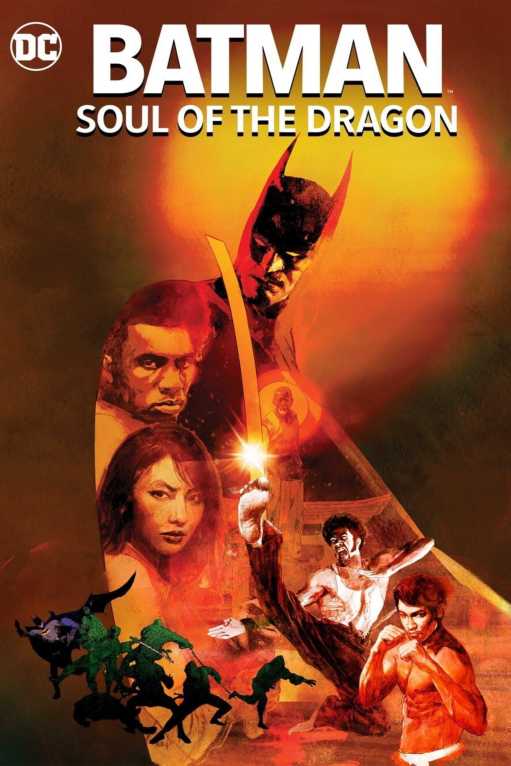
Batman - Soul of the Dragon

Studio: Warner Bros. Animation and DC Entertainment

Series: DC Universe Animated Original Movies – Film 40

Director: Sam Liu

Producer: Bruce Timm

Writer: Jeremy Adams

Length: 82 minutes

My Rating: 5 out of 5 stars

Prepare to dive into an intense and addictive DC Comics martial arts adventure with the latest entry in the DC Universe Animated Original Movies range, Batman: Soul of the Dragon, an outstanding and deeply enjoyable film that explores several amazing DC characters in a very unique way.

While The Unseen Library is primarily dedicated to providing book and comic reviews, I have in the last year been experimenting with reviews and articles about another great passion of mine, animated superhero films.  I have always had a lot of fondness for this genre and I started focusing on it more last year when I reviewed Justice League Dark: Apokolips War, and even further when I did an extended Top Ten Tuesday article listing my favourite superhero animated films, which primarily featured DC Universe Animated Original Movies.  DC continues their domination of the animation market with the very awesome Soul of the Dragon film, which serves as the 40th entry in the DC Universe Animated Original Movies range.  I had an outstanding time watching this latest animated offering and it is definitely a new favourite film of mine.

Bruce Wayne, Richard Dragon, Shiva and Ben Turner are four of the best martial artists on the planet, utilising their skills and training to become truly elite fighters.  While each of these renowned warriors are now on their own different paths, they shared a similar start on their journey as students at the secret monastery of Nanda Parbat.  Training under the legendary O-Sensei, these four, along with other notable students, not only learned the martial techniques that allowed them to become the fighters they are today but also became a close-knit family, until one terrible night changed everything for them.

Now their paths are about to cross again when Richard Dragon discovers that a fanatical organisation, the Cult of the Kobra, have stolen an ancient and dangerous artefact that Dragon and his fellow former students are intimately and tragically familiar with.  Travelling to Gotham City, Dragon recruits Bruce Wayne, who now fights criminals as the vigilante Batman, to help him stop Kobra and save the entire world.  Attempting to recover another artefact guarded by Shiva, now a feared Gotham crime boss, they soon discover just how long and deadly Kobra’s reach is.

With Shiva and Ben in tow, the four former disciples of O-Sensei prepare for the battle of their lives as they attempt to infiltrate Kobra’s island base.  However, nothing will prepare them for the dangers they will encounter, nor the horrors unleashed from their past.  Can these four dangerous fighters work together to save the world or will an ancient and deadly force be unleashed?

Batman: Soul of the Dragon is an excellent and amazing animated comic book film that proved to be an absolute treat to watch.  This is a standalone film which is directed by Sam Liu, written by Jeremy Adams and featuring Bruce Timm as an executive producer, and together these talented people have produced a fantastic and powerful feature.  Liu and Timm are the genius behind some of the best animated comic films that are out there, including Justice League vs. Teen Titans, Suicide Squad: Hell to Pay and the incredible The Death of Superman, and they have once again done an outstanding job with Soul of the Dragon, creating a unique and entertaining comic book tale.  Making excellent use of an exceptional narrative, a great group of characters and a very distinctive vibe, Soul of the Dragon is an outstanding and wonderful film that is really worth watching.

Soul of the Dragon has a particularly awesome and captivating narrative that follows its four iconic central protagonists on an epic quest to right the wrongs of their collective past.  This movie contains an original tale set in the 1970s that draws heavily from classic DC martial arts comics to create a fantastic film that not only dives into the origins of some amazing DC characters but which also presents an exciting character-driven adventure.  This movie starts off with a captivating bang with Richard Dragon discovering a sinister plot with ties to his time as a student.  The story then quickly starts to reunite the four major characters, with several impressive action set-pieces dominating the early part of this movie, all of which were a real treat to watch.  The story than takes the protagonists to an island fortress where they must face their enemy before he can unleash a terrible force of destruction.

Interspersed with the main story are a series of compelling flashbacks that follow the protagonists’ training under O-Sensei, which provide some excellent context to the main story.  I thought that the flashbacks were a particularly impressive part of the movie and I liked they expertly tied together main narrative with the past, creating a richer overall story.  I also felt that the narrative did an excellent job of introducing each of the characters while also highlighting the differences between their modern appearances and their former lives as students.  I did think that the main story was a little rushed and could have potentially used a little more plot in between the protagonists’ reunion and their arrival at the antagonists’ island.  Still, this did not impact my enjoyment of the movie too much, and the last third of the film is so damn epic and emotionally charged that you forget about this slight misstep of pacing.  All of this wraps up with a memorable and interesting ultimate conclusion, which will leave you wondering about what, if anything, is going to happen next.

Thanks to the standalone nature of this movie, potential viewers do not need to have watched any prior DC animated features to enjoy Soul of the Dragon, and indeed minimal knowledge of the various characters and comic elements is needed to follow along, as the narrative provides a fantastic and detailed introduction to all the relevant parts of the plot.  All of this makes for an epic and just plain awesome story that honours some classic DC characters and comics while also introducing them to a new generation of DC fans with this fantastic adventure.

In addition to the first-rate story, I was also impressed with how well this cool movie was put together.  It contains some outstanding animation, especially when it comes to the impressively exciting action scenes, with a particularly well-put-together car chase halfway through the film being an amazing example.  This proves to be a very action-heavy film, with a huge number of fluid combat sequences that perfectly captures the skill of the combatants and which successfully translates the style of the original martial arts comic.  Parents should be warned that this is not an animated feature for younger children, thanks to some of its over-the-top content, but everyone else is going to love seeing all the exciting fast-paced scenes unfold.  I particularly liked how this animated movie had such a distinctive and entertaining style to it, which really enhanced my enjoyment of the film.  As the story is set in to the 1970s, the creators attempted to replicate the feel and tone of the era in a number of different ways, such as the technology, locations and the animated appearances of the characters.  The creative team also made sure to include a ton of appropriate slang (you haven’t seen anything till you’ve seen Batman say: “Let’s get it on”) and an excellent instrumental musical score that is not only very 70s in its sound but which perfectly fits the movie’s distinctive narrative and tone.  Soul of the Dragon draws a lot of inspiration from classic kung fu films, especially those featuring Bruce Lee, and you can really feel the creators’ love of the genre with all the little details they chuck in.  There are also a number of fantastic allusions to classic James Bond films, including several very familiar musical themes, some entertaining lines from certain characters and even a dangerous car chase with a gadget-laden car that ends with a vehicle getting whisked away on an electromagnet attached to a helicopter (a very fun call-back to You Only Live Twice).  I absolutely loved how well this film came together, and all the exceptional animation and clever tonal shifts combine perfectly with the great story to produce an enthralling and memorable viewing experience.

In addition to have an amazing and entertaining narrative, Soul of the Dragon is backed up by a fantastic roster of characters from across the DC Comics canon, voiced by an exceptional and talented collection of actors.  While this movie contains several great supporting characters, the story is mostly set around Bruce Wayne, Richard Dragon, Shiva and Ben Turner, each of whom are heavily featured in both the main narrative and the flashbacks.  While all four of these main characters are great in their own right, a lot of their appeal lies in fantastic connection they have with each other and with their master, O-Sensei.  These great protagonists have an excellent rapport, and it proved to be really great to see them interact with each other throughout the film.

The lead of the film is probably Batman, who is voiced by David Giuntoli of Grimm fame, who provides a fantastic take on the character with his voice work.  I liked how there were two versions of Batman: the vigilante who featured in the main story and the younger student in Nanda Parbat.  This proved to be an interesting portrayal of this iconic character, as the writers attempt to explore Bruce’s determination, even as a young man, to do the impossible and fight evil no matter the cost.  It was also great to see him evolve from the student in the flashbacks to the vigilante in the main story, and there are some fun scenes that showcase him becoming a more focused and terrifying fighter when he puts on the mask.

While Soul of the Dragon is nominally a Batman movie, Bruce is somewhat overshadowed by some of the other main protagonists.  This is no fault of the character’s portrayal or characterisation; it is just because the other protagonists are just a little more exciting and enjoyable.  Part of the reason why this is the case is that Batman is the least skilled martial artist in what is essentially a kung fu movie, as it is established that his fellow students are better fighters than him (this is true in both the film and in the comics).  While this does mean that some of the other characters’ action sequences are a little more visually impressive, you instead get to see Batman fight in different ways.  There is a great focus on how Batman utilises trickery and fear to supplement his weaker fighting abilities, and there are some excellent scenes around this, including a key one towards the end of the film where he uses a combination of his gadgets, cunning, and even his own cape to defeat a superior foe.  I did think that the version of the character was a bit blasé about keeping his identity secret with his friends, and he didn’t seemed as opposed to people using lethal force as you would expect, but this was an outstanding take on Batman and I really enjoyed his appearance in this film.

One major character who was a true highlight of this movie was Richard Dragon, an iconic character who is widely regarded as one of the best fighters in the DC canon.  Despite his popularity in DC’s martial arts comics, this is the character’s first appearance outside of the comics (the Richard Dragon featured in Arrow is a different character altogether) and he voiced by The Chairman himself, Mark Dacascos.  Depicted as Asian in the film (the comic character is traditionally a red-haired Caucasian), this character looks a lot like Bruce Lee in Enter the Dragon and is portrayed as an international super spy.  Despite this being a Batman film, in many ways Richard is just as much the main character of this movie, with much of the story revolving around him.  Richard grabs focus right from the start, where he engages in some amusing spy antics, which include outwitting a James Bond-esque character in a fancy casino, effortlessly and stylishly fighting off some goons, and parachuting onto a boat filled with beautiful women (a scene very reminiscent of The Living Daylights, Bond music included), before identifying himself as “Dragon, Richard Dragon”.  Each of Dragon’s subsequent scenes are really fantastic, from the fluid and exceptional action sequences to the fun interactions he has with other characters, including an entertaining scene with a pompous bouncer.  Dacascos does an exceptional job voicing this character and he provides Richard with a confident, intelligent and generally calm air that proves to be extremely easy to enjoy, while also including some vulnerability in several amazing scenes.  All of this helps to produce an exceptional character and I am extremely glad that the introduction of Richard Dragon to a wider media went so well.

The next major character in the movie is the dangerous and delightful Shiva, who was voiced by the talented Kelly Hu.  Lady Shiva, as she is better known, is one of the deadliest assassins and martial artists in the DC canon.  I felt the creative team did an outstanding job showcasing Shiva in Soul of the Dragon, as she is portrayed as a merciless killing machine and living weapon able to destroy her opponents with minimal effort and nothing but her bare hands.  The character has some of the most brutal combat sequences, which were not only beautifully animated but which proved to be extremely entertaining to watch.  I felt that Shiva went through some fantastic character development throughout the film as she transforms from a dedicated student to a ruthless crime lord who even Batman is afraid to deal with: “I’m working up to it…”  I also really loved the choice of voice actor for this character as Kelly Hu does a sensational job bringing Shiva to life.  Hu, who is known for her comic book roles in both animation (as Cheshire in Young Justice and Karai in Teenage Mutant Ninja Turtles) and live action (as Lady Deathstrike in X-Men 2 and China White in Arrow), has previously voiced Lady Shiva in the Batman: Arkham Origins video game, and it was great to see her return to this fantastic character.  She gives this version of Shiva a particularly deadly air; you can tell with every sentence just how confident she is in her own ability and lethal potential.  Not only does Shiva have some of the best fight scenes in the movie but she also has some of the best lines, such as when she chooses her opponent in one of the big boss fights: “I’ll take the girl, her look offends me!”  I also absolutely loved one scene which saw the voice of Karai from Teenage Mutant Ninja Turtles face off against three green-clad ninjas respectfully wielding sai, nunchaku and a bo staff.  The character’s casual comment of “You know how to use those?” followed by her effortlessly taking all three out was just perfect and it has me laughing pretty heavily.  I think that Shiva was probably my favourite character in the entire movie and I am really impressed with how she was written and portrayed.

The final member of the main four characters is Ben Turner, the angry and dangerous African-American fighter better known as Bronze Tiger.  Bronze Tiger is a major martial artist in the DC canon who is probably best known for his run in the Suicide Squad comics.  Bronze Tiger is voiced by Michael Jai White, who recently portrayed the live-action version of the character in Arrow.  I really liked Bronze Tiger throughout Soul of the Dragon, as the film captures a lot of his essence from his original comic appearances and subsequently turn him into a fantastic character in this movie.  Part of the reason why is that he goes through the most development out of all the main characters, especially as several flashbacks bridge the gap between his student days and his current character, showing several pivotal events in his life.  I absolutely loved his look in this movie, as they made the decision to model him on African-American actor and martial artist, Jim Kelly, with some elements of other 70s African-American characters like Shaft and Luke Cage thrown in.  There is a particularly fun joke around this character when Richard misremembers the character’s codename as Black Samurai, a reference to the Jim Kelly movie of the same name, and the subsequent approval of the team at his actual codename of Bronze Tiger was very entertaining.  White does some excellent voice work for Bronze Tiger in this film and he successfully showcases the character’s intense anger at the start of the story before evolving it into a more zen-like persona towards the end.  I would say that Bronze Tiger was a little overshadowed by the three other protagonists, but he was still a great addition to the movie and is a fun character to follow.

Aside from the main four characters, there is a particular focus on the mentor character of O-Sensei, who is voiced in this film by the legendary James Hong.  O-Sensei is a fantastic character with an intriguing history in DC Comics, being a major figure in the lives of Richard Dragon, Shiva and Bronze Tiger.  This is actually O-Sensei’s first named appearance outside of the comics, and he proves to be a fantastic and fun addition to the movie’s narrative.  Hong portrays the character as a wise but humorous kung fu master, offering deep insights and amusing jokes in equal measure to the younger characters, while also forming them into a close family.  O-Sensei proves to be an extremely likeable character, with some deep and powerful moments that ensure that the viewer appreciates and enjoys him.  I particularly loved Hong’s voice work throughout the movie and I felt that he really dived into the character and made him stand out, especially in some later scenes in the movie where there are some intriguing twists around him.  An overall outstanding and exceptional part of the cast, I am extremely glad they got Hong for this movie.

No comic book movie will be complete without some villains, and to my mind this is where Soul of the Dragon falls a little flat.  The antagonists of this film are the members of the Cult of the Kobra (essentially DC’s version of Hydra, both of which were created by Jack Kirby).  Kobra are led by their prophet, Jeffrey Burr (voiced by Josh Keaton), backed up by his henchmen Schlangenfaust (Robin Atkin Downes), Lady Eve (Grey Griffin) and King Snake (Patrick Seitz).  While all of these characters are voiced perfectly and have some cool moments throughout the movie, such as Burr’s creepy introduction, his belief in his prophesised destiny and Schlangenfaust’s hidden abilities, I honestly found each of these villains to be a little underwhelming.  None of them (with the possible exception of Schlangenfaust) really stood out to me and they were all very generic sort of villains to the story.  That being said, Soul of the Dragon did feature two hidden antagonists at different points of film who add some major twists to the tale.  Both of these villains were rather good and moved the story along in some intriguing and entertaining directions.  I particularly loved the appearance of one antagonistic character towards the end of the movie, and while his appearance was slightly predictable, it proved to be a major highlight of the film, resulting in some outstanding scenes.  As a result, it was rather easy for me to forgive some of the downsides of the Kobra villains as the overall antagonists of this film turned out to be extremely good.

Overall, I think that Batman: Soul of the Dragon was an exceptional animated film that was a heck of a lot of fun to watch.  Thanks to its combination of an epic story, captivating and well-written characters and a tone that is a fun nod to classic and campy kung fu movies, this movie gets a full five stars from me.  This is definitely a movie I will watch multiple times in the future, and it comes highly recommended.  I very much looking forward to seeing the next entries in the DC Universe Animated Original Movies range (there is a Justice Society movie and an adaption of Batman: The Long Halloween coming out later this year), and I will have to have a go at reviewing them when they come out.