Dead Man’s Hand by James J. Butcher

Dead Man's Hand Cover

Publisher: Ace (Hardcover – 29 November 2022)

Series: The Unorthodox Chronicles – Book One

Length: 373 pages

My Rating: 4.5 out of 5 stars

Amazon     Book Depository

Murder, magic and mayhem are about to be unleashed in the impressive urban fantasy debut from exciting new author James J. Butcher, Dead Man’s Hand.

I think it is fair to say that no recent urban fantasy book has intrigued me more than the compelling Dead Man’s Hand by James J. Butcher.  Not only did it have a striking cover, a cool name, and an awesome synopsis, but the author himself is very interesting.  Despite the fact this is his first novel, Butcher is a name that comes with some expectations, due to him being the son of legendary fantasy author Jim Butcher.  Jim Butcher has pretty much set himself up as the gold standard of urban fantasy fiction thanks to his iconic Dresden Files series that follows wizards in modern Chicago.  I am a pretty big fan of the Dresden Files and when I first heard that Jim Butcher’s son was releasing his own book, I was immediately curious about it.  As such, I made sure to get a copy of Dead Man’s Hand as soon as it came out, and I was very happy that I did.  The first book in his series, The Unorthodox Chronicles, Dead Man’s Hand was a superb read that I had an amazing time getting through.

On the mean streets of Boston, a dark murder has occurred whose ramifications will shake the city’s magical community.  The victim was Samantha Mansgraf, an extremely powerful witch and one of the most effective agents of the Department of Unorthodox Affairs, the government department that polices magic users and keeps the peace between the ordinary Usuals and the paranormal Unorthodox.  Her body has been found mangled and tortured, and the only clue is a secret message she left behind which simply reads, “Kill Grimsby.”

This message can only relate to one person, Grimshaw Griswald Grimsby, whose future as an Auditor for the Department of Unorthodox Affairs was unceremoniously ruined by the victim.  Now working in a terrible fast food job extremely close to where Mansgraf was killed, Grimsby seems the most likely suspect for her murder.  However, there is one major flaw in this theory; Grimsby is magically incapable of committing the crime.  Only able to cast a few minor spells and hampered by an old injury, there is no way that Grimsby could have killed the victim.  But this fact isn’t going to be enough to stop everyone coming after him.

Targeted by both the Department and the monsters actually responsible for Mansgraf’s murder, Grimsby finds himself in a whole lot of trouble.  His only hope of survival is to team up with Mansgraf’s old partner, the legendary Huntsman Leslie Mayflower, an expert at killing all things magical, and find out who is really behind this gruesome murder.  However, Grimsby and Mayflower soon find themselves caught in the midst of a deadly magical conspiracy, one where every potential loose end needs to be killed.  To survive, Grimsby and Mayflower will need to dig deep and uncover the darkest secrets from Boston’s magical community.  However, can an old broken down Hunstman and a failed witch manage to take on the evil coming for them, or are they about to be as dead as Mansgraf?

Butcher comes out the gate swinging with his first magical adventure, and I really enjoyed the result.  Dead Man’s Hand is a clever and cool new novel that sets up Butcher’s planned series while also presenting the reader with a captivating character driven story, filled with mystery, murder and magical mayhem.  I managed to knock this book out in a couple of days, and it proved to be a wonderful and impressive debut.

Dead Man’s Hand has a great urban fantasy narrative to it that follows two interesting and complex characters caught in the middle of a magical conspiracy.  Butcher kicks the story off quickly, with Mayflower getting involved in the hunt for his former partner’s killer, which leads him to Grimsby, who is initially a suspect, until it becomes very clear he couldn’t have pulled off such a destructive killing.  When Grimsby is attacked by the apparent murderer, the two start to work together and they focus their investigation into finding a dangerous artefact that the victim had hidden before her death.  That leads them into all manner of trouble, including demonic gangsters, freaky constructs, and Department agents, all of whom are coming after them with lethal intent.  This results in a great twisty and slick narrative, as the characters need to uncover multiple mysteries while also confronting the many unusual creatures coming for them.  There are several great action-packed confrontations loaded into this book, and Butcher makes excellent use of his distinctive new magical universe to create some memorable sequences.  Everything leads up to a big and powerful conclusion where, after some personal betrayals, the two protagonists are forced to come together to take out the culprit and save the day.  While the ultimate reveal of who the killer is was a little predictable, Butcher did it in an entertaining way and the stakes were pretty damn high by the end of it.  Butcher also ramped up the tension for the final confrontation and you honestly had no idea how the book was going to conclude and who was going to pull through.  I was personally hooked all the way to end and I came away pretty happy with the conclusion, especially as Butcher sets up some potential sequels in the future and I have a feeling that this is the first entry in an awesome long-running series.

I quite enjoyed Butcher’s writing style for Dead Man’s Hand and I think that the excellent story came across really well in the end.  The story moved at a very quick pace, and Butcher really did not slow down for anything, hitting the reader with a ton of action, intrigue and moving character development from start to finish.  Like most good urban fantasy novels, Dead Man’s Hand had a fantastic blend of mystery and fantasy elements, and you are soon swept up in the hunt for the magical killer, especially as it reveals a complex and deadly conspiracy.  This helped to create quite a compelling and exciting read, which comes across like a buddy-cop romp thanks to the entertaining partnership between the two main characters.  The story is broken up between these two character’s perspectives and you get to see how they come together as a dysfunctional but effective team, and I loved the fun veteran/extreme-rookie dynamic that their partnership achieved.  Butcher further enhances the story by featuring a ton of comedic humour, most of which was brought in by the chatty and snarky main character.  Readers will no doubt notice that Butcher took some inspiration from his father when it came to writing humour, especially when it came to the main character’s snark, as well as some of the very over the top scenes and inclusions.  There are some pretty ridiculous moments, especially surrounding the character of Grimsby (his stint as a food entertainer was fun at the start), and things only get more over the top as you go (let’s just say that there is something very interesting in a box, and leave it at that).  While this was amusing, I was glad that most of the focus remained on the more serious elements of the book, which came together extremely well.  This ended up being a very strongly written book, especially for a debut, and I was pretty impressed with Butcher’s great style and writing ability.

Butcher’s series, The Unorthodox Chronicles, has an interesting urban fantasy setting to it, and I was impressed with the new world.  While I am sure that some will try to unfairly compare it to his father’s urban fantasy world, I felt that Butcher did a good job making it stand out on its own the reader is successfully introduced to many cool key details in this first book.  This series takes place in a version of Boston where the world is aware that magic exists, and magical creatures and magic users are kept in line by the Department of Unorthodox Affairs and their deadly agents known as Auditors.  I was quite intrigued by the inherent bureaucracy surrounding an unhidden magical world and it was fun how wizards are treated in a world where people are aware of them.  The visible magic itself is pretty simple, but effective, with magic users drawing their own inner-magic (Impetus) from within and launching it out using simple keyword spells.  Some of the effects of these spells are pretty fun and the protagonist manages to achieve a lot with some very basic combinations.  Butcher further populates his world with some freaky magical creatures, who give the book a darker and intense edge, especially those human familiars, who make for quite an effective and deadly enemy.  However, one of the most distinctive features of this universe is the Elsewhere, a dark, alternate magical realm that most wizards can perceive and which have its own rules.  The Elsewhere is so weird and crazy that all magic users need eye protection on all the time or else they will be driven mad by the things they see.  One excellent extended sequence sees the protagonist forced to visit the realm (which can be achieved by travelling through mirrors), and it came across as a pretty gruesome place to journey, thanks to all the creepy creatures and its inherent time dilation.  I loved all the cool details contained in this new world and I am quite excited to see how Butcher plans to expand on it in the future.

Aside from the amazing story and intriguing fantasy elements, one of the main strengths of Dead Man’s Hand was its excellent main two characters, who Butcher uses to great effect as alternating narrators of the story.  Both central protagonists are very damaged and complex in their own ways, and their eventual team-up helps them both to develop and escape the ruts they find themselves in at the start of the book.  The main character is Grimshaw Griswald Grimsby, an orphaned wizard who was badly scarred as a child in a fire that killed his family.  Grimsby previously attempted to become an Auditor for the Department, but he found his path blocked by the murder victim, mainly due to his inability to do complex spells and because his scars weaken his magic.  Now trapped in an embarrassing dead-end job, Grimsby starts the book off depressed and resentful, with zero confidence in himself.  However, this changes as the story continues and he is able to prove himself to his new mentor character, Mayflower, who, while gruff, helps mould him into a better person.  The one thing he cannot change is his motor mouth as Grimsby is constantly talking and joking, giving off a magical level of snark.  Much of the book’s humour comes from Grimsby’s irreverent view of the world and there are some great jokes flying out his mouth here.  I also loved seeing Grimsby’s inventiveness throughout the book, especially as he can only really cast three weaker spells, which requires him to be very imaginative in how he uses them, especially in self-defence.  There are also some fantastic storylines surrounding his traumatic past, as well as some more contemporary storylines about whether he actually belongs in this dangerous lifestyle or whether he should seek a quieter life.  While it would be easy to compare Grimsby to another snarky urban fantasy protagonist (say the one written by Butcher senior), I think that Grimsby stands on his own, and there are still quite a few layers for Butcher to uncover in the future.

The other major character is Leslie Mayflower, better known as the Huntsman, a bitter retired agent who specialises in killing magical creatures and beings.  Eternally grouchy and bitter at the Department, Mayflower dives into the case seeking revenge and comes across Grimsby, eventually partnering with him.  Mayflower is the direct opposite to Grimsby for much of the book, and I loved how Butcher portrayed him as a past-his-prime killer who returns for one last job.  Shown to be full of regret, self-loathing and a desire for revenge, Mayflower was a powerful part of the book, especially once Butcher pairs him with Grimsby.  These two made for a great team, and watching the positive Grimsby start to have an impact on Mayflower’s personality was a fun part of the book.  Despite still being mistrustful for most of the book, Mayflower soon grows to appreciate the partnership with Grimsby, and it was quite moving to see the character have something to live for again.  While you do see a lot of his personality and intensity in Dead Man’s Hand, I liked that Butcher was a little vague when it came to his past, and I am hoping that the author will dive into more of his history in future books.  Both central protagonists were extremely well written and very damaged in their own way, and this makes for a great story focus, especially as there are some excellent scenes when they start working together.

Overall, I thought that Dead Man’s Hand was an excellent and captivating first book from James J. Butcher, and it is one that I had an amazing time reading.  Fast-paced, hilarious, and filled with all manner of magical chaos, Dead Man’s Hand served as a powerful and enjoyable first entry in the author’s new series, and it comes highly recommended as a result.  I will definitely be grabbing the next book in this series when it comes out and I look forward to seeing how Butcher’s career progresses from here.

Amazon     Book Depository

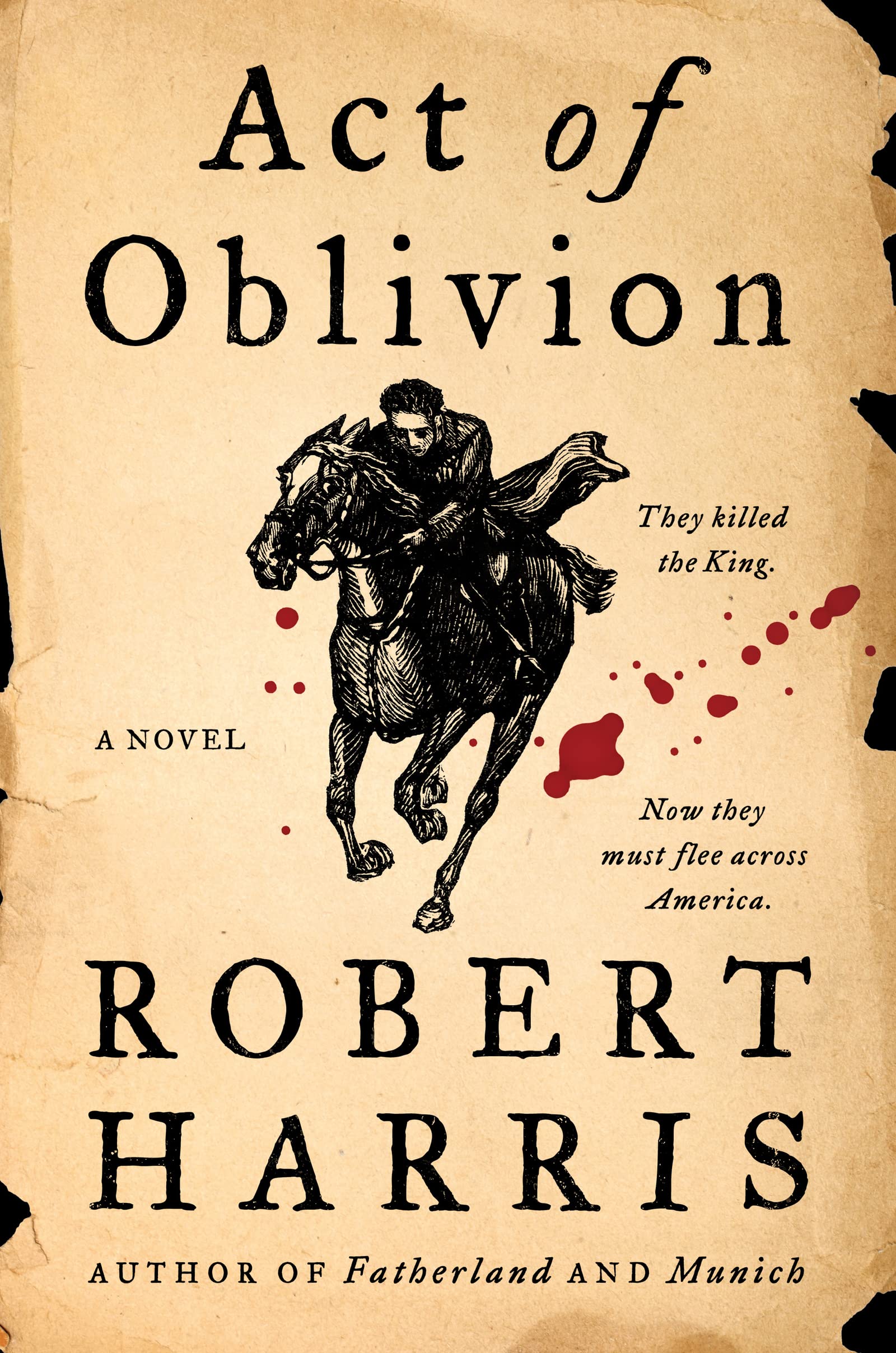
Act of Oblivion by Robert Harris

Act of Oblivion Cover

Publisher: Hutchinson Heinemann (Trade Paperback – 20 September 2022)

Series: Standalone

Length: 464 pages

My Rating: 4.5 out of 5 stars

Amazon

That master of historical fiction, Robert Harris, returns with another deeply compelling read, this time diving into one of the most fascinating manhunts in history with Act of Oblivion.

1660, England.  It is the dawn a new age in English history.  Following the death of Oliver Cromwell, the country has allowed King Charles II to come to power.  In exchange, the King has agreed to clemency for the former Parliamentarians, allowing peace to return to England for the first time in decades.  However, the King’s clemency is not absolute, and under the terms of the Act of Oblivion, all the men involved in the execution of his father, King Charles I, including the 59 men who signed his death warrant, are to be hunted down and brutally executed.

General Edward Whalley and his son-in-law, Colonel William Goffe, are two such men.  Former Parliamentarian leaders, their signatures lie prominent on the king’s death warrant.  Knowing that their deaths are close behind, Whalley and Goffe are forced to abandon their families and flee to the colonies.  Arriving in New England, Whalley and Goffe attempt to become part of the local community, but the shadow of their treason is far-reaching, and both old soldiers will have to live with the consequences of their action.

In London, Richard Nayler has been appointed as secretary of the regicide committee of the Privy Council.  Tasked with tracking down, capturing and executing all the men wanted in relation to the King’s death, Nayler attacks his task with zeal and passion, determined to bring justice to those who wronged the kingdom.  However, Nayler saves the vast amount his hatred and determination for Whalley and Goffe, two men he bears a particular grudge against.  Soon, a large bounty is placed on the two fugitive’s heads, and Nayler himself arrives in America, determined to see the men captured.  Forced to flee across the continent, Whalley and Goffe find themselves as outcasts and fugitives wherever they go.  The chase is on in the new world, and no-one is prepared for how far this mission of vengeance will go.

Robert Harris does it again, producing a brilliant and riveting historical epic that reconstructs fantastic historical events in impressive detail.  I have long been a fan of Harris’s writing, having deeply enjoyed An Officer and a Spy and V2, and his latest book, Act of Oblivion, is one his better works.  I had an outstanding time getting through this complex novel, especially as it spent substantial time diving into a unique historical occurrence I was unfamiliar with.

I had an exceptional time with Act of Oblivion, especially as Harris presents an elaborate and massive story set across multiple years.  Leaning heavily into historical sources, Harris dives deep into the flight of Goffe and Whalley and perfectly portrays their journey to America and the hardships they encountered.  This proves to be quite an intense and frustrating tale, as these two protagonists suffer a great deal through the course of the book.  Forced to abandon their families, Goffe and Whalley are initially seen as heroes by the people of Boston and Cambridge, but the two fugitives are gradually forced to flee from these towns due to the machinations of the English and their former enemies.  Forced to flee to smaller and smaller settlements, the protagonists are chucked into some uncomfortable positions in their flight, which includes years of depredation and isolation throughout the country.  The full tale of their time in America (or at least what is known), is pretty damn remarkable, and I felt that Harris did a wonderful job bringing it to life and showing what these two might of experienced and the lengths they went through to survive.  However, it does occasionally get slow in places, mainly because the historical fugitives were often unable to move for fear of being captured.

Harris covers these slower periods well by mixing in a second major storyline that runs parallel to the depictions of Whalley and Goffe.  This second storyline is primarily set in England and Europe and showcases the events occurring while the fugitives are in hiding.  Mainly shown from the perspective of the fictional character hunting them, Richard Nayler, as well as several scenes that show the fugitives’ family, this second storyline adds some real colour and danger to the events, especially as you get to witness the hunt from the other end.  The blend of fictional and historically accurate storylines works extremely well, and Harris creates a deeply fascinating and compelling overall narrative that really draws you in.  Seeing the simultaneous actions of both hunter and fugitives is a lot of fun, and I loved Nayler’s reactions to the constant escapes of Whalley and Goffe.  Harris also spends time showing the hunt for the other regicides, which Nayler embarks on with greater success.  Not only does this add in some additional fun action and historical context, but it also ups the stakes of the main storyline, as you are forced to witness the gruesome fate that awaits Whalley and Goffe if caught.  All this adds up to quite a remarkable tale, and I was deeply impressed with how exciting and captivating Harris was able to make these historical events appear.

One thing that is extremely clear about Act of Oblivion is the sheer amount of historical research that Harris put into crafting this book.  There is so much exceptional and compelling detail put into Act of Oblivion, as Harris goes out of his way to make this book as historically accurate as possible.  Naturally a substantial amount of this research goes into showing the known events of the two fugitives, as Harris meticulously recounts where they went and the various places they were forced to hide.  While the author does add in a few literary embellishments, this appears to be a very accurate and intriguing depiction of the fugitives’ flight in America, and I had such an amazing time seeing what they went through.  Harris makes sure to try and tells as much of their tale as possible, and the book goes all the way up until 1679, when the records end.  At the same time, Harris spends a large amount of time exploring the history of the rest of the world.  The novel is chock full of intriguing depictions of various key parts of British and American history at the time, which I found to be extremely fascinating, especially as you get to see how England changed after the return of the

King.  Harris also makes sure to examine how major historical events around the world might have impacted the lives of the two fugitives, and I felt that he worked all these fascinating events into the main story extremely well.  All the historical aspects of the book are showcased to the reader in a fantastic and very readable way, and even non-history fans will be able to dive into this story extremely easily.  This is mostly because the historical events themselves are pretty damn remarkable (honestly historical reality stranger than fiction in some places), but I really appreciated how well Harris was able to explore them and showcase them to the reader.

Another historical aspect of this book I deeply enjoyed was the author’s extremely detailed and moving depictions of the American countryside and its settlements in the 17th century.  Quite a lot of the book is spent out in the American wilds, as the two protagonists are constantly fleeing from their pursuers and avoiding people, and Harris makes sure to patiently and lovingly depict the various locations they find themselves in.  You really get a sense of the beauty and danger of the land during this period, and I loved seeing the various English characters react to the wide open spaces after spending time in cities like London.  Harris also takes the time to describe several of the historical settlements that the characters journeyed to and through, and you get a real sense of how built up or settled they were.  I found it fascinating to see all the descriptions about the various settlements, especially as many are quite significant cities in modern times, and it was really cool to see how they originated.  The descriptions of towns like Boston and Cambridge were pretty intriguing, especially as I didn’t realise just how built-up they were during this period (sentiments that some of the character’s shared), and I loved also seeing the Dutch settlement of New Amsterdam, especially as Harris also explored the events that saw it renamed as something far more iconic.  Throw in the deeply fascinating depictions of the people inhabiting these settlements, including the distinctive religious differences (so many puritans) and political sentiments.  Religion in particular becomes quite a key part of this book, and watching the various Puritan figures discuss their beliefs and their thoughts on the actions of the main characters, is particularly intriguing, as you get to see how these religious fugitives shaped early America.  Overall, this is a very impressive and clearly heavily researched look at 17th century America, which all historical fiction fans will deeply appreciate.

I also really enjoyed the central figures of Act of Oblivion and I found their storylines to be very compelling.  As I mentioned above, I really didn’t know that much about Edward Whalley and William Goffe before reading this book, but that swiftly changed.  Harris did a remarkable job showcasing the lives of these two historical figures and you really get to know everything about them.  While I am sure that Harris made a few character changes to fit the narrative, I felt that the overall presentation of them was pretty realistic.  Harris really highlights their personalities, religious convictions, and deep pride in the actions they took under Cromwell throughout the book as they spend time remembering their pasts.  All the key moments are their lives are captured in some way throughout the book, either in the plot or in their memories, and you soon see what events led them to become fugitives.  While the depictions of some their actions during the war and Cromwell’s control of England does make them a tad unsympathetic, I grew attached to them, especially as you see them suffer in isolation over a period of years.  Harris did a remarkable job showcasing how he believed these people would have felt spending years and years trapped in attics and basements, and you can just feel the mental and physical impacts it had on them.  This was frankly a brilliant portrayal, and I had an excellent time getting to know these unique historical figures.

Aside from Whalley and Goffe, the other major character I need to mention is Richard Nayler, the man charged with hunting the fugitives down.  Nayler is a purely fictional character, although Harris indicates upfront that someone likely had this job in the 17th century.  I quite enjoyed the portrayal of Nayler in this book, especially as he serves as a grim and determined counterpart to the protagonists.  A Royalist who witnessed the execution of King Charles I, Nayler goes about his duties with a resolute duty, determined to make all the regicides pay.  However, his main obsession lies with Whalley and Goffe, who holds responsible for the death of his wife and child.  Despite this tragic past, it is a times hard to feel sorry for the super serious Nayler, especially as he has little compassion for others, even the innocent.  However, he is quite a captivating figure, especially as his growing obsession with finding the fugitives becomes more and more apparent.  While his fellow returned Royalists initially share his determination, it soon becomes evident that he is true fanatic, while the others are purely in it for political reasons.  Harris really shows the downside of obsession through this character, especially as Nayler sacrifices a lot to try and find the fugitives.  I felt he had an impressive storyline throughout Act of Oblivion, and this great fictional character played off the real historical figures extremely well.

Robert Harris’ latest novel, Act of Oblivion, once again highlights the author’s outstanding skill as he recounts a particularly fascinating occurrence from history.  I loved the amazing story contained in Act of Oblivion, especially as the author did such a great job incorporating historical events into an intense and captivating plot.  Deeply intriguing and very entertaining, Act of Oblivion is a highly recommended read, and I can’t wait to see what elaborate historical tale Harris comes up with next.

Act of Oblivion Cover 2

Amazon

Tribe by Jeremy Robinson

Tribe Cover 2

Publisher: Breakneck Media (Audiobook – 26 November 2019)

Series: Standalone/Infinite Timeline

Length: 10 hours and 36 minutes

My Rating: 4.5 out of 5 stars

Amazon     Book Depository

Gods, mortals and everything in between will clash in Tribe, the intriguing fantasy thriller from the always entertaining Jeremy Robinson.

Last year I decided to take a chance and check out an author whose work I was unfamiliar with, and boy did that work out for me.  Jeremy Robinson had a very impressive and extensive list of awesome books to his name, most of which straddled the border between thrillers and other genres like fantasy, science fiction and horror.  The first book of his I checked out was The Dark, which followed a very likeable protagonist who gets caught up in a terrifying and horrific invasion of his neighbourhood by a horde of demons.  The Dark was an outstanding read, and I really got drawn into its awesome story, intense pacing and fun characters.  After giving The Dark a full five-star rating, I had to make sure to grab the other 2021 release from Robinson, Mind Bullet, especially as it was in the same loosely connected series.  Mind Bullet was a fantastic and highly entertaining read that followed a psychic hitman being hunted by a series of unusual but deadly assassins.  Mind Bullet was another five-star read in my book, and I had such a great time reading it.  Indeed, I loved both The Dark and Mind Bullet so much that I included them both of my top books and audiobooks lists of 2021.

Naturally, this has made me quite eager to read some more of Robinson’s work, and while I had to miss one of his 2022 releases The Order (I need to read some of the lead-up books beforehand), I did recently decide to go back and try one of his older novels, the 2019 release, Tribe, from the same storyline as The Dark and Mind Bullet.  Not only does this allow me to better follow one of Robinson’s upcoming books in the Infinite series but it had a very fun-sounding story that I really wanted to check out.  It turns out Tribe was just as fun as I hoped it would be, and I had a wonderful time getting through it.

Sarah, a 20-year-old college dropout working at a donut shop in Boston, has long struggled with the bad turns her life has taken.  Constantly plagued by bad luck and misfortune, Sarah has no one in her life she can count on, until she runs into homeless teen street punk Henry.  Henry, a kid who literally knows no fear, has randomly blown into her life and the two find themselves with a strange attachment to each other that they can’t explain.  However, life is about to get much more complicated for both when they run into each other at the local bank.

Arriving at the same time, the two manage to work together to foil a robbery that seems focused on targeting a mysterious and wealthy woman named Helen.  Taking Sarah and Henry under her wing, Helen attempts to take them to her apartment, but before they can make it they find themselves under attack by members of an ancient cult who are determined to cause as much chaos and destruction as they can.

Separated from the incredibly capable and violent Helen, Sarah and Henry find themselves alone on the streets of Boston, pursued by the cult.  Forced to keep moving and face off against a stream of determined and dangerous foes, Sarah and Henry begin to realise that there is something special about them that allows them to fight back, and which is making them stronger.  However, if they want to survive, they will need to discover the truth about who they are and what dark legacy their blood contains.  But with a dangerous figure hunting them, can Sarah and Henry live out the day, or will they become links in a master plan spanning millennia?

Tribe was an extremely entertaining and action-packed novel from Robinson, who utilises his usual fun and thrilling style to create an excellent read.  Featuring a captivating and electrifying narrative based around a couple of interesting and damaged figures, Tribe was a truly unique and captivating read that I had a fantastic time with.

Robinson crafted together a very interesting and highly exciting narrative for Tribe, which is essentially a non-stop action adventure from the very first scene.  After a quick but memorable introduction to, Sarah and Henry, the story dives right into the action, when the protagonists chance upon a violent bank hold-up.  Thanks to the impulsive Henry, the two are forced to intervene, assisting the mysterious Helen, making them heroes.  While you would imagine that would allow them to have some quiet time, Robinson puts them into the next action set piece within a few pages, as they are forced to flee an army of angry and over-the-top cultists who are hunting them.  This results in a series of impressively violent and extremely compelling fight sequences and chase scenes, as the protagonists try to survive while their lives are changing in ways that they don’t fully understand.  These initial sequences fill up the first half of the novel well, and you quickly become pretty damn invested in the narrative, especially once Robinson finally reveals the reasons behind everything and how everyone connects into the wider plot.  This first half also does a great job setting up the novel’s style, and you soon get quite used to the fantastic combination of action, character development and slick humour as the outrageous characters experience an array of over-the-top situations.

There are some rather interesting dives into Greek mythology in the second half of Tribe, which alters the course of the story and impacts everything the protagonists thought they knew about the world and themselves.  After a couple of attempted separations, the characters find themselves in some pretty dark situations as they finally face off against the big bad of the story, who ended up being an extremely sinister baddie.  The action comes thick and fast in this second half of the book, as the protagonists keep going up against a series of unique and memorable foes.  These scenes really make you appreciate Robinson’s ability to write brilliant, fast-paced action sequences, and the fantastic detail and intriguing depictions of deadly fights are so much fun to see.  I also enjoyed the strong Greek mythological motifs and elements that are slipped into this half of the book.  I think that they melded with the thriller style of the plot extremely well, and a lot of the story felt like a cool fantasy/superhero combination.  Along with some powerful reveals, major trauma, and subsequent character evolution, the protagonists become ready for the final confrontation that lays everything on the line.  The entire narrative flowed into this intense and high-stakes conclusion extremely well, and readers are in for a fun and captivating time as the protagonists go all out.  I really liked how everything turned out, and while this wasn’t my favourite of Robinson’s narratives, it was pretty damn addictive and readers will come away extremely satisfied.

I had a lot of fun with Tribe, and I am very glad that I checked it out, especially with how it plays into Robinson’s wider universe.  As I mentioned above, Tribe is part of a loosely connected series of cool books that are part of the Infinite Timeline.  While most of them are standalone reads, the further you get into the series, the more the storylines start to blend a little more, and this will all lead to several massive crossover novels, such as one being released later this year.  This is one of the main reasons why I wanted to read Tribe, as the main characters from it have appeared in the two other Robinson books I have read and will also be part of the upcoming 2022 release, Khaos.  However, readers don’t need to do any pre-reading for Tribe to enjoy it; thanks to its relatively early position in the Infinite Timeline, it doesn’t noticeably feature characters or story elements from the other novels.  As such, it is a very accessible read, and anyone who likes a fun action story can have a great time reading it.  Still, those people who are interested in Robinson’s larger series will do well to read Tribe soon, especially as it sounds like the plot of Khaos is going to come back to key details from Tribe in a big way.

I also deeply appreciated how Robinson made use of some excellent and fun central characters, Sarah and Henry, two seemingly unconnected people.  The story is set up to continuously rotate between their perspectives, which really enhances the overall quality of the narrative, especially when you get two separate views of the same events, or the characters are dealing with separate outrageous events at the same time.  The author does a great job of building up both characters throughout the novel as they start to discover their destiny and their various shared connections.  A lot of the revelations around them result in some interesting abilities and moments for the characters and watching them react to it in very different ways was very entertaining.  They also go through a lot of trauma throughout the book, and again both of them deal with it differently, which I felt was an intriguing and realistic inclusion.  Both characters are quite interesting in their own way, and they serve to balance each other out in the narrative, with Sarah acting as the moral and sensible one (at least until she unleashes the inner beast), and Henry being the wildcard.  Henry is definitely the life and soul of the much of the book.  Due to a brain condition, he lacks any sense of fear whatsoever and has no filter when it comes to doing stupid stuff.  I have mixed feelings about this; while many of these random outbursts and actions are a lot of fun, they do start to get a little repetitive and annoying after a while.  I also felt that it ensured Henry started to overshadow Sarah in parts of the book.  Still, these were some great central protagonists you quickly get attached to, and with the fantastic supporting figures, you have a lot of fun characters in this book that really enhance the narrative.

One of the most appealing things about Robinson’s books is that they all make for an amazing audiobook.  Tribe was another excellent example of this, especially as listening to the story really allows you to get to grips with the incredible and powerful action sequences.  With a run time of just over 10 and a half hours, this is a relatively quick audiobook to get through, and it is very hard not to get attached to it, especially when it features brilliant narrator R. C. Bray.  Bray is a very skilled audiobook narrator who, in addition to providing his voice to most of Robinson’s books, has also narrated several other great books and series, such as Michael Mammay’s Planetside series (Planetside, Spaceside and Colonyside), all of which were excellent audiobooks.  Bray has an exceptional voice that works really well to tell high-stakes and powerful action orientated novels while also bringing a range of interesting characters to life.  He did another outstanding job in Tribe, and all the high-octane action fights are told perfectly, with Bray really highlighting the brutal fights with his telling.  He also provides powerful and insightful voices to all the characters, with all their quirks and interesting features perfectly brought to life as a result.  As such, I had a brilliant time listening to Tribe on audiobook and felt that Bray’s excellent narration really added to my overall enjoyment of this novel.  As such, I would very much recommend the audiobook version to anyone interested in trying out Tribe, as it was a lot of fun to listen to.

Overall, Tribe was a pretty fantastic and extremely entertaining book from Jeremy Robinson.  Loaded with all the intense action, clever references to Greek mythology and intriguing characters you need for an incredible narrative, Tribe was such an epic read and it comes very highly recommended, especially as an audiobook.  I had an outstanding time, with Tribe and it will be interesting to see how these characters, as well as the protagonists of The Dark and Mind Bullet, will feature in the upcoming Khaos.

Amazon     Book Depository

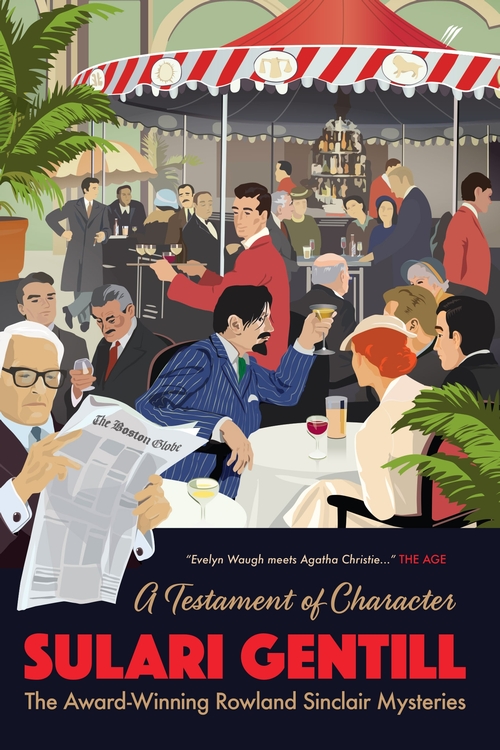
A Testament of Character by Sulari Gentill

A Testament of Character Cover

Publisher: Pantera Press (Trade Paperback – 3 March 2020)

Series: Rowland Sinclair – Book 10

Length: 337 pages

My Rating: 4.5 out of 5 stars

Amazon     Book Depository

Acclaimed Australian author Sulari Gentill returns with the 10th book in her bestselling Rowland Sinclair series, A Testament of Character, an intense and compelling new entry which was a lot of fun to read.

Gentill is an excellent Australian author who has written several amazing books since her 2010 debut. While her main body of work is the Rowland Sinclair series, Gentill has also written The Hero trilogy, a young adult fantasy trilogy based on classic Greek stories, and the standalone novel Crossing the Lines. I am mostly familiar with her Rowland Sinclair books, however, as I have read the last several books in this series, all of which have been extremely enjoyable due to their fantastic blend of history and mystery. The Rowland Sinclair books follow the adventures of the titular Rowland Sinclair, a wealthy left-wing Australian gentleman artist, and his three artistic friends in the 1930s, as they find themselves in the middle of several murder investigations. Each Rowland Sinclair book is a fun and entertaining part of my yearly reading calendar, and I have been looking forward to checking out A Testament of Character for a while now.

In 1935, after the horrors they experienced in Shanghai, Rowland and his bohemian friends Edna, Clyde and Milton are enjoying a leisurely holiday in Singapore before heading back to Australia. However, their travel plans are dramatically changed when Rowland receives tragic news. An old friend of Rowland from his Oxford days, Daniel Cartwright, has died suddenly, and he has appointed Rowland as the executor of his vast estate.

Detouring from Australia to Cartwright’s home city of Boston, Rowland and his companions arrive for the funeral and find themselves in the midst of controversy and familiar conflict. Not only was Cartwright estranged from the rest of his family, especially his brothers, who disapproved of his lifestyle choice, but it turns out he was murdered, and the police have yet to find any suspects. Even more mysteriously, Cartwright had only just written every member of his family out of the will, leaving all his money to an unknown man everyone claims does not exist.

Determined to carry out the last wishes of his dear friend, Rowland attempts to find the man who apparently meant so much to him. However, his investigation quickly turns sour, as he runs into numerous people who do not want Cartwright’s will to come to pass. Forced to scour Boston, New York and other parts of post-Depression America for leads, the four friends encounter all manner of dangerous and eccentric characters as they pursue their quest. However, none of them are prepared for the terrible truth they encounter, especially now that Cartwright’s killer has them in their sights.

A Testament of Character is an exciting and compelling novel that proves to be a fantastic new addition to the Rowland Sinclair series. Gentill has done an amazing job coming up with another captivating story that not only features an exciting and gripping mystery but which takes an intriguing look at America in the 1930s. This story contains the series’s usual blend of fun, intrigue and action, as the four exceedingly liberal protagonists get into all manner of trouble across conservative America. There are some rather impressive and at times dark scenes throughout this book, and Gentill has also included some major character developments that will appeal to long-term readers of this series. The end result is an exceedingly enjoyable and thrilling story of love, adventure and revenge which proved extremely hard to put down.

At the heart of this book lies a clever mystery storyline that revolves around the murder of the protagonist’s friend and the identity of the mysterious beneficiary of the will. Gentill crafts an excellent multi-layered mystery, with a number of surprising twists, turns and false leads on the way to the exciting conclusion. While I was able to guess a little bit in advance who the main perpetrator turned out to be, all the revelations that came out in the final confrontation were really impressive and helped wrap up the entire mystery storyline extremely well. I also thought that Gentill came up with a very compelling and memorable motivation for the various crimes featured within the book. Some of these reveals were a bit dark and shocking, but they did make for some very dramatic and captivating sequences throughout the book. Overall, I thought that this was one of the strongest mysteries to have so far been featured within one of the Rowland Sinclair books, and it served as an amazing centre to this entire fantastic book.

One of the most distinctive features of this whole series is the way that Gentill dives into the history and culture of the period in which the books are set. She has previously done a wonderful job of exploring parts of 1930s Australia, Europe and occupied Shanghai, and in A Testament of Character Gentill’s characters explore post-Depression America. This proves to be an excellent backdrop to the book’s superb story, and I loved the examination of the key cities of Boston and New York, as well as some rural areas of the country. Gentrill provides the reader with a fantastic and at times in-depth look at various parts of the 1930s American culture and society. This is done in two distinct ways, the first of which involves the protagonists exploring America as Australians, providing an outsider’s perspective of the events or places they visit (while constantly getting complemented for speaking such good English!). The second way is through Gentill’s inclusion of historical newspaper clippings at the front of every chapter. The use of these newspaper clippings is another recurring trait of the Rowland Sinclair series, and I have always enjoyed the way in which the articles relate to some cultural or historical aspect of the chapter the clipping fronts. Through the use of these methods, the author paints an intriguing picture about America during this period, which I think worked extremely well as a background to the main mystery plot. This is especially true as some of the motives and elements of the mystery revolve around the social attitudes and cultural expectations of the time, which the reader will need to have a bit of an understanding about. I have to say that I was glad that as part of this examination of historical America, Gentill also had a look at public opinion around the Nazis and fascists in the lead up to World War II, as this has been one of the more interesting story threads to follow throughout the series.

Another distinctive aspect of the Rowland Sinclair series is the way that Gentill writes a number of historical figures into the story, either as cameos or in major roles. The best previous example of this is easily the author’s inclusion of Eric Campbell and The New Guard (an ultra-right-wing Australian organisation in the 1930s) as recurring antagonists in some of the books, as these real-life historical figures are great foils to the progressive protagonists. Gentill continues to do this in A Testament of Characters, making great use of several iconic American historical figures to flesh out the story and create several memorable inclusions. Several of these historical figures have pretty major roles in the plot, including Joseph Kennedy, F. Scott Fitzgerald and his wife and fellow author, Zelda Fitzgerald. There are also some fun cameos from several other notable people, including Errol Flynn, a young JFK, Marion Davies, Randolph Hearst and Orson Welles, as well as several other characters who were in Boston or New York during the 1930s. There are also a ton of references to other unique figures in America during this time, including the Parker Brothers Company (Monopoly was released in 1935, and the protagonists of course end up playing a game), as well as a unique goat competition that was held in Central Park, of which Gentill of course names the winner. This is an extremely fun and amusing part of A Testament of Character, and I always enjoy seeing Gentill’s protagonists run into these real-life historical figures, especially as the author does a fantastic job examining and showcasing their personalities and motivations. I love how Gentill effortlessly works these people into the plot, and the reader is always left wondering who is going to appear next.

A Testament of Character is a superb and exciting new addition to the outstanding Rowland Sinclair series that is really worth checking out. Sulari Gentill has once again produced a fantastic mystery storyline that strongly benefits from the author’s clever dive back into 1930’s history. This results in a powerful and exhilarating novel which makes amazing use of its fun, distinctive inclusions and intriguing characters. I cannot wait to see what misadventures Rowland Sinclair and his friends get up to in their next book, and this is a truly wonderful Australian series with a real unique flair to it.

Amazon     Book Depository