
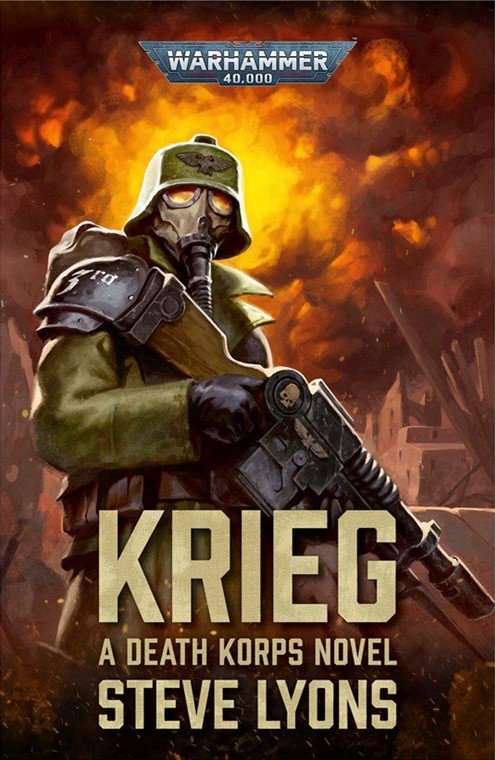
Warhammer 40,000: Krieg by Steve Lyons

Warhammer 40,000 - Krieg Cover

Publisher: Black Library (Audiobook – 29 January 2022)

Series: Warhammer 40,000

Length: 9 hours and 33 minutes

My Rating: 4.5 out of 5 stars

Amazon     Book Depository

Death, dishonour and duty all collide as impressive author Steve Lyons returns to the epic Warhammer 40,000 universe with Krieg, which dives into the origins of one the most iconic regiments of Imperial Guard out there, the Death Korps of Krieg.

Damn this has been a good year for Warhammer fiction so far.  We may only be in March, but 2022 has already produced a great collection of awesome Warhammer novels, including Steel Tread, The Twice-Dead King: Reign and Day of Ascension.  I have deeply enjoyed all these cool books, and when another awesome sounding tie-in novel was released on audiobook, I just had to grab it.

This latest book is Krieg by veteran science fiction author Steve Lyons.  Lyons is a new author to me, but he comes with an impressive pedigree in tie-in fiction, having written several Warhammer novels and short stories, a ton of Doctor Who novels and audio dramas, and several other intriguing novels.  I knew that I was probably going to love Krieg and I turned out to be right, as this fantastic and dark Warhammer 40,000 novel contains an intense and captivating tale of a legendary regiment.

In the grim future of the universe, there is only bloodshed and death, especially near the system-spanning Octarius War, where two brutal alien races battle for supremacy, and Imperial forces fight to stop their conflict spilling out into the greater Imperium.  However, the latest round of fighting sees a massive orc ship break through Imperial lines and crash into the massive city of Hive Arathron.  As the desperate Imperial forces fail to contain the invading orcs, all hope looks lost until a new set of deadly reinforcements arrive: the Death Korps of Krieg.

The Death Korps of Krieg are a legendary unit of peerless soldiers who are utterly fearless in battle, fanatically loyal to the Emperor, and who seem to harbour an unnatural desire to die in battle.  But who are the men of Krieg under their gasmasks and coats, and why do they fight so hard to regain their lost honour?  The answer lies thousands of years ago when Krieg attempted to cede from the Imperium, thrusting the planet into a brutal civil war.  In the end, one man stepped forward to end the fighting, and his decision doomed Krieg to become a blasted wasteland where only soldiers are grown.

As the fighting around Hive Arathron continues, many of their fellow soldiers and inquisitorial observers begin to doubt the loyalty and sanity of the Death Korps, especially when their unusual habits and creeds keep them apart from the other members of the Astra Militarium.  However, a deadly discovery deep inside the Hive will show the Imperium just how invaluable the men of Krieg are, especially when history seeks to repeat itself.  Can the Death Korps succeed against the xenos, or will Hive Arathron and its planet soon share a similar fate to Krieg?

The Warhammer 40,000 hits just keep on coming as Krieg turned out to be a truly awesome read.  Steve Lyons has produced an epic and intense novel here, and I loved the brilliant story that not only showcased a dangerous alien threat but which also examined the past of an iconic and captivating faction.

I thought that Lyons came up with an exceptional and captivating narrative for Krieg, which takes the reader on several parallel journeys throughout the history of the Warhammer 40,000 universe.  I have said multiple times before that I think some of the best Warhammer stories out there focus on the common troops, and I was proved right again as Lyons does a brilliant dive into the mind of the average solider when they experience the very worst of circumstances.  The primary storyline is set in the modern era of the canon and shows a regiment of Krieg Imperial Guard dropped into the battle for Hive Arathron to fight the orcs.  This section, which is told entirely from the perspective of supporting non-Krieg characters, shows the Death Korps in battle, with a specific highlight on their unusual appearance and practices.  At the same time, another storyline dives back into the past and shows the civil war that occurred on Krieg and the events that led up to the destruction of the planet and the formation of the modern Death Korps.  Both these storylines take up about half the book and they present the reader with two unique and interesting tales which work to complement the story from the other timeline while also depicting their own brutal military actions.  The stories start to come together towards the end when the protagonists of the contemporary storyline discover nuclear weapons in Hive Arathron, which they need to recover.  This leads to an interesting conclusion that results in some clever parallels between the historical events and the current storyline.  All this leads to a satisfying, if grim, conclusion that reveals the various fates of the supporting characters and wraps up the remaining story elements.

I was really impressed with how Krieg was written, and I think that Lyon did a really good job here.  The story ended up perfectly toeing the line between examining the lore and history of the universe and providing the reader with all the necessary excitement and adventure.  I think the decision to split the book between the two separate timelines was pretty clever, and I had a brilliant time reading the unique storylines it produced.  Both timelines were really good, and I loved the grim and powerful plot points they contained, especially as the protagonists within both suffered defeats, setbacks and brutal character realisations.  If I had to choose a favourite it would probably be the historical storyline set on Krieg, mainly because it shows the more desperate situation and substantially more character development and tragedy.  The twin storylines also did a wonderful job complementing each other, ensuring that the reader gets two separate sides of the titular regiment.  It also results in a series of different battle sequences, and I loved the interesting comparisons between a protracted civil war and a short and brutal fight against orcs.  Krieg ended up being a good standalone read, with a concise, well-paced and beautifully set-up narrative that is pretty easy to get addicted to, especially once both storylines descend into the hell of battle.  This also proved to be an extremely accessible tie-in to the Warhammer 40,000 universe, with Lyons ensuring that newer readers can easily follow what is happening with a minimal of explanation about the universe.  As such I would strongly recommend this book to a wide range of readers, and both experienced Warhammer fans and general science fiction readers will really appreciate the powerful and action-packed story contained within.

Unsurprisingly for a novel named Krieg, there is an extensive and fascinating examination of the Death Korps of Krieg in this book.  Lyons does a brilliant job of diving into this distinctive Warhammer faction, and this novel ended up being a very detailed and impressive love letter towards the infamous regiment.  Every aspect of the modern regiment is shown in exquisite detail, and you get an extremely powerful look at their design, uniform (which is based on the uniforms of World War I German trench fighters), fighting style, equipment, unique regiments, and more, including the iconic Death Riders (I was so very happy they were included, especially as you get several great fight scenes with them, including against orc bikers).  However, the real focus is on their unusual behaviour, including their determination to die in combat, their complete resolve and the fact that they never remove their masks.  Lyons really hammers home the unusualness of this regiment by only showing the modern Krieg soldiers through the eyes of regular soldiers or member of the Inquisition, all of whom are at a loss about what the Krieg are or why they fight so hard.

However, while these outsider characters are left wondering about many of these events, the readers get multiple insights thanks to the chapters that explore the historical civil war on Krieg.  Lyons does an incredible job of portraying this conflict, and it is fascinating to see the events that led up to it and the lengthy and costly war that followed.  Watching the opposing mentalities on Krieg during this time is really fascinating, and you soon get caught up in the dramatic battle that follows, especially as the situation continues to deteriorate over time.  I loved how the origins of the Krieg’s many idiosyncrasies are featured here, and you soon see what necessitated the use of certain equipment or behaviours.  The real highlight is the eventual destruction of Krieg and the subsequent formation of the modern version of the Death Korps.  The scenes that cover this destruction are pretty damn brutal, and watching the slow transition from typical soldiers to the eventual shrouded figures is extremely compelling and awesome.  I really appreciated the way in which Lyons showed off the various stages of the Krieg regiments, and the use of both the historical version of the regiment and its current formation really helped to highlight just how distinctive and cool they are.  While there are still a few secrets left hidden (what’s under the mask??), the reader leaves this book with an impressive appreciation for this awesome regiment, and it wouldn’t surprise me if it convinces several Warhammer 40,000 players to start using the Death Korps in their games.

A quick shoutout also needs to go to the fantastic characters featured throughout Krieg.  Lyons makes use of a large cast to tell this interesting story, and I liked the excellent mixture that this novel contained.  The characters featured in the contemporary line are primarily made up of non-Krieg fighters who serve as an interesting counterpoint to the nameless, faceless Death Korp soldiers.  This includes Inquisitor Ven Bruin, an older witch hunter who leads the search for the hidden weapons in Hive Arathron.  Ven Bruin is a lot gentler and less cynical that a typical Imperial Inquisitor, and he has some intriguing viewpoints on the situation, with his decisions tempered by experience and weariness.  Ven Bruin ends up holding multiple secrets throughout Krieg, and it is emotional to see him impacted by his multiple hard decisions and the lives they cost.  You also get the compelling viewpoint of Sergeant Renick, a Cadian soldier who fights alongside the Krieg.  Renick, who is a surprisingly good female character for a Warhammer novel, gives the common soldier’s viewpoint of events, and I loved seeing her slow opinion change of the Death Korps after seeing them in action against the orcs.

While there are some great characters in the Hive Arathron storyline, Lyons saves his best character work for the historical storyline on Krieg, which highlights the key people in the deadly civil war that destroyed the planet.  While there are several intriguing figures here, most of the focus is given to Colonel Jurten, the Imperial Guard commander who fights to keep Krieg in the Imperium.  Jurten is a weary veteran character who borders on the fanatical, especially when it comes to saving his home from himself.  Throughout the course of the book, you see Jurten fight a desperate war for his believes that culminates in him making a terrible decision that will impact his people for generations.  Watching Jurten’s substantial resolve slowly chip away throughout the book is very intense, and Lyon really shows the weight his beliefs and determination bear on him, especially after he makes the very worst of choices.  The other characters in this past storyline serve as an excellent support cast, and it was great to see their concerns and opinions about the battles being fought, especially compared to the resilient Jurten.  My favourite is probably the mysterious Adeptus Mechanicus tech-priest, Greel, who acts as the devil on Jurten’s shoulder, convincing him to make the tough decision about the future of Krieg.  I am still a little uncertain whether Greel was a hero or a villain (probably both; it is Warhammer), and I would be curious to find out more about him and his motivations in the future.  An excellent group of characters, I would be interested to see more of some of them in the future.

Unsurprisingly, I made sure to grab the audiobook version of Krieg, which ended up being another excellent and enjoyable experience.  I deeply enjoy Warhammer audiobooks, especially as they tend to enhance the grim and brutal stories, while also highlighting all the cool details about the Warhammer universe.  I had amazing time with the Krieg audiobook, and with a runtime of only 9 hours and 33 minutes, this was a pretty easy audiobook to get through.  The audiobook did an excellent job capturing the grim battles and blasted warzones featured throughout this awesome novel, and I could easily envisage every fight and every brutal decision.  I was also really impressed with the voice work of narrator Timothy Watson, who brought a ton of gravitas and intensity to this book.  Watson’s voice fit perfectly into this grim universe, and he did an outstanding job of capturing the various larger-than-life characters featured within, while also providing great Germanic accents to all the characters who originated from Krieg.  You really get a brilliant range of voices throughout Krieg, and I loved Watson’s ability to showcase the devotion, despair and weariness of all these great figures.  Another brilliant and wonderful Warhammer audiobook, this is easily the best way to enjoy this amazing tie-in book.

Overall, Krieg by Steven Lyons was another awesome Warhammer 40,000 novel that did a wonderful job of examining one of the game’s more unique and enjoyable faction.  Containing an action-packed narrative that highlighted the fantastic Death Korps of Krieg and showcased the events that made the soldiers they are today; Krieg was an addictive and clever read.  I loved the excellent use of a split timeline narrative, especially when it dove back into the civil war on Krieg, and the result was a grim and haunting tale of regret, duty and honour.  Highly recommended to all fans of Warhammer 40,000, you will love this beautiful and moving love letter to the iconic Death Korps and their tragic origins.

Amazon     Book Depository

Throwback Thursday: Batman: Assault on Arkham

Assault on Arkham Poster

Studio: Warner Bros. Animation and DC Entertainment

Series: DC Universe Animated Original Movies – Film 20

Director: Jay Oliva and Ethan Spaulding

Writer: Heath Corson

Producer: James Tucker

My Rating: 5 out of 5 stars

Welcome back to my Throwback Thursday series, where I republish old reviews, review content I have enjoyed before or review older books I have only just had a chance to read.  For this week’s Throwback Thursday I go back and check out one of the more intriguing DC animated movies, with Batman: Assault on Arkham.

As I mentioned in a recent Top Ten Tuesday, I have been in a DC mood ever since I saw The Suicide Squad on the weekend, which was easily the best film focusing on the titular Suicide Squad.  While people only familiar with the live-action films might think that this is a low bar, those who know about the awesome catalogue of DC Comics animated films will know that there are several awesome and outstanding films that perfectly capture the feel and tone of the supervillain team and are pretty fun to watch.  Therefore, this week I will look at one of these great animated films, with Batman: Assault on Arkham.

Assault on Arkham is an amazing and fantastic film that came out in 2014 and is set in the same universe as the Arkham video game franchise (set between Arkham Origins and Arkham Asylum).  Directed by Jay Oliva and Ethan Spaulding, written by Heath Corson and produced by James Tucker, this was a memorable and fun DC Universe Animated Original Movie, which contains some of the best comic book based animated films out there.  Despite the name, Assault on Arkham is really a Suicide Squad movie, with Batman strongly featured but acting more as a side character.  This was an excellent and impressive film, which makes use of a darker tone and more adult animation to create a fitting Suicide Squad experience.  Heck, this was a much better Suicide Squad movie than the 2016 live-action film as it embraced the team’s darker side and their propensity for violence, while also featuring an impressive and clever story.

Two years before the Joker took over Arkham Asylum, the Clown Prince of Crime terrorises Gotham City, this time by threatening it with a dirty bomb.  With the Joker locked up in Arkham Asylum and refusing to talk, Batman stalks the streets of Gotham, searching for those who helped him.  His mission leads him to save the Riddler from a black-ops team of soldiers, sent by shadowy government agent Amanda Waller.  With Riddler now locked up in Arkham Asylum, Waller assembles the one force capable of breaching Arkham’s walls to find him and the information she desires, Task Force X.

Task Force X, also known as the Suicide Squad, is made up of some of the most deadly and skilled villains in the world, each of whom have been forcibly drafted onto the team and offered reduced sentences if they complete their mission.  Recruiting a team made up of Floyd Lawton (Deadshot), Harleen Quinzel (Harley Quinn), George Harkness (Captain Boomerang), Eric Needham (Black Spider), Nanaue (King Shark) and Louise Lincoln (Killer Frost), Waller sends them into Arkham with bombs implanted in their necks.

Forced to work together despite their innate distrust and dislike of each other, the Suicide Squad arrive in Gotham and make their plans to infiltrate the asylum.  However, it doesn’t take long for petty rivalries, massive manipulations, and dangerous outside influences to put all their schemes in disarray.  Working their way through the most dangerous place on the planet, the Squad soon learns a deadly secret that will change everything and set them on a bold new path.  But with Batman wise to their presence, can the Squad achieve their goals and make their escape, or will they find themselves locked up in Arkham instead.  Worse, someone far more dangerous is stalking the halls of the asylum, someone with an insane sense of humour and a desire to claim back what is his.  The Joker is loose, and he wants to play!

This is an awesome film that really does the chaotic and dangerous Suicide Squad justice.  Featuring an excellent story and serving as a clever adaption of the Suicide Squad comics and other pieces of media, this is an extremely fun movie.  Throw in an exceptional voice cast, some great interpretations of iconic characters, and some powerful animated sequences, and you have a great and impressive movie that I have long been a fan of.

At the heart of this great movie is a very compelling and exciting narrative that takes its various characters on a wild and dangerous ride to hell in back.  Assault on Arkham starts off with an excellent scene, which sees Riddler being attacked by Waller’s goons, only to be rescued by Batman in an intense and brutal fight sequence.  This then leads into an entertaining introductory sequence for the various members of the squad, with a fun reel of shots with no dialogue showing each member of the Squad showing off some of their skills before getting captured by various law enforcement groups.  These dark and sometimes gruesome introductory scenes really set the tone for the entire movie, while also providing great summaries of each of the main characters.  What follows is a fun and captivating character-driven tale as the members of the Squad arrive in Gotham and make their play to break into Arkham.  There are some fantastic clashes of personality and deep personal moments in this early part of the film, as the team initially comes together, despite their crazy differences.  This leads to an intriguing central part of the film, where the characters begin their assault on the asylum, performing a reverse prison break.  After some great scenes, the team are at large in the asylum, which leads to even more chaos, destruction, and big fight moments.  All of this leads to an explosive and dangerous final act, as the characters need to escape while being pursued by Batman and the Joker.  Caught between these extremely dangerous forces, the fractured Squad attempts to escape, facing some major defining obstacles which really bring the entire film together.  I loved the fantastic and darker story that this film featured, and the writing team did an excellent job combining brutality, humour, character development and pure craziness into one enthralling tale.  There are so many fun and thrilling moments to this outstanding film, and viewers will found themselves really getting drawn into the cool story.

The animation in Assault on Arkham is very impressive, and the creative team behind it did a great job bringing the various characters to life and placing them in some outstanding action sequences.  The movement and action in this film is pretty damn seamless, and you are in for some very fast-paced scenes that look pretty superb, especially as they feature a great mixture of lighting and multiple unique characters.  Highlights include the opening shadowy encounter between Batman and the special forces soldiers, the massive fight between Batman and the entire Suicide Squad, and the final two confrontations that occur after a big helicopter crash.  I loved the cool character designs of the various characters, especially as they mix some new looks with classic drawings.  I also felt that the creative team combined this cool animation with the excellent musical score well, and the various tunes really helped to set the scene.  There is something very dark, bloody, and adult about the designs in the film, and the end result is definitely not a kid’s cartoon.

Part of the design that I really enjoyed was the way in which the creative team attempted to emulate the style from the fantastic Batman: Arkham video games.  This film serves as a canon entry between Arkham Origins and Arkham Asylum, and the team did a great job capturing the cool style and themes that the games are famous for.  This is particularly seen in the various scenes featuring Batman, the playable character of the games, and you get to see him whip out the various gadgets and viewscreens that appeared in the games.  I particularly enjoyed the opening scene where Batman takes out a squad of soldiers in much the same way that a player would in the games, from the flips to the use of a batline.  There are also several references to the games throughout the film, from a character trying to hide in a vent, to the layout of Arkham Asylum, where you spend significant time in the first film.  Despite all these references, this film can easily be enjoyed by comic fans who have not played the video games.  Assault on Arkham is very much framed as a standalone film, and no matter your familiarity with Batman or the Arkham games, you will have a fun time watching this movie.

As I have mentioned above, this awesome film contained a really impressive and memorable take on the Suicide Squad, producing a truly great movie.  Part of this is the choice of team, as it features a compelling blend of characters that are inspired by the team first introduced in the New 52 range.  Anchored by team leader Deadshot and wildcard Harley Quinn, it also features long-time Suicide Squad member Captain Boomerang, as well as a fantastic combination of Black Spider, King Shark and Killer Frost.  While the team structure is similar to the team in the first live-action film, Assault on Arkham actually predates this film by a couple of years, and also utilises them a lot better, really showing off some more complex aspects of their personality, mainly thanks to the excellent voice cast.  This animated film also takes itself a lot less seriously than the first live-action film did, and is less afraid to show blood, sex and death.  While some of this is a tad over the top (some of the female characters are way too sexualised), I really wish that the subsequent live-action film had taken some cues from how successful this animated feature was, as that would have resulted in a much better experience.

Easily the best part of this film is the amazing characters and sensational voice cast, which really help to make it stand out.  While it does feature a lot of Batman and Joker, the main characters of this film are the Suicide Squad.  The most prominent is team leader an assassin extraordinaire, Deadshot.  Voiced by the talented Neal McDonough, a man who has voiced quite a few villains in his day, this version of Deadshot is near perfect, and contains a lot of elements from the comics that the live-action version was lacking.  While the overriding love for his daughter is still there, this version of Deadshot is a lot colder and a lot quicker on the trigger, happily massacring everyone who gets in his way.  McDonough really captures the character’s menace, killer instinct, and determination, and this Deadshot serves as the tough and often exasperated leader of the Squad.  I loved that they captured Deadshot’s crazier side (he has a massive death wish in the comics), especially as this leads to one of the best scenes in the entire film: “Mate, you just out-crazied the Joker”.  It was also cool that Deadshot had one of the most satisfying character arcs in the entire film, ending Assault on Arkham on a very entertaining and memorable note, that showed that the character was a man of his word: “Bang!”

This film also features an amazing version of iconic character Harley Quinn.  Before Margot Robbie and Kaley Cuoco put their spins on the character, veteran voice actor Hynden Walch provided her impressive voice to Harley, resulting in a fantastic and crazed female-lead.  Walch, who is probably best known for voicing Starfire in Teen Titans or Princess Bubblegum in Adventure Time, does an excellent job going a little darker with this character, producing some excellent scenes of madness and humour as Harley manages to annoy the other characters while cracking up the audience.  I loved the introduction that this character had, biting off an ear in a halfway house with Looney Tunes music playing (it’s weird, but it works).  Harley proves to be quite conflicted in this film as she finds herself stuck between her abusive ex, the Joker, and her new love interest, Deadshot (all I am going to say about the later relationship is “Yahtzee!”).  While this starts off with a very concerted attempt to kill the Joker, Harley is eventually drawn back to him, which is kind of heartbreaking.  There is some of the typical abusive relationship stuff that comes out with Harley, as she blames everyone but Joker for her problems.  This was a great portrayal of this fantastic and complex character, and I was very happy that Walch came back to portray Harley in other films such as Justice League Dark: Apokolips War.

Other great members of the Squad include Captain Boomerang, voiced by Greg Ellis.  Boomerang acts as the Squad’s comic relief, and I liked the uncaring and selfish attitude that is such a feature of the character in the original Suicide Squad comics.  Ellis really brings out the character’s smarmy and arrogant side, and I loved the amusing rivalry he formed with Deadshot, which results in a brilliant game of darts.  This movie also features the outstanding Gincarlo Esposito in the role of Black Spider, a murderous vigilante who is less than pleased at being lumped in with a group of supervillains.  Esposito brings some real gravitas to the character, and he proves to be a skilled and fun member of the team, and his inclusion results in a pretty major fake-out.  The hilarious John DiMaggio does a great King Shark in this film, and I loved the somewhat more human design of the monster and his funny dim-witted mentality.  Despite being a source of some humour, King Shark is a brutal killer, which is very much shown in his introduction where he emerges from a bathtub full of blood.  Finally, the brilliant Jennifer Hale portrays a fantastic Killer Frost (not surprising, considering she’s voiced the character in nearly every film or animated television appearance).  This version of Frost is pretty cold-blooded and proves to be a murderous addition to the team.  I liked the fun friendship that she forms with King Shark, and they prove to be a great duo.

While the Suicide Squad takes most of the film’s focus, Batman is featured pretty extensively in this film, which is really cool.  I personally was overjoyed that they got the iconic voice of Kevin Conroy for the character, and this amazing actor reprises his role from the various animated series and the Arkham games.  Batman is mostly on the outside of the story for the first half of the film, only becoming involved when the Squad enters the asylum, but once he gets involved, the results are pretty damn awesome.  This version of the character perfectly highlights the various aspects of Batman, as he kicks ass, intimates everyone he meets, outsmarts his foes, and utilises his amazing detective skills to make some big assumptions.  Featuring Batman as a side-character in his own film was an interesting choice, but it is one that really works, and it was great to see him attempt to work out the various ploys of the Squad, Waller, and the Joker.  Conroy’s voice work is of course, perfect, which isn’t surprisingly considering all the times he’s portrayed the character.  Another excellent inclusion of the legendary hero.

While most of the cast of Assault on Arkham are villains, the one that sticks out the most is the master of anarchy, the Joker.  Voiced by Troy Baker, who reprises his role from Arkham Origins, Joker really stands out as a character, which honestly isn’t that surprising.  Joker escapes his cell and starts causing chaos all over the asylum, coming into conflict with both the Squad and Batman.  This version of the Joker is the usual awesome mix of scary insanity and corny humour, and the character has several hilarious scenes throughout the film, including one of the best lines: “Denzel, what have they done to you?”  I also enjoyed the new rivalry he forms with Deadshot, as he shows some uncharacteristic jealousy over the fact that Harley has moved on.  This leads to a brutal brawl in the film’s conclusion, which is a major highlight.  Baker, who would go on to voice the Joker in several other animated features, does a pretty good job in Assault on Arkham, and does well at replicating Mark Hamill’s take on the character.  This results in an excellent villain, and I loved seeing the insane Arkham version of the character once more.

The final character I really want to highlight controls Task Force X, Amanda “the Wall” Waller.  Voiced by the incredible CCH Pounder, the definitive voice actor for the character (she is so good in Justice League Unlimited), this manipulative bureaucrat is in many ways the true villain of Assault on Arkham, turning everyone against each other to get what she wants.   She has an excellent introduction, where she manages to outsmart the Riddler, while also giving a fantastic line about riddles: “I have Google, like the rest of the world!”  From there, she proves to be a consistent badass, dragging the ruthless killers together into her Suicide Squad, bending them to her will, and then unleashing them upon the world.  Despite her plans not going as well as she hoped, Waller still manages to have a great run in Assault on Arkham, and Pounder really dives into the character’s manipulative nature and inner anger: “No one screws the Wall!”  She also has a pretty badass stare-down with Batman, actually managing to win their confrontation.  This character has a pretty amazing final moment in the film, especially as it wraps up her entire arc with Deadshot in one fantastic word.  Overall, Pounder rounds out the awesome central voice cast perfectly, and it was an absolute treat to see their performance come together.

Batman: Assault on Arkham is a fantastic and memorable animated film that is so much fun to watch.  Serving as the definitive and best film about the Suicide Squad for years, Assault on Arkham makes full use of its intense and exciting story, its brilliant design and exceptional cast and characters.  I deeply enjoy this amazing film and I have watched it multiple times ever since it was released.  A highly recommended watch, especially if, like me, you loved the latest Suicide Squad movie and want some more crazy, villain-led chaos and destruction.

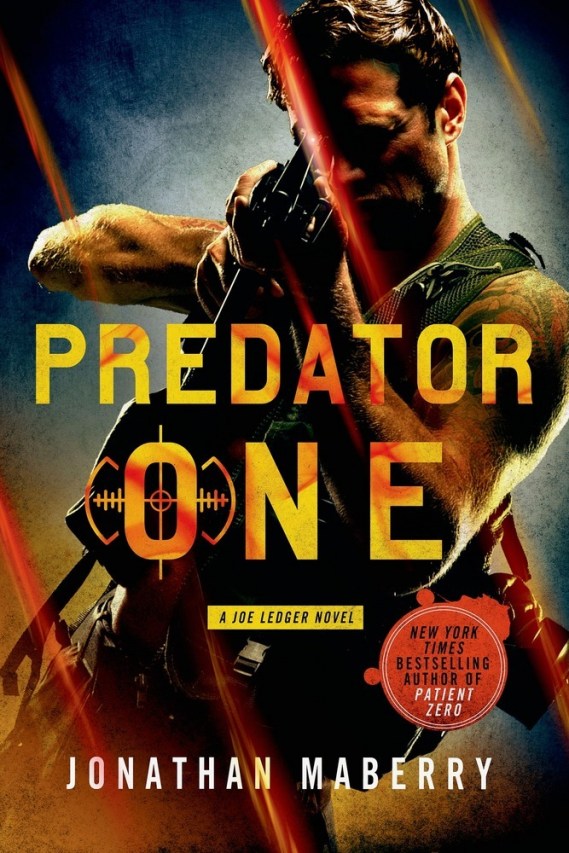
Throwback Thursday – Predator One by Jonathan Maberry

Predator One Cover

Publisher: Macmillan Audio (Audiobook – 7 April 2015)

Series: Joe Ledger series – Book Seven

Length: 16 hours and 55 minutes

My Rating: 5 out of 5 stars

Amazon     Book Depository

Reviewed as part of my Throwback Thursday series, where I republish old reviews, review books I have read before or review older books I have only just had a chance to read.

For this latest Throwback Thursday, I decided to I wanted something fast-paced and action-packed, so I went and checked out another book in Jonathan Maberry’s dark and thrilling Joe Ledger series with the seventh book, Predator One.

Those familiar with my blog will be aware of my recent love affair with the Joe Ledger series. I first encountered this series back in late 2018, and after massively enjoying the tenth book, Deep Silence, I have been slowly reading and reviewing my way through the entire series from start to finish. There are so many different things that I enjoy about these novels, including the outstanding action, gripping stories, fantastic characters and the crazy scenarios each book is set around. When combined, these elements help produce some truly incredible books, and I had an amazing time reading several Joe Ledger novels last year. I also read the first book in Maberry’s Rogue Team International series, Rage, which was one of my top books (and audiobooks) of 2019. I am hoping to finish off all the remaining books in the Joe Ledger series this year, and Predator One is the first one that I have so far checked out in 2020. I have to say that I was once again blown away with Maberry’s writing ability, as Predator One is another epic and remarkable read which gets a full five-star rating from me.

It is the opening day of the new baseball season, and Joe Ledger, point-agent for the high-tech counter terrorist organisation, the Department of Military Sciences (DMS), is enjoying a well-earned day off. Everything seems to be going well, the sun is shining, the beers are flowing, and a decorated military pilot is about to throw out the first ball. Then a model airplane flies out onto the field, a replica of the one flown by the war hero. Everyone assumes it’s a harmless prank, everyone except Ledger, who can only watch in horror as the toy plane explodes. Within seconds, a swarm of bomb-laden drones appears, devastating the crowd and leaving Ledger injured in the wreckage of the stadium.

As Ledger attempts to process what has happened, a series of coordinated attacks are taking place across America. While some of the attacks appear random, several are deliberately targeting the friends and family of key members of the DMS, attempting to distract the agency and take them off the board. It soon becomes clear that an old enemy has risen from the flames, determined to get revenge on those that they believe have wronged them in the past, including Ledger and everyone he loves. Worse, they have teamed up with a force of pure evil whose deepest wish is to torment and destroy the head of the DMS, the mysterious Mr Church.

Diving back into the action, Ledger and his team attempt to find and neutralise the source of this new threat. But at every turn, they find themselves outmatched, outmanoeuvred and severely outgunned, as the enemy has access to advanced technology that allows them to take control of America’s military vehicles, aircraft, ships and drones. As the attacks against America worsen, their opponents even gain control of Air Force One, with the President aboard, and start to fly it towards New York City. Can Ledger save the day one more time or have the DMS finally come up against an enemy even they can’t outsmart?

Wow, just wow. Predator One is another impressive and extremely captivating thriller novel that I had an outstanding time listening to. Maberry has come up with another incredible, action-packed story which utilises his trademark writing style to present a first-rate novel. Readers are treated to a multi-layered story, which cleverly features multiple character viewpoints, flashbacks and deep examinations of a several major characters’ pasts and motives. All of this allows Maberry to tell a complex and intriguing thriller story that never lets up on the excitement. The various storylines flow together perfectly thanks to the short chapters and constant dancing between different character perspectives, and all the storylines lead up to an epic and memorable conclusion. Maberry really knows how to ramp up the tension and the excitement throughout the book, and the final couple of hours are exceedingly thrilling, as several exhilarating scenarios come into effect at the same time. All of this results in a deeply exciting read, which I really loved and is another perfect Joe Ledger story.

Just like so many books in this series, amongst the best things about Predator One are the fantastic antagonists and their over-the-top plot against America, Joe Ledger and the DMS. For the main antagonist, Maberry goes back to some of the earlier books in the series, and brings back the Seven Kings organisation, which is being led by an old, established opponent of the DMS. While a new, complex villain for this book could have been fun, I really loved the author’s use of the historical antagonist, especially as they have been substantially transformed since the last book, and they are now aiming for a destructive end. This older antagonist is paired with the mysterious, evil character, Nicodemus, and together they form quite a partnership. Nicodemus is a character that has been hinted at and featured in the shadows of several previous books, so it was really cool to see him in a more substantial role. The key to Nicodemus is his extremely enigmatic persona and history, as no one quite knows who or, more importantly, what he is. He seems to have some sort of mystical abilities, and it is hinted in this book that he is some form of demon or devil, although it is never fully revealed. This mystery and mystique make for a quite an intriguing addition to the series, and the two main antagonists work together quite well as an evil, villainous pairing. On top of them, Maberry also throws in a good secondary antagonist who acts as a crooked assistant to the leader of the Seven Kings and who serves as a useful narrator, as well as the standard sexually depraved henchmen. Combined, these excellent antagonists make for a fun and exciting opposition for the main characters and they help produce some extremely interesting storylines.

I was also a major fan of the fantastic and complex master plan that Maberry envisioned for the antagonists of this book, which served as a fantastic basis of much of the story. Maberry crafted a sinister and exceedingly destructive campaign of terror and destruction that culminated in the takeover of Air Force One with the President and other key characters on board, sending it on a kamikaze mission. This proved to be a rather fun villainous storyline to follow, and I enjoyed seeing it unfold from both the protagonists’ and antagonists’ points of view, as these different perspectives led to some very intriguing scenes. I also liked the way that that the origins of the plot were explored in a series of interludes, allowing the reader to become familiar with the key players of the scheme, and get hints of the full extent of the planned destruction. It was also rather cool to see these antagonists land some real blows against the DMS. Maberry has never been shy about killing off key side characters (for example, he killed off the main secondary character and primary love interest in the second book, The Dragon Factory), and he ensures that some real damage is done to some DMS characters in Predator One. This helps add a real emotional edge to the story, and I liked the way that it upped the stakes, as well as the obvious emotional and psychological impacts that it had on some of the series’s well established, long-running protagonists.

Maberry makes sure to bring back the full and unique bevy of good-guy characters for this seventh book, most of whom have appeared in multiple books before. At the fore is the series’s titular protagonist, Joe Ledger, who is the sole first-person narrator in the book, with around a third of the story told from his point of view. Ledger is his usual witty and damaged self in this book, infecting his parts of the story with his wicked humour and sarcasm, while also unleashing his barely hidden rage and special brand of hyper-violence. Ledger goes to some dark places in Predator One, especially after his friends and allies are attacked, and the way he ends the villain is particularly gruesome and memorable. In addition to the usual examination of Ledger’s complex psyche, I really liked the way that a number of other side characters got some substantial sequences in this book. Joe Ledger series stand-out character Mr Church gets quite a lot to do in this book, and it was excellent to not only see him calmly lead his people in a severe crisis, but also react to some substantially personal attacks from the shadowy Nicodemus, who he has some obvious history with. The DMS’s psychiatrist, Rudy Sanchez, also gets quite a few scenes in this book, as he and his family come under substantial attack from the antagonists. It was really intriguing to see Rudy, whose usual role is to calm and centre the rest of the protagonists, come apart a bit in this novel, and it was quite stirring to see him pull himself together in a major way. I have to say that I also really enjoyed the inclusion of Toys as well, especially as Maberry has written a rather good redemption arc for him in this book. Thanks to the author’s use of multiple viewpoints, each of these characters, and more, get multiple moments to shine in this novel, and this helped create a full and captivating thriller tale, especially as the reader inevitably becomes invested in these characters’ survival.

I can’t go past a Joe Ledger novel without commenting on the exquisite and ultra-violent action sequences that are heavily featured throughout the book. Maberry is an expert at writing detailed and explosive action scenes, and Predator One is filled with a substantial amount of battles and fights, with all manner of armed and unarmed combat. These scenes are an absolute delight to behold, and it is always cool to see these well-crafted fights come to life. There are a number of large-scale battle sequences throughout this book, and Maberry did an amazing job switching between several fights that were happening simultaneously towards the end of the book, resulting in some extremely action-packed and exciting sections of Predator One. I really enjoy the way that the author breaks down the fight, and it is interesting to hear about the tactical reasons or destructive capabilities for certain moves or weaponry. All of this makes for a really cool book, although readers should be warned that there is a lot of extreme violence in this book that might not be for everyone, especially the graphic torture scenes.

Just like the previous Joe Ledger novels I have been lucky enough to enjoy, I chose to check out Predator One’s audiobook format, which was narrated by the exceedingly talented Ray Porter. Running at 16 hours and 55 minutes, this is one of the longer Joe Ledger audiobooks (not by much), but I found myself able to power through it in only a few days, and the audiobook format remains my favourite way to enjoy a Joe Ledger book. Porter’s outstanding narration is the highlight of this format, and I will never get tired of praising his vocal work in this format. The voices that Porter comes up with for these productions are pretty damn awesome, and he has perfected some amazing voices for the characters featured in this series. I once again have to highlight Porter’s take on Mr Church, as his version of the character has some real presences, authority and gravitas. I also liked some of the voices that he did for the villainous Nicodemus, especially as the script called for a change of accent and voice mid-sentence, something which Porter pulled off perfectly, and which made the character sound pretty sinister in this format. However, nothing can top the amazing work that Porter puts into the series’s titular protagonist, Joe Ledger, as the narrator is scarily in sync with this character, and expertly portrays all his emotion, personality and raw sarcasm. I cannot emphasise enough how impressive the Joe Ledger audiobooks are, and if you are keen to check them out, this is the format to do it in.

Predator One by Jonathan Maberry is an outstanding and captivating tale of revenge, destruction, action and war, as the author’s team of elite warriors go face to face with an army of pure evil. This was an intense and thrilling read, which I once again completely failed to put down multiple times. Filled with amazing characters, including some very well-crafted evil antagonists, a fun story, violent action sequences and some outrageous story elements, this book is relentlessly entertaining and it proved to be an impressive addition to the Joe Ledger series. Predator One comes highly recommended, especially in audiobook format, and I look forward to finishing off the final two books in the series later this year.

Amazon     Book Depository