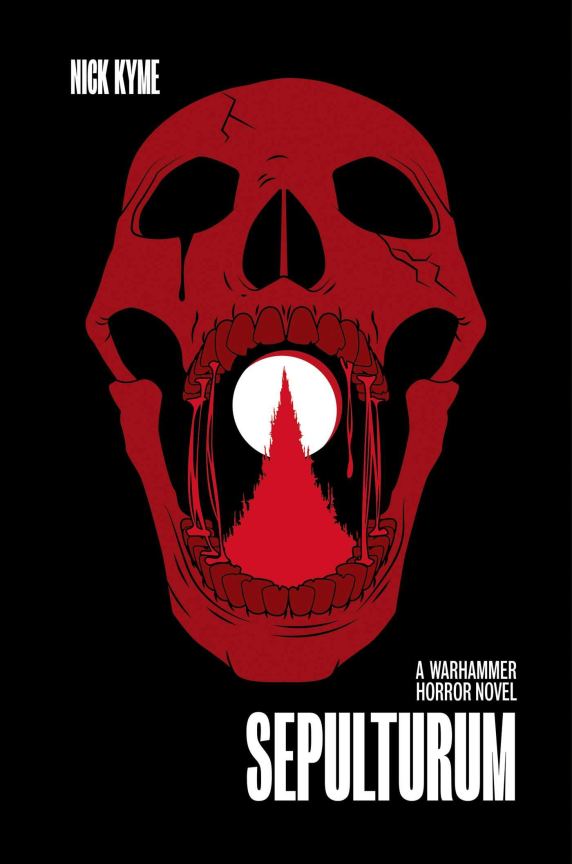
Warhammer 40,000: Sepulturum by Nick Kyme

Warhammer 40,000 Sepulturum Cover

Publisher: Black Library (Audiobook – 3 March 2020)

Series: Warhammer Horror

Length: 7 hours and 9 minutes

My Rating: 4.25 out of 5 stars

Amazon

My obsession with Warhammer continues as I check out the grisly Warhammer Horror book, Sepulturum by Nick Kyme.

Over the last couple of years, I have had a lot of fun diving down into the epic Warhammer 40,000 universe.  This universe features so many epic and unique stories and characters, and I love all the fantastic tales that can be told across the genres.  One sub-genre of Warhammer fiction I’ve only had a little experience with so far is the Warhammer Horror books which, as the name suggest, blend gruesome horror elements with the already grim Warhammer universe.  I have so far enjoyed one Warhammer Horror book, the creepy and clever The Bookkeeper’s Skull by Justin Hill, which was brilliantly written and showcased.  I have been meaning to check out some other horror related Warhammer books, and when I saw that there was a zombie-centric Warhammer book, I knew it was something I would have to read.  This book is Sepulturum, a compelling read written by new-to-me author Nick Kyme.  Kyme is a veteran Warhammer writer, and I’ve got a couple of his other books sitting on my shelf already waiting for my attention.  However, my first experience of him was through Sepulturum, which proved to be a really fun and interesting adventure.

Something dark and deadly, something which hungers for blood and flesh, is stirring in the low-hive of Blackgheist.  The only person who can stop it is Inquisitor Morgravia Sanctus of the Ordo Sepulturum, whose investigation in Blackgheist revealed a terrible presence.  However, before she could act, something happened that destroyed her memories and left her scarred, broken and hunted.  Now with only one acolyte left, Morgravia attempts to find a psyker capable of restoring her mind to let her figure out what is chasing her and what their plans are.

Meeting with a broker from the criminal underworld, Morgravia believes that she has finally found the solution to her problems.  However, before she can proceed, a terrible attack is launched across Blackgheist which no one is prepared for.  The people of the hive have been turned into something violent, no-longer alive, and desperate to devour everything they come across.  These creatures are soon swarming across Blackgheist, destroying all before them and leading to untold chaos and destruction.

Soon, only small bands of survivors are left who hope to escape from the horrors surrounding them.  But as Morgravia leads one such group to safety, she soon discovers that not everything is as it seems.  Other deadly monsters are hunting throughout Blackgheist, while deranged cultists take the opportunity to seize power for themselves.  The truth behind the terrible events unfolding lies only within Morgravia’s mind, but is she truly prepared for the horrific secrets that are about to be unleashed?

Sepulturum was a fantastic and dark read that proved to be an outstanding addition to the Warhammer Horror range.  Kyme has produced a fast-paced and gruesome zombie story in an amazing novel that combines a clever story with some excellent horror elements.  The story itself is a fun zombie narrative as several characters attempt to survive a sudden onslaught of deranged and hungry former humans overrunning the city.  The story primarily focuses on the damaged Inquisitor Morgravia and a couple of her companions as they attempt to escape the horrors unleashed upon them and find its cause, although a second storyline revolves around a normal labourer, Cristo, as he tries to get his daughter to safety.  Both groups first encounter the zombie creatures in some pretty horrifying situations that leave them badly shaken and alone, and they are forced to navigate through the rest of the chaos in a daze.  Their subsequent attempts to evade the zombie creatures lead them further into danger, especially as there are other dark forces out in the city that provide additional awesome complications and conflicts, and there are betrayals, insanities and the feeling that the zombies are only a small part of the larger picture.  Everything leads up to some pretty disturbing final sequences that are loaded with brutal twists and major confrontations, especially as nobody is who they seem, and there is high need of some bloody self-sacrifice.  Readers will come away pretty satisfied with how the story ends, with horror fans no doubt liking the high body count, and the potential hint of a continuation in the future.

I loved how Kyme set out the story in Sepulturum, and it proves to be an outstanding read about survival and desperation in a Warhammer city.  The main setting for Sepulturum is already pretty gritty and unsavoury before the zombies, but everything only gets worse as the story unfolds.  The slow reveal of the zombie creatures is handled well, and I loved the slow-burn panic that sweeps the city.  The blend of character perspectives works well throughout the story, and while Morgravia and Cristo prove to be the main narrators, several other supporting cast members, often in Morgravia’s party, give an excellent alternative edge to the narrative while adding some fun moments to it.  Cristo’s separate storyline also works well in concert with the main narrative surrounding Morgravia and her survivors, and it was interesting to see their two stories play out simultaneously without the groups ever meeting.  Kyme has a lot of fun setting out some excellent elements of the story, and I particularly loved the attention to detail when it came to some of the fight scenes and the horror creatures the protagonists have to deal with.  There are also several great twists and reveals towards the end of the book, and while some are well foreshadowed, there is also one genuine surprise that I thought was pretty damn brilliant.  I did think the big conclusion ended up being a little to over-the-top metaphysical for its own good, but it was most a good ending with a fun last-minute inclusion from a whole other faction.  This ended up being a pretty good self-contained, standalone read within the wider Warhammer 40,000 universe, and not too much pre-knowledge of the Warhammer universe is needed to fully appreciate it, especially with the zombies there.  However, fans of the franchise will have the best time with it, and I felt this was a great inclusion into the wider Warhammer universe.

Naturally the real highlight of Sepulturum is the zombies, and it is always fun to see how Warhammer stories turn out when combined with genres like horror, especially as this universe already has some terrifying and shocking elements to it.  The zombies in Sepulturum are interesting inclusions to the story, especially as Kyme does a good job of brutally introducing them and then unleashing them upon a wider world.  While some members of the Warhammer 40,000 universe do have some concepts of what a zombie is, the vast majority do not, so the inherent panic and horror at what the creatures are is pretty crazy, and you have to love the reactions of the people who don’t know what they are dealing with.  All the zombie scenes are pretty ferocious, and the unstoppable horde coming at you is always pretty freaky to deal with.  I did quite like how the zombies themselves weren’t exactly what you thought they were from a Warhammer 40,000 lore perspective, and their presence heralds another threat, with some creepy alternate creatures.

In addition, Kyme also enhances other dark elements of the Warhammer 40,000 universe and uses that to increase the horror feel of the book.  The author affects a brooding and repressive tone across the entire book, and all the characters are caught up in intense feelings of despair and horror at what they are experiencing and the creatures they are encountering.  Kyme also introduces some gruesome body modification elements that work well with the zombies to create a terrifying read.  Body horror, including some of the more shocking elements around servitors, argumentation and other body modifications, is always close to the surface of any Warhammer story, but it was particularly bad here, especially as some characters are dissected or have elements contained within their bodies that Kyme showcases in distressing detail.  A lot of the horror is also derived from the craziness within people’s minds, as many of the characters break down in different ways after the initial zombie attack.  Watching characters go insane in various ways, whether through suicidal thoughts or with bloody religious fervour, really adds to the overall horror elements of the book, and I felt that Kyme had the right balance between outer and inner horror throughout this book.  The combination of the darker tone, zombies and other cool horror elements, really fits into the Warhammer universe well and I enjoyed the dark tale that Kyme told around it.

As is my usual practice, I ended up listening to Sepulturum on audiobook rather than seeking out a physical copy.  As always, it proved to be pretty epic.  I always love how well the audiobook format works to enhance the fantastic stories in the Warhammer universe.  This was especially good with Sepulturum, as the audiobook version helped to bring out some darker elements of the story and make Sepulturum feel even spookier.  Narrated by veteran audiobook narrator Antonia Beamish, who has worked on several Warhammer Horror books previously, the audiobook ensured that the darker tone and desperation of the characters really came through.  You really get a sense of the characters’ panic and despair through Beamish’s great narration, and I deeply appreciated how gruesome and ghastly all the horror details sounded when she described them.  The additional voices she used for several of the characters were pretty good as well, and you end up getting a good sense of each character’s personality, especially during the terrible encounters they go through.  Beamish’s voice work really helps to bring this entire audiobook together, and this ended up being an outstanding way to enjoy Sepulturum.  With a run time of just over seven hours, you can power through this audiobook quickly, and I deeply enjoyed listening to this gory book in this format.

The Warhammer universe offers further treasures as Nick Kyme has some zombie fun in Sepulturum.  A fantastic addition to the Warhammer Horror subseries, Sepulturum takes some great characters on a particularly dark and shocking adventure loaded with all manner of horror.  It’s an excellent and exciting read for fans of both Warhammer and horror fiction.  I deeply enjoyed this book and can’t wait to try out more awesome Warhammer Horror in the future.
Amazon

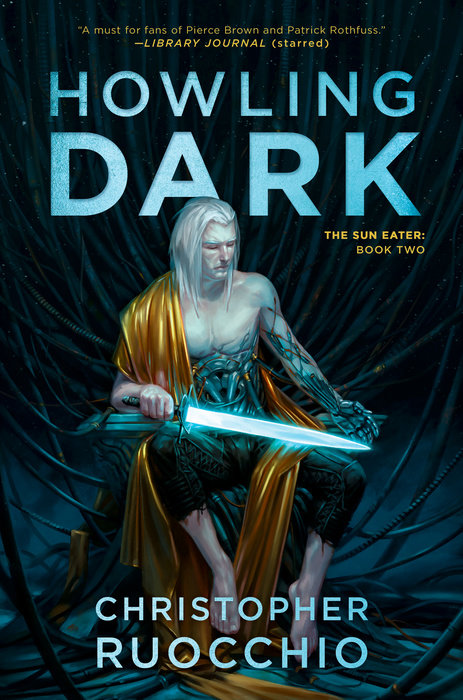
Howling Dark by Christopher Ruocchio

Howling Dark Cover

Publisher: Gollancz and Recorded Books (16 July 2019)

Series: Sun Eater – Book 2

Length: 679 pages or 28 hours and 3 minutes

My Rating: 5 out of 5 stars

Amazon

Outstanding new author Christopher Ruocchio, who blew me away last year with his debut novel, Empire of Silence, returns with the second book in his brilliant Sun Eater series, Howling Dark.

Empire of Silence was one of my favourite books from last year, easily making my Top Ten Reads for 2018 list, and I absolutely loved the author’s highly addictive story and its vast new science fiction universe. This was a fantastic first book from Ruocchio, and when I finished it, I really wanted to know what happened next. As a result, I have been waiting to read this sequel for a while, having done a Waiting on Wednesday article on it and including it on my Top Ten Most Anticipated July – December 2019 Releases list. I was pretty excited to receive a copy of this book a few weeks ago, especially as Ruocchio was nice enough to mention my blog in his acknowledgements (this has not affected my review or rating in any way). However, due to having a huge number of other books that were high priority reads, I ended up listening to the audiobook format of Howling Dark instead, which is narrated by Samuel Roukin. I had extremely high hopes when I started reading this book, and I was definitely not disappointed by the final result.

The Sun Eater series is set far in humanity’s future, where humans have left Earth and expanded out to thousands of worlds. While humanity, mostly in the form of the Roman-inspired Sollan Empire, has flourished, for the last four hundred years they have been fighting a brutal and destructive war with the Cielcin, a spacefaring race of aliens who have destroyed hundreds of colonies and billons of humans. Each of the books in the series is written as a part of the autobiographical chronicle of series’ protagonist, Hadrian “Halfmortal” Marlowe, otherwise knowns as the Sun Eater. Hadrian is the man who will one day destroy a sun in order to burn every Cielcin to a cinder, and in doing so become both history’s greatest hero and most infamous monster. However, these events are set to occur much further on in the future, and these earlier books focus on the events that formed Hadrian’s character, and show how he became the man to end it all.

In Howling Dark, the story is set some 50 years after the events of Empire of Silence. During this time Hadrian Marlowe has been wandering the outer fringes of the galaxy trying and failing to find a myth. Leading a band of mercenaries, former gladiators and disguised Imperial legionnaires, and carrying a cargo of frozen Cielcin prisoners, Hadrian hopes to travel the lost planet of Vorgossos. The planet’s mysterious master apparently has a way to contact the Cielcin, who Hadrian hopes to finally negotiate peace with, ending the brutal war that has ravaged both races.

However, finding Vorgossos has proven far more difficult than Hadrian initially anticipated. The legendary planet is well hidden, and the only way to uncover its location is to deal with the Extrasolarians, a group of humans who live outside of Imperial control and whose reliance on technology and enhancements borders on the heretical. As Hadrian and his companions locate a promising lead, they are suddenly ordered back to the fleet as the war against the Cielcin needs every soldier.

Determined to bring his plan for peace to fruition, Hadrian and his companions disobey these orders and go rogue. Entering the worlds of the Extrasolarians, the Exalted and other grim horrors at the edge of the known universe, they are able to obtain passage to Vorgossos. However, what they find at their destination may be even worse than the alien foes they are attempting to contact. Between facing technological monstrosities, a cruel, immortal king and the appearance of humanity’s oldest and most feared enemy, Hadrian has his work cut out for him. But the further along his path he travels, the more Hadrian begins to understand the grim destiny in front of him and the terrible cost he will have to pay.

This is another epic book from Ruocchio! Howling Dark is a dark, gothic science fiction masterpiece that was an absolute treat to read, and which really highlights the author’s creativity and ability to create a wide-ranging universe with some unique and captivating features.

This was another incredible and ambitious story from Ruocchio, who takes the reader on an extended and powerful adventure through his great universe. The Howling Dark contains a lengthy and compelling plot which goes in some very interesting directions. While this is a long book, Ruocchio does a great job of pacing the story out, and there is rarely a moment where the plot is not progressing in an intriguing way, or where the reader is left bored. I really enjoyed some of the dark places that the author took the story in this book, and there are a variety of cool new locations, antagonists and other monsters that the protagonist and his friends need to deal with in one way or another. Hadrian goes through some notable character development in this story as he takes more and more steps down the road to becoming the biggest legend in the universe. Howling Dark has a pretty epic conclusion to it, with some major plot developments occurring in the last 100 pages or so, and I really liked how Ruocchio wrapped up the storyline. Overall, this book has an intense and captivating storyline to it, and I am exceedingly glad I got a chance to read it.

I did find that the start of the book was a tad hard to get into. Due to the complex storylines (and possibly because I have read so many different books in the last year) it took me a little while to remember whom some of the characters were and where the plot was up to. It did not help that the story had jumped ahead by 50 years, and some of the events that occurred during this break are mentioned a few times at the start of the book. However, once I was able to get my bearings, it did not take me long to get hooked on the story and I had no problems following the enjoyable plot, especially as the author does a great job explaining these missing events and offering the reader several recaps of the events from the first book. Readers of the physical copy of Howling Dark will also be helped by the detailed dramatis personae, index of worlds and lexicon of terms that is included at the back of the novel, which can really help to clear up some confusion about the events that have occurred. I would say that readers would probably be best served checking out Empire of Silence first before trying to read Howling Dark, but I believe that new readers will be able to fully enjoy this story once they reach the recaps and get a sense of what happened in the previous books.

I really enjoyed how Ruocchio continued to write his story in the chronicle format that worked so well in the first book. Each of the books in the Sun Eater series are presented as part of a self-written chronicle of Hadrian’s life, penned some years in the future after he destroyed the sun. As a result, the story is told exclusively from Hadrian’s perspective and features his memories of the various events that formed his character. This is a great way to tell the story, mainly because the reader gets to see a contemplative version of the narrative. There is a real and palpable sense of regret in Hadrian’s narration, which really adds to the book’s grim tone, as the reader gets to hear the protagonist recount events that are not only traumatic for him, but which set him down the path to his defining moment. Due to Hadrian’s lifetime of self-reflection, you also get a far more in-depth examination of the character’s motivations for taking certain actions, as well as an analysis of why other characters acted the way did, which adds a great edge to the story. I also liked how the protagonist hinted at some of the key moments that occur later in the book or may occur in later books. This dramatic irony does a wonderful job of keeping a sense of tension in the air, as the reader knows that the worst is yet to come. Ruocchio’s use of the chronicle format for these novels is cleverly done, and I really enjoyed how it helped enhance the overall story.

Possibly Ruocchio’s biggest strength as a writer is his amazing ability to come up with a widespread and intriguing new universe to use as a setting for his fantastic story. This was one of my favourite things about Empire of Silence, as I loved the large, sprawling human empire that Hadrian lived in during the first book. This Sollan Empire was created after a major war with artificial intelligences thousands of years before, and therefore any technology that is too advanced or which thinks for itself is considered heretical by a controlling religious organisation. The massive empire is heavily inspired by the Roman Empire, with a similar government, military system, social castes and culture. This also affects the overall tone of the story, as the narrator, Hadrian, is a true son of this empire, and thus has a classical education that guides his overall view of life. As a result, the story is filled with the Hadrian quoting a number of historical verses and aphorisms to tell his tale, which really helps to give the overall story a more classic tone in the science fiction environment. I really liked this cool combination of science fiction elements with this antique mindset, and the general history of the Sollan Empire, with its veneration of other historical empires such as the Romans or the Victorians, is deeply interesting. This Sollan Empire actually reminded me a bit of the Imperium from Warhammer 40k, which also has a Roman inspiration and overarching gothic theme to them. As a fan of Warhammer 40k, it was cool see a universe built along similar ideas, and Ruocchio comes up with a number of clever and unique new elements to make his Sollan Empire stand out. Although most of the story in Howling Dark is spent outside of the main empire, the author still spends time expanding on elements of this massive organisation, and the reader gets more of a sense of them. I especially enjoyed seeing the Imperial legions in battle during this book, and it results in a number of incredible scenes that I really enjoyed.

Ruocchio also does an outstanding job introducing a number of intriguing new universe elements to this book in the form of the Extrasolarians. I found the dive into the world of the Extrasolarians to be extremely fascinating, especially as Ruocchio let his creativity run wild during this part of the books, coming up with all manner of technological marvels, body augmentations, genetic modifications and other science fiction wonders. However, many of these technologies have a darker side to them, which the protagonist and his friends find out the hard way. Some of these modifications are downright creepy, and this really helped the author create a dark and distinctive expansion to his universe. I was especially impressed with one of the new antagonists of this story, Kharn Sagara, a sinister, technologically enhanced ancient with hidden motivations (check out the cover below to see how cool his character design is). The reader also gets a much more in-depth look at the Cielcin in this book, as the protagonist starts to understand more about them and how they think. Ruocchio does a fantastic job exploring the mindset of these creatures and showing them as truly alien beings with very little similarities to humanity, and the reader starts to get an understanding of why Hadrian will eventually be forced to destroy them. All of this is really cool, and I could honestly go on for pages about all the cool world building that Ruocchio does in this book, it was that impressive.

As I mentioned above, I ended up listening to Howling Dark’s audiobook format. The audiobook runs for 28 hours and 3 minutes and is narrated by Samuel Roukin, who does a fantastic job bringing this story and the characters to life. This is a lengthy audiobook, and readers will need to make a bit of room in their listening schedule to get through it. It is actually the longest science fiction audiobook that I have ever listened to (so far) and would easily make my Top Ten Longest Audiobooks That I Have Listened To list. I found that Howling Dark’s audiobook format was a great way to enjoy this epic novel. I always find that listening to a complex story helps me absorb a lot more of the story and universe details, making for a much fuller read. This was definitely true for Howling Dark, as I was able to really appreciate the huge amount of gothic science fiction detail that Ruocchio installed in his work. I also found that Roukin’s narration also did a wonderful job of capturing Hadrian’s inherent regret and despair, and this really helped me appreciate the entirety of the book’s story. Roukin also creates some terrific voices for the various characters and does a fantastic job bringing them to life through the audiobook. This was a fantastic format to enjoy Howling Dark with, and I will strongly consider listening to the audiobook of the next book in this series.

Overall, I think that Christopher Ruocchio does an excellent job following up on his spectacular debut, Empire of Silence. Howling Dark is an amazing read that I absolutely loved. Ruocchio has come up with a complex story for this book, which is massively enhanced by his clever writing style and impressive imagination. Clearly, Empire of Silence was no fluke, as Howling Dark gets a full five stars from me. I am really looking forward to checking out the next book in the series, especially as Ruocchio has left a huge number of intriguing storylines open, and I fully intend to stick with this series until Hadrian destroys that sun.

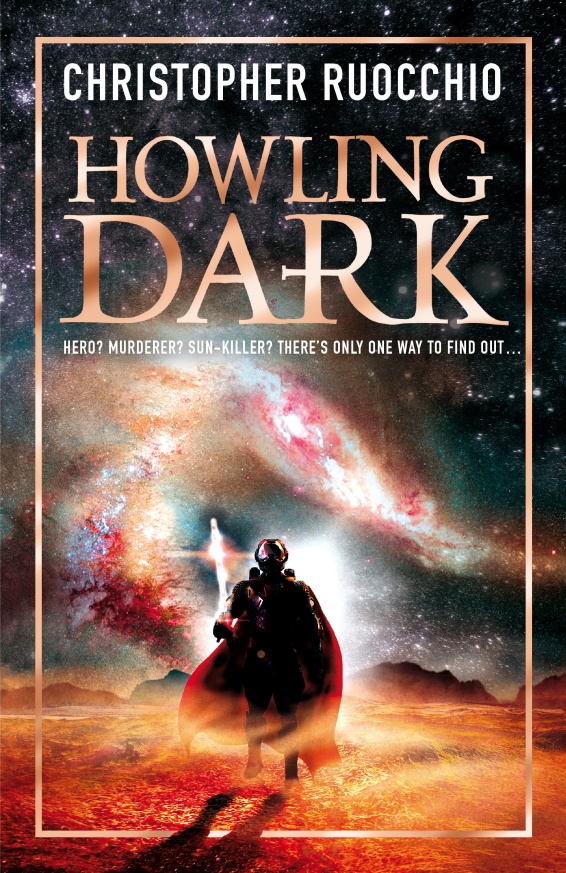
Howling Dark Cover 2

Amazon

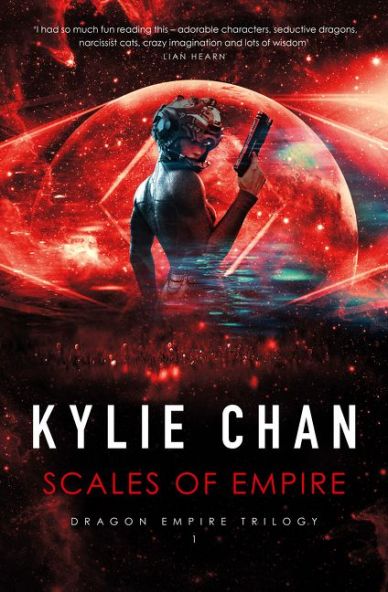
Scales of Empire by Kylie Chan

Scales of Empire Cover

Publisher: Harper Voyager

Publication Date – 19 February 2018

Amazon     Book Depository

Can humanity survive the arrival of an alien dragon with an offer of love?  Find out in this curious novel about first contact with aliens from bestselling Australian author Kylie Chan.

In the near future, Earth’s ecosystem is failing and humanity’s only hope for survival lies in escaping our solar system and finding viable new planets to colonise.  Corporal Jian Choumali has been chosen to accompany one of the huge generation ships that is preparing to journey to a distant planet.  However, the launch is interrupted by the arrival of a giant alien spaceship above Earth that will change humanity forever.

The ship is piloted by an alien known as a dragon, which bears a striking resemblance to the beasts of legend.  Dragons are the ruling members of a vast technologically and culturally advanced empire made up of numerous alien races.  The Dragon emissary, Shiumo, brings offers of peace, love and advanced technology to humanity as she introduces Earth to a wider universe.

Jian and her commander, Richard Alto, are chosen to be the first delegates to meet with Shiumo, and they soon become her guides to Earth.  Shiumo becomes a sensation overnight, providing humanity with longer lives, faster-than-light travel and a solution to Earth’s failing ecosystem.

However, the more Jian gets to know Shiumo, the more it becomes apparent that the Dragons may not be as benevolent as they seem.  What price will humanity really have to pay to join the Empire, and what role will the Dragons’ cat-like enemies play in the future of Earth?

Scales of Empire is the first book in the intriguing Dragon Empire trilogy, written by Australian author Kylie Chan.  This is Chan’s first voyage into science fiction, having previously written the Chinese mythology inspired Xuan Wu series.

Scales of Empire has a number of cool features that make it an amusing and thought-provoking science fiction novel.  Chan has constructed a first contact story that explores how humanity could potentially interact with an advanced alien race.  Chan provides a series of fascinating postulations about what human products would prove desirable to an alien species, what humanity could use in our defence against potential alien threats, and what our place would be among a vast interstellar empire.  The Dragons are the stars of this book, as Chan has imbued them with several distinctive abilities and personality quirks.  There is also a fun origin story to explain the similarities between the alien Dragons and the Earth dragons of myth and legend.  Having the other main alien race also resemble an Earth species, in this case cats, is a little over the top very unrealistic.  However, the behaviour of this other species acts as a good foil to the apparently benevolent and socially advanced Dragons.

Science fiction aficionados will also appreciate Chan’s descriptions and theories about what would be required for humans to reach and colonise other inhabitable planets in the galaxy.  Chan spends some of the early parts of the book highlighting her theories about how humans in the near future would achieve this.  Her descriptions of large ships that would require ten generations of its crew to live in space before they even reached the planet is fascinating, as are her suggestions about the ideal initial crewmembers; not a lot of other writers would suggest that colonisation ships should have large crews mostly made up of bisexual women with good genetic diversity.  In addition, there is also some intriguing discussion about the colonisation of other planets, and several chapters are dedicated to the training and initial colonisation of a planet, which many readers will find enticing.

While these science fiction aspects of the book are good reasons to try Scales of Empire, one of the most compelling and memorable aspect of this book is the constant examination of whether the Dragons are as benevolent as they seem, or if they have their own secret agenda.  This becomes a central focus of the story as the human characters analyse all of the Dragons’ actions while coming up with countermoves and their own attempts at manipulation.  There are many twists and turns, and at points it becomes hard to tell whether the Dragons or the humans come off as the worst species during these interactions.  This results in a really compelling narrative which serves as a superb central focus for the book and will keep you hooked until the final reveal.

The new book from Kylie Chan is an intriguing start to a promising science fiction trilogy.  Examining humanity’s potential first contact with an alien species, Chan asks the question: between an alien species with its own agenda and mistrustful and calculating humans, who is the greater evil?  This is a brilliant bit of fiction that provides a distinctive and in-depth discussion and is definitely worth exploring.

My Rating:
Three and a half stars

to

Four stars