Warhammer 40,000: The Lion: Son of the Forest by Mike Brooks

The Lion - Son of the Forest Cover

Publisher: Black Library (Audiobook – 22 April 2023)

Series: Warhammer 40,000

Length: 12 hours and 15 minutes

My Rating: 4.75 out of 5 stars

Amazon

One of the fastest rising authors of Warhammer 40,000 fiction, Mike Brooks, returns with another exceptional read, this time covering one of the most significant events in recent Warhammer fiction, the return of Lion El’Johnson with The Lion: Son of the Forest.

At this point I think that my love for all things Warhammer is pretty well established, especially after my lengthy post earlier this year detailing my favourite Warhammer 40,000 novels.  I have been having a ton of fun in 2023 with this cool franchise, and I have just managed to finish off the newest Warhammer novel with The Lion: Son of the Forest.  This is the latest book from the very impressive Mike Brooks, who has been making a real name for himself in Warhammer 40,000 fiction and who seems to get better with every one of his books that I read.  His previous novel, Huron Blackheart: Master of the Maelstrom was a great read about an excellent established villain, and I had a lot of fun with his most recent book, Warboss, a highly entertaining novel about the always crazy orks.  However, I think that The Lion is probably his most ambitious and captivating novel yet as he covers the return of the Primarch of the Dark Angels, Lion El’Johnson.  This is a pretty big deal in Warhammer circles, and I was very impressed with how Brooks puts his own spin on the return to create an epic and powerful read.

At the dawn of the Imperium of Man, there was no force more deadly nor more loyal to the Emperor than the Dark Angels, the first Legion of Space Marines.  Led by their implacable and unstoppable Primarch and genefather, Lion El’Johnson, better known as the Lion, nothing was able to stop the Dark Angels as they crusaded from planet to planet dispensing the Emperor’s will.  However, following the events of the Horus Heresy and the Lion’s inability to save the Emperor, the Dark Angels imploded from within.  Treachery and years of resentment saw the Legion engage in a brutal and sudden civil war, which resulted in the destruction of the Dark Angel’s home world of Caliban, the scattering of the traitor Dark Angels throughout time and space as the Fallen, and the disappearance and apparent death of the Lion right when the galaxy needed him most.

Now in the 41st millennium, humanity is facing the greatest threat since the Horus Heresy.  The fall of Cadia spawned the Great Rift, a sprawling gap of daemon infested space that split the already crumbling Imperium in two, distributing travel, communications and coordination between humanity’s armies.  Into this darkness, the dread forces of Chaos emerge, destroying all before them, while other malign threats begin to eat away the remains of the Imperium.  The doom of all mankind seems certain, but hope is about to emerge in the most unlikely of places.

After a 10,000-year absence, the Lion awakens on the far-flung and devastated planet of Camarth, with no memory of how he got there.  Discovering one of his former sons, the Fallen Zabriel, the Lion soon discovers what has happened to the Imperium in his absence, as well as the terrible threats of the Great Rift and the forces of Chaos.  Unsure of his purpose or what has happened to him, the Lion sets out to preserve humanity from the forces trying to destroy it.  Rallying members of the Fallen from their long exile, the Lion begins a new campaign throughout the besieged systems of man, while trying to reconcile himself to everything he has lost.  But a dangerous and well-organised Chaos warband, the Ten Thousand Eyes, led by two of the Lion’s Fallen sons, are determined to destroy the returned Primarch and enact an ambitious plan with galaxy shattering consequences.  Can an isolated Lion survive the insanity of the 41st millennium, or has he returned only to face his doom?

Wow, now this was a pretty damn awesome Warhammer 40,000 novel.  Mike Brooks continues to really impress me with this cool new book, and I loved the elaborate and captivating tale contained within The Lion: Son of the Forest.  Featuring an intriguing and emotionally charged narrative that perfectly revives a key Warhammer 40,000 character, The Lion is an outstanding read and I think this is probably Brooks’ best Warhammer novel yet.

The Lion had a particularly interesting narrative that was firmly set around the return of Lion El’Johnson, and I loved the unique tale that Brooks came up.  The initial scenes of the book are quite fascinating as Brooks presents a symbol laden couple of chapters to show the Lion’s initial return, which I felt was a great way to start the story as it set up a lot of intriguing moments and gave the book quite a distinctive theme.  The introduction of two new alternate perspective characters a few chapters in helps to morph the story into a more typical Warhammer 40,000 narrative as it sees the Lion and other former members of the Dark Angels awaken in the current timeline.  The story soon sees the Lion reunite with one of his former sons and begin to reclaim a conquered Imperial planet from a notorious Chaos warband while trying to understand the new universe he’s in.  Getting back to his roots as a protector, the Lion soon is soon drawn into larger affairs, thanks a mysterious new ability he has obtained, and he sets out to do the right thing and right the wrongs of his past.  His actions not only lead him to more of his sons, ensuring that this book has a deep emotional heart to it, but it also leads him into conflict with a dangerous enemy, one that has big plans for him.

The Lion’s narrative is pretty epic in its scope and power as Brooks tells an exciting and compelling story about both the past and the present, and how one hero can make a difference.  The story features some great moments, including cool battles, emotional reunions, and dives into ancient history, as the characters come to grips with what the Lion’s return means to the greater universe.  Everything leads up to an ultra-intense finale as the Lion encounters a truly fallen son and is forced to reckon with the sins of his Legion and family.  I really enjoyed this epic narrative and Brooks sets out all the events extremely well, ensuring that readers will follow one excellent scene to the next.  While not every mystery is explained, the author does lay out some intriguing events that will grab a lot of Warhammer fans attention, and it leaves it open for more awesome books in the future.  I had an incredible time with The Lion and I managed to finish it off in a short amount of time.

This outstanding story is beautifully brought to life in Brooks’s capable hands as he deploys an excellent and captivating writing style throughout The Lion.  Brooks really had a tall order here in bringing back a key character from the Warhammer mythos and I think that he handled in an outstanding way by focusing on the emotional aspects of the character, rather than a pure action novel.  While The Lion does have some outstanding battle sequences designed to showcase just how epic a Space Marine can be, the focus is really on character development as Brooks examines three outstanding point of view figures while also telling an excellent narrative about characters trying to find their place in a strange new galaxy.

I loved how the author split the story across the three different perspectives, and I enjoyed how he made them so distinctive by using different styles and tenses for each of them.  For example, Baelor’s chapters use a third-person narration to show his struggles without going too deep into his head, the scenes shown from Zabriel’s eyes are written in a first person chronicle style as he recounts his story as if writing a journal, while the chapters focusing on the Lion are also in the third person, but feature a different, more epic style, which at times put me in mind of an older story or saga.  These different styles really fit the characters and their specific stories, and I appreciated how Brooks utilised these changes of styles to really tell a complex by subtly layering a classic Warhammer tale with pain, emotional damage, and uncertainty.

I felt that the author got the right balance of action and adventure with character growth, and you really get attached to the protagonists and their unique experiences in the Warhammer 40,000 universe.  I also loved how Brooks layered the story with a ton of Arthurian symbolism, as the Lion is meant to mirror King Arthur in this book, returning during his people’s darkest hour after dying during a war with his sons.  This included an excellent take on the Green Knight tale, with a dark Warhammer 40,000 twist to it, which also leads to one of the book’s funniest moments with a Monty Python homage.  I really got drawn into this outstanding story thanks to the way that Brooks told it, and this was an excellent and captivating read.

Now, this one of those Warhammer 40,000 novels that I probably wouldn’t recommend to new Warhammer readers as the story dives into some deep canon elements of the franchise.  Due to its focus on the return of Lion El’Johnson, a particularly important character that was only recently brought back in the game as a major event, The Lion is a key book in the Warhammer 40,000 expanded universe, and I felt readers needed a good understanding of the lore to fully appreciate its story.  This is because is strongly related to the history of the Dark Angels, and indeed all the Space Marines, and while Brooks does revisit and explain these events, having a more in-depth knowledge really does make that story that much clearer and more intriguing.  For those established fans of Warhammer 40,000 fiction, you are in for a real treat as Brooks expertly expands the lore while also providing some intriguing insights into established canon.  Seeing the Lion return and interact with his Fallen brethren was so damn cool, and it really tied into some of the best bits of Dark Angel lore that has been building for years and years.

I loved how the story examined both the current state of the Warhammer 40,000 universe, as well as the Horus Heresy, and it was fantastic to see characters who survived the Heresy arrive in the current universe and see what has been unleashed by the arrival of the Great Rift.  There are also a ton of jokes, references, and in-universe discussions that I had a lot of fun with, including intriguing new descriptions of events of the Horus Heresy, as well as more intriguing Dark Angels history.  I personally deeply enjoyed seeing the various ancient characters discuss the events that happened after they disappeared, and their reactions at the state of the Imperium, the deification of the Emperor to godhood, and what happened to the Dark Angels in the Lion’s absence, and this lead to some outstanding scenes.  The Lion proved to be a pretty epic piece of Warhammer 40,000 fiction and I was really impressed with how Brooks told such a unique and important story.

As I mentioned before, The Lion is a very powerful character driven novel as Brooks focuses on a cast of damaged and dispossessed figures thrust into an uncompromising future.  This is mostly clearly seen in the main character of Lion El’Johnson, the legendary Primarch of the Dark Angels and son of the Emperor, who returns after 10,000 years of mysterious disappearance.  Brooks paints quite the intriguing and complex picture around the Lion, showing him as a being out of time who, after experiencing some of the greatest losses and betrayals imaginable, awakens 10,000 years in the future with no idea of what happened to him.  The Lion is shocked at what the Imperium has become and how badly the universe has changed without him there.  Forced to reconcile with both this new future and his many failures, the older and wiser Lion heads back to the basics of his youth, protecting humans from monsters while also trying to reconnect with his lost sons, the Fallen, who he has mixed feelings about.  Brooks’s characterisation of the Lion is very different to what we’ve seen in previous novels, which I think a smart move, as the character is tired and lonely in this reality, and very much aware of the mistakes he has throughout his life.  Watching him relive some of the worst decisions he made during the Horus Heresy is very moving, and I loved how his insights into the past allowed him to move forward with his rediscovered sons and attempt to forgive them.  While there are a still a lot of questions around how the Lion returned (something I hope Brooks addresses in the future), I think that this was a pretty impressive return of such a key character, and I look forward to seeing more books focused on him.

The other major characters featured within The Lion are former Dark Angels who rebelled against their father thousands of years ago and were scattered throughout time and space following the destruction of Caliban.  Known collectively as the Fallen, these Space Marine characters have very complex feelings about Lion El’Johnson, especially as many believe he betrayed them and the Imperium, and they have all spent the intervening years being relentlessly hunted by the modern Dark Angels and their successor chapters.  This intriguing background was fertile ground for rich character development and backgrounds, and a large portion of the novel’s emotional depth relied heavily on the Lion meeting and reconciling with his lost sons.  Brooks produces several brilliant scenes that showcase the turbulent relationship between the Lion and the returning Fallen, and it was fascinating to see the Lion, a usually stubborn and proud character, admit that he was wrong and try to make amend to his sons.  I loved the intriguing group of characters that emerged in a supporting role as a result, especially as Brooks set them up as counterpoints to the Knights of the Round Table to match the Arthurian vibes around the Lion.

The most prominent of these supporting characters is Zabriel, the first Fallen that the returned Lion encounters, who serves as his guide to the new universe.  Zabriel has some amazing scenes in this book, especially as he provides the Lion with the first taste of the trauma the Fallen have experienced thanks to their father, and he makes sure the Lion knows that.  His well written chapters really capture his deep emotional conflict throughout The Lion, as he tries to reconcile the betrayals of the past with the hope that surrounds the revelation that Lion El’Johnson has returned.  His interactions with other members of the Fallen are really impressive as well, and I think he had some of the best chapters in the book.  Zabriel’s intriguing perspective is well matched by the other major point of view character, Baelor, a fellow Fallen who has chosen to continue following his former commander Seraphax, who he believes has a great plan to save the Imperium.  To achieve this goal, Seraphax has taken to wielding dark magic and is working with the followers of Chaos, forming the deadly warband, The Ten Thousand Eyes.  This forces Baelor to make a lot of compromises as he works to maintain his loyalty to Seraphax, even though they are doing terrible things.  The return of the Lion really throws Baelor for a loop, and there is a great undercurrent of denial to him as he tries to process all the implications that this has for him.  Brooks paints a brilliantly narrative of conflicted loyalty and duty around Baelor which worked wonderfully with all his chapters depicting the horrors of Chaos.  The rest of the Fallen characters in The Lion are very well written, and while some of them didn’t get a lot of focus, I loved some of the distinctive personalities that emerged.  It will be interesting to see how many of them are featured in the future, especially as there are still some secrets I wouldn’t mind knowing (who is The Red Whisper?), and I deeply appreciated how well Brooks featured them here.

To nobody’s great surprise, I checked out The Lion on audiobook, which is easily the best way to enjoy any good Warhammer novel.  Naturally, The Lion was pretty damn epic in this form, and everything about the book is greatly enhanced by the narration, as the epic story, amazing characters, and intriguing additions to the Warhammer universe, all come to life when read out.  I particularly enjoyed the voice work of Timothy Watson, who previously impressed me in last year’s Warhammer 40,000 audiobook, Krieg.  Watson has a wonderfully booming and commanding voice that worked well with all the powerful Space Marine characters in The Lion.  The narrators take on the confident and radiant tones of Lion El’Johnson was particularly awesome, and I really felt that he captured both the majesty of the character, as well as his deeper uncertainty and regret.  The other Space Marine characters are also extremely well captured, and I liked the fun range of voices that emerged, especially as they all seemed to fit that respective character and convey the key parts of their identity to the listener.  The villains are also cleverly narrated, and Watson goes out of his way to make them sound as inhuman as possible in places.  Coming in with a run time of over 12 hours, The Lion has a decent length for a Warhammer audiobook, although Watson’s fantastic narration moves the story along at a swift pace, ensuring that the listener is constantly hooked on the plot.  This entire production was just amazing, and I had an exceptional time listening to The Lion on audiobook, which is such an epic way to enjoy a Warhammer 40,000 novel.

Mike Brooks continues to rise through the ranks of Warhammer 40,000 authors with his outstanding new novel, The Lion: Son of the Forest.  The impressive and captivating read brilliantly brings back one of the most significant characters in the Warhammer canon and places him in an intense and deeply powerful tale of betrayal, forgiveness and displacement.  I had such an epic time with The Lion: Son of the Forest and this probably the best Warhammer book of 2023 so far.  I cannot wait to see what happens to this iconic character in the future, nor can wait to get my next Mike Brooks novel.  Highly recommended and required reading for all fans of Warhammer fiction.
Amazon

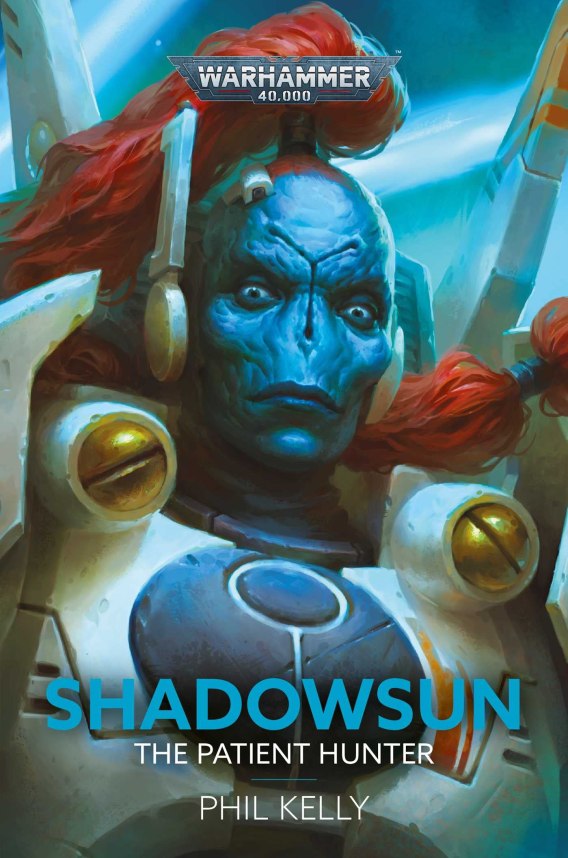
Warhammer 40,000: Shadowsun: The Patient Hunter by Phil Kelly

Warhammer 40,000 - Shadowsun Cover

Publisher: Black Library (Audiobook – 1 April 2023)

Series: Warhammer 40,000

Length: 8 hours and 13 minutes

My Rating: 4.25 out of 5 stars

Amazon

Veteran Warhammer 40,000 author Phil Kelly once again dives into his favourite topic, the T’au, with this new fast-paced and intense novel focused on the intriguing figure of Commander Shadowsun, Shadowsun: The Patient Hunter.

I have been having a lot of fun with Warhammer 40,000 novels this year, and I have already had the opportunity to read some major classics.  Many of these appeared in my recent Favourite Warhammer 40,000 novels list, and I have been keen to read more Warhammer fiction as a result.  As such, I decided to dive into one of the more recent Warhammer 40,000 novels, Shadowsun: The Patient Hunter, an excellent novel focusing on the intriguing T’au faction.  Shadowsun is the latest Warhammer 40,000 novel from Phil Kelly, who is probably best known for his work as a background writer on the various codexes and campaign books released as part of the Warhammer 40,000 tabletop game.  However, Kelly has also produced several Warhammer 40,000 novels over his career, with a particular focus on the T’au, having written several of the more prominent novels for the alien faction, including his Farsight novels and Blades of Damocles.  This latest book sees Kelly once again focus on Commander Shadowsun as she leads the latest T’au expansion, only to encounter more horrors than she ever expected.

Commander Shas’O Shaserra, better known to her foes as Shadowsun, has long led the forces of the T’au into war against all manner of foes.  A former contemporary of the legendary Commander Farsight, Shadowsun has since earned her own substantial reputation across various theatres.  Her latest action sees her leading the T’au Empire’s Fifth Sphere Expansion on the other side of the Startide Nexus, capturing many former Imperial worlds and bringing them under the sphere of the T’au’s influence.

A calculating tactician and a master of the philosophy of war that emulates the Patient Hunter, Shadowsun has known only success during this new phase of expansion.  But the surprise appearance of a massive fleet of decaying and indestructible warships soon throws all her plans into turmoil as she faces an enemy unlike anything T’au have dealt with before, the Chaos Space Marines of the Death Guard.

Ancient and deadly warriors sworn to the Chaos God of disease and decay, Nurgle, the Death Guard are a force unlike any other in the galaxy.  Employing deadly diseases, unstoppable daemons and other deranged horrors that defy all laws of physics and sanity, the Death Guard effortlessly brush through the T’au resistance.  Unable to counter their terrible tactics, Shadowsun desperately looks for a way to strike back against the Death Guard.  But with her own body consumed with disease and rivals within the T’au seeking their own sinister objectives, can even the great Commander Shadowsun succeed against these relentless opponents?

This was a pretty fun and intense Warhammer 40,000 novel from Phil Kelly, who had a great time really showing off two very different factions from the game.  Shadowsun: The Patient Hunter was a very interesting and action-packed read that will really appeal to fans of the Warhammer 40,000 franchise.

The plot of Shadowsun follows the character of Commander Shadowsun in her most lethal adventure yet.  This is a very brutal and quick-paced narrative that wastes no time diving into the action and intrigue to grab the readers full attention.  Starting with a good introduction to the character of Shadowsun and the complex politics of the T’au, the reader is soon introduced to the gruesome threat of the Death Guard, who soon make a major impact on the plot.  This takes the form of an extended and very over-the-top battle sequence on a T’au controlled human planet which Shadowsun was visiting, and she soon must contend with the full threat of the Death Guard.  Kelly really does not hold back at this part of the book, producing a brilliant and very lengthy connected sequence in which Shadowsun encounters the full, fly-infested horrors of Nurgle, as the Death Guard unleash their terrible might.  These scenes are pretty damn intense, at times bordering on pure horror, as the characters encounter diseases, decay, daemons and plague zombies, each of which test Shadowsun and her forces in very different ways.  This major sequence takes a substantial chunk of the book, and it really served to grab the reader’s attention early on with very high plot stakes.

The second half of the book deals with the fallout of this conflict, as an infected and weakened Shadowsun finds all her strategies and plans in ruin, and must find a new way to strike back, despite being hamstrung by internal T’au politics, a growing conflict between the T’au and their alien levies, and a sinister conspiracy from her superiors.  The resolution to this is a desperate boarding action against the Death Guard flagship, with Shadowsun leading a small force on a deadly suicide mission.  While not as extensive as the previous major confrontation, this final third of the book is extremely good, as Kelly envisions another complex battle that pits T’au tech against ancient, unclean horrors.  This sequence gets a little crazy in places, especially as Kelly brings in a couple of unique aliens as backup for the protagonist, and the Death Guard ship is loaded with horrors.  The big fights that emerge are extremely deadly and well written, and you will be enthralled at the carnage that emerges and the unique encounters that occur.  At the same time, the character of Shadowsun continues to grow as a warrior and a commander, fully trusting in her new squad of aliens, while also beginning to understand there is far more going on in the universe than her superiors have let her know.  Everything comes together extremely well, with a fun conclusion that is very satisfying for readers and leaves quite a few questions open that I am sure Kelly will try to answer in the future.  I liked the more metaphysical examination of the T’au towards the end of the book, and it gave the story a really unique conclusion that I will definitely remember.

I felt that Shadowsun was an overall pretty good Warhammer 40,000 novel as Kelly produced an excellent and highly exciting narrative that makes full use of the book’s action, heavy doses of lore intriguing characters.  The various fight sequences are very well written, and the author goes out of his way to try and capture the full horror and considerations of the battlefield, especially when regular soldiers face off against something strange and terrifying.  The two lengthy battles that much of the plot of Shadowsun focuses on are true highlights of the novel, and I love how intense, captivating and devastating the author made them.  Due to Kelly’s obvious passion for the game, this is a very, very detailed novel as the author goes out of his way to highlight the various factions, their motivations, and the state of the Warhammer 40,000 universe at this point in the canon timeline.  Every scene is loaded with some fascinating description of technology, lore, politics or factional history, which is fun in its way, especially for established fans of the games and the surrounding canon.  However, this does mean that Shadowsun might be a bit of a harder book for more casual readers to enjoy, as a certain level of understanding about the T’au is needed to fully appreciate the plot.  As such, I would probably recommend this book to fans of the T’au and dedicated Warhammer 40,000 readers, although newer readers will still be able to have some fun with Shadowsun.

Due to Kelly’s familiarity with the T’au, quite a lot of the book is dedicated to showing them in all their glory, from their advanced technology, their complex society, and their reliance on allied races to help their expansion.  While I am familiar with the T’au, I haven’t read a lot of books from their perspective, having instead only read books where they’re the enemy (Deathwatch: Shadowbreaker by Steve Parker and Kill Team by Gav Thorpe).  As such, I really appreciated this highly detailed and compelling focus on the T’au, and I had a lot of fun exploring their recent history, including their expansion throughout the galaxy.  There are so many great elements to their inclusion in Shadowsun, such as getting to see their awesome advanced weapons in combat, which are so very different from the human technology that most of the other Warhammer 40,000 books feature.  I also appreciated the compelling look at several of the client species that make up the T’au auxiliary forces, such as the Kroot.  Kelly features several intriguing different alien species throughout Shadowsun, making for some unique scenes as a result, and I appreciated the examination of their thoughts about the T’au allies, especially with how it plays into their faith and how they view the rest of the galaxy.

In addition, Kelly layers this book with so many complex bits of T’au day to day life, and you must admire his dedication and attention to detail.  Every conversation or discussion between T’au characters provides you some intriguing insights into their society, and I loved seeing their perfectionist mindsets or their fascinating interactions, such as those meaning-laden hand signals.  There are also some cool examinations of the various castes, their reliance on technology (such as Shadowsun’s two drone companions), and their desire to expand and bring word of the “Greater Good” to the rest of the galaxy.  While there is some definite love for the T’au throughout Shadowsun, Kelly also makes it a point to examine the darker side of their society, including the deadly secrets of the Fourth Sphere Expansion force and the typical manipulation of the Ethereal caste.  Commander Shadowsun, who starts the story off relatively naïve about some of the darker aspects of her race, begins to get an understanding of some of the secrets being kept from her, especially when she encounters some of the forces of Chaos and the secrets of the Warp.  The attempts to shut down any discussion about daemons or what happened to the allied species when they went through the Warp gave some of the T’au focused scenes a darker and more sinister edge, and it will be interesting to see whether Shadowsun continues to blindly follow the Ethereals in the future.  I also liked how Kelly really showcased the inherent arrogance of the T’au, especially when it comes to their opinion of other races in the universe, such as humans from the Imperium.  Their haughty belief that they understand the universe is quite amusing, especially when they come face to face with something completely insane.

To balance out the T’au, Kelly also strongly features the Chaos Space Marines of the Death Guard legion in Shadowsun, who are pretty epic antagonists.  Followers of the Chaos God Nurgle, the Death Guard are dedicated to all things disease, decay and corruption, which results in some pretty horrific mutations for their plague infested bodies.  The Death Guard are always pretty gruesome when featured in fiction, but I felt that Kelly did a particularly fantastic job of capturing them in their fully festering glory.  All the Death Guard encountered in this book are covered in putrefying mutations or growths to some degree, and Kelly really goes out of his way to describe just how unsettling they are.  This includes a compelling look at a Death Guard battle cruiser, whose interior is just covered in growths, mould, various liquids that fill up entire corridors, and loaded with so many other over-the-top elements, which really pop in Kelly’s talented hands.  I also loved how the author tries to capture the Death Guard’s highly positive and benevolent natures, which are reflections of their “kindly” god, Nurgle, and which honestly makes them even more sinister.  He further disturbs the reader by showing the Death Guard unleashing their full horrors on the T’au with, diseases, plague zombies, daemons, dark magic and more used against them, totally devastating them.

Watching the T’au get overwhelmed by these weird and terrifying elements is pretty intense, and the main T’au perspective character, Commander Shadowsun, keeps getting more disturbed by their unpredictable tactics and terrible weaponry.  I loved the compelling comparisons the author makes between the Death Guard and the T’au, and the two are honestly the antithesis of each other in aesthetics, combat styles, and mindset.  This ensures that their conflicts are pretty damn epic and watching the T’au forced to come up with some new tactic while freaking out made for some thrilling reading.  I did think that to make the Death Guard see even more threatening and dangerous, Kelly did slightly nerf the T’au in places, especially during their earlier battles, which fans of the faction probably won’t love, however, the protagonist makes up for that by taking out a Great Unclean One at one point.  Kelly’s decision to feature the Death Guard as the antagonists was an outstanding choice and one that made Shadowsun standout to me even more.

As with most Warhammer 40,000 novels that I have the pleasure of enjoying, I chose to check out Shadowsun on audiobook, which was a fun decision as always.  Coming in at just over eight hours, this was a quick audiobook to power through, especially when you get to some of the more epic battle scenes.  This format served to really enhance some of the best elements of the Shadowsun book, including the cool action and the sheer horror of some of the scenes where the protagonists go up against the forces of Nurgle.  Having someone reading out all the disgusting things this foul horde contains makes the book seem even more terrifying, which I deeply appreciated.  Narrator Helen McAlpine does a very good job bringing this compelling plot to life with her great voice work, and I really appreciated her take on several of the characters and big scenes within Shadowsun.  The voice that she gives to the main character of Commander Shadowsun is highly fitting, and I felt that McAlpine managed to capture her emotions, particularly that of distress of despair, very well throughout this audiobook.  Due to this, and more, I would once again strongly recommend this Warhammer 40,000 audiobook to anyone interested in checking out Shadowsun, as it is easily the best way to enjoy any book from this franchise.

Overall, Shadowsun: The Patient Hunter is an excellent Warhammer 40,000 novel and one that I really had a fun time with.  Phil Kelly did an outstanding job featuring the T’au again and it was great to get a deeper look at one of the more fascinating alien factions in the canon.  Loaded with action, horrifying moments, and some deep lore drops, Shadowsun is an awesome read that fans of Warhammer 40,000 fiction can have a lot of fun with.

Amazon

Warhammer 40,000: Warboss by Mike Brooks

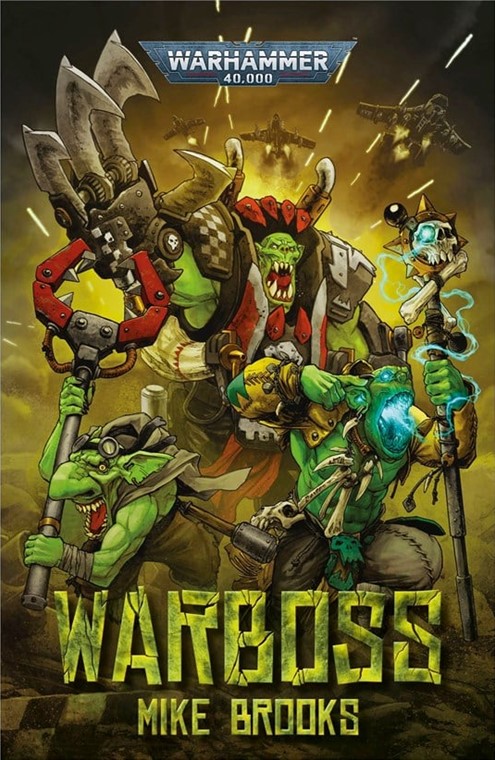
Warhammer 40,000 - Warboss Cover

Publisher: Black Library (Audiobook – 25 March 2023)

Series: Warhammer 40,000

Length: 8 hours and 48 minutes

My Rating: 4.5 out of 5 stars

Amazon

Prepare for the ultimate battle for control as several feuding ork bosses fight to become the new leader of the Waaagh! in this amazing and highly entertaining Warhammer 40,000 novel, Warboss by Mike Brooks.

2023 has been a big Warhammer 40,000 fiction year for me as I have been having an absolute blast reading all manner of cool novels from across the franchise (make sure to check out my recently released list about my favourite Warhammer 40,000 novels).  However, while I have read a ton of Warhammer books this year, I have not had the opportunity to read any 2023 Warhammer releases.  Well, I am on my way to rectify that by looking at the recently released Warboss by awesome author Mike Brooks, who also wrote the 2022 novel Huron Blackheart: Master of the Maelstrom.  Brooks did an outstanding job with this fantastic new book, and I had so much damn fun with Warboss and its highly entertaining and hilarious story.

In the far future of the 41st millennium, there are few things are more destructive or unstoppable than an ork warband on a rampage.  One of the most effective bands currently killing its way through the galaxy is that of Warboss Gazrot Goresnappa whose Waaagh! has conquered the once mighty human fortress world of Aranua.  After several decisive and bloody victories, the Waaagh! celebrates in front of the planet’s remaining bastion, the massive Davidia Hive.  All it will take is one final assault to totally defeat the humans on Aranua so Warboss Goresnappa can strip their resources and lead his boyz to bigger and better fights out in the stars.

However, before Goresnappa can achieve his great victory, an unfortunate accident sees him very, very dead under the giant decapitated head of a Gargant war machine.  With their leader squashed, the Waaagh! now has an opening for Warboss, and several ambitious orks from across the no-longer united clans step forward to fight for the job.  However, before the usual brawl for leadership can begin, a prophecy from the clan’s resident weirdboy, Old Morgrub, reveals that the ork gods have something very special in store for the Waaagh! and its next leader.  A mysterious gate lies underneath the human city that could transport the Waaagh! to fights anywhere in the galaxy, and whichever boss finds it first will be the new Warboss.

Forced to obey the words of the gods, the bosses engage in their own elaborate plans to breach the Hive City and claim the gate.  But which boss can triumph over the others?  Will it be the brutal Goff Big Boss Mag Dedfist, the suicidally fast Speedboss of the Evil Sunz, Zagnob Thundaskuzz, the sneaky and cunning leader of the Blood Axes, Da Genrul, or could it even be the leader of the grot uprising, the self-proclaimed prophet of Gork and Mork, Snaggi Littetoof?  All four believe that they are the only ones capable of leading the Waaagh! and they will fight tooth and nail to become Warboss.  But to succeed they’ll need to not only overcome all their rivals but the human defenders of the Hive City and an Aeldari army waiting in the depths to defend their gate.  May the best ork win!

Oh dear, oh dear, what a damn funny book.  Honestly, any Warhammer 40,000 novel that focuses on the orks is bound to be comedy gold, but Warboss is one of the better ones I have had the pleasure of reading.  Author Mike Brooks does a wonderful job of telling a tight and amazingly fun story that perfectly showcases the orks in all their green skinned glory.  I had so much fun with this book and I managed to power through Warboss in very short order.

This proved to be a pretty fast-paced and impressive story, and it’s one that I was able to have a blast listening to as it unfolded.  Primarily focusing on the various ork characters that are part of Waaagh! Goresnappa, Warboss starts off with a sudden game changer for the protagonists as the infamous Warboss Goresnappa is killed off in hilarious fashion thanks to a group of argumentative grots and the falling head of a massive war machine.  This leads several of the remaining ork bosses throwing their hats into the ring to become the Warboss, and all hell follows as a result.  Tasked with finding a hidden Aeldari gate under the human city, each of the ork bosses implements their own plans to get into the city first, whether that be through blowing down the walls, infiltrating from below, or driving around the city at high speeds, hoping for the best.  Brooks breaks the story up around the main three contenders nicely, and you soon get a good idea of their different, but very orkish strategies.  However, the story is made even more enjoyable thanks to some of the alternate perspectives that emerge.  This includes the ambitious grot Snaggi Littletoof who, after accidently killing Warboss Goresnappa, attempts his own grot uprising and tries to find the gate to gain his cause legitimacy.  Several human characters are also shown, often to add some interesting contrast to the orks, and it is fun to see their attempted counterattacks, which often leads to disaster.  This makes for an excellent first two-thirds of the book and Brooks does a great job of showcasing both the protagonists and the ork nation as a whole while also setting up a very entertaining story.

Unsurprisingly, the orks make it into the city and everyone starts arriving at the gate at the same time, often in comedic or unexpected ways.  This leads to a very fast-paced final third as everyone starts fighting everyone else to become Warboss, facing off against humans, Aeldari, and every rival faction of the Waaagh!.  Brooks showcases this final big battle in some excellent ways, and you get really drawn into the crazy carnage that follows thanks to the well-written and exciting action scenes.  The use of multiple perspectives was pretty useful here, and I liked how the author showed the same massive battle again and again, each time from the point of view of another character.  This added more detail to the brawl each time, as well as some amusing alternate opinions of events from some very different characters.  Brooks throws in some excellent twists and turns here and you are never quite certain who is going to come out on top in the battle for supremacy.  The eventual fate of every major character is pretty fantastic and really fits the storylines that have been building up throughout the book.  I personally came away from Warboss extremely satisfied and I loved all the cool developments and totally insane moments that occurred.  Overall, this was a very impressive standalone Warhammer 40,000 narrative and it is very hard not come away loving this story thanks to the awesome humour and all the fantastic, over-the-top interactions that occurred.

All fans of Warhammer fiction know that ork focused novels are some of the funniest novels out there, due to the way that they focus on the over-the-top antics of this beloved faction.  Some good examples of previous Warhammer books that strongly featured orks include Ghazghkull Thraka: Prophet of the Waaagh! by Nate Crowley (one of my favourite books of 2022) and Catachan Devil by Justin Woolley, and I think that Warboss is up there with these fantastic reads.  This outstanding book really dove into the humour as you watched the crude and eternally underestimated orks battle it out amongst each other and the other factions, often coming up with insane and funny solutions to all the deadly problems they encounter.  There honestly wasn’t a single chapter where I wasn’t laughing at some of the crazy stuff that just occurred, and Brooks had a real talent for writing from the ork perspective.  There was some great consistency in the way that the ork characters acted and thought throughout Warboss and every chapter focussed on them saw the characters using similar lingo, slang and descriptions of the other races in the Warhammer 40,000 universe.  As such, you get a great appreciation for the ork mindset and it was great to see the ork perspective on all the book’s over-the-top moments.

One of the things that I felt set Warboss aside from some other Warhammer 40,000 novels featuring orks is that Brooks didn’t fall into the trap of portraying them simply as funny simpletons.  Instead, Brooks shows that the orks are quite smart and complex in their way, it just that their culture, in comparison to humans or Aeldari, has more of a focus on violence and straightforwardness than the other races in the galaxy.  This is backed up by scene after scene of the orks utilising their skills, technology and cunning to win various encounters against seemingly smarter or more organised opponents, and it is always quite fun to see the orks looking down on their opponents for making mistakes that they wouldn’t do.  While this love of extreme violence is mostly played for fun, Brook’s also tries to show the darker side of it, as the orks are pretty damn brutal in how they deal with the humans and Aeldari they encountered.  I loved the great contrast between the ork and human characters that Brooks added into Warboss, as the humans were always so arrogant and condescending towards the orks’ intelligence, even when they were beating them.  This complete lack of understanding by most of the human characters really enhanced the various ork chapters, especially those that showed the orks managing to understand and outthink their human opponents, and I really appreciated this fantastic deeper dive into ork mindset and society.  I did think that Brooks might have made the orks slightly too overpowered in Warboss, as they manage to take on quite a few major enemies with relative ease, but this always added some fun to the story and it was interesting to see the full potential of the orks.

This deep dive into the orks is further cemented thanks to the several outstanding character arcs that Brooks set up throughout Warboss, particularly around the four main characters fighting for control of the Waaagh! in their own way.  The three ork characters Mag Dedfist, Zagnob Thundaskuzz and Genrul Uzbrag (Da Genrul), are in some ways quite similar, in that they have several similar racial tendencies towards violence or leadership.  However, each of them represents a different clan, and so they have different battle tendencies which really helps to highlight the different factions within ork society.  Mag Dedfist is a Goff, and so he relies more on classic violence and explosions to achieve his goals in the most direct ways possible.  Zagnob is an Evil Sun boss who has dedicated himself to the Kult of Speed and believes in riding the fastest vehicle he can find right towards the enemy.  The most entertaining of these is probably Da Genrul, a member of the Blood Axe clan who admire human martial ability and utilise their own take on tactics, discipline and stealth to achieve their goals, often outsmarting the humans they are aping.

I was also a big fan of the character of Snaggi Littletoof, a grot with ideas of grandeur who attempts to start a grot uprising against their cruel ork masters.  The grots (also known as gretchins, essentially goblins from classic fantasy), smaller cousins of the orks who are used as slave labour and cannon fodder, aren’t particularly well featured in most Warhammer 40,000 fiction, so I had fun with a whole character arc around them in Warboss.  Snaggi and his band of rebellious grots (Da GrotWaaagh!), are a very entertaining inclusion, and I liked the revolutionary storyline that Brooks set around them that provided both humour and an interesting look at typical grot life.  It was so much fun to see Snaggi inspiring his followers to go against their nature and rebel, especially as the orks had no idea what they heck they were doing.  Thanks to Brook’s use of Mag, Zagnob, Da Genrul and Snaggi, you get a great understanding of each of their specific faction and the author did a particularly good job of featuring each of them equally.  Indeed, thanks to the appearance of several different ork characters in a supporting role, you get a pretty good idea of nearly every major ork clan, faction and designation, and even those readers completely unfamiliar with orks can come away from this book knowing most of the key things you need to know about them.

These ork and grot protagonists are well backed up by several entertainingly arrogant human characters who honestly make the orks seem reasonable and likeable in comparison.  The best is easily Captain Armenisu Varrow, who is held prisoner by Da Genrul as his pet and tactical advisor.  Varrow goes through so much hell in this book, but is so deliciously haughty while he does so that you really can’t feel sorry for him.  Despite his ironclad belief in his own intelligence, Varrow is outsmarted time and time again, and it is just great to see him cower his way through events while still thinking he is the smart one.  His story arc is very entertaining and I loved how very dark it gets, especially at the end.  The rest of the humans are also great in their own ways, even if they are only featured for a short amount of time, and their ongoing false remarks about the abilities of the orks in the face of the carnage they are laying down always made me chuckle.  An overall great group of characters who help to turn this amazing story into something truly special.

I checked out Warboss on audiobook, which honestly is becoming my go-to format for all things Warhammer.  This proved to be another excellent decision as the Warboss audiobook was a ball of absolute fun that I had a brilliant time listening to.  Coming in with a runtime of under nine hours, this is a pretty easy audiobook to power through quickly and I managed it in a few, hilarious sessions.  The outstanding, comedy laden story really works well in the audiobook format and so many of the great jokes come across that much better when you listen to them.  It definitely helped that they brought in established Warhammer narrator Harry Myers to voice this book as he did a spectacular job here.  I have deeply enjoyed Myers in several recent Warhammer audiobooks, including The Wraithbone Phoenix by Alec Worley (one of my favourite audiobooks of 2022) and Day of Ascension by Adrian Tchaikovsky, and he has another amazing performance in Warboss.  His voice is just perfect for all the alien characters featured within this novel, and the various gruff tones of the orks and high-pitched squeals of the grots are very spot on.  In addition, several of the human characters are shown in all their arrogant finery throughout the audiobook and you really appreciate just how stupid they are through this medium.  Each character is expertly showcased to the reader through Myers’ voice, and I loved every line he read out as a result.  I also deeply enjoyed how well his narration worked to convey all the fantastic jokes loaded throughout the production, including that hilarious bit involving the ork characters failing to know the chapter numbers.  This was a such a great audiobook to listen to and I cannot recommend this format enough for Warboss as you are guaranteed to have an exceptional time listening to it.

Mike Brooks continues to impress me as an outstanding author of Warhammer fiction with his amazing novel Warboss.  A comedy heavy novel that perfectly showcases the always fun orks, Warboss is pure entertainment from start to finish that both established fans of the franchise and new readers can easily enjoy.  Brooks has a clear appreciation for this faction which really shines through in his storytelling, and I loved his great take on everything orkish.  One of the funniest and enjoyable releases of 2023 so far, this is essential reading for all interest in hilarious Warhammer fiction, and I am very glad I checked it out.

Amazon

Throwback Thursday – Warhammer 40,000: The Guns of Tanith by Dan Abnett

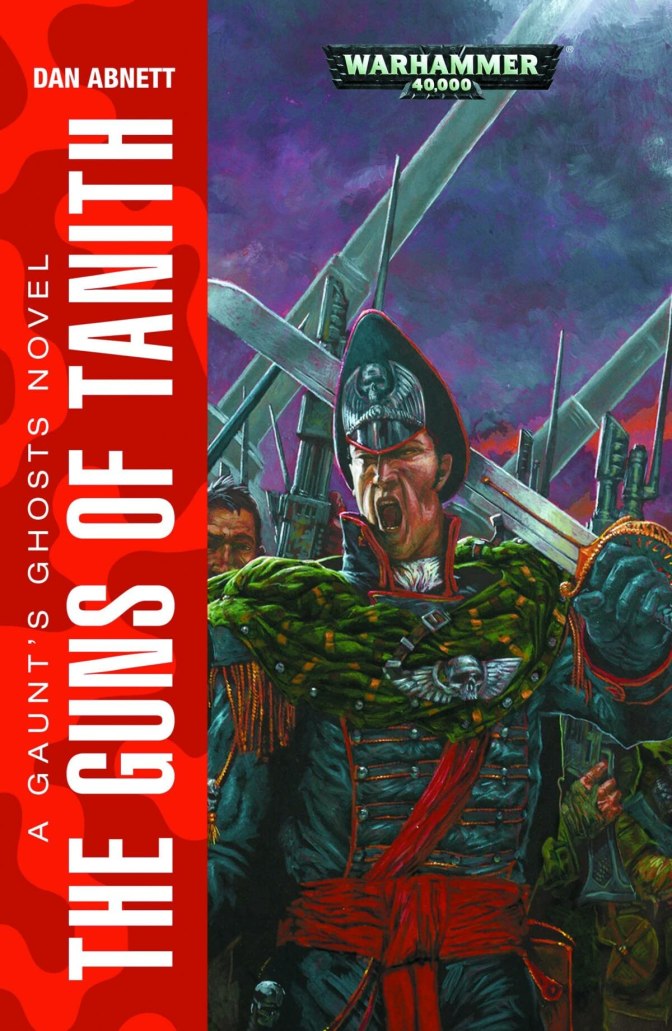
The Guns of Tanith Cover

Publisher: Black Library (Audiobook – 25 April 2002)

Series: Gaunt’s Ghosts – Book Five

Length: 10 hours and 10 minutes

My Rating: 4.5 out of 5 stars

Amazon

Welcome back to my Throwback Thursday series, where I republish old reviews, review books I have read before or review older books I have only just had a chance to read.  After having such a great time reviewing the previous Gaunt’s Ghosts novel, Honour Guard, in my last Throwback Thursday, I immediately read the fifth fantastic entry in the series, The Guns of Tanith, which proved to be just as awesome and exciting.

As I mentioned last week, I have been really getting into the works of Dan Abnett over the last year, and I now consider several of his books to be amongst the best Warhammer 40,000 novels I have had the pleasure of reading.  Not only did I deeply enjoy his epic Eisenhorn trilogy (made up of Xenos, Malleus and Hereticus) but I have also been powering through his Gaunt’s Ghosts books.  The Gaunt’s Ghosts books are some of the more iconic novels in the Warhammer 40,000 franchise and are often considered essential reading by fans of the franchise due to the captivating way they capture the gruelling experiences of ordinary human soldiers in this grim, futuristic setting.  The first four novels in the series, First and Only, Ghostmaker, Necropolis and Honour Guard, as well as the prequel novel The Vincula Insurgency, are all excellent and exciting in their own way, and I have had a ton of fun seeing the impressive war narratives set around the men of the Tanith First-and-Only, informally known as Gaunt’s Ghosts.  As I was still in the mood for some awesome action at the end of last week, I just had to keep going with these books and I quickly picked up the fifth entry, The Guns of Tanith.

As the massive Sabbat Worlds Crusade continues to pit the forces of the Imperium of Man against the foul forces of Chaos, the battlelines extend across multiple planets and systems, drawing in millions of soldiers.  The latest phase of the crusade has severely stretched the supply lines of the Imperial assault and the Chaos foes are quick to take advantage, threatening to cut off and surround the main Imperial force.  To stave off disaster, Warmaster Macaroth, needs the Tanith First-and-Only to recapture the vital promethium producing planet of Phantine so the crusade can be resupplied and continue.

Led by the heroic Colonel-Commissar Ibram Gaunt, the Tanith First-and-Only engage in a deadly airborne assault on several of the planet’s domed cities.  Relying on their unique skills of navigation and infiltration, the Ghosts prove to be vital to the operation and soon take the key city of Cirenholm.  However, holding the city proves to be harder than expected.  While preparing for the next assault, the vile murder of a freed Cirenholm civilian places a Ghost on trial and opens up the festering cultural divides within the regiment.

As Gaunt attempts to get to the bottom of the crime and ensure that the innocent are left alive, the Ghosts are given a vital mission to undertake.  A dangerous Chaos warlord has taken command of the final occupied city, Ouranberg, and his lethal command threatens to devastate an attack by the Imperials.  To ensure a successful invasion of this Chaos stronghold, a specialised team of Ghosts is tasked with infiltrating the city and assassinating the enemy leader in advance of the main assault force.  Featuring some of the best the Ghosts have to offer, the assassination squad will be forced to walk through hell to achieve their objective and not everyone will be coming back.

In this fifth entry in this amazing series, Abnett continues to impress with another powerful and captivating character-driven read that takes the Ghosts through a gruelling round of battles, tragedy and growth that proves near impossible to put down.  The Guns of Tanith was a pretty strong entry in the series, expanding on some of the interesting storylines from the first novel while also introducing a new dark scenario for the characters to deal with.

The Guns of Tanith features a fantastic narrative from Abnett that contains his usual blend of high-intensity action, character growth, and intriguing examinations of the Warhammer 40,000 universe, that make all the Gaunt’s Ghosts novels such a treat to read.  Following on from the events of the previous books in the series The Guns of Tanith is told in Abnett’s typical style, with a ton of unique character perspectives, mostly those of the Ghosts, which presents the reader with a rich and vibrant view of the events, as well as the unique, character-driven storylines that emerge.  While this fifth Gaunt’s Ghosts novel can be read as a standalone book, The Guns of Tanith does see several ongoing, character focused storylines come to a head or get even more complicated. As such, readers should really consider checking out the previous novels first so they can get the full emotional weight of the revelations and twists that emerge.

The main narrative of The Guns of Tanith is bookended by major extended battle sequences that see the Ghosts and their allies engage in elaborate fights across two separate cities.  The first of these battles, in Cirenhom, sees all the Ghosts forced to engage in a particularly bloody battle with limited ammunition against a dangerous and determined foe that has set up some elaborate traps.  This extended sequence is both epic and useful as it provides the reader with a ton of intense action to draw them into the novel while Abnett introduces the characters and storylines that this latest novel is focused on.  You also get a good overview to the new setting of Phantine, a polluted planet with a toxic atmosphere that requires multiple forms of airship to traverse.  This unique location adds some great spice to the overall story, especially as it requires the characters to learn some unique aerial skills, while also allowing Abnett to have fun featuring several impressive dogfights.  There are some great moments during this first extended battle sequence, and it sets the rest of the book up nicely.

The middle of the book is where the reader gets into the real meat of the story, especially as it lowers the intensity levels down from the action-packed introduction and allows the reader to breathe and absorb all the intriguing story elements to come.  At first, I wasn’t too keen on a quieter middle section to this novel, especially as I thought it would make The Guns of Tanith more of a bridging novel in the series, rather than a book that could stand on its own.  However, Abnett soon proved me wrong as this intriguing central storyline contained a lot of major character moments and intriguing plot lines, while also expertly setting up the final third of the book.  The main storyline explored in the centre involves a murder investigation when one of the Ghosts is accused of killing an innocent civilian.  Abnett does a great job with this murder storyline, especially as it brings in compelling mystery and legal thriller elements to it, while also driving the characters in some excellent directions.  However, the real joy of this part of the book is the focus on the camaraderie and factions within the Ghosts, and the fracturing coherence in places leads to some memorable moments later on.

The final section of the book focuses on the assault of the Phantine city, Ouranberg, and the special Ghosts mission to assassinate the Chaos warlord.  Following several supporting members of the cast, this final third of The Guns of Tanith takes these characters on a particularly dark mission through a Chaos stronghold, and Abnett throttles up the tension and brutality to the maximum, ensuring that the readers are strongly hooked on everything unfolding.  Watching the separated teams attempt to navigate through enemy territory leads to some dark and bloody sequences, and everything comes together in a brutal confrontation where all the characters get a moment to shine.  The invasion in the aftermath of this assault brings the entirety of The Guns of Tanith together in an outstanding way, as several major storylines are expertly and impressively resolved, often in ways that leave the characters even more damaged than when they started.  This is also a particularly shocking death of a major character that is guaranteed to move long-term readers of the series.  Abnett does a masterful job of setting this death up, including by showcasing several misleading near-misses, so you really don’t know who is going to live or die right up to the end.  His eventual choice is one designed to wound his readers, and you will have to come back to see how it impacts the rest of this series.  Overall, this was an extremely solid and impressive Gaunt’s Ghosts narrative, and I deeply enjoyed how Abnett continued and finalised some of the great character storylines from the previous books, while also providing the reader with more action and intrigue than they can handle.

As with most of the Gaunt’s Ghosts books, The Guns of Tanith is an open read to all those unfamiliar with the wider Warhammer 40,000 canon.  Abnett goes out of his way to make his books accessible for new readers, and he always provides enough detail and background so that anyone can catch up and enjoy the subsequent story.  However, for those fans more familiar with the Warhammer universe, there are always a ton of great elements or unique world building details that they will find particularly fascinating.  The new locations in The Guns of Tanith are pretty damn spiffing, and I had a lot of fun with the polluted planet, especially as it requires multiple arial sequences.  This is turn leads to the introduction of the Phantine XX Fighter Corps, who Abnett will go on to feature in his spin-off novel, Double Eagle, and it was fun to see how they get their start here.  For me, though, the best part of the universe expansion was Abnett’s in-depth look at the day-to-day life of the common soldier in the Imperial Guard.  While Abnett has always done a masterful job of capturing the footslogger experience in his novels, I felt that The Guns of Tanith was one of his best attempts to dive into the core of his beloved regiment.  Not only is there are lot of story focus on the various members and factions of the regiment, but Abnett also spent some time trying to explore the downtime and personal lives of the characters, and it was pretty intriguing to see the accompanying civilian baggage train of the regiment, which includes their families and other vital services.  I also personally loved the scenes that examined the problems associated with the Imperial bureaucracy as the Ghosts come up against their greatest enemy: bad paperwork.  Certain mistakes ensure that the Ghosts are left with minimal ammunition as the Departmento Munitorum orders the wrong power packs for their lasguns.  The following extended sequence which saw the regiment unable to fight effectively because their ammunition couldn’t fit their guns was an impressive part of the book and it definitely raised the stakes during the book’s introduction.

As usual, one of the major highlights of The Guns of Tanith is the amazing characters that the story focuses on, as Abnett once again fits a huge number of character-driven storylines into the book.  At this point in the series, Abnett has introduced a pretty substantial cast of characters, many of whom have ongoing storylines, and it is intriguing to see them unfold even further in The Guns of Tanith, especially as Abnett does a great job featuring most of them equally and then combining them into the larger narrative.  Many of the more intriguing character arcs in this book carry over from the previous novels and there are some great conclusions and expansions to them here that helps to improve the already great narrative of The Guns of Tanith.  At the same time, several new characters are introduced here or finally given prominence, and it was interesting to see how they fit into the already established character dynamics that Abnett has been building up.  The cohesiveness of the Ghosts as a regiment ends up becoming a huge fixture of this book as the Tanith-Verghastite divide is explored in greater detail by many of the characters.  It was fascinating to see how Abnett handled these character storylines in The Guns of Tanith, and several of them ended up being some of the best parts of the book.

As with most of the novels in the series, quite a lot of character focus goes towards the main protagonist, Colonel-Commissar Ibram Gaunt, whose experiences as the commander of this unique regiment continue to trouble him in various ways.  In The Guns of Tanith, this takes the form of his apparent unconscious bias towards the Tanith elements of his regiment over the Verghastite recruits, which is showcased by his differing reactions during two court cases.  This results in several intense interactions between Gaunt and members of his team, which helped to showcase the protagonist’s idealism and a certain degree of naiveté when it comes to Imperial politics, both of which will cause him trouble in the future.  This is also an intriguing look at the issues caused by Gaunt holding the dual rank of Colonel and Commissar, which make him simultaneously a command officer and a political officer in charge of discipline.  This is the first time the duality of his roles has caused some major problems for him, and it was interesting to see several characters question him about it.  Watching Gaunt try to balance his various hats while also maintaining the respect of his men and his superiors makes this a rather compelling novel for Gaunt and I will be intrigued to see how this affects the character in the future.

While there is always a lot of focus on Gaunt, many of the other characters have big moments here, and it is always interesting to see which characters Abnett will focus on in each particular novel.  Firstly, this is one of the Gaunt’s Ghosts books where the major characters of Colm Corbec and Elim Rawne do not get a lot of focus, as Abnett sets them aside to make room for others.  Corbec is once again wounded early on in the plot to keeps him out of the action, while Rawne, after getting a good needling into Gaunt, is showcased as the senior commander, but that’s about it.  Instead, a lot of the focus goes towards some of the newer members of the cast, such as Gol Kolea, whose attempts to balance his complex family concerns leads only to tragedy and despair for him and the reader.  Cuu continues to be a menace, while surgeon Ana Curth acts as several character’s consciences throughout the book.  The previously overlooked but surprisingly lucky Bonin finally got some prominence in this novel, and I loved finding out how he survived Necropolis.  The newer characters of Commissar Hark and Captain Ban Daur also proved to be essential parts of the plot, and I am really glad that Abnett continued to utilise them, as they helped Gaunt see the errors of several decisions while simultaneously taking on some of Gaunt’s more unorthodox methods.  Members of the original Ghosts, such as Brin Milo, Larkin, Bragg and Mkoll all had good roles in The Guns of Tanith as well, and their balanced scenes showcased different triumphs and tragedies.  Finally, I was glad that Abnett decided to keep featuring the mysterious preacher, Ayatani Zweil, after his fun introduction in Honour Guard.  Zweil is an always entertaining yet serious figure, and it was great to see him knock some sense into several characters when they needed it.  I’m honestly only scratching the surface here, as a ton of other characters were well featured throughout The Guns of Tanith as Abnett continues to build and bring together his final cast of major characters.  Each of these amazing protagonists had some superb impacts on narrative of this novel, and I cannot wait to see how Abnett continues to develop them in the later books of the series.  I am assuming it is only a matter of time until more of the characters start to die, and I am sure that will break my heart just as much as the big death in The Guns of Tanith did.

Due to my love of the format, I of course listened to The Guns of Tanith on audiobook, which is easily the best way to enjoy any Warhammer book.  I have gone on a lot about the fantastic Gaunt’s Ghosts audiobooks in recent reviews, and The Guns of Tanith has all the same advantages, as one of my favourite audiobook narrators, Toby Longworth, brings the reader right into the heart of the action with his great voice work.  Every scene is masterfully showcased by his narration, and all the characters are brought to life thanks to the great voices he utilises for them.  Longworth really stretched himself when it came to accents in this latest novel, and he features a ton of great new voices, as well as the existing tones from the previous audiobooks, to bring this entire audiobook together.  With the standard runtime of just over 10 hours, The Guns of Tanith audiobook is a real snap to power through, and I honestly finished it off in only a few days.

Unsurprisingly, I absolutely loved the fifth entry in Dan Abnett’s exceptional Gaunt’s Ghosts books, The Guns of Tanith, which proved to be another powerful and enjoyable Warhammer 40,000 novel.  Filled with Abnett’s usual impressive battles, The Guns of Tanith also had a brilliant focus on characters-driven storylines that dominated most of the plot and kept the readers hooked the entire time.  An intense, addictive, and deeply personal Gaunt’s Ghosts books, The Guns of Tanith was pretty damn outstanding and I loved every second of it.

Amazon

Quick Review – Warhammer 40,000: Huron Blackheart: Master of the Maelstrom by Mike Brooks

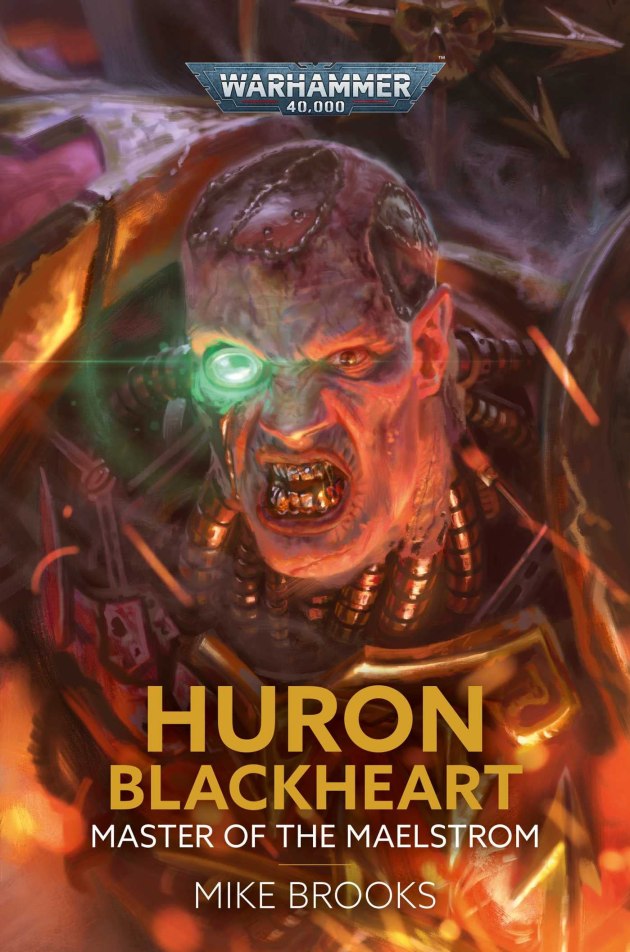
Huron Blackheart Cover

Publisher: Black Library (Audiobook – 7 May 2022)

Series: Warhammer 40,000

Length: 6 hours and 23 minutes

My Rating: 4.25 out of 5 stars

Amazon

I am really in love with the Warhammer 40,000 universe at the moment as they are producing some incredible books.  While many feature huge casts or examine vast conflicts, some of the very best Warhammer 40,000 novels provide greater context and insight into the game’s legendary characters.  These major character driven novels often result in some intriguing and powerful reads, and I love the complex stories that they tell.  One of the more interesting ones recently was the epic Huron Blackheart: Master of the Maelstrom by rising Warhammer 40,000 fiction author Mike Brooks.  This was a great and exciting read from last year, which I unfortunately never got the chance to properly review.  However, as I have just started listening to one of Brooks’s more recent novels, Warboss, I thought it would be beneficial to do a quick review of Huron Blackheart.

Plot Synopsis:

Huron Blackheart is the lord of the Red Corsairs, master of the lawless Maelstrom and its piratical denizens – but oathbreakers and renegades can seldom rely on the loyalty of their followers. With the galaxy thrown into turmoil by the return of Roboute Guilliman, the former Tyrant of Badab faces a renewed Imperium and fresh challengers emerging within his own ranks.

Huron must call on every trick he knows to stay in control – and alive. Yet even a warrior as ferocious and opportunistic as the Blood Reaver must be wary, for although there are many bargains he can strike, all power comes at a price…

Brooks has produced a very awesome and enjoyable read with Huron Blackheart which drags you in with its intense and entertaining story.  As the name suggests, the book primarily focuses on one of the more interesting characters from the wider Warhammer 40,000 canon, Huron Blackheart.  Huron Blackheart is a particularly cool character with a well-established background as a former loyal space marine who turned traitor and become a notorious pirate lord, haunting vast swathes of the Imperium.  Rather than diving into the full history of the character, Brooks instead tells a more contemporary narrative that shows the current actions of Huron Blackheart in the aftermath of the return of Roboute Guilliman.

The story sees Huron planning his next great offensive against the hated Imperium when one of his subordinates suddenly becomes a threat when he arrives with a mighty war prize, a legendary Ultramarines battle cruiser and Roboute Guilliman’s personal flagship, which the canny underling had managed to capture.  Now faced with a potential rival, Huron is further blindsided when several of his underlings ensure that a powerful daemonic relic falls out of his hands, further weakening his hold on his minions.  Forced into a corner, Huron soon finds himself caught between his murderous minions and the dark powers that surround him, and he’ll need to make a deadly decision that could change his existence and the remnants of his soul forever.

This is a pretty enjoyable and compelling overall narrative, and it is always quite a lot of fun to see events unfold from a villain’s perspective.  The author did a good job of balancing out some of the elements of the story, and the reader is treated to a great mix of Chaos politics, intense action, and a focus on the always awesome figure of Huron Blackheart.  Brooks makes good use of a multi-character perspective throughout Huron Blackheart, which is mostly effective in telling the fun and enjoyable narrative.  The main one of course is from Huron itself, which gives you some very interesting views into his mind, but several other characters are also well featured, including a captured Tech Priest who is forcibly recruited into Huron’s ranks at the start of the novel.  She provides a great outsider perspective to the entire story, and, when combined with Huron’s own cynical observances, you get a great view of the book’s events, especially all the backstabbing, politicking and carnage that emerges.  Not every character is given this great treatment however, as several of the supporting cast end up being a bit one-dimensional in places, which make their subsequent perspective shots a bit hard to care about.  Still, Brooks’s great use of perspective does capture the novel’s slightly darker and more bloody tone that some of the other Warhammer 40,000 novels out there as Brooks attempts to capture the villainous edge to every character.  I particularly enjoyed several of the scenes that showed the entire elaborate nature of Huron’s corsair organisation, and it was a lot of fun to see all the different factions, as well as several different groups of Chaos Space Marines, working together for piratical purposes.  I did think that the story itself was a little basic in places, especially when it came to its direction, and several of the twists or reveals were well telegraphed.  Still, I was pretty entertained the entire way through Huron Blackheart, and readers are guaranteed a pretty good time with the story.

Naturally for a book titled Huron Blackheart, a lot of the story is built around the exploration of who Huron is and what role he fills in the galaxy.  I must admit that this was one of those established Warhammer characters that I wasn’t particularly familiar with, so I was quite keen to see how the author would feature them.  Unsurprisingly, Brooks does a good job of setting Huron up as a particularly intense and ghastly central character for the novel, and you soon get a good idea of his motivations and the rage burning within him.  While Brooks was a little light on Huron’s full character history, readers fully understand his hatred, as well as other intriguing aspects of his character, such as his pragmatism, his deep-seated rage, and an actual understanding of the powers he has bound himself to.  I loved seeing the world through Huron’s eyes in parts of the book, especially as you see all his canny and cynical insights into the motivations of his minions and the key players of the Warhammer 40,000 universe.  Watching Huron attempt to manipulate every situation to his advantage is a ton of fun, and he cuts quite a distinctive figure in this book, even when on the losing end of a potential scheme.  Despite some of the setbacks he suffers in this novel, Huron comes away as a particularly strong and intelligent character, and it was fun to follow a Chaos leader that can control so many naturally treacherous beings.  Brooks also does a good job of tying Huron’s story into the wider current canon of the Warhammer 40,000 universe and it was fascinating to see what role Huron envisions his raiders having in the current wars of the galaxy.  There are some great references to other recent books and events, particularly when it comes the events around the captured Ultramarines ships, and I felt that this entire novel slid in nicely into this wider canon.

I ended up listening to Huron Blackheart on audiobook, which is always my preferred medium for Warhammer stories.  The Huron Blackheart audiobook ended up being a pretty awesome listen, especially with the impressive narration of Andrew Wincott.  Wincott captured every dark and bloody setting perfectly with his narration, and you got a real sense of the scale and menace of every scene, especially those focused on Huron himself.  Wincott made sure to also feature some great voices which really showed the full range of crazed figures that made up the supporting cast.  However, the best voice work was saved for Huron Blackheart himself, as Wincott wanted to inject some intensity into him.  Wincott gives him a deep, loud, and croaky voice, that perfectly captures his inhuman nature and helps readers to envision his mutilated flesh.  As such, the Huron Blackheart audiobook is an outstanding way to the enjoy the story, and with a run time of just under six and a half hours, it is one that you can power through pretty quickly.

Overall, Huron Blackheart: Master of the Maelstrom was a great Warhammer 40,000 book and I am glad that I got the chance to listen to it last year.  Mike Brooks had a lot of fun bringing the intriguing central protagonist to life in this new book, and his subsequent story of treachery and survival was interesting and easy to get through.  This was a particularly solid entry in the Warhammer canon, and all established fans of the franchise will have an excellent time with Huron Blackheart, especially in its audiobook format.

Amazon

Throwback Thursday – Warhammer 40,000: Honour Guard by Dan Abnett

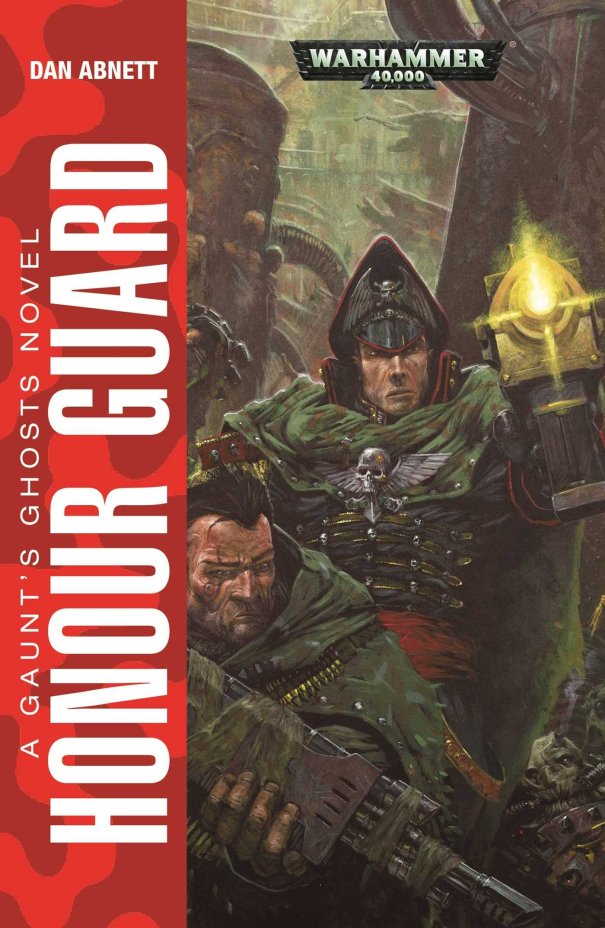
Warhammer 40,000 - Honour Guard Cover

Publisher: Black Library (Audiobook – July 2001)

Series: Gaunt’s Ghosts – Book Four

Length: 10 hours and 12 minutes

My Rating: 4.5 out of 5 stars

Amazon

Welcome back to my Throwback Thursday series, where I republish old reviews, review books I have read before or review older books I have only just had a chance to read.  For this week’s Throwback Thursday I’m still in a Warhammer 40,000 mood, so I decided to dive even further into Dan Abnett’s classic Gaunt’s Ghosts series with the fourth book, Honour Guard.

Readers of this blog will no doubt have noticed a fair increase in the number of Warhammer 40,000 novels I’ve highlighted this year, as this entire grim expanded universe has quite an addictive quality to it.  Foremost amongst these books have been the compelling works of veteran author Dan Abnett, who has written so many impressive and key parts of the Warhammer canon over the years.  I deeply enjoyed his Eisenhorn trilogy (Xenos, Malleus and Hereticus), all three of which were given pride of place in my recent post listing my favourite Warhammer 40,000 novels.  However, his best-known works are his Gaunt’s Ghosts series of books, which catalogue the adventures of the Tanith First and Only regiment of Imperial Guard, better known as Gaunt’s Ghosts.  I have had a wonderful time with the first three novels, First and Only, Ghostmaker and Necropolis, as well as the prequel novel The Vincula Insurgency, which showcased the bloody lives of the common soldier in this war-torn universe.  I have really gotten attached to this series and when I wanted a quick read, there was nothing I would rather turn to then the next Gaunt’s Ghosts book, Honour Guard.

Throughout the extended, system-spanning Sabbat World crusades, the men of the Tanith First and Only have fought against the dark forces of Chaos in every way imaginable.  Led by their heroic commander, Colonel-Commissar Ibram Gaunt, the Tanith soldiers, known colloquially as Gaunt’s Ghosts, have had many victories, but few failures.  So, when fighting on the holy Shrine World of Hagia, the Ghosts are devastated when they trigger a disastrous enemy trap that destroys a holy city and creates a psyker beacon that will draw a massive Chaos fleet down on their position.

Troubled by his failures to protect one of the most important planets in the Sabbat Worlds and made a scapegoat by his commander, Gaunt is left a broken man.  His one chance to save his career and his regiment is to lead the Tanith and an armoured company as an honour guard to a sacred shrine to recover the holy relics of Saint Sabbat.  If he can recover the relics and evacuate them from the planet before the Chaos fleet arrives, he may be able to keep the Ghosts under his command.

Beginning the arduous pilgrimage, Gaunt and his men soon discover that the road to the shrine isn’t as clear as their intelligence indicated.  A vast enemy army lies in wait for them, and the Ghosts will have to fight every step of the way to secure their objective and make their escape.  However, there are far more mysterious forces at work behind the scenes as Gaunt and some of his men soon find themselves being driven on by religious visions of Saint Sabbat herself.  Is the holy saint talking to them, or is something more sinister manipulating them?

Honour Guard was another epic science fiction military adventure that I powered through in no time at all.  Skilfully continuing the intriguing Gaunt’s Ghost story, Abnett has produced a thoughtful and intense read that throws the protagonists into a captivating action-packed scenario that really showcases the gritty nature of the Warhammer 40,000 universe.

Honour Guard has a somewhat typical Gaunt’s Ghosts story to it, and if you’ve read the series before then you know that means great characters, intense fights with big set-piece battles, and a compelling look at the common soldier in the Warhammer 40,000 universe.  This fourth book follows on from the events of Necropolis, and Abnett quickly and ably shows the changes to the regiment that the previous adventures have wrought, especially with all the new Verghastite recruits.  Abnett starts things off with an epic series of battles as the Ghosts attempt to take a Chaos controlled city.  This opening sprawl of fights is not only intense but it expertly introduces the new setting, sets up several key story points, and lets the reader know who the main characters of Honour Guard are going to be.  From there, the characters, especially the main protagonist, Gaunt, face a major setback as the city is destroyed, their allies are killed, and a massive Chaos fleet has been summoned to destroy the holy planet they are on.  There are some great moments in this early bit of the book, especially as Abnett really dives into the impacts of the failure on Gaunt.  It also sets up the intriguing story element that Gaunt is likely to lose his command and the Ghosts will be broken up as a result.

With that set up, Abnett then drives into the meat of the story, with Gaunt leading the Ghosts and an armoured regiment as an honour guard to retrieve the sacred relics of one of the Imperium’s most important saints before the enemy fleet arrives.  Framed as an easy mission to give Gaunt an honourable send off, the mission naturally goes to hell when the Ghosts discover a vast enemy army between them and their goal.  This results in several major battles on the road, and Abnett has a lot of fun combining infantry fighting with tank warfare to make the conflicts even more impressive.  Each battle is extremely fun in its own regard, and fans of action and military combat really won’t be disappointed by Honour Guard as a result.  At the same time, there is a real focus on the characters, as several of the protagonists are going through different personal struggles, especially Gaunt.  Abnett also introduces an intriguing and moving side storyline that sees several long-running Gaunt’s Ghosts characters, who were wounded and left behind, attempt to make their own way to the conflict, guided by religious visions.  Everything leads up to a final battle sequence at the objective as the honour guard are trapped with a massive enemy force coming towards them.  Abnett naturally spends pages detailing all the bloody fighting, which serves as a great backdrop to the main story elements.  While I did think that the big finale of the book was too sudden and coincidental, it did fit into the general theme of faith and miracles that were covered in a lot of the plot.  Overall, this was another great, action-heavy narrative that I was able to sit back and enjoy.

As with all Abnett’s work, Honour Guard is extremely well written, and readers who have enjoyed any of the author’s previous books will be aware of what they are in for with this fantastic novel.  The author features a great blend of action, universe building and character development throughout his novel, and readers are ensured of constant excitement or intense, character-driven moments.  The entire story is told from multiple character perspectives, as the entire cast is well represented.  Not only does this allow the reader to get interesting updates from all the intriguing characters, many of whom have been built up in previous books, but it also ensures that you get a wide view of events featured throughout the novel, including several different perspectives of each battle.  I do think that the book was lacking a good antagonist perspective (or honestly a real antagonist character), and if Abnett would have included that, the entire story would have felt a bit more complete.  Still, the sheer number of perspectives and supporting characters ensures that the reader sees every angle of the action.  That is really great, as the battle scenes are some of the best parts of the book.  Abnett never holds back when it comes to the carnage, and every massive fight, armoured vehicle engagement and or infantry push is covered in high detail.  The author really tries to highlight the brutality and trauma of war, as well as the hell each of the soldier characters goes through, and you ended up riveted to the plot as a result, especially as no side character is safe.  I am glad that Abnett keeps up his outstanding writing throughout the Gaunt’s Ghosts series and I ended up getting really caught up in Honour Guard as a result.

This proved to be another interesting addition to both the Gaunt’s Ghosts series and the wider Warhammer 40,000 universe, and fans of both are going to have a pretty great time with this new novel.  As with most of the books in the series, Honour Guard can be read as a standalone novel, although starting with the earlier books does give the reader more insight into the characters.  Abnett really tries to make each of his novels as accessible as possible, and readers new to the series or Warhammer fiction in general can easily dive in here and have a fun time with all the military action.  However, Abnett also has a lot of fun expanding out the canon in Honour Guard, especially as you get to see more regiments of the Imperial Guard in action against the forces of Chaos.  One of the most intriguing lore aspects of Honour Guard is the examination of key elements of the Sabbat Worlds, which have been the overarching focus of this series.  In particular, there is a focus on the legendary figure of Saint Sabbat, who is a personal hero of many of the characters.  This sends the story down an interesting spiral of faith and devotion in the Imperial Cult, as many have their religious beliefs tested due to the earlier events of the story.  As such, there are some great examinations of the Imperial religion, and it is fascinating to see the potential spiritual ramifications of several events throughout the novel.  I also quite enjoyed the main setting of the planet of Hagia, which is only really featured in this novel.  Abnett sets the entire world up very quickly and you soon find yourself caught up in the fight for this religious planet which is completely dedicated to worship of the Emperor and his saints.  Abnett works several religious elements of the planet into the story extremely well, and it proves to be quite fascinating backdrop for this awesome novel.

One of the best things about Abnett’s writing is his ability to construct multiple complex and intriguing characters who all go through some great development.  This is particularly true in the Gaunt’s Ghosts books, as he has constructed a pretty massive cast of characters throughout the first three books in the series who all come into play in Honour Guard.  I really enjoyed all the amazing characters in this fourth novel, especially as there is a very interesting change of dynamics due to the Verghastite recruits joining at the end of the previous novel, Necropolis.  Not only does that mean that some of the best new characters from the previous book are once again featured here, but it builds some fantastic rivalries between the soldiers as the new Ghosts attempt to gain acceptance from the men of Tanith.  Honour Guard ended up being a fantastic litmus test for Abnett’s expanded cast, especially as it introduces some compelling cultural and gender divides to the regiment, while also ensuring that all the fantastic characters the author utilised in Necropolis don’t go to waste.

Many of these great characters really stood out to me in Honour Guard, but of course most of the focus was once again on the central protagonist of Colonel-Commissar Ibram Gaunt.  This was a pretty significant novel for Gaunt, as readers get to see him at his very lowest point after he suffers a devastating defeat.  This pushes him into a depressive spiral, which is very surprising after how controlled and confident he has been in the previous novels.  Abnett really does a great job of showcasing Gaunt’s lost confidence and internal anger, and watching him overcome it becomes an intense part of the book.  The author really dives down deep into Gaunt’s motivations throughout Honour Guard, and you come away feeling a lot closer to the character as a result.  It isn’t always easy for an author to show their main protagonist dealing with defeat and loss, but Abnett did a wonderful job of it in Honour Guard, and I think it makes Gaunt a much stronger figure as a result.

Aside from Gaunt, a lot of the other characters are really well utilised throughout Honour Guard, with some great side storylines and adventures.  Colonel Corbec’s adventure with long-running Gaunt’s Ghosts characters Dorden, Brin Milo and Bragg, had some excellent moments to it, especially as many of them are still dealing with the loss of loved ones or their planet.  Abnett also makes great use of several notable characters introduced in Necropolis like Gol Kolea, Captain Ban Daur and Ana Curth in Honour Guard.  It was great to see the author spending time developing storylines around them which will continue to build throughout the series, and I enjoyed seeing them attempting to integrate into the Tanith regiment.  Even new characters like Viktor Hark, the regiments new Commissar, the slippery and entertaining killer Cuu, and troubled Trooper Vamberfeld, all added some awesome elements to the overall story.  I liked how Hark proved to be a compelling reflection of Gaunt, while Vamberfeld showcased the traumas war can have on a soldier’s mind, while also placing him right in the middle of key events.  However, some of the best character work in Honour Guard occurred around the always entertaining Major Rawne.  Rawne, who has sworn multiple times to kill Gaunt, bears witness to his commander’s fall from grace after his defeat.  However, rather than revelling in it, Rawne ends up having a big confrontation with Gaunt towards the end of the book to snap some sense in him.  Watching this cynical character be the voice of reason to Gaunt was just brilliant, and the resulting exchange added some fantastic layers to Rawne that I deeply enjoyed.  While I really would have loved some more named antagonists, the characters overall in Honour Guard were pretty exceptional, and I really loved how Abnett worked their unique personal narratives into the wider plot.

I doubt anyone is going to be too surprised that I checked out Honour Guard on audiobook, as that has been my preferred format for all Abnett’s books.  This is mainly because the action, characters, and grim setting are always translated across so effortlessly on the audiobook, and you can really appreciate all the cool detail that Abnett includes as a result.  Coming in a just over 10 hours, the Honour Guard audiobook has a pretty typical length for a Warhammer book, and I was able to quickly power through it.  As usual, I need to highlight the amazing narration of Toby Longworth, who has lent his voice to all of Abnett’s previous books.  Longworth has an outstanding voice that really captures the tone of the story and ensures that the reader can envision every single battle taking place.  His real talent is his ability to dive into every single character Abnett comes up with and give them a fitting voice that captures their personality and emotions.  There is some impressive continuation from the previous Gaunt’s Ghosts audiobooks as Longworth brings back all the voices he previously featured there, which I deeply appreciated.  He also employs an intriguing range of accents, which help to emphasise the different planets of origin for the various characters and regiments featured in the book.  This attention to detail and impressive voice work helps to make Honour Guard, and indeed all the Gaunt’s Ghosts audiobooks really stand out, and I had a wonderful time listening to the book in this format.  Easily the best way to enjoy this fantastic novel.

Honestly, there was no question about me enjoying Honour Guard, considering how much fun I have been having with the previous Gaunt’s Ghosts books.  This fourth entry has a great story and some brilliant writing by Abnett, and readers are in for an exceptional experience of bullets, blood and explosions in some the best military fiction in the Warhammer 40,000 universe.  This was an outstanding read, and I can give no higher compliment than to say that the moment I finished off Honour Guard, I started listening to the next novel in the series, The Guns of Tanith.  I honestly cannot get enough of this incredible Warhammer 40,000 series and it will be very interesting to see what unique storylines Abnett cooks up next.

Amazon

Throwback Thursday – Warhammer 40,000: Necropolis by Dan Abnett

Warhammer 40,000 - Necropolis Cover

Publisher: Black Library (Audiobook – January 2001)

Series; Gaunt’s Ghosts – Book Three

Length: 10 hours and 23 minutes

My Rating: 4.75 out of 5 stars

Amazon

Welcome back to my Throwback Thursday series, where I republish old reviews, review books I have read before or review older books I have only just had a chance to read.  For my latest Throwback Thursday, I continue to dive into the mud and blood of the 41st century with the awesome Warhammer 40,000 novel, Necropolis by Dan Abnett.

A few weeks ago I published a Top Ten Tuesday that listed my favourite Warhammer 40,000 novels, where I featured several great and impressive authors.  However, out all these authors, the one I seemed to mention the most was the extremely talented Dan Abnett.  Abnett, a veteran contributor to Warhammer lore, is one of the major pillars of the Warhammer 40,000 canon, having written several exceedingly iconic series or novels.  I have really enjoyed some of Abnett’s books including his legendary Eisenhorn trilogy (made up of Xenos, Malleus and Hereticus) which I eagerly absorbed earlier this year.

However, one of Abnett’s most compelling series is his long-running Gaunt’s Ghosts series of books.  This great series follows the tragic and deadly members of the Tanith First and Only, an Imperial Guard regiment let by legendary Colonel-Commissar Ibram Gaunt.  Known informally as Gaunt’s Ghosts, due to their position of the being the only survivors of the destroyed planet of Tanith, the Ghosts fight for vengeance and the hope of winning a new planet.  The Gaunt’s Ghost series follows their adventures during the Sabbat World Crusades, a series of deadly campaigns in a Chaos controlled sector.  I have deeply enjoyed this cool series, mainly because it shows a particularly accurate view of the life of the common soldier in the Warhammer 40,000 universe.  The first two books, First and Only and Ghostmaker, as well as the prequel novel, The Vincula Insurgency, have served as excellent introductions to the characters and their mission, and I have been keen to continue this series.  The third book in the series, Necropolis, features a brilliant new story that throws the Ghosts deep into the absolute hell of war.

On the planet of Verghast, deep in the Sabbat Worlds, the Hive City of Verunhive has long stood as a beacon of productivity and economic success, producing vast quantities of materials for the crusading Imperial armies.  Their dominion on Verghast seems absolute, until a shocking and deadly surprise attack from the neighbouring rival city of Ferrozoica, leaves everyone in shock.  Amassing an army of millions, Ferrozoica launches a continued and brutal attack on Verunhive and its holdings, determined to bring it to its knees, and not even the hastily assembled forces of Verunhive or the fortified walls of the hive seem capable of stopping them.

To maintain the manufacturing capabilities of Verunhive, Warmaster Macaroth dispatches several regiments of Imperial Guard to Verghast to unite the people of Verunhive and help put an end to the invasion Ferrozoica.  Amongst the Imperial reinforcements are the Tanith First and Only, better known as Gaunt’s Ghosts, who are now hardened veterans after years of fighting under Colonel-Commissar Gaunt.  Arriving in Verunhive, the Ghosts discover a desperate hive, fortified by inexperienced soldiers and untested leadership, who are ill-prepared for the horrors of war that are about to be unleashed upon them.

As the Ghosts and their new allies begin a desperate fight for survival, Gaunt soon discovers that the Hive is divided, with political intrigue, ambitious officers, and old rivals, all vying to control the war.  As this division hampers the war effort, an even more dangerous discovery is made: the forces of Ferrozoica aren’t just rebelling, they are under the fell control of Chaos.  Faced with a relentless horde of enemies that won’t stop their attack for anything, can the Tanith and the defenders of Verunhive rally to hold off the enemy are will the Ghosts finally meet their match in the ruins of the corrupt Hive City?

Abnett continues to show why he is one of the very best Warhammer 40,000 authors out there with this exceptional third entry in his Gaunt’s Ghosts series.  Necropolis is a brutal and intense read that features a brilliant group of characters caught up in a desperate and deadly siege.  Action-packed and exceedingly powerful, Necropolis was an incredible addition to the series that I powered through in no time at all.

Necropolis has an outstanding and exceptional story that places the Tanith regiment in the middle of a no-win scenario.  I had heard that Necropolis had one of the best stories out of all the Gaunt’s Ghosts books, and it lives up to all the hype.  One of the reasons for this is that, in contrast to the episodic nature of the first two books, Necropolis has one consistent and continuous story that is completely focused on the battle for Verunhive.  The other major reason for me is that this book is a siege novel, which is something I particularly enjoy, and the subsequent extended war to control Verunhive was pretty damn epic as a result.

The book starts without the Ghosts even present, and instead Abnett takes the time to completely explore the start of the siege, showcasing the setting and introducing many of the new supporting characters and their unique storylines.  This works to set the scene beautifully and you really go into the book fully understanding just how chaotic the ensuing war is going to be.  Gaunt and the Ghosts are introduced a few chapters into Necropolis, and they are swiftly and expertly inserted into the story.  Most of the returning characters are split up around the city and given their own distinctive storylines which often merge with those of the Verunhive citizens introduced in the opening scenes.  At the same time, Gaunt finds himself involved in the political intrigue that is dominating the commanders of the city, which forces him to work with and against rival commanders, commissars and politicians.

The story moves at a pretty swift pace, and soon the reader is gifted with a series of brutal and powerful battles that drag in every major character in the book.  All these battle scenes are pretty intense and deadly, with the protagonists significantly outnumbered by the forces of Chaos.  Abnett really communicates the resulting desperation and fear that many of the characters feel, especially as the enemy starts to make further progress and the losses mount.  These impressive war scenes mesh well with the instances of political intrigue and personal conflicts that several of the characters, particularly Gaunt, are experiencing during the war, and it becomes apparent that ambition, greed and corruption are going to cause just as many problems as the war outside.  I loved the brilliant combination of character driven storylines that emerged, and all of them come together to present a comprehensive and compelling picture of the wider siege before them.

Naturally, things start going to absolute hell in the lead-up to the final act, and Gaunt and his soldiers face a huge variety of threats from both inside and outside of Verunhive.  There are some great scenes of carnage, valour and bitter personal fights during this part of the book as each of the characters attempt to survive in their own way.  Abnett really doesn’t hold back when it comes to the brutal war and readers should really not get attached to any of the characters, as the death toll is pretty significant.  Everything leads up to a final, desperate battle, and I felt that the author handled it extremely well, pitting all the key characters into some outstanding fight sequences.  I did think that the conclusion of one major fight was slightly cliched (as well as significantly underpowering the strength of a bolt pistol), but it was an overall excellent way to end the book.  All the storylines that Abnett opens in Necropolis are closed in a satisfactory way, and many of the characters leave both hopeful and a little forlorn at what they have experienced.  Abnett also leaves behind some hints of future storylines, especially around the personal lives of the Ghosts, and it looks like there is going to be a lot of changes in the next novel of the series.

Featuring a massive multi-perspective cast, Abnett tells a complex and expansive siege narrative that is guaranteed to draw the reader.  As I mentioned before, I love a good siege book, and this probably one of the better ones that I have had the pleasure of reading (I will be adding it to the next version of my Top Ten Tuesday list on the subject).  Abnett really captures the intensity and complexity of the siege of this massive Hive City, and this shines through in every major battle scene he produces.  The reader is effortlessly drawn into every gritty and lethal fight that occurs, and I love how he shows all the perils associated with war, from morale, logistics and even the insanity of the Chaos invaders.  The grim scale of the war and the massive city this book is set in are on full display as well, and you must love seeing the mechanics behind attacking this city, as well as the inherent tragedy such an invasion is having on millions.  Accompanied by an amazing amount of complex, personal stories, and some outstanding, futuristic political intrigue, and you end up with a particularly gripping and well-written tale, and its one I could listen to again and again.

One of the things that I love about Abnett’s books is the way that he so easily and cleverly works the wider Warhammer 40,000 setting into his story.  He does such a good job of including and subtly explaining every bit of relevant lore, technology or faction throughout the book and in such a way that even readers unfamiliar with the franchise can dive in here with Necropolis without any major issues.  This accessibility to new readers is further helped by the way that most of the story focuses on the battles of the common Imperial soldier, and seeing their gritty perspectives and opinions of the book’s events really makes it easier to read.  Necropolis also serves as quite a key entry in the Gaunt’s Ghosts series, and fans who enjoyed the first two books will love to see the Ghosts return to another brutal war.  While Abnett does ensure that Necropolis is accessible to people unfamiliar with the series, readers are better served going back and reading First and Only and Ghostmaker first.  This is mainly because these two books were so heavily focused on character development and introductions, and seeing this characterisation continue in Necropolis makes for a more enjoyable experience.  However, readers can still jump into Necropolis without too many issues, and anyone is guaranteed an epic time if they do.

Abnett is always particularly skilled when it comes to characters, and Necropolis is no different as it features an amazing and large cast.  This not only includes the recurring characters from the previous Gaunt’s Ghosts books, but also a series of new characters originating in Verunhive.  Abnett does a wonderful job of introducing all these new characters while also simultaneously re-establishing all the previous protagonists and their particular character arcs.  The reader ends up following a huge range of character storylines in Necropolis as a result, and it was fascinating to see all the different protagonists, both Ghost and Verunhive local, and their experiences in the war.  However, I do think that Abnett might have gone a little overboard when it came to characters in Necropolis, as it became hard to follow so many distinctive personalities at times.  I also found that some of the best characters from the first two books, such as Colm Corbec and Major Rawne, were a bit underutilised as a result.  However, you still get a lot of Gaunt, and his excellent chapters perfectly capture the insanity behind the war as Abnett once again showcases him as the noble hero, although even he is not prepared for some of the complex figures waiting for him.  I loved the contrast between Gaunt and his rival, Commissar Kowle, who is a lot more self-serving, and it was great to see more hostile interactions between Gaunt and the Royal Volpone commander General Sturm.  This ended up being a great book for characters, and I look forward to seeing how some of the supporting cast introduced in Necropolis will go in future books, especially after so many join the Ghosts at the end of the book.

As with pretty much everything else from Abnett that I have enjoyed, I chose to grab Necropolis on audiobook, which was exceptional.  Generally, all the Warhammer 40,000 novels are pretty amazing in their own way, but I have had a great time with the ones written by Abnett.  I find the format fits his epic and powerful narratives extremely well, and the intense action, world building and characters, are all highlighted perfectly in the audiobooks.  One of the main reasons for this is due to the impressive work of narrator Toby Longworth, who lends his voice to all of Abnett’s main works.  Longworth is such a great narrator and I love how he brings the intense story to life, revelling in every action, shot and bit of carnage that Abnett imagines.  His main skill is his ability to come up with a huge range of fitting and memorable voices for every major cast member, and his take on each of Abnett’s characters is always spot on.  All the characters who appeared in the previous Gaunt’s Ghosts books return with the same voices that Longworth utilised then, and I loved both the consistency with the prior audiobooks and the unique way he gets into each of the recurring characters.  The accent that he gifts all the native members of the Tanith First and Only is amazing, and it is really cool how he uses it to acknowledge their rugged history.  Longworth’s talent for accents is pushed to the limit in Necropolis, as the plot features characters from several different planets.  However, he succeeds in giving unique accents for all the different off-worlders, which included a pretty accurate Australian-esque accent, which gets my approval.  This voice work, as well as the way the format generally enhances the cool story, ensures that the Necropolis audiobook is a fantastic way to enjoy this awesome book.  With a run time of just under 10 and a half hours, listeners can easily power through this book in a few days, especially once they get caught up in the addictive narrative.

My love of the classic Gaunt’s Ghosts series keeps getting stronger and stronger as the third book, Necropolis was a particularly epic Warhammer 40,000 read.  The legendary Dan Abnett provides readers with a powerful and captivating siege story that makes full use of its dark setting and comprehensive cast of characters.  An exceptional read from start to finish, Necropolis comes highly recommended, and I cannot wait to see what happens in the next Gaunt’s Ghosts book.

Amazon

Throwback Thursday – Warhammer 40,000: Kill Team by Gav Thorpe

Kill Team Cover

Publisher: Black Library (Paperback – 1 November 2001)

Series: Last Chancers – Book Two

Length: 277 pages

My Rating: 4.5 out of 5 stars

Amazon

Welcome back to my Throwback Thursday series, where I republish old reviews, review books I have read before or review older books I have only just had a chance to read.  In my latest Throwback Thursday, I review the second epic entry in Gav Thorpe’s ultra-fun Last Chancers series with Kill Team.

I have been going through a real Warhammer phase in the last few months, especially as I have been lucky enough to find some awesome older paperbacks in second hand shops.  I was particularly happy to find a copy of was the first two books in Gav Thorpe’s Last Chancers series.  Following a rotating team of convict Imperial Guardsmen as they engage in suicide missions for their freedom, the Last Chancers books are essentially The Dirty Dozen in space, and I love the awesome and brutal stories that emerge.  The first book, 13th Legion, was one of the very best Warhammer 40,000 novels I have had the pleasure of reading, and I have been trying to fit the sequel, Kill Team, into my reading schedule for a while.  I finally got a chance last weekend, and boy was it worth making the time for as the second Last Chancers novel had another outstanding and action-packed story to it.

In the far future, the armies of the Imperium contain multitudes of scum and villains, all of whom are considered useful in the service of the Emperor.  However, after blowing his last chance at redemption after completing an impossible suicide mission, Lieutenant Kage has been cast aside, locked inside an Imperial detention centre away from the one thing he is good at, fighting the Emperor’s enemies.  When his former commander, the mysterious and ruthless Colonel Schaeffer, returns with another deadly assignment, Kage is swift to accept and become useful again, even if he no longer has a chance at freedom.

The Colonel has been tasked with leading a small, disposable team to assassinate a prominent Tau commander and he needs a new version of the 13th Penal Legion, the infamous Last Chancers, to pull the mission off.  Placed in command, Kage must recruit a ragtag group of the worst killers, deserters, and malcontents that the Imperial Guard have cast out.  Forcing them into a harsh training regime to bring them together into an effective squad, Kage soon finds himself leading a new squad of Last Chancers, many of whom are as desperate for freedom and the fight as he is.

However, their mission is another lethal suicide mission.  Working with an immoral Imperial Inquisitor, the team is covertly inserted into Tau space and must infiltrate the political and military circles surrounding their target.  But not everything is as it seems and soon the squad must content with treachery, personal enmity, and the superior technology of the Tau.  Can these new Last Chancers succeed when so many before them have perished, or will the only redemption they find be in death?

Thorpe continues to give me all the Warhammer 40,000 fun I can ever need with this amazing and intense read.  Serving as an outstanding sequel to 13th Legion, Kill Team proved to be a fun and compelling novel, loaded with action, adventure and some intriguing characters.

Readers are in for another intense and brutal story with Kill Team, as Thorpe once again utilises The Dirty Dozen format to successfully set the scene.  However, rather than having a massive regiment get whittled down until the toughest survivors are left, this time the protagonist and main narrator, Lieutenant Kage, is forced to choose his own team of criminals to lead on the Colonel’s new suicide mission.  I really enjoyed the starting scenes of Kill Team, especially as you see Kage go from cell to cell choosing the best individuals for his team, before engaging in an extended and deadly training montage, which mirrored the hell he went through in the first book.  As Kage is dealing with that, and his own substantial personal issues, the main mission of the book is set up as the Last Chancers are sent into Tau space to assassinate an ambitious, warmongering commander.  Initially infiltrating in as diplomats and mercenaries, the team travel to several Tau planets before beginning their attack.  The final third of the book is primarily focused on this deadly mission as the team find themselves in the middle of a bloody battle against the very worst the Tau can throw at them.  The subsequent fight is pretty intense and brutal, and the readers are treated to some great scenes of warfare in various unique scenarios.  The ending is well set up, with betrayals, fun reveals and some brilliant character focused moments as the team finally come together to succeed.  I do think that Thorpe might have gone one twist too many at the end, but the overall story was extremely satisfying, and I deeply enjoyed how the entire thing came together.

I had a lot of fun with this second Last Chancer’s novel, and I am really glad that The Dirty Dozen plot basis didn’t wear thin in the second entry.  Thorpe did a great job of following on from the story elements he introduced in 13th Legion, especially when it comes to the two main characters, who have a fantastic new dynamic in Kill Team.  Like the first book, Kill Team is very fast-paced, and I had a ton of fun at the start when the new characters are recruited, as well as all the awesomeness of the extended battle sequence at the end.  However, unlike the episodic storytelling Thorpe utilised in 13th Legion, Kill Team has a more straightforward plot line, which worked well to set it apart from the previous entry.  You really get dragged into the struggles of the new Last Chancers, as well as the eternally battered Kage, who serves as the book’s primary narrator.  While there are a lot of references to the first book, Kill Team can easily be read as a standalone read and it isn’t necessary to get through 13th Legion first.  However, I deeply enjoyed seeing the continued development of the protagonist and fans of the first book will probably get a lot more out of Kill Team as a result.  Unsurprisingly, a lot of the book’s focus is on the action and combat, and Thorpe really doesn’t disappoint when it comes to that.  The author does a wonderful job capturing every single firefight, brawl, and pitched battle that occurs within Kill Team, and you can see and feel every single shot, punch and stab that is thrown as a result.  The presence of a few too many characters guaranteed to survive did occasionally lessen the impact of some dramatic fight scenes, however, you still get caught up in the violence and I deeply enjoyed how well Thorpe supported his narrative with his great writing.

Kill Team also serves as an intriguing entry in the wider Warhammer 40,000 canon, especially as it is one of the stories that follows a common soldier as he experiences the alien perils of the wider galaxy.  Just like with 13th Legion, readers don’t need a lot of background knowledge of the wider Warhammer 40,000 universe to enjoy Kill Team, and the Last Chancers books are actually a pretty good introductory series for those unfamiliar with the franchise.  I loved some of the fun references and factions contained within Kill Team, not only because you get to see more of the dark side of the Imperial Guard, but you also get quite an in-depth look at the Tau.  The Tau are one of the more interesting factions in the Warhammer canon, and frankly there aren’t enough books focusing on them.  I had a lot of fun seeing them in Kill Team, mainly because you got to see the inexperienced human characters encountering them for the first time.  Their reactions at the Tau culture, politics, and weaponry, makes for a great part of the book’s middle plot, and it was really fun to see them comparing their own lives in the Imperium to what the Tau have (that scene when they’re exploring the Tau ship’s bathroom was just great).  While Thorpe did nerf the Tau when it comes to their battle prowess, as the Last Chancers mow down waves of Fire Warriors, you get a great idea of their military capability throughout Kill Team and I loved seeing the Battlesuits in action.  There are a lot of great elements that Warhammer fans will get a kick out of in Kill Team and I really enjoyed some of the stuff Thorpe added in.

For me, the real highlight of Kill Team was the exceptional character work, especially when it came to Lieutenant Kage.  Kage is a natural survivor who has gone through a lot in his life, especially since joining the Last Chancers.  The Kage we met in 13th Legion was a gritty survivor, just looking for his freedom at any cost.  However, after the success and trauma of his mission and his subsequent failure to stay out of trouble, Kage has come back a little broken and a little bit more unhinged, especially as he is now racked with guilt over the fate of his original Last Chancers.  After a lengthy, violent prison sentence, Kage is once again under the heel of Colonel Schaeffer in Kill Team.  Kage actually ends up becoming more like Schaeffer in this book, especially when he chooses, trains and controls his own team of rogues, and the realisation that he will be responsible for their deaths weighs very heavily on him.  This guilt, and his own mental trauma, plays a big part in how Kage interacts with many people in Kill Team, and there is something very wrong with Kage throughout this book.  Despite this, he is still the ruthless survivor that he was in 13th Legion, and, if anything, Thorpe possibly made him a little too unkillable and deadly for this sequel (he’s not really a common soldier anymore).  The best scenes involving Kage are still the ones when he faces off against Schaeffer, and the have some great interactions throughout the book, especially as Kage blames Schaeffer for everything that happened to him.  Kage honestly hates and fears the Colonel more than anyone else, and yet he still follows him, even though his own chance of freedom has already been spent.  This results in some brilliant encounters between the unhinged Kage and the taciturn Schaeffer, and I cannot wait to see how their relationship evolves in the other Last Chancers books.

Aside from Kage and Schaeffer, there is a good collection of supporting characters featured throughout Kill Team.  Most of the prominent ones are the new members of the Last Chancers who Kage recruits for the mission.  Thorpe features a great introduction for all these new characters at the start of Kill Team and you soon get drawn into their unique storylines.  Each brings something new to the book, even if it is only briefly, as you know well in advance that most, if not all, of these character are going to die.  I liked the more specialist focused characters featured in Kill Team, as it was an intriguing departure from the more generalised grunts in 13th Legion, although this did slightly pigeonhole these characters in certain ways.  Still, all the new Last Chancers characters formed an excellent base for the story, and it was fascinating to see how they interacted with Kage, who see him in the same way that Kage viewed Schaeffer in the first book.  Other awesome characters featured within Kill Team includes a wily Inquisitor, some alien diplomats and a mysterious passenger waiting in the wings.  All these, and more, add so much to the plot, and I had a great job seeing how they, and their seemingly inevitable deaths, played into this awesome book.

Overall, Kill Team was exactly the sort of fun read that I thought it would be, as Gav Thorpe did a wonderful job in this second Last Chancers book.  Loaded with action and highly damaged characters, Kill Team was another fantastic and electrifying romp through the chaotic and deadly Warhammer 40,000 universe with a crew of convicted soldiers.  Sharp, brutal, and highly addictive, I powered through Kill Team very quickly and had an awesome time doing so.  Hopefully I will be able to lay my hands on the next Last Chancers novels at some point in the future and I cannot wait to see what carnage they get up to next.

Amazon

Throwback Thursday – Warhammer 40,000: Caves of Ice by Sandy Mitchell

Caves of Ice Cover

Publisher: Black Library (Audiobook – 1 February 2004)

Series: Ciaphas Cain – Book Two

Length: 6 hours and 46 minutes

My Rating: 4.5 out of 5 stars

Amazon

Welcome back to my Throwback Thursday series, where I republish old reviews, review books I have read before or review older books I have only just had a chance to read.  For this latest Throwback Thursday I look at another highly entertaining entry in the hilarious Ciaphas Cain Warhammer 40,000 series with the second book, Caves of Ice.

Even after my many recent reviews of Warhammer 40,000 fiction, my obsession with this franchise is far from over, so when I had a spare second, I quickly listened to Caves of IceCaves of Ice is the second novel in Sandy Mitchell’s (a pseudonym for author Alex Stewart) iconic Ciaphas Cain series, which follows the outrageous life of Commissar Ciaphas Cain, legendary hero of the Imperium of Man, who in reality is a pragmatic survivor whose heroic reputation is the result of chance and coincidence.  I had a wonderful time reading the first book earlier in the year, For the Emperor, and not only was it an extremely funny book but it also ended up being one of the absolute best Warhammer 40,000 novels I have had the pleasure of reading.  As such, I have been looking for an opportunity to continue this series and I worked hard to slip it into my reading cycle.  This was well worth the effort as Caves of Ice is another fun and awesome read that takes the protagonist to a whole new dangerous battlefield in deadly circumstances.

After unravelling a diabolical conspiracy on Gravalax, the legendary Commissar Ciaphas Cain and the troops of the Valhallan 597th have been redeployed to a new battlefront, the ice planet of Simia Orichalcae.  Empty except for a vital promethium refinery, Simia Orichalcae has recently received a group of unwelcome guests, a warband of orks who crash landed on the planet and are making their destructive way towards the refinery with ill intent.

Happy to be facing a more conventional enemy on their preferred icy terrain, the Valhallan men and women eagerly prepare for battle.  However, Cain, in his usual pragmatic approach to life and war, is less enthusiastic about the violent battle to come and searches for any way to avoid the fighting.  Several mysterious disappearances in the tunnels beneath the refinery offer a potential escape for Cain as he leads a small squad underground to map the tunnels and discover the reasons behind the missing miners.

Cain, with his typical bad luck, finds far more than he bargained for beneath the ice.  Not only are several ferocious monsters lurking in the vast underground labyrinth, but a far more sinister foe lies there undisturbed, one that Cain has good reason to fear.  When the war and Cain’s explorations awaken this enemy, the entire planet is put at risk as this new, unrelenting danger attempts to destroy both the orks and the humans.  It once again falls to the reluctant Cain to face impossible odds and try to find a way to save his men.  But can even this legendary hero of the Imperium stop the flood of evil that is to come?

Sandy Mitchell continues his fantastic Ciaphas Cain series in a very fun way with Caves of Ice, which features another excellent story that strongly focuses on Mitchell’s reluctant hero.  Caves of Ice was a wild ride from start to finish, with a fantastic and captivating mixture of action, adventure, humour and intriguing character moments.  Taking place after the events of For the Emperor, Caves of Ice is another self-contained novel that any new reader can easily jump into.  This was a much shorter novel than the previous Ciaphas Cain book, and Mitchell provides a more direct narrative as a result.  Initially focusing on the ork invasion of Simia Orichalcae, the story is soon primarily set in the labyrinth of mines and tunnels laying underneath the refinery, where several miners have gone missing.  Attempting to avoid the fighting on the surface, Cain leads his aide Jurgen and squads of soldiers on several missions into he depths to explore the tunnels and find whatever is behind the disappearances.  What follows is an Aliens-esque series of adventures, as Cain discovers a variety of different and steadily more terrifying dangers down in the tunnels.  Each discovery forces Cain to go even deeper into danger, thanks to his heroic reputation and hidden skills, and the resultant action is pretty epic, especially when combined with Cain’s cynical and self-serving narration of events.  Everything leads up to a very explosive conclusion as the protagonist and his comrades are faced with the absolute worst their enemy has to offer them, and the resulting mess really brings everything together.  This ended up being a pretty strong sequel to For the Emperor, and I had an incredible time seeing Cain dragged into another deadly adventure.

I love the way that Mitchell portrays the various adventures of Cain in these novels, especially as it allows him to express a great range of different writing styles.  Just like with For the Emperor, Caves of Ice is primarily told from Cain’s perspective as entries from his personal memoirs.  However, this chronicle is cut through with notes and inclusions from his unintended editor, Inquisitor Vail, who provides some added context to the story through her own introductions, footnotes, inclusions of in-universe texts, and quotes from other notable characters.  These inclusions from Vail not only allow for a much wider story than the one Cain is telling (especially when it comes to the battle on the surface), but it also increases the humour of the novel by implying Cain is an unreliable narrator.  This, combined with the cynical and less-than-heroic observations and actions of the protagonist, gives the entire Ciaphas Cain series a much more comedic edge than many other Warhammer 40,000 books out there, and indeed there were several times I was cracking up laughing throughout this book.  However, Mitchell perfectly balances this lighter tone with some dark and bloody moments as the protagonist encounters all manner of deadly foes.  The action and lethal battles are recorded in exquisite detail, and you can feel the terror and fear that the protagonist feels as he constantly fights for his life.  This great blend of styles and tones really helps to make Caves of Ice stick in the mind, and I find the entire setup extremely compelling and very easy to fall in love with.

In addition to being a great Ciaphas Cain novel, I felt that Caves of Ice was a great entry in the wider Warhammer 40,000 canon.  The clever, humorous writing, and the fact the book could easily stand on its own, makes Caves of Ice an ideal place for someone to start their Warhammer 40,000 adventure, even if they are very new to the franchise.  The book provides some interesting insights into life in the Warhammer 40,000 universe, both through Cain’s insights and through the humorous or satirical texts that Inquisitor Vail adds to the book.  I really enjoy the solider-focused observations of the primary narrator and some of the supporting characters, and it is always quite compelling to see the common soldier’s reactions to the aliens and monsters they encounter.  Cain’s observations are always very sharp and funny, and his own range of experiences adds some amazing colour to the events unfolding in Caves of Ice.  Mitchell also takes the time to explore several iconic Warhammer 40,000 factions and races throughout the book and its quite interesting to see Cain’s opinions and insights into them, especially as he has a much more realistic views towards them than some of his cohorts.  Combine that with some fun insights into the day-to-day lives of soldiers in the Imperial Guard and their Commissar, and Caves of Ices proves to be quite an interesting Warhammer 40,000 novel.  I love seeing the range of different experiences that the protagonist has in this universe, and it will be fascinating to see what deadly danger he encounters in the next book.

Without a doubt, the major highlight of this series and Caves of Ice is the fantastic and compelling characters, particularly Commissar Ciaphas Cain.  Cain is one of the more entertaining figures in Warhammer 40,000 lore as he is a somewhat cowardly man who, in his mind, has accidently gained a reputation as a great hero and legendary fighter.  Just like in his previous adventure, Cain is still obsessed with staying alive and avoiding battle, often manipulating events to ensure he’s far away from the action.  Nearly all his thoughts revolve around how he can stay alive or in control, and it is often very entertaining to see his very selfish thought process in action.  At the same time, he is conscious of his image as a hero, which he also tries to maintain as dearly as his life, and this forces him into so many situations and fights he would honestly rather avoid.  His honest observations and hilarious internal reactions when events don’t go his way (which happens often), are some of the main drivers behind the book’s outrageous humour, and it is hard not to fall in love with this cheeky rogue.  While a lot of this book does focus on Cain’s attempts at survival and avoiding combat, Mitchell does take the time to focus on Cain’s good qualities.  Despite his own narration constantly trying to talk down his own abilities out of modesty (or self-loathing), Cain is shown to be a very competent fighter, explorer and commander, effectively leading his troops into battle and facing down a series of outrageous threats.  His keen insights, vast history fighting the enemies of the Imperium, and his own uncanny survival skills, actually make him an ideal champion who often succeeds against all the odds.  Indeed, with each adventure it is becoming more and more apparent that Cain is in denial about his own abilities and is suffering some form of imposter syndrome.  Whatever the case is, Cain remains a particularly entertaining and surprisingly likeable figure, and I cannot wait to see what crazy adventures he has in his next book.

Aside from Cain, Caves of Ice contains an intriguing range of characters who add to the story in several different and unique ways.  This second novel contains a fascinating range of supporting figures, including several who previously appeared in For the Emperor, as well as a few new characters as well.  The always entertaining Inquisitor Vail, despite not appearing in person, continues to have a major impact on Caves of Ice as she is the one presenting Cain’s manuscripts to the reader, often editing it to make it more reliable and cohesive.  Her insights into Cain’s adventures, mindset and unreliable narrations are very amusing, while also simultaneously impacting the reader’s perception of the protagonist and his various actions.  As such, she is a vital part of Caves of Ice, and I am glad Mitchell continues to utilise her as a narrator.  Another major character in the book is Jurgen, Cain’s aide and bodyguard who accompanies him on most of his adventures.  Portrayed as a slightly dim, relentlessly straightforward, and somewhat smelly, Jurgen is essentially the Baldrick to Cain’s Blackadder, and at times he serves as a good additional comic relief, especially in some of the more serious scenes where Cain is scared.  Despite his portrayal as a simple man, Jurgen is a very effective fighter and companion to Cain, and his love of the meltagun heavy weapon gets them out a jam plenty of times.  I liked how Mitchell also strongly hints that Jurgen is a lot smarter than anyone realises, especially when it comes to Cain’s nature, and it will be interesting to see how their friendship develops in the future.  Other great characters include Lieutenant Sulla, an exceedingly keen and annoying solider who offers some entertaining insights into the wider events of the story.  This is primarily due to the fact that Vail quotes Sulla’s memoirs throughout the book, although Mitchell writes them as pompously and badly as possible to really highlight Sulla’s character deficits.  Throw in some additional soldiers, arrogant bureaucrats, and a fanatical Adeptus Mechanicus priest who brings nothing but trouble for Cain, and you have an outstanding cast that I had a great time following.

Unsurprisingly, I chose to listen to the Caves of Ice audiobook rather than grab a physical copy, and I once again had an epic time with the fantastic audio format.  Coming in at just under seven hours, this was a relatively short Warhammer audiobook entry, and I was able to power through extremely quickly.  The audiobook format really made Caves of Ice a joy to listen to, and the entire story was beautifully portrayed throughout, especially the action scenes in the tunnels.  I was particularly happy that this production once again featured the three narrators who were utilised in For the Emperor, with the excellent team of Stephen Perring, Penelope Rawlins and Emma Gregory once again making a major impact.  All three give excellent performances in Caves of Ice, and I had a good chuckle listening to their fun and clever takes on the characters.

Perring is once again the central narrator as he voices everything in Caves of Ice shown from Cain’s perspective.  Perring has an outstanding voice, and he really brings all the characters to life in a colourful way, especially when it comes to showcasing the slippery and jaded Cain.  I also love his take on most of the supporting characters, especially Cain’s aid Jurgen, who Perring gives a very Baldrick-esque voice to.  In addition to Perring, Penelope Rawlins serves a very vital role as Inquisitor Vail in the outside narration, who is compiling Cain’s memoirs for the reader.  Rawlins voices all the extra notes that Vail adds to the proceedings, including the footnotes, several chapter introductions, and the descriptions of several in-universe texts, all of which Vail adds to give extra context to the story.  Rawlins gives Vail an awesome voice steeped in knowledge, command and a light sense of humour, and it is always very fun to see her add some honesty and truth to Cain’s version of events, especially when the footnote appears in the immediate aftermath of Cain’s false information or ignorance.  The final voice actor, Emma Gregory, is primarily used to narrate one of the major in-universe texts that is quoted throughout, the chronicles of supporting character Lieutenant Sulla (Like a Phoenix From the Flames), written many years after the events of Cave of Ice.  Gregory voices all the excerpts of Like a Phoenix From the Flames in a particularly pompous manner to match the tone of these poorly written memoirs, and you really get a sense of the self-importance Sulla must feel in the future.  This brilliant combination of narrators ensures that Caves of Ice, and indeed all the Ciaphas Cain audiobooks, really stands out, while also effectively increasing the humour of the entire production.  For that, and more, audiobooks are easily the best way to enjoy the Ciaphas Cain series and I cannot recommend it enough.

The second entry in the outstanding Ciaphas Cain series, Caves of Ice, was another exceptional novel from Sandy Mitchell that I had an awesome time reading.  Featuring an outstanding and hilarious protagonist, Caves of Ice is a great addition to one of the funniest series in the Warhammer 40,000 franchise.  I cannot recommend this book enough, and any fans of fun adventure are going to have a great time with Caves of Ice.

Amazon

Throwback Thursday – Warhammer: Giantslayer by William King

Giantslayer Cover

Publisher: Black Library (Audiobook – 3 April 2003)

Series: Gotrek and Felix – Book Seven

Length: 10 hours and 23 minutes

My Rating: 4.5 out of 5 stars

Amazon

Welcome back to my Throwback Thursday series, where I republish old reviews, review books I have read before or review older books I have only just had a chance to read.  After having a ton of fun listing my favourite Warhammer 40,000 novels last week, I dive back into Warhammer Fantasy in a big way with the seventh epic entry in William King’s Gotrek and Felix series, Giantslayer.

While the Warhammer franchise has many great series, few are as iconic or long-lasting as the epic Gotrek and Felix books.  Following a doomed dwarf Slayer Gotrek Gurnisson and his human chronicler Felix Jaeger as they travel across the Warhammer Fantasy landscape, trying to find a worthy death for Gotrek, these books are amazing and fun action-packed reads guaranteed to keep you entertained with their excellent stories.  Each of these books is an outstanding read in their own way, and I have had a wonderful time getting through the previous Gotrek and Felix books by King, including Trollslayer, Skavenslayer, Daemonslayer, Dragonslayer, Beastslayer and VampireslayerGiantslayer actually marks the end of William King’s run on the Gotrek and Felix series, and he brings his tenure of the series to a powerful and impressive end.

Following their arduous and costly battle against the vampires of Sylvania, Gotrek, Felix and their companions attempt to deal with the losses they all have suffered.  However, the evils of the Old World are never considerate of grief, and soon the heroes find themselves attacked by a horde of beastmen.  Following them to their lair, they discover a mysterious cavern full of tunnels pulsing with unnatural power.

Separated from their friends and dragged through an unnatural gateway, Gotrek and Felix find themselves transported to the legendary island of Albion, home of ancient tribes, dark forces, and massive giants.  Fate brings the two companions into contact with the legendary High Elven mage Teclis, who has journeyed to Albion to uncover the source of dangerous magical energy that threatens to sink the High Elves’ home island of Ulthuan and devastate the rest of the world.

Reluctantly agreeing to work with the elf mage, Gotrek and Felix travel across Albion, attempting to uncover the cause of the latest magical threat facing the world.  They soon discover that the island is far from tranquil; instead it is a dark land corrupted by magical power and the dangerous legacy of the Old Ones, the mysterious beings who created the world.  Worse, the island has been invaded by the dark forces of Chaos who are determined to harness Albion’s unique magic for themselves.  Caught between dark sorcerers, corrupted giants, an army of greenskins and the long-lasting enmity that exists between elves and dwarves, can Gotrek and Felix work with Teclis to save the world, or will the Slayer finally find his doom on Albion?

Giantslayer was another great and highly entertaining Gotrek and Felix novel that successfully showcased the outrageous protagonists while further exploring the elaborate Warhammer Fantasy universe.  This was another amazing book from William King, and I felt that he ended his run on this series on a great note, especially as Giantslayer contained a fantastic and fast-paced story.  Taking place in the immediate aftermath of Vampireslayer, Giantslayer quickly thrusts the protagonists into the midst of the action while simultaneously introducing the reader to the character of Teclis, who serves as a great additional central character.  The first few chapters of the book are pretty trippy in places, especially as all the characters find themselves trapped in a mystical realm, and the subsequent escape results in some fantastic sequences.  The characters are then transported to Albion and must explore this intriguing new landscape while trying to overcome their many personal issues, namely the animosity between Gotrek and Teclis, which adds a fun edge to the entire narrative.

King expands the story as the book continues, introducing the reader to several fantastic supporting characters from amongst the people of Albion, and soon shapes the major threat facing the world, namely the forces of Chaos overwhelming the magical energy of the island for their nefarious purposes.  King utilises an excellent series of villains at this point of the novel, including the recurring sorcerous twins who have been dogging the protagonists since Dragonslayer.  Everything eventually leads up to the massive final confrontation as the protagonists and their allies find themselves in the middle of a massive three-sided battle as they attempt to achieve their goal.  There is a ton of action, sacrifice, magical duels, and of course a giant, in this last part of the book, and King really built up an explosive and powerful conclusion to the entire novel.  I really enjoyed how this entire book came together, and it was great to see the characters embark on a final adventure under King’s reign.  While the story itself can be read as a standalone, the author does fit in a ton of references to the previous entries in the series and long-time readers will enjoy the cool callbacks.

I think that King did an interesting job of wrapping up his run on this series with this final fantastic action story, and fans of his writing style will not be disappointed with Giantslayer.  This is very much another epic hack and slash Warhammer novel, and King always manages to make that style of novel stand out, especially with his excellent attention to detail and ability to make all the fun action really pop.  The use of multiple perspectives, including through Felix, Teclis and several antagonists’ eyes, gives the reader a very wide narrative to explore, and I loved the fantastic and fun moments that emerged through their adventures.  King utilises very quick pacing for this book, so it is quite easy to power through it, especially as there is really never a dull moment as the characters jump from one deadly scenario to another.  I do have to be a little critical and point out that King is a somewhat repetitive writer; if he finds a phrase, description, or sentence that he likes, he tends to overuse it slightly throughout the plot.  This is particularly noticeable after seven Gotrek and Felix books and readers of this series will no doubt know what phrases I am talking about (wool cloaks and beads of blood).  However, while this repetition is occasionally distracting, it honestly didn’t mess up my enjoyment of the story too much and I had a ton of fun getting through Giantslayer.

Giantslayer also serves as a particularly interesting and lore-heavy addition to the Gotrek and Felix books as King spends a lot of time diving into the history of the Warhammer Fantasy world and the original creators, the Old Ones.  The book is primarily set on the island of Albion, the setting for the 2001 Warhammer Fantasy campaign series, Dark Shadows, and the author really leans heavily into the setting, showing the rain drizzled island in all its swampy and deadly glory.  King sets it a little before the events of Dark Shadows, and much like the campaign’s descriptions the island of Albion is shown as a very Celtic landscape, very much inspired by Scotland.  This serves as a brilliant background to the main story, and I loved seeing the characters traverse and fight across the various settings to achieve their goal.  As one of the few Warhammer Fantasy books set on Albion, fans of the Dark Shadows campaign can have a bit of fun with Giantslayer, and it was great to learn a little more about the local societies and the history of the island.  History really is a major part of the book, and the protagonists end up finding a lot of about Albion and the Old Ones as the story continues.  This includes a dive into the Path of the Old Ones, a series of magical gateways existing outside of the main reality which can be traversed.  The sequences set within this gateway are very trippy and dark, especially as they have been invaded by daemons, and King really knows how to make all these unique locations stand out with his excellent writing.  As a long-time Warhammer Fantasy fan who can remember the Dark Shadows campaign, I really liked the heavy lore inclusions in this book and I felt that King utilised them perfectly throughout Giantslayer to tell a powerful narrative with some really heavy stakes for the protagonists.

I need to highlight the great characters contained within Giantslayer, especially as you get to see more of the titular protagonists, Gotrek Gurnisson and Felix Jaeger.  This odd-couple pair of suicidal Slayer and pragmatic human is always a ton of fun, and King keeps this up all the way to the end, as the two characters play off each other perfectly.  Gotrek’s glee at each encounter is usually only matched by Felix’s understandable reluctance to travel into the dangerous places their quests take them, and you can always count on a sarcastic and fatalistic statement from Felix, and it makes for some amazing, if slightly predictable scenes.  King has never done a lot of character development when it comes to these protagonists and this continues again in Giantslayer.  Gotrek remains the same old unstoppable and unflappable Slayer that he always has been, constantly diving into danger, with the author never showing his perspective or providing too many hints at this past.  While King does however provide some intriguing insights in Gotrek’s seemingly unkillable nature, this was pretty much a status-quo book for Gotrek, which still has its fun moments.  Felix also had some minimal growth in this book, although King does dive into the emotional impacts that the previous adventures have had on the character, which does provide some insights into his cynical and reluctant personality.  I did like the more scholarly bent that was shown around Felix in this novel as he learns more about the history of the world and it was fun to see him finally get the idea to start writing the books that have introduced all the prior Gotrek and Felix adventures.

While the character work around Gotrek and Felix was minimal in Giantslayer, King more than makes up for this with the inclusion of the master mage Teclis, one of the more significant High Elf characters in the game.  Teclis is a very fascinating character in the lore, and I deeply enjoyed how King portrayed him throughout Giantslayer.  King amped up the arrogant, ethereal and ancient qualities of Teclis in his storytelling, and you can really feel how apart from the various human characters he is, especially in the many scenes that he narrates.  Teclis is also, by his nature, a rather darker cynical figure, even compared to other elves, and it was great to see this featured throughout the book, especially when it comes to his dealings with the other characters.  Despite this, he is still a good person whose sole concern is the preservation of his homeland and the rest of the world.  I think that King utilised him perfectly throughout Giantslayer and he served as a great alternative narrator to Felix.  I loved seeing this iconic mage in action, and it was especially fun to see him interact with Gotrek considering how antagonist dwarfs and elves are with each other.  The two engage in a petty war of words for most of the book, which proves to be highly amusing, as these usually collected characters end up bickering like children.  This makes for an extremely unique dynamic throughout the novel that I found to be highly entertaining.  King backs up Teclis with a series of great supporting characters and intriguing villains, all of whom add a certain amount of flair and strength to the story.  While King once again fails to include any substantial or distinctive female characters, except for a few minor figures, I enjoyed the excellent character inclusions to the series and you get really invested in some new personal stories in this book.

While I did manage to get a physical copy of Giantslayer (as part of the Gotrek and Felix omnibus), I ended up listening to it on audiobook out of convenience, and due to my love of the format.  Coming in at just under 10 and a half hours, this is rather easy audiobook to get through quickly, and I manage to knock it out in a couple of days.  Like most of the Gotrek and Felix books, the audiobook format for Giantslayer was very fun and I loved how it managed to enhance the epic nature of the book.  Not only does it really showcase King’s elaborate descriptions of the Warhammer world, but it also ensured that all the many action scenes really popped as you were drawn right into the heart of the battle through the cool narration.

It helped that the listener was once again treated to the awesome narration of Jonathan Keeble, a veteran voice actor and audiobook narrator who has lend his voice to a huge number of Warhammer audiobooks, including all the Gotrek and Felix books.  Keeble is a particularly skilled narrator, not only because he produces a huge number of distinctive voices but because he brings a high level of excitement to his performances that really drags the listener in.  I love how Keeble’s voice speeds up to match the carnage and the enthusiasm and energy that permeate his voice as he describes every blow or crazy moment makes you feel like you are sitting there watching it.  I also love the very fitting voices that he brings to all the characters, all of which are pretty damn perfect and a lot of fun.  The gruff and brutal voice of Gotrek and the sarcastic, scared, yet determined tones of Felix are still just as good here as they were in Trollslayer, and all the new voices introduced by Keeble in the Giantslayer audiobook work just as well.  I loved the more ethereal and arrogant voice that Keeble used for Teclis, which really fit King’s portrayal of the character in the novel, and the cool Scottish accents that the natives of Albion spoke with were very distinctive and helped to really characterise these awesome supporting figures.  Keeble also brings a great range of monster voices to the book to fit the various Chaos creatures, orcs and giants that are such a prominent feature of the plot, and I loved how dedicated he got to bringing these creatures to life with his narration.  Keeble is a very talented narrator, and his performance adds so much to this audiobook while also helping to enhance the already exciting narrative of Giantslayer.  As such, I would highly recommend the audiobook version of this book, and you are guaranteed to have a ton of fun listening to it.

Overall, I felt that William King brought his run on the iconic Gotrek and Felix to an end in a fantastic way with Giantslayer which was another awesome and electrifying entry in the series.  Featuring an epic, lore-rich story, a ton of action, and the complex and enjoyable characters that King has spent seven books developing, Giantslayer is King at his best and all Warhammer fans will have a blast with this outstanding novel.  This entire impressive series has been so much fun to get through and King’s work on these books really stand the test of time as the Gotrek and Felix series are still the premier Warhammer Fantasy books.  I will hopefully dive into the next book in the series, Orcslayer, later this year, and while it will be odd not to have it written by King, I am very intrigued to see what Nathan Long brings to the franchise.

Amazon