The Armour of Light by Ken Follett

The Armour of Light Cover

Publisher: Macmillan (Hardcover – 26 September 2023)

Series: Kingsbridge – Book Four

Length: 737 pages

My Rating: 5 out of 5 stars

Amazon

Acclaimed author Ken Follett returns with another exceptional addition to his iconic Kingsbridge historical fiction series with the fantastic and captivating The Armour of Light.

Out of all the authors who dive into the complex and impressive genre of historical fiction, few are as well-known or epic as Ken Follett, who has been dominating the genre for years with his massive and epic thrillers.  I have only really had the chance to explore Follett’s historical fiction books, with his Century trilogy being a particular favourite of mine (one of my favourite trilogies of all time).  However, Follett’s most iconic work is his Kingsbridge series, which has long gained mass recognition and accolades

The Kingsbridge books are a series of massive, epic novels that chronicle the complex lives of the residence of the town of Kingsbridge in historical England.  Each book follows the lives of several intriguing characters as they attempt to survive the various challenges and turmoil of the age, often coming into conflict with each other in some elaborate and extended ways.  The series started in 1989 with The Pillars of Earth, which is probably Follett’s most successful novel.  Set over the course of 50 years in the 12th century, The Pillars of Earth showcased a range of personal, political, economic and social issues that the characters spent their lives overcoming in different ways, often loaded with dramatic or historical significance.  An exceptionally epic book, The Pillars of the Earth is very highly regarded and was turned into a compelling TV miniseries with an awesome cast.

Follett has since followed up his original novel several times throughout his career, with each of the Kingsbridge books set in a different period of the town’s history.  For example, the 2007 release World Without End (which was also adapted into a miniseries), is set in the 14th century around the start of the Hundred Year’s War.  The 2017 novel, A Column of Fire, was another compelling sequel that mirrored the life and reign of Queen Elizabeth I and featured a compelling plot involving Catholic spies and religious conflict.  The fourth book was the 2020 novel, The Evening and the Morning (one of my favourite books of 2020), which served as a prequel to the rest of the series and showed the founding of Kingsbridge in the early years of Viking infested 11th century.  All four of these books have been exceptionally good, and I love following a whole new group of characters while exploring the unique aspects and conflicts of their historical era.  Due to how much love I have for this amazing series, I was pretty damn excited when I found out that Follet had a new Kingsbridge novel coming out in late the 2023 with The Armour of Light.  Set during the early years of the English Industrial Revolution, The Armour of Light sounded so damn good, and it was one of my most anticipated books of 2023 as a result.

England, 1792.  As Napoleon Bonaparte begins his rise to power in France, the people of England look on in fear and curiosity at the changes wracking their neighbour.  As the march towards progress continues throughout England, many people find their way of life changing faster than they can adapt.  Nowhere is this felt more keenly that the town of Kingsbridge.  A major hub of England’s cloth industry, Kingsbridge has been transformed by the rampant industrialisation and modernisation of ancient textile processes.  Now the cloth workers of Kingsbridge are forced to work in crowded factories, pushing out vast amounts of material in often unsafe conditions.  But with each new advance and new dangerous machine, the number of workers needers diminishes, and soon many in Kingsbridge find themselves out of work and thrust into poverty.

As the march towards war with France continues, many inhabitants of Kingsbridge will find themselves thrust into a conflict between the rich and the poor of England.  Spinner Sal Clitheroe tries to make an honest living, but her stubborn determination to get justice continues to put her into conflict with the town’s rich and elite.  Wool merchant Amon Barrowfield attempts to salvage his family’s business, only to find tough rivals on every front.  Weaver David Shoveller attempts to run a fair business, but an ill-advised love affair could ruin everything, while Sal’s son Kit finds himself obsessed with the new machines manipulating the wool.  These figures personal struggles will define the struggle of their generation, as the fight for freedom and enlightenment coincides with a much bigger war.

Ken Follett has another fascinating and impressive character-driven read with The Armour of Light that once again follows several complex figures as they live their lives in historical England.  Clever, powerful and chock full of historical detail, The Armour of Light was an outstanding addition to the Kingsbridge series and just had to give it a full five-star review.

Much like the other books in the Kingsbridge series, The Armour of Light follows a group of intriguing characters as they navigate life during a turbulent period of England’s history and attempt to change their destiny and the destiny of the people they love.  Set between 1772 and 1824 (although most of the main story ends in 1815), you get an intriguing examination of each of these characters as they overcome all manner of adversity, oppression, war and more.  The scope of The Armour of Light’s story is pretty damn epic as Follett really lays on the challenges and tragedies for his characters to endure and overcome.  There is intrigue, politics, imprisonment, business rivalries, unexpected deaths, conscription, unrequited loved and much more as many of the protagonists find themselves going up against the system and often coming off second best.  You really grow attached to these characters as you follow them throughout the decades and see many of them grow up, find their callings, fall in love, and more, only to often see them then at their worst as they encounter setbacks they can’t overcome.  While most of the story deals with the industrial changes the characters are trying to get used to, the plot does also tie into the Napoleonic War.  Naturally, pretty much all the characters find themselves over in Belgium in 1815, so everyone is involved at Waterloo to some degree or another.  This proves to be an impressive end to the story, and it was fascinating to see where all the various characters ended up, especially after experiencing the deadliest of battles.  I had an outstanding time getting through this elaborate story, which honestly had me hooked the entire time.  Despite The Armour of Light’s near 750-page length, I managed to power through it in a matter of days, its story was that damn interesting.

As I mentioned, The Armour of Light is part of the Kingsbridge series and serves as a sequel to all four previous novels.  However, due to compartmentalised nature of the book’s plot and the focus on completely new characters, readers do not need a prior knowledge of the rest of the Kingsbridge books to enjoy The Armour of Light.  The novel is very accessible, and due to the substantial gap between it and A Column of Fire, readers should really consider this a standalone novel that any historical fiction fan can easily enjoy.  However, long-term fans of Follett and the Kingsbridge series will no doubt appreciate seeing how the setting of Kingsbridge has evolved over the years, especially in the face of industrial revolution, which changed the nature of the textiles industry that has always been central to the series’ plots.  There are also a bunch of clever references and connections to the previous novels, although if you don’t pick these up it in no way ruins your flow or enjoyment of the story.  As such, The Armour of Light is a book most readers and historical fiction fans will be able to enjoy, while also serving as an intriguing continuation to the Kingsbridge series.

One of the main reasons why I enjoy the Kingsbridge books so much is because Follett excels at showcasing fascinating historical periods and working his characters into unique situations based on the events of the period.  The Armour of Light is an incredibly good example of this as it examines the impact of the early Industrial Revolution on a textile town like Kingsbridge.  Follett really dives into the intricacies of the mechanised weaving process that would have taken place in factories like this, and the various issues they caused.  As the book progresses, the characters are introduced to new machines more efficient than the last, which causes more of the characters and inhabitants of Kingsbridge to lose work.  This leads to discontent amongst the working classes, many of whom are trying to raise themselves up through any means possible, and the rich factory owners and the other elites try to hold them down using various legal and political angles.  As such, the story captures interesting aspects about the English legal system and the controversial politics at the time, especially as parliament was so against unionisation and other actions after seeing the revolution in France.  I quite enjoyed the discussions that occurred surrounding the French Revolution and Napoleon at various points of the book, and it was fascinating to see the various classes reactions to these events, such as fear from the wealthy, and interest from the poor.  Other intriguing historical elements were also examined throughout the book, such as the growing rivalry between the Church of England and the Methodist faith, and I had a wonderful time seeing them all introduced into the plot.  Follett did a remarkable job working so many of these historical details into The Armour of Light’s story, and it helped to make this a fantastic and fascinating read I couldn’t put down.

Finally, I need to highlight the great characters featured throughout the plot.  Follett came up with an intriguing collection of figures to follow in The Armour of Light, and each of them goes through some compelling trials and tribulations.  I really enjoyed the range of different characters featured within the novel, although most of them were tied into the wool trade to some degree to really hammer home the novel’s main point about change and industrial revolutions.  Follett came up with some very interesting personal stories for each of these characters, and their powerful journeys through life, love and loss, was the true heart of the book.  This includes Sal Clitheroe, the heart and soul of the book, Amon Barrowfield, the always hopeful young merchant, and David Shoveller, a mostly noble figure who works to help those he can.  I also loved the striking Alderman Joseph Hornbeam, who served as the book’s main villain.  The wealthiest man in Kingsbridge, Hornbeam is determined to expand his empire no matter who he must crush to do so.  As such, he comes into conflict with many of the protagonists, and his actions are usually the crux for much of the book’s plot.  I really enjoyed Hornbeam as an antagonist, and Follett weaves some interesting storylines around him, including a hidden backstory, and a redeeming examination of his love of family.  Pretty much all the characters in The Armour of Light were extremely well written, although I thought it was a bit odd that every major female character either committed adultery or lusted after another man while married.  I’m not sure if that was commentary on women’s lack of choice back in the 18th and 19th centuries or some particularly interesting choices from Follett, but it was weird that it happened at least four times.

Ken Follett did an outstanding job continuing his amazing Kingsbridge series with the wonderful book, The Armour of Light.  A compelling and historically rich novel, The Armour of Light was another great read and I had such a fantastic time getting through it.  I have so much love for the Kingsbridge series, and I cannot wait to see what period Follett decides to explore next.  Highly recommended.

Amazon

Quick Review – The Omega Factor by Steve Berry

The Omega Factor Cover

Publisher: Grand Central Publishing (Audiobook – 7 June 2022)

Series: Standalone/Book One

Length: 13 hours and 38 minutes

My Rating: 4.25 out of 5 stars

Amazon

Prepare to dive into another intense conspiracy straight out of history from legendary thriller writer Steve Berry, The Omega Factor.

A major thing I have noticed about my reading habits in recent years is that I have been getting more attached to the thriller genre due to several amazing series, many of which have long become essential reading for me each year.  One of these main series is the compelling and intriguing Cotton Malone books from veteran author Steve Berry, which I was lucky enough to discover a few years ago.  Following the titular intelligence agent as he uncovers historical conspiracy after historical conspiracy across America and Europe, the Cotton Malone novels are very cool and I love the elaborate scenarios that Berry comes up with, especially as they combine deep historical detail with cool modern-day espionage missions.  I have had a pretty epic time with Berry’s more recent Cotton Malone books, including The Malta Exchange, The Warsaw Protocol and The Kaiser’s Web, each of which were great and captivating additions to this long running series.

Berry also released an intriguing standalone novel last year, The Omega Factor.  Following a new protagonist, The Omega Factor contained another intriguing historical conspiracy, this time around the legendary Ghent Altarpiece, which sounded very cool.  I did manage to listen to it close to its release date last year, however, I didn’t publish a review for it, and I have been meaning to fix that for a while.  As I literally just started listening to Berry’s latest novel, The Last Kingdom, I figured it was about time that I gave a shout-out to the great and enjoyable The Omega Factor.

Plot Synopsis:

The Ghent Altarpiece is the most violated work of art in the world.  Thirteen times it has been vandalized, dismantled, or stolen.

Why?  What secrets does it hold?

Enter UNESCO investigator, Nicholas Lee, who works for the United Nations’ Cultural Liaison and Investigative Office (CLIO).  Nick’s job is to protect the world’s cultural artifacts—from countless lesser-known objects to national treasures.

When Nick travels to Belgium for a visit with a woman from his past, he unwittingly stumbles on the trail of the twelfth panel for the Ghent Altarpiece, stolen in 1934 under cover of night and never seen since.  Soon Nick is plunged into a bitter conflict, one that has been simmering for nearly two thousand years.  On one side is the Maidens of Saint-Michael, les Vautours, Vultures, a secret order of nuns and the guardians of a great truth.  Pitted against them is the Vatican, which has wanted for centuries to both find and possess what the nuns guard.  Because of Nick the maidens have finally been exposed, their secret placed in dire jeopardy—a vulnerability that the Vatican swiftly moves to exploit utilizing an ambitious cardinal and a corrupt archbishop, both with agendas of their own.

From the tranquil canals of Ghent, to the towering bastions of Carcassonne, and finally into an ancient abbey high in the French Pyrenees, Nick Lee must confront a modern-day religious crusade intent on eliminating a shocking truth from humanity’s past.  Success or failure—life and death—all turn on the Omega Factor.


The Omega Factor
was another great book from Berry that blends intriguing elements from history with a modern-day thriller storyline.  Starting off with a bang as the new characters, Nicholas Lee and Kelsey, become involved in a crazy plot when part of the Ghent Altarpiece is destroyed.  Berry does a good job of quickly introducing all the players in this new narrative, and the reader is soon wrapped up in the awesome storyline that sees ninja nuns, corrupt members of the Catholic Church, and a secret organisation of Cathars facing off against each other with Nick caught right in the middle.  Like most of Berry’s novels, The Omega Factor features multiple character perspectives during the entire intriguing run, as well a series of flashbacks to historical events which give the main storyline a lot more context.  This results in a very compelling read, and you soon get wrapped up in seeing the elaborate conspiracy that Berry carefully hints at come to fruition.  I had a lot of fun seeing how this entire story came together, and Berry produces a complex overall read that proves very hard to put down in places.

While I had fun with this book, I did think that the storyline behind it was a bit weaker than Berry’s typical work.  The twists are pretty obvious going in, and the stakes of the plot never seem particularly serious.  There are some good characters featured within, and I liked the elaborate motivations behind several of the antagonists.  However, I’m not really sure the use of a new protagonist was really necessary, especially as this reads like a typical Cotton Malone book. It might have been a bit better with some of Berry’s established characters, especially as I didn’t connect too much with the new protagonist of Nick, nor his failed romance with Kelsey and her personal journey.  Still, the rest of the book is pretty strong, especially with the intrigue and secrecy, and The Omega Factor also works quite well as a great standalone read and new readers can easily jump in and experience Berry’s style and story ideas for themselves.

As with all of Berry’s books, the real highlight of The Omega Factor is the elaborate and captivating historical detail that the author dives into as part of the plot.  Having the reader understand all the relevant historical events and artefacts is vital to the plot of the book and Berry meticulously relays everything through several of the characters in an interesting way that always keeps the reader’s attention.  For example, so many intriguing features about the Ghent Altarpiece are raked over again and again so that the reader can get a full understanding about why this piece of art is so important and how it has been stolen or defaced multiple times.  The author honestly needs the reader to understand every detail of this artwork’s history, and he manages that perfectly every time.  The same goes for so many other relevant bits of history that are relevant to the main story, such as the crusades against the Cathars and other relevant wars and political events.  Berry does such as outstanding job of giving concise and targeted history lessons to the readers, and he backs them up by expertly building several intriguing thriller storylines around them.  The resulting plots that see the characters attempting to fully excavate the secrets from the past are always so damn interesting, and it is a ton of fun to simultaneously uncover modern threats and ancient twists at the same time.  Berry always has the right blend of hard historical fact and inventive inclusions, and you soon get embroiled in the very elaborate historical details.  Throw in some beautifully portrayed locations throughout Europe, many of which are very historically significant and this proves to be another great example of Berry bringing history to life in a very modern story.

Like most of the Berry books I have been able to enjoy, I ended up checking out The Omega Factor on audiobook rather than a physical copy.  This proved to be an excellent way to enjoy this amazing book as the audio format really allows the reader to enjoy all the cool historical detail.  Having the characters narrate all the key elements to you again and again is quite effective at building up a listener’s understanding, and you really appreciate how well this format performs in this way.  It helps that the narrator, Scott Brick, has such a great voice for historical fiction and modern thrillers.  Brick, who in addition to voicing most of Berry’s audiobook also narrates the cool Orphan X audiobooks by Gregg Hurwitz (for example, Into the Fire, Prodigal Son and Dark Horse), is an awesome narrator who always adds some gravitas to his productions.  He does another amazing job in The Omega Factor, and you swiftly become engaged with how he makes all of Berry’s intense detail really stand out.  Coming in at over 13 and a half hours, The Omega Factor is a decent sized audiobook, but it is well worth listening to for this awesome story.

Overall, The Omega Factor was a great standalone novel from Steve Berry that his fans will have a fantastic time reading.  Bringing together another exciting and compelling historical conspiracy with a cool modern thriller storyline, The Omega Factor was very entertaining and I had an awesome time getting through it.  As I mentioned above, I am currently in the middle of Berry’s latest novel, The Last Kingdom, which I will hopefully finish off and review later this week.

Amazon

V2 by Robert Harris

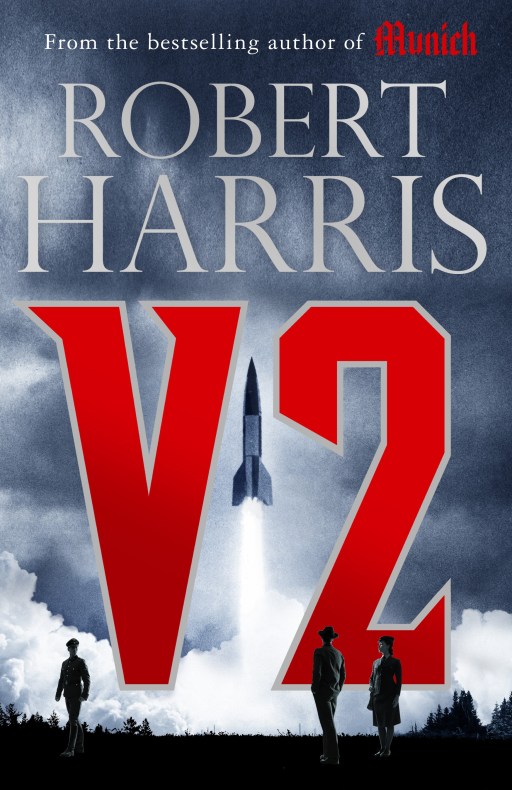
V2 Cover

Publisher: Hutchinson (Ebook – 15 September 2020)

Series: Standalone

Length: 312 pages

My Rating: 4.25 out of 5 stars

Amazon

One of the most talented historical fiction authors in the game, Robert Harris, dives deep into the history of the infamous Nazi V2 rocket program in his latest novel, V2.

Harris is an impressive and well-regarded novelist who has been writing fiction for nearly 30 years.  A former journalist, Harris’s initial books were a series of non-fiction novels in the 1980’s on various subjects, including a book that is considered to be the definitive account of the investigation into The Hitler Diaries scandal which later inspired a drama-documentary miniseries.  His first fiction novel was the 1992 release, Fatherland, an alternate history novel that depicted Germany wining World War II.  He has since gone on to write a number of other fascinating novels, most of which have a historical edge to them, including Pompeii, The Ghost (later adapted into the film The Ghost Writer), The Fear Index and Munich.  Harris is one of those authors I have been meaning to read more of, but so far I have only checked out his 2013 release, An Officer and a Spy, which featured a fascinating account of the Alfred Dreyfus affair in 19th century France, and which was an outstanding piece of historical fiction.  I also currently have his 2019 release, The Second Sleep, on my bookshelf and it was one of the novels I most regret not reading last year.  As a result, I was rather interested when I got a copy of V2, which sounded like quite a fun and intriguing historical read.

In November 1944, while the Allies advance on Berlin, the Nazis are desperate to avoid defeat at all cost.  Placing his hopes in new technology, Hitler funnels vast resources into his V2 rocket program, the most sophisticated weapon on the planet.  The V2s are powerful ballistic missiles capable of delivering an explosive warhead deep into enemy territory at immense speeds.  Hitler has ordered the production of 10,000 rockets and from an isolated forest in occupied Holland, the Germans launch them towards London, causing immense damage.

Rudi Graf is a German scientist who has long dreamt of sending rockets to the moon, and who now regrets his role in the creation of the V2.  Stationed at the V2 launch site, Graf desperately tries to hang onto his humanity as he watches his dream cause only destruction and death.  At the same time, in London, Kay Caton-Wash, an officer in the WAAF, is experiencing the full horror of the V2 rockets as she barely survives one of their strikes.  Over the course of five days, these two strangers are about to be connected by their circumstances.  As Graf is forced to launch even more of his rockets at London, Kay becomes involved with a secret mission to locate and destroy the V2 launch sites in Holland.  Travelling to Belgium, armed with only a slide rule and some equations, Kay works to end the V2 menace once and for all.  However, danger and duplicity are around every corner, and both Graf and Kay soon begin to realise that they cannot trust anyone.  As both rush towards their destinies, their actions will have unintended consequences on the over, changing the course of history forever.

V2 was a clever and compelling novel from Harris, who did a wonderful job wrapping an intriguing, character-driven story around one of the most remarkable military programs of World War II.  Like the majority of Harris’s novels, V2 is a standalone book that can be easily enjoyed by anyone in the mood for informative historical tale or war story that shows the horrors of war and the terrible ways that a person’s dreams can be twisted for evil purposes.

Harris has come up with a captivating narrative for this book.  The focus of V2 is split between two fictional point-of-view characters, Kay and Graf, and follows their respective experiences over a period of five days, with several flashback scenes thrown in for context.  This proved to be a rather intriguing read, and I liked how the author tied a mostly fictional story around some fascinating historical events, such as the creation and implementation of the V2 rockets.  Both of the two separate storylines are quite intriguing and both go in some exciting directions, including Kay getting involved in a secret military operation while Graf tries to keep his sanity as he navigates the politics, treachery and sadism of his Nazi controllers.  However, the real appeal of this narrative is the way in which the two separate story arcs intersect throughout the novel.  For example, the novel starts with Graff witnessing and assisting the launch of a V2 rocket, which then lands and changes Kay’s life.  As the story proceeds, the various actions and reactions of these two point-of-view characters impacts the events occurring around the other character, resulting in danger and tragedy in equal measures.  While I really liked the fascinating individual narratives and the cool way in which the storylines overlapped, I did think that the main story ended rather suddenly and lacked a substantial or satisfying conclusion.  This narrative desperately needed some big, exciting hook at the end to really tie everything together, even if it was historically inaccurate.  Still, V2’s story was really good and easy to get into, and I had a fantastic time reading it.

In order to tell this fascinating tale, Harris utilises two great fictional characters, Kay and Graf, through whose eyes we see the events unfold.  Both of these characters are rather interesting and I quite enjoyed both their individual character arcs.  However, of the two, I definitely found Graf to be the more compelling character.  This is because Graf is a particularly tortured individual, a brilliant scientist who is forced to work for the Nazis to bomb England.  There are some excellent scenes throughout this book that show Graf agonising over his actions working for the Nazis, who have perverted his childhood dream of creating spacefaring rockets into weapons of mass destruction.  Harris also spends much more time exploring Graf’s past, investing in a series of flashbacks that show how Graf became obsessed with rocketry, how he became involved with the V2 project and some of the tragedies that working with the Nazis have brought.  Add in a very captivating storyline that shows Graf starting to rebel against the actions of his Nazi handlers and attempting to find a small measure of redemption out in the wilds of Holland and you have a very impressive and enjoyable character arc that does rather outshine the storyline Harris sets up for Kay.  That being said, Kay is still an interesting focus character in V2, and I did enjoy her arc of trying to find and destroy the V2 launch sites by travelling to Belgium with several other members of the WAAF to work out the trajectories of the rocket flights.  It was also really cool to see this portrayal of a WAAF, a female air force officer, throughout the book, especially one deployed outside of England, and I found it interesting to examine the varied roles that they played throughout the war.  Overall, these two characters do an outstanding job telling this story, and I had a great time seeing how their individual arcs unfolded.

The real highlight of this novel has to be the author’s incredible and captivating portrayal of the infamous V2 rocket program.  Harris has clearly done his research on the subject as he does an amazing job examining all the key aspects of the program and bringing them to life.  This includes a detailed examination of the history of the project, the technical aspects of the rockets and various examinations of how they fly and what they can do.  Harris makes good use of the various flashback sequences in Graf’s chapters to examine the full fascinating history of the project, including the origins of the rockets, identifying who the key architects of the project were and how the project came to the attention of the Nazis.  This includes some compelling depictions of several major historical figures associated with the V2s, such as the project’s leader and main creative driver, Wernher von Braun, as well as several key Nazi characters who had a hand in the project in some way or another.  The author also provides the reader with an unfiltered depiction of the devastating effect that these rockets had on the inhabitants of London when they hit and he actually features several real, historical rocket strikes that occurred during the timeline of the novel, including the most devastating attack that hit London.  The depictions of the horror and the carnage that the rockets caused were really striking, especially as Harris tries to capture the psychological impact that these unstoppable and ultra-fast rockets had on the populace.  I really loved learning more about the V2 rockets and it was easily the most fascinating and captivating part of the entire book.  I especially appreciated the way in which Harris used his dual character perspectives to examine the project from the point of view of the Germans and the Allies, and it was great to see the clash of understandings and opinions about the rockets.  It was also really fascinating to learn more about the Allies’ covert attempts to identify and demolish the V2 launch sites, and this was a great addition to the novel.  All of these historical aspects are immensely enjoyable and fascinating and they add a heck of a lot to the story.

V2 by Robert Harris is a particularly clever and intriguing World War II novel that presents the reader with a fascinating and memorable examination of the infamous V2 rocket program.  Featuring a compelling story, fantastic characters and an outstanding historical focus, V2 was an awesome and captivating read that is really worth checking out.

Amazon