Star Wars: The High Republic: Tempest Runner written by Cavan Scott and performed by a full cast

Star Wars - Tempest Runner Cover

Publisher: Random House Audio (Audio Drama – 31 August 2021)

Series: Star Wars – The High Republic

Script: Cavan Scott

Cast: Jessica Almasy, Dan Bittner, Orlagh Cassidy, Sullivan Jones, January LaVoy, Kathleen McInerney, Tara Sands, Vikas Adam, Jonathan Davis, Neil Hellegers, Saskia Maarleveld, Soneela Nankani, Marc Thompson and Shannon Tyo

Length: 6 hours and 5 minutes

My Rating: 4.5 out of 5 stars

Amazon

The epic High Republic era of Star Wars fiction continues in Tempest Runner, the brilliant and captivating full-cast audio drama written by impressive author Cavan Scott.

Ever since its beginnings in early 2021, I have been having a lot of fun with the cool new focus of the Star Wars extended universe known as The High Republic.  Set hundreds of years before the Skywalker Saga, The High Republic has featured several impressive novels, comics and other media releases that tell a grim story of destruction and strife in the golden age of the Republic and the Jedi.  One of more interesting pieces of this fiction from late 2021 was this fantastic full-cast audio drama, Tempest Runner, which focused on one of this era’s best villains, the Nihil Tempest Runner, Lourna Dee.  This awesome audio drama was authored by the exceedingly talented Cavan Scott, who not only wrote my favourite High Republic book so far, The Rising Storm, but also a great previous Star Wars audio drama, Dooku: Jedi Lost.

Synopsis:

The Nihil storm has raged through the galaxy, leaving chaos and grief in its wake. Few of its raiders are as vicious as the Tempest Runner Lourna Dee. She stays one step ahead of the Jedi Order at the helm of a vessel named after one of the deadliest monsters in the galaxy: the Lourna Dee. But no one can outrun the defenders of the High Republic forever.

After the defeat of her crew, Lourna falls into the hands of the Jedi – but not before she hides her identity, becoming just another Nihil convict. Her captors fail to understand the beast they have cornered. Just like every fool she’s ever buried, their first mistake was keeping her alive.

Lourna is determined to make underestimating her their last.

Locked onto a Republic correctional ship, she’s dragged across the galaxy to repair the very damage she and her fellow Tempest Runners inflicted on it. But as Lourna plans her glorious escape, she makes alliances that grow dangerously close to friendships. Outside the Nihil – separated from her infamous ship, her terrifying arsenal, and her feared name – Lourna must carve her own path. But will it lead to redemption? Or will she emerge as a deadlier threat than ever before?

Tempest Runner ended up being an entertaining and captivating piece of Star Wars fiction.  Featuring another excellent story from Scott that not only dives into the past of great character Lourna Dee but continues the story set up in several of the past High Republic novels.  Perfectly told using a full cast of narrators, this was an outstanding audio drama that I had a wonderful time listening to.

It was clear that Scott was on quite a roll last year when it came to fantastic storytelling.  Tempest Runner is set after the events of The Rising Storm and continues several interesting storylines from this novel, as well as other pieces of High Republic fiction such as Light of the Jedi and Out of the Shadows.  Starting off with Lourna’s capture by the Jedi, the story shows her successfully hide her identity and get imprisoned aboard a Republic prison ship doing hard labour as punishment.  Trapped with some of the worst criminals in the galaxy, as well as former Nihil members who utilise her identity for her own good, Lourna is forced to survive while also coming to terms with who she is, what drives her and what she wants from the future, especially when she connects with one of the prison guards.  However, an enemy from her past has found out where she is and is determined to kill her no matter what.  This leads to several intense and brutal confrontations as Lourna is forced to once again bring out her inner monster to save herself and defeat her opponents, while also setting her path for future endeavours in the High Republic universe.

Tempest Runner’s narrative ended up being pretty intense, and I loved the cool and intriguing plot, especially as there are several fun twists and reveals, including that great one towards the end.  While this is a mostly self-contained piece of Star Wars fiction, there are multiple intriguing connections to other High Republic novels and comics.  I particularly loved how several of the best villains from the main two novels were used here, and it also sets up Lourna’s storyline for the next book in the series.  Scott employs an interesting and roundabout way of telling Tempest Runner’s story, utilising a series of flashbacks and interludes to continue the main plot which occasionally helps compensate for the lack of descriptive words that is characteristic of the audio drama format.  I really need to highlight the book’s great opening section in which the capture of the protagonist is recounted in compelling detail to the novel’s main antagonist, with the storyteller and his audience providing questions and commentary during the dramatisation of the events being discussed to provide context.  The storyline has a great blend of elements, and I loved the fantastic prison story, the intrigue of the Nihil, the fantastic revenge plot surrounding the antagonist, as well as the massive amount of character development that occurs around the main character.

Scott really went out of his way to explore the character of Lourna Dee in Tempest Runner.  Despite being one of the most distinctive and entertaining villains in the High Republic canon, very little was known about Lourna Dee before now, except that she is an unassailable badass who is even capable of hanging with a Jedi in a fight.  Tempest Runner, however, dives deep into the heart of this cool character, and I liked the complex and intriguing development and history around her.  Most of the story is dedicated to the modern Lourna, who, after being captured, attempts to turn over a new leaf in the prison system to survive.  This provides some interesting insights into her mind and motivations, especially as she is not as mindless a killer as some of the previous books would lead you to believe.  Instead, she is quite a complex and tragic figure, something that is made clear when you see the various flashbacks to her past that Scott comes up with.  These flashbacks tell a captivating tale of betrayal and heartbreak, showcasing what led an innocent girl to a life of hardship and crime.  This backstory is extremely fascinating, with some powerful moments of love, loss, and revenge.  In addition, the story also dives into how she became a member of the Nihil and rose in its ranks.  This interesting background weaved into the main plot extremely well, and I think that Scott showcased the character’s past perfectly, ensuring that it explains her current mentality and motivations.  I am deeply happy that we finally got to see this character’s backstory, and it really did not disappoint.

While most of Tempest Runner’s focus was on Lourna Dee, a couple of other characters really stood out to me.  This included Tasia, the former Nihil member who blackmails Lourna to help her survive in prison.  Tasia is a fun secondary antagonist, and it was very entertaining to see her try and make a power play on Lourna once she was no longer in control.  I also loved seeing more of Pan Eyta, a former Nihil Tempest Runner who was betrayed by Lourna in The Rising Storm.  Pan, who is dying thanks Lourna, goes on a big revenge mission here and ends up being the major antagonist of this novel.  I personally thought this was an amazing conclusion to his compelling character arc established in the previous novels and it was great to see him and Lourna have several aggressive and deeply personal confrontations throughout Tempest Runner.  I also enjoyed seeing a young version of High Republic arch-antagonist Marchion Ro, before he took control of the Nihil, as well as a glimpse of his often-discussed father Asgar Ro.  Several other supporting characters in this novel were also pretty fun, and I had a great time seeing some of their storylines unfold.

While I had to highlight Tempest Runner’s cool narrative and great characters, you can’t talk about this amazing piece of Star Wars fiction without mentioning the awesome audio drama format.  I have a lot of love for Star Wars audiobooks and audio dramas (such as Doctor Aphra), and this was a particularly good one.  The team behind this epic audio drama did an amazing job of combining Scott’s great story with a team of brilliant voice actors, as well as the typical Star Wars sound effects and music.  With a run time of just over six hours, this is a very easy audio drama to quickly power through, and I think I managed it in just over a day myself.  While some people unfamiliar with the format might have some issues regarding the full reliance on descriptive dialogue and sound effects rather than expositional text to describe action, I thought that Tempest Runner was adapted extremely well and I had an absolute blast getting through it.

I must highlight the exceptional cast of voice actors that were featured in this awesome audio drama, as the team behind it pulled together a great group of narrators, including several actors well known for their work bringing Star Wars audiobooks to life.  The most prominent actor in this group is probably Jessica Almasy, who voiced main character Lourna Dee.  Almasy brings a great deal of complexity to the role and I loved the semi-French accent she utilised throughout Tempest Runner, which was reminiscent of how Twi’lek characters speak in shows like Star Wars: Rebels.  I thought that Almasy did a brilliant job of highlighting Lourna’s true feelings and personality in this audio drama, and it was great to see her transform the character in several intense, emotional scenes.  This was some brilliant voice work and it was an amazing highlight of this exceptional production.

I also deeply appreciated the great work that the other actors contributed to Tempest Runner and its characters.  While there were a few new narrators here whose work I enjoyed, the ones that impressed me the most were established narrators from other Star Wars audiobooks.  This includes January LaVoy, who voiced the character of Tasia, providing her with some much-needed depth and spite.  LaVoy, who I loved in works such as Star Wars: Victory’s Price (one of my favourite books and audiobooks of 2021) and Star Trek: Discovery: Die Standing, was just great here and I really appreciated the characterisation her voice added to Tasia.  Marc Thompson, who has previously narrated all the main High Republic novels, as well as the Thrawn Ascendancy books (Chaos Rising, Greater Good and Lesser Evil), was another standout narrator, especially as he voiced three characters, including antagonists Pan Eyta and Marchion Ro.  Having this cool continuation from Light of the Jedi and The Rising Storm for these great villains helped me enjoy their appearances in Tempest Runner a lot more, especially as Thompson has come up with some extremely sinister and fitting voices for them.  I also had a lot of fun with Jonathan Davis (who previously narrated Master & Apprentice, Lords of the Sith and Maul: Lockdown), who voiced two characters here.  I particularly enjoyed his work on the mysterious Asgar Ro, and the calm and wise tone he utilises for him (which is reminiscent of another major Star Wars character), works perfectly to give him some great depth.  An overall exceptional collection of narrators, I had an amazing time listening to this audio drama.

With a great cast, a brilliant story and a great focus on an incredible central character, Tempest Runner was an outstanding addition to the High Republic range of Star Wars fiction.  The always impressive Cavan Scott came up with an awesome narrative for Tempest Runner and I loved learning more about fun character Lourna Dee.  A must-listen for all fans of The High Republic, you really won’t regret checking out Tempest Runner.
Amazon

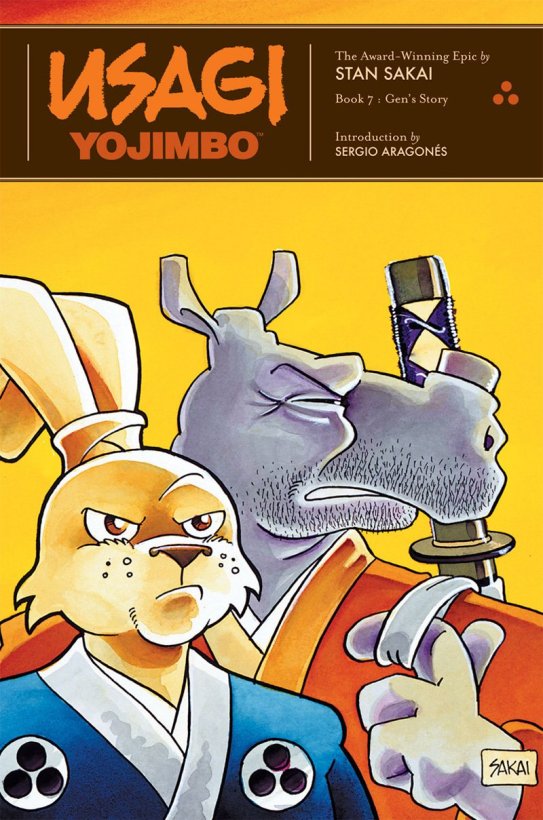
Throwback Thursday: Usagi Yojimbo: Volume 7: Gen’s Story by Stan Sakai

Usagi Yojimbo Gen's Story

Publisher: Fantagraphics Books (Paperback – 1996)

Series: Usagi Yojimbo – Book Seven

Length: 187 pages

My Rating: 5 out of 5 stars

Amazon     Book Depository

Reviewed as part of my Throwback Thursday series, where I republish old reviews, review books I have read before or review older books I have only just had a chance to read.

For this week’s Throwback Thursday, I once again dive into the wonderful world of Usagi Yojimbo and review the seventh volume of this incredible ongoing comic series, Gen’s Story. I have been really enjoying going back and reviewing the older volumes of this fantastic comic by legendary writer and artist Stan Sakai, and this seventh volume is another excellent addition to the series that I always have a terrific time reading.

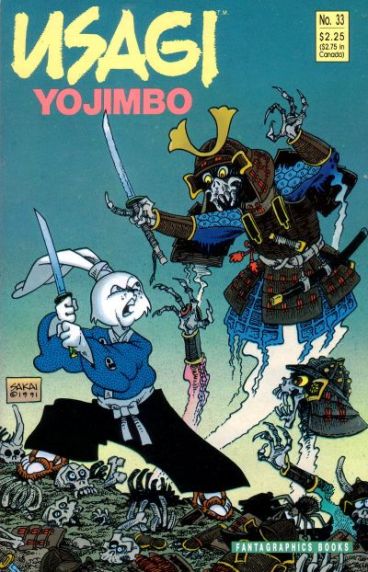
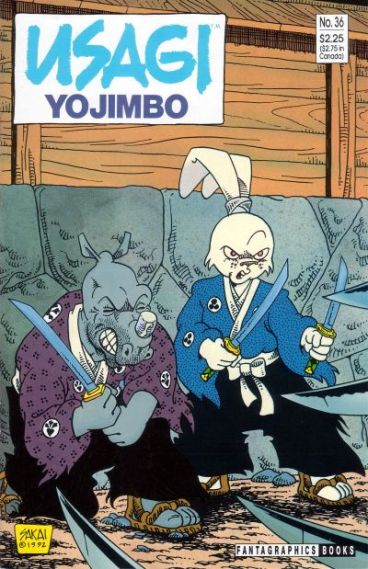
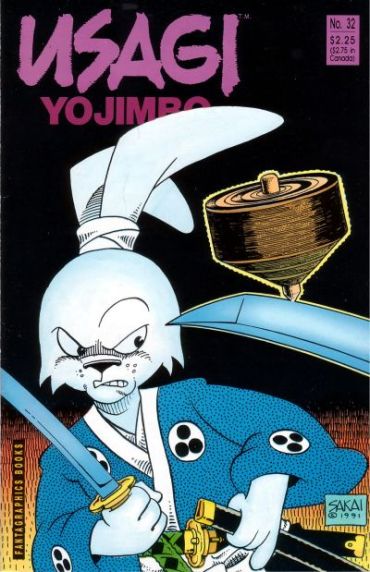
Usagi 32

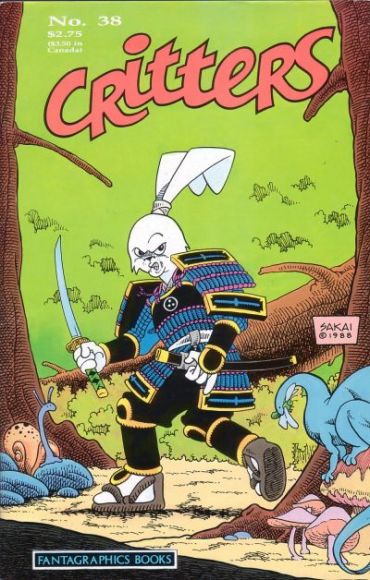
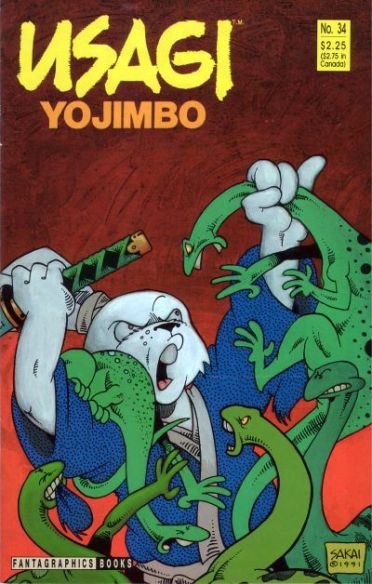
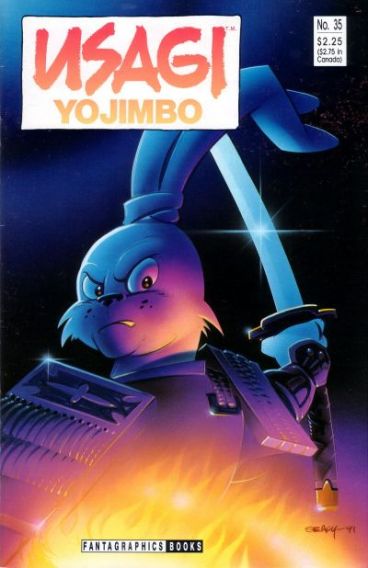
Gen’s Story is an amazing example of a Usagi Yojimbo volume, which contains several short stories, each of which shows a unique tale set within the series’ clever version of feudal Japan populated with anthropomorphised animals. Each of the individual stories in this volume is rather good, and together they form a fantastic volume that not only introduces a recurring side-character but which also explores the backstory of another key character and serves as a perfect end note for one of the series’ best character arcs. This volume is made up of issues #32-38 of the Fantagraphics Books run on Usagi Yojimbo, as well as a story from Critters #38, which makes Gen’s Story a tad longer than a typical volume. All of these issues make for an awesome read, and Gen’s Story is another excellent addition to the Usagi Yojimbo series.

The first story contained within this volume is the fun and enjoyable tale, Kitsune. In this story Usagi encounters a talented street performer, Kitsune, who entertains the crowd with the tricks she can perform with her koma (spinning tops). However, Kitsune is much more than a simple entertainer; she is also an extremely skilled thief and pickpocket who manages to take Usagi’s purse without him realising it. This forces Usagi to stay late at an inn, washing dishes to pay for his meal, which results in him witnessing and intervening in an altercation between a notorious gambler and some local gangsters. Deciding to help the gambler under the mistaken belief that he is an innocent merchant, Usagi attempts to escort him out of town, where the two encounter Kitsune again just before the gangsters attack, leading to a fight in the streets.

Usagi 33

Kitsune is an entertaining story that works well as a suitably light-hearted start to the entire volume (get a fun story in before the feels start). The whole of this story is really amusing from the very start, and it contains some great comedy elements, from Usagi getting taken advantage of by Kitsune and the way he doesn’t initially realise that the person he is helping out is the same gambler who previously led a mob against him in A Kite Story, which was part of the fifth volume, Lone Goat and Kid. This leads to a great scenario where the gambler is forced to rely on Usagi for protection, while silently hoping that he will not remember who he is or what he previously did. Of course, Usagi eventually figures out who he is, thanks to the gambler’s boasting, and this results in a great end to the whole farcical tale. This issue also serves as an excellent introduction to the character of Kitsune, who goes on to become a major recurring figure within the Usagi Yojimbo stories. Sakai does a fantastic job showing off Kitsune’s personality and skills as a thief throughout this story, and I also love all the cool drawings he does of Kitsune’s various tricks with the spinning tops. Kitsune’s entire arc throughout this story is great, and I love how Usagi was able to get even with her at the very end, which is a fun prequel to all their future encounters. The combination of an entertaining plot, a great character introduction and an enjoyable call-back to a previous story helps to make Kitsune an excellent first entry in this volume, and I had an amazing time reading it.

The second story in this volume is the short entry Gaki. Gaki is quick and amusing story that follows a young Usagi back when he was a student under the tutelage of his sword master Katsuichi. After one of Katsuichi’s typical lessons, which sees Usagi receive a smack to the head, Usagi attempts to retaliate, striking a blow that seemingly kills his master and causes his ghost to start haunting Usagi. Of course, it ends up being a whole big misdirection, but it results in a fun sequence in which young Usagi is chased by a vengeful spirit, which all leads to a humorous conclusion. The highlight of this quick tale has to be the amazing drawings of the vengeful spirit and the pure terror that appears on the face of the young Usagi, all of which are way out of proportion to Gaki’s rather innocent story. All of this makes for an entertaining second inclusion in Gen’s Story, and it, together with the first story, provides readers with a fun start to this volume.

Critters 38

The third story is where we start getting to the heavier narratives of this volume, as the reader is treated to the supernatural tale, Broken Ritual. This story sees Usagi walking late at night through a small village filled with an unnatural amount of fear, especially after a loud and terrifying wail breaks the silence. Talking to the townsfolk, Usagi learns that the village, which is located close to the site of the battle of Adachi Plain, is haunted by one of Usagi’s old comrades, General Tadaoka, who died following the battle in the midst of an incomplete seppuku ritual. Now, due to the shame of having a dishonourable death at the hands of an unworthy and unnamed enemy, Tadaoka’s spectre appears in the spot where he died each full moon, letting out a wail of anguish. Upon hearing this tale, Usagi decided to try and help end the suffering of his former comrade and manages to help the spirt pass peacefully by successfully performing the seppuku ritual on the ghost.

Broken Ritual is an impressive and gripping story of honour and duty which is easily one of the best inclusions in this volume. This is one of those stories that really sticks in the reader’s mind, and the whole concept of samurai honour, even from beyond the grave, is a really fascinating central plot aspect. I loved the exploration of the seppuku ritual, and the supernatural elements of this story play into this really well, as it highlights just how important an honourable death is to a samurai like Tadaoka, so much so that he came back from the grave to ensure it was done properly. Sakai’s art is in top form for this volume, and his outstanding depiction of a wartime seppuku ritual is absolutely incredible. The intense facial expressions of Tadaoka during the seppuku scenes are particularly enthralling, and Sakai does a fantastic job of showing the pain and concentration that would have been on such a person’s face. All of this leads to a deeply captivating story, and it is amazing the sort of gripping tale Sakai can spin together in single issue.

Usagi 34

The fourth story in this volume is the shorter story, The Tangled Skein, which is the story that was originally featured in Critters #38. This is a creepy, quick story that follows Usagi in the immediate aftermath of the battle of Adachi Plain. Fleeing from the victorious troops of Lord Hikiji, Usagi attempts to hide in a dark forest known as The Tangled Skein, which is rumoured to be filled with all manner of haunts. Naturally, Usagi runs into one of these haunts, a demon disguised as a helpful old lady, and he must try to escape her clutches with help from the most unlikely of sources. This was an awesome supernatural storyline that I quite enjoyed, especially as the story once again highlights some of the philosophies surrounding samurai honour and what duties a samurai has to his lord, and vice versa. Fast-paced, exciting and with a surprisingly poignant moral to its story, The Tangled Skein is great entry to the volume, and I am glad that Sakai included it.

The next story in this volume is simply call Gen, and it is the major storyline contained within Gen’s Story. Made up of three Usagi Yojimbo issues, this is an excellent story of revenge and obsession that also continues the theme of the last few stories by looking at samurai honour and obligation. This story also reveals the full backstory of the always amusing and enjoyable recurring side character Gen and shows how he came to be a bounty hunter. The story is broken into three separate parts by issue, with the first part called Lady Asano’s Story, the second part called Sins of the Father and the third and final part titled Lady Asano’s Revenge.

Usagi 35

Naturally, Gen revolves around the character Gen, who Usagi once again meets out in the wilds, and helps him claim his latest bounty. Recovering from this fight in a nearby town, Usagi shares a meal with a destitute noblewoman and her retainer. The noblewomen, Lady Asano, is on the hunt for her husband’s murderer, a former advisor who betrayed him for great reward, and her exhaustive 20-year long quest has left her poor and on her own. The story is interrupted by the arrival of Gen, who is revealed to be the son of the great General Murakami, the most revered retainer of the Asano clan, and whose family owes allegiance to Lady Asano. Gen, bitter at the years his hard and disciplined father spent dragging him and his mother around the countryside hunting the murderer, an event that led to the death of Gen’s mother and Gen becoming a bounty hunter, refuses to help Lady Asano. However, once Lady Asano and Usagi are captured by the murderous advisor, revealed to be the town’s magistrate, Gen attempts to help, leading to an emotional and violent confrontation.

This was another excellent story that had a number of fantastic elements to it. It was great to finally get Gen’s backstory revealed, as Gen promised to tell his story all the way back in the second volume, Samurai. This was actually a rather tragic backstory for Gen, and I really liked seeing it, especially as it fits in really well with Gen’s character, not only explaining why he is so eager to fight for money but also why he is so dismissive and distrustful of honourable samurai, who must remind him of his father. Sakai makes sure to wrap up Gen’s personal history rather well within this story, as Gen gets some closure with his father towards the end of the story in one of the few instances that we see a really serious and emotionally wrought Gen. I also liked how Sakai continued to explore the concept of samurai honour within this story, especially the obsession and hurt that it can cause. We got to see the negative impacts that having an extremely loyal and honourable samurai as a father had on Gen, and Sakai also focused on the obsession for revenge and redemption that existed within Lady Asano, which not only drove her into poverty but also gave her the strength to finally get her revenge. The sequence where the dying Lady Asano slowly advanced towards the target of her wrath was pretty intense, and she almost appeared demonic as she slowly moved to get her revenge. Other cool highlights of the story include the huge pitched battle that occurred between the protagonists and their opponents’ retainers in the magistrate’s compound, and the continued fun banter between Usagi and Gen, which adds some much needed humour into this heavier story. Overall, this is an impressive and addictive expanded story, that achieves a lot of fantastic character development and which serves as an excellent focus of this entire volume.

Usagi 36

The next story contained within this volume is another lighter story, The Return of Kitsune. In this story, Usagi, who is accompanied by Gen, once again encounters Kitsune, who is up to her usual tricks of street performances and pickpocketing. This time, however, she accidently steals a valuable letter meant for a corrupt local merchant, and she is subsequently hunted through the streets until she runs into Usagi and Gen. Usagi and Gen was work together to save Kitsune from the merchant, even if they cannot agree on what the best course of action is.

The Return of Kitsune is probably one of the funniest inclusions in this volume. The highlight of this entry has to be the first meeting between the two fun side characters, Kitsune and Gen. These two characters play off each other extremely well, and you cannot help but chuckle at the exasperated expression on Usagi’s face as the Gen and Kitsune begin to flirt with each other. I also enjoyed seeing the opposing philosophies of Usagi and Gen clash throughout this story, as Usagi wants to intervene to save lives, while Gen wants to stay out of the whole thing and claims that Usagi is too nosey. This whole argument proves to be a rather entertaining part of the story, and it results in some excellent scenes towards the end of the story, especially when Usagi takes Gen’s advice about minding his own business and fails to tell his friend that Kitsune stole his purse.

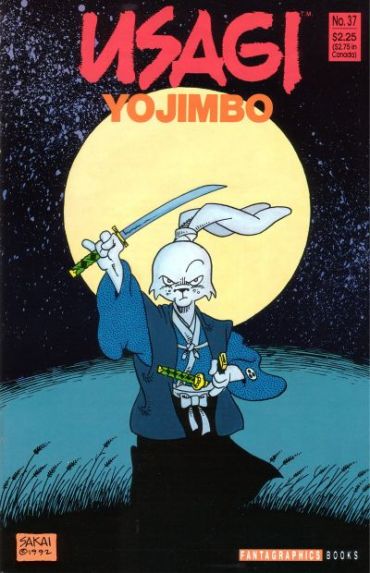
Usagi 37

The final entry in this volume is the outstanding narrative, The Last Ino Story, which serves as the last appearance of one of the best recurring characters to appear in the earlier volumes of this series. In The Last Ino Story, Usagi and Gen are taking one of Gen’s infamous shortcuts late at night and find themselves ambushed by bandits while traversing a narrow path along the side of a cliff. Managing to outsmart their attackers, Usagi and Gen seek shelter in a nearby abandoned hut, where they find themselves confronted by a young woman who is attempting to defend her wounded husband. Able to make their way inside, they find that the woman’s husband is none other than the Zato Ino, who has settled down and abandoned his violent ways after his last encounter with Usagi and Gen. Gravely wounded by the same bandits Usagi and Gen encountered, Ino appears close to death and the two samurai must work quickly if they are to save him and ensure he gets to live the life he rightly deserves.

The Last Ino Story is an outstanding and emotionally rich story which is an amazing way to finish this entire volume off. This last entry in this volume contains a great story in its own right, especially as it serves as a fantastic conclusion to one of the best character arcs in the series, that of Zato Ino. Ino was introduced all the way back in the first volume, The Ronin, as a blind outlaw who was trying to find a quiet place to settle down and rid himself of his life of violence, but whose efforts were constantly disrupted by his large bounty and the hunters chasing him. However, as the series progressed and Usagi kept meeting him, he grew as a character, from him gaining his first true friend in the third volume, The Wanderer’s Road, to him finally finding a home and family after the events of the fourth volume, The Dragon Bellow Conspiracy. This final appearance from him (and it is indeed the last time that you see him), serves as a perfect send off to him, as Usagi and Gen, the only two people who knew his past and gave him a chance, find out that he ended up having a the peaceful life he always wanted and has even more happiness on the way. As a result, this is a perfect story for those readers who got attached to the character of Ino through the first volumes of the series, and it was great to see his story come to a satisfying end.

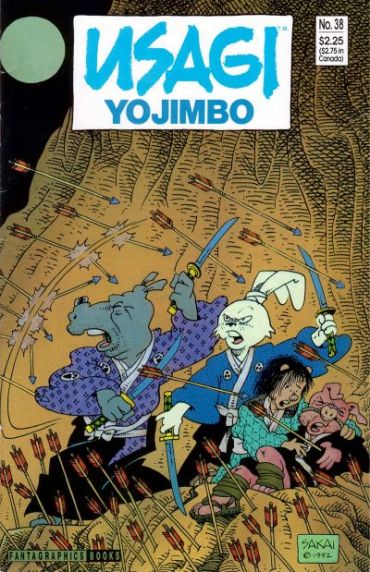
Usagi 38

I also liked Gen’s character arc throughout this story, especially once he finds out that Ino was the injured man in the barn. Gen and Ino have a complicated past, as Gen was initially trying to hunt Ino down for his bounty during their first encounter, and Ino ended up saving his life. In order to repay him, Gen dragged the injured Ino out of the castle before it exploded and told everyone, including Usagi, that Ino had died, in order to ensure that the blind pig would no longer be hunted and could settle down. In this story, Gen, upon seeing the man he saved once again dying, loses his cool and begins to take his rage out on an owl that has been stalking him throughout the course of the book, which he sees as an omen of death. Watching Gen constantly run out into the rain to chase away an owl is amusing on the surface, but it also reveals his deeper feelings that he usually keeps hidden: “The one decent thing I did was give him his peace, and you won’t take it away!” His determination to keep Ino alive because of this is a real change from his usual behaviour, and it helps underline that deep down Gen is a good character, even if he reverts to his usual gruff self the moment he knows Ino is fine. I also liked how the whole saga with the owl ended up, and it was a fun little turn around on the bird being an omen of death. Other highlights of this story include the cool battle sequence towards the front when Usagi and Gen manage to climb up the cliff and face the bandits trying to kill them. The five panels which show this fight are really cool, from the way that the grim faced Usagi and Gen are framed in the moonlight, the close-up of the bandits faces as they charge, the shot of Usagi’s bloody sword, and the way the fight is only alluded to by the sound effects that have been written in, makes for a great sequence that I really liked. All in all, The Last Ino Story is a first-rate inclusion, and it leaves the reader with a memorable and emotionally substantial ending to this volume.

The seventh Usagi Yojimbo volume, Gen’s Story, is another incredible addition to this awesome and deeply enjoyable series. Each of the entries within this excellent volume are outstanding reads, containing complex characters, fantastic narrative arcs and Sakai’s impressive artwork. Gen’s Story gets another five-star review from me, and Stan Sakai has once again shown why he is one of my favourite creative minds.

Amazon     Book Depository

Throwback Thursday: Usagi Yojimbo: Volume 2: Samurai

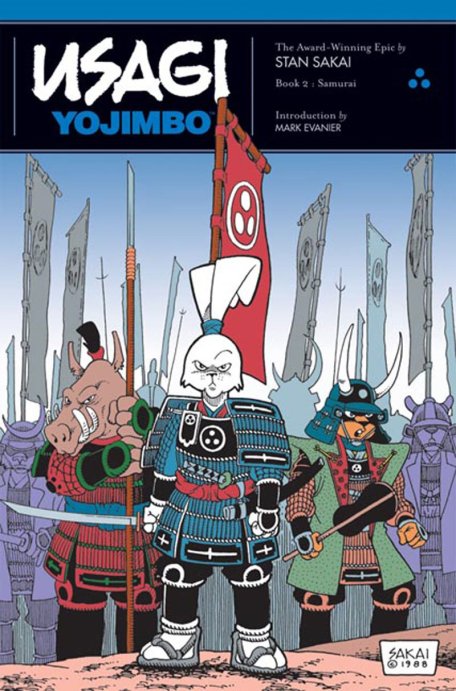
Usagi Yojimbo Samurai Cover

Publisher: Fantagraphics Books (Paperback – 1989)

Series: Usagi Yojimbo – Book Two

Length: 141 pages

My Rating: 5 out of 5 stars

Amazon     Book Depository

After the fun that I had reviewing the first volume of the Usagi Yojimbo series, The Ronin, last week, I decided to follow it up with a review of the second volume in the series, Samurai. Samurai is an impressive second outing from author and artist Stan Sakai, which does an amazing job continuing his epic series after the introductory stories contained within the first volume.

After his adventures in the first volume, the rabbit ronin Miyamoto Usagi has continued on his wandering ways. However, his latest journey quickly turns to violence when he encounters another ronin on the road. Without a word being spoken, both samurai engage in a swift and brutal duel to the death, in which Usagi is the winner. The only witness to the duel is the bounty hunter Gennosuke, who inquires into the origin of the apparent feud between Usagi and his recently deceased opponent. Usagi reveals that the dead samurai was named Gunichi and Usagi had much cause to kill him.

Usagi 1

Regaling Gen with his tale as they travel together, Usagi reveals that the origins of this feud goes all the way back to his childhood and his tutorage under the unusual and skilled sword master Katsuichi. This tale follows Usagi as he becomes a young samurai in the services of his Lord Mifune, where he was comrade to Gunichi, and leads all the way to the fateful battle of Adachigahara Plain and the day that Usagi became a masterless samurai.

Back in the present, Usagi continues his adventures across the land, encountering many different people and unusual creatures. Watch him fight against a kappa, help defend a village of silk merchants against a roving group of bandits and witness his weird meeting with a mysterious and powerful little monster who is going to be a big somebody one day.

Usagi 2

Usagi Yojimbo: Volume 2: Samurai, is an amazing and fantastic volume of the Usagi Yojimbo series, which does an outstanding job continuing the story after the events portrayed in The Ronin. This second volume contains the first six issues of the actual Usagi Yojimbo series, and I really enjoyed the excellent adventures that are contained within these issues. The volume is broken down into four separate stories, the expanded story Samurai, as well as three stories which are significantly shorter. Each of these stories are really entertaining, and they all come together to create an impressive and incredible total volume of comics which I had a fantastic time reading.

The first story in this volume is also titled Samurai, and it is the major story contained within the Samurai volume. Running for 92 pages, this was one of Sakai’s first expanded Usagi Yojimbo stories, and I think it is one of his better ones. Samurai contains a captivating and exciting narrative that not only continues Usagi’s story in the present but which also goes back and explores much of the character’s past. This is shown through a lengthy flashback about Usagi’s childhood, his tutorage under the skilled samurai Katsuichi, his first meeting with Gunichi, their service under Lord Mifune, the events that led to Mifune’s war with the evil Lord Hikiji and the terrible final battle which cost Usagi his lord.

Usagi 3

Sakai comes up with an excellent background for Usagi in this story, and it was great to see how he expanded on some of the ideas and plot points that were featured within the first volume’s early stories. Even after all these years, the flashback contained with Samurai is still the definitive history of the character’s early days, although it has been expanded on several times in future volumes. This background is really intriguing, and I think that Sakai tells an amazing story, showing of Usagi’s unique training, his early triumphs including obtaining his swords, his service with Lord Mifune and then an expanded version of the battle of Adachigahara Plain, which has been briefly shown in the previous book. Woven into this is the tale of Usagi’s friendship with his fellow Mifune retainer, Gunichi, and the fateful day in their relationship that will cause Usagi to kill him the next time they meet. Sakai paces this entire extended story out well, and it turns into quite a complete and intriguing narrative. I like that it also added a lot more depth to the love triangle between Usagi, Mariko and Kenichi, and the scenes where Usagi and Kenichi put aside their differences for the first time for the sake of Mariko is great, and helps show that Kenichi is not a bad guy, he’s just occasionally blinded by his jealousy of Usagi.

I personally really enjoyed the scenes that featured Usagi and his sensei Katsuichi, the reclusive swords master. Their entire arc is really fun, and I love a good training sequence. Katsuichi is your typical wise and eccentric old hermit master who takes the young and eager student with potential under his wing to make him a superior student. Despite coming off as an aloof and hard man, Katsuichi is actually a kindly master who is impressed by Usagi’s determination and spirit (he gives a sly smile at the start of the training period). Katsuichi has some really interesting training techniques, and it is interesting to see how Usagi developed the skills that have kept him alive in the dangerous world he lives in. I loved the menial tasks montage, which is very reminiscent of The Karate Kid. It was also fun to see Usagi get randomly hit with a bamboo stick until he learns to anticipate surprise attacks, and I liked how it helped explain Usagi’s seemingly supernatural ability to sense when he is being watched or in danger. Overall, this proved to be an excellent inclusion to the story, and Katsuichi was easily the best new character introduced in this volume.

Usagi 4

Another major highlight of this first story is the part set in the present, which sees Usagi once again reunited with Gen. Gen was one of the better characters featured in the first volume, so it was really good to see him reintroduced in Samurai, especially as it helps set him up as a major recurring character in the Usagi Yojimbo series. Throughout the story, Usagi and Gen form quite an amusing partnership, with Usagi acting the honourable Zen warrior, while Gen is the unapologetic and uncultured mercenary. The two play off each other extremely well, with their great repartee and jabs at each other, and it is fun to see Usagi come out his shell a lot more around his companion. Gen also proves to be an entertaining audience for Usagi’s story, and it was fun to see his reactions to Usagi’s life tale. This was especially true when Gen started to get really into the story, despite his feigned indifference, and overreacted to several key moments. This entire story ends on a rather heartfelt moment between the two, with Gen indicating he completely understands how Usagi felt when he lost his lord “the saddest day of a samurai’s life is the day he becomes a ronin. Some day I’ll tell you how I became masterless…” and Usagi hinting that he really does see Gen as a friend. I really enjoyed seeing these two characters back together again, and this story definitely serves as a much better basis for their friendship than their backstabbing adventures in the previous volume. I also have to say, the silent dual at the front of the book between Usagi and Gunichi is the tops, and you could not ask for a better start to a story than an unexplained and sudden fight to the death.

The next story featured in this volume is the short, horror-based story, Kappa. Wandering a desolate, swampy area, Usagi comes across a kappa, a Japanese water demon, who demands a toll to cross the marshes. While Usagi is able to pass, he must go back and try to save another traveller from the kappa, resulting in a desperate conflict. This is quite a good story, especially with the ghostly twist contained at the end. I really love that Sakai chooses to explore pieces of Japanese mythology like the kappa, and it was really interesting to see Usagi face off against one. There is also an extremely brutal and impressive fight sequence against the kappa featured within this comic, which was all manner of impressive.

Usagi 5

The third story in Samurai was called Zylla, and featured Usagi finding and befriending a mysterious creature hidden in the bushes, that he names Zylla, when he visits the hot springs. Zylla repays Usagi by saving him from some bandits using his fiery (one could even say atomic) breath and reveals itself as a large newborn bipedal lizard who Usagi speculates may be a god, “Are you a god, Zylla?”. This is a really fun short story in this volume, and it adds a fascinating new element to the world that Usagi Yojimbo is set in. It was also great to see Sakai continue to show off his love for Japanese culture by featuring baby Zylla, and he makes several humorous references to Zylla’s future work, such as how he should visit the big city at some point. All of this makes for an amusing entry in this volume and it had me smiling as I read it.

The final story was Silk Fair, which sees Usagi come to the aid of a silk worker, defending him from bandits. The worker takes him to his village, where Usagi eventually helps defend the village from a large bandit raid, after he deals with the silk works greedy administrator. This was a nice, short entry that showed a typical Usagi Yojimbo storyline of Usagi helping to defend the helpless again bandits. This was one of the first stories where Sakai explored a Japanese craft or industry, and while it does not go into as much detail as some of the later industry based stories (later volumes feature length depictions of things like sword crafting, seaweed farming, kite making and soy sauce production), it was still interesting to see. Silk Fair contained a good mixture of action and humour, and I especially enjoyed seeing the way Usagi managed to mess with the corrupt administrator and his cowardly bodyguard. There was also a rather unique battle sequence where Usagi and the silk workers are able to defeat the bandits with sewing needles and silk streamers. In the end, Silk Fair proved to be a strong and amazing story, and I felt that it was an extremely entertaining way to conclude this volume.

Usagi 6

Like with every volume of the Usagi Yojimbo series, Stan Sakai’s artwork is once again a major and incredible highlight of Samurai. This second volume contains some fantastic examples of Sakai’s artistic talent, and it is clear that by the time he was working on the stories contained within Sakai had settled on his preferred designs for the various characters and landscapes featured, although further refinements did occur later down the track. This new character work is really impressive, and I liked how various new characters appeared, such as the warthog Gunichi and the lion based Katsuichi. I am also continually impressed with the way that Sakai can convey emotion and expression with his drawings, and you are constantly aware of what the various characters are thinking, just from seeing their faces. The various stories contained within Samurai featured some truly amazing and visually stunning landscape backgrounds, as Sakai continued his practice of showing off the beautiful scenery of Japan. Sakai also drew a number of impressive action sequences throughout the book, and he really got the hang of sketching out and showcasing the fast-paced and skilful fights that occurred between samurai. There are some impressive duel sequences throughout this volume, including the quick and sudden fight between Usagi and Gunichi at the start of the first story or the practice duel between Usagi and Kenichi which showed the ferocious fight between the two, which quickly ended with one strong strike from the obviously more skilled Usagi. Sakai also included several larger-scale battle sequences throughout the volume which really are something to behold. I particularly liked the major war sequence that showed the expanded battle of Adachigahara Plain. Sakai did an amazing job presenting the frenetic chaos of war and the explosive action that occurred with his art, and it was certainly a visual highlight of this volume.

Usagi Yojimbo: Volume 2: Samurai was an outstanding addition to the Usagi Yojimbo series, and it is one of my favourite volumes in this entire franchise. Stan Sakai presents a fantastic blend of character backstory, action, adventure, eye-catching art and clever humour in this volume, and the end result is a five-star comic which is really worth checking out. Thanks to the excellent background based main story, Samurai is a key volume in this series, making this book a must read. Samurai gets another five stars from me, and once again I have to strongly recommend this volume, and indeed the whole Usagi Yojimbo series, to anyone looking for an epic and enjoyable new series.

Amazon     Book Depository