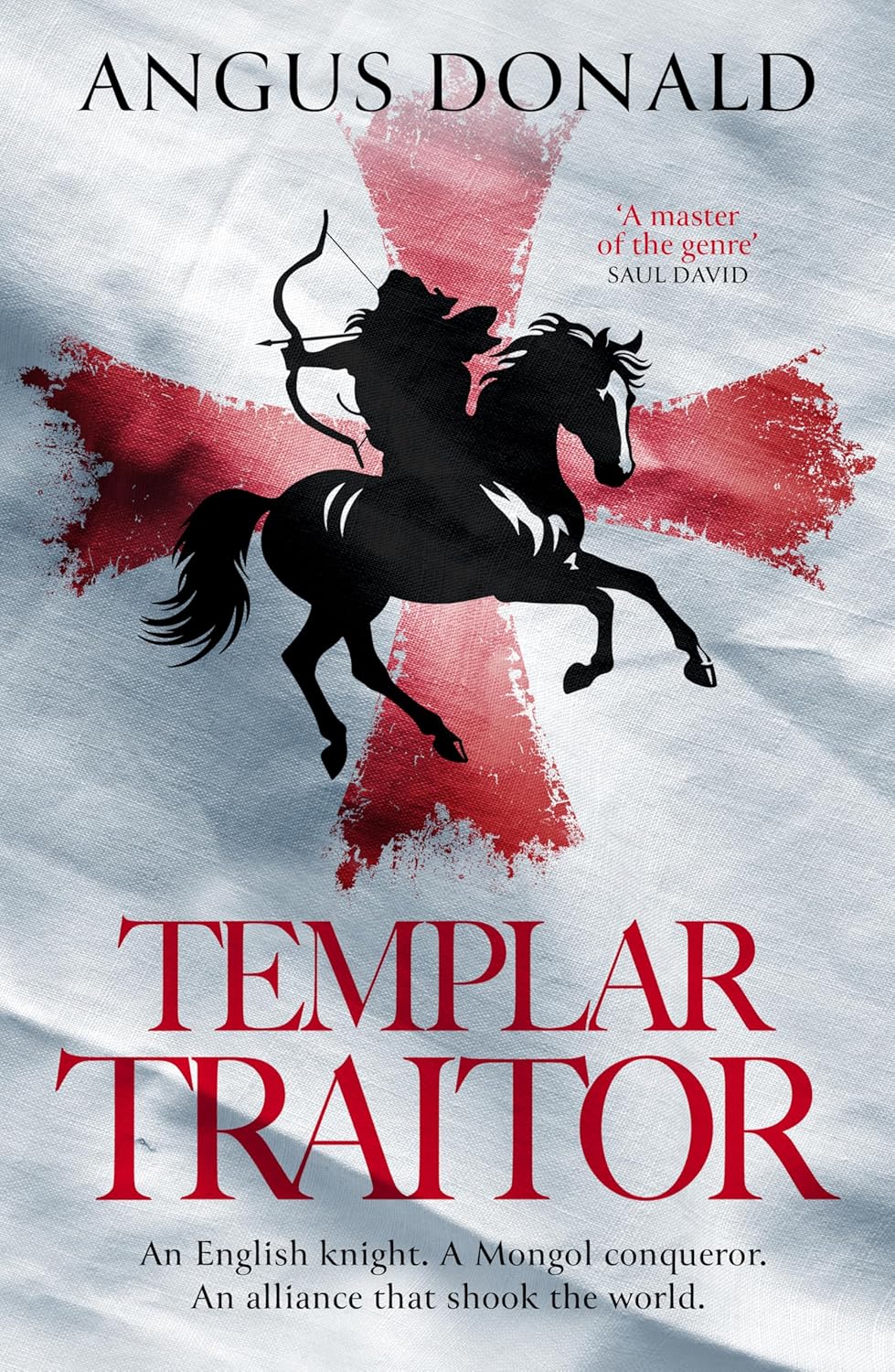
Templar Traitor by Angus Donald

Publisher: Canelo Adventures (ebook – 28 August 2025)

Series: The Mongol Knight – Book One

Length: 411 pages

My Rating: 4.5 out of 5 stars

Amazon

Those in the mood for an awesome and intense adventure should check out the soon-to-be-released historical fiction novel from Angus Donald, Templar Traitor, an outstanding book that I had a brilliant time getting through.

I have mentioned several times on my blog that my experiences with reviewing started with historical fiction, which was the main genre that I read for several years.  While I have progressed to a range of other genres since then, historical fiction still holds a very special place in my heart, and I always love to dive back into time and read a great adventure or moving tale set in our collective past.  One of the more enticing recent examples was Templar Traitor by Angus Donald.  Featuring a cool plot about an English knight fighting alongside the Mongolian horde, Templar Traitor is the first book in Donald’s The Mongol Knight series, which I really liked the sound of.  It helped that Donald is an author I have an interesting history with, as his early novel, Outlaw, was one of the first books that I reviewed professionally, and I was very keen to see how he had progressed as a writer since then.

Plot Synopsis:

“Do not lie to me, Templar, or it will be the last thing you do.”

July 1241. Christendom cowers in terror before the threat of a Mongol invasion. The swift-moving, invincible cavalry of Genghis Khan has smashed the proud, steel-clad knights of Russia, Poland and Hungary – and now Austria lies directly in their path.

At a skirmish outside the walls of Vienna, German knights capture a squad of Mongol scouts, and are astonished to discover one of their number is an Englishman – a Templar knight – who has been riding with these Devil’s horsemen for more than twenty years.

Interrogator Father Ivo of Narbonne is summoned to Vienna Castle to draw the truth from the imprisoned Englishman before his impending trial, to find out why he abandoned his Faith, his Brethren and his homeland to become… a traitor to Christendom.

This was a very impressive novel from Donald that nicely sets up a cool new historical fiction series, while also containing an intense and exciting story.  Loaded with action, adventure and some fascinating historical elements, Templar Traitor was an excellent read that I’m very glad I got to check out early.

Donald pulled together a very interesting story for Templar Traitor that cleverly makes use of a real recorded historical event and expands on it to create an elaborate tale of adventure, war and survival from the perspective of an initially eager young knight.  The framing device of the novel starts in Austria in 1241, with the capture of protagonist Robert of Hadlow, a knight from England who rides with the Mongols during their invasion of Europe.  From there, the captured Robert gives testimony to a priest with his own agendas, who is shocked to discover that Robert is a former Templar Knight who had journeyed to Mongol lands many years earlier.  From there the story dives back in time and chronicle of Robert’s life, following him as a young man ejected from Templars two decades earlier to becoming a wandering merchant travelling across Europe, before he is given the unique opportunity to try and establish an exclusive trade deal with Genghis Khan. This first part of the book was a very compelling introduction to the story, and it sets up the early story of the protagonist nicely, including his pressing reasons to undertake such a task, while also providing some fascinating historical contexts of the regions that the protagonist initially journeyed through.

From there Templar Traitor takes on a much more action-oriented edge, as Robert and his lone companion journey deep into Persia and beyond to find the Mongols, while pursued by rival European faction who seeks to secure trade for their own masters.  This resulted in some fast-paced and frenetic sequences, and the protagonist is soon dropped in amongst the Mongols, trying to find a way earn their favour.  Soon accepted as an envoy, Robert finds his place within the Khan’s army and witnesses their culture, people as well as their devastating war against the Khwarazmian Empire of Persia.  To gain Genghis Khan’s favour, Robert finds himself serving as a key figure in the invasion, which allows for multiple battle sequences, as the protagonist finds himself thrust into the centre of the war.  This resulted in a very rich and compelling historical novel, and it was fascinating to see some of Genghis Khan’s most famous battles through the lens of a western outsider.  Donald adds in a rather good twist near the end of the novel that completely alters your entire perspective of the events of Templar Traitor, while also setting up some very interesting storylines going forward.  This ended up being quite a fantastic overall story, and I appreciated how it contained a great, self-contained plot, while also working well as the first entry in a larger series.

Templar Traitor was a very strong historical fiction novel from Donald, and I really appreciated the layered book that emerged.  The use of an older, imprisoned protagonist giving his confession as a framing device for the main plot worked extremely well, especially as the experiences of the older Robert of Hadlow impact his narrative of the past.  The elaborate narrative of adventure and exploration allows Donald to really flex his historical writing ability, and he does an exceptional job exploring and showcasing the landscapes and cultures that his protagonist journeys through.  However, his best writing is saved for exploring the Mongolian armies of Genghis Khan, whom the protagonist spends more than half the book riding with.  Donald did an outstanding job diving into the complex culture and society of the Mongols throughout Templar Traitor, and the novel is loaded with compelling details and vivid descriptions.  This was further enhanced through the author’s decision to frame these descriptions through the eyes of an outsider, and it allows for some very complex scenes of misunderstanding and cultural exchange.

Naturally, much of this examination of Mongolian culture is focused on their military exploits (the protagonist did join a war camp), and you get a very detailed examination of their invasion of Persia.  The intense and bloody battle scenes are a true highlight of Templar Traitor, and you can easily imagine yourself riding amongst the Mongols as they fight through Asia, Europe and the Middle East.  I felt that Donald did an outstanding job of covering the history around this war, and it was an excellent choice to have the protagonist join the Mongols at the height of their power, rather than at the beginning of Genghis Khan’s rule.  I also enjoyed the fact that the scenes between the protagonist and his interrogator in 1241 were based on real events and Donald does an excellent job exploring a figure caught between his Christian upbringings in Europe, and his experiences living with his Mongol comrades.  The compelling narrative about the protagonist’s motivations for journeying into the East, as well as the hidden secrets beneath his main story, was featured extremely well, and I loved the complex layers that emerged around Robert.  This was a really impressive piece of historical fiction, and I really appreciated the skilled way that Donald set out his excellent story.

Overall, Templar Traitor was a great new novel from Angus Donald that is guaranteed to appeal to all historical fiction fans.  Expertly blending intense action with some great characters and a deeply intriguing historical period, Templar Traitor was a joy to read, and I look forward to continuing The Mongol Knight series in the future.

Amazon

Quick Review – The Hidden Book by Kirsty Manning

The Hidden Book Cover

Publisher: Allen & Unwin (Trade Paperback – 29 August 2023)

Series: Standalone

Length: 312 pages

My Rating: 3.75 out of 5

Amazon

Australian author Kirsty Manning presents an emotionally charged and compelling historical drama that follows a beleaguered group of protagonists during and after the horrors of World War II with The Hidden Book.

Plot Synopsis:

Europe, 1940

 Imprisoned in the Mauthausen concentration camp in Austria, Spanish fighter and photographer Mateo Baca is ordered to process images of the camp and inmates for a handful of photo books being made for presentation to top Nazi figures. Just five books in total, or so the officials think …

Mateo manages to make a secret sixth book and, with the help of a local woman, Lena Lang, it remains hidden until the end of the war.

Australia, present

 When thirteen-year-old Hannah Campbell’s Yugoslavian grandfather, Nico Antonov, arrives in Australia to visit his family, one of the gifts he brings with him is an intriguing-looking parcel wrapped in calico cloth which Roza, Hannah’s mother, quickly hides.

Later, Hannah sneaks off in search for the mysterious package. She is horrified to find in it a photo book full of ghastly historical photographs of a terrible place full of people suffering.

At first Hannah has little context for what she sees, but over the years as she experiences love, grief and trauma, she understands what these photos came to mean, for herself, her freedom and for those who risked their lives to ‘bear witness’ to history.

A startling story of clandestine courage and treachery in World War Two, and how we must meet and overcome our pasts to move into our futures.

This was a great piece of historical fiction from Manning, who has written several other intriguing novels in this genre over the years.  The plot of The Hidden Book is interesting as it combines a harrowing story of people caught up in the Holocaust with a complex narrative of a young person trying to understand the horrors they came from.  Half the novel follows several characters either imprisoned at the Mauthausen concentration camp, or living in the surrounding area, as they work together to record and smuggle out pictures of the atrocities being perpetrated against them.  The second storyline follows Hannah, the grandchild of one of the characters from the first storyline, who grows up in Australia, constantly wondering about the secrets of her grandfather’s book of pictures, and who finds her life defined by it.

Both of these storylines are interesting in their own way, and I think that Manning did a pretty good job of bringing them together into a fantastic overall story.  The half of the book, set in Mauthausen, is suitably dark and nerve-wracking, as you are constantly bombarded by the fear and determination of the characters imprisoned there in one shape or another.  This part of the book is an interesting retelling of real historical events surrounding Mauthausen, and Manning brings together a great group of characters here, including a sadistic camp commandant and a family of anti-Nazi locals who are afraid the Nazis will find out about their mentally impaired daughter.  This compelling and dark storyline serves as an excellent basis for much of The Hidden Book’s plot, and it leads into the second plot line extremely well.

This secondary plotline involves the character of Hannah Campbell finding her grandfather’s photo album covering the atrocities at Mauthausen and spending the rest of her life trying to make sense of them.  While I am not the biggest fan of historical dramas that rely on descendants finding old material from their ancestors (it is a bit of an overused story device), Manning presented some interesting storylines around it.  In particular, she uses it as a key part of Hannah’s coming-of-age storyline, as she experiences the highs and lows of life from childhood to parenthood.  Manning tells a great story of growing up in Australia, including country living and city life, and while parts of this storyline is are very frustrating, and it serves as an interesting counterbalance to the Holocaust tale while also providing insights into how the younger generations view the Holocaust and how knowing your history and change your present.

I enjoyed how well these two separate and distinctive storylines come together throughout the course of The Hidden Book.  The intensity, conflict and drive for survival in the historical part of the novel is well offset by a different layer of emotion in Hannah’s life story, and I liked the constant looks back to the past.  This proved to be a fast-paced and easy to read novel, and I liked the blend of characters, historical elements and two very different background settings that emerged.  Despite all that, I didn’t get amazingly emotionally invested in the plot, and I think parts of Hannah’s storyline slowed down the pacing at times.  Overall, I thought that The Hidden Book by Kirsty Manning was an intense and compelling read that I had good time with.  An excellent read for fans of historical drama, especially those that combine dark pasts and hopeful futures into powerful character driven narratives.

Amazon

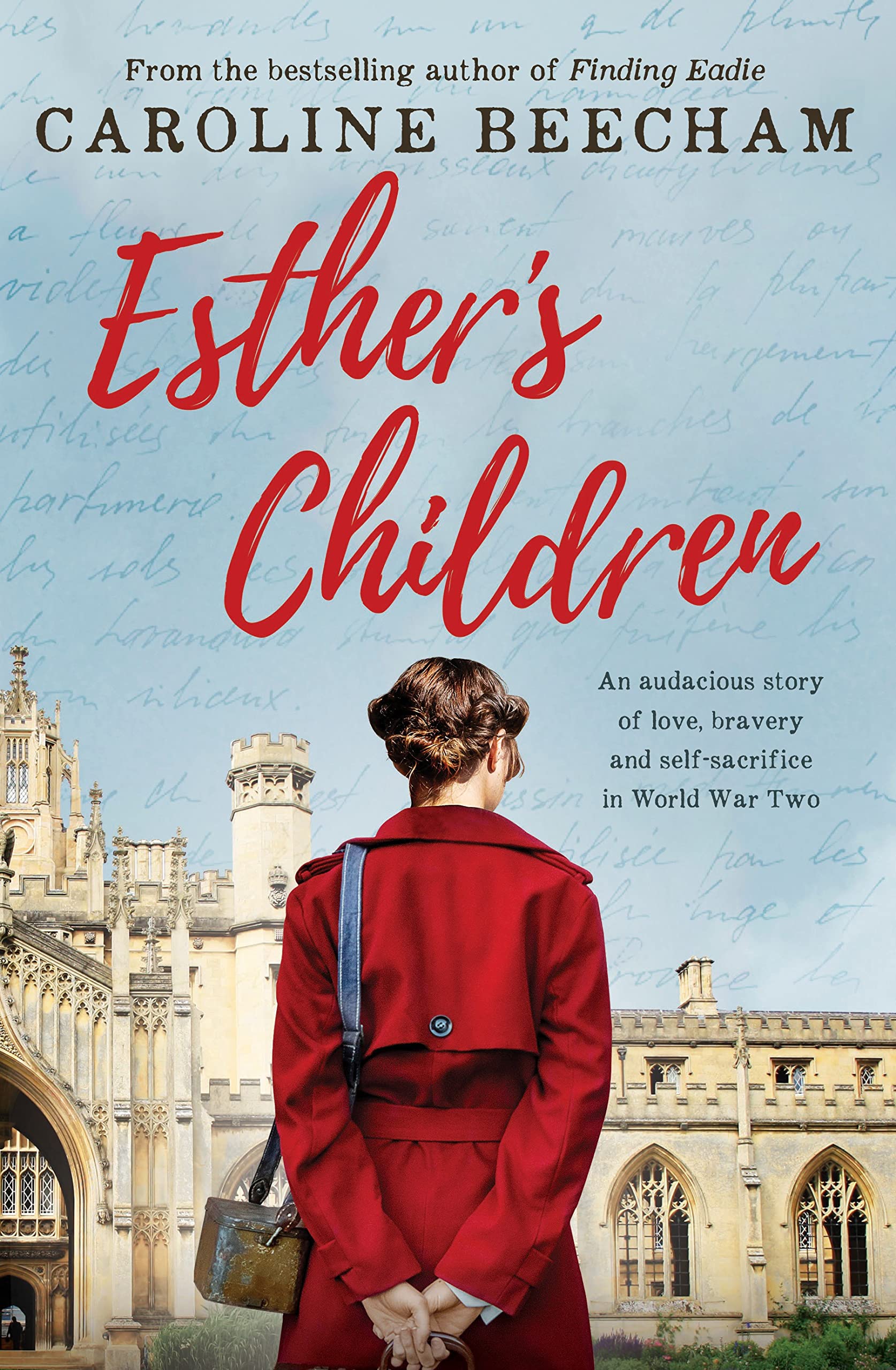
Quick Review – Esther’s Children by Caroline Beecham

Esther's Children Cover

Publisher: Allen & Unwin Australia (Trade Paperback – 3 May 2022)

Series: Standalone

Length: 361 pages

My Rating: 4.25 out of 5 stars

Amazon     Book Depository

Prepare to read about one of the more unique experiences of World War II with an excellent and moving historical drama, Esther’s Children by fantastic Australian author Caroline Beecham.

Plot Synopsis:

Inspired by the extraordinary life of Esther Simpson, Esther’s Children is a powerful novel of love and courage.

Austria, 1936: Esther ‘Tess’ Simpson works for a British organisation that rescues academics from the cruel Fascist and anti-Semitic regimes taking hold in Europe. On a dangerous trip to Vienna to help bring aid to Europe’s threatened Jewish scholars, Esther meets Harry Singer, a young Jewish academic and musician.

Tess works tirelessly to rescue at-risk academics and scientists from across Europe, trying to find positions for them in Britain and America. In 1938, she secures employment for Harry at Imperial College, London, their love affair intensifying as the world heads into war, yet they are separated once again as Britain moves to intern European refugees.

With Harry detained on the Isle of Man while still waiting for news of his parents, Esther and the Society plead with the government for the interned scientists’ release. When Harry is eventually liberated, his future with Esther is by no means secure as he faces an impossible choice.

Confronting the horrific dangers of World War Two with remarkable integrity and bravery, Esther Simpson is revealed as an exceptional heroine.

This was a rather great read from Caroline Beecham, who once again plumbs the highs and lows of history’s greatest struggle to produce an excellent read.  Beecham, who has written several other intriguing historical dramas, including 2020’s Finding Eadie, is a talented Australian author whose novels usually feature an intriguing hook around World War II.  Her latest novel, Esther’s Children, is probably my favourite one of her books so far, and tells another powerful and intense story about love, survival, and the evils committed during war time.

In Esther’s Children, Beecham has written a particularly clever and compelling story that follows the life of real historical figure Esther Simpson.  Adding in some fictional and dramatic details, Esther’s Children turns into a multi-year tale that showcases Esther’s work as she attempts to rescue academics from Nazi controlled countries in the lead-up to the war and beyond.  In particular, it follows her interactions with fictional character/love interest Harry Singer, as she attempts to get him out of Vienna and into England.  This forms the basis for an intense and heartbreaking story as these two ill-fated lovers are forced to ] contend with the obstacles placed before them, including the encroaching war, the machinations of the Nazis, the bureaucracy surrounding asylum seekers coming to England, and subsequent prejudice faced even after Harry has reached safety.  Told using a split perspective between Esther and Harry, you get an intense inside look at both characters as they attempt to overcome the odds keeping them apart, while also experiencing some of the horrors brought on by the Nazis and others, with the reader hit by constant frustration at everything that happens to these characters.  This entire story moves at a brisk and intense pace, and you will be swiftly drawn into the clever and touching narrative that is driven by these two characters’ experiences.  The way everything turns out is both poignant and heartbreaking, and I felt that this was a great and captivating read.

Esther’s Children’s dramatic story is greatly enhanced by the captivating and fascinating historical details that Beecham has set it around.  The author has clearly done a ton of research to pull her story together, and I was very impressed with some of the unique elements it contains.  Not only do you have some fantastic, if very disturbing, depictions of the Nazi movement taking over Austria, but the story goes out of its way to highlight the work done to get certain (primarily Jewish) academics out of Europe.  Focusing on the work of Esther Simpson, a unique figure from history who I was pleased to learn a lot about in this novel, you see the Society for the Protection of Science and Learning attempt to help these academics emigrate and find them jobs in England’s educational and government settings.  This novel really focuses on the impact that Esther had for many famous academics (her children, many of whom appear in the plot) and I found it fascinating to learn about her work and the people she helped.

However, I personally thought that the most fascinating historical aspect of this book was the subsequent imprisonment of these scholars and scientists by the English once the war broke out.  I must admit that I was unaware of just how widespread and unfair the interment of German nationals in England was during the war, and I was very surprised to find out that so many refugees and fleeing Jews were also incarcerated in places like the Isle of Man, often alongside Nazi sympathisers.  Shown directly through the eyes of one of her protagonists, Beecham paints a pretty grim picture of the terrible life that these incarcerated people would have experienced, and it was pretty heartbreaking to see all these people who had already lost everything get locked up by the country they were trying to help.  I really appreciated the powerful emotional weight that the author loaded into all the historical scenes, and they really work to expand on the dramatic and romance elements of the entire novel.  I cannot wait to see what unique historical element Beecham will explore in her future novels, but I am sure it will be fascinating.

Overall, Esther’s Children is a particularly powerful and captivating read that really highlights Caroline Beecham’s great skill as a historical drama author.  Expertly combining intriguing and dark elements of history with a dramatic tale of love, loss and regret, Esther’s Children becomes harder and harder to put down as the story progresses and you are drawn into the character driven narrative.  An excellent historical drama that is really worth checking out.

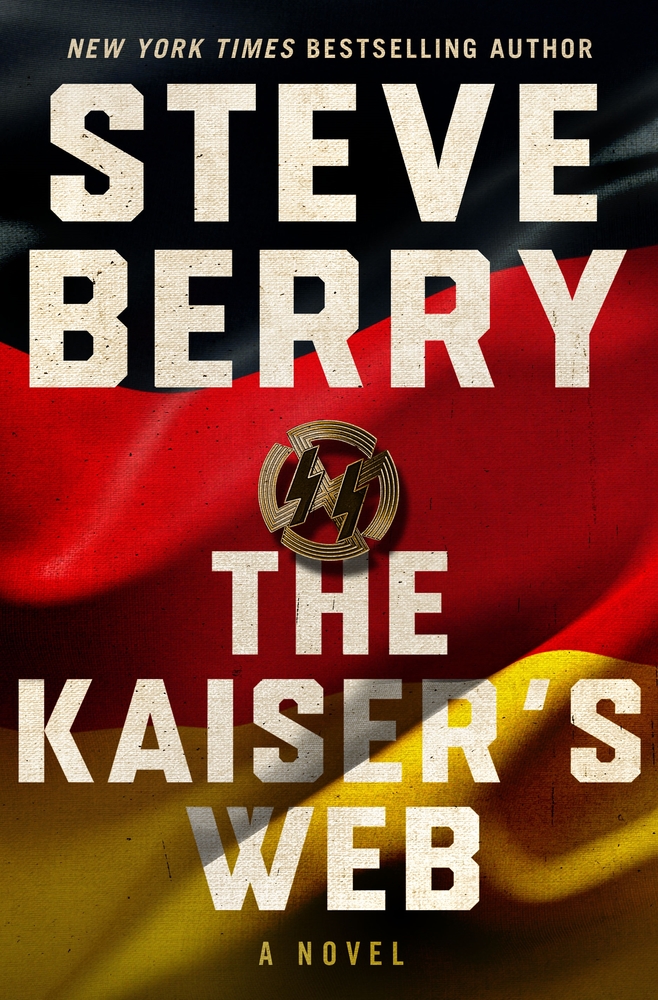
The Kaiser’s Web by Steve Berry

The Kaiser's Web Cover

Publisher: Hodder & Stoughton/Macmillan Audio (Audiobook – 23 February 2021)

Series: Cotton Malone – Book 16

Length: 14 hours and 32 minutes

My Rating: 4.5 out of 5 stars

Amazon

The always impressive Steve Berry returns with another amazing great historical conspiracy thriller, The Kaiser’s Web, which sees his long running protagonist Cotton Malone investigate secrets left over from World War II.

Germany is in the midst of a ferocious electoral battle as two very different candidates vie to become chancellor.  One is the incumbent chancellor, a long-term public servant who believes in the goodness of her fellow Germans, while her opponent is a far-right populist, stoking the flames of nationalistic hatred and resentment to gain his power.  Both have their own vision for the future, but the key to this election may lie in the past, specifically, to what really happened on 30 April 1945, the day that Hitler and Eva Braun supposedly died in their bunker underneath Berlin. 

When a series of mysterious documents hinting at secrets from her opponent’s past are delivered to the German chancellor, she turns to her long-time friend, former United States President Danny Daniels for help.  Determined to keep Germany from going to the far-right, Daniels calls on the services of former American intelligent agent, Cotton Malone, and his girlfriend, the resourceful Cassiopeia Vitt.  Together, Malone and Vitt follow the trail left in the documents to Chile, where they uncover a dangerous web of deceit and hidden Nazi money, seemingly created by Hitler’s closest confidant and personal secretary, Martin Bormann.

When evidence suggests that Bormann, who everyone believes died in the last days of the war, may have actually survived and fled to South America with billions in stolen wealth, Malone and Vitt are shocked.  However, they soon discover that not everything is as it seems, and that someone has woven a dangerous trap around them, one that could tip the election in the far-right’s favour.  In order to save Germany from itself, Malone and Vitt must unravel the entire truth behind the conspiracy known as the Kaiser’s Web before it is too late.  But what impact can secrets from over 70 years ago have on present day Germany, and how far are people willing to go to protect them?  The truth about Hitler, Braun and Bormann will shock the world, and not even the legendary Cotton Malone will be prepared for the consequences.

Berry has been writing exciting and clever thrillers for nearly 20 years, ever since his 2003 debut, The Amber Room.  While he has written several standalone novels, Berry is best known for his Cotton Malone books, which started in 2006 with The Templar Legacy, and The Kaiser’s Web is the 16th entry.  I only started getting into the Cotton Malone series a few years ago when, on a whim, I decided to try the 14th book in the series, The Malta Exchange.  I ended up really enjoying the amazing story contained within The Malta Exchange, which combined together historical tales of Malta, the Knights Hospitaller and the Vatican, to create an impressive and addictive read.  I was also lucky enough to receive a copy of the 15th book in the series, The Warsaw Protocol, last year, which turned out to be another awesome read that dived deep into the heart of Poland’s history and politics.  Both books were really intriguing reads and I am now quite determined to check out any and all new Cotton Malone novels that come out.  I was particularly interested when I saw the synopsis for The Kaiser’s Web last year and I have been looking forward to reading it ever since.  I am extremely glad that I did, as Berry has once again produced a fantastic and captivating thriller that not only weaves a unique fictional historical conspiracy into an excellent and highly enjoyable story, but which also allows new readers to dive in and readily enjoy. 

For his latest novel, Berry has come up with another cool and impressive story that combines an investigation into historical secrets with an intense and dramatic thriller.  Told from the perspective of all the various players in the book, The Kaiser’s Web’s narrative starts off quickly when a mystery with world-altering implications is presented to the protagonists, forcing them to explore the final days of the Nazi regime and travel all over the world to find the answers.  While it initially seems like the protagonists are caught up in an elaborate and dangerous trap, the narrative quickly takes a turn when a third party intervenes, disrupting the entire plot and leaving everything, including the protagonist’s success or failure, up to chance.  There are so many amazing elements to this story and I loved the way that the author works his altered historical details into a high takes, thrilling narrative, with the secrets of the past very much having an impact of key events from the future.  Like several of Berry’s previous novels, The Kaiser’s Web has a lot less action in it than most thrillers do; instead most of the narrative is filled with talking, historical flashbacks and character building, which I personally really liked and which give this book a much more distinctive feel than some other examples of this genre.  That being said, there are several great, fast-paced action scenes in this book, which, when combined with the clever historical elements and investigation, resulting a thrilling and powerful novel.  I also liked how The Kaiser’s Web has much more a political thriller vibe to it than some of the previous Cotton Malone novels I have enjoyed, with the result of the protagonist’s investigation having severe impacts on the fate of Germany’s election, and indeed Berry works several different stages of the opponent’s campaign into the overarching story, showing how close the election is.  All of this comes together into one big and captivating conclusion, and while I was able to predict a couple of the big twists, including a particularly major reveal, Berry still surprised me in places, and I had an outstanding time getting through this awesome story.

To really flesh out The Kaiser’s Web’s narrative, Berry dives deep into the heart and soul of the country of Germany and its people to set up the story’s central conspiracy and explain its significance.  This includes a really intriguing examination of Germany’s history, both during the war and in the post-war period, and readers get a comprehensive understanding about what happened in Hitler’s bunker, and how history has recorded or, in many cases, failed to properly record these events.  Berry also features a really in-depth examination of some key Nazi figures, including Martin Bormann and Eva Braun, showcasing their psyches and personalities, as well as exploring their role in the war, the major policies that Bormann enacted and their significance to people like Hitler.  There is also an intriguing exploration around their recorded deaths, and the historical inaccuracies about them become a key part of the plot.  There is also a compelling look at what happened to former Nazis post World War II, both in Germany and outside of it.  In particular, the story traces the routes and hideouts that several former Nazis had in South American countries, and it was fascinating to see some of the real-life examples of fleeing Nazis that are repurposed for this narrative.  All of these historical aspects are very interesting, and I love the unique and clever story that Berry was able to create using them.

In addition to Germany’s wartime history, Berry also examines the current political and social climate of Germany, which becomes a significant part of the book’s plot.  Berry really attempts to explore a lot of the current attitudes that the modern German people have, especially as certain resentments, forced political concessions and other factors have seen a re-emergence of the far-right in Germany (and other European countries), and the election featured within the book becomes a real battle for the soul of the country.  The author has obviously spent a lot of time researching current German moods and political preferences, and this proves to be a powerful and compelling heart to the novel, especially as he really does not have to exaggerate some of the problems that new hard-right organisations in Germany are causing.  Berry does a fantastic job not only exploring the roots of a lot of these problems, many of which date back all the way to the war, but also working it into his clever thriller story, resulting in an amazingly powerful narrative that, thanks to these real-world issues, really drags you in.

One of the things that I always like about the Cotton Malone novels are the awesome depictions of the different countries and landscapes that form the backdrop for the impressive narrative.  It is obvious that the author has a real passion for travel and new landscapes, and this really flows through into his writing as Berry spends a lot of time describing all the key features and locations his characters see, both man-made and natural, in exquisite detail.  These depictions are so detailed and compelling that the reader can often believe they are standing next to the characters enjoying the view.  The Kaiser’s Web is no exception to this as the author once again details several amazing places that form the backdrop to the complex story.  As a result, the reader gets to experience some really cool locations, including several provinces of Germany, parts of Chile, brief looks at countries like Switzerland, Belarus and Austria, and an expanded exploration of the Free State in South Africa.  In each of these locations, Berry provides the reader with fantastic details about the landscape, the people, local industries and politics, as well as some fun snippets of history, most of which relate to the post-war period.  This becomes an extremely fascinating part of the book, especially as Berry’s enthusiasm for different horizons is quite infectious, and I had a great time exploring these new locations.  I cannot wait to see where the next Cotton Malone novel is set, as the author is bound to feature some new and intriguing places.

I have to say that I also really enjoyed some of the new characters featured within The Kaiser’s Web.  This was a pretty good book for characters, as Berry continues to not only showcase his long-running protagonist Cotton Malone but also reintroduces two characters who were somewhat underutilised in the previous book.  Cotton, who is something of a nexus for historical conspiracies, has another great adventure in this novel, and I loved seeing this ageing former agent turned rare book dealer get into all manner of trouble as he attempts to find the truth.  Despite being the nominal main character of this novel, I did think that Cotton was slightly pushed into the background of the story, mainly because several of the other characters were very heavily featured.  Part of this is because Cotton spends the entire novel teaming up with his love interest Cassiopeia Vitt.  Due to the fact that I have only read a couple of Cotton Malone novels, this was the first time I have seen the character of Cassiopeia in action, and I quite enjoyed her as a character.  Cassiopeia, who is also the focus of several Berry’s short stories and novellas, is another great character to follow and it was interesting to see her counterpoint to Cotton’s perspectives.  Cotton and Cassiopeia form a fantastic team in this book and I enjoyed seeing them work together and support each other in various ways.  Aside from Cotton and Cassiopeia, it was also great to see more of former US President Danny Daniels, who becomes a key part of the story.  I loved the idea of a popular former President running important international espionage missions after his retirement (could you imagine Obama doing something like that? That sounds pretty awesome), and he serves as a great supporting character getting Cotton and Cassiopeia involved in the story.

While the returning characters are good, my favourite point-of-view characters had to be Marie Eisenhuth, the current German chancellor who finds herself caught in the middle of dangerous events, and her main opponent in the upcoming election, Theodor Pohl, the book’s primary antagonist.  These two characters represent the very different ends of the German political spectrum, with Eisenhuth a pro-immigration and anti-Nazi politician, while Pohl is a far-right figure who is attempting to utilise the conservative populations to introduce damaging nationalistic policies.  Both Eisenhuth and Pohl get a substantial amount of focus in this book and it proved extremely fascinating to see them throughout the novel, especially as their electoral campaign plays out like a battle for the soul of Germany.  It was also great to see Pohl’s perspectives, especially when he is manipulating people or reacting to the actions of Cotton and his friends and is forced to put more deadly plans into play.  While The Kaiser’s Web initially focuses on their political differences, the novel soon examines various parts of both characters’ lives, pasts and families, which proves to be deeply compelling and interesting.  I love the cool reveals behind these characters, and their storylines reveal a very intriguing case of nature versus nature.  I think both characters had exceptional story arcs throughout this book and their storylines ended up being an outstanding part of The Kaiser’s Web.

I ended up listening to The Kaiser’s Web on audiobook, mainly because I have found that Berry’s awesome historically based conspiracies translate across to the audiobook format extremely well and I end up following all the cool detail and inclusions a lot more.  With a run time of 14 hours and 32 minutes, this is a fairly decent sized audiobook, but listeners should generally be able to power through it rather easily, especially once the cool conspiracy really hits its height.  I also really enjoyed the awesome narration of Scott Brick, who does an exceptional job with this latest Cotton Malone book.  Brick is a well-established narrator who has contributed his voice to an amazing number of audiobooks, including all the previous entries in the Cotton Malone series, as well as the fantastic Orphan X series (for example, he did a great job narrating Into the Fire and Prodigal Son).  I particularly enjoyed Brick’s amazing voice work in The Kaiser’s Web, mainly because he got an opportunity to show off the wide range of accents he could do.  Not only does he pull off a range of German accents for the various German characters, but he also does some amazing South American accents and some extremely authentic South African accents.  The South African accent, which is a really hard one to pull off (so many narrators and voice actors try and fail to do it properly, often coming off as Australian), was really good in this book, and I am really impressed by Brick’s skill.  At the same time, Brick’s general narration voice fit the intense tone of The Kaiser’s Web extremely well, and I thought that he moved this dense and complex story along at a decent pace, ensuring that the listener’s attention was constantly drawn in.  As a result, I had an exceptional time listening to this audiobook and this is easily my preferred format to enjoy Berry’s Cotton Malone novels with.

The Kaiser’s Web is another outstanding novel from Steve Berry, who has once again produced a captivating and clever historical conspiracy thriller.  Featuring a unique tale, intriguing dives into several countries and some fantastic characters, The Kaiser’s Web is a must-read for thriller fans and comes highly recommended.  I personally loved untangling all the threads in this cool thriller and I cannot wait to see what Berry comes up with next.

Amazon