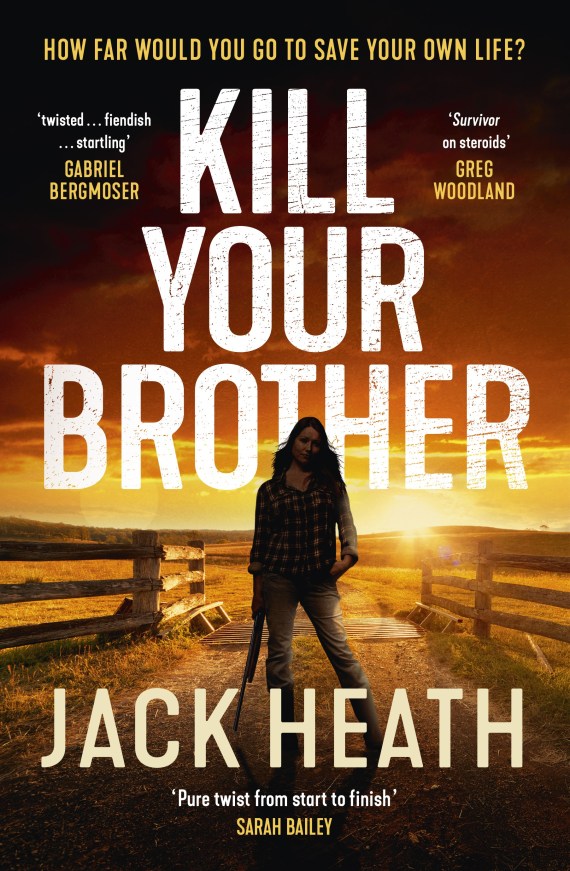
Kill Your Brother by Jack Heath

Kill Your Brother Cover

Publisher: Allen & Unwin Australia (Trade Paperback – 30 November 2021)

Series: Standalone

Length: 339 pages

My Rating: 5 out of 5 stars

Amazon     Book Depository

One of Australia’s most brilliant and potentially psychotic crime fiction authors, Jack Heath, returns with a powerful and captivating thriller, Kill Your Brother, which was one of the best pieces of Australian fiction I read all year.

Would you kill your brother to save your own life?

That is the question that Elise Glyk is forced to ask herself after being placed in an impossible situation.  Elise, a disgraced athlete hated by the entire country, is a woman on a mission.  Her brother, Callum, a popular local teacher, has been missing for a month, and the police have been unable and unwilling to find him.  Determined to locate Callum, Elise’s investigation eventually leads her to a dilapidated local farm, where she is shocked to discover her brother being held prisoner in a modified septic tank.  However, before she can rescue him, Elise is captured and thrown into the same hole as her brother.

Their captor is heartbroken former sheep farmer Stephanie Hartnell, who believes that Callum is responsible for her daughter’s death and has been attempting to force him to confess to his supposed crimes.  However, Stephanie doesn’t have room for two prisoners, and while she doesn’t want to hurt the innocent Elise, she needs to make sure that she won’t immediately go to the police.  To that end, she offers Elise a deal: kill your brother and you’re free to go.

Not even considering the deal, Elise attempts to find another way to gain their freedom.  Trying to find a way to escape while also working to prove Callum’s innocence to Stephanie, Elise hopes that someone will eventually be able to find them before time runs out.  However, the more Elise digs into her brother’s story, the more inconsistencies she discovers.  What is her brother really hiding, and how will either sibling react when the truth comes out?

Kill Your Brother was an awesome and impressive novel that I powered through in a couple of days due to its incredible narrative and amazing twists.  This was a great standalone book from Jack Heath, an author from my home city of Canberra, who has written some fantastic thrillers over the years.  This includes his bestselling Timothy Blake series, the third book of which, Hideout, was one of my favourite pieces of Australian fiction in 2020Kill Your Brother was originally released as an Audible original audiobook, with the paperback version I read subsequently rewritten and adapted into a novel format.  I had an outstanding time reading this book, and it was an excellent and impressive Australian thriller.

This book has an incredible story that takes the reader on a powerful thrill ride that they cannot get off if they tried.  Told using several character perspectives, Kill Your Brother quickly launches into the book’s deadly and compelling scenario, with Elise, a universally hated woman, attempting to find her brother.  Her hunt, which has been going on for months, has been largely unsuccessful, and the evidence found at her brother house’s, combined with her own reputation, means that everyone in her life constantly brushes her off.  However, Elise’s perseverance pays off when she finds Callum being held in a septic tank in Stephanie Hartnell’s backyard.  Posing as a private investigator, Elise tries to reason with Stephanie while plotting an escape, but she is soon forced into the ultimate no-win situation when given the option to kill her brother.  From there, the story devolves even further, with several escape attempts and mounting danger from their captor, and the two siblings turning against each other as their situation gets more desperate.  As the story progresses, several viewpoints on the situation and the events leading up to it are presented.  As the protagonist attempts to survive you get an interesting view of what Callum is accused of, and the eventual reveal of the full picture really influences the rest of the narrative.  This all leads up to the gripping and deadly finale in which every secret comes out and no-one is left untouched by the revelations and accompanying violence.

I really cannot exaggerate how awesome this cool narrative is.  Heath has gone out of his way to make Kill Your Brother’s story as clever and thrilling as possible, and I loved every single second that I spent reading it.  This book is filled with some brilliant twists and reveals, and Heath does a wonderful job of setting each of them up and slowly revealing them as the book progresses.  I honestly did not see half the twists coming and I loved how several small and seemingly inconsequential details eventually come back with amazing significance towards the end.  Heath also perfectly utilises a series of flashbacks that examine Elise’s past, showing why she is so disliked, while also revealing several clues about her family and the circumstances that lead to her brother’s imprisonment.  This was a really good standalone read, and potential readers are guaranteed a satisfying ending after getting stuck into the unique mystery and scenario.  I deeply enjoyed how this novel flowed, and there were no obvious issues with this being an adaption of an audiobook novella.  The impressive combination of character history, twisty writing and fast-paced storytelling ensured that I was deeply addicted within a few pages of starting.

One of the things that I must highlight is the fantastic central protagonist, Elise.  Elise is a brilliantly complex and sympathetic figure due to her complicated and tragic past, which has led to her current ostracism from her community and the hatred of the entirety of Australia.  I really enjoyed the impressive and complex backstory that surrounds this interesting and unique protagonist, especially as Heath did a great job of gradually introducing the full character history as the book progressed.  The whole angle is perfectly portrayed, including her motivations and the distinctly unfortunate events surrounding her disgrace, as well as the predicted reaction of the ordinary Australian sports fans.  This compelling and damaging backstory gives her quite an interesting insight and set of emotions regarding the events around her, as well as some intense determination to survive no matter the odds.  This helps produce a really fascinating character driven narrative, and I deeply enjoyed seeing the captivating and emotionally rich development that surrounded this brilliant protagonist.

I also deeply appreciated the way that Heath captured the feel of small-town Australia in his writing.  Most of the story is set in the fictional town of Warrigal, which draws a lot of inspiration from the small rural settlements throughout Australia, such as Braidwood, where Heath apparently wrote a good portion of this novel.  I really think that Heath did an amazing job of portraying the attitudes and mindsets of people in these sorts of locations, and you get an impressive sense of the location.  Watching the protagonist attempt to deal with the challenges of being the biggest pariah in her small town is pretty fascinating, and it was also compelling to see some of the limitations of a police investigation in this location, especially when it comes to locating a missing teacher.  The impacts of growing up in such a location also become a major part of the protagonist’s backstory, especially as the pressures of succeeding and representing her family and town drive her to make some mistakes.  I also must highlight the tiny pit that the protagonist and her brother find themselves held captive in.  Heath ensures that the reader gets the full sense of claustrophobia and the feeling of being trapped as the book progresses, especially once the characters become weaker and start turning on each other.  This intense and claustrophobic setting really helps to amp up the tension, and you will feel very uncomfortable during the scenes set down there.  Finally, I had a lot of fun with the author’s occasional visits to Canberra throughout the book, mainly because it was interesting to see the author’s take on my home city.  Overall, these settings are perfectly portrayed and the reader gets a real sense of them, especially the small-town lifestyles.  These work in the narrative extremely well, and it was a lot of fun to see the various characters’ experiences and impressions of them.

Kill Your Brother was an exceptional read from Jack Heath, who is quickly becoming one of Australia’s most impressive thriller writers.  This brilliant, dark and exceedingly clever thriller takes the reader on an incredible ride, and I loved seeing all the unique and captivating twists and turns that Heath came up with.  Focused around an amazingly complex protagonist and making full use of the rural Australian landscape, Kill Your Brother’s story is just incredible, and I am still reeling about some of the twists it contains.  This is a highly recommended read that gets a well-deserved five-star rating from me.  I am extremely excited to see what Heath writes next.

Amazon     Book Depository

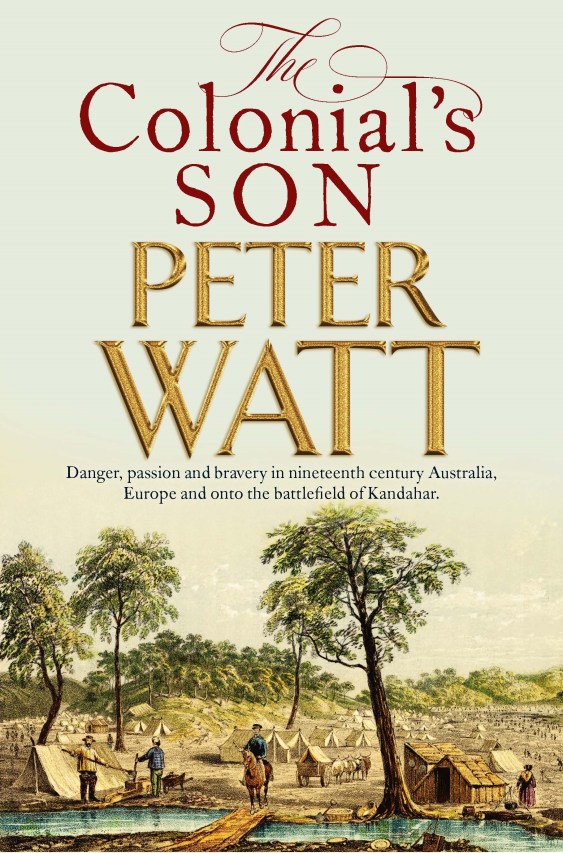
The Colonial’s Son by Peter Watt

The Colonial's Son Cover

Publisher: Macmillan (Trade Paperback – 26 October 2021)

Series: The Colonial Series – Book Four

Length: 367 pages

My Rating: 4.5 out of 5 stars

Amazon     Book Depository

One of Australia’s best historical fiction authors, Peter Watt, returns with The Colonial’s Son, the first book in a new series that follows on from his exceptional Colonial trilogy.

Peter Watt is a fun and talented author whose work I have been deeply enjoying over the last few years.  Watt specialises in historical fiction novels with a focus on Australian characters and has so far written three great series.  This includes his long-running Frontier series, which followed two rival Australian families throughout the generations as they got involved in some of the defining moments of Australian history (check out my reviews for While the Moon Burns and From the Stars Above).  He also wrote the fantastic Colonial trilogy that followed an Australian blacksmith who joined the British army as an officer during the mid-19th century.  This was an amazing and action-packed historical series, and featured three great books, The Queen’s Colonial, The Queen’s Tiger and The Queen’s Captain.  Watt’s most recent novel, The Colonial’s Son, is a direct sequel to the Colonial series, set several years after the conclusion of The Queen’s Captain.

Sydney, 1875.  After leaving the army and returning to Australia, former British army captain, Ian Steele, better known by the moniker his troops gave him, the Colonial, has settled down and started a successful business empire.  Now the father of three children, Ian is hoping for a quiet life, but is still facing several problems, including the fact that his oldest son, Josiah Steele, is determined to follow in his footsteps and join the British army as an officer.

When an old friend from his army days requests his help, Ian takes Josiah to Queensland to visit the notorious goldfields near the Palmer River.  There, Josiah gets his first taste for action as he and his father find themselves beset by bushrangers, hostile Indigenous tribes and warring Chinese criminal organisations.  Despite experiencing the terrors and tragedies of combat, Josiah is more determined than ever to join the army and travels to England to enrol in a prestigious military academy.  However, rather than gaining a formal training, he is immediately drafted into England’s latest war as a junior officer.

Travelling to Afghanistan, Josiah and his men engage in a series of bloody battles to hold onto the dangerous land for the empire.  Gaining the attention of his commanders, Josiah is chosen for a different sort of mission and sent to the newly united Germany where an old friend may hold the answer to the future of British/German relations.  Back in Australia, Ian Steele finds himself fighting a new enemy, one whose insidious ways could bring down everything he has struggled to build.  Can Ian survive this latest threat, especially when it drives him to do the unthinkable, and will Josiah be able to live up to the impossible military legacy of the Colonial?

This was another exciting and very enjoyable novel from Watt, who has proven himself one of the best authors of Australian historical adventure novels.  The Colonial’s Son is an amazing sequel to Watt’s prior series, and I really enjoyed seeing all the characters, both new and those from the prior series, engage in this latest series of adventures.  I ended up getting through this entire novel in one day, and I had a wonderful time reading it.

This latest novel has a very Watt narrative to it, utilising his typical style of multiple character perspectives to tell a compelling overarching tale of adventure and intrigue.  The Colonial’s Son primarily follows new protagonist Josiah and previous protagonist Ian as they find themselves in all manner of dangerous situations, together and separately.  This includes facing dangers and criminal conspiracies out in the goldfields, deep personal attacks in Sydney, or the various battles and political intrigues Josiah encounters once he joins the army.  At the same time, multiple other perspectives from side characters are utilised to enrich the narrative, with everyone from villains, love interests and friends adding to the story.  Watt tells a very interesting tale in this novel, combining a coming-of-age tale with the dynastic style of his previous Frontier books, and I really appreciated the way in which the author continues several storylines from the previous trilogy.  The combination of military action, criminal activity and intrigue makes for quite a fun narrative and The Colonial’s Son proves to be extremely addictive and easy to read.  I loved the many intense fight sequences featured throughout this novel, and Watt has a real flair for bringing brutal battles to life.  While fans of the Colonial trilogy will probably get a bit more out of this book due to the connected storylines, The Colonial’s Son is very accessible to new readers.

Just like he has done with all his prior novels, Watt makes sure that The Colonial’s Son features a range of intriguing and dangerous historical locations serving as fun backdrops to this awesome story.  There is a bit of a time skip between this novel and the previous Colonial trilogy, which opened up some different wars and settings for Watt to explore.  I particularly enjoyed the scenes set in the goldfields of North Queensland, a particularly grim and unforgiving bush setting full of fun antagonists.  The second half of the novel contains several other historical locales, all of which are shown in quick succession.  This includes Victorian London, Afghanistan, Germany and even Africa, all of which are the setting for some form of conflict.  The scenes set in Afghanistan during the British occupation of this land are very interesting, especially when you consider contemporary events, and there are some noticeable similarities between the historical conflict and more recent battles.  There is also a very fascinating look at Germany, which in 1875 had only just recently been unified into a single country with a more militaristic outlook.  Watt also ensures that The Colonial’s Son contains several hints about future conflicts that the protagonist may find himself involved in.  For example, the inclusion of several prominent Chinese characters in the first half of the novel will probably result the characters getting involved in the Boxer Rebellion, which would be pretty fascinating.  Overall, there are some great historical settings in this novel, and I cannot wait to see what conflicts the characters venture into next.

Watt makes sure to feature a ton of intriguing and memorable characters throughout The Colonial’s Son, each of whom adds some interesting details to the story.  This latest novel contains a great combination of new characters and protagonists from the Colonial series.  I rather enjoyed this cool mixture of characters, especially as you get to see new protagonists develop, while also learning the fate of the surviving characters from the original trilogy.  I particularly appreciated seeing more of original protagonist Ian Steele, and it was fun to see what happened to him after all his adventures in the Colonial books.  I was honestly surprised how much of a focus Ian got in this new trilogy, but I wasn’t complaining too much as I had gotten invested in his development in the original trilogy.  New protagonist Josiah also proved to be a great addition to the plot, even if there are a lot of similarities between him and the younger version of his father from the previous trilogy.  It was kind of fun to see history repeat itself, and I like the interesting developments that occur around Josiah attempting to live up to the legacy of his father, while also making all the same mistakes he did.  There were some other fun new characters featured in this book, including a charismatic young man of Chinese descent on the road to becoming a revolutionary and a young German countess who Josiah befriends.  I also appreciated some of the compelling and unlikable antagonists featured in the novel, as Watt has a real talent for writing scummy villains for the reader to root against.  I deeply enjoyed getting to know this new batch of characters, and I look forward to seeing what happens to all these excellent figures, both new and existing, in the future books.

With his latest novel, The Colonial’s Son, Peter Watt continues to highlight just why he is the leading author of Australian historical adventures.  Featuring an incredibly fun and action-packed plot, The Colonial’s Son does not slow down throughout its entire length, and readers are treated non-stop battles and intrigue.  I loved how this latest novel continued the cool storylines from Watt’s Colonial series, and I cannot wait to see what battles and character developments occur throughout the rest of this series.

Amazon     Book Depository

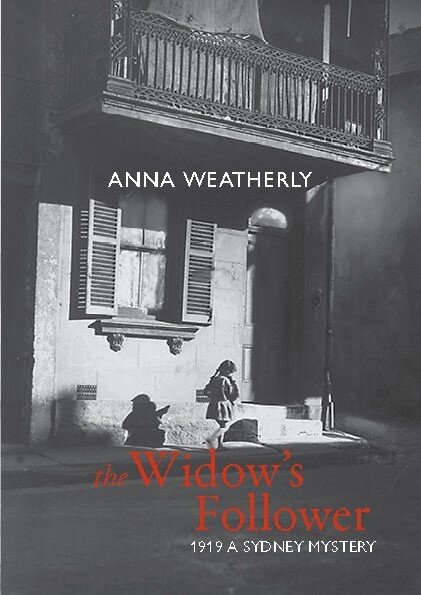
Quick Review – The Widow’s Follower by Anna Weatherly

The Widow's Follower

Publisher: Self-Published (Trade Paperback – 8 June 2021)

Series: Bermagui Mystery – Book Two

Length: 222 pages

My Rating: 4 out of 5 stars

Prepare for a quick and fun historical murder mystery with The Widow’s Follower, an excellent and compelling second novel from Canberran author Anna Weatherly.

Synopsis:

1919, Sydney.  No-one was shedding tears for the death of Roy Maguire, especially not his wife. She’d been hiding from him for the past five years and now she’d come back to reclaim her freedom. It should’ve been simple. So why was she finding herself the object of interest for half the criminals in Sydney? At first it was mystifying. Then it was terrifying.

This is the second novel involving May Williams, once the wife of Sydney crime figure Roy Maguire. This time May travels to Sydney where she finds that extricating herself from her abusive husband is a dangerous business, even when he’s dead.


The Widow’s Follower
is the second novel from Weatherly, following on from her 2018 debut, Death in the Year of Peace.  This series is a fantastic historical murder mystery series that follows a young woman in 1919 who takes the name May Williams and flees from Sydney to the small town of Bermagui to escape from her abusive, criminal husband.  The first book sets the scene for this series while also presenting a murder mystery as the protagonist attempts to uncover a killer in town.  This sequel is set right after the initial book and sees May return to Sydney after the death of her husband.

I really liked the interesting story contained within The Widow’s Follower, as it combines historical fiction elements with an interesting, gangster-filled mystery, as well as featuring some great character development.  Despite being relatively short for a novel, clocking in at just over 200 pages, Weatherly manages to achieve a lot in this book.  The Widow’s Follower primarily focuses on May being harassed by gangsters and criminals around Sydney as she attempts to settle her late husband’s affairs.  This gets complicated when it becomes apparent that before his death, her husband had stolen a great deal of money from his employers and managed to annoy all the big movers in town.  This forces May to investigate her husband’s last few days to find the money to save herself and her friends from these gangster’s ruthless attentions.  She also starts investigating the murder of her husband’s lover, a crime he was accused of before his death, as she cannot believe that even he could kill the father of his illegitimate child, whose welfare May also becomes concerned about.

This leads to an intriguing and extremely fast-paced story, as May is drawn into a twisted web of lies, manipulations and additional murders, while also trying to decide about her future.  There is an interesting blend of storylines contained within this novel, and I quite liked the exciting and dramatic directions that it went in, especially as May slowly gets closer to the truth.  May finds herself the target of several dangerous people from Sydney’s underbelly, each of whom is interested in her for all the wrong reasons.  At the same time, May’s friends back in Bermagui find themselves in danger, and this results in some compelling discussions about May’s future and whether she wants to stay in Sydney, where she has some chance at professional success, or return to the small town and pursue love.  These enjoyable storylines cleverly set up a massive twist about three quarters of the way through that I honestly did not see coming.  This cool twist changes everything about the novel, and I deeply appreciated how it was foreshadowed and the implications it has on the rest of the story.  The final part of the book is an intensely paced, as May finds herself in the middle of a dangerous conflict between some of the antagonists, while also reeling from some big revelations.  I really found myself glued to the final part of the book, especially as it contained some cool scenes, such as a multi-person chase throughout the streets of Sydney.  The book ends on a positive note, and it will be interesting to see where Weatherly takes the story next, especially as the protagonist’s storyline seems mostly fulfilled.

I also appreciated the cool setting of this novel, the historical city of Sydney in 1919.  Weatherly spends a significant amount of time exploring Sydney throughout the novel, and you end up getting a great sense of its size, layout and people during the early 20th century.  The author goes out of their way to try and emulate the historical version of this city, including by featuring clippings from real-life historical newspapers at the start of every chapter, a fun technique that I felt helped drag me into the moment.  Weatherly also spends time examining how recent world events had impacted the city, such as the recent Spanish Flu pandemic (very topical) and the slow return of Australian troops from the European battlefronts of World War I.  This fascinating setting added a lot to the authenticity and intrigue of The Widow’s Follower’s story, and it was really fun to explore this captivating historical locale.

Overall, I had a wonderful time with The Widow’s Follower, and I ended up reading pretty much the entire thing in one sitting.  Anna Weatherly came up with a clever and entertaining tale, and I had a great time getting to the bottom of the intense mystery that was featured within.  A fantastic and enjoyable piece of Australian historical fiction, this is a great book to check out and I look forward to seeing what this new author produces in the future.

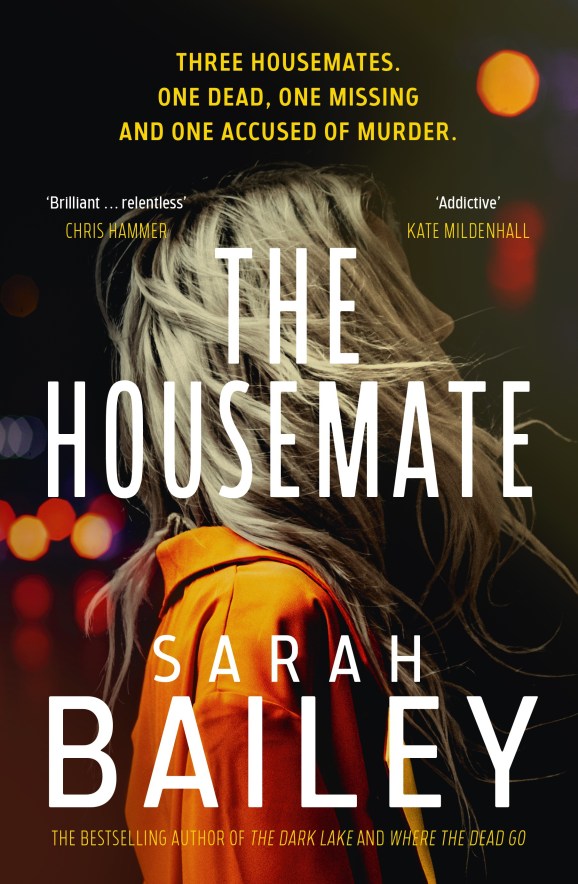
The Housemate by Sarah Bailey

The Housemate Cover

Publisher: Allen & Unwin (Trade Paperback – 31 August 2021)

Series: Standalone

Length: 454 pages

My Rating: 5 out of 5 stars

Amazon     Book Depository

Impressive Australian author Sarah Bailey returns with The Housemate, an outstanding and intense murder mystery that takes a complex protagonist through a dark journey as they attempt to solve an infamous murder.

It was the crime that shocked all of Australia: one night, after a fractious party in the suburbs of Melbourne, three female housemates would become infamous for all the wrong reasons.  In the morning, one of the housemates is found brutally murdered, another is found covered in her blood, while the third goes missing and her body is never found.  Dubbed the Housemate Homicide, the unexplained murder, the mysterious disappearance, and the subsequent controversial court case has baffled and enthralled the country for years.  This includes Olive Groves, a journalist who got her first big break covering the murder and who then became obsessed with cracking the case.

Nine years later, the body of the missing housemate is found in a remote property in the Victorian countryside.  Despite dealing with her own dark personal issues, Olive is assigned to cover the story, and soon finds herself once again dragged into her deepest obsession.  Teamed up with millennial podcaster Cooper Ng, Olive begins to immerse herself in the details of the murder, reigniting her fiery obsession.

As Olive and Cooper work to uncover new details about the case and the three women at the heart of it, they start to make some startling discoveries.  None of the housemates were what they seemed, and all had dark and terrible secrets that have remained hidden for years.  What really happened to these three friends, and what secret was so terrible that they would kill to protect it?  Olive is about to discover that there is a dark conspiracy at work throughout this case, one whose roots may lay far closer to home than she ever imagined, and whose discovery may end up breaking her.

This was an incredible and extremely clever dark murder mystery from Sarah Bailey, who has previously produced some impressive and compelling pieces of Australian fiction.  The Housemate was pretty exceptional read and I quickly found myself getting really caught up in this remarkable and well-written piece of crime fiction.  The author weaved together a dark and compelling tale of betrayal, murder and tainted love, featuring an extremely damaged protagonist and multiple epic twists.

The Housemate has a pretty amazing and memorable murder mystery narrative that follows a reporter as she attempts to uncover the truth behind an infamous cold case.  Bailey does a great job setting up the plot of this book in the early pages, showing the protagonist’s involvement in reporting the initial discovery of the murder, before initiating a time skip nine years in the future.  Once there, the author spends a little time exploring how the protagonist’s life has changed in the intervening years, before swiftly starting the next stage of the mystery, with the discovery of a body out in the Victorian countryside that has connections to the murders.  The rest of the book flows by at a quick pace after this, as the reader gets stuck into the re-opened investigation.  Bailey starts the various twists flying early, and the reader is soon struck with a series of theories, leads, potential suspects and connected side characters, all of which add to the overall tapestry of the mystery, while also serving to keep you guessing about who is responsible for the murder, and that isn’t even mentioning the compelling flashbacks from the surviving housemate.

As the investigation continues, The Housemate’s story continues to get even more complex, as the personal life of the protagonist, Olive, gets dragged into the plot, especially as Olive is in a complex relationship with the widower of the primary police investigator of the original case.  This results in some extremely intense moments as Olive begins to suspect everyone, which has a major impact on her grip on reality.  I deeply appreciated the psychological thriller aspects that were worked in, as the reader starts to really question Olive’s grip on her sanity, and it helped to make the story even darker and more unpredictable.  Everything really kicks off in the final third of the novel, especially after the case becomes even more potentially convoluted and connected to a wider conspiracy.  There were some great reveals in this final third of the novel, and a pretty major and surprising event that really changes everything.  I found myself absolutely glued to this book in the final stages, as I couldn’t wait to see what happened.  While I did think that the author was a little too heavy handed when it came to suggesting that one particular character was the murderer, I thought the eventual reveal of who was behind everything was extremely clever.  The solution to the historic murder was very impressive, especially as some of the elements were set up extremely early in the novel and you didn’t even realise it.  I really loved the impressive way the case was wrapped up, although the end of the final confrontation was a tad too coincidental for my taste.  Still, it was a really great way to finish the novel, and I was well and truly hooked by this awesome and dark tale of murder.

You can’t talk about The Housemate without mentioning the author’s great characters, especially protagonist, Olive Groves (a fun name).  Olive is a complex and damaged woman, who has been obsessed with the novel’s central case ever since she saw the suspected killer and the various family members emerging from the house during the initial media coverage.  Years later, Olive now has a complex life, as she is living with the controlling widower of the cop who was originally investigating the crimes, something she is immensely guilty and conflicted about.  Her already fragile mental state is put at risk when she starts working on the latest developments in the Housemate Homicides case, which reawakens her long-dormant obsession.  This obsession drives her to investigate the case by any means and takes her to some dark spaces as she tries to get into the head of the three housemates and figure out what happened to them.  Olive slowly goes downhill as the novel progresses thanks to a combination of stress, obsession, anger, and multiple personal reasons, such as the actions of her emotionally abusive partner and her own massive guilt for sleeping with him while his wife was still alive.  Olive has a big breakdown towards the end of the novel, especially after a major surprise event, and it was fascinating to see such a dramatic and powerful burst of emotion.  This compelling personal crisis is perfectly worked into the plot of the book, and it really helped to enhance the main murder mystery storyline, especially as you become really concerned for Olive’s mental and physical safety.  I appreciated the way in which Bailey wrapped up Olive’s character arc by the end of the novel, and I cannot emphasise what an impressive bit of character work Bailey did around her.

Aside from Olive, there is a great collection of complex side characters throughout the novel, each of whom play a vital role in the case.  The main one is Cooper Ng, the socially shy tech expert and social media whiz who is assigned to help Olive investigate, with the two required to develop a new podcast for their paper.  Cooper is a fun and energetic figure who stands as the complete opposite to Olive’s gruffer and irritable personality.  Cooper and Olive make for an interesting partnership throughout the book, and it was fun to see them combine their vastly different skills and experiences.  The author also spends a bit of time examining each of the three housemates who were at the centre of the book’s mystery.  It initially appears that all three were bright and optimistic students when the fateful night occurred.  However, as the book progresses you begin to see that they are a lot more complex than that, with all three involved in something dodgy.  Seeing how they were driven to the events that occurred the night of the killing is pretty fascinating, and I really appreciated the dark and intense storyline that Bailey weaved around them.  All these characters, and more, added a lot to the story, and I loved the fantastic and realistic interactions that occurred within.

The final thing that I wanted to highlight about The Housemate was its interesting examination of Australian journalism.  I have always rather liked journalist protagonists in fiction, due to their less formal way of investigating crimes, and this worked very well in the context of The Housemate, with Olive employing some interesting methods to get answers.  The focus on obtaining information for a story rather than attempting to bring someone to justice is very compelling and I loved seeing the protagonists setting up stories and podcasts.  I also quite enjoyed the interesting examination of the evolving form of journalism that was represented by the two main characters, Olive and Cooper.  Olive is the more old-school reporter, who just wants to do good journalism without resorting to popular gimmicks.  Cooper, on the other hand, is the flash new kid, focusing on social media and podcasting, which he sees as the future of journalism.  This fun comparison between reporting styles formed an interesting basis for their partnership, especially as they are brought together to do a podcast on the murders, and I felt that this was a great inclusion to an already exciting and entertaining narrative.

The Housemate by Sarah Bailey was an exceptional and captivating read that I had an outstanding time reading.  Featuring a dark and thrilling mystery storyline, this Australian murder mystery was incredibly addictive, especially once you get caught up in the unique investigation and complex personal life of the protagonist.  I really enjoyed seeing this fantastic story come together, and I was really impressed with how Bailey tied her brilliant mystery together.  Easily one of the best pieces of Australian fiction I have read all year, The Housemate gets a full five-star rating from me and is a very highly recommended read.

Amazon     Book Depository

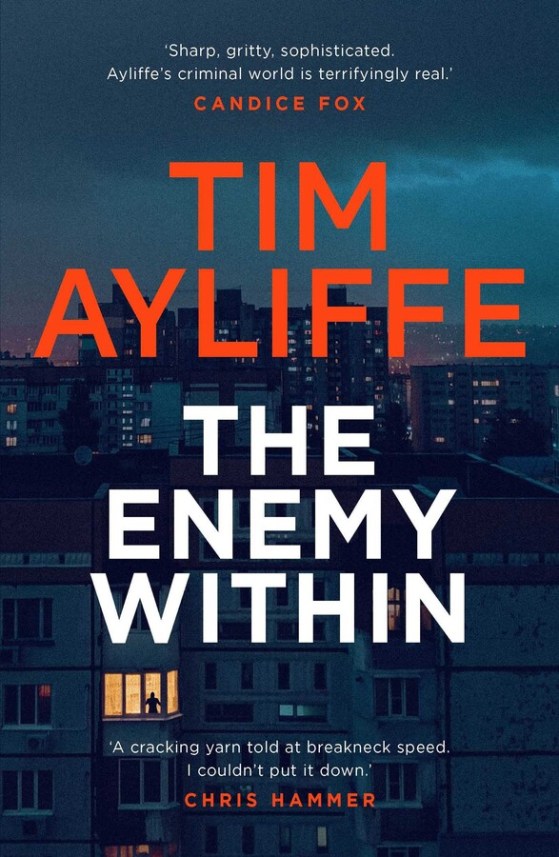
The Enemy Within by Tim Ayliffe

The Enemy Within Cover

Publisher: Simon & Schuster (Trade Paperback – 28 July 2021)

Series: John Bailey – Book Three

Length: 353 pages

My Rating: 4.5 out of 5 stars

Amazon

One of Australia’s fastest rising crime fiction authors, Tim Ayliffe, returns with another impressive and brilliantly relevant novel, The Enemy Within.

Ayliffe is a great author whose work I have been really enjoying over the last couple of years as he sets some fantastic stories around contemporary Australian subjects.  Debuting in 2018, this journalist wrote a compelling and intriguing first novel with The Greater Good, which looked at political corruption and the growing influence of China in Australia.  He followed it up in 2019 with State of Fear, which looked at Islamic terrorism and featured a dramatic and impactful story.  Now Ayliffe checks out the complete opposite end of the political spectrum in The Enemy Within, which features a look at growing right-wing radicals.

As the smoke from devastating January 2020 bushfires covers Sydney, investigative reporter John Bailey is covering a far more dangerous threat in the suburbs.  Barely recovered from the traumatic events that took the love of his life from him, Bailey is now working for a news magazine.  His first story will cover the re-emergence of right-wing nationalists and white supremacist groups in Australia.  Attending one of their meetings, where a controversial American social media star whose entrance into the country has gained much political opposition and protest, Bailey attempts to gain the pulse of this movement, only to face violence and an anti-media mentality from the crowd.

Working on his story, Bailey has no idea of the chaos that is about to rain down on his life.  After he meets with an old contact and informant, Bailey’s house is raided by the Australian Federal Police.  The police are investigating him for a story he ran back while he was a war correspondent that highlighted the alleged war crimes Australian soldiers committed in the Middle East.  Armed with a warrant granting them access to his phone, computer and all his files, the police tear through Bailey’s life and throw him in gaol for attempting to impede their search.

With the entire nation’s media covering his plight, Bailey is released from prison and soon discovers that someone orchestrated the police raid to delete evidence from the rally.  Attempting to investigate further, Bailey is shocked when his contact ends up dead in mysterious circumstances and the police fail to investigate.  With Sydney on the verge of a race war, Bailey continues his investigation and soon uncovers proof about a dangerous conspiracy that aims to shake the very foundations of Australian life.  With only his old friend CIA agent Ronnie Johnson as backup, Bailey attempts to stop this plot before it is too late.  But with a seemingly untouchable enemy targeting him from the shadows, has Bailey finally met an opponent even more determined than he is?

This was an awesome and captivating novel from Ayliffe who once again produces an intense, character-driven narrative.  Set around some very relevant and controversial topics, The Enemy Within is a powerful and exciting novel that takes the reader on a compelling ride.  I had a fantastic time reading this clever book and I loved the fascinating examinations of one of the more insidious threats facing Australia.

Set in the blistering, smoke covered streets of early 2020 Sydney, this story starts with protagonist John Bailey engaged in a controversial story about the rising far-right wing.  After a predictably violent confrontation, the narrative takes off like a shot, with the protagonist investigating a series of concerning events, including several murders, racial attacks, and a re-opened investigation into an old story of his that sees the AFP raid his house.  Each of these separate investigative threads are drawn together as the book progresses, and the reader is treated to an impressive and deadly conspiracy with several clever allusions to real-world issues and events.  This was a very exciting and captivating novel to get through, and I found myself reading it extremely quickly, nearly finishing it off in a day.  The story leads up to an awesome and intense conclusion, where Bailey uncovers the entire scope of the plot and races to stop it.  While the identity of some of the participants is very clear since the character’s introductions, their full plan, methods, and reach are more hidden and it was great to see the protagonist uncover them all, especially as several were cleverly hidden in innocuous moments earlier in the novel.  There is even an excellent twist towards the end of the book that reveals a well-hidden antagonist, which I particularly enjoyed as it was so skilfully inserted into the story.  I ended having an excellent time getting through this amazing narrative, and this might be one of the best stories that Ayliffe has so far written.

One of the things that I have always enjoyed about the John Bailey novels is the way in which so much of the amazing story was tied to how extremely damaged the titular protagonist is.  John Bailey is a veteran reporter whose previous life as a war correspondent has left him extremely broken, especially after being tortured by a dangerous terrorist leader.  This eventually led to him becoming an alcoholic, which ruined his career and separated him from his family.  However, since the start of the series, Bailey has shown some real character growth, although this is usually accompanied by some traumatic events or tragic moments.  In The Enemy Within, as Bailey is still recovering from the loss of his lover at the end of State of Fear.  Despite making some strides to recover, Bailey is still reeling from the loss, and this becomes a major aspect of his character in this latest book.  This is especially true as Ayliffe does an outstanding job of highlighting the grieving process and showing Bailey’s feelings of despair.  It was really moving to see Bailey in this novel, and I was glad to see him continue to recover from all the bad events of his life, including stopping drinking and getting a dog.  However, Bailey still has an unerring knack to annoy the subjects of his stories, and he ends up getting into all sorts of danger.  It was great to see him getting to the root of this story by any means necessary, and I continued to appreciate his impressive development.

I also love the way that the each of Ayliffe’s novels feature some fascinating contemporary issues facing Australia or the wider world.  In The Enemy Within, the main issue is the rise of Australian right-wing and white supremacist groups in recent years.  Like in the rest of the world, these groups have been becoming a bit more prominent recently in Australia, and Ayliffe does an excellent job analysing this issue throughout his novel.  The author does a deep examination of the movement as the story progresses, and the reader is given a good insight into their concerns, motivations, and the reasons why the movement has been gaining progress in recent years.  There are some clever parallels between the events or people portrayed in the novel and real life, which was interesting to see.  Examples of this include the government allowing controversial right-wing figures into the country despite protests, and the reactions of certain right-wing media groups.  I liked how Ayliffe once again featured the character of Keith Roberts, a right-wing commentator who is a pastiche of several Australian radio personalities.  It was also quite fascinating to see how the concerns and motivations of the right-wing groups were extremely like some of the Islamic terrorists featured in State of Fear, with both groups feeling disconnected from and attacked by mainstream Australian society.  Not only is this extremely fascinating and thought-provoking but it also serves as an amazing basis for Ayliffe’s narrative.  The author does a fantastic job of wrapping his thrilling story around some of these elements, and it makes the overall narrative extremely relevant.

I also must highlight another significant contemporary inclusion that was featured in The Enemy Within, and that was the Australian Federal Police’s raids on Bailey’s house.  This police raid is a direct reference to a series of controversial raids that occurred on several media organisations, including ABC News (who Ayliffe works for), in relation to articles they published.  Ayliffe uses these real-life examples to really punch up what happens within The Enemy Within, and he produces some realistic scenes that were comparable to this.  The subject of the articles that prompt the raids are also very similar and feature another topic that is quite controversial in Australia in the moment, that of alleged war-crimes by Australian soldiers fighting in the Middle East.  Just like with the other divisive topics featured in this novel, Ayliffe did a fantastic job re-imagining these events in his novel, and it produces some excellent inclusions that will particularly resonate with an Australian audience.  I deeply appreciated the way in which he was able to work these events into his story, and I think that it made The Enemy Within a much more compelling and distinctive read.

I have to say that I also really loved the author’s use of setting in The Enemy Within.  This latest book is set in early 2020, when Sydney was surrounded by some of the worst bushfires in Australian history and the entire city was covered in smoke for months.  Ayliffe does an excellent job portraying these terrible conditions, no doubt drawn from his own personal experiences, and the reader gets a good idea of how difficult life was under those conditions (it certainly brought me back to that time, although we didn’t have it quite as bad down in Canberra).  Ayliffe uses this unique setting to full effect throughout the book and it provides some fitting atmosphere for the narrative, especially as the landscape reflects the simmering tensions flaring up within the city.  This was one of the more distinctive features of The Enemy Within, and I really appreciated the way the author used it to enhance his great story.  I also quite enjoyed the throwaway references to COVID-19, with none of the characters particularly concerned about it considering everything else that was happening, and I have no doubt that Ayliffe’s next novel will make great use of the pandemic in some way.

With his latest novel, The Enemy Within, Tim Ayliffe continues to showcase why he is one of the best new writers of Australian crime fiction.  The Enemy Within had an awesome and incredible story that perfectly brings in amazing contemporary Australian issues and settings, which are expertly worked into a thrilling novel.  I had an outstanding time reading this fantastic read and it comes highly recommended.

Amazon

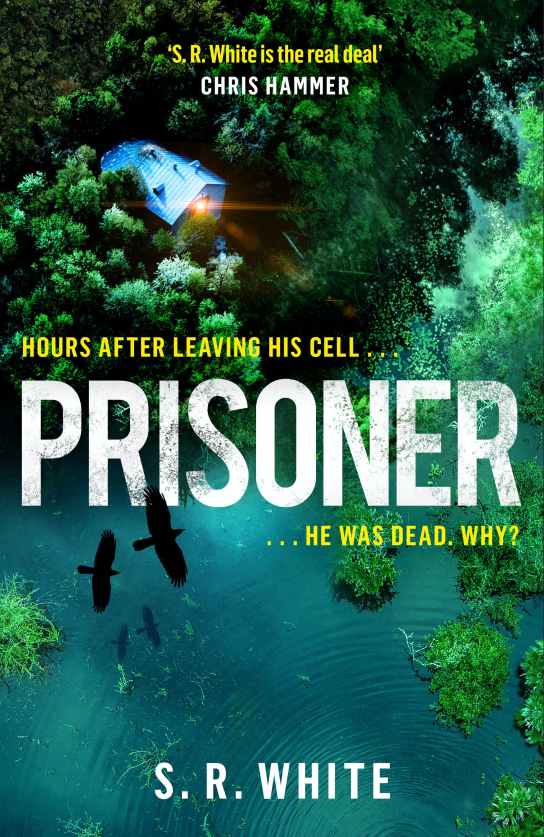
Prisoner by S. R. White

The Prisoner Cover

Publisher: Headline (Trade Paperback – 31 August 2021)

Series: Hermit – Book Two

Length: 421 pages

My Rating: 4.5 out 5 stars

Amazon     Book Depository

Prepare for a twisty and dark Australian murder mystery novel as author S. R. White presents the compelling and powerful Prisoner.

Deep in rural Northern Australia, a dead body has been found in the middle of a dank and dangerous swamp.  The corpse is staged to appear like a crucifixion, with the man’s arms and legs tied to poles, and his chest caved in with several blows.  Called to the scene of the crime, Detective Dana Russo soon discovers that the victim was a convicted rapist who had only been released from prison a few hours earlier and whose crime occurred only a short walk away from his murder site.

Determined to get to the bottom of this unusual murder, Russo and her team swiftly begin tearing apart the victim’s life in prison and find that he had been in communication with two local sisters who offered him a place to stay once he was released.  Investigating the sisters, they discover a unique pair of siblings who have been irreparably damaged by trauma and abuse and who live separate from the rest of society.  Believing that the solution to the mystery may lay with them, Russo brings them both in for questioning, but finds them uncooperative and elusive.

Under pressure to solve the crime, the detectives slowly unwind an intriguing case, concerning corruption, drugs and prison gangs.  However, the further they dig, the more apparent it becomes that the sisters are hiding some dark secrets about themselves and the victim.  Forced to dig deep within herself, Russo uses the memories of her own traumatic childhood to analyse the suspects and find some common understanding with them.  Can Russo break through these two unlikely suspects, or will the solution to this murder never be revealed?

This was a pretty cool and captivating novel from former British Police officer turned author S. R. White.  Prisoner is White’s second novel and serves as a sequel to his 2020 debut, Hermit.  This proved to be a fantastic read and I deeply enjoyed the intriguing and powerful narrative, especially as White loads his book with a complex mystery and some deeply damaged characters.  I got pretty hooked on this book as it progressed and ended up finishing it in only a couple of days.

Prisoner contains a very impressive and compelling narrative that I really found myself getting drawn into.  The novel mostly starts off focusing on the murder, with the discovery of the body in the first few pages, and then the protagonists immediately jump into the investigation, including the interrogation of one of the main suspects.  As the story progresses, you get some other interesting elements thrown in, mostly around Dana Russo and one of her other colleagues as they deal with some dark personal history.  There is also a captivating subplot regarding internal police politics that produces a real shakeup in the department and has some potential series-wide ramifications.  However, most of the story remains on the mystery, and I really appreciated the creativity and darkness that the author fits into the case.  Despite being a sequel to White’s first book, Prisoner can easily be read as a standalone novel, and no prior knowledge of the characters or the setting is needed.  I felt that the entire narrative progressed along at a great pace, and there were no slow bits throughout the book, as the reader was either reading about the case or dealing with the intense personal demons of the various characters.

I must highlight the fantastic writing style that White featured throughout this novel.  While most of the focus of Prisoner is on central character Russo, the author makes good use of multiple perspectives, mainly of the other detectives on the investigation team, to move the story along and provide some alternate points of view and different investigative threads.  White utilises a very detailed writing style, which encourages a slower reading pace to make sure you don’t miss anything, and I felt that enriched the mystery and increased the realism of the plot.  I also must highlight the incredibly detailed descriptions of the swampy landscape that surrounded the crime scene and the Northern Australian town where the plot is set.  White paints a grim picture of small, isolated community on its last legs, where even the landscape has turned against it.  You can really feel the stickiness and deadliness of the swamps, and it proves to be quite a haunting background to several scenes.  I also must mention the really fun and unique take that several of the characters had on the film Signs.  This film, which I personally rather enjoyed, is brought up several times and becomes a key plot point.  While that does sound a little strange, its inclusion worked surprisingly well, and the subsequent discussions and insightful analysis of the film and its themes, ended up fitting into the overall narrative quite seamlessly, helping to create quite a unique tale.

I also deeply enjoyed the crime fiction/mystery elements of Prisoner, which really helped to turn this into quite a compelling and exciting story.  White crafts together a really clever and psychologically intense mystery for this book, and I had a wonderful time seeing the protagonists unwind it.  The author sets up a great methodical criminal investigation, with the characters slowly uncovering clues, backstory and various suspects throughout the story.  While the police do achieve an impressive amount in just a couple of days, there is a gritty sense of realism to much of the story, and I really enjoyed seeing the police in action.  The best part of the investigation is easily the focus on interrogations as the protagonist engages two uncooperative suspects in several separate interviews throughout the course of the book.  These interrogation sequences are among some of the best parts of the entire book, as Russo really dives into the pasts and minds of her suspects, which also requires her to reach back and harness some of her own trauma to break through to them.  This, combined with the rest of her team’s investigation, proved to be quite fascinating, and I really enjoyed seeing the cooperative work and professional skills involved.  I also quite enjoyed the solution to the murder, especially as White comes up with quite a unique and dark motivation for the crime.  There are several good suspects and motivations for the murder, which at times made me question who the killer might be.  However, I thought the overall resolution of the mystery was extremely clever, and it really made great use of the dark psychology of some of the characters.

One of the biggest highlights of this book were the damaged and traumatised central characters, who White spent a substantial amount of time exploring throughout the course of the story.  This includes a mixture of characters who previously appeared in Hermit and some new characters brought in for Prisoner.  This includes central protagonist Dana Russo, the detective in charge of the investigation.  Dana had a very traumatic childhood, brought on by an abusive mother who beat and emotionally tormented her following her father’s death.  While this was revealed in the previous novel, it was recounted once again in Prisoner, especially as details of the case end up mimicking parts of Dana’s life.  The protagonist is forced to dive deep into her prior experiences to help solve this case, and it was fascinating to see how she could instantly spot signs of abuse, as well as rationalise the various reasons behind it and the impacts it can have on a young person.  The protagonist also uses her experiences to get into the minds of her two main suspects, resulting in some intense and extremely powerful interrogation scenes, where both suspect and interrogator are broken down at the same time.  White also produces some more revelations about Dana’s terrible childhood, including a certain reveal on the last page that was pretty memorable, and I really liked the compelling picture he painted around this impressive leading character.

The other characters who proved to be extremely compelling were the main suspects of the murder case, Suzanne and Marika Doyle.  The Doyle siblings are instantly identified as persons of interest in the case due to their house’s proximity to the crime scene and the fact that they wrote to the victim in prison and helped to organise his parole, despite having never met him.  Upon examination of their history, as well as an insightful look at their house, it soon becomes apparent that both siblings had a hard childhood because of their controlling mother.  Their life story becomes a key part of the overarching plot as Russo attempts to uncover their full history and personalities, as she believes it is important to solve the case.  The eventual reveals about the siblings and their relationship, their past and their emotional states is extremely captivating, and White paints quite a dark and troubled narrative around them that was really fascinating.  The way that this ties into the murder and their relationship with the victim is very clever, and White really outdid himself making these two sibling suspects.

I also must give a quick shout out to the character of Lucy Delaney, one of Dana’s co-workers and an invaluable resource in the case.  Dana and Lucy got quite close to each other in the previous novel, with Dana revealing some of her childhood trauma to her, something she rarely does.  In this novel, you get a much closer look at Lucy, who reveals some of her own personal issues, and the shared grief becomes a major part of her connection to Dana.  Unfortunately for Lucy, she gets dragged into some internal police politics, which impact her and her secrets quite severely and will likely become a recurring issue in the series, especially if the relationship between Dana and Lucy progresses.  Aside from Lucy, I felt that the police characters represented an interesting blend of personalities and skills, such as the wily veteran Mike or the similarly damaged officer Ali, who helped to give the film more personality.  It will be interesting to see how these characters are featured in the future, and I look forward to learning more about them.

Prisoner by S. R. White is a clever and moving piece of Australian crime fiction that proved to be a real treat to read.  White has produced a deep and compelling murder mystery narrative that focuses on a fantastic group of damaged protagonists and suspects, and who have some dark stories to tell.  I really loved the more methodical and grounded police investigation angle of this book, especially the inclusion of some powerful interrogation sequences, and I was impressed with how the narrative unfolded.  An excellent and captivating murder mystery, Prisoner comes highly recommended, and you will have a great time getting through the latest book from this fantastic Australian author.

Amazon     Book Depository

State of Fear by Tim Ayliffe

State of Fear Cover

Publisher: Simon & Schuster Australia (Trade Paperback – 22 July 2019)

Series: John Bailey – Book Two

Length: 390 pages

My Rating: 4.5 out of 5 stars

Amazon

One of the fastest-rising Australian thriller writers, Tim Ayliffe, follows up his impressive debut with an excellent second entry in his John Bailey series, State of Fear.

Tim Ayliffe is a talented author who debuted in 2018 with The Greater Good, the first John Bailey book.  This novel explored political corruption and international interference in Australia and made excellent use of the author’s experiences as a journalist.  I really enjoyed this first book and was rather interested when I received the second novel from Ayliffe, State of Fear, in 2019.  Unfortunately, I did not get a chance to read State of Fear when it first came out, and it has been in my to-read pile for a while, until I received a copy of the third John Bailey novel, The Enemy Within, a few weeks ago.  I rather liked the sound of the third book’s plot, and I really wanted to read and review it.  However, before checking out The Enemy Within I thought it would make more sense to read State of Fear first, and boy am I glad that I did.

Throughout his long career as a journalist and war correspondent, John Bailey has faced many dangers and been in several terrible situations.  However, his worst encounter was with the notorious terrorist mastermind, Mustafa al-Baghdadi, who kidnapped Bailey while he was reporting on the invasion in Afghanistan and relentlessly tortured him mentally and psychically.  Following his release from the terrorist group and a retirement from working in active war zones, Bailey thought that his days of dealing with terrorists was over, but he was wrong.

Speaking at a conference on Islamic terrorism in London, Bailey is horrified when a radicalised terrorist murders a woman in front of the convention centre.  Rattled, Bailey returns home to Sydney, only to find his troubles have followed him there.  The son of his former driver in Bagdad has gone missing, and Bailey has been implored to help.  Investigating, Bailey finds that the son has been in contact with some dangerous men with connections to Islamic terrorist cells.  Worse, it appears that they are planning to launch a massive attack in Sydney.

Desperate to save his friend’s son from making a terrible mistake, Bailey attempts to make sense of the terrible events unfolding in Sydney.  However, the deeper he goes, the clearer it becomes that Mustafa al-Baghdadi is back, and he is targeting Bailey personally.  As Bailey and everyone he loves comes under attack, Bailey is forced to turn to his old friend, CIA agent Ronnie Johnson, to find Mustafa and take him down.  But will they be able to stop Mustafa before it is too late, or will the world’s most dangerous terrorist destroy everything that Bailey holds dear?

State of Fear was an excellent and powerful novel that takes its great protagonist on a rough and dangerous journey through hell and back.  Ayliffe has definitely grown as an author since his first novel, and this second book is a compelling and intense novel with a well-crafted narrative.  Starting off with an intense beginning, the protagonist is swiftly shoved into his latest harrowing adventure, as the terrorist he thought he escaped violently bursts back into his life.  This is a very captivating novel, and despite its longer length I found myself powering through it in a very short amount of time.  The protagonist goes through a real wringer as he is forced to visit the ghosts of his past while trying to stop his foe’s latest plot.  Featuring a sprawling and deadly investigation through the suburbs of Sydney, the story eventually journeys back to London, where the protagonist and his friends engage in a deadly and dramatic fight to stop a deadly attack.  There is so much going on in this story, and the reader will experience outstanding action, powerful drama, and some major tragedy, especially in the novel’s dramatic conclusion.  This is a fantastic book which stands on its own and can easily be read by people unfamiliar with the other John Bailey novels.  I had an exceptional time reading State of Fear and it is really worth checking out.

Ayliffe works a lot of fun elements into this novel that make it quite a unique read.  Perhaps one of the most prominent of these is his experience and knowledge as a journalist which helps to produce a very Australian centric view of the events that are being depicted.  For example, Ayliffe includes a very detailed and compelling look at radical Islamic terrorism and how it is occurring both in Australia and in the wider world, particularly England.  Using several real-life Australian cases as basis, Ayliffe manages to expose and explore the heart of the issue, and he paints a fair and captivating picture of how individuals are lured into radical Islam as well as the consequences of their actions.  There are some very intriguing and powerful discussions included within this novel, especially around how the Islamic and migrant community in Australia feels isolated and prejudiced against, and I really appreciated the compelling inclusion in the novel.

Other intriguing elements contained within State of Fear include Ayliffe’s experiences with modern media and how journalist stories are produced and distributed.  There are some fascinating and fun journalistic scenes contained within this novel, and you have to assume that the protagonist’s extremely negative views about the swing to online social media based journalism has to reflect some of the author’s personal feelings.  Another great feature of this novel was the way in which Ayliffe once again used his novel to highlight the city of Sydney.  While a good portion of this novel is set in London (which Ayliffe also does a great job portraying), the scenes set within Sydney are a particular highlight.  The author really dives into showcasing this city, with the protagonist visiting several real-life suburbs and locations throughout the course of the book, distributing local knowledge as he goes.  As a result, this book is filled with some fun references that locals and Sydneysiders will really appreciate, and I enjoyed how Ayliffe spent the time to write a love letter to his city.

In addition to a fantastic story and excellent setting, Ayliffe also ensures that State of Fear is loaded with some complex and memorable characters.  The most prominent of these is series main protagonist and primary point of view character John Bailey.  Bailey is an outstanding veteran reporting character, and Ayliffe portrays him as a broken older news hound who is trying to balance his addictive career with holding onto his family.  This protagonist is the very definition of a damaged character, as he has experienced great trauma, both psychical and emotional, over the years thanks to his work as a war correspondent.  Despite this trauma, Bailey has experienced some major growth since the first book in the series, mainly thanks to the actions of major people in his life, and he is now a much more functional human being, allowing the reader to really connect with his struggles and damage.  Unfortunately, the events of this novel really hit him hard, as he experiences fresh pain while also revisiting his traumatic past through a series of dark flashbacks.  Despite this, Bailey keeps moving forward trying to solve the case, and it was great to see his determination and resolve, even under the worse of circumstances.  The ending of the novel is pretty bad for Bailey, and he goes through some tragic moments that will no doubt rock him for the rest of the series.  All of this makes for an incredible central protagonist, and readers will fall in love with this damaged and compelling character.

Aside from Bailey, State of Fear also contains several great supporting characters, most of whom are holdovers from The Greater Good, and who find themselves in all sorts of trouble in this book.  The most prominent of these is Bailey’s romantic partner, Detective Chief Inspector Sharon Dexter, who serves as a secondary point-of-view protagonist for parts of the book.  Dexter is a tough, no-nonsense cop whose past with Bailey led to a romantic relationship in the first book.  Despite having a very complex and unusual relationship with Bailey, Dexter proves to be an excellent supporting character, acting as the sensible and official support to Bailey who tries to keep him out of trouble.  While she has a bit of a cold exterior, especially when Bailey stuffs up or lies to her, Dexter is another character the reader can easily get attached to, and her involvement in the story is quite essentially the overall powerful narrative.

I also quite liked the inclusion of Bailey’s editor, Gerald Summers, another aging newsman who serves as Bailey’s emotional rock and best friend and who has an amazing run in this book.  Gerald is an outstanding and loveable character, which of course means he is going to suffer a little bit, so prepare yourself for that.  You also have to like Ronnie Johnson, the maverick CIA agent who spends most of his time living on Bailey’s couch, but who proves to be an effective and very dangerous operative when he needs to.  Ronnie has been a favourite character of mine ever since the first book (I mean, he kills an Australian Prime Minister Harold Holt style), and he does some cool things in this second novel.  Finally, I felt that Mustafa al-Baghdadi was a pretty good overarching antagonist for State of Fear.  Ayliffe did a good job portraying a manipulative religious zealot with grand plans for vengeance and the advancement of his cause.  Despite being hidden for most of the book, this character contains a great deal of menace, and I really enjoyed the sinister flashback sequences that featured him and Bailey.  I did think that some of his reasons for vengeance on Bailey were a bit weak (I mean, he had to know that the first thing Bailey was going to do when freed was to share what he knew with the Americans), but he was an overall great villain with major impacts on the narrative.  Each of these characters were well written and established, and I felt that their combined narratives really improved this fantastic novel.

State of Fear by Tim Ayliffe was an outstanding and captivating read that presents a powerful and moving adventure of journalist John Bailey.  Containing an intense narrative about terrorism, some unique elements and amazing characters, State of Fear is an excellent read which swiftly grabs the reader’s attention and refuses to let them go.  I had an incredible time reading this novel and I am still kicking myself for taking so long to check it out.  I have already read the third entry in the John Bailey series, The Enemy Within, and I am hoping to get a review out for it soon.

Amazon

Quick Review – The Codebreakers by Alli Sinclair

The Codebreakers Cover

Publisher: HQ (Trade Paperback – 3 March 2021)

Series: Standalone

Length: 460 pages

My Rating: 4.5 out of 5 stars

Amazon     Book Depository

Interested in a fantastic historical fiction novel that looks at a unique and overlooked part of Australia’s history?  Then make sure to check out The Codebreakers by bestselling author Alli Sinclair, an amazing and dramatic novel that I found to be extremely captivating and powerful.

Synopsis:

1943, Brisbane: The war continues to devastate and the battle for the Pacific threatens Australian shores. For Ellie O’Sullivan, helping the war effort means utilising her engineering skills for Qantas as they evacuate civilians and deliver supplies to armed forces overseas. Her exceptional logic and integrity attract the attention of the Central Bureau-an intelligence organisation working with England’s Bletchley Park codebreakers. But joining the Central Bureau means signing a lifetime secrecy contract. Breaking it is treason.

With her country’s freedom at risk, Ellie works with a group of elite women who enter a world of volatile secrets; deciphering enemy communications to change the course of the war. Working under immense pressure, they form a close bond-yet there could be a traitor in their midst. Can the women uncover the culprit before it’s too late?

As Ellie struggles with the magnitude of the promise she’s made to her country, a wedge grows between her and those she holds dear. When the man she loves asks questions she’s forbidden to answer, how will she prevent the double life she’s leading from unravelling?

The Codebreakers was an amazing and well-written historical drama from Australian author Alli Sinclair, who has previously penned several other great historical novels.  This latest book from Sinclair tells the impressive and captivating tale of some of the most unique women in Australia’s storied war history, the secret codebreakers of Central Bureau.  This proved to be an impressive and captivating read that I powered through in a quick amount of time, especially as Sinclair came up with a clever and compelling narrative.

Throughout this outstanding tale, Sinclair not only covers the intricacies of a fascinating group of female codebreakers, also known as the Garage Girls (they worked out of a garage), but also includes some excellent character-driven drama as the protagonist is forced to come to terms with the secrecy of her work as well as the various tragedies that befall her and her friends as the war takes it harsh toll.  Throw in an intriguing spy thriller angle, as the Garage Girls find out that one of their own may be a traitor, and this becomes quite an intriguing and exciting read.  I loved the great blend of excitement, adventure and tragedy that the author produced, and I really liked how she not only showed the protagonist’s entire tenure with the Garage Girls but also featured the tragic aftermath of the war, where the consequences of the protagonist’s decisions and the loneliness of missing friends and colleagues forces her to choose a different path.  Readers will swiftly find themselves very attached to the main protagonist and her amazing story, and I had a great time seeing this entire tale unfold.

I must highlight the excellent historical aspects of The Codebreakers as Sinclair has clearly done some intense research on this period.  I really enjoyed the intriguing examination of the Central Bureau codebreakers who were active in Brisbane during WWII and who helped to decrypt transmissions and provide vital information to the Allies.  Throughout this great book, Sinclair really goes into great detail about the work the codebreakers would have done and some of the impacts of their work.  She also tries to examine the mentality that surrounded these codebreakers, both in their work and outside it, as each codebreaker was forbidden to talk about their work to anyone, both during the war and after it.  This proves to be an intriguing and intense central part of the novel’s drama, and it is apparently based on interviews that Sinclair did with surviving members of the real-life Garage Girls.  This was an impressive and amazing basis for this great story and I deeply enjoyed learning more about this fascinating and formerly-secret women.

I also enjoyed the way in which the author perfectly captured the feel of mid-war Brisbane throughout The Codebreakers’ story.  Sinclair laces her narrative with a lot of fascinating discussions about various military attacks that hit Australia, wartime polices and general thoughts and feelings about the war and the people involved with it.  However, I was most impressed with Sinclair’s attempts to capture the mentality of the people on the home front in Brisbane at the time.  Not only did you get the frustrations of the common Australian citizen/soldier as they dealt with the deployed American soldiery, but there is also the sadness and regret of those that survived.  You could almost feel the despair of several characters in this book, especially after the deaths of some of their loved ones, and it was a truly moving inclusion in this fantastic and powerful read.  All of these historical inclusions were really remarkable, and I had an outstanding time exploring Sinclair’s vision of this intriguing and momentous period of Australian history.

The Codebreakers by Alli Sinclair was an awesome and moving historical drama that proved to be an exceptional examination of a truly unique group of Australian women.  Sinclair makes perfect use of the amazing historical basis for her novel and turns it into quite an exciting and captivating tale of resilience, friendship and romance, which comes highly recommended.  I really enjoyed this fantastic novel and I loved learning so much about the codebreakers of Australia’s Central Bureau.

Amazon     Book Depository

The Last Convict by Anthony Hill

The Last Convict Cover

Publisher: Michael Joseph (Trade Paperback – 2 February 2021)

Series: Standalone

Length: 368 pages

My Rating: 4 out of 5 stars

Amazon

Acclaimed Australian author Anthony Hill once again dives into the unique history of Australia’s colonial past with a fascinating examination of a truly remarkable individual in The Last Convict.

Perth, 1938.  Samuel Speed in an old man living his last days in a dreary public-run home for destitute old men, with no family or friends to take him in.  At 98 years old, Samuel knows that he does not have long to live and is content with his lot in life, but an unexpected opportunity to tell his tale has been given to him.  A local newspaper has requested an interview with him after they discover that he is the last person left alive who was transported as a convict to Australia.

As Samuel begins his interview, he is transported back to his past to a fateful day in Oxford in 1863 when, as a young, starving teenager, he helped set a barley stack alight in the hopes of being arrested to receive food and a warm bed in prison.  However, he is unprepared for the full consequences of his actions when a judge harshly sentences him to seven years hard labour on the other side of the world.  Boarding the transportation ship, Belgravia, everything from his past is taken from him, including his name, and he begins the long, arduous journey to Fremantle Prison in Western Australia.

Forced to endure years of backbreaking labour, isolation and enforced routine on his life, Samuel’s only relief is a newfound love of reading, as he enjoys escapism in several classic novels.  Eventually obtaining his ticket of leave in 1867 and full freedom in 1871, Samuel seeks to forge a new life for himself.  However, as he continues to work hard, he soon begins to understand that even though he is no longer in prison, he is still very much trapped by circumstances outside of his control.  What kind of man will Samuel become, and how deep does a person’s life sentence truly run?

The Last Convict is a fantastic and powerful historical novel from Anthony Hill that provides an impressive examination of an intriguing figure from Australia’s history.  Hill is an intriguing author from my home city of Canberra who has written several historical novels throughout his career, all of which examine unique individuals from Australia’s past, such as his novel Captain Cook’s Apprentice which followed a cabin boy aboard the Endeavour as it made its journey to Australia, or Soldier Boy, which followed Australia’s youngest-known soldier during WWI.  This latest novel from Hill continues this trend as the author takes a look at Samuel Speed, the last known surviving convict transported to Australia from England.

I really enjoyed the excellent narrative that Hill pulled together for his latest novel, and The Last Convict proved to be an exciting and fascinating tale of survival and determination.  Thanks to a trove of intriguing historical information and articles (all of which is either provided or referenced at the end of the novel), Hill provides the reader with a detailed and compelling bibliographic tale of Samuel’s life.  The story is set around a real-life interview that Samuel Speed had with the Mirror in 1938, and The Last Convict showcases both the elderly Speed sitting down for the interview and his visions of the past as he gets wrapped up in his captivating memories.  The resulting tale is a powerful and stirring narrative that combines historical fact, obtained from both the interview and other sources, as well as some dramatisation from the author.  I really enjoyed the clever narrative that resulted and I think that Hill did his historical protagonist justice, painting him as a conflicted and entertaining figure with both regrets and contentment about how his life turned out.  While many of the events that occurred in this novel have a strong historical basis, Hill did make several leaps (which he acknowledges in his notes) throughout the book.  I think that a lot of these literary creations of the character’s life worked well, and I like to think that Samuel was the amiable bibliophile that Hill made him out to be.  I found myself really getting drawn into this epic and captivating tale, especially as the author did a fantastic job portraying a number of fascinating scenes, locations and events from history, and it painted a vivid picture.  I also quite enjoyed the way in which Hill told the story through an excellent combination of flashback sequences and scenes featuring the older Samuel telling his tale to the newspaper.  All of this results in a fantastic and enjoyable narrative and I am really glad that I got the chance to experience this interesting take on the intriguing figure that was Samuel Steel.

One of the things that I loved the most about The Last Convict was the exceptional amount of historical detail that the author chucked into this book.  Hill is a massive history buff who has done an impressive amount of research for this novel, and he goes out of his way to populate this novel with all manner of facts and fascinating depictions of day-to-day life that a person like Samuel Steel would have experienced.  As a result, the reader gets a captivating, comprehensive and authentic-feeling examination of the convict experience in the latter half of the 19th century.  This includes fantastic depictions of how a person would be tried; their incarceration in England, including some of the horrendous bits of hard and painfully repetitive labour they would be required to undertake; all the way up to their transportation across to Western Australia.  The author also dives into the experiences of a convict living in Western Australia in the second half of The Last Convict, and there are some fantastic and intriguing discussions about what a person would have experienced once they arrived in a vast new land.  I found all the discussion about the various tasks, the intricate tickets of leave and day-to-day life of a convict locked up in Freemantle Prison (which is a cool building to visit) to be exquisitely done, and the reader gets an amazingly wide-ranging amount of knowledge on the subject.

Another fun historical aspect of the novel was the range of entertaining historical anecdotes that the character of Samuel Steel told to the reporter during the story regarding major historical figures that Samuel would have had knowledge of.  Not only do these anecdotes help to flesh out the story and help to fit into a couple of minor references featured in the Mirror interview, but they also proved to be a rather intriguing inclusion.  Hill goes into substantial detail recounting tales of several outrageous and famous Western Australian historical figures and their major moments, which included infamous prison escapes and other shenanigans.  I found these parts of the book to be incredibly fascinating, especially as I was unfamiliar with several of the stories that were mentioned, including one mass escape of Irish convicts that nearly started an international incident between the colony of Western Australia and the United States.  These stories added some great context to Samuel’s tale and helped the reader to envision the lives of other convicts or people in power that may have had some influence over the protagonist’s way of life or who he may have gossiped about.  I also quite liked the author’s decision to make Samuel a fan of classic novels, which was added in due to a passing reference to a Mark Twain story that Samuel made during his interview, and because Samuel had an association with the Braille Society, who ended up burying him.  Hill expands on this to paint Samuel as a lover of other novels, especially Dickens, and suggests that he would have started reading whilst a convict looking to pass the time.  Not only is this a rather likeable and relatable character trait, but it allowed the author to explore what sort of literary works a person like Samuel might have been interested in and may have had access to.  I enjoyed the author’s depictions of this classic novels and the protagonist’s potential reaction to them, and it proved to be an intriguing part of the book’s plot.  Overall, I felt that all these cool historical elements really helped to elevate Hill’s story within The Last Convict and readers are in for a fantastic blast of information about colonial Western Australia that is extremely fascinating and interesting.

The Last Convict is another clever and meticulously researched Australian historical fiction novel from Anthony Hill that provides the reader with a powerful and compelling window into the life of an interesting figure from history.  Loaded with Hill’s usual intense levels of fascinating historical detail, I had a lot of fun reading The Last Convict.  I look forward to seeing which Australian historical figure Hill looks at in his next book and I will be grabbing a copy to read.

Amazon

Either Side of Midnight by Benjamin Stevenson

Either Side of Midnight Cover

Publisher: Michael Joseph (Trade Paperback – 1 September 2020)

Series: Jack Quick – Book Two

Length: 327 pages

My Rating: 4.5 out of 5 stars

Amazon

Following his outstanding 2018 debut, up and coming Australian crime fiction author Benjamin Stevenson returns with an excellent and exciting new novel, Either Side of Midnight.

Sam Midford is a man who seems to have it all.  The host of a popular current affairs program, Midnight Tonight, Sam routinely provides fun and insightful jokes to the Australian public.  But his latest show is about to deliver something very different for the audience, as a nervous Sam pulls out a gun on live television and shoots himself in the head.  The resulting video is seen by millions, and the entirety of the country is shocked by his actions, believing it to be the tragic suicide of a secretly disturbed and haunted individual.

However, there is one person who is convinced that Sam’s death was something very different from suicide: his twin brother, Harry.  Harry believes that Sam was murdered, but with incontrovertible evidence of his suicide seen by a multitude of witnesses, how can this possibly be the case?  Determined to prove that there is more to his brother’s death, Harry seeks the help of someone who is almost as notorious as his dead brother, disgraced former television producer and true crime documentary maker Jack Quick.

Following the infamous and deadly conclusion to his documentary series, Jack is currently serving time in prison for tampering with evidence in a murder investigation.  In the final days of his sentence, Jack is approached by Harry, who believes that he is the only person capable of finding out the real truth behind Sam’s death.  In desperate need of money to support his family, Jack reluctantly accepts the case, believing that all he will uncover is proof that Sam committed suicide.  However, he soon discovers several inconsistencies in Sam’s death as well as evidence that connects his suicide to that of a young girl in the brothers’ past.  Diving deeper, Jack begins to think that there is a sinister killer at work, using subtle and deadly methods to murder their victims.  There is more than one way to kill someone, and Jack is about to discover just how dangerous his new obsession is.

Either Side of Midnight is a fantastic and outstanding read from one of the rising stars of Australian fiction, Benjamin Stevenson.  Stevenson is a Canberra-born comedian and musician who recently made the jump to crime fiction author with his debut novel, Greenlight (which was subsequently released as Trust Me When I Lie and She Lies in the Vines outside of Australia).  Greenlight was a compelling and intriguing novel that followed a guilt-ridden true crime documentary maker who suddenly became convinced that the man his show released from prison was actually guilty.  Set amongst the distinctive scenery of Australia’s wine country, Greenlight was a deeply impressive debut that provided the reader with a dark and clever murder mystery.  Either Side of Midnight is the sequel to Greenlight and is set 18 months after the events of the first book, with the same protagonist engaging in another sinister investigation.

Either Side of Midnight contains an outstanding story that presents the reader with another captivating and intense investigation told through the eyes of the series’ damaged and dark protagonist.  Stevenson has come up with a very clever story for this novel which forces the characters to investigate a murder that appears to be a very public suicide.  I really liked this cool plot premise when I first heard about it and I was glad that Stevenson was able to work it into such a captivating and cohesive narrative.  The investigation starts off quick and fast and does not slow down throughout the entire book, as the author comes up with some excellent twists and dark turns to throw the reader on an emotional rollercoaster, and I was deeply surprised with the final reveals of this mystery.  The entire premise of how the victim is killed is extremely clever and topical, and while I cannot talk about it without spoiling the plot, I felt that Stevenson came up with a great story around it and did a fantastic job tying it into real-world events.  I also really enjoyed Either Side of Midnight’s intense and impressive ending, not only because of the eventual reveal of the true perpetrator of the murder was extremely clever and perfectly set up, but also because of the thrilling and deadly confrontation with the protagonist, which includes the villain setting up extraordinarily evil and extremely memorable means of taking Jack out.

Either Side of Midnight also serves as an excellent sequel to Stevenson’s first novel and I felt that the story elements from Greenlight flowed really well into the plot of this second novel.  This fantastic mystery can also be easily read as a standalone novel, as the author does a great job of revisiting some of the key plot elements from the previous entry.  This ended up being a fantastic read, and I really appreciated the very dark edge that Stevenson gave to the story, which allowed for an extremely compelling and dangerously addictive tale.  I do need to point out that this book is probably best avoided by readers who are triggered by mentions of suicide, as there are some rather graphic scenes and discussions, so be warned about that.  That being said, I had an amazing time reading this new novel from Stevenson and I ended up powering through this intense story in less than a day.

You cannot talk about Either Side of Midnight without discussing the compellingly damaged main protagonist, Jack Quick, who returns for another harrowing adventure.  When we last left Jack, he had been sentenced to two years in prison for manipulating evidence to ensure the success of his true crime documentary.  Jack, who was extremely emotionally and mentally strained in the first book, has started to recover somewhat since the events of Greenlight, having finally started to get help with his bulimia and having confessed his darkest secret to his father.  But life once again gets substantially complicated for Jack when he is reluctantly drawn back into the triggering world of lies, murder and television production due to his family obligations.  I liked Stevenson’s portrayal of Jack in this novel; the events of the first book have made him a little more responsible and compassionate and less of a dick than before.  However, he is still a clever and somewhat manipulative person who manages to BS his way towards the truth and proves to be an entertaining protagonist to follow.  Stevenson continues to examine Jack’s battle with bulimia, a particularly distinctive character trait for a male crime fiction protagonist, in a realistic manner and I really appreciated the way in which the author dives into the psychology of the disorder.  There is also a fantastic continuation of the storyline from the first novel around Jack’s older brother Liam who, after an accident Jack witnessed as a child, has been in a permanent vegetative state.  The fate of Liam and the guilt that Jack feels for his condition is a major part of the protagonist’s character arc in Either Side of Midnight, especially as Jack and his father are forced to discuss ending his care, and it proved to be an excellent and touching part of the novel’s plot.  I really enjoy Stevenson’s outstanding portrayal of this complex character and the examination of his various battles and issues was an essential part of Either Side of Midnight’s outstanding plot.

While the obvious focus of Either Side of Midnight is Jack, Stevenson has also loaded up his second novel with several other damaged and distinctive characters, each of whom add some intriguing angles to this great story.  The most significant of these characters are the Milford twins, Sam and Harry, who serve as the victim and main driving force of the novel respectfully.  The Milford twins, also known as the Midnight Twins, are a former comedy duo who split apart several years earlier, when Sam went on to host his television show and Harry vanished into obscurity.  The author really dives into the background and psyche of these two characters.  Sam was haunted by the guilt over his lost girlfriend, who died while the two twins were trapped on a Ferris wheel.  Harry, the younger twin, is filled with regret and sadness over how their partnership ended, and their relationship soured.  Both characters ended up being complex and damaged individuals, and their struggles have major impacts on Either Side of Midnight’s narrative.  Stevenson did a fantastic job with these characters, and I really appreciated the intriguing storylines that he weaved around them.  It was also interesting to see Benjamin Stevenson portray a set of twin comedy entertainers, as he himself is a member of a comedy duo, known as The Stevenson Experience, with his twin brother James.  You have to assume that Stevenson used a lot of his own experiences to build up these characters and their comedy routine, and I felt this was a fantastic part of the novel, although I’m going to avoid reading too much into the author killing off one of the twins.  I also really enjoyed some of the other damaged characters featured throughout the book, and the protagonist is forced to examine several compelling and tragic backstories to get to the truth of this case.  There is a particular focus on loss and the impacts it has on relatives of the deceased that I particularly appreciated, especially as three major characters (Jack, Harry and side character Ryan) each survived a great tragedy that impacted an older sibling.  I had an incredible time getting to know the broken and bereaved characters in this novel, and it turned out to be a significant part of this fantastic narrative.

One of the other cool features of this book was the author’s excellent use of the rugged Australian setting, which was also one of the most distinctive features of the first entry in the series.  While this book does not spend as much time in the rough countryside as Greenlight did, with most of Either Side of Midnight taking place in urban Sydney, a good part of the plot does take place in a small coastal town.  I really liked the parts of the novel set within this small-town environment as it proved to be an isolated and at times dark setting for this excellent mystery.  The author did a fantastic job of bringing a distinctively Australian rundown town to life in a way that is very realistic to anyone who has done some travel around coastal Australia, which was really cool to see.  I also liked how Stevenson takes the time to examine and parody some elements of wider Australia, particularly its television industry, with the investigation centred on a fictional Australian television network.  This fictional network shares a lot in common with some of the real-life television networks here in Australia.  Anyone who is familiar with some of the main Australian networks will really appreciate Stevenson’s portrayal of these television stations, as he mirrors the stations’ numerical names, provides notable callouts to some extremely popular shows, and portrays some of bitter rivalries the main commercial networks have with each other.  This actually becomes a major part of the plot, and I loved seeing the cynical protagonist navigating the cutthroat rivalries based around a series of soap operas and reality television programs (especially as I am not a big fan of these sort of shows, and they are absolutely saturated in our programming).  Overall, I felt that the author provided a very Australian setting which proved to be an amazing backdrop to this excellent novel.

Either Side of Midnight was an exceptional and amazing second novel from Australian author Benjamin Stevenson that comes highly recommended.  Stevenson has produced an addictive and dark crime fiction story that sees an excellent protagonist investigate an impossible crime.  Featuring great characters, an impressive mystery and a fantastic setting, Either Side of Midnight is an excellent novel that is easily one of my favourite Australian fiction novels of 2020.

Amazon