
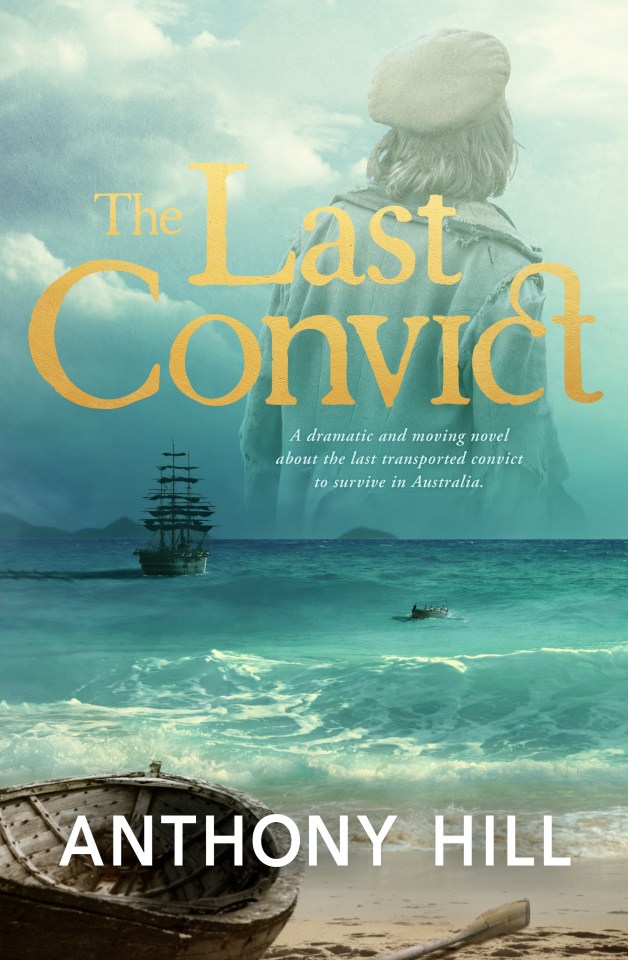
Publisher: Michael Joseph (Trade Paperback – 2 February 2021)
Series: Standalone
Length: 368 pages
My Rating: 4 out of 5 stars
Acclaimed Australian author Anthony Hill once again dives into the unique history of Australia’s colonial past with a fascinating examination of a truly remarkable individual in The Last Convict.
Perth, 1938. Samuel Speed in an old man living his last days in a dreary public-run home for destitute old men, with no family or friends to take him in. At 98 years old, Samuel knows that he does not have long to live and is content with his lot in life, but an unexpected opportunity to tell his tale has been given to him. A local newspaper has requested an interview with him after they discover that he is the last person left alive who was transported as a convict to Australia.
As Samuel begins his interview, he is transported back to his past to a fateful day in Oxford in 1863 when, as a young, starving teenager, he helped set a barley stack alight in the hopes of being arrested to receive food and a warm bed in prison. However, he is unprepared for the full consequences of his actions when a judge harshly sentences him to seven years hard labour on the other side of the world. Boarding the transportation ship, Belgravia, everything from his past is taken from him, including his name, and he begins the long, arduous journey to Fremantle Prison in Western Australia.
Forced to endure years of backbreaking labour, isolation and enforced routine on his life, Samuel’s only relief is a newfound love of reading, as he enjoys escapism in several classic novels. Eventually obtaining his ticket of leave in 1867 and full freedom in 1871, Samuel seeks to forge a new life for himself. However, as he continues to work hard, he soon begins to understand that even though he is no longer in prison, he is still very much trapped by circumstances outside of his control. What kind of man will Samuel become, and how deep does a person’s life sentence truly run?
The Last Convict is a fantastic and powerful historical novel from Anthony Hill that provides an impressive examination of an intriguing figure from Australia’s history. Hill is an intriguing author from my home city of Canberra who has written several historical novels throughout his career, all of which examine unique individuals from Australia’s past, such as his novel Captain Cook’s Apprentice which followed a cabin boy aboard the Endeavour as it made its journey to Australia, or Soldier Boy, which followed Australia’s youngest-known soldier during WWI. This latest novel from Hill continues this trend as the author takes a look at Samuel Speed, the last known surviving convict transported to Australia from England.
I really enjoyed the excellent narrative that Hill pulled together for his latest novel, and The Last Convict proved to be an exciting and fascinating tale of survival and determination. Thanks to a trove of intriguing historical information and articles (all of which is either provided or referenced at the end of the novel), Hill provides the reader with a detailed and compelling bibliographic tale of Samuel’s life. The story is set around a real-life interview that Samuel Speed had with the Mirror in 1938, and The Last Convict showcases both the elderly Speed sitting down for the interview and his visions of the past as he gets wrapped up in his captivating memories. The resulting tale is a powerful and stirring narrative that combines historical fact, obtained from both the interview and other sources, as well as some dramatisation from the author. I really enjoyed the clever narrative that resulted and I think that Hill did his historical protagonist justice, painting him as a conflicted and entertaining figure with both regrets and contentment about how his life turned out. While many of the events that occurred in this novel have a strong historical basis, Hill did make several leaps (which he acknowledges in his notes) throughout the book. I think that a lot of these literary creations of the character’s life worked well, and I like to think that Samuel was the amiable bibliophile that Hill made him out to be. I found myself really getting drawn into this epic and captivating tale, especially as the author did a fantastic job portraying a number of fascinating scenes, locations and events from history, and it painted a vivid picture. I also quite enjoyed the way in which Hill told the story through an excellent combination of flashback sequences and scenes featuring the older Samuel telling his tale to the newspaper. All of this results in a fantastic and enjoyable narrative and I am really glad that I got the chance to experience this interesting take on the intriguing figure that was Samuel Steel.
One of the things that I loved the most about The Last Convict was the exceptional amount of historical detail that the author chucked into this book. Hill is a massive history buff who has done an impressive amount of research for this novel, and he goes out of his way to populate this novel with all manner of facts and fascinating depictions of day-to-day life that a person like Samuel Steel would have experienced. As a result, the reader gets a captivating, comprehensive and authentic-feeling examination of the convict experience in the latter half of the 19th century. This includes fantastic depictions of how a person would be tried; their incarceration in England, including some of the horrendous bits of hard and painfully repetitive labour they would be required to undertake; all the way up to their transportation across to Western Australia. The author also dives into the experiences of a convict living in Western Australia in the second half of The Last Convict, and there are some fantastic and intriguing discussions about what a person would have experienced once they arrived in a vast new land. I found all the discussion about the various tasks, the intricate tickets of leave and day-to-day life of a convict locked up in Freemantle Prison (which is a cool building to visit) to be exquisitely done, and the reader gets an amazingly wide-ranging amount of knowledge on the subject.
Another fun historical aspect of the novel was the range of entertaining historical anecdotes that the character of Samuel Steel told to the reporter during the story regarding major historical figures that Samuel would have had knowledge of. Not only do these anecdotes help to flesh out the story and help to fit into a couple of minor references featured in the Mirror interview, but they also proved to be a rather intriguing inclusion. Hill goes into substantial detail recounting tales of several outrageous and famous Western Australian historical figures and their major moments, which included infamous prison escapes and other shenanigans. I found these parts of the book to be incredibly fascinating, especially as I was unfamiliar with several of the stories that were mentioned, including one mass escape of Irish convicts that nearly started an international incident between the colony of Western Australia and the United States. These stories added some great context to Samuel’s tale and helped the reader to envision the lives of other convicts or people in power that may have had some influence over the protagonist’s way of life or who he may have gossiped about. I also quite liked the author’s decision to make Samuel a fan of classic novels, which was added in due to a passing reference to a Mark Twain story that Samuel made during his interview, and because Samuel had an association with the Braille Society, who ended up burying him. Hill expands on this to paint Samuel as a lover of other novels, especially Dickens, and suggests that he would have started reading whilst a convict looking to pass the time. Not only is this a rather likeable and relatable character trait, but it allowed the author to explore what sort of literary works a person like Samuel might have been interested in and may have had access to. I enjoyed the author’s depictions of this classic novels and the protagonist’s potential reaction to them, and it proved to be an intriguing part of the book’s plot. Overall, I felt that all these cool historical elements really helped to elevate Hill’s story within The Last Convict and readers are in for a fantastic blast of information about colonial Western Australia that is extremely fascinating and interesting.
The Last Convict is another clever and meticulously researched Australian historical fiction novel from Anthony Hill that provides the reader with a powerful and compelling window into the life of an interesting figure from history. Loaded with Hill’s usual intense levels of fascinating historical detail, I had a lot of fun reading The Last Convict. I look forward to seeing which Australian historical figure Hill looks at in his next book and I will be grabbing a copy to read.
 The Unseen Library