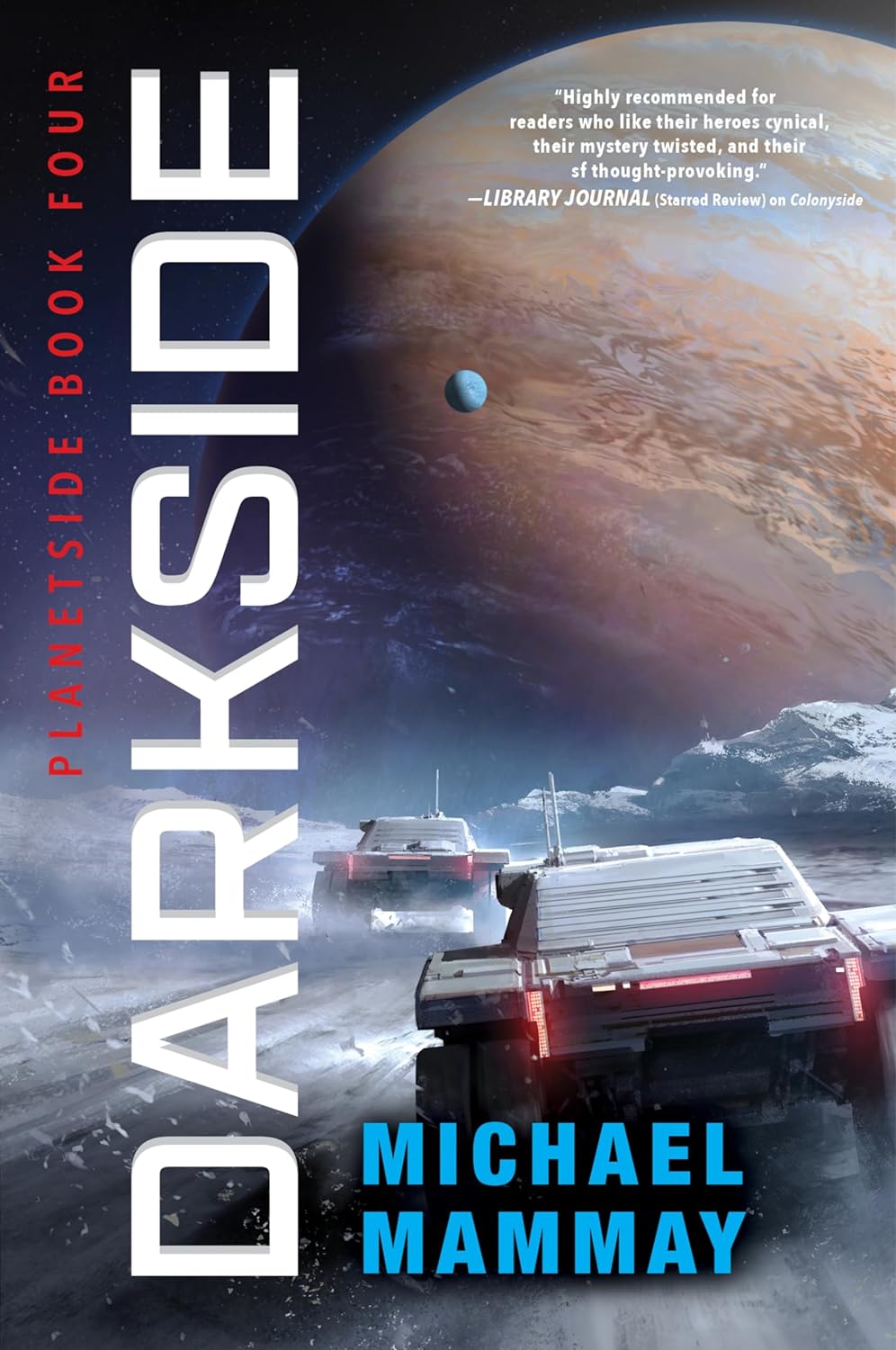
Darkside by Michael Mammay

Publisher: Harper Audio (Audiobook – 24 September 2024)

Series: Planetside – Book Four

Length: eight hours and six minutes

My Rating: 5 out of 5 stars

Amazon

One of my favourite science fiction authors returns with another fantastic and compelling military thriller in space, the highly addictive Darkside by Michael Mammay.

Back in 2018 I had the very great pleasure of reading the debut novel of new author Michael Mammay, Planetside.  An intriguing science fiction thriller that sent a retiring military officer to an alien planet to find a missing soldier, Planetside turned into quite the clever and exciting read, and I really got attached to its complex narrative and maverick protagonist.  Ending on a massive and well-written twist, Planetside was an exceptional read and was one of my favourite books of 2018.  The series continued strong from that point on as Mammary released more cool additions to the Planetside series, each of which pit the protagonist against human corruption and corporate greed in the depths of space with Spaceside (one of my favourite books of 2019) and Colonyside (one of my favourite books and audiobooks of 2021).  I have been curious to see if Mammay was planning to continue this series going forward, and I was nicely surprised earlier this year to find out that there was a fourth book coming out with Darkside.  One of my most anticipated books of 2024, Darkside was an intriguing entry to the series that once again forced the author’s protagonist to deal with old corporate threats on a distinctive new environment.

Colonel Carl Butler, former military officer turned genocidal fall-guy, has had an interesting life since his retirement from the military.  Thanks to the machinations of both the government and powerful corporation, Butler has found himself drawn into multiple conspiracies, and his direct way of dealing with the resulting controversy has made him infamous throughout the galaxy, as well as making him some very dangerous enemies.

Attempting to live out a quiet life on a remote planet, Butler finds his retirement once again disturbed when a young girl tracks him down, requesting his help in finding her missing father.  Finding it hard to say no to the desperate girl, especially when it becomes clear that something truly sinister has befallen her father, Butler reluctantly agrees to help, not realising the trouble he is about to find himself in again.

The missing father, Jorge Ramiro, had been working as the assistant for a famous archaeologist on the isolated moon of Taug.  With no electronic trace of Jorge remaining on the planet, Butler and his team chart a ship to the mining operations of Taug to find him.  However, Butler soon finds his investigation complicated by the fact that he has history with the two consortiums who control mining on Taug, Caliber and Omicron, as both have tried to kill him in the past.  Determined to find the truth no matter what, Butler relentless follows the dwindling trail of clues before him, even when that leads to the dangerous dark side of Taug where secrets lie hidden, and the two corporations are free to act without repercussion.

Michael Mammay presents another outstanding and impressive science fiction thriller that drags the reader in with its elaborate tale of intrigue, secrets, and one determined man seeking to fight the system.  Featuring a great combination of elements and a fantastically fun protagonist, Darkside was a brilliant addition to the Planetside series, and I had such an amazing time with it that it gets a full five-star rating from me.

I felt that Mammay produced another exciting and captivating narrative for his fourth Planetside book that ties in nicely to the rest of the series while providing readers with an excellent and entertaining ride capable of standing on its own feet.  Once again bringing in series protagonist Carl Butler to investigate a mysterious case on a new planet, Darkside features a fantastic tale of mystery, corporate antics and deeper intrigue.  The author does a great job of quickly setting the scene at the start of Darkside before dropping the protagonist right into the action as they attempt to find the missing father on Taug.  Seeking information from both corporations on the moon, Butler initially starts a methodical and low-key investigation.  However, things get tricky when Butler and his team discover evidence of a major coverup, and the protagonist is forced to pit the corporations against each other in his attempts to find the missing person.  This complex first half proves to be an excellent start to the novel, and Mammay ensures that the tension, stakes and mystery rise at an effectively rate, keeping the reader’s attention the entire way through.

Things take a very exciting turn around halfway through Darkside, as Butler’s investigation provoke action from his opponents that results in some extremely dramatic and intense moments.  While I had been enjoying the investigation and intrigue of the first half of the book, it was fun to dive into something much more action packed for the second half, and I really enjoyed the exciting direction that Mammay took the story.  There are some great reveals here, and I love how complicated the various corporate lies and agendas became at times.  Everything leads up to a very intense final set of sequences, as Butler finds his back against the wall and is forced to decide which devil to have in his corner.  There are some great twists here, as well as a cool chapter told from the perspective of one of the series’ major supporting characters, and it leads up to a particularly intense and moving conclusion that perfectly fit the overarching anti-corporate message of the entire series.

Darkside has an excellent and addictive style to it that really draws the reader in.  Told from the perspective of the cynical, but realistic, Colonel Butler, readers are presented an outstanding thriller novel expertly set in a futuristic setting.  Starting off with a mystery of a missing person, the story evolves into a more elaborate game of intrigue as the protagonist attempts to outsmart two rival companies.  Mammay hits the right blend of manipulation, investigation and action throughout Darkside, and readers are presented with a great story that thrills the reader while dragging them further in with the curious mystery.  This story is well set by the moon of Taug, which proves to be an outstanding setting for this intense novel.  Not only does Mammay provide some striking descriptions of this desolate moon, but the isolated nature of it, as well as more scientific elements like gravity and composition, are well utilised in the plot, creating problems and opportunities for the protagonists.  Whilst Darkside is part of a larger series, for the most part it is a standalone novel that new readers can easily dive into, especially as there is an effective summary at the front to fill in some major details about the protagonist and his previous outings.  I think I had a bit more fun having read the previous books first, especially as you appreciate how Butler’s relationship with some of the supporting characters has grown, as well as having a better understanding the protagonist’s adversarial relationship with the corporations on the moon.  Darkside was such a great addition to this series, and I had an exceptional time powering through this novel in record time.

Another major element of Darkside, and indeed the entire Planetside series, that I come to really enjoy, was the outstanding characters who sat at the heart of the story and who add some real emotional depth to the book.  This primarily refers to the protagonist and point-of-view character, Colonel Carl Butler, who is very fun to follow.  A former career soldier trying to enjoy retirement, Butler has been hit by controversy, betrayal and the downside of duty, which has made him infamous and forced him to live on a remote planet.  Despite this, he is still a cheerful figure whose desire to do good forces him into another adventure.  Witty and honourable, Butler has a very eccentric personality that results in most of Darkside’s humour, and you have to laugh at some of his clever thoughts and responses to the dark events around him.  Despite having a seemingly carefree, easy-going attitude, Butler is a canny operator at this point in the series, and it was great to see how he has finally learnt from his previous experiences of dealing with corrupt corporations.  I also really enjoy how Mammay portrays Butler’s thought process in this novel, as you get to see him weighing the options and impacts of his various potential actions, and seeing the steps Butler takes to make his decisions makes him a little more human and relatable to the reader.  As such, you really get caught up in Butler’s latest crusade, and it proves hard not to root for him the entire way, even despite his dark history.

In addition to Butler, Mammay also features a great supporting cast of characters in Darkside, most of whom play off Butler extremely well.  This includes the returning characters of Mac and Ganos, Butler’s bodyguard and computer expert respectively, who once again saddle up to help.  Mammay works these two characters back into the plot quickly and effectively, and it was great to see this team in action again.  Mac and Ganos serve as an entertaining support to Butler, especially as by this point, they have learned to anticipate their boss’s likely course of action.  I really enjoyed seeing the close camaraderie and support these three had together, and it there were some excellent and moving moments as a result.  The rest of the case also worked well around these central characters, with several new members of Butler’s team providing some intriguing plot options.  Throw in the usual collection of local soldiers who work with Butler, and a group of manipulative corporate officers who serve as the antagonists, and the cast of Darkside proves to be a fantastic part of the book, and I loved seeing them all in action.

I ended up enjoying Darkside on audiobook, which has been my preferred way of enjoying the Planetside books, primarily because of the inclusion of R. C. Bray as the narrator.  Bray, who is one of my favourite audiobook narrators, did another exceptional job voicing the characters in Darkside, and I love how well his gruff and rich voice fits Colonel Butler.  Bray’s voice work perfectly captures Butler’s sarcastic, pragmatic and rebellious streak, and you really get caught up in this excellent narrator’s central performance.  In addition to his excellent portrayal of Butler, Bray also brings all the supporting cast to life in fun and effective manner, with each character given their own distinctive voice or accent.  I particularly enjoyed the fun voice he gave to Butler’s right-hand man, Mac, which was handy considering Mac got a lengthy chapter from his perspective that really popped in Bray’s voice.  I honestly don’t think I would have enjoyed Darkside quite as much without having Bray read it out to me, and I have so much love for the paring between Bray and Mammay’s great writing.  Coming in with a runtime of just over eight hours, most people will be able to power through Darkside very quickly, and I honestly found it very hard to stop listening to this audiobook, which comes very highly recommended.

Michael Mammay continues to impress with Darkside, a brilliant addition to his fantastic Planetside series that proves hard to turn away from.  Clever, exciting, and featuring a well-written and intense story, Darkside is one of Mammay’s best Planetside novels yet, and I cannot wait to see how he continues the story in the future, especially as the rascally protagonists keeps making more and more enemies.

Amazon

Top Ten Tuesday – My Favourite Audiobooks of 2024

Top Ten Tuesday is a weekly meme that currently reside at The Artsy Reader Girl and features bloggers sharing lists on various book topics.  The official topic for this list involved listing the ten top books you hope that Santa would bring you this year.  While this is a fun sounding topic, I am instead going to continue my annual end of year wrap up of the best books I read in 2024.  In previous weeks I have highlighted some of the best pre-2024 novels, best new-to-me-authors and best 2024 sequels I read in the last year.  However, this week I am going to look at something near and dear to my hear, the best audiobooks of 2024.

Readers of this blog only need to check out my extensive audiobook category to the right to know that I have a lot of love for the audiobook format.  In my opinion, the audiobook is often the best way to experience a good book and in many cases this format makes a novel far more enjoyable.  As a result, I listened to quite a few audiobooks this year, and while a good chunk of them were books released before 2024 and featured in my Throwback Thursday posts, most were released this year.  There were some truly outstanding and impressive audiobooks released in 2024 and I knew going in that I was going to have an extremely hard time coming up with a final version of this list.

For this list I have only included audiobooks released in 2024 that I have listened to, which left me with a long list of extremely impressive audiobooks which I wanted to include in this post.  To help cut this down, I considered a range of factors, including the quality of the original novel, the skill of the narrator, production value, pacing and other features.  Looking at all this I was eventually able to cut the list down to the absolute best 10 audiobooks, with my typical generous honourable mentions section.  I had to make some very hard decisions here, and I ended up excluding several extremely good audiobooks from the main list.  Still, I think it really represents the best audiobooks I enjoyed this year and there are some amazing productions below.

Honourable Mentions:

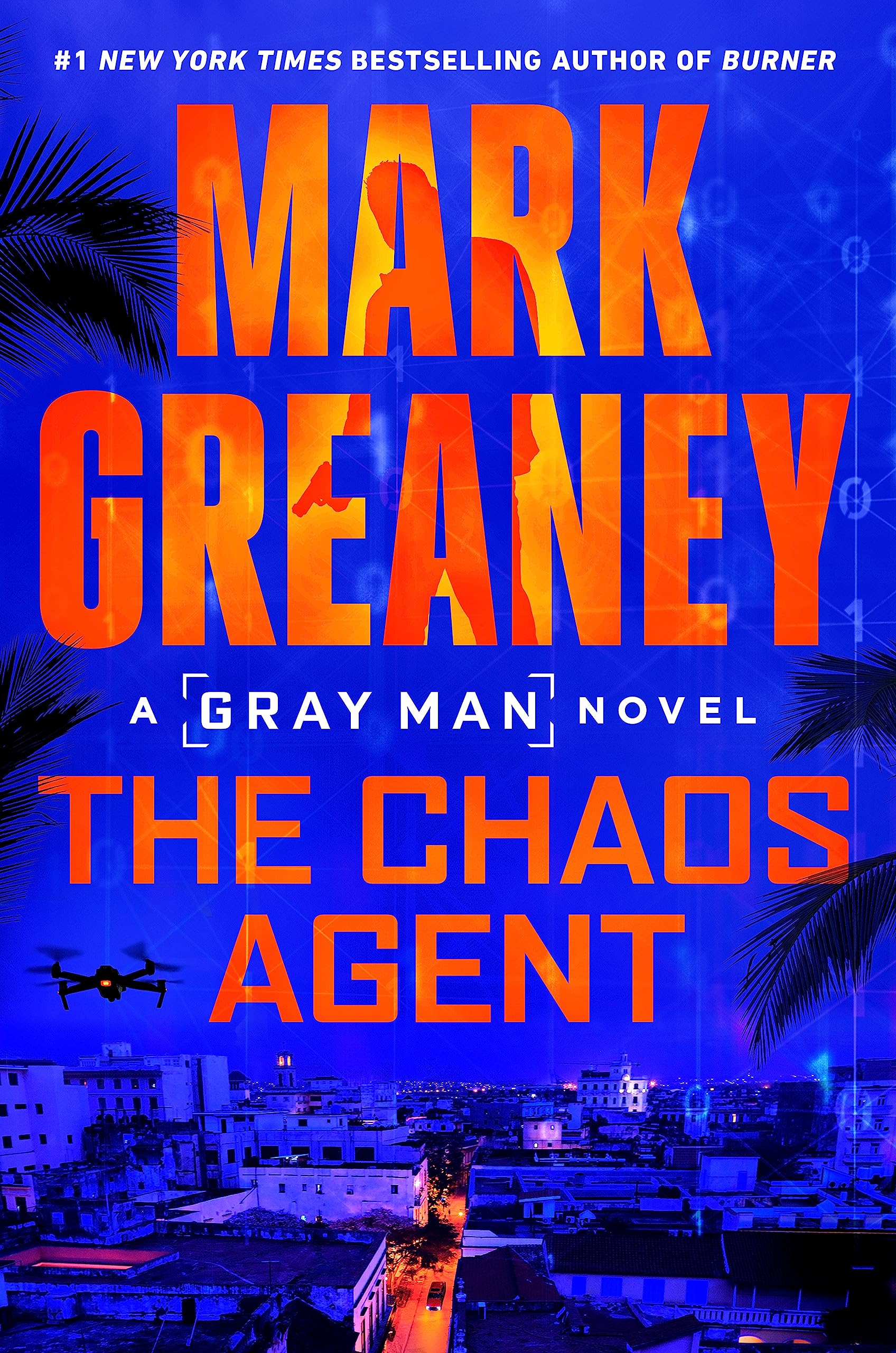
The Chaos Agent, written by Mark Greaney and narrated by Jay Snyder

An excellent continuation of the Gray Man series once again read out by Jay Snyder.

Amazon


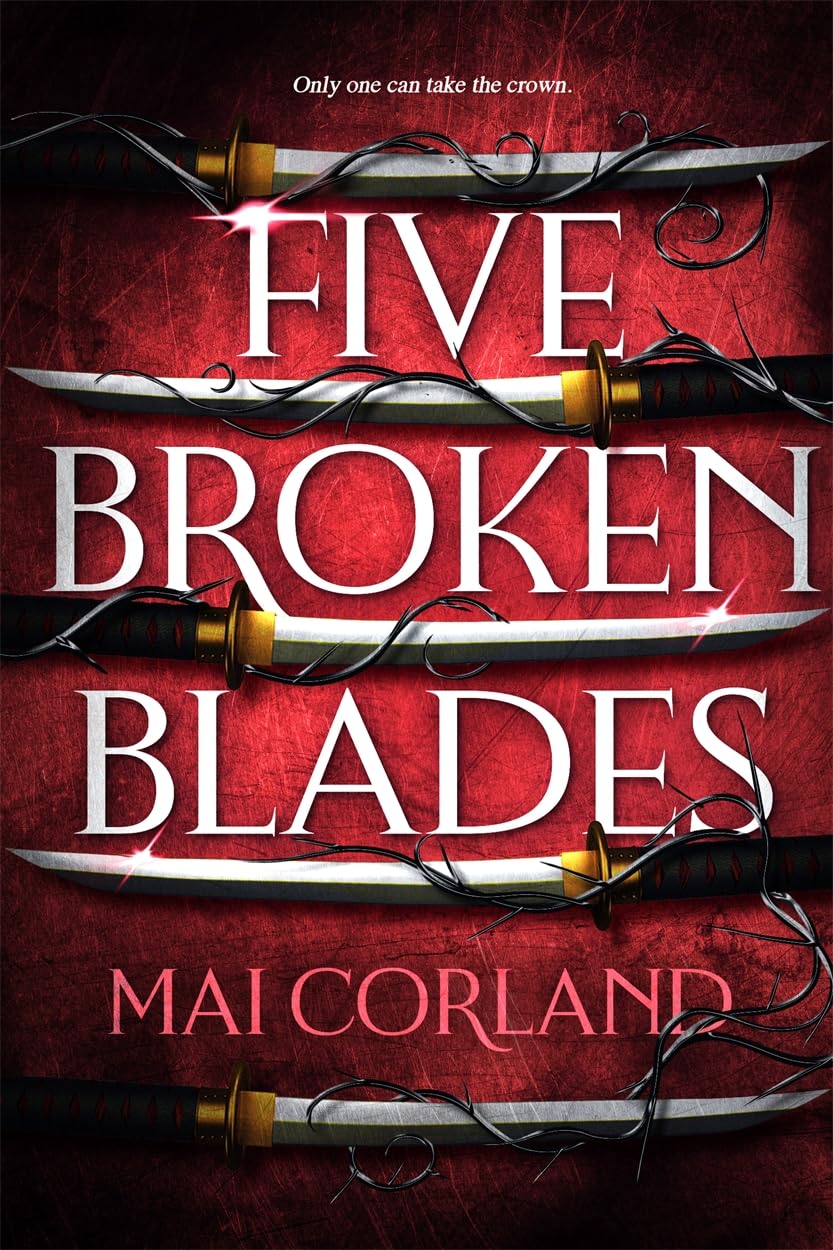
Five Broken Blades, written by Mai Corland and narrated by Greg Chun, Zion Jang, Roger Yeh, Donald Chang, Jaine Ye and Sophie Oda

A fun fantasy novel that was perfectly brought to life by a brilliant team of narrators.

Amazon


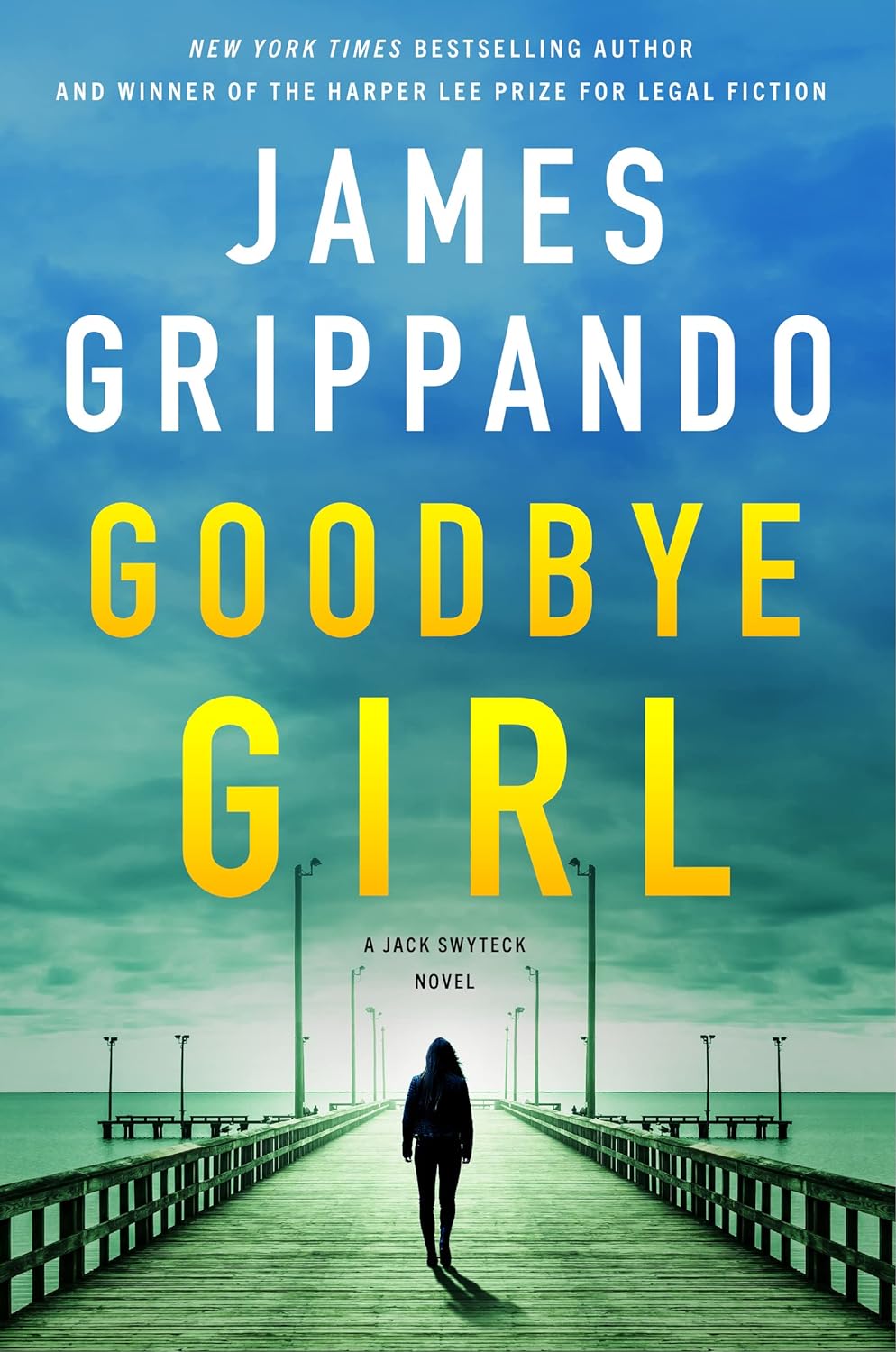
Goodbye Girl, written by James Grippando and narrated by Jonathan Davis

One of my favourite Star Wars narrators, Jonathan Davis, made this excellent legal thriller particularly awesome to listen to.

Amazon


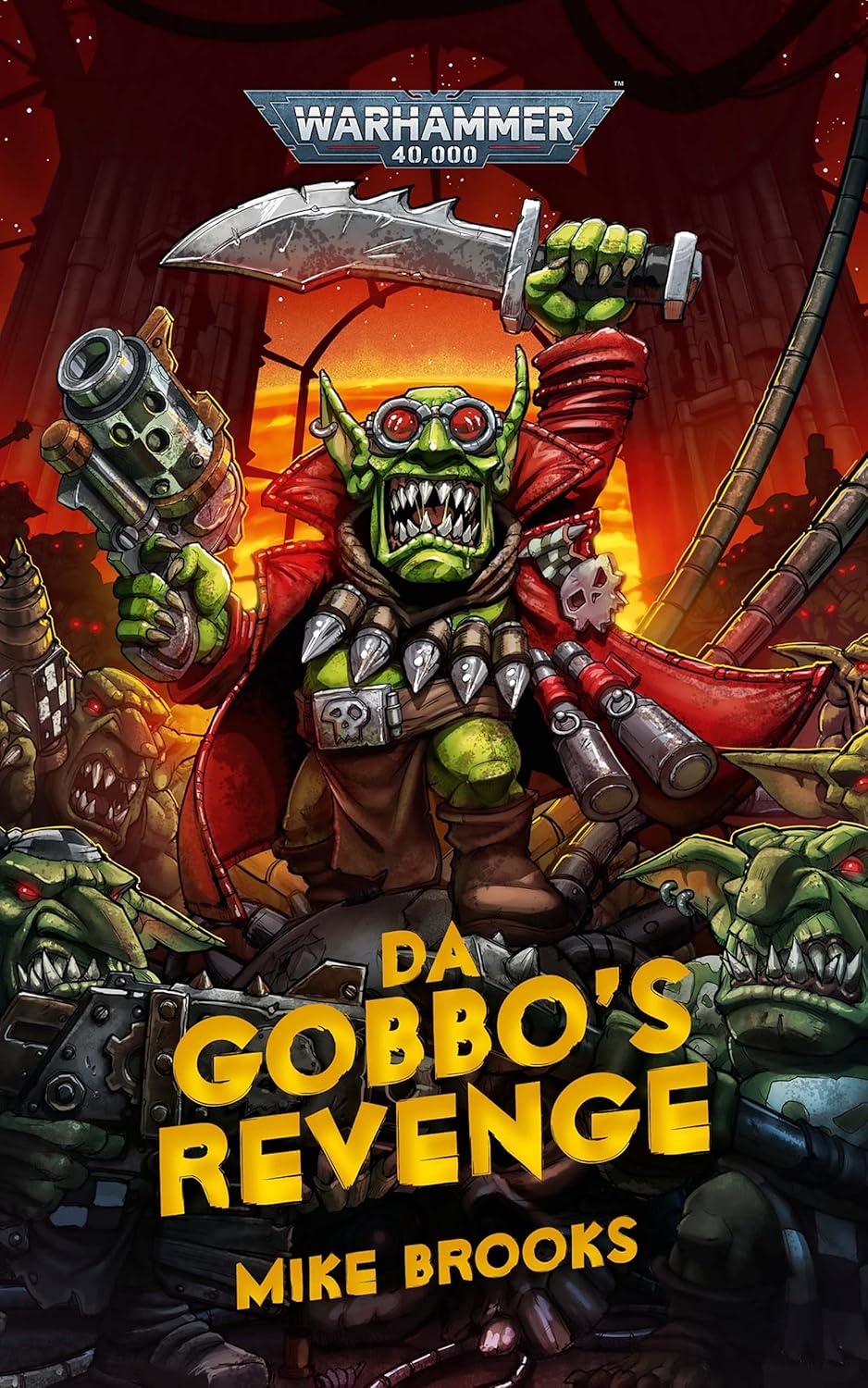
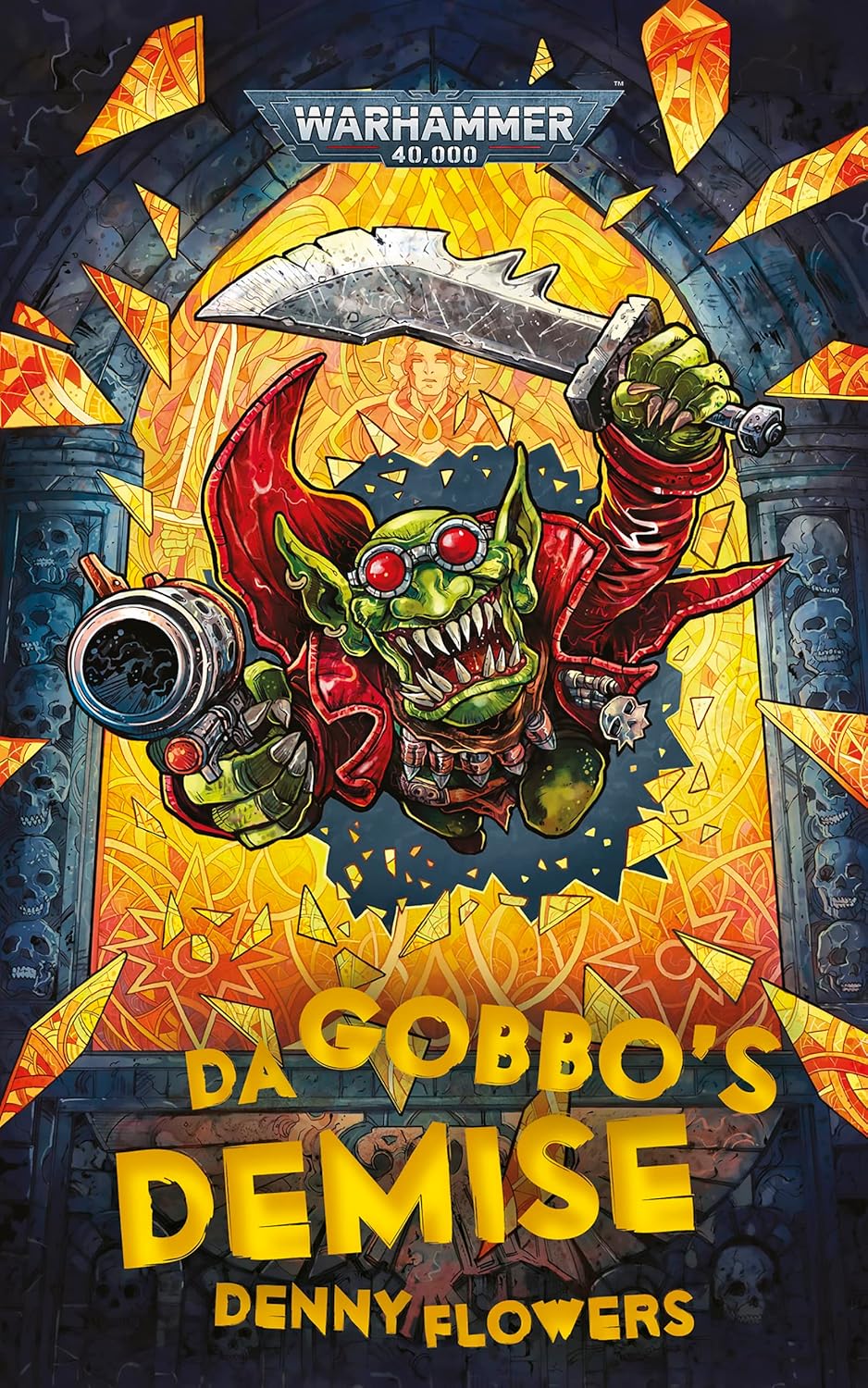
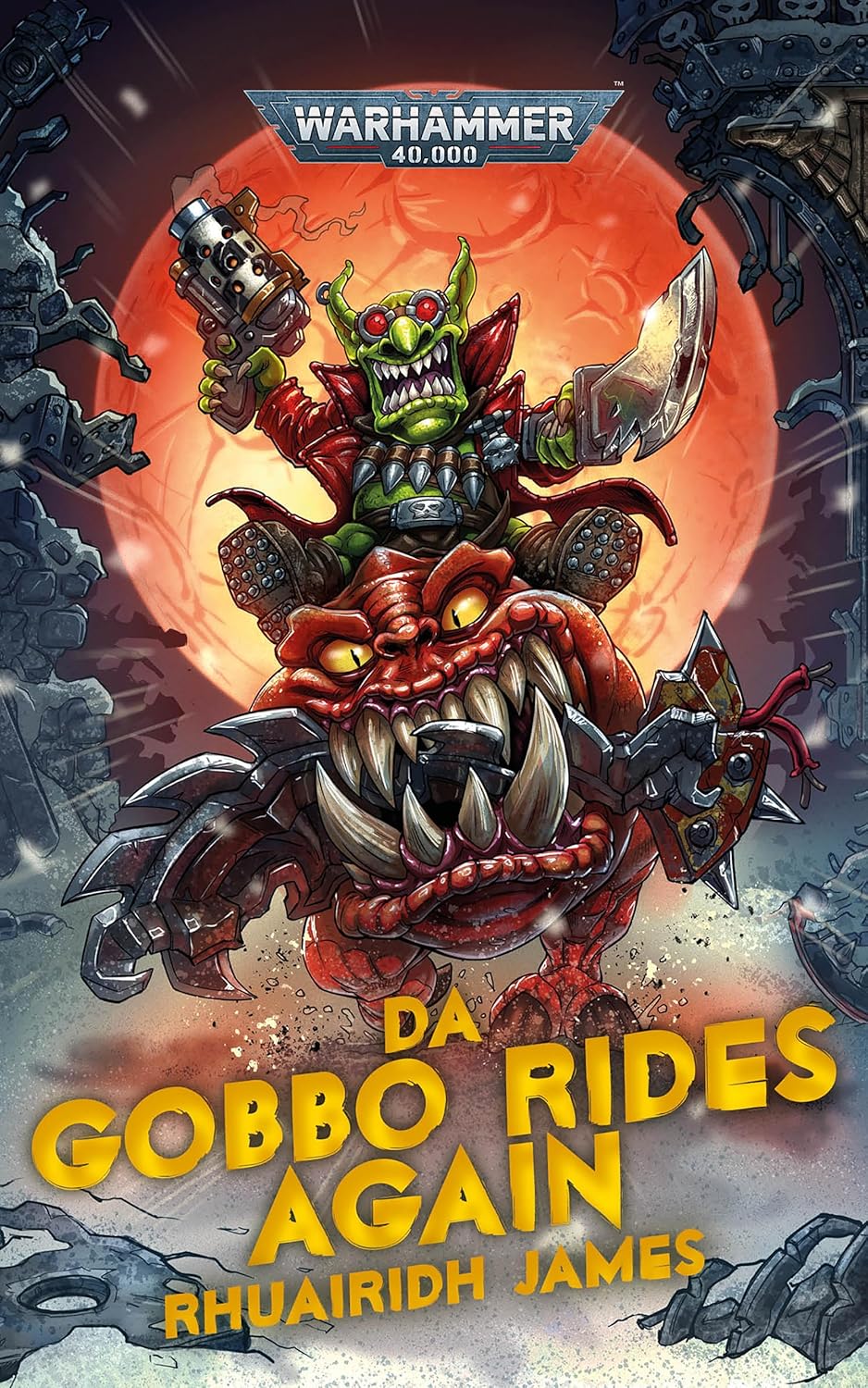
Warhammer 40,000: Da Red Gobbo Collection, written by Mike Brooks, Denny Flowers and Rhuairidh James, narrated by Harry Myers

Three fantastic authors present an array of outstanding Warhammer 40,000 stories around a legendary figure, Da Red Gobbo, all of which is narrated by the highly talented Harry Myers.

Amazon

Top Ten List:

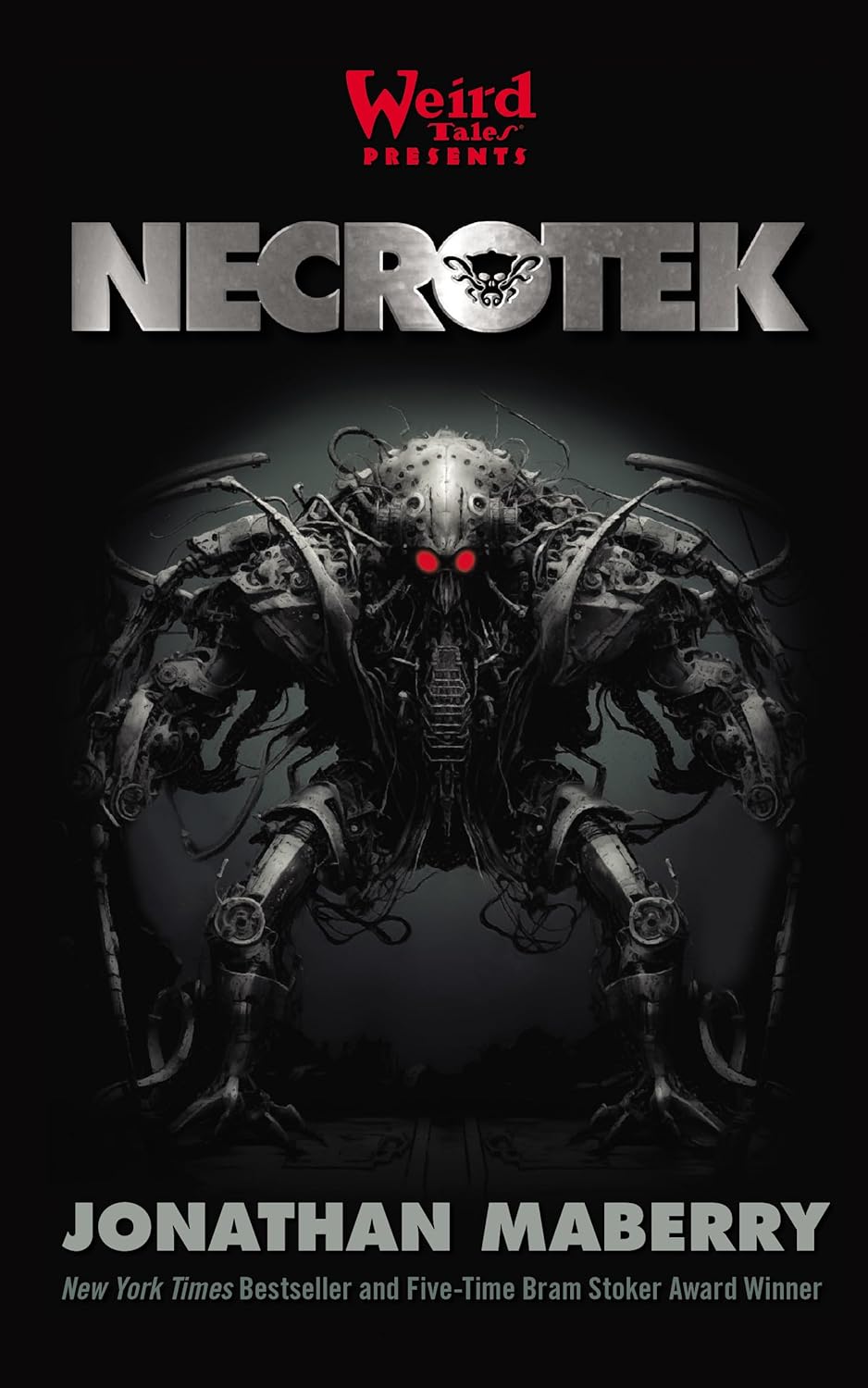
NecroTek/The Dragon in Winter, written by Jonathan Maberry and narrated by Ray Porter

First up on this list we have a double entry, as we were lucky enough to get two books from one of my favourite authors, Jonathan Maberry.  Made up of the dark science fiction adventure, NecroTek, and the brilliant fantasy epic, The Dragon in Winter, both of which were particularly awesome.  I chose to combine these two audiobooks into a single entry here, due to the fact they both shared the same narrator in the legendary Ray Porter.  Porter, who is one of my favourite audiobook narrators, is synonymous with Maberry at this point, having lent his voice to most of the author’s books while always providing an exceptional performance.  I love how well Porter’s narration enhances Maberry’s exceptional novels, and it makes these audiobooks extremely special.  As such, I had to include them here, and both NecroTek and The Dragon in Winter come highly recommended as some of the best audiobooks of the year.

Amazon


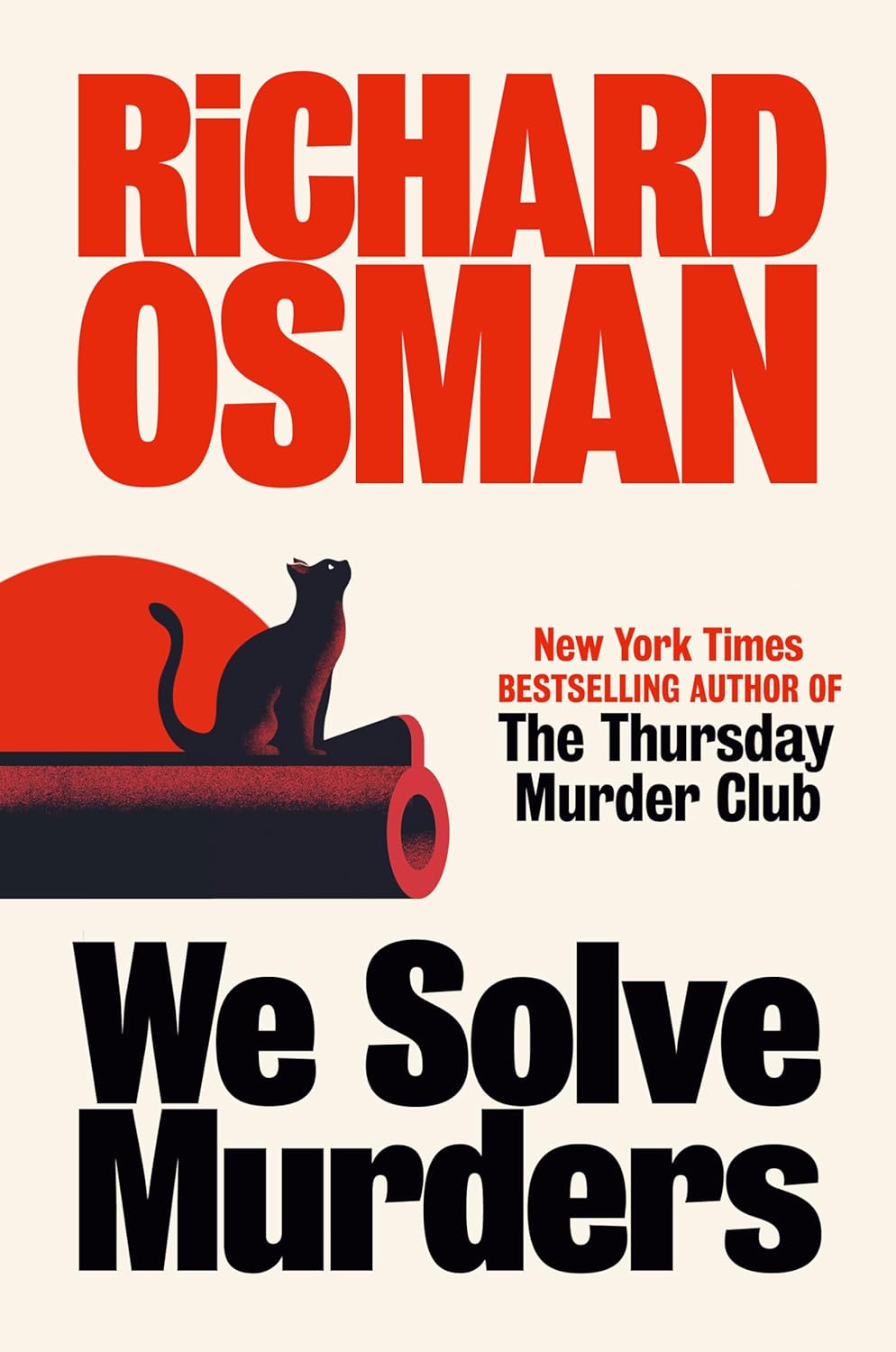
We Solve Murders, written by Richard Osman and narrated by Nicola Walker

After wowing us with the first four Thursday Murder Club books (The Thursday Murder Club, The Man Who Died Twice, The Bullet That Missed and The Last Devil to Die), Osman went on a different path this year with the clever and fast-paced thriller, We Solve Murders.  A particularly fun book that combines Osman’s classic humour with a brilliant and intense story, We Solve Murders was another exceptional read that I couldn’t get enough of, especially in its audiobook format.  Thanks to the impressive narration of actress Nicola Walker, We Solve Murders was an extremely awesome listen that made the elaborate narrative became even more fantastic.  A truly great audiobook production that you won’t be able to stop listening to it.

Amazon


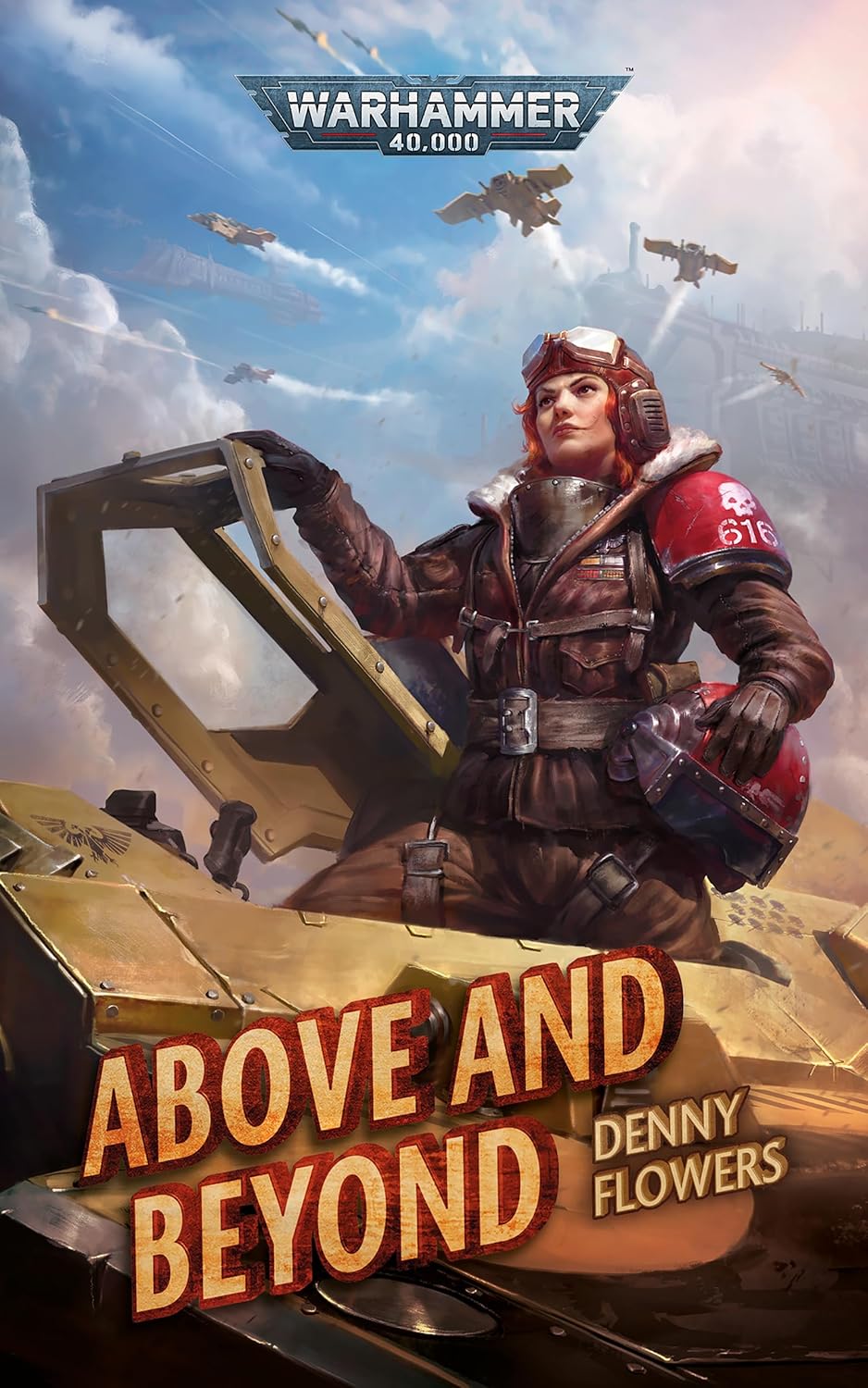
Warhammer 40,000: Above and Beyond, written by Denny Flowers and narrated by Phillip Sacramento

I have a few Warhammer 40,000 audiobooks on this list, but one of the most unique and compelling was Above and Beyond by Denny Flowers.  The sequel to one of my favourite Warhammer 40,000 novels, Outgunned, Above and Beyond brought together a damaged propaganda expert and a broken hero into a cynical and entertaining adventure that really dives into the dark side of the Warhammer universe.  Funny, powerful and featuring an outstanding story, Above and Beyond was so damn good, and it was even better when listened to on audiobook.  Phillip Sacramento perfectly captures the grim themes of Flowers’ writing with his narration, and you soon become enthralled in following the book’s damaged characters on their new adventure.  An exceptional and amazing listen, you will not be dissatisfied with this Warhammer 40,000 audiobook.

Amazon


The Fury of the Gods, written by John Gwynne and narrated by Colin Mace

John Gwynne brings his epic Bloodsworn Saga fantasy series to a powerful end with the brutal and impressive The Fury of the Gods.  Finalising a series of great character arcs and pushing his protagonists into one particularly deadly war, The Fury of the Gods was everything I could have hoped for, and I loved how it wrapped up the storylines previously raised in The Shadow of the Gods and The Hunger of the Gods.  I had a fantastic time with this novel, and I particularly enjoyed the cool audiobook version that was narrated by Colin Mace.  Mace brings so much energy to this narrative, and his excellent take on the characters turns this into an outstanding listen.

Amazon


Darkside, written by Michael Mammay and narrated by R. C. Bray

One of the most awesome and fun science fiction audiobooks of 2024 had to be Darkside by Michael Mammay.  Mammay, who previously impressed me with his previous books, Planetside, Spaceside and Colonyside, produced an intriguing fourth entry to his Planetside series with Darkside, as his maverick protagonist investigates a new conspiracy driven by corrupt corporations.  This fourth entry was such a great listen on audiobook, especially as it featured the return of the always incredible R. C. Bray as narrator.  Bray, who has such a distinctive voice and style, helps to make this audiobook even more special, and I had so much fun with Darkside as result.

Amazon


Warhammer 40,000: Lord of Excess, written by Rich McCormick and narrated by Richard Reed

Another particularly cool Warhammer 40,000 audiobook in 2024 was Renegades: Lord of Excess.  The debut novel of Rich McCormick, Lord of Excess followed a band of hedonistic Chaos Space Marines as they conquer an isolated planet, only to have everything come crashing down around them.  A fascinating and captivating addition to the Warhammer 40,000 canon, Lord of Excess was an amazing read from McCormick, and like most Warhammer 40,000 books is deeply benefited from its audiobook format.  Not only does the outrageous story really come to life when read out, but narrator Richard Reed ensures all the larger-than-life characters are perfectly showcased.  A truly outstanding Warhammer audiobook that I had such a great time with.

Amazon


Point Nemo, written by Jeremy Robinson and narrated by R. C. Bray

Few audiobooks were as epic this year as Point Nemo by Jeremey Robinson, which was also narrated by R. C. Bray.  A fast-paced and highly awesome science fiction thriller, Point Nemo had an outstanding plot behind it that followed a band of adventurers as they attempted to uncover the secrets of an island created from alien spores.  The story and action of Point Nemo are very amazing on their own, but I felt that the narration of Bray added even more to it, and I was very impressed by all of Bray’s amazing performances this year.  An exceptional listen that I cannot recommend enough.

Amazon


A Tide of Black Steel, written by Anthony Ryan and narrated by Steven Brand

Acclaimed fantasy author Anthony Ryan followed up his Covenant of Steel series (The Pariah, The Martyr and The Traitor) in a big way with the new book, A Tide of Black Steel.  Featuring an exciting and intriguing new narrative that expands Ryan’s existing setting, A Tide of Black Steel was an epic fantasy novel that I had so much fun with, especially on audiobook.  It helped that the narrator of the Covenant of Steel audiobooks, Steven Brand, once again lent his voice to proceedings, and the resulting production was a powerful and amazing production that I couldn’t stop listening to.

Amazon


Warhammer 40,000: Da Big Dakka, written by Mike Brooks and narrated by Harry Myers

The final Warhammer audiobook I need to feature on this list is the outstanding and hilarious Da Big Dakka by Mike Brooks.  The sequel to Brooks’ previous novels, Brutal Kunnin and Warboss, Da Big Dakka follows a rowdy group of orks who raid the most dangerous city in the Warhammer 40,000 universe.  A clever read that I laughed the entire way through, especially with the fantastic narration of Harry Myers, who always perfectly captures the rowdy orks and their eccentric enemies.  This was a really impress audiobook and I had a wonderful time listening to it.

Amazon


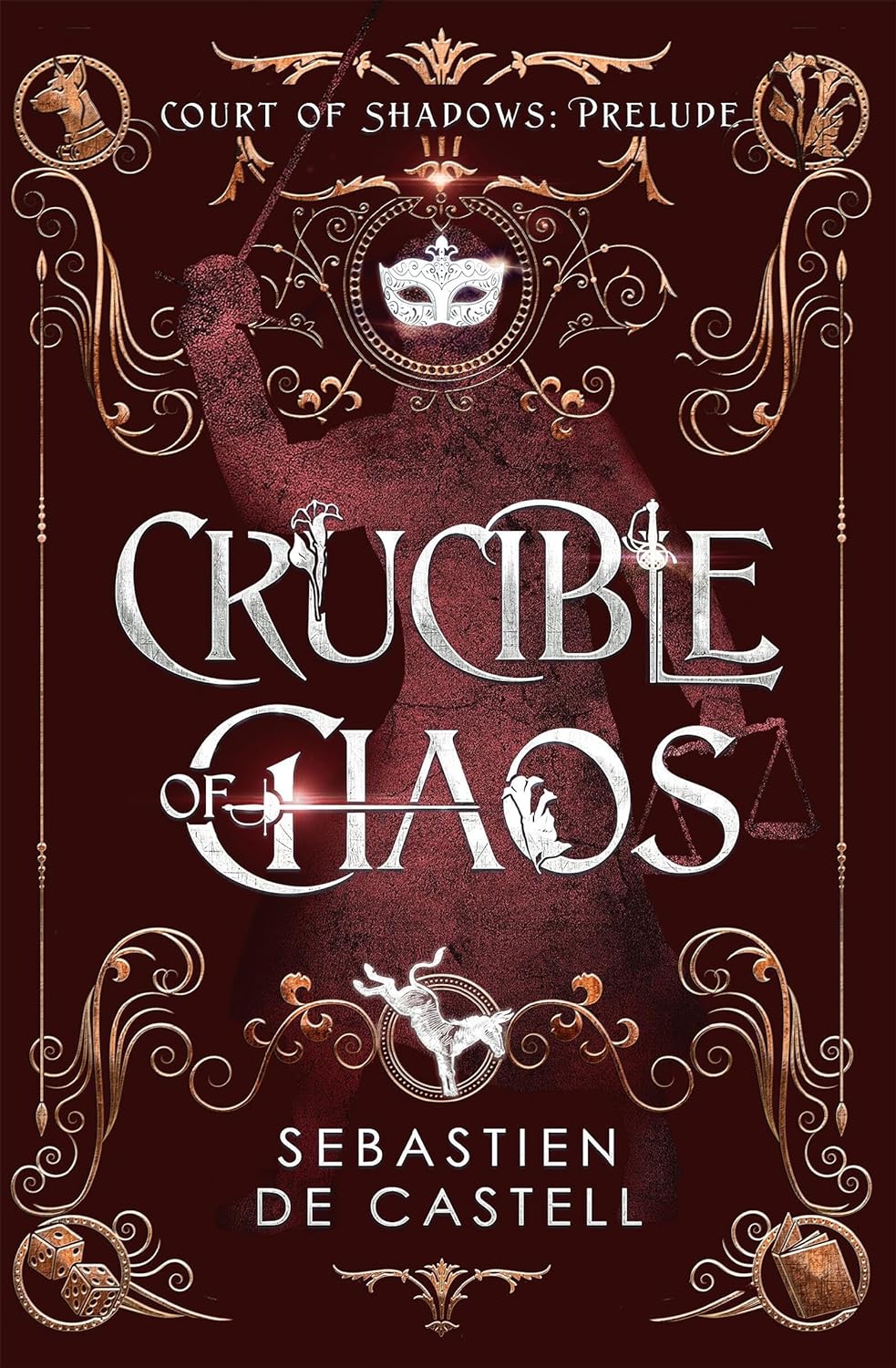
Crucible of Chaos, written by Sebastien de Castell and narrated by Joe Jameson

I am slightly cheating with this final entry as Crucible of Chaos came out in 2023.  However, due to its late December 2023 release, as well as it’s connection to the early 2024 novel, Play of Shadows, I have decided to include it as part of this list.  Crucible of Chaos was an exceptional book from talented fantasy author Sebastien de Castell, that saw an unlikely investigator and his noble steed attempt to uncover the cause of insanity and chaos in a famous monastery.  A clever and funny read, Crucible of Chaos was an impressive audiobook, and I had a lot of fun with how Joe Jameson, another favourite narrator of mine, brought it too life.

Amazon


Well that is the end of this latest Top Ten list, and as you can see, I have been lucky enough to listen to some awesome audiobooks this year (although I clearly focused a little too much on Warhammer fiction).  All the above audiobooks are extremely good and I would highly recommend each of them in their audiobook format.  Let me know what your favourite audiobooks of 2024 were in the comments below, and make sure to check back next week to see what my overall favourite novels of the year were.

NecroTek by Jonathan Maberry

Publisher: Blackstone Audio (Audiobook – 28 May 2025)

Series: NecroTek – Book One

Length: 15 hours and 24 minutes

My Rating: 5 out of 5 stars

Amazon

One of the leading authors of action-packed fiction, Jonathan Maberry, dives headfirst into the science fiction genre with the unique read NecroTek, a remarkable Lovecraftian adventure in space that takes readers to some very dark places.

Readers of this blog will know that I have long been a fan of compelling author Jonathan Maberry, who has been impressing me with his elaborate, grim and varied book for years.  A long-time writer of horror-filled fiction across the genres, Maberry has multiple books and series under his belt, and I have had the great pleasure of reading a large portion of his existing works.  His main body of fiction is his Joe Ledger thriller series, which follows a tortured protagonist as he attempts to stop an array of dark technological threats assailing the modern world.  This series, which includes great books like Patient Zero, Assassin’s Code, Predator One and Dogs of War, as well as the Rogue Team International sequel series (Rage, Relentless and Cave 13), proved to be a great introduction to the author for me, and my appreciation for him grew after reading his Kagen the Damned dark fantasy series.  Made up of Kagen the Damned (one of my favourite books and audiobooks of 2022), Son of the Poison Rose (one of my favourite books and audiobooks of 2023), and The Dragon in Winter (which I am currently reading now), the Kagen the Damned books saw the author bring his distinctive style to the world of dark fantasy in a big way, and I loved the end result.

Due to how much I love Maberry’s captivating and enthralling novels, I always instantly grab anything new the author writes, and this includes his first release of 2024, NectroTek.  While his Joe Ledger books often feature strong science fiction elements in their thriller narratives, NecroTek was the first pure science fiction novel from the author, and I felt that he did an outstanding job applying his style and love for old-school horror into this new genre.  Released under the banner of the iconic Weird Tales horror magazine, NecroTek was one of my most anticipated releases of 2024, and it did not disappoint.


Plot Synopsis:

From New York Times bestselling author Jonathan Maberry, NecroTek is a gripping sci-fi thriller full of ghosts, gods, and a battle for the soul of humanity.

Neither cosmic philosopher Lars Soren, hotshot pilot Bianca Petrescu, nor the high priestess Jessica McHugh–Lady Death herself–can say quite where in the galaxy they are. But after an experiment gone horribly wrong, one thing is clear: Asphodel Station isn’t in orbit around Jupiter any longer. Worse, the monsters that live out here–ancient eldritch beings thought only to exist in stories and nightmares–have now been alerted to Earth’s existence.

Their army of Shoggoths is coming for us next.

Humanity’s only hope for survival lies on the surface of the alien world of Shadderal, where a ghost named Lost, the last of an ancient race, still haunts the vast plains of the Field of Dead Birds. But hope has a cost. Lost tells Soren about ancient derelict spacecraft awaiting on Shadderal, shapeshifting machines that blend ultra-advanced technology with the dark powers of necromancy. These ships might just be nimble enough to defend mankind against the coming invasion.

But there’s a catch: they can only be piloted by the dead.

As human starfighters fall in battle, their spirits can be called back from death to pilot these ghost ships of a fallen race. But will this new necromantic technology–NecroTek–allow humanity to stand against the vast armies of the Shoggoths? And even if it can, is the war to save the human race worth the cost of its pilots’ immortal souls?


What another brilliant read from Jonathan Maberry!  NecroTek was an outstanding and captivating novel that I unsurprisingly loved thanks to its elaborate and ambitious narrative, loaded with horror, carnage and a distinctive tale of survival against the odds.  Moving, powerful and highly emotional, NecroTek was such an epic and captivating novel, and I must give it a full five-star rating as a result.

Maberry produces another complex, detailed and powerfully dark narrative for NecroTek that is part science fiction, part horror, and all excitement.  Starting off just in advance of the events that will set the story in motion, Maberry does a great job of opening the book up and quickly setting the scene for the reader.  The start of a new series unconnected from his previous works (for now), this is one of the easier Maberry novels to break into, and you are soon invested in the tale of scientific exploration.  However, things change quickly once the teleportation experiment fails, and as this is Maberry, when things go wrong, they go wrong in a big and gruesome way.  The author really leans into his love of horror during these opening moments, and there are some shocking depictions of the side effects of the jump through space, as well as the terrifying things waiting for the survivors on the other side.  Maberry revels in featuring powerful depictions of terror and craziness here and it makes for a brilliant and often disturbing first part of the book.

After this horrifying start to the novel, NecroTek becomes more of a science fiction tale, although Maberry quickly infects it with his beloved Lovecraftian elements, as the protagonists soon discover that they have been discovered by Shoggoths above a mysterious planet.  This allows for some fantastic moments, as the humans attempt to defeat this new alien foe with their existing ships, while continuing to dive into the complex science and philosophy surrounding their circumstances.  This middle section of the book moves at a swift pace, and the readers are treated to some excellent battle sequences in space, as well as the character’s continued uncertainty as they try to understand the outrageous situation they have found themselves in.  Maberry does a great job setting down the required Lovecraftian lore and bringing key parts of the plot to light during this part of the book, and readers easily become absorbed in his compelling ideas, especially when they are coated in a combination of adventure, horror and intriguing characters.

Everything leads up perfectly to the final third of NecroTek, which sees the protagonists desperate to defend both the station, and the important planet they hover above.  Faced with attacks on multiple fronts and so many tragedies, the protagonists are forced to rely on a new ally and the titular NecroTek to face off against the Shoggoth fleet.  Maberry keeps the tension riding high for this final part of the book, and you are constantly on the edge of your seat as several simultaneous battles rage around the reader, often fought in some extremely epic ways.  There is some captivating tragedy, deeply moving moments of sacrifice, and elaborate dives into the human psyche as everything comes together, and you will be left dazed and moved by everything that unfolds.  An overall exceptional and unique story, NecroTek was so much fun, and I liked the potential for story continuation that exists at the end of the novel.

Maberry has a very distinctive writing style that he utilises in all his novels, no matter the genre, and which always results in an awesome and complex read.  Featuring a huge number of short and sharp perspective chapters that constantly jump between the key characters, as well as a few shots of the antagonists and other mysterious creatures, you get a layered story that shows so many complex actions at the same time.  This style works extremely well in this science fiction adventure, and I loved the elaborate ways he showcased the dark events occurring around the station, whether you get the experiences of the recurring characters, or one-off chapters that shows what happened to specific characters before they die.  These chapters deeply enhance the horror vibes in the book, which keep you on your toes and provides an overarching sense of threat and danger that really makes you concerned for the protagonists.  This cool horror vibe blends well with the extremely detailed science fiction setting and storyline, to create a particularly striking read that really stuck with me, especially as the author also dives into Lovecraftian elements which work nicely into Maberry’s distinctive tone.  As with most of Maberry’s work, NecroTek does get incredibly dark and disturbing at times, which may not appeal to every reader, especially when it comes to some of the more distressing occurrences.  However, Maberry channels this darkness extremely well into the plot and the various action sequences of the book, producing a rafter of ultra-exciting scenes that really stick in the mind.  I personally felt his various space-combat sequences were extremely good, and I loved how effectively he showcased the intricate nature of the battles, even when things get extreme with the inclusion of ghost-powered battle mechs. 

As with all Jonathan Maberry novels, the true power and heart of NecroTek lies in its many impressive and complex characters, who the author utilises to tell a particularly powerful and layered story.  Maberry has a real gift for producing compelling, damaged, and often highly over-the top characters for his various series, and NecroTek is no different as he introduces a range of figures whose unique perspectives shape and power the story.  While NecroTek lacks the full-on antagonist’s perspective that usually make his novels so effective (due to the enemies being unknowable aliens), you get a great spread of alternating perspectives and thoughts throughout NecroTek, as well as the powerful emotions behind them.  These emotions are greatly enhanced by the fact that all the human characters within NecroTek are disorientated or damaged by the earlier events of the plot, and watching them overcome their rage, fear or despair, really amps up the feeling of the unknown and the complex emotions that swirl around the plot.

While there are many characters featured within NecroTek, Maberry does focus the plot on a few key protagonists whose stories get a bit more attention.  This includes cosmic philosopher Lars Soren, who serves as one of the main explorers of the new world and the voice of calm reason amongst the protagonists.  I liked how effectively Maberry utilised a scholar protagonist for much of this novel, and it allowed for a much more thoughtful narrative at times.  Of course, as this is Maberry, there needs to be a militant main protagonist as well, and that role was filled ably by military pilot Bianca Petrescu.  A confident and skilled pilot, Bianca worked as a great partner to Soren throughout much of the adventure, and I liked the contrast in their styles and actions.  Bianca also works well as part of the fighter group, known as the Lost Souls, who work to defend the station from the Shoggoth fleet.  Acting like an extended family, the Lost Souls are a vital part of the book’s plot, especially as their eventual, many-layered sacrifice, results in some of the most emotionally charged scenes in the book, which is further enhanced by how much you have come to care for the whole group.  Throw in an actual necromancer and an ancient alien whose guilt-ridden ghost provides aid to the protagonists whilst also damning them, and the cast of NecroTek was extremely strong.  I really enjoyed the elaborate narrative threads that emerged around these figures, and it led to a very powerful and intense read.

As with most of the Jonathan Maberry novels, I chose to enjoy NecroTek on audiobook, which is easily the best way to enjoy one of the author’s elaborate and powerful novels.  Maberry’s distinctive writing style of constantly shifting characters, loaded action, and horrifying elements really comes across when read out and I honestly believe that this is the best way to enjoy one of author’s books.  A lot of this is due to the continued use of long-term Maberry collaborator Ray Porter, who has lent his voice to most of Maberry’s compelling audiobooks.  One of my favourite audiobook narrators, Ray Porter has an outstanding voice that expertly moves Maberry’s complex and addictive narrative around at a fast and effective pace.  Porter’s ability to instil emotion, intensity and often scary tones into his narration is extremely epic, and he can ensure that readers are always on the edge of their seats as they wait for more action or horror to emerge.  Porter also has a great range of different awesome voices that seem to always perfectly fit the character they are assigned to, and I love the fun and entertaining tones that convey so much of fear, feelings and deeper emotional state.  Coming in with an overall run time of 15 hours and 24 minutes, this is a long audiobook, although it proves easy to power through it quickly, especially in the action-heavy second half.  As such, the NecroTek audiobook version comes highly recommended, and you will not be disappointed when you listen to it.

Jonathan Maberry once again deeply impresses me with his elaborate and addictively dark science fiction read, NecroTek.  A very distinctive Maberry creation, NecroTek features a brilliant story that brings together cool new science fiction elements with the author’s love for all thing Lovecraftian into a brutal and captivating read.  Fast paced and loaded with complex characters, fantastic action, and some truly epic sequences, NecroTek was such a great read from Maberry and comes highly recommended.  I look forward to seeing how Maberry continues the series in the future, especially as a sequel, Cold War, is apparently set for release in 2025.

Amazon

Warhammer 40,000: Above and Beyond by Denny Flowers

Publisher: Black Library (Audiobook – 12 October 2024)

Series: Lucille von Shard series – Book Two

Length: 12 hours and 52 minutes

My Rating: 5 out of 5 stars

Amazon

Denny Flowers presents one of the most ambitious and captivating Warhammer 40,000 novels of 2024, with the brilliant and deliciously cynical read, Above and Beyond.

As a massive fan of all things Warhammer 40,000 fiction, I have been spending awful lot of time diving into all the recently released novels and audiobooks from the franchise (see the ever-expanding Warhammer tab to the right).  As such, I have become quite familiar with the newer authors contributing to this massive expanded grimdark universe, and there are several rising stars that my radar is firmly fixed on.  This includes the very impressive Denny Flowers, who honestly has the potential to become one of the best authors in this franchise.  While he has so far only written three books (including this one), every single new novel from Flowers is a step above the last, and I have really gotten attached to his fantastic imagination and writing style.  His first book, Fire Made Flesh, was an awesome book, and it ended up being one of my favourite debuts of 2021.  However, Fire Made Flesh was quickly overshaded in my mind by the author’s brilliant second book, Outgunned.

Outgunned was an outstanding read that dove into the darker side of the already grim Warhammer 40,000 universe in all the right ways.  Following a propaganda expert as he attempts to create an epic film based around a legendary fighter ace, Outgunned proved to be an excellent read, especially once the protagonist beings to understand just how jaded his chosen subject is.  However, a rampaging ork invasion and elaborate political intrigue on a miserable swamp planet brings events even further to a head, and the protagonists endure a gruelling and desperate battle to survive.  I really loved Outgunned thanks to its unique narrative, and it has had a proud place in my favourite Warhammer 40,000 novel list.  Due to how impressive I found Outgunned to be, I was very excited when I heard that a sequel was out this year and made sure to grab Above and Beyond the first chance I could.

Kile Simlex is a broken man.  Once one of the most successful propagandists in the Imperium of Man, Simlex’s films used to inspire untold millions in the name of the God Emperor, ensuring innumerable new recruits to humanity’s armies.  However, a cursed assignment to the swamp planet of Bacchus showed him the realities of war and innate corruption of the Imperium, while his chosen subject, the eternally cynical fighter ace Lucille von Shard, proved to be both a skilled fighter and a deadly disappointment.

Years later, Simlex is now a shadow of his former self.  Emotionally and physically scarred from his experiences on Bacchus, Simlex’s attempts to show the Imperium’s citizens the real horrors of war ensured that he was dismissed from his lofty position.  Now forced to toil as lowly scribe, Simlex has grown bitter as his footage from Bacchus was used to create a crass and untrue popular film which elevated Flight Command von Shard to the status of legendary hero.  However, Simlex is about to find his chance of redemption when he once again becomes involved with the dangerous von Shard family.

Attempting to live in obscurity, Simlex’s life is turned upside down when Shard’s brother, Commissar Tobia von Shard enters his office.  Commissar von Shard has intercepted a cryptic message sent to Simlex from Shard asking for help, and the commissar is determined to deliver assistance, one way or another.  Forced to accompany the commissar on his journey, Simlex travels to Deighton, a world in open rebellion, to discover a war being fought using propaganda films and heroic shots of Shard in action.  However, the real Shard is a shadow of her former self, worn down by war, guilt and her status as a hero, and determined to push Simlex away.  But with a deadly xenos pilot seeking to destroy her legacy, and a manipulative new propagandist controlling events from on high, Simlex and Shard both need to work together to survive.

Denny Flowers honestly gets better with every single book he writes as Above and Beyond was a particularly impressive and powerful piece of Warhammer 40,000 fiction.  Providing Flower’s own distinctive take on the glorious wars of the Warhammer 40,000 universe, Above and Beyond was a memorable, addictive and emotionally charged novel that had me hooked the entire way through with its complex context and brilliantly damaged characters.  This was such an exceptional read, and I have very little choice but to give it a well-deserved five-star rating.

Above and Beyond has an excellent and exciting narrative that both stands on its own, while also serving as a compelling sequel to Outgunned.  Shown from the perspective of former propagandist Kile Simlex, whose actions following the previous book have resulted in a substantial fall from grace, Above and Beyond sees him forced back into the chaos of war after his former muse, Lucille von Shard, apparently seeks his help.  Forcibly recruited by Shard’s commissar brother, Simlex traves to the planet Deighton, and finds himself caught up in an unusual war, as brutal Imperial soldiers fight against rebelling civilians, while expansive propaganda campaign drives the carnage to new heights.  This first part of the story is very well done, as it catches up the reader quickly to both the events of Outgunned and the subsequent fallout of Simlex’s actions, while also setting up the new storyline.

The rest of Above and Beyond’s story turns out to be exceedingly intense and compelling, as Flowers tells a particularly unique Warhammer 40,000 narrative.  While there is a focus on aerial combat and action, Above and Beyond is mostly a gritty and complex thriller, with the protagonist attempting to uncover various secrets and counter deceitful and dangerous opponents.  This results in an intense character-driven tale as you follow the tired, traumatised, and pessimistic protagonist as he attempts to uncover dark secrets while also coming into deep emotional conflict with Shard.  Flowers takes the narrative in some great directions, especially thanks to a mysterious xenos opponent, some outstanding supporting characters, and a brilliant combination of plot lines.  There are some heartbreaking scenes of tragedy, moments of powerful personal growth, a few very clever twists and a ton of compelling action, all leading up to a fantastic conclusion.  While I won’t go into too much detail here, it was all sufficiently epic, and you find yourself coming out of Above and Beyond extremely satisfied, especially as Flowers continues to develop his major protagonists in some moving and captivating ways.  The author also leaves a few storylines and questions open to explore in some potential future entries, and that is something I am particularly keen for.

Flowers has a unique style for his Lucille von Shard Warhammer 40,000 novels, and it is one that I have really come to appreciate.  Exclusively told from the perspective of main character Kile Simlex, Flowers seeks to show an alternate side to the many wars of the Warhammer 40,000 universe, one that paints the supposedly good Imperium in a harsh and selfish light.  While novels that show the many inequities and issues of the Imperium and the wider Warhammer 40,000 universe are nothing new (indeed it’s an excellent recurring theme), I felt that Flowers took it up to 11 in Above and Beyond, and I loved how superbly and relentless cynical the book got.  Flowers’s dive into the inevitable propaganda side of humanity’s war engine once again proved to be particularly fascinating, and it allowed for some fascinating sequences that highlight human nature and alternate views of the truth.  This focus on propaganda, the impacts of fighting, and the dark secrets of the Imperium, leads to a brilliantly dark, character-driven novel that goes in some excellent directions.  I appreciate how this was more of a down-to-earth, politically charged, military thriller, rather than a full-on action epic, although there still are some great flight combat sequences against shadowy foes.  This compelling and distinctive vein of storylines and themes helped to turn Above and Beyond into one of the more memorable Warhammer books of 2025, and I honestly could not stop listening to it.

I cannot emphasise enough what a clever Warhammer 40,000 novel Above and Beyond was, as Flowers dives right into the corrupt heart of this grimdark universe.  Readers are gifted with a brutally honest look behind the Imperial military curtain, and I loved seeing the protagonist’s continued realisation at just how much corruption and lies there are.  The examination of the role that propaganda plays in keeping the manipulative system in place was also very cool, especially as the book devolves into a war of misinformation and counter-films rather than a typical firefight.  This includes various scenes that show depictions of camera shots or video editing, which were not only fascinating and darkly fun, but helped ensure that Above and Beyond was a particularly distinctive read.  Throw in some intriguing looks at another major faction, whose manipulative influence on several fronts really increase the intensity of the plot, and there is a lot for veteran Warhammer 40,000 fans to sink their teeth into.

As with most Warhammer 40,000 novels, Above and Beyond can be enjoyed as a standalone novel by most readers, as does not take long to get absorbed in its haunting and powerful story.  Flowers does a great job recapping and re-examining key events from Outgunned here, which allows readers to follow the continuing storylines without issue.  Readers also don’t need an abundance of pre-knowledge about the universe to enjoy the story, although I really do appreciate how Flowers captured the gothic and dark feel of the fantastic setting surrounding the entire franchise.  However, to get the most enjoyment out of Above and Beyond, you should check out Outgunned first.  The first book in the series did an excellent job introducing the main protagonists and setting them on a dark adventure that left them damaged and with a new view of the universe around them.  Above and Beyond perfectly examines the aftermath of this first adventure, and the result is extremely moving and a little heartbreaking.  The changes in the characters’ personalities and mentalities from the first book is beautifully done, and so much of Above and Beyond’s plot and impact is focused on how both Simlex and Shard are dealing with their trauma.  Reading Outgunned first helps you appreciate Flower’s clever character writing in Above and Beyond just a little bit more, and I know I got a lot more emotional impact from this sequel because of my experiences with the first Lucille von Shard novel.

So much of Above and Beyond’s impact lies in its exceptional characters, all of whom have brilliant arcs in this book.  The most prominent of these is series protagonist and perspective character, Kile Simlex.  Once a gifted propogandist who made films without thought or question, Simlex is now a bitter shell of his former self.  His revelations about how corrupt the Imperium is and his attempt to show it with a film have led to him losing everything, and his ire has turned towards Shard, who he believes opened his eyes.  Despite being physically and mentally battered, Simlex still has his principles, which he desperately tries to maintain even when faced with danger and the insanity of the von Shards.  I loved seeing Simlex attempting to deal with his trauma throughout Above and Beyond, and it was refreshing for a Warhammer 40,000 series to dive into the consequences of the dark events that the characters witness.  Simlex proved to be a great perspective character, and I liked his insights on the world around him, especially as it is coloured with more cynicism and insight into reality of the Imperium and the wars they fight.  His appreciation for the art of film making, which includes multiple instances of him assessing other people’s propaganda creations, adds an interesting artistic edge to the book, although Flowers often utilises this to get even more cynical.  I also enjoyed the return of the protagonist’s remaining seer-skull, an ancient servo-skull designed for filming and projecting, which offers some intriguing alternate insights into the Simlex’s mind, while also containing a fun hidden twist.  Cleverly continuing the character’s storylines from the first book, while also diving into the trauma surrounding him, I felt that Flower’s writing of Simlex here was particularly good in Above and Beyond and ensured that he was an awesome centre to the entire book.

The other main protagonist of the book is Flight Commander Lucille von Shard, who enters this book as one of the Imperium’s most revered and famous fighter aces.  However, after the events of Outgunned, Shard is a changed woman, broken by her experiences and the various terrible things she has witnessed/participated in.  At the same time, she has been forcibly painted as a renowned hero of the Imperium and now finds herself with the unwanted responsibility of being a figure who inspires others to fight and die.  As such, the Shard Simlex finds in Above and Beyond is a shell of her former self, forced to play along as a propaganda figure without doing any real flying.  Despite this, Shard retains all her trademark arrogance and antagonism, and she plays off Simlex perfectly, especially as both characters blame each other for their current lives.  Flowers did an amazing job turning one of his most confident characters into a shattered being, and Shard’s change in personality in Above and Beyond is both moving and understandable.  While Shard tries to be as unlikable and hostile as possible, there is always a sense of loss and despair around her that ensures you are committed to finding out her story.  Combine that with her still excellent piloting abilities and Shard is such an outstanding alternate protagonist to Simlex, and I really appreciate the intense character work that Flowers puts into her.

Aside from Simlex and Shard, Above and Beyond is loaded up with other complex and intriguing characters, whose intense and unique contributions to the plot are quite impressive.  This includes Flight Sergeant Plient, who previously appeared in Outgunned.  Shard’s loyal mechanic and confidant, and one of Simlex’s only friends, Plient serves as the innocent voice of reason between the two protagonists and is probably the only truly good character in Above and Beyond.  Flowers perfectly reutilised Plient here, and it was fantastic to see how he grounded both the story and the quarrelling main characters.  The easiest character in the book to like, Plient was so damn good, although that should have honestly been a sign of things to come.

I also loved how we got to see more members of the infamous von Shard family.  A mysterious group of siblings who all serve at various levels of the Imperium, the von Shards are all larger-than-life characters who Simlex seem unable to get away from.  This includes the suitably heroic Commissar Tobia von Shard, whose recruitment of Simlex leads to much of the plot.  An ultra-inspiring figure, Commissar von Shard is the complete opposite to his sister in many ways, caring only for duty, honour, and serving the Imperium.  Despite his apparent dogmatic personality, there is a lot of practicality and cunning in the Commissar, which allows him to be even more effective than his office would usually allow.  The other von Shard sibling in this book, Rile von Shard, is a secretive member of the Inquisition, who melded well with his siblings, and I really appreciated the fun, competitive relationships that formed between them.  I did feel that this second von Shard was overshadowed by his unlikely companion, who honestly was one of my favourite figures in the book, although I won’t go into too much detail about him here.  Throw in some truly distinctive Warhammer 40,000 antagonists, including a mysterious xenos pilot was some brilliant monologues and an unhinged master propogandist trying to literally direct the war on Deighton, and Above and Beyond is loaded with exceptional characters, each with their own intriguing and moving arcs.  This is probably Flowers’s best character work yet, and I am so damn keen to see some of these recurring figures again and any future entries to the series.

As with most Warhammer novels, I chose to check out Above and Beyond on audiobook rather than a physical copy.  I personally have so much love for the audiobook format when it comes to Warhammer 40,000 fiction, and the various grimdark elements and over-the-top figures feel so much more enhanced when you have them read out to you.  Above and Beyond was a particularly impressive example of this, as the wonderful audiobook production expertly highlighted all the best bits of this fantastic novel.  I especially enjoyed the return of Phillip Sacramento as narrator, and he did another exceptional job with Above and Beyond.  Sacramento has a very distinctive voice that I felt capture the cynical and complex tone of Above and Beyond perfectly.  His portrayal of Simlex was particularly good, and I loved how he portrayed the protagonist’s emotional range and inbuilt trauma.  I also really enjoyed the voice that Sacramento used for the aeldari characters featured in Above and Beyond, especially for the main antagonist.  Sacramento gave this elusive and ancient character a cruel, arrogant and exceedingly confident voice that honestly reminded me of the Grand Admiral Thrawn from Star Wars.  I felt that this voice perfectly fit the antagonist, and his monologues were so much fun as a result.  With awesome voice work like this, the Above and Beyond audiobook was exceedingly exceptional, and I would strongly recommend it as the best way to enjoy this book, especially as it is so damn easy to power through its near 13-hour runtime.

Denny Flowers continues to showcase why he is one of the best new authors of Warhammer 40,000 fiction with the exceptional novel Above and Beyond.  A highly intelligent and powerful read that expertly builds a moving and exciting story around its damaged protagonists, Above and Beyond is Flowers’s best book yet, and I honestly could not turn away from it.  An addictive read from start to finish, Above and Beyond pulls no punches in showing off the grimdark future of the Warhammer 40,000 universe, and you will fall in love with its brilliant characters and entertaining tone.  One of my top books of the year so far, Above and Beyond comes highly recommended, especially to true fans of Warhammer fiction.

Amazon

Quick Review – Warhammer 40,000: Witchbringer by Steven B Fischer

Publisher: Black Library (Audiobook – 25 November 2022)

Series: Warhammer 40,000/Astra Militarum

Length: nine hours and 33 minutes

My Rating: 4.25 out of 5 Stars

Amazon

Fresh Warhammer 40,000 fiction author Steven B Fischer presents Witchbringer, a compelling and particularly intense novel that dives into the complex life of an Imperial sanctioned psyker.

I have been having a lot of fun with Warhammer 40,000 fiction this year, and one of the more interesting Warhammer books that I have recently enjoyed is the awesome debut novel from Steven B Fischer, Witchbringer.  I have been meaning to review Witchbringer for a while, especially as it had a fantastic plot synopsis behind it.  As I am currently in the middle of Fischer’s latest book, Broken Crusade, I thought that this was the perfect time to highlight Witchbringer on my blog, especially as it was a clever and memorable addition to the franchise.

Plot Synopsis:

An Astra Militarum Novel

Once a Cadian captain, Glavia Aerand’s psychic talents see her pressed into service in a new role, to fight and die as a sanctioned psyker.

READ IT BECAUSE
This story offers a rare glimpse into the mysterious process of becoming a sanctioned psyker in the service of the Golden Throne, and you’ll learn what that means for those who are found strong enough to serve.

THE STORY
Suffer not the witch to live, unless by their service they might earn redemption. This is the creed of the Scholastica Psykana, a brutal foundry in which those with psychic power might be taught to serve. On the eve of her sanctioning as a primaris psyker within these very halls, Glavia Aerand, former captain of the Cadian 900th Regiment, receives a startling premonition – one concerning her old unit, and a dangerous psychic artefact hidden on the planet where they are deployed.

After a reunion she never expected – or wanted – Aerand finds herself mired in a vicious campaign on the psychically active world of Visage, where the shallow seas and endless fogs are rumoured to swallow the souls of the dead. Haunted by growing suspicions of her new commander and the manifestations of the sinister relic, Aerand must trust in her new-found abilities to keep her former comrades alive, and confront an ancient threat that could consume Visage entirely.


Witchbringer
proved to be an outstanding and particularly powerful Warhammer 40,000 novel that combines compelling insights into a unique class of human soldier with a great plot centred around damaged characters.

This cool Warhammer 40,000 book primarily focuses on Glavia Aerand, former soldier and newly sanctioned primaris psyker.  A trained and authorised witch who uses her unnatural powers to fight for the Imperium of Man, Aerand is an outcast amongst her fellow humans, who view her gifts as tainted and borderline heretical.  Starting off with a dark sequence in the Scholastica Pyskana, a gothic school aimed at training and controlling powerful psykers, the story soon moves on to the main plot when the protagonist receives a vision warning that her old regiment is in danger.  Journeying to Visage, a war-torn swamp world, Aerand finds her regiment in shambles, her former friends no longer trust her, and nobody capable of remembering the previous pysker lord assigned to them.  What follows is an exciting and intense narrative as Aerand simultaneously fights against the rebels and their native witches, while also trying to regain the trust of her comrades.  At the same time, Aerand must unravel both the dark conspiracy engulfing the planet and the secrets her commanders are hiding.

I felt that Fischer produced a compelling and exciting Warhammer 40,000 narrative that really dragged me with its intense storytelling.  The author got the right balance of unique grim Warhammer elements, complex character development, and dark intrigue, all of which melded well with the typical military fiction story fans of the franchise have come to expect.  Fischer does a brilliant job increasing the threat of his story, and the desolate swamp setting of Visage takes on a real life of its own, especially when it comes to grizzly fights against swamp witches and disturbed spirits.  At the same time, the focus on the protagonist’s isolation from her old comrades, who distrust her due to her tainted abilities, adds a great emotional heart to Witchbringer that cleverly works into the larger secrets of the main narrative.  Fischer does a great job bringing the dark plot of Witchbringer together for an exciting conclusion, and readers will appreciate the inevitable carnage that follows.  This is an overall impressive and well-written story that I had an amazing time listening to.

Witchbringer was an interesting addition to the Warhammer 40,000 canon, especially as it was part of the Astra Militarum series that seeks to follow adventures of the various human soldiers fighting in the bleak future.  As such, Fischer expertly explores the sanctioned psykers of the Astra Militarum, including their training, their unique role in combat, and the way that the common trooper views them.  While I do think that Fischer overpowered his protagonist, for the most part this proved to be very fascinating novel about sanctioned psykers, and I enjoyed how the author highlighted the protagonist’s human side.  As such this is a great read for established fans of the franchise, and I am sure most Warhammer 40,000 players and fiction readers will appreciate Fischer’s excellent debut to the genre.  Fischer also ensured that there was enough context and explanation of the more complex universe elements for newer readers to follow along and anyone can probably come in and enjoy Witchbringer, especially if they love a distinctive science fiction thriller.

As with most Warhammer fiction, I chose to enjoy Witchbringer on audiobook, which is easily the best way to appreciate the franchise.  The grim dark setting and intense action of any Warhammer 40,000 novel is deeply enhanced when read out to you and I love the array of talented narrators that work to bring these amazing stories to life.  In Witchbringer’s case, it was narrated by Amy Rockson, who is relatively new to the franchise.  Rockson had a pretty good take on the unique flow of a Warhammer 40,000 audiobook, and I felt she inhabited the various characters extremely well.  The more supernatural elements of Witchbringer’s plot really came to life when read out by Rockson, and I enjoyed how much passion she injected into the various fight scenes.  With a run time of around nine and a half hours, Witchbringer proved to be an easy audiobook to get through quickly, and I had a wonderful time listening to this amazing piece of Warhammer 40,000 fiction.

Overall, Warhammer 40,000: Witchbringer proved to be an amazing book, and I really enjoyed checking out Steven B Fischer’s debut novel.  Featuring a captivating tale of mystery, mayhem and moving character moments, Witchbringer was a great addition to the Warhammer 40,000 canon, and it proved hard not to become addicted to its impressive story.  This is a powerful and excellent read from an author who looks set to be a fantastic feature of the franchise’s fiction going forward.

Amazon

Guards! Guards! by Terry Pratchett

Publisher: Gollancz/Penguin Audio (Audiobook – 1989)

Series: Discworld – Book 8 / City Watch – Book One

Length: 13 hours and 29 minutes

My Rating: 5 out of 5 stars

Amazon

I recently revisited one of my favourite books in Terry Pratchett’s iconic Discworld series, Guards! Guards!, and I just had to review it to showcase how much fun this series can be.

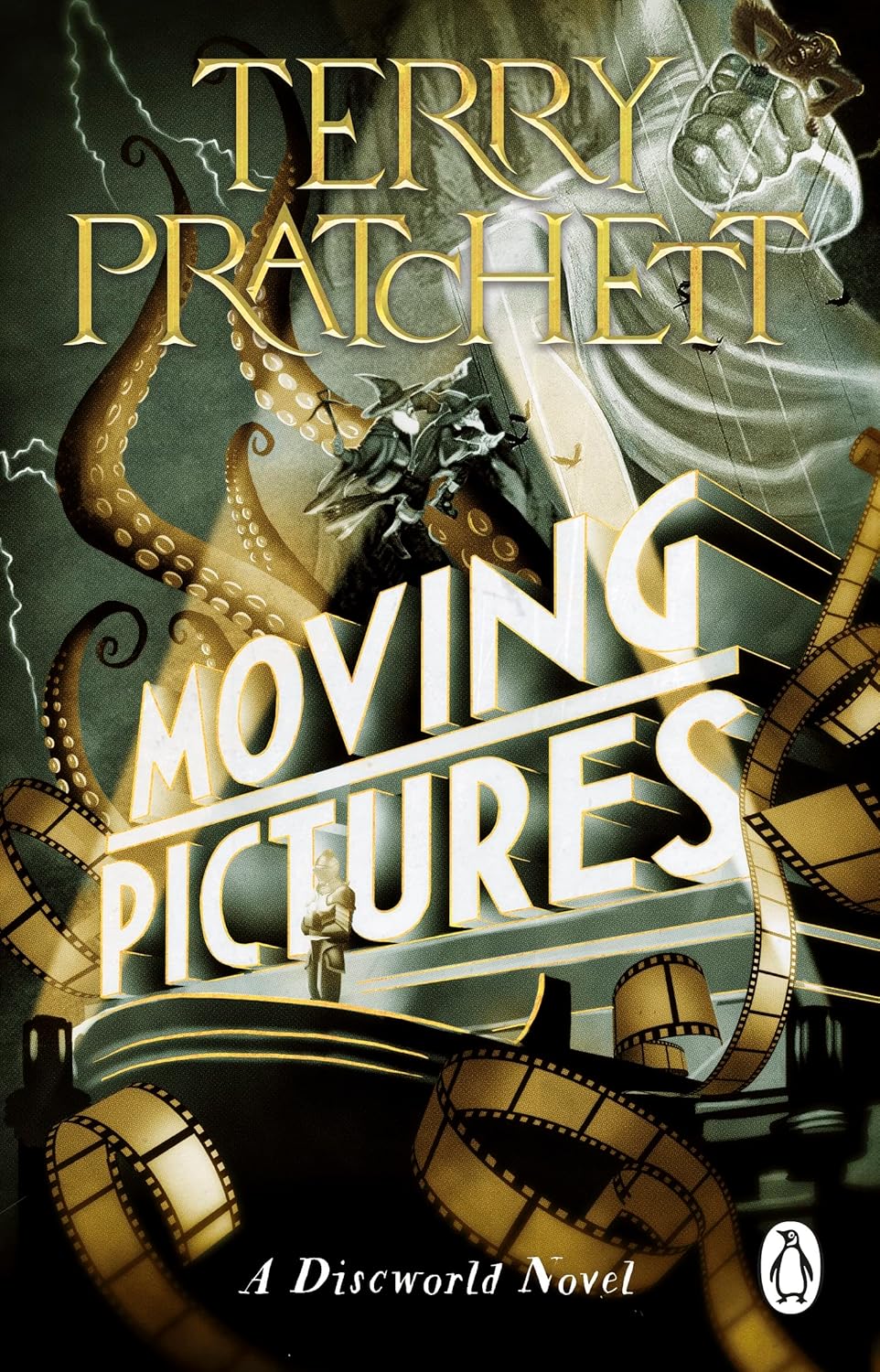
I have never made any secret of the fact that I love all things Terry Pratchett as the Discworld books were one of the formative series of my youth.  A massively popular series set on a flat world carried through space on the back of a giant turtle and four elephants, the Discworld books present a range of unique fantasy adventures, backed with exceptional comedy and satire.  This series is so much fun, and I honestly love every single Discworld book, having read them all multiple times, usually while laughing myself silly.  Indeed, I am such a big fan of this series that I named my blog after a location in the universe.  Despite my overwhelming love for this series, I haven’t reviewed many Discworld books (the exception being Moving Pictures and The Last Continent).  That changes with my review of the outrageously funny Guards! Guards! which I recently enjoyed while on a road trip.

Guards! Guards! is a particularly entertaining addition to the Discworld series that I have a lot of love for.  Serving as the first book in the City Watch sub-series, Guards! Guards! sees Pratchett blend his typical fantasy and comedy elements with a complex murder mystery.  This book follows the ragtag city watch of this world’s main recurring city, Ankh-Morpork, as they try to solve a series of deaths caused by a monstrous murder weapon.  Due to its brilliant and hilarious story, as well as the fact that it perfectly sets up the rest of the awesome City Watch books, I generally consider Guards! Guards! to be one of my absolute favourite Discworld novels, and I have featured it in various Top Ten Tuesday lists over the years.

On the fantastical and impossible Discworld no place is more dangerous, corrupt or morally unhealthy as the legendary and stinking city of Ankh-Morpork.  The Disc’s largest city, Ankh-Morpork has many terrors haunting its urban depths, where life is cheap and death lurks around every corner.  However, not even the hardest criminals, deadliest wizards or most manipulative politicians are prepared for an ancient and malevolent creature that is about to be unleashed upon the city.

A shadowy secret brotherhood has engineered an elaborate plan to seize power in Ankh-Morpork through use of an unlikely weapon, a dragon.  Summoning a fully formed fire-breathing dragon to cause terror, the brotherhood hopes to use the resulting carnage to bring in their own puppet to control the city.  However, the dragon has its own ideas about what sort of terror it wants to bring down on humanity.

With the rest of the city powerless against the dragon, it falls to the ramshackle Ankh-Morpork Night Watch and its depressed captain, Sam Vimes, to try and stop it.  The only problem is the Watch are the biggest joke in the city, incapable of standing up to normal crime, never mind carnage caused by magical dragon.  But with an unnaturally keen new recruit guilting them into action, and a terrifying dragon fanatic with a crush on Vimes keeping them in line, the Watch is going to try and save the day, even if no-one wants them to.

Guards! Guards! still reigns supreme as one of my top Discworld novels from the always impressive Terry Pratchett.  Featuring a unique plot, loaded with an outstanding mix of mystery, humour and fun fantasy elements, Guards! Guards! brilliantly sets up one of Pratchett’s best sub-series while presenting its own epic and powerful story.  An exceptional read from start to finish, this book gets a very easy five-star rating from me, and I love it so damn much.

The plot of Guards! Guards! is so damn clever and is peak Pratchett in its inventiveness and impressive characters.  Presenting an entertaining and humourous noir murder investigation in a fantasy series, Guards! Guards! has a lot of moving parts to it, including some impressive character-driven story arcs, all of which come together beautifully for a particularly intense and insane story.  Starting off very strong with some great introductions to various key characters, including the young and keen Carrot Ironfoundersson, who journeys to the massive and corrupt city of Ankh-Morpork to join the Night Watch, providing fresh blood, irrepressible honesty and uncontrolled enthusiasm to the small squad of rejects and failures currently staffing it.  Carrot’s arrival corresponds with the start of a bold conspiracy, as a secretive mystic brotherhood plots to dethrone the Patrician and take over the city.  The initial scenes of this book are extremely good, and I love how Pratchett expertly sets up the entire narrative with some hilarious moments, including the opening sequence with the Elucidated Brethren of the Ebon Night, whose petty ideology shows you just what sort of criminal minds we are truly dealing with.

Things go in a chaotic direction as the Night Watch, led by the drunk and depressed Captain Vimes, witness a direct murder by dragon and begin their own investigation into the matter.  Pratchett expertly pivots the story around from its comedic fantasy start into a complex police procedural/noir murder investigation, as the protagonists try to find out why the dragon is terrifying the city and who benefits from the apparent crime.  At the same time, several great character arcs emerge, including a truly nice, if unconventional romance, new friendships, and a fun analysis of dragon mythology.  There is a great twist about halfway through the book as the down-and-out Night Watch witness an interesting change to the classic dragon fantasy tale that sees a unique king take over the city.

The final third of the book is some of Pratchett’s strongest writing, as Vimes identifies the true culprit and must work to undo the damage they caused.  There are some great moments in this last part of the book as Pratchett presents his own unique and hilarious take on classic fantasy tropes, including the famed million-to-one shot, the heroic rescue, and the successful defeat of a dragon.  I felt that the identity of the main villain of the story was very clever, and Pratchett sets it up well with subtle clues, although if you know Pratchett’s thoughts on certain government positions it’s not too surprising.  Still, the final confrontation between the protagonists and this villain is great, and being literal has never been so deadly.  Pratchett leaves Guards! Guards! on a hopeful note, and it’s impossible not to come away with a smile on your face.

Pratchett was really on-point when it came to writing Guards! Guards! and I loved how perfectly it came together.  As with all books in the Discworld series, Guards! Guards! features an exceptional mixture of fantasy and humour elements, as the unusual and cynical Discworld produces some unusual situations, layered in with a great plot and some fantastically complex characters.  A lot of the humour is derived from classic fantasy scenarios that are taken up to 11 and shown in outrageous manners, accompanied by sarcastic comments from the characters as they witness them.  For example, this book serves as an ode to the guards and watchmen from classic fantasy fiction, and there are some funny scenes when these self-aware guards realise how expendable they are in a fantasy story.  However, Guards! Guards! also features a brilliant third element as Pratchett also features a compelling crime fiction read, accompanied with an addictive murder mystery.

The blend of fantasy and crime fiction elements works incredibly well, and it is highly entertaining to watch a serious investigation consider magic, suddenly appearing dragons, and the unique background setting of Ankh-Morpork.  I also loved how many clever and subtle jokes Pratchett was able to weave in because of these crime fiction inclusions, and he ends up lovingly roasting so many classic tropes from police procedurals and noir detective novels.  Despite having read this book many times, I still laugh like crazy at all the humourous moments in Guards! Guards!, especially as you always discover a new joke or pun you previously missed.  I honestly don’t have time to list all the funny scenes in Guards! Guards!, but favourites include the various meetings of the petty and mostly incompetent Elucidated Brethren, Carrot’s naïve overreactions upon discovering crime in the city, and various musings on how to achieve a perfect, million-to-one chance.  Pratchett once again expertly backs up his humour in Guards! Guards! with a series of entertaining footnotes spread throughout the book, that prove to be nearly as much fun as the main story.  These brilliant footnotes contain additional jokes, sarcastic comments, or interesting expansions of the Discworld universe, and they always bounce off the main story perfectly, providing extra laughs and food for thought where necessary.  I really cannot emphasise just how well this blend of genres worked with Pratchett’s unique and endearing humour, and it proves impossible not to have an exceptional time while reading this book.

As with most Discworld books, Guards! Guards! works exceedingly well as a standalone novel, and I feel that anyone wanting a laugh could easily jump in and follow the story without any issues.  Due to its early position in the shared Discworld universe, you don’t have to know anything about the other entries in the overarching series to jump right in, as Pratchett goes a tad light on some of the more outrageous Discworld elements.  As such, I consider Guards! Guards! to be one of the very best entry novels to new Discworld readers.  It also proves to be a brilliant first book in one of Pratchett’s best sub-series, and so many key details of the subsequent City Watch books are introduced here.  This includes some excellent early looks at the chaotic city of Ankh-Morpork and key recurring characters in the larger universal plot.  Ankh-Morpork is a great background setting for Guards! Guards! and it was the first book completely set within the bounds of the city.  I loved seeing this crazy city in even more detail, and all the fun elements set up here help to make it an epic setting.  As such, this is a great book for any Discworld reader, new or old, and it’s one of my favourites for very good reason.

As with pretty much all of Pratchett’s works, the key things that made Guards! Guards! so impressive were the amazing and unique characters that were featured throughout the plot.  Pratchett had a real knack for producing complex, multi-layered figures who can be both comedic and tragic at the same time, and who you couldn’t help but love.  Guards! Guards! was a particularly good example of this, as Pratchett featured a range of brilliant and entertaining characters who would go on to be become major recurring figures in the Discworld canon.  Indeed, Guards! Guards! is one of the most significant books for new characters, and it is frankly amazing how many exceptional major and iconic figures were introduced here.  Each of these characters were so well written, and you have to love both their specific arcs in this book, as well as how they were expanded on in later works.

The most prominent character in Guards! Guards! is Captain Samuel Vimes.  A cynical and damaged man whose habit of calling out social inequities has seen him assigned to the joke position as head of the Night Watch, which he deals with by drinking vast amounts of alcohol.  A parody of every hard-drinking cop and private eye in classic noir fiction, Vimes starts the book with no prospects and too many dead friends.  Given new purpose when the dragon appears in the city, Vimes turns his innate rebellion to a purpose and tries policing and detecting.  Pratchett does an exceptional job setting up Vimes here in Guards! Guards!, and it is no wonder he goes on to be one of his top protagonists.  Vimes’s depressed investigative method proves quite successful, and it was entertaining to watch Vimes attempt to solve the case while sarcastically calling out his fellow citizens’ base stupidity and selfishness.  Pratchett also sets up an impressive redemption arc around Vimes, which comes about through a combination of trusted colleagues, romance, and a renewed determination to uphold the law.  While he ends the book still irritated with the world, the road forward to Vimes doing bigger and better things is well established, and you really get drawn into his arc as a result.

Another impressive character is naïve and innocent City Watch recruit, Carrot Ironfoundersson.  Due to his complex home situation and a late life revelation that he’s human rather than a dwarf (being six and a half feet tall wasn’t a clue to him), Carrot is sent to Anhk-Morpork with a desire to become a watchman, which he incorrectly believes is a noble calling.  Thanks to his literal personality and highly moral upbringing, Carrot proves to be an anathema to the lawless folks of Anhk-Morpork, as he comes to town bringing justice, enforcing obscure laws, and actually arresting thieves: “change your ways”.  A brilliant parody of ultra-righteous fantasy kings, Carrot serves as an outstanding comic relief for much of the book, especially when it comes to his wholesome interactions with the exceedingly criminal inhabitants of the city.  However, beneath his comedic cover, Carrot is written as a complex figure of change, and his ability to inspire the other characters, either through guilt or determination, leads to some big moments.  Pratchett did an amazing job with Carrot in Guards! Guards!, and it was fascinating to see how he evolves from his initial innocent personality, to a more clever, but still determined, character.

Aside from Vimes and Carrot, the other two watch characters are Sergeant Fred Colon and Corporal Nobby Nobbs, both of whom are excellent and solid comedic characters.  The stereotypical fat sergeant and dodgy corporal, Pratchett has fun setting them up as unassailable fixtures of the Night Watch as they do the jobs nature intended for them, and I love how they play off each other.  While Colon has some hilarious scenes, including his attempt at archery and his various ill-timed run-ins with the dragon, you can tell that Pratchett had a lot more fun writing Nobby.  While not all his over-the-top characteristics from the series are shown in Guards! Guards!, Nobby is still a particularly entertaining figure.  Between his coarse language, petty criminal mindset, and uncharacteristic foppish behaviours, every scene with Nobby is highly amusing, and I love how Pratchett expanded off clever stereotypes about lifetime corporals to create this wayward figure.

Outside the members of the City Watch, there are a fantastic array of figures who help to make Guards! Guards! a particularly enthralling story.  This includes one of the few female characters in the book, Sybil Rankin, a dragon-loving heiress who ends up being Vimes’s unlikely love interest.  Deliberately written as the direct opposite of a noir femme-fatale in both personality and appearance, Sybil is a force of nature, using her accumulated nobility to pull the Night Watch, especially Vimes, into her orbit.  It proves impossible not to like Sybil as you watch her confidently go after Vimes or try to put the dragon to heel, and she ends up being one of the most complicated female characters that Pratchett wrote (which is saying a lot when you think of some of his other great female characters).

The other major character that I want to separately highlight is the Patrician of Ankh-Morpork, Lord Havelock Vetinari.  While he has appeared in previous Discworld novels (notably Sourcery), this is the first book that showcases him as a full character.  Generally depicted as a Machiavellian mastermind and one of the few people capable of controlling the chaotic city, Vetinari has some great early scenes.  However, it’s not until the second half of the book when you realise just how fantastic a character he is.  Deposed by the false king, Vetinari initially appears to be completely powerless in the dungeons, until Vimes is thrown in with him and begins to realise that he is still in control, especially as he’s managed to cultivate a new intelligence network (procured by providing wartime strategy to magical rats), while also getting locked in a dungeon specifically designed to keep him safe.  His subsequent scenes tormenting the book’s real antagonist and talking about the nature of humanity with Vimes really cement him as an impressive figure, and the seeds for his many later inclusions as the Disc’s ultimate political mastermind are well sown here.

While I know I’ve been going on a bit about characters (blame Pratchett for being such a good writer), I just need to highlight a few more figures who have a great role in Guards! Guards!.  This includes the Librarian, one of Pratchett’s most iconic characters, who proves to be just as much fun outside of a wizard focused book, and it was entertaining seeing him interact with a separate group of friends.  You get a great introduction to the character of Cut-My-Own-Throat Dibbler, whose mercantile tendencies are on full display here.  The unusual swamp dragon Errol proves to be an unlikely pet, and his arc about finding love and his true form was particularly heartwarming.  Finally, I must mention the book’s great antagonist, who fully embraces the mad tendencies that his position demands.  While I won’t go into too much detail about who he is, I will say I loved seeing his various internal rants about the world, and the scenes with his incompetent henchmen were so damn funny.  All these characters, plus even more hilarious figures, are instrumental to so much of Guards! Guards! brilliant charm and humour, and after being introduced to them here, it’s impossible not to follow them on their full journey.

I have had the pleasure of reading Guards! Guards! in a couple of different formats over the years, but to my mind the best way to enjoy this book, and indeed any Discworld novel, is on audiobook.  The Discworld audiobooks are something very special, and I find that the unique stories, excellent humour and elaborate characters really come across when read out by a passionate narrator.  With the recent re-release of various Discworld audiobooks, there are now two different unabridged versions of Guards! Guards! fans can enjoy, and I want to highlight them both here.

The first Guards! Guards! audiobook is the original version with the talented Nigel Planer, who narrated 22 of the original 23 Discworld audiobooks.  Guards! Guards! is one of his best performances, and it set the scene nicely for many of his subsequent Discworld audiobooks, especially as he settled on a lot of key character voices and tones here.  While it has been a little while since I’ve listened to Planer’s version of Guards! Guards!, I have enjoyed it so many times it is permanently engrained in my head (I used to grab the tape cassette version out of my local library all the time).  Planer, who does all the voices himself, really captures the essence of Pratchett’s storytelling and excels at expressing the author’s unique humour through his vocal work.  I also felt that his portrayal of many of the key characters was second to none, and he really brought to life all the City Watch protagonists, as well as some other long-running figures, in some impressive ways.  He would revisit many of these voices in multiple subsequent performances, and it is a testament to his skill that the initial tones he came up with here, worked so well in the later books.  I frankly have so much love for Planer’s original take on Guards! Guards!, which definitely still stands the test of time, and his excellent and heartfelt voice work defines many of the City Watch characters for me.

While Nigel Planers original version is perfect, current Discworld fans may be more familiar with the latest audiobook production of Guards! Guards!, which was part of a recent re-recording of all the Discworld books.  These new audiobooks each feature a different famous British performer voicing the main plot, while acclaimed actors Peter Serafinowicz and Bill Nighy have key roles in every single production.  While these have been out for a little while, I only just listened to my first one .  Coming in at a runtime of 13 and a half hours, which is a tad longer than the roughly 10-hour long Planer version, this Guards! Guards! audiobook was extremely fun, and it served as excellent entertainment on a recent road trip.

The new version of the Guards! Guards! audiobook is primarily voiced by British radio and television personality Jon Culshaw.  Culshaw is amazing in the role, and I was deeply impressed with his take on the Guards! Guards! characters.  Each unique character comes across extremely well in Culshaw’s capable hands, and I enjoyed his take on their unique characteristics and eccentric personalities.  He perfectly showcased protagonist Samuel Vimes’s drunken despair and depression, while various other key members of the watch, such as the extremely keen Carrot and the more cautious Colon, are shown extremely well.  I also felt that Culshaw did an incredible job with several complicated figures from the story, such as the infamous watchman Nobby Nobbs, who Culshaw gifts a gruff and weaselly voice that sounded a lot like David Bradley or Jon Pertwee.  His Lord Vetinari is also amazing, and the deep and threatening tones really capture the character’s dangerous nature.  Finally, I felt that his take on the main female character, Sybil Ramkin, was just perfect, and you really got the full blast of her big personality and excessive aristocratic characteristics.  Many of the other side characters were also perfectly portrayed to my mind, and I must highlight the excellent way in which he disguised the voice of the main antagonist during some key secret society scenes.

Culshaw’s primary narration is well backed up by Peter Serafinowicz and Bill Nighy in their respective roles.  Serafinowicz provides the voice of Death whenever he appears in this audiobook, which works out extremely well even with Death’s relatively minor role in Guards! Guards!.  Serafinowicz has an exceptional Death voice, and hearing it suddenly appear throughout Guards! Guards! is so damn epic, especially during one scene where Death is hiding amongst the soon-to-be deceased.  Nighy, on the other hand, narrates the various footnotes.  Nighy was a perfect choice for this, and his calm, consistent tones, echoing Peter Jones’s similar role in The Hitchhiker’s Guide to the Galaxy radio and TV editions really highlighted the subtle comedy of these footnotes.  I felt that all three of these distinctive actors really vibed together in the Guards! Guards! audiobooks, and the switch between them was seamless, allowing for a particularly awesome listen.  Throw in an interesting short afterword about fantasy elements by acclaimed author Ben Aaronovitch, and this proved to be a remarkable and compelling audiobook I could not get enough of.  While Nigel Planer’s original narration of Guards! Guards! is always going to live in my head rent free, I felt that this new version more than lived up to the hype surrounding it, and I really appreciated the unique and powerful performances these new narrators brought to the table.  Frankly both of the audiobook versions comes highly recommended by me, and it is impossible to be dissatisfied by them at all.

Whew, well in case you could guess from this massive review (it got away from me), I love Guards! Guards! and I have some very strong feelings for it.  One of Terry Pratchett’s best Discworld novels, Guards! Guards! is the perfect blend of fantasy, crime fiction and humour that you could ever want, and I always get wrapped up in its elaborate story.  A wildly entertaining and comedic novel from start to finish, Pratchett added so much heart to this book, and you get drawn into the impressive characters and compelling, crime fiction plot.  A brilliant start to the City Watch subseries, Guards! Guards! is so damn good, and I know I will be reading it many more times in my life.  I can think of no better way to emphasise just how amazing Guards! Guards! is than to mention that I used it to introduce the Discworld to my wife, who is now powering through the series on her own.  So do yourself a favour and check this book out now!

Amazon

The Fury of the Gods by John Gwynne

Publisher: Orbit/Little Brown Audio (Audiobook – 22 October 2024)

Series: The Bloodsworn Saga – Book Three

Length: 19 hours and 30 minutes

My Rating: 5 out of 5 stars

Amazon

John Gwynne brings his awesome Bloodsworn trilogy to a truly epic conclusion with the outstanding novel, The Fury of the Gods.

For the last few years one of the most compelling fantasy series has been the Bloodsworn Saga trilogy from acclaimed fantasy author John Gwynne.  This series is set in a Norse-inspired fantasy world shattered by warring gods and now filled with monsters, voyaging warriors and the human descendants of the gods whose power often see them collared and controlled as thralls.  The series started back in 2021 with the impressive read, The Shadow of the Gods, which introduced the main characters and set them on their quests.  I almost missed The Shadow of the Gods when it came out, but I was glad that I didn’t, as it turned out to be one of my favourite books and audiobooks of 2021.  Gwynne continued the series in a big way the next year with the excellent sequel, The Hunger of the Gods, which expertly continued the series and ended up also being a top book and audiobook of 2022.  Due to how amazing the first two entries in the trilogy proved to be, I have been eager for to the finale of the trilogy for a while, and I was so happy we got one in 2024.  One of my most anticipated books in the second half of 2024, The Fury of the Gods was everything I hoped it would be and more, and I listened to it the very first chance that I got.

The gods have returned, and all must pay the price!

After centuries of imprisonment following the last great war of the gods, the evil and crazed dragon-god Lik-Rifa has been released and now seeks to rule over the land of Vigrid.  With the cunning rat-god Rotta at her side, Lik-Rifa leads a vast army made up of her monstrous children, as well as ambitious mercenaries and Tainted warriors.  Determined to place the entire continent under her dark rule, Lik-Rifa turns her eyes to the stronghold of Snakavik and moves to destroy the last vestige of resistance against her.

However, not all is lost, as some seek to stand against Lik-Rifa.  Elvar, leader of the Battle-Grim, has killed her father and taken control of Snakavik.  Bound by fate and her oaths, Elvar must balance her new responsibilities as ruler while she plans for war against Lik-Rifa, a seemingly impossible task.  However, Elvar has done the impossible before by resurrecting Lik-Rifa’s hated brother, the wolf-god, Ulfrir, and binding him to her will.  Now her most potent weapon and the ultimate bait for Lik-Rifa, Elvar seeks to use Ulfrir to destroy the gods coming for her.  But even a giant wolf-god might not be enough to win the war, and Elvar needs even more allies to help her.

After scouring a bloody path across Vigrid, Orka Skullsplitter has rescued her son, but still seeks vengeance against Lik-Rifa’s forces.  To that end, Orka reunites with her old warband, the Bloodsworn, and sets them to join Elvar’s growing host.  Made up of deadly Tainted warriors, including their latest recruit, Varg No-Sense, the Bloodsworn have many reasons to fight against the dragon-god’s followers.  Together, the Bloodsworn, Battle-Grim and their various allies prepare to face Lik-Rifa’s army in the greatest battle the world has ever known.  But no-one is prepared for the chaos that is about to engulf Vigrid, as greater threats arise to devour all.

Gwynne continues to impress with this third and final Bloodsworn Saga novel.  The Fury of the Gods was another high-octane, character driven, dark fantasy novel, that takes the reader on a powerful adventure.  Loaded with fantastic moments and amazing action, The Fury of the Gods proved to be an outstanding conclusion to the Bloodsworn Saga, and I had such an awesome time getting through it.

The Fury of the Gods featured a spectacular and captivating narrative that starts off strong and refuses to slow down the entire way through.  Taking off immediately after The Hunger of the Gods, Gwynne effectively sets the stage for the oncoming battles as the various character arcs continue at breakneck pace.  Once again telling the story through the eyes of five distinctive protagonists (Orka, Elva, Varg, Biorr and Gudvarr), you get drawn into their intriguing personal tales as they recount the events they observe.  The first half of the book keeps these protagonists mostly separated, and their various storylines continued in similar directions to The Hunger of the Gods.  Orka is still set on her bloody revenge mission and must overcome her imprisonment by the rat-god Rotta.  Varg and the Bloodsworn journey back from their rescue mission in the neighbouring nation of Iskidan, encountering new threats along the way.  Elvar takes up the responsibility of ruling Snakavik after killing her father and finds herself leading the war against Lik-Rifa.  Finally, Biorr and Gudvarr provide intriguing insights into Lik-Rifa’s camp, as both the conflicted Biorr and the snivelling Gudvarr try to survive the rise of dragon-god in their own different ways.

Gwynne does a good amount of set-up in this first half of the book, and it was nice to see the various characters continue to breathe on their own for a bit, while also amping up the dangerous antagonists.  You once again get quickly drawn into each of the protagonists narratives, and I think that it is a testament to Gwynne’s writing that each of these storylines proved to be as entertaining and compelling as the rest.  Unlike other multiple-perspective novels I have read, I honestly loved every single character perspective in The Fury of the Gods, and I was excited to continue each of them.  Indeed, I find it hard to choose a favourite, as they were all fun while offering something a little different.  That being said, Elvar’s chapters moved the plot along the most, and Gwynne did his best character work with her in this book.

Everything leads up to a particularly epic final half, as Gwynne brings together all five point-of-view characters to the same location for the first time in the series.  With the protagonists spread out on each side of the conflict, you get a great view of the massive extended war as the god-led armies fight it out on several fronts, including in a brutal siege.  Gwynne kept the action going thick and fast here, and there are some great encounters and moments as the various characters meet on the battlefield.  Everything leads up to a massive confrontation nearly two-thirds of the way through, and there are some highly dramatic moments here, especially as the first big-death was a little unexpected.  This major fight ends in an interesting way, although details of it are spoiled a little by the awesome cover above.  This leads to some more fantastic moments, including the final battle between both sides.  The author chucks in a few more tragic moments in this final bit of the book, although I must admit that there weren’t a lot of surprises here, with many of the big reveals well telegraphed in advance.  I also thought that the various revenge arcs cluttered up the plot in a predictable manner, and I wish Gwynne had thrown a twist or two in here.  Still, everything ended on an extremely epic note, and readers who enjoyed the previous Bloodsworn Saga books will come away very satisfied and happy with the finalised character arcs.

As with the previous Bloodsworn Saga novels, Gwynne brings a distinctive style to The Fury of the Gods, which I felt greatly enhanced the story.  The blend of compelling Norse-inspired fantasy elements, great character work, and brutal action makes for awesome reading, and Gwynne presents it all in an accessible and enjoyable way.  I loved how the characters’ dialogue and inner thoughts fell in line with the book’s historical inspiration, and while this style might not be for everyone, elements of it, such as the repetition of certain thoughts and phrases, gives it a real saga feel.  As with the previous entries in the series, Gwynne makes excellent use of multiple character perspectives to tell his elaborate narrative, with his five point-of-view characters helming various chapters.  The split between these five characters worked extremely well, and you get some intriguing alternate perspectives of events that blend well as the book continues.  Gwynne makes excellent use of this split during some of the bigger combat scenes, and the use of shorter chapters when things get particularly exciting allows the reader to quickly switch amongst the action.  Talking of action, Gwynne ensures that the combat in The Fury of the Gods is as bloody and well-written as in the previous books, and his brilliant action scenes are so well described and bring you right into the midst of the fighting.

As The Fury of the Gods is the third and final book in an epic fantasy trilogy, it obviously isn’t the most ideal place for readers to dive into the overarching story, and you really should start at the beginning of the series for the full emotional impact.  However, for those who want to start with The Fury of the Gods, Gwynne does make this book somewhat accessible to new readers.  Between the detailed summary of the prior books, glossary of terms, character lists and the callbacks to the previous events during the plot, new readers can follow The Fury of the Gods easily enough and have fun.  This includes enjoying the full impact of the cool fantasy setting of Vigrid that Gwynne has lovingly set up during the three books.  The clever use of Norse-inspired elements really lends itself to the epic revenge driven narrative that Gwynne features, and the mixture of mythological, fantasy and historical elements proved to be a winning combination.  I still love seeing the various warbands using Viking war tactics against dark dangers and massive gods, and Gwynne really went all out making so many traditional Norse elements, such as weaponry, armour, ships and mentality, seem as realistic as possible.  At the same time, the book’s fantasy inclusions, such as the various monsters and Tainted, the human descendants of the gods, add so much to the story, through their vicious nature, intriguing descriptions, and underlying societal issues.  This was an overall pretty awesome setting, that Gwynne uses to full effect to tell his compelling tale.  I hope that Gwynne returns to this world at some point in the future, and it wouldn’t surprise me if some of the younger characters featured here get their own story.

In addition to The Fury of the Gods’ fantastic story and great writing, I also need to talk about the awesome characters.  Throughout the Bloodsworn Saga, Gwynne has put a lot of work into building up his various characters, and by this point in the trilogy you are highly invested in their respective stories.  As such, there aren’t a lot of new figures in this final book, and you generally know what to expect when one of the protagonists’ chapters begins.  However, it still proved awesome to see these figures in action again, and their compelling character arcs and differing personalities deeply increase the impact of the narrative.  Of the main cast, I would say that Elva steals the show the most in The Fury of the Gods.  While she has not always been the most exciting character in the series, this third and final book was where she really shined, primarily because she takes on the role of war leader against Lik-Rifa, and the increased responsibility changes her.  As such, it was outstanding to follow her storyline, and I appreciated seeing how conflicted she got at times, especially when it came to treating the Tainted in her domain.  Due to this, as well as some other badass scenes, Elva was one of the most compelling protagonists in The Fury of the Gods for me, and Gwynne provided an interesting conclusion to her narrative that I felt really worked.

The other four main characters all proved to be brilliant additions to the book, and their perspectives ensured quite an elaborate story.  The dangerous fighters, Orka and Varg, were both solid point-of-view characters in The Fury of the Gods, and I really enjoyed seeing how their respective arcs continued, especially as they were the main avenue to seeing the Bloodsworn warband.  Of all the protagonists, you were most likely to see action with Orka or Varg, and their various bloody sequences were a lot of fun.  That being said, Gwynne went a little light with the character development for these figures in this book, and while they have some moving moments (Orka comes out of her solitude to find people she cares about, while Varg finally cements his place in the Bloodsworn), I felt that Gwynne focused way too much on their respective hunts for revenge, which resulted in some of their stuff getting a little repetitive.

However, Gwynne more than overcomes any minor deficiencies with Orka and Varg through his use of the antagonistic perspective characters Biorr and Gudvarr, both of whom have joined Lik-Rifa’s cause.  Biorr proves to be a complex figure in The Fury of the Gods, and I loved how conflicted he become as his longstanding fanaticism slowly beings to wear away in the face of meeting his gods.  Gwynne did a really great job with Biorr, and his personal journey and attempted redemption made for some powerful moments.  On the other hand, we have the entertaining and despicable Gudvarr, whose chapters I always have fun with.  Gudvarr is an impressively annoying figure who has spent the last two books trying to avoid danger only to find himself getting stuck in progressively worse situations.  However, because he is naturally cowardly, weaselly and vindictive figure, you really don’t feel sorry for him, especially as every bad situation is the result of some failed ploy to gain influence or power.  While Gudvarr is a particularly contemptible figure, it honestly proves impossible not to enjoy his chapters, as they are generally the most amusing in the entire book thanks his snarky inner monologue, the deadly situations he barely escapes from, and the near certainty that he is going to come to a sticky end.  As such, I really enjoyed following Gudvarr and you can’t help but look forward to seeing what dangerous or manipulative situation he finds himself in next.

Finally, I must highlight all the awesome and impressive supporting characters that are featured in The Fury of the Gods.  Gwynne has built up an exceptional and massive cast of characters throughout the series, all of whom add something to book.  I loved seeing the many complex interactions that occurred between all these characters in The Fury of the Gods, and it was fun to see many of them meet for the first time in this final book, especially once all the perspective characters are together.  Highlights include the key members of the Battle-Grim and Bloodsworn warbands, all of whom have gone through so much throughout the trilogy.  Several of the best characters from both bands experience major tragedy in The Fury of the Gods, and it proves hard not the feel for them.  I also need to mention the main antagonists, Lik-Rifa and Rotta, two vengeful gods whose desire for revenge and control move much of the plot along.  I loved seeing the various human and Tainted characters interact with these dark gods, and Gywnne ensured they came across as a massive and dangerous threat.  Two entertaining giant ravens, a fun talking head, and so many other great characters ensured that The Fury of the Gods was a moving and deeply personal read, and I am so glad I got the opportunity to know them during the run of this trilogy.

As with the previous books in the Bloodsworn Saga, I chose to grab The Fury of the Gods on audiobook, which proved to be a particularly awesome way to enjoy this epic read.  Featuring a runtime just under 20 hours, The Fury of the Gods audiobook is a lengthy but highly exciting listening experience, and I found myself powering through this audiobook, namely because the format deeply enhances the intense story and intricate writing.  Narrator Colin Mace, who has lent his voice to the other Bloodsworn Saga books, did another brilliant job with The Fury of the Gods, and his impressive voicework leant some additional impact and gravitas to the book.  Mace perfectly portrays the Norse-inspired fantasy elements of the book, and I really loved how effectively he captured the various hard-nosed characters of the series.  I especially loved Mace’s take on the gigantic gods and other dark creatures haunting the lands, and I felt that the narrator was a key reason why I had so much fun with this audiobook.  Probably one of the best formats to enjoy The Fury of the Gods, listeners will have such an epic time with this audiobook.

With blood, fury and vengeance, the Bloodsworn Saga comes to a brilliant end that I could not get enough of.  The Fury of the Gods was another exceptional read from John Gwynne, and I was so very happy to see how this entire epic narrative concluded.  Loaded with action, excellent fantasy elements, and so many impressive characters, The Fury of the Gods was an outstanding book on its own, as well as an incredible conclusion to one of the most epic fantasy trilogies out there.  One of my favourite fantasy books of 2024, The Fury of the Gods was an excellent read that gets an easy five-star rating from me.

Amazon

Warhammer 40,000: Lazarus: Enmity’s Edge by Gary Kloster

Publisher: Black Library (Audiobook – 9 March 2024)

Series: Warhammer 40,000

Length: 11 hours and 47 minutes

My Rating: 5 out of 5 stars

Amazon

Secrets, lies and devils from the past converge around the Dark Angels in this exceptional Warhammer 40,000 novel from Gary Kloster, Lazarus: Enmity’s Edge.

I have been on a real roll with Warhammer 40,000 fiction this year, as books like Da Big Dakka by Mike Brooks, Deathworlder by Victoria Hayward, Oaths of Damnation by Robbie MacNiven and Renegades: Lord of Excess by Rich McCormick have all proven to be exceptional additions the Warhammer canon.  But despite how awesome the above books and others have proven to be, I am still keen for more.  That is why I made sure to listen to a copy of the early 2024 novel, Lazarus: Enmity’s Edge by new-to-me author Gary Kloster.  An interesting entry that follows members of the iconic Dark Angels chapter, Lazarus: Enmity’s Edge was a book I nearly didn’t read this year, but I was sure glad that I did.

For over 10,000 years the Space Marines of the Dark Angels chapter have defended the Imperium of Man from all manner of insidious threats, all while keeping their own terrible secrets hidden.  Maintaining watch for fallen members of their order, the Dark Angels are forced to balance their Chapter’s need for secrecy and revenge with their solemn duty to keep humanity safe from the monsters and heretics stalking the stars.  But not every member of the Dark Angel’s inner circle believes that the battles of the past should impact the Chapter’s future.

Lazarus, Master of the Dark Angels Fifth Company, knows the burden that history can have on the soul.  The first Primaris Marine to hold rank within the chapter’s inner circle, Lazarus finds himself haunted by the battle that killed him and forced him to undergo the Rubicon surgery.  Determined to rid the universe of all psykers and the foul forces of Chaos behind them, Lazarus is a dedicated warrior, although one that questions the secrets that impact his ability to fulfill his duty.  That is why, when an ancient beacon located on the planet Reis is activated, the Supreme Grand Master of the Dark Angels, Azrael, summons Lazarus and his Fifth Company to fulfill an old debt of honour.

A thousand years before, the Imperial Knight world of Reis was nearly overwhelmed by a rampaging army of daemons, resulting in the destruction of the planet’s war machine guardians, and only through the intervention of the Dark Angels was Reis saved.  But now, after years of peace, Reis finds itself under attack from a new foe, one that may cause another daemonic incursion.  Determined to ensure the daemons stay in the warp, Lazarus arrives to assess the situation on Reis, but soon discover that not everything is as it seems.  The planet is a hotbed of sinister politics, ancient grudges, and long-buried secrets, all of which conspire to drag Reis closer to destruction.  Forced to navigate the planet’s complex history, Lazarus discovers a terrible enemy hiding deep within the planet’s jungles, one that, like Lazarus, refuses to die.  To save Reis and his brothers, Lazarus must uncover the true hidden past of the planet and understand the origin of the grudge that could turn the Dark Angels against the Imperium they are sworn to protect.

Wow, Warhammer 40,000 fiction is in peak form in 2024 as Gary Kloster deeply impressed me with Lazarus: Enmity’s Edge.  Featuring a particularly complex and captivating narrative that blended awesome action and great characters with a clever and well-written plot, Enmity’s Edge proved to be extremely addictive, and I found myself irreversibly hooked.  Exciting, intense and loaded with all manner of intrigue, Enmity’s Edge is one of the best Warhammer books of 2024 and gets a full five-star rating from me.

I must admit that when I first decided to check out Enmity’s Edge, I didn’t quite know what to expect.  Space Marine focused Warhammer 40,000 novels can sometimes be an overloaded, action slog colloquially known as “Bolter porn”, and I was initially slightly worried that was the direction Enmity’s Edge was going, especially as it started off with an intense war sequence against orks.  However, Kloster instead showcased a remarkably compelling and layered Warhammer 40,00 novel that made excellent use of its Dark Angel protagonists and a unique, secret-laden background setting.  The initial battle serves as a great introduction to the main protagonist, Lazarus, and his command staff, and you get a sense of his tactical skills, as well as his dislike of psykers and the secrets of his order.  This leads nicely to the more complex part of the book, as the reader is introduced to some interesting side characters, as well as the world of Reis, where Lazarus and his company are sent to.

Arriving on Reis, Lazarus discovers a unique world of secrets, lies and hidden history, with the populace attacked by a mysterious fungal infection that has taken over various host bodies.  Quickly diving into the fray to determine the full extent of the threat, the first half of the book sees the Dark Angels essentially taking on the zombies from The Last of Us with an intelligent malevolence behind them, and these unique antagonists prove an interesting alternative to the classic villains of the franchise.  From there the story devolves into an intriguing combination of sequences, as Lazarus attempts to uncover his true opponent, while also dealing with attacks on multiple fronts.  This leads to some compelling and occasionally brutal scenes, including a continued conflict inside an Adeptus Mechanicus base, as well as some other great sequences scattered throughout the planet.  The author spends some substantial time building up some impressive and moving character arcs, as various figures deal with the chaotic events in different ways.

The author does an excellent job building up a great hidden villain who the protagonist must uncover, and the secrets and mysterious surrounding the figure really adds to the intrigue of the story.  While the identity of some of the antagonists are a little predictable, the journey getting there is impressive, and I loved the setup to the answers that Kloster subtly hid through the earlier parts of the book, with the reliance on understanding the past to survive the future being a great recurring theme.  This leads up to a particularly intense and dark final third as the antagonist’s very long-term plot comes to dramatic fruition.  Kloster does a masterful job of building up tension and substantially upping the stakes in the leadup to this, and you find yourself deeply engaged as you wait to see how everything will unfold.  There are some brilliant moments here, including a ton of over-the-top action, some fantastic plot resolutions, and several particularly tragic moments as the protagonists face overwhelming foes.  The overall resolution is very clever and builds on some excellent prior story inclusions and character growth, that Kloster wraps up perfect.  The end result is an awesome, memorable and particularly enthralling standalone story, that really showcases just how cool and complex a Warhammer 40,000 story can be.

I really enjoyed how Enmity’s Edge came together, and I felt Kloster had a great writing style the ensured a powerful and intense story.  His entire complex narrative was a ton of fun from start to finish, and it proved to be well showcased through several compelling protagonist perspectives.  While there is a ton of awesome and intense action in this book, as is required for a Warhammer 40,000 novel (war is in the name for a reason), the focus on a more subtle threat ensured that Enmity’s Edge stood out from the pack.  I particularly appreciated how subtly Kloster set up a lot of key story elements early in the book and they all paid off extremely well, with a great theme on the lessons of the past recurring in an excellent way.  I also must highlight the great new setting of the planet Reis, which Kloster made fantastic use of.  The Warhammer 40,000 universe is home to a multitude of intriguing and unique worlds, but Reis really stood out to me thanks to Kloster’s vibrant descriptions and the clever way the planet’s complex history and disposition played into the narrative.  An Imperial Knight planet (a feudal world governed by mech pilots who take the whole knight thing way too seriously) that has fallen on hard times thanks to the destruction of the ruler’s battle suits, Reis is a hotbed of dark history, lingering secrets, and intense rivalries, covered with useful fungus.  Kloster perfectly introduces and then utilizes this planet throughout the narrative, and you find yourself getting really drawn into the revealed history, especially as it produces a particularly effective and dark antagonist.  These writing elements ensure that Kloster’s captivating narrative pops in the reader’s mind, and I was really impressed with how he presented this excellent Warhammer novel.

In addition to being an outstanding read, I also felt that Enmity’s Edge was an excellent piece of Warhammer 40,000 fiction, and one that really emphasizes how clever and compelling a story in this canon can be.  Focusing on the Space Marine chapter, the Dark Angels, Kloster presents a gripping standalone narrative that makes great use of the franchise’s unique features and history without getting too bloated or lore heavy.  Thanks to how effectively the author covers these franchise inclusions, I felt that readers unfamiliar with Warhammer fiction could easily jump into Enmity’s Edge without too much pre-knowledge and still deeply enjoy the plot, especially as it really showcases how cool the iconic Space Marines can be.  More established Warhammer 40,000 fans will naturally get a lot more out of the story, especially as Kloster explored some particularly awesome aspects of the universe.  I personally loved how well he showcased the various squads featured within a specific Space Marines company, and it was fun to have a mixture of troop specializations and vehicles which reminded me of tabletop gameplay at times.  He also does an outstanding job showcasing the Dark Angels, who are one of the more popular Space Marine chapters for a reason.  This proved to be a very strong book for Dark Angels fans, and I appreciated how he veered away from the typical topics you’d expect for a Dark Angels novel (completely focused on the Fallen), and instead showed them facing a fresh foe with some excellent motivations to hate them.  As such, this is a highly recommend read for all Warhammer fans that might also attract a few new readers to the franchise.

One of Enmity’s Edge’s real strengths was the excellent batch of characters that Kloster set the narrative around.  This includes the titular protagonist, Lazarus, Master of the Dark Angels Fifth Company, who proves to be an intriguing central character.  A well-known tactician, secret holder, and one of the few commanding Primaris marines (an upgraded Space Marines) in the Chapter, Lazarus proves to be a great main figure for the plot.  While some Space Marine characters in fiction can be a little one-dimensional, I felt that Kloster did an excellent job turning Lazarus into a complex figure, haunted by his previous battles, concerned about the future of his chapter, and bitter about those friends he has lost to psykers.  There are some great scenes featuring Lazarus throughout Enmity’s Edge, especially as he showed a lot of humanity to a certain point-of-view character, and it was intriguing to see his tactical mind in action.  He also proves to be an excellent foil to the excellent main antagonist of the plot, and they had some compelling scenes together.

Aside from Lazarus, Enmity’s Edge featured a raft of notable support characters, including several major members of the Dark Angels Fifth Company.  I particularly enjoyed the imposing and unfailingly honorable figure of Ancient Jequn, the Fifth Company’s veteran standard bearer.  Jequn has a particularly tragic arc in this book, and I really grew attached to him and his resolve throughout the run of Enmity’s Edge.  Other enjoyable characters included members of Lazarus’s command squad, an Adeptus Mechanicus tech-priest whose technology reflects their obsession with birds, and the various key rulers of Reis.  The antagonists of Enmity’s Edge are also well set-up and utilized, and while I won’t got into too much detail of them here, they had some brilliant sequences, and really enhanced the overall narrative.

However, I felt that one of the best characters in Enmity’s Edge was Learned Ysentrud, an enhanced human of a type found only on Reis called a Wyrbuk, who finds themselves helping the Dark Angels.  Essentially a living repository of knowledge, Ysentrud becomes a key figure in the plot as she provides the Dark Angels with history and insights into Reis that allow them to uncover the plot’s big mystery.  Probably the book’s main point-of-view protagonist after Lazarus, Ysentrud had one of the more relatable character perspectives in Enmity’s Edge, as she finds herself surrounded by the demi-god figures of the Space Marines as they engage in combat.  Not only does Ysentrud’s perspective help to bring readers a little more into the plot, but I really enjoyed the compelling story arc Kloster wove around her as she attempted to find her courage and prove her worth to the Dark Angels.  Kloster’s entire arc around Ysentrud was really well written, and I felt that her complex personal narrative was a particularly strong part of the book.

Those familiar with this blog will be unsurprised that I chose to enjoy Enmity’s Edge on audiobook, which is how I primarily check out all my Warhammer content.  As with most Warhammer 40,000 books, Enmity’s Edge came across extremely well in this format, and you are in for a really good time listening to it.  Coming in with a runtime just short of 12 hours, listeners can get through Enmity’s Edge’s audiobook in no time at all, especially once you get caught up in its fantastic story.  The intense action, elaborate sequences and deep intrigue of the plot is perfectly enhanced by having it read out to you, and I loved hearing the elaborate descriptions of the setting and the unique characters within it.  I was also very impressed by narrator John Banks, who has lent his voice to several Warhammer audiobooks over the years.  Banks did a remarkable job diving into the various characters featured within Enmity’s Edge, and I also felt that his amazing voice lent a lot of gravitas to these figures.  While all the characters are given excellent and fitting voices, I particularly loved his take on the various Dark Angels characters featured throughout the plot.  He gives these genetically enhanced, ancient warriors the booming and commanding voices you would expect, and their emphatic declarations sound really cool here.  I absolutely powered through this excellent audiobook, and I would strongly recommend it as the very best way to enjoy Enmity’s Edge.

Lazarus: Enmity’s Edge by Gary Kloster was another excellent 2024 Warhammer 40,000 novel that I could not get enough of.  Featuring a complex and intense plot of betrayal, secrets and dark history, Enmity’s Edge grabs your attention early and ensures you can’t put it down as you rush towards the end.  One of the best Warhammer 40,000 novels of the year, Enmity’s Edge is a must read of all fans of the franchise, and I really loved its brilliant story.

Amazon

Warhammer 40,000: Lelith Hesperax: Queen of Knives by Mike Brooks

Publisher: Black Library (Audiobook – 27 July 2024)

Series: Warhammer 40,000

Length: 5 hours and 59 minutes

My Rating: 4.5 out of 5 stars

Amazon

One of the rising stars of Warhammer fiction, Mike Brooks, presents another exciting, character-focused narrative within the grimdark Warhammer 40,000 universe with awesome novel, Lelith Hesperax: Queen of Knives.

Those familiar with the franchise will know that Warhammer 40,000 fiction is on fire at the moment.  There are some very talented authors out there writing exciting and compelling adventures based on the game’s various factions, and readers are finding out just how fun and complex stories written in this universe can be.  Out of all the fantastic authors writing Warhammer fiction in recent years, one of the most impressive is Mike Brooks, who is shaping up to be one of the franchise’s big writers.  A talented fantasy and science fiction author, Brooks has been producing some excellent books in recent years that either focus on unique Warhammer 40,000 characters or one of the game’s non-human factions.  Books like Huron Blackheart: Master of the Maelstrom, The Lion: Son of the Forest (one of my favourite books and audiobooks of 2023), Brutal Kunnin, Warboss and Da Big Dakka (one of my favourite books and audiobooks from the first half of 2024), have been extremely epic, and I am always down for more stuff from Brooks as a result.  As such, I made sure to grab a copy of his other 2024 Warhammer 40,000 novel, Lelith Hesperax: Queen of Knives, which was another interesting and memorable addition to the canon.

In the far future, the fallen and capricious drukhari heal and hold back the grim prospect of death by inflicting pain on others.  The dark streets of their city, Commorragh, run red with blood as millions of prisoners are killed in their gladiatorial arenas to slake their citizens’ bloodlust and need for suffering.  To survive in this brutal city, a drukhari needs to be smart, deceitful or a natural killer, and no killer is more revered in Commorragh than Lelith Hesperax.

A legendary gladiator, Lelith Hesperax has long reigned as the Grand Succubus of the most powerful Wych Cult in Commorragh, her blades having carved through thousands of challengers, potential rivals and alien captives.  But after years of fighting for herself, Lelith has found a new cause to draw blood for.  Abandoning Commorragh, Lelith now fights against daemonic hordes alongside the nomadic cultists of the Ynnead, who seek a different way to survive as a species.  However, while she’s been away, new rivals strike at Lelith’s holdings back at Commorragh.

Warned by the mysterious Harlequins of a rising threat against her, Lelith returns to Commorragh to find that much has changed.  Her Cult of Strife is no longer feared or respected, and many of the city’s inhabitants openly plot against her and her followers.  Shocked at how far her status has fallen in her absence, Lelith knows that the only person capable of causing this much disruption to her empire is the undisputed ruler of Commorragh, Asdrubael Vect.  Forced to contend against the schemes of a master manipulator, Lelith believes that the only way to survive is to remind the city just how dangerous she is.  But with Vect’s web of manipulation surrounding her, can even Lelith cut herself free, especially when her opponent forces her to fight against the only person in Commorragh she doesn’t want to kill?

Mike Brooks continues to showcase just how good he is at bringing the various complex figures of the Warhammer 40,000 universe to life with this exciting new read.  Expertly capturing the legendary drukhari killer, Lelith Hesperax: Queen of Knives was an awesome and captivating read I had a lot of fun getting through.

This latest book from Brooks is a quick but very intense and well-written read that successfully gets into the head of an iconic drukhari character from the games.  Told exclusively from the perspective of the main character, Lelith Hesperax, Queen of Knives moves at an extremely fast pace; after a fast introduction to set up how much Lelith’s life has changed since leaving to work with the cultists of the Ynnead, you are thrust into the action when a bored Lelith is warned about a rising threat back in Commorragh.  This effectively brings the reader back to the main setting, which is for the best, as Commorragh is a particularly awesome location for any Warhammer 40,000 novel.  The protagonist is soon embroiled in a sinister array of intrigue, as it becomes clear that the undisputed leader of the drukhari, Asdrubael Vect, is working against her, and is using a figure from Lelith’s past, Morghana Nathrax, as his catspaw.

Forced on the backfoot in a fight for the first time in her life, Lelith attempts to find a way to counter the moves of her shadowy opponent, while also trying to avoid a fight with Morghana.  This results in some excellent action set pieces and moments of intrigue, as Lelith gets back to her dread drukhari roots.  The fight sequences surrounding the protagonists are sharp, exciting, and necessarily brutal, and I appreciated how well Brooks balanced the action with overlying intrigue and plotting.  The author also spends a good chunk of time diving into the protagonist’s personality and past, and a few well-placed flashbacks help to provide additional emotional attachment and show Lelith’s complicated relationship with Morghana.  Everything leads up to the inevitable confrontation, which goes in some very interesting and emotionally charged directions.  While I felt that Brooks could have added in another layer of intrigue to the protagonist’s final ploy to make the book really stand out, the conclusion of the book was generally pretty satisfying, and Queen of Knives turned out to be an excellent standalone read.

Due to the book being deliberately focused on one iconic protagonist, Queen of Knives does by necessity have a character-driven plot, which revolves around some fantastic figures.  Naturally the most prominent of these is the book’s sole perspective character, Lelith Hesperax, who proved to be quite an awesome protagonist to follow.  Brooks chooses to jump readers right into the midst of Lelith’s current adventure at the start of Queen of Knives rather than immediately focusing on her backstory, which I think worked from a narrative perspective, as it brought readers quickly into the plot.  There is a useful drip feed of information about her past and her nature as the book continues, enough that reader’s unfamiliar with the protagonist can easily enjoy Queen of Knives, while also allowing Brooks to control the audience’s understanding of the protagonist’s motivations and feelings.  Readers soon come to appreciate that Lelith is a complex figure, torn between her love of violence and glory and the new path of redemption she finds herself on with the cult of Ynnead.  As such, Queen of Knives proves to be a key chapter in Lelith’s story, as she returns to her old ways, only to discover a new side to her life and a potential romance.  I loved seeing Brooks’ examination of the protagonist’s various complex layers, and it made for quite a moving book as a result.

The main protagonist is well balanced by several great supporting characters, each of whom have their own unique impact on the narrative.  The two I really want to focus on include new character Morghana Nathrax, a figure from Lelith’s past who develops a real love-hate relationship with the protagonist.  Morghana’s well-balanced admiration and hatred of Lelith ensures that conflict is inevitable between them, even though Lelith wants to keep her alive, and Brooks writes quite a complex relationship between them.  However, my favourite supporting character is the main antagonist of Queen of Knives, the notorious ruler of Commorragh, Asdrubael Vect.  Vect is a particularly awesome figure in the Warhammer 40,000 canon, so it was cool to see him utilised here in Queen of Knives.  Even though Vect only appears in one sequence at the end of the novel, Brooks does an outstanding job building him up as a brilliantly devious figure, effortlessly manipulating all the drukhari in the city, including Lelith and her followers.  You really come to appreciate the fear that all Commorragh has for Vect as the book continues, and his one appearance ensures that you understand why he commands such fear.  I really loved how well Brooks built up these characters, and it made for some awesome reading as a result.

I felt that Queen of Knives was a great Warhammer 40,000 novel, especially as Brooks expertly explores and utilises so many cool lore elements throughout his story.  It proves to be a deeply compelling look at the iconic and always enticing drukhari faction.  The drukhari, or the dark eldar, as older fans may know them, are the Warhammer 40,000 universe’s resident space elf murder pirates, and have a long history in the game.  Despite that, there isn’t a lot of fiction out there about them, with Brooks’s other 2024 novel, Da Big Dakka, being the only recent book to strongly feature their perspective that I can recall, and even then, more focus was given to the ork characters in that book.  As such, it was a real pleasure to have a novel completely dedicated to the drukhari, and Brooks does an outstanding job diving into the faction’s culture, mentality and other vital lore elements.  This includes a fantastic look at the iconic dark city of Commorragh, one of the most dangerous places in the Warhammer 40,000 canon.  A noted seat of deceit, bloodshed and easy death, Commorragh did not disappoint as a background setting from Queen of Knives, and Brooks ensures it plays a key part in the story.  Throw in some other interesting, if relatively brief, looks at the other Aeldari sub-factions (particularly the Ynnari), and there is a lot of interesting lore here for Warhammer 40,000 fans to appreciate.  As such, Queen of Knives is probably best enjoyed by those who already have an established connection to the franchise, although thanks to Brooks’s excellent writing, a new reader could probably come in and enjoy Queen of Knives without too much context.

As with most things Warhammer that I enjoy, I made sure to grab a copy of Queen of Knives on audiobook, which proved to be as epic as always.  The fast-paced plot, intense action and unique characters of Queen of Knives unsurprisingly came across extremely well in the audiobook format, and I really got absorbed into the story as a result, especially when it came to the elaborate depictions of the sinister city of Commorragh.  Coming in with a runtime of six hours, Queen of Knives is a relatively short Warhammer audiobook to get through, and I managed to knock it off quickly once I got stuck into it.  I really enjoyed how Queen of Knives came together, and I particularly enjoyed the narrator Antonia Beamish.  Beamish, whose work I previously enjoyed on the Warhammer Horror audiobook Sepulturum, was really impressive with her narration of Queen of Knives, and I liked her take on the main protagonist.  You really get a sense of the predatory nature of the various drukhari characters that Beamish voices throughout this audiobook, and I felt that these figures were all given fitting and impressive voices.  This great voice work helped ensure that the audiobook was once again the best way to enjoy this excellent book, and you are guaranteed to have a lot of fun listening to Queen of Knives.

Overall, Lelith Hesperax: Queen of Knives was another amazing book from Mike Brooks, who once again showcases his ability to write complex Warhammer 40,000 fiction.  Combining a compelling and intrigue laden narrative with great character work and a particularly distinctive Warhammer 40,000 setting, Queen of Knives was so much fun, and I really powered through it.  A highly recommended read, I look forward to seeing what Brooks will write next.

Amazon

Warhammer 40,000: Double Eagle by Dan Abnett

Publisher: Black Library (Audiobook – 1 January 2004)

Series: Warhammer 40,000/Sabbat Worlds

Length: 10 hours and 16 minutes

My Rating: 5 out of 5 stars

Amazon

The master of Warhammer fiction, Dan Abnett, takes to the skies with the deeply addictive and ultra epic fighter pilot novel Double Eagle.

Readers familiar with this blog will know that I have been extremely damn obsessed with Warhammer fiction the last couple of years, having spent a substantial amount of time reading and reviewing numerous books from the franchise.  Of the many Warhammer fiction authors I have read during this period, one of the most impressive is the legendary Dan Abnett, who has written so many exceptional and powerful books around the franchise, including several series considered to be the seminal texts of the extended universe.  I have had a ton of fun with many of his books, including his brilliant Eisenhorn trilogy (Xenos, Malleus and Hereticus), and he has multiple entries in my current favourite Warhammer 40,000 books list.  However, his best-known series is the iconic Gaunt’s Ghosts books, which I am currently in the middle of reading.

The Gaunt’s Ghosts books are a beloved and key series of Warhammer 40,000 fiction that seeks to give readers a moving look at the lives of the frontline human soldier in this grimdark universe.  Set in an extended, multi-planet campaign, known as the Sabbat Worlds Crusade, the Gaunt’s Ghosts books follow a ragged regiment of soldiers as they attempt to survive the dark servants of Chaos coming for them.  I am having an exceptional time reading the Gaunt’s Ghosts series, and in 2024 alone I have read two particularly epic entries, Straight Silver and Sabbat Martyr.  However, before I dive any further into the series, I decided to read the spin-off novel, Double Eagle, which I have had on my to-read list for a while now.  Double Eagle was an interesting and unique novel that follows members of an airmen wing who were introduced in the fifth Gaunt’s Ghosts book, The Guns of Tanith.  Set after their mission with the Ghosts, Double Eagle follows these pilots, including a few characters from The Guns of Tanith, in a brutal new campaign.

War has engulfed the Sabbat World system as the forces of the Imperium of Man attempt to reclaim multiple worlds invaded by the forces of Chaos.  After years of fighting, the Imperium’s crusade has reached a tipping point, with victory or defeat for the entire campaign hanging on the results of a few key battles.  While the fighting is fierce throughout the system, nowhere is it more desperate than the beleaguered world of Enothis.

After failing to conquer the Chaos footholds on Enothis, the infantry and armoured forces of the Imperium are in full retreat, attempting to traverse miles of hostile terrain to return to safe territory, all while being harassed by relentless enemy aircraft.  With the fate of the planet in the balance, the commanders of the crusade deploy multiple squadrons of Imperial fighters and bombers to Enothis to turn the entire conflict into an air war.  If the Imperial pilots can hold back the advancing tides of Chaos and allow the ground forces to regroup the war for Enothis may be won.  But if the airmen fail, then Enothis and the entire Sabbat Worlds campaign is doomed.

Amongst the pilots sent to Enothis are the elite flyers of the Phantine Air Corps.  Veterans from the recent war to liberate their home planet of Phantine, the pilots of the Phantine Air Corps are determined to do their bit in this new conflict.  But the battle for Enothis will be unlike anything seen before, as thousands of Chaos aircraft descend on the planet, hoping to obliterate the defenders.  Severely outnumbered, can even the dogged Phantine pilots hold back the approaching tide of dark air machines before the planet is conquered, especially with an unnaturally skilled Chaos ace stalking the skies, determined to bring every opposing pilot down in flames?

Just when I think that Dan Abnett couldn’t impress me even more, I go and read Double Eagle.  A brilliant, intense, and exceptionally well-written novel that focuses on a particularly cool aspect of the Warhammer universe, Double Eagle blew me away with its great characters and elaborate air combat sequences.  I had an incredible time with Double Eagle, and it gets an easy five-star rating from me.

I deeply, deeply enjoyed Double Eagle, as Abnett took the brief of a Battle of Britain-inspired Warhammer 40,000 story and applied his usual impressively detailed style and powerful character-driven storytelling to produce an outstanding and addictive read.  Perfectly spinning off from the previous Gaunt’s Ghosts books and bringing the reader to another adventure in the expansive Sabbat World Crusades, Double Eagle has a brilliant narrative loaded with action that goes hard and fast for your feels and refuses to let go once it has you firmly in your grasp.

Double Eagle starts off quickly, getting the reader across the brutal new campaign and the importance of the aerial war that emerges, you are soon introduced to multiple characters and shown some initial awesome sequences with some explosive dogfights.  From there the story moves at a fast but smart pace, as you follow several distinctive and often overlapping character arcs throughout the length of the brutal campaign on Enothis.  You really get dragged into each major protagonist’s story as they attempt to survive the flying war.  There are some excellent battle scenes in this first half of the book and Abnett really shows how epic he can make a fighter pilot dogfight very early on.  The characters each experience some highs and lows in the first half of the book, and it doesn’t take you long to get attached the protagonists and their complex personal tales within the confines of the main story.

However, it is the second half of the book where everything comes together perfectly.  Each of the protagonists experience some version of personal loss or difficulty, and the impact of the war slowly drains them, taking them to some dark places.  Abnett sets up a brilliant underdog narrative around the protagonists, as the massive fleet of Chaos airships seek to crush them.  You can really see the parallels between this narrative and the Battle for Britain at this point, especially as the tired and severely outnumbered Phantine fighters and their local allies attempt to hold back the overwhelming and often Germanic-inspired forces coming for them.  Everything leads up to a massive final confrontation, as the protagonists engage in a series of brutal and drawn-out dogfights and aerial confrontations as we lead up to the finale.  While a couple of the character arcs leading up to this are a tad unsurprising, the way that Abnett writes them makes you love every second it.  The author brings everything to an epic close with continued and captivating action that honestly is impossible not to react to at times.  There are some very powerful moments at the closes, especially when some characters get everything they want, and you come away from Double Eagle wishing Abnett had made this book even longer.

Abnett once again masterfully crafts his compelling narrative together in such an effective way that I honestly just couldn’t stop listening to this book.  Making excellent use of multiple complex perspectives, you are swiftly drawn into the lives of several ordinary soldiers drafted into the deadly aerial war against a massive opposing fleet.  Featuring a range of complex characters arcs, Abnett expertly balances the character-driven plot between the various perspectives, while also featuring an epic war story that hits in all the right places.  Abnett’s use of quick-fire perspective changes works to create an excellent and fast-paced narrative, and it works especially well in some of the novel’s more intense sequences.  Speaking of action, you can’t talk about Double Eagle without discussing the amazing and epic aerial fight scenes and dogfights that make the book so damn distinctive.  Abnett did a remarkable job of harnessing the energy and feel of classic World War II fighter combat and bringing it into the Warhammer 40,000 universe.  Featuring many, many awesome sequences of aerial combat, Double Eagle really feels like you’re in a futuristic Battle for Britain as you witness fights between small groups of fighters fending off mass raids from Chaos forces, as well as sequences from the perspective of Imperial bombers.  The resulting dogfights between advanced fighter craft works so damn well in the context of the story, and you are treated to some truly epic sequences.  I was constantly enthralled by the brilliant aerial combat and flight sequences, and Abnett did an exceptional job expressing the intensities of flight, the ultra-fast pace nature of the combat, and the craziness of a massed aerial battle.  I could have honestly spent many, many more hours listening to Abnett’s descriptions of aerial combat, and there are so many excellent writing elements to this book that drag you in.

Double Eagle also proved to be an interesting and particularly strong Warhammer 40,000 novel that is really going to appeal to a wide range of readers.  Spinning off from the Gaunt’s Ghosts books, Double Eagle is tailor made for fans of the original series, although familiarity with the Gaunt’s Ghosts books isn’t necessary to enjoy this epic book.  While there are a few references, returning characters, and discussions about the overarching Sabbat Worlds Crusade, for the most part any reader can easily dive into Double Eagle and follow the story with no issues at all.  As with most tie-in books in the franchise, Double Eagle is best enjoyed by existing Warhammer fans, who will once again enjoy Abnett’s compelling insights into the canon.  I know that I really loved the exploration of Warhammer 40,000 air combat, and I loved how Abnett explored the physics, as well as the reasons why aerial fighters are still utilised in a universe where space travel exists.  However, I also felt that Double Eagle would serve as a pretty good entry point to any new readers interested in finding out why the Warhammer 40,000 universe is so damn cool.  Indeed, readers who are a fan of aerial focused military fiction or World War II fighter combat fiction can very easily jump into the new world here, as Abnett really presents a tale they would enjoy.  I need to read more Warhammer books from Abnett (I have several currently in my queue), and I currently very excited to read the recently announced sequel to Double Eagle, Interceptor City, which is set to be released later this year.

I found that the writing element that really brought Double Eagle together where the excellent characters at the heart and soul of the plot.  Focusing on several intriguing pilot characters, Abnett dove into the mindset of these flyers and did an amazing job capturing their love of the air and their desire to be the best.  However, as the book continues, you see a darker side to many of these characters, as the toil of war drags them down into their own mental hells.  While it did take me a little while to get across every protagonist, I eventually got drawn into the excellent character-focused storylines that Abnett set up in Double Eagle, and it was great to see the return of several characters introduced in The Guns of Tanith.  This includes the Phantine flight commander, Bree Jagdea, and the bombardier Oskar Viltry.  Jagdea proves to be a great centre for much of the plot, and her steady determination to keep her flight together and survive the various rigors of war, really strike a chord with the reader.  Viltry’s narrative is a little more complex, as the veteran pilot is suffering from trauma after being shot down and captured in The Guns of Tanith.  Certain about his own impending death, Viltry spends much of the book as a morose and depressed figure, until he finds someone worth living for.  Viltry’s storyline proves to be particularly heartfelt, especially as he has a relatively nice romance angle, and I felt that Abnett really captured his trauma and desire for a better life.

Aside from Jagdea and Viltry, Double Eagle also features several other impressive perspective characters who really bring the narrative together.  This includes young Phantine pilot, Vander Marquall, who serves as a major protagonist.  A rookie pilot fighting in his first campaign, Marquall has a massive desire to prove himself.  His obsession with becoming an ace and being respected becomes an overwhelming part of his character, and you find yourself occasionally disliking him, while also simultaneously cheering him on.  Thanks to his interactions with the other characters, Marquall gets some much-needed perspective at times (that scene with his mechanic at the end was brilliant), and I felt he had one of the most complex, dark and relatable storylines in the entire book.  Abnett rounds out the characters with local pilots August Kaminsky, a wounded veteran no longer allowed to fly, and Enric Darrow, a rookie without a plane after getting shot down in the opening scenes by the novel’s big bad.  While parts of Kaminsky and Darrow’s storylines are a little predictable, you really get invested in their various battles, especially as Abnett produces some interesting character moments and interactions for them.  I especially loved the hilarious exchanges between Kaminsky and Jagdea during one fun sequence, and Darrow proves to be a very likeable and determined young character to get behind.  These main characters, plus an excellent supporting cast, were great to follow in Double Eagle, and it will be awesome to continue at least one survivor’s story in the upcoming sequel.

It should come as no surprise to anyone that I ended up listening to Double Eagle on audiobook, as there is frankly no better way to enjoy an epic Warhammer 40,000 novel.  While I always gush about how much I enjoy a Warhammer audiobook, I frankly really need to emphasise just how impressive and exceptional Double Eagle was in this format.  The many, many aerial combat sequences come across so damn well when they are read out to you, and I loved how easily it was to visualise the fast-paced and exceptional flight scenes.  You really get lost in the battles when you listen to them, and I was frankly buzzing the entire time I was listening to Double Eagle.  Part of the reason this audiobook was so damn good was the inclusion of one of my favourite audiobook narrators Toby Longworth.  Longworth has lent his voice to most of Abnett’s Warhammer 40,000 novels in recent years, and frankly the two are a match made in heaven.  The story comes across so effectively in Longworth’s voice, and he really makes every scene, especially the exciting action sequences, that little more epic.  I also really love the fantastic and compelling voices he uses for the various characters.  While a couple of character voices sounded the same as those Longworth used in the Gaunt’s Ghosts audiobooks, I felt that they perfectly fit every figure they were assigned to, and you really get drawn into the matching character arcs as a result.  Frankly this audiobook was perfect, and I had so much fun listening to it.  With a run time of just over 10 hours, the Double Eagle audiobook is very easy to power through, and that is exactly what I did.

With an elaborate, powerful and addictive story about glorious battles in the sky, Double Eagle was a particularly epic Warhammer 40,000 novel that proves impossible not to fall in love with.  Another exceptional novel from Dan Abnett, who once again shows why he is one of the best authors of Warhammer fiction, Double Eagle had me hooked from the very first chapter, and I honestly couldn’t stop reading it until the very end.  This book comes very highly recommended, and I cannot wait to read the sequel later this year.

Amazon