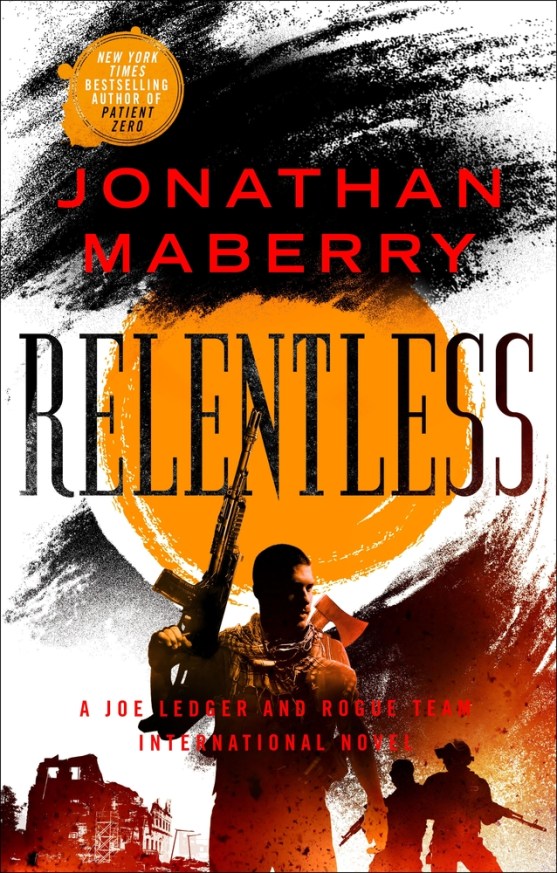
Relentless by Jonathan Maberry

Relentless Cover

Publisher: Macmillan Audio (Audiobook – 13 July 2021)

Series: Rogue Team International – Book Two / Joe Ledger – Book 12

Length: 18 hours and 29 minutes

My rating: 5 out of 5 stars

Amazon     Book Depository

One of my absolute favourite series returns with an absolute bang as Jonathan Maberry produces another incredible, intense and thrilling Joe Ledger novel with Relentless, the second novel in the Rogue Team International series.

Readers of my blog will be well aware of how much I love Jonathan Maberry’s Joe Ledger series.  This science fiction thriller series, which follows the titular protagonist and his team of elite soldiers as they fight all manner of crazy scientific and supernatural threats, is so much fun and is one of my favourite series.  After reading one of these fantastic books a few years ago, I sat down and listened to the entire series, from Patient Zero, all the way to the final entry, Deep Silence.  It also led me to some of Maberry’s other novels, including last year’s excellent horror novel, Ink, which was one of my favourite books and audiobooks of 2020.  The author also started the Rogue Team International series in 2019 as a sequel series to the original Joe Ledger books, featuring the same characters and universe.  The first entry in this sequel series, Rage, got a five-star rating from me and was one of the best books and audiobooks of 2019.  Due to Rage’s epic conclusion, as well as how much I enjoy Maberry’s writing, I have been eagerly awaiting Relentless for some time now and I ended up being blown away by how awesome it was.

During Rogue Team International’s (RTI) first mission, Joe Ledger and his team faced off against the dangerous pairing of criminal mastermind Kuga and his fearsome enforcer Rafael Santoro, barely managing to stop their insidious, world-changing plot.  However, their victory came at a terrible price, as Santoro delivered fiery vengeance on his foe by killing every member of Ledger’s family in a revenge attack at Christmas.  Santoro and Kuga hoped that their destructive blow would mentally destroy their hated enemy forever; instead, it unleashed their worst nightmare.

After returning to the field, Ledger leads an RTI team to an advanced laboratory where terrible genetic, biological and cybernetic experiments are being performed.  While the mission begins as a textbook RTI operation, everything changes when Ledger comes across a room full of deformed lab subjects and their cruel tormentors.  With his already fragile psyche pushed to the limit by the death of his family, Ledger finally snaps and lets something dark and dangerous from deep within take control.  With blood and bodies trailing in his wake, Ledger abandons his team and goes truly rogue.

Accompanied only by his loyal combat dog, Ghost, Ledger rampages across Europe, killing and destroying anything related to Kuga’s operation and questioning anyone who knows where he and Santoro are.  Even more concerning for the villains, Ledger is also beginning to get close to their next major operation.  Utilising cutting edge technology, Kuga’s group have developed biologically enhanced super soldiers, equipped with some of the most destructive weapons available.  Their next plan will unleash a devastating attack within America that will change the political and social landscape for generations to come.  However, not even their most advanced troops may be enough to stop the dark thing that Ledger has become, and Kuga is soon forced to make a Faustian deal with someone, or something, whose evil eclipses Ledger’s insanity.  Can Ledger defeat his hated foes and save his own soul at the same time, or will he finally be overwhelmed by his own inner darkness?

Once again Maberry shows why he is one of the most exciting and impressive thriller writers out there as Relentless was another epic and wildly captivating novel.  This latest Rogue Team International novel contains a complex and thrilling narrative that sets its already complex main character into a horrific quest for vengeance and redemption.  Throw in an incredible amount of action, a very clever and well-written story, and some memorable characters, and you have an outstanding novel that gets a full five-star rating from me.

In Relentless, Maberry produces an extremely intense and fast-paced novel that is both character driven and loaded with some of the best action you will ever read.  Following up from the dramatic conclusion of Rage, Relentless is one of the darker and more inventive books in the Joe Ledger franchise, presenting the reader with a brutal revenge story as the protagonist puts the rogue in Rogue Team International to kill anyone associated with his foes.  Maberry once again makes great use of the unique writing style that has been such a hallmark of this series, with the novel made up of shorter chapters told from a vast number of different perspectives, including several interludes set in the past, to produce a more complex and multifaceted tale and showcase the elaborate plans of the antagonists.

However, the author also tries something new in this book, with a noticeable change of focus away from the protagonist for a good portion of the early novel to highlight some major character developments.  This results in a bit less humour during the first part of the book, but this is more than made up for with a darker and more powerful storyline.  The story focus does eventually revert to the series’ usual form about halfway through the novel, just in time for the protagonist to find himself with information about a complex and intriguing evil plot that only he can stop.  This leads to a pretty epic conclusion with some fun twists and several major moments of worry and surprise, especially as you get some massive concurrent scenes as Ledger and his allies battle the enemy in several destructive and dangerous battles.  The action throughout Relentless is typical Maberry, with some very detailed and graphic depictions of the techniques and damage done, and it is near impossible not to get sucked in the combat as the powerful scenes unfold.  Readers should be warned that parts of this novel can get a little dark and gruesome as Maberry pulls no punches, but it is very much worth sticking through the blood and guts to see the captivating narrative unfold.  I quickly became sucked into his awesome story, and I loved every second of it, managing to finish it off in extremely short order.  It looks like Maberry has some intriguing plans for the future of this series, and I for one am extremely excited for that.

Like most of the Joe Ledger/Rogue Team International novels, Maberry has made Relentless extremely accessible to new readers.  While I personally would suggest reading Rage first, due to the tragic ending that plays into the events of this novel, people unfamiliar with the preceding books can jump in here and still have an excellent time reading this book.  Maberry does an amazing job recapping all the key events of the prior novels, including character bios, descriptions of technology and summaries of various cases.  As a result, the reader is never left in the dark about what is happening and who is being talked about, although the certain significance of some characters or revelations might be slightly tempered until the protagonist describes them.  One thing I would note after having read all the Joe Ledger books in the last couple of years is that Maberry tends to reuse the same phrases and terms when it comes to describing certain characters or events.  While this was fine the first few times, by book 12 in the overall series, it is very noticeable and slightly detrimental to the flow of the story.  However, this was an overall incredible novel with more than enough unique features to make it really stand out from the rest of the books in the series.

One of the best parts of any of Maberry’s novels are the complex and likeable characters featured within them.  Over the years Maberry has produced some truly great and memorable characters for the Joe Ledger novels, and it was great to see so many of them return for Relentless, especially as most of them go through some major development.  The most prominent of these is titular protagonist Joe Ledger, who has one of his most significant roles here in Relentless.  Ledger has always been an extremely troubled and damaged protagonist, which has grown more and more apparent as the series progressed as he is forced to deal with additional traumas.  However, this is the book where he truly snaps, as he is dealing with the brutal death of every member of his family.  While Ledger starts the book mostly fine (by his already low standards), it doesn’t take him long to lose the plot.  Fans of this series will understand Ledger’s mind is already broken up into three distinct personalities, the Cop, the Modern Man, and the Killer, which together form his mostly balanced psyche.  However, the events of Rage have resulted in a fourth personality, the Darkness, which subverts Ledger’s mind and leads him to commit acts of terrible violence and destruction while massively freaking everyone out.  The Darkness completely takes over Ledger, ensuring that you don’t see into his head for a good portion of the novel, which is an interesting change considering that Ledger is the only character in the series with a first-person perspective.  While this really changes the tone of this novel, it perfectly highlights just how far-gone Ledger is.  Even when he regains control of his mind and becomes a prominent point-of-view character again, the Darkness is still there, and he has to fight hard to control it.  All this makes for quite a fantastic and deep read, and it was captivating to see the protagonist deal with the traumatic events of a previous novel in such a dramatic and destructive manner.  Maberry really amps up how dangerous Ledger can be in this novel, and there are some truly disturbing and concerning scenes when the Darkness takes over.  It will be really interesting to see how Ledger comes back from the events of this book in the future, and I am extremely curious to see what happens to the character next.

In addition to the outstanding central protagonist, Maberry fills up Relentless with great supporting characters, most of whom have been introduced in previous Joe Ledger novels.  Maberry really likes a wide spread of characters throughout his novels, resulting in an interesting group of perspectives as the various supporting characters and minor inclusions experience the events of the narrative.  It was great to see many long-running side characters return in Relentless, especially as they are severely impacted by Ledger’s walk on the dark side.  While a couple of usually major characters only have a couple of scenes in this book, the usual DMS/RTI mainstays are all there.  Ledger’s squad mates, Top and Bunny, have a particularly intriguing storyline in this novel, which sees them go undercover to infiltrate Kuga’s operation while being conflicted about Ledger’s actions.  It was also great to see more of mysterious RTI leader, Mr Church, the guy who totally isn’t some sort of avenging angel or benevolent god (those are my two top guesses at this point).  While Church doesn’t get as much focus as he has in previous books, he is still a major presence, and there some more hints at his past with one of the antagonists.  There are also a couple of fun new unique characters introduced who Ledger meets up with as he pursues his quest for vengeance.  Several of them are cool, and I look forward to seeing if they show up again.

Out of all the many supporting characters, there are two that I particularly want to focus on as they had some very strong arcs within this book.  The first is Alexander Chismer, better known as Toys, the former villain who is seeking redemption and is now a close friend of Ledger’s partner Junie.  Toys goes back into the field to find Ledger, even though they really dislike each other.  Toys is a pretty smooth operator, and it was fun to see him go back to his criminal roots, even though it was for a good cause.  When he eventually catches up to Ledger, their meeting doesn’t go amazingly well (someone gets shot), but they do end up having a rather fantastic and entertaining heart-to-heart.  The comparison between their respective paths to redemption is rather deep and fascinating, and it was very intriguing to finally see these two characters interact in an extended way.  The other character I absolutely must talk about is Ledger’s dog, Ghost, the bestest boy in all of fiction.  Ghost has a pretty rough time in this novel, as he is Ledger’s only companion during his master’s dark spells and ends up getting into some very violent confrontations.  Maberry is extremely good at writing canine characters, and most readers will find it next to impossible not to fall in love with this savage, sassy cuddle monster.  Due to the many bad circumstances that Ledger and Ghost finds themselves in, I found myself feeling a lot of worry for Ghost, especially as Ledger seemed crazy enough to hurt him at times.  The fact that I felt strongly anxious for a fictional dog should tell you all you need to know about Maberry’s ability to write likeable characters, and readers should be warned that they will be experiencing feels in this novel.

It wouldn’t be a Maberry book without some impressive and complex antagonists, and this novel is chock full of villains with an intriguing master plan.  The main antagonists of Relentless are the same as Rage, with the fun combination of Kuga and Rafael Santoro.  Both Kuga and Santoro are recurring Joe Ledger antagonists (Kuga was the main villain of Kill Switch under a different name, while Santoro was a significant antagonist in The King of Plagues).  As a result, they have an amazing amount of history with Ledger and the RTI, which makes them quite dangerous foes.  Both are a bit more unhinged in this novel, especially once it becomes clear that a deranged Ledger is on their tail, and it was great to see them slowly become a little more desperate.  Despite this, they have a pretty intense and detailed plot to make a large amount of money through the sale of their advanced weapons, technology and enhanced mercenaries.  Their master plan for destruction and manipulation is very clever and takes a while to fully become apparent to the protagonist and the reader.  Maberry lays the groundwork for this plan perfectly throughout his narrative and the eventual reveal of what they are hoping for is pretty cool and leads to several amazing scenes that play off current events really well.

In addition to the antagonists that appeared in Rage, Relentless also features one of Maberry’s most mysterious and sinister villains.  Going by the name of Mr Sunday in this book (which I assume is a fun little nod to Mr Church’s fake name), this antagonist is a very creepy and dangerous being who has had some impressive appearances before (Assassins Code, Predator One and Dogs of War for example).  The moment he appeared in this book, I knew that I was going to be in for a good time, as this character is essentially the devil incarnate (there is a strong chance he is the devil).  Maberry does an incredible job building him up once again in this novel, and he ends up terrifying his potential allies just as much as his enemies.  This character’s appearance has some major implications for Ledger and Mr Church, and it is highly implied that his appearance is causing some of Ledger’s instability.  While he is mostly just coasting off Kuga and Santoro’s plans in this book, he also has his own sinister plans which come into fruition perfectly.  As a result, he is a pretty fantastic addition to the plot, and I loved the entertaining interludes that featured his elaborate sales presentations.  It looks like Maberry has some big plans for this character in the future, and I am very excited to see what chaos he has in stall for the world next.

Aside from the main villains I mentioned above, Maberry also utilises some great supporting antagonists who act as assassins and henchmen.  This includes the deranged Eve, who was introduced in Rage and who lost her partner and lover, Adam, to Ledger.  This loss has driven her even more insane, and there are several crazy chapters shown from her perspective, and she represents the typical sexual degenerate antagonist that Maberry likes.  There is also a new henchman character in Michael Augustus Stafford, a hired gun considered one of the best assassins in the world and is often referred to as the anti-Ledger due to his similar appearance to the protagonist.  Stafford leads Kuga’s hunt for Ledger throughout Europe and America and is a dogged tail for much of the book.  There are some very intense cat-and-mouse scenes occurring between the two as they attempt to get the upper hand on each other.  I really appreciated the way in which the author took the time to building up these less prominent antagonists throughout the novel, and you get a great sense of their personalities and abilities.  I would say that they don’t live up to their full potential at the end of the novel, but it was still fantastic to see their entire storyline unfold.

Another hallmark of a great Maberry book is some of cool technology featured in the story, especially as it results in some excellent and over-the-top fight scenes.  The villains get some impressive and over-the-top toys in this novel, including biological enhancements, advanced body armour that has a lethal kick to it and massive armoured exoskeletons loaded with giant guns.  Maberry has some fun building up the capability of these devices through several of the interludes, and they do not disappoint, causing all manner of chaos and destruction around the world.  That ensures that when the protagonists encounter them they are in for a real fight, as it gives their enemies an edge against RTI agents who usually have the most advanced tech.  It was really cool to see this technology in action, and Maberry dreams up some outstanding scenes around them.  All the fight sequences featuring them in Relentless are ultra-impressive, and readers are in for some great scenes, especially as many of them involve the less destructive and sleeker RTI technology versus the purely destructive Kuga weapons.  I really enjoyed seeing these advanced weapons in use, and it helps to give some of the action scenes a major boost.

Just like I have with every other Jonathan Maberry book I have enjoyed, I ended up grabbing the audiobook version of Relentless.  I have a lot of love for the Maberry audiobooks, and in my opinion it is the best way to enjoy these cool novels.  The main reason for this is the amazing recurring narrator, Ray Porter, who has lent his voice to the audiobook versions of nearly every single one of Maberry’s novels.  Porter is one of my absolute favourite narrators, and if he is voicing something, I know I am going to love it.  This narrator always manages to deftly drag the listener in and keep their complete attention throughout the entire production.  He really dives into the various characters, ensuring every one of them has an appropriate voice, with cool accents and relevant speech patterns.  He is also extremely good at portraying emotion, and he always goes out of his way to highlight a character’s feelings in their speech patterns, whether it be excitement, grief, anger, or something darker.  This is particularly noticeable with protagonist Joe Ledger.  I have noted before at how effortlessly Porter inhabits the role of this complex character, ensuring that the reader gets his full range of feelings, including his boundless rage and outrageous sense of humour (he really gets Ledger’s sarcasm).  Porter does another amazing job in Relentless, and it was really cool to hear his take on the more unhinged Ledger, and he really helps to add an extra sense of menace and anger during the scenes where Ledger is out of control.  Each of the voices used in this book are extremely good (I would critique the voice of one Australian character, but it’s a fairly minor role), and it was an absolute joy to once again listen to his narration.  With a run time of just under 18 and a half hours, this is a rather long Joe Ledger novel, although I powered through it in less than a week due to how much fun I was having.  This version of Relentless comes highly recommended, and it is already one of the best audiobooks I have listened to all year.

Well, that was a damn impressive novel.  As you can see from my rather long and happy review above, I had an outstanding time reading Relentless by Jonathan Maberry, and I found it to be an incredible read.  The Rogue Team International series continues to be one of the most thrilling series out there, and I loved the complex damaged characters and intense storyline this latest novel contained.  Easily one of my favourite books of the year, Relentless gets a five-star rating from me and is highly recommended to anyone wanting guaranteed action, fun and comprehensive darkness.

Amazon     Book Depository

Throwback Thursday – First and Only by Dan Abnett

First and Only Cover

Publisher: Black Library (Audiobook – 1999)

Series: Gaunt’s Ghosts – Book One

Length: 10 hours

My rating: 4.5 out of 5 stars

Amazon     Book Depository

Welcome back to my Throwback Thursday series, where I republish old reviews, review books I have read before or review older books I have only just had a chance to read.  For this week’s Throwback Thursday, I check out the first entry in the Gaunt’s Ghosts series, First and Only, by Dan Abnett, which proved to be a very impressive Warhammer 40,000 novel.

You only need to look through my recent Throwback Thursdays to see that I have been in a real Warhammer mood lately.  I recently got into the Gotrek and Felix series by William King, and quickly made my way through the first three books, Trollslayer, Skavenslayer and Daemonslayer, all of which were incredibly awesome.  While I have got the fourth book, Dragonslayer, ready and waiting, I decided to take a break from the fantasy Warhammer novels and dive back into the science fiction Warhammer 40,000 universe.  While I only used to play Warhammer Fantasy, I have a great appreciation for the Warhammer 40,000 lore, and I have recently enjoyed two great books in this massive franchise, Deathwatch: Shadowbreaker and Kal Jerico: Sinner’s Bounty.

While there are several intriguing Warhammer 40,000 novels on my radar, I decided to listen to the very first entry in the acclaimed Gaunt’s Ghosts series by Dan Abnett, First and Only.  Abnett is an impressive and prolific author and comic book writer who has done a lot of work across several franchises and companies, including Marvel and DC.  While he has a massive back catalogue, Abnett is best known for his input into the Warhammer extended universe.  Abnett has written an immense number of novels for the franchise, including Warhammer Fantasy books, such as the Malus Darkblade series (on my to-read list).  Most of his work is in the Warhammer 40,000 range, where he has written several major series, including the Eisenhorn and Ravenor series, as well as several major novels in the Horus Heresy extended series.  However, the most iconic of these is the Gaunt’s Ghosts series.

The long-running Gaunt’s Ghosts series follows a regiment of Imperial Guard, the basic foot-soldiers of the Imperium of Man, a major faction in the Warhammer 40,000 universe.  Starting back in 1999 with this novel, the Gaunt’s Ghost series featured 15 individual books, as well as several short stories, and only recently finished in 2019.  The Gaunt’s Ghosts series is one of the most iconic entries in the entire Warhammer 40,000 novel range, and I have heard many positive things about it over the years.  First and Only was one of the first books published by the Black Library, the Games Workshop publishing arm, and is a major feature of their catalogue.  So I felt that I was going to take the plunge and read more Warhammer novels, this would be a pretty good place to start, and boy was I glad that I did.

In the grim darkness of the far future, there is only war….

Throughout the entirety of space, the armies of the Imperium bring the fight to their enemies on every planet, battlefield and hellscape they can find.  One of the most deadly and destructive theatres of war is the massive Sabbat Worlds Crusade, where Imperial forces fight and die to defeat the armies of Chaos and bring an entire sector back into the Emperor’s light.  Many regiments of Imperial Guard have been recruited to battle in this war, but none have a background more steeped in blood and tragedy than the Tanith First and Only.

Formed to serve in the crusades from the once verdant world of Tanith, the first regiment of Tanith Imperial Guards could only watch in horror as their planet was destroyed by the forces of Chaos, with them the only survivors.  Now under the command of Colonel-Commissar Ibram Gaunt, the men of the Tanith First and Only have taken to calling themselves Gaunt’s Ghosts, due to their superior stealth skills and in recognition of the pain they feel at being the only remnants of their planet.

Fighting in the latest phase of the crusade, the Ghosts find themselves where the fighting is thickest, using their unique skills and experiences to confound the enemy and bring about impossible victories.  However, the Ghosts are about to discover that not all battles are fought on the field, and not all enemies are in front of them.  A power struggle is brewing in the upper ranks of the Crusade’s high-command, and the Ghosts have fallen right into the middle of it.  Entrusted with a mysterious encrypted data transmission by an old friend, Gaunt soon finds himself targeted by the agents of an ambitious general.  After several devastating attacks, Gaunt is forced to choose a side, especially after he uncovers a deadly secret that could destroy everything his men have fought for.  His mission will lead him to the most dangerous battlefield in the crusade, where the lines between friend and foe have never been blurrier.

Now this was a really incredible and exciting novel.  Abnett has produced an outstanding story in First and Only, and I loved how he perfectly translated the unique feel of the Warhammer 40,000 universe into a captivating narrative.  Featuring some great characters, a dark setting, and a fantastic look at this great franchise, First and Only is a captivating and explosive novel and I had an amazing time getting through it.

Abnett has produced a pretty epic story for First and Only that not only serves as an excellent introduction to the characters and wider narrative but is also full of excitement, intrigue and action.  At its core, First and Only is a tough and gritty military action adventure, that follows the Tanith First and Only through several gory fields of battle.  The narrative is broken up into several distinctive sections, set across three separate planets and one massive spaceship, as well as several shorter scenes and flashback sequences that add context and strengthen character development.  These separate sequences flow together extremely well and form a tight and compelling overarching narrative.  I loved the way in which Abnett combined his fantastic military story with treacherous and thrilling political intrigue, as the protagonists are forced to deal with treachery from their friends and attacks from their own commanders.  The author really does a great job setting up the key plot points at the start of the book, and the entire narrative seamlessly flows on after that.  I was deeply impressed by all the amazing action sequences, and I loved the author’s use of multiple character perspectives to tell a complex and powerful narrative.  The entire narrative comes together extremely well into a big, explosive conclusion.  I really enjoyed some of the great twists that were revealed in the lead-up to the conclusion and I was pleasantly surprised by several fun turns and reveals.  An overall exciting and terrific narrative, I had an absolute blast getting through this awesome novel.

One of the best things about this fun novel is the author’s great use of the dark and gothic Warhammer 40,000 setting.  Abnett obviously has a lot of love for this universe, and he painstakingly recreates it in his novel in all its fantastic and gritty glory.  As a result, the reader is treated to some outstandingly portrayed background settings of destroyed worlds, bombarded warzones, and overpopulated Imperial worlds.  This proves to be really impressive to see, and the author makes sure to use this setting to full effect, enhancing the cool narrative and making it an excellent backing for the various fight scenes.  This attention to detail also comes into play perfectly during the book’s various action sequences, and I felt that Abnett perfectly captured the unique and chaotic feel of a Warhammer 40,000 battle scene.  I have to say that I also deeply appreciated the way in which Abnett introduced the reader to the Warhammer 40,000 universe.  I personally found that very little pre-knowledge of this extended universe is needed to enjoy this book, and while those readers familiar with the game or other Warhammer novels will obviously get a lot more out of First and Only, this is actually a pretty good way to experience Warhammer 40,000 lore for the first time.

Another cool aspect of this novel was the insightful and intriguing focus on the Imperial Guard.  The Imperial Guard are the basic grunts of the Imperial faction and are often overshadowed by the flashier Space Marines in both the tabletop game and the wider extended universe.  As a result, it was cool to see a novel that focuses on a regiment of these troopers and shows them during a deadly and bloody war.  Abnett does an outstanding job capturing this faction in First and Only, diving into the psyche of the common soldier, while also showcasing their tactics, weapons, machines and motivations.  Thanks to the author’s excellent use of multiple character perspectives, you get to see various aspects of the regiment from commander down, and I loved the fascinating combination of perspectives from all the different types of soldiers and specialists.  I also really appreciated the way in which Abnett highlighted different regiments of Imperial Guard throughout the novel, which corresponds with the varied regiments and styles that can be fielded in the tabletop game.  While most of this novel focused on the Tanith First and Only, Abnett also strongly features two other regiments, the Vitrian Dragoons and the Jantine Patricians, who act as allies and rivals to the Ghosts respectfully.  It was extremely interesting to see the variations in mentality, uniforms, and tactics between these regiments, and I really enjoyed the way in which the author highlights their diverse backgrounds and planets.  This ended up being an incredible introduction to the Imperial Guard, and I imagine that quite a few Warhammer 40,000 players gained a new appreciation for this army after reading this novel.

First and Only features a fantastic collection of characters that serve as the heart and soul of the narrative.  This book follows the adventures of the Gaunt’s Ghosts regiment, and you get to see various members of this squad in action, as well as some antagonist characters.  Abnett ensures that each of the characters featured within the novel have intriguing and well-established backstories and traits, and you quickly understand their motivations.  Much of First and Only’s focus is on the leader of the Ghosts, Colonel-Commissar Ibram Gaunt, who serves as the main protagonist. Gaunt proves to be an excellent and enjoyable main character, who serves as both the regiment’s leader and its inspirational political officer.  Abnett really develops Gaunt’s personality and backstory, and all of the flashbacks focus on his past, setting up his relationship with several of the characters featured in the novel and showing how several rivalries were formed.  Other fascinating and complex characters included Colonel Corbec, who was the main secondary antagonist; Major Rawne, an officer with a hatred for Gaunt who has a pretty traumatic time in this novel; Brin Milo, Gaunt’s adjutant with extreme perception (they are obviously setting up something there); and Colonel Flense, a guardsman from a rival regiment who bears a great grudge against Gaunt.  All these characters, and more, are really fun to follow, but readers are advised not to get too attached, as this is a brutal war story.  I will admit that I initially had a little trouble connecting to several of the characters and I lost track of who the different protagonists were.  However, once I got a further into the story, I grew to know each of the distinctive characters, and I appreciated their fun characteristics and capacities.

As I have tended to do with all Warhammer recently, I grabbed the audiobook version of First and Only.  This proved to be a fantastic decision, as the First and Only audiobook was an excellent and fun production that I was able to power through quickly.  First and Only has a decent run time of 10 hours, and features some amazing voice work from veteran narrator Toby Longworth.  Longworth, who has previously narrated a swathe of Warhammer audiobooks, does an outstanding job with this novel, and he moves the narrative along at a swift and exciting pace.  I love the range of great voices Longworth brings to First and Only, and each character is given a distinctive voice that fits their personality and background perfectly.  There is a certain grim nature to the voices of many of the main characters, which reflects the dark, gothic nature of the Warhammer 40,000 universe.  He also utilises a series of different accents for some of the various Imperial Guard regiments, which helps to distinguish their divergent backgrounds and the influence of their home world.  This amazing narration turns the First and Only audiobook into an absolute treat, and this was an incredible way to enjoy this excellent book.  As Longworth provides the narration for the rest of the Gaunt’s Ghosts audiobooks, I will probably check out the rest of this series in this format, and I already know that I will have an awesome time doing so.

First and Only by Dan Arbnett is an outstanding and fantastic novel that takes the reader on an exciting journey to the heart of the Warhammer 40,000 universe.  Featuring an incredible and epic war story that makes full use of its dark setting and amazing characters, First and Only serves as a captivating first entry in the Gaunt’s Ghost series.  I had a wonderful time listening to this book, and this was one of the best Warhammer tie-in novels I have so far had the pleasure of reading.  This novel comes highly recommended, and I full intend to check out the other entries in this series in the next few years.

First and Only Cover

Amazon     Book Depository

Waiting on Wednesday – Star Wars: The High Republic: Tempest Runner by Cavan Scott

Star Wars - Tempest Runner Cover

I also wanted to do a quick Waiting on Wednesday article on the upcoming Star Wars audio drama, Star Wars: The High Republic: Tempest RunnerTempest Runner, which will be written by the amazing Cavan Scott, will be the latest entry in the intriguing High Republic range of Star Wars fiction and will be released later this month.  I briefly mentioned this upcoming audio drama in another Waiting on Wednesday article, however, I was waiting to get some more details, such as the cool cover art above, before I discussed it.

For those unfamiliar with it, The High Republic is one of the most interesting and compelling current focuses of Star Wars fiction now.  Set around 200 years before the events of The Phantom Menace, High Republic media focus on a golden age of the Republic which is facing some major troubles, mainly in the form of the pirate group known as the Nihil.  Starting early this year with Light of the Jedi by Charles Soule, this era of Star Wars lore is proving to be a lot of fun, and there have been some great entries in the series, including Into the Dark by Claudia Gray and The Rising Storm by Cavan Scott, the later of which was particularly good.

Scott looks set to continue his awesome run of High Republic fiction with Tempest Runner, which appears to be a character specific sequel to The Rising StormTempest Runner will focus on one of the major High Republic antagonists, Lourna Dee, Tempest Runner of the Nihil, and has a very interesting story set around her.

Synopsis:


In this Star Wars audio original, delve into the cutthroat world of one of the High Republic’s greatest foes, the merciless Lourna Dee.

The Nihil storm has raged through the galaxy, leaving chaos and grief in its wake. Few of its raiders are as vicious as the Tempest Runner Lourna Dee. She stays one step ahead of the Jedi Order at the helm of a vessel named after one of the deadliest monsters in the galaxy: the Lourna Dee. But no one can outrun the defenders of the High Republic forever.

After the defeat of her crew, Lourna falls into the hands of the Jedi – but not before she hides her identity, becoming just another Nihil convict. Her captors fail to understand the beast they have cornered. Just like every fool she’s ever buried, their first mistake was keeping her alive.

Lourna is determined to make underestimating her their last.

Locked onto a Republic correctional ship, she’s dragged across the galaxy to repair the very damage she and her fellow Tempest Runners inflicted on it. But as Lourna plans her glorious escape, she makes alliances that grow dangerously close to friendships. Outside the Nihil – separated from her infamous ship, her terrifying arsenal, and her feared name – Lourna must carve her own path. But will it lead to redemption? Or will she emerge as a deadlier threat than ever before?

I really love the cool synopsis above.  It looks like Scott has a pretty fantastic story in place for this audio drama and I am pretty keen to see a villain-centric story, especially one that focuses on Lourna Dee, who has been particularly fun in some of the High Republic novels.  A prison drama in space has a lot of potential, especially in the Star Wars universe (Death Troopers and Maul: Lockdown are great examples of this), and I am very keen to see what compelling narrative Scott has planned.

I am also really keen to check out another full-cast Star Wars audio drama.  There have been two previous audio dramas in this current canon, Dooku: Jedi Lost, which was also written by Scott, and Doctor Aphra.  Both audio dramas have been particularly fun, and I have deeply enjoyed hearing the outstanding array of narrators and voice actors featured in them.  This latest audio drama has another particularly good cast, which includes some of my favourite Star Wars audiobook narrators.


Narrated by a Full Cast:

Jessica Almasy as Lourna Dee
Dan Bittner as Councilor Wittick
Orlagh Cassidy as Ola Hest
Sullivan Jones as Bala
January LaVoy as Tasia
Kathleen McInerney as Councilor Fry
Tara Sands as Sestin
Vikas Adam as H7-09 and Raleigh
Jonathan Davis as Andrik Keller and Asgar Ro
Neil Hellegers as Kassav, Yudiah Dee, and Jano
Saskia Maarleveld as Parr and Avar Kriss
Soneela Nankani as Muglan and Keeve Trennis
Marc Thompson as Pan Eyta, Sskeer, and Marchion Ro
Shannon Tyo as Quin and Nib Assek

The above cast sounds pretty impressive and I am very keen to see how they perform together.  It looks like Jessica Almasy is going to be the feature performer of this audio drama, and it will be great to see her take on Lourna Dee.  I am also very excited to hear more of January LaVoy (who did an amazing job narrating Star Wars: Victory’s Price earlier this year), Jonathan Davis (Master and Apprentice, Lords of the Sith) and Marc Thompson (Thrawn, Chaos Rising, Greater Good, Dark Disciple, Scoundrels), all of whom have done some great work recently.  There is also a very fun combination of characters there, and it will be interesting to see how they are worked into the plot.

Overall, Tempest Runner looks set to be a very exciting and compelling new addition to the Star Wars canon.  I am extremely keen to listen to this upcoming audio drama, especially as it features an exceptional cast, and it will probably be one of the standout pieces of Star Wars fiction in 2021.  I look forward to hearing this cool story unfold later this month, and I think this audio drama has an immense amount of potential.

Top Ten Tuesday – My Favourite Audiobooks from the First Half of 2021

Top Ten Tuesday is a weekly meme that currently resides at The Artsy Reader Girl and features bloggers sharing lists on various book topics.  The official topic for this week is Books I’d Want With Me While Stranded on a Deserted Island, but I am going to do something a little different and instead look at my favourite audiobooks from the first half of 2021.  This is a continuation of my Top Ten list from a few weeks ago that featured my favourite overall novels from the first half of 2021.

People familiar with my blog will know that I have a great deal of love for the audiobook format, and it is one of the main ways that I tend to check out books.  Each year I enjoy a great number of different audiobooks and use the format to check out recent releases and older novels.  I have been enjoying audiobooks for years, and it is amazing the various ways in which listening to a book can enhance your enjoyment.  A great narrator can really bring you into the story, and I find that listening to a book enhances the amount of detail that you can take in.  In addition, other features, such as great voices, music and sound effects can really make an audiobook something special, and there some great examples of that out there.  This year alone I have listened to several outstanding audiobooks, includes some of my favourite books from early 2021.  Because I love this format so much, I thought I would take this opportunity to highlight my favourite audiobooks from the first half of the year.

To pull this list off I had a look at all the 2021 releases that I listened to on audiobook to figure out my favourites.  It turns out that I have already gone through quite a few this year so there was a very large collection of potential additions to this list.  I was eventually able to whittle it down to the ten audiobooks I consider to be the best, as well as a generous honourable mention section.  There is a bit of a crossover with my previous Favourite Books from the First Half of 2021 list, but I think there are enough new additions to make this list worthwhile.  I did prioritise audiobook production and narration over story in a few places, as outstanding narration or use of music and sound effects can enhance the plot.  That is why so many Star Wars novels made this list, because they are awesome productions, which are really worth checking out.  I am pretty happy with how the overall list turned out and I think that the below entries really highlight what my favourite audiobooks are.


Honourable Mentions:

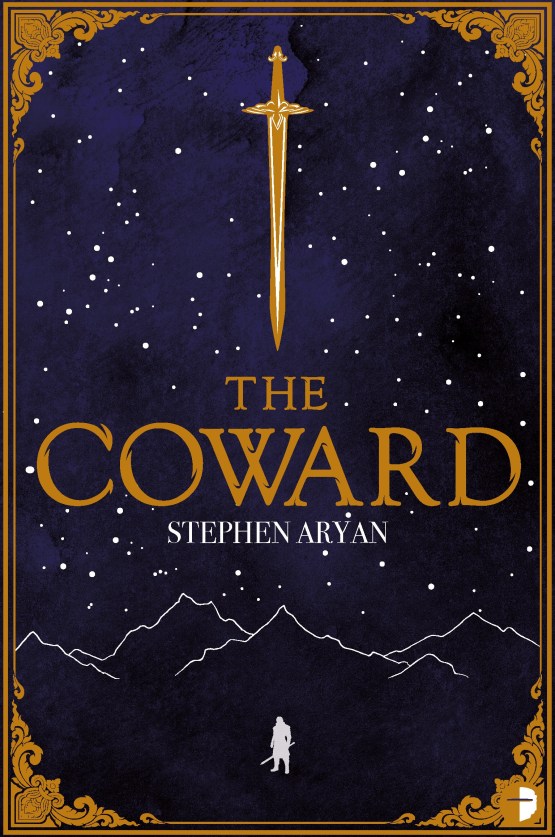
The Coward, written by Stephen Aryan and narrated by Matt Wycliffe

The Coward Cover


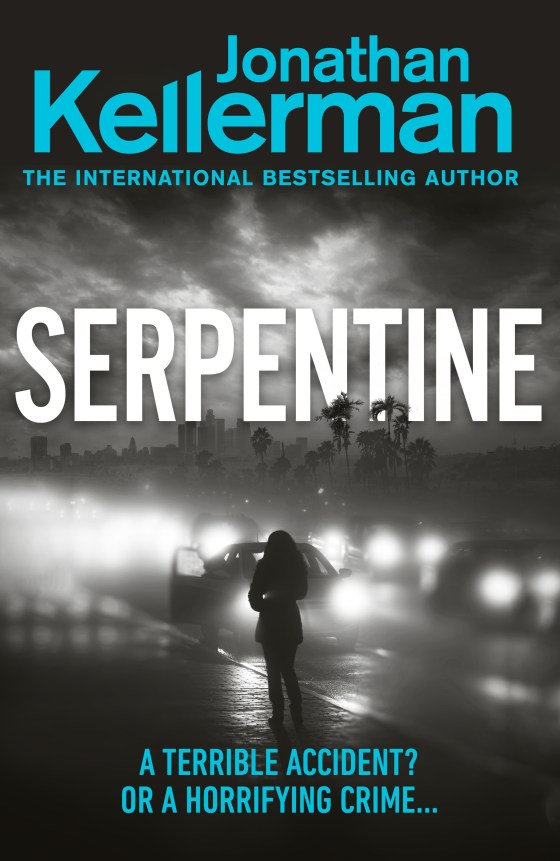
Serpentine, written by Jonathan Kellerman and narrated by John Rubinstein

Serpentine Cover


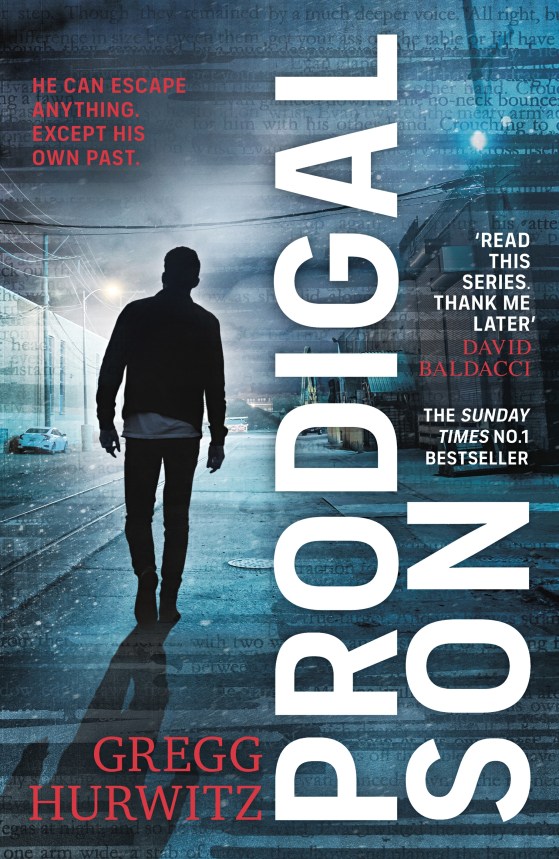
Prodigal Son, written by Gregg Hurwitz and narrated by Scott Brick

Prodigal Son Cover


The Girl and the Mountain, written by Mark Lawrence and narrated by Helen Duff

The Girl and the Mountain Cover 2


Top Ten List (No Particular Order):

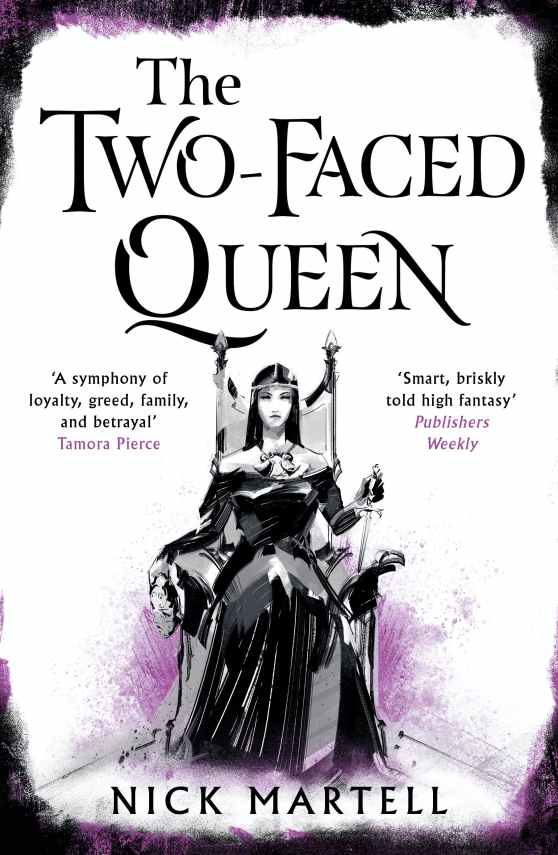
The Two-Faced Queen, written by Nick Martell and narrated by Joe Jameson

The Two-Faced Queen Cover

One of my favourite books of the year, The Two-Faced Queen, is easily one of the best audiobooks as well.  There were actually two separate audiobook versions of this book, and I chose to go with the Joe Jameson version, since he previously narrated Martell’s debut novel, The Kingdom of Liars.  I am a big fan of Jameson, especially after his work on books such as King of Assassins by R. J. Barker, and he did another amazing job on this book.  The Two-Faced Queen audiobook is an excellent and addictive listen, and I would wholeheartedly recommend this format to anyone wanting to enjoy this awesome five-star novel.


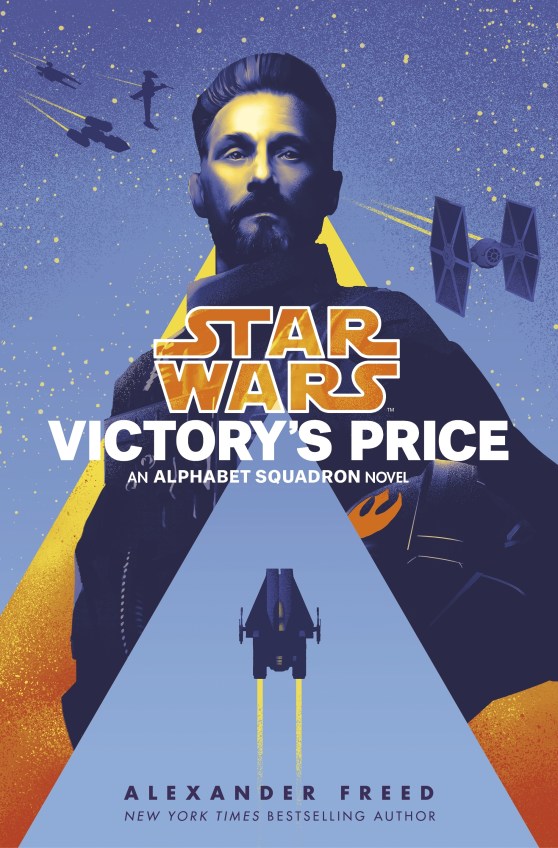
Star Wars: Victory’s Price, written by Alexander Freed and narrated by January LaVoy

Star Wars - Victory's Price Cover

Earlier this year, impressive author Alexander Freed finished off his Star Wars: Alphabet Squadron series with Victory’s Price, and in the process created one of the best books of 2021.  This audiobook massively enhances the already incredible and moving narrative within this exceptional novel, utilising outstanding voice work from January LaVoy, as well as the iconic Star Wars score and sound effects.  Easily one of best audiobooks of the year.


Relentless, written by Mark Greaney and narrated by Jay Snyder

Relentless by Mark Greaney Cover

One of the leading authors of spy thrillers, Mark Greaney, produced another intense and exciting novel this year with Relentless.  Thanks to some excellent voice work from Jay Snyder, the Relentless audiobook was pretty damn impressive, and you are in for a real treat with this exhilarating novel.


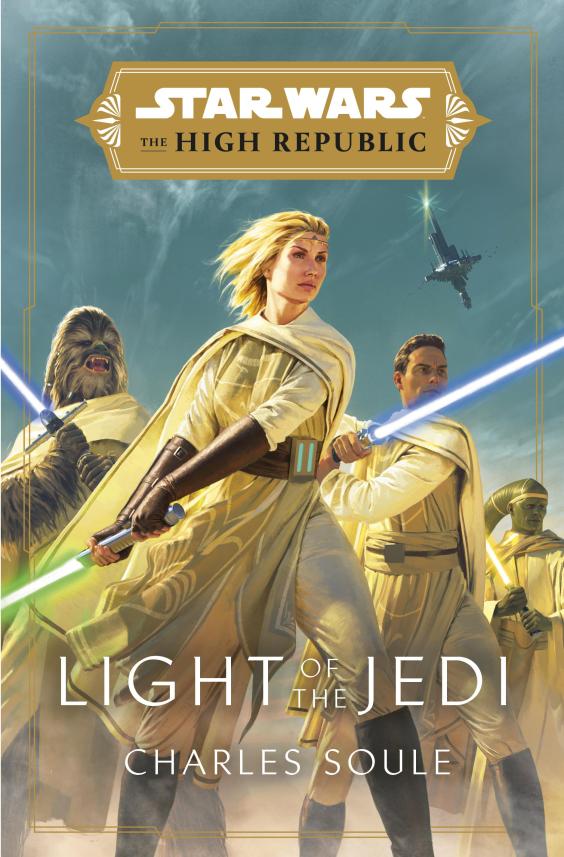
Star Wars: Light of the Jedi, written by Charles Soule and narrated by Marc Thompson

Star Wars - Light of the Jedi Cover

Another outstanding Star Wars audiobook was Light of the Jedi, the introductory novel in the new High Republic range.  Just like Victory’s Price, Light of the Jedi makes full use of the Star Wars music and effects to produce a fantastic listen.  However, Light of the Jedi also features the incredible voice work of Marc Thompson, one of the best narrators utilised by the Star Wars franchise.  Thompson produces a raft of great voices to highlight the new characters featured within this novel and it was really fun to hear him tell this story.  Thompson is lending his vocal talents to several other outstanding Star Wars audiobooks this year, including the latest High Republic novel, The Rising Storm, which is another great audiobook to check out.


The Shadow of the Gods, written by John Gwynne and narrated by Colin Mace

The Shadow of the Gods Cover

After hearing some incredible things about the latest John Gwynne novel, I ended up checking out The Shadow of the Gods on audiobook.  Not only was this book one of the absolute best fantasy releases of 2021 but the audiobook format was pretty damn exceptional.  Colin Mace’s voice really fit the dark fantasy setting and he really dives into the complex characters to highlight their deeper feelings and hidden rages.  An impressive and captivating listen.


Later, written by Stephen King and narrated by Seth Numrich

Later Cover

I was deeply impressed earlier this year when I checked out the audiobook format of the latest Stephen King novel, Later.  Outstanding new narrator Seth Numrich really dives into this excellent novel, and I had a wonderful and freaky time getting through this fantastic audiobook.


The Bone Maker, written by Sarah Beth Durst and narrated by Soneela Nankani

The Bone Maker Cover

I had an absolute blast listening to the latest great fantasy novel from Sarah Beth Durst, The Bone Maker, especially as narrator Soneela Nankani does a great job bringing the novel’s damaged protagonists to life.


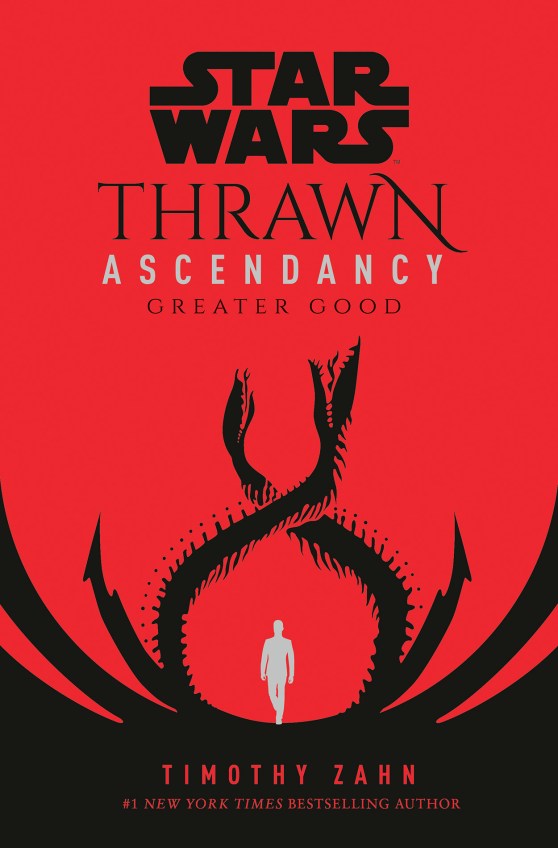
Star Wars: Thrawn Ascendancy: The Greater Good, written by Timothy Zahn and narrated by Marc Thompson

Star Wars - Thrawn Ascendancy - Greater Good Cover

The final Star Wars audiobook on this list is the second Thrawn Ascendancy entry, The Greater Good.  Thompson once again lends his incredible voice to this great book, bringing the unique characters to life.  However, his best work is reserved for main character Grand Admiral Thrawn, as Thompson perfectly replicates the character’s voice from the Star Wars Rebels animated series.  This makes for a complex and powerful audiobook, and I loved every second I spent listening to it.


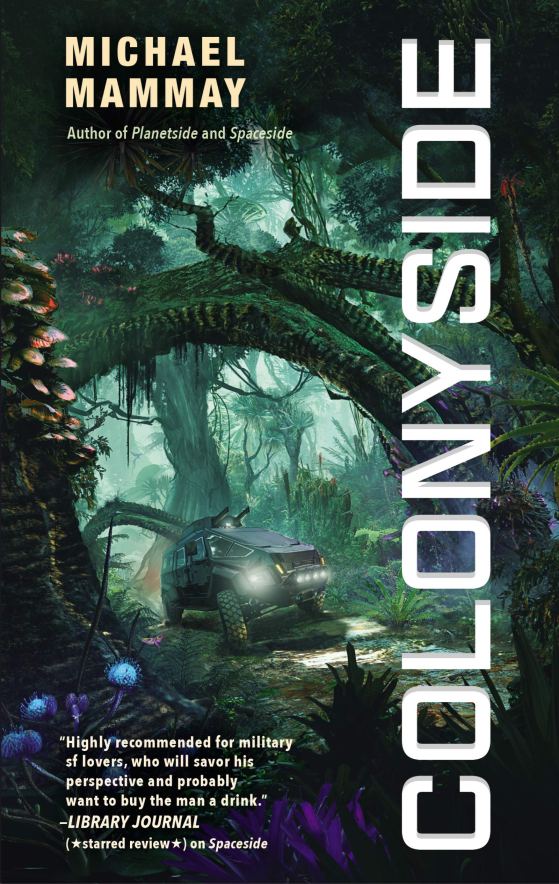
Colonyside, written by Michael Mammay and narrated by R. C. Bray

Colonyside Cover

One of the fastest rising science fiction authors, Michael Mammay, continued to impress earlier this year with Colonyside, the third entry in the Planetside series, which was another awesome read.  You really need to listen to this novel’s audiobook format, as narrator R. C. Bray brings a certain necessary gruffness and fun to the central character.  An amazing book to listen to!


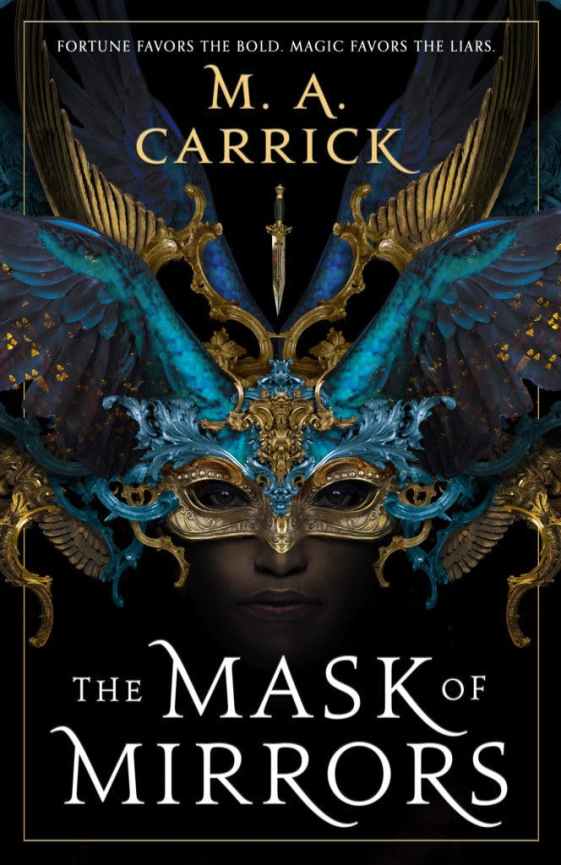
The Mask of Mirrors, written by M. A. Carrick and narrated by Nikki Massoud

The Mask of Mirrors Cover

The final entry on this list is the great fantasy novel, The Mask of Mirrors by M. A. Carrick.  The Mask of Mirrors is a particularly fun and intriguing read, and I found myself really drawn to its audiobook format.  This is mainly because of narrator Nikki Massoud, who strategically utilises a fantastic range of voices and accents to turn this amazing book into an incredible listening experience.


That is the end of my latest list.  As you can see, I have a pretty typical Unseen Library Top Ten List (I’ve got to fit in as many Star Wars novels as possible), but I really do think this represents all of my absolute favourite audiobooks from the first part of 2021.  All of the above audiobooks come highly recommended, and in my opinion, the audiobook format really enhances all of these great reads.  Let me know what your favourite 2021 audiobooks are in the comments below, and I look forward to seeing which of the above make my Top Audiobooks of 2021 list later this year.

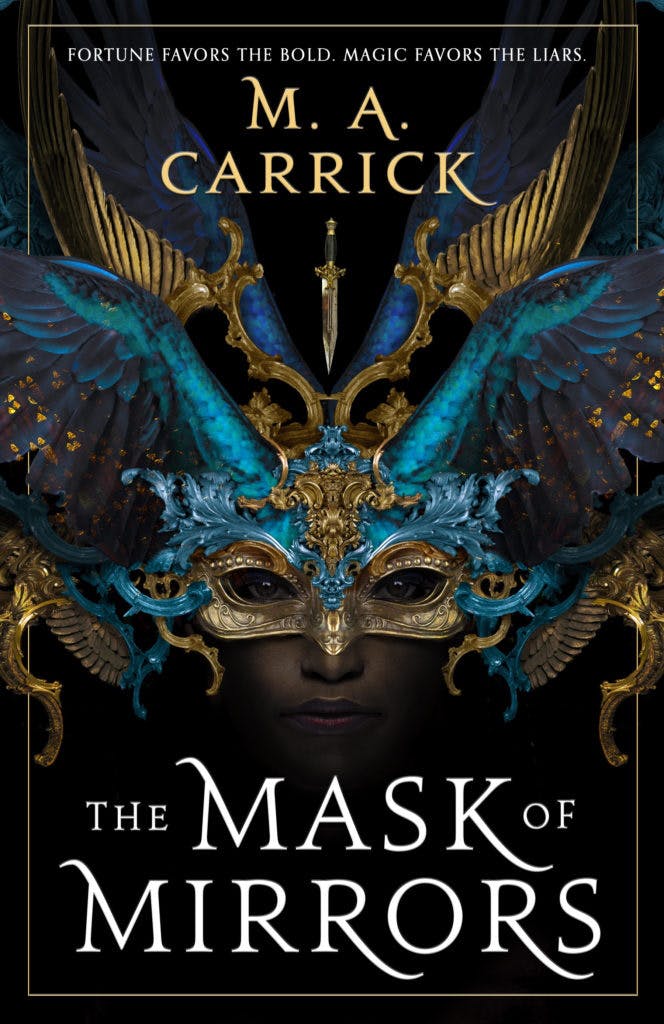
The Mask of Mirrors by M. A. Carrick

The Mask of Mirrors Cover

Publisher: Orbit (Audiobook – 19 January 2021)

Series: Rook & Rose – Book One

Length: 23 hours and 13 minutes

My Rating: 4.5 out of 5 stars

Amazon     Book Depository

Magic and masquerade combine into one of the most creative fantasy releases from the first half of 2021 with The Mask of Mirrors by M. A. Carrick, the first book in the Rook & Rose trilogy.

The Mask of Mirrors was a fantastic novel that caught a lot of buzz earlier in the year.  This book was written by M. A. Carrick, the joint pen name of Marie Brennan and Alyc Helms, two established fantasy authors who are teaming together for their first novel.  This debut novel was pretty impressive and the two talented authors ended up producing an exciting and complex fantasy tale that sees a young con artist attempt to change her fate.

Welcome to Nadežra, a city of iniquity and greed that forms the gateway between two warring cultures.  Many people call Nadežra home, although few truly prosper, with only the great noble houses and their supporters gaining any true wealth.  However, one young woman is about to change everything.  Ren is a former street rat of Nadežra who escaped the city years ago to seek her fortune.  Returning after several years, Ren has taken on an entirely new persona: Renata Viraudax, a mysterious and seemingly wealthy noblewoman from the capital, come calling on her long-lost relatives.  Ren hopes to con her way into the once great noble family of House Traementis and use their name and legacy to make her fortune and ensure a comfortable life for herself and her sister.  But as she begins to worm her way into the family, she soon finds that the life of a noble in Nadežra is far more complex than she ever imagined.

Despite their noble standing, House Traementis is in poor shape, and if Ren is going to make money off them, she first needs to ensure their success.  However, a powerful rival family is seeking to destroy House Traementis, and they will do anything in their power to get their way.  Forced to work with criminals and shadows to achieve her goal, Ren will find just how ugly the glittering nobles of Nadežra can be.  Unbeknownst to Ren, a far more insidious presence is lurking within the city, killing children and unleashing corrupt magic for their own goals.  Worse, this evil has a deadly connection to Ren’s past and wants to use her to destroy everything she holds dear.  Can Ren overcome this evil while maintaining her cover, or will the nobility of Nadežra eat her whole?

This was an extremely captivating first outing from this new writing team, and I deeply enjoyed the cool and compelling story that they came up with.  The Mask of Mirrors is a complex tale that expertly combines intriguing and clever fantasy elements with a thrilling confidence trick, as the protagonist attempts to work her way into high society.  Of course, nothing works out that simply, as the protagonist soon finds herself embroiled in all manner of scandals, plots and deadly feuds, producing an excellent story. 

While I did enjoy the overall narrative, the book did start off a little slow and it took me a while to get really excited about it.  I personally only got hooked when the character of the Rook was added in.  The Rook is a mysterious, Zorro-esque (perhaps more Tuxedo Mask than Zorro) character who haunts the streets of Nadežra, fighting oppression and tyranny while thumbing his nose at authority.  Following a great duel sequence, the mystery of the Rook’s identity becomes a major part of the plot, and I found myself really getting into this and the other interesting storylines.  The rest of the novel flows at a fantastic pace, especially after the authors set up so many fascinating and compelling plot points at the start of the book that slowly come to fruition.  There are some amazing moments throughout the novel, and I was really impressed by a particularly tragic moment that occurred around two-thirds of the way through, which was shocking and surprising.  The entire narrative comes together in an excellent conclusion, providing a satisfying and moving ending, while also setting up some excellent moments for the next two entries in the series.  I did think that the novel could maybe have benefited from either finishing at the big moment I mentioned above, or by trimming around 100 pages out of the middle of the book.  Some of the twists at the end of The Mask of Mirrors were also a little predictable, especially around the identity of the antagonists (it literally could not have been anyone else).  However, I think that the eventual reveal about who was under the Rook mask was handled beautifully, and I honestly did not know which direction they were going to go in for much of the plot.  I had a really amazing time getting through this story, and I look forward to seeing how these two talented authors continue it in the next two entries in the series.

The Mask of Mirrors contains a fantastic collection of characters who offer up a range of different perspectives and vantage points to tell a massive and complete narrative.  The authors behind this book spent a lot of time building up the various characters, ensuring that they had intriguing and tragic backstories, which leads to some fantastic development throughout the course of the novel and the entire series.  The most prominent character is Ren, a former local who attempts to pull off and ambitious con.  Ren is a confident, talented, haunted figure, who experienced great tragedy at an early age and is still trying to pull herself together.  She is forced to return to the city that she fled from years before to achieve greatness and make money and ends up connecting to her heritage as well as being forced to relive her greatest mistakes and traumas.  I loved the fantastic storylines surrounding Ren, and she proves to be quite a complex character.  Rather than being obsessed with money and dislike of the noble class in Nadežra, Ren grows to care for her marks and works to save them and the entire city when the antagonist makes their move.  Ren proves to be an exceptional central character to follow, especially as she provides the most insight into one of the main magical disciplines featured in the book, and it will be very interesting to see how her storyline continues later in the series, especially after she gains a mask of her own.

Other great characters contained within this novel include ruthless rising crime boss Derossi Vargo, a man with great ambition who is willing to risk anything and anyone to achieve his goal.  Vargo, a seemingly self-made man, proves to be one of the most entertaining and enthralling figures in the entire novel, and I deeply enjoyed seeing him work with Ren while enhancing his own plans.  It looks like Carrick has some major plans for Vargo, and he could be an amazing overarching antagonistic figure.  Another excellent character is Grey Serrado, a police officer and friend of the Traementis who finds himself investigating some of the major activities occurring the city.  Grey is a conflicted and damaged character, constantly torn between his duty as an officer and his heritage.  He goes through some major events throughout this novel and looks set to be a major figure throughout the rest of the series.  I also enjoyed Ren’s adopted siblings Tess and Sedge, who act as fantastic supporting figures to Ren and her plans.  Carrick develops them quite nicely and they prove to be entertaining figures who have a long and caring relationship with Ren.  I also appreciated the focus on the members of House Traementis, the people that Ren is trying to con.  The Traementis are a once great house who have fallen on hard times and are slowly falling into oblivion due to a rumoured curse.  While you initially aren’t too concerned with these characters, due to their status as patsies, the three surviving members swiftly grow on you, enough that you eventually start to judge Ren’s continued attempts to con them.  Finally, I have to say that the masked Rook was a particularly awesome character, and I deeply loved his inclusion in the plot.  It was so much fun trying to figure out who he was, and the authors utilised him to perfection to create an outstanding narrative.

You cannot talk about The Mask of Mirrors without discussing the complex and distinctive setting that is the city of Nadežra.  Nadežra is a sprawling, independent city state resting on a delta, filled with palaces, slums, massive buildings and all manner of different people.  Due to its unique history, Nadežra is home to several distinct ethnic groups, the local Vraszenians underclass and the Liganti upper class.  The two ethnic groups are opposites, and there is substantial friction between them, especially as the Vraszenians feel like second-class citizens in their own historical city.  While most of the novel shows the two groups living mostly in harmony, the lingering tension between the two groups becomes a major plot point as the novel, and I think that the authors did an outstanding job highlighting this and using it as part of the story.  Carrick provides detailed explorations of the different cultures between the two groups, and it was interesting to see how it partially paralleled some real-life political situations.  It was also quite interesting to see that, despite the cultural differences and clashes, Nadežra proves to extremely woke and tolerant when it comes to issues of gender and LGTB+ issues.  Not only are there several prominent female figures within the city but there also several homosexual, nonbinary and transgender characters.  I love the way in which most modern fantasy novels are featuring more and more of these aspects in their settings, and this was a great example of that.  The city of Nadežra proves to be a very magical place, and there is so much detail, backstory and culture contained within that the reader will feel like they are actually walking the streets.

Carrick also comes up with several distinctive forms of magic, which are as diverse and different as the various cultures contained within the city.  There are three major forms of magic shown in the book, although I had to say that I found all three of them to be a little less dramatic than you would expect in a fantasy book.  The first one of these is numinata, which is sort of a combination of geometry and astronomy, often using complex glyphs or geometric patterns.  Numinata is generally used by the Liganti and is considered a more cultured and precise form of magic.  The Vraszenian magic, on the other hand, is based on patterns and dreams, and is mostly shown through the protagonist’s pattern reading, a form of tarot card reading which gives glimpses into the past, the present and the future.  The final form of magic is imbuing, which allows the user to put a little bit of their essence into an item or product to enhance its effect.  All three magics are featured fairly prominently within The Mask of Mirrors and prove to give the novel a unique feel, while also highlighting the cultural and social differences between the ethnic groups.  While I did think that much of the magic was a little undefined in the novel, it becomes a key part of the plot, and it was interesting to see how the combination of magics could create some nightmarish results.  Overall, I deeply enjoyed the extraordinary and detailed setting that Carrick came up for The Mask of Mirrors and I found myself getting really lost in its spectacle and details.  While I would have preferred just a little more info about the universe’s magical rules, I felt that Carrick did a wonderful job pulling this together, and it was a definite highlight of this great book.

I ended up listening to the audiobook version of The Mask of Mirrors, narrated by Nikki Massoud, who has done several interesting audiobooks in the last year.  While this is a pretty long audiobook (at 23 hours and 13 minutes, it is the 17th longest audiobook I have ever listened to) I am actually incredibly glad that I ended up checking out the audiobook format of this book.  The complex narrative and immensely detailed setting really came to life, and I found myself absorbing a whole lot more of the story and the beauty of the background.  However, the real advantage of this format was the outstanding narration by Massoud.  Massoud did an exquisite job portraying the various characters featured within The Mask of Mirrors, capturing each figure perfectly and providing them with an outstanding and wildly fitting voice.  To achieve this, Massoud utilises a wide array of different voices and accents, which really help you differentiate the various characters, and which help to show their nationality or social status.  I was particularly impressed at how Massoud was able to showcase the various personas of the main character, Ren.  This was achieved by seamlessly changing accents depending on which character Ren was playing at the time.  For example, when Ren was with her sister or pretending to be a local, Massoud would use the rougher, more exotic accent that all the Vraszenian characters have.  However, when the character changed back into the persona of Alta Renata, her voice would become a lot more cultured, mimicking the nobility.  This seamless change between the various voices was perfectly done, and I really appreciated the narrator’s determination to capture the separate halves of the character.  This was some truly impressive voice work, and I think that listening to the audiobook format ended up adding to my overall rating for the novel.

The Mask of Mirrors by M. A. Carrick is an outstanding and moving fantasy novel that I had a wonderful time reading.  Featuring an excellent narrative, some complex characters and a detailed and memorable fantasy setting, this debut novel from the writing team of Marie Brennan and Alyc Helms was an immense amount of fun and I really got into this fantastic story.  The Rook & Rose trilogy looks set to a spectacular series and I am quite excited to see how all the books turn out.  The next entry, The Liar’s Knot, is set for release in December, and I look forward to continuing this great series into the New Year.

Amazon     Book Depository

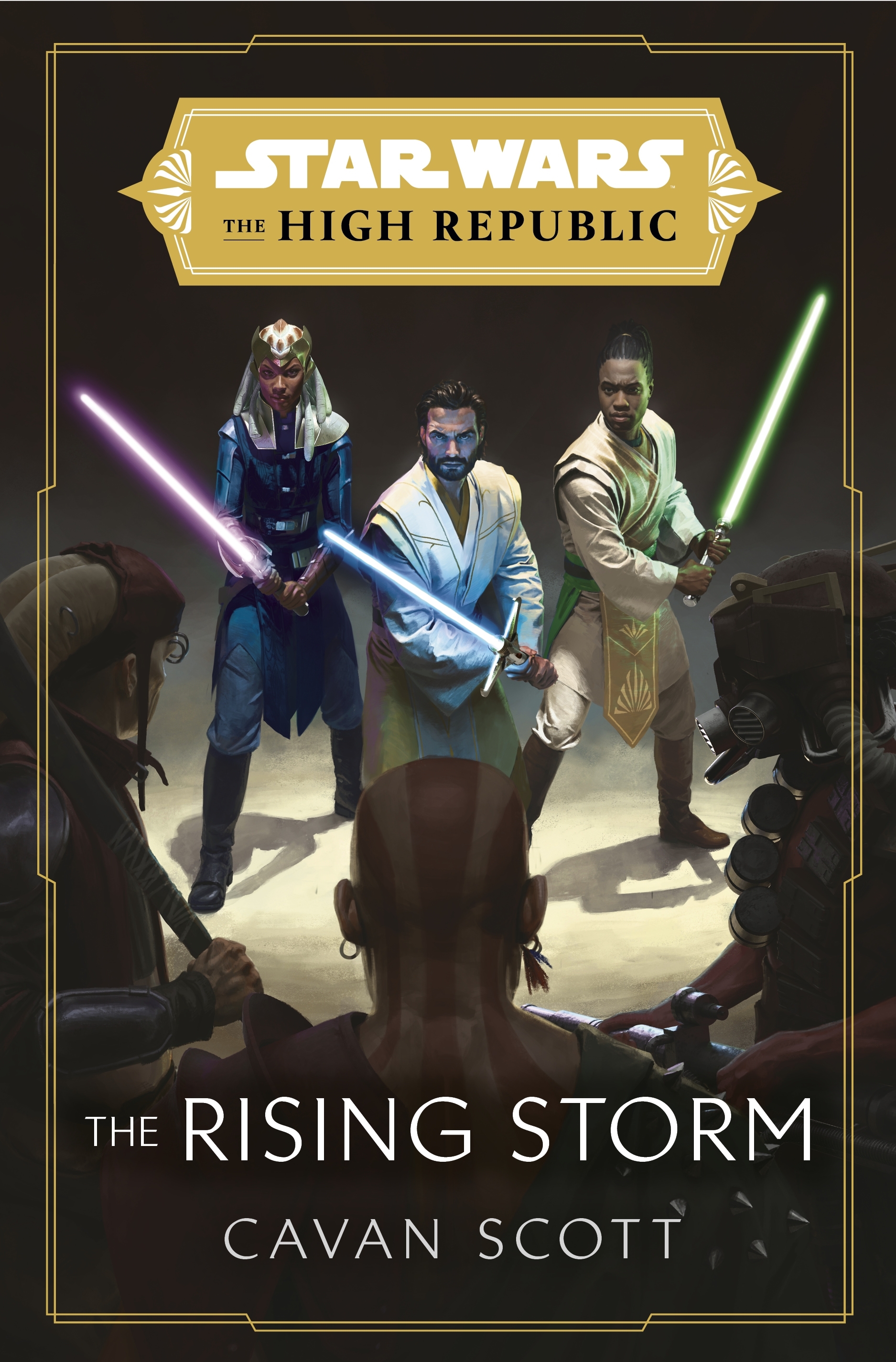
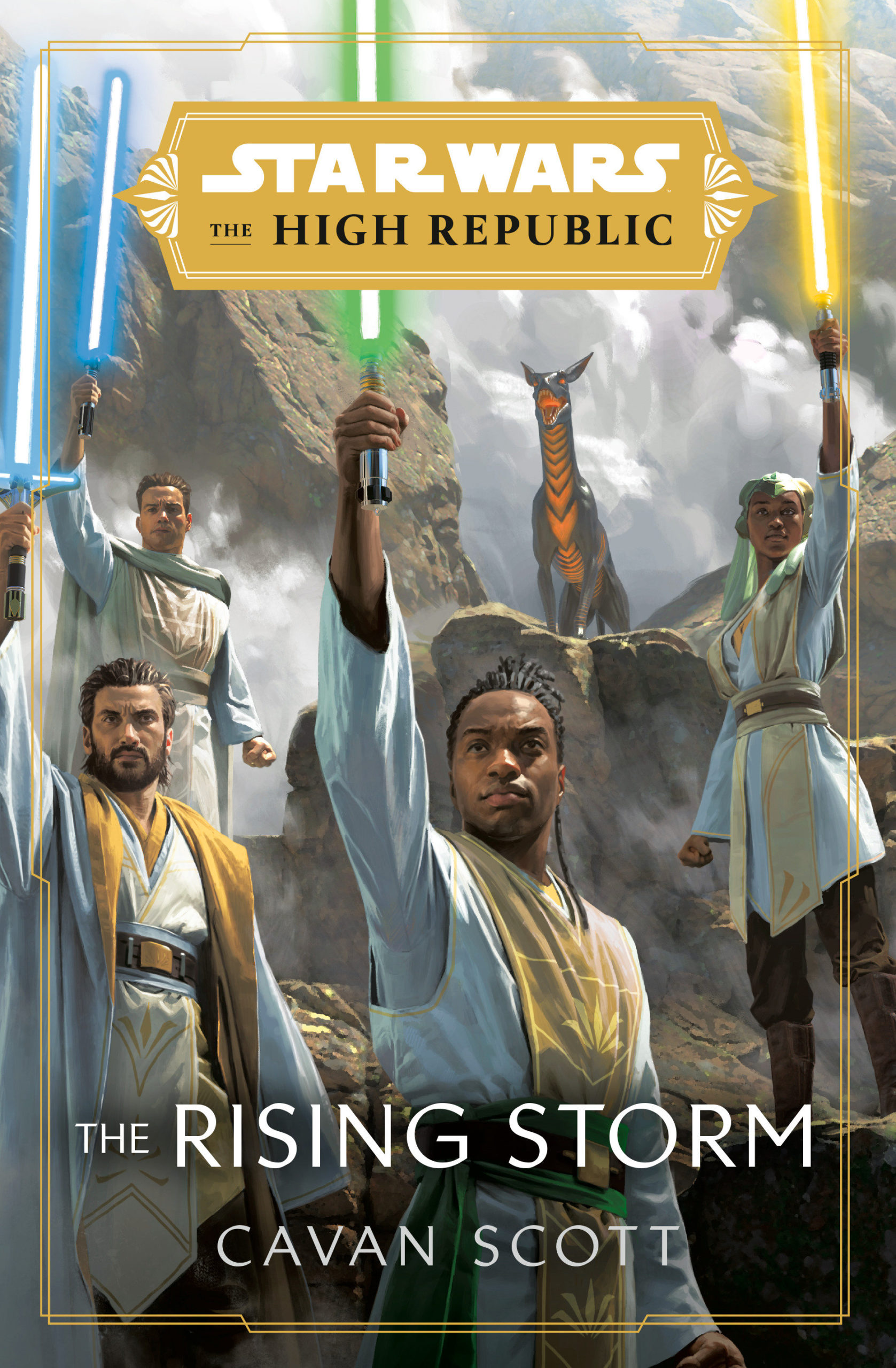
Star Wars: The High Republic: The Rising Storm by Cavan Scott

Star Wars - The Rising Storm Cover

Publisher: Penguin Random House Audio (Audiobook – 6 July 2021)

Series: Star Wars – The High Republic

Length: 15 hours and 32 minutes

My Rating: 4.75 out of 5 stars

Amazon

Prepare to dive back down into one of the most unique parts of the current Star Wars canon, as bestselling author Cavan Scott presents the next exciting adventure in The High Republic era, The Rising Storm.

The High Republic is a massive collaborative multimedia Star Wars project that started earlier this year and which represents a new area of focus for the Star Wars franchise.  Set in the Golden Age of the Republic, hundreds of years before the events of the Skywalker Saga, The High Republic currently contains several amazing pieces of tie-in fiction, with unique tales making up an overarching storyline.  I have so far read two entries in this series, the introductory novel Light of the Jedi by Charles Soule and the great young adult book Into the Dark by Claudia Gray.  The next major entry in this series is the fantastic and exciting The Rising Storm by Cavan Scott, which continues several storylines from Light of the Jedi.  Scott, who previously wrote the fantastic Dooku: Jedi Lost audio drama, has come up with a fascinating and compelling novel that I really enjoyed.

Two hundred years before the events of The Phantom Menace, the Republic was at its zenith, with the Jedi leading the expansion outwards to the Outer Rim.  However, following the Great Hyperspace Disaster, the Republic’s safety and security looks uncertain.  Even after the creation of Starlight Beacon, the Outer Rim is still a dangerous place, especially with the machinations of the notorious pirate group, the Nihil, as well as the spreading attacks from the plant monsters known as Drengir.

Determined to show that the Republic and the principles that govern it are still strong, Chancellor Lina Soh has organised the Republic Fair on the planet of Valo.  The fair will bring together cultural displays, new technology, Jedi artifacts and other wonders of the galaxy in a massive celebration to demonstrate the possibilities that an expanding Republic will have on the entire galaxy.  Attended by high-ranking Republic dignitaries, visiting diplomats, celebrities, leading scientists and prominent Jedi, all eyes in the galaxy will be on the fair and its participants.  However, some of these watching eyes have far more hostile intent and are determined to see the Republic Fair fail at all costs.

The most dangerous of these is Marchion Ro, the mysterious and unpredictable Eye of the Nihil.  Under his leadership, the Nihil have achieved much infamy and caused inordinate destruction throughout the Outer Rim, and Ro is determined to keep the Republic and the hated Jedi out of his territory.  As the fair begins, Ro orders a devastating attack that will shake the very galaxy to its core.  As Jedi such as Stellan Gios, Bell Zettifar and Elzar Mann attempt to hold back to the tide of evil descending on Valo, they are about to discover that there is something far more dangerous afoot in the galaxy.  Marchion Ro has uncovered an ancient evil and the entire galaxy, and every Jedi in it, is about to fear his wrath.

Now this was an awesome book, and one that is really starting to make me fall in love with The High Republic.  Scott has produced an intense and powerful story that continues to develop some of the best The High Republic characters, while also advancing some great storylines established in the previous novels and comics.  I had a wonderful time getting through this book, and this may be one of my favourite The High Republic novels so far.

This book has an awesome and captivating narrative to it.  Set about a year after the events of the first High Republic novel, The Rising Storm quickly introduces several intriguing storylines that each follow a different key character.  This includes a great storyline surrounding Elzar Mann as he attempts to decipher a warning given to him by the Force, as well as the tale of the conflicted and distracted Jedi apprentice Bell Zettifar.  There is also great storyline that follows a new character, mercenary Force user Ty Yorrick, as she takes on a new contract, and several storylines that follow key characters in the Nihil.  All these initially separated storylines are quite fun and do a good job setting up the various main characters, as well as establishing the current relevant events occurring in the galaxy.  While these individual storylines are quite fun and feature a mixture of intriguing characters, they swiftly come together into one combined narrative, when all the participants arrive at Valo for the Republic Fair.  Based on the book’s synopsis and the initial planning by the Nihil, you know that the fair is going to be attacked in some way, and Scott makes sure to ramp up anticipation for the upcoming carnage, showing multiple scenes that could lead into it.  However, even after all that, I was still not quite prepared for how amazing the main part of the novel turned out to be.

The eventual raid on the fair ended up lasting for quite a substantial part of the novel, as a coordinated attack separates the key characters.  With communications down and chaos reigning all around them, the protagonists are on their own, with each of their separate storylines focusing on their own encounters with the Nihil.  The entire raid is utter bedlam and proves to be a hotbed of action, intense moments, and dangerous character development.  I was honestly surprised at how dark parts of this book got, and readers are guaranteed a thrilling experience as there are several outstanding and intense action sequences.  Each of the main characters is effectively highlighted during this period, and readers will quickly become engrossed in their storylines and their attempts to navigate the dangers they encountered.  The entire raid sequence comes to an end with a decent part of the novel still left, which I initially thought was a bit of a mistake, as Scott could have ended the novel perfectly in the attack’s aftermath.  Instead, he constructed an incredible final sequence that really tied the entire narrative together, resulting in a memorable conclusion that sets up the next wave of novels perfectly.  While I did feel the story could have used a little bit of trimming, this was an overall excellent narrative, which I think was stronger than the preceding Light of the Jedi, mainly because it did not require the universe setup that Soule was required to chuck in.

While I deeply enjoyed The Rising Storm’s addictive story, this novel is a bit of a niche read and is mostly going to appeal to established fans of the franchise.  The Star Wars extended universe is an interesting and enjoyable place to explore, but it can be easy to get a little lost while checking out these books.  This is especially true with the new High Republic range, which takes the reader to a fictional period that has not been introduced to a wider universe either in a film or television series.  Due to its position as a second wave High Republic novel, you really need to check out some of the earlier works in the series before you try this one out, especially Light of the Jedi, which sets up most of the storylines and characters featured in this novel.  It is also important to add that this novel ties into several of the other High Republic comics and novels.  Events from these books and comics are referenced throughout The Rising Storm as Scott’s key characters interact with the protagonists of these other works, such as the junior novel, Race to Crashpoint Tower.  Knowledge of some of these contemporaneous pieces of fiction is not 100 per cent necessary, although several plot points and references become a lot clearance once you recognise the connection.  While Scott did do his best to make story accessible to new readers, I think that most High Republic newcomers would be better served reading Light of the Jedi first, which will make it so much easier to enjoy this awesome novel.

One of the more difficult things about reading a High Republic novel is the lack of any recognisable characters from the Star Wars films or television shows, as the only character from them alive at this point is Yoda (who keeps disappearing).  However, I found myself getting really invested in the complex and intriguing characters featured in The Rising Storm, as Scott makes use of both original characters and characters introduced in previous pieces of High Republic fiction.  This novel focuses on a huge selection of supporting characters, each of whom have their own adventures and stories.  One of my favourites was damaged Jedi Elzar Mann.  Mann is a troubled being who spends most of this novel haunted by both a dark vision from the Force and his unrequited and forbidden love to his friend and fellow Jedi Avar Kriss.  Because of this, Mann spends most of the novel walking the very edge of the Jedi code, breaking nearly every rule he can, including that major one about not falling in love or having a physical relationship with someone.  This sets him on a knife’s edge, and when the Nihil come, he is pushed dangerously close to the Dark Side (which mirrors Anakin’s fall in several ways) with some spectacular results.  This portrayal of Mann is one of the most compelling and exciting in the entire novel, and I appreciated the inclusion of a rogue Jedi.  Another complex Jedi character that I enjoyed was apprentice Bell Zettifar, who was a major point-of-view character in Light of the Jedi.  Bell is still reeling from the events of the first book where his master was apparently killed by the Nihil.  Because of this and other traumatic events, Bell spends much of the novel doubting the Force and his place in it.  I found myself really drawn to this character, and I appreciated the tough journey he was going on.  Unfortunately, it looks like Bell is going to go into some very dark places in the future, which should make for some excellent and moving storylines.

Aside from Mann and Bell, another great character I liked was Stellan Gios, a Jedi recently elevated to the Jedi Council.  Stellan, who had a minor role in previous pieces of High Republic fiction gets a lot more focus in this novel and proves to be a fantastic point of view character.  He is another complex figure, especially as he also has doubts and regrets, despite his position as a Council member.  I saw Stellan as the Obi-Wan Kenobi of the High Republic (partially because of the voice used by the audiobook narrator) and I liked his mostly calm demeanour, unrelenting friendship with the wilder Elzar Mann and the way he acts as straight man to several unusual Jedi characters.  Stellan goes through a lot in The Rising Storm, and it was fantastic to see him continuously overcoming adversity as he becomes more use to his place on the Council.  I also deeply enjoyed the character of Ty Yorrick, who was probably the best original character in this novel.  Ty is a former Jedi apprentice turned rogue mercenary who uses her Force abilities and spiked purple lightsaber to hunt monsters.  Despite her aversion for getting mixed up with the Jedi, Ty finds herself at the Republic Fair and must contend with both Jedi and Nihil.  While Ty was not the most developed character in this novel, I really liked her unique style and the fantastic mentor-student bond she eventually forms with Elzar Mann.  She has a lot of potential as a character, and I can see her becoming a major figure in the High Republic novels.

Some of the final characters I need to mention include Rhil Dairo, a spunky reporter who finds herself in the middle of all the key events of the book, recording with her cam droid.  Rhil is a fantastic and fun reporter character, much in the vein of Lois Lane, who can kick ass and get the scoop at the same time.  I also loved the scenes that featured Orbalin, a Jedi archivist and history buff.  Despite his more academic inclinations, Orbalin is quite a fun character who proves to be a real badass, especially as he manages to hold off several Nihil characters, including the lethal Lourna Dee, while giving a history lesson.  Finally, it was also great to see more of Wookie Jedi Burryaga, the cuddliest and nicest Jedi of all time, who everyone loves and who the reader feels inordinately protective of.  All these protagonists and more add so much to The Rising Storm’s narrative, and it was absolutely great to see all of their storylines unfold.

I am also deeply enjoying the villains of The High Republic, the Nihil.  The Nihil are a collection of murderous and self-centred pirates, who use their unique technology and tactics to bedevil the Republic and the Jedi.  With their own unique look and style, which is a mixture of spacefaring Vikings and Mad Max villains, the Nihil are a pretty fun group of characters to follow.  After a very strong introduction in Light of the Jedi, they have another amazing showing in The Rising Storm, achieving some major acts of destruction.  Thanks to their weird weapons, violent attitude and being constantly high on a cocktail of drugs and stimulants, the Nihil prove to be pretty dangerous opponents, even to the Jedi.  This makes for some very unique fight sequences, and it was fascinating to see the Jedi overwhelmed by these criminals.  At the same time, there is also an intriguing focus on the leadership of the Nihil, as the top commanders, the Tempest Runners, fight for dominance against each other and Marchion Ro.  Ro is proving to be a particularly intense and fascinating villain and Scott really builds on the character in this novel, showing more of his flaws, his motivations and his abilities to deceive and destroy.  There are several amazing storylines following Ro throughout this novel, including one where he obtains a mysterious evil item from the past.  The eventual partial reveal of this plot device results in The Rising Storm’s memorable conclusion and the High Republic creative team clearly has some fantastic plans for Ro in the future and they are turning him into one of the more complex and dastardly villains in the entire Star Wars canon.

As is becoming my recurring habit, I ended up listening to an audiobook version of this Star Wars novel.  This of course was a wonderful experience, as the team behind these books ensured that this latest Star Wars audiobook was the usual audio treat that I have come to love.  Featuring a decent run time of just over 15 and a half hours, The Rising Storm audiobook was an exceptional listen that I managed to power through in just over a week and which proved to be an exceptional way to enjoy this Star Wars adventure.  The entire narrative of The Rising Storm is enhanced and supported by a range of awesome and iconic Star Wars sound effects and music, which are intended to draw the listener into the story.  Both the sound effects and music are used to incredible effect throughout, and I think that they both added so much to my overall enjoyment of The Rising Storm.  The sound effects do a remarkable job presenting the ambient noise of every single scene, with crowd noises, the hum of a lightsaber, the engine noises of a ship or the sounds of blaster fire, constantly played in the background.  I was particularly impressed by the chaotic sound effects used during the Nihil attack on the fair, as you are treated to background noises of terror and destruction for several hours, which helps to highlight just how devastating the entire affair is.  In addition, the always impressive John Williams musical score is so much fun to hear, and it was put to particular good use in several significant scenes to enhance dramatic impacts.  I was extremely moved when I heard some of this music, as it either pumped me up during key action scenes (Duel of the Fates always gets me hyped), or to be deeply saddened when the more tragic musical cords struck up.

In addition to the exceptional use of sound effects and music, I also was deeply impressed with the incredible voice work featured in this audiobook.  Leading Star Wars narrator Marc Thompson once again lends his voice to this audiobook, continuing the work that he did in the Light of the Jedi.  Thompson has previously narrated some of my favourite Star Wars audiobooks, including Thrawn, Chaos Rising, Greater Good, Scoundrels, Dark Disciple, and the Doctor Aphra audio drama.  I also really enjoyed the awesome work he did in The Rising Storm, as Thompson not only revises the many voices that he introduced in Light of the Jedi but also adds in several new ones for the new characters.  I felt that various voices that Thompson did fit each of the characters extremely well, and he was able to perfectly personify their personality and written nature using a variety of fun accents.  I also found that Thompson was able to highlight the various emotions that the characters were feeling, giving the listeners a great sense of what they were feeling through his tone.  It was also cool to hear the combination of sound effect and Thompson’s voice when it comes to several alien characters featured within the audiobook, especially those whose voices were altered by technology.  All this outstanding voice work, combined with the awesome sound effects and music, helps to turn The Rising Storm into an absolutely incredible and addictive audiobook, and this is easily the best way to enjoy this fantastic Star Wars book.

The High Republic continues to expand as the amazing Cavan Scott adds his own unique spin on events with the exciting and memorable Star Wars: The Rising Storm.  This latest addition in the intriguing High Republic range does a fantastic job introducing the next stage of this unique Star Wars time period, complete with a devastating event, some major changes and some outstanding new characters.  I had an incredible time reading this great novel, and The Rising Storm is a must read for all fans of the Star Wars franchise, especially in its audiobook format.  If you have not gotten into the High Republic yet, you are missing out, and I cannot wait to see what happens next.  I will also have to make sure to grab a copy of Cavan Scott’s next Star Wars audio drama, Tempest Runner, a High Republic entry which is set for release in a couple of months and which will tell the tale of one of the more intriguing Nihil characters, Lourna Dee.

Star Wars - The Rising Storm Cover 2

Amazon

Throwback Thursday – Daemonslayer by William King

Daemonslayer Cover

Publisher: Black Library (Audiobook – October 2000)

Series: Gotrek and Felix – Book Three

Length: 9 hours and 38 minutes

My rating: 4.75 out of 5 stars

Amazon     Book Depository

Welcome back to my Throwback Thursday series, where I republish old reviews, review books I have read before or review older books I have only just had a chance to read.  For this Throwback Thursday, I am doing a bit of a double feature by reviewing two of the outstanding entries from the iconic Warhammer Fantasy franchise’s Gotrek and Felix series by the brilliant William King.  I have just published a review for the second book in the series, Skavenslayer, and, after some rapid audiobook listening, I have also pulled together a review for the third book, Daemonslayer.

After the epic conclusion of the battle of Nuln in Skavenslayer, Dwarf Slayer Gotrek Gurnisson receives a mysterious message and immediately sets out on the road, convinced that this missive may be the key to finding his much desired glorious death.  Accompanied as always by his companion, the former poet turned reluctant adventurer Felix Jaeger, Gotrek marches to the northern parts of the Empire to meet his destiny.

Arriving at their destination, Gotrek and Felix learn that a group of dwarfs are planning an expedition to find the lost dwarf stronghold of Karag Dum, and they want Gotrek to accompany them.  Destroyed in ages past, Karag Dum now lies in the middle of the Chaos Wastes, the most dangerous place in the entire world.  Wracked by the shifting winds of magic, marauding war bands, mutating warpstone and the foul essence of Chaos, no one can cross the Chaos Wastes and survive, and only death, madness or mutation awaits those who try.  However, expedition leader Borek Forkbeard has come up with an ambitious plan to fly over the Chaos Wastes in a giant, experimental airship, designed by an unstable engineer turned Slayer.

Determined to make up for previous failed attempt to reach Karag Dum, Gotrek agrees to accompany the expedition, with an inspired Felix accompanying him.  However, even with all the advantages that the airship provides, this will still be a perilous journey.  Many dangerous things lurk in the Chaos Wastes that will not hesitate to destroy the dwarven company for their dark gods.  At the same time, Gotrek and Felix’s old foe, Grey Seer Thanquol, plots from the shadows, determined to claim the airship for the Skaven cause.  But the very worst dangers will be found at Karag Dum.  A terrible foe lies within, waiting for revenge and determined to destroy all before him.  Can even the legendary Gotrek and Felix stand up to the wrath of a deadly Bloodthirster of Khorne, especially one who appears destined to kill Gotrek and destroy all who stand with him?

I am having so much fun getting through this cool series and I really wish I had checked it out many years ago.  Daemonslayer is another incredible read that continues the fantastic Gotrek and Felix adventures that started in Trollslayer and were continued in Skavenslayer.  William King has come up with a pretty intense story for this third entry in the series, and I loved the change in writing style featured within it.  An exciting and character-driven tale, this was easily the best entry in the series so far, and I deeply enjoyed the time I spent getting through it.

Daemonslayer contains an impressive and intense narrative that proves to be extremely addictive and a lot of fun to read.  Unlike the previous novels in the series, which featured a collection of short stories, Daemonslayer is actually a complete story with one continuous narrative.  This is an interesting change of pace, and one that I think works extremely well, especially as it cut down on some of the repetition that was an issue in Trollslayer and to a lesser extent in Skavenslayer.  King writes a fantastic story that quickly gets into the action and adventure as the protagonists embark on an epic and potentially lethal quest.  While not a collection of short stories, King does break the book up into several distinctive sections, each filled some unique plot points and antagonists.  These sections are pretty linear and flow into each other extremely well, resulting in a very cohesive and entertaining narrative.  Like the rest of the novels in the Gotrek and Felix series, readers do not need a lot of background knowledge about the Warhammer Fantasy world to enjoy this book.  While I would probably suggest reading Skavenslayer first, Daemonslayer can be read as a standalone book, and all readers are generally in for a good time with this novel.

The action and adventure flies pretty fast and thick throughout Daemonslayer, with highlights including a lengthy battle against an army of Skaven towards the start of the novel, exploration in the dark tunnels of Karag Dum and the final epic fight sequence against the hordes of Chaos.  King is particularly skilled at writing exciting and powerful battle sequences, and I loved how he managed to bring the uniqueness of a large-scale Warhammer battle to life.  Part of this is because the author makes great use of multiple character perspectives throughout Daemonslayer, which allows for a richer narrative as you get to see many different angles of the same story.  This works particularly well in the first battle against the Skaven, as you get to see Grey Seer Thanquol controlling his forces, as he desperately tries to kill Gotrek and Felix.  I did think that some of the Thanquol scenes in the second half of the novel were a bit weak, especially as they were more concerned with setting up his appearance in the next novel, Dragonslayer, than influencing the plot of Daemonslayer.  Still, these scenes were great, and you are always guaranteed a laugh when dealing with this ruthless Skaven.  While there is a noticeable focus on action and death, King also works in some fantastic comedy and humour, which makes this book an absolute treat to read.  I also appreciated how dark and emotional several scenes became, especially when the protagonists are faced with the grim realities of certain terrible situation.  All of this is worked into quite an impressive adventure story, which ends up being extremely addictive and enthralling to get through.

I loved the great use of setting throughout Daemonslayer, especially as King features some of the darkest and most dangerous locations in the entire Warhammer Fantasy canon.  The most notable of these is the notorious Chaos Wastes, a dark and dangerous wasteland, completely corrupted by the Chaos gods and filled with all manner of mutants, monsters, beastmen, worshipers of Chaos and Daemons, who gather and fight throughout the wastes.  While the Chaos Wastes are primarily shown from above, King makes sure to produce some gruesome and disturbing depictions of the landscape and its inhabitants, and it proves to be a pretty horrific backdrop for a good part of the story.  I do wish that a little more of the story had been spent on the ground within the Wastes, but it was probably a wise choice to avoid, as the story could easily become bogged down there.  I also really enjoyed the lost dwarf hold of Karag Dum, where the last third of the book takes place.  King was clearly drawing some inspirations from Tolkein’s Mines of Moria when he came up with this location (Moria is also known as Khazad-dûm), with hidden doors, ancient treasures, despoiling opponent, and a giant fiery demon boss.  The scenes set within this hold are pretty claustrophobic, and King makes sure to use the dark location to its full advantage during fight scenes.  You really get a sense of the decay and destruction that has occurred within this setting over the years, and it is pretty easy to feel the despair of the various dwarf characters.  Both these major settings are really impressive, and they prove to be an excellent and fitting backdrop to a very fun and intense story.

A major strength of this book is its characters, as King continues to produce a range of complex and distinctive figures to populate his tales.  This includes protagonists Gotrek and Felix, who find themselves on their most dangerous mission yet.  Felix continues to be used as the novel’s primary point-of-view character, and it is fascinating to see his continued evolution from cowardly fop to dangerous warrior.  Despite his continued caution and reluctance to engage in fights, Felix is now regarded by everyone as a heroic figure, and he accompanies Gotrek on this latest quest with only a minimum of forbearance, despite being given an out by his friend.  King has really hit his groove when it comes to portraying Felix, and the character reigns supreme as a sarcastic, but loyal friend.  I have really grown to like Felix, and readers will become pretty invested in his tale.

After being overlooked a bit in Skavenslayer, Gotrek has a lot more focus on him in Daemonslayer, as he re-visits one of his old failures and reunites with some of his dwarf kin.  For most of the novel, Gotrek is his usual gruff and battle-hardened self, still searching for his doom while managing to kill anything that he comes across.  While this is always a lot of fun, King makes sure to feature some deeper character elements in this novel, by highlighting some of his inner feelings and giving hints at his past.  There are several compelling mentions of Gotrek’s pre-Slayer life in this book, as well as some early hints at the character’s true destiny and the dark fate surrounding him.  King also shows a surprising amount of emotion in the character for this book, and Gotrek has some moving scenes with Felix as he contemplates the mistakes of his past and his many regrets.  I really enjoyed seeing how the character’s friendship with Felix has developed over the course of the last few books, and there is even a scene where Gotrek admits he is apprehensive about journeying to the Chaos Wastes and even lets Felix know he does not have to follow him.  While all this character development is great, King also makes sure to continue to portray Gotrek as an absolute badass in Daemonslayer, as he goes up against a ton of different enemies and opponents.  The various fight scenes with Gotrek are so much fun, although I do worry that King is perhaps making Gotrek a little too overpowered, especially as he manages to defeat a Bloodthirster, literally the most dangerous creature in the entire Warhammer canon (admittedly Felix helps a lot).  I still really love this great character and I cannot wait to see what other crazy adventures he goes on in the future.

Just like his previous books, King loads Daemonslayer up with a great range of supporting characters, and several of the characters introduced in this novel end up becoming major recurring figures in the Gotrek and Felix series.  Probably my favourite was Snorri Nosebiter, a fellow dwarf Slayer, who has had way too many blows to the head.  Snorri proves to be a fun companion to Gotrek and it was interesting to see a character who makes the titular protagonist seem sane in comparison.  There was also a fun character in Varek Varigsson, who is essentially the dwarf version of Felix, except with a range of explosive devices.  In addition, you cannot overlook the dwarf engineer turned Slayer, Malakai Makaisson, and I had a good chuckle when the characters discuss the fates of his previous, unfortunately named ships.  I also really liked that King reused two of his most entertaining characters from the previous novel, the Skavens Grey Seer Thanquol and Lurk Snitchtongue.  Both serve as secondary antagonists in the story, and prove to be excellent comic reliefs, especially as their schemes constantly go against them.  It looks like King has some fun plans for Snitchtonuge in the future, and I liked the fun changes he went through.

As I did for Skavenslayer, I really need to point out the extreme lack of female characters in this book.  Daemonslayer literally had only one named female character, Ulrika Magdova, who naturally falls in love with Felix the first time they lay eyes on each other.  While this is pretty lazy writing on King’s part, at least Ulrika is a much better written character than the females featured in Skavenslayer.  Ulrika is a badass Kislev fighter, who proves to be a dangerous fighter (of course, Felix has to be just a little bit better).  Still, I have a feeling she is going to be a bit of a damsel in distress in some of the future novels, and I hope that King balances it out with some additional female characters in the future.  Overall, there are some great characters featured throughout Daemonslayer and I look forward to seeing the ones who survive in some of the other Gotrek and Felix novels.

I ended up grabbing the audiobook format of Daemonslayer, narrated by Jonathan Keeble.  With a relatively short runtime of 9 hours and 38 minutes, the Daemonslayer audiobook is an easy audiobook to get through, and I managed to finish it off quickly.  The audiobook format proves to be a great way to enjoy this excellent book, especially as it allows the fantastic and chaotic landscape and characters to come to life in all their ghastly glory.  Keeble continues to impress as the narrator of this series, and I love the amazing array of voices he brings to the table.  Daemonslayer really highlights just how varied his voice can be as Keeble produces a substantial number of different accents and vocal tones to capture the rich and unique cast.  This includes Scottish-sounding dwarfs, Russian-esque Kislev lancers, humans with cultured British accents and the mad, loud voice of Snorri Nosebiter.  Keeble also has to voice the various inhuman monsters that the protagonists encounter, from the great Skaven characters, to the monstrous daemons and warriors of Chaos, all of which prove very fitting and amusing.  He also brings an immense amount of passion to his narration that deeply enhances the experience of anyone listening to the book.  The way in which he gets into the various fight sequences is amazing, and you can hear the sheer excitement in his voice as he reads.  This is especially true in the final epic fight scene, and the listener soon finds themselves on the edge of their seat as Keeble works his way up to the conclusion.  This is really an impressive and amazing format to enjoy Daemonslayer in, and I cannot recommend this audiobook enough.

Daemonslayer by William King is an exceptional and amazing entry in the fantastic Gotrek and Felix tie-in series.  This awesome novel contains an epic and intense story, as its two iconic protagonists continue to explore the dark and deadly Warhammer Fantasy world.  Filled with action, adventure, comedy and some dramatic character moments, Daemonslayer is an outstanding novel that comes highly recommended for all Warhammer fans.  I look forward to seeing how the rest of the series turns out and I am really enjoying my current jaunt into the world of Warhammer tie-in fiction.

Daemonslayer 2 Cover

Amazon     Book Depository

Throwback Thursday – Skavenslayer by William King

Skavenslayer Cover

Publisher: Black Library (Audiobook – December 1999)

Series: Gotrek and Felix – Book Two

Length: 10 hours and 30 minutes

My rating: 4.5 out of 5 stars

Amazon     Book Depository

Welcome back to my Throwback Thursday series, where I republish old reviews, review books I have read before or review older books I have only just had a chance to read.  The adventures of my two favourite Warhammer Fantasy protagonists, Gotrek and Felix, continues, with the second incredible and extremely fun entry in their series, Skavenslayer.

After their previous escapades throughout the Empire and beyond, wandering adventurer, outlaw, and writer Felix Jaeger is still reluctantly following the Dwarf Slayer Gotrek Gurnisson on his quest to find a glorious death.  After travelling to the Imperial city of Nuln, the two heroes attempt to make some money to support their travels.  However, danger is always around the corner, as the heroes find themselves thrust into the middle of a vast conspiracy when they take on a menial job.  The chittering and evil hordes of the Skaven are amassing beneath Nuln, determined to conquer the city by any means necessary.  Led by a dangerous and ambitious leader, the rat-men have several sinister plots to kill all the humans above and appropriate their city and technology for their own glorious purposes.  The only chance the city has to survive this chaos appears to be Gotrek and Felix, who are constantly dragged into the middle of the Skavens’ plots, thanks to fate, Skaven pettiness or terrible bad luck (both Felix’s and the Skaven’s).  Can the two heroes save Nuln from the Skaven hordes, or will Gotrek finally find the death he always seeks?

Wow, this is such a fun and entertaining series.  Skavenslayer is the second entry in the Gotrek and Felix series, which follows the two titular heroes as they journey throughout the Warhammer Fantasy world, battling all manner of monsters, demons and creatures.  After enjoying some of the excellent Warhammer 40,000 fiction out there (Deathwatch: Shadowbreaker and Kal Jerico: Sinner’s Bounty), I recently dove into the first Gotrek and Felix novel, Trollslayer, which contained several exciting and compelling short stories.  I loved the fantastic mixture of action, world-building and fun characters featured within Trollslayer, and within a couple of weeks I had started listening to SkavenslayerSkavenslayer proved to be another excellent novel, and I honestly think it was a slightly stronger novel than Trollslayer, thanks to its much more connected plot.  This was an outstanding read that has many amazing elements to it.

Skavenslayer contains an outstanding and deeply addictive narrative that follows Gotrek and Felix as they attempt to stop the Skaven plot to destroy the city of Nuln.  Skavenslayer is made up of several short stories linked together by Felix’s journal entries.  Unlike the previous novel, all six stories and the epilogue are linked, forming one continuous narrative and resulting in a tighter and more comprehensive read.

Skavenslayer’s first short story is Skaven’s Claw, which sees Gotrek and Felix employed as sewerjacks, guards who patrol the vast catacombs underneath Nuln.  On patrol, they chance upon a clandestine meeting between a Skaven and a human noble, placing Gotrek and Felix in the middle of a conspiracy involving the head of Nuln’s secret police.  Skaven’s Claw is an excellent first story that does a wonderful job establishing most of Skavenslayer’s plot details and introducing several key characters, including recurring antagonist Grey Seer Thanquol.  I loved the combination of action, world building and intrigue that was contained within Skaven’s Claw, and it results in an awesome, fast-paced story.  The Nuln sewers prove to be a claustrophobic and memorable setting for most of the battles.  I also enjoyed the use of secondary antagonist Fritz von Halstadt, a fanatical human who has been manipulated by the Skaven, as his story arc was very well established and quite compelling.  This is an awesome entry that gets Skavenslayer off to an impressive start.

Next up we have Gutter Runners, which sees the Clan Eshin assassin, Chang Squik, lead a group of Skaven Gutter Runners on a mission to kill Gotrek and Felix at the inn where they are working as bouncers.  This was a quick and action-packed story which proved to be a lot of compelling fun.  The action is swift and deadly, as the protagonists are attacked on multiple fronts, and there are several great battle scenes throughout.  This is a fun story that you can easily power through in one short sitting, and I felt that it did a great job keeping the reader’s attention after the fantastic introductory story.

The third entry is the fantastic and funny Night Raid, which focuses on the members of Clan Skyre, the insane Skaven engineers and weapon designers.  The leader of the Clan Skyre contingent, Heskit One-Eye, plans a raid on the Nuln College of Engineering to appropriate the latest human weapons and technology and obtain glory.  However, the jealous Grey Seer Thanquol organises a significant roadblock in the form of Gotrek and Felix.  This is another outstanding entry in the novel, and I consider it to be the most comedic and entertaining of the bunch.  Not only do you get to see amazing examples of Skaven backstabbing and betrayal but you also have an extremely funny and exciting sequence at the college, where all hell breaks loose when a Skaven gets stuck in a Steam Tank.  This story also serves as an excellent introduction to the various Skaven side-characters, and a lot of elements from Night Raid have major impacts on the rest of Skavenslayer’s story.

Up next, we have the disgusting and captivating story, Plague Monks of Pestilens.  In this story, a brewing plague strikes quick with deadly consequences.  However, this is no ordinary plague; it is a deadly concoction dreamt up by the demented plague monks of Clan Pestilens, led by the terrible Vilebroth Null.  Warned again by Thanquol, Gotrek and Felix attempt to stop the plague monks before it is too late.  Plague Monks of Pestilens is an amazing middle story that is pretty memorable.  Rather than the pure hack-and-slash narrative of the previous story, King works in an interesting mystery element, as Felix tries to work out where the plague monks are attacking from.  Once battle is joined, you are in for a dangerous and gruesome fight, especially as the author goes into full horror mode when describing the grotesque plague monks and their malformed, diseased bodies.  This is an extremely intense and disturbing story which really enhances Skavenslayer’s overall narrative and gives it the more serious edge it needed.

The penultimate story of Skavenslayer is Beasts of Moulder, which sees Gotrek and Felix attempt to stop the master mutators of Clan Moulder, led by Izak Grottle, try to unleash their latest creation.  This was a decent addition, although if I am being honest, it was probably the weakest entry in the entire book.  Not only are the stakes a little lower, but it repeats the pattern of the previous two entries.  I did quite enjoy the scene where Felix visits the palace, especially as everyone there assumes he is some sort of master monster hunter, but the rest of the story fell a little flat, especially the Elissa subplot.  Still, it fits into Skavenslayer’s narrative well and does a good job setting up the final story.

The last entry in Skavenslayer is the major concluding storyline, The Battle of Nuln.  In this story, both the citizens of Nuln and the Skaven army hiding beneath the streets have been afflicted by plague and famine.  In order to achieve victory, Thanquol leads a daring raid on the Countess’s palace during a ball, while the rest of the Skaven army attacks the city.  With Gotrek and Felix stuck in the middle of several Skaven plots, can they save the city before it is overwhelmed by rats, disease and vile Skaven magic?  The Battle of Nuln is an incredible and captivating entry that serves as the action-packed conclusion to the entire book.  King brings together all his fantastic storylines, and the readers are rewarded with an intense and extended war sequence, as the full wrath of the Skaven force is unleashed.  I deeply enjoyed this final story, and it did an outstanding job of providing satisfying, if occasionally lethal, conclusions to all the character arcs and storylines.  There is so much action going on in The Battle of Nuln, and I loved seeing the consequences of all the previous short stories finally come to the fore for both sides in the war.  An excellent and exciting conclusion that will put you in the mood for even more Gotrek and Felix.

I had an outstanding time getting through each of the short stories above, and not only are they fantastic reads on their own but together they form an impressive and intense overarching narrative.  King did a wonderful job crafting together all six stories, and I felt that the use of a single location and overarching antagonists worked extremely well, especially once you are introduced to the four iconic Skaven clans.  While some of the middle stories do suffer from plot repetition, this is still a great book which is extremely fun to read.  King ensures each story has a great combination of action, character development and humour, and each of the stories can easily be read on their own without a lot of context from the others.  This is also a very good Warhammer Fantasy novel, and readers only need minimal prior knowledge of the franchise, especially as King provides a great amount of detail and self-contained lore.  I felt that it came together perfectly, and readers are in for an exceptional time when they check this novel out.

One of the more entertaining and fun parts of this novel was King’s use of the Skaven as the villains of the story.  The giant rat-men known as Skaven are chaotic beings who, thanks to their spiteful nature, massive ambitions and weird array of abilities, weapons, magic and fighting techniques, are one of the most entertaining and recognisable races in the Warhammer Fantasy canon.  I think that King did a particularly good job bringing the Skaven to life in Skavenslayer, and they proved to be a very intriguing and memorable group of antagonists.  Not only does the author showcase several unique Skaven clans (each of them is covered in a short story), but he also captures the Skavens’ treacherous nature, speech pattern and insane pettiness.  While the Skaven have an elaborate plan, their own paranoia and self-serving mindset gets in the way of its success, and it is wonderful to see the various backstabbing, betrayals and plots that occur throughout the course of the book.  Despite this, they still prove to be a dangerous group of enemies, and they manage to hit the protagonists and the rest of the humans in Nuln in a big way.  I really enjoyed the way that King utilised the Skaven throughout this novel, especially as their duplicitous or cowardly actions are the catalyst for most of the book’s humour, and Skavenslayer is a fantastic and detailed introduction to this impressive Warhammer Fantasy faction.  That being said, there are only so many times you can hear a scared Skaven getting ready to “squirt the musk of fear”, and some different wording might have been better.

Another highlight of this book is its complex characters.  The most notable and prominent of these are titular protagonists, Gotrek and Felix, and it is still incredibly fun to see the unusual partnership of a doomed Dwarf Slayer and a former wealthy poet turned notorious adventurer.  Due to his position as the book’s main point of view character, much of Skavenslayer’s focus lies on Felix.  While there are still hints at his somewhat cowardly past, especially as he seems apprehensive before every single fight, Felix has become a much more fearless and dangerous being in this book, and he leads the way in several battles throughout Skavenslayer, proving himself a fantastic hero.  There are some interesting character moments for Felix throughout this book, especially as he encounters his brother, Otto, the first member of his family to reach out to him since his banishment.  There are some great comparisons between the wealthy Otto and the more adventurous Felix in Skavenslayer, and it was intriguing to see what Felix might have turned into if he was not bound to Gotrek.  I also liked how Felix developed more into his role as the sane straight man to Gotrek, and his dry humour really adds a lot of comedy to the books.  Overall, Skavenslayer is quite a strong outing for Felix, and he proves to be an outstanding central character.

Aside from Felix, the other main character is Gotrek, the mad, death-hungry Dwarf Slayer, who is constantly denied his desired doom in glorious combat due to his own unnatural skill.  Gotrek is his usual crude and disrespectful self throughout Skavenslayer, and it is an absolute joy to see him in battle, even if his portrayed as way too overpowered.  While he is a great character, Gotrek was underutilised in Skavenslayer, and he was mainly just a supporting player in the Felix-based stories, only appearing when there is a need for fighting.  Still, it was great to see him, and he does get a lot more attention in the next novel.

While Gotrek was a bit overlooked, King does a wonderful compromise by introducing an exceptional primary antagonist in the form of Grey Seer Thanquol, a powerful Skaven sorcerer who goes on to be a major recurring figure within the Gotrek and Felix novels and the wider Warhammer Fantasy universe.  Thanquol is an impressively entertaining character who represents the absolute best (or worst, depending on your point of view) of Skaven society.  He is insanely ambitious, arrogant, power-hungry and dangerous, and rose to power thanks to an unfortunate “accident” involving his predecessor, a loaded crossbow and an exploding donkey.  Due to his ambition and an unwillingness to share any glory, Thanquol spends just as much time plotting against his equally aspiring subordinates as he does attempting to conquer Nuln or kill Gotrek and Felix.  Indeed, several conflicts with the Skaven are due to Thanquol himself informing the protagonists about his rival’s plots, often through some hilarious letters which are clearly written by a Skaven (despite Thanquol’s own belief that they are masterful forgeries).  The sheer overconfidence, deluded self-belief and inability to take responsibility for his failings make Thanquol a particularly nasty antagonist, however, it is just so entertaining to see him strive and then fail, that you end up wanting him to live and succeed against his Skaven opponents.  Thanquol proves to be an excellent antagonist, and I really enjoyed seeing his alternative point-of-view which highlights the Skaven plans.  King really outdid himself coming up with this villainous rat-man, and he is one of the best things about Skavenslayer and the overall Gotrek and Felix series.

King has also filled Skavenslayer with an interesting collection of side characters who add a lot to the plot.  The author does a good job of introducing these major side characters throughout the various stories, and he manages to build them up and flesh out their personalities in a short amount of time.  There are great human supporting characters, such as Heinz and Doctor Drexler, and several fun and amusing Skaven.  The majority of these Skaven characters are leading members of the main clans who not only serve as secondary antagonists for the novel, but who are also cast as rivals to Thanquol’s rise to power.  I had a fantastic time seeing each of these Skaven characters in all their treacherous, self-serving glory, although my favourite had to be the aptly named Lurk Snitchtongue, who is a very fun and cowardly character.

If I had to make one major criticism, it would be about the complete lack of any decent female supporting characters.  While you can forgive some older fantasy books for their lack of gender diversity, it is a painfully obvious problem in Skavenslayer.  There are literally only two female characters of note within the novel, and both are badly written.  The first is Felix’s romantic partner, Elissa, who quickly becomes a major burden to the story by forming conflicts with Felix.  Their romance is thankfully over before the end of the book, and you cannot feel anything but relief as she leaves.  The other character is the ruler of Nuln, Countess Emmanuelle, who gets only a couple of lines at the end of the novel.  While her one scene does shine her in a good light, the rest of the novel hints that she is a vapid, lustful and incompetent ruler.  The underuse of female characters is probably going to be a major feature of Gotrek and Felix series in the future (for example, Daemonslayer only has one female character), however, I really hope that any who feature are written a lot better than the ones featured in Skavenslayer.

Just like I did with Trollslayer before it, I chose to listen to Skavenslayer on audiobook rather than grab a physical copy of the book.  I have a lot of love for the Warhammer Fantasy audiobooks, especially as they always perfectly capture the excitement, grim horror and elaborate fantasy of this franchise.  Skavenslayer was another great example of this, and I had a wonderful and thrilling time listening to this amazing novel in this format.  Much of the reason for this was the excellent narration by Jonathan Keeble, a brilliant narrator who has lent his voice to most of the Gotrek and Felix novels.  Keeble has an outstanding voice for dark fantasy stories such as this, and I loved the grim tone he gives to several of the characters, particularly Gotrek, as well as the sheer excitement that infects his tone whenever there is a fight sequence or dangerous scene.  Keeble also a lot of fun voicing the various Skaven characters, and he expertly mimics their high-pitched, whiney tones, which helps highlight their fickle and cowardly nature.  This excellent voice work helps turn the Skavenslayer audiobook into an absolute treat to listen to, and with a runtime of only 10 and a half hours, listeners will power through this in no time at all.

William King’s second Gotrek and Felix novel, Skavenslayer, was another outstanding and wildly enjoyable novel that I had an incredible time listening to.  Featuring a compelling connected narrative filled with intense action and fun villains, this is an amazing fantasy tale that is perfect for all Warhammer Fantasy fans.  I can think of no higher compliment for this book than to reveal that the moment I finished Skavenslayer, I immediately grabbed the next novel in the series, Daemonslayer, which proved to be just as much fun.

Skavenslayer 2

Amazon     Book Depository

Quick Review: Black Canary: Breaking Silence by Alexandra Monir

Black Canary - Breaking Silence Cover

Publisher: Listening Library (Audiobook – 29 December 2020)

Series: DC Icons – Book Five

Length: 8 hours and 29 minutes

My Rating: 4 out of 5 stars

Amazon     Book Depository

Prepare for a bold new story featuring the iconic DC Comics character Black Canary in Black Canary: Breaking Silence by Alexandra Monir, the fifth compelling book in the DC Icons range.  The DC Icons books are a fantastic collection of unconnected young adult tie-in novels that show unique and entertaining new non-canon teenage origin stories of some of your favourite DC Comics characters, including Wonder Woman and Batman.  I have previously read a couple of the books in this fun series, such as Catwoman: Soulstealer by Sarah J. Maas and Superman: Dawnbreaker by Matt de la Pena, both of which were great reads that did an amazing job bringing their characters to life.  I actually thought that this series finished after four books, so I was very surprised when Breaking Silence came out late last year.  However, the moment I saw it was out, I made sure to grab a copy and had an interesting time reading it a little while ago.

Synopsis:

THE HANDMAID’S TALE meets the DC universe in this breathtaking, thrilling origin story of Black Canary. Her voice is her weapon, and in a near future world where women have no rights, she won’t hesitate to use everything she has to fight back.

Dinah Lance was seven years old when she overheard the impossible: the sound of a girl singing. It was something she was never meant to hear—not in her lifetime, and not in Gotham City, taken over by the Court of Owls. The sinister organization rules Gotham as a patriarchal dictatorship, all the while spreading their influence like a virus across the globe.

Now seventeen, Dinah can’t forget that haunting sound, and she’s beginning to discover that her own voice is just as powerful. But singing is forbidden—a one-way stop to a certain death sentence. Can she balance her father’s desire to keep her safe, a blossoming romance with mysterious new student Oliver Queen, and her own desire to help other women and girls rise up and finally be heard? And will her voice be powerful enough to destroy the Court of Owls once and for all? 


Breaking Silence
turned out to be an excellent tie-in novel that did a fantastic job capturing the character of Black Canary and placing her in a unique situation.  This was the first novel that I have read from author Alexandra Monir, an Iranian-American author who has written several intriguing young adult novels, including her Timeless and The Final Six series.  I ended up getting through this novel very quickly and I had an amazing time listening to its clever and enjoyable tale.

This book’s story starts off quick and fast, establishing the new setting of a futuristic, dystopian Gotham city, where the villains have won and the population, particularly the women, are oppressed and terrified.  Into this setting is inserted a teenage Dinah Lance, who has lived her entire life in the Court of Owls dark and tyrannical shadow.  Desperate to rebel, especially after seeing friends and family victimised by the Court, Dinah finds her inner strength, as well as some mysterious vocal powers, which allow her to fight back in her own way.  This results in an intense and exciting central part of the novel, as Dinah tries to hide her rebellious streak from the Court’s followers, while slowly coming to terms with who she is.  At the same time, she enters into a risky relationship with the glamorous new student at her high school, Oliver Queen, whose family are heavily connected to the Court of Owls.  This all leads up to a thrilling conclusion when Dinah and her friends need to find a way to stop the Court’s most despicable plans and find a way to stop them for good.

I quite enjoyed the cool story contained within Breaking Silence and it was very easy to get addicted to.  I loved the excellent blend of established DC lore with a patriarchal dystopian dictatorship, and it resulted in an excellent tale of resistance and rebellion against a cruel authority.  Monir does a lot within this one novel, not only introducing a unique and compelling new period of DC lore but also setting up a great heroic origin tale that showcases the protagonist’s defining adventure.  The pace of Breaking Silence is very fast, and readers end up moving through the narrative extremely quickly.  The author has set up an intriguing blend of action, suspense, and teen drama, which results in a compelling and moving narrative.  There are several great twists scattered throughout the book, as well as clever references to the main DC comics, although anyone familiar with the DC canon in any way will know that Oliver Queen is no threat to Dinah, despite the constant hints to the contrary.  I did find the ending a little sudden and underwhelming, which slightly tanked my overall opinion of the book, but this was still a great and enjoyable novel that will appeal to a wide base of readers, including both the young adult market and older established fans.

I have to say that I was rather impressed with how Monir took the background of the Black Canary character and adapted it to a completely new setting.  While some substantial character elements are changed to fit the dystopian setting, the author still utilises or alludes to many key details from the comics to great effect.  As a result, you get a fantastic version of the martial arts using, canary cry wielding, strong-willed hero, who is damaged and withdrawn after years of oppression due to her gender.  I loved how Monir managed to rework several other iconic DC characters to fit around the younger Black Canary, and you get to see several different versions of characters essential to the Dinah Lance Black Canary mythos, including Oracle, the original Black Canary, and Lady Shiva.  I also liked the clever rework of the Black Canary/Green Arrow relationship into a typical teen romance storyline which fit the young adult nature of this book perfectly.  Monir makes sure to highlight the importance of music to the character, something that is particularly emphasised in some of the more recent Black Canary comics where she is a bit of a punk rocker, and which is re-worked here to help the character sing some anti-Court propaganda songs.  Fans of Black Canary and DC Comics are going to have fun seeing all the clever references and unique alterations to the hero and her associates, and I really liked Monir’s version of the character.

Easily one of the most intriguing and distinguishing features of Breaking Silence is the extra dark and sinister version of Gotham City that the story is set in.  This is a futuristic Gotham City where Batman is long dead and the ruthless Court of Owls, have taken control and have instituted a fascist, patriarchal regime.  There are some many amazing and horrifying elements to this setting, and it was clear that Monir was trying to combine a The Handmaid’s Tale inspired society with the iconic and dark comic setting of Gotham.  I think that this unique combination worked extremely well, as this dystopian Gotham is a pretty sinister place, with a disturbing and horrifying anti-female agenda.  Monir masterfully crafts together several great scenes and sequences that highlight how women are oppressed, including one shudder-inducing scene where a school doctor gets his kicks “examining” the female students to see if one of them is the Black Canary.  I felt it was interesting that one of the tyrannies that much of the plot revolved around was a forced biological ban of women singing, to limit their ability to raise their voices in protest.  Monir covers this oppression extremely well, and cleverly examines the psychological and emotional impact that the removal of singing could have on already oppressed women.

I very much liked the author’s use of the Court of Owls as the main antagonists.  The Court of Owls are a fantastic group of villains who are a relatively recent addition to the Batman canon (introduced in the Batman comics in 2011, frankly one of the few good things to come out of the New 52).  The Court are a secret society made up of the wealthy elite of Gotham who secretly control the city from shadows and fight to keep the wealthy in power and the poor oppressed.  Monir transitions this group perfectly into a patriarchal organisation who take power after Batman’s death, killing all the other heroes with their ruthless powered enforcers, the Talons.  There are some great parallels between the Court of Owls and right-wing groups like the Nazi Party, and I think that the author did a great job reutilising them for her story.  The Talons also prove to be a particularly dangerous group of opponents for the protagonist and her allies, and it was a lot of fun to see Black Canary attempt to take them down with her fighting skills alone.

Black Canary: Breaking Silence is an excellent fifth novel in the DC Icons range, producing an amazing story that did the Black Canary proud.  Alexandra Monir’s tie-in novel presents a unique and powerful tale that places a teenage version of the character into a dangerous and oppressive version of Gotham City.  With a very intriguing setting and fantastic narrative loaded with revolution and inner-strength, Breaking Silence is a fantastic read with some real heart to it.  A strongly recommended read, especially in its great audiobook format which is narrated by Kathleen McInerney (who did a great job inhabiting the central role of Black Canary), Breaking Silence is your new young adult superhero obsession.

Amazon     Book Depository

The Shadow of the Gods by John Gwynne

The Shadow of the Gods Cover

Publisher: Orbit (Audiobook – 4 May 2021)

Series: The Bloodsworn Saga – Book One

Length: 18 hours and 13 minutes

My Rating: 5 out of 5 stars

Amazon     Book Depository

Prepare to dive into a dark and powerful Norse-inspired fantasy with the incredible and addictive new novel from superstar fantasy author John Gwynne, The Shadow of the Gods.  Gwynne is highly regarded fantasy author who has been making some major waves since his 2012 dark fantasy debut, Malice, the first book in The Faithful and the Fallen series.  Gwynne has so far written two major fantasy series, the four-novel long The Faithful and the Fallen, and the sequel Of Blood and Bone series.  His latest novel, The Shadow of the Gods, is the first book in The Bloodsworn Saga, which will follow a group of epic protagonists in a bloody and grim Norse-inspired fantasy world.

I must admit that until recently I had not had the pleasure of reading any of John Gwynne’s novels.  This has always seemed like a major oversight on my behalf, especially as most fantasy reviewers massively talk up Gwynne’s existing series. While my attention was drawn to this book thanks to its baller cover (I mean look at it, so awesome), it initially was not a major reading priority for me.  However, this changed once the reviews for The Shadow of the Gods started pouring in.  Within a day of its release, my inbox was getting blown up with glowing reviews, as nearly every member of the fantasy fiction community started singing the praises of Gwynne’s new book.  While I generally like making my own reading decisions, after seeing so many different reviewers claim it was one of the best books of the year, I honestly had no choice but to check it out, and boy was I glad that I did.

Hundreds of years ago, the gods fought in a brutal and fatal war in the lands of Vigrið for power, vengeance, and pride.  When the fighting stopped all the gods lay dead, the land was shattered, and hordes of monsters and demons were unleashed upon the world.  Now, after barely surviving the carnage of the god’s war, humans dominate Vigrið, with powerful jarls fighting for control of the towns while mercenary war bands quest after monsters and the most feared inhabitants of Vigrið, the Tainted.  The Tainted are human descendants of the gods who bear small remnants of their savage power, and who are now hunted out of fear and a desire to harness their power for the wars to come.

While life is always bloody in Vigrið, times are especially bleak now with war looming on the horizon, monsters roaming the wilds and sinister forces gather out of sight.  In these dark times, three dangerous people will find the fate of Vigrið resting in their hands.  These new heroes include Orka, a hunter and trapper who lives a quiet life in the wilds with her family, attempting to avoid her troubled past while raising her young son.  Meanwhile, Varg, an escaped thrall seeking answers, finds unexpected friendship by joining the legendary Bloodsworn mercenary company.  Finally, Elvar, a young noblewoman running from her family, seeks glory and battle fame as part of the Battle-Grim, another mercenary band who specialise in capturing Tainted humans.

Soon, all three of these fighters are faced with new and life-changing challenges.  Orka is forced to embark on a bloody mission of vengeance when her peaceful life is shattered and her son is taken from her.  Varg attempts to reconcile his responsibilities to the Bloodsworn and his own personal oaths, as the war band march into the wilderness to face a mysterious foe.  Elvar and the Battle-Grim embark on a legendary quest to find the final battleground of the gods.  However, all three will be unprepared for the revelations, lies and bloodshed about to be unleashed before them.  A dangerous conspiracy is forming in Vigrið that will shatter the very land and bring untold chaos to humanity.  Not all the gods are dead, and those that survive are very angry!

So, a little life lesson for me here: when the entire reviewing world says a book is good, then you can be damn sure that it will be an amazing read!  In this case, The Shadow of the Gods turned out to be an exceptional and captivating novel which provides an intense and clever story with great characters exploring a harsh and broken world.  Gwynne did an incredible job with his latest novel, and this was easily one of the best fantasy books I have read so far this year, earning an easy five-star rating from me.  The Shadow of the Gods has an incredible and powerful narrative that becomes even more addictive and exciting the further you get into it.  This is an outstanding and dark fantasy story which cleverly Gwynne has anchored to three separate point-of-view characters, Orka, Varg and Elvar.  I really liked how Gwynne came up with three separate narratives that are fun and memorable in their own unique way, and The Shadow of the Gods is stronger because of this.

The first one of these independent storylines revolves around Orka, a skilled and deadly warrior who has taken to living as an isolated hunter with her husband and young son.  Initially attempting to stay out of the politics and battles of Vigrið, and with a mysterious past surrounding her, Orka is eventually forced into action when her home is destroyed and her son is kidnapped.  What follows is a bloody and brutal revenge story, as Orka traverses the landscape in search of her son, killing everyone in her way.  Accompanied by two inexperienced fighters, Orka cuts a fantastic path of vengeance and despair throughout the world, eventually revealing just how dangerous she can be.  Orka’s story is really fantastic, and I loved seeing her on her quest for vengeance, blood and her son.  Gwynne weaves an incredible narrative around the character and takes her to some dark and dangerous places, as she is forced to contend with conspiring jarls, rogue warbands, vengeful fighters and dangerous Tainted with unknown agendas.  The author also puts some very impressive character work into Orka.  Initially shown as a mysterious being who is haunted by her past and is only just keeping her aggressive instincts in check for the sake of her family, Orka soon displays increasing violence and prowess as her storyline continues and she loses more control.  This was a fantastic and epic story, which has an outstanding ending with some extremely fun, if slightly predictable, twists to it.

The next storyline follows the amazing Varg, a former thrall who has run away after killing his owners.  In desperate need of magic to avenge his dead sister, Varg attempts to join the Bloodsworn, a highly regarded mercenary company, to make use of their seiðr-witch.  After impressing the Bloodsworn, Varg travels with them as an apprentice mercenary, unable to use the seiðr-witch until he proves his worth.  His first quest with the Bloodsworn takes him to a remote part of Vigrið to investigate missing villagers.  As Varg struggles between fulfilling his oath to his sister and starting a new life, he will experience betrayal, despair, and terrible revelations.  This is another excellent storyline which has a lot of awesome elements to it.  Not only is there a lot of action and intrigue as the Bloodsworn find themselves in the middle of the chaos infecting Vigrið, but it also serves as a fantastic tale of friendship, redemption, and camaraderie.

Varg proves to be a really good central protagonist and readers will quickly become attracted to his resilience, natural battle prowess and deep inner tragedy.  A former slave, Varg is unused to friendship or support from those around him, as the only person he could ever count on was his sister, whose death he seeks to avenge.  However, when confronted by the easy friendship of his fellow Bloodsworn brothers, Varg finds himself suffering from some dramatic inner conflict, especially as he believes himself undeserving of support and kindness, and his happiness feels like a betrayal to his dead sister.  This is an amazing bit of character work here, and I really appreciated Varg’s impressive personal story.  His background as a slave also ensures that this storyline features more background about this world than some of the other stories do, and you also get a series of training montages as Varg learns how to fight as a member of the Bloodsworn.  This storyline is further enhanced by a great band of supporting characters, especially as Varg finds himself fighting side by side with an eclectic group of unique and outrageous warriors.  There are several fantastic and enjoyable side characters featured amongst the Bloodsworn, although my favourite must be the cocky and entertaining Svik, a skilled warrior with a love of cheese and a funny tale to back it up (trust me, it is worth reading just to see him tell his cheese tale).  These supporting characters help to make Varg’s storyline the most entertaining and humorous parts of the book and it is near impossible not to fall in love with the various members of the Bloodsworn.

The final character arc featured in The Shadow of the Gods follows the young warrior, Elvar.  Elvar is the daughter of a powerful jarl who gave up a life of comfort and forced marriage to join the Battle-Grim, another notorious mercenary warband who specialise in killing monsters and trapping Tainted to sell them for profit.  After capturing an unusual family of Tainted, Elvar and the Battle-Grim embark on a quest of epic proportions that will change the world.  This was another impressive and captivating storyline which has some very unique differences from the other character arcs.  Elvar is an excellent point-of-view character with a complex past, who presents an interesting counterpoint to the other two protagonists.  While Orka and Varg and primarily motivated by family and vengeance, Elvar is primarily concerned with proving her worth to her crew, her commander, and her overbearing family, and is determined to win enough battle fame to outshine her father.  I also loved the comparisons between the Bloodsworn and the Battle-Grim, and it was interesting to see how the similarities and differences between the warbands, especially as the Battle-Grim are more concerned with wealth and reputation.  This storyline is a particularly ambitious and contains some amazing battle sequences, especially one at the start against a troll, and there is much more of a focus on fighting within a shield wall as a unit.  This storyline also has one of the best twists in the entire novel, as well as an extremely impressive ending that will have major implications for the rest of the series.

The three narratives are generally kept very separate right up until the end with only a minimal amount of crossover.  This means that the readers end up getting three distinct stories with a unique group of characters set within the same book.  I think that this was a pretty cool way to start the wider series off, especially as it let the reader see more of the universe, while also expertly establishing the main protagonists and their storylines.  At the same time, limiting the narrative to only three major characters (I understand that Gwynne usually uses more), also ensures that the story does not get too fractured, and that the reader has time to get properly invested in each storyline.  I had a wonderful time reading each of the three storylines, and I honestly enjoyed each of them pretty much equally.  This is pretty rare for novels that use multiple POV characters, as there is usually one narrator or storyline that the reader enjoys more than others.  I will admit that Elvar’s storyline did take me a little longer to get into, but I become extremely hooked on it after a few chapters.  If I had to choose an absolute favourite storyline, I would say that the Varg chapters were really appealing to me, and I enjoyed seeing his cool story of redemption, as well as his fun companions.  While the stories were primarily kept separate, a few overarching plotlines and a couple of supporting characters are shared between the three arcs.  While subtle, it does perfectly set up an overarching conspiracy that has major implications for the entire plot and which sets up the next novel perfectly.  This makes for a pretty epic novel, and it is one that no fantasy fan will be able to easily put down.

I was deeply impressed by the clever and memorable fantasy universe that Gwynne came up with for The Shadow of the Gods.  The world of Vigrið is a thrilling dark fantasy setting, filled with all manner of dangerous monsters, dead gods and roving warbands, all of which proves to be an amazing backdrop to the overall story.  I loved the beautiful combination of fantasy elements with Norse historical inspirations, and it was pretty damn cool to see Viking-esque warriors facing off against monsters and magically enhanced beings.  The author does a great job capturing the intricacies of these Norse elements, and the reader is treated to detailed depictions of Viking tactics, weapons and fighting styles, such as a several brutal shield wall sequences.  Gwynne really tries to enhance the authenticity of these elements by using the Norse names for various things, such as brynja for a coat of mail, and I really appreciated this attention to detail.  I am not entirely sure he needed to describe someone’s head as a thought-cage every single time, though, as it that was a tad annoying.  In addition to the cool Norse elements, I loved the whole concept of a land of fallen gods where their human descendants are hunted and enslaved.  This opens some great storylines, especially around how the Tainted are treated, and it proves to be rather interesting to see which characters are secretly empowered (some are more obvious than others).  I think that Gwynne did a good job of introducing all the key elements of his universe throughout the course of the book, and the reader is never unsure or confused about what is going on.  This truly was an impressively inventive new setting, and I look forward to seeing what chaos and destruction occurs throughout it in the next novel, especially after that ending.

I ended up listening to The Shadow of the Gods’ audiobook format, which turned out to be an amazing and captivating production.  The Shadow of the Gods has a substantial run time of just over 18 hours; however, listeners are guaranteed to power through it in no time at all.  I found myself really enjoying into this book’s audiobook format, especially as it really helped to bring the excellent story to life for me, with many fantastic details and thrilling fight scenes become so much clearer.  One of the main reasons that this format works so well is the excellent narration from Colin Mace, a man who has lent his vocal talents to some great novels in the past, including The Black Hawks by David Wragg (as well as its upcoming sequel, The Righteous).  Mace has a very gruff and commanding voice that perfectly fits the dark, Nordic tone of The Shadow of the Gods.  Mace does an awesome job moving the story along at a quick pace, and there is never a single slow spot for the listeners to get stuck in.  At the same time, he produces some rough and damaged voices for the various characters featured within the book which I felt fit each of them perfectly and which helped to highlight their distinctive personalities.  This results in an exquisite and memorable audiobook production, and I would strongly recommend this format to anyone interested in checking this impressive novel out.

With his latest incredible novel, the impressive John Gwynne once again shows why he is one of the leading authors of dark fantasy fiction.  The Shadow of the Gods is a fantastic and captivating read that takes the reader on thrilling adventures with some exceptional characters.  Featuring a powerful narrative and an intricate and grim new fantasy setting, The Shadow of the Gods is an outstanding and addictive novel that is one of the best fantasy books of 2021.  A highly recommended read for anyone looking for their latest dark fantasy fix, I cannot wait to see where Gwynne takes The Bloodsworn Saga next, but you have to know it is going to be something particularly epic.

Amazon     Book Depository