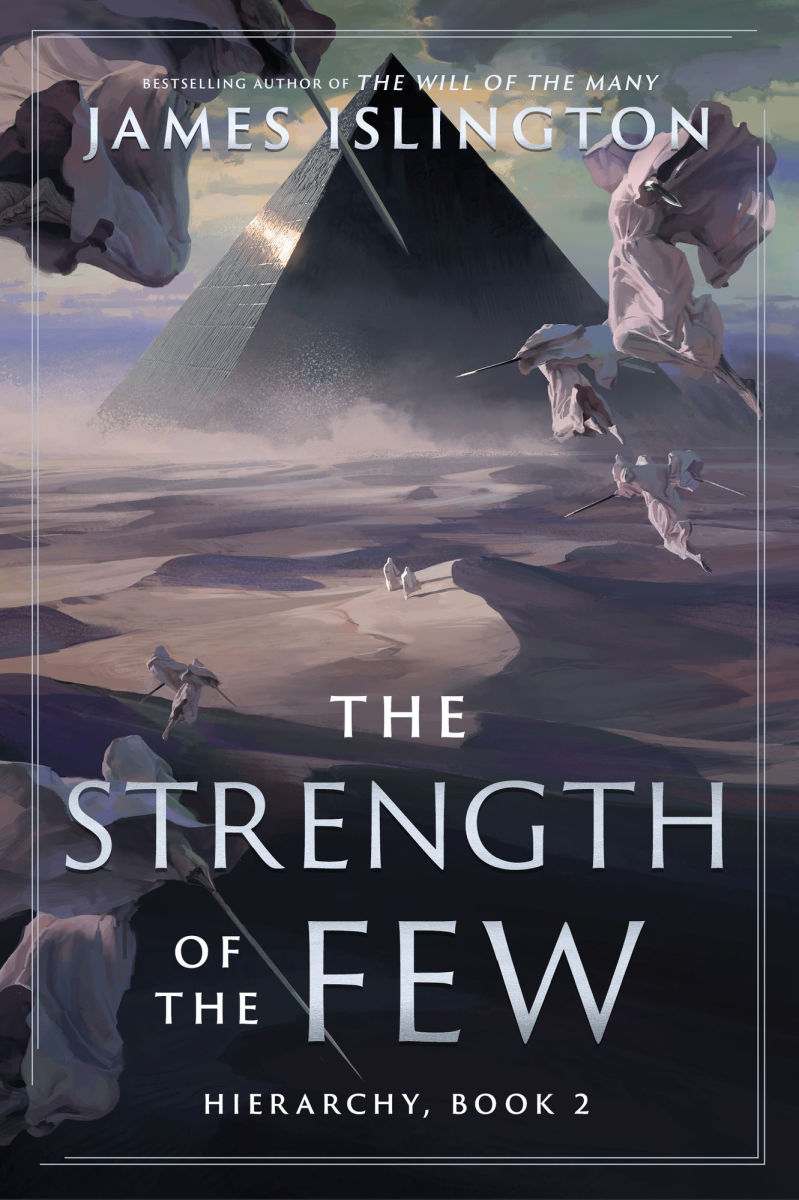
The Strength of the Few by James Islington

Publisher: Text Publishing/Audible Studios (Audiobook – 11 November 2025)

Series: Hierarchy – Book Two

Length: 31 hours 8 minutes

My Rating: 5 out of 5 stars

Amazon

Australian author James Islington continues his Hierarchy series in epic form with the incredible and complex novel, The Strength of the Few, an outstanding and highly addictive fantasy novel that I had an incredible time getting through.

Back in 2023, I had the pleasure of reading the outstanding novel, The Will of the Many from James Islington, which I very quickly fell in love with.  Following a fugitive prince who finds himself enrolled in an academy for the children of the elite members of the nation that conquered his homeland, The Will of the Many had an intricate plot that forced the protagonist to deal with elaborate ancient puzzles, the unique magic of his world, unlikely friendships, deadly rebels, and all his hidden secrets potentially becoming uncovered.  I had such an amazing time reading The Will of the Many that it got a very easy five-star rating from me, and it ended up topping several of my end-of-year lists for 2023, including my favourite book, audiobook, new-to-me author and Australian fiction lists.  Unsurprisingly, I have been keen to see how the series would continue ever since I finished the final page of The Will of the Many, and the long-awaited sequel, The Strength of the Few, was one of my most anticipated novels of 2025.  I started reading The Strength of the Few the second I could, and it turned out to be another captivating read, with a plot that goes in some captivating and intense directions.

After infiltrating the Academy and running the mysterious Labyrinth, the man known to the Catenan Republic as Vis Telimus thought that he would finally understand some of the secrets of the nation that destroyed his people.  However, his encounters within the Labyrinth have instead resulted in the impossible and placed him in the firing line of an ancient evil determined to destroy his world.

While the original Vis continues to live in the Catenan Republic, attempting to avenge the massacre of his Academy classmates and friends at the Iudicium, he is unaware that the ancient devices within the Labyrinth replicated him across three separate words.  Mirrors of each other influenced and altered by different history, the worlds of Obiteum, Luceum and the world Vis already knows as Res, are divergent places, each with their own troubles, rulers and chaos.

Now one of the few beings existing across all three concurrent realities, Vis stands as the only person who can stop the upcoming Cataclysm that will burn away all he loves.  But first he needs to face the different challenges each world has for him, especially as he truly belongs in none of them.  Forced to fight, to learn how to control the unique powers his situation has granted him, and to understand the different worlds they find themselves in, all three versions of Vis will be pushed to their limits as they try to prove themselves and understand the secrets behind their unlikely journey.  If any version of Vis fails, then all their chance to stop the Cataclysm are finished.  But can Vis really survive in three separate realities, each of which is filled with beings who desperately want him dead?

Well damn, now that’s how you do a sequel.  The Strength of the Few was an incredible novel as James Islington expertly continued the elaborate and ambitious narrative of his epic Hierarchy books.  Featuring a layered story loaded with complex world-building, intricate story details and compelling characters, The Strength of the Few was an exceptional novel that gets a very easy five-star rating from me.

Islington came up with an especially complex and powerful story for The Strength of the Few, which served as a very worthy follow-up to the compelling events of the previous Hierarchy book.  Right out the gate readers are treated to an intricate plot, with the protagonist from The Will of the Many split into three different versions of himself in three separate mirror worlds.  Each version has its own very distinct narrative that revolves around that specific Vis trying to overcome the challenges of that specific world.  For example, the version of Vis on Res, the world that The Will of the Many was completely set in, continues to endure the politics of the Hierarchy, while also attempting to uncover those responsible for the massacre of his classmates at the end of the previous book.  The storyline set on Obiteum is a bit of a post-apocalyptic narrative, as Vis is forced to survive a broken world ruled by the enemy responsible for several previous Cataclysms, and must try to find a way into a forbidden city, half staffed by the living dead.  The final storyline set in Luceum offers a much more adventurous narrative, as a version of Vis that is completely unaware that he is in an alternate world, is forced to explore a new culture and attempt to survive amongst people who have no idea of his past or his destiny.

These three separate and very distinctive storylines each go in some interesting directions as the book continues, and the result is a very impressive and compelling overall narrative, especially as Islington expertly sets up necessary details in the early stages of the book and cleverly builds from there.  For most part, each of these storylines stay isolated, although some key details from each bleed into the wider narrative, and you can appreciate the significance of certain events or revelations in one storyline better thanks to the events in one of the other worlds.  Each plot line goes in some very interesting directions, with the dark politics of Res forcing Vis to engage in some complex schemes and deceptions, the struggles of Obiteum slowly getting to an isolated version of the protagonist, while positive character interactions in Luceum turn that Vis into a completely different person.  Islington starts to enhance the tension of all three storylines in the second part of the book, and there are some very amazing scenes that completely change the tone of each of the main storylines.  I felt the political instability of Res allowed for some particularly powerful moments, especially after a shocking scene about two-thirds of the way through book.  A growing war in Luceum also provides some compelling drama for that storyline, as Vis must decide what he wants in life, while the continued threat of discovery in Obiteum proves to be particularly draining.

The final third of the book contains some of the best scenes of The Strength of the Few, as Islington builds on all the novel’s great storytelling and complex worldbuilding to bring forth an epic conclusion.  Thrusting all three versions of Vis into mortal danger, the tension is particularly thick, as the protagonist and much of the supporting cast are in constant risk.  This includes a final desperate attempt to achieve his goal of killing a god in Obiteum, which hits a range of snags amongst the ancient city Vis has spent most of the book infiltrating.  At the same time, the Vis in Leceum finds himself in the middle of a deadly war, where his unique abilities and the unlikely rewards of a deadly ceremony weigh him down.  However, the most intense is the narrative set on Res, where Vis finds himself attempting to save who he can from the chaotic events brought on by those manipulating him.  Islington probably throws the book’s most shocking moments into the Res storyline, which nicely builds on a lot of the drama and intrigue from the first novel, and forces the protagonist to make some dark decisions, out of both vengeance and necessity.  One scene where the title of the book is quoted by an antagonist really sticks in the mind, and I’m not sure I’ll be able to forgive Islington with the dark bait-and-switch there.  All three of these storylines end on an interesting note that hint of destructive events for the future, and it is going to be fascinating to see how Islington continues the Hierarchy series going forward.

Thanks to the elaborate ideas that Islington had for this epic sequel, The Strength of the Few turned out to be an exceptionally written read, which provides an intense and compelling fantasy narrative, filled with some great emotional depth.  The inventive way that the author splits the book to follow three separate versions of the same protagonist worked surprisingly well, and it allowed for quite a unique character-driven story, which really showcases Islington’s writing ability.  I felt that the split between the three distinctive storylines was very well done, and these separate narrative threads each stood on their own merits, provide a distinctive experience in each.  I loved how there was something special in each of the storylines, and you got some interesting interactions, world building and different focuses with each of them.  All three were very well written, and there were honestly no weak links with any of the storylines, which is always a risk when you split the narrative like this.  I will say that the intrigue-laden narrative on Res was a particular favourite of mine, but both other storylines were also quite exceptional, and they balanced each other nicely with their alternating themes and varied character growth.  Throw in some creative expansion of the universe the narrative is set in, with its cool Will-based magic system, and three worlds each inspired by different ancient cultures (Roman, Egyptian and Celtic), and this was a very well written book, and I really appreciate how effectively Islington builds up his different worlds and showcases them to the reader.

The Strength of the Few proved to be an impressive continuation of the Hierarchy series, and I felt that Islington did an outstanding job building on the impressive fantasy elements and storylines of the first book.  However, the complex narrative split and the way that Islington dives immediately into the story does mean that The Strength of the Few is probably best enjoyed by those readers who have already gotten through The Will of the Many.  While Islington does re-examine key elements of the plot from the first book as The Strength of the Few continues, it is a very gradual process, and new readers trying to read the sequel first are likely to get confused if they don’t know some necessary details from the first book.  The Strength of the Few might have benefited from a good summary or recap at the front of the book to remind readers of some key details, especially if they haven’t had a chance to read re-read The Will of the Many since its 2023 release.  Still, for the most part, all readers should be able to follow and appreciate The Strength of the Few, especially once you get drawn into the three compelling storylines, and people who love extremely elaborate fantasy narratives with a lot of intricate detail are going to have an outstanding time.

I was once again impressed with Islington’s great characters in The Strength of the Few, as this book has a massive cast, made up of an interesting combination of figures from The Will of the Many, and new characters from the three separate worlds of the setting.  However, most of this book naturally follows the young protagonist from the first book, who is primarily known as Vis Telimus.  A studious and damaged figure who had already gone through a lot before the events of this novel, Vis has rather a unique experience in this sequel, as unbeknown to him, there are now three separate versions of him concurrently existing in the mirror worlds of this setting.

Islington perfectly sets up and utilises this three-way split of his protagonist, and readers are soon treated to three distinct variations of the protagonist, each of whom are altered by their experiences and losses, especially the two versions of Vis who lose their left arm.  It was fascinating to see how each of the Vises are influenced and changed by their respective traumas, and how their adventures are altered by the different information or people that they meet.  For example, the Vis in Res, who is essentially the same protagonist from The Will of the Many, finds himself longing for vengeance after the events of the Iudicium, and spends much of the book angry and forced to endure politics and lies.  The version of Vis on Luceum, while feeling lessened by the loss of his arm, soon finds peace in his new setting, and his eventual motivations for fighting and living are very different from his other incarnations, especially as he finds friends he can trust completely.  Finally, the Vis on Obiteum is one of the more confident incarnations of the protagonist, having full knowledge of the upcoming Cataclysm and his place in the three worlds explain early in the book.  As such, he soon becomes the most competent at utilising his Will talents and appears the most undamaged of the three due to not losing his arm.  However, in many ways the Obiteum Vis is the worst off out of all versions of the protagonist due to his isolation, the desolate surroundings, and the early expectations of murder and potential death that are thrust upon him.  I really cannot emphasise just how clever the split between these different variations of the protagonist is, especially with the subtle differences and alternate reactions to similar events or situations. It really makes for quite a distinctive and moving read, especially as all three versions of Vis experiences even greater trauma and damage as this sequel continues.

While Vis is the obvious focus of The Strength of the Few, there is a huge supporting cast utilised throughout this book, including various characters only found on each distinctive world.  Indeed, each version of Vis picks up its own supporting cast, which allows for some very different interactions in each of the major storylines.  Highlights include many of the recurring characters from the first book who serve as Vis’ friends and mentors in Res.  There is a particular focus on Eidhin and Aequa, who have an expanded role as Vis’s main confidants in this novel, and I liked some of the powerful storylines that formed around them.  Other major supporting characters from the first novel are showcased to a lesser extent in this sequel, primarily due to the book being split into three separate parts, although many of these characters still got a notable role in this sequel.

The cast supporting Vis on the desolate world of Obiteum is a lot more limited, mainly to emphasise the protagonist’s loneliness, although he does find a compelling mentor in Caeror, his adoptive uncle, who the protagonist was hunting for in the first book.  A couple of other native characters from Obiteum gain prominence later in this storyline as Vis attempts to complete his mission, and it is fascinating to see how their experiences living on a dead-world, impact their interactions with the protagonist.  Finally, the cast of the Luceum plotline represent a compelling counterpart to the supporting characters of the rest of the book.  While Vis has enemies in Luceum, he also finds several true friends who he can trust with all his secrets.  It was interesting to finally see Vis truly open up to other people, and it allowed for some very different interactions to the secrets and lies that define the protagonist in the other two storylines.  Throw in a compelling array of antagonists, as well as an entertaining manipulator who keeps chucking Vis into the deep end on Res, and this was an impressive cast for this great sequel.  It honestly was an extremely intriguing experience to have three separate casts of characters set around different versions of the protagonist.  While this narrative split did result in some restrictions when it came to character depth or a full exploration of relationships, I think the overall extended length of the book overcame this and allowed the reader to grow close to the supporting characters.  I will warn readers not to get too attached to the extended cast though, as Islington does get a little murderous as the book continues, however, all these characters are impressive while they last.

While I was lucky enough to receive a physical copy of The Strength of the Few, I ended up holding out for a little bit to listen to the audiobook version of this book instead.  I’m a big fan of audiobooks when it comes to ultra-elaborate fantasy narratives, as I tend to absorb and retain more of the details that way, and this worked out well with The Strength of the Few.  I felt that Islington’s complex story came across very effectively when read out, and all the elements, including the elaborate worldbuilding and the great character work, were well translated to the reader.  I also appreciated how the switches between the three different versions of the perspective protagonist, was easily discernible, and this was a very easy story to follow on audiobook.  The Strength of the Few audiobook saw the return of Euan Morton for narrator, who previously read out The Will of the Many, and who I quite enjoyed as a narrator of the Star Wars audiobook, Tarkin.  Morton has a very interesting cadence to his voice as a narrator, which provided a very unique edge to this audiobook.  While Morton’s narration style might not appeal to everyone, I felt that he did a good job voicing this compelling story, especially through the eyes of the complex protagonist, and his unique narration on this elaborate story worked extremely well.  I also felt that Morton excelled at pronouncing all the different names and titles that Islington featured in his plot, no matter their Roman, Celtic or Egyptian inspiration, and the characters of all three different worlds had a subtly different cadence and accent that helped to distinguish the separate storylines from each other.  As such, I really got stuck into this audiobook, powering through it quickly, even with its 31-hour runtime.  This was probably one of the more intense and moving fantasy audiobooks I had the pleasure of listening to in 2025, and I cannot recommend this format enough.

James Islington does it again with his incredible second Hierarchy novel, The Strength of the Few.  Brilliantly continuing his elaborate narrative from the first novel in a unique manner, The Strength of the Few was an ultra-addictive read, that really showcased Islington’s writing ability and imagination.  Clever, powerful and easy to get addicted to, The Strength of the Few was one of my favourite books of the year, and I cannot wait to see how Islington continues the series going forward.

Amazon

The Will of the Many by James Islington

The Will of the Many Cover

Publisher: Gallery/Saga Press/Audible Studios (Audiobook – 23 May 2023)

Series: Hierarchy – Book One

Length: 28 hours 14 minutes

My Rating: 5 out of 5 stars

Amazon

Talented Australian author James Islington delivers one of the best fantasy books of 2023 with the compelling and complex novel, The Will of the Many, an exceptional read that I had a brilliant time reading.

I am always on the lookout for epic fantasy novels to sink my teeth into, and one that caught my eye when it was first announced was the intriguing book, The Will of the Many.  Set in a cool new magical school setting, The Will of the Many sounded liked a very fun novel and I instantly wanted to read it.  It helped that it was written by James Islington, an Australian author who had been on my radar for a while thanks to his fantastic Licanius trilogy.  While I have not had a chance to check out the Licanius books, I was very keen to dive into The Will of the Many and I was glad I got the chance a couple of weeks ago.  The Will of the Many is the first book in Islington’s new Hierarchy series, which looks set to be a major addition to the fantasy landscape especially after this incredible first book

The Catenan Republic, known as the Hierarchy, rules the world, conquering and enslaving everything before it using its unique magic of Will, which drains power, strength and mental energy from the lower classes and passes it up to those above.  To gain true power and control in the Hierarchy citizens need to battle their way to the top of the pyramid of power and influence, and only those with drive, ambition, connections or no choice can rise.

Vis is an orphan boy with a hidden past, a quick mind, and an utter disdain for the entire Hierarchy.  Lodged in a Catenan orphanage, Vis bides his time while searching for an escape from a future of ceding his Will to the higher echelons of the Hierarchy.  However, his entire life is turned upside down when a powerful Catenan nobleman offers him a chance he never expected.  Ulciscor Telimus is convinced that there are dark dealings going on at the Hierarchy’s most prestigious school, the Academy, and he needs someone to go undercover and discover what has been hidden there.  If he succeeds, he will be adopted into Ulciscor’s influential family and be given a choice about his future.

Reluctantly agreeing to Ulciscor’s terms, Vis prepares to attend the Academy, only to discover it is a dangerous place of corrupt ambition, deadly secrets and deep rivalries.  To succeed, Vis will have to rise through the Academy’s ranks by any means necessary without losing who he is as a person.  But this will be no easy task, as deadly politics, long-buried power and a murderous rebel group all seek to control him.  Worse, the more he advances, the greater the chance that his secret past will be uncovered and his enemies will put him to death.  Can Vis survive against the terrible burden that is weighing him down or will he be ground down by the unstoppable Hierarchy just like everyone else?

Islington has created a pretty exceptional fantasy novel with The Will of the Many.  Featuring a powerful, intense and character-driven plot, all set within an outstanding new fantasy world, The Will of the Many had me hooked pretty early on and I dedicated a lot of time to reading it.  I really got drawn into Islington’s amazing inventiveness and this book gets an easy five-star rating from me thanks to how damn good it is.

I have lot of love for the epic and captivating narrative that Islington set up in The Will of the Many, especially as he simultaneously tells a brilliant introductory story while also expertly setting up the rest of the series.  There are some awesome scenes in the start of this book, including an intense fight club sequence, which do an excellent job getting the reader across some key aspects of the plot, while also showcasing the emotional range and complexity of the protagonist, through whose eyes the entire story unfolds.  I was honestly already very hooked by this point in the story, but Islington quickly picks up the pace and ensures that this character-driven narrative heads off in some very compelling directions.  The introduction of Ulciscor soon presents the idea of the Academy and the dark conspiracies around it, and Islington starts the gradual process of getting the protagonist to the school environment.  Ulciscor is a great addition to the plot, especially as he plays off Vis very well, and the early sequences with him result in some major world expansion and plot movement.  It also sets up the book’s established formula of adventure, world building, politics, mystery and espionage, that carries through the rest of the story, and which ends up being a very heady combination.

Islington keeps building the story as The Will of the Many progresses, and pretty much every new revelation or intriguing world detail is really fun to behold.  There is some good early action, as well as a couple of twists that I liked at this point, but the story is still very much on track for the promised magical school setting.  However, before we get there, there are a series of cool and fascinating training montages which build up Vis as a character and really highlight the difficult tasks to come.  There is also a deeper dive into the complexities of the tasks and the secrets surrounding them, and Islington does an impressive amount of set-up in this first third.  However, the real highlight of this first part of the book is a very surprising and explosive occurrence that pushes Vis into the limelight, while also ensuring that he is caught between some very dangerous people.  This big scene is extremely memorable, bloody and very well-written, and if you weren’t riveted to The Will of the Many before, you sure as hell were now.

From there the story turns into a more magical school focused narrative, which was something that I was really looking forward to.  This intriguing setting had some great elements to it, and the story set within the Academy was a brilliant and compelling blend of education, entertaining rivalries, compelling personal interactions, and a series of secrets, as Vis attempts climb up the ranks, while also completing some of the objectives the various groups trying to control him have forced him to do.  I honestly had a ton of fun during the scenes set in the Academy, and I liked how Islington built up the setting and the fantasy elements behind it, while also slowly advancing the story and the character development.  The substantial part of the novel set in or around the Academy has some fantastic moments to it, including a few big scenes where Vis is forced to encounter deadly enemies, hard tasks, or the secrets from his past, and each of these major moments expertly expands on some part of the plot or universe you are already enjoying, whether it be secrets of the world, or some political machinations that will come back to bite the protagonist later.

Everything leads up to a major extended concluding sequence as the final test of the Academy brings all manner of trouble to the protagonist in a variety of cool and intriguing ways.  Not only do some big secrets come to life but Vis manages to learn more about the magical secrets of the world and the Hierarchy, while also being forced to deal with deadly attacks and threats from a variety of corners.  There are so many epic moments in this final section of the book, and Islington did an incredible job of tying together his many, many story threads to ensure that a variety of previous hints and revelations are well utilised.  I loved some of the elaborate tests and set-ups featured here, and it was very fun to see the protagonist try to run them while also dealing with major threats from every angle.  This final sequence has some massive moments, including major betrayals, compelling reveals about the wider world, and a very tragic death, all of which served as the perfect cherry to an already outstanding story.  While many secrets and hanging storylines are resolved by the end of the plot, quite a few still remain for the sequels.  Islington has already set up some big moments and unique ideas for the future, and I am very curious to see how they turn out.

As you can no doubt tell from my expansive summary above, I really loved this captivating narrative in The Will of the Many and I think that Islington did a really good job of presenting this complex and impressive story to the reader.  The entire book has an outstanding pace to it, and there is barely a scene that is not filled with something exciting or entertaining, whether it be a moving character moment, some compelling world building, or a thrilling bit of action.  I honestly flew through this lengthy novel, and there was no point of the book where I not highly invested in the plot nor gripped by the events unfolding.  The author’s use of a first-person perspective from the character of Vis was a very good choice of narration that allowed the author to tell a compelling character-driven story that simultaneously explored a cool new setting from the outside, while also cleverly capturing all the key elements of the plot.  The intense balancing act of lies, politics, outside influences and personal relationships that the protagonist has to maintain really shines through as a result of this use of perspective, and it was deeply compelling to see Vis attempt to overcome all the obstacles in front of him.  The intense action scenes were particularly good, and Islington perfectly portrays the desperate violence, the life-and-death confrontations, and even some complex but exciting maze running, in ways that grab the reader’s attention and keep them fully engaged.  I personally loved how Islington included so many different compelling storylines, plot points, and fascinating detail into every single page of the book, and you really cannot help but get addicted as a result.

I always love seeing a cool fantasy setting for a new series, and Islington produced a pretty intriguing and compelling one for The Will of the Many.  Much of the main setting of the book sees Islington expand on an ancient Roman society, by adding in some intriguing new details like magic, powered constructs, a rigidly hierarchical community, and a deep political divide between the military, governance and religion bodies.  This results in a very interesting background for much of the story, and Islington showcases it all through the eyes of Vis, a hostile outsider with an established hatred of the Hierarchy, which works to showcase it in even more detail, especially as Vis focuses on both the negatives and the positives of the political and cultural structures around him.  I really enjoyed the clever balance of political concerns, oppressed citizenry and unique inclusions about status and magical power that were explored as a result, and it was fantastic to see them utilised in the plot, especially as Vis has to balance all of them throughout his many guises and missions.  The most fascinating part of this whole setting has to be the focus Will, the magic of the Hierarchy, which sees people at the bottom of society sacrifice part of their strength, drive and health to those above them.  The higher up in the Hierarchy you are, the more people you have ceding their strength to you, and this gives you greater powers, including better physical attributes, the ability to control and manipulate materials to certain purposes, and other magical abilities.  Islington does a really good job of exploring and expanding on this intriguing magical system throughout The Will of the Many, especially as the narrator is also learning about it as he goes.  The author has clearly put some time and great thought into this magical system, treating it like an established science, and I liked seeing the range of abilities it produces, as well as its related social and cultural impacts.  Islington makes sure to highlight that this is not a perfect society, and the cracks that Vis witnesses throughout The Will of the Many should result in some outstanding and compelling ongoing storylines.

I need to point out that one of the main reasons I chose to grab The Will of the Many is that it had a magical school setting.  I love, love, love magical school settings in fantasy fiction, and it is one of the best backgrounds for an excellent fantasy story (make sure to check out my recent list about my favourite books with magical school settings).  The Academy in The Will of the Many is an amazing example of this, and I enjoyed how Islington utilised it as a primary location for the book’s plot.  Just like the rest of the Hierarchy, the Academy is a rigidly hierarchical place based around a pyramid structure, with the most talented students at the top, and the other students below battling to take their place.  This made for a great background of study, competition and rivalries for much of the plot, and it was fun to see the protagonist try to reach the higher classes in a short time period, especially as he was required to overcome numerous obstacles while also coming to terms with the distinctive social structure of the Academy.  Islington adds a further twist to this education setting by introducing the Labyrinth as a unique educational and testing tool.  Essentially, the Labyrinth sees participants run through an elaborate maze while being chased, manipulating a magical gauntlet to move around walls and doors, all to prove that the participant has the concentration and focus to control vast amounts of Will.  Islington did an outstanding job of showcasing this Labyrinth in multiple scenes of The Will of the Many, and it produces some very exciting and compelling scenes, especially when the stakes around it get very high.  There is also a very complex, and highly enjoyable final test that serves as a great background for much of the final confrontation.  Islington clearly has a highly inventive streak when it comes to these unique fantasy inclusions, and I personally loved every second spent in this highly competitive magical school setting.  I hope that we see more of it in the future, and this was honestly one of the better magical schools that I have personally seen in fantasy fiction.

I also must highlight the captivating and nuanced characters that were featured within The Will of the Many, especially the main protagonist, Vis, through whom we see most of the events occurring.  Vis is an outstanding central protagonist, as he is a highly educated individual who sees all the flaws in the society he is forced to live in, and goes into the story with many secrets around him, including the fact that he is secretly the deposed prince of a realm recently conquered by the Hierarchy.  Due to his many losses, his outsider status, and the sheer resentment he holds towards the Hierarchy and those who use Will, Vis has a great deal of anger, bitterness and lack of social ability that he needs to overcome.  Vis proves to be the perfect character for the complex and morally grey narrative that Islington envisions, as Vis has to put all his learned deceit and ability to keep secrets and survive to good use to infiltrate the Hierarchy and the Academy, while being blackmailed by several different people.  Vis has an interesting analytical mind, and I wonderful time seeing him try to work through the various problems, conflicts, and hostile situations he encounters, especially as nearly everything about him is a lie that he needs to keep straight.  Despite his past and the pressures he is under, he is still a mostly kind and noble figure, trying to stay true to his original ideals while still doing what is right in a very corrupt world, and it was wonderful to see him grow throughout the course of the story and finally learn to trust again.  I grew quite attached to Vis as the story continued, and it really hurts to see him suffer time and time again, especially once he comes to terms with the traumas of his past.  I am very excited to see his story continue in the future, especially as it seems like it is going to get quite complex and multifaceted in the next book.

The rest of the cast of The Will of the Many is also very strong, and I liked the compelling and varied supporting characters that Vis has to interact with, including classmates, his new adopted family, rivals, political opponents, high-ranking members of the Hierarchy, and a dedicated group of rebels with dark plans for the future.  The powerful and intriguing interactions that occurred between Vis, who is often lying about his intentions, and these other fantastic characters results in some amazing scenes, and I loved the unique relationships that Vis was able to form with them.  You grow pretty attached to some of these characters as well, and I had my heart broken with one major fatality towards the end of the novel.

To check out this impressive novel I chose to grab an audiobook copy of The Will of the Many, which proved to be a pretty exceptional way to enjoy this fantastic read.  I have a lot of love for the audiobook format when it comes to massive fantasy novels, especially as I find myself really able to absorb the complex narratives and vast new worlds extremely well when listening to it.  This was definitely the case with The Will of the Many audiobook which really allowed me to get to grips with the powerful story it contained, and I lapped up every second that I listened to.  It definitely helped that The Will of the Many audiobook featured an outstanding narrator in the form of Euan Morton, whose work I have previously enjoyed in several Star Wars audio productions (Tarkin, Dooku: Jedi Lost and Doctor Aphra).  Morton has a unique voice that I felt gave The Will of the Many some real gravitas and impact when read out, especially with the distinctive, accented tone he utilised for both Vis and the main narration of the story.  This specific great voice was pretty impressive, and it really helped to make the protagonist’s speech really stand out throughout the audiobook.  The rest of the accents and tones he utilised for the other characters in the book really worked, and I loved how much range Morton had, covering a range of different characters perfectly and gifting them very fitting voices.  All this really helps to make The Will of the Many an absolute pleasure to listen to, and I cannot recommend this format enough to people interested in this book.  With a run time of just over 28 hours, The Will of the Many audiobook does represent a substantial time challenge for potential listeners (it is the 10th longest audiobook I’ve ever listened to).  However, I would say it is well worth the investment, especially as it does not take long for you to get obsessed with this awesome book and its elaborate story.  An exceptional audiobook that is easily the best way to enjoy this amazing fantasy tale.

Unsurprisingly, I loved The Will of the Many, and it was a pretty great introduction to James Islington’s brilliant writing and inventiveness.  The Will of the Many is a captivating fantasy read that makes excellent use of its dark setting and magical school focus to craft a powerful, character-driven tale.  This is easily one of the best fantasy novels of 2023 so far and I would strongly recommend it to anyone wanting an epic read to really lose themselves in.  An exceptional novel that perfectly sets up a bold new fantasy series!

Amazon

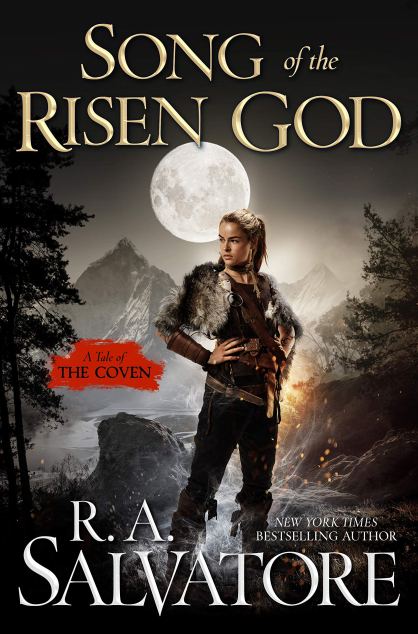
Song of the Risen God by R. A. Salvatore

Song of the Risen God Cover

Publisher: Audible Studios (Audiobook – 28 January 2020)

Series: Coven trilogy – Book Three

Length: 17 hours and 3 minutes

My Rating: 5 out of 5 stars

Amazon     Book Depository

Legendary fantasy author R. A. Salvatore brings his Coven trilogy to an explosive and enthralling end with the third and final novel, Song of the Risen God.

The Coven trilogy is an exciting series that Salvatore has been writing over the last three years, which is set in the world of Corona, the setting of his previous series, The DemonWars Saga. This new trilogy follows the adventures of an interesting group of characters in the lands surrounding Loch Beag, including the imposing mountain, Fireach Speuer. The first two novels in this series, Child of a Mad God and Reckoning of Fallen Gods, have both been extremely good, and I have been enjoying reading some of Salvatore’s non-Forgotten Realms fantasy work. I am a massive fan of Salvatore’s writing and I have been looking forward to finishing this series off for some time now. Salvatore certainly did not disappoint with the final entry in this trilogy, as this final novel is potentially my favourite book in the entire series.

War has once again come to the world of Corona, as a new evil leads its forces on a mission of conquest and destruction. The wild lands surrounding Loch Beag and Fireach Speuer have never been peaceful, but now a massive army of invaders is marching across them, determined to conquer and kill all before them. These mysterious invaders are the Xoconai, a lost race of humanoids from the other side of Fireach Speaur. Now, with their reborn god leading the charge on his mighty dragon, the Xoconai are commanded to expand their empire to the opposing coast.

With no hope of defeating the vast host that has suddenly appeared above them, the few surviving inhabitants of the villages surrounding Loch Beag flee through the wilds to find sanctuary. Led by the powerful witch Aoelyn, the frontiersman Talmadge and the ranger Aydrian Wyndon, the villagers move towards the apparent safety of Honce-the-Bear, the most powerful human kingdom in Corona. There they hope to warn the people of Honce-the-Bear of the approaching danger and gather a force that can push back the Xoconai.

However, the dark ambition of the Xoconai god, Scathmizzane, knows no limit, and his magical powers are as vast as they are terrifying in their origin. Using these powers, Scathmizzane is able to accelerate the Xoconai invasion at a tremendous pace, striking right at the heart of Honce-the-Bear, and managing to overpower both their armies and the magic of the Abellican monks. As the Xoconai horde advances, it falls to Aoelyn, Aydrian and their companions to stop them by any means necessary. But can even the most powerful magic user on the continent and a fallen king be able to throw back the invading armies, or will Scathmizzane’s dark power fall across all the lands?

Song of the Risen God is a really impressive and captivating read that provides the reader with an entertaining adventure in one of Salvatore’s detailed and expansive fantasy universe. This final book in the Coven trilogy is a cool addition to the trilogy that not only acts as a satisfactory conclusion to this new series but which also ties it even more firmly into the wider world of Corona.

This book contains an epic and wide-ranging narrative that showcases the dramatic aftermath of the second novel in the series, Reckoning of the Fallen Gods, which saw a massive army and a dragon-riding god descend on the isolated setting of the first two novels. In this third novel, the protagonists are chased all the way to one of this world’s key settings, the kingdom of Honce-the-Bear, where they must fight to save the world from the invading horde. This turned out to be a rather interesting departure from the previous novels in the Coven trilogy, which were much smaller in their scope, tending to focus on a handful of closely related villages in a single location. I actually liked this change of pace, as it made for a much more impressive conclusion, and I quite enjoyed seeing the characters interact with the wider world. This turned out to be an extremely exciting and fast-paced novel that contained a lot of entertaining action and large-scale battle sequences, although the author does not skimp on the intriguing dialogue, creative world building or compelling character development. Salvatore utilises a host of point-of-view characters to tell this story from a variety of different angles, which leads to a rich and comprehensive overall narrative. I am also glad that the author continues to feature in-world texts at the beginning of each part of the novel, which provides some fascinating insights into some characters, and contains some clues about a big twist towards the end of Song of the Risen God. Overall, this was an extremely captivating story with a great blend of elements, and I had a fantastic time reading it.

One of the more distinctive parts of Song of the Risen God is how it connects with some of the previous books set in the world of Corona. Corona is a unique fantasy world created by Salvatore, which has previously served as the setting for 13 novels, including the previous two Coven books. The first seven of these books are all part of the same series, known as The DemonWars Saga, which established many elements of this world, including the kingdom of Honce-the-Bear, the Abellican order of monks and the world’s gem based magical system. The Coven series has always been set in Corona, but the first novel in this trilogy, Child of a Mad God, had very little to do with these prior books. More of a connection was established in Reckoning of Fallen Gods, especially with the appearance of Aydrian, who was a major figure in the later DemonWars books. However, in Song of the Risen God, Salvatore fully combines this trilogy with his prior series, by bringing the protagonists and antagonists of the previous Coven books into the main location of The DemonWars Saga and having them interact with these established characters and settings.

Immersing this series more fully into the wider fantasy world was an interesting choice from Salvatore, and it one of the major things that distinguishes Song of the Risen God from the previous books in the trilogy. This was not a sudden or random decision from Salvatore, as there have been hints that this was going to happen in the previous two books, especially once Aydrian was introduced as a major character. I rather enjoyed the way that Salvatore so dramatically expanded the setting and started using elements from The DemonWars Saga in this novel, as it made for a much more expansive and fascinating story. I never actually read any of the books in The DemonWars Saga (a regrettable gap in my Salvatore knowledge), and before reading Song of the Risen God, I had no real idea what happened in this series, aside from what was discussed in the second Coven novel. However, I found that you really didn’t need any pre-existing knowledge of these earlier books, as Salvatore spends a good amount of time explaining some of the major story events that occurred during these novels and how they impact the current plot. As a result, at no point while reading Song of the Risen God was I in anyway confused by what was going on, and I always had a good idea how the plot was tied into the wider universe. I really appreciated being able to enjoy the entirety of the plot without having to read The DemonWar Saga first (which admittedly sounds pretty awesome, and I might have to check them out at some point), and I think that Salvatore did a fantastic job recapping the events of this prior series in text. Fans of The DemonWars Saga will no doubt like the fact that Salvatore is once again exploring this world, and many will be interested in seeing how much the universe has changed in the intervening years, as well as the major developments that occur as part of Song of the Risen God.

As I mentioned above, Song of the Risen God is the third and final book in the Coven trilogy, which does mean that this book might be a bit harder to follow for those readers who try to jump into the series at the very end (although that would be true for any trilogy). Salvatore does do a good job of recapping and exploring some of the key events of the first two novels, so most readers should be able to follow it well enough. I think that Song of the Risen God proved to be a great conclusion to the entire trilogy, as all of the major storylines were wrapped up rather well. The ending of the book also suggests that Salvatore is planning an additional Corona based series in the future, and if so, it is likely to focus on some of the major characters from the Coven trilogy. I personally would be extremely interested in a follow up series to these books, especially after all the major events that occurred in this novel, and I look forward to seeing what Salvatore cooks up next.

One of the major highlights of Song of the Risen God was the incredible raft of characters. This book had a massive and diverse group of characters featured within it, including the protagonists of the previous two books, characters from The DemonWars Saga and original characters who appeared for the first time within this book. Salvatore did a fantastic job diving down into several of these protagonists, and there was some rather intriguing character development that occurred throughout Song of the Risen God, most of which has some interesting roots in some of Salvatore’s previous novels.

A good portion of the book focuses on Aoelyn, who has served as the main protagonist for the first two Coven novels. Aoelyn is a witch who has spent the previous books trying to escape the clutches of her vicious tribe, the Usgar. In this novel, Aoelyn finally has her freedom, and finds herself in a brand new world, although she still seems to be dealing with some of the same prejudices and problems that occurred amongst the Usgar. Aoelyn spends a good portion of this book continuing to come to terms with her magical powers, which both define her and frighten her, as she has seen how magic can corrupt individuals, and she also attempts to take responsibility for the Xoconai invasion, which she inadvertently caused by killing a demon in the first Coven novel. I felt that Salvatore covered her character arc rather well, and there were quite a few intriguing moments, including Aoelyn making new friends and finding closure with some of the antagonists from the first two novels. I also liked some of the interesting developments that occurred towards the end of the novel with Aoelyn, which not only impact her outlook on life, but which may have some major impacts on any future Corona novels that feature her.

In addition to Aoelyn, quite a few other characters have some fantastic moments within Song of the Risen God. Bahdlahn, the former Usgar slave and Aoelyn’s childhood friend, probably had the most dramatic character development of all within this novel, as he grew and grew with every new encounter and experience within the plot. You cannot help but get attached to Bahdlahn, especially as he goes from wide-eyed former slave who had barely seen anything of the world, all the way up to an elite knight and resistance fighter in Honce-the-Bear. Bahdlahn is another character who has some interesting developments towards the end of this novel, and it looks like Salvatore has some big plans for him in the future. The former Usgar witch Connebragh also has a rather fascinating, if shorter, storyline within this book, as she befriends two former inhabitants of the lakeside villages, despite the long hostility between her tribe and theirs, and helps them survive the Xoconai invasion. The frontier explorers Talmadge and Khotai are also well utilised towards the front of the book, and there are some great moments with them, especially as Khotai regains her mobility in a rather unique way, although both disappear for the last third of the book. Salvatore also invests time in showing the viewpoint of a couple of key Xoconai characters, which I think really adds a lot to the story. Rather than having the Xoconai solely being mindless followers of Scathmizzane, these character perspectives help show them as being rather similar to humans, and two characters in particular have some very interesting viewpoints that lead them to question the word of their god as they attempt to fight his holy war.

All of these character arcs are great, but my personal favourite has to be the one surrounding Aydrian Wyndon. Aydrian is a major character within The DemonWars Saga, as the son of the original protagonists, who eventually became the main antagonist of the series after being possessed by a demon. Freed from his corruption at the end of the series and banished from Honce-the-Bear, which he ruled for a brief time, Aydrian has taken up the role of a ranger, which led to him meeting and helping the protagonists of the Coven series in the previous novel. In this book, he finds the threat of the Xoconai so great that he is forced to return to Honce-the-Bear, despite his banishment, to warn his former people. This leads to several outstanding scenes where he revisits the hurt and despair that he previously caused as a despotic and murderous king, and it serves as a fantastic defining characteristic as he searches for redemption. Aydrian has an absolutely incredible storyline throughout this novel, and his inclusion really added a whole lot to the overall narrative.

In addition to the fantastic story and amazing characters, I also have to once again highlight some of the enjoyable fantasy elements that Salvatore includes in this novel. At the fore of this is the cool gem-based magic that is one of the defining features of the stories set in Corona. This gem magic is an excellent concept, and it proved to be particularly fascinating in this novel as Aoelyn, a self-taught magical gem user, encounters members of the Abellican Church, who also use this form of magic, although in an apparently lesser way. Salvatore makes full use of all this cool magic throughout Song of the Risen God, and there are some rather impressive and destructive examples of the universe’s various magics, which were a lot of fun to see. I really enjoyed some of the cool and unique fantasy elements contained within this book, and it was a rather exciting addition to the story.

I ended up listening to the audiobook format of Song of the Risen God rather than grabbing a physical copy. This audiobook runs for just over 17 hours and is narrated by Tim Gerald Reynolds, who has provided narration for several of Salvatore’s previous books, including the other Coven books. I really enjoyed the audiobook version, and it proved to be a fantastic way to absorb and experience the cool story and the intriguing settings and characters. This is a bit of a longer audiobook and it took me over a week to fully listen to it, although my audiobook listening schedule has been a bit messed up lately. I felt that Reynolds did a really good job narrating this audiobook, and his fantastic voice really helped me get sucked into this fun story. Reynolds had a great handle on all the characters featured within Song of the Risen God, and I liked all the voices that he came up with for them. I ended up having an amazing time listening to this audiobook, and this is a truly excellent format to enjoy this novel in.

Song of the Risen God is a very impressive and deeply enjoyable fantasy novel that comes highly recommended. R. A. Salvatore once again shows why he is one of my favourite authors as he produces a slick and captivating read which is not only fantastic in its own right but which concludes an epic trilogy and ties it into a wider fantasy universe. This proved to be an absolutely amazing read, and I think I have to award it a full five-star rating based on how much fun I had listening to it. Salvatore has done it once again, and I look forward to checking out his next book in a few months.

Amazon     Book Depository

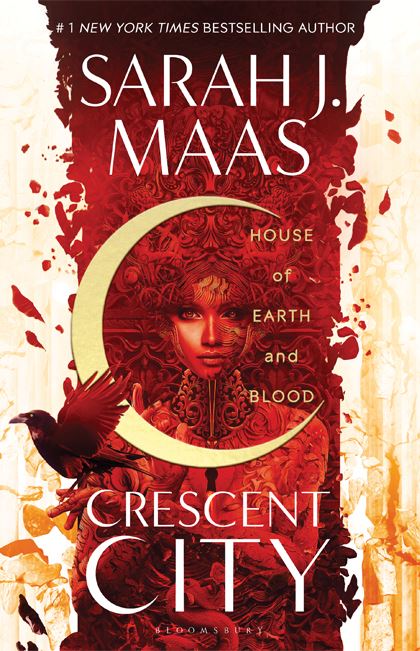
House of Earth and Blood by Sarah J. Maas

House of Earth and Blood Cover

Publisher: Bloomsbury/Audible Studios (Audiobook – 3 March 2020)

Series: Crescent City – Book One

Lenght: 27 hours and 50 minutes

My Rating: 5 out of 5 stars

Amazon

Prepare to meet your new obsession! One of the world’s top young adult fantasy fiction authors, Sarah J. Maas, breaks into the adult fantasy fiction genre in a big way with the first book in her brand-new Crescent City series.

Sarah J. Maas is an author that needs very little introduction. She is one of the most highly regarded young adult fantasy authors in the world today, having written two major bestselling series and a couple of standalone young adult novels. Maas debuted in 2012 with Throne of Glass, the first novel in her acclaimed seven-book long Throne of Glass series, and she has since gone on to write a second major series, A Court of Thorns and Roses. I have been meaning to check out some of Maas’s main series for a while now, especially Throne of Glass, as I have heard some very good things about them. Unfortunately, the only book of Maas’s that I have so far read was her DC Comics tie-in novel, Catwoman: Soulstealer, which I really enjoyed, especially as Maas had an amazing understanding of some iconic comic characters. As a result, I was interested when I heard about her new book, House of Earth and Blood, and I was curious to see how her first adult fiction novel would turn out. This is the first book in the Crescent City series, which presumably will be the author’s main body of work for the next few years. I received a physical copy of this book to review, although I eventually decided to listen to the audiobook format to fit it into my reading schedule, and I have to say I was rather impressed.

Welcome to Crescent City, a bustling metropolis where magic and technology meet in a world ruled over by all-powerful godlike creatures. Bryce Quinlan is a half-Fae, half-human, party girl at the low end of her world’s magical hierarchy, content to live her days clubbing and celebrating with her best friend, the powerful werewolf Alpha Danika Fendyr. All that changes the night Danika and her entire wolf pack are brutally slaughtered while Bryce is out partying. Bryce arrives home just in time to encounter the demon that committed the act, chasing it out into the streets before it escapes, never to be seen again.

Two years later, Bryce is a shell of her former self. Still reeling from the death of the closest person in her life, Bryce finds herself without direction or purpose. However, the revelation that a fresh wave of killings that mirror the bloody way Danika and her pack were taken out quickly changes that. Due to her experiences with the unknown species of demon and her intimate knowledge of Danika’s movements and history, Bryce is tasked by the governor of Crescent City to find who or what is summoning the destructive demons and unleashing them upon seemingly random members of the populace. However, Bryce will not be working on this case alone, as she finds herself teamed up with the governor’s personal assassin, the brooding, dangerous and surprisingly attractive fallen angel, Hunt Athalar.

Begrudgingly agreeing to work together, Bryce and Hunt start to scour the dark underbelly of their city, attempting to find any leads to who summoned the demon. However, they soon run afoul of many of Crescent City’s inhabitants, some of whom do not want the pair to uncover the truth. As they dig further, they begin to uncover a terrible conspiracy with terrible connections to Bryce’s traumatic past and which threatens all of Crescent City. However, the closer they come to the truth, the more pain and torment the two damaged souls uncover, especially as both of them try to fight the intense feelings blooming between them. With the fate of Crescent City hanging in the balance, can Bryce and Hunt get to the bottom of these killings, or will they be overwhelmed by all the hurt that is about to come their way?

Well damn, that turned out to be one hell of a book. I do have to admit that I’m not usually a fan of major romantic subplots in the novels I read (I know, typical male, Bryce would probably be calling me an Alphahole), and I was a little apprehensive that the romantic angles described in the book’s synopsis would overwhelm the fantasy story. However, any doubts I had about whether I was going to enjoy House of Earth and Blood were quickly blown away in the early stages of the story, especially once I hit the major plot development about 70 pages in. From there I was absolutely hooked on the story, as Maas kept piling on revelations, shocking moments, character development and an impressive murder mystery. I ended up really loving this amazing novel, and I ended up giving it a five-star rating.

I really enjoyed the way that Maas told this story, and this book contained an expansive and deeply addictive narrative that proved hard to put down at times. House of Earth and Blood is told from several character perspectives, most notably Bryce and Hunt, although quite a bit of the story is shown from the perspective of Bryce’s half-brother, Ruhn Danaan. Having these three main point-of-view characters results in a much more expansive story, as each of them has their own contributions to the plot, although there is a huge amount of crossover between each of their storylines. While Mass tends to focus most of her character development and storylines around Bryce, Hunt and Ruhn, there are a number of additional supporting characters, some of whom have some rather interesting roles throughout the book. Maas also includes a huge amount of foreshadowing throughout the book, hinting at several things that are to come further along in the narrative. While it is obvious where some of this foreshadowing is going, some of it was only noticeable in hindsight, and some of these more subtle inclusions made me really appreciate the author’s clever writing style.

One of the best things about this book was the incredible and intriguing new fantasy world. The Crescent City series is set on a version of Earth called Midgard, which was invaded thousands of years ago by vast armies of various magical creatures, ending humankind’s dominance of the planet. The modern world of Midgard is a chaotic and fascinating place, filled will all manner of magic and creatures who live in a hierarchal system, with all-powerful beings at the top and humans at the very bottom. There are so many cool elements to this world, from the unique magical systems, the different factions and organisations, and a vast multitude of different magical creatures with their own traits and characteristics. Maas dedicates a substantial amount of time exploring all these different elements of her new world, and the result is an impressive and vast setting which serves as a fantastic backdrop to this exciting story. I also liked the rather fun similarities between this fantasy world and the modern world, and it was interesting to see fantasy creatures running around with modern technology such as phones and guns. I also had a rather good laugh at some of the television shows that the author featured in the book, including a rather trashy-sounding True Blood inspired television show, which was made fun of relentlessly for its sexual content (which is kind of ironic considering how much sex was in this novel). Maas is clearly a master of universe building, and she has come up with a really great fantasy world that holds a lot of potential for future novels in the series, as well as opening up the possibilities of spin-off stories around some of the fantastic side characters introduced. I personally would love to see a novel based around the character of Fury Axtar, the mysterious assassin friend of Bryce, who has a minor role in the book.

In addition, Maas has also come up with a rather clever murder mystery storyline that I had an outstanding time unwrapping. The vast majority of House of Earth and Blood’s plot revolves around the murder of Danika Fendyr and her pack, as well as the similar murders that are occurring in the modern day. The subsequent investigation by Bryce and Hunt turned into a rather captivating storyline, as they explored the underbelly of their fascinating city, trying to find leads and uncover who had a motive to kill Danika. This whole mystery storyline goes to some very interesting places, and Maas comes up with a number of red herrings, alternate suspects, potential leads and side mysteries (a missing magical horn and a new street drug), all of which come together into a pretty incredible and clever narrative. I was actually rather surprised about who the culprit turned out to be, although Maas does set up the reveal rather well, and there are some rather clever hints in hindsight. That being said, while I didn’t know who the culprit was in advance, I totally knew where the final showdown with them was going to take place, and how the whole confrontation was bound to go down (there was a literal Chekov’s gun there). Still, it turned into quite a good confrontation scene, and I had a good laugh at the over-the-top way that the villain was taken down for good. This was a rather impressive element of the story, and I hope that Maas includes some more clever mysteries in her future books.

While I really loved the fantastic story, incredible world building and captivating mystery, the true centre of this book are the two compelling and exceedingly damaged main characters who Maas sets the story around, Bryce Quinlan and Hunt Athalar. Maas does some outstanding work setting these characters up, exploring their pasts and developing their personalities and emotions throughout the book. Bryce starts House of Earth and Blood as a seemingly carefree party girl with major daddy issues. However, the loss of Danika in the book’s first act severely changes her, as she has to deal with an extreme amount of guilt, isolation and social hatred in the following two years. This really alters her as a character and turns her into an extremely vulnerable person with a real emotional investment in the case, who hides all her true feelings behind a sassy and angry façade. Hunt, on the other hand, is a powerful fallen angel who lost his freedom and the love of his life in a failed rebellion against the ruling gods of the planet, and has spent the last several decades being tortured and used by the victorious archangels, and is now the personal assassin of the governor of Crescent City. Now known throughout the city as the Umbra Mortis, the Shadow of Death, Hunt is a simmering pot of anger who is resentful of how he has been treated all his life, and who is determined to be set free. Like Bryce, he is deeply invested in solving the case, as its resolution will allow him to take a serious step towards freedom, and on the surface he is the more serious of the duo. However, also like Bryce, Hunt has some major vulnerabilities and he is hurting deep inside. Both Bryce and Hunt are incredibly interesting protagonists, and I am really impressed with the layers that Maas was able bring to their characters, which added a significant amount to the story.

While Bryce and Hunt are amazing characters in their own right, the real magic comes when they are paired together. It is obvious from the start that these two are going to hook up at some point, but the journey to get there was written extremely well. The combination of these two exceedingly vulnerable and complex characters in the story is great, and it makes for some incredible and dramatic story moments, as Bryce and Hunt slowly work out all their issues and history. The way they slowly go from dislike to mutual respect to lust/romance is accompanied with a slow exchange of secrets, facts and personality reveals, and I had an amazing time seeing them come together as a couple. This turned into quite a good romantic subplot, although the two of them have some major bumps and betrayals along the way. Still, there are some rather nice moments in their relationship, from the way that they take care of each other after traumatic events, to funny reveals and mutual moments of protecting one and other. Bryce and Hunt make for a great pair, and I am really impressed with the way that Maas portrayed them and the complex story she wove around them. It looks like there are more secrets and backgrounds about both coming up in the future books, and I am looking forward to seeing where Maas takes them in the future.

While this book had some amazing elements, I did find this novel to be a tad trashy at times. As I mentioned above, this is Maas’s first foray into non-young adult fiction, and she certainly did not shy away from adding all manner of adult content into her book. While I can certainly appreciate Maas wanting to differentiate this book from some of her young-adult fiction work, I honestly think she overcompensated. This book is filled with a huge amount of adult language and sexual content, as pretty much every character in this book is crude, rude, oversexed and incredibly thirsty. While some of this served a purpose, such as showing what sort of party-girl character Bryce was before the traumatic incident, the sheer amount of stuff that Maas included was a bit over the top, and I found it to be somewhat distracting at times. This book also introduced me to the brand-new term, Alphahole. In the context of this book, an Alphahole is the term that Bryce gives to any magical male who thinks that their abilities and power give them the right to control women and run their lives, especially those women with less magical power than them (i.e. humans and half-humans like Bryce). Unfortunately, in this book pretty much every male that Bryce encounters is an Alphahole in her opinion; even the more redeemable characters like Hunt or Ruhn are deemed Alphaholes at the start of the novel, especially once they venture an opinion about her behaviour or actions. While I appreciate that this dislike for domineering men is part of Bryce’s character due to her father, and controlling guys really aren’t that cool in either fiction or real life, I do think that Maas kind of overdid their inclusion just a bit and I was honestly getting sick of hearing Alphahole as a descriptive term by the end of the book (although it became less apparent as the story progressed).

As I mentioned above, I ended up listening to the audiobook version of House of Earth and Blood. This audiobook has a runtime of 27 hours and 50 minutes and is narrated by Elizabeth Evans. I am rather glad that I decided to check out this format of the book. While I probably would have finished it off faster if I had read a physical copy (it took me a few weeks to get through the audiobook), I always feel that I absorb more of the novel when I listen to it, especially with longer books. This proved to be really useful when listening to House of Earth and Blood, as Maas packed so much plot and world building into this immense novel, and I think I ended up getting more out of this book by utilising this format. I have to say that I was also immensely impressed with Elizabeth Evans’s narration. Evans did an incredible job bringing the story to life, and her steady and emotional dictation of the story really helped me get to the end. I really loved the cool voices that Evans was able to come up with for all the characters, and I think that each of them matched the distinctive personalities of each character. Evans produced a huge range of different voices for these characters, and I really liked how she was able to alter them to reflect the ethereal or magical nature of some of the characters featured in the book, as well as hint at how powerful some of these creatures were by modulating her tone and adding a commanding quality to it. This was an impressive and deeply enjoyable audiobook adaptation, and I would strongly recommend it to anyone interested in enjoying House of Earth and Blood. That being said, be careful where you listen to this book, as it can be a little awkward to hear some of the steamy sex scenes when you are out in public. I somehow managed to be out shopping during two separate and particularly graphic scenes, and it proved very hard to keep a straight face while I was trying to grab groceries.

House of Earth and Blood is an incredible adult fiction debut from Sarah J. Maas, who has produced another outstanding and captivating read. There are so many excellent and enjoyable story elements in this book, and I absolutely loved every second I spend listening to it, even though some parts were a little over the top at times. This was an awesome start to Maas’s new Crescent City series, and I cannot wait to see what impressive and addictive story the author comes up with next. This novel comes highly recommended, and it gets a full five-star rating from me.

Amazon

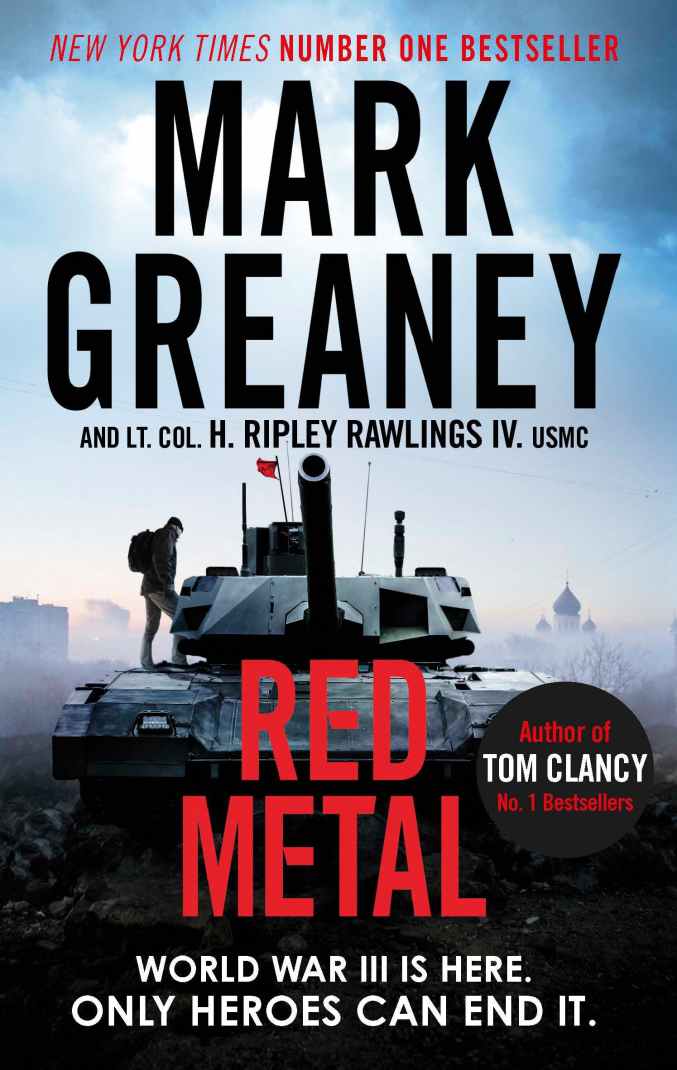
Red Metal by Mark Greaney and Lt. Col. Hunter Ripley Rawlings IV. USMC

Red Metal Cover 2.jpg

Publisher: Audible Studios (Audiobook – 16 July 2019)

Series: Standalone/Book One

Length: 21 hours and 21 minutes

My Rating: 5 out of 5 stars

Amazon     Book Depository

Get ready for World War III, because bestselling author Mark Greaney has teamed up with Lt. Col. Hunter Ripley Rawlings IV. USMC to create an absolutely incredible military thriller, Red Metal, which looks at how a potential invasion from Russia would unfold.

After years of war in the Middle East, the United States and their allies are preparing themselves for the next conflict. Many believe that this war will occur in the Pacific Ocean against China, especially after the Chinese begin to interfere in Taiwanese politics in an attempt to reunify the island nation with the mainland. As Chinese troops gather just outside of Taiwan and the United States military is rocked by a debilitating scandal, hardly anyone is expecting a move from Russia.

Since the end of the Cold War, Russia has been in an economic decline, and it desperately requires access to various advanced resources to remain a world power. An ambitious Russian colonel has come up with a complex plan to secure a vital Rare Earth mine that has the potential to secure the country’s future. Launching a high-speed and ruthlessly coordinated attack as Christmas falls, Russian forces stream across the border into Europe, crippling NATO and cutting the continent off from the United States. As America and NATO attempt to work out the extent of Russia’s plans in Europe and counter them, they are left distracted from Russia’s true goal as a second Russian army is secretly heading towards the African coast in order to reach the mine in Kenya.

As Russia continues its advance, the fate of the free world lies in the hands of several different individuals. In Washington, a veteran Marine Lieutenant Colonel and his colleagues attempt to decipher the Russian strategy before it is too late, while in Africa, a wily old French Intelligence agent and his Special Forces son must uncover why undercover Russian agents are abroad in Djibouti. In Europe, a mixture of unprepared NATO soldiers, including a young member of the Polish militia, an out-of-his-depth American tank commander and a high-flying US pilot must fight against the odds to push back against the invading Russian force. As epic battles erupt across several countries, one thing is clear: the world will never be the same again.

Wow, just wow. A few months ago, I predicted that along with The Kremlin Strike, Red Metal was going to be one of the top military thrillers of 2019. I am more than happy to report that I was 100 per cent right, as this was an outstanding read that I had an absolute blast listening to. The team of experienced thriller writer Mark Greaney, who is best known for his work on Tom Clancy’s Jack Ryan Universe and his own bestselling Gray Man series (make sure to check out my review for the latest book in this series, Mission Critical, here) and debuting author Lt. Col. Hunter Ripley Rawlings IV. USMC, have created a sensational book that I have no choice but to award a full five stars to.

Contemporary military thriller is a genre that I have only started getting into recently, although so far I have enjoyed some great examples, including The Moscow Offensive by Dale Brown, Treason by Rick Campbell and Red War by Kyle Mills. However, in my opinion Red Metal stands heads and shoulders above all of these books and it is probably the best pure military thriller that I have read. The authors of this book have come up with a truly fascinating military scenario that sees Russia sweep across two continents and influence conflict in a third. The Russians in this book have a really clever and effective military strategy that results in a massive, widespread conflict, and the reader gets to see every step of it unfold. This entire plan seems exceedingly realistic, and it is clear that Greaney and Rawlings have put some real thought into how war could break out and how the various participants would react. They really dive into the minutiae of the whole scenario and try to cover all the angles of an invasion of Europe and Africa, including cutting off communications, setting up an alternate navigation system, hacking the US and creating a number of plausible diversions. Never before has a discussion about the different sized rail tracks and rail switching stations in Europe been so fascinating. The scope of this conflict is really impressive, and the authors do a fantastic job showcasing the various types of battle that would occur in this sort of modern-day war between major superpowers. As a result, this book is filled with fighting on land, sea, air, underwater and even in cyber space, in an impressive thought exercise which translates into a compelling piece of fiction.

I really liked how the authors chose to tell this story from a variety of different perspectives, as Red Metal features a huge number of point-of-view characters. While the story is mostly focused on a few key characters, a number of minor characters often get one or two scenes, and the reader gets to see how the war unfolds from both sides of the conflict. As a result, the reader gets a much fuller understanding of how this potential scenario would unfold and how various countries or organisations such as NATO would react to war breaking out. The authors also make great use of the various perspectives to ratchet up tension throughout the book as the readers are privy to the full extent of the Russians plans. This results in the reader being fully aware of all the mistakes that the Americans and their allies are making in this war, and by the time they get their act together it seems like it is too little, too late.

The use of various perspectives also helps to create a number of different characters that the reader can really get invested in. While many of characters introduced only have small roles in the overall narrative, the authors do some detailed explorations of the backgrounds and story arcs of several key characters. Some of these characters have really well-written and have some enjoyable or intriguing storylines. I personally enjoyed the story of Paulina, a young recruit in Poland’s Territorial Defence Force (a volunteer military reserve) the most. Paulina finds herself thrust into the middle of the Russian invasion and is quickly transformed from an innocent girl to a hard-eyed killer in a few short days thanks to the horrors of war. Paulina’s story is extremely captivating, and it is potentially the character that most non-soldiers reading this book are going to identify with as they are left thinking how they would react in a similar situation. It was really quite interesting to see what role people in the various scenarios could potentially play, and I really liked seeing what sort of difference a small group of determined soldiers could make in a conflict such this.

One of the things that I really loved about this story was the realistic portrayal of the various armed forces involved in this book and the detailed examination of everything that needs to be considered in a war. This book is chocked full of military terminology, descriptions of various weapons and tactics, slang, military history and a variety of other complex features. You have to imagine the inclusion of all of these details is largely thanks to Rawlings and his extensive military experience, and I really enjoyed how the authors were able to seamlessly insert all of this knowledge into the story. Having all this information as the story progresses is extremely fascinating and I learnt a lot of cool facts. It also really amped up the realism of the whole story, in my opinion, and I found the story to be a whole lot more compelling as a result.

It is important to point out that Red Metal is not the male character dominated, exceedingly pro-American story that some military thrillers are; instead the writers went out of their way to produce a more balanced story. For example, the book features a number of great female characters, most of whom are involved in the war in some way or another, and it was cool to see how women are utilised in the modern military. The authors also take the time to show Russia’s side of the conflict and explain their motivations for engaging in this battle against the west. While a number or Russian characters are pretty villainous and/or murderous, they do tend to have some reasonable motivations for their actions, and indeed they see themselves as the good guys in this conflict. There are also a few more pragmatic Russian officers featured in the book who are a lot more likeable, especially as they come across as a bit more compassionate and less eager for war and destruction. The United States is also not heavily portrayed as the world’s most awesome country, as some military thrillers do. Instead the country is shown to be extremely unprepared for a Russian invasion, their military command is initially easily manipulated and a response to Russia’s actions is hampered by politics or pettiness from a superior officer. That being said, the book does feature a number of extremely pro-American scenes and sentiments, and there is even a sequence where an American pilot flies into combat shouting “die Commie die”, although to be fair, it is described as a historical military mantra developed in the Cold War to help pilots time their length of fire. The end result of the conflict between America and Russia is also what you’d pretty much expect, but it still makes for one hell of a read.

While the authors have added some interesting depth to this story, at its heart it is a military thriller, and that means that this book is chocked full of action. There are a huge number of fantastic and extended battle sequences throughout the entire book, some of which are truly epic in their size and content. Readers are really spoiled for action in Red Metal, as the authors have included all manner of different types of battles with a huge range of different vehicles and weapons. This book features battles in the air, at sea, underwater in submarines, on the ground with the grunts and in a variety of locations with Special Forces regiments. There are a number of impressive and memorable sequences, including a large amount of tank on tank combat, as two enemy armoured regiments face off against each other. I personally really enjoyed a particularly brutal ambush of Russian tanks in Poland, as Polish militia attempt to defeat a superior force in the middle of a city. The main set-piece has to be an extended battle between a variety of Russian units, and a force of United States Marines down in Africa. This battle down in Africa is particularly impressive, as the authors do an awesome job of bringing the fighting to life, and the sheer chaos of war and the ferocity of both sides as they try to win through any means necessary. All this action is pretty darn amazing, and the authors really outdid themselves with it.

I chose to listen to the audiobook format of Red Metal, which is narrated by experienced audiobook narrator Marc Vietor. I am really glad that I picked up the Red Metal audiobook as it was an amazing way to enjoy this fantastic book. Vietor did an excellent job narrating this book, and I felt that listening to the story brought all the intense action to life and helped place me in the centre of the story. Due to the book featuring a huge number of different nationalities, the story featured a range of character accents, all of which Vietor did extremely well, producing distinctive and memorable voices for each of his characters. The Red Metal audiobook runs for 21 hours and 21 minutes and it is an excellent format to consume this incredible novel.

Red Metal is a tour-de-force from Greaney and Rawlings, who have produced one hell of a military thriller. These two authors are a potent writing team, as Greaney’s experience as a thriller writer and Rawlings’s military knowledge helps create an epic read that just pumps the reader full of intense action, clever storylines and memorable characters. I really hope that these two authors continue to work together in the future, as Red Metal was a really impressive first collaboration. Five out of five stars all the way, you have to check out this book.

Amazon     Book Depository

Reckoning of Fallen Gods by R. A. Salvatore

Reckoning of Fallen Gods Cover.png

Publishers: Tor Books and Audible Studios (Audiobook Format – 29 January 2019)

Series: The Coven – Book 2

Length: 14 hours 37 minutes

My Rating: 4.5 out of 5 stars

Amazon     Book Depository

Prepare to return to Corona, the world of The DemonWars Saga, for Reckoning of Fallen Gods, the latest book from master fantasy author R. A. Salvatore and the second book in his outstanding new The Coven series.

In the world of Corona, no lands are as harsh or unforgiving as those surrounding the massive Loch Beag.  All manner of dangerous creatures live in and around the loch, including one massive and unseen lake monster that lurks right below the surface.  But for those who live in the fishing villages that eke out a living around the shore of Loch Beag, the biggest danger is more human in origin.  Living at the top of the massive mountain, Fireach Speur, is a barbaric tribe, the Uscar, who constantly raid the fishing villages below.  Enhanced in battle by the crystal magic of their witches, the Uscar are ferocious warriors who consider themselves vastly superior to the inhabitants of the villages they raid.

This cycle of violence and death existed for hundreds of years until a powerful young Uscar witch, Aoelyn, attempted to change her tribe’s ways by destroying the fossa, a demonic creature that haunted the mountain at night.  However, her decision will have terrible consequences, as ambitious members of her tribe turn against her.  As Aoelyn endures the wrath of her tribe, her friend, the slave Bahdlahn, attempts to escape from the Uscar with help from an unexpected ally.  Down at the shore of Loch Beag, the trader Talmadge, who Aoelyn saved from her tribe’s brutality the night she ended the fossa, attempts to find some sort of peace among the fishing villages who have accepted him as a friend.  However, the appearance of a mysterious stranger will bring significant changes to his life.

But while those living around Loch Beag fight among themselves, they are unaware of a much bigger threat growing in the East.  A lost empire of goblinoids, the Xoconai, are on the march, driven by the return of their fallen god.  The Xoconai are determined to conquer all the lands of man, and the first obstacle they must overcome is the people of Fireach Speur and Loch Beag.

R. A. Salvatore is one of the best and most prolific authors of fantasy fiction in the world today, having a written over 60 fantasy books in his career. He is perhaps best known for his work in the established Forgotten Realms universe and the incredibly popular character of Drizzt Do’Urden. However, Salvatore has also written a series of novel set within his own unique fantasy world of Corona.

Salvatore introduced audiences to this new fantasy world in his 1997 release, The Demon Awakens, the first book in his epic The DemonWars Saga, which spanned seven books between 1997 and 2003.  This universe was expanded out in 2004 with The Highwayman, the first book in his Saga of the First King series.  After the Saga of the First King series ended in 2010, Salvatore left the world of Corona untouched for eight years while primarily focusing on his Forgotten Realms series.  However, he returned to Corona in 2018 with Child of a Mad God, the first book in his new The Coven series.  The Coven series is primarily set in a previously unexplored area of Corona, in the lands around the massive Loch Beag, with the first book focusing on a whole new group of characters.

I am a massive fan of Salvatore’s work, having read nearly all the books featuring Drizzt Do’Urden and his companions (click here for my review of the latest Drizzt Do’Urden book Timeless).  However, before last year’s Child of a Mad God, I had not really gotten into his work set in Corona, having only really read The Highwayman back when it was first released in 2004.  While Child of a Mad God was not my favourite of Salvatore’s books, it did a great job introducing this new area of Corona, while also creating an excellent starting point for the series’ overall plotline.

I found that I enjoyed Reckoning of Fallen Gods a lot more than the first book in the series, possibly because the author was able to dive right in and continue several of the more intriguing plot threads from the first book.  I quite enjoyed how the story progressed; all of the storylines contained within were very well paced and entertaining, coming together extremely well towards the book’s conclusion.  I really liked the over-the-top way that the story ended, as it sets up the next book in the series with some massive stakes and makes full use of the intriguing new fantasy elements that were included within this book.  A bit of a warning about this series: is it substantially darker than some of Salvatore’s other works.  This was particularly true of the first book of The Coven series, Child of a Mad God, which contained a fair amount of torture and sexual violence.  While there is a little less sexual violence in this book, several character development elements are based around these original events and are discussed in some detail.  There is also some fairly dark and gruesome action and torture, which might not be enjoyable for some readers.  Overall, though, this is a great follow-up to Child of a Mad God that once again highlights Salvatore’s skill as a master fantasy storyteller.

Some readers may be wary about checking this book out because it is the second book in The Coven series and the 13th overall book set in the world of Corona.  However, I found that this book to be easily accessible to new readers, with the author ensuring that relevant details from the previous book and series were easy to understand and follow nearly right away.  In addition, there are also a lot of elements for established fans of this universe to enjoy, especially as Salvatore includes a substantial character from one of his previous Corona based series in this book.  The inclusion of this character is an excellent way to tie this new series with the author’s existing works in this fantasy universe, which also highlights the importance of this story to the rest of the world of Corona.  The ending of Reckoning of Fallen Gods also hints that characters and locations from the previous series may come into play in the next book in The Coven series.

I loved all the fantasy elements in this book.  The world of Corona is a fantastic setting for the great story that is taking shape within The Coven series.  The main location for most of this book’s plot, the lands around Loch Beag and Fireach Speur, is a substantially dark and rugged area with a large number of natural and unnatural threats.  In Reckoning of Fallen Gods, there are a number of significant developments around several of these locations and creatures, some of which are pretty insane.  Just like in the first book in this series, Child of a Mad God, Salvatore continues to expand on the intriguing gem-based magic that is a feature of the books set in Corona.  The gem magic that was featured in Child of Mad God was somewhat different from the already established gem magic used in some of previous Corona books, such as The DemonWar Saga, and is based around the magic found atop Fireach Speur.  This expansion of the gem magic continues in Reckoning of Fallen Gods with the main character, Aoelyn, developing additional magical abilities.  Many of these abilities are quite spectacular, and Salvatore’s enthralling writing highlights how impressive these abilities are when Aoelyn utilises them in fights or other magical engagements.  At the same time, another character utilises some of the more traditional gemstone powers they had in one of the previous series, and it is interesting to see the differences and similarities this has with the Uscar magic.

One of the more unique and enjoyable fantasy inclusions within Reckoning of a Fallen God is the new antagonist race, the Xocanai.  The Xocanai are a new race of goblinoid creatures that exist in a realm on the other side of the mountains surrounding Fireach Speur.  The Xocanai are somewhat Aztecan in culture and their empire has been rather cut off from the rest of the world for some time.  However, recent actions have allowed them to come together to invade the human lands, and some of the events of Child of a Mad God may be to blame.  I felt that Salvatore did an excellent job of introducing them in the current book, and he was able to build them up as a substantial antagonist in quite short order.  I liked how the reader is able to get a good view of this new race’s culture and religion in only a few short chapters, while in-universe texts present at the start of each section of the book help to establish a historical past for these creatures.  In the end, they are a fantastic new inclusion to the series and the universe and serve as excellent new antagonists.

Salvatore has created some great new characters for this series, and many of the key characters who were introduced in the first book go through some significant and compelling character development throughout Reckoning of Fallen Gods.  The main character development occurs with Aoelyn, who, after the fallout of the events in the first book, develops a stronger sense of independence and rejects the established male hierarchy imposed upon her and all the female members of her tribe.  Her friend Bahdlahn gains the courage to finally flee the Uscar and is finally able to come to terms with his feelings for Aoelyn.  At the same time, the trader Talmadge comes to terms with the tragedies in his life and is finally able to find some semblance of peace with the people living around Loch Beag.  Even the established character from the previous series (who I am still not mentioning for spoiler reasons) has developed somewhat in this book, as he ruminates on the mistakes from his past that were covered in the previous series.

I have to give credit to Salvatore for creating some truly villainous antagonists for this series, especially among the Uscar characters.  The main antagonists are quite despicable, especially in the way that they deal with Aoelyn and Bahdlahn, and the reader is hoping for all sorts of comeuppance for these characters.  Even the Uscar characters that come across as more compassionate members of the tribe can still be quite dislikeable.  For example, there is one character who appears to change his ways in Reckoning of Fallen Gods.  However, he has a sudden and quite unjustified change of heart back to the Uscar ways towards the end of the book, and his complaining about the event that drove him to betray his friends really does not endear him to the reader.  These great antagonists serve as spectacular foils to the protagonists and really add a lot to the overall story.

I chose to listen to the audiobook version of Reckoning of Fallen Gods, narrated by Tim Gerard Reynolds.  This was an interesting change of pace for me, as I had read the physical copy of the first book in The Coven series, so it was cool to hear these characters come to life in the audiobook format.  At 14 hours and 37 minutes, this was not the longest audiobook I have listened to recently, but it still required a little bit of time to get through.  Reynolds is a spectacular narrator, and I really enjoyed listening to him tell this story.  His base narration voice for this book was really good, and I found I was able to absorb a lot of the story through his great narration.  The character voices he came up with were also excellent, and I loved how the distinctive cultural/species groups within Reckoning of Fallen Gods got their own accents.  For example, he ensured that the Uscar characters had a form of Scottish accent, while the other groups that feature in the book, such as the Xocani have a noticeably different way of speaking.  Because of this excellent voice work, I had a lot of fun listening to this book, and I will make sure to get the audiobook versions of this series in the future.

Fantasy icon R. A. Salvatore is in high form once again with Reckoning of Fallen Gods, the second book in his new The Coven series.  Salvatore does an outstanding job continuing the intriguing story he started in the first book of the series, Child of a Mad God, and effortlessly inserts a number of original and familiar elements to create an exciting and epic read.  With some great characters and some inventive new ideas, this is a spectacular new addition to this darker fantasy adventure series.

Amazon     Book Depository

Quick Review – Adrift by Rob Boffard

Adrift Cover

Publishers: Orbit/Audible Studios

Publication Date – 5 June 2018

Amazon     Book Depository

For this review I will be looking at Adrift by Rob Boffard, a book I listened to a few months ago, but which I did not get a chance to review at the time.  With the end of 2018 fast approaching, I decided to do a quick review for this book in order to clear my review schedule for the new year.

Goodreads Synopsis:

In the far reaches of space, a group of tourists board a small vessel for what will be the trip of a lifetime – in more ways than one…

They are embarking on a tour around Sigma Station – a remote mining facility and luxury hotel with stunning views of the Horsehead Nebula.

During the course of the trip, a mysterious ship with devastating advanced technology attacks the Station. Their pilot’s quick evasive action means that the tour group escape with their lives – but as the dust settles, they realize they may be the only survivors . . .

Adrift in outer space, out of contact with civilization, and on a vastly under-equipped ship, these passengers are out of their depth. Their chances of getting home are close to none, and with the threat of another attack looming they must act soon – or risk perishing in the endless void of space.

What initially drew me to this book was the pretty cool-sounding synopsis above.  I had not read anything from author Rob Boffard before, but a story featuring a group of mismatched passengers attempting to survive out in space with only a small, poorly equipped ship sounded like an intriguing read.  After enjoying Adrift, I think I might check out Boffard’s Outer Earth series in the future.

Adrift turned out to be a pretty compelling read, featuring a great story in space.  While the action was a little lighter than your standard science fiction read, this is more than made up for by some powerful drama as the characters deal with the stresses of their situation.  There are also some thrilling intrigue elements as the protagonists attempt to unwrap the difficult situations inside and outside of the ship, as well as one particularly shocking and unexpected moment in the middle of the book.  There were a few good action sequences as well, including several epic flight scenes, and a memorable spaceflight featuring a little old lady.

This book is primarily a character-driven story, as the story mainly focuses on the passengers aboard the tourist ship.  Each of the various characters gets decent coverage in this book, with a particular focus on the three main point-of-view characters and the two secondary point-of-view characters.  After the first few chapters, my initial impression of all the characters in the ship was, ‘What a bunch of losers and arseholes!’  The passengers of the ship are made up of several abrasive characters who initially seemed to overshadow most of the other characters, including two timid main point-of-view characters.  However, as the book is explored further, the background of all of the characters is explored in some detail, and the reader gets an idea of why some of the characters are the way they are.  The events of the story help develop these characters further, and by the end the surviving characters are all much more likeable.  I was impressed by the emotional range that Boffard was able to write, and the various reactions to the situations about the tourist ship came across as quite realistic.

I ended up listening to Adrift in its audiobook format, which was narrated by Katie Scarfe.  The audiobook runs for a little bit over 15 hours, so readers need to invest a bit of time in getting through this book.  I thought that Scarfe did a good job with her narration, coming up with a number of good voices for her distinctive characters, and moving the story along quickly.  Scarfe had a bit of work to do with the primary cast of characters, as not only did she have to do Russian, Irish and British accents, as well as several random accents the ship’s computer system blurted out through the course of the book, but she also had to do a range of ages across both genders, from a young male child to an elderly lady.  Fortunately, Scarfe was able to produce pretty good accents for each of these characters, and it was possible to get an idea of gender and age with the various narrations.  I also thought she did a good job capturing the range of emotion that flowed from her characters, from despair to anger at their situation.  Overall, the audiobook format is a great way to enjoy Adrift, and I would recommend it for those who prefer to listen to their books.

Adrift by Rob Boffard is a clever and fairly captivating read that makes great use of its character-driven storyline.  This was a good standalone novel, and readers will find a lot to enjoy with this intense science fiction read.

My Rating:

Four stars

Skyward by Brandon Sanderson

Skyward Cover.jpg

Publishers: Gollancz

                        Audible Studios

Publication Date – 6 November 2018

Amazon

Legendary fantasy and science fiction author Brandon Sanderson once again delivers an incredible five-star read with Skyward, a brilliant young adult science fiction story that follows the journey of an energetic young protagonist at she attempts to claim the stars.

As of right now, I have only had the opportunity to read one of Sanderson’s novels, the epic fantasy book, The Way of Kings, which was easily one of the best fantasy reads of the last decade and which I gave a five-star review here.  After enjoying The Way of Kings I was keen to see how Sanderson’s writing ability translated to the young adult science fiction genre.  I have to say I was in no way disappointed, as Sanderson once again creates an amazing and exciting piece of literature, all set within an incredibly detailed new fictional landscape.  Skyward is the first book in Sanderson’s planned Skyward series, which is to be made up of a total of four books.  The second book in this series, Starsight, has apparently already been written, with a release planned for November 2019, while the third and fourth books, both yet untitled, already have tentative release dates in 2021 and 2022.  Starsight is already on my must-read list for next year, and will appear in my Waiting-on-Wednesday series of blog posts the moment the cover gets released.

Far in the future and on another planet, humanity has been under constant attack for hundreds of years.  A mysterious alien race known as the Krell pursued the human fleet across the stars, forcing it to crash on a desolate planet.  Those humans that survived were forced to flee below the planet’s surface, hiding in caves and only re-emerging when they gained the ability to create space fighters capable of fighting off the alien craft.  Now the Defiance Defence League (DFF) fights a constant war against the Krell, who are determined to wipe out the DFF’s main base and the production facilities beneath it.

Since she was a young girl, Spensa Nightshade has always dreamed of becoming a DDF pilot, the elite defenders of humanity, in order to claim the stars.  However, years ago, her father deserted during the most famous battle in DDF history and was shot down by his comrades.  Having been forced to live for years as a daughter of a coward, Spensa is eager to forge her own heroic destiny, but the DDF will never accept her into their flight program.

But with the war going badly and new pilots needed, Spensa is given a chance to join the DDF, thanks to the actions of her father’s old wingmate.  Joining a class of misfit cadets who dub themselves Skyward Flight, Spensa learns to fly the DDF’s ships against the Krell and quickly shows her determination and skill.  However, her father’s legacy is constantly weighing her down, whether by the sabotage of the DDF or the constant fear that deep down she might also be a coward.  With the Krell attacks getting worse, will Spensa find her place as a pilot, or will a terrible secret from the past come back to haunt her?  And through it all, what role will the ancient spaceship Spensa discovers have on the fate of humanity?

I not only received a physical copy of Skyward from Hachette Australia, but I also listened to a copy of this book in its audiobook format, which is narrated by Sophie Aldred and goes for just a little over 15 hours.  Both versions are pretty cool.  The trade paperback version of this novel contains a couple of great maps at the start of the novel that some readers may find useful when it comes to navigating around the story.  There is also a series of intriguing drawings throughout the book that show off several of the ships, both human and alien, that are featured in the story, all of which are juxtaposed against the main ships that the protagonist and her wingmates train and fight in.  The later parts of the book also contain some fantastic illustrations of flight manoeuvres and abilities, which prove informative when utilised with Skyward’s many aerial flight sequences.  I personally preferred the audiobook format of Skyward to the physical copy, as it allowed me to enjoy the many action-packed aerial scenes a whole lot more.  I also loved the narration by Aldred, who was able to create a number of excellent voices for the book’s various characters.

The reason I am giving Skyward such a high-star review is because it is an incredible piece of young adult science fiction that not only has an amazing story but which also contains several outstanding characters and some of the best ship-to-ship action sequences I have ever seen, all of which is combined with Sanderson’s trademark knack for large-scale world building.

I had a lot of fun with the story contained within this book, as Sanderson sets forth a layered and powerful narrative for the reader to enjoy.  Told primarily from the point of view of the protagonist, Spensa, Skyward contains a fantastic coming-of-age storyline set within a flight academy where the cadets learn how to fly in defence of their planet.  I always love a good school based learning narrative, and Sanderson has created an outstanding version of this, where the main characters spend most of the story learning the theory behind flying, while also engaging in real-life combat situations as they train.  As a result, there are heartbreaking losses, great emotional connections forged, and secrets and hints about the overall story slowly released to the reader, all while the protagonist is forced to contend with the machinations of a biased authoritarian figure who even gets to narrate a few chapters to highlight the reasons for her actions.  Overall this is an addictive and exciting story that will really stick in the reader’s imagination.

Sanderson has once again created a detailed and captivating new world in which to set his new series.  The book is set within a new planet that humans from Earth crashed upon years ago in the past, fleeing from a mysterious alien force.  For years the humans lived a nomadic lifestyle in the caves beneath the planet before finally fighting back using newly fabricated fighter craft.  Sanderson has created a fantastic world to host this story, exploring a society forced to live in caves and eventually creating a military base on the surface.  I love how the author has created a ton of new societal rules and features, as well as a world above and beneath the surface of this alien planet.  There is also some really cool and unique technology that comes into play throughout the book, especially in the many aerial combat sequences.  The aliens are mostly a mystery for the entirety of the novel, although I did really enjoy the reveals about them.  I imagine Skyward’s fictional universe will be expanding out in the future instalments of this series and I am very excited to see where this goes.

Some of the best things about this book are the excellent characters that the author has populated his story with.  Of particular note is the main protagonist and point-of-view character, Spensa, who is a really fun and complex character to see this story through.  Spensa is a great character whose life has always been defined by her father’s legacy.  As a result, she puts on an extremely brave and aggressive front to everyone she meets as she tries to convince people she is not a coward.  Because of this, Spensa is quite an eccentric character, spouting out long expositions about how she will harm her opponents, which is quite amusing at times.  However, as the reader gets further into the book, they find out how vulnerable she truly is, as deep down her father’s actions and legacy have had quite an impact on her.  As she progresses into flight training and becomes more and more like her father, she must content with the trials of war, emotional issues with her friends and loved ones, the DDF’s indoctrination against cowards and the secrets that have been kept from her.  The internal conflict and fear that follows is really well written by Sanderson and forms a captivating emotional centre for this amazing narrative.

Quite a lot of time is spent looking at the other cadets that make up Skyward Flight.  Each member of this flight has a unique personality and is given a callsign to make them more distinctive.  There is a fun camaraderie between these characters, and they form quite a close-knit team.  Sanderson spends significant time building up several of these characters, and Spensa, much like the reader, gets quite attached to them.  As a result, when tragedy hits the team, there are some significant emotional blows that come with it.  I liked how the different friendships and relationships help Spensa grow as a character, as she started out the book a bit of a loner.  These side characters are absolutely fantastic, and add another great emotional feature to Skyward’s story.

While Spensa and Skyward Flight are all great characters, my favourite character in all of Skyward had to be the sentient spaceship, M-Bot.  M-Bot is an advanced spaceship who, for various reasons, is obsessed with mushrooms, spends much of the book cracking bad jokes and forms a close relationship with Spensa, the human who discovers it.  M-Bot has to be one of the funniest and quirkiest characters in the whole book, providing several of the book’s best jokes and funniest lines.  The ship’s relationship with Spensa is really well written, as it attempts to balance its existing command code with its new friendship.  This results in some amazing scenes, and I never thought before this book that I would get emotional about a spaceship.  M-Bot is particularly great in the audiobook version, as Aldred gives the ship an excellent Irish accent that really fits the character’s personality perfectly and makes M-Bot stand out throughout the book.

Easily my favourite thing about Skyward has to be the insane and incredibly well-written aerial combat sequences that fill this book.  All of the battles take place within the planet’s atmosphere among falling debris fields, resulting in some elaborate and exciting dog-fights between the DDF fighters and the Krell.  Quite a number of battles feature throughout Skyward, as the protagonist and her companions attempt to stop the Krell destroying humanity’s only hope of leaving the planet.  The author spends significant time exploring the physiology of these aerial fights, including the various tactics, training and technology utilised by the DDF and the Krell.  In particular, Sanderson has created some unique technology to help create some truly amazing combat sequences, including light-lances, which are energy beams that the DDF fighters use to not only throw Krell fighters around but to also help their ships do precise and elaborate manoeuvre around the falling debris.  I also loved how Spensa and her flight got better as the book progressed, reflecting their training and their ability to work together as a team.  All of these battle scenes are fast paced and incredibly well written, and the reader constantly finds themselves placed into the middle of these epic battle sequences.  I found that the audiobook version of Skyward was particularly effective at bringing me into these combat scenes, and I was often on the edge of my seat as I listened to them.  There are a number of these amazing sequences throughout the book, whether they were real battles or simulations.  Highlights for me have to be a high-speed chase through a giant, ancient factory crashing down to the ground, or the final high-stakes battle that serves as an epic conclusion to the whole story.  These battles are truly an amazing feature of Skyward, and I cannot wait to see what incredible aerial battles feature in the future books of this series.

Skyward is one of my favourite books of 2018 and is definitely one of the best young adult books I have read this year.  Brandon Sanderson once again cements his legacy as one of modern fiction’s best fantasy and science fiction authors, as readers are treated to an epic science fiction read set in a rich and detailed new world.  Featuring some amazing characters and outstanding depictions of aerial combat between humans and aliens, this book comes highly recommended.  I have made no secret about how much I am looking forward to future entries in this series and cannot wait to see where Sanderson takes this story next.

My Rating:

Five Stars

Amazon