
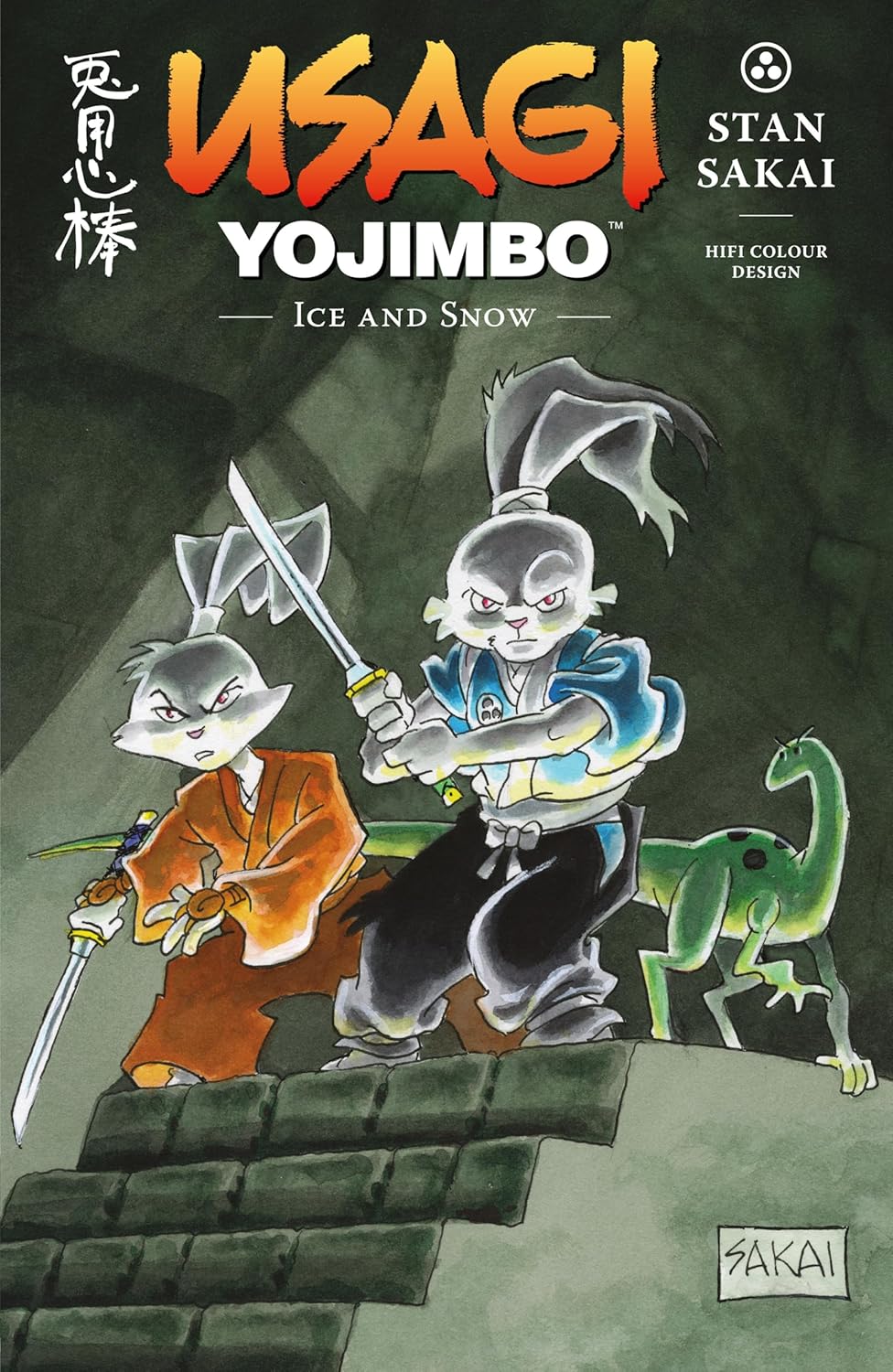
Publisher: Dark Horse Comics (Paperback – 26 November 2024)
Series: Usagi Yojimbo – Volume 39
Length: 160 pages
My Rating: 5 out of 5 stars
Acclaimed comic author and artist Stan Sakai continues his iconic Usagi Yojimbo series in a big way with the exceptional 39th volume, Ice and Snow.
Fans of this blog will know that I am a massive fan of the incredible Usagi Yojimbo comic series, which I have been reading for many years and is one of my favourite comic book series. The brainchild of Stan Sakai, who both writes and draws the comic, Usagi Yojimbo is a unique series that follows a rabbit ronin samurai as he wanders around an anthropomorphic feudal Japan, getting involved in all manner of deadly and dangerous adventures, both mundane and supernatural. The Usagi Yojimbo comics are so much fun, and I love the compelling stories, distinctive artwork and memorable characters who are contained within its beautiful pages. This series has been so damn awesome of late, with some amazing coloured volumes, including Bunraku and Other Stories (one of my favourite books of 2020), Homecoming (one of my favourite books of 2021), Tengu War! and Crossroads (both of which were among my favourite books of 2022) and The Green Dragon (one of my favourite books of 2023).
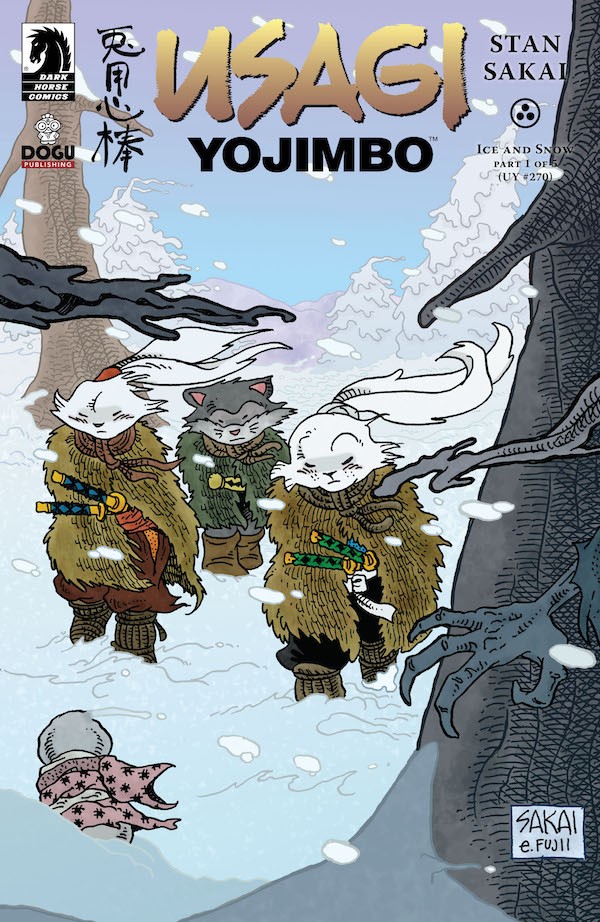
This latest volume, Ice and Snow, is an intriguing addition to the series as it continues to follow some of the storylines from the previous volumes while also featuring a single overarching narrative rather than several shorter stories. Ice and Snow is also the series’ return to Dark Horse Comics, who previously published the series for 22 years (from Volume 8: Shades of Death to Volume 33: The Hidden). This return to Dark Horse has allowed for another intriguing read that featured a major confrontation between Usagi and one of his most dangerous foes.
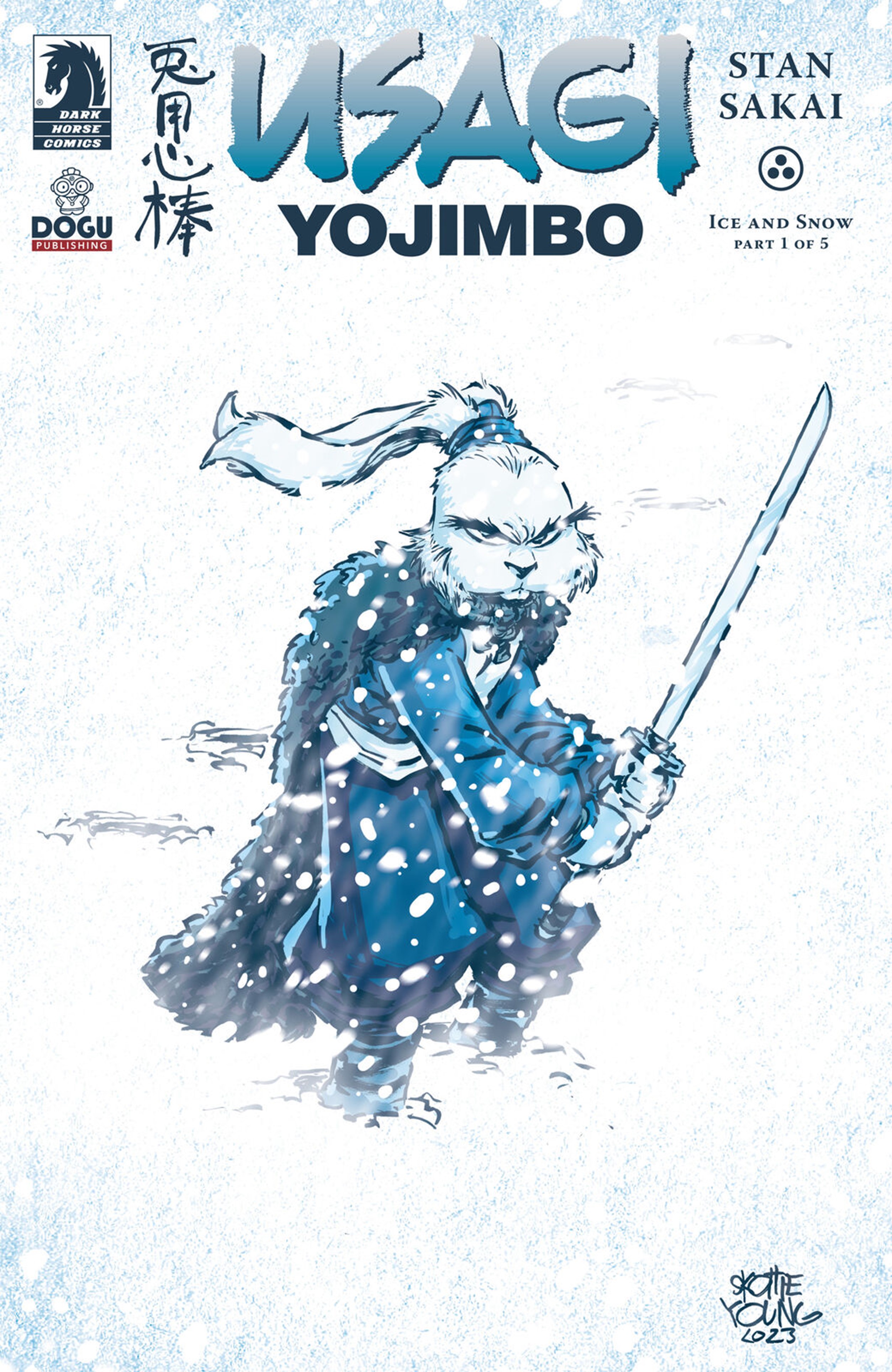
Miyamoto Usagi, travelling ronin and occasional Yojimbo, continues to wander the lands, seeking adventure and helping his friends where possible. Now travelling with his cousin Yukichi, Usagi finds himself moving through the cold and snowy mountain tops of Northern Japan, having just escaped a confrontation between rival ninja clans in the pair’s last adventure. Determined to return to warmer climates, Usagi and Yukichi once again find themselves in trouble amongst the mountain peaks.
Cold and seeking shelter, Usagi and Yukichi encounter nothing but bandits and mysterious creatures as they continue their journey. Desperate for warmth, they decide to spend the night inside the hut of strange woman, only to find themselves trapped by the cold heart of a dangerous spirit, Yuki-Onna, the lady of the snow, who is determined to feast on them.
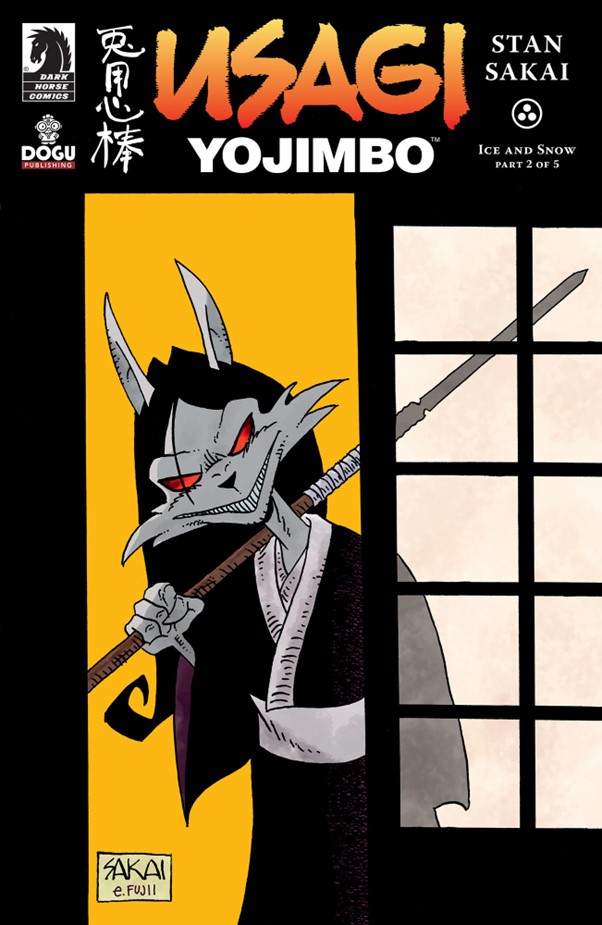
However, the attentions of a powerful spirt of the snow are the least of Usagi and Yukichi’s problems, as a far more terrifying monster haunts the mountains. The demonic black spearman Jei, the Blade of the Gods, has long hunted Usagi, believing that by killing the rabbit ronin he will ascend to godhood. Now leading a group of mountain bandits, Jei relentlessly chases after Usagi and Yukichi, determined to end their feud once and for all. Can Usagi once again weather the dark storm that is the unstoppable Jei, or will this be the moment he finally falls to his deranged nemesis’s black blade?
Ice and Snow was another amazing volume from Sakai that provides a cool new adventure for the author’s iconic protagonist. Featuring an excellent main storyline loaded with peril and dark confrontation, Ice and Snow had me hooked the entire way through, especially as it featured Sakai’s gorgeous artwork.
Made up of five separate issues, Ice and Snow features a powerful single storyline which plays to the author’s strengths as he places his protagonists in mortal danger against foes new and old. The story starts immediately after the events of the previous volume, The Green Dragon, with Usagi and his current travelling companion, Yukichi, still moving through the frigid mountains of Northern Japan. Encountering the usual array of bandits, Usagi and Yukichi are thrust into action quickly and the initial combat sets the scene nicely for the rest of the comic. The two soon move from mortal concerns to the supernatural, as the mysterious woman that Usagi and Yukichi seek shelter with predictably turns out to be a deadly monster (Usagi really should know better by this point), determined to eat their lifeforce.
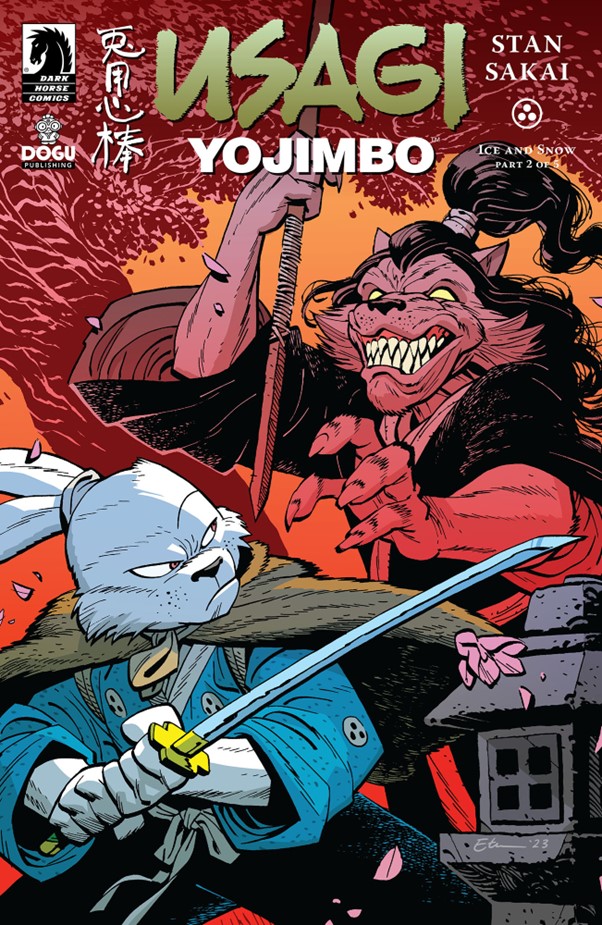
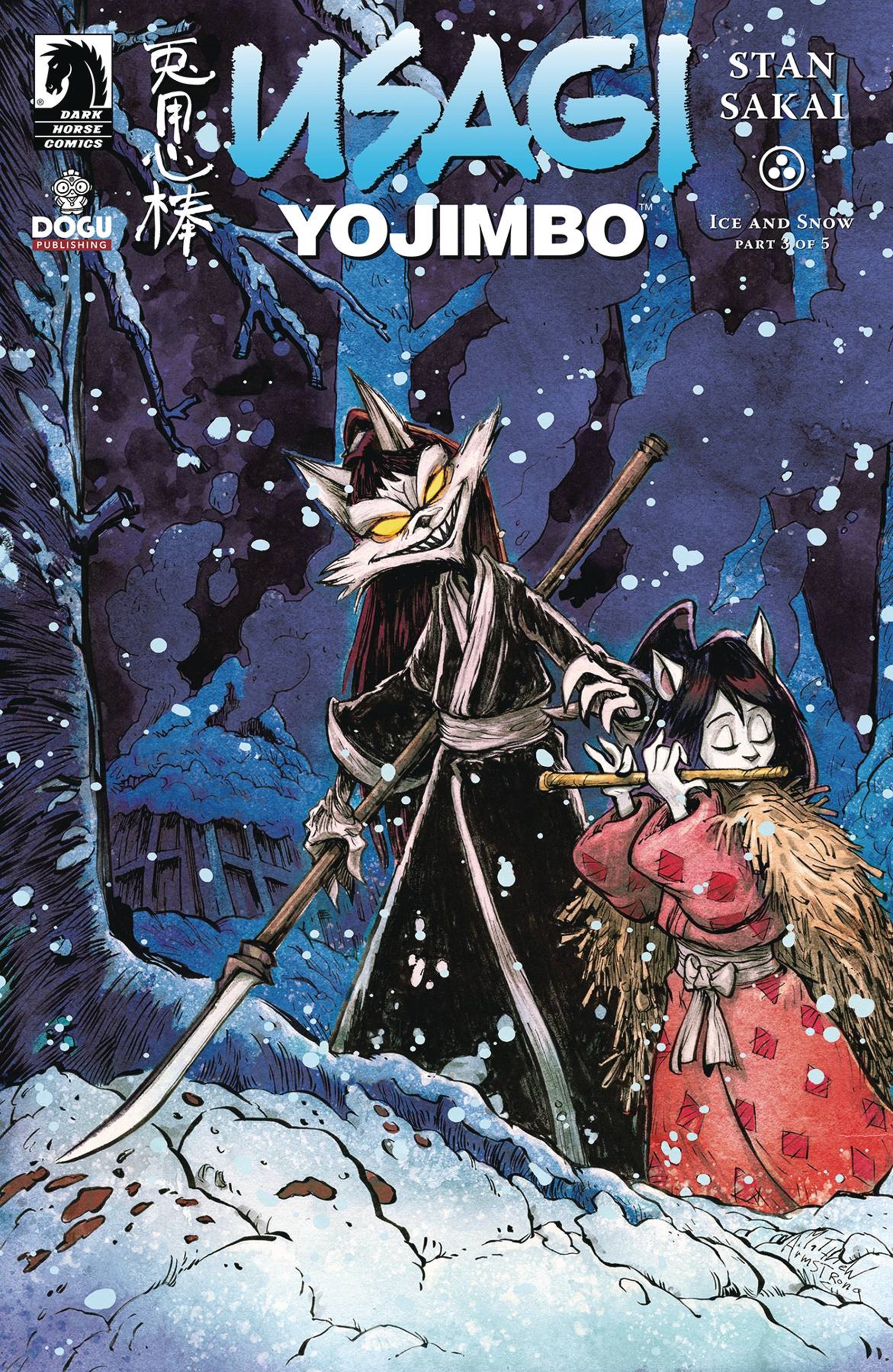
While these initial battles between Usagi, Yukichi and their various opponents are compelling and exciting, especially the intense fight against Yuki-Onna that was so well showcased by Sakai’s artwork, the best part of the early story involves the return of deranged supernatural warrior Jei. Travelling with his young companion, Keiko, Jei brings his trademark terror to the local bandits, taking over their gang with violence and fear. However, when he discovers that Usagi is nearby, he leads his new forces on a lethal hunting mission. Jei honestly steals the entire comic in these sequences, as he terrorises and murders various members of the bandit gang to make his point. There is also a fantastic fight between Jei and Yuki-Onna, which was a fantastic battle of the monsters that really highlights Jei as a powerful supernatural threat.
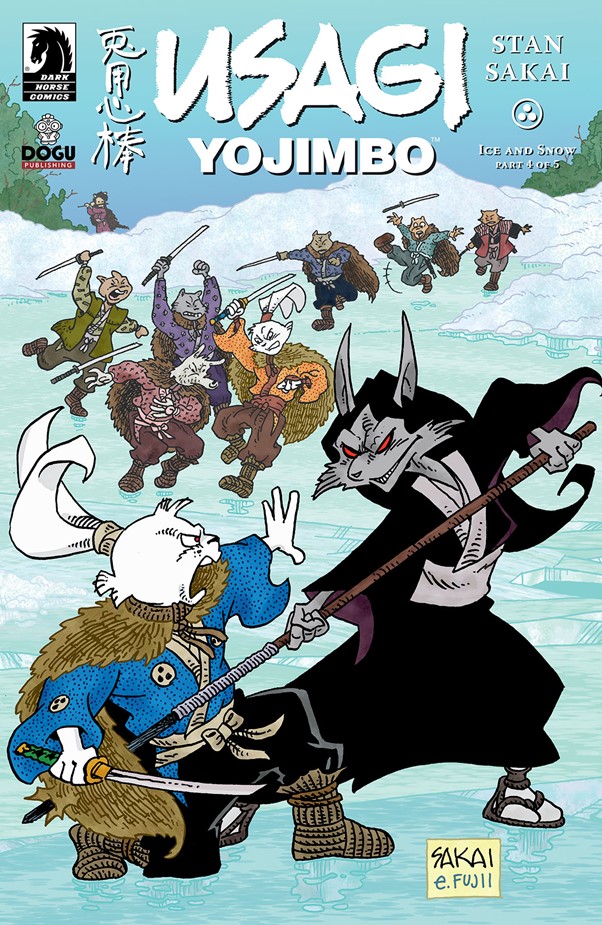
The final major sequence of the comic involves Jei catching up to Usagi and engaging in a brutal fight on a frozen river. The sheer fear that is shown by the usually implacable Usagi really highlights to the reader just how dangerous Jei is, and I love how well Sakai utilises him as a villain here. The battle between the two was dark, personal and pushes Usagi more than his usual fights, especially as the sinister Jei just won’t stop coming for him. Sakai makes sure to have no conclusive end to this conflict, as Usagi will continue to be hunted and haunted by Jei. This is honestly the best end you could imagine at this point in the series, especially as it plays into the horror movie inspiration for Jei, and readers are left wanting another awesome encounter between the two.
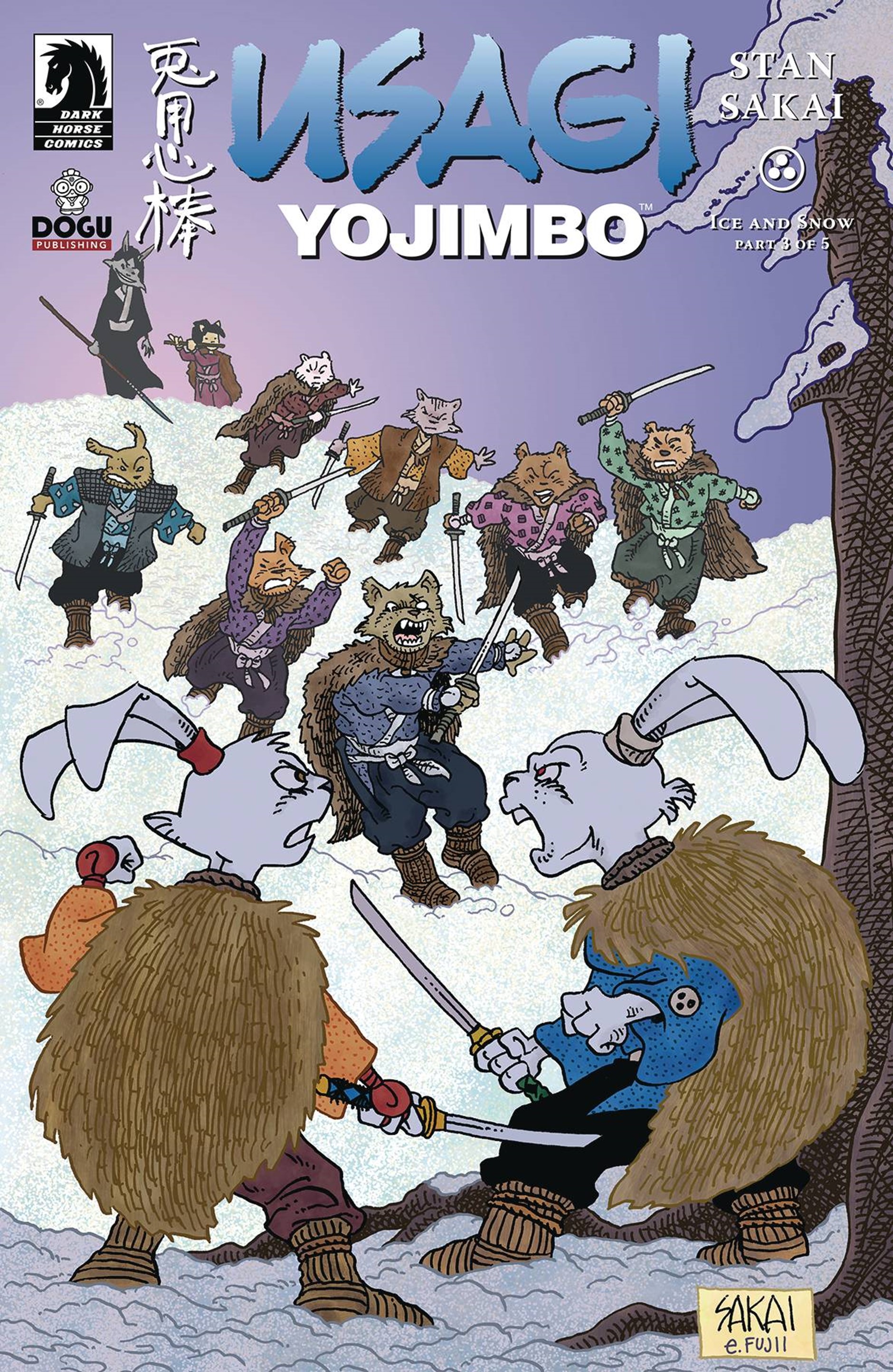
The final issue in Ice and Snow wraps up this mountainous arc of the series on a somewhat ironic note, as Usagi, Yukichi, and the few survivors of Jei’s bandits seek shelter in an isolated village, only to encounter more monsters in the form of cat demons. This last battle serves as a great horror cherry at the end of an impressive supernatural Usagi Yojimbo volume, and Sakai had fun with the artwork around the monstrous opponents. I really enjoyed the overall narrative that Sakai stuck into this volume, and frankly I had and exceptional time with the high-threat, quick paced, multi-issued narrative that took up the entire volume.
This was probably one of the stronger recent Usagi Yojimbo stories, and I loved watching the protagonists attempt to survive an onslaught of supernatural foes. Sakai cleverly continues a multitude of long-running storylines, including the winter journey from the last couple of volumes, which sees Usagi act as a wise mentor to his younger companion, Yukichi. However, I was extremely happy that we got to see the continued enmity between Usagi and Jei that has been such an impressive part of the series since the third volume, The Wanderer’s Road (which was first released in 1989). Inspired by Jason from the Friday the 13th series, Jei is a brilliant villain, and Sakai has done a wonderful job to continuously make him the most intimidating figure in the entire franchise. Jei honestly seems unstoppable at times, and I love the way he manages to destroy all his opponents except the final rabbit, Usagi. Sakai manages to make Jei even more sinister by continuing to include Jei’s unlikely travelling companion, Keiko. A young child who accompanies and is cared for by Jei, Keiko is a true innocent who has been adopted by the Jei as a herald. Watching this harmless child play in the background of Jei’s various atrocities honestly makes the entire situation even more creepy, and she is such a brilliant part of the antagonist’s aesthetic, especially now that her flute which warns people of Jei’s coming (I loved Usagi’s dark comments about this at the end of issue 4). Combine this with Usagi’s absolute dread at encountering Jei again, as well as the sheer certainty of his inevitable return, and Jei was so damn intimidating here it was just amazing.
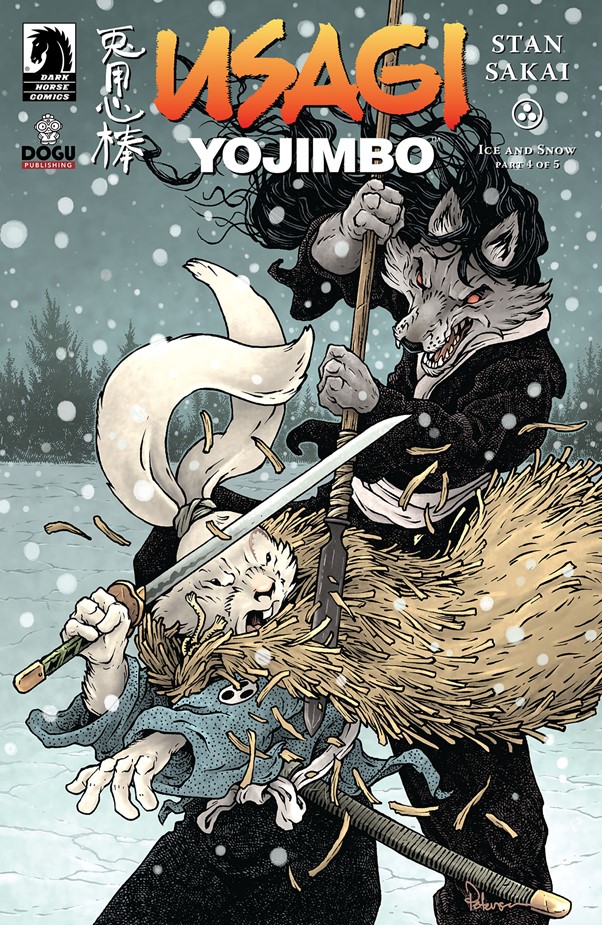
I can’t move away from this latest Usagi Yojimbo volume without highlighting the brilliant artwork that Sakai features within his comic. Every page of this comic is loaded with well-drawn and powerful pieces of art, which effortlessly combine with the compelling writing to tell the powerful story. Drawn exclusively by Sakai and featuring colouring from Hi-Fi Colour Design, the art in Ice and Snow is beautiful and highly impactful, as Sakai showcases the actions of his characters and the settings they find themselves in. While every scene is fantastic in its own way, I must highlight the multiple nature shots featured throughout Ice and Snow. Sakai channels his love for winter throughout this volume, and you are gifted with some breathtaking drawings of the snow-covered landscape the characters are travelling through. These landscape shots are so pretty, especially now they are in colour, and the contrast between the white of the snow and the orange sky is amazing. This includes some wonderful full-page drawings that feature multiple characters within them and all of them look so damn cool.
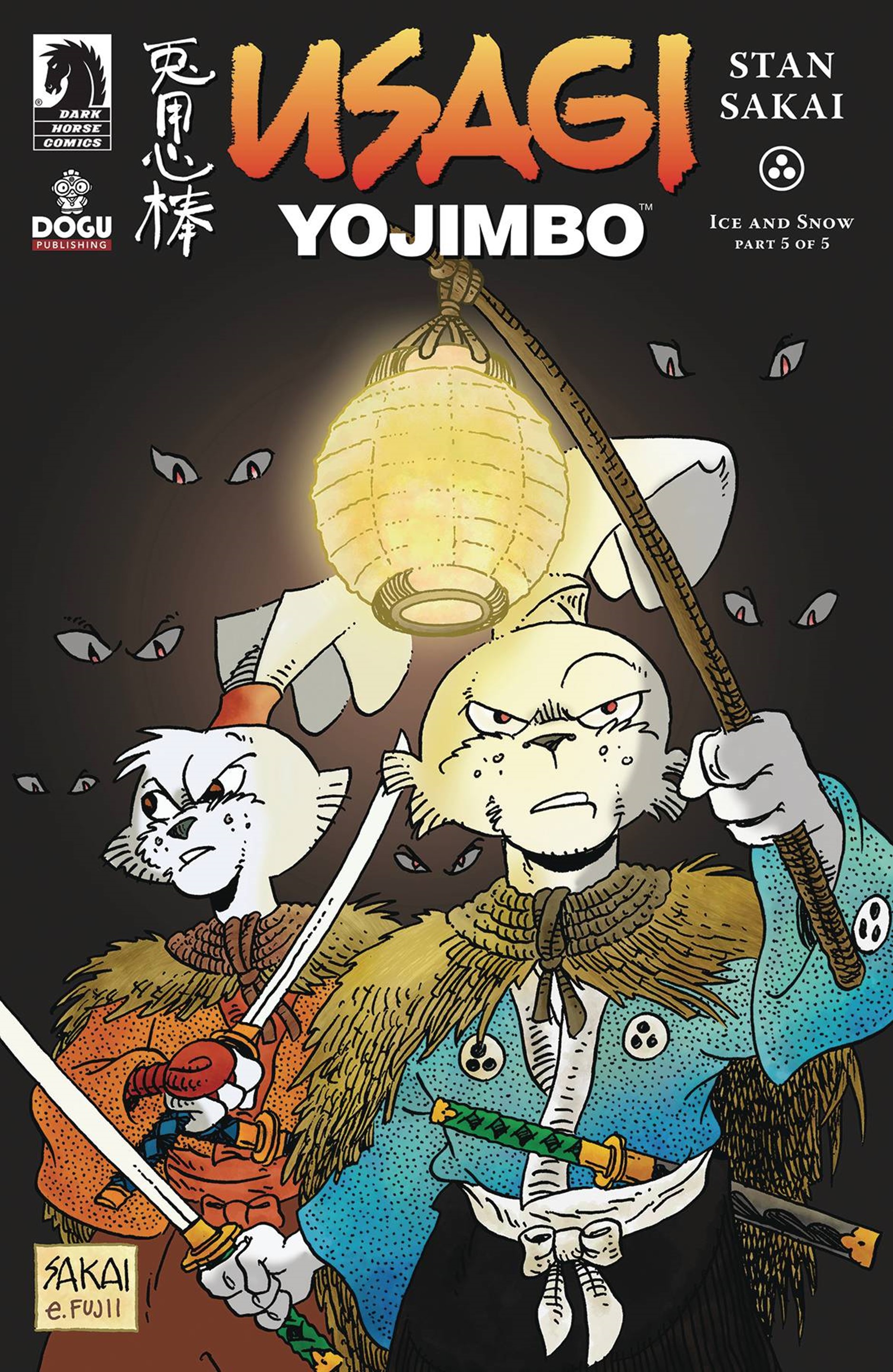
In addition to the wonderful landscapes and backgrounds that each of the outdoor scenes contain, I also must highlight how well the character actions are drawn throughout Ice and Snow. Sakai does such an effective job of drawing his characters moving around the world, and you can easily envision what movements are implied from each picture. The artist’s drawings work really well to portray combat, as the multiple sword fights and other encounters look so cool, and you can see the moving swirl of combat around each panel. Some of these fight scenes are really dramatic and well set out, and I loved how effectively showcases the skill of his protagonists.
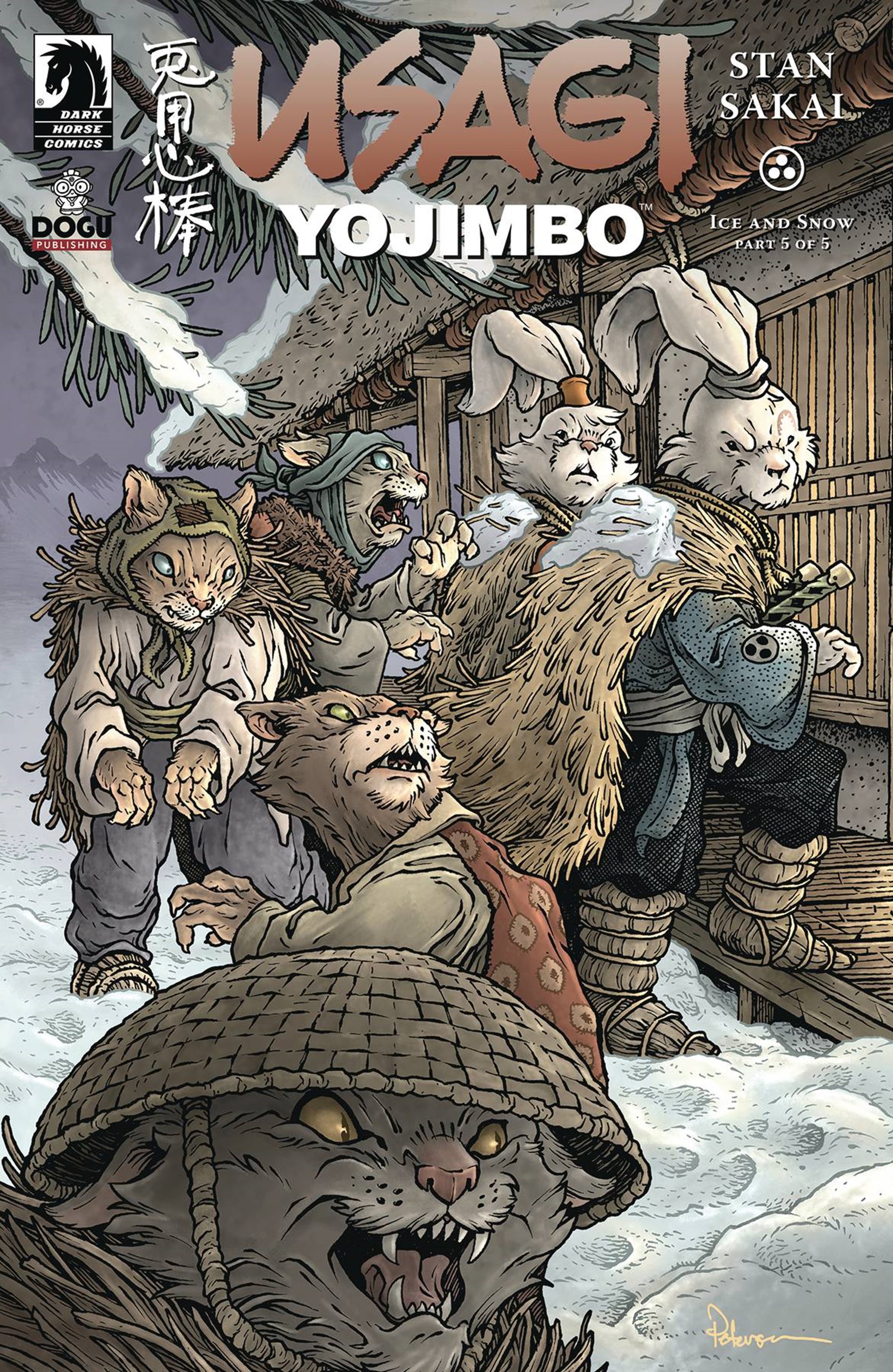
I also love at how impactful some of the character drawings were in this volume, especially when it came to the monsters that Usagi encountered. Not only do we get some cool cat demons in the last issue, but the lady of the snow, Yuki-Onna, has a great monstrous look around her that makes her seem quite intimidating. I personally loved the cool panel where an enflamed Yuki-Onna flees from Usagi, and the screaming skull shots that resulted from it were freaky. However, it is the drawings of Jei that really hit me the hardest in Ice and Snow. Sakai cleverly backs up his great writing around this character by showing him at his psychotic best, with his unnatural face and expression looking so awesome. Jei was honestly intimidating or crazy in every single panel he appeared in, and I loved how scary he comes across in colour. I especially love how impressive the fight between Jei and Usagi looked, as the desperation of their battle and the powerful emotion on both participants faces (with Keiko playing in the background) really hammers home the hatred and fear shared between the two. I particularly enjoyed this really cool panel where a near-defeated Jei emerges from the frozen river to strike one more time. Not only does this look so awesome, but it is a clever homage to Jei’s Friday the 13th inspiration, with the deranged killer getting one last surprise swing in. All these impressive drawings were so amazing to look at, and I loved how Sakai’s artistic style is as impactful and powerful as ever.
Based on my gushing review above, I guess it is obvious that I had an exceptional time with this latest Usagi Yojimbo volume, Ice and Snow, which featured a powerful story loaded with the author’s best supernatural inclusions. Stan Sakai’s writing and drawings are still very impressive, and I love how moved I was by them in Ice and Snow, even after all these years of being an Usagi Yojimbo fan. This was such a great comic and it gets a very easy, if inevitable, five-star rating from me. I cannot wait to continue this series into 2025, especially as the next volume is out very soon and features another awesome sounding story.

 The Unseen Library