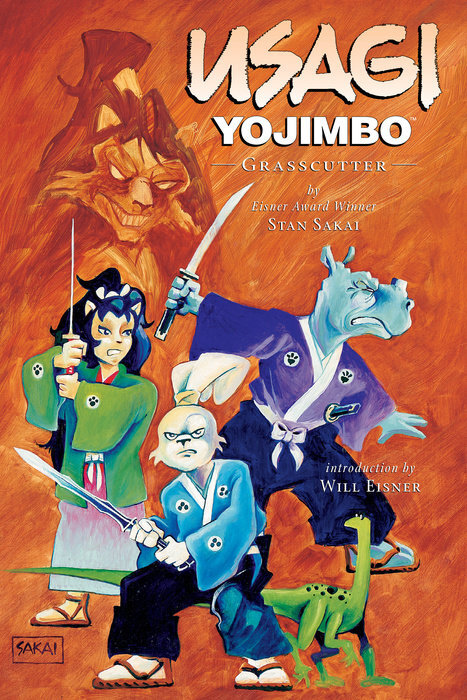
Throwback Thursday: Usagi Yojimbo: Volume 12: Grasscutter by Stan Sakai

Usagi Yojimbo - Grasscutter Cover

Publisher: Dark Horse Books (Paperback – 1999)

Series: Usagi Yojimbo – Book 12

Length: 255 pages

My Rating: 5 out of 5 stars

Amazon

Welcome back to my Throwback Thursday series, where I republish old reviews, review books I have read before or review older books I have only just had a chance to read.  For my latest Throwback Thursday I return to my very favourite comic book as I look at the 12th volume in the epic Usagi Yojimbo series by Stan Sakai, Grasscutter.

Usagi #13

It has been a little while since I covered one of these Usagi Yojimbo volumes in a Throwback Thursday article.  I had a bit of trouble getting this specific volume, which kind of put everything on pause.  Despite my belief that I had a whole collection of the Usagi Yojimbo comics, it turns out I was missing the 12th volume and I honestly have no idea how I could have misplaced my copy (or did I ever really own it? Who knows?).  To fix this oversight, I recently ordered a second-hand copy from Amazon and managed to get it shipped down here from America.  Now that I finally have a full collection, I can get back to reviewing this entire epic series, which is proving to be so much fun.

A quick refresh about this series before we start: the Usagi Yojimbo comics are the incredible work of legendary comic author and artist Stan Sakai, who has been working on this series for nearly 40 years.  Made up of a ton of amazing volumes, the comic is set in an alternate version of feudal Japan populated by anthropomorphic animals.  The series follows the rabbit ronin Miyamoto Usagi, a wandering bodyguard and adventurer who gets involved in all manner of troubles as he faces off against criminals, bandits, ninja, monsters, psychopaths and ambitious lords.  Combining brilliant stories with complex characters, cool action, elaborate scenarios and outstanding artwork, this series is an absolute masterpiece and it is one that I have adored for years.
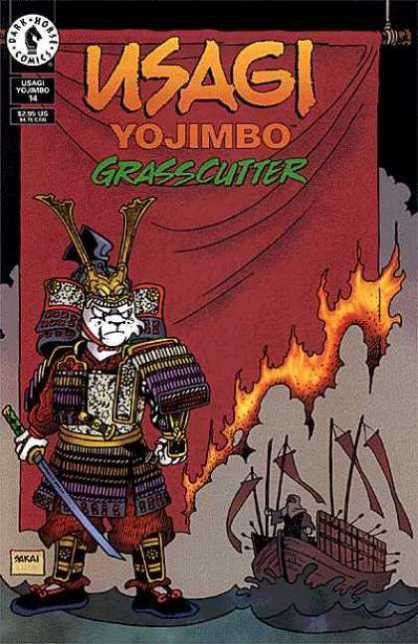
Usagi #14

The 12th volume of this series is Grasscutter, which serves as a particularly major entry in the entire Usagi Yojimbo line.  Containing issues #13-22 of the Dark Horse Comics run, this volume unusually contains a single story, rather than the multiple shorter, episodic tales typical of this series.  Bringing together several intriguing story threads from previous comics and reuniting several of the more distinctive supporting characters, Sakai tells his most ambitious tale, and the results is absolute magic.

Following a destructive war centuries ago between two rival houses, the nation of Japan is now firmly controlled by the shogun and his court, while the emperor rules only as a symbolic figure, detached from the politics of the realm.  While many are content to live within the shogun’s peace, there are some who seek power and prestige through the return of the imperial family to true power.  But with the full might of the military and the samurai behind him, only one thing could possibly inspire the people to revolt against the shogun: the legendary heaven-forged sword, Kusanagi the Grasscutter.
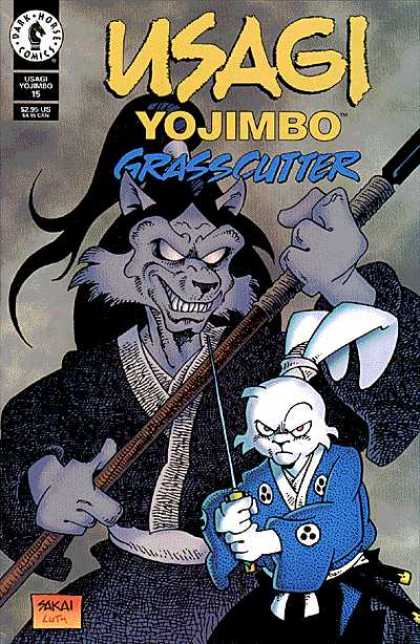
Usagi #15

However, this divine sword was lost generations ago in the battle that saw the Imperial family overthrown, and it now rests at the bottom of a watery strait, impossible to recover.  Undeterred by the odds against them, a small contingent of rebellious lords have initiated a conspiracy to overthrow the shogun by any means necessary.  Calling upon the powers of a mysterious witch, the conspirators hope to obtain the sword through sorcerous means.  While they succeed in freeing Grasscutter from its watery tomb, fate ensures that the sword ends up in the mostly unlikely of hands, that of the wandering samurai Miyamoto Usagi.

Unsure what to do with the legendary sword, Usagi soon finds himself pursued by the forces of the conspirators and must fight with everything he has to keep it out of their hands.  But the events of this conflict spread far beyond Usagi, and soon everyone he knows is in danger as the conspirators attempt to kill his friends Tomoe and Lord Noriyuki to stop them bringing Grasscutter to the shogun.  At the same time, the bounty hunter Gen and the rogue swordswoman Inazuma as drawn from their own scuffles into the greater battle for Grasscutter, especially when they encounter the feared demon-spearman Jei.  Can Usagi and his friends survive the overwhelming forces arrayed against them, or will the nation be thrown into war once again with the resurgence of the Grasscutter?

Usagi #16

Wow, just wow!  This is such an impressive comic that is so very epic in scope, storytelling and major character moments.  Sakai has done a brilliant job with this cool volume, and I loved the brilliant narrative he cooked up for Grasscutter, especially as it ties into so many major moments from the previous volumes.  Filled with intense action, brilliant set pieces and some beautiful art, Grasscutter is an incredible volume that, unsurprisingly, gets a full five-star rating from me.

I loved the incredible story that Sakai has featured in Grasscutter, especially as, in a departure from the series’ usual style of short stories, this volume features one massive and complex story.  This change in story length works extremely well and ensures that this volume stands out as a major entity in this epic series.  Sakai sets his narrative up carefully, with the initial issues of the comic dedicated to explaining the importance of the sword Grasscutter and how it was lost during a deadly civil war.  After establishing the significance of this weapon, the main narrative quickly gets into full swing, continuing one of the storylines from the previous volume, Seasons, and showing the members of the Conspiracy of Eight working to summon the sword from the bottom of the strait using possessed crabs (it makes sense in context).  As this is occurring, several other intriguing storylines are set up and you are soon following Usagi as he does his usual wandering routine, as well as other great side characters like Gen, Inazuma, Tomeo and Lord Noriyuki, as well as the deadly villain Jei.  Having all these characters caught up in these events makes for quite an interesting and elaborate tale, with each of them getting their own distinctive storyline that slowly merges with the others.  For example, Usagi finds himself in a desperate battle against the forces of the conspirators, Gen attempts to hunt down Inazuma for the big bounty on her head, only to run afoul of bandits and police, Tomoe attempts to save Lord Noriyuki from a treacherous ambush only to run into a far more dangerous foe, while Jei finds himself drawn towards the power of the divine sword.

Usagi #17

All these storylines come together extremely well as the story proceeds, often in some explosive and action-packed ways.  Usagi, in his pursuit of the sword, finds himself once again teaming up with Gen, only to run right into Jei when he is at his most dangerous.  Meanwhile the intense storyline surrounding Tomeo and Noriyuki has some large set pieces as the two attempt to escape the army chasing after them.  While mostly separate, these two storylines complement each other nicely, especially as the ambush on Tomeo and Noriyuki is due to the conspirators searching for Grasscutter, and it serves as a dramatic side adventure to the main story.  There are some amazing moments here, and I was particularly impressed with the storyline that saw Noriyuki come face to face with his father’s worse enemy in a complicated manner.  The big finale involves the final fight between Usagi and his mortal enemy, Jei, which sees some absolute carnage.  The subsequent damage and the impossible consequences will leave you reeling, and this entire story concludes perfectly, not only bringing the impressive narrative around Grasscutter to a satisfactory end, but also setting up some additional interesting storylines and character arcs.  This entire volume is just so damn epic, and I really appreciate the way in which Sakai journeys back to many of his previous storylines and utilises elements from them here, although it does mean that Grasscutter isn’t a great entry for first-time readers to check out.  The great combination of action, character development and intriguing world-building elements is just exceptional, and this entire comic is brilliant from start to finish.
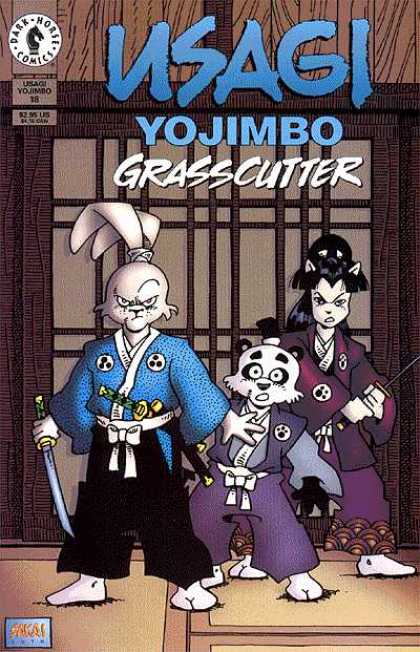
Usagi #18

One of the main things that I always love about the Usagi Yojimbo comics is Sakai’s use of intriguing elements from Japanese culture and history to compliment his excellent original storytelling.  This is particularly true in Grasscutter as Sakai utilises some of the most iconic parts of Japanese mythology and history as the basis for much of the plot, particularly around the legendary sword Kusanagi-no-Tsurugi (Grasscutter or Grass-Cutting Sword).  Sakai, who has clearly done a ton of research here, produces an amazing interpretation of the origins of the sword, going all the way back to the Japanese creation myth and showcasing the origins of the Kami and their many descendants.  He then goes into the history of the sword, showing its discovery of the sword, the events that resulted in the name change to Grasscutter, before going all the way to the Japanese Civil War (the Genpei War), that saw the rise of the shogunate and the decline of imperial authority.  This ends with a brilliant showcase of the massive and destructive naval battle between the two factions which led to the death of the young emperor and the loss of the sword.  The loss of the sword, as recounted in The Tale of the Heike, becomes a key part of this narrative, and it is so fascinating to see its sudden return be used as a major story element.  Readers unfamiliar with Japanese history or mythology get a brilliant understanding of these cultural elements at the start of the book, and this allows the rest of the story to flow perfectly.  I deeply enjoyed how Sakai brought all these cool moments to life (even if he does simplify it in places for narrative reasons), and it ended up being an exquisite and clever start to the book.  Throw in a very detailed and fascinating notes section at the back from Sakai, explaining his research and how it influenced his story, and you have some exceedingly cool historical elements that are expertly utilised to create an epic Japanese tale.

While I had a lot of fun with the story, action and Japanese cultural elements, one of the main highlights of Grasscutter is the substantial character work that occurs within.  Due to its length and scope, Grasscutter serves as a major part of the Usagi Yojimbo series and as such, it features many of the best supporting characters from the previous volumes.  All these characters get some substantial storylines in this book, either as protagonists or villains, and it was extremely fascinating to see what happened to some of them.  Sakai melds the unique character storylines together into one cohesive and powerful narrative which does an excellent job exploring each of the characters and giving them key moments in their storylines.
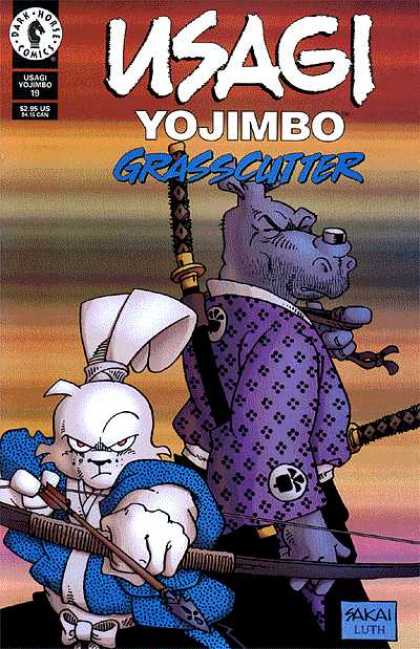
Usagi #19

Unsurprisingly, much of the story focuses on the character of Usagi, who serves as the main protagonist of the story.  Thanks to his usual luck, Usagi winds up finding the blade immediately after it emerges from the water and is soon thrust into the midst of the conflict surrounding it.  This immediately puts him in a major dilemma as he is uncertain what to do with the sword, as all the sides who would claim it (the shogun, the emperor, even some of his own friends) would all use it for their own benefit and the nation would likely suffer as a result.  As such he fights incredibly hard to hold onto the blade for everyone’s good, and this forces him into some increasingly desperate battles.  Usagi gets pretty beat up and exhausted throughout this entire ordeal, and his final match with Jei pushes him to the limit and strikes him at his very core.  While he doesn’t get a major amount of development in this story, he still served as a great centre for the plot and it is always fun to follow along on one of his adventures.

You can’t have a major Usagi story without his friend, Murakami Gennosuke (Gen) showing up and trying to get paid.  The rhino bounty hunter has an excellent story which starts when he unsuccessfully tries to claim a bounty on some dead criminals he discovers in the woods.  This almost immediately backfires on him and forces him to deal with all manner of corrupt cops and murderous bandits as he attempts to make a little money.  His misadventures lead him to face off against Inazuma, the deadly swordswomen who Usagi encountered in the 10th volume, The Brink of Life and Death.  Inazuma, a former innocent girl turned sinister killer, is still being pursued by assassins and bounty hunters who want the massive price on her head.  Naturally Gen decides to chase after her, and this results in a pretty brutal fight between the two, which really showcases just how dangerous Inazuma can be.  The subsequent storylines are also fascinating as Gen gets dragged into the fight for Grasscutter by Usagi and Inazuma goes deep into her own soul when she encounters Jei.  This results in some extremely dark moments for both characters, and it was captivating to see what happened to them throughout the volume.  The final reveals about Inazuma and her future are very grim, and it sets up some excellent storylines in the future.

Usagi #20

There are also some brilliant storylines going on around the characters of Tomeo and Lord Noriyuki.  While primarily separate from Usagi and his adventures, Tomeo and Noriyuki find themselves under attack and are pursued throughout the land by murderous assassins and samurai (much like in their first appearance in Volume 1: The Ronin).  Their dangerous journey becomes even more perilous when they run into a familiar face, General Ikeda, the character so perfectly featured in the short story The Patience of the Spider from the previous volume.  Ikeda is a great character in that he is a former general who, after failing to kill Noriyuki’s father in a revolt, has spent the last several years living as a peasant, a simple life he became content with.  However, when he suddenly finds the son of his mortal enemy in his house, he must choose whether to take up the old grudge or forge a new path for himself.  Watching the internal struggle that occurs within Kieda is pretty awesome, and his interactions with the suspicious Tomeo and Noriyuki are just wonderful.  I deeply enjoyed how this story unfolded, and it was some of the best character work in the entire volume, not to mention the most action-packed.

The final major character I really to talk about is the infamous Blade of the Gods, Jei.  First appearing in the third volume, The Wanderer’s Road, the crazed killer Jei has been one of the best villains in this series, constantly following Usagi and trying to kill him (another good story was in the sixth volume, Circles).  Jei and Usagi finally come face to face again in Grasscutter when Jei recovers the sword and attempts to use it for his own dark purposes.  Sakai really goes out of his way to make Jei appear as a deadly badass in this comic, with his first appearance shows him killing an entire detachment of samurai by himself.  His subsequent wanderings see him interact with several other side characters for the first time in the series, and their reactions to his weird aura and power are brilliant.  I loved how the dark Jei is perfectly offset by his companion, the young, innocent girl Keiko, who is the only person Jei cares about and will not hurt.  They have some great moments in this comic, and it is fascinating and troubling to see the interactions between them.  However, Jei’s big moment in Grasscutter is his rematch with Usagi, which has been brewing for ages.  Watching these bitter enemies face each other again is pretty fantastic, and you get some amazing moments during their duel.  The conclusion of their fight is very clever and really alters your opinion about both Jei and Usagi, while also seeming to confirm Jei’s supernatural background.  Watching the pure fear and shock on the usually unflappable Usagi when he encounters the many mysteries of Jei is so awesome, and Jei continues to shine as a brilliant antagonist in this volume.  His intriguing final fate will leave you shocked and surprised as a new version of the character emerges.  All this character work and more really helps to turn this outstanding comic into a true masterpiece, and I have so much love for Sakai’s ability to create such amazing and iconic figures.

Usagi #21

The final thing that I want to highlight is the impressive artwork contained within Grasscutter.  As with all the Usagi Yojimbo volumes, all the art of this comic has been drawn exclusively by Sakai, which is exceedingly impressive.  His drawing skills are amazing on multiple levels as he portrays such complex adventures with a simple yet beautiful style which I have so much love for.  As with most Usagi Yojimbo comics, Grasscutter is filled with stunning drawings, from amazing landscape shots that show off the beauty of the Japanese wilderness, to close-up shots of the deadly battle sequences.  There are some amazing scenes throughout this book, although I personally really enjoyed the fantastic and powerful renderings of key moments of Japanese history and mythology that were featured in the volume’s first two issues.  Everything from the formation of the lands to the events that gave Grasscutter its name is very cool, and Sakai expertly imparts his own style into these intriguing spiritual stories.  The massive battle that ended the civil war is shown in some exquisite detail here, and I loved how he showcased this elaborate and deadly naval fight.  Of course, you cannot forget the brilliant final duel between Usagi and Jei, which was such a highlight of the story.  Sakai goes out of his way to make this fight as epic and as brutal as possible, and you get a real sense of both participants skill and determination to win.  The mystical aftermath of their fight looks extremely awesome as well, and I loved all the intriguing and unique detail Sakai featured here, including the spooky alterations that happened to one of the characters.  Another brilliant artistic outing from Sakai that perfectly supported his incredible storytelling and character work and is some must see drawing.
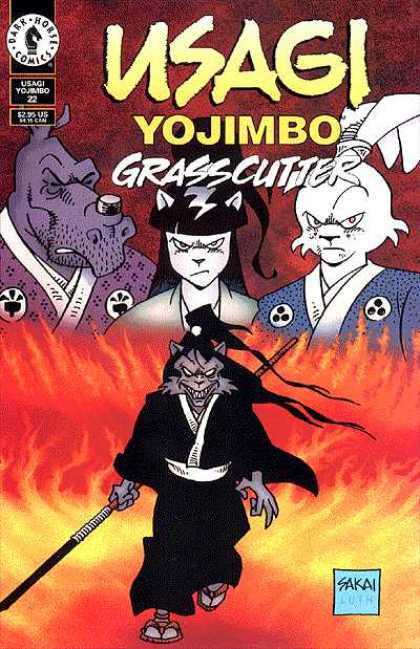
Usagi #22

As you can no doubt tell from the glowing descriptions above, I deeply enjoyed this 12th volume of the Usagi Yojimbo series.  Stan Sakai was in excellent form when he created the powerful and exciting Grasscutter, which features one of the author’s most impressive and extensive stories.  Featuring all his best characters, his great love of Japanese culture, as well as some impressive artwork, Grasscutter shines as an outstanding entry in this brilliant series, and it is one that cannot recommend enough.

Amazon

Throwback Thursday: Green Arrow (2001): Volume 3: The Archer’s Quest by Brad Meltzer, Phil Hester and Ande Parks

Green Arrow Archer's Quest

Publisher: DC Comics (Paperback – 1 September 2004)

Series: Green Arrow Vol. 3 – Volume Three

Writer: Brad Meltzer

Penciller: Phil Hester

Inker: Ande Parks

Colourist: James Sinclair

Letterer: Sean Konot

Length: 175 pages

My Rating: 5 out of 5 stars

Amazon

Welcome back to my Throwback Thursday series, where I republish old reviews, review books I have read before or review older books I have only just had a chance to read.  For this week’s Throwback Thursday I check out an all-time favourite comic of mine, the third volume of the epic 2001 Green Arrow relaunch, The Archer’s Quest.

The late 1990s and early 2000s were an outstanding time for DC Comics, who produced an amazing number of epic and fascinating comic series that combined brilliant storytelling with fantastic artwork.  While there are several great series I enjoy from this period (Teen Titans comes to mind), one of my absolute favourites was the awesome 2001 relaunch of Green Arrow.  Also recorded as Green Arrow Vol. 3, this series resurrected the original Green Arrow, Oliver Queen, some years after his death.  I have an amazing amount of love for this comic; not only was it one of the first series I ever really got into but it still really stands up after all this time.  This is easily one of my all-time favourite comic book series, and the absolute pinnacle of this series was the simple, yet amazingly effective fourth volume, The Archer’s Quest.

While I probably should review some of the proceeding volumes of this series first before talking about The Archer’s Quest (such as the first volume, Quiver by Kevin Smith), I recently re-read this fantastic comic, so it has been on my mind all week.  Containing issues #16-21 of this outstanding series, The Archer’s Quest is a brilliant and captivating comic tale that really gets to grips with the protagonist as he embarks on a journey vital to his identity and history.  Featuring the brilliant writing of bestselling author Brad Meltzer (author of several amazing thriller novels, as well as some impressive DC Comics), and the artistic stylings of Phil Hester and Ande Parks, this is an exceptional comic which gets a five-star rating from me.

Green Arrow - #16

Following his unexpected resurrection after his violent death, Oliver Queen, the Green Arrow, has been returned to Earth, ready to continue the good fight.  However, no man can come back from the grave without a heavy heart, and Oliver Queen has more skeletons in his closet than most of his fellow heroes.  A chance discovery that the villain, Catman, attended his funeral leads Oliver back to his old friend, Shade, the immortal being Green Arrow trusted to round up certain artefacts of Oliver’s superhero career that could reveal his secret identity. 

Discovering that Shade failed to get several of Oliver’s most precious keepsakes, Oliver embarks on a cross-country road-trip to recover them himself.  Accompanied by his former sidekick, Roy Harper, Oliver begins visiting some of the locations most important to himself and his career as a superhero.  From the ruins of the Arrowcave to the Justice League’s orbiting Watchtower and even the Flash Museum in Central City, Oliver and Roy will attempt to find these items from the past in order to safeguard their future.

However, this will be no simple road trip, as the two heroes encounter some unexpected dangers and surprising opposition, including fellow hero the Flash and the angry zombie Solomon Grundy.  Worse, this journey will uncover some dark secrets from the past that Oliver has long hoped to keep quiet.  Can Oliver recover his treasures without his friends and family discovering who he really is, or has the past finally come back to destroy this resurrected hero?

Green Arrow - #17

The Archer’s Quest is a fantastic and powerful Green Arrow comic that takes the protagonist and his former sidekick on a wild and extremely personal adventure.  Before reading this, if you had ever pitched me a comic based around the idea of a recently resurrected superhero going on a road trip, I might have been a little dubious.  Well, it turns out that I would have been dead wrong, as Brad Meltzer produced an intense, captivating and emotionally rich narrative that is not only extremely entertaining but which contains some excellent character work, some brilliant references to the classic Green Arrow comics, and which dives deep into the psyche of a troubled and complex protagonist. 

The narrative of The Archer’s Quest starts extremely strong, with Green Arrow meeting Superman at Oliver Queen’s grave.  This is a fantastic opening scene, especially once Superman hands over a series of photographs of the funeral, and I loved the focus on the harrowing realities following a resurrection.  The sombre mood is broken when Green Arrow notices a stranger in his photo amongst his closest friends.  This leads him to hunt down Catman, which also reveals the hand of Shade and the revelation that certain items from Oliver’s past are still out in the open.  This forces Green Arrow into a road trip, hunting for his artefacts and dealing with friends, enemies and family.  The first chapter packs in some much-needed action, as Green Arrow goes toe-to-toe with Solomon Grundy in an epic and brutal fight, that ends with a surprising, and gruesome, win from the protagonist.  From there, Meltzer and the artists pile up the emotional and the feels by having Oliver encounter several fellow heroes who he has complex relationships with, while also building up the nostalgia factor, with the reveal of classic Green Arrow items, locations and characters.  All this leads to some major moments, from an attempted proposal to a moving and long-awaited conversation between father and son.  However, Meltzer saves the absolute best for last with a startling revelation about the past that shows Oliver’s true character and serves as a powerful end to the entire story.  This was a beautiful, character driven story, and I think Meltzer hit all the right notes.  The pacing is perfect and there is a fantastic blend of action, character development and emotional discovery, which all comes together into one outstanding story.  The Archer’s Quest is addictive and dramatically intense from start to finish, I can read and re-read this comic for years (and I probably will).

Green Arrow - #18

One of the things that I really enjoyed about this amazing comic is the way in which Meltzer and the artists turned it into a homage to the Green Arrow comics.  The creative team spend a substantial amount of time diving back into the history and lore of the character and his comics, working them into the story in very meaningful ways.  So many key aspects of the Green Arrow comics are referenced or alluded to in some way, as the characters journey around some iconic locations, including the Arrowcave, to obtain the artefacts.  Through this dive into the past, the creative team manage to perfectly capture the various eras of Green Arrow, including the classic Golden Age comics, the grittier Silver Age comics, the road trip era with Green Lantern (which this comic really tries to emulate), and The Longbow Hunters period.  This wide range of references makes for a very intriguing and compelling comic, and it helps turn The Archer’s Quest into a must-read for all Green Arrow fans.  I loved the clever range of different artefacts that protagonists are trying to recover, including the diamond-tipped arrow from Green Arrow’s first appearance in Justice League of America, his official invitation to the Justice League, and the truck that he and Green Lantern used in their iconic road trip.  These cool artefacts really help to ramp up the nostalgia while simultaneously including key modern story elements hidden within.  The cool funeral sequence at the start of the comic also allows the creative team to reference and include a vast range of supporting characters and allies from the original comics, with a range of different figures from Oliver’s career appearing to pay their respect.  I deeply appreciated the modern analyses and descriptions of the items, locations, complex relationships, character designs, weaponry (why all the boxing gloves?) and prior adventures included in this comic, and it helps to produce a comprehensive account of these iconic events, while also bringing them up to speed with more modern comic lines.  You can really tell that the creative team behind The Archer’s Quest had a lot of affection for the preceding Green Arrow comics, and this outstanding comic proves to be an amazing and captivating love-letter to the Emerald Archer.

I deeply enjoyed the epic characters that this amazing comic followed, especially as Meltzer uses this story to dive deep into the psyche and relationships of the protagonists, especially Oliver Queen, the titular Green Arrow.  This version of the character is only recently returned from the grave, and this becomes a major part of his identity throughout the comic, driving him to fix some of the mistakes of his past while also ensuring that he never hurts his family again.  Thanks to the entire comic being narrated by Oliver, you get some very intriguing insights into Green Arrow’s mindset during this period, and you really get to know who he is and what his motivations are.  Rather than some of the typical portrayals of him as a liberal, generic arrow slinger, the creative team attempt to show him as a complex veteran hero, still deeply impacted by his resurrection and uncertain about his place in the world.  A lot of The Archer’s Quest’s narrative involves Green Arrow attempting to find pieces of his past that are significant or potentially damaging to him, and as such you get an amazing look into key events of Oliver’s past, as well as his current priorities and concerns.  I really enjoyed the storylines involved with him trying to reconcile or repair relationships with his former friends and allies, as well as an interesting development in his romantic partnership with Black Canary.

Green Arrow - #19

One of the best things about this comic is the way that Meltzer portrays Oliver as a more morally ambiguous figure, willing to make a deal with a supervillain, lie to those closest to him, and initiating undercover actions to protect identities.  There is also some great evidence of the self-destructive tendencies that would be a major defining feature of this series, as well as the complex decisions that affect those closest to him.  As such, he keeps many secrets, even from his former sidekick, such as his main motivation for recovering his old truck is to secure the Green Lantern ring Hal Jordan hid in there years ago.  However, the biggest secret involves the revelation that he always knew that his son, Conner, existed, and that he pretended he did not know who he was when they first met.  This revelation is slowly and cleverly revealed throughout the comic, first with Oliver subtly making the recovery of its hiding place his main priority, and then in the final scenes after he has a heart-to-heart with Conner, when he reveals the secret photo.  The narration during this scene sums up Green Arrow in this series perfectly: “You’re a bastard Oliver Queen.  You knew.  You always knew.  And the worst part is…. it’s still your secret.” and the entire sequence ensures you will never look at this character again in the same way.  I also musty highlight the great inclusion about Green Arrow secretly coming up with plans to protect secret identities if a hero died.  Not only is this vital to the plot of The Archer’s Quest, but it also hints at the great storyline that Meltzer would eventually use in his epic Identity Crisis, which features a proactive team of heroes mind-wiping villains and destroying personalities.  This outstanding and layered portrayal of Green Arrow in this comic is one of the defining characteristics of The Archer’s Quest, and I am blown away with this brilliant character work every time I read this volume.

The other major character of this novel is Roy Harper, his former sidekick (now Arsenal), who Oliver calls in to help him hunt down Catman.  I really enjoyed the inclusion of Roy in this comic, especially as he had been overly featured in this series (he was mostly appearing in Titans).  As such, we had not really gotten a glimpse at the current relationship between former mentor and sidekick, which has always been strained since the infamous heroine incident.  The Archer’s Quest did an amazing job bringing them back together again, and Roy really gets into the swing of the adventure, with the two characters getting back into their adventuring groove.  However, the comic also deals with the inherent mistrust between the two characters, with Roy upset that Oliver trusted Shade more than him to protect his identity after his death.  The two end up working through these issues throughout this comic, and it ended up being a fun and powerful reunion that long-term Green Arrow fans will deeply enjoy.

Green Arrow - #20

Aside from Green Arrow and Roy Harper, this comic also makes great use of several other supporting character who either bring the protagonist back to his past, or help to add some emotional weight to the story.  This includes brilliant inclusions of two fellow superheroes, Kyle Rayner and Wally West, the versions of Green Lantern and the Flash who were active at the time.  Both these younger heroes bear a major legacy that results in some complicated and moving interactions with Oliver.  One of the most important is Kyle Rayner, who has taken over the mantle of Green Lantern following the corruption and eventual death of Green Arrow’s best friend, Hal Jordan.  Since Oliver’s resurrection, their relationship has been strained, with Oliver having trouble accepting him.  This all finally comes to a head with Oliver travels to the Watchtower and encounters the young Lantern, and they have a massive heart-to-heart.  The revelations that Oliver has trouble accepting a new Lantern instead of his best friend, as well as the emotional burden Kyle also bears, especially around his first loss as a superhero (women in refrigerators man, that stuff will mess you up), all comes out, and leads to an amazingly moving scene.

I also loved the great interaction that Oliver had with Wally West outside the Flash Museum, after Wally is warned that Oliver is planning to break into it.  The two characters have a great stare-down, which sees the usually jovial Flash incredibly serious at Oliver’s attempted trespass.  Oliver’s narration about this event is pretty great, especially noting that Wally’s usual short attention span is overridden by his love of Barry Allen’s memory.  These two interactions with Green Lantern and Flash are short but extremely powerful, and it was amazing to see the strain on Oliver at being still alive, while the roles of his friends have been passed on to the next generation.  Despite the serious nature of these scenes, both had an entertaining ending with Oliver managing to outsmart his younger colleagues: “That old, lying son of a b…”.  I also liked the inclusion of Superman at the start of the comic, which was both entertaining, and played into the resurrection storyline perfectly with Superman feeling guilty about not being able to save Oliver when he died, while also being a bit of an expert on coming back to life himself.  I also enjoyed the fantastic conclusion of the Flash arc, especially as the entire break-in was to retrieve a costume-filled ring that the Flash made for Green Arrow years before, and which was a nice nod to the great friendship they used to have.

While this volume of Green Arrow does not have an antagonist per se (except for Solomon Grundy and Oliver’s self-destructive behaviour), it does feature a couple of great supervillains in a supporting role.  The first of these is Shade, the immortal shadow-powered gentleman who, despite being a villain, gained Green Arrow’s trust years ago, and was entrusted by Oliver to fulfil his post-death wishes (always chose an immortal).  Shade is a fantastic inclusion to this comic, especially as his inclusion enhances the implication that Green Arrow is a much more morally grey hero than you would initially believe.  The interactions between Shade, Green Arrow and Roy Harper are really good, and I liked the explanations for why he was unable to fulfil all his duties (I wouldn’t want to annoy Jay Garrick either).  I also really need to highlight the excellent inclusion of Thomas Blake, better known as Catman, in his first appearance in comic form in years.  Catman has always been a bit of a joke character due to his gimmick (which simultaneously rips off Catwoman and Batman at the same time), but in this comic he is shown to be a shell of even his previous ridiculous self, who is looked down on by the entire supervillain community.  Hired by Shade as his agent, Catman is hunted down by Green Arrow after attending his funeral, only to show him as an overweight and unthreatening loser.  This entire comic paints him as quite the pathetic figure and shows the downsides of being a fourth-rate villain who turned on some very powerful people.  While his appearance in this comic was more entertaining than deep, it does beautifully set up his later appearances in such comics as Villains United and Secret Six and serves as his inspiration for becoming the ultra-badass we see there.  These two villains perfectly rounded out the main cast of The Archer’s Quest, and both inclusions were fantastic and intriguing additions to the overall plot.

Green Arrow - #21

This amazing and complex narrative is perfectly backed up by some excellent artwork from the team of Hester and Parks, who really bring this story to life in exquisite detail.  This entire comic is drawn in fantastic detail with some beautiful scenes, fantastic backdrops (including some iconic Green Arrow locations, lovingly brought to life) and entertaining sequences.  This includes some brilliant and powerful action sequences, and the artists pay particular attention to the flight, movement, and destructive potential of the arrows.  I particularly liked the awesome fight scene between Green Arrow and Solomon Grundy, which was filled with some brutal action in the tight confines of the former Arrowcave and featured some great narration from the protagonist.  I loved the character designs featured in the comic, and the classic look of Green Arrow and his companions was great.  The artists do a great job portraying emotion on the face of the characters, especially surrounding Oliver and his multiple examples of anguish and conflict.  I also appreciated the play of emotion on some of the other characters faces, especially Flash when Oliver arrives at the Flash Museum.  Seeing the grim and dark look on Flash’s face as he tries to stop Oliver is really surprising and impactful, and the artists do a fantastic job of showcasing a tense stare-down between the two as the sun starts to rise.  However, in my opinion, the best drawn sequence in the entire comic occurs at the front of the volume, when Oliver contemplates his funeral.  Shown in a series of polaroids, you see the various grieving mourners and it was fantastic to see several obscure figures from Oliver’s past appear to pay their respect.  This beautifully drawn scene is short, but it sets the scene for the rest of the volume extremely well and is an excellent way to start this fantastic comic.  I loved the way the comics in The Archer’s Quest were drawn, and they ensured that the outstanding story reached its full potential.

Overall, I have an insane amount of love for this third volume of this classic Green Arrow series, and it comes highly recommended.  The Archer’s Quest is a brilliant and powerful comic arc that perfectly combines a clever and nostalgic story, with some intense character development and a fun and enjoyable art style.  Meltzer’s narrative in this fantastic Green Arrow comic so damn amazing, and I deeply enjoyed his take of this iconic character.  I deeply enjoyed The Archer’s Quest, and it easily one of my favourite comic volumes of all time.  I am hoping to review the rest of this Green Arrow series in some future Throwback Thursday series, and I look forward to highlighting all the amazing storylines that were contained in this incredible run.

Amazon

The Riviera House by Natasha Lester

The Riviera House Cover

Publisher: Hachette Australia (Trade Paperback – 1 September 2021)

Series: Standalone

Length: 452 pages

My Rating: 4.25 out of 5 stars

Amazon     Book Depository

Bestselling Australian author Natasha Lester returns with a powerful and intense historical drama that presents a multigenerational tale of love, loss, culture, and the horrors of the Nazi occupation of France, in The Riviera House.

Paris, 1939.  With the war about to start and fears of a Nazi invasion becoming more apparent, Éliane Dufort, a young art student who works part time at the Louvre, watches the staff store away the gallery’s most expensive artworks and begin to hide them throughout France.  Determined to survive the upcoming war, the last thing Éliane should have done was fall in love, however when she meets one of her brother’s friends, Xavier, she cannot help herself, and they soon begin a whirlwind romance.  However, with the Nazis right outside of Paris, Xavier leaves for England, breaking her heart.

With Xavier gone and most of her family killed by the Nazis as they tried to flee the city, Éliane vows to fight the invaders by any means necessary.  Her connection to the Louvre lands her a job working for the enemy in the vast warehouse the Nazis are using to store the artwork looted from France.  Working with the legendary Rose Valland, Éliane is tasked with recording every single piece of art that the Germans steal, as well as attempting to discover where they are being sent.  However, Éliane soon gains the unfortunate romantic attention of a powerful Nazi officer, while a returning Xavier, now a treacherous art expert working for Hermann Göring, threatens to destroy her cover.

Many years later, vintage fashion expert Remy Lang travels to the French Riviera and arrives at a beautiful house that was part of a mysterious inheritance from her unknown biological parents.  Hoping to escape from her intense grief at the loss of her husband and child, Remy soon becomes involved with a visiting family living at the neighbouring villa, including charming photographer Adam.  As she attempts to understand her feelings for Adam amidst her sorrow, Remy soon stumbles upon a shocking mystery when she chances upon a catalogue detailing artworks stolen from France during the war, which includes a painting that hung in her bedroom as a child.  Determined to get to the bottom of this mystery, Remy attempts to trace her past and the history of the unexplained painting.  But the story she uncovers is one of great tragedy and shocking revelations that will change everything Remy thought she knew about her past.

This was an outstanding and deeply impressive historical drama from Natasha Lester, who has previously written some great historical dramas, such as The Paris Secret and The French PhotographerThe Riviera House is a particularly compelling and intense novel that perfectly brings two separate timelines together into one moving narrative, while also focusing on two distinctive and complex groups of characters.  This results in a brilliant and moving read that is guaranteed to haunt you long after you finish reading.

Lester tells a deep and captivating tale in this novel that is moving, intense and very addictive to behold.  The author utilises a split timeline throughout The Riviera House, with one storyline set during World War II in Paris, while the other is based in the modern day and takes place in several locations, although primarily in the French Riviera.  The book jumps back and forth between these two timelines, with the speed of transition increasing the closer it gets to the conclusion.  Both storylines contain their own plot, characters, and interesting features, and they come together to form quite an intense overarching narrative.

The first storyline of The Riviera House is the World War II storyline, which follows the character of Éliane Dufort.  Éliane, after suffering several great losses because of the Nazi invasion, becomes embroiled with the French Resistance and soon gets a job working for the Nazis, assisting in their loot warehouse, and helping historical figure Rose Valland create her record of stolen works.  However, the story gets increasingly complicated as the book progresses, with Éliane torn between her remaining family, her love/hate relationship with the traitor Xavier, and her forced relationship with a powerful Nazi member who has fallen for her.  The entire story comes to a head in the closing days of the Nazi occupation, when Éliane is forced to risk everything dear to her, and soon encounters just how tragic the war is and how evil people can be, even those closest to you.

This part of The Riviera House is an amazing bit of historical fiction, exploring the history of the time while also featuring an emotional and moving tale of love, hope and courage.  I really connected with this half of the novel, due to the thrilling and intense story that shows a grim picture of the period and featuring some memorable moments.  The story of Éliane and her family is full of tragedy and suspense, and if you are looking for a happy read than you have come to the wrong place.  While I did see most of the major twists coming, I appreciated how this narrative came together, as well as the clever way it led into The Riviera House’s other timeline.  I also deeply enjoyed the unique historical aspects of this novel, particularly around the Nazis’ systematic looting of French art.  Lester really dove into this part of the war, providing a detailed account how the Germans stole the art, stored it, and eventually shipped it away as the war progressed.  This tale features several real-life historical figures who are worked into the plot extremely well and who add an extra layer of authenticity to the tale.  One of the most interesting historical figures is Rose Valland, the courageous art historian who risked everything to pull together a record of the looted artwork.  Valland, who has inspired characters in films such as The Train or The Monuments Men, was a fascinating character in this novel, and I liked how Lester tied Éliane’s story into that of Valland.  I felt that this examination of the Nazi art theft was both fascinating and cleverly utilised, and it helped to provide some extra power and intensity to the novel.

The other timeline in The Riviera House is based in modern times and follows Remy Lang, a fashion figure who is spending time in the French Riviera, trying to escape her grief over the tragic death of her husband and child, and soon meets some new people who help her move on.  This storyline was more of a pure dramatic tale and focuses on Remy’s grief, her new romance, and the friction brewing between the family she has just met.  I got quite attached to the potent emotional elements featured in this book, especially as Lester really focuses on the lingering impacts of grief, such as the guilt survivors feel when thinking about something new or considering moving on.  Add in quite a compelling mystery element to it, as Remy and her new friend Adam start investigating the connection that Remy had to the other story, such as her long-dead biological parents and several mysterious inheritances.  These connections to the storyline set in the past compliment the protagonist’s current issues and concerns extremely well, and it was really fascinating to see her work out how her life was shaped by the original protagonists many years before.

I ended up really liking both timelines within the novel, although I did prefer the storyline set in World War II due to its interesting historical research, complex characters riven by war, and terrible tragic moments.  I must admit that I am not usually the biggest fan of historical dramas that feature two separate timelines (it really is an overused device in historical dramas).  However, I think that it was utilised extremely well in The Riviera House, and the two separate storylines melded together into a fantastic overarching read.  I loved how Lester was able to provide subtle hints about the fate of the historical protagonists in the contemporary storylines, although the full revelations about them was often hidden and not revealed until later.  I also really appreciated finding out how the events of the World War II story led into the later plot, and the full truth about how everything occurred is not only great to behold in the historical storyline, but it also has some major impacts on the modern-day protagonist.  This really enhanced The Riviera House’s plot and the overall drama of the book, and it helped to produce an excellent overall narrative.

I also quickly wanted to highlight some of the cool and fascinating cultural elements that Lester slipped into her novel, particularly around art and fashion.  I already mentioned how much I enjoyed the interesting and in-depth examination of the Nazis’ looting and the plans to stop them, however, I also appreciated the way in which Lester examined the art itself, as well as the people who were fighting to protect it.  You really get a sense of the beauty and subtlety of the different artworks featured throughout the book, but more than that you also get to explore what makes people passionate for art.  This book contains several characters who appreciated the true value that this art had to themselves and the nation, so much so that they were willing to risk their lives for it.  This forms a major part of the historical storyline’s plot, and I think that Lester did a wonderful job exploring it.  In addition, the contemporary storyline features a compelling examination about the appeals of vintage fashion.  Lester, who has previously explored fashion in some of her past novels (for example, a major part of her previous novel, The Paris Secret, revolves around vintage gowns), did a good job explaining the current obsession with vintage fashion, as well as how people can make money off it.  While I usually care very little about any sort of clothing fashion, Lester’s descriptions proved to be very intriguing, and I found myself appreciating her obvious passion for the subject.  Both these cultural inclusions enhanced the story, especially as they were strongly related to the various protagonist’s motivations and obsessions, and I really appreciated they time that Lester took to feature them.

Overall, I felt that The Riviera House by Natasha Lester was an excellent and well-crafted historical drama with some powerful elements to it.  Lester did a wonderful job of crafting a compelling, multi-period storylines that combined historical and contemporary narratives into a single, moving tale.  I particularly enjoyed the cool focus on the Nazi occupation and art obsession, which resulted in a thrilling and very tragic tale.  The Riviera House is a highly recommended book and a must-read for all fans of historical drama.

Amazon     Book Depository

Usagi Yojimbo: Volume 35: Homecoming by Stan Sakai

Usagi Yojimbo - Homecoming

Publisher: IDW Publishing (Paperback – 13 April 2021)

Writer, Artist and Letterer: Stan Sakai

Colourist: Tom Luth

Series: Usagi Yojimbo – Volume 35

Length: 192 pages

My Rating: 5 out of 5 stars

Amazon

It is that time of the year again when I absolutely gush about the latest volume of the epic and outstanding Usagi Yojimbo comic series by the infinity talented Stan Sakai.  This time I look at the 35th volume in this incredible long-running series, Homecoming, which presents the reader with a rich and emotional tale of regret and loyalty as Usagi returns home.

Anyone who has spent any amount of time reading my blog will already know of my deep love for the amazing Usagi Yojimbo series.  Following the adventures of the rabbit ronin Miyamoto Usagi, this series is set in an alternate version of Feudal Japan populated by anthropomorphic animals, and features incredible stories about samurais and honour.  Homecoming, which contains issues #8-14 of the IDW run on the Usagi Yojimbo series, is the second volume printed completely in colour, and features the work of colourist Tom Luth in addition to Sakai’s writing and drawing.  This latest volume follows on shortly after the events of previous volume, Bunraku and Other Stories, and continues three intense and powerful unique stories.

The first story in this volume is the two-issue entry TatamiTatami sees Usagi return to the lands of his former master, the late Lord Mifune, now ruled over by nefarious series villain, Lord Hikiji.  Journeying through a now hostile countryside, Usagi finds himself following an armed procession who are transporting high-quality tatami mats to the castle of one of Lord Hikiji’s rivals.  Usagi finds the caravan under attack by the Neko Ninja, who are determined to destroy the tatami.  When Usagi’s long-time ally and former Neko Ninja head, Chizu, appears, it soon becomes apparent that Hikiji has dispatched the ninja to destroy the tatami in order to damage his rival’s reputation.  Determined to defy Hikiji, Usagi and Chizu travel with the caravan to help guard the tatami from attack.  However, Chizu soon comes into conflict with her rival, Kagemaru, as they fight for leadership of their clan.  Can Usagi and Chizu disrupt the plans of Hikiji and Kagemaru, or will the dark lord continue to reign supreme?

Anyone who thinks it impossible to write a compelling story with death, politics and ninja around tatami mats has clearly never had the joy of reading one of Sakai’s stories before.  Throughout the Usagi Yojimbo series, Sakai has written some thrilling and intense stories around unique elements of Japanese culture, including seaweed farming, pottery making, sake brewing, and giant kite making, just to name a few.  This latest example, Tatami, is no exception to this, as Sakai crafts together a fascinating story that not only highlights the importance and prestige of tatami mats but which also perfectly ties into the wider Usagi Yojimbo universe.  Tatami starts strong, with a fantastic and exquisitely drawn sequence that shows the crafting process behind the tatami, from harvesting the reeds, to the lengthy weaving process.  The story then introduces Usagi to the narrative, also providing some key background for the main storyline in the Homecoming volume.  The action swiftly follows with the tatami caravan under attack from cunning ninja, and Usagi is convinced to help guard the tatami with the help of Chizu.  This all leads up to an epic night fight as Usagi and his allies face off against a horde of ninja.  This fight scene is particularly well drawn and features some great examples of sword play, a beautiful scene of fire and intensity as Usagi appears to stand alone in front of a swarm of ninja, and several massive explosions as the ninjas detonate black powder bombs.  This all leads up to a rather poignant finale, as Usagi suffers from a rare and moving defeat and people he respects are called upon to sacrifice everything for their samurai sense of honour.

In addition to the main story surrounding the tatami, there is also a rather interesting side-plot surrounding Chizu and her battle with Kagemaru for control of the Neko Ninja.  This has been a long-running conflict going back all the way to 11th volume, Seasons, and it was great to see some more progress on it, especially as it ties Tatami into some of the wider Usagi Yojimbo storylines.  This subplot proves to be pretty damn cool, as Chizu works to manipulate Kagemaru and her former followers, using the catspaw of Usagi and the other tatami guards.  This ends up in a fun ninja duel, as Chizu faces off against Kagemaru and another ninja, Kimi, above the plain where Usagi is fighting.  This is a fast-paced and deadly fight which makes use of several different ninja tricks and weapons, and which proves to be an exciting and cool addition to the plot.  There are a couple of intriguing, if slightly predictable, developments within this narrative, although it does hint that we are getting closer to a conclusion of this long-running Neko Ninja plot line.

The real highlight of the Chizu subplot, and indeed the entire story, is the outstanding epilogue where Kagemaru meets with Lord Hikiji’s main advisor, the giant serpent Lord Hebi.  While Kagemaru is initially expecting praise for his actions, it becomes apparent that Hebi and Hikiji are displeased that Chizu continues to disrupt their plans when Kagemaru is offered unique sake, brewed using poisonous serpents.  There is an incredible amount of menace in this entire sequence, especially once Hebi pours out the dead serpent from the sake, and then proceeds to eat in front of Kagemaru (nothing is more intimidating that some light cannibalism).  Hebi’s simple warning: “Do not ever fail us, Kagemaru,” is an amazing way to end this scene, and the mighty ninja leader is left absolutely shaken as he leaves Hebi’s presence.  This epilogue was perfectly written and drawn, and it proves to be an outstanding way to end this story arc, while also hinting that the Chizu-Kagemaru rivalry is about to heat up.  I absolutely loved this great first story, and Tatami proves to be an exceptional start to the entire volume.

The next story in this volume is the moving and intriguing Mon, which also follows Usagi’s travels through the land of his former lord, Mifune.  However, Usagi soon encounters much fear and resentment from the people he encounters, many of whom try to avoid his attention.  He soon discovers that they are shunning him because he still wears the mon (crest) of his former lord on his clothes, reminding people of the costly war that Mifune fought and lost against Lord Hikiji.  The tense situation gets even worse for Usagi when several Hikiji soldiers notice him and attempt to take their anger and resentment out on him, which does not go well for them.  Further, when a desperate innkeeper and former Mifune soldier works out who Usagi truly was, various ambitious Hikiji soldiers gather to claim the substantial bounty of Usagi’s head.

This was another fantastic entry, and one that proves to be rather touching and dramatic.  Sakai does a wonderful job setting up the main story around the Mifune mon and why it is currently feared and hated throughout his former lands.  The impeccably loyal Usagi is forced to deal with unexpected hatred and concern from those he encounters, which once again makes him think about the past with great regret and concern, especially as he continues to battle with his own conflicted loyalties about whether he should continue to serve a dead master.  There are several fantastic references to Usagi’s role in the war’s final battle, as shown in Volume 2: Samurai, and it was interesting that there is still fallout after all these years.  It was also great to learn more about mons and the importance that they can have to the people wearing them.  This is explored to a degree within the story itself, but Sakai also includes a detailed author note at the end of Mon which describes the history behind mons in general and their current role in Japanese society, while also discussing Usagi and the Sakai family mons.  I particularly liked the story surrounding the innkeeper, who, after years of desperation, finally loses his loyalty to the Mifune cause by informing on Usagi.  The final encounter between Usagi, the Hikiji troops and the bartender is also amazingly drawn, and the dramatic cliffhanger helps turn this into a pretty impressive story.

The final story in Homecoming is the powerful tale, The Return, which finds Usagi in the one place he has been trying to avoid the most, his old home village.  After the conclusion of Mon, Usagi washes up in his village and soon finds himself in the care of the love of his life, Mariko, and her husband, Kenichi.  As the usual feelings of regret, anger and resentment quickly grow between the childhood friends once more, Usagi finds himself forced into a far more serious conflict.  A cadre of former Mifune samurai have arrived in town and captured all the villagers.  Led by the fanatical Kato, these samurai seek vengeance for their lord and plan to destroy Hikiji’s influence and power by attacking an emissary of the Shogun as he travels through the village.  Torn between loyalty to his dead lord and the survival of his village, Usagi must work with Kenichi if there is any chance to save the people they love most in the world.

The Return is an exceptional and moving story which serves as the centrepiece and main entry of the Homecoming volume.  There is a lot going on in this final story, and Sakai manages to craft together an outstanding narrative that continues the dramatic and touching arc surrounding the failed love between Usagi and Mariko and the multiple complications accompanying it, and which also places Usagi and everyone he loves in great danger.  The Return continues immediately after the events of Mon, and Usagi is quickly engulfed in both the drama surrounding Mariko and Kenichi and the overall danger of the former Mifune samurai.  This soon results in a conflicted Usagi forced to bluff his way through the encounter in order to try and save his village from the samurai’s deadly revenge plot.  Working together with Mariko and Kenichi, Usagi’s plan eventually results in a bloody, extended battle against the invading samurai.  This proves to be a pretty epic and intense narrative, and Sakai really amped up the action and the stakes of the entire story by setting Usagi up against some of his former comrades.  There are so many great elements to this story, although you have to love the extended battle sequence at the end, especially once recurring characters Katsuichi and Jotaro make their appearance.  The final parts of this entire story are pretty touching, as the various characters say their goodbyes, and Sakai leaves this entire volume on an intriguing note, as for the first time it hints at another fencing master Usagi trained after, and which makes me eager for the next volume in this series.

The most intriguing elements of the entire story are the complex antagonists that are former comrades of Usagi who are willing to commit atrocities in the name of their dead lord.  For years, the former followers of the late Lord Mifune are seen in a bit of a tragic light, with most of them, especially Usagi, portrayed as extremely honourable men, much in the vein of their deceased lord.  As a result, it is extremely jarring to see former Mifune samurai engage in such vile actions, especially as they justify as part of their oaths to their lord: “A samurai cannot live under the same sky as the killer of his lord!”  There are some clear 47 Ronin inspirations here, with former samurai gathering after many years to achieve a final vengeance, even if this story is a little darker than the classic Japanese tale.  There are also some deep and compelling discussions about honour and loyalty throughout The Return, especially as Usagi is forced to balance his loyalty to his late lord against his own personal honour, feelings about his childhood village, and his own memories about Lord Mifune’s character.  The inevitable confrontation between Usagi and his former comrades is pretty harsh, and it was interesting to see a fight between two different groups of Mifune supporters who believe that their way is the right way.  I felt that the use of colour was particularly effective in The Return, as it made the final battle sequence really pop.  It was also very memorable to see Usagi face off against samurai dressed in the same Mifune clothes and colours that Usagi has worn in every comic.  Seeing a group of similarly coloured and clothed characters facing off against Usagi makes for a very different battle sequence, and it was really interesting to see.

Easily the thing I was most looking forward to in this volume was the emotional fireworks that would occur when Usagi eventually returned to his home village.  This has previously happened in two separate occasions, in Volume 1: The Ronin and Volume 6: Circles, both of which proved to be utterly heartbreaking.  Much of this revolves around the complicated love triangle between Usagi, who is still deeply in love with Mariko, who is married to his old rival, Kenichi.  While Mariko still has great feelings for Usagi, she is bound to Kenichi by her honour, and will not leave them, especially as it will shatter her whole family.  At the same time, Kenichi, who has always resented Usagi for his talent and luck, knows that Usagi and Mariko have feelings for each other, which breaks his heart, as he has also always loved Mariko.  All this is further complicated by the fact that Mariko and Kenichi’s son, Jotaro, is really Usagi’s child, who Kenichi willingly raised as his own son.  This has resulted in much conflict and despair amongst the three in the past, and it honestly does not take long for the anger and resentment to build up once more in The Return, especially as Kenichi is angry that Usagi encouraged Jotaro to seek out his old fencing master rather than go to the school Kenichi learned from.  While there are several great sequences where Usagi and Mariko once again display their unspoken love, much of the focus of The Return revolves around the intense rivalry between Usagi and Kenichi.  The story starts with their usual resentment and anger towards each other, but the two eventually start to work on their differences, especially as they prepare to save their villages.  There are several fun flashbacks to some of their adventures as children, which showed their early rivalries, as well as the two of them achieving great things together.  This comes to the fore as the story progresses, and the two are once again able to set aside their differences for the greater good.  This was an amazing thing to see, especially as they have been mostly antagonistic to each other throughout the entire series, and I liked how Sakai worked to resolve their conflict.  There were also several touching scenes between Jotaro and both of his fathers, which really represented one of the most important things the two former rivals have in common, and I loved that Sakai included Jotaro in this story.

There were some amazing moments in The Return, and I was deeply impressed with the incredible story that Sakai used as the centrepiece of this volume.  I really liked how Sakai successfully blended together so much action and intrigue with a powerful character-driven narrative, and I loved the cool examinations of honour and loyalty as a formerly bitter rivalry started to come to an end.  This final entry really delivered on all the potential of Homecoming and Sakai has done an exceptional job here crafting this story together.  I also really appreciated the way in which the other stories within Homecoming served as prequels to The Return, with key plot elements introduced in the earlier entries in the volume.  This was some extremely clever storytelling, and it really helps Homecoming to stand out as an exceptional and fantastic volume in this epic series.

As usual, the art of this Usagi Yojimbo comic was absolutely exquisite, and Sakai has worked his typical visual magic, creating several striking and powerful sequences throughout the entire volume.  In addition to some of the impressive action sequences and scenes I have mentioned above, Sakai produces some outstanding shots of the iconic Japanese landscape, with some incredible drawings of forests, mountains, towns and plains.  Each of these is pretty breathtaking, especially now that they are in colour, as the recently introduced colour work of Tom Luth really adds some new depth to the already awesome drawings.  I absolutely love the way in which Sakai matches his simple yet beautiful drawings with the complex storylines contained within Homecoming, and readers are in for a fantastic visual treat when they check this volume out.

Even after 35 outstanding volumes of the Usagi Yojimbo series, the amazing Stan Sakai continues to show why he is one of the best comic creators in the business with the incredible Homecoming.  Featuring several touching and powerful stories, which are backed up with some exceptional character work and stunning artwork, Homecoming is another superb collection of Usagi Yojimbo tales.  Fans of this long-running series are going to have an absolute blast reading this latest volume and it is very much worth checking out.

Amazon

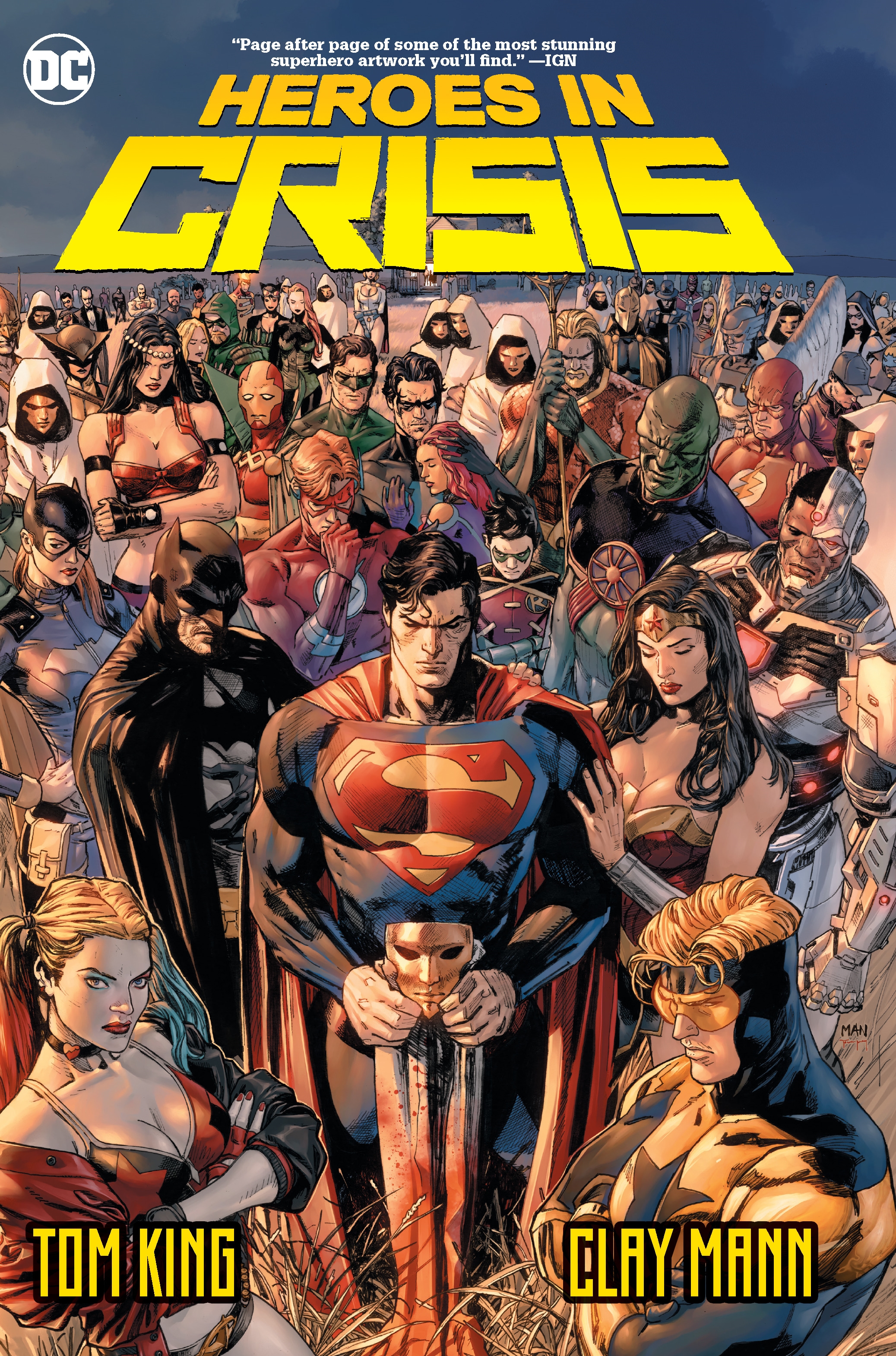
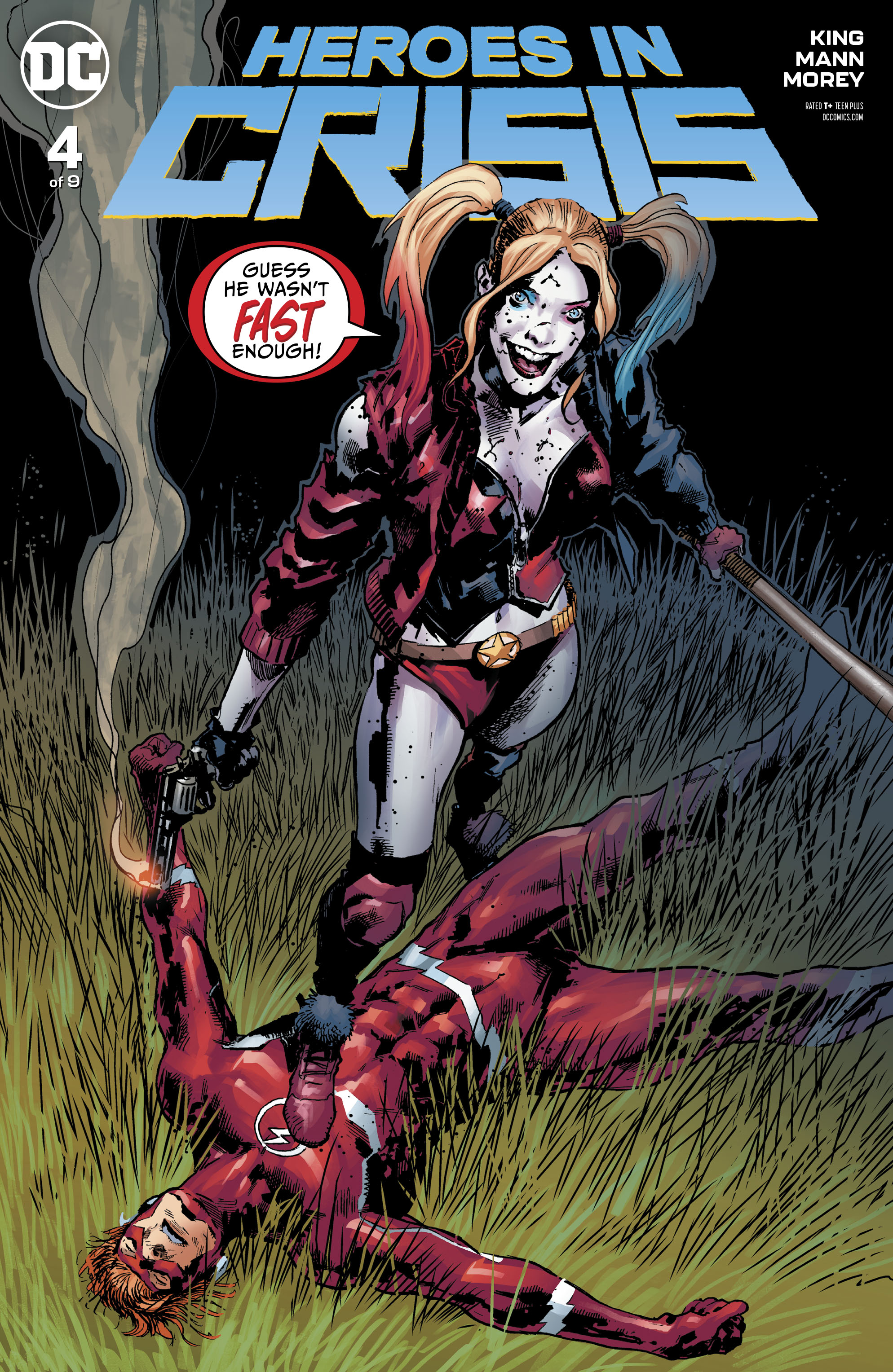
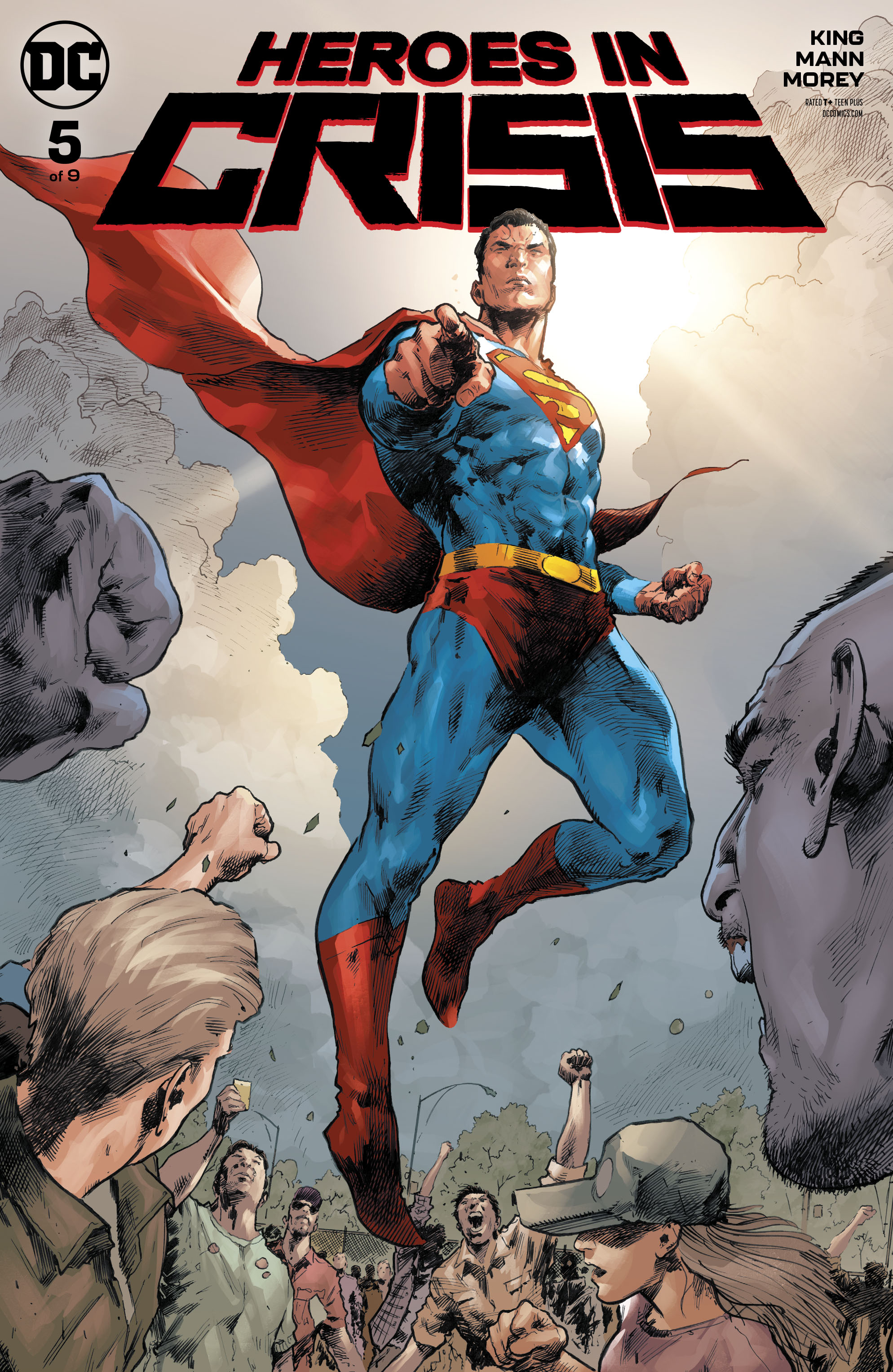
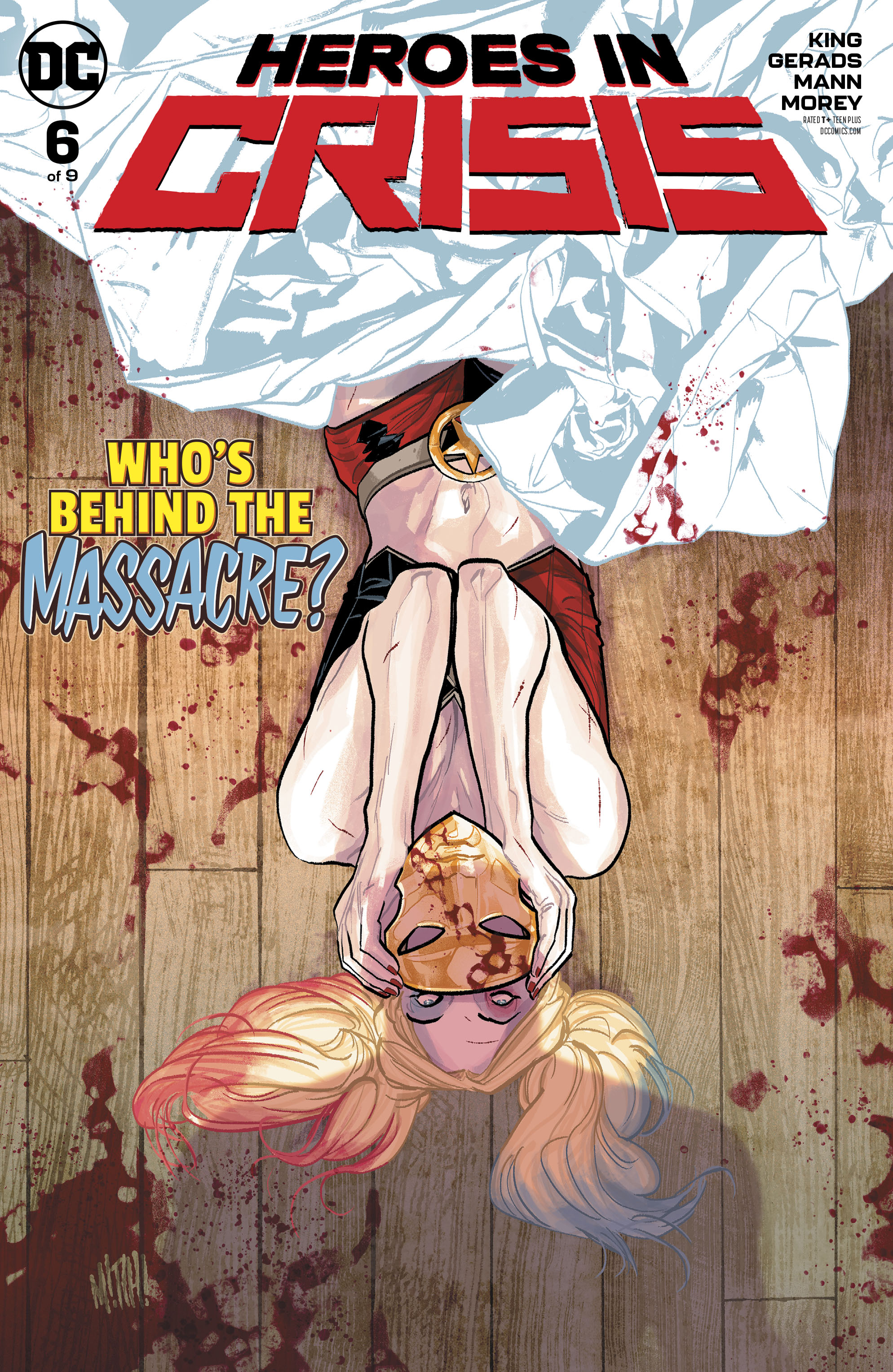
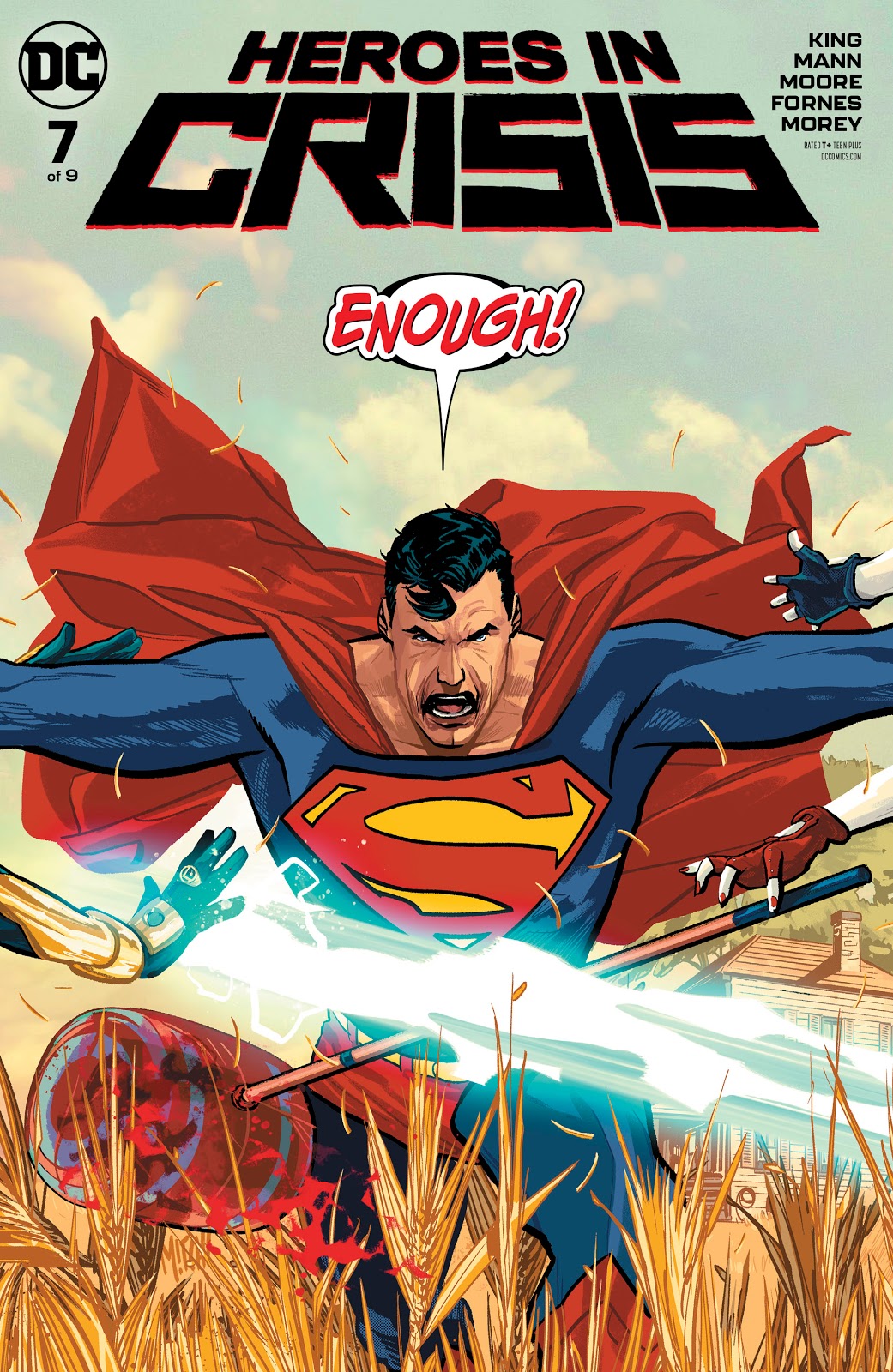
Throwback Thursday – Heroes in Crisis by Tom King and Clay Mann

Heroes in Crisis Cover

Publisher: DC Comics (Paperback – 1 October 2019)

Writer: Tom King

Artists: Clay Mann, Travis Moore, Lee Weeks, Mitch Gerads, Jorge Fornes

Colourists: Tomeu Morey, Arif Prianto, Mitch Gerads

Letterer: Clayton Cowles

Length: 234 pages

My Rating: 4 out of 5 stars

Amazon     Book Depository

Welcome back to my Throwback Thursday series, where I republish old reviews, review books I have read before or review older books I have only just had a chance to read.  For this latest Throwback Thursday article, I look at an interesting DC Comics crossover event from a couple of years ago, the deep and compelling Heroes in Crisis.

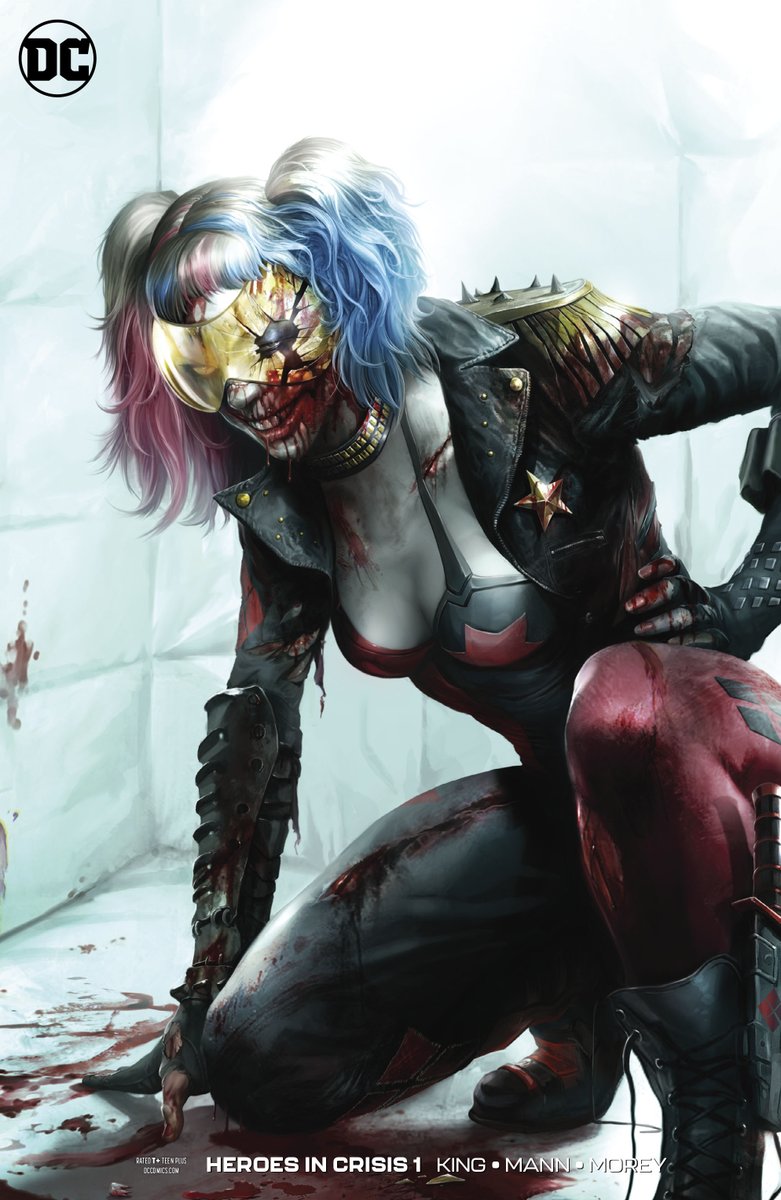
Heroes_in_Crisis_1 (V1)

Now I have to admit that I have been somewhat avoiding a lot of the recent DC crossover events, mainly because I think the universe is getting a bit too complicated, what with the multiple versions of characters and timelines.  However, I recently grabbed the Heroes in Crisis collected edition (containing all nine issues of the limited series), mostly because I had heard some conflicting reports about whether it was any good, and I thought that it would be worth seeing just what sort of comic it really was.  I was also drawn to this comic as I am major fan of Tom King and Clay Mann after the work they recently did on Batman, which featured some really cool and compelling storylines.  Heroes in Crisis turned out to be a rather fun and intriguing comic, especially as King came up with another fascinating narrative.

Heroes_in_Crisis_1 (V2)

After years of fighting and surviving against the very worst evils in the universe, even the greatest heroes will start to crack under the unreal pressures of their chosen lives.  Realising this and determined to help their fellow superheroes, the trinity of Superman, Batman and Wonder Woman designed Sanctuary.  Sanctuary is a hidden facility containing a cutting-edge artificial intelligence programmed to provide advanced therapy, support and counselling to any hero that needs it after harsh battles and traumatic events.  However, no sanctuary lasts forever, and after losing contact with the facility, Superman, Batman and Wonder Woman arrive to find Sanctuary in shambles and several patients brutally killed.  As the world’s superheroes reel from the deaths of friends and colleagues such as Roy Harper, Red Devil, Commander Steel, Poison Ivy and Wally West, their thoughts swiftly turn to justice.  But who is responsible for the killings, and could the culprit be one of their own?

Heroes_in_Crisis_1 (V3)

The answer may lie with the only two survivors of the Sanctuary massacre, the greatest hero you have never heard of, Booster Gold, and the mad clown princess, Harley Quinn.  However, Booster and Harley are both convinced that they saw the other commit the crime, and are now out to stop the other survivor by any means necessary.  As the heroes attempt to uncover the killer lurking amongst them, their world will be further turned upside down when the confessions and therapy sessions recorded at Sanctuary are leaked to the media, casting a new light on them.  Can the killer be caught before they strike again, or will this case irreparably damage the world’s greatest superheroes?  Whatever happens, the DC universe will never be the same again.

This was a very unique and fascinating crossover comic which contains some notable flaws, but is something that I quite enjoyed.  King, Mann, and their artistic team produced a clever comic that really dives into the minds of the collected heroes of the DC universe.  Featuring a great story, some powerful character moments and some impressive artwork, Heroes in Crisis turned out to be a fun and heartfelt comic that I had a wonderful time reading and which has really stuck in my mind.

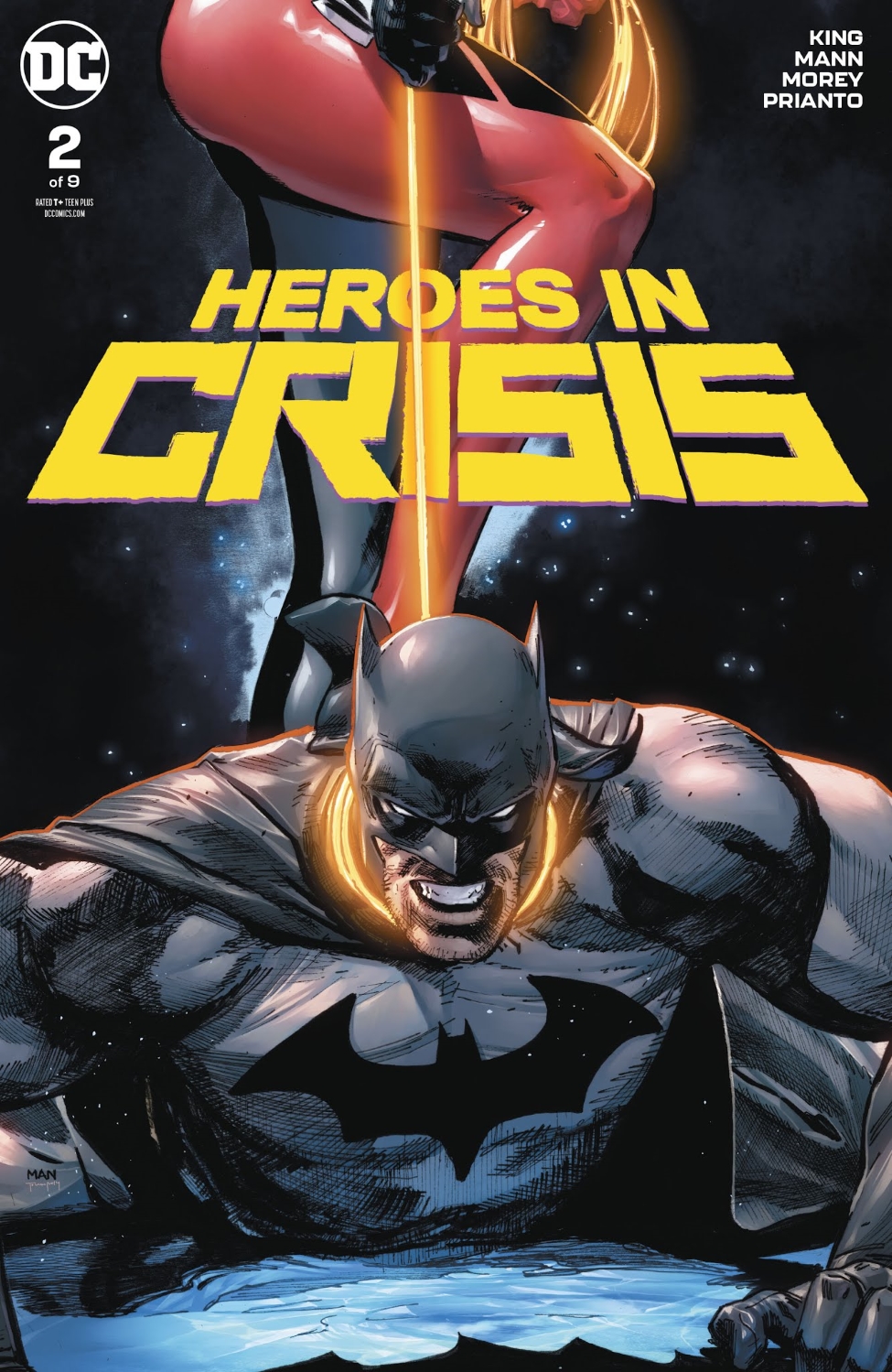
Heroes_in_Crisis_2

Heroes in Crisis has an intense and powerful character driven narrative that presents the reader with an interesting mystery, while also attempting to dive into the minds of some of the most iconic comic book characters out there.  I very much enjoyed the excellent premise that King came up with for this comic, especially as he starts the narrative off by showing several iconic heroes brutally killed around the Sanctuary within the first several pages.  At the same time, two of DC’s most unique and complex characters, Booster Gold and Harley Quinn, are fighting to the death, with both claiming that the other is responsible for the crimes.  This proves to be an excellent start to the comic which really drew me into the book, and which quickly leads into a compelling investigation angle with Booster, Harley and the DC Big Three (Superman, Batman and Wonder Woman) all working towards the same goal while also fighting amongst themselves.  At the same time, a mysterious opponent is manipulating events from the shadows, ensuring that the protagonists are distracted by the public revelations about their mental fragility.  All of this leads up to an interesting and heartfelt conclusion where the killer is finally revealed in an emotional confrontation.

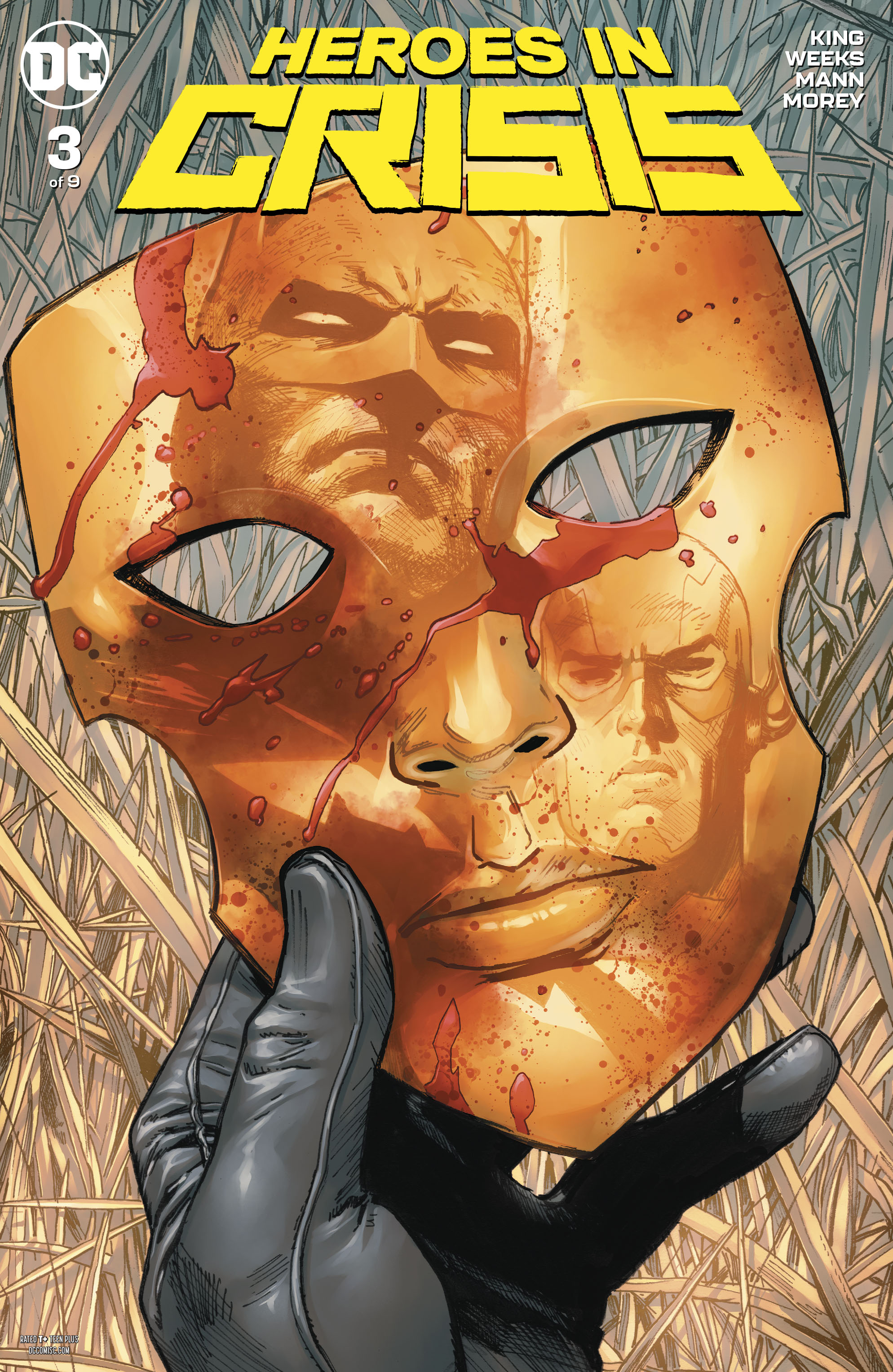
Heroes_in_Crisis_3

This was a rather intense and fast-paced narrative and it was clear that King was drawing a lot of inspiration from the iconic Identity Crisis crossover comic (another controversial comic that split the fan base, although I personally consider it a masterpiece).  However, unlike Identity Crisis, I think that Heroes in Crisis fell a little flat and I can see where a lot of the criticism surrounding it came from.  While this comic has a great start and the author sets up the whole mystery and characters perfectly, I felt that the ending had some major flaws to it.  The reveal of the killer, despite some hints throughout the story, is a bit of a letdown (admittedly, due to internet spoilers, I did know who it was in advance of reading this comic, but this didn’t massively impact my overall reaction).  While I could appreciate some of the motives surrounding the killer’s choices, especially as it ties into the psyche aspects of the comic, it was a bit of a weak choice that undermined an amazing and well-established character.  In addition, many aspects of the conclusion, such as the reveal, the killer’s motivations, and the eventual solution to some established problems, were unnecessarily complicated and required some major logic leaps.  I also did not quite get why King included a certain “bros before heroes” scene, as it proved to be a very odd inclusion for such a serious story.  While I did greatly enjoy the set-up, as well the impressive inclusion of flashbacks and character centric panels throughout the entire comic, this ending was a bit of a letdown that substantially affected how much I enjoyed Heroes in Crisis.

Heroes_in_Crisis_4

While the flaws in the story were a little disappointing, I think that King’s excellent character work more than makes up for it.  As he has previously done with his recent run on Batman, King attempts to really dive into the heart of the characters featured within Heroes in Crisis, highlighting their complex psyches and personalities to help to draw the reader in.  I also quite liked how this comic focuses on a very unique selection of characters, including several of my personal favourites.  While much of the story follows the Big Three, with some additional inclusions from the Barry Allen Flash, the major focus of the comic is on the fun duo of Booster Gold and Harley Quinn.

Booster Gold, unconventional time traveller and the greatest hero you have never heard of, is a character I have a lot of love for, especially as he is usually shown to be a bungling hero trying to do the right thing.  Booster ends up being an excellent character in Heroes in Crisis as he desperately tries to understand who is responsible for the deaths at Sanctuary, especially as he is a suspect himself.  While much of Booster’s appearance is comical, there is a deeper sadness to him, both before the killings and after them.  King does a masterful job showing off Booster’s inner thoughts in some of his therapy sessions while also presenting him as a damaged person potentially capable of committing the murders.  I loved seeing Booster used so prominently in the comic and I hope we see more of him in the future.  The appearance of Booster also ensures that we get to see some of his robot companion, Skeets, who has a fun relationship with Booster, often pointing out the stupidity of several of his plans, such as telling the Flash that he may be responsible for Wally West’s death and not realising it would get him punched in the face.

Heroes_in_Crisis_5

Heroes in Crisis also strongly features Harley Quinn, who DC have been heavily promoting recently.  Harley is her usual fun, chaotic self throughout Heroes in Crisis, although like Booster, deep down she is hurting.  King makes sure to explore the various damages that she still bears from her abusive relationship with the Joker, while also focusing on her current, relatively healthier relationship with Poison Ivy (who has a very lethal idea about therapy).  However, when Ivy is killed, Harley snaps a little and is determined to hunt down the person she thinks is responsible.  King does a great job showing off Harley’s unpredictability, humour and inner turmoil, and I liked how he presents her as a real threat, even to the likes of Superman and Batman.  Harley has a number of great moments throughout this comic, including a dangerous standoff, some great character development and some fantastic lines.  Harley also serves as a great foil to Booster, and when they are not trying to kill each other their conversations highlight their similarities, as both consider themselves failures in one way or another.  I deeply appreciated the use of Booster and Harley as key characters, and they were an outstanding focus of this comic.

Heroes_in_Crisis_6

Heroes in Crisis also features a fantastic array of supporting characters, and the creative team takes full advantage of their story to bring back some great underutilised heroes.  I loved how King spent time exploring all the various characters who were massacred at the start of the novel, especially as he examines why they were there seeking help.  While there is an obvious focus on the more prominent heroes like Wally West and Poison Ivy, I had a lot of fun seeing characters like Lagoon Boy, Commander Steel and Gnarrk the Last Cro-Magnon.  King did a lot with these very minor DC characters, using a few short sequences to build them up as sympathetic and likeable characters, ensuring that the impact of their death was a little more significant to the reader.  The inclusion of Wally West was also mostly well done and I appreciated the exploration of all the trauma and pain he has gone through in the last few years (being written out of existence for a few years is a painful experience).  Batgirl and Blue Beetle (Ted Kord) also show up as supporting characters for Harley and Booster respectfully, and I quite enjoyed the examination of the unique relationships between these friends.  All of these characters really add a lot to the story and I very glad that King took the opportunity to explore and highlight how complex some of these DC heroes can be.

Heroes_in_Crisis_7

While Heroes in Crisis has many good and bad qualities, without a doubt the best thing about it is the examination of traumatised heroes.  A large part of this comic’s narrative revolves around the fact that all the superheros in the DC universe are deeply traumatised or emotionally damaged because of their heroic careers, requiring them to seek treatment at Sanctuary.  While I know that some readers really disliked this portrayal of superheroes being emotionally and psychologically damaged, I personally felt that it was a clever inclusion from King that added a lot of realism to the DC universe.  Of course these heroes are going to be traumatised!  Most of them have been fighting crime or dealing with crazy people for most of their lives, experiencing innumerable tragedies and losses along the way, including dying and coming back to life multiple times.  It is honestly rather refreshing to see this acknowledged within the comics, and I deeply appreciated that King decided to feature it so prominently in Heroes in Crisis.

Heroes_in_Crisis_8

One of the reasons that this psychological plotline works so well is because Heroes in Crisis features a ton of panels and scenes highlighting the heroes as they discuss their trauma.  Not only do you get glimpses at several AI assisted therapy sessions, some of which are quite intense (Lagoon Boy’s one hurts to read at times), but there are a ton of “confession” panels, which show the various heroes sitting in a special room discussing their pain to a camera.  These confession scenes are cleverly scattered throughout the comic and are worked into the story extremely well, showing the raw psyche of some of the comic’s major characters or murder suspects and providing possible motivations for their actions.  At the same time, they work to show the reader just how damaged some of your favourite heroes can be.  While there is a focus on characters who were part of the Sanctuary massacre, nearly every DC superhero makes an appearance at some point in Heroes in Crisis, talking about their pain and their sorrow.  King ensures that each of these confessions, even the single-panel ones, are really emotionally rich and moving, and you get some amazing feelings out of all of them.  Highlights for me include a great sequence with Batman lamenting the death of his sidekicks, and another one with Commander Steel, who is pretty damn traumatised by his experiences of dying, being reborn as a zombie, having his corpse mutilated, and then coming back again.  Booster, Harley and Wally West also have some very intense, story driven confessions which both moved the story along and helped to get to the roots of their issues.  I found these scenes of trauma, healing and emotions to be particularly well written and very powerful, and they are one of the main reasons I enjoyed this comic as much as I did.

Heroes_in_Crisis_9

Another major highlight of Heroes in Crisis is the exceptional artwork by a massive collection of artists who banded together to produce some iconic and powerful pieces of art.  All of the scenes within this comic are very well drawn, and there is a real sense of movement, purpose and intensity in every panel.  I loved all the cool action sequences, and the artists really did not pull any punches when it came to highlighting the tragic deaths of so many different heroes.  Some of the best artwork, however, lies around the amazing and wonderful background and landscape shots throughout the comic.  There are so many fantastic shots that superimpose the characters in front of some beautiful settings, whether they be fields, sunsets or other pieces of nature.  These shots are not only visually impressive but they really add to the dramatic feel of the entire comic, especially as they remind you of the hope that so many of the damaged characters want to feel, but cannot, either because of the events of this comic or some pre-existing trauma.  The artistic team also has a lot of fun bringing to life a host of heroes from various periods of DC’s history, including some obscure characters we have not seen for a very long time.  While some of them were brought back only to die a painful death, it was great to see them again and the artwork surrounding them turned out to be superb.  I also deeply appreciated the artists’ ability to portray emotion and sorrow on the faces of each of the characters featured within Heroes in Crisis.  You get a real sense of the darkness and pain lying behind some of the characters’ eyes, especially in some unguarded moments, and it helps to enhance the emotion of the pages.  Overall, this was some impressive and memorable artwork that did a great job enhancing King’s intriguing tale.

Heroes_in_Crisis_9 (V1)

Heroes in Crisis was a very interesting and memorable comic which I had a great time reading.  While it does have some flaws, I think that the creative team behind it managed to create a very touching character driven narrative that succeeded in highlighting the vulnerabilities of several iconic DC superheroes.  I had an amazing time reading this comic and it is definitely worth checking out, especially if you are interested in exploring the damaged minds of some of your favourite heroes.

Amazon     Book Depository

Star Wars (2020): Volume One: The Destiny Path by Charles Soule and Jesús Saiz

Star Wars (2020) - Volume 1 Cover

Publisher: Marvel Comics (Paperback – 10 November 2020)

Series: Star Wars (2020) – Volume One

Writer: Charles Soule

Artist: Jesús Saiz

Colour Artists: Arif Prianto, Jesús Saiz, Rachelle Rosenberg and Dan Brown

Letterer: VC’s Clayton Cowles

Length: 136 pages

My Rating: 5 out of 5 stars

Amazon

The next stage of the Star Wars comic universe continues as Charles Soule, Jesús Saiz and their team of talented artists present the first volume of the Star Wars (2020) series, The Destiny Path.

Star Wars (2020) #1 Cover

Shortly after the Disney buyout of Star Wars and their subsequent creation of a whole new canon, Marvel Comics started to develop a new range of Star Wars comics.  While there were several great series, limited series and standalone comics set during various periods of Star War history, the main series were set between the events of A New Hope and The Empire Strikes Back.  These key comics, which included the Star Wars (2015), Darth Vader (2015) and Doctor Aphra (2016) series, did a fantastic job of filling in the gaps between these two films and presenting readers with some clever and unique adventures.  All these series came to an end in late 2019, with their plots coinciding with the start of events from The Empire Strikes Back.  In the wake of their cessation, Marvel announced four new Star Wars comic series that would take their place (after suffering some pandemic-related delays), set in the aftermath of The Empire Strikes Back.  While I have already looked at some of these comics, including the first entry of the Darth Vader (2020) series, I think it is time that I explored the flagship series of this new run of comics, the Star Wars (2020) series.

The Star Wars (2020) series will explore what happens to the main cast of protagonists after the events of The Empire Strikes Back and is set in the year or so between that film and Return of the Jedi.  This looks set to be a long-running series that will not only tell its own tale but will tie in to the events of the other current comics, probably resulting in some crossovers.  This first volume, The Destiny Path, contains issues #1-6 of the Star Wars (2020) series and serves as an excellent and compelling introduction to the rest of the series.

Star Wars (2020) #2 Cover

Following the battle of Hoth, the Rebel Alliance is in disarray.  With their fleet scattered around the galaxy and the might of the Empire reigning supreme, these are the darkest days the Rebellion has ever faced, especially as the Empire appears to have found a way to locate their ships and hiding places.  The hope of the entire Rebel Alliance may lie in the hands of its greatest leaders and heroes, but, after the events on Bespin, even these shining beacons of rebellion have been damaged beyond recognition.

With Han Solo captured by the Empire and handed over to the bounty hunter Boba Fett, those on the Millennium Falcon are dispirited and lost.  However, finding a Rebel cell under attack prompts them into action.  Despite missing the man she loves, Princess Leia is determined to rescue him and revive the Rebel Alliance by any means necessary.  At the same time, reluctant Rebel recruit Lando Calrissian attempts to make himself useful, despite mistrust from everyone around him.  Finally, Luke Skywalker, after losing a hand and finding out the horrible truth of his parentage is in shock.  Worse, his meeting with Vader appears to have damaged his connection to the Force, and neither of his masters will appear to talk to him.

Star Wars (2020) #2 Cover2

As the Rebel Alliance seeks a way to survive, each of these players, with the help of Chewbacca, C-3PO and R2-D2, begin the next stage of their journey.  As Luke seeks a lightsaber, Leia looks to find a way to save Han and Alliance, while Lando looks for redemption in all the wrong places.  All their journeys lead the back to the scene of one of the worst moments of their past, Bespin.  But how far will Luke, Leia and Lando go to achieve their goes, and will they be able to survive the dangerous enemies chasing them?

This is an outstanding and intense Star Wars comic that does a wonderful job of setting up a brand-new series of exciting adventures.  Charles Soule, who has written some of the best Star War comics out there, creates an exceptional and captivating tale that highlights the tragic consequences of The Empire Strikes Back.  Featuring some incredible artwork, amazing big moments, and a perfect portrayal of some of the iconic original trilogy cast, this is an outstanding and awesome comic.

Star Wars (2020) #3 Cover

For this cool first volume in the Star Wars (2020) series, the author has come up with an extremely compelling and clever multi-part narrative that I deeply enjoyed.  The Destiny Path has a strongly character-driven story, following Luke, Leia and Lando as they attempt to recover from the traumatic events of The Empire Strikes Back.  The narrative starts right after the heroes escape from the Cloud City at Bespin (technically before the closing scene of The Empire Strikes Back) and places the shell-shocked characters right in the middle of a firefight against an intriguing new foe.  The next stage of the story contains an intriguing couple of sequences aboard the Rebel medical frigate, showing off some new angles to the film’s final scenes, while also following Lando and Chewie as they head to Tatooine to scope out Jabba’s palace.  This part of the narrative is very clever and exciting, especially as it paints Lando as a bit of a wildcard, with unclear loyalties.  The next section of the comic takes Luke, Leia and Lando back to Bespin, each for a different reason.  There are some high octane and emotionally rich comic issues here, especially as all three of the characters are forced to face up to their recent mistakes and losses, while also taking on the Imperial garrison stationed there.  All of this leads up to the final part of the book, which is primarily focused on Luke, who journeys to several distant planets following a vision to find a new lightsaber.  There are some really cool sequences here as Luke continues to battle his own personal demons (and a real one, but we’ll get to that later), before eventually coming away with an unexpected prize.  All these disparate storylines work really well on their own, but their real strength lies in the way in which they tie together perfectly throughout The Destiny Path.  You end up getting a fantastic story as you follow one major event to the next, and I liked the unique tales contained within each section.  All of this serves as an awesome and powerful start to the Star Wars (2020) series, and there are plenty of hints of awesomeness to come as the Rebels bounce back while Luke continues to grow as a Jedi.  Epic Star Wars storytelling at its best!

Star Wars (2020) #3 Cover2

There is no way that I can talk about The Destiny Path without geeking out about some of the cool and memorable Star Wars elements and references featured within.  I deeply, deeply enjoyed seeing the intriguing and dramatic aftermath of The Empire Strikes Back that Soule envisions here, especially as he took the time to explore the various traumas and consequences of the events at Bespin.  This was a fantastic heart of the entire volume which is going to appeal to all fans of the Star Wars franchise.  Other cool Star Wars moments that fans will love include the mysterious events occurring around the Skywalker lightsaber.  This lightsaber, which disappears at the end of The Empire Strikes Back and reappears in The Force Awakens, is a major item throughout the Star Wars canon and I liked seeing Luke trying to find it in the bowels of Cloud City, only for it to slip into another mysterious person’s grip.  It will be interesting to see what happens to that in the future, and foresee it being a fascinating narrative thread throughout this entire series.

In addition to these elements from the films, Soule also fits in a lot of other cool references and call-backs to previous Star Wars comics, especially ones that he has had a hand in.  The most obvious of these was the appearance of Verla, who Luke encounters while trying to find a new lightsaber.  Verla is a Force-sensitive woman who first appeared in The Burning Seas volume of Soule’s Dark Lord of the Sith comic series.  It was great to see that Verla survived, and Soule does a good job working her into this story, portraying her as the damaged and cynical former Jedi student who is just trying to survive.  Verla’s inclusion allows Luke to learn more about Vader, both as a Jedi hunter and a Jedi named Anakin, and it was interesting to finally see him learn about the Jedi purges, Order 66, and the Inquisitors.  I also noticed a lot of mentions about the High Republic in this volume.  I really should not be too surprised about this, especially as Soule is one of the leading creative minds behind the High Republic range, having written the first novel in the series, Light of the Jedi.  It looks like Star Wars (2020) is going to rely on several events from the High Republic books, and I am intrigued about how Soule will work them into his cool story.  All of these Star Wars elements are extremely cool, and I think that they will deeply appeal to every fan of this franchise.  While mega fans are obviously going to love some of the more obscure references that Soule fit into this comic, this series is also very easy to enjoy if you have a more basic knowledge of Star Wars.

Star Wars (2020) #4 Cover

I do have to quickly highlight that one of my favourite parts of this entire comic is one of the final sequences in the volume.  In this sequence, Luke visits an abandoned Jedi temple which is filled with a mound of untouched treasures, including a lightsaber which he desperately needs.  However, it turns out that this entire building is a trap (Luke was warned, to be fair), as he is quickly attacked by the ghost of the Grand Inquisitor.  The Grand Inquisitor is an awesome character who served as the main antagonist of the first season of the Star Wars Rebels animated series.  Soule has previously utilised him in his Dark Lord of the Sith comic series, especially the first two volumes, Imperial Machine and Legacy’s End, but this current comic is set after his death in Rebels.  There are so many cool elements to the Grand Inquisitor’s return in this comic, including a fantastically drawn fight between him and Luke, where Luke encounters a double-bladed lightsaber for the first time, and I loved the Grand Inquisitor’s fiery, spiritual appearance.  However, the best part of this whole unique inclusion was the characters final interaction with Darth Vader.  Here it is revealed that Vader is the one trapping the Inquisitor’s spirit in this world, using him as a tool and a trap.  When the Inquisitor begs Vader for his release, Vader refuses, as the Inquisitor still has use to him.  The forlorn spirit starts to fade, but not before sadly uttering “there are worst things than death”.  This is an outstanding call-back to the character’s final words in Rebels, and it was so cool to see his morbid prediction come to pass.  This whole sequence really pushed The Destiny Path up a level for me, and I love how the creative team worked this into this fantastic and awesome comic.

Easily one of the best parts of this entire comic is the creative team’s portrayal of the iconic Star Wars characters who serve as the main protagonists of this amazing first volume.  Soule has done an incredible job writing a character-driven narrative around these protagonists, and I love his in-depth examination of their psyches and actions following The Empire Strikes Back.  The author pulls together some great storylines around these characters, and I loved seeing what amazing adventures they went on between these two films.

Star Wars (2020) #4 Cover2

One of the main characters explored during this book is the original Star Wars hero, Luke Skywalker.  Now, Luke is going through a lot at this point, having just had his hand chopped off and learned that his father is Darth Vader.  Luke spends most of the first part of the novel absolutely traumatised by these events and ends up doubting himself while also concealing this revelation from his friends.  To compound his issues, Luke finds his connection to the Force somehow damaged or fractured, as neither of his masters, Obi Wan Kenobi and Yoda, are reaching out to him.  This results in a more scattered Luke, and I loved the way that Soule dove into his damaged mindset.  There are some great and powerful moments throughout this comic that show off Luke’s trauma, as well some dramatic moments when he lashes out uncontrollably with the Force.  After receiving some visions and engaging in a hunt for a new lightsaber, Luke starts to come to terms with the events surrounding him, and it is great to see him recover somewhat, including by learning more about his father.  This slight reconciliation with his identity enables Luke to regain his control over the Force, and there are some very cool scenes where he uses his powerful and advanced abilities against the Empire.  Overall, this was a pretty spectacular look at Luke, and I really appreciated the cool story that Soule spun around him.  It will be interesting to see what is going to happen to Luke in the future entries of this comic, especially as he continues along his journey to become a full-fledged Jedi.  It will also be cool to see more of Luke’s new yellow lightsaber, which was an intriguing decision by Soule which I think is going to really pay off.

Star Wars (2020) #5 Cover

In addition to Luke, a lot of the story focuses on Leia.  Like the rest of the characters, Leia is pretty traumatised, as she discovered her love for Han only to lose him in seconds.  While at times she seems in control, especially as she works to salvage the Rebels fleet, she is clearly still impacted by this loss.  As a result, she desperately attempts to find a way to save him from Boba Fett, even if that means risking herself and her friends.  Her recklessness leads her back to Bespin with the others as she attempts to find more about the carbonite freezing process.  While Leia’s arc is possibly the least interesting (which isn’t a criticism; it’s just the other two main characters have some outstanding stories), she does have some great moments in this comic, and I especially loved the visual of her also trapped in carbonite.  It was also great to see more of badass Rebel leader Leia in this comic as she steps up and takes charge to protect those around her.  I imagine that the creative team have some great ideas for Leia in the future and I cannot wait to see what they are.

The other main character of this volume was the flashy and charismatic rogue, Lando Calrissian, who finds himself stuck with the other protagonists after helping them flee from Bespin.  Despite his attempts to do the right thing at the end of The Empire Strikes Back, Lando is still not trusted by anyone, as they blame him for his betrayal and the loss of Han.  As a result, Lando attempts to find some form of redemption with them, although he mostly comes across as a self-centred bastard.  Soule works a really intriguing storyline around Lando, and I loved seeing his meeting with Jabba the Hutt as he makes some initial inquiries into Han’s location.  Lando is able to talk his way out of a meeting with Jabba, although the reader is left wondering whether he plans to sell out the Rebels.  This nicely leads into his storyline on Bespin as he accompanies Luke and Leia back there.  It was great to see Lando returning to his city, especially as he manages to con his way through a range of different Imperial obstacles, and he was fully in his roguish element.  While Lando appears to return to Cloud City for selfish reasons, such as throwing a big middle-finger to the Empire, his jaunt does awaken his inner hero a little, and you get a glimpse of the person we eventually see in Return of the Jedi.  Lando is easily the most entertaining character in the entire comic and most of The Destiny Path’s humour is derived from his interactions with most of the other characters.  He is a very funny character, and it was great to see so much focus on him after barely featuring in the last stage of Star Wars comics.  I look forward to seeing what Soule and the creative team have for him in the future, and I think he is going to be the MVP character of the entire series.

Star Wars (2020) #5 Cover2

Aside from the three main characters above, The Destiny Path also includes a great range of other characters from various points in Star Wars history.  Like its precursor comic, Star Wars (2020) also follows Chewbacca, C-3PO and R2-D2, although I think these three great characters were a little overshadowed by Luke, Leia and Lando in this volume.  Chewie does have a bunch of fun moments throughout the comic, mostly in his interactions with Lando, and it is entertaining to see him be forced to deal with the cocky former friend.  R2-D2 does have a great sidekick time with Luke, and it was always fun to see him save the mighty Jedi’s life again and again.  There is also an interesting focus on a couple of new or lesser-known characters.  For example, it looks like Soule is going to spend a bit of time following Kes Dameron and Shara Bey, the parents of a certain Poe Dameron.  The Destiny Path also introduces an intriguing new antagonist in the form of Commander Zahra, a fanatical Imperial officer placed in charge of eliminating the remnants of the Rebel Alliance.  Zahra is tactical genius who I understand is going to have a major role in some upcoming comics.  This volume proves to be an excellent introduction to this cool new character, especially as it establishes her dangerous intelligence, murderous mentality and the insane grudge she bears against Leia, all while she commands the unique Star Destroyer, Tarkin’s Will, which still bears scars from being hit by wreckage of the original Death Star.  Zahra proves to be an outstanding antagonist, and I cannot wait to see what deviousness and insanity she brings to the rest of the series.

I definitely need to highlight the incredible and eye-catching artwork that was an outstanding and memorable feature of this awesome comic.  The artistic team behind this comic did an amazing job from start to finish, and every page was a visual treat for the eyes.  While all the art in this comic is great, there are a few things that really stood out to me, such as character design.  The artists do such an incredible job capturing the main characters throughout this comic, especially in the first issue where all their post-The Empire Strikes Back pain and emotion is on full display.  It was uncanny how similar these characters looked to their portrayal in the film, and it is a testament to the artists’ amazing ability.  There are also several awesome combat sequences scattered throughout the comic and I loved the way in which the art brought them to life.  A particularly good example of this was the opening space battle between the Empire and a small Rebel fleet.  The artists come up with an incredible background for this fight, which takes place between a sun and a concentrated barrage of green turbolaser bolts, which are being used to fence the Rebels in place.  This was so visually pretty, and it really enhanced the cool story and fighter combat that was taking place in front of it.  I also deeply enjoyed the way in which the artists have recreated several key scenes from The Empire Strikes Back.  These scenes, which include Luke losing his hand, finding out that Vader is his father and Han giving his iconic “I know” to Leia, are scattered throughout key parts of The Destiny Path.  Not only are these cool visually, but they are also clever from a writing point of view, dragging the readers back to the emotional impact of these events and driving how much they are still sticking in the mind of the protagonists.  I cannot overstate how awesome this art is and I had an absolute blast seeing every explosion, Force burst and clever flashback that they were able to fit in.

Star Wars (2020) #6 Cover

Well, if the above multi-page rant above didn’t give it away, then I’ll say it clearly here: this comic is incredible!  Soule, Saiz and the other talented artists have done an amazing job with this first volume of the Star Wars (2020) series, and The Destiny Path is an epic and awesome read.  I loved the in-depth examination of these key characters after The Empire Strikes Back and there are so many cool Star Wars elements worked into the story.  This is one of my favourite Star Wars comics and it gets a full five-star rating from me.  I cannot wait to see what extraordinary stories and powerful artform this fantastic creative team comes up with next and I need to order the next volume in now.

Amazon

Turn a Blind Eye by Jeffrey Archer

Turn a Blind Eye Cover

Publisher: Macmillan (Hardcover – 30 March 2021)

Series: William Warwick – Book Three

Length: 330 pages

My Rating: 4.25 out of 5

Amazon

One of the world’s bestselling authors, Jeffery Archer, returns with the third exciting and enjoyable entry in his clever William Warwick series, Turn a Blind Eye.

London, 1987.  After successfully organising a high-profile raid of a notorious drug factory, William Warwick has been promoted to Detective Inspector.  However, with his promotion comes a very different assignment: exposing corruption at the heart of London’s Metropolitan Police Force.  Along with his team of detectives and officers, William begins to investigate an old friend of his from the police academy, Jerry Summers, whose affluent, high-flying lifestyle seems impossible to achieve on a police income.  Utilising several undercover operatives, William attempts to find out the truth behind Summers’s activities.

However, the investigation into Summers’s corruption is only one of William’s concerns, as the trial for drug baron Ahmed Rashidi, whose factory William’s team brought down, begins.  Rashidi’s conviction seems certain, especially with the formidable legal team of William’s father and sister arguing the prosecution’s case.  But Rashidi has hired the services of the slippery and corrupt lawyer, Booth Watson QC, whose contacts and ability to bend the rule of law puts the police’s case in serious jeopardy.  At the same time, William’s arch-nemesis, the criminal genius Miles Faulkner, has escaped from jail and is hiding out in Europe, plotting the next stage of his life of crime.  However, Miles’s sudden death proves to be a boon for his ex-wife, Christina, who uses her windfall to apparently reform and renew her friendship with William’s wife.

As William’s focus is torn between all these different cases, disaster strikes when a young female undercover officer under his command falls for Summers.  As William and his team attempt to discover just how compromised their investigation is, the young Detective Inspector finds himself under attack from all sides as enemies, both old and new, attempt to bring him down.  Can William continue his crusade to bring justice to London’s streets, or will he face the horrible realisation that more of his fellow officers are willing to turn a blind eye than he first suspected?

This was another fantastic novel from Jeffrey Archer, who has done an amazing job continuing the exciting and compelling adventures of William Warwick.  Archer is an intriguing figure who has written a number of amazing crime and historical fiction novels over the last few years, such as his iconic Clifton Chronicles.  I have been rather enjoying several of Archer’s recent novels, including the very clever Sliding Doors-esque novel, Heads You Win.  His latest series, the William Warwick books, follow the adventures of the titular protagonist, who was first introduced as a fictional detective created by one of the characters in the Clifton Chronicles.  The first two novels in this clever crime series, Nothing Ventured and Hidden and Plain Sight, were both awesome reads, and I was quite excited when I received Turn a Blind Eye a few weeks ago.  Turn a Blind Eye ended up being quite an impressive read, and I really enjoyed the compelling and fast-paced story.

Archer has come up with a great story for his latest novel which not only continues some of the amazing storylines from the previous novel but which sets the protagonist up against several new challenges and antagonists.  Archer blends a lot of great elements into Turn a Blind Eye from across the genres.  The most prominent of these is a compelling crime fiction storyline which sees the protagonist go up against several different villains, including corrupt police, art thieves and drug lords, and there are some impressive investigative angles and fun scenes featuring clever police work and investigations.  In addition, the author works in some clever legal thriller elements as the story features several courtroom sequences.  These court scenes are some of the best parts of the entire novel, especially as Archer loads them up with fun legal shenanigans as the antagonist lawyer employs some really evil tricks.  The author also makes great use of the 1980s setting as a backdrop to the main story, and I loved the exploration of this cool period during this fun historical novel.  The entire novel chugs along at a rapid pace, and readers will have a very hard time putting this book down, especially as it features some dramatic twists, clever undercover scenes and very entertaining moments.  Readers of the previous two William Warwick novels will appreciate the fantastic ways in which Archer continues the established storylines set up in the first novels, although the author does ensure that this third book is easily accessible to new readers.  I really enjoyed the fun and intriguing places where Archer took his latest novel and I cannot wait to see how he will continue his compelling story in the future William Warwick entries.

I really enjoyed the great range of characters that Archer fits into this novel, most of whom are recurring characters from the previous two entries in the series.  Archer features a rather large cast of excellent characters throughout Turn a Blind Eye, resulting in a mass of different character perspectives that makes for a compelling and vibrant blend of storylines and character arcs.  At the top of this list is William Warwick, who serves as the central figure for most of the book’s plot.  William is an exceedingly straight arrow, intently concerned with doing the right thing and bringing the villains to justice.  William has another interesting adventure in Turn a Blind Eye, where he is forced to investigate police corruption and finds himself in some strange new circumstances.  I really enjoy the linear storyline that Archer has set up for Warwick, especially as it appears that he will be investigating a whole new crime each novel, and he serves as a particularly good centre to this entire series.

In addition to the main protagonist, Turn a Blind Eye also features several other amazing characters who have some compelling arcs in this latest book.  As always, I have to start with series antagonist Miles Faulkner, the highly intelligent criminal mastermind and art fanatic with whom William has found himself in an intense feud.  Faulkner ended the last book on a high note after engaging in a bold prison escape, and this novel starts off with him fleeing to Europe before circumstances seem to take him right off the board.  This results in an interesting development for the character, although readers of the previous novels will not be surprised by the clever way in which that particular arc unfolds throughout the novel.  I also deeply enjoyed the character of Booth Watson QC, the go-to lawyer for the antagonists of this series.  Watson is a dastardly and conniving figure in this series, and readers will love all the sneaky and entertaining ways he finds to bend the laws and manipulate the legal system.  I particularly liked the way in which he serves as a counterpoint to William’s father, Sir Julian, the highly regarded and undeniably honourable legal prosecutor, and the two have an outstanding repartee with each other during the court sequences.  The other character who has a really good storyline is police officer Nicky Bailey.  Bailey, who is assigned undercover to watch the primary suspect of the corruption storyline, ends up falling in love with her target, resulting in the investigation becoming compromised.  Archer writes an impressive and dramatic arc around this character, and I was particularly moved by its intense conclusion.  All of these characters ended up adding a lot to Turn a Blind Eye’s story and I look forward to seeing some of them reappear in the next William Warwick novel.

Turn a Blind Eye was another awesome novel from Jeffrey Archer which proved to be a rather good and entertaining read.  I loved the way in which Archer has continued his fantastic William Warwick series, and the author has loaded this book with some clever and enjoyable sequences and characters.  A fun and intriguing novel that readers will power through in no time, Turn a Blind Eye is really worth checking out and comes highly recommended.

Turn a Blind Eye Cover 2

Amazon

Quick Review – The Art of Death by David Fennell

The Art of Death Cover

Publisher: Zaffre (Trade Paperback – 4 February 2021)

Series: Standalone/Book One

Length: 422 pages

My Rating: 4 out of 5 stars

Amazon     Book Depository

2021 is definitely proving to be a great year for debut novels and one of the most intriguing examples of this is the fantastic murder mystery, The Art of Death by David Fennell.

Synopsis:

Death is an art, and he is the master . . .

Three glass cabinets appear in London’s Trafalgar Square containing a gruesome art installation: the floating corpses of three homeless men. Shock turns to horror when it becomes clear that the bodies are real.

The cabinets are traced to @nonymous – an underground artist shrouded in mystery who makes a chilling promise: MORE WILL FOLLOW.

Eighteen years ago, Detective Inspector Grace Archer escaped a notorious serial killer. Now, she and her caustic DS, Harry Quinn, must hunt down another.

As more bodies appear at London landmarks and murders are livestreamed on social media, their search for @nonymous becomes a desperate race against time. But what Archer doesn’t know is that the killer is watching their every move – and he has his sights firmly set on her . . .

He is creating a masterpiece. And she will be the star of his show.

This first book from Fennell ended up being quite an enjoyable and intriguing read as this new author has come up with a compelling and dark murder mystery with some great surprises to it.  I was lucky enough to receive a copy of this book a few weeks ago and became quite intrigued by the plot synopsis and the extremely cool cover art by Nick Stearn.  I had a fun time getting through it, thanks to the captivating group of characters and clever mystery it contained, and this ended up being a fantastic novel to check out.

At the centre of this fantastic debut novel is a rather good mystery that revolves around a callous and inventively deranged serial killer who kidnaps and kills people in order to feature them in his art show.  The Art of Death’s story follows this case from the discovery of the first three bodies, contained in a gruesome art display in Trafalgar Square, to its epic conclusion after the police engage in a lengthy investigation.  This proved to be a complex and exciting investigation, as the police characters are constantly one step behind the brilliant and sadistic killer as he works to finish off his masterpiece.  This results in a thrilling storyline as the police are forced to rush around and try to save the potential victims once the killer starts broadcasting their upcoming deaths online.  Fennell makes excellent use of multiple character perspectives to show off the various sides of this case, whether it be the police investigation or the killer’s sick plans as they kidnap several people from around London with the help of social media.  Fennell also adds an extra layer to the story when the killer starts to deliberately target and mess with the protagonist of the story in an attempt to draw them into his web.  All of this leads to a fantastic and intense conclusion, and I loved some of the twists that Fennell introduced into the story, including some misleading suspects and compelling circumstances.  I had an awesome time getting to the bottom of this dark and disturbing case and I thought that this was a great first mystery from this new author.

The best parts of this great novel were some of the distinctive and damaged characters featured throughout.  The most notable are probably the protagonist, Detective Inspector Grace Archer and the antagonist, the serial killer/artist known as @nonymous.  I thought that the character of Archer was an impressive cop protagonist, a no-nonsense, recently promoted female DI who takes the lead in the case over less capable colleagues.  Archer proves to be a great central character of this book, and I enjoyed seeing her attempt to balance this trying case with her own complex personal life and the distain of several of her colleagues who she has previously alienated with a police corruption case.  Fennell also works in a compelling angle which reveals that Archer was herself a survivor of a serial killer when she was younger, something which still haunts her to this day.  This proved to be an intriguing facet of Archer’s character and one that impacts her role in the main case, although I think that it could have been worked into the main story a little better.

I also very much enjoyed the main antagonist, @nonymous, and Fennell did a fantastic job coming up with a vile and irredeemable killer.  @nonymous is essentially an evil, murderous Banksy who stalks his prey through social media and live-streams his killings as a form of art.  I found myself really disliking this character due to his ego, his belief in his artistic “genius” and the way he ruthlessly preys on people with low esteem, especially as you see several terrible sequences from his point of view.  However, this worked well in the context of the book, as the reader cannot wait to see him fail, and it really amps up the anticipation in the story.  I also appreciated the way in which the killer becomes obsessed with the protagonist and it adds a great additional edge to their story.  I was able to predict who the killer was early in the novel, despite a couple of clever attempts from Fennell to throw the reader off the trail.  Still, the author sets the reveal up really well and final confrontation between @nonymous and the protagonists is thrilling and suspenseful.  Overall, this was an amazing use of characters, and I appreciate the complex protagonist and killer that the author created.

The Art of Death is an awesome debut murder mystery from new author David Fennell which I had a fantastic time reading.  Thanks to this book’s compelling mystery and clever characters readers will quickly become engrossed in the fantastic story and will have fun seeing how the case comes to an end.  I look forward to seeing what Fennell comes up with next, especially if he reuses the intriguing protagonist introduced in his amazing debut.

Star Wars: Thrawn Ascendancy: Chaos Rising by Timothy Zahn

Thrawn Ascendancy - Chaos Rising Cover

Publisher: Random House Audio (Audiobook – 1 September 2020)

Series: Thrawn Ascendancy – Book One

Length: 15 hours and 5 minutes

My Rating: 4.5 out of 5 stars

Amazon

The master of Star Wars fiction, Timothy Zahn, returns with a brand-new series that explores the early days of his most iconic character, Grand Admiral Thrawn, with the first book in the Thrawn Ascendancy trilogy, Chaos Rising.

A long time ago, beyond a galaxy far, far away…

Beyond the edges of the known galaxy, past the borders of the Republic, beyond even the backwater Outer Rim, lies the Unknown Regions.  The Unknown Regions are a chaotic and barely explored section of space, where hyperspace travel is difficult and dangers lurk around every corner.  Despite this, many species flourish in this region, fighting for their survival and forming civilisations hidden from the eyes of the Republic and the Separatists as they fight their bitter civil war.  However, out of all these races, none are more mysterious, secretive and dangerous than the Chiss Ascendancy.

The Chiss have long considered themselves to be one of the most powerful races within the Unknown Regions.  Boasting vast fleets of powerful vessels which can appear anywhere within the Unknown Regions thanks to their great secret weapon, the force-sensitive children who can navigate hyperspace in the Unknown Regions, known as Skywalkers, the Chiss believe themselves safe and secure.  However, a sudden ill-fated attack on their home planet by a mysterious fleet quickly shatters this allusion.  While many, including the Chiss ruling council, are convinced that the attacking ships are a precursor to an invasion and begin preparations to withdraw their outer fleets, Supreme General Ba’kif believes that there is more to this attack then what is apparent.  In order to explore his suspicions, Ba’kif calls upon one of his most talented officers to investigate, the young tactical genius Senior Captain Mitth’raw’nuruodo, better known as Thrawn.

Many years before he became the Emperor’s most effective weapon as a Grand Admiral in the Imperial Navy, Thrawn, served his own people as a member of the Chiss Expansionary Defence Fleet.  Already renowned for his rare tactical ability, as well as his disregard for the politics and rules of the Ascendancy, Thrawn begins his investigation into the attack and swiftly determines that it was merely a feint, designed to draw the Ascendancy’s attention away from a much more dangerous threat.  A new malevolent alien empire is building strength in the Unknown Regions, and its eyes are firmly fixed on the Chiss.  With his hands tied by protocol and with his political enemies within the Ascendancy trying to take him down, Thrawn may be unable to stop the upcoming attack before it is too late.  However, Thrawn always has a plan, and the Unknown Regions are about to understand just how dangerous he truly is.

This was another fantastic outing from Timothy Zahn, who has produced a cool and intriguing prequel novel to his previous series.  Zahn is one of the most experienced and highly regarded authors of Star Wars tie-in fiction in the world today, having written several impressive novels for both the current Disney-owned canon, and the previous Star Wars Legends canon.  While he has written various Star Wars novels, such as the fun standalone novel Scoundrels, Zahn is probably best known for his 1991 release, Heir of the Jedi, which is generally considered to be the start of a whole new era of Star Wars tie-in fiction.  While there are a number of interesting aspects to Heir of the Jedi, one of the most important things about it was that it introduced Zahn’s most distinctive and popular creation, Grand Admiral Thrawn, a rare alien officer in the xenophobic Imperial Navy who was revered as their ultimate tactician.  Thrawn proved to be a very popular character whose backstory and characterisation was later expanded on in a number of Zahn’s other Star Wars Legends novels.

Due to the Disney purchase of the Star Wars franchise and the subsequent removal of everything except the movies and the animated series from canon, Thrawn was temporarily erased as a canon character until the third season of the Star Wars Rebels animated television series, where he was reintroduced with an altered backstory and history.  As part of this reintroduction, Zahn was contracted to write several new Star Wars novels examining this new history of the character, and thus he wrote the Thrawn trilogy, featuring the excellent novels Thrawn, Alliances and Treason, which are among some of the best pieces of Star Wars tie-in fiction I have so far read.  This trilogy ended in 2019, but Zahn is far from done, having started a new trilogy, the Thrawn Ascendancy series, last year.  The Thrawn Ascendancy trilogy, of which Chaos Rising is the first entry, is an intriguing and detailed series that serves as a prequel to the novel Thrawn and which show a younger version of the character as he serves the Chiss during the same time period as the Clone Wars.  Chaos Rising is an excellent and enjoyable novel which I read a few months ago, but which I have only just had a chance to review.  It was fantastic to see this complex and compelling character in action again, as well as more of Zahn’s impressive world-building.

This new novel from Zahn contains an amazing story that looks at the earliest adventures of Thrawn.  This is a very clever and layered tale that explores the main character in more detail while also providing him a new opponent to face in this book as he attempts to engage in battle against a dangerous enemy threatening his people.  Zahn builds a great narrative around the fight against this new antagonist, with Thrawn forced to engage in a number of intricate campaigns in order to obtain information and determine which points of weakness to exploit, whilst also have to contend with the machinations of members of his own race who are concerned with the reckless Thrawn’s actions.  At the same time, the author builds up a number of intriguing side characters who help to tell the tale of Thrawn in greater detail and with some interesting personal arcs.  This main storyline proves to be an extremely enjoyable and captivating read which flows at a great pace for most of the book, broken up with a number of cool and impressive battle sequences.  The main story is also supported by a fantastic collection of flashback sequences that depict an even younger version of Thrawn, showing some of his earlier encounters with many of the characters featured in the novel and highlighting how different the character has always been.  These flashbacks are used to great effect throughout the novel, not only building up the various characters’ pasts and personalities but also creating a great pace for the novel, with several key events from the protagonist’s life introduced where necessary to the main plot.  All of this helps to turn Chaos Rising, and indeed the entire Thrawn Ascendancy series, into an intriguing prequel to the Thrawn trilogy as it begins to set up the various reasons why Thrawn was sent away by his people and recruited by the Empire.  One part of Chaos Rising even directly ties into the events of one of the books from the previous trilogy, Alliances, with the reader seeing an alternate viewpoint to Thrawn meeting with Anakin Skywalker that gives an entertaining context to the events of that previous book.  All of this results in a fantastic and clever story that is easy enjoy and which sets up some more intriguing adventures in the later entries in this series.

One of the things I always try to address while reviewing a Star Wars novel is what level of franchise knowledge a reader needs to have in order to fully enjoy the story.  While most Star Wars novels are generally fairly accessible to new readers or casual fans, I would say that Chaos Rising is one of those books that should primarily be read by major fans of the franchise.  This is because Zahn loads this novel up with a ton of Star Wars references and details, including details of obscure parts of Star Wars lore and characters.  While the author does do a good job of explaining all the relevant aspects of this extended universe through the book, I would say that having some pre-knowledge about some of these elements is important.  At a minimum I would suggest that the readers read Zahn’s original Thrawn trilogy first, especially as Chaos Rising serves as a prequel to them, although fans with some basic knowledge of the character of Thrawn should be able to follow along without too much difficulty.  For new readers who do get through Chaos Rising, you are going to experience a huge amount of new information about the Star Wars universe as Zahn does a substantial amount of universe building throughout this book.  In particular, the author explores the legendary Chiss Ascendancy, a mysterious alien empire existing outside of the main Star Wars galaxy.  This is the first time that the Chiss planets and culture have been explored in any real detail in the current canon, and it proves to be a fascinating experience learning more about them and seeing the culture that produced such a unique character as Thrawn.  This novel contains a lot of detail about this alien race, as well as many other aspects of life outside the main galaxy setting of the Star Wars franchise, and while it is a tad overwhelming at times, I had a great time expanding my Star Wars knowledge and exploring this new, intriguing region.  It seems likely that Zahn will go into even more detail about this part of the Star Wars universe in future novels in the trilogy, and I look forward to seeing what other cool aspects he comes up with.

One of the best things about this book was seeing the return of the amazing and compelling character of Thrawn.  Thrawn is a very unique and enjoyable character, mainly because he has an unfathomable mind and is able to tactically outthink and outmatch any opponent that he comes across.  A highly analytical being who is able to discern fantastic insights about a person or species’ intentions, personalities and general mindsets from viewing some aspects of their creativity, mainly their artwork, Thrawn is easily able to predict actions and provide effective or crazy counters that shock and surprise everyone watching.  This makes him an incredibly fun character to see in action, especially as he makes some amazing and credible leaps of logic off the smallest details that Zahn features in his descriptions.  These analytical leaps then lead into a number of awesome and cool scenes where he outsmarts everyone around them, including in the book’s various battle sequences, which are awesome to read as there are some truly outrageous and clever tactical moves that no one can see coming.  Because of his way of thinking, Thrawn has a very closed off and odd personality that unnerves a lot of the people he deals with and makes many wary of his motivations and actions.

Just like he did in the previous novels, Zahn portrays Thrawn as a little less vicious and dangerous than he appears in Star Wars Rebels, with a little more humanity (or the Chiss version of it) added into his character.  Zahn also continues to explore the character’s lack of political awareness, a major flaw in his thinking that continues to cause him trouble as he constantly battles against the overarching hierarchy to take actions he knows will benefit or save his people.  I felt that Chaos Rising took a very interesting look at the character’s history, personality and backstory, and I quite liked the examination of his earliest trials and battles.  Thanks to the author’s use of flashback sequences, the reader gets a great view at different parts of his history, and you see the various steps that he takes rising up the military ladder and the various aliens and people he crossed or destroyed on the way.  All of this proved to be really cool to see, and Thrawn remains one of my favourite characters in the Star Wars canon, especially after this great outing from his past.

One of the most distinctive parts of any novel that follows Thrawn is the fact that none of the story is shown from his point of view; instead other characters tell his story.  This is mainly done to really highlight just how brilliant Thrawn is and to ensure that his eventual plans and insights come as a major surprise to the reader, much in the same way that a Sherlock Holmes novel is told from Watson’s perspective.  Chaos Rising features several different point-of-view characters, including one or two antagonists, who encounter Thrawn throughout the course of this novel and witness him utilise his tactical acumen.  I love seeing the various characters react to Thrawn’s impressive and clever schemes, and it is always fun when they realise that the impossible is happening right in front of them.  Several of these characters, particularly Thrawn’s allies, also provide a much deeper examination of the main character’s personality and mentality, and you see a different side to the character as a friend and mentor.

While these characters are primarily there to follow Thrawn, Zahn does take the time to explore each of these characters, with a particular focus on Thrawn’s impact on their life.  Many of these characters have some excellent and enjoyable backstories to them, and it was fascinating to see these great characters have their carefully planned out lives completely thrown around when they meet Thrawn.  While I failed to connect to some of these point-of-view side characters (for example, I just could not get invested in the arc surrounding the Skywalker Che-ri), others proved to be quite intriguing to follow.  Examples include Admiral Ar’alani, Thrawn’s former classmate at the academy, who becomes a lifelong friend and constantly finds herself trying to protect the protagonist from himself, or Thalias (Mitth’ali’astov) a former Skywalker whose encounter with a young Thrawn inspired her to join his clan and gave her a new vision for the future.  I also rather enjoyed following Qilori, an Unknown Regions navigator-for-hire, who secretly serves the Nikardun Destiny while also taking jobs for other clients like Thrawn and the Chiss.  It was immensely entertaining seeing Qilori attempting to manipulate Thrawn on the orders of the main antagonist, especially as Thrawn sees through every single one of his tricks.  Each of these great side characters added their own edge to the story, and I really appreciated having so many varied and unique viewpoints of the fantastic main character.

While I did receive a physical copy, I decided to listen to the audiobook format of Chaos Rising, not only because it made my reading schedule easier but because Star Wars audiobooks are always so much fun to listen to.  I think that I made the right decision here, as the Chaos Rising audiobook was a very awesome experience and I had a great time listening to it.  With a run time of just over 15 hours, this is a somewhat longer Star Wars audiobook, although once you get wrapped up in the story you don’t really mind.  Everything about this audiobook is cool, from the classic Star Wars sound effects, which help to drag the listener into the story (it is so much easier to imagine a dangerous fight scene when you can hear the blaster shots), to the outstanding use of John Williams’ iconic musical score, which just makes everything epic.  This audiobook also features the superb narration of the amazing Marc Thompson, who does a wonderful job.  Thompson, who has a vast experience voicing Star Wars audiobooks (for example, all the previous Thrawn novels, Dark Disciple, and roles in the Count Dooku and Doctor Aphra audio dramas), has an exceptional range of different voices which he uses to full effect throughout Chaos Rising.  Each of the characters is given a distinctive and enjoyable voice which allows the listener to easily follow who they are, while also getting an impressive and comprehensive idea of the character’s emotions and passion.  However, his most impressive work is saved for the main character himself.  Thompson has an excellent Thrawn voice, which very closely matches the voice of Lars Mikkelsen, the actor playing Thrawn in the Star Wars Rebels animated show, which helps to bring the character to life in vivid and impressive detail.  Thompson’s take on the character captures the character perfectly, and you get an amazing sense of the character’s deep analytical nature and constantly calm façade.  This was an exceptional bit of voice work from Thompson, and it really added so much to my enjoyment of the story to have this character’s words read out to me.  An overall exceptional and outstanding audiobook, this is the perfect format to check out Chaos Rising.

Thrawn Ascendancy: Chaos Rising is another outstanding novel from amazing Star Wars author Timothy Zahn that provides the reader with a captivating look at the early life of the incredible character of Grand Admiral Thrawn.  Featuring a clever and intriguing tale set deep in an unexplored area of the Star Wars universe, this novel serves as a fantastic and addictive prequel to Zahn’s impressive Thrawn trilogy and adds new layers to the author’s most iconic creation.  The second entry in this series, Greater Good, is set for release in a few months and looks set to be one of the most intriguing Star Wars novels of 2021, especially with renewed interest in the character of Thrawn after the second season of The Mandalorian.  I am extremely keen to see how the next novel turns out, but if it as good as Chaos Rising, then we should be in for a treat.

Amazon

Throwback Thursday: Usagi Yojimbo: Volume 11: Seasons by Stan Sakai

Usagi Yojimbo Seasons

Publisher: Dark Horse Books (Paperback – 1999)

Series: Usagi Yojimbo – Book 11

Length: 198 pages

My Rating: 5 out of 5 stars

Amazon

Reviewed as part of my Throwback Thursday series, where I republish old reviews, review books I have read before or review older books I have only just had a chance to read.

It has been a while since I have done a Usagi Yojimbo Throwback Thursday, but after doing a Waiting on Wednesday for the next upcoming volume in this epic series, Homecoming, I was in a Usagi mood and decided to write something extra.  As a result, I check out the 11th Usagi Yojimbo volume by the legendary Stan Sakai, Seasons.

Seasons is a fantastic and spectacular entry in the series that presents the reader with a series of great Usagi Yojimbo adventures that follow the rabbit ronin Miyamoto Usagi as he traverses his version of feudal Japan during the various seasons of the year.  This is a key entry in the series as it sets up a number of storylines for the next several volumes while also introducing some great new characters.  Needless to say, I had an incredible time reading this volume of the series and I have a lot of love for a number of the stories contained within it.  Seasons contains issues #7-12 of the Dark Horse Comics run on the Usagi Yojimbo series, as well as stories taken from the Usagi Yojimbo Colour Special.  This results in 11 separate stories throughout the volume, made up of single-issue entries and a couple of shorter tales, all of which contain an impressive and deeply enjoyable story with beautiful artwork.

USagi #7

The first story featured within Seasons is The Withered Field, an epic story of samurai honour and the warrior’s way.  In this story, Usagi is visiting a famed fencing school with the hope of challenging some of its instructors to test his skill.  However, before he can issue his challenge, all of the school’s instructors are beaten by another ronin, Nakamura Koji, a skilled swordsman who demands a fight with the school’s master.  As he waits for his challenge, Usagi befriends him and discovers that he was once a famed sword master himself, who began the warrior’s pilgrimage after suffering a humiliating defeat at the hands of a mysterious and unconventional swordsman.  Now determined to find this swordsman and rechallenge him, Nakamura Koji shows great interest in Usagi, especially when they must content with treachery from the fencing school.

The Withered Field is an outstanding story that serves as a compelling and powerful start to this volume.  I really enjoyed the amazing narrative that examined honour and martial prowess, with Usagi encountering a famed warrior who is even better than he is.  This great story does an excellent job of introducing the character of Nakamura Koji, who becomes a major figure in some of the future volumes in this series and who has an interesting connection to Usagi and his past.  The entire storyline around the two ronin facing off against the fencing school is extremely cool and action packed, and it appears to take a lot of influence from the second entry in the iconic 1950s Samurai film trilogy (which follows the adventures of Miyamoto Musashi, the historical samurai who serves as an inspiration for Usagi), Duel of Ichijoji Temple, with the students attempting to stop the wandering ronin from defeating their master.  There are amazing action sequences throughout this story, with Usagi and Nakamura Koji engaging in several awesome duels.  I particularly loved the opening sequence where Koji goes through the pre-fight forms before facing off in his sparring match against a fencing school instructor.  The eventual reveal that the samurai who defeated Koji when he was younger was Usagi’s mentor, Katsuichi, comes as little surprise, but it sets up an amazing story later in the series which makes this great story a must read for fans of Usagi Yojimbo.

Seasons’ second story is the thrilling but haunting A Promise in the Snow, which sees Usagi travelling through a snowy mountain pass during the height of winter.  As he trudges along, he comes across bandits attacking an innocent merchant and his servants.  Intervening, Usagi is able to slay all the bandits, but not before they severely wound the merchant.  Usagi finds the merchant’s young daughter and promises to save her father, carrying him back to his village.  However, the mountain passes are treacherous, and Usagi must contend with harsh weather, a pack of hungry wild tokage lizards and a dangerous avalanche.  But no matter what the mountain throws at him, nothing will prepare Usagi for the great shock awaiting him at the end of his journey. 

Usagi #8

This is a great entry in this volume that features a desperate struggle for survival in a dangerous location.  Sakai came up with an epic story for A Promise in the Snow, and I really love seeing Usagi power through great trials and tribulations to keep his promise to a young girl.  There are some beautifully drawn scenes throughout this story, and Sakai does a fantastic job bringing the snowy landscape to life in all its wondrous, deadly glory.  I also loved the way in which Sakai’s drawings highlighted Usagi’s struggles to get through the tough terrain; you can see him get more and more weary with each obstacle he encounters.  This story has a fantastic ending that is reminiscent of a lot of classic ghost tales, and looking back you see that Sakai set this twist up brilliantly, with tons of little clues.  Overall, this was an exceptional story which is a true highlight of this volume.

Next up with have the action-packed, intriguing story, The Conspiracy of Eight.  In this entry, Usagi is visiting the temple of his friend, priest Sanshobo, when an injured samurai wearing the crest of the notorious Lord Hikiji arrives at the gate.  The samurai bears a dangerous letter that names eight conspirators who are plotting against the Shogun.  As Usagi and Sanshobo debate what to do with the information, a large force of ronin arrives at the temple, determined to claim the injured samurai and kill all witnesses. 

This is another fantastic entry in Seasons that once again sees Usagi drawn into a major conspiracy impacting the realm.  There are a lot of cool elements to this story, such as Usagi and Sanshobo being forced to mount a defence of the temple from a dangerous siege.  This is a great, fast-paced story, and I really liked the unique battle scenes, especially the monks with staffs facing off against sword-wielding bandits.  Many of the plot elements contained within this tale come into play in several later Usagi Yojimbo stories, including one featured later in this volume, and I think Sakai did an exceptional job introducing them in The Conspiracy of Eight.  I also liked seeing the return of Sanshobo, the wise and noble priest and former samurai general.  Sanshobo serves as a good foil to Usagi’s more impulsive nature, cautioning him about acting in the affairs of great lords and counselling him that his proposed actions could lead to the death of many people.  While mainly a figure of wisdom, Sanshobo also serves as a great leader, utilising his experiences as a general to defend his temple and keep his monks alive.  The Conspiracy of Eight ends up being a very solid and enjoyable entry in this volume and I very much enjoyed seeing Sakai solidify a great new side character.

Usagi #9

Right after The Conspiracy of Eight comes another intriguing story that is primarily set within Sanshobo’s temple, Snakes and Blossoms.  In this entry, Usagi tells two short tales to Sanshobo: one that describes a crazy misadventure he had, and another that describes some important lessons from his past.  This two shorter tales work as sub-stories to Snakes and Blossoms and ensures that it is a distinctive entry in Seasons.  The first of the shorter tales is titled Hebi, which is set shortly after the events of the final story in Volume 7: Gen’s Story and sees Usagi and Gen once again lost following one of Gen’s shortcuts.  As the two ronin wander the unused paths, Gen saves Usagi from a wild snake that attempts to kill him.  However, Gen’s heroic actions has unexpected consequences when the two travellers are confronted by a mysterious nun at an abandoned temple later that night.  This was a rather cool horror story that exemplifies the sort of weird situations that Usagi can find himself in.  I loved the way in which Sakai plays Usagi and Gen off each other, and there are some very humorous interactions between this oddball pairing.  There is also some really insane artwork in this short story, and I loved the fantastic and scary sight of a giant snake emerging from its disguise to try and kill the protagonists. 

The other short story contained within Snakes and Blossoms is the cute tale, The Courage of the PlumThe Courage of the Plum takes place during Usagi’s childhood when he is training with his master, Katsuichi.  As the two walk through the snow, Katsuichi attempts to teach his student the various hidden aspects of nature around them, including the trees, each of which can represent human virtues.  The young Usagi is particularly intrigued by Katsuichi’s description of the humble plum tree as brave, and Katsuichi schools Usagi on how this smaller tree can be braver than the mightiest of oaks.  I always enjoy the depictions of Usagi’s unorthodox training under Katsuichi, as the student and teacher have a very amusing dynamic, and The Courage of the Plum turned out to be a delightful shorter entry with some intriguing philosophical discussion and some lovely drawings of the winter landscape.  Overall, Hebi and The Courage of Plum make for a fantastic combination of tales and I quite enjoyed seeing these two unique, short stories come together.

Up next in Seasons is an amazing shorter entry, Return to Adachi Plain, which sees Usagi journey back to the site of his greatest defeat, Adachi Plain, the battlefield where his lord Mifune (named after actor Toshiro Mifune, who starred in multiple classic samurai films that Sakai references in his works, including as Miyamoto Musashi in the Samurai trilogy), was killed in front of him.  Flashing back to tragic events that started his wandering lifestyle, Usagi remembers the battle in greater detail and the reader sees not only the role he played in saving the head of his lord from mutilation but also the first time he came directly in conflict with the villainous Lord Hikiji. 

Usagi #10

Return to Adachi Plain is a fantastic entry in this series as it is essentially one big war sequence, showing Usagi amid a violent battle from his past.  This story expands on the war sequence that was shown in Volume 2: Samurai, and it was really cool to see more of this battle, especially the combat scene between Usagi and Hikiji, which serves as the origin for Usagi’s distinctive forehead scar.  A fantastic shorter story that provides greater depth to Usagi’s role in this major defeat, this battle sequence was later reused in colour in Volume 34: Bunraku and Other Stories, and the events disclosed within is likely to come up in the upcoming Volume 35: Homecoming.

The next story in this volume is a relatively short entry called The CrossingThe Crossing is set aboard a small passenger ship where a group of rowdy peasants sing and dance to a fun folk song on deck.  However, during the climax of the performance, one of the peasants accidently bumps into an arrogant samurai who takes offence and moves to kill the transgressor, until a fellow passenger intervenes.  Unfortunately for everyone involved, the Good Samaritan isn’t Usagi; instead it is the demon spearman Jei. 

This is a captivating darker story that once again highlights just how dangerous and deranged Jei, one of the best antagonists in the entire Usagi Yojimbo series, is.  Sakai has written an extremely clever tale here that does a wonderful job showcasing Jei’s compelling nature as both a defender of the innocent and a raging psychopath who views nearly everyone as evil in form or another.  It’s fantastic watching the expressions on the peasants’ faces turn from relief to absolute terror as they slowly realise just how crazy Jei is, and you have to love that entertaining ending with the unsuspecting dock worker.  The Crossing serves as an excellent follow-up to several other shorter Jei stories that appeared in recent volumes, including The Nature of the Viper (which appeared in Volume 9: Daisho) and Black Soul (which appeared in Volume 10: The Brink of Life and Death), and this ends up being an impressive and compelling filler story in this volume.

Usagi #11

The shorter entries keep on coming! The Patience of the Spider introduces a new compelling character, General Ikeda.  Ikeda is a famed warrior and general who led a revolt against the Geishu Clan years ago (when the clan was ruled by the father of Usagi’s friend Lord Noriyuki).  When his revolt fails and his army is vanquished, Ikeda and two of his retainers flee to an abandoned farm and determine that their next course of action is to hide and wait.  Using a patient web-building spider as inspiration, Ikeda and his comrades show fortitude and restraint by disguising themselves as peasants and farming the land as they wait for the opportune moment.  However, as the years pass and Ikeda gains a family and faces the many harsh trials and dangers that await a peasant farmer, he begins to see the world differently, until the once notorious general is a completely new person, one with very different desires and dreams.

The Patience of the Spider is an outstanding example of how Sakai can quickly build up an intriguing and powerful character and ensure that the reader is utterly transfixed by their tale.  While this entry is relatively short, it is very impactful and may be one of the best stories in Seasons.  The tale of General Ikeda, as he faces the many different hardships of peasant life, including drought, bandits, floods and great personal loss, while also experiencing great joy and community, is extremely well written.  It proves to be extremely captivating to see this resolute man slowly change his nature as life overcomes him.  This also proves to be an excellent introduction to the character of Ikeda, who will go on to have a substantial role in the two big Grasscutter storylines, and his amazing character arc has an exceptional start here.  A very impressive and powerful tale, The Patience of the Spider is an amazing character-driven narrative from Sakai that is an absolute treat to read.

The next story featured in Seasons is the curious tale, The Lord of the Owls, which sees Usagi encounter a strange fellow traveller.  As Usagi stops at an inn, he witnesses a group of ruffians follow after a mysterious hooded samurai walking the road with the intention of robbing him.  Following them, Usagi witnesses the figure quickly kill the bandits after first startling him with his hypnotic and powerful gaze.  This man is eventually introduced as Oyama Tadanori, the mysterious Lord of the Owls, who reputedly can see the future and who claims that his destiny is intertwined with Usagi. 

Usagi #12

This was an interesting story that presents the reader with a lot of curious and unanswered questions.  While the main story is rather good, especially when it comes to the fate of the greedy bandits, the reader is left extremely mystified by the Lord of the Owls and his powers of prediction.  This entry opens up a rather fascinating storyline that is still not complete; despite an appearance in a later comic, Usagi is still waiting to uncover more about this figure and their combined destiny.  While I am hopeful that this story will pay off somewhere down the line, but in the meantime this particular entry has some great action sequences, a fun new character and some stunning landscape shots, which makes it really worth checking out. 

Up next with have a clever story, The First Tenet, which deals with the machination and inside politics of the Neko Ninja clan.  In this entry, Kagemaru, the second in command of the Neko Ninja, makes a move to betray his commander, Chizu, by reporting some of her recent personal missions to Lord Hebi, Lord Hikiji’s chief advisor.  Hebi, who is enraged by the news that Chizu is moving the Neko Ninja against the interests of Lord Hikiji, considers supporting Kagemura but is reluctant, especially as “deceit is the first tenet of the ninja”.  However, Kagemaru has subtle ways of getting what he wants, and soon Hebi finds himself in a dangerous situation that will change the future of the Neko Ninja forever. 

The First Tenet is a great story that masterfully shows of the duplicitous internal politics of the Neko Ninja and the supporters of Lord Hikiji.  The storyline started here will eventually have some interesting implications for major side character Chizu, and Sakai does a fantastic job setting it up.  I loved all the plotting and subterfuge that appears in this story, and it proves to be a fun and clever read.  I also love the massive battle scene that occurs in the middle of the tale, and it was particularly cool to see Lord Hebi, a massive snake, finally get into a fight.  Hebi is a terrifying figure to behold in combat, and it is worth reading this story just to see that.  An excellent and exciting addition to Seasons, I really enjoyed The First Tenet, especially as it leads to a lot of outstanding ninja storylines down the road.

Usagi Colour Special - Green Persimmon

Seasons’ penultimate story is The Obakeneko of the Geishu Clan, a chilling supernatural tale that sees Usagi and his companions face off against a malignant spirit.  As Usagi draws closer to the lands of his friends in the Geishu Clan, he stops outside a ruined mansion where he suddenly recalls the last time he was there.  Flashing back to shortly after the events of Volume 4: The Dragon Bellow Conspiracy, Usagi, Gen and Tomoe are travelling back to Geishu lands and attempt to seek shelter at a beautiful mansion.  The mansion belongs to the Lady Takagi, a mysterious woman who provides them with rooms and food and seems quite happy for the company.  However, as the night continues, Tomoe grows suspicious with their host and attempts to investigate, eventually revealing that Lady Takagi is a demon who is determined to kill and eat her guests. 

This was a very fast-paced and exciting tale that provides an awesome horror edge to the stories contained with Seasons.  I love it when Sakai features iconic Japanese supernatural monsters in his tale as they always prove to be outstanding and fearsome opponents for the protagonists.  The monster featured within The Obakeneko of the Geishu Clan is no exception, and I loved the freaky tale based around her and the desperate fight for survival that Usagi and his friends are forced to undertake.  While Sakai mostly focuses on the horror aspects of this story, I liked how he included a few humorous moments, such as including a great reference to Sakai’s prior comic, Groo the Wanderer: “did I err?”, as well as the funny concluding moment that sees Usagi fleeing in terror from a couple of woodcutters.  This was a really fantastic supernatural tale and it is always cool to see Sakai’s amazing depictions of these inventive Japanese monsters.

The final story in this excellent volume is the intense and action-packed Green Persimmon.  In this story Usagi, who is on his way to the Geishu lands, comes across a dying Geishu retainer who entrusts Usagi with delivering a mysterious package to his lord.  Opening the package reveals a simple and seemingly unremarkable ceramic green persimmon.  However, moments after receiving the persimmon, Usagi is attacked by a band of armed samurai who are desperate to reclaim it at all costs.  Managing to defeat his attackers, Usagi continues along the rough and windy coast road to the Geishu lands, but he encounters even more men determined to reclaim the persimmon and is soon forced to fight for his life as his attackers employ ruthless means to kill him.

Usagi-Yojimbo-Book-11-Seasons-Print-

Green Persimmon is an awesome and fantastic story that I deeply enjoyed, and which holds a great deal of significance for me.  This was actually the first Usagi Yojimbo story that I ever read, as a colour version of this story appeared in a magazine aimed at younger teens down here in Australia when I was a lot younger.  This story really stuck with me over the years due to the exciting story and cool action sequences, and it was one of the main reasons (along with Usagi’s appearances in the Teenage Mutant Ninja Turtles cartoons) that I decided to check out the Usagi Yojimbo comics in later life.  Needless to say, I am still very impressed with Green Persimmon years later; it is an enjoyable and memorable story to end this 11th volume.  I love the fluid combat sequences in this issue, including Usagi throwing the persimmon into the air and killing all his opponents before deftly catching it, and there are also some great banter scenes between Usagi and his attackers.  I also enjoyed the epic scene where Usagi finds himself trapped within a field of flame thanks to a flurry of fire arrows around him.  Not only is it cool that Usagi successfully survives by utilising the lessons of the legend of Prince Yamato Takeru and the Grass-Cutting Sword (the full events of which are drawn by Sakai in the next volume), but when he emerges from the ground covered in soot and dirt, he looks particularly demonic and enraged as he faces his opponents, making for an epic and amazing scene.  All of this is set to a fantastically drawn background of the rugged coastal landscape, which proves to be a fantastic setting for the various combat scenes.  If I had to offer any criticism about this story, it would be that the conclusion and reveal of the purpose of the ceramic persimmon did not really go anywhere and there were no mentions of this victory over series antagonist, Lord Hikiji, ever again.  However, I still really love this entry as Green Persimmon has so many cool and impressive elements to it and it is a great end note for this volume.

Seasons is another fantastic and incredible comic by Stan Sakai that sees Usagi engage in some captivating and intriguing adventures.  Featuring a cool mixture of different Usagi Yojimbo tales, Seasons is an amazing entry in the series.  I absolutely love a lot of the stories contained within this volume, which are once again anchored by outstanding character and breathtaking artwork.  This volume gets a full five-star rating from me and comes highly recommended.  On a side note, I am very glad that I decided to do another Usagi Yojimbo comic in a Throwback Thursday article as I have a lot of fun reviewing them.  I might have to skip ahead a volume for my next Throwback Thursday, as I cannot find my copy of Volume 12, Grasscutter.  However, I will either find it or get a new copy soon, as Grasscutter is too major a storyline to miss.  I hope you enjoy the review and make sure to check out some of the other reviews I have done of this epic and amazing series.

Amazon