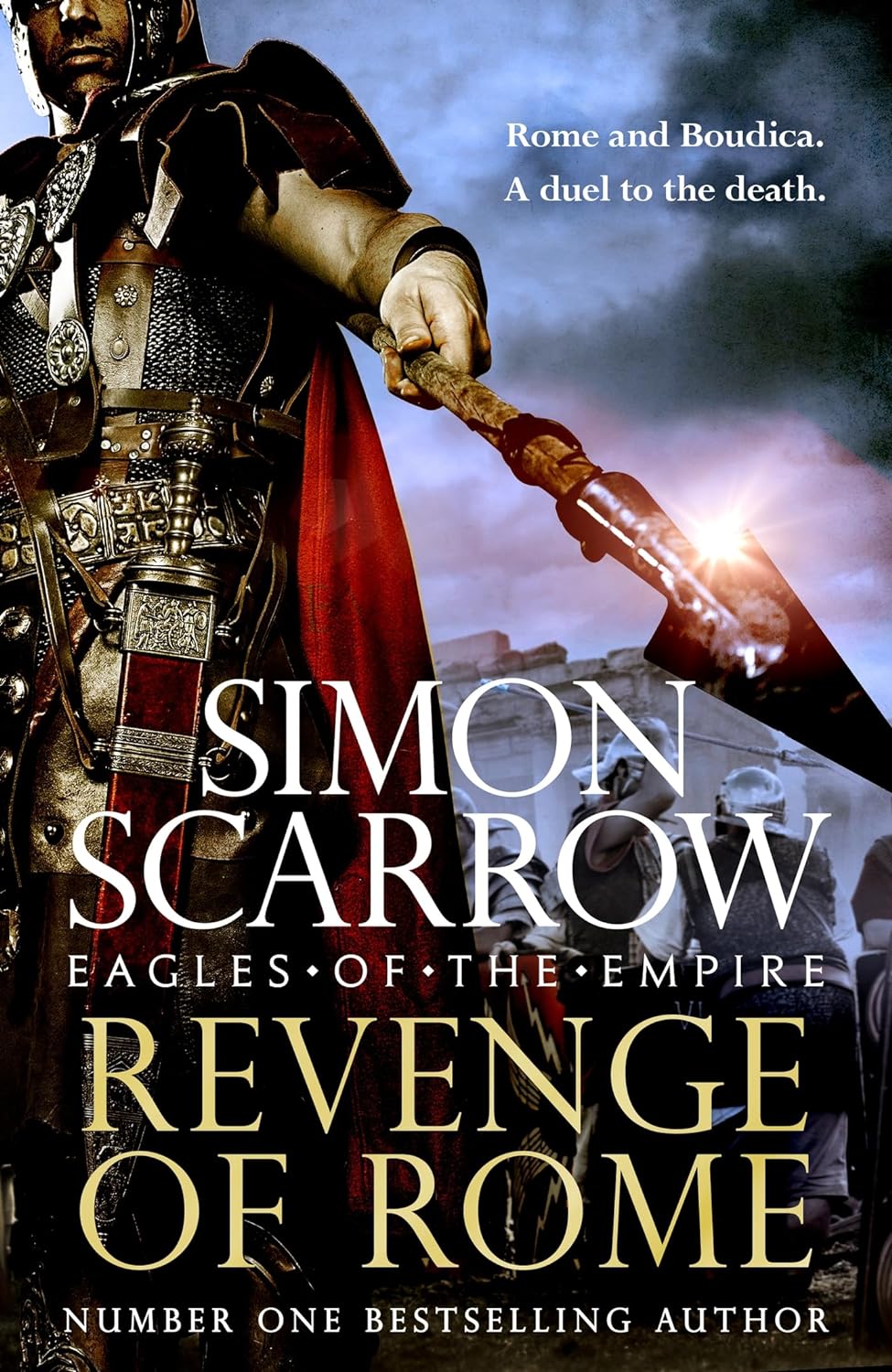
Revenge of Rome by Simon Scarrow

Publisher: Headline (Trade Paperback – 12 November 2024)

Series: Eagles of the Empire – Book 23 

Length: 411 pages

My Rating: 4.5 out of 5 stars

Amazon

The action continues in one of my favourite Roman historical fiction series with the outstanding and captivating read, Revenge of Rome by Simon Scarrow.

I have long extolled the ability of Simon Scarrow, who is one of the top current authors of historical fiction, as well as a personal favourite writer of mine.  I have had a blast reading and reviewing many Scarrow books over the years, including his Berlin Wartime Thriller series (see my reviews for Blackout and Dead of Night), as well as several great standalone reads.  However, his main body of work is the exceptional Eagles of the Empire series.  One of the premier Roman historical fiction series, the Eagles of the Empire books follow two elite Roman officers as they fight their way across multiple wars, provinces and battlefields.  I have been a fan of this series from the beginning, and the books within it have been a key part of my yearly review schedule, including The Blood of RomeTraitors of RomeThe Emperor’s ExileThe Honour of RomeDeath to the Emperor and Rebellion.  As such, the latest book in the series, Revenge of Rome, has been a highly anticipated read for me, and I have been very keen to get my hands on it.  The 23rd novel in the series, Revenge of Rome, follows on immediately after the events of Death to the Emperor and Rebellion, which covered the main events of Boudica’s uprising, and deal with the deadly aftermath of this massive conflict.

Britannia, 61 AD.  Following the final stand of the Roman army that broke the massive rebel horde, the uprising against Rome has ended but there is still no peace in Britannia.  Boudica, the warrior queen who sparked the rebellion, has escaped and still holds the eagle standard of the defeated Ninth Legion.  With the eagle in hand, Boudica and her Iceni tribe are living proof that Rome can be beaten and while she survives the flames of rebellion continue to smoulder.

Desperate to hunt Boudica down and make her pay for her crimes, Rome assigns two veterans to end the threat she poses, Prefect Cato and Centurion Macro.  Survivors of countless battles and campaigns Cato and Macro are the perfect soldiers to take down Boudica, especially as they share a long history with her.  Determined to do their duty, even with their conflicted feelings, Cato and Macro lead their troops into the lands of the Iceni to either capture or kill Boudica.

However, Boudica is no easy prey to capture.  Despite her defeat, she still has many skilled warriors fighting under her banner, each of whom holds great hatred for the Romans.  Worse, the war has made Boudica both cruel and cunning, and she soon engages in a brutal war of attrition, determined to break the Romans before they can overwhelm her.  To succeed, Cato and Macro will need all their cunning, grit and experience to finally bring Boudica down.  But can even these wily Roman officers contend with the wrath of an entire nation and their vengeful queen, or will Britannia rise once more to destroy the Roman invaders?

Revenge of Rome was another excellent and exciting entry in the Eagles of the Empire series that proved to be an absolute blast to get through.  A very intense, character driven read that focuses on an interesting period of Roman history, Revenge of Rome was an outstanding book that really drew me in.

Scarrow did an amazing job continuing the intense story from the last two books, and I frankly feel that this has been some of his best writing in years.  Starting off with a cool alternate look at the main battle from Rebellion, Revenge of Rome primarily explores the events immediately following the massive uprising and the destruction wrought on the Roman settlements.  Once again following Cato and Macro as they are given an impossible task, Scarrow presents a back-to-basics narrative as the two officers train up a new regiment (from the Second Legion, which was a nice callback to the first few books), to lead it into combat against the rebelling tribes.  The first half of the book follows Cato’s initial strategy of diplomacy and scouting, as he tries to figure out how to defeat Boudica with limited troops.  At the same time, Boudica works to reignite her rebellion, causing chaos amongst the other tribes and scoring some early victories.  This proves to be an intriguing first half of the book, especially as it nicely sets up the rest of the narrative, while also examining the aftermath of the rebellion, and the initial attempts of the Romans to regain control.

While the first half of Revenge of Rome was exciting, the best action occurs in the second half as Cato and Macro lead their troops against the Iceni and attempt to find their hideout.  There are some great small-scale conflicts the further we get along and Scarrow did an effective job showcasing Boudica as a truly dangerous foe.  Everything nicely leads up to the final battle, where the protagonists discover the Iceni’s fortress in the swamps (thanks to an excellent plot line about Cato trying to win back the hearts and minds of the locals) and engage in a deadly siege.  The action flies thick and fast here, and there are some awesome fight sequences as both sides initiate some clever tactics.  I really got caught up in the final battles and flew through the last 100 pages or so which detailed the siege.  While there is a natural focus on the brutal combat, Scarrow also provided some powerful character moments which helped to make Revenge of Rome even more intense and moving.  Scarrow ends everything on a final, if hopeful, note and it looks like the Eagles of the Empire series will be entering a new phase.  It will be interesting to see where Scarrow goes next, and I look forward to seeing how a certain new character is worked into the plot.

Scarrow always utilises a great and consistent style with the Eagle of the Empire books, which allows for some fantastic and exciting stories.  Revenge of Rome is no different, as we are presented with a compelling tale that sees the Romans taking on the local tribes of Britannia in a deadly game of cat and mouse.  I felt that Scarrow did a great job amping up the character emotions in Revenge of Rome, especially as we get some great alternate views of the main antagonist, Boudica, and her vengeful crusade.  The resulting carnage is well-written and intense, and Scarrow is very effective at portraying historical combat through his writing.  I really love the detail in which Scarrow showcases both the Romans and the Britannia tribes, and the compelling action sequences make for some brilliant reading.  The historical period featured within Revenge of Rome also proved to be very interesting, as Scarrow dives into the aftermath of Boudica’s rebellion and the state of Britannia at the time.  I really appreciated this fascinating focus; especially as most historical fiction authors tend to only portray the main rebellion and leave it at that.  I felt that Scarrow also did an outstanding job capturing the emotions of both the Roman soldiers and the surviving tribes throughout the book, and it was really intriguing to see some of the politics and logistics involved in the aftermath of the deadly occurrences of the previous novels.  Like most books in the series, Revenge of Rome can easily be read as a standalone novel, as Scarrow writes an inclusive narrative that cycles back to key events of previous books when necessary.  However, to get the full emotional impact of Revenge of Rome I would recommend first reading the prior two novels, Death to the Emperor and Rebellion, as their stories are extremely well linked.  However, even if you only read Revenge of Rome, you are in for a great historical adventure with some intriguing features.

I also felt that Revenge of Rome had some very strong character work in it as Scarrow brings back his classic protagonists alongside a few intriguing additions.  After 23 books, Cato and Macro are still the same characters we’ve come to know and love, although Scarrow does find ways to keep them fresh.  While Cato is his usual tactical and empathetic self, especially when it comes to finding ways to defeat the enemy, Macro is in his full-on non-commissioned officer mode, serving as the hard-boiled soldier’s soldier.  Thanks to some over-the-top drill sergeant scenes, Macro quickly steals focus, and he is the more entertaining of the two protagonists.  Scarrow also throws in some especially emotional sequences for Macro, as he deals with the continued conflict against his former love interest, Boudica, his guilt for the damage she caused, and the secrets she revealed to him in the previous novel.  One of these secrets comes to fruition nicely in the final part of the book, and it will be interesting to see how the evolves going forward.

Aside from Cato and Macro, there is a great array of additional interesting characters scattered throughout the novel who have their moment to shine.  This includes multiple Roman figures, many of whom previously appeared in previous novels.  Of these, I particularly enjoyed Scarrow’s portrayal of a young Tribune Agricola.  Agricola, a real historical figure destined to become a famous general, is shown here as a brash young officer eager for command.  His ongoing storyline of learning the ropes under Cato and Macro proves to be a lot of fun, and I liked the inference that Agricola’s later success can be attributed to the harsh early tutorage of the protagonists.  However, out of the all the supporting characters, I felt that Scarrow did his best work with Boudica.  Boudica, who has appeared in several earlier Eagles of the Empire books, has one of her best outings in Revenge of Rome.  Despite losing in Rebellion, Boudica is still a determined revolutionary, turned vengeful from the Romans treatment of her and her daughters.  As such, she is unrecognisable compared to her previous appearances as an ally to Cato and Macro, and she proves to be one of their most dangerous enemies.  I felt that Scarrow really captured her revenge-darkened heart in Revenge of Rome, and there are some great scenes where she continues to take her war up another notch.  It was honestly really moving to see her in this final showdown against the protagonists, and I appreciated how effectively Scarrow focused on this iconic historical figure in this latest book.

Simon Scarrow once again deeply impressed me with an Eagles of the Empire novel as Revenge of Rome was another captivating and exciting novel, loaded with awesome historical action.  An excellent addition to the series that provides an outstanding wrap-up of one of Scarrow’s best storylines, Revenge of Rome comes very highly recommended, and I look forward to seeing where the author takes the series next.  In the meantime, we have A Death of Berlin to look forward to from Scarrow early next year, which should be another dark and complex Berlin Wartime Thriller.
Amazon

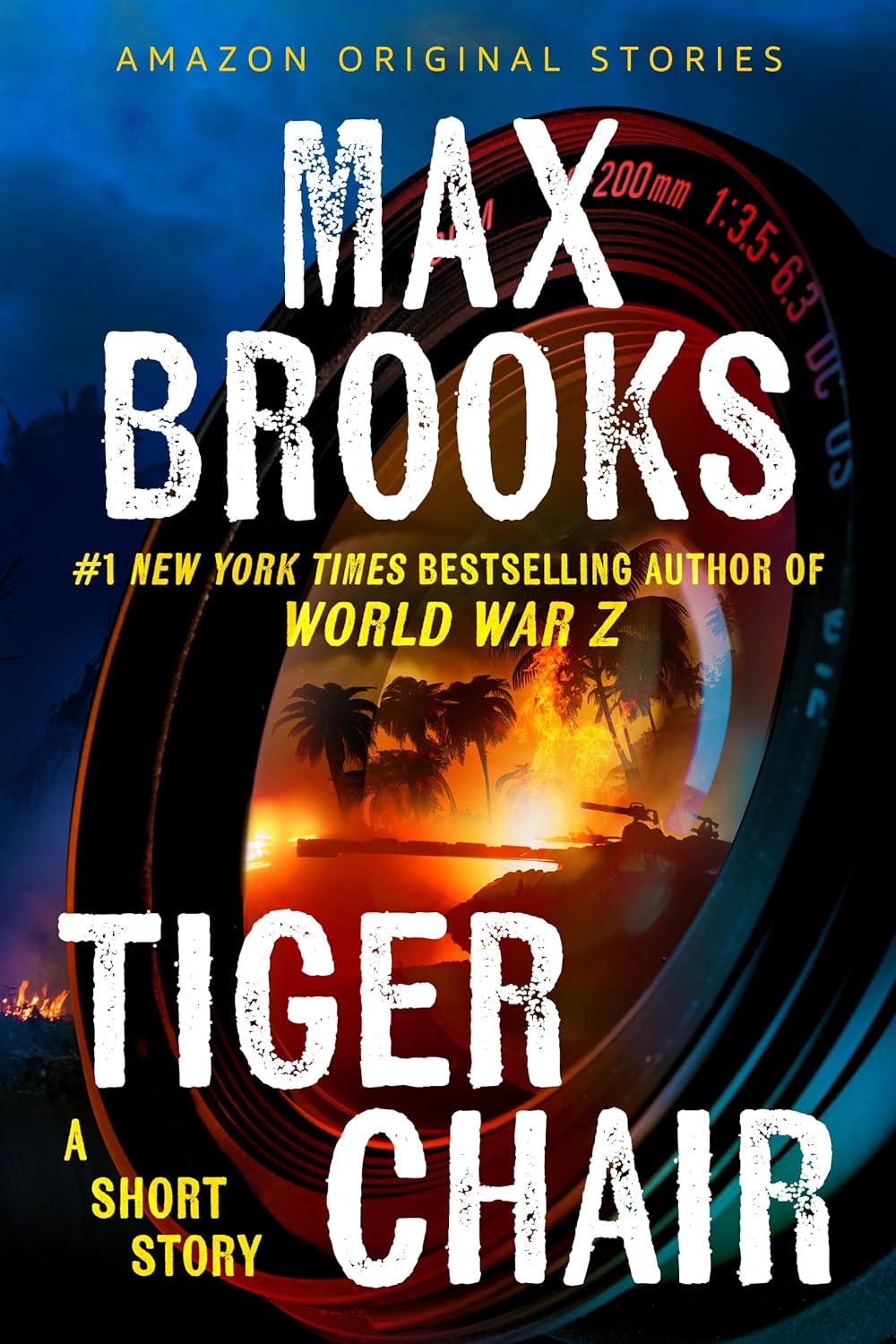
Quick Review – Tiger Chair by Max Brooks

Tiger Chair Cover

Publisher: Amazon Original Stories (ebook – 1 June 2024)

Series: Standalone

Length: 50 pages

My Rating: 4 out of 5 stars

Amazon

I was recently lucky enough to receive a copy of the new short story from acclaimed author Max Brooks, Tiger Chair, which instantly grabbed my attention.  Brooks is an author I have a lot of love for, especially as his two main novels are huge favourites of mine.  This includes his most iconic work, World War Z, which I had an exceptional time listening to a few years ago due to its complex story and the impressive array of celebrity narrators associated with the audiobook version of it.  Brooks followed this up a couple of years ago with the compelling horror read, Devolution, that saw an isolated community attacked by sasquatches in an outstanding and exciting read.  Devolution ended up being one of my favourite books of 2020 and ensured that I would check out anything else that came my way from Brooks.  As such, I made sure to read through Tiger Chair as soon as a got it, as I was intrigued by the content.

Plot Synopsis:

When China invades America, guerrilla warfare explodes on the streets of Los Angeles in this provocative short story about the future of war from Max Brooks, the #1 New York Times bestselling author of World War Z.

China thought it would be a quick war, an easy war. But now, years later, as the insurgency on the streets of Los Angeles escalates but the propaganda never changes, a Chinese officer can’t keep silent any longer. Torn between loyalty to his country and loyalty to his troops, he writes a brutally honest—and possibly suicidal—letter home to unmask the truth.

Brooks combines his signature meticulous research with unforgettable characters in this landmark work of speculative fiction.

This was a very interesting read from Brooks that I was able to power through in a short amount of time.  Set in the future, Tiger Chair is written as a secret letter from a Chinese officer involved in a fictional invasion of the United States to a friend back home.  In this letter, the officer describes the various hardships of the invasion, including the escalating insurgency in Los Angeles, who are pushing his soldiers to the limit with their intense attacks and low-tech strategies.  However, his priority in writing this potentially treasonous letter is to highlight his despair at the ineffective and inflexible strategies of his side, which care more for propaganda than the lives of their soldiers and the civilians, and his desire to see the war come to an end.

I felt this was a rather interesting choice of story for Brooks to write, and it reminded me of the cynical memories of a professional soldier during the zombie wars of World War Z.  Brooks paints a grim and gritty story of survival and duty in the Tiger Chair, and you can easily feel the frustration and fear of the protagonist as he attempts to highlight his feelings about how the war is being run and the various lies he and his soldiers have been fed by their superiors.  The author really captures the way that the protagonist is caught between loyalty to his country and his anger at how events have unfolded, especially as he is powerless to impart any effective change to the situation.

I was quite impressed by the various scenarios that Brooks imagined for this future war in Tiger Chair, and his vision for how events might unfold in this scenario, as well as the technology that would be utilised for it, is very fascinating.  While I am sure that there will be some criticism of Brooks trying to imagine the feelings of Chinese soldiers in a war they might not even undertake, I felt that the Tiger Chair was more of a general warning about the futilities of war, and the frustrations of the lower ranks at the mistakes of their politically motivated superiors.  Indeed, many of the issues the protagonist raises could be applied to many other historical or current wars, and there are several allusions to them in the plot.

Brooks does also attempt to get into the Chinese mindset, which I honestly think he did a good job of considering he had less than 50 pages in which to do so.  There is an interesting examination of the national identity and how their history and culture would influence them into going to war, and the various opinions people within the country would have about these battles.  Brooks also includes some commentary of recent well-known events and controversies involving China, which is more geared towards central criticism than specific critiques of the Chinese.  For example, while he mentions the way in which China influences American media and movies for their own purposes, the protagonist’s resulting criticism are more directed towards the media companies that allowed them to happen as they sacrificed their principles for money.  These and other observations an about current society are quite interesting and make for quite a compelling story.

Overall, I felt that Tiger Chair was a compelling and intense short story from Brooks that brings together some intriguing ideas and predictions.  While I probably would have avoided Tiger Chair if it weren’t Brooks writing it, mainly because I prefer full-length novels to short stories, I’m glad I checked this out, and it ended up being a fascinating and powerful read.

Amazon

Warhammer 40,000: Death or Glory by Sandy Mitchell

Death or Glory Cover 2

Publisher: Black Library (Audiobook – 28 February 2006)

Series: Ciaphas Cain – Book Four

Length: 8 hours and 50 minutes

My Rating: 4.75 out of 5 stars

Amazon

After recently getting through awesome Warhammer 40,000 novels like Straight Silver and Sabbat Martyr, I was in the mood for even more fantastic fiction, so I decided to check out the always reliable Ciaphas Cain series by Sandy Mitchell with Death or Glory.

The Ciaphas Cain books are an outstanding and highly entertaining Warhammer 40,000 series that shows the grimdark universe in a whole new light.  Written by talented author Sandy Mitchell (a pseudonym of Alex Stewart), the Ciaphas Cain books follow an unlikely hero, Commissar Ciaphas Cain.  Despite being a Commissar, officers who are supposed to be embodiments of duty, discipline and bravery, Cain is a highly practical and fearful man who wants to stay alive in the deadly Warhammer 40,000 universe.  However, his attempts to stay out of the fight usually result in him getting thrust into even more danger which he needs to survive using his trademark cunning and manipulation tactics.  His various adventures have also turned him into a legendary hero throughout the Imperium of Man, something that results in even more trouble for unlucky Commissar.

The Ciaphas Cain books are always a lot of fun to read, especially as Mitchell takes a comedic take to the Warhammer universe.  Loaded with unlikely coincidences, clever humour and over-the-top characters, the first three Ciaphas Cain novels, For the Emperor, Caves of Ice and The Traitor’s Hand, have been extremely awesome and this is easily one of my favourite Warhammer 40,000 series.  As such, when I needed something particularly entertaining to listen to, I chose the fourth book in the series, Death or Glory.

Relatively young Commissar Ciaphas Cain is not yet the hero of the Imperium he is fated to become, although he has already started to gain a reputation he doesn’t believe he deserves.  After stopping a genestealer infestation, Cain and the artillery unit he is attached to are ordered to the planet of Perlia, which has fallen under siege by the orks.  Happy to spend the next war far behind the lines with the artillery, Cain is unprepared for the dangers to come.

Upon arriving in the Perlia system, the ship Cain is travelling aboard comes under ork attack and Cain has no choice but to rapidly disembark in an escape pod.  Trapped with his aid, Jurgen, Cain’s pod is shot down before they can be rescued, which results in them crashlanding on Perlia.  Hoping to find sanctuary after a harrowing adventure in space, Cain is horrified to discover that they have crashed into the wrong side of the planet and are currently stuck well behind enemy lines.

Knowing that the only way to survive the ork hordes is to rejoin the main Imperial army, Cain has no choice but to embark on a dangerous road trip across the continent.  However, with thousands of brutish orks in the way, Cain will need help to survive.  Pulling together an unlikely army of scattered troops and desperate civilians, Cain heads off into the desert, hoping to find his salvation.  Their resulting journey will pit them against the full ork army and help turn Cain into a legend known throughout the galaxy.

Death or Glory was another exceedingly fun and deeply captivating entry in the Ciaphas Cain series that once again places Mitchell’s complex protagonist in all manner of trouble.  Action-packed, clever, and filled with excellent humour, Death or Glory was an outstanding read that I could not get enough of.

I really enjoyed the awesome story that Mitchell came up with for Death and Glory, particularly because it was a somewhat fresh take on the usual narrative.  Rather than following Cain as he works with his regiment to stop a hidden threat, Death or Glory shows Cain alone (except for Jurgen) and behind enemy lines on an ork controlled world.  Acting as a prequel to the previous novels in the series, you see the slightly younger Cain attempt to find his way back to safety, only to encounter multiple groups of refugees and scattered soldiers who turn to him for leadership.  The resulting story turns into a hilarious combination of Mad Max, Laurence of Arabia, and Kelly’s Heroes, as Cain leads his band, many of whom are crewing crude ork vehicles, across the ork controlled territories, including a vast desert.  There are several amazing battle scenes that see the humans fight back against the orks in desperate situations, often won thanks in part to Cain’s tactical insight and his unlikely manoeuvres designed to keep him alive.  This is a non-stop story, and you get really drawn into the constant travel, fighting and attempts at survival that emerge.  The orks prove to be great antagonists for the story, especially as Mitchell provides them as a mostly serious enemy.  While they are slightly underpowered in the face of the unbeatable Cain, and you do see the inherently sillier side of them, Mitchell also makes sure to showcase their prowess and brutality, which keeps the stakes high and the story even more captivating.  Ending on a final battle where Cain showcases his unlikely heroism by pure chance, Death or Glory had me hooked with its story the entire way through, and I loved the fantastic scenario that Mitchell came up with.

I have mentioned in previous reviews of the Ciaphas Cain series that Mitchell has an outstanding style that really enhance the story and bring out the innate humour within.  This is once again the case for Death or Glory, as the story is primarily told in the chronicle form from Cain’s perspective.  These unvarnished insights into Cain’s mind paint a vivid and fun picture of the events he was involved in, and you get some interesting insights into his actual motivations.  This fun story is further enhanced by the fact the memoirs have been modified by Cain’s associate, Inquisitor Vail, as she adds in a variety of notes, additional information, in-universe historical texts and footnotes.  Not only are these delightful additions informative and serve as a great way to quickly insert details of the larger war into the plot, but they are also quite funny due to the author’s sarcastic tone.  I love some of the entertaining jokes that emerge in the footnotes, especially as it allows the author to quickly reference certain ridiculous elements of life in the Warhammer universe, many of which are parodies of classic British activities.  These additional notes really change the tone of the entire book, and I love how it allows Mitchell to turn Death and Glory into something far more than a typical war story.

While there is a definite focus on humour in Death or Glory, there is still a ton of action and intense adventure here, as Mitchell draws inspiration from classic desert war movies.  The carnage of the orks is bleak, the battles are hard, and the situation is desperate as Cain and his comrades navigate the desert.  These darker elements play off the humour of Death and Glory extremely well, and I loved the complex narrative that emerged.  I enjoyed how Mitchell kept up the same excellent level of humour and compelling story elements that the previous entries were known for, and there was a strong effort to keep it consistent with the previous books.  You do notice that Mitchell utilises a bit of repetition in his books, with similar lines and descriptions used again and again.  While this is not too noticeable if you take a break in between books, it is very apparent for chain readers.  Still, this is a minor issue that Mitchell does a good job of dispelling in Death or Glory with the more unique storyline.

Like most of the entries in this series, Death or Glory can be read as a standalone novel with no real pre-knowledge of the previous books needed to enjoy it.  Indeed, Death or Glory is set earlier than the other Ciaphas Cain books, so this is a good entry point to the larger series.  There are a few references to the other Ciaphas Cain books, which established fans will enjoy, and Mitchell also provides clever hints at future events Cain will have to encounter.  Death or Glory also serves as a very fun introduction to the ork faction, especially as our protagonist has never encountered them before.  This allows the reader to get a fresh outside perspective on these alien characters, while also including details that hardcore Warhammer fans will appreciate.  As such, Death or Glory proves to be an awesome addition to the series that will appeal to fans of all levels and could easily spark a new reader to fall in love with Warhammer 40,000 fiction.

A recurring highlight of this series is the fantastic characters who populate the narrative, particularly main protagonist Ciaphas Cain.  Cain is a particularly complex Warhammer 40,000 character, mainly because he is both a renowned hero and a self-serving coward who only wants to avoid a fight.  Portrayed as a fun combination of Blackadder and Flashman, Cain is shown to be purely selfish, with his every move calculated to keep himself alive.  However, through accident or something else, his plans often backfire, forcing him into over-the-top dangerous situations that ensure others see him as an amazing hero.  This is on full display in Death or Glory as Cain pulls together a band of survivors that gets far larger and more chaotic the further they get along.  Despite his plan being designed to get himself to safety, many see him as a heroic revolutionary leader, which he is forced to maintain to keep his band of protectors loyal to him.  It is quite fun to see everyone misinterpret his decisions, and several fictional historical texts showcase the process of overexaggerating his deeds in hilarious detail.  However, despite all his protestations to the reader about being a coward, you once again see that there is far more to Cain than he lets on.  Rather than being a terrible person, he is just a sensible and tactically aware figure in a universe where the actions of unachievably brave heroes are constantly lauded.  This has led Cain to completely underestimate his own self-worth, even though he is routinely shown to be an impressive fighter, clever tactician, and caring leader.  I love this complex look at Cain, especially as his self-deprecating account ensures he is even more likeable, despite his selfish habits, and you really get drawn in to his crazy adventures.

Aside from Cain, several other figures were impressive in Death or Glory.  The most prominent, at least from impact on the book, is Cain’s associate Inquisitor Vail.  Despite not actually appearing as a character in the main adventure, Vail’s presence is strongly felt as she is the one editing and presenting Cain’s fictional memoirs.  As such, you are constantly gifted with Vail’s overlying narration and notes, especially as she provides greater context to the story and translates some of Cain’s wilder claims.  Thanks to her sarcasm, as well as her personal insights into Cain’s actual character, Vail provides a fantastic alternate viewpoint of events, and it is always fun to see her call out Cain for his lies and terrible writing style.  The other major character you must talk about is Cain’s aid and reliable bodyguard, Jurgen.  The Baldrick to Cain’s Blackadder, Jurgen is generally shown to be an unhygienic, smelly, and slightly dim companion who is utterly loyal to Cain.  However, despite this appearance, Jurgen proves to be an interesting and likeable figure, and he forms an excellent partnership with Cain.  His skills are well on display in Death or Glory, mainly due to his intimate knowledge about orks, and he once again showed himself to be an unappreciated part of Cain’s ultimate victory.  Throw in a band of intriguing survivors who flock around Cain, including several capable soldiers, a somewhat insane Tech-priest and determined troop of civilians, and Death and Glory had some great characters you can’t help but root for.

I have mentioned multiple times in the past that the best way to enjoy a Warhammer 40,000 novel is in its audiobook format.  Nowhere is that truer than the Ciaphas Cain books, which make excellent use of multiple narrators to expertly adapt the fantastically funny content of the novels.  Death or Glory is an outstanding example of this, as the brilliant production and excellent narrators produced something that I powered through very shortly, even with its nearly nine-hour long runtime.  The intense action, compelling story and outstanding humour is all amazingly highlighted in this format, and I especially loved the four amazing narrators who were brought in to voice the characters.  This includes returning favourites Stephen Perring and Penelope Rawlins, who fulfill their respective roles perfectly.  Perring is probably the most prominent narrator of the bunch as he voices all the chapters told from Cain’s perspective.  Perring is an awesome narrator as he perfectly captures the chaotic characters featured within the book, especially Cain and  Jurgen.  His portrayal of Cain is probably the best, as he expertly showcases the protagonist’s exterior boldness, as well as his interior fear and deep humanity.  Jurgen of course also comes out very well, and I love how Perring captures Jurgen’s unique persona and unquestionable loyalty to Cain.

While Perring voices the main chapters, Penelope Rawlins is just as important as she voices Inquisitor Vail, who writes the prelude, chapter introductions, additional material and footnotes that are scattered throughout the book, providing editorial notes and material to make the story more organised.  Rawlins’ voice is seamlessly worked into the main plot multiple times throughout the course of the audiobook, and I like how well her inclusions work with Perring’s main narration, especially as Rawlins perfectly captures both Vail’s sarcasm and the clear admiration she has for Cain.  This audiobook would not be as entertaining or clever as it is without these clever insertions by Rawlins, and she adds just as much to the production as Perring does.  In addition, Death and Glory brings two new narrators to the series with Joe Jameson and Richard Reed, who voice in-universe historical texts and autobiographies included to provide additional context to Cain’s ramblings.  I was very happy to hear from both familiar narrators, as Jameson lent his voice to the Necromunda novel Fire Made Flesh by Denny Flowers, as well as the Legacy of the Mercenary King series by Nick Martell (The Kingdom of Liars, The Two-Faced Queen and The Voyage of the Forgotten), while Reed narrated The Infinite and the Divine by Robert Rath, The Twice-Dead King series by Nate Crowley (Ruin and Reign) and Grim Repast by Marc Collins.  I really liked Jameson and Reed’s performances as a result, although both were a little underutilised thanks to the constraints of the narrative.  Still, these four narrators provided some exceptional voice work, and I had an amazing time listening to them throughout the course of this audiobook.  As such, Death and Glory comes very highly recommended in its audiobook format, and there is no better way to enjoy this book.

Sandy Mitchell continues to write one of the most entertaining Warhammer 40,000 series out there with this fourth entry in the epic Ciaphas Cain series.  An outstanding and hilarious novel that I absolutely powered through, I cannot recommend Death or Glory enough, and you will fall in love with this brilliant book.

Amazon

Warhammer 40,000: Dead Men Walking by Steve Lyons

Dead Men Walking Cover

Publisher: Black Library (Audiobook – 30 November 2010)

Series: Warhammer 40,000

Length: 10 hours and 42 minutes

Rating: 4.75 out of 5 stars

Amazon

Two relentless foes face off in the intense Warhammer 40,000 novel, Dead Men Walking by Steve Lyons.

Dead Men Walking was an epic novel released back in 2010, that featured a brutal and compelling story I really fell in love with.  This novel follows the trend of books that highlight the adventures of specific regiments or units of Imperial Guard, such as Catachan Devil by Justin Woolley, Kasrkin by Edoardo Albert, Steel Tread by Andy Clark, and the Gaunt’s Ghosts books by Dan Abnett, which has been very fun.  Dead Men Walking was the author’s first look at the legendary Death Korps of Krieg, one of the most distinctive and dark regiments of Imperial Guard soldiers, who he covered again back in 2022 with Krieg.  This new novel sets the Death Korps onto a whole new battlefield with deadly results.

Hieronymous Theta is a small and relatively young world in the Imperium of Man.  Populated by nearly nine billion people, it is slowly becoming an important industrial hub, as its cities and massive spires build up.  But as the inhabitants of the capital, Hieronymous City, expand their mining operations deeper they encounter something unexpected and terrifying, the Necrons.  Unfeeling and inhuman ancient xenos encased in living metal, the Necrons are an unrelenting force determined to exterminate the human pests they find inhabiting their world by any means necessary.

As the citizens of Hieronymous City begin to panic, unable to stand against the encroaching Necrons and their deadly technology, their apparent salvation lands on the planet in the most unlikely of forms, the Death Korps of Krieg.  One of the most feared and mysterious regiments of the Astra Millitarum, the Death Korps of Krieg come from a world destroyed by civil war which seeks to redeem itself by producing soldiers solely dedicated to the Emperor and his victory.

As the Death Korps land on Hieronymous, they take the war to the Necrons and begin a determined siege to retake Hieronymous City from the outside.  But as the Krieg regiments push forward, the people of the planet soon begin to realise that the Death Korps might not be the salvation they hoped for.  The soldiers of Krieg’s only goal is to defeat the Emperor’s foes, and they are willing to sacrifice anything to achieve victory, including the citizens of Hieronymous.  With battle joined, the fate of Hieronymous hangs in the balance.  But does anyone truly win when two implacable and unrelenting armies go to war?

This was an extremely interesting, intense and dark novel from Steve Lyons, who follows up his previous Krieg novel in a big way with this outstanding read.  Featuring a moving, action-packed and highly cynical story, Dead Men Walking was probably one of the better Warhammer 40,000 books from last year, and I had an exceptional time getting through it.

I really liked the fantastic story that Lyons came up with for Dead Men Walking, especially as it successfully showcased both opposing armies, the Death Korps and the Necrons, without actually featuring any perspective characters from either side.  Instead, the focus is reserved for the other humans caught in the middle of the conflict, including the Imperial Commissar attached to the Death Korps, the governor of the planet, and several citizens who find themselves caught in the crossfire of the war and are forced to adapt to survive.  I love how Lyons set the early narrative out, with the perspective characters slowly becoming aware of the dangers beneath them.  The slow build introduction of the Necrons, a force the humans don’t know but the reader is very aware of, was handled perfectly, and there is a lot of great anticipation that pays of well when they finally attack.  The scenes of carnage and utter terror that emerge for the characters stuck in the city really hit home with their realism and intensity.  Indeed, there is a bit of a horror vibe to the story at this point, and Hieronymous City turns into an excellent wasteland setting for the characters to subsequently attempt to navigate.

Once the city is in ruins, the book turns towards the landing Death Korps, who begin prosecuting a deadly war against the Necrons.  This moves the story into a fascinating new zone, as you get some fantastic battles while also witnessing several characters soon caught up in the city as everything changes around them.  I loved the various unique, personal stories that emerged, and the focus on characters watching both the Krieg and Necron forces battle it out proves very powerful.  As the story continues, each of the main characters suffer in various ways, especially as they begin to realise that the unrelenting, victory-focused Krieg are just as dangerous as the Necrons, and there are some deeply powerful moments as they lose their humanity in the carnage of war.  All of these mostly independent character narratives go in some dark directions, especially as the background war gets even darker, and not everyone survives the various conflicts to come.  These storylines either end or coalesce together as the book comes to a head, and you really appreciate the impressive narrative that Lyons weaves together.  I loved how grim and cynical the story got at the end, and Lyons provides a particularly memorable conclusion that really highlights just how unfair the Warhammer 40,000 universe can be.

Lyons really came up with a brilliant story for Dead Men Walking, as he balanced the need to highlight two interesting Warhammer 40,000 factions, while also telling his own unique narrative.  Telling the story of the Krieg and Necrons from the perspective of the third-party characters caught in the middle of their war was such as clever move, especially as it provided some fascinating contrast between the two factions.  The author provided such a dark vibe for Dead Men Walking, and the terrified civilians, the crumbling city and the relentless troops waging war without a care for those around them were all handled brilliantly.  I think the narrative split between the various characters caught up in the fray was done well, and you get to see all sides of the conflict, and the darkest actions of both opposing foes.  I also loved how well Lyons showcased the main city setting throughout the book, as the collapse of the once proud city mirrors the loss of humanity for the various protagonists.  Dead Men Walking can easily be read as a standalone novel, and new readers can just fall into its dark and unique story.  Indeed, this might be a pretty good entry point, as the views of the confused and horrified civilians provide some good opening observations about two key factions.  Naturally, established fans of the franchise will get a lot more out of Dead Men Walking, especially as Lyons really showcases both iconic groups in some fantastic ways.

I absolutely loved the portrayal of the Krieg soldiers in Dead Men Walking, and they really are some of the most entertaining figures in the Warhammer 40,000 canon.  Unlike his other novel, Krieg, where Lyons spent a great deal of time focusing on the origins of the Krieg soldiers with flashback sequences, Dead Men Walking showcases them purely through the eyes of other human inhabitants of the Warhammer 40,000 universe.  To the common soldier or citizen of the Imperium of Man, the Death Korp are unnaturally dedicated, unwavering and heartless, focussing on the battle to the exclusion of all others.  Thanks to their harsh training, indoctrination, and history, they have a very black-and-white view of the universe and will stop at nothing to win, even if that means sacrificing their comrades or allies for a strategy.  Lyons really highlights their near-inhuman mentalities throughout the course of Dead Men Walking, and thanks to the perspectives of the non-Krieg soldiers, you see them in a much more sinister light.  There is something very concerning about the simple mathematic they put behind their strategies, and I loved how well Lyons captured how similar they are to the Necrons.  Thanks in great deal to the actions of the Krieg soldiers, this ended up being a particularly bleak book, which really hammered home how there are no good guys in this universe.

In addition to the Krieg soldiers, Dead Men Walking also featured the Necrons as the antagonists, who served as worthy opponents to the Krieg.  As with the Krieg soldiers, you don’t get a Necron perspective in Dead Men Walking, which honestly enhanced the unique story Lyons was going for.  Unlike books like other more recent Necron focussed novels like Ruin, Reign or The Infinite and the Divine, you only see these characters through the eyes of normal humans, who have no idea who or what they are.  This makes for some particularly terrifying scenes as the humans encounter overwhelming attacks from unkillable metal monsters, and Lyons really captures how the unknown is just as bad as the devastation around them.  Even when the Krieg soldiers arrive, there is very little knowledge about the Necrons, due to the secrecy of their origins, and the only intelligence about them comes from rumours of prior encounters (which includes a cheeky reference to the Ciaphas Cain novel, Caves of Ice).  I really appreciated this shrouded look at the Necrons, and it proved to be interesting to see the how a normal person would view them.

I really liked the characters in Dead Men Walking, especially as Lyons focuses the story on several normal humans who suddenly get thrust into hell and find everything they thought they knew completely upturned.  Much of this upheaval is due to the interactions with the Krieg soldiers, whose unreasonable actions cause even the most stoic soldier or commander to falter in different ways.  Watching each of these characters slowly change for the worse makes for some gripping reading, and you end up feeling great sympathy for all the point of view characters.

These great characters include Gunthar Soreson, a mine supervisor who loses everything in a single night and tries to find redemption as a soldier fighting for the Krieg.  It was absolutely fascinating to see Gunthar, who starts the book as a relatively normal and nice character, slowly lose his humanity in a similar manner to the Krieg soldiers, and his story hits particularly hard at times.  I also must highlight the character of Commissar Costellin, one of the commissars attached to the Krieg regiments, and one of the few non-Krieg soldiers featured in the book.  Commissars are fantastic figures in the Warhammer 40,000 canon, mainly because they serve as implacable disciplinarians charged with maintaining order and morale through lethal means and ensuring that the soldiers due their duty.  However, due to the unnatural discipline of the Death Korp soldiers, Costellin finds himself acting more in the role of a liaison between the Krieg and the citizens of Hieronymous.  Lyons writes some intriguing storylines around Costellin, and it was fascinating to see a commissar character who fears the resolve of his own troops, as the Death Korp leaders go too far even for him.  Finally, I really enjoyed the inclusion of the governor of Hieronymous, Hanrik, who finds both his planet under attack and his authority taken away from him when the Death Korp takes over.  I felt the storyline around Hanrik was very clever, and you had to feel for him at times, especially when he finds his loyalties tested.  All these character arcs and more are really well written and hit hard emotionally, especially with their resulting dark ends.

It should come as no surprise whatsoever that I grabbed Dead Men Walking on audiobook, as frankly no other format does Warhammer 40,000 fiction justice.  The resulting audiobook was extremely awesome, as the intensity, action, and darker elements of Dead Men Walking’s story came through in this format.  Coming in with a run time just short of 11 hours, Dead Men Walking was an easy Warhammer 40,000 audiobook to power through quickly, especially once you get stuck into its awesome narrative.  It helped that they brought back talented narrator Timothy Watson for this audiobook adaptation.  Watson, who did a great job narrating Krieg and The Lion: Son of the Forest, was in rare form again in Dead Men Walking, especially as he has the perfect voice for this darker and exciting story.  His voice work really captures the chaos and desperation of the story, and I loved the unique tones he comes up with for the various characters.  The featured Krieg soldiers all have the typical German-esque accent, which matches the regiment’s World War I aesthetic, and I liked how Watson worked to enhance these figures relentless and unwavering nature through his voice work.  The other characters of the plot, who are allowed to have emotions, are also portrayed extremely well, and Watson provides them with excellent and fitting voices that captures their feelings on the situation, especially as their encounters with both the Krieg and the Necron, wear them down.  This audiobook version of Dead Men Walking was so damn good, and it is easily the best way to enjoy this epic novel.

Steve Lyons continues to showcase why the Death Korp of Krieg are some of the most memorable figures in the Warhammer 40,000 canon with the brilliant and dark read Dead Men Walking.  Presenting a grim scenario of war and sacrifice that only gets worse when the ‘good guys’ arrive, Dead Men Walking was a particularly harrowing piece of Warhammer fiction, that I still cannot stop thinking about.  Clever, intense and a little traumatising, Dead Men Walking comes highly recommended, and I cannot wait to see what great tale Lyons comes up with next.

Amazon

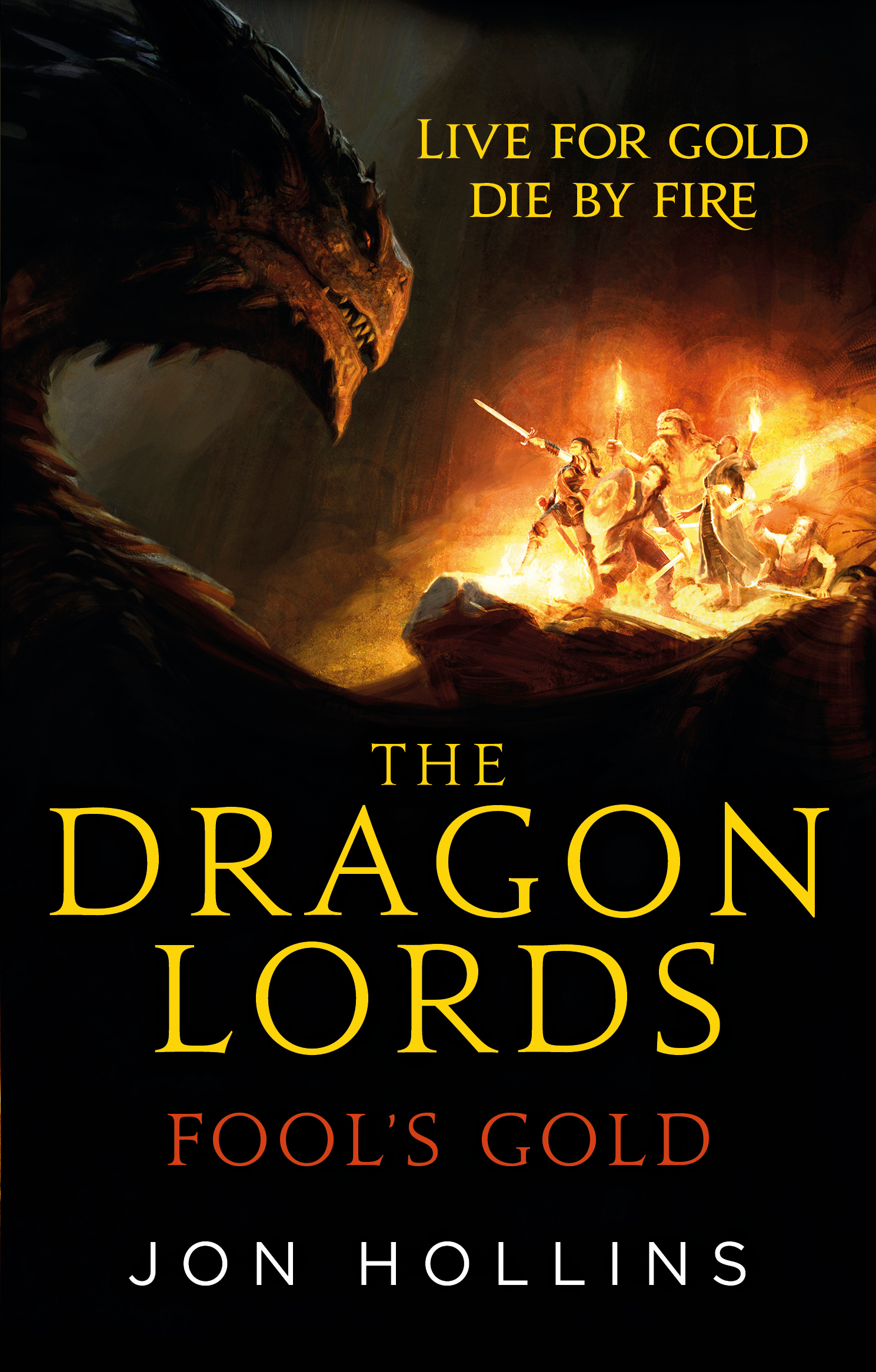
Fool’s Gold by Jon Hollins

9780356507651

Publisher: Orbit (Paperback – 26 July 2016)

Series: The Dragon Lords – Book One

Length: 517 pages

My Rating: 4 out of 5 stars

Amazon     Book Depository

Prepare for all manner of craziness and exceedingly entertaining fun as Jon Hollins presents an amazing book about heists and dragons with Fool’s Gold.

A few months ago, whilst perusing my local book fair, I happened upon a copy of Fool’s Gold by Jon Hollins (a pseudonym for fantasy author Jonathan Wood), which really grabbed my attention.  The first book in Hollins’ The Dragon Lords trilogy, Fool’s Gold had a fantastic plot synopsis which involved heists and dragons.  I was very intrigued by this cool book, which sounded so very fun, so naturally I made sure to grab it.  As a result, it was nice and handy when I was in the mood for a fun fantasy book, and boy was I entertained by this cool read.

In the fantasy land of Avarra, there are many different magical creatures and beings who infest the world and bring all manner of chaos with them.  However, no creature is as dangerous, arrogant, and domineering as the dragons, especially members of the destructive Consortium who have taken over the isolated nation of Kondorra and rule it as overlords.  Employing a private army, the dragons impose massive taxes on the lands surrounding their lairs, driving the people into poverty and forcing many to lose everything.

It is only a matter of time before something gives, and when Willett Fallows loses his farm to greedy dragon who controls his village, he snaps and becomes a fugitive.  On the run, Will finds himself in the most unusual of situations after a chance meeting with four unlikely wanderers in a nearby cave, including a skilled warrior woman, a murderous lizard man, a dragon obsessed academic with explosive magical powers, and his village’s local insane drunkard.  Together the five new companions come up with an ambitious plan to steal all the gold from the local dragon lord and make their escape.

However, when their heist unsurprisingly goes wrong the friends find themselves in a surprising position as the nation’s apparent saviours.  Suddenly worshipped by a massive following, the companions must find a way to escape both the deadly retribution coming their way and their own insane devotees.  But no matter how hard they try, all their plans seem to backfire until they find themselves in the middle of a deadly religious war against the dragons.  Can they pull off one more con to destroy the Consortium, or is everyone about to end up dead in a field of fire?

Fool’s Gold is an exceedingly fun and very entertaining read that I was able to finish off in a few days, especially once I got caught up in its exciting and fast-paced narrative.  Hollins sets everything up very quickly, with the new fantasy world introduced, the dragon’s control of Kondorra established, and all five of the main characters brought together.  While I wasn’t the biggest fan of the extremely coincidental meeting that saw all the protagonists meet up in the first few chapters, the story evolves at a much more appropriate pace from there, with the characters quickly planning their theft of the local dragon’s hoard.  I was a little surprised at how fast the first heist came about, as I figured it would be a long-term plan that would unfold much later in the book.  However, featuring this heist early on really works, as it sets up the rest of the story extremely well while also showcasing early just how crazy and over-the-top this book is going to be.  The chaotic results of the first heist see the protagonists incorrectly declared religious saviours destined to bring down the dragons.  Suddenly leading a ragtag army, the protagonists are forced to engage in several more attempted heists and plots against other dragons and their minions.  While these plans often backfire in very funny ways, the protagonists keep failing upwards and must keep the con going while dealing with a multitude of problems, including deranged followers, immense responsibility, and deep personal issues.  This all leads up to the final confrontation with the dragon Consortium, with the characters unleashing their most ambitious plan yet.  Watching this final plan come together is pretty damn awesome, and the insane battles and crazy results that follow were so damn epic.  I ended up really loving this compelling and very fun story, which Hollins leaves open for some intriguing sequels in the future.

Fool’s Gold is an incredibly fast-paced novel with a great writing style that makes it very easy to power through.  The author has a brilliant and wicked secret of humour that infects his writing, and I found myself chuckling the entire way through, not just because of the jokes but because of the insane scenarios that resulted.  I was also deeply impressed with how well Hollins brought together several genres to create a compelling and hilarious read.  The book initially appears to be a classic fantasy read, as the author quickly and effectively sets up an intriguing new fantasy world at the start of the book, which contains several classic fantasy creatures and elements that are likely going to get expanded on in the sequels.  However, it soon becomes apparent that this isn’t going to be a typical fantasy book, especially as the very modern sense of humour and language that Hollins employs gives it a whole new tint.  I often enjoy when authors feature contemporary language and attitudes in fantasy novels, and I felt that Hollins uses it to great effect in Fool’s Gold, giving the book a distinctive tone.  The author further brings in the brilliant heist elements to the book, which I deeply enjoyed thanks to all the fantastic plans and cons.  It proved to be extremely fun to see all these elaborate and weird heists get planned out and executed in a fantasy universe, and it combines extremely well with the humorous tone and fantasy elements of the book.  I deeply enjoyed how this captivating story came together, and I can’t wait to see how the next books in the series pan out.

I also really liked the cool characters featured in Fool’s Gold, especially as Hollins came up with a very eclectic and damaged group of central figures.  The book primarily revolves around five protagonists, each of whom have multiple chapters told from their perspective and who unite as a team very early in the book.  This includes Willett Fallows, the former farmer who turns to heist planning after the dragon’s greed takes everything from him.  There is also the fantastic pair of Lette and Balur, a female adventurer looking to settle down and her lizard man companion who loves all forms of violence and is determined to fight and kill the biggest opponents he can find, in this case dragons.  There is also Quirk, a former mage turned academic who arrives in Kondorra to study the dragons and finds herself dragged into the group’s plans so she can get a closer look at the dragons and their lairs.  Finally, there is Firkin, a local drunk whose failure years ago to defeat the dragons drove him mad and who finds new life during the new adventures. 

All five characters are pretty crazy in their own way, and I think they made for quite an intriguing and amusing focus for the narrative, especially all the interesting growth Hollins makes use of.  Will’s evolution from a farmer to a master strategist was very well written and I appreciated the compelling examination of how the power he started to wield was potentially corrupting him, especially when he holds the lives of so many in his hands.  The inevitable romance between Will and Lette was handled well throughout the book and it came across as a natural and well-developed relationship.  Balur, the battle-loving lizard man was easily one of the most entertaining characters in the novel, and I loved seeing his mad rages and various attempts to kill the dragons they encounter, especially as it results in an incredibly funny and hilariously brutal final fight at the end of the book.  I was also quite impressed that Hollins was able to keep up Balur’s unique style of speech for much of the story.  Firkin’s rise from unpredictable drunk to unpredictable drunken religious mouthpiece and rabblerouser was exceedingly funny in places, especially as you are never quite sure whether he is actually insane or just messing with everyone.  I did find his continued crazy speech a bit too much at times, although the occasional hints at his deeper intelligence and sanity made up for that.  However, the best character work was probably reserved for Quirk as Hollins really dives back into her history as a child soldier/mage who was gently rehabilitated and taken into the academic lifestyle.  Quirk finds herself reverting to her old destructive magical ways throughout the course of the adventure and she must figure out who she truly wants to be.  I had a great time with all the cool characters in this book, although I do wish that the greedy and arrogant dragons might have gotten a little more development.  Overall, I would say that the characters were some of the best parts of Fool’s Gold and look forward to seeing more of them in the future.

Unsurprisingly, I had a pretty wonderful time with Fool’s Gold and it ended up being as thrilling and compelling as I hoped it would be.  Jon Hollins wrote a wildly entertaining and very funny fantasy heist narrative for Fool’s Gold, which came equipped with some great fantasy elements and a bunch of excellent characters.  I really enjoyed Fool’s Gold and I will have to try to grab the next two books in the Dragon Lords trilogy, especially when I’m in the mood for some crazy, over-the-top adventure and excitement. 

Amazon     Book Depository

Call of Empire by Peter Watt

Call of Empire Cover

Publisher: Macmillan (Trade Paperback – 25 October 2022)

Series: The Colonial series – Book Five

Length: 368 pages

My Rating: 4.5 out of 5 stars

Amazon     Book Depository

Australia’s master of the historical adventure returns with another deeply exciting and highly intriguing character driven read that follows one historical family as they embark on war and adventure across the world, Call of Empire by Peter Watt.

Towards the end of each year, I always know that I am about to have my historical action and adventure quota filled as the new Peter Watt is coming out.  Watt has been a particularly enjoyable and compelling Australian author for years, producing intriguing historical fiction books with a focus on Australian history.  His works have so far included the long-running Frontier series and his compelling Papua trilogy, both of which contained some remarkable historical adventures.  However, I personally have been really getting into his currently body of work, The Colonial series, which I have had a wonderful time reading in recent years.

The Colonial series started of back in 2018 with The Queen’s Colonial, an intriguing read that followed young Australian Ian Steele in 1845 as he switched places with an English nobleman to take up his commission in a British regiment.  Becoming Captain Samuel Forbes, Steele found himself drawn into several of England’s deadly 19th century wars, while also forced to confront several dangers back in England as the real Samuel Forbes’ family sought to have him killed.  This fantastic series continued for two more books, The Queen’s Tiger and The Queen’s Captain, both of which were excellent reads.  Watt continued the series last year with The Colonial’s Son, which jumped ahead a couple of decades to follow the main character’s oldest son as he followed in his father’s footsteps and become a soldier in the Queen’s army.  I had a great deal of fun with these exciting books, and I was very happy when I received the next entry in the series, Call of Empire.

Starting in 1885, several years after the conclusion of The Colonial’s Son, Call of Empire sees protagonist Ian Steele finally living the quiet life in New South Wales, enjoying time with his family and friends, and expanding his business empire.  However, the British Empire is constantly finding itself in conflict across the globe, and soon the young New South Wales colony is called upon to send troops to assist the British campaign in Sudan.

Determined to serve the Empire once again, Ian’s oldest son, Josiah, takes a commission in the New South Wales army and journeys to Africa to fight the Sudanese forces for the British.  However, his decision will alienate him from the love of his life, Marian Curry, who is determined that he stop fighting in imperialistic wars.  At the same time, Ian’s younger son, Samuel, is learning the family business out in the Pacific with the family’s friend, Ling Lee.  However, Samuel and Lee are soon dragged into a dangerous plot to smuggle guns for the Chinese, as Lee’s obsession with freeing China from European control leads them into mortal danger.

Soon the entire Steele family finds themselves in deep trouble across the world, and only the most daring of actions will help them survive.  But as the Empire’s wars continue and the Steele family and their friends are drawn into even more conflicts, can even their legendary luck continue?  Death and tragedy awaits them all, and soon the Steele family will face a loss they never expected.

This was another fantastic and deeply exciting novel from Watt, who continues to dazzle with his fast-paced writing and impressive historical insights.  I loved the awesome story contained in Call of Empire, and I ended up powering through this book in less than a day.

Watt produces another exciting and ultra-fast paced story for Call of Empire that takes the reader on a wild and captivating journey through some interesting parts of late 19th century history.  Starting in 1885, Call of Empire primarily follows the three male members of the Steele family as they attempt to overcome the various challenges they face in their respective endeavours.  Watt tells a multi-layered, multi-generational, character driven story that follows multiple characters simultaneously as they engage in their own story.  This means that readers are often treated to a range of different storylines in the same chapter, having one character engaged in war, while another deals with issues at home, and at the same time a third finds themselves caught up in adventures at sea.  This makes for quite a complex read, although the range of storylines are well balanced and never oversaturate or confuse the story.  Indeed, Watt is a pretty clear and concise writer, and the reader is able to have a lot of fun with several of the storylines at the same time.  Watt features an outstanding range of storylines throughout Call of Empire, and I loved the blend of war, politics, exploration, business, romance, character development and legal concerns that were featured at various points throughout the 15 year long plot.  This reminded me a lot of the author’s previous Frontier novels, especially the focus on one big family, and I had a wonderful time seeing the elaborate narrative he wove around his characters.  Watt really takes this story in some interesting directions, and there are a few big surprises, as well as some tragedies that established readers of this series will be hit hard by.  This proved to be quite an addictive read, and I loved seeing his characters continue to traverse through life in their chaotic and adventurous ways.  The book ends at the start of the new century, and it looks like Watt will be taking his characters in World War I next time, which I am sure will be suitably traumatic.

Easily my favourite thing about this book was Watt’s excellent dive into the always eventful colonial history of Australia.  In particular, Watt examines several lesser-known wars and conflicts from the 19th century, with a particular focus on the role of New South Wales.  This starts early in the plot with one of the characters getting involved in the Suakin Expedition in Sudan, which was part of the larger Mahdist War.  This deployment saw a battalion of New South Wales soldiers travel to Sudan as part of the war effort and was the very first military force to be raised and deployed overseas by Australia.  While there wasn’t a lot of fighting involved with this campaign, I was deeply intrigued by the history and the politics behind it, and Watt did a wonderful job of exploring it in great detail throughout the book by inserting his characters.  Watt continued this trend throughout the rest of the book, which saw several of his characters involved in both the Boer War and the Boxer Rebellion in China.  Both conflicts had Australian soldiers involved, fighting on the side of the British, and Watt took exquisite care to explore what role the Australians played in them, and how they came to be involved in the conflict.

Out of all of them, I particularly enjoyed the captivating examination of the Boer War in Africa, which was one of the more deadly wars Australians fought in during the 19th century.  This war, and one of the character’s roles in it, dominated a good part of the book, and Watt did an amazing job of bringing different parts of the conflict to life.  The author really captured just how dark and bloody this war was, from snipers in the African bush, to the horrors inflicted on the Boer settlers.  However, Watt saves some of his best writing for the Battle of Elands River, a protracted battle that saw the Boers surround a force of Australians and their allies in a brutal siege for 13 days.  Naturally, one of the characters is right in the middle of this fight, and Watt really showcased the carnage and terror that the Australians would have felt being surrounded and bombarded.  I honestly didn’t know a great deal about some of these early Australian military conflicts, and it was absolutely fascinating to see them come to life in the hands of this talented author.  Having this great historical background really enhanced the overall quality of the novel, and I had a wonderful time diving back into these sometimes overlooked parts of Australian military history.

As I mentioned above, Call of Empire was a very character focused book that featured a range of fantastic point of view protagonists through whose eyes the story unfolded.  Watt features a great combination of characters, with a compelling mixture of younger figures who were the focus of The Colonial’s Son, and even a few characters from the first three Colonial books.  There was quite a range of different character storylines in Call of Empire, and you swiftly get drawn into the various unique adventures of each of the characters.  It was fascinating to see how the older characters had evolved since their original adventures, and I liked how Watt started focusing more on the next generation, including by expanding the role of the younger Steele son, Sam, who had an amazing outing here.  There is a great examination of the events that help to form these figures character, and it was fantastic to see them overcome so much adversity at various parts of their life.  I will say that some of the male Steele characters did tend to blend personality wise as the book proceeded, mostly as they are cut from the same adventurous cloth, but you still grow to like all of them, and you ended up getting touched when bad things happen to them.  There are some very interesting and powerful developments that hit the main characters in this book, and this ended up being a very key novel in the family history.  I had a wonderful time seeing the latest exploits of the Steele family, and with the next generation being introduced towards the end of the book, you know that they have even more adventures to come.

Peter Watt continues to showcase his talent as Australia’s premiere author of the Australian historical adventure with his latest Colonial novel, Call of Empire.  Bringing back several of his fantastic protagonists from the previous books, Watt crafts together another exciting read that dives into some intriguing parts of Australia’s military history.  Fast paced and full of awesome action, Call of Empire is another amazing read from Watt, and one that I had a lot of fun getting through.

Amazon     Book Depository

The Martyr by Anthony Ryan

The Martyr Cover

Publisher: Orbit/Hachette Audio (Audiobook – 28 June 2022)

Series: The Covenant of Steel – Book Two

Length: 19 hours and 42 minutes

My Rating: 5 out of 5 stars

Amazon

The always impressive Anthony Ryan continues his outstanding Covenant of Steel series with The Martyr, which was hands down one of the best fantasy novels of 2022.

Anthony Ryan is an extremely talented author who has been one of the leading authors of fantasy fiction for the last decade, producing several intriguing and major series.  Best known for his Raven’s Shadow trilogy (which was followed on by the Raven’s Blade duology), Slab City Blues, The Draconis Memoria and Seven Swords series, Ryan has a substantial catalogue of fantasy works to his name, most of which sound pretty damn epic.  However, I have so far only read the books from his latest series, The Covenant of Steel series, which has proven to be exceptional.  The first book in The Covenant of Steel was last year’s deeply compelling release, The Pariah, an excellent novel that set up a deeply intriguing and highly addictive character-driven tale of adventure, conspiracy and war.

The Pariah told the adventure of Alwyn Scribe, a young outlaw who was raised by brutal bandit chief.  However, his time as a member of a notorious band of villains came to a bloody end when his entire gang is brutally killed by the crown and his mentor is executed.  Imprisoned in a mine, Alwyn finds a new mentor in an imprisoned religious figure, who teaches him to be a talented scribe, and he is eventually able to escape.  Chance and self-preservation lead him to join the Covenant Company of Lady Evadine Courlain, a pious woman whose religious visions, sermons and sheer faith allow her to bring together a band of dedicated soldiers.  Swiftly growing loyal to her, Alwyn becomes one of her key followers, and saves her from certain death several times as they fight across the Kingdom of Albermaine.  I deeply enjoyed the elaborate and extremely addictive narrative contained within The Pariah, and this ended up being one of my absolute favourite books and audiobooks of 2021 (as well as being one of my favourite new-to-me authors of the year as well).  As such, I was extremely happy to receive a copy of The Martyr a little while ago, although I held out reading it until I could get a copy of the audiobook version as well.

The Martyr takes places shortly after the bloody conclusion to The Pariah and sees Alwyn Scribe now firmly in the service of Lady Evadine Courlain, whose apparent resurrection has led to her being proclaimed a living martyr of the Covenant church.  However, this and the fanatical devotion of the faithful of Albermaine have placed her in the crosshairs of both the Crown and the Covenant, both of whom see her as a dangerous pretender to their power.  Unable to kill her without starting a religious rebellion, the king decides to use Evadine for his own purposes.

Sent south to the Duchy of Alundia to put down a rebellion and stop a series of religious attacks upon the Covenant faithful, Alwyn, Evadine and the Covenant Company take up residence in a small, dilapidated castle, which soon draws the attention of the Alundian nobility.  Besieged by a massive army, Alwyn and his companions must survive the onslaught if they are to pass on Evadine’s message for the future.  However, not everything is as it seems.  Dark forces are in play and Alwyn soon finds himself in the middle of treacheries, both new and old, as he desperately stands beside his mistress.  Forced to dive into the secret past of the land, Alwyn soon discovers that many of the things that Evadine preaches are true, including the legend of the Scourge that destroyed the world and threatens to re-emerge.  But is Alwyn fully prepared for all the heartache, betrayal and bloodshed his quest is about to unleash?

Anthony Ryan is on fire once again with his second book in The Covenant of Steel series.  The Martyr is an epic and deeply addictive read that perfectly follows on from Ryan’s previous book and in some ways surpasses it with its impressive storytelling and amazing characters.  Thanks to its incredible story and cool expansion of Ryan’s fantasy universe, I had an outstanding time getting through The Martyr, and it receives an easy five-star rating from me.

I had such an outstanding time with the epic story that Ryan pulled together for The Martyr, especially as it cleverly expands on the narrative from the first book, while also taking the characters in some awesome new directions.  The book has a very strong start to it, which follows on from a useful, and slightly humorous, summary of the events of The Pariah.  From there, we quickly see the fallout from the last book, with the protagonist Alwyn and his comrades forced to engage in the politics of the realm to ensure that living martyr Evadine is allowed to continue her work.  The narrative is still told from Alwyn’s perspective as he recounts the events in chronicle form, so I was quickly hooked, and I liked the immediate dive into fantastic political intrigue and compelling universe building.  However, the story only gets even more awesome from there, as the protagonist and his company are deployed to a war setting, which turns out to be particularly epic as they are soon caught up in some outstanding siege scenarios.

Now, I frankly had no idea how Ryan was going to improve on the outstanding story from The Pariah, but having a siege storyline was a pretty good way to go about it.  I love sieges, and Ryan featured an incredible example here, as a large amount part of the book revolves around two amazing battles between attackers and castle defenders.  The first of these sees the protagonists trapped inside a dilapidated fortress facing off against a larger army, which proved to be a lot of fun.  The author really captures the chaos and drama of an impromptu siege with this earlier one, and the carnage comes quick and fast as the characters are forced to bring the attackers to battle before repelling them, using their wits and limited resources.  The action here is pretty intense and shown in excellent detail, as Ryan does not hold back on the brutality and the complexities of a siege.  I had such a great time with this first siege, and words cannot describe how ecstatic I was that he followed it up with a second siege, with the protagonists now acting as besiegers, in a more traditional siege, with artillery, sapping and even a deadly storm of the breach with the point-of-view character in the front.  These two sieges were pretty damn exceptional and have some of the best and most bloody action scenes in the entire book.  I particularly liked how well the author contrasted the differing experiences that the protagonist experienced as both a defender and an attacker, and it was fascinating and very fun to see him on both sides of the wall, especially as he learns from his experiences to become a better invader.  However, it is not all about the action, as you have some compelling political considerations going on here, as well as some great character development and the protagonist gets closer to some of the other characters during the heat of combat.

Following the sieges, the story goes in some interesting and unique directions, as Ryan continues the epic of Alwyn Scribe by expanding the universe around him.  This includes a visit to a dangerous foreign land, where he learns some harsh and surprising truths about the universe he lives in and his place within it.  This results in some trippy but deeply fascinating scenes, especially as there are some interesting reveals and some great hints for the future.  Ryan also once again dives into the political intrigue, as the protagonists are involved in some great fights for the future of the realm.  Watching the protagonists fight both on and off the battlefield is pretty cool, and the sheer threats growing around them in the last quarter of the book bode well for the future of the series.  There are some interesting reveals towards the end of The Martyr, and Ryan also works to tie up a few loose ends from the previous book, which I was very happy to have closure on.  Everything ends on a very intriguing note, as Ryan leaves behind a great little cliff-hanger reveal that will be very thought-provoking in the lead-up to the next book.  I had such a great time with this story, and it really drew me in with its fantastic moments and complex, overarching storylines.

I am a pretty big fan of how The Martyr’s story came together, and Ryan has a great writing style that really enhanced the whole experience.  I absolutely loved the chronicle style that he uses to detail the plot.  Told completely from the protagonist’s perspective as he writes down all he experiences, you get a unique view of the events occurring, especially as the protagonist writes in funny or insightful comments that show his opinions of the events in hindsight.  At the same time, they allow the protagonist to air his many regrets, and you get a certain sense of foreboding for some of the events that are to come, either in this book or in the rest of the series.  I was pretty consistently entertained by this style of writing, and I think that it also added in some extra humour to a somewhat darker fantasy story, especially as the protagonist is quite a funny and unconventional figure.  The Martyr’s story has an amazing blend of different elements, and while I lavished my love above on the great action, especially during the siege sequences, most of the book is about the development of the protagonist and his attempts to keep Evadine alive.  This results in a brilliant combination of politics, intrigue, great interactions between figures, and some awesome character development, which works to produce quite an addictive read.  Watching Alwyn trying to come to grips with the many dangers threating his friends, while also unpicking the multitude of mysteries and secrets surrounding him is just great, and Ryan keeps adding in new secrets and supporting storylines to keep the reader interested.  While there is a lot going on within The Martyr, the pace is pretty fast and consistently exciting, and at no point was I not immensely entertained, either by the powerful action or fascinating world building.  Due to the amount of lore and history featured in the first book, I would strongly suggest that interested readers get through The Pariah before trying out The Martyr, and fans of the first book will really enjoy where this second book goes and how Ryan effectively tells the story.

I was very impressed with all the cool ways that Ryan expanded the series’ setting in The Martyr, as he adds in some great additional history, expands on some of the mysterious religious and mystical aspects of the first, while also showing off some fascinating new lands.  This additional context around parts of the nation of Albermaine proves to be pretty damn intriguing, and you learn a lot more about it, while also seeing a lot more about its internal politics and rule, especially as the characters are forced to deal with the royalty and the church.  The inclusion of the Duchy of Alundia, where much of the plot takes place, was also pretty excellent, especially as Ryan portrays it as a more rugged and dangerous locale, whose unique take on the Covenant religion leads to a veritable holy war when Evadine and her company arrive.  However, the most captivating new part of the book has to involve the protagonist’s journey to the Caerith Wastes.  Alwyn has been haunted by members of the mysterious Caerith race since the start of The Pariah, and their strange ways and powerful magics have been both a boon and a curse to him.  As such, a journey to their homeland was always inevitable, and Ryan ensures that there are many surprises, mysteries and some interesting reveals for the protagonist when he finally arrives.  Ryan did a really good job introducing this new race of people in the story, and there are some great scenes where Alwyn attempts to learn more of them, while using his own personal history to stay alive with them.  The subsequent reveals about some of their powers and how it has been impacting Alwyn are pretty amazing.  One reveal, which illuminates the origins of Alwyn’s historical chronicle that the entire series is based on, was particularly compelling, and it sheds a whole new light on everything you have been reading.  Overall, Ryan did a fantastic job expanding his fantasy realm in The Martyr, and I look forward to seeing what cool inclusions he features in the next book.

Easily one of the best things about The Martyr was the outstanding and complex characters that were such a key part of the book.  Ryan expands on many of the great characters from the first book and takes their unique narratives in some amazing new directions.  The compelling and dramatic interactions that occur between these figures results in some powerful moments and I deeply enjoyed seeing the outstanding ways their tales and lives evolved in this second book.

The character who naturally gets the most focus is central protagonist and sole point-of-view character, Alwyn Scribe.  A former bandit who, thanks to a series of influential leaders and friends, became first a talented scribe and then a soldier, Alwyn is a man with a past and a fast mind who now finds himself in the centre of his nation’s crisis.  Dedicated to the Lady Evadine, Alwyn spends much of this book advancing her cause, while also evolving further as a character.  While he still primarily considers himself to be a scribe, Alwyn ends up taking on more and more different roles as he finds himself thrust into Evadine’s adventures, including being a knight, a military commander, a politician and a spymaster.  As such, you see him go through some major leaps and developments as he tries to reconcile what he is with what he needs to be to keep those around him alive.  This proves to be quite fascinating, and I loved the various unique situations he finds himself in, especially as he begins to realise some of the mystical mysteries the world contains and his place in them.  Alwyn continues to be an excellent main character for this series, and I loved his depictions of how the events of the book unfold, especially as his later insights from when he chronicles his adventures add both weight and humour to the current story.  His unique background as a criminal and a scribe continues to serve him well in The Martyr, and he has some very inventive ways of solving problems that often rely on his criminal or academic past.  I also deeply enjoyed seeing him take on a role as a teacher and mentor to several younger characters in this book, and it was a nice to see Alwyn come full circle after all the mentorship he received in the first book.  I had a great time seeing how he grew into the new roles in this book, and it will be fascinating to see what different positions he takes on in the future, especially as he becomes more and more devoted to Evadine, not matter how crazy their adventures become.

That leads nicely to the other major character I wanted to highlight, Lady Evadine Courlain.  Evadine is a fascinating figure in this series, a pious and devote noblewoman who has been receiving prophetic visions all her life.  Believing these visions to be from the Seraphile (the divine focus of the Covenant religion), Evadine created her own military company in the hopes of averting the Second Scourge (an apocalyptic calamity).  After miraculously recovering from a fatal wound, Evadine has now been declared a Risen Martyr, and believes herself to have been raised up by the Seraphile, despite it actually being caused by a magical bargain struck by Alwyn.  Now a major religious figure, Evadine has become a threat to both the church and the crown and must deal with their attempts to destroy her while she attempts to achieve her mysterious goals.  I deeply enjoy Evadine as a character, particularly as there is such an inherent mystery behind her, as you have no idea whether she is actually divinely blessed or just crazy.  Ryan portrays her as both at times, and while it is easy to assume the latter, she keeps coming up with knowledge and insights that should be impossible to achieve.  Watching her continue to evolve as a religious figure in The Martyr is both fascinating, and a little concerning, as you really have no idea where her story is going to go, or what insanity or divine revelation may come from her next.  Evadine serves as a quite a good foil to the more cynical character of Alwyn, and they become quite an intriguing team in The Martyr, with Alwyn providing the means to many of her successes, while strongly disbelieving her divine status.  There is also a certain growing instability in Evadine that underlies much of the book and adds to the general tension between her an Alwyn.  This, as well as a few intriguing reveals, makes Evadine one of the most compelling and unique figures in the series and it is clear that Ryan has some very, very interesting plans for her future.

Aside from Alwyn and Evadine, The Martyr is loaded with a ton of great supporting characters who add a substantial amount to the overall narrative.  Many of these characters carry over from the first book, and there are some intriguing and dramatic developments that occur in The Martyr that prove to be quite shocking and fun in places.  Great examples of this include the disgraced knight Wilhum Dornmahl, who is a major figure in the Covenant Company’s ranks, Ayin a murderous young girl Alwyn takes under his wing and teaches, and the mysterious Sack Witch, who haunts the character, despite barely appearing in the book.  In addition, Ryan introduces many new great characters in the second book, or else finally introduces and expands on characters mentioned in The Pariah.  Two minor characters from the first book who really stood out to me in the sequel were Princess Leannor, the king’s sister, who serves as a canny and complex political adversary to Alwyn; and Ehkbert Bauldry, a legendary knight who Alwyn bears a grudge against, but who also proves to be an interesting ally.  Both have some intriguing interactions with Alwyn, especially as they know he has some substantial dirt on them that makes him quite a threat.  I also must highlight outstanding new characters like Juhlina, better known as a The Widow, a deadly Covenant Company soldier with a tragic backstory and unstoppable rage, and Lilat, another new mentee for Alywn.  These characters were all extremely fun and compelling, and I loved how Ryan fit them into the story and made them shine.

As I mentioned above, I did receive a psychical copy of The Martyr a little while ago, however, I held off reading it until the audiobook version came out.  While I did regret not diving into the story as soon as I got it, I think it was more than worth it as the audiobook format of The Martyr was pretty damn exceptional.  Coming in with a run time of just under 20 hours, The Martyr has a decent length to it, although I found myself getting through it in just a week, mainly because I was just so addicted to Ryan’s outstanding story.  The audiobook format really helped with my enjoyment of this book, and I really found myself getting drawn into the elaborate narrative through the narration.  I definitely absorb more narrative detail when I listen to a book, and this was particularly noticeable with The Martyr audiobook, as I found all the cool story elements, details about the setting, intriguing characters and epic action popped more into my head through this format.  I also really need to highlight the exceptional voice work of actor Steven Brand (who I best know as the villain from The Scorpion King) who has lent his voice to the audiobook versions of all of Ryan’s works.  Brand is an extremely talented audiobook narrator who deftly captures the many characters contained with The Martyr and gives them distinctive and compelling voices that really fit the character and showcase their emotions.  I particularly liked the way in which he portrays protagonist and narrator Alwyn Scribe, and you really get a sense of the character’s emotional state, as well as the sense of weariness the chronicle format conveys through Brand’s voice.  This ended up being a pretty awesome audiobook and it was definitely my preferred way to enjoy The Martyr.  As such, this format is highly recommended, and when I get around to reading the rest of Ryan’s books, I will be grabbing their audiobook versions.

After all the gushing above, I think it is fair to say that I deeply enjoyed Anthony Ryan’s latest book.  The Martyr was an exceptional and deeply addictive read that I felt perfectly continued the amazing groundwork he established in The Pariah.  This second entry in The Covenant of Steel series was something special, and I had such an epic time seeing what unique and captivating adventures and battles the great protagonists found themselves in.  The Martyr was such an outstanding fantasy read, and I can’t wait to see how Ryan continues this awesome series in the future.  A truly incredible read!

Amazon

Throwback Thursday – Warhammer 40,000: Storm of Iron by Graham McNeill

Storm of Iron Cover 2

Publisher: Black Library (Audiobook – July 2002)

Series: Warhammer 40,000

Length: 11 hours and 3 minutes

My Rating: 4.5 out of 5 stars

Amazon

Welcome back to my Throwback Thursday series, where I republish old reviews, review books I have read before or review older books I have only just had a chance to read.  For this latest Throwback Thursday, I dive into some old-school Warhammer 40,000 fiction with the exceptional Storm of Iron by one of the most prolific Warhammer authors, Graham McNeill.

Readers of this blog will know that I have been really getting back into Warhammer fiction in the last few years, and I have had an outstanding time reading all the exciting and captivating reads the franchise’s extended universe contains.  I have been particularly impressed by the sheer number of talented authors who contribute to this extended universe, and I already have a few favourites due to how epic and complex their novels have turned out to be.  However, one of the main contributors to the current Warhammer canon I had not really explored yet is the superbly talented Graham McNeill.  McNeill has been writing Warhammer fiction for 20 years now, and he has produced multiple books for both the Warhammer 40,000 and Warhammer Fantasy sub-franchises.  Best known for The Ambassador Chronicles, Legend of Sigma, Ultramarines and Forges of Mars series, as well as his entries in the massive Horus Heresy series, McNeill has produced some outstanding sounding books throughout his career (including several books I really want to read) and had an incalculable impact on Warhammer fiction universe.  I however, have not had too much experience with his works, although I do have several of his novels sitting on my shelf.  I am hoping to read more of his stuff in the future, but I ended up starting with one of his earlier books, the standalone Warhammer 40,000 novel, Storm of Iron.

The Adeptus Mechanicus Forge World of Hydra Cordatus is a barren and desolate place, garrisoned by Imperial Guard of the 383rd Jouran Dragoons and members of Adeptus Mechanicus, who rule from one of the mightiest and seemingly impregnable fortresses in the galaxy.  No-one ever expected that the many wars that plague the universe would ever come to a planet as seemingly inhospitable as Hydra Cordatus, but hell has descended upon the planet in the form of Chaos Space Marines from the feared Iron Warriors legion.

Under the leadership of the dread Warsmith Barban Falk, the Iron Warriors have arrived on Hydra Cordatus in substantial numbers, determined to destroy all the Imperial defenders and take the planet’s main citadel.  After a blistering landing upon the surface of the planet that cuts off all hope of relief, the Iron Warriors deploy their full force of warriors, slaves, labourers and even several corrupt Titans to assault the enemy.  But they have not chosen an easy target, as the citadel of Hydra Cordatus is no ordinary fortress.  It is an ancient and mysterious stronghold, whose walls are designed to stymy any attack, and few foes would have a chance of defeating its defences.

However, the Iron Warriors have long been considered the greatest siege warfare specialists in all the universe.  Having honed their bloody craft for millennia since their betrayal of the Emperor, the corrupt Iron Warriors soon embark on an ambitious and fast campaign that soon threatens to completely destroy the Imperial forces.  Only the arrival of members of the Iron Warrior’s greatest enemies, the Space Marines of the Imperial Fists, gives any hope to the defenders.  But can even the legendary Imperial Fists stand against the ancient fury of the Iron Warriors?  And what secrets truly lay hidden in the depths of Hydra Cordatus’s citadel?

Well, this was a pretty damn awesome Warhammer book.  McNeill did a remarkable job with Storm of Iron, producing an intense and action-packed novel that might be one of the best siege novels I have ever had the pleasure of reading.  Loaded with impressive battle-sequence after impressive battle-sequence, as well as a ton of intriguing and fun characters, Storm of Iron was an outstanding read, and I had so much fun getting through it.

I will admit that one of the things that really drew me to Storm of Iron is that it showcases a massive siege in the gothic future of the Warhammer 40,000 universe.  I have always deeply enjoyed books with sieges in them, and the Warhammer universe is naturally filled with some good examples of this, although these mostly occurred in the fantasy focussed books.  As such, I was quite intrigued to see how a science fiction siege would occur, and McNeill really did not disappoint, painting a powerful and captivating picture and using the Iron Warriors and Imperial Fists, both of whom are known for their siege craft, as central figures in the narrative.

McNeill starts Storm of Iron off with a bang, showing the Iron Warrior’s initial move as they launch a lightning-fast raid and landing upon Hydra Cordatus in the opening chapters.  From there, the siege of the citadel starts in earnest as the Iron Warriors deploy their entire army towards it.  Told from multiple character perspectives of both the attackers and defenders, you swiftly get to know all the key players of the book and see their various personal and military struggles as the siege unfolds.  The author sets everything up perfectly, and you are soon engrossed in the novel-spanning siege, which McNeill explores in intricate detail, examining the various moves and countermoves that the two sides are doing.  You get some awesome scenes throughout Storm of Iron, and it really has everything you could want from a siege book, including artillery barrages, trench warfare, sapping, sallies, reinforcements, counterattacks and desperate fighting in breaches.  The entire story moves pretty quickly, and there are barely any pauses in between battle scenes.  Any delays that do occur serve an essential part of the plot, showing the various personal issues impacting the participants, introducing new characters, or exploring some of the hidden intrigue going on within the besieged citadel.

The story picks up even further around the middle, with the arrival of the Imperial Fists Space Marines who give the defenders more of a fighting chance.  As such, you are never quite certain how the book is going to unfold, and the battle really could go any way.  I liked how McNeill balanced the book between the Chaos and Imperial characters (or the attackers and defenders), and I deeply enjoyed seeing how each side conducted their war, especially as both had to deal with internal dissension and setbacks.  I think that the narrative had a great blend of cool story elements, and the combination of action, intrigue and character work fit the story very well.  Naturally, the best part of the book is the exceptional battle scenes, and thanks to author’s detailed depictions, it is extremely easy to envision all the intense fight sequences that unfold.  There are some outstanding scenes here, and there is a little bit of everything, included destructive ranged warfare, brutal close combat fights, desperate last stands and even some over-the-top battles between the massive Titans (essentially intense mecha warfare).  This entire story comes together pretty well, and I really liked the fantastic and dark notes that McNeill left it on.  While I wasn’t too shocked by one of the book’s main twists, there honestly wasn’t a moment where I wasn’t entertained by Storm of Iron’s story, and I had such a fantastic time seeing this entire epic siege unfold.  I managed to power through this book extremely quickly, and I had so much fun seeing how this protracted battle unfolded.  As such, this is a must-read for all those who love a good siege book, and I really appreciate the awesome story that McNeill featured here.

I love all the cool Warhammer 40,000 elements that McNeill was able to fit into this awesome book, and fans of the franchise will appreciate his attention to detail and fun depictions of the various factions and their iconic regiments/toys.  While the Imperial Guard, Adeptus Mechanicus and Imperial Fists are all featured here, this book is mainly about the Iron Warriors, and it was fascinating to see them in action.  These traitorous and corrupt siege specialists have a rich history of hatred, and while the author doesn’t go completely into their fall from grace, you get a good idea of why they turned and some of the terrors they have inflicted.  Indeed, all the depictions of the Chaos side are extremely powerful, and you get an impressive view of just how twisted and dangerous they and their dark gods are.  That being said, you get a much more nuanced viewpoint of the Chaos side here than most Warhammer books have, and it was utterly fascinating to see their views on the conflict.  That, combined with some of the secrets that the Adeptus Mechanicus are hiding, continues to reinforce one of the key concepts of the Warhammer 40,000 universe: that there really are no good guys here, just winners and dead people.  Thanks to author’s ability to highlight key universe and faction details, this is one of those Warhammer 40,000 books that could serve as a great introduction to Warhammer fiction, and if a massive and bloody siege doesn’t get your attention and make you interested in this franchise, nothing will.  As such, you don’t need to come into Storm of Iron with too much pre-knowledge of the Warhammer 40,000 universe to enjoy this book, although established fans will naturally get a lot more out of it.  I am personally glad that, of all of McNeill’s books, I chose to start with Storm of Iron, especially as it apparently sets up some of his future Warhammer entries.  In particular, it introduces one of the key antagonists of his Ultramarines series, which has long been on my to-read list, and I look forward to enjoying more of McNeill’s epic Warhammer books in the future.

I also deeply appreciated some of the excellent character work that was featured within Storm of Iron.  Due to how McNeill writes the story, the book features a huge range of different point-of-view characters, broken up between the Iron Warriors and the members of the 383rd Jouran Dragoons who are defending the citadel.  While the quick-paced story and multiple character perspectives cuts down on development a little, you do get to know all the key characters very quickly, and McNeill fits in some absolutely fascinating character arcs that I deeply enjoyed.  Three of the most interesting characters are the Iron Warriors captains who are leading the assault on Hydra Cordatus, Honsou, Forrix and Kroeger.  All three are pretty interesting in their own right, with Honsou the true believer ostracised by his comrades due to his heritage, Forrix the disillusioned veteran, and Kroeger the mad berserker who is slowly going insane serving the Blood God Khorne.  Their personal storylines are all amazing, but the real fun is seeing their interactions, especially as they all hate each other and are vying for their master’s favour.  McNeill spends a lot of time with these three villains, and you really get a sense of whole Iron Warrior’s legion through their disparate viewpoints.  I will say that I didn’t think any of the Imperial characters quite measured up to these Chaos characters, especially as McNeill really worked to make them as compelling as possible.  I did deeply enjoy the character of Guardsman Julius Hawke, a slacker who finds himself alone in the wilds and serves an interesting role in the battle.  I was also quite intrigued by Lieutenant Larana Ultorian, a defiant soldier who is captured by the Chaos forces and slowly driven insane by her forced service to them.  These characters, and more, all help to turn Storm of Iron into a much more complex and powerful read, and I had a great time explore all their unique stories and histories here.

I doubt anyone is going to be too surprised that I made sure to grab the recently released audiobook version, which in my opinion is one of the best ways to enjoy a cool Warhammer book.  The Storm of Iron audiobook was a pretty good example of this, as I quickly got drawn into it, especially as the awesome action sequences became even more epic when they are read out.  With a run time of just over 11 hours, this was a decent length Warhammer audiobook, although I managed to power through it in less than a week, mainly because of how much I got caught up in the story.  I was also pretty impressed by the narration from Michael Geary, who really dove into the various roles contained within Storm of Iron’s story.  Geary clearly had a lot of fun telling this dark tale, and I felt his fast-paced narration really added the intensity and excitement of the story.  I also felt that he did a great job bringing the various characters of Storm of Iron to life, and each of the main figures is given a unique voice or accent to help set them apart.  While I liked all the cool voices he did, Geary’s take on the various Chaos Space Marines was very memorable, especially as he really captures the cruelty, hatred and dark demonic influences that affect them.  An overall excellent Warhammer audiobook, I had such an exceptional time listening to this version of Storm of Iron, and this format comes highly recommended.

Overall, I am extremely happy that I chose to read this fantastic Warhammer 40,000 novel, and it was one of the more interesting older entries in the franchise I have so far read.  The extremely talented Graham McNeill did a wonderful job on Storm of Iron, and I had such an amazing time getting through its elaborate and action-packed narrative.  This book featured such an impressive depiction of a siege in the gothic far future, and readers are in for an intense and captivating time as they see this complex battle between besiegers and defenders unfold.  Clever, compelling, and filled with pulse-pounding fun, Siege of Iron was an excellent book and I look forward to reading more of McNeill’s Warhammer books in the future.

Storm of Iron Cover

Amazon

Master of Furies by Raymond E. Feist

Master of Furies Cover

Publisher: Harper Voyager (Hardcover – 5 July 2022)

Series: The Firemane Saga – Book Three

Length: 515 pages

My Rating: 4.5 out of 5 stars

Amazon

One of the leading authors of fantasy fiction, Raymond E. Feist, brings his Firemane Saga to an end in a big way with the impressive and deeply entertaining Master of Furies.

I was recently in the mood for some classic high fantasy awesomeness, and few people do high fantasy better than one of my all-time favourite authors, Raymond E. Feist.  I have been a massive Feist fan for years, ever since I stumbled upon his epic Riftwar Cycle in my youth.  Made up of around 30 connected novels in a massive, multi-world universe, including his epic debut, Magician, and the fantastic Empire trilogy (co-written with Janny Wurts), the Riftwar Cycle contains so many fantastic stories and it remains one of the seminal pieces of fantasy fiction out there.  Feist appeared to finish the Riftwar Cycle off in 2013 and after a break he started working on a different fantasy series, the Firemane Saga.

Set in a new fantasy world, the Firemane Saga followed several great protagonists as they found themselves dragged into a series of conflicts that threaten to tear their continent apart.  This series started in 2018 with King of Ashes, an excellent book that served as a brilliant introduction to the setting, story and characters.  This series was continued in 2020 with Queen of Storms, which continued the various character-based storylines, expanding on some existing elements while also throwing in a ton of new enemies and some surprising changes.  This second novel included a pretty fantastic twist halfway through, as one of the major settings of the series was completely destroyed and various supporting characters were killed off.  I have been eager to see how this series would continue and I was pretty excited when I saw that the third and final book in the series, Master of Furies, was set for release this year (it was one of my most anticipated releases for the first half of the year).  I ended up grabbing this book the day it came out and I swiftly got drawn into its fun and action-packed story.

War and death have come to the Barony of Marquensas after unknown raiders from across the seas arrived and laid waste to everything before them.  Their most savage action saw them destroy the town of Beran’s Hill, which resulted in the death of Gwen, Declan Smith’s beloved wife.  Now determined to get revenge, Declan has become a soldier and allied with Baron Daylon Dumarch, whose family was also killed in the raid.  As the Baron gathers a new army around him, Declan travels to the desolate far south of Tembria to recover rare materials that will allow him to forge the best weapons and armour for them.

At the same time, Hava, former spy for the shadow nation of Coaltachin, has drawn first blood against the mysterious forces attacking her friends.  After capturing the enemy ship, Queen of Storms, Hava has become a notorious pirate captain, raiding ships from across the waves to find out who or what is threatening Marquensas.  Her investigations will eventually lead her to the hidden continent of Nytanny, where a powerful group holds sway of a vast population of warring nations.

As Hava, Declan and Baron Daylon prepare their forces to fight whatever lies within Nytanny, the fate of the world may rest in someone else’s hands.  Hava’s husband, Hatushaly, the last living member of the Ithrace royal family, has finally discovered his legacy as a legendary Firemane.  Under tutelage on the hidden island Sanctuary, Hatushaly works to hone his destructive magical abilities.  But as his powers grow, Hatushaly will find himself thrust into events beyond his control.  A new darkness is rising within his world and Hatushaly will need all the help he can find to stop it.

This was another awesome book from Feist that I felt was a great end to the excellent Firemane Saga.  This third and final book takes the character-driven story in some fantastic directions, and I think that Master of Furies was one of Feist’s better recent novels.

I had an outstanding time getting through Master of Furies’ clever and compelling narrative and I really enjoyed the elaborate and exciting third part of the series.  Now, I must admit that I initially had a bit of a hard time getting back into this book, mainly because it had been two years since Queen of Storms’ release and I had forgotten some of the story details from the preceding novels.  I probably should have done a bit of a reread of the series before starting Master of Furies, and this is one of those cases where interested readers should really check out the first two novels first. Master of Furies immediately dives back into the plot lines from the last book, and while a lot of elements are recapped, it does help to remember how the series has unfolded.

Master of Furies is told from multiple character perspectives as all the protagonists from the first two novels are featured here.  There is a good mixture of different storylines throughout the novel, including the mystical training of Hatushaly, the adventures of Declan in a hostile desert, political intrigues occurring with Marquensas, and Hava’s nautical and espionage activities as she sails from location to location, attempting to find out who they are actually fighting.  All of those storylines are spread out evenly through the book and they played off each other well, coming together into an exciting and expansive narrative.  I particularly liked Declan’s storyline, not only because it was a very good example of a classic fantasy adventure but it also expertly showcased the character’s grief and anger after the events of Queen of Storms.  I liked the balance between action, world-building and character development contained in each chapter, and this book had an amazing flow to it.  The action scenes are particularly well written, and Feist features multiple epic battles and fights that really get the reader’s adrenalin pumping.  The resulting story is very well paced out and there are no slow spots in the story at all.  Each of the separate stories start coming together a lot more towards the centre of Master of Furies as Feist starts to prepare for the big conclusion.

While I was initially worried that Feist was going to rush the conclusion too much (I had some doubts with 150 pages to go, as there seemed to be too much that needed to get wrapped up), this ended up coming together really well.  The established character arcs ended on an awesome (if slightly predictable) note and most of the open storylines are resolved in a satisfying manner.  It was great to see some of the fun characters you have grown to like over the course of the trilogy finally get what they deserve, while others start new adventures that will lead to some interesting storylines in the future.  Feist also works to set up some interesting storylines for the future and it is pretty clear that he has intentions to produce some form of sequel trilogy or series in the future.  An overall strong and exciting story, I absolutely powered through this book and I was extremely entertained and happy the entire way through.

There was some interesting world-building in Master of Furies that I quite enjoyed as Feist sought to expand on his already established new fantasy realm.  Not only did Feist take one of his main characters to the previously unseen harsh deserts at the lower part of the main continent of Tembria, but we also got our first real look at the rival continent of Nytanny, where most of the antagonists originate.  I found both areas to be fascinating and detailed as Feist does a great job of building up both settings in this novel, ensuring that the reader gets an idea of geography, culture and history.  I had a great time exploring both, and the fantastic landscapes of south Tembria were particularly cool, especially as one of the main protagonists spends half the book facing off against every enemy and threat he can find there.  I did think that the focus on Nytanny came too late in the trilogy, as Feist has deliberately kept this continent and its people obscured from the reader and the main characters.  While this did enhance the mystery surrounding their actions, it did mean that their sudden reveal in this book felt a tad forced and you did not care as much about who they were or savoured the eventual counterattack against them by the protagonists.  Likewise, some of the political situations in the rest of Tembria that were featured in the earlier books, such as the impacts of the corrupt Church of the One and the politics of the other kingdoms of Tembria, are somewhat ignored here in favour of focusing on the characters in Marquensas.  While I do not think this took away from the narrative too much, it might have made for a more elaborate and complete universe if more of these missing elements had been explored in more detail (I reckon Feist could have turned this into a four-book series to properly set up this world).  Still, I really enjoyed the rest of the world-building and the change in the settings in this book, particularly surrounding the impacts of the massive raids from Queen of Storms which have devastated not only the Barony of Marquensas but also the various other kingdoms and lands featured in the book.  I really hope that we get to see a lot more of this world in Feist’s future novels as I really want to see how it progresses and changes as it faces more dangers.

For the final thing I wish to discuss about this novel, I think I’m going to have to put a Spoiler Warning into effect as some of the details I’m about to discuss are significant and one of the more surprising things about Master of Furies.

This feature was the intriguing connection that Master of Furies, and by extension the entire Firemane Saga, has with Feist’s established Riftwar Cycle.  I was pleasantly surprised when, seemingly out of nowhere, one of the most entertaining characters from the Riftwar Cycle suddenly appeared in the narrative and started helping Hatushaly learn how to control his magic, revealing that this new world is set in the same joint universe as Feist’s previous series.  While I really should not have been too surprised, (multiple alternate fantasy worlds are a staple of Feist’s writing), I honestly did not see this coming.  In hindsight there were some subtle hints in some of the previous books, but I did not realise to what extent the author intended to bring everything together.  Feist really goes to town on the connections in this third book, and soon several additional Riftwar Cycle characters appear, referring all the existing books.  It soon became very clear at the end of Master of Furies that the author was intending to substantially combine the Firemane Saga with the Riftwar Cycle, especially when an established malevolent presence was discovered on this new world.  The book ends on a very interesting note, with the main characters of this series meeting with two of the biggest characters from the Riftwar Cycle, and it looks like Feist’s next trilogy is going to combine these two universes together in even more substantial ways.

Now, bringing the Firemane Saga into the larger Riftwar Cycle is a bit of a double-edged sword for Feist, although it is one that I personally enjoyed.  I loved the surprise at seeing some of these favourite characters come across each other, and every single new connection or reference brought a thrill for me, Feist nerd that I am.  However, I know that some readers are going to be disappointed, especially as people who were hoping for something new from Feist suddenly got thrown back into the author’s established universe and characters.  This connection also means that those readers unfamiliar with the entire Riftwar Cycle might get a little lost here, especially if they do not fully realise the significance of events or characters.  While Feist does a good job of highlighting who these characters are and why readers should care, I can see some people getting confused about what is going on.  As such, I can understand if some readers are frustrated, but I think it was a great choice by Feist and I loved seeing the author bringing everything together.  If nothing else, this is probably going to inspire me to do a big Feist re-read at some point in the future, especially if all his previous novels are going to come into play in his next series (can I read all the Riftwar Cycle novels before Feist’s next book? I don’t know, but I’m willing to try).

Spoiler Warning End

Raymond E. Feist continues to shine as one of my absolute favourite fantasy authors with the outstanding third and final entry in his awesome Firemane Saga, Master of Furies.  Containing an epic and deeply entertaining narrative that cleverly concludes this fun trilogy, Master of Furies has an excellent blend of story, setting and characters, as well as some cool connections to some of Feist’s more iconic works.  While there were a few issues with how this book came together, I honestly had a fantastic time reading Master of Furies as I was so wrapped up in its outstanding story.  Overall, this book comes highly recommended, especially for those established fans of Feist’s work.

Master of Furies Cover 2

Amazon

Throwback Thursday – Beastslayer by William King

Beastslayer Cover

Publisher: Black Library (Paperback – February 2001)

Series: Gotrek and Felix – Book 5

Length: 275 pages

My Rating: 4.5 out of 5 stars

Amazon     Book Depository

Welcome back to my Throwback Thursday series, where I republish old reviews, review books I have read before or review older books I have only just had a chance to read.  For my latest Throwback Thursday I continue to examine the awesome and exciting Gotrek and Felix series from the Warhammer Fantasy range with the fifth book, Beastslayer by William King.

Readers of my blog will have no doubt noticed my increased consumption of Warhammer novels in the last year as I have really started to get hooked on this cool franchise again.  One of my absolute favourite series has been the epic Gotrek and Felix books, the earlier entries of which are written by talented William King.  This excellent series is set in the Warhammer Fantasy world and follows two compelling protagonists, doomed dwarf Slayer Gotrek Gurnisson and his human companion Felix Jaeger, as they face the monsters, daemons and evil forces of the world in an attempt to find Gotrek a mighty death.  I have had a lot of fun with this series in 2021 and ended up reading the first four Gotrek and Felix books, Trollslayer, Skavenslayer, Daemonslayer and Dragonslayer.  This fifth book was another great entry in the franchise and pits this legendary team against an entire army of evil.

After their harrowing journey to the Chaos Wastes and their epic quest to slay a monstrous dragon, Slayer Gotrek Gurnisson and his chronicler Felix Jaeger continue their adventures throughout the Old Realm.  Once again determined to journey to the most dangerous place possible, Gotrek and Felix find themselves within the Kislev city of Prague, the great fortress city that serves as a bulwark between the Chaos Wastes and the civilised realms of man.  However, this mighty city is in mortal danger as a massive horde of Chaos descends upon it, led by the fearsome Arek Daemonclaw.

Arek, a ferocious and cunning war leader and sorcerer is determined to destroy Prague and lead his forces throughout Kislev and down into the Empire.  To carry out his goals, Arek has amassed one of the greatest armies of Chaos ever seen, filled with Northern marauders, elite warriors blessed by the dark gods of Chaos, beastmen, mutants, monsters, daemons and two sorcerers of unimaginable power.  Their victory over the people of Kislev seems certain, but Gotrek and Felix are used to fighting such impossible odds.

Accompanied by several powerful friends and allies, Gotrek and Felix are resolute in their determination to save Prague and kill as many followers of Chaos as possible.  However, their opponents are well aware of the threat these two companions represent and are doing everything in their power to destroy them.  Forced to confront both the massive army outside the walls and treacherous cultists from within who are led by a powerful member of the Prague court, can even Gotrek and Felix survive this latest attack from hell?

This was another thrilling and fun entry in the Gotrek and Felix series that I had a fantastic time reading.  Beastslayer has another great, action-packed story, and it was awesome to see the series’ two protagonists embark on another epic adventure.  This fifth novel takes place shortly after the events of Dragonslayer and sees the heroes arriving in the city of Prague just before the invading Chaos army arrives.  The story quickly devolves into a bloody siege novel, with the entire city under threat from the massive army outside.  I have a lot of love for siege stories, and this proved to a pretty good one, especially as some of the battles get quite brutal and over-the-top.  While the focus is naturally on the siege itself, King also mixes things up by installing a cool arc about a traitor within the city who is given the task of eliminating Gotrek and Felix.  This amps up the stakes for the heroes and ensures that they are facing threats from all sides.  While I did think that the identity of the mysterious traitor was a bit obvious (I had them pegged before I even knew there was a traitor), this intriguing arc worked out really well and I had a lot of fun with it.  The real highlight however is the final battle between the protagonists and the invading army.  King produces a truly amazing final battle sequence that sees Gotrek, Felix and their friends in one massive extended battle that really stretches them to their limit.  Although the eventual arrival of various allies seemed a tad predictable, it still ended up being an intense final third of the novel and I could not put the book down the entire time the battle was raging.  Throw in some interesting character development and an entertaining, if slightly disconnected, storyline around recurring antagonist Grey Seer Thanquol, and you have a great Gotrek and Felix novel that is really worth checking out.

I really liked the way that King wrote Beastslayer and I honestly think that it was one of the more consistent and compelling entries in the series so far.  King has moved away from having novels with partially separated storylines (such as the first parts of Daemonslayer and Dragonslayer), and instead presented a strong and very self-contained narrative.  Like most of the entries in this series, readers can easily dive into Beastslayer without having any prior knowledge of the series.  King makes sure to revisit and examine most of the key storylines and character moments from the previous novels, ensuring that new readers can easily follow what is happening here without too many problems.  From a series standpoint this is a key entry, wrapping up storylines from the previous novel in a fun and exciting way.  I loved seeing where some of the long-term story elements went, and by concluding a few of them, King sets up the next novel as a bit of a clean slate for new things.  This ended up being a pretty solid action-adventure novel, and I loved all the brilliant fight sequences that King loaded into the story.  These various action sequences are pretty gritty and brutal, and you get a real sense of the destruction and death being dealt around.  I had an outstanding time reading this novel and I think it was one of King’s stronger books.

One of the things that I liked about the Gotrek and Felix series is the slightly limited degree to which the plot relies on the overarching universe.  While this is clearly set within the Warhammer Fantasy world and features several iconic factions, locations and foes, enjoyment of this book is not dependent on known anything about them.  Any fantasy fan can easily dive into Beastslayer without being familiar with Warhammer lore and still have fun, and indeed this is a great introductory series for people interested in checking out the franchise.  There is of course a lot that will appeal to people more familiar with Warhammer and it was great to see some of the iconic locations, such as Prague and Hell Pit, especially as King does a wonderful job fleshing them out (especially Hell Pit, which is filled with some crazy Clan Moulder mutations).  There are also some great references to key parts of Warhammer history, such as the previous siege of Prague, and I enjoyed the continued focus on the lands of Kislev, which are often overlooked in Warhammer Fantasy fiction.  This ended up being a fantastic tie-in to the wider universe, especially as King went all out bringing in various monsters and Chaos foes, and I cannot wait to see where this series goes next.

At this point in the series, the central characters have been well established, and not only are the readers very familiar with the two main protagonists, Gotrek and Felix, but also with some of the main supporting characters, such as Max Schreiber, Ulrika Magdova and Snorri Nosebiter.  As such, there isn’t a great deal of character development in Beastslayer as King was mostly concerned with keeping the status quo.  As such, Gotrek and Felix are pretty much portrayed in the same entertaining way they have been throughout the entire series, with Gotrek being a grim, taciturn badass and Felix being a more sensible but dangerous ally.  There are a few interesting developments surrounding them, such as some fascinating peeks into Gotrek’s past which partially reveal the reason he became a Slayer, and Felix’s continued transformation into a hardened warrior and leader.  Max and Ulrika end up with a bit more development than Gotrek or Felix, with Max becoming more a sympathetic figure whose knowledge of magic becomes an important part of the novel.  Ulrika also goes through a few changes in this book, and it was great to see that annoying relationship with Felix mostly come to an end.  King still struggles a bit when it comes to writing female characters, especially since Ulrika is the only female character of note in the entire novel.  Several other fun recurring characters pop up throughout Beastslayer, although readers shouldn’t get too attached to some of them, especially during some of the climatic and deadly war scenes.

Aside from this great group of protagonists King has also included some interesting antagonists in this novel.  The most prominent of these is Arek Daemonclaw, the leader of the Chaos army attacking Prague and a follower of the dark god Tzeentch.  King does a lot with Arek in a very short amount of time, and he is soon built up to be a dangerous enemy and a real threat to Gotrek and Felix.  Aside from Arek there are a couple of other interesting villains, including some sorcerer twins who have their own agenda, and a mysterious cultist hidden within the city with some complex motivations.  King also makes sure to include the entertaining skaven character Grey Seer Thanquol, who has his own storyline throughout Beastslayer.  Thanquol once again serves as an excellent comic relief for most of the book, and it was entertaining to see all the fun intrigue and betrayal of the skaven.  I did think that Thanquol’s storylines were bit disconnected from the rest of the plot, especially as this is one of the last time we see Thanquol before he gets his own novel, but I still had a fantastic time following him.

Overall, William King’s fifth entry in the epic Gotrek and Felix series of Warhammer Fantasy books, Beastslayer, was a fun and exciting fantasy tie-in novel that I deeply enjoyed.  Featuring a ton of intense violence, a compelling siege-based storyline and some amazing Warhammer Fantasy elements, Beastslayer continued the cool storylines and character arcs established in the previous novels and made sure the reader was constantly entertained throughout.  I had an excellent time reading this awesome novel and I plan to grab the next few books in this series as soon as possible.

Beastslayer 2

Amazon     Book Depository