
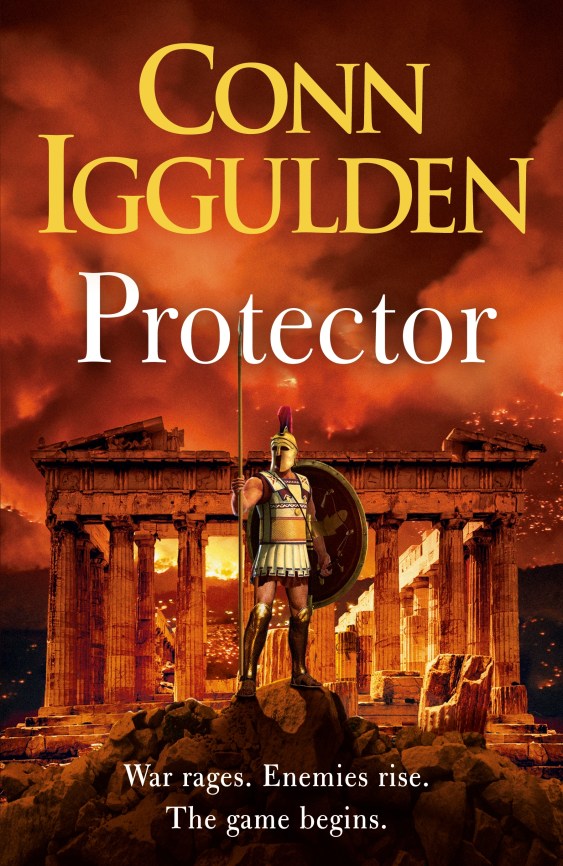
Protector by Conn Iggulden

Protector Cover Final

Publisher: Michael Joseph (Trade Paperback – 18 May 2021)

Series: Athenian – Book Two

Length: 397 pages

My rating: 5 out of 5 stars

Amazon     Book Depository

One of the best authors of historical fiction, the incredible Conn Iggulden, returns with the second epic book in his Athenian series, Protector.

Following the devastating battles of Thermopylae and Artemisium, the Persian army reigns supreme in Greece as King Xerxes stands triumphant in the burnt ruins of Athens.  However, despite his victories, Xerxes has not eliminated the threat of the Athenians, whose citizens have escaped by boat to the nearby island of Salamis.  Determined to wipe them out, Xerxes commits his mighty navy in an attack of the Greek fleet off Salamis, initiating one of the deadliest naval battle of all time.  Over three days of fighting, the Greeks and the Persians engage in a brutal battle, with boats destroyed and men killed in horrific numbers.  In the end, only a act of subterfuge from the sly Athenian, Themistocles, will be enough to stop the attack, although this action may damn him for all times.

Following this battle, the Athenians attempt to rebuild their once beautiful city; however, the threat of the Persians remains as a massive army lurks within Greece.  To finally cripple the Persian ambitions for Greece, famed Athenians, Aristides, Themistocles and Xanthippus, will work to bring together an army of free Greeks.  Led by the powerful armies of Sparta, the Greeks will face the Persian army as the plains of Plataea, while their navy faces them at Mycale.  Can the Greeks overcome the superior numbers of the Persian army to survive, or will the Persian dominion of Greece continue, wiping out their fledgling democracy?  The future of Athens is written here, and the world will never again be the same.

Wow, that was another exceptional historical novel from the always impressive Iggulden.  Iggulden has been one of the leading historical authors for years, and I have deeply enjoyed several of his works, including his epic War of the Roses series and the fantastic standalone novel, The Falcon of Sparta.  Last year, he introduced The Gates of Athens, the first novel in his new Athenian series, which will cover some of the most iconic formative years of ancient Athens.  The Gates of Athens was an excellent novel that was one of my favourite historical books of 2020.  As a result, I have been eagerly awaiting the next entry in the Athenian series, and Iggulden really did not disappoint with Protector.

Protector contains an epic and intense narrative that highlights the chaotic events following the battle of Thermopylae.  This novel has a fantastic start to it, as the story immediately shows the iconic battle of Salamis, a deadly battle of ships and men as the fate of the entire population of Athens hangs in the balance.  This first battle is pretty damn intense, and you get a real sense of the fatigue, despair and destruction that the participants and observers of the battle are feeling.  This battle lasts for a good while, and I loved that Iggulden did not waste any time getting into it, ensuring that the reader is pretty hooked for the rest of Protector.  Following Salamis, the narrative focuses on the rebuilding of Athens and the attempts to bring the Spartans into the war to face the lurking Persian army.  While not as exciting as the start of the book, this central part of Protector is deeply fascinating, and I personally enjoyed the interplay of politics and historical fact, as Iggulden expertly depicts the lead-up to the next battles against Persia.  It also perfectly sets up the epic two battles that are the defining part of Protector, Plataea and Mycale, which occurred around the same time as each other.  Both these battles are pretty intense and action packed, although the elaborate and bloody battle of Plataea is the real highlight, especially as the stakes surrounding it are extremely high.  I deeply enjoyed seeing these two amazing historical battles unfold, and Iggulden ensures that they are bloody, action-packed and compelling.  It was also really cool to see the fascinating, if occasionally tragic aftermath of these battles, and it sets up some intriguing historical storylines for future entries in this series.

I really appreciated the incredible historical detail that Iggulden brought to Protector.  The author has clearly done his research when it comes to this iconic historical battles and he does an incredible job bringing them to life.  So many key moments from the battles are fantastically captured throughout Protector, and the reader gets an amazing idea of the tactics, armaments and movements of the participants, as well as their chaotic flow and carnage.  While the battles themselves are pretty amazing, Iggulden also ensures that the underlying politics, motivations and historical figures associated with them are also detailed, ensuring that the reader gets a full view of why these events are happening and their overall impact on the people of Greece and Persia.  All of this is extremely fascinating, and I personally loved learning more about this period, especially as Iggulden presents it in a compelling and exciting manner.

One of the things that I most enjoyed about The Gates of Athens was the amazing portrayal of several major historical figures.  Iggulden continues this fantastic trend in Protector, as he once again looks at several major Greek and Persian characters.  The most prominent of these are probably the three Greek strategos, Aristides, Themistocles and Xanthippus.  Despite their political conflicts in the first novel (Themistocles orchestrated banishments for both), the three are forced to work together for the greater good of Athens and prove to be an effective team.  Iggulden does an amazing job getting into the heads of all three of these figures, and it was interesting to see how the author envisions what these great men would have been thinking or doing during these historical events.  All three have a significant part of Protector told from their perspective.  In particular, each of the three major battles featured within this novel is primarily told from one character’s perspective, with Aristides leading the Athenian force at Plataea, Xanthippus fighting at Mycale, while Themistocles unleashes his cunning during the battle for Salamis.  I really enjoyed the portrayals of all three characters, and it was interesting to see them during some of their most iconic moments.  In particular, Iggulden provides some intriguing insight to Xanthippus’s mental state after Mycale and some explanation for why he participated in several massacres.  I also deeply enjoyed the way in which Iggulden portrays the tragedy of Themistocles, whose own cleverness and guile eventually catches up with him.

In addition to these three main Athenian characters, Iggulden also spends time with some younger Athenian figures, particularly Cimon and Pericles, Xanthippus’s youngest son.  This proves to be an intriguing examination of the younger Greek characters and Iggulden is setting up some new protagonists for the later entries in the series, particularly with Pericles.  There is also some significant focus on several great Spartan characters, such as the war leader, Pausanias, who also provides an excellent alternate viewpoint to the battle at Plataea, as well as an alternate way of thinking from the democratic Greeks.  I also liked the way in which several Persian characters were featured, include Xerxes and General Mardonius, especially as it allowed for another fascinating viewpoint that paints the Greek characters in a whole new light.  All these great historical figures are expertly brought to life by Iggulden, and I had a wonderful time learning about their stories and tragic fates.

In his second entry in the Athenian series, Conn Iggulden once again demonstrates his mastery of the historical fiction genre by crafting a captivating and addictive tale of war, intrigue and personal ambition from iconic moments in Greek history.  Protector is an exceptional and fast-paced novel that presents a powerful vision of the unique and world-changing battles of Salamis, Plataea, and Mycale.  This is a clever and intense historical novel which comes highly recommended, and historical fiction fans will deeply enjoy the cool and fascinating tale within.  I look forward to the next chapter in the Athenian series and I cannot wait to see the war and politics that is yet to be unleashed on this city.
Amazon     Book Depository

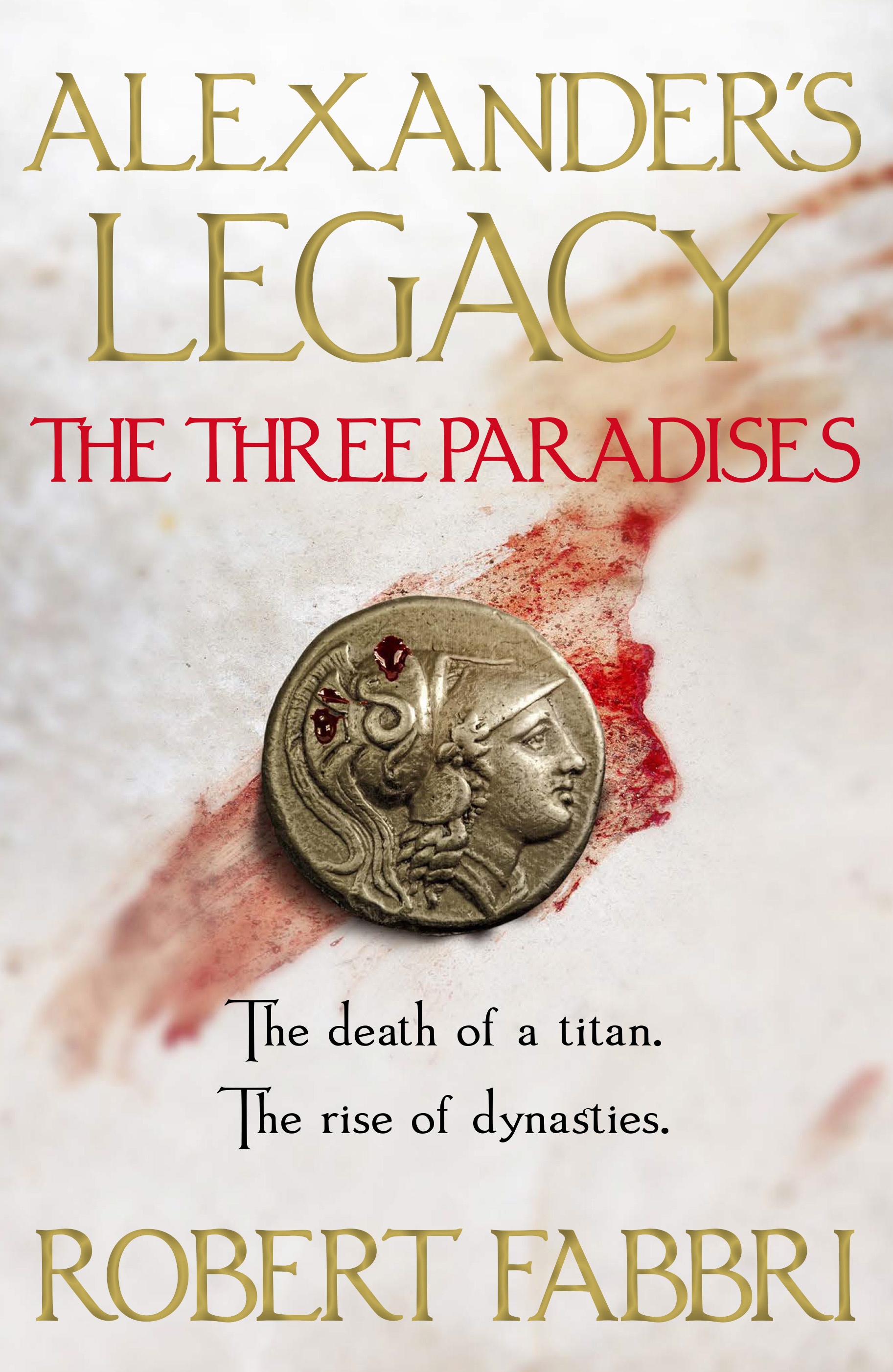
The Three Paradises by Robert Fabbri

The Three Paradises Cover

Publisher: Corvus (Trade Paperback – 21 February 2021)

Series: Alexander’s Legacy – Book Two

Length: 413 pages

My Rating: 4.5 out of 5

Amazon     Book Depository

One of my favourite authors of historical fiction, the always amazing Robert Fabbri, returns with the second entry in his epic Alexander’s Legacy series, The Three Paradises.

Alexander the Great is dead, and the battle for his empire has only just started!

Chaos reigns in the Macedonian controlled territories of Asia and the Mediterranean as the formerly loyal followers of Alexander fight amongst themselves for control of his mighty empire.  With the former front-runner for control, Perdikkas, murdered by his own men, the way forward is now even more uncertain.  In Macedonia, Alexander’s regent Antipatros seeks to hold the empire together, even if that means ignoring the ambitions of his volatile son.  In the east, the sly Greek Eumenes runs to avoid a death sentence placed on his head by the Macedonian army and must once again fall back on his intelligence and cunning to survive the forces lead by the one-eyed general Antigonos.  In the heart of the Macedonian army, two dangerous queens, Roxanna and Adea, each attempt to press their claims through their two unsuitable kings while also working out the best way to kill one another.  In Egypt, the bastard brother of Alexander, Ptolemy, secures his powerful position by seeding chaos across the rest of the Empire, while in the west, Alexander’s vicious mother, Olympias, bides her time, waiting for the perfect opportunity to strike. 

As these players make their moves to secure power, Antipatros attempts to mediate peace and keep all the Macedonian territories together by calling for a historical conference at The Three Paradises.  However, as the lies, treacheries and bloody battles continue, will there even be an empire left to save?  Some will rise, some will fall, and the world will never be the same again!

This was another incredible and deeply entertaining read from Fabbri, who has once again turned the insanities of history into another amazing novel.  I have been a major fan of Fabbri ever since I was lucky enough to receive one of the fantastic books in his compelling and memorable Vespasian series.  All of the books in this series (including Rome’s Sacred Flame, Emperor of Rome and the tie-in volume of short stories, Magnus and the Crossroads Brotherhood), were incredibly fun to read, and I really enjoyed each and every one of them.  Fabbri continued his impressive run last year when he started his brand new ancient history series, Alexander’s Legacy, set in the immediate aftermath of Alexander the Great’s death after he failed to select an heir to rule his empire.  The first book in this series, To the Strongest, was an amazing and clever read that not only set the scene perfectly but also provided the reader with a detailed and captivating tale of betrayal and destruction.  As a result, I have been keeping a very keen eye out for Fabbri’s second Alexander’s Legacy novel and I was very happy when I received a copy of The Three Paradises.

For this latest novel, Fabbri has come up with another awesome and captivating tale that dramatizes the crazy events that followed Alexander’s sudden death.  Told through multiple viewpoints, The Three Paradises continues to explore some of the key parts of the post-Alexander period, including a number of battles, conferences and manipulations recorded in history.  This results in an epic and captivating tale of betrayal, conspiracy and lies as everyone attempts to gain power.  I absolutely loved all the outrageous proceedings that occurred throughout this book, and Fabbri does an amazing job featuring as many real historical events as possible.  If you are unfamiliar with the history, than you are going to find that The Three Paradises’ story goes in some extremely unexpected directions as various key people rise or fall. 

I was surprised that many of the incredible events depicted in this novel are recorded in history, and it just goes to show that reality is sometimes a lot stranger than fiction.  I felt that Fabbri did a fantastic job depicting each of these events as they are chronicled in history, especially as he also attempts to fill in some of the gaps and come up with some of the possible discussions that would have happened in advance of them.  While some of the facts are no doubt dramatically exaggerated per Fabbri’s trademark style, this turned out to be a really detailed historical read and I loved the cool focus on this unique period.  I ended up enjoying The Three Paradises a bit more than the preceding novel in which the overarching storylines of the series were set up.  The Three Paradises jumps into the action a lot more quickly, and I think that the story flowed a lot better, especially as Fabbri ended up reintroducing the line break in this novel’s format.  All of this was incredibly epic, and readers will love Fabbri’s unique interpretation of these historical betrayals and battles.

One of the most intriguing parts of the Alexander’s Legacy series is the author’s use of multiple historical figures as his point of view characters.  This series focuses on a large selection of major players in this conflict, each of whom become the focal character of multiple chapters within the novel.  The Three Paradises in particular features 10 separate historical point-of-view characters, each of whom play a unique role in the events preceding the death of Alexander.  All 10 are former members of Alexander’s court that have gone into business for themselves and are now attempting to take power or shape the empire the way they want.  Fabbri brings each of these historical figures to life by examining their actions or descriptions from history and crafting a personality that matches their outrageous deeds or brilliant decisions.  Each character is given a title or nickname at the start of the story, usually centred on their personality or role in the empire (for example, The Sly, The Mother, The Wildcat or The Bastard) as well as a simple but clever representative icon.  Fabbri then builds on them from there, examining their various actions during the wars this book focuses on and highlighting nearly every decision or bold move that history records them doing.  Fabbri also throws in a little of his trademark exaggeration and creative licence, especially for characters like Olympias (although not by much), which really enhances the historical craziness this novel contains. 

As a result of his unique character creation, The Three Paradises ends up with a fantastic and diverse group of point-of-view characters whose exploits are a lot of fun to watch unfold, although readers should really not get too attached to them, as many do not survive the book.  These characters include the aged statesman, Antipatros, who uses his experience and canny nature to attempt to guide and control several of the other players, with various results.  You also have the scheming queens Roxanna and Adea, both of whom are linked to one of the people named king following Alexander’s death.  Roxanna was Alexander’s wife and the mother his child, while Adea is a close relative of Alexander who ended up marrying his mentally deficient half-brother.  Both of these queens are vicious and dangerous creatures who attempt to gain power over the stubborn Macedonian men, while also feuding amongst themselves over the status of their respective king.  Fabbri really amps up certain elements of these two queens’ characteristics, such as Roxanna’s murderous ambition (to be fair, she did reportedly kill several of Alexander’s other wives after his death), or Adea’s lesbianism.  Both prove to be really fun additions to this novel, and it was quite interesting to see how they influenced these hectic events.

There is also a lot of focus on Alexander’s mother, Olympias, a member of the cult of Dionysus and a figure of wrath and vengeance that every other major character is intensely afraid of.  Fabbri has a lot of fun portraying Olympias in this novel, and he really plays her up as a crazed snake priestess, showing several of the alleged rituals cultists of Dionysus would have performed.  I was quite surprised at how Olympias’s storyline unfolded in this novel, mainly as I was very unaware of how much influence she had after Alexander’s death, and she proved to be an extremely intense and memorable addition to the cast. 

My favourite character, however, is still Eumenes, who Fabbri appropriately nicknamed The Sly.  Eumenes is a Greek clerk who was able to gain some power after Alexander’s death by advising some of the other players and trying to keep the empire together.  The Three Paradises sees Eumenes take on a more military role, and he proves himself a skilled commander, able to out-think the supposedly superior Macedonian enemies.  However, Eumenes’s ambitions are constantly stymied by the stubbornness of his Macedonian followers or allies, all of whom believe in the superiority of the Macedonian people and are often reluctant to follow a Greek, even if he is the smartest person in the room.  It proves to be very frustrating to see one of the best and smartest characters constantly defeated by events outside his control, but you still stick with him in the hopes that he can once again get a victory.

In addition to the returning cast from the first book in the series, Fabbri also introduces two new characters to replace some of the casualties that occurred in To the Strongest (like I said, don’t get too attached to these characters).  These two new characters include Kassandros, nicknamed The Jealous (and represented by an icon of a boar, an animal that lies at the heart of his jealousies), and Polyperchon, nicknamed The Grey.  Both Kassandros and Polyperchon are introduced about halfway through The Three Paradises in response to a major character death, and they end up being great additions to the story.  Kassandros is the eldest son of one of the other point-of-view characters, and serves as an interesting antagonistic figure in the book.  Thanks to his sense of entitlement and the major chip on his shoulder, it really does not take Kassandros long to get on the reader’s nerves, and you find yourself pulling for his enemies, no matter how despicable they may be.  Polyperchon, on the other hand, is an older figure, portrayed as a bit of a loser.  Polyperchon is a person who thrives best as a second in command, rather than being the man in charge, and is uncertain how to proceed when he has to make the hard decisions.  Naturally, events conspire to give him a great deal of power, which results in disaster for Polyperchon and those allied with him, as he fumbles the job, allowing some of the other characters to take control.  Overall, I had an outstanding time following this unique collection of historical figures, and I look forward to seeing whom Fabbri focuses on in the next novel, especially after several more were killed off in The Three Paradises.

Aside from the 10 point-of-view characters, Fabbri also features a massive cast of side characters, most of whom are real historical figures.  The author does an impressive job of working each of these supporting characters into the plot, and you end up getting a pretty good idea of how each and every one of them played a role in the war, as well as some minor details about their personalities and intentions.  While it was interesting to learn more about all these historical characters, I did find it a little overwhelming to try and follow who was who at times, especially as there were great deal of characters, and several had similar names.  While I was generally able to keep up with what was happening thanks to an excellent character list contained at the end of the novel, readers will need to stay focused on who is being discussed at all times in order to avoid getting lost.

I also must highlight the incredible historical details of this book.  Fabbri has clearly done his research when it comes to ancient Macedonia and not only is The Three Paradises filled with an outstanding depiction of the recorded historical events but the author also tries to capture the various aspects of day-to-day life during this period.  This results in some great scenes chock full of fantastic historical detail, and the reader gets some amazing insights into the culture and attitudes of the conquering Macedonians.  This is particularly true in The Three Paradises’ various action sequences, as the armies of Macedonia face off against each other.  While a lot of the focus may be on the internal politics, personal betrayals and shifting alliances, Fabbri has also included several great fight sequences, and the reader is treated to fantastic battles on land and sea.  The book’s major battle scenes are really impressive, and I loved seeing the various tactics of the Macedonians, whether they are fighting foreign armies or rival groups of Macedonians.  It was particularly cool to see two separate pike phalanxes go up against each other, especially as their cramped and exhausting fight was essentially pointless (victory was decided by the fighting cavalry groups on the flanks).  It was also rather entertaining to see how several key battles were stopped or prevented simply because the Macedonian soldiers discovered that an important person, usually a relative of Alexander, was present with the opposing army, and they would suddenly abandon their generals to follow them.  This examination of the Macedonian mindset was really intriguing, and its limitations and predictabilities has become a fascinating recurring factor of this series.

Robert Fabbri once again shows why he is one of the most entertaining and captivating authors of historical fiction in the world today.  The Three Paradises is an impressive and clever second entry in the amazing Alexander’s Legacy series, which provides a detailed and captivating examination of a crazy period of history.  I absolutely loved this incredible read and I cannot wait to see what happens in the next exciting entry in this awesome series.

Amazon     Book Depository

To the Strongest by Robert Fabbri

To the Strongest Cover

Publisher: Corvus (Trade Paperback – 2 January 2020)

Series: Alexander’s Legacy – Book One

Length: 415 pages

My Rating: 4.5 out of 5 stars

Amazon     Book Depository

War and chaos are about to be unleashed following the death of history’s greatest conqueror in the new epic historical fiction novel from amazing author Robert Fabbri, To the Strongest, the first book in his new Alexander’s Legacy series.

This is a clever and compelling new novel from Robert Fabbri, who has successfully moved away from historical Rome to ancient Greece and Macedonia. I am a massive fan of Fabbri’s writing, and he is probably one of my favourite historical fiction authors at the moment due to his work on the incredibly entertaining Vespasian series. His last several novels have all been rather top notch (check out my reviews for the eighth and ninth book in the series, Rome’s Sacred Flame and Emperor of Rome, as well as the associated short story collection, Magnus and the Crossroads Brotherhood), and I have been really looking forward to reading To the Strongest for a while now. I actually read this book a few months ago, but I am only just getting around to writing a review for it now. This is not because I didn’t enjoy the book; on the contrary, I absolutely loved it, I just got a little distracted after reading this book and kept forgetting to come back to it (to be fair, it’s been a rather hectic year). Now that I have a little time, I thought I would go back and review this great book, contains a clever and intriguing story concept.

“I foresee great struggles at my funeral games.”

Babylon, 323 BC. After bringing together one of the largest and most expansive empires the world has ever seen, Alexander the Great lies dying at a young age, and no one is truly prepared for his passing. With no legitimate heir yet born, and no obvious frontrunner to succeed Alexander as ruler of the conquered lands that make up the Macedonian empire, his loyal followers assemble at his death bed and beg him to reveal who he will leave the empire to. Alexander’s answer is simple: “To the strongest.”

Now the entire empire is up for grabs, and it does not take long for the prediction laden within Alexander’s final words to come to pass. As the news of the king’s death travel throughout the land, many seek to take advantage, either to take control themselves, or to better their own personal situation. The empire soon dissolves into a ruthless battle for the throne, as the various parties scramble for power, with shifting alliances, devious betrayals and far-ranging schemes becoming the new norm.

But in the end, only one will emerge victorious. Will it be Perdikkas, the loyal bodyguard who Alexander seeming left this ring to (the Half-Chosen); Roxanna, Alexander’s wife who bears his unborn heir (the wildcat); Antipatros, the man left behind to govern Macedonia (the Regent); his most capable warriors Krateros (the General) or Antigonos (the One-Eyed); the devious Olympias (the Mother); the clever Ptolemy (the Bastard); or the sneaky Greek advisor Eumenes (the Sly). Which man or woman has the cunning or ruthlessness to outlast the others and survive? Let the struggles begin!

What a fun and fascinating piece of historical fiction. Fabbri has crafted together an epic and clever novel that tells the outrageous true story of the aftermath of Alexander the Great’s life. Told from the perspective of a number of major figures who fought or schemed throughout this period of history, Fabbri turns all these events into an outstanding and enjoyable story that proves extremely hard to put down at times. Containing a compelling writing style, several excellent battle sequences and numerous betrayals, manipulations and shifting loyalties, this is an impressive first entry in the Alexander’s Legacy series, which does an excellent job setting up all the initial conflicts that were caused in the initial aftermath of Alexander’s death while also leaving a lot of room for the series to advance into the future.

To the Strongest is a fantastic and entertaining novelisation of some rather intriguing events from ancient history that do not get a lot of coverage in modern fiction. I think the thing that I liked the most about this book is the fact that most of the crazy events that Fabbri features within it actually happened in one shape or form, or are recorded as such in the historical record. The period of history post-Alexander the Great is not one that I am massively familiar with, and so I did a bit of reading into it after I finished To the Strongest, mainly because I was rather curious to see how much of this actually happened. It turns out that nearly all of the craziest events that occurred, such as the brutal murder of several of Alexander’s wives, the theft of his corpse by one of the characters, and a particularly disastrous river crossing with a troupe of war elephants, really did occur, and required very little literary embellishment on Fabbri’s part to make this any more exciting and compelling. I really loved learning about all these cool moments from history, and I think that Fabbri did an amazing job converting these myriad events into a cohesive and enjoyable narrative. From what I understand, there are plenty more battles and betrayals to go, and I am rather looking forward to seeing the full scope of these events unfold in future books.

In order to tell his story, Fabbri utilises a number of different character perspectives from a large roster of unique historical figures. There are 11 point-of-view characters featured within this novel, each of whom narrate multiple chapters within the book. Fabbri has provided each of these characters with their own nickname and symbol, both of which help to distinguish the character and to highlight certain character elements or parts of their history. The use of these multiple character perspectives makes for quite an interesting novel, as it allows the reader to see a much wider viewpoint of the conflicts occurring around the entire empire, as well as the multiple sides involved in it. This mixture of character-specific chapters also allows the reader to get something different out of each chapter, as chapters that follow a warrior will feature more battle sequences, while other chapters are geared more towards political fights or intrigue. This mixture works really well, and it helps to produce a diverse novel with various compelling story elements to it. The chapters are not evenly distributed between the characters, with some getting multiple chapters throughout the course of the book, while others only get a few chapters here in there. Two characters in particular only appear in one half of the book each, with one getting killed off about halfway through, while another only appears a while after. Most of this is due to the fact that some characters were not as prominent in history until a later date, and I imagine that some of these characters will be utilised more significantly in later books.

I liked Fabbri’s take on all the characters contained within the novel, and he came up with a great group of historical people to centre this story on. I thought that he did a fantastic job portraying the sort of vicious and manipulative sort of people who would have tried to take advantage of the situation, and these are the sort the sort of characters that Fabbri excelled at creating in his previous Vespasian series. There are some truly enjoyable characters amongst the main 11 point-of-view historical figures, although I personally enjoyed the parts of the book that featured the Greek advisor Eumenes (the Sly). Eumenes is an exceedingly clever individual who is generally looked down upon within Alexander’s Macedonian empire due to his Greek heritage. Despite this, Eumenes is able to gain quite a bit of power and influence in the post-Alexander era by advising and working with some of the other characters, and is generally the most politically capable out of all of them. As a result, you see quite a bit of him, as not only does he has a large number of his own chapters but he also appears in a number of other characters’ point-of-view chapters, attempting to negotiate or advise these characters to a beneficial course of action. Watching him try and deal with all the other characters is pretty entertaining, especially as they are all rather dismissive of him at times, while he is clearly exasperated by their behaviours and desires, especially with one particular character who he sides with but who completely ignores some of his better suggestions.

Aside from the 11 point-of-view characters, Fabbri has also included a huge group of interesting side characters, most of whom were real-life historical figures. These side characters do a good job of bolstering the story set around the point-of-view characters, and it was intriguing to see how their arcs played out through the course of the story. Fair warning, there are a quite a few side characters utilised throughout the story, which can get a little confusing at times. Fabbri did however include a useful character list in the back of the novel which I did find myself occasionally referencing to keep track of who was who, and which proved to be rather helpful. Overall, I thought that this turned out to be a great group of diverse characters, and I am looking forward to seeing how the surviving members of the cast progress in future books.

I did have a slight criticism with how the book was set out, particularly relating to the spacing between paragraphs. Now, I would usually say that complaining about how a paragraph is formatted is rather nit-picky, but in this case, it was a bit of a legitimate problem. In the version of To the Strongest that I had, there were no breaks between any of the paragraphs, and usually this was not too much of a problem (even if it did make the pages a tad blocky). However, there was also a complete lack of spacing between two paragraphs that are parts of two separate scenes within the same chapter. This means that there are no obvious breaks between certain scenes within the novel, as the next paragraph could be the same scene or a whole new scene altogether, and this had a bit of an impact of how the story flowed throughout. For example, there are a number of places where you have some of the characters talking about one thing, and the next paragraph could either be a continuation of that same scene, or a completely new sequence set several days or weeks in the future. Several times throughout his book, I would get completely lost about what is happening when I started reading the next paragraph without realising that it had jumped to a whole new scene in the future. While it was fine, and I was able to get back into the flow of things once I realised what had happened, it did lead to several moments of confusion, which I think could have been avoided by placing a line break to indicate when a certain scene had ended. While this is a rather minor issue, it did keep recurring throughout the book, and I felt that it should have been avoided. Still, the epic story more than made up for it, and this formatting only had a minor impact on my overall enjoyment of To The Strongest.

To the Strongest by Robert Fabbri is an amazing and exciting historical fiction novel that I had a fantastic time reading. Fabbri has chosen an extremely intriguing historical period to explore within this novel, and his excellent portrayal of the chaos that followed the death of Alexander the Great makes for an outstanding story. I loved how the author used his vast array of historical characters to showcase all the potential battles and manipulation that occurred during this time, and it helped to create a fun and unique read. This is a first-rate read from Fabbri, and I cannot wait to read all the future books in this cool historical fiction series.

Amazon     Book Depository