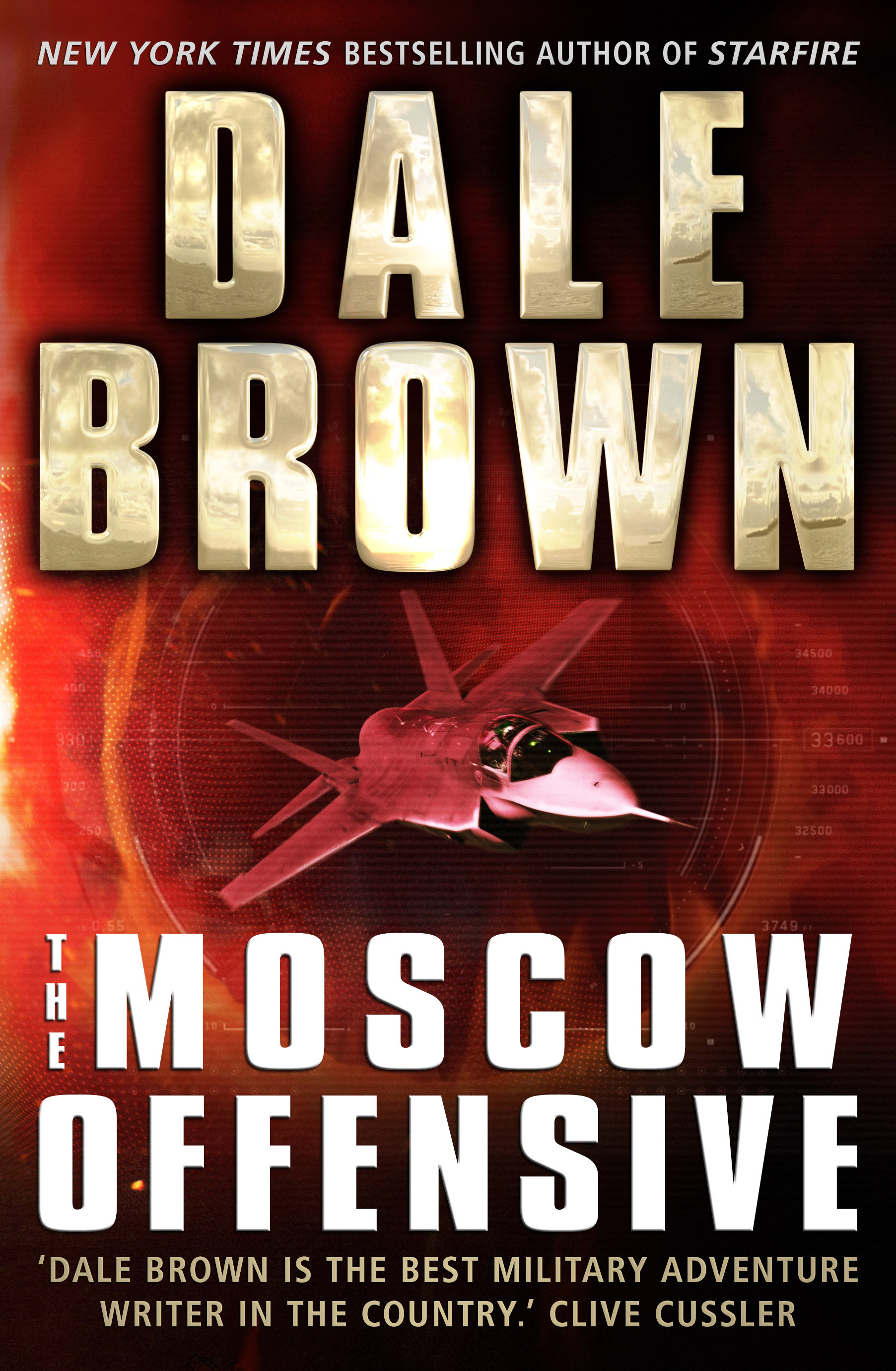
The Moscow Offensive by Dale Brown

the moscow offensive cover

Publisher: Corsair

Australian Publication Date – 11 December 2018

World Publication Date – 5 June 2018

Amazon

An intense and exhilarating military thriller filled with advanced military robots duking it out across America, now that sounds like my sort of novel!  Prepare for an explosive technological thriller as Dale Brown, the bestselling author of the Patrick McLanahan series, returns with his latest novel, The Moscow Offensive.

For years, Russia’s ambition to conquer the entire world and defeat the United States has been growing, with its leaders unleashing a series of advanced weapons against the West.  Russia’s dominance was only held in check thanks to the actions of United States pilot Patrick McLanahan, who utilised America’s most innovative technology to counter the Russian attacks.  However, with McLanahan now believed dead, the brilliant and manipulative Russian president, Gennadiy Gryzlov, sets forth a new attack.  Secretly buying a large airfreight company, Gryzlov uses this proxy business to ferry weapons and military personnel into the United States undetected.  Identifying a string of high-value targets, Gryzlov attempts to cripple the United States from within, and strike its citizens with terror.

The only force that might be able to stand up to Gryzlov’s machinations is the legendary Iron Wolf Squadron and their parent private military company, Scion Aviation International.  Formed by McLanahan and former United States President Kevin Martindale, the Iron Wolf Squadron utilises their advanced Cybernetic Infantry Devices (CIDs), twelve-foot-tall piloted combat robots, whose technology and weapons are capable of overpowering conventional military forces.  Currently employed by Poland and its Alliance of Free Nations, the Iron Wolf Squadron is responsible for knocking back several of Russia’s attempted invasions and more ambitious bids for power.  However, their success in Poland has alienated America’s selfish and paranoid president, Stacy Anne Barbeau, who is determined to bring Martindale and Scion down.

Taking advantage of President Barbeau’s incompetence, Gryzlov is able to launch a series of attacks, placing the blame on the Iron Wolf Squadron.  Now targeted by both the Americans and the Russians, a small detachment of Iron Wolf Squadron CIDs, led by Patrick McLanahan’s son Brad, deploy to the United States to counter the Russians and reveal their involvement.  However, the Russians have succeed in reverse-engineering combat robots of their own, and are now fully capable of going toe-to-toe with the Iron Wolf Squadron.

Dale Brown is one of the world’s leading authors of the technological and military thriller genre, having written a huge number of high-octane, electrifying reads since the 1980s.  The Patrick McLanahan series is his main body of work and started in 1987 with his debut novel, Flight of the Old Dog.  This series has mostly focused on the adventures of its titular character, Patrick McLanahan, across a variety of different military situations, inside and outside of the United States armed forces.  These novels have generally been set around the same time as their publication date, meaning that the characters have aged and matured with the series.  As a result, in later years, Patrick McLanahan has taken a back seat from the action, with the role of main series protagonist taken up by his son, Brad McLanahan.  The Moscow Offensive is the 22nd book in the series, and continues with some of the storylines from the previous books in the series.  A 23rd book is already in the works, and The Kremlin Strike is set to come out in early May 2019.

I had not previously read any books in the Patrick McLanahan series before, and while I thought the synopsis sounded pretty awesome, I was not too sure what to expect from it.  After reading it I found The Moscow Offensive to be an incredible novel with some fantastic thriller elements and outstanding action sequences.  The overall story of this book is extremely compelling, and I had a very hard time putting this book down as I really loved this wide-ranging thriller storyline.  I was a little worried about coming into a series 22 books in, but I found that the author did a fantastic job in The Moscow Offensive of introducing the reader to his thriller universe.  Throughout this book, Brown provides the reader with ample descriptions and discussions about the book’s characters, technology specs and the relevant history of the various military organisations, countries and fictional military actions.  As a result, it is really easy for readers unfamiliar with Dale Brown’s work to come into the Patrick McLanahan series with The Moscow Offensive, and at no point while reading it was I lost or confused about any of the book’s plot elements.

The international thriller elements of this book and the utilisation of current world politics were some of my favourite inclusions in The Moscow Offensive.  I liked how the author inserted bits and pieces of real world political and social issues into his writing to create an intriguing and familiar background for the story.  On top of this, he also includes the more outrageous elements from his previous novels, including the Iron Wolf Squadron, whose pilots command high tech robots to stop Russia from invading Poland and other Eastern European countries.  This is a fun mesh of realistic and out-there settings which I found to be an incredible basis for this novel.

The intelligence battle between the United States and Russia has been a firm and dependable element for innumerable thrillers over the years, and Brown constructs a fantastic story around this battle.  The battle is more one sided in The Moscow Offensive, as Brown makes great use of an incompetent United States President character, the use of which has become a much more common element in fiction in recent years (hard to imagine why).  It is utterly fascinating to see the various ways that Brown comes up with to attack America and damage the country’s military infrastructure.  These attacks have a range of different purposes, from outright attacking the US military, to setting the President against the Iron Wolf Squadron.  All of these international and militarist thriller elements are an awesome part of this book, as not only do they help create a great story, but the reader is able to consider the realism of a such a story.

In addition to the cool international thriller elements of this book, I liked the deep look at military technology both real and fictional.  Brown, a former US Air Force aviator, has an excellent understanding of modern military hardware and the people that use them, creating an outstanding militaristic narrative as a result.  The descriptions and analyses of Russian and American weapons, planes and other vehicles are very intriguing and give the book another deep sense of realism.  Of course the most epic inclusions in this book are the CIDs, the large, manned combat robots that the Iron Wolf Squadron have utilised in several of Brown’s previous books to frustrate the Russians in battle.  These machines really amp up this series to new heights, and in The Moscow Offensive, Brown ups the ante by having the Russians develop their own combat robots in response to their defeats against the Iron Wolf Squadron.  This adds a whole new element to the book, as the United States is attacked by these machines and finally has to deal with the devastation they can cause.  Both sides having these machines is incredibly intriguing, as it really allows the author to examine the advantages of these potential machines in a military setting and showcase what sort of damage they could potentially do, even to their creators.  These advanced military elements are a terrific part of The Moscow Offensive, and I was really impressed with how Brown was able to combine it with the book’s other thriller elements to create a captivating read.

The Moscow Offensive contains a faction of Americans fighting a covert war with the Russians, with both sides utilising advanced combat robots.  As a result, this book is packed full of action and there are a number of fantastic high-tech battle sequences.  Without a doubt, the CIDs and their Russian counterparts really are the stars of the book.  These two sets of machines go up against a range of conventional military opponents in some massively destructive and very one-sided scenes.  Brown cleverly saves the combat between the two opposing groups of combat machine until the end of the book, and does a fantastic job at pumping up the hype for their eventual confrontation.  This final climatic battle does not disappoint, as the two sides engage in a brutal and devastating fight that is well worth the wait.

Dale Brown has once again provided the reader with an extremely fun piece of fiction, as he continues his ambitious, clever and entertaining Patrick McLanahan series.  As someone coming into Brown’s fictional universe for the first time, I was blown away by the intense action and outstanding thriller elements contained within this book and it is easily one of my favourite new series.  As a result, I highly recommend The Moscow Offensive to new readers and those existing fans of the series.  This is an excellent choice for anyone looking for some insane action or a truly unique story.

My Rating:

Four and a half stars

Amazon

Heads You Win by Jeffrey Archer

Heads You Win Cover.png

Publisher: Macmillan

Publication Date – 30 October 2018

Amazon

From the mind of one of modern fiction’s most controversial authors comes a two-in-one fantastic and elaborate piece of historical fiction that utilises an intriguing narrative device to create one of 2018’s most unique stories.

Young student Alexander Karpenko is the bright, talented and ambitious child of two hardworking citizens of the Soviet Union.  Living in Leningrad in 1968, Alexander’s dream is to become the first democratically elected president of his country.  However, when he is betrayed and his father is killed by the KGB, Alexander and his mother realise that their only hope is to flee Russia and make a new life for themselves in another country.

Arriving at the docks, Alexander and his mother are given a choice between two different ships: one heading to London or one heading to New York.  The decision is made by the flip of a coin, and Alexander’s life splits into two separate paths: one where he heads to Britain and one where he heads to America.  Alexander arrives in these countries with great ambition and a desire to succeed no matter what.

Over the next 30 years, in both these lives, Alexander finds success in a two separate ways.  He fights his way up from the bottom as a lowly immigrant to an influential person, overcoming obstacles and antagonists along the way.  Both Alexanders’ journeys are inspirational, but no matter what these two Alexanders accomplish, the fate of their home country is always on their minds, and the shadow of the Soviet Union constantly surrounds them.

Jeffrey Archer is a rather interesting individual, with a very eventful and controversial background.  A former British MP, Archer is probably better known for the various accusations of fraud he has attracted throughout his life, and he has even spent some time in jail as a result.  However, rather than let that ruin his public profile, Archer has used his experience and imagination to create a number of fascinating novels, many of which utilise aspects of his political, academic or professional life or expertise to some degree.  As a result, Archer is now one of the most high-profile authors in the world and has written over 20 adult novels, including the three books in his Kane and Abel series and the seven books in his bestselling Clifton Chronicles.  On top of that, Archer has also written a number of short stories, a couple of plays, several children’s books and his Prison Diaries, three non-fiction novels that chronicle his life in prison.

Heads You Win is an extremely fascinating novel from Archer, which takes his protagonist on two separate adventures through over 30 years of American and British history and life.  Archer utilises a very clever divergent timelines narrative device (think Sliding Doors), which creates two separate timelines around the different outcomes of one event, in this case, the outcome of a coin toss.  As a result, in one timeline, the protagonists and his mother get on a ship to London, while in another timeline they board a ship bound for New York.  This is a very interesting concept to utilise in this story, and one that works to create two separate narrative threads to follow.  Both of these storylines focus on the protagonist attempting to find his place in the country that he eventually ends up in, and then moves onto the protagonist becoming a powerful and influential individual in his own way, all the while dealing with the terrible people that seem to inhabit Archer’s world.

I rather enjoyed both of the separate storylines in this book, and had a lot of fun seeing the different or similar ways that the protagonist attempted to make his fortune in each lifetime.  The differences between these two storylines happen right away, as in the London timeline, Alexander and his mother find themselves on a nice ship with a friendly crew who mostly want to help, while the New York timeline finds them in a poorly maintained vessel with a self-serving crew who seek to exploit the two main characters.  I found it rather fascinating to see the way that their treatment and the environments they find themselves in change the way in which they act.  For example, Alexander’s experience in the English setting encourage him to seek the full Cambridge academic lifestyle, while his American counterpart was less focused on his formal education and learned more on the street.

Both of these divergent timelines feature an intriguing look at the cities and countries that the protagonists end up in, and both serve as a good historical backdrop to each of the main storylines, featuring several real historical events and some historical characters.  For example, the Alexander who ends up in the American timeline is forced to fight in the Vietnam War, while the British Alexander rubs elbows with a number of the country’s prominent politicians.  I liked how the divergent ways that the two separate protagonists gained their power and prestige matched the country that there were in.  The American Alexander became rich through his business acumen and financial brilliance, while the British Alexander went the academic route and eventually become deeply involved with the British political system, something close to the author’s heart.  Not only does this help match the locations and people that the protagonist deals with, but it allows the two separate stories to diverge out slightly, with the British storyline containing political intrigue, while the American storyline reads a little bit more like a financial thriller.  While the focus on the protagonist’s two adopted homelands is a great part of this novel, the protagonist’s history in the Soviet Union is a major part of this story.  The initial chapters capture the uncertainty and despair that inhabitants of the Soviet Union would have felt in the 1960s, while the character’s subsequent visits helped highlight the obvious differences between the Soviet Union and the countries that Alexander escaped to.  There is also a rather exciting reveal about one of the Russian characters towards the end of the book that will prove to be the most memorable part of Heads You Win, and is definitely something to look out for.

While I enjoyed the divergent timelines narrative device that Archer employed throughout Heads You Win I did feel that he could have done more with it.  I would have loved to see a bit more crossover between the two separate timelines, and, for example, see how key characters from one storyline would have fared without their Alexander in their lives.  Instead there is minimal crossover between these two separate storylines, which feels like a bit of a missed opportunity.  I am also not the biggest fan of what these quick crossovers revealed, as it strongly hinted that both storylines actually exist together at the same time, and as a result, there are two Alexanders existing in the world at the same time.  This is a bit of a weird twist, and while it does not negatively impact the vast majority of either storyline, it does result in a conclusion that some may find slightly confusing.  As a result, while this did slightly mark down my rating of Heads You Win, the split storyline concept is a fantastic and unforgettable part of this book and makes it quite a distinctive read.

This latest novel from one of the world’s most colourful professional authors is a fun, historical thrill ride that features a very unique and memorable narrative device.  With a great look at two different countries during the same historical time period and featuring two separate by similar stories of life, adversity and success, this is an extremely enjoyable novel that will appeal to a varied range of readers.  Heads You Win is definitely worth checking out, and I am planning to keep an eye out for the next read from Archer.

My Rating:

Four stars

Amazon

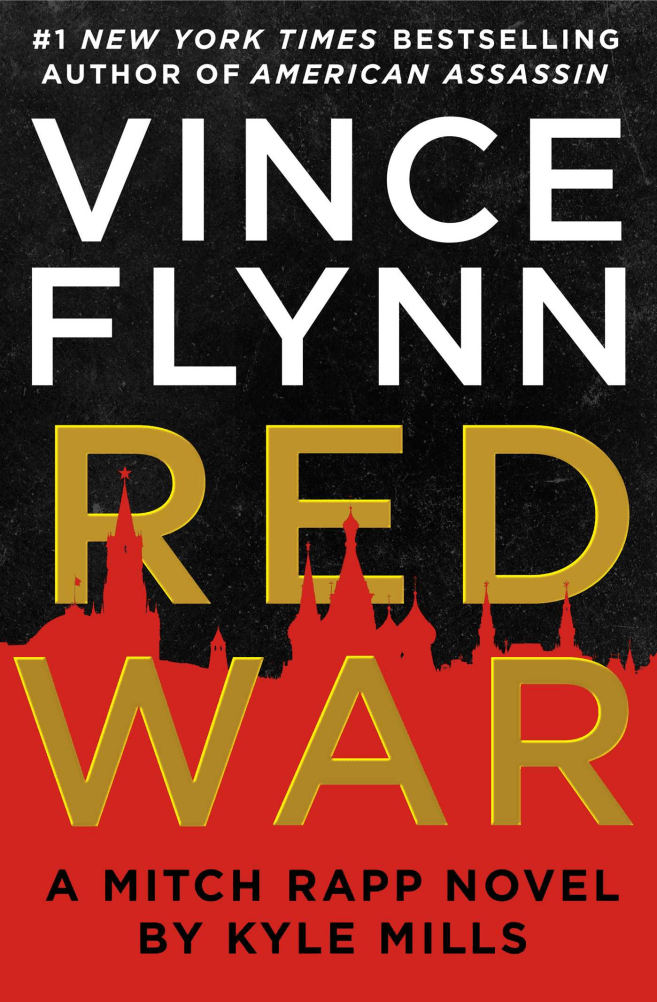
Red War by Kyle Mills (based on the series by Vince Flynn)

Red War Cover

Publisher: Simon & Schuster

Publication Date – 25 September 2018

Amazon     Book Depository

From the minds of two outstanding thriller writers comes Red War, the latest book in the iconic Mitch Rapp spy series.  This newest addition is an exhilarating and action-packed espionage novel that incorporates a captivating look at modern global politics into its exciting and enjoyable narrative.

For years, Russian president Maxim Krupin has ruled his country with an iron fist, and even recent setbacks to his ambitious plans in the Middle East have not lessened his power or influence.  However, Krupin is about to encounter an opponent even he may not be able to overcome: cancer.  With an inoperable brain tumour impacting his actions, the once calculating and selectively destructive strongman begins openly targeting all his enemies and opponents in order to retain his power and to distract attention away from his illness.

The Americans, especially the CIA, are alarmed and surprised by the Russian president’s sudden and unpredictable moves.  Uncertain of the motivations behind them, the CIA assign legendary covert operative Mitch Rapp to investigate and counter Krupin’s more aggressive moves, including the attempted assassination of Krupin’s former problem solver, Grisha Azarov.  When Rapp and the CIA uncover proof about Krupin’s medical condition, they begin to realise just how desperate and dangerous their opponent is.  With Russian troops massing on the border of Europe, it appears Krupin may even be willing to start a war with the West in order to maintain his position.  With World War III just around the corner, Rapp is given an impossible task: infiltrate Russia and assassinate the man many consider to be the most powerful person in the world.  Will Rapp and his allies succeed in this dangerous mission, or will their actions lead the world to the very brink of a nuclear war?

This is the 17th book in the Mitch Rapp series, which began in 1999 with the first book, Transfer of Power, which was written by Vince Flynn as a follow-up to his 1997 debut, Term Limit, which is set in the same universe as the Mitch Rapp books.  Following Flynn’s death in 2013, the series was continued by fellow thriller writer Kyle Mills, who has written 17 books since 1997, including the last three Mitch Rapp novels.  The Mitch Rapp books are a fast-paced and action-packed series that focuses on American espionage, and often features the titular character’s brutal war on Islamic terrorists.  Some who are unfamiliar with the books may have seen the film adaption of Flynn’s 2010 prequel novel, American Assassin, which was released in 2017, featuring Dylan O’Brien of Teen Wolf and The Maze Runner fame, as well as Batman himself, Michael Keaton.

In this latest book, Mills continues the series trend of providing the reader with eventful and compelling adventures.  Red War is chock full of action and combat as the protagonists attempt to counter the Russian president, the president’s personal assassin and the whole Russian army.  Readers will find plenty to keep them entertained, from small tactical skirmishes around the world between American and Russian covert forces, to large-scale battles and wars, with some devastating results.  While the main protagonist, Mitch Rapp, is starting to get a little old, he is still the same killing machine he has always been, and he powers through the vast majority of his opponents.  However, some of the other characters he encounters are the cream of the Russian army and have been enhanced by a combination of extreme training and performance-enhancing drugs.  This results in some very hectic shoot-outs and fight sequences, although there is very little doubt that Rapp will succeed.  A lot of these fights are tactical in nature as Rapp seeks to outsmart larger or more formidable forces he finds himself up against, resulting in some scenes with slower pacing that are used to create a more intense, but equally exciting, action sequence.  In addition, there are some fairly outrageous sequences throughout the book that readers will really enjoy.  For example, in a later part of the book Rapp suddenly finds himself leading an unusual army against his opponents, and a scene earlier in the book he decides to utilise a rocket-propelled grenade launcher in a fight after he starts “getting sick of these drugged-up, thirtysomething terminators whom Krupin was churning out”.

Mills has also made sure to include detailed examinations of the various intelligence-gathering and espionage techniques that his characters employ, as well as several scenes exploring the opposing nations planning and tactical sessions.  It is always fun to read about fictional tactical and intelligence meetings, especially in novels like Red War, when you see both these discussions from both sides of the conflict in order to focus on the various moves and countermoves each opposing side utilises.  In Red War, the motivation behind the Russian president’s actions is revealed to the reader within the first few pages of the book; however, all the American characters, and even some of the Russian characters, have no idea why he has escalated his campaign against his opponents.  It is very captivating to watch the various actions Krupin takes to not only stay in power, but also hide his illness from his own people.  As the book progresses and this becomes harder for him to manage, it is interesting to see the Americans begin to put the pieces together and see how well their theory fits into place.  Both the American and Russian characters do a lot of espionage and counterespionage moves throughout the novel as the Americans attempt to uncover the Russian leader’s unpredictable next move, while Krupin and his agents attempts to take out his various rivals while also frustrating the Americans.  The descriptions of these espionage moves and techniques feel very realistic, and there is enough going on to keep any lover of spy fiction very happy.

One of the most compelling and notable things about Red War is the way that it brushes on current politics and uses many recent real-world events in its story, by either referencing them or attributing them to the book’s fictional characters.  One of the main antagonists, the Russian president Krupin, is an athletic and powerful strongman that is clearly supposed to be a fictional version of Vladimir Putin, with several similar character attributes, including a propensity to use staged hunting propaganda shots out in the snow to promote his rugged, masculine image.  Many of Krupin’s actions and decisions throughout the book match those of Putin, down to the character revealing he utilises social media to influence international politics.  As a result, while the book focuses on a fictional antagonist, the reader is left thinking about what would happen if something similar were to happen to Putin or another world leader, and how other nations would respond.  The American and Russian characters discuss geopolitics throughout the book as they make their plots and plans, and many of the events they discuss have happened in the real world.  This allows the readers, especially those familiar with current world affairs, to enjoy a much more realistic read, especially when the characters look at real world events to justify their actions or responses.  These real-world inclusions help to turn Red War into a much more intriguing read for the readers that does an amazing job capturing its audience’s attention and interest.

Despite being the 17th book in the Mitch Rapp series, Red War is a very approachable book that is very easy for readers unfamiliar with the series to enjoy.  A perfect read for those who are intrigued by a fun and exciting plot concept, Red War delivers all the action and espionage you could possibly want, with some incredibly fascinating insights and references to modern global politics.  Mills has once again forged an incredible story from Vince Flynn’s original thriller universe, and fans of this series will not be disappointed by this latest offering.

My Rating:

Four and a half stars

Amazon     Book Depository