Star Trek: The Next Generation: Available Light by Dayton Ward – Audiobook Review

Star Trek - Available Light Cover

Publisher: Simon & Schuster Audio (9 April 2019)

Series: Star Trek

Length: 11 hours and 59 minutes

My Rating: 4 out of 5 stars

Amazon     Book Depository

For my latest review, I dive back into the massive universe of extended books that surround the Star Trek television and movie series, with the latest novel from legendary Star Trek fiction author Dayton Ward.

When I reviewed my first piece of Star Trek fiction, The Way to the Stars by Una McCormack, a couple of months ago, I mentioned how substantial the extended book universe around Star Trek was. With a huge number of series that cover various points of the Star Trek universe and over 840 novels to accompany the various movies and television shows, there are so many additional stories and characters out there for dedicated fans to enjoy. Star Trek tie-in novels and comics were not something that I had really gotten into before The Way to the Stars, but after enjoying it, I thought that Available Light would be a good opportunity to expand my knowledge of the Star Trek universe. I also decided that I would try my first Star Trek audiobook; I chose to listen to the audiobook format of Available Light, narrated by Robert Petkoff.

Quite a large amount of the extremely large Star Trek extended universe can be attributed to the author of this book, Dayton Ward. Ward is a prolific author who has been writing Star Trek fiction since 1998 with his inclusions in the long-running Strange New Words collections of Star Trek short stories, becoming the first author to contribute to three separate volumes of this series. Since then he has written more than 20 additional inclusions in the Star Trek universe, including last year’s Star Trek Discovery: Drastic Measures, which made my Top Ten list of Books I Wish I Read in 2018.

Available Light is the latest book in a series of novels which are set after the events of the last Star Trek: The Next Generation film, Nemesis. Available Light takes place in the year 2386, set seven years after the events of Nemesis and continues to follow the adventures of the USS Enterprise E, under the command of Captain Picard. Ward has written the last three books in this specific Star Trek series and Available Light continues several of the storylines established in these previous novels.

For over 200 years, covert organisation Section 31 has policed and protected the United Federation of Planets from the shadows. Following the designs of an artificial intelligence, Control, Section 31 has committed attacks, assassinations, political interference and all manner of illegal actions to preserve the security of the Federation, without any oversight. However, thanks to the actions of Star Trek: Deep Space Nine character, Dr Julian Bashir, all of Section 31’s secrets have been published and are now out in the open for everyone to see. With the entire Federation of Planets now aware of Section 31’s actions, the Federation government and Starfleet move to arrest and prosecute all known Section 31 agents for treason against the Federation.

While numerous crimes and atrocities have been revealed, perhaps none is more controversial than Section 31’s assassination of Federation President Min Zife following his secret deposition by a group of Starfleet officers. More shocking is the revelation that one of the Starfleet officers responsible for the illegal coup d’etat that unseated Min Zife was none other than Jean-Luc Picard, the captain of the USS Enterprise E.

While the politicians and remaining commanders of Starfleet argue about the future of Picard, the Enterprise continues its exploration of the distant and uncharted Odyssean Pass. The Enterprise has come across an incredibly large and ancient spaceship adrift in the middle of nowhere and apparently abandoned. When the Enterprise’s away team boards the ship, they discover that the ship might not be as abandoned as first believed. As Picard and the Enterprise attempt to help the mysterious beings who inhabit the ship, they find their plans complicated by the arrival of a band of salvagers with designs on the massive ship.

I really enjoyed Available Light, as Ward presents the reader with a compelling adventure in space that really reminded me of an episode of Star Trek: The Next Generation. Ward goes deep into the Star Trek lore to produce an intriguing story for the fans, and it was quite interesting to see how the events of Available Light help shape the wider Star Trek book universe. The book makes exceptional use of advanced science and a large amount of action to make the story even more interesting and fun. I especially enjoyed the various wonderful examples of ship-to-ship combat that occurred throughout much of the book, and I found them to be extremely entertaining and exciting. Overall, this is a pretty fun read, although there are some issues when it comes to its intended audience and the distribution of its two main storylines.

One of the things that I always try to cover when reviewing novels related to movies, television shows and video games is whether a book is suitable only for fans of the original media or whether readers with limited background knowledge of the franchise will be able to appreciate the book. Available Light falls into the category of books which is primarily aimed towards those readers with some knowledge and appreciation of the Star Trek franchise, especially those who are fans of the books, as Ward makes use of a number of storylines that originated in other books. For example, Available Light continues to showcase the Enterprise’s exploration of the region of space known as the Odyssean Pass, which has been covered in Ward’s last three novels, Armageddon’s Arrow, Headlong Flight and Hearts and Minds. It also dramatically follows storylines started in David Mack’s 2004 novel, A Time to Heal, which detailed the assassination of Min Zife, and his 2017 Star Trek: Section 31 novel, Control, which featured the publication of Section 31’s secrets. The book also contains a huge number of references to previous Star Trek adventures that happened in other books, the movies and the television shows. This does not just include those works associated with The Next Generation, as events from other shows, such as Deep Space Nine, are also heavily referenced. As a result, fans of these existing pieces of Star Trek fiction will have a much deeper appreciation for what is going on, and they may already be invested in the storylines that have been established in these previous books.

Dedicated fans of The Next Generation television series and movies will probably be surprised about the extensive storylines established in these books. Since the events of Nemesis, the books included in these series cover a huge range of adventures and character developments of the crew of the Enterprise. Those Star Trek television and movies fans coming into this book will be surprised at events like Picard and Beverly Crusher getting married and having a son. These fans should also be prepared for the fact that only a few of The Next Generation’s main characters are really featured in Available Light. While Picard, Worf, Geordi La Forge and Beverly Crusher are still aboard the Enterprise, major characters such as Deanna Troi, Data and Wesley Crusher do not appear at all, while the character of William Riker (now an Admiral) only appears in one chapter. In their place, several new, original characters have taken on their roles and become point-of-view characters for the Enterprise. While these characters are quite intriguing, fans of the original crew may be a little disappointed not to see how the missing characters are going. Ward has also included some characters that appeared in minor roles in both The Next Generation and Deep Space Nine. These include Admiral William Ross (who appeared in 13 episodes of Deep Space Nine), Worf’s brother Martok (who also appeared in Deep Space Nine) and Philippa Louvois (the Judge Advocate General from The Next Generation episode The Measure of a Man). Not only are these characters quite interesting in their own right, but there are some significant developments for some of these characters that fans of the franchise will be deeply intrigued to see.

That being said, while a large amount of the story is quite heavy on Star Trek lore, references and tie-ins to previous storylines, Ward does an exception job making this story accessible to a wide range of readers. I am not a particularly dedicated Star Trek fan and I only have an average knowledge of the lore and the various series and movies. However, I was able to follow the story quite closely, as Ward did a fantastic job explaining and describing the events that occurred in the previous storylines and episodes that Available Light’s story follows on from. While some readers whose knowledge of Star Trek is lesser than mine might struggle a little with the book, I feel that Ward has made this book extremely accessible to most readers. However, this book will really appeal to those readers who have a prior appreciation of the Star Trek franchise.

I should mention that that this book, like many licensed Star Trek novels, is not actually considered to be canon in relation to the television shows or movies. While some books, such as the recent Star Trek Discovery books, are considered to be canon (indeed, events in The Way to the Stars were mentioned in the show), Available Light and the books that it follows on from are not. That means that events that occur in this book are unlikely to affect what happens in upcoming movies or television shows, such as the upcoming show featuring the return of Captain Picard. While reading a non-canon book like this might not appeal to some fans of the franchise, I still quite enjoyed the story, and I am intrigued to see how this separate Star Trek universe will continue.

Available Light features two separate storylines that mostly remain separate from each other. The first storyline focuses on the fallout of the events of Control, including the revelation about Section 31’s actions and the attempts by the Federation to round up and prosecute all those who worked with or for the covert organisation. The second storyline focuses on the Enterprise as they encounter the new alien ship and the various inhabitants of this new region of space. Despite the huge amount of detail used to describe the Section 31 part of the book in both the official synopsis and the synopsis I wrote above, this storyline only really takes up around one-third of Available Light, with the remaining two thirds focusing on the Enterprise and her crew. I found both storylines to be extremely fascinating and a lot of fun. The Enterprise storyline felt like a classic episode of a Star Trek television series, with the crew working together to explore an intriguing phenomenon and overcome the odds to save an innocent party. The Section 31 storyline is also really cool, and I really enjoyed seeing what happens when the existence of this organisation becomes public knowledge.

While Ward does try to bring these two separate storylines together, such as by examining Picard’s guilt at the role he played in Min Zife’s ousting and assassination and having it affect his actions in the Enterprise storyline, I did at times feel like I was reading two unrelated books. I really think this would have been a better book if Ward had focused on only one storyline. I would have really loved a book completely dedicated to the aftermath of the Section 31 reveal, including having Picard stand trial for his crimes, and I am sure that the story of the Enterprise discovering the massive ship could have been even better with some additional storytelling. Instead, the story of Picard’s trail will occur later this year in David Mack’s upcoming novel, Collateral Damage. While it was slightly disappointing to find out that Available Light’s Section 31 storyline was mostly included to set up a future book, it was still really interesting and helped created a book that was a lot of fun to read.

Ever since Section 31 was first introduced, it has been a deeply intriguing plot point. The idea of a secret Federation security organisation that goes against nearly everything that Starfleet stands for is really clever, and it opens up a lot of possibilities. Section 31 is getting a lot of focus at the moment, as not only did they appear throughout the second season of Star Trek Discovery (which utilised the AI program Control, who appeared in several novels linked to Available Light as an antagonist) but there are apparently plans to do a Section 31 television series featuring Michelle Yeoh’s character from Discovery. As a result, it was really interesting to see this book universe version of Section 31 start to unravel in Available Light. The shock and outrage that results throughout the book are deeply intriguing, and I really liked seeing how the Federation and Starfleet reacted to the news. This really was a cool plot point, and I am extremely curious to see what happens to the organisation in future books.

As I mentioned before, I chose to listen to the audiobook version of Available Light. At just under 12 hours in length, it did not take me too long to get through this book, and I found it to be a great format to enjoy the intriguing, Star Trek based plot. I did find that listening to the story helped me pick up a lot more of the previous storylines and Star Trek references that Ward had littered throughout the book, which probably gave me a better base to enjoy the story. I found Robert Petkoff to be a really good narrator, and I really enjoyed the way that he told the story. Petkoff does a pretty good impersonation of the male characters from The Next Generation, including Picard, Worf and La Forge, and I found his Picard voice to be extremely convincing. Petkoff also did a great impersonation of Vulcan and Klingon characters throughout the book, and I thought the voices he attributed to these alien characters were quite excellent. As a result, I would strongly recommend the audiobook version of Available Light, and I am extremely glad it was the version of the book I chose to enjoy.

In the end, my second dive into the Star Trek universe was a little bit of a mixed bag. While there are some great and enjoyable story inclusions throughout Available Light, this is a book that is more aimed towards extremely dedicated Star Trek fans and features a split story that at times is more concerned with setting up future books rather than standing on its own. But I found the storylines explored within the books to be a lot fun, and I had an absolute blast listening to this captivating Star Trek tale. I am still really keen to check out additional Star Trek novels, and I hope to see where the various plots explored in this book go from here.

Amazon     Book Depository

Superman: Dawnbreaker by Matt de la Peña

Dawnbreaker Cover.jpg

Publisher: Penguin Books (Trade Paperback – 5 March 2019)

Series: DC Icons – Book 4

Length: 290 pages

My Rating: 4 out of 5 stars

Amazon     Book Depository

Bestselling young adult fiction author Matt de la Peña attempts to put his own spin on the classic origins of one of DC Comics’ most iconic superheroes, Superman, in the fourth and final instalment of the DC Icons book series.

The DC Icons series is made up of four young adult books that present new and modernised origin stories for four of DC Comics’ most iconic and recognisable characters.  Written by some of the world’s best young adult fiction authors, this series has so far looked at Wonder Woman, Batman and Catwoman, and this final book, Dawnbreaker, takes a look at Superman.  Each of the stories in the DC Icons series stands alone and does not connect to either the main DC comic universe or the other DC Icons books.  I have so far only had the opportunity to read one of the previous books in the DC Icons series, Soulstealer by Sarah J. Maas, which presented an imaginative and captivating new version of Catwoman’s origin story.  I really liked Soulstealer when I read it late last year, and I have been looking forward to Superman: Dawnbreaker for a while.

In Dawnbreaker, the reader is taken to the sleepy Kanas town of Smallville, home to awkward high school student Clark Kent.  Clark has always been different to the other young people around him, as he is gifted with abilities that make him stronger, faster and resistant to injury.  Afraid of these powers and the potential reactions of the people around him if they found out, Clark tries to live a more ordinary life, hiding his abilities and only confiding in his parents.  However, Clark is finding it harder and harder to disguise what he can really do, especially when he has the power to help those around him.

However, Clark is not the only person with secrets in Smallville.  When Clark finds fellow student Gloria Alvarez crying one day after school, he begins to see that there is something dark at the heart of the town he loves.  People are disappearing; men are skulking around the Kent farm attempting to enter a barn that his father always keeps locked, a large corporation is buying up land around town, and several wealthy young people, including the mysterious Lex Luthor, are suddenly taking an interest in both Smallville and Clark.

Teaming up with his best friend, Lana Lang, Clark attempts to uncover what is really happening in his town.  But the further down the rabbit hole they go, the more Clark begins to realise that only his abilities will be able to stop the terrible events occurring around them.  Can Clark become the hero that his town and the world needs?

De la Peña is an award winning young adult author who has written a number of intriguing and thought-provoking books which often look at young people from disadvantaged or ethnic backgrounds.  De la Peña debuted in 2005 with Ball Don’t Lie, which was later developed into a motion picture of the same name.  Some of his other notable works include We Were Here, I Will Save You and the highly acclaimed children’s book, Last Stop on Market Street.  His most famous book is probably his second novel, Mexican WhiteBoy, which was actually banned in Tucson for five years due to its “critical race theory”.  Dawnbreaker is de la Peña’s first foray into comic book fiction.  While he has previously written some science fiction books, such as The Living and his instalment of the Infinity Ring series, Curse of the Ancients, I was interested to see how he went writing in this new genre.

I personally think that de la Peña did a great job with this book, as he was able to craft together a compelling and exciting novel that contains an excellent combination of mystery, superhero origin story and teen drama.  The mystery and young adult storylines are particularly good, and I quite enjoyed seeing where those parts of the story went.  However, I did have some minor issues with the Superman origin story part of the book, namely because I had seen this origin story so many times before.  I honestly found parts of Dawnbreaker to be very similar to some of the previous versions of Superman that I have seen in both comics or screen adaptions like the Smallville television show (which I may mention again a few times, as I was a massive fan of the show).  Of course, readers who have not already been exposed to so many iterations of Superman’s origin story will not have the same problem.

I fully recognise that this was always going to be a problem for any author attempting to write this sort of book.  For the last 81 years, Superman has been one of the most, if not the most, iconic and recognisable comic book superheros in the world.  As a result of the commercial appeal of the character, there have been so many different versions of Superman over the years, nearly all of which at some point have shown him as a younger Clark Kent living in Smallville.  Because of all of these comics, novels, movies, television shows, games and animated features, the character’s origin story has really been done to death.

Still, de la Peña does do a great job portraying the character of Clark Kent and presenting a more modern version of the hero.  In particular, he did an outstanding job of capturing the character’s identity issues.  An important part of Clark Kent/Superman’s character has always been his fear of hurting anyone with his power or exposing his family to danger.  De la Peña’s take on this character aspect is fantastic, as his version of Clark is extremely vary of using his powers anymore after he previously lost control and hurt someone.  As a result, he finds himself somewhat socially isolated in this book, as he attempts to distance himself from others to make sure they do not realise that he is different and subsequently reject or fear him.  However, events keep conspiring against him, as he keeps finding himself drawn into situations where his powers could help or save people and he has to decide what to do.  I felt that de la Peña covered this part extremely well, and the emotional and ethical internal debates that occur within the protagonist during these events were spot on and some of the best writing in the entire book.  The eventual creation of the Superman identity later in the book is a great result of some of these events, and it is shown to be a natural progression for the character.

Another issue I had with this book was how compacted the origin story felt.  While some origin stories would build up to Clark becoming Superman and an alien saviour over an extended period (although perhaps Smallville’s 10 seasons were a bit over the top), Dawnbreaker covers all of this rather quickly.  At the start of the book, Clark is a teenager with powers (mostly strength and invulnerability at that point), but he has no idea where they come from or what their full extent is.  Within a few days, he finds out that his an alien, he learns all his additional abilities (x-ray vision, heat vision, artic breath and the ability to fly) and he takes on the Superman identity for the first time.  While I certainly understand de la Peña’s desire to portray all these iconic Superman elements in this book, it did make Dawnbreaker’s story feel a bit rushed.

There is some great utilisation of characters within this book.  As I mentioned above, the examinations of Clark’s inner self are done perfectly and really cover important aspects of the character.  I also felt that de la Peña made good use of several classic Superman comic characters, specifically Lana Lang and Ma and Pa Kent, and there were a few clever references to other major characters associated with Superman.  I was a tad disappointed in the portrayal of perennial Superman villain, Lex Luthor.  While he is a key character with his own agenda, there are no real signs of the super scientist and utterly ruthless businessman he is in the comics, nor was there the close friendship that devolved into antagonism that features in some comics, as well as the excellent version that appeared in Smallville.  Still the new, original characters that appear in this book are really well done and offer some unique new inspirations for Superman that I quite enjoyed.

I also quite liked the way that de la Peña attempted to introduce relevant and divisive political and social issues into Dawnbreaker, such as racism and immigration.  This can be mainly seen in treatment of Mexican immigrants (both legal and illegal) in Smallville.  Not only have several of these immigrants gone missing without the police caring, but also people in the town are harassing some of the remaining immigrants, and there are attempts to pass a targeted stop-and-search law.  I thought this was an intriguing and thought provoking inclusion for this book, and it was interesting to see such issues discussed in a comic book tie-in novel.  A Superman book is a great place for this sort of storyline to be explored, as the character is probably the most famous illegal alien in fiction, and Clark’s empathy for these immigrants once he finds out the truth of his past is an interesting inclusion.

Like the other books in the DC Icons series, Dawnbreaker is targeted at a young adult audience.  This is quite a good book for younger audiences, as not only does it present an exciting and fun adventure at an American high school, but it would also serve as an excellent introduction of this iconic character’s origins for this younger cohort.  Younger readers will no doubt appreciate the author’s more modern take on this beloved superhero and be intrigued by how his story starts.  There is also quite a lot for older readers in this book, especially fans of comic books and Superman, and an adult audience can easily enjoy Dawnbreaker.

Superman: Dawnbreaker by Matt de la Peña is a compelling and exciting story that attempts to present an updated origin of one of comic’s most iconic superheros.  Featuring some new takes on the character of Clark Kent, as well as bringing some more contemporary issues to bear in the story, this is an fantastic and enjoyable book and one a wide range of readers can appreciate.  Dawnbreaker is an excellent conclusion to the DC Icons series, and I still fully intend to check out the first two instalments in this series in the near future.

Amazon     Book Depository

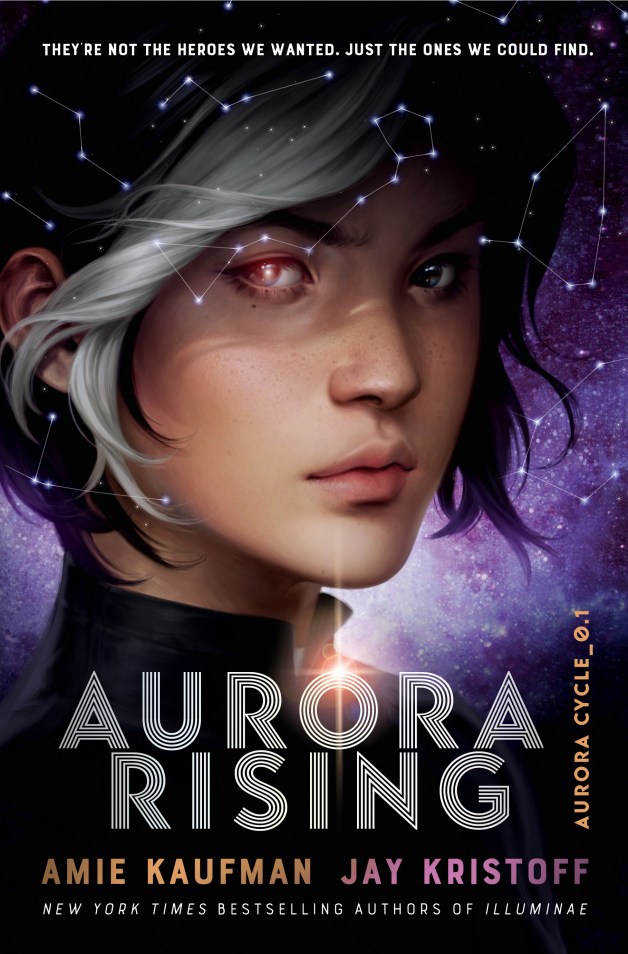
Aurora Rising by Amie Kaufman and Jay Kristoff

Aurora Rising Cover

Publisher: Allen & Unwin (Trade Paperback – 6 May 2019)

Series: Aurora Cycle – Book 1

Length: 470 pages

My Rating: 5 out of 5 stars

Amazon

The superstar team of Australian young adult fiction authors Amie Kaufman and Jay Kristoff comes together once more to create an outstanding, heartfelt and deeply entertaining new novel that may prove to be one of the best young adult books of 2019.

Kaufman and Kristoff are two of the biggest and most creative authors currently writing young adult fiction.  Kaufman is probably best known for her work with Meagan Spooner, where they have co-authored the Starbound trilogy and Unearthed series of books, the second book of which, Undying, was released earlier this year.  She is also in the process of writing her own Elementals series, with the second book, Scorch Dragons, released a month ago.  Kristoff first came into prominence with The Lotus War series, which debuted in 2012.  Since then he has also written The Nevernight Chronicle, the final book of which is set to be released in September, while his latest book, Lifel1k3, was one of the most talked about young adult releases of 2018.  Kristoff’s sequel to Lifel1k3, Dev1at3, is set to be released in a month, and he is currently working on an epic fantasy series, Empire of the Vampire, with the eponymous first book set to be released in September next year.

Kaufman and Kristoff have previously collaborated on the bestselling and award winning The Illuminae Files, a space opera epistolary series made up of three books which ran between 2015 and 2018.  Their latest collaboration, Aurora Rising, is another epic piece of young adult science fiction and is the first book in their planned Aurora Cycle series, which is currently set to feature another two books, released in 2020 and 2021.

Aurora Rising is set in the year 2380 and follows a spacefaring team of young adventurers as they attempt to save the galaxy.  In the future, humans have expanded out deep into the Milky Way, with fast intergalactic travel made possible through the Fold, dangerous space found on the other side of literal folds in the universe.  The Aurora Legion are an independent peacekeeping force made up of humans and several friendly alien races.  In order to complete their various humanitarian, exploration and peacekeeping missions, the Aurora Legion sends teams of young legionnaires, who can better withstand the rigors of the Fold, into the field.  Each team is made up of six highly trained and skilled individuals, who together can solve any problem they encounter.

Tyler Jones is the star graduating cadet of the Aurora Academy, who, thanks to his dedication and ability, will be given first pick of his fellow graduating cadets to form an elite team.  However, when an unscheduled joyride forces him to perform a risky rescue in the Fold, he misses the cadet draft, leaving him with a team of the cadets none of the other graduating squad leaders wanted.  These include (the descriptions were copied from the blurb due to accuracy):

  • His sister, Scarlet – A cocky diplomat with a blackbelt in sarcasm;
  • His best friend, Cat – A tomboy pilot who’s totally not into her squad leader, in case you were wondering;
  • Zila – a sociopath scientist with a fondness for shooting her bunkmates;
  • Finian – a smart-ass tech-whiz with the galaxy’s biggest chip on his shoulder;
  • Kal – an alien warrior with anger management issues.

Forced to make the most of his bad luck, Tyler leads his team on a routine mission that quickly turns hairy when a hostile force of aliens seek to destroy them.  However, genocidal aliens are the least of their problems, when they discover that the girl Tyler saved in the Fold, Aurora O’Malley, has stowed away on their ship.  Aurora, the only survivor of a colony ship long thought lost, is 200 years out of time and desperate to figure out what happened to her colony and the family she left behind.  The squad discovers that she is far more significant than they could ever imagine when she displays strange abilities and impossible knowledge of both the past and future.  When shadowy government agents attempt to arrest Aurora, the squad are forced to go rogue to solve the mystery and end up in a race to save the galaxy.

Aurora Rising is a spectacular read, as these skilled authors take the reader through an intense young adult science fiction adventure in an intriguing new universe.  The book’s story as a whole is an outstanding mixture of intense action, enjoyable science fiction elements and excellent character work, all wrapped up with clever storytelling that is both compelling and humorous.  There are a number of great scenes and epic moments throughout this book that really highlight this book’s unique style and the writer’s ability to tell a story.  For example, I personally liked an extended sequence that followed the protagonists as they embarked on an elaborate and seemingly impossible heist on a massive space station ruled by a vicious crime lord.  The overall result is a near perfect read that I had an absolute blast checking out.  This is an amazing piece of young adult fiction, with enough action and relatable characters to appeal to all manner of potential teen readers.  Older science fiction readers will also have a great time with this book, especially as it sets up a captivating and ambitious new trilogy that will appeal to a huge and diverse audience.

This book is told from the first-person perspectives of the book’s seven protagonists, which includes Aurora and all six members of Tyler’s squad, each of whom gets a series of chapters throughout the book to tell the story.  Kaufman and Kristoff make good use of the chapters each of the characters narrate and the reader gets a good idea of each character’s individual personality, as well as important snippets into their individual backstory.  The authors also try to differentiate these chapters out a bit for some of the characters.  For example, Zila’s chapters are rather short, blunt and analytical in nature, matching her personality, while Scarlet’s chapters feature her listing off the humorous pros and cons of her ex-boyfriends, figuring out which ones to stay in contact with.  I really enjoyed how the authors told the story through these seven separate narrators, as not only did it bring me closer to the characters but it allowed the authors to showcase various perspectives of some of the more impressive sequences and events, allowing for a fuller and more intense story.

Aurora Rising features an outstanding complement of main characters, as each member of the squad, including Aurora, are looked at in some detail.  I was very impressed with how the authors where able to create such expansive and intriguing backstories for all seven main characters, as each of them has their own issues or concerns.  For example, Tyler and Scarlett are living in the shadow of their dead father’s heroics and trying to make him proud, Cat is deeply in love with Tyler and is having a hard time keeping her feelings in check, and Zila struggles with her disconnection with other people brought on by her tragic past.  Other examples include the team’s two alien members: Finian, who to hides his feelings of abandonment behind his brilliance and snark; and Kal, who is torn between guilt about what his race’s warrior caste, of which he is a member, has done to his home planet and his surprising feelings for one of the other members of his squad.  Aurora is perhaps one of the most complex characters, waking after 200 years to find that everything and everyone she knew is dead and parts of her past have been hidden for nefarious reasons.  Add into that her discovery of uncontrollable mental abilities and the feeling that something mysterious is guiding her and she has a lot to worry about.  One of the best things about this book is that whilst all seven characters are fairly complex individually, the book’s true strength revolves around the fact that when these characters come together they are an extremely dysfunctional crew.  The crew starts off as a rebellious and overly sarcastic mess unable to work together effectively, even with their individual abilities and strengths.  However, as the book continues, they do learn to cooperate to a degree, and the reader is made to really care for them, both individually and as a whole.  I loved how these character relationships expanded and strengthened throughout the book, and I had a lot of fun with this humorous and entertaining group of people.

I really enjoyed the universe that Kaufman and Kristoff crafted to fit around this enjoyable and intriguing story.  Visions of humanity’s future can always be a bit hit or miss, but I thought that the science fiction setting that the authors utilise in this book, which sees humanity expanding and interacting with other races while dark secrets and wars build up in the background, to be a fun and well-thought-out setting.  The characters visit an interesting and inventive number of locations through the book, all of which really add to Aurora Rising’s adventure and action.

I liked the author’s concept of the Aurora Legion, an intergalactic peacekeeping organisation that sends teenage operatives into action due to science fiction reasons.  One of the things I quite enjoyed about this was how these teams were designed to have six members whose joint abilities and specialities would allow them to anticipate and overcome any problem.  As a result the teams are made up of:

  • Alphas – leaders
  • Faces – diplomats
  • Aces – pilots
  • Gearheads – mechanics/inventors/technicians
  • Tanks – combat specialists
  • Brains – science officers/medics

This team breakdown proved to be quite an interesting concept, even if they do sound like party roles in a MMORPG (tank, healer, DPS etc).  I liked this idea and the various characters slid into the roles quite effectively.

I also had a lot of fun with the universe-expanding insertions that Kaufman and Kristoff placed before a number of the book’s chapters.  These insertions are written as information pages being read by Aurora on her uniglass, an AI tablet called Magellan, who has a playful sense of humour and who also provides some amusing commentary within the story.  These information pages provide the reader extra information about the universe, including about the Aurora Legions, the roles of the squads’ various members, the history of the universe, alien species, locations the protagonists visit and other relevant inclusions.  While each of these pages contains universe factual information, Magellan adds humorous twists to each of these pages which are very entertaining and really fit into the easy going and entertaining mood of most of the book.  However, these information pages do change and get more serious in the darker parts of the book, which also helps prepare the reader for the shift in mood.  I loved these inclusions, not only appreciating the inventive universe building they allowed, but also the fun take on the classic idea of in-universe media inclusions.

Aurora Rising is an absolutely fantastic book that blasts off with action, humour and amazing characters to create a deeply compelling and relentlessly entertaining story.  Australian authors Kaufman and Kristoff are an outstanding writing duo, and their latest collaboration is an amazing piece of young adult fiction that brilliantly establishes their new trilogy and ensures that future instalments of the Aurora Cycle will be some of the most sought after young adult books for 2020 and 2021.  Aurora Rising comes highly recommended from me, and it is one of my favourite new young adult books of 2019 so far.

Amazon

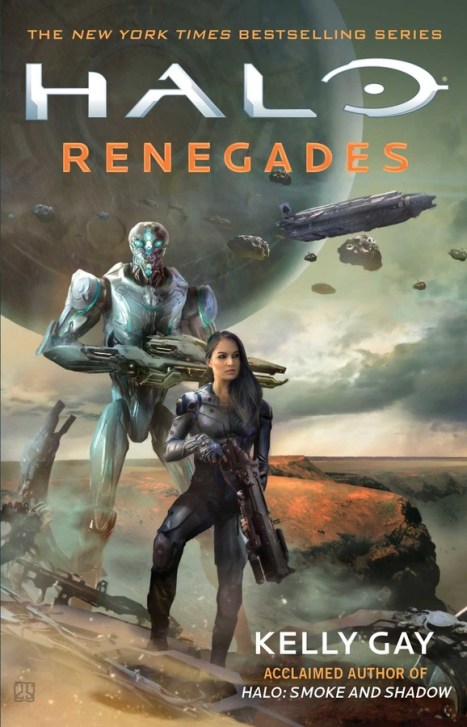
Halo: Renegades by Kelly Gay – Audiobook Review

Halo Renegades Cover.jpg

Publishers: Gallery Books and Simon & Schuster Audio (19 February 2019)

Series: Halo

Length: 8 hours 37 minutes

My Rating: 4.25 out of 5 stars

Amazon     Book Depository

In this review, I dive into the expanded media universe surrounding the popular Halo video game franchise, as I review one of their latest tie-in books, Renegades by Kelly Gay.

I remember way back in 2001 when we first got the X-Box, the original Halo (or Halo: Combat Evolved) was one of the first games we got on the system, and it was definitely one of the best games we had at the beginning of the platform.  The graphics on Halo were just incredible for the time, and it represented a fantastic evolution in the first-person shooter genre.  The Halo series has since expanded out in a number of addition games, including the five main games (Halo to Halo 5), two additional first-person shooters (ODST and Reach) and two real-time strategy games (Halo Wars 1 and 2).  I have ended up playing most of the games in this series and have quite enjoyed the fun action and excitement that come with the series.

Like many other video game franchises, writers have taken advantage of the Halo series’ popularity to create a range of tie-in novels, comics, animation and other media items.  There has even been talk of a live-action Halo movie for some time, although we are probably a long way off from that.  Halo is one of those games where the creators actually invested in a complex backstory and extended history, much of which is revealed within the game’s impressive cut scenes.  While I quite enjoyed the extended Halo backstory revealed in the games, I never got too into the media tie-ins associated with the franchise.  The only other book in this franchise I have read is Halo: Contact Harvest, which I bought in Philippines to supplement my reading material on an extended trip.  While I did actually really enjoy Contact Harvest, which focused on one of the most entertaining side characters in the original game trilogy, I did not have a chance to read any of the other books written about the games until now.  Since starting my blog, I am always keen to expand my range and decided to listen to the audiobook version of this book for something different.  I did have to choose between Renegades and the recently released young adult Halo book, Battle Born, but ended up going with Renegades in the end.  I may yet check out Battle Born at a later date.

For those unfamiliar with the franchise, the games are set in the 26th century, after humanity has journeyed away from Earth and formed an interstellar civilisation.  Some years before the events of the first game, humanity comes into contact with an advanced alliance of alien races, collectively known as the Covenant, who engage in a brutal war against humanity.  As part of this war, a human ship fleeing the Covenant lands on an artificial ring planet, known as Halo.  The Halo rings were created millennia ago by a now extinct race of beings, the Forerunners, to stop the creatures destroying their civilisation, the parasitic race known as the Flood.  However, the only way to defeat the Flood was to wipe out all life in the galaxy to starve the Flood, and then reseed life, including humanity, back into the galaxy.  Throughout the course of the first three games, the protagonist attempts to save humanity from the Covenant and the Flood, eventually forming an alliance with elements of the Covenant and bringing the war to an end.  Halo 4 and 5 are set a few years after the original trilogy, and feature the protagonist dealing with surviving members of the Forerunners and a whole set of other threats.

Renegades is set in the year 2557, approximately around the same times as Halo 4, and follows the adventures of the human salvage ship Ace of Spades.  After the events of the book Halo: Shadow and Smoke, the crew of the Ace of Spades are still reeling from the losses they experienced and are eager to get revenge of the Sangheili (Elite) Covenant commander Gek’Lhar.  Captain Rion Forge is also determined to use the information they recovered in their last adventure to locate and rescue her father’s missing ship, the Spirit of Fire.

However, Gek’Lhar is not the only enemy they have made.  The United Nations Space Command’s (UNSC) Office of Naval Intelligence (ONI) works to collect or control all valuable or dangerous pieces off Forerunner technology in the galaxy, and the crew of the Ace of Spades are the only people aside from Gek’Lhar who have knowledge of a massive debris field filled with valuable Forerunner technology.  In the middle of a daring heist to steal information from Gek’Lhar, Forge and her crew find themselves captured by ONI operatives, who confiscate the coordinates to the debris field, as well as all the crew’s assets and salvaged technology.

Left with nothing but their ship, the Ace of Spades crew need to find the next big score, and information Forge secretly obtained from ONI during their arrest may provide them with what they need.  ONI are on route to secure a remote and desolate planet, which contains the remains of one of their ships, which apparently crashed with classified technology aboard.  The contents of the ship may be the crew’s best option to reclaim their stolen possessions, so they set out to get there first.  Beating ONI to the planet, the Ace of Spades crew make a surprising discovery of an advanced robot calling itself 313 Guilty Spark.

Halo: Renegades is a terrific novel from author Kelly Gay, who creates an exciting and compelling story with a huge number of connections to the Halo universe.  Gay is a well-established author of science fiction and fantasy fiction, best known for her Charlie Madigan series, and who also writes under the pen name of Kelly Keaton.  Renegades is the direct sequel to Gay’s 2016 novella Smoke and Shadows, but it also continues stories started in the games and introduced in The Forerunner Saga of books.

The first thing I have to talk about when it comes to Halo: Renegades is the sheer range of Halo references and backstory from across the Halo games and extended media utilised in this book.  Not only is the story set in the post-Halo 3 universe but the book takes place around the time of the events of Halo 4, with several of the events from the fourth game commented on and having some impact on the story.  In addition, one of the main protagonists of the book, Rion Forge, is the daughter of one of the main characters from the first Halo Wars, Sergeant John Forge, and Rion Forge spends a good part of this book trying to find her father and the ship from Halo Wars 1 and 2, the Spirit of FireRenegades also features 313 Guilty Spark, one of the main antagonists from the original trilogy, as a major point-of-view character in the book, and characters from the Spartan Ops additional content of Halo 4 appear in various minor roles throughout the book.  That is on top of all the information contained in the previous books in the Halo extended universe.  Renegades takes place directly after the events of Gay’s preceding Halo novella, Smoke and Shadows, and all the events that occur in that book are incredibly relevant.  In addition, the events and characters explored in The Forerunner Saga, a trilogy that dove deeply into several key Forerunner characters from the various games, also play a significant role throughout Renegades.

Now, with all these references to various games and books, how easy is the plot of Renegades to follow, especially for those with limited or only basic knowledge of the Halo universe?  I would say that Renegades is a perfect book for hardcore fans of the Halo series who have enjoyed some of the books mentioned above and who will appreciate all the references and discussion that occurs within.  People with slightly less knowledge of the franchise may struggle during certain parts of the plot and have a hard time understanding the relevance of what is happening.  Having played all the games and having done some background reading, I thought that I would be able to follow everything that was going on, but I actually struggled with some aspects of the plot, especially with the extensive discussion about ancient Forerunner characters.  While I did struggle a little, I found that as I stuck with the book, all the relevant parts were eventually explored in some additional detail, helping to fill in the picture.  I do think that the author took the reader’s knowledge of the events of all the video games a little for granted, and there were some gaps in the story that, while I was able to fill them in, people less familiar with the games might have trouble with.  That being said, Gay did a fantastic job of making the story accessible to those people who had not read her direct prequel story, Smoke and Shadows, and readers were quickly able to get a good understanding of Gay’s earlier entry into the Halo universe.  In the end, if you have very little knowledge of the Halo games, this probably is not the book for you, and while you might be able to enjoy the adventure within, you are extremely likely to get lost a number of times throughout the complex plot.

Aside from the intensive amount of inclusions from the various Halo games and media tie-ins, I felt that Renegades was an overall awesome book that was a lot of fun to listen to.  Gay presents an entertaining character based novel that has a good amount of new, original story content while also utilising the main aspects of the Halo universe.  The author presents the story from a range of different character perspectives, allowing for a richer and fuller story for the reader to enjoy.  There is a little less action than you would expect from a Halo tie-in novel, but there are still a number of action sequences throughout the book to keep fans of combat and firefights interested.  I quite liked where the story went, and I was extremely glad that I decided to read this book.

I thought that the camaraderie of the crew of the Ace of Spades served as a good emotional heart to this story, and I liked the time that Gay spent exploring the familiar relationship that had formed among the members of the crew, and the strain that recent events had placed upon them.  I also enjoyed how the story focused on a gang of salvagers, and it was interesting to see how they fit into the wider Halo universe.  It also meant the story featured a few heists-like sequences, as the team uses intelligence rather than brute-strength to defeat their opponents.

One of the more interesting characters utilised in Renegades was the character of 313 Guilty Spark.  Spark was a Forerunner Monitor; an intelligence left behind to maintain the Halo rings and help activate them in case of another Flood infestation.  Spark appeared in all three of the original Halo games, including Halo: Combat Evolved as the main antagonist, and Halo 3, in which he was apparently killed.  However, The Forerunner Saga of books revealed he had survived the events of Halo 3 and was actually a former ancient human who had been transformed into a monitor long ago by the Forerunners.  Spark had quite a good redemption arc within this book, as well as good a redemption arc, as someone who killed off Sergeant Major Johnson deserves.  While Spark has his own agenda for most of the book, his time among the crew starts to rekindle his lost humanity and slowly turns him into a somewhat likeable character.  I did enjoy the duality that Gay portrayed within Spark, as the character tries to figure out who exactly he is: the ancient human, the Forerunner monitor or something entirely different.  His subsequent quest to find out who he is becomes a major part of the story, and it was interesting to see how it tied into the larger Halo universe, especially in relation to the Forerunners.  I was slightly disappointed that his role in the original three Halo games was not really mentioned or explored, but it was still a compelling character arc that I found to be most intriguing.

As I mentioned before, I chose to listen to the audiobook format of this novel, narrated by Justine Eyre.  Like many tie-in novels, this is a relatively short audiobook, only going for 8 hours and 37 minutes, making it fairly easy to get through this book quickly.  I quite enjoyed listening to this book rather than reading it, as it allowed me to absorb the deep dive into the Halo lore a little easier.  I also found that the audiobook format helped enhance some of the action sequences, such as the awesome spaceship fight sequences in the centre of the book.  Justine Eyre did a fantastic job of narrating this story, and the voice she provides for the base narration and the book’s central character, Rion Forge, is perfect, encapsulating the strong and determined nature of Forge that Gay sets forth in the book.  I quite liked the voices that Eyre utilises for the other human members of the Ace of Spades crew, and she does some decent and varied voices for the book’s alien characters.  I had a little trouble liking Eyre’s voice for Guilty Spark, mainly because Tim Dadabo did such an incredible job with the character in the games; however, this did not really negatively impact my experience with Renegades.  As a result, I would definitely recommend the audiobook format of this tie-in novel, as I found it to be an awesome way to enjoy this amazing story.

Kelly Gay did an excellent job following up her 2016 Halo novella, Smoke and Shadow, and I had an absolute blast listening to Halo: Renegades.  The book contains an outstanding story that goes deep into the lore of the Halo franchise and successfully pulls in elements from several games and novels to create a fantastic overall read.  While some readers may have trouble following some parts of the story, I had a great time reading it, and I know that established fans of this particular franchise will really love Gay’s new book.  I really hope that Gay continues the story of Rion Forge, 313 Guilty Spark and the rest of the crew of the Ace of Spades in the future, and I would be quite interested to see them try to navigate the post-Halo 5 universe.  This is definitely a series that I will be keeping an eye on.

Amazon     Book Depository

Throwback Thursday – The Andromeda Strain by Michael Crichton

The Andromeda Strain Cover.jpg

Publishers: Brilliance Audio (Audiobook Edition – 26 May 2015)

                        Knopf (12 May 1969)

Series: Standalone/Book 1

Length: 8 hours 15 minutes

My Rating: 4.5 out of 5 stars

Amazon     Book Depository

Reviewed as part of my Throwback Thursday series, where I republish old reviews, review books I have read before or review older books I have only just had a chance to read.

For this week’s Throwback Thursday I take a look at a classic techno-thriller from legendary author Michael Crichton, The Andromeda Strain.

The Andromeda Strain was released nearly 50 years ago, in May 1969, and represented a bold new direction from Crichton, who had previously done several pulpy crime novels, such as Odds On and Scratch One, under the name John Lange, as well as the medical crime thriller A Case of Need, which he wrote under the name Jeffrey Hudson.  The Andromeda Strain was considered to be part of the new techno-thriller genre and is still considered to be a major example of this genre.

I have only read three of Crichton’s books before, including Jurassic Park (for obvious reasons), The Lost World and Pirate Latitudes.  While I have always intended to go back and read some more of Crichton’s works, I have never had the time to do so.  However, with the recent announcement that The Andromeda Evolution is being released in November to correspond with the 50-year anniversary of The Andromeda Strain, I thought this would be the perfect opportunity to check out one of Crichton’s earlier books.  For that reason, I listened to the audiobook version of The Andromeda Strain narrated by David Morse.

When a military satellite comes down in the small town of Piedmont, Arizona, nearly all the residents in the town die.  They are victims of a mysterious new pathogen that either instantly clotted all the blood in their body or drove them to suicide.  The military quickly activate the Wildfire protocol, and a small government team of scientists and doctors take command of Piedmont and the satellite.

Believing that the satellite contains an extraterrestrial organism, the team bring it and the two survivors of Piedmont, an old man and a baby, to a secret and secure underground Wildfire laboratory for study.  Deep in the laboratory, the team attempt to identify and categorise the organism which has been given the codename Andromeda.  However, Andromeda is evolving a way no member of the Wildfire team believed possible, and not even the laboratory’s nuclear bomb safeguards may be enough to keep it contained.

After listening to The Andromeda Strain over a couple of days, I found it to be an extremely thrilling and complex novel that I really got into and which I am eager to review.  However, after 50 years and thousands of reviews I am not too sure how much I can really say about this book that has not already been said.  That being said, when looking at this book from a 2019 perspective, I feel that The Andromeda Strain is still an extremely strong techno-thriller, with some expert storytelling and an in-depth scientific base that is still relevant in this modern era.

In this book, Crichton utilised a very dry, detailed and scientific approach to his writing, slowly covering every aspect of the events unfolding before each of the protagonists, while also providing the reader with backstory on the characters and briefings on the various relevant scientific and political components of the book.  Despite this somewhat less exciting writing style, Crichton is still able to create quite a thrilling atmosphere throughout the book as the story gets closer to the inevitable disaster part of the plot.  Crichton really adds to the suspense by mentioning the various mistakes that the protagonist are making and hinting at all the problems going on around them that will eventually lead to the release of the Andromeda microbe.

I did feel that the book ended rather suddenly, and I was surprised that the investigation part of the story was still going with only a short amount of the book left to go.  I found it interesting that the part of the story that dealt with the release of Andromeda and the subsequent race to stop the nuclear explosion about to wipe out the lab was introduced so late in the book and solved so very quickly.  I was expecting a large portion of the story to focus on the main characters getting past all of the impressive contamination protocols in order to stop the nuclear explosion.  Instead, this was all solved within about 10 minutes of audiobook narration, or probably five to 10 pages of a normal book.  While I was surprised about this, I suppose it does make sense in the context of the rest of the story, where the characters and briefing material did mention several times that there was a three-minute delay between the bomb arming and the explosion.  This was all extremely thrilling, and I felt that the book is still capable of keeping authors on the edge of their seats.

One of the things that really surprised me about the book was the advanced level of technology that was featured within a story written and set in 1969.  Perhaps this is simply ignorance as a result of being a child of the 90s, but I feel it is more likely the result of Crichton having a great understanding of technology and potential future advances that might be utilised within a high-level government laboratory.  Certainly, the scientific features of this book are extremely impressive, and I felt that they were still extremely relevant and understandable in a 2019 context.  For example, all the extreme quarantine methods surrounding the Wildfire laboratory sound like perfectly reasonable steps that modern laboratories could use to keep pathogens contained.  All the discussions about viruses and micro-organisms were also incredibly detailed, and I felt that much of the information discussed around those is still relevant today, and modern audiences will still be able to understand and consider it quite easily.

I did find the concept of the Odd-Man Hypothesis to be extremely interesting.  In essence, the Odd-Man Hypothesis states that out of all the humans in the world, unmarried men are the most likely to make the best and most dispassionate decision in the face of an emergency.  This becomes a key part of the story, as one of the characters is designated as the Odd-Man and is the only person with the ability to shut off the laboratory’s nuclear self-destruct device.  Now this is one theory that does not translate to more modern times, although, in fairness, most of The Andromeda Strain’s characters did not take it that seriously either.  That being said, it was an extremely intriguing element to read about, and I enjoyed the discussion around its viability and use within the context of the story.

As I mentioned above, I chose to listen to The Andromeda Strain in its audiobook format.  There are actually a number of different audiobook versions of The Andromeda Strain out there, each with different narrators, such as an earlier version narrated by Chris Noth.  I ended up listening to the most recent audiobook version of this book, although I imagine a new version is sure to follow soon, especially with a sequel about to come out.  The version I listened to was narrated by actor David Morse and was released in 2015.  This version is 8 hours and 15 minutes long, and I found myself powering through it very quickly.

I think that the audiobook was a really great way to listen to The Andromeda Strain, as it allows the reader to absorb the huge amount of scientific detail and discussion a lot easier.  I felt that David Morse was an excellent narrator for this book, and that his basic narration voice perfectly fit the books tone and style.  Morse also comes up with some great voices for this book, and I was particularly impressed by his weary old man voice.  As a result, I would highly recommend the audiobook version of The Andromeda Strain, as it is definitely an outstanding way to the listen to this fantastic story.

Overall, I loved this dive back into the past and I had a lot of fun listening to this classic techno-thriller.  Crichton is an amazing author, especially when it comes to a more science-based story, and I am incredibly impressed that his story still holds up 50 years after it was first published.  I am extremely curious to see where the upcoming sequel, The Andromeda Evolution, takes the story, and how well new author Daniel H. Wilson replicates Crichton’s style.  This book has also encouraged me to check out some more of Crichton’s works, and I am looking forward to reading some more of this author’s excellent techno-thrillers, as well as some of his intriguing historical fiction pieces.

Amazon     Book Depository

Star Trek Discovery: The Way To The Stars by Dr Una McCormack

Star Trek Discovery - The Way To The Stars Cover

Publisher: Gallery Books (Trade Paperback Format – 8 January 2019)

Series: Star Trek Discovery – Book 4

Length: 276 pages

My Rating: 3.75 out of 5 stars

Amazon     Book Depository

Get ready to dive into the extended Star Trek universe with The Way To The Stars, the latest tie-in novel to the franchise’s current show, Star Trek Discovery.

While most people would be familiar with the iconic Star Trek television shows and movies, some may be unaware that there is an extremely rich and extensive Star Trek universe across a variety of different media formats.  This is particularly true when it comes to the vast number of Star Trek novels which utilise the franchise’s massive universe.  Since 1967, during the run of the original Star Trek television series, a bevy of authors have contributed to this extended universe by creating a huge number of novels made up a range of different series and publishers.  There are now over 840 Star Trek novels, not only complementing the various Star Trek movies and television shows but also creating a series of new adventures.

With the announcement of the latest Star Trek television show, Star Trek Discovery, in late 2017, a new series of related novels was commissioned for release around the same time.  This new series focused on several of the characters featured within Star Trek Discovery, providing intriguing character history and a series of new, exciting adventures.  The first book in this series, Desperate Hours, was released in 2017, days after the premier episode of Star Trek Discovery.  These books have so far covered several of the show’s key characters, including Michael Burnham, Saru, Gabriel Lorca and Philippa Georgiou, while a fifth book out later this year will focus on Christopher Pyke and the original crew of the U.S.S. Enterprise.  I actually have a copy of the second book in this series, Drastic Measures, on my bookshelf at home, and I have been intending to read it for some time.  I will hopefully get to that, and the other books in the Star Trek Discovery book range, at some point in the future.

I have to admit that I am more of a casual Star Trek fan and I have more of a preference for Star Wars (and with that, I lose several Trekkies reading this review).  That being said, I have watched a number of the movies and I am really enjoying Star Trek Discovery at the moment.  This book is the first actual Star Trek novel that I have had the pleasure of reading, and there are several cool-sounding upcoming Star Trek novels that I am probably going to try and check out.

The Way To The Stars focuses on the character of Sylvia Tilly, the young, brilliant and awkward Starfleet cadet and essential member of the U.S.S. Discovery’s crew.  However, when she was 16, years before she joined Starfleet, her life was going down a different path.  The daughter of a high-ranking United Federation of Planets (the Federation) diplomat, Tilly finds herself under intense pressure to succeed.  Forced by her domineering mother to abandon her love of science and engineering to pursue a career as a diplomat, Tilly is shipped off to an elite off-world boarding school.

Forced out of her comfort zone, and continuously micromanaged by her mother, Tilly begins to crack under the pressure until, for the first time in her life, she rebels.  Escaping the school and embarking on a dangerous off-world trip, Tilly seeks her own path in life, which will eventually lead her join Starfleet and adventure out into the stars.

The Way To The Stars is the fourth entry in the Star Trek Discovery book series, and it is written by veteran science fiction and tie-in novel author, Dr Una McCormack.  Dr McCormack is an expert when it comes to the novelisation of popular science fiction television shows, having written a number of Doctor Who tie-in novels throughout her career.  Dr McCormack also has a large amount of experience when it comes to the Star Trek extended universe, having authored several novels that continue the adventures of The Next Generation and Deep Space Nine television series.

This book was a little different to what I anticipated it would be.  Rather than featuring an action-packed adventure with Starfleet like the previous books in the Star Trek Discovery series, The Way To The Stars mainly focused on Tilly’s school and family life.  While this was still a very interesting and enjoyable read, I kept expecting pirates, aliens or some sort of antagonist to drop in and take over the school, forcing Tilly to use the engineering skills that her mother and school friends were so dismissive of to save the day.  So it was a tad disappointing to find this book only contained a mostly school-based story, more concerned with Tilly’s studies, her overbearing mother and her problems making friends.  Do not get me wrong; there are a lot of fun and enjoyable elements to these parts of the story, and the later part of the book in which Tilly runs away from school and tries to make her own way in space are very interesting.  It was, however, somewhat lighter than what I was expecting from a Star Trek novel, and its tone and writing style reminded me more of a young adult school novel.

That said, this was still a very enjoyable novel as Dr McCormack does an amazing job of bringing one of Star Trek Discovery’s most entertaining characters to life while placing her in a fun and interesting coming of age story.  The author makes great use of the Star Trek elements to tell her story, and I found it fascinating to see the advanced interplanetary schooling (rich boarding schools are rich boarding schools no matter what planet they are on), as well as Tilly’s adventures on human planets and ships outside of Federation space.  The latter parts of the book set on the Starfleet ship were fun, and it was great to see the adventures of a scientific ship, as well as Tilly’s contributions to their voyage.  The resultant first contact that they make was interesting, and it was cool to see elements from the part of the story set in the school come into play during this bit.  Overall, I did have a lot of fun reading The Way To The Stars, and found it to be a very well-written story with a lot of intriguing elements to it.  I really got into the story and managed to read it in only a couple of days, so many people should have fun reading it.

One of the things that I did like about The Way To The Stars was the way the author brought the book’s main character, Tilly, to life.  Within Star Trek Discovery, Tilly, as portrayed by Mary Wiseman, is a fun, brilliant and neurotic character who serves as the show’s moral centre and heart.  Despite mostly being a kind and thoughtful person, Tilly is regularly able to take control of a situation and act in a command capacity, often with humorous results.  I felt that Dr McCormack’s portrayal of Tilly within this book did an excellent job of either showing that these were already existing qualities/personality traits or else examined the first time that Tilly ever showcased these traits.  It was really good to see where Tilly came from and the sort of influences she had in her life to turn her into the character that is so beloved in the show.  As a result, The Way To The Stars is an excellent coming of age story, and I really enjoyed the way that the author wrote the character within the book.

This book is strongly related to the Star Trek Discovery television show; however, I do not believe that too much pre-existing knowledge or fandom experience is required to enjoy The Way To The Stars.  Dr McCormack has an inclusive writing style and I believe that anyone with even a basic knowledge of Star Trek will be able to pick this book up and enjoy the fun story within.  It should go without saying, though, that those people who are fans of the Star Trek universe will get a lot more out of this story.  This is especially true for fans of Star Trek Discovery, who will appreciate this deeper dive into the protagonist’s backstory and the examination of her early life.  I believe that The Way To The Stars is considered to be a canon story within the Star Trek universe; however, I doubt that the events within will have any impact on the show.  Still, it is quite an interesting inclusion that will really interest those who have come to enjoy the characters of Star Trek Discovery.

Star Trek Discovery: The Way To The Stars is a fun and enjoyable tie-in novel that does an amazing job of examining the past of a key character of the show.  Dr McCormack creates an interesting coming-of-age story that will appeal to hardcore Trekkies and casual science fiction readers alike.  I quite enjoyed my first foray into the Star Trek extended universe, and I am planning to try and get some of other Star Trek books coming out later this year.  Stay tuned to see me go further beyond the final frontier.

Amazon     Book Depository

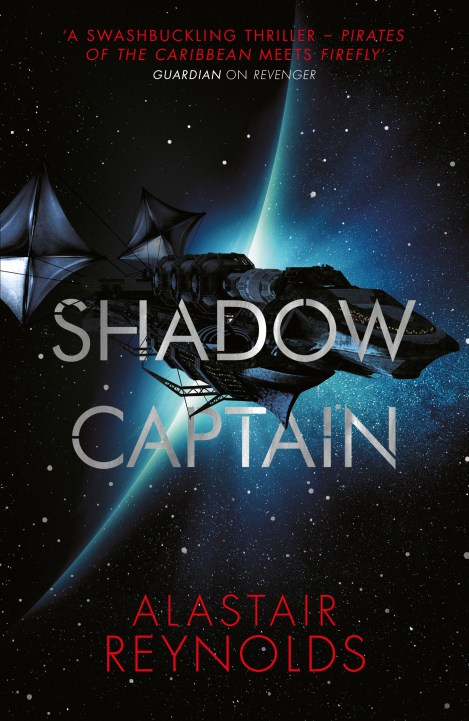
Shadow Captain by Alastair Reynolds

Shadow Captain Cover.jpg

Publisher: Gollancz

Publication Date – 8 January 2019

Amazon     Book Depository

Tens of millions of the years in Earth’s future, during the period known as the Thirteenth Occupation, humanity travels across space in sailed spaceships, with many crews searching for relics and treasures from previous eras of human and alien occupation.  For years, the greatest threat to these ships was the legendary pirate Bosa Sennen, whose deadly black ship, the Nightjammer, ruthlessly hunted down and ambushed hundreds of ships, killing all onboard, before vanishing back into the darkness.  Continuously moving her consciousness from one body to the next, Bosa was able to keep her reign of terror going for years, becoming a near-horrifying myth throughout space.  However, Bosa unexpectedly lost everything when she came up against the Ness sisters, Adrana and Fura, whose courage and daring resulted in them taking Bosa’s ship and her life.

Now the Ness sisters command Bosa’s infamous ship, rechristened as Revenger, and seek to make their own fortunes.  Veering away from the ship’s previous profession of piracy, the Ness sisters and their crew scavenge through old abandoned bases, attempting to find lost treasures or supplies as they slowly establish a new life for themselves.  But the legacy of Bosa Sennen is constantly around them, and not even her death is enough to end her legend.

While Adrana seeks to come to turns with the horrors she witnessed as Bosa’s captive, Fura becomes obsessed with finding Bosa’s hidden cache of treasure from her extended lifetime of piracy.  En route to the planet of Wheel Strizzardy to find a source who may be able to lead them to the pirate trove, Revenger is attacked, forcing the crew to brutally defend themselves.  Arriving at their destination, they find that ships they encountered were hired by a consortium of hundreds of planets who have placed a massive bounty on Bosa Sennen’s head.  What’s more, they do not particularly care if she is already dead, as long as her ship and all aboard are captured and destroyed.  Now, with an armada behind them and the crew of Revenger stuck on the gangster-controlled world of Wheel Strizzardy, the Ness sisters must find a way to escape with the information they need.  But are they prepared for the devastating secrets their search will uncover?

Reynolds is a highly regarded science fiction writer who has been writing since the 1990s.  Throughout his career he has written a slew of short stories, novels and other works of fiction.  His main body of work include the Revelation Space series, The Prefect Dreyfus Emergencies, the Poseidon’s Children series and several standalone novels.  Shadow Captain is the second book in his Revenger series, and follows on from the first book in the series, 2016’s Revenger.

Shadow Captain is an intriguing and enjoyable piece of science fiction that follows a mismatched group of semi-pirates as they navigate their way through space.  Reynolds has created an ambitious new universe for this series, and set an interesting and compelling story in the heart of it.  Unfortunately, I never got a chance to read the first book in the series, Revenger, beforehand, and this somewhat negatively impacted my enjoyment of this book, as I failed to understand several key aspects of the series universe.  Despite this, I ended up really liking this fantastic read and I am looking forward to the next book in the series.

This main reason why my lack of experience with this series impacted how much I enjoyed Shadow Captain is the detailed new science fiction universe that Reynold’s has created.  This universe is pretty impressive, with a number of unique flourishes and a fascinating-sounding history made up of multiple, distinctive eras of widespread human occupation across space.  While this is a really fun feature, I found that Reynolds did a poor job of re-explaining a number of key features of his universe that were introduced in his first book.  Without these explanations I was somewhat lost during a number of important discussions that took place during the early parts of the story.  This was not a massively widespread issue and quite a few important elements were explained to the reader at various points of the book, although Reynolds did delay some explanations longer than necessary.  However, it was a bit frustrating not having an understanding of what some key elements of universe were, or what some slang or terms being discussed by the protagonists in the early parts of the book were, and there are still one or two elements that were mentioned in Shadow Captain that I am not 100 percent certain about.

I also did find the first third of the book was a little slow going, and it took me a while to really get into the story.  This was due to an early combination of not completely knowing what the characters were talking about at certain points, and some slower pacing as the author sets the scene.  While there were some good points to the start of the book, including an great summary of events in Revenger, and some intriguing scenes inside a ‘bauble’, an ancient and abandoned human construction in space, I did find it a little hard to stay interested.  However, I stuck with it and was very glad that I did, as the rest of Shadow Captain was a very entertaining and exciting read.  The last two thirds of the book are an excellent, fast-paced adventure, which features some great battles in space, an intrigue-laced period on the planet of Wheel Strizzardy and a hunt for a hidden trove of treasure.  I really enjoyed the part of the book set on Wheel Strizzardy, as it featured the crew going up against a bunch of ruthless gangsters on a backwater planet.  While there, they have to face off against a cannibalistic crime lord, deal with the secrets of aliens and attempt to outsmart several of the planet’s colourful inhabitants, all the while the bounty hunters chasing after them quickly get closer towards them.  This awesome last two-thirds of the book more than makes up for the slower start to the narrative, and makes Shadow Captain into a very good book overall.

One of the things I liked the most about Shadow Captain was the lingering impacts of events that occurred in the first book, which results in some fantastic character work from Reynolds.  In the first book, Revenger, the primary antagonist, Bosa Sennen, was a fairly impressive villain who perpetrated a number of terrible acts against many of the book’s characters.  Both of the book’s protagonists, the Ness sisters, were impacted in different ways by her actions.  Adrana was kidnapped in Revenger in order to be conditioned to become Bosa’s next host, a process that required her to endure significant torture and physiological abuse.  As a result, throughout Shadow Captain, Adrana must constantly deal with lingering issues impacting her psyche.  She is continuously angry throughout the book, and finds herself constantly holding back new and terrible thoughts that she is convinced are the last lingering aspects of Bosa’s mind and personality that might have been partially imprinted on her.  Fura is also severely impacted by the events of the first book, and has become angry and secretive, with goals she is hiding from her crew and even her own sister.  I liked the reasons behind Fura’s change in personality, as the character was forced to become more ruthless and paranoid in order to get into the mind of her foe, Bosa.  The focus on these characters’ changes in personality is an outstanding addition to the book that results in some significant and intriguing drama throughout the book.  I personally enjoyed seeing a villain’s impact continue so significantly after their death, and it was absolutely fascinating to see the various ways she lived, especially in these different but devasting impacts on the Ness sisters.

In the end, I am going to award Shadow Captain four stars out of five.  While I really enjoyed the book as a whole, the initial problems I experience with the early story and the somewhat ordinary job that Reynolds did re-explaining all of the significant elements of his universe lowered my overall rating.  As a result, I would highly recommend that readers interested in checking out Shadow Captain should probably read Revenger beforehand, as it may increase their overall experience.  There is still an amazing amount to enjoy about Shadow Captain, including an inventive science fiction setting, an entertaining story that ramps up as the book continues and some excellent character work surrounding the actions of the first book’s primary antagonist.  Overall, this is a great piece of science fiction that is well worth checking out, and any future books in the Revenger series will definitely be on my radar.

My Rating:

Four stars

Amazon     Book Depository

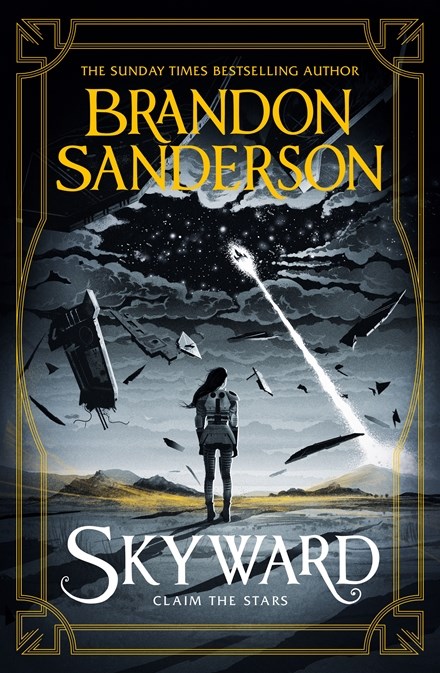
Skyward by Brandon Sanderson

Skyward Cover.jpg

Publishers: Gollancz

                        Audible Studios

Publication Date – 6 November 2018

Amazon

Legendary fantasy and science fiction author Brandon Sanderson once again delivers an incredible five-star read with Skyward, a brilliant young adult science fiction story that follows the journey of an energetic young protagonist at she attempts to claim the stars.

As of right now, I have only had the opportunity to read one of Sanderson’s novels, the epic fantasy book, The Way of Kings, which was easily one of the best fantasy reads of the last decade and which I gave a five-star review here.  After enjoying The Way of Kings I was keen to see how Sanderson’s writing ability translated to the young adult science fiction genre.  I have to say I was in no way disappointed, as Sanderson once again creates an amazing and exciting piece of literature, all set within an incredibly detailed new fictional landscape.  Skyward is the first book in Sanderson’s planned Skyward series, which is to be made up of a total of four books.  The second book in this series, Starsight, has apparently already been written, with a release planned for November 2019, while the third and fourth books, both yet untitled, already have tentative release dates in 2021 and 2022.  Starsight is already on my must-read list for next year, and will appear in my Waiting-on-Wednesday series of blog posts the moment the cover gets released.

Far in the future and on another planet, humanity has been under constant attack for hundreds of years.  A mysterious alien race known as the Krell pursued the human fleet across the stars, forcing it to crash on a desolate planet.  Those humans that survived were forced to flee below the planet’s surface, hiding in caves and only re-emerging when they gained the ability to create space fighters capable of fighting off the alien craft.  Now the Defiance Defence League (DFF) fights a constant war against the Krell, who are determined to wipe out the DFF’s main base and the production facilities beneath it.

Since she was a young girl, Spensa Nightshade has always dreamed of becoming a DDF pilot, the elite defenders of humanity, in order to claim the stars.  However, years ago, her father deserted during the most famous battle in DDF history and was shot down by his comrades.  Having been forced to live for years as a daughter of a coward, Spensa is eager to forge her own heroic destiny, but the DDF will never accept her into their flight program.

But with the war going badly and new pilots needed, Spensa is given a chance to join the DDF, thanks to the actions of her father’s old wingmate.  Joining a class of misfit cadets who dub themselves Skyward Flight, Spensa learns to fly the DDF’s ships against the Krell and quickly shows her determination and skill.  However, her father’s legacy is constantly weighing her down, whether by the sabotage of the DDF or the constant fear that deep down she might also be a coward.  With the Krell attacks getting worse, will Spensa find her place as a pilot, or will a terrible secret from the past come back to haunt her?  And through it all, what role will the ancient spaceship Spensa discovers have on the fate of humanity?

I not only received a physical copy of Skyward from Hachette Australia, but I also listened to a copy of this book in its audiobook format, which is narrated by Sophie Aldred and goes for just a little over 15 hours.  Both versions are pretty cool.  The trade paperback version of this novel contains a couple of great maps at the start of the novel that some readers may find useful when it comes to navigating around the story.  There is also a series of intriguing drawings throughout the book that show off several of the ships, both human and alien, that are featured in the story, all of which are juxtaposed against the main ships that the protagonist and her wingmates train and fight in.  The later parts of the book also contain some fantastic illustrations of flight manoeuvres and abilities, which prove informative when utilised with Skyward’s many aerial flight sequences.  I personally preferred the audiobook format of Skyward to the physical copy, as it allowed me to enjoy the many action-packed aerial scenes a whole lot more.  I also loved the narration by Aldred, who was able to create a number of excellent voices for the book’s various characters.

The reason I am giving Skyward such a high-star review is because it is an incredible piece of young adult science fiction that not only has an amazing story but which also contains several outstanding characters and some of the best ship-to-ship action sequences I have ever seen, all of which is combined with Sanderson’s trademark knack for large-scale world building.

I had a lot of fun with the story contained within this book, as Sanderson sets forth a layered and powerful narrative for the reader to enjoy.  Told primarily from the point of view of the protagonist, Spensa, Skyward contains a fantastic coming-of-age storyline set within a flight academy where the cadets learn how to fly in defence of their planet.  I always love a good school based learning narrative, and Sanderson has created an outstanding version of this, where the main characters spend most of the story learning the theory behind flying, while also engaging in real-life combat situations as they train.  As a result, there are heartbreaking losses, great emotional connections forged, and secrets and hints about the overall story slowly released to the reader, all while the protagonist is forced to contend with the machinations of a biased authoritarian figure who even gets to narrate a few chapters to highlight the reasons for her actions.  Overall this is an addictive and exciting story that will really stick in the reader’s imagination.

Sanderson has once again created a detailed and captivating new world in which to set his new series.  The book is set within a new planet that humans from Earth crashed upon years ago in the past, fleeing from a mysterious alien force.  For years the humans lived a nomadic lifestyle in the caves beneath the planet before finally fighting back using newly fabricated fighter craft.  Sanderson has created a fantastic world to host this story, exploring a society forced to live in caves and eventually creating a military base on the surface.  I love how the author has created a ton of new societal rules and features, as well as a world above and beneath the surface of this alien planet.  There is also some really cool and unique technology that comes into play throughout the book, especially in the many aerial combat sequences.  The aliens are mostly a mystery for the entirety of the novel, although I did really enjoy the reveals about them.  I imagine Skyward’s fictional universe will be expanding out in the future instalments of this series and I am very excited to see where this goes.

Some of the best things about this book are the excellent characters that the author has populated his story with.  Of particular note is the main protagonist and point-of-view character, Spensa, who is a really fun and complex character to see this story through.  Spensa is a great character whose life has always been defined by her father’s legacy.  As a result, she puts on an extremely brave and aggressive front to everyone she meets as she tries to convince people she is not a coward.  Because of this, Spensa is quite an eccentric character, spouting out long expositions about how she will harm her opponents, which is quite amusing at times.  However, as the reader gets further into the book, they find out how vulnerable she truly is, as deep down her father’s actions and legacy have had quite an impact on her.  As she progresses into flight training and becomes more and more like her father, she must content with the trials of war, emotional issues with her friends and loved ones, the DDF’s indoctrination against cowards and the secrets that have been kept from her.  The internal conflict and fear that follows is really well written by Sanderson and forms a captivating emotional centre for this amazing narrative.

Quite a lot of time is spent looking at the other cadets that make up Skyward Flight.  Each member of this flight has a unique personality and is given a callsign to make them more distinctive.  There is a fun camaraderie between these characters, and they form quite a close-knit team.  Sanderson spends significant time building up several of these characters, and Spensa, much like the reader, gets quite attached to them.  As a result, when tragedy hits the team, there are some significant emotional blows that come with it.  I liked how the different friendships and relationships help Spensa grow as a character, as she started out the book a bit of a loner.  These side characters are absolutely fantastic, and add another great emotional feature to Skyward’s story.

While Spensa and Skyward Flight are all great characters, my favourite character in all of Skyward had to be the sentient spaceship, M-Bot.  M-Bot is an advanced spaceship who, for various reasons, is obsessed with mushrooms, spends much of the book cracking bad jokes and forms a close relationship with Spensa, the human who discovers it.  M-Bot has to be one of the funniest and quirkiest characters in the whole book, providing several of the book’s best jokes and funniest lines.  The ship’s relationship with Spensa is really well written, as it attempts to balance its existing command code with its new friendship.  This results in some amazing scenes, and I never thought before this book that I would get emotional about a spaceship.  M-Bot is particularly great in the audiobook version, as Aldred gives the ship an excellent Irish accent that really fits the character’s personality perfectly and makes M-Bot stand out throughout the book.

Easily my favourite thing about Skyward has to be the insane and incredibly well-written aerial combat sequences that fill this book.  All of the battles take place within the planet’s atmosphere among falling debris fields, resulting in some elaborate and exciting dog-fights between the DDF fighters and the Krell.  Quite a number of battles feature throughout Skyward, as the protagonist and her companions attempt to stop the Krell destroying humanity’s only hope of leaving the planet.  The author spends significant time exploring the physiology of these aerial fights, including the various tactics, training and technology utilised by the DDF and the Krell.  In particular, Sanderson has created some unique technology to help create some truly amazing combat sequences, including light-lances, which are energy beams that the DDF fighters use to not only throw Krell fighters around but to also help their ships do precise and elaborate manoeuvre around the falling debris.  I also loved how Spensa and her flight got better as the book progressed, reflecting their training and their ability to work together as a team.  All of these battle scenes are fast paced and incredibly well written, and the reader constantly finds themselves placed into the middle of these epic battle sequences.  I found that the audiobook version of Skyward was particularly effective at bringing me into these combat scenes, and I was often on the edge of my seat as I listened to them.  There are a number of these amazing sequences throughout the book, whether they were real battles or simulations.  Highlights for me have to be a high-speed chase through a giant, ancient factory crashing down to the ground, or the final high-stakes battle that serves as an epic conclusion to the whole story.  These battles are truly an amazing feature of Skyward, and I cannot wait to see what incredible aerial battles feature in the future books of this series.

Skyward is one of my favourite books of 2018 and is definitely one of the best young adult books I have read this year.  Brandon Sanderson once again cements his legacy as one of modern fiction’s best fantasy and science fiction authors, as readers are treated to an epic science fiction read set in a rich and detailed new world.  Featuring some amazing characters and outstanding depictions of aerial combat between humans and aliens, this book comes highly recommended.  I have made no secret about how much I am looking forward to future entries in this series and cannot wait to see where Sanderson takes this story next.

My Rating:

Five Stars

Amazon

Mass Effect: Annihilation by Catherynne M. Valente

Mass Effect Annihilation Cover

Publishers: Titan Books

                        Blackstone Audio

Publication Date – 6 November 2018

Amazon     Book Depository

A new galaxy, a ship full of disparate alien species, what could possibly go wrong?  Veteran author Catherynne M. Valente brings to life a new adventure in the Mass Effect universe with Mass Effect: Annihilation, the third official tie-in novel to the 2017 video game, Mass Effect: Andromeda.

This was a really good piece of science fiction that expertly built on the intricate extended universe that has been created around the Mass Effect video game franchise.  I should preface this review by mentioning that I am a huge fan of this video game series, and one of the best things about it is the great universe and intriguing storylines that have been produced as a result.  While I know that many people had some valid criticisms about the latest game in the series, Andromeda, I actually really enjoyed the new addition to the series’ story and lore and had a lot of fun playing it and exploring all the additional plot that is hidden outside of the main missions.  One of the many mysteries that I hoped to get an answer about was the fate of Quarian ark, so I was very eager to read this book when I first heard about what it was going to focus on.

For those unfamiliar with the Mass Effect franchise, the first game was released in 2007 and is set in a universe where humanity has gained spaceflight and by 2183 has expanded throughout the Milky Way galaxy.  Once they were outside of our solar systems, humans met with several alien races which governed large portions of the galaxy.  The three main species, the Asari, the Salarians and the Turians, formed a ruling council on the ancient alien space station, the Citadel, which served as a capital city for these races and several other allied species.  The game series followed the human protagonist, Commander Shepard, as he (or she, depending on your settings), investigates the resurgence of the Reapers: ancient, sentient space ships who appear every 50,000 years to destroy all sentient organic life.  While Shepard is able to delay the appearance of the Reapers in the first two games, they launch a full-scale attack in Mass Effect 3, leading to significant, galaxy-changing events.

The game Mass Effect: Annihilation is based on, Mass Effect Andromeda, is the fourth Mass Effect game released and a loose sequel to the original series.  Andromeda is set over 600 years after the events of Mass Effect 3, and follows a group of explorers and colonists from the Milky Way galaxy as they travel to the Andromeda galaxy in an epic one-way trip to find new planets to settle on.  This was a result of the Andromeda Initiative, a joint exercise from a number of Citadel species in order to settle in the new galaxy.  The Initiative launched their ships to Andromeda in the period between Mass Effect 2 and 3.  Each of the main Citadel races, humans, Asari, Salarians and Turians sent an ark ship to Andromeda, each filled with 20,000 cryogenically frozen members of their respective species.  These four arks were launched at the same time, and the plan was for them to dock in the Nexus, a miniature version of the Milky Way Citadel sent in advance of the arks, which was to be used as a staging ground while the Pathfinders found and explored new planets for their races to settle on.  During the events of Mass Effect: Andromeda, mention was made of a fifth ark, built by the Quarians and filled with several other alien races, that was supposed to launch soon after the initial four arks.  However, this fifth ark made no appearance during Andromeda, and was one of the game’s unsolved mysteries, perhaps destined to never be solved, as there is currently no plans to continue the Mass Effect game franchise (although it is too big a franchise for them not to do something else with it in the future).

The Mass Effect games have inspired a number of additional media releases over the years.  Four Mass Effect books were written between 2007 and 2012 to correspond with the original game trilogy, as well as a number of comic book series.  Following the release of Mass Effect: Andromeda in 2017, a new trilogy of books was commissioned which further explored key events or characters mentioned in the fourth game.  Annihilation is the third and final book in the Mass Effect: Andromeda book trilogy.

As the Reaper fleet begins to appear in the Milky Way galaxy, a fifth ark is launched by the Andromeda Initiative to bring another 20,000 settlers to the Andromeda galaxy.  Built by the planetless Quarians, the ark Keelah Si’yah is the only ark to hold colonists from a number of different races, including Quarians, Drell, Elcor, Batarians, Volus and Hanar.  Despite having different outlooks, opinions, biological requirements and reasons to leave the Milky Way, these races are united in their decision to reach the new galaxy and find new planets to settle on.

As the ship reaches the end of its 600-year long journey, problems are soon identified aboard the ship.  One of the ark’s Sleepwalker teams, a small team of individuals tasked with checking on the status of the ark as it flies through space, is suddenly awoken years before the Keelah Si’yah is scheduled to dock with the Nexus.  The ship’s virtual intelligence has identified certain discrepancies in the readings of several Drell cryopods.  Investigating the pods, the Sleepwalker team find that their inhabitants have died from a disease, something that is supposed to be impossible while frozen.  Even worse, the ships systems are all reporting that everything is fine, and that the inhabitants of the pods are still alive.

The Sleepwalker team quickly discover that the dead colonists have all been infected by a virulent disease, one that seems capable of jumping across to the vastly different alien species.  The team are desperate to find out the cause of the disease, but their investigation is severely hampered by a number of system failures across the ark, while the ship’s computers continue to insist that everything is all right.  As the failing systems start to randomly unfreeze more and more colonists, the disease quickly spreads across the ark.  It soon becomes apparent that the disease has been artificially created, and that someone is launching a deliberate attack against the Keelah Si’yah and its crew.  As the various colonists turn on each other in fear and confusion, can the Sleepwalker team find a cure and uncover who is behind the attack, or will everyone on the ark die before reaching Andromeda?

The author of this book, Catherynne M. Valente is not an author I was very familiar with before listening to Annihilation, but she appears to have produced a wide range of different novels, some of which are quite quirky in content.  I do remember seeing and trying to get a copy of her 2018 release, Space Opera, earlier this year, mainly because it sounded like such a fun read, what with it essentially being Eurovision in space.  Luckily, I was able to obtain a copy of Annihilation a week ago and powered through its audiobook format, narrated by Tom Taylorson.

Mass Effect: Annihilation has an exciting and intriguing story that expands on the established lore of the Mass Effect universe while also providing the reader with a compelling science fiction mystery.  The story is broken up into three main parts: the characters attempting to identify and cure the disease, the attempts to fix the ship’s broken system and an investigation into who or what initiated the attack on the ark and its inhabitants.  As a result, there is a good combination of medical, technical and investigative scenes that come together into a rather intriguing overall narrative.  There is not a lot of action, but the focus on the various problems around the ship is very interesting.  The link between the various parts of the book and the final solution to who is behind them was also quite clever and the reasons behind it were quite interesting.  There are some certain dark moments, especially when it comes to the reveal of who was behind it.  Annihilation is obviously going to appeal a lot more to readers who are familiar with the games and who enjoy the backstory of this series, but this is a great story with plenty for other readers to enjoy, and I felt that Valente makes this story accessible for outside readers.

One of the most interesting parts about Annihilation is the fact that the book focuses on the less prominent alien races in the Mass Effect universe.  Aside from one prologue that follows a human, every single character is a member of six less common races in the lore and games, the Quarians, Drell, Volus, Batarians, Hana and Elcor.  This is unique, as the games and the previous novels tend to mostly focus on human characters, or feature a significant number of characters from the games more prominent races, such as the token sexy alien species, the Asari, or the gigantic and war loving Krogan.  The other main council races, the Turians and the Salarians, are also extremely prominent compared to the six races featured within this book, with great Turian and Salarian characters appearing frequently in the games or the books (I am the very model of a scientist Salarian).  In pretty much all of the games, the protagonist can choose members of the above aliens to be a part of the team.  However, Annihilation completely changes this around, as four of the six races that the book focuses on have never had usable characters in any of the games and are mostly minor side characters.  Of the other two races, the Quarians do get a good examination within the games, with one of their members quite a key character.  The Drell are explored to a much lesser degree, although badass Drell assassin Thane Krios as a useable teammate in the second game.

I was pleasantly surprised to read a book where these six less commonly featured races were so prominent.  Valente has a great understanding of these races and spends a significant part of the book exploring each race’s various quirks, important parts of their biology, culture, society or lifestyle, as well as certain parts of their history.  The author does a fantastic job expressing all these racial traits throughout the book, and even new readers to the franchise can quickly gain an understanding of what these species are and what is key to all of them.  For example, Valente is able to expertly capture the various speech characteristics of each of the races featured in Annihilation.  This includes the heavy breathing of the Volus, the lack of personal pronouns in the Hanar’s dialogue, the rolling stream of Drell memories that they say aloud when flashing back to important memories, and even the Elcor habit of prefacing their sentences with their emotional state.  These are all done incredibly consistently throughout the book and really add a lot of authenticity to the story.  These vocal patterns can also be particularly entertaining, especially when it comes to the Elcors, as nothing is more amusing than having an angry Elcor calmly telling everyone how enraged he is.  The various alien species did have the potential to make the investigation into the virus hard to understand, but the author cleverly got around this by having the characters compare the disease, cures and other relevant aspects to common and recognisable human disease.  Overall, these alien inclusions are fantastic, and it was great to see these more obscure fictional species finally get the limelight in a Mass Effect story.

While the alien races as a whole are great inclusions in Annihilation, Valente has also created some amazing characters to make up the Sleepwalker team investigating the issues plaguing the ark.  These characters include the team’s leader, Quarian Senna’Nir vas Keelah Si’yah, Drell detective Anax Therion, Elcor doctor Yorrik, former Batarian crime lord Borbala Ferank, Volus tailor Irit Non and a religiously fanatic Hanar apothecary.  Each of these characters is pretty fun, and all of them have demons in their past that are explored throughout the book.  For example, Senna’Nir is obsessed by computer intelligences, something that is forbidden by the other Quarians following a terrible event in their history.  As a result, Senna’Nir spends large portions of the book coming to terms with his secret obsession, and it is quite an interesting subplot which also allows the introduction of one of the best side characters, a sassy Quarian grandmother virtual intelligence.  Each of the characters’ backstories is fairly compelling and each add a lot to the story.  Borbal Ferank’s crime lord persona is also a lot of fun throughout the book, as she casually mentions her previous crimes and familiar betrayals that are quite common for Batarians.  There are also the mysteries around Anax, as the ultimate infiltrator gives several versions of her past throughout the book to various characters to get the answers and stories she requires.

Easily the best character in Annihilation is Yorrik, the Shakespeare-obsessed Elcor doctor who spends the entire book trying to cure the virus infecting the ark.  He was extremely amusing throughout the entire book, as he spend significant parts of the book dropping jokes in his emotionless tone, or attempting to engage his companions in discussion about his extremely long Elcor adaptions of Hamlet or Macbeth.  Yorrik is a fantastic character throughout the entire book, and he is definitely the person the reader gets the most attached to.  Never have Shakespearian quotes been more appropriate for the fate of an alien.  I also really loved the unique partnership between Anax and Borbala.  The detective and criminal make a great team, and the two have a lot of fun investigating the attack on the ship, and it was great seeing the two of them get closer to each other through the course of the book.  Valente has done an incredible job with the characters in this book, and their histories, relationships and unique viewpoints really make this novel awesome.

I listened to the audiobook version of Annihilation, which I found to be an amazing way to enjoy this book.  At just under nine hours long, this is an easy audiobook to get through, but it is one I had a lot of fun with.  One of the best things about the audiobook version was the fact that they got Tom Taylorson, the voice of the male protagonist in Mass Effect: Andromeda, to narrate this audiobook, which is just awesome for those people who have played the game.  Taylorson does an excellent job portraying each of the characters in this book and I loved all the voices he came up with.  He also managed to get all of the unique voice patterns and vocal particularities of the various alien species down perfectly, and each alien species sounded exactly as they did in the games.  This is an outstanding piece of audiobook narration, which really added a lot to how much I enjoyed this book.

Overall, I am going to give Mass Effect: Annihilation a rating of four and a half stars.  I will admit that one of the main reasons I am giving it such a high rating is because of my love of all things Mass Effect and because of how much I love the franchises lore and expanded fictional history.  I am aware that people who are not as familiar with Mass Effect may not enjoy it as much, but I hope that most readers will appreciate the great characters, interesting story and excellent audiobook adaption.  This is great piece of science fiction and an excellent tie-in novel that is a perfect read for fans of the Mass Effect franchise.

My Rating:

Four and a half stars

Amazon     Book Depository

Waiting on Wednesday – Alien: Echo by Mira Grant

Welcome to my weekly segment, Waiting on Wednesday, where I look at upcoming books that I am planning to order and review in the next few months and which I think I will really enjoy.  Stay tuned to see reviews of these books when I get a copy of them.

Alien Echo Cover

For this week’s Waiting on Wednesday review, I will be looking at one of the more interesting looking movie tie-in books of early 2019, Alien: Echo by Mira Grant. If you look back at some of the books I have reviewed in the past, it is pretty clear that I love novels that tie in to movies, television shows, video games and comic book series.  Therefore, when I saw this tie-in to the classic Alien movies, I knew that I would have to read it, especially as it’s being written by skilled horror author Mira Grant.

Horror is not my favourite genre in the world; however, I have read a couple in the last year, and one of my favourites has got to be Into the Drowning Deep by Mira Grant.  So far this is the only Mira Grant book I have read, except for a short story in a Night of the Living Dead zombie short story book, but I have been intending to check out some of her other series, such as her Newsflesh or Parasitology series.  However, if Grant can make mermaids bloody terrifying like she did in Into the Drowning Deep, I can not wait to see what she does with one of film’s most iconic horror creatures.

Here is what the plot is sounding like at the moment:

An original young adult novel of the Alien universe

Olivia and her twin sister Viola have been dragged around the universe for as long as they can remember. Their parents, both xenobiologists, are always in high demand for their research into obscure alien biology.

Just settled on a new colony world, they discover an alien threat unlike anything they’ve ever seen. And suddenly the sisters’ world is ripped apart.

On the run from terrifying aliens, Olivia’s knowledge of xenobiology and determination to protect her sister are her only weapons as the colony collapses into chaos. But then a shocking family secret bursts open—one that’s as horrifying to Olivia as the aliens surrounding them.

The creatures infiltrate the rich wildlife on this virgin colony world—and quickly start adapting. Olivia’s going to have to adapt, too, if she’s going to survive…

As you can see, this book has a pretty cool synopsis, and I like the sound of two young people fleeing through a strange new planet, being pursued by an entire planet of aliens. I am also loving the cover of this book, especially the alien eggs appearing in both of the young women’s eyes.  Early prediction based off the synopsis: the girls are either clones, part alien, androids or some variation of the three.

Alien: Echo is apparently going to be an original young adult novel, and I will be interested to see how writing it for a young adult audience will affect the horror elements of the Alien franchise.  This book is coming out in early April 2019, and I will probably get it in its audiobook format, which will apparently be narrated by Kate Marcin.  I have not heard anything narrated by Marcin before, but I am hoping that the audiobook format will bring the reader right into the middle of the horror.  Plus, at around eight hours, it should allow me to breeze through this book fairly quickly and get out a review ASAP.

I am really looking forward to this one, and do not be surprised if this kick-starts me into reading a few more Mira Grant books in 2019.