
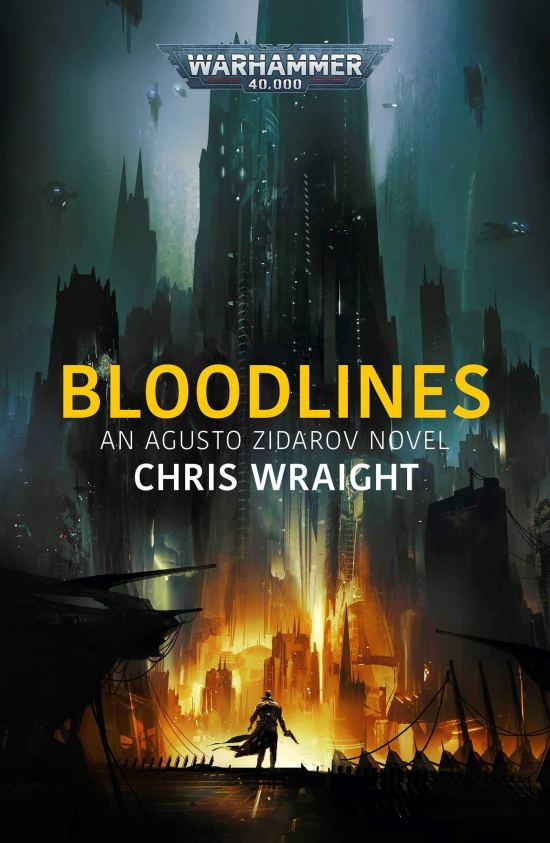
Warhammer 40,000: Bloodlines by Chris Wraight

Warhammer 40,000 - Bloodlines Cover

Publisher: Black Library (Audiobook – 8 August 2020)

Series: Warhammer Crime

Length: 8 hours and 30 minutes

My Rating: 4.75 out of 5 stars

Amazon     Book Depository

After some of my recent awesome experiences with the Warhammer Crime series, I just had to check out the outstanding novel, Bloodlines by Chris Wraight, which has one of the best pure crime fiction stories in this entire epic franchise.

Regular readers may have noticed I have been having an absolutely amazing time getting through a ton of Warhammer 40,000 novels in recent weeks as everything about this extended franchise has been so damn fun.  One of the more intriguing sub-series of Warhammer fiction I have been tearing through has been the Warhammer Crime books which, as the name suggests, blends cool crime fiction narratives with a Warhammer 40,000 settings.  The entire series is set within the massive, corrupt city of Varangantua on the planet of Alecto, and several very talented writers have come up with some exceptional novels that perfectly showcase murder, mystery and death in the midst of this great setting.  I have so far deeply enjoyed the epic entries, Dredge Runners and The Wraithbone Phoenix by Alec Worley, Grim Repast by Marc Collins, and Flesh and Steel by Guy Haley, each of which have contained different, if equally exceptional stories.  However, few have had the excellent central mystery of the very first full-length Warhammer Crime novel, Bloodlines from new-to-me author Chris Wraight, which took a veteran cop on an intensive investigation with fantastic results.

After a lifetime working for the Varangantua Enforcers, Probator Agusto Zidarov is well aware that the only certainties in the continent-spanning city are wealth, corruption and criminality.  Tired of the games played between the warring gangs, trade combines, and nobles as they battle for control of the city’s resources, Zidarov is more concerned about his own life, family and secrets.  However, when a simple missing person investigation gets unexpectantly complicated, Zidarov will find a terrible case that he can’t turn away from.

Called to the estate of wealthy business magnate Udmil Terashova, Zidarov is ordered to find her son and heir, who has gone missing.  Forced to plumb the depths of Varangantua’s underbelly, Zidarov attempts to find any trace of the boy, who has likely just disappeared taking part in the rich’s hedonistic lifestyles.  However, when an uncovered lead places him conflict with one the city’s most ruthless gangs, Zidarov soon begins to believe that there is more to this case than he initially believed.

Discovering that the gang is involved in the notorious crime of cell draining, Zidarov’s attempts to shut them down.  However, his raid ends up being a bust, and the fallout results in a dead sanctioner, a wounded probator and a full-on war between the gang and the enforcers.  Attempting to mitigate the consequences of his actions, Zidarov soon discovers that there is far more going on behind the scenes than he ever imagined as corporate interests work to influence the investigation.  To find the truth about the city’s new crime ring and the missing noble, Zidarov is forced to probe both Varangantua’s lowest gangs and wealthiest citizens.  But can Zidarov survive the encounter with his secrets and life intact?

Bloodlines is an incredible and deeply impressive Warhammer Crime novel that I had an excellent time reading, especially as Wraight perfectly blended his crime fiction story with the cool Warhammer setting.  Featuring one of the more elaborate and intriguing cases in the Warhammer Crime books I have read so far, I absolutely powered through Bloodlines and this was truly an outstanding read.

At the heart of Bloodlines lies a pretty awesome and captivating narrative building on the basic crime fiction premise of a veteran cop attempting to solve a crime no one wants investigated.  Taking its cues from classic noir entries (I was reminded a bit of Chinatown), Bloodlines follows Probator Agusto Zidarov, a family man with a cynical view of his job and his place in the city, as he gets dragged into a missing persons case.  Initially starting off a little slow, the story quickly heats up as Zidarov attempts to find the missing heir to the wealthy Terashova family, a disappearance he assumes is a simple case of young rebellion.  However, his routine investigation into the missing lad leads him to discover a cell draining operation being run by one of the major gangs, and he shifts his investigation in an attempt to shut it down.  But when his plans go wrong and his colleagues end up injured or dead, Ziadarov finds himself on everyone’s firing line.

There are some interesting jumps in the case around halfway through as the protagonist soon realises there is far more going on than he initially believed and he is forced to simultaneously investigate both the gangs and some of the wealthiest families and businesses in the city.  I loved this gradual escalation of the stakes of the crime as the book continues, as the original missing persons case is revealed to be far more complex and intriguing than initially believed when the protagonist discovers that he is being used by everyone.  At the same time, Zidarov is forced to deal with some major personal issues, as his wife begins to resent his choices, his rebellious daughter has gone missing in a city full of predators, and certain dark secrets around Zidarov threaten to come into the light.  The eventual reveal about who is responsible for the various crimes is very clever, and I liked the subtle and effective hints and clues leading up to it as the unique motivations and plots utilised intriguing aspects of the Warhammer 40,000 universe.  Wraight ends Bloodlines on a great note as Zidarov gets justice through drastic means after a very intense and powerful confrontation with one of the book’s more intriguing and complex supporting characters.  As such, you come away from Bloodlines feeling very satisfied, although you instantly want to see more of this great character, especially as the sinister connotations about Zidarov’s dark secret indicate that some tragic events are going to befall this character in the future.

The entirety of Bloodlines was laid out extremely well by Wraight, who uses a great style to tell a complex and captivating story.  Told exclusively from Zidarov’s perspective, you are given a personal and close examination of the events of the book as Zidarov slowly and methodically investigates the various crimes.  You are quickly drawn into the elaborate narrative Wraight lays out as the author does a good job of combining an excellent crime fiction storyline with intriguing character development, all set with Varangantua and the wider Warhammer 40,000 universe.  The noir inspired elements of Varangantua really stand out in this book, especially as Zidarov is forced to simultaneously investigate both the criminal cartels and some of the city’s wealthiest residents.  Bloodlines really recalls some classic noir tales, as it focuses on the experienced and dogged investigator fighting the entire system to get answers and justice, and I loved exploring even more of this enormous city and its many colourful residents.  The whole concept of cell draining, which sees thousands of people literally drained of their essence to make life-extending products, was pretty damn horrifying, and I liked how the examination of this gave Bloodline’s crimes a distinctive feel.  Wraight’s great writing style really lends itself to producing a particularly impactful and compelling crime narrative, and I loved how the entire storyline unfolded, especially with the effective twists and the well thought out foreshadowing.  I ended up coming away from this book quite enthralled and happy and I am really excited to read more books from Wraight in the future.

One of the things that I have so far found with all the Warhammer Crime entries is that readers really need very little familiarity with the wider Warhammer 40,000 universe to appreciate these great books.  Anyone interested in a compelling and intense crime fiction story set in a cool and grim futuristic city can easy dive into one of these novels, and all these books are an awesome introduction to the Warhammer fandom.  Bloodlines is no exception to this, as Wraight writes a very accessible crime fiction thriller that anyone can enjoy while simultaneously enjoying the gothic setting.  That being said, Wraight does make excellent use of several intriguing elements from the Warhammer 40,000 lore to enhance his story and there are hints and discussions about elements outside of Varangantua, such as the Imperial Guard or the wider wars of the Imperium, which fans of the franchise will deeply appreciate.  Wraight does do an amazing job of explaining these elements so that newer readers will fully appreciate them, however, established readers will always get a little bit more out of it.  For example, the full significance of Zidarov’s secret isn’t going to be too apparent to new readers, while in-the-know fans are going to get a blast out of the potential implications.  I felt that Bloodlines has a lot to offer all readers, no matter their experiences with Warhammer, and you might find yourself falling for the franchise with this first book.

Another key aspect of the Warhammer Crime series that Wraight perfectly captured in Bloodlines was the excellent utilisation of a complex and likeable central character.  Wraight’s protagonist and main point of view character, Probator Agusto Zidarov, is a deeply intriguing figure who stands out from the other protagonists in the Warhammer Crime series for being much less of a damaged outsider.  Instead, he is a veteran probator who worked his way up to his position with a very realistic view of the world around him than most other characters, and I liked his no-nonsense approach to his job and his city which has been formed from years on the job staying alive.  Despite this veteran presence and cynicism, Zidarov is still willing to do what is right, even if it endangers him, and his dogged approach to solving the case is extremely addictive, especially as Wraight puts in some deeper motivations behind them.  I really enjoyed some of the scenes where Zidarov continuously ignores his friend’s advice and keeps going forward with the case, simply explaining to them and the reader that he is unable to let it go, and he just keeps moving forward despite the inherent weariness of the character.  This determined and tired cop persona is well balanced by the family man aspect of Zidarov, which is another intriguing element that you don’t see in a lot of Warhammer fiction, as most protagonists don’t have wives or children.  Watching him attempt to balance his family responsibilities with that of his job adds some intriguing drama to the story, and I enjoyed seeing this portrait a ‘normal’ Warhammer 40,000 family.  Wraight perfectly weaves together these dual aspects of Zidarov’s personality with a certain darker, secretive thread that really shows the character in a whole new light when revealed, and which is going to have some intriguing impacts down the line.  All of this, and more, helps to make Zidarov one of the more relatable and enjoyable protagonists I have ever enjoyed in Warhammer fiction, and I really hope that Wraight produces some additional Zidarov stories soon.

Once again, I chose to listen to this cool Warhammer novel in its audiobook format, which, as always, was an excellent and deeply fun experience.  The Bloodlines audiobook did an amazing job of bringing this intense and powerful story to life in some very fun ways.  In particular, the complex central setting of Varangantua is really shown in all its corrupt glory when you hear it being described, and I loved how the fast pacing of the audiobook kept the story rolling by.  This format of Bloodlines was also greatly helped by veteran narrator Charles Armstrong, who has so far only lent his talented voice to a few Warhammer audiobooks.  Armstrong provided an excellent performance in Bloodlines, really diving into the various complex characters and helping to showcase their unique personalities and emotions.  I loved the tired and resigned voice that Armstrong came up with for the main character, which really sells the audience on Zidarov’s veteran status which is the result of an exhaustive and draining career.  Other great voices include that fun Irish accent he gifted to supporting character Brecht, which added to his entertaining nature, as well as some excellent voices the various suspects in the main case had.  All this makes the Bloodlines audiobook the very best way to enjoy this exceptional novel and with a runtime of eight and a half hours, you can power through it in no time at all.

Overall, Bloodlines was a particularly epic entry in the Warhammer Crime series, and it is one that author Chris Wraight should be extremely proud off.  Wraight did a remarkable job of blending together an intense and clever crime fiction story with the dark and grim Warhammer 40,000 setting, and the result is a brilliantly twisted case that I couldn’t turn away from.  Combined with instantly likeable character, Bloodlines proved to be extremely fun and deeply captivating, and I loved how the entire book unfolded.  As such, Bloodlines comes extremely highly recommended and you are guaranteed to love every second of it.  I look forward to seeing how Wraight continues this character in the future, and any future books featuring Zidarov are going to be something truly amazing.
Amazon     Book Depository

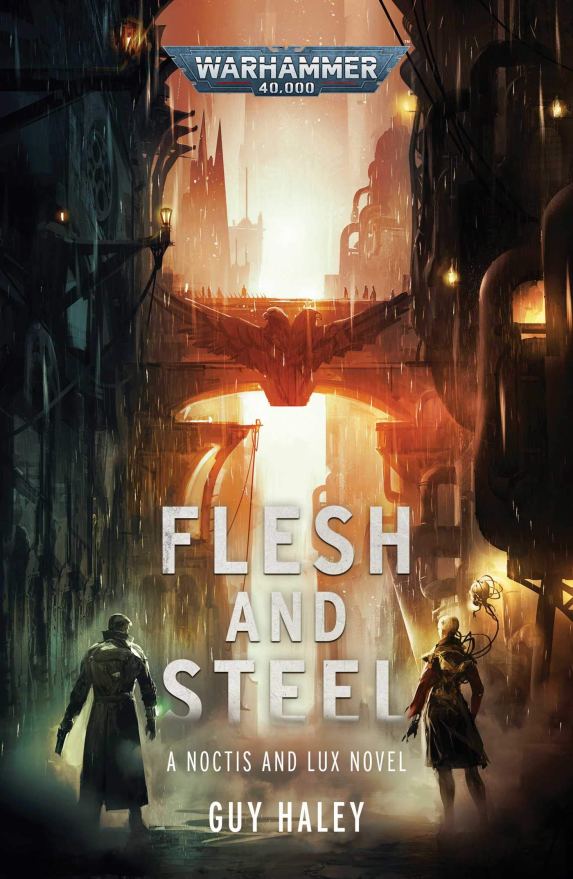
Warhammer 40,000: Flesh and Steel by Guy Haley

Flesh and Steel Cover

Publisher: Black Library (Audiobook – 3 October 2020)

Series: Warhammer Crime

Length: 9 hours and 23 minutes

My Rating: 4.75 out of 5 stars

Amazon

I’m on a major Warhammer 40,000 review roll, so after checking out the awesome books Malleus and Hereticus by Dan Abnett, Sepulturum by Nick Kyme, For the Emperor by Sandy Mitchell and Kingsblade by Andy Clark, I’m moving on to the awesome Warhammer Crime book, Flesh and Steel by Guy Haley, which proved to be an exceptional read.

I have said this several times in the past, but one of the true strengths of Warhammer 40,000 fiction is that the franchise can cover so many different types of stories or genres and still result in some epic reads.  A particularly good example of this is the Warhammer Crime subseries that melds intriguing and classic crime fiction concepts with a grim Warhammer 40,000 setting.  I have deeply enjoyed the previous Warhammer Crime books I have read, including the twisty and fast-paced crime thrillers Dredge Runners and The Wraithbone Phoenix by Alec Worley, and the noir inspired psychological thriller Grim Repast by Marc Collins.  As such, I just had to read another fantastic entry from this series with the intriguing Flesh and Steel by Guy Haley which saw a classic odd-couple police story meet a unique thriller from the Warhammer universe in glorious fashion.

The vast continent-sprawling city of Varangantua on the planet of Alecto is home to many vile and heartless crimes, most of which are ignored by the over-taxed enforcers of the Lex Alecto.  However, some murders are so spectacular that they cannot be ignored, especially when they threaten the stability of the city’s entire economy.

Probator Symeon Noctis is a man who knows all about the obscene wealth that Varangantua can produce.  A scion of one of the city’s richest houses, Noctis has fled from his cruel family and his tragic past by joining the enforcers and attempting to help the downtrodden inhabitants of the Nearsteel district.  However, even someone as jaded and cynical as Noctis is unprepared for the strangeness of his next case when a bisected corpse is discovered in a neutral zone between Nearsteel and the Adeptus Mechanicus enclave of Steelmound, the two halves of the body neatly left on either side of the border.

Forced to cooperate with the Adeptus Mechnanicus, Noctis is partnered with Procurator Rho-1 Lux of the Collegiate Extremis to investigate the crime.  But when all evidence suggests that the murder was committed by a mindless servitor, Noctis is dragged into a terrible conspiracy inside the Adeptus Mechanicus.  Faced with tech-heresy, illegal modifications to servitors and even more bodies littering the streets, Noctis and Lux need to work together to solve this insidious crime before both their organisations are dragged down.  But with more and more people gunning for them, can this unlikely duo survive to crack the case?

Now this was an awesome Warhammer Crime book.  Loaded with great, complex characters, a compelling case, and some impressive Warhammer 40,000 elements, Flesh and Steel grabs your attention from the very start and refuses to let go.  A fantastic novel that shows off just how incredible and inventive a tie-in to the Warhammer universe can be.

Flesh and Steel has a brilliant and deeply addictive narrative that I had an amazing time getting through.  Told primarily from the perspective of protagonist Probator Symeon Noctis, the plot of Flesh and Steel revolves around an intriguing murder, where two halves of the same body have been placed on either side of the border between the main city and an Adaptus Mechanicus manufacturing enclave.  With two competing jurisdictions, Noctis is forced to work with the Mechanicus investigator Rho-1 Lux, especially after the murder weapon is determined to be the victim’s servitor and additional victims are discovered.  What follows is an intriguing buddy cop romp of a unique series of murders, as certain figures throughout the city are involved in crimes involving the always terrifying mindless man/machine hybrids, servitors.  Forced to work together despite their differences, Noctis and Lux prove to be a skilled team, investigating both the Mechanicus and the businesses in the city.  At the same time, Noctis is forced to deal with other concerns, such as an impossible missing person’s case, the machinations of his wealthy family, and his own intense personal issues as he tries to reconcile his complex life and the mistakes from his past.  The result is a fantastic and moving tale that has the right blend of crime fiction, Warhammer 40,000 and character elements to it.  While the mystery surrounding the various crimes isn’t too complex, especially as the perpetrators are obvious from the outset, the resulting conspiracy, and the impacts it has on the protagonists more than makes up for it, as you are drawn into a crime story that could only occur in the Warhammer universe.  Haley ends the book on an interesting note that not only highlights the full extent of the protagonist’s personal issues but hints at future adventures and tragedies to come.

I really liked the cool setup-up surrounding this story, as well as the distinctive writing elements that Haley utilised, and I was particularly impressed with how the author was able to utilise some classic crime fiction scenarios in this unique Warhammer setting.  The concept of a bisected body left across a border forcing a joint investigation between two agencies is reminiscent of The Bridge (or The Tunnel), and I liked the intriguing spin that Haley does on this by bringing in the Adeptus Mechanicus, who most humans have a very hard time relating to.  This leads to the unique partnership between Noctis and Lux, which I felt Haley utilised to its full effect, especially as he does a remarkable job diving into each of their intriguing lives.  While I mentioned that the mystery isn’t as complex as you would hope, Haley more than makes up for it by featuring some deeply compelling character elements, as well as perfectly fitting it into the already fantastic setting of Varangantua and the wider Warhammer 40,000 universe.  I also really enjoyed the excellent way Haley told his story through the lens of Noctis’s journals.  Not only does this provide some compelling and tragic hints at what is to come but it also paints the story through Noctis’s cynical viewpoint, which I quite enjoyed, especially as his infectious humour and sarcasm helped to make this one of the more light-hearted Warhammer Crime books at times.  This distinctive and compelling read had me hooked the entire way through, and I felt that Haley came up with something extremely special for Flesh and Steel.

I was really impressed by the excellent Warhammer 40,000 elements featured, especially as some of the more distinctive elements of this universe were used to full effect to create a gripping and powerful read.  Now, as with most of the Warhammer Crime books, I felt that Flesh and Steel stood well on its own and no prior reading is needed to fully understand this book, not even the preceding short story Haley published in the No Good Men anthology.  Indeed, due to the great use of crime fiction elements, the strong focus on characters, and Haley’s attention to detail, readers unfamiliar with the franchise can easily jump into Flesh and Steel and have a good time, and it would serve as a good bridging novel for readers more familiar with crime fiction than anything else.

However, both new and established fans will deeply appreciate Haley’s compelling and all-encompassing examination of some very interesting elements of Warhammer lore that are cleverly and expertly utilised throughout the story.  I was particularly impressed with the deep dive into the Adeptus Mechanicus, the inhuman tech-worshippers of the Imperium, who play a big role in the plot.  This was honestly one of the more intriguing novels I have so far read that deals with the Adeptus Mechanicus, and I loved the author’s depictions of their elaborate and occasionally nightmarish settlement within the wider city of Varangantua.  The protagonist spends quite a bit of time diving into their society, and I loved his cynical, if accurate, descriptions of them, as well as the apparently hypocritical role they serve in the wider Imperium.  One of the most intriguing aspects of the Adeptus Mechanicus featured in Flesh and Steel involve servitors, the cyborgs who act as mindless manual labour machines throughout the Imperium.  The creation and use of servitors, who are a common, if terrifying, background feature of the universe, becomes quite a key part of the plot, as they are end up being the murder weapons.  This helps to shape Flesh and Steel into a particularly unique mystery story, one which could only occur within the Warhammer universe, and I loved the I-Robot homages (book and the movie) that resulted from them.  Haley also treats us to several scenes that depict the creation of servitors, a process which involves lobotomising condemned criminals and turning them into barely human creations.  These scenes honestly turn Flesh and Steel into one of the most horrifying Warhammer 40,000 books out there, and these gruesome inclusions work wonders to shock both the reader and the protagonist, while also deeply enhancing the complex murder case.

In addition, Haley also spends a good amount of time expanding on the already epic setting of Varangantua, which has been such an amazing background for the rest of the Warhammer Crime novels.  There are many distinctive districts and areas to the vast city of Varangantua, and this great book introduces us to even more of them with new district of Nearsteel, which borders the Adeptus Mechanicus enclave and has its own range of issues and features.  In particular, the area is slowly dying thanks to the actions of the Mechanicus, who are killing of the industries contained within, and you get to see the decay and degradation that follows.  Haley keeps up the cool background of neon signs, dark bars, and corrupt police, that are a key feature of the wider Varangantua, and I loved the impressive Blade Runner resemblances that result.  Haley further enhances the effect of these poorer districts by also visiting the high spires and estates of Varangantua uber-wealthy, as the protagonist, a former rich boy himself, makes several visits there.  The elaborate manors, parties, and hang-outs of the gilded make for a fun and compelling comparison to the slums and desolate industrial areas of the rest of the novel, and I deeply appreciated how Haley used this multifaceted city to mirror the complex main protagonist and help show that he doesn’t really fit in anywhere.  I always have a ton of fun exploring these new areas of Varangantua, and Haley really did a great job showcasing the city, and other key Warhammer 40,000 elements throughout Flesh and Steel’s narrative.  I cannot wait to see what other crazy areas that Haley explores in some of his future books and stories, and I know I am going to love it.

While the story, the writing style, the dark setting and the cool Warhammer elements all made this book really stand out, I personally felt that the main strength of Flesh and Steel was the exceptional central characters, Probator Symeon Noctis and tech-priest Rho-1 Lux.  Haley did a remarkable job with both these complex and damaged characters and both of them carry the main story extremely well.  The combination of dramatic and tragic character arcs, combined with a fun overarching theme of them both being outsiders, is an essential part of the book’s narrative and you grow deeply connected to both the characters, and the book, as a result.

Most of the focus is on Noctis, who serves as the primary narrator, due to his personal journal (which is also an extended note to his lost daughter), being read out.  Noctis is a very fun and cocky character, who seems to treat many of the events that he encounters in an inconsequential way.  However, this is a major façade, as deep down Noctis is probably one of the most damaged and guilt-ridden characters you are likely to see in Warhammer fiction.  A member of one of the richest families on the planet, Noctis was already pretty messed up before he became a cop, due to the terrible family dynamics and his controlling father.  Further traumatic events, which are explored later in the novel, nearly break him, and he decides to escape some of his father’s control by joining the enforcers to help others.  However, his family influence and wealth still follow him and he is considered an outsider by most of his colleagues.  Despite this, Noctis doggedly continues and proves to be a very competent and capable investigator, even if he breaks all the rules and pisses off his boss to do so.  His eye for the inequity of the city and the wealthy gives the story a bit of a preachy anti-capitalist vibe, but I felt that this fit his character arc perfectly, especially as he knows better than most just how badly the lower classes are being exploited.  I also quite enjoyed how, despite Noctis’s dislike for his family’s intense wealth and intense hatred for all the nobility, he still uses their money to buy nice things for himself, including a fancy car and secure apartment.  This apparent inconsistency between what he preaches and what he does, is addressed several times by both the protagonist and other characters, and his eventual and simple explanation of, “I never said I was perfect,” is a recurring theme of this character’s existence.  Watching this conflicted and troubled figure attempt to reconcile his past and guilt with the current investigation and the people he meets is a powerful part of Flesh and Steel’s appeal, and the story would not be as strong without it.

The other major character is Procurator Rho-1 Lux, an Adeptus Mechanicus Tech Priest who acts as a detective and law enforcement officer who investigates crimes committed by or against the Mechanicus.  Lux is a great character for a number of reasons, especially as the whole idea of a Adeptus Mechanicus cop is a pretty damn cool one.  Initially shown to be an unflappable and rigid figure, you soon find a deeper layer underneath her augmentation as she proves to be just as emotionally unsure and determined for justice as Noctis.  A member of an obscure order, Lux is a rare individual who converted to the machine cult rather than being born into it.  This also makes her a bit of an outsider as she is not fully accepted by the Adeptus Mechanicus and is no longer fully human.  This forces her to accept one of the few jobs that none of the other tech priests want, and it is interesting to see her views on humanity, the Mechanicus, and the law, which surprisingly often mirror Noctis’ cynical thoughts.  Lux served as an interesting bridge between the human characters and the mysterious cyborgs of the Mechanicus, and it is fascinating to see how she changes her persona depending on who she talks to.  Haley does a wonderful job of portraying Lux’s dual persona throughout the course of Flesh and Steel, and he even shows a couple of chapters from her perspective as extracts from her data core.  These chapters have a more sterile and mechanical feel, and you see her data-laden observations in these compelling scenes.  Probably the best part of her character arc though revolves around her interactions with Noctis, as the two form a very unusual team.  Lux serves as straight person for much of Noctis’s antics, especially when it comes to their interactions with other Mechanicus figures, and usually tries to maintain her mechanical indifference.  However, the two soon form an intriguing relationship, which forces Lux to examine some of her long-hidden emotions.  I felt that the two played off each-other perfectly throughout the course of the book, and the joint explorations of their various pains and dark histories makes for quite a gripping read.  I look forward to seeing more from this distinctive and surprisingly fun duo in the future, even if Noctic’s journals hint at more tragedies to come.

As is my usual practice with Warhammer 40,000 novels, I checked out Flesh and Steel on audiobook, which proved to be an epic and deeply enjoyable experience.  Coming in at just under nine and a half hours, Flesh and Steel was a very easy audiobook to get lost in, and I felt that this amazing format really worked to enhance the exceptional story.  The journal format of Haley’s storytelling, as well as the occasional jumps to other perspectives, is expertly portrayed on audiobook and I loved how some of the darker or grander elements of the book, especially the horrors surrounding the Adeptus Mechanicus workshops, became even more distinctive or sinister when listened to.  It helps that the primary narration of Flesh and Steel was done by impressive voice actor, James Macnaughton, who really throws himself into the production.  Each of his key characters are expertly showcased through his voice work and you really get a sense of their inner selves through his performance, whether it’s Noctis’s cockiness, disdain or self-loathing, or the strangeness of Lux, Macnaughton manages to encapsulate it all with his acting and this combines extremely well with Haley’s strong character-focused writing.  A secondary voice is also utilised for the several chapters written from Lux’s perspective, and I liked how this different voice really helped to differentiate that the events were being shown from Lux’s internal processors.  This performance, combined with the usual enticement of the audiobook format, ensures that this is the best way to enjoy Flesh and Steel, and I would strongly recommend it to anyone who wants to try this epic book out.

Overall, Flesh and Steel is a pretty remarkable novel from Guy Haley that has ensured my continued addiction to all things Warhammer 40,000 and Warhammer Crime.  Featuring a complex and powerful story that simultaneously explores a compelling mystery and some brilliant characters, it is very easy to get hooked on Flesh and Steel and I had a wonderful time powering through it.  I cannot rave about this book enough and I am really hoping that Haley produces a sequel to Flesh and Steel very soon.

Amazon