
The Colonial’s Son by Peter Watt

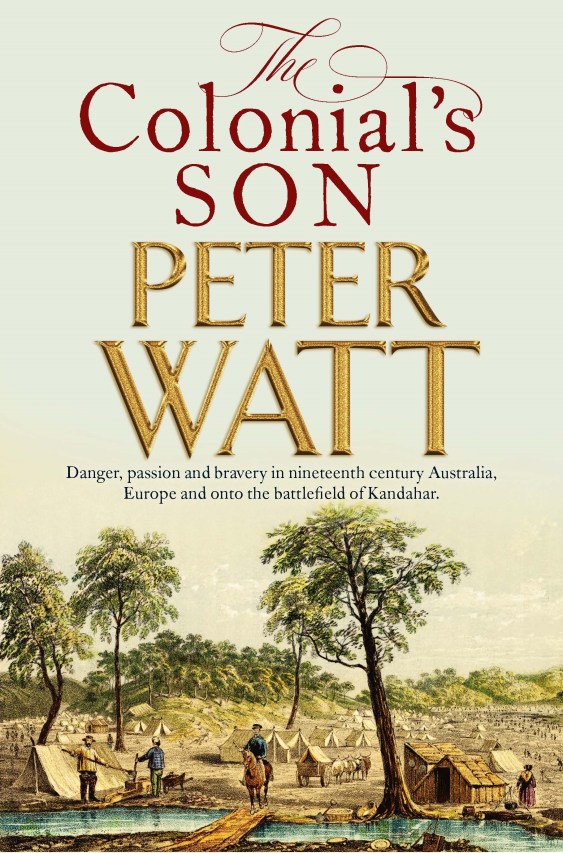
The Colonial's Son Cover

Publisher: Macmillan (Trade Paperback – 26 October 2021)

Series: The Colonial Series – Book Four

Length: 367 pages

My Rating: 4.5 out of 5 stars

Amazon     Book Depository

One of Australia’s best historical fiction authors, Peter Watt, returns with The Colonial’s Son, the first book in a new series that follows on from his exceptional Colonial trilogy.

Peter Watt is a fun and talented author whose work I have been deeply enjoying over the last few years.  Watt specialises in historical fiction novels with a focus on Australian characters and has so far written three great series.  This includes his long-running Frontier series, which followed two rival Australian families throughout the generations as they got involved in some of the defining moments of Australian history (check out my reviews for While the Moon Burns and From the Stars Above).  He also wrote the fantastic Colonial trilogy that followed an Australian blacksmith who joined the British army as an officer during the mid-19th century.  This was an amazing and action-packed historical series, and featured three great books, The Queen’s Colonial, The Queen’s Tiger and The Queen’s Captain.  Watt’s most recent novel, The Colonial’s Son, is a direct sequel to the Colonial series, set several years after the conclusion of The Queen’s Captain.

Sydney, 1875.  After leaving the army and returning to Australia, former British army captain, Ian Steele, better known by the moniker his troops gave him, the Colonial, has settled down and started a successful business empire.  Now the father of three children, Ian is hoping for a quiet life, but is still facing several problems, including the fact that his oldest son, Josiah Steele, is determined to follow in his footsteps and join the British army as an officer.

When an old friend from his army days requests his help, Ian takes Josiah to Queensland to visit the notorious goldfields near the Palmer River.  There, Josiah gets his first taste for action as he and his father find themselves beset by bushrangers, hostile Indigenous tribes and warring Chinese criminal organisations.  Despite experiencing the terrors and tragedies of combat, Josiah is more determined than ever to join the army and travels to England to enrol in a prestigious military academy.  However, rather than gaining a formal training, he is immediately drafted into England’s latest war as a junior officer.

Travelling to Afghanistan, Josiah and his men engage in a series of bloody battles to hold onto the dangerous land for the empire.  Gaining the attention of his commanders, Josiah is chosen for a different sort of mission and sent to the newly united Germany where an old friend may hold the answer to the future of British/German relations.  Back in Australia, Ian Steele finds himself fighting a new enemy, one whose insidious ways could bring down everything he has struggled to build.  Can Ian survive this latest threat, especially when it drives him to do the unthinkable, and will Josiah be able to live up to the impossible military legacy of the Colonial?

This was another exciting and very enjoyable novel from Watt, who has proven himself one of the best authors of Australian historical adventure novels.  The Colonial’s Son is an amazing sequel to Watt’s prior series, and I really enjoyed seeing all the characters, both new and those from the prior series, engage in this latest series of adventures.  I ended up getting through this entire novel in one day, and I had a wonderful time reading it.

This latest novel has a very Watt narrative to it, utilising his typical style of multiple character perspectives to tell a compelling overarching tale of adventure and intrigue.  The Colonial’s Son primarily follows new protagonist Josiah and previous protagonist Ian as they find themselves in all manner of dangerous situations, together and separately.  This includes facing dangers and criminal conspiracies out in the goldfields, deep personal attacks in Sydney, or the various battles and political intrigues Josiah encounters once he joins the army.  At the same time, multiple other perspectives from side characters are utilised to enrich the narrative, with everyone from villains, love interests and friends adding to the story.  Watt tells a very interesting tale in this novel, combining a coming-of-age tale with the dynastic style of his previous Frontier books, and I really appreciated the way in which the author continues several storylines from the previous trilogy.  The combination of military action, criminal activity and intrigue makes for quite a fun narrative and The Colonial’s Son proves to be extremely addictive and easy to read.  I loved the many intense fight sequences featured throughout this novel, and Watt has a real flair for bringing brutal battles to life.  While fans of the Colonial trilogy will probably get a bit more out of this book due to the connected storylines, The Colonial’s Son is very accessible to new readers.

Just like he has done with all his prior novels, Watt makes sure that The Colonial’s Son features a range of intriguing and dangerous historical locations serving as fun backdrops to this awesome story.  There is a bit of a time skip between this novel and the previous Colonial trilogy, which opened up some different wars and settings for Watt to explore.  I particularly enjoyed the scenes set in the goldfields of North Queensland, a particularly grim and unforgiving bush setting full of fun antagonists.  The second half of the novel contains several other historical locales, all of which are shown in quick succession.  This includes Victorian London, Afghanistan, Germany and even Africa, all of which are the setting for some form of conflict.  The scenes set in Afghanistan during the British occupation of this land are very interesting, especially when you consider contemporary events, and there are some noticeable similarities between the historical conflict and more recent battles.  There is also a very fascinating look at Germany, which in 1875 had only just recently been unified into a single country with a more militaristic outlook.  Watt also ensures that The Colonial’s Son contains several hints about future conflicts that the protagonist may find himself involved in.  For example, the inclusion of several prominent Chinese characters in the first half of the novel will probably result the characters getting involved in the Boxer Rebellion, which would be pretty fascinating.  Overall, there are some great historical settings in this novel, and I cannot wait to see what conflicts the characters venture into next.

Watt makes sure to feature a ton of intriguing and memorable characters throughout The Colonial’s Son, each of whom adds some interesting details to the story.  This latest novel contains a great combination of new characters and protagonists from the Colonial series.  I rather enjoyed this cool mixture of characters, especially as you get to see new protagonists develop, while also learning the fate of the surviving characters from the original trilogy.  I particularly appreciated seeing more of original protagonist Ian Steele, and it was fun to see what happened to him after all his adventures in the Colonial books.  I was honestly surprised how much of a focus Ian got in this new trilogy, but I wasn’t complaining too much as I had gotten invested in his development in the original trilogy.  New protagonist Josiah also proved to be a great addition to the plot, even if there are a lot of similarities between him and the younger version of his father from the previous trilogy.  It was kind of fun to see history repeat itself, and I like the interesting developments that occur around Josiah attempting to live up to the legacy of his father, while also making all the same mistakes he did.  There were some other fun new characters featured in this book, including a charismatic young man of Chinese descent on the road to becoming a revolutionary and a young German countess who Josiah befriends.  I also appreciated some of the compelling and unlikable antagonists featured in the novel, as Watt has a real talent for writing scummy villains for the reader to root against.  I deeply enjoyed getting to know this new batch of characters, and I look forward to seeing what happens to all these excellent figures, both new and existing, in the future books.

With his latest novel, The Colonial’s Son, Peter Watt continues to highlight just why he is the leading author of Australian historical adventures.  Featuring an incredibly fun and action-packed plot, The Colonial’s Son does not slow down throughout its entire length, and readers are treated non-stop battles and intrigue.  I loved how this latest novel continued the cool storylines from Watt’s Colonial series, and I cannot wait to see what battles and character developments occur throughout the rest of this series.
Amazon     Book Depository

State of Fear by Tim Ayliffe

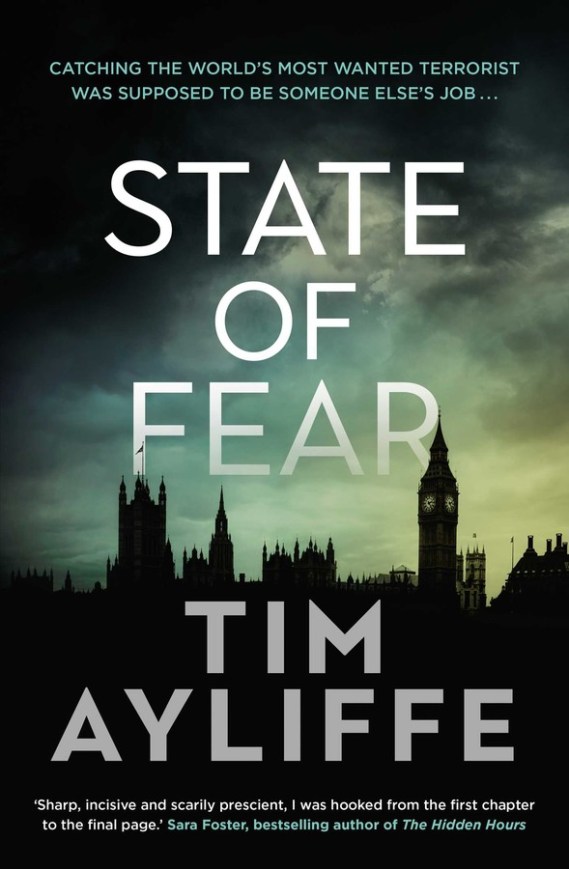
State of Fear Cover

Publisher: Simon & Schuster Australia (Trade Paperback – 22 July 2019)

Series: John Bailey – Book Two

Length: 390 pages

My Rating: 4.5 out of 5 stars

Amazon

One of the fastest-rising Australian thriller writers, Tim Ayliffe, follows up his impressive debut with an excellent second entry in his John Bailey series, State of Fear.

Tim Ayliffe is a talented author who debuted in 2018 with The Greater Good, the first John Bailey book.  This novel explored political corruption and international interference in Australia and made excellent use of the author’s experiences as a journalist.  I really enjoyed this first book and was rather interested when I received the second novel from Ayliffe, State of Fear, in 2019.  Unfortunately, I did not get a chance to read State of Fear when it first came out, and it has been in my to-read pile for a while, until I received a copy of the third John Bailey novel, The Enemy Within, a few weeks ago.  I rather liked the sound of the third book’s plot, and I really wanted to read and review it.  However, before checking out The Enemy Within I thought it would make more sense to read State of Fear first, and boy am I glad that I did.

Throughout his long career as a journalist and war correspondent, John Bailey has faced many dangers and been in several terrible situations.  However, his worst encounter was with the notorious terrorist mastermind, Mustafa al-Baghdadi, who kidnapped Bailey while he was reporting on the invasion in Afghanistan and relentlessly tortured him mentally and psychically.  Following his release from the terrorist group and a retirement from working in active war zones, Bailey thought that his days of dealing with terrorists was over, but he was wrong.

Speaking at a conference on Islamic terrorism in London, Bailey is horrified when a radicalised terrorist murders a woman in front of the convention centre.  Rattled, Bailey returns home to Sydney, only to find his troubles have followed him there.  The son of his former driver in Bagdad has gone missing, and Bailey has been implored to help.  Investigating, Bailey finds that the son has been in contact with some dangerous men with connections to Islamic terrorist cells.  Worse, it appears that they are planning to launch a massive attack in Sydney.

Desperate to save his friend’s son from making a terrible mistake, Bailey attempts to make sense of the terrible events unfolding in Sydney.  However, the deeper he goes, the clearer it becomes that Mustafa al-Baghdadi is back, and he is targeting Bailey personally.  As Bailey and everyone he loves comes under attack, Bailey is forced to turn to his old friend, CIA agent Ronnie Johnson, to find Mustafa and take him down.  But will they be able to stop Mustafa before it is too late, or will the world’s most dangerous terrorist destroy everything that Bailey holds dear?

State of Fear was an excellent and powerful novel that takes its great protagonist on a rough and dangerous journey through hell and back.  Ayliffe has definitely grown as an author since his first novel, and this second book is a compelling and intense novel with a well-crafted narrative.  Starting off with an intense beginning, the protagonist is swiftly shoved into his latest harrowing adventure, as the terrorist he thought he escaped violently bursts back into his life.  This is a very captivating novel, and despite its longer length I found myself powering through it in a very short amount of time.  The protagonist goes through a real wringer as he is forced to visit the ghosts of his past while trying to stop his foe’s latest plot.  Featuring a sprawling and deadly investigation through the suburbs of Sydney, the story eventually journeys back to London, where the protagonist and his friends engage in a deadly and dramatic fight to stop a deadly attack.  There is so much going on in this story, and the reader will experience outstanding action, powerful drama, and some major tragedy, especially in the novel’s dramatic conclusion.  This is a fantastic book which stands on its own and can easily be read by people unfamiliar with the other John Bailey novels.  I had an exceptional time reading State of Fear and it is really worth checking out.

Ayliffe works a lot of fun elements into this novel that make it quite a unique read.  Perhaps one of the most prominent of these is his experience and knowledge as a journalist which helps to produce a very Australian centric view of the events that are being depicted.  For example, Ayliffe includes a very detailed and compelling look at radical Islamic terrorism and how it is occurring both in Australia and in the wider world, particularly England.  Using several real-life Australian cases as basis, Ayliffe manages to expose and explore the heart of the issue, and he paints a fair and captivating picture of how individuals are lured into radical Islam as well as the consequences of their actions.  There are some very intriguing and powerful discussions included within this novel, especially around how the Islamic and migrant community in Australia feels isolated and prejudiced against, and I really appreciated the compelling inclusion in the novel.

Other intriguing elements contained within State of Fear include Ayliffe’s experiences with modern media and how journalist stories are produced and distributed.  There are some fascinating and fun journalistic scenes contained within this novel, and you have to assume that the protagonist’s extremely negative views about the swing to online social media based journalism has to reflect some of the author’s personal feelings.  Another great feature of this novel was the way in which Ayliffe once again used his novel to highlight the city of Sydney.  While a good portion of this novel is set in London (which Ayliffe also does a great job portraying), the scenes set within Sydney are a particular highlight.  The author really dives into showcasing this city, with the protagonist visiting several real-life suburbs and locations throughout the course of the book, distributing local knowledge as he goes.  As a result, this book is filled with some fun references that locals and Sydneysiders will really appreciate, and I enjoyed how Ayliffe spent the time to write a love letter to his city.

In addition to a fantastic story and excellent setting, Ayliffe also ensures that State of Fear is loaded with some complex and memorable characters.  The most prominent of these is series main protagonist and primary point of view character John Bailey.  Bailey is an outstanding veteran reporting character, and Ayliffe portrays him as a broken older news hound who is trying to balance his addictive career with holding onto his family.  This protagonist is the very definition of a damaged character, as he has experienced great trauma, both psychical and emotional, over the years thanks to his work as a war correspondent.  Despite this trauma, Bailey has experienced some major growth since the first book in the series, mainly thanks to the actions of major people in his life, and he is now a much more functional human being, allowing the reader to really connect with his struggles and damage.  Unfortunately, the events of this novel really hit him hard, as he experiences fresh pain while also revisiting his traumatic past through a series of dark flashbacks.  Despite this, Bailey keeps moving forward trying to solve the case, and it was great to see his determination and resolve, even under the worse of circumstances.  The ending of the novel is pretty bad for Bailey, and he goes through some tragic moments that will no doubt rock him for the rest of the series.  All of this makes for an incredible central protagonist, and readers will fall in love with this damaged and compelling character.

Aside from Bailey, State of Fear also contains several great supporting characters, most of whom are holdovers from The Greater Good, and who find themselves in all sorts of trouble in this book.  The most prominent of these is Bailey’s romantic partner, Detective Chief Inspector Sharon Dexter, who serves as a secondary point-of-view protagonist for parts of the book.  Dexter is a tough, no-nonsense cop whose past with Bailey led to a romantic relationship in the first book.  Despite having a very complex and unusual relationship with Bailey, Dexter proves to be an excellent supporting character, acting as the sensible and official support to Bailey who tries to keep him out of trouble.  While she has a bit of a cold exterior, especially when Bailey stuffs up or lies to her, Dexter is another character the reader can easily get attached to, and her involvement in the story is quite essentially the overall powerful narrative.

I also quite liked the inclusion of Bailey’s editor, Gerald Summers, another aging newsman who serves as Bailey’s emotional rock and best friend and who has an amazing run in this book.  Gerald is an outstanding and loveable character, which of course means he is going to suffer a little bit, so prepare yourself for that.  You also have to like Ronnie Johnson, the maverick CIA agent who spends most of his time living on Bailey’s couch, but who proves to be an effective and very dangerous operative when he needs to.  Ronnie has been a favourite character of mine ever since the first book (I mean, he kills an Australian Prime Minister Harold Holt style), and he does some cool things in this second novel.  Finally, I felt that Mustafa al-Baghdadi was a pretty good overarching antagonist for State of Fear.  Ayliffe did a good job portraying a manipulative religious zealot with grand plans for vengeance and the advancement of his cause.  Despite being hidden for most of the book, this character contains a great deal of menace, and I really enjoyed the sinister flashback sequences that featured him and Bailey.  I did think that some of his reasons for vengeance on Bailey were a bit weak (I mean, he had to know that the first thing Bailey was going to do when freed was to share what he knew with the Americans), but he was an overall great villain with major impacts on the narrative.  Each of these characters were well written and established, and I felt that their combined narratives really improved this fantastic novel.

State of Fear by Tim Ayliffe was an outstanding and captivating read that presents a powerful and moving adventure of journalist John Bailey.  Containing an intense narrative about terrorism, some unique elements and amazing characters, State of Fear is an excellent read which swiftly grabs the reader’s attention and refuses to let them go.  I had an incredible time reading this novel and I am still kicking myself for taking so long to check it out.  I have already read the third entry in the John Bailey series, The Enemy Within, and I am hoping to get a review out for it soon.

Amazon