The Defiant Heir by Melissa Caruso

The Defiant Heir Cover.jpg

Publisher: Orbit

Australian Publication Date – 24 April 2018

World Publication Date – 19 April 2018

Amazon

Melissa Caruso follows up her extraordinary debut with another unmissable magical adventure.

On the continent of Eruvia lies the Serene Empire of Raverra.  Ruled by the Doge and the Council of Nine, the Empire’s power comes from its mages, the legendary Falcon Army.  When a mage comes to power in the lands of Raverra, they are conscripted as a Falcon and bound to a Falconer, a non-mage who can choose to unleash or bind their Falcon’s power with a word.

However, the Serene Empire is not the only great power on Eruvia.  To the north lies the mysterious nation of Vaskandar, controlled by a dangerous group of mages known as the Witch Lords.  Each Witch Lord is a powerful vivomancer whose magic grants them control over all living beings, such as animals, plants and even humans.  After years of peace, several of the Witch Lords desire additional territory and are preparing for war against the Serene Empire.  Large forces of soldiers and the Vaskandar’s dreaded chimeras amass on the border while covert attacks are undertaken against the Serene Empire’s most powerful Falcons.  But before the Vaskandar can formally declare war, all seventeen Witch Lords must meet in a conclave to agree to a course of action.

Lady Amalia Cornaro is heir to one of the oldest and most powerful families in all of the Serene Empire.  Formerly a sheltered academic, her life dramatically changed when she was accidently bonded to the rebellious teenage runway Zaira, a rare and destructive fire warlock and the most powerful mage in the Empire.  Despite a turbulent and resentful start to their relationship, Amalia and Zaira have come to a mutual understanding following their adventures in the city of Ardence.

As the tension between the two nations increases, Amalia and Zaira are sent as a military deterrent to the border province of Callamourne, ruled by Amalia’s grandmother.  Despite their presence, it quickly becomes apparent that forces are conspiring to bring the war to pass, especially with spies and assassins targeting Amalia and Zaira directly.  Determined to maintain the peace, Amalia knows that the only way to prevent the war is to infiltrate Vaskandar and attend the conclave on behalf of the Serene Empire.

Entering Vaskandar is a dangerous proposition.  Each Witch Lord has their own territory which they rule absolutely thanks to a mysterious bond to the land that allows them to control all living creatures within their boundaries.  In addition, Amalia already has powerful enemies among the Witch Lords.  The deadly Lady of Thorns holds a grudge against her entire family, and Amalia and Zaiara have experience with the machinations of the Skinwitch Ruven, whose plot could cause great destruction.

Their only hope to influence the conclave may come from the mysterious Crow Lord, who has taken an interest in Amalia.  However, the Crow Lord is playing his own game, and Amalia and Zaira are the perfect pawns.

Melissa Caruso is a relatively new fantasy author whose first book in the Swords and Fire series, The Tethered Mage, was released in late 2017.  The Defiant Heir is a direct sequel to this, and is set a few months after.

The Tethered Mage was one of the surprising hits of last year.  What started out as an intriguing sounding fantasy novel turned into one of the most exciting and memorable debuts of 2017 and proved near impossible to put down.  Caruso maintains this trend of excellent writing in The Defiant Heir, which continues to the provide the same great characters, fantasy adventure, worldbuilding and amazing story writing that made her first book such an irresistible read.

Caruso has chosen to expand her fantasy world in The Defiant Heir by detailing the nation of Vaskandar and focusing on its rulers, the Witch Lords.  While Vaskandar was mentioned and one of nation’s vivomancers, Prince Ruven, was a secondary antagonist, this area of her world wasn’t really explored in the first book.  For this book, Vaskandar is a major location and the protagonists spend a large portion of the story within its boundaries.  As a result, Caruso has produced a significant amount of fascinating lore about this country, especially when it comes to the Witch Lords.  The focus on the Witch Lords is particularly interesting as Caruso has developed complex backstories, powers, plots and motivations for many of them, which adds immensely to the story.  In addition, despite the fact that they all study the same branch of the magic, each of the Witch Lords has their own speciality and their appearance and abilities are different as a result.  This is especially noticeable during the numerous magical duels that occur throughout the book, where these differences allow for a wider variety of magical action.  It is also quite fun when the various Witch Lords use their powers to show off with memorable entrances and appearances during the opening scenes of the conclave.

Readers should also keep an eye out for Caruso’s focus on character development within The Defiant Heir for the two main characters.  Amalia’s growth is the most significant, as circumstances force her to become a more savvy and decisive political player, very much like her mother.  As a result, she is forced to make a number of tough decisions and struggles to maintain her morality in a harsh world where her options are becoming more and more limited.  There is also the growing realisation that her position may not allow her to have the personal life she wants, and this greatly affects her relationship with the dashing Captain Marcello, the main love interest of the first book.  This is a well done bit of character development that will draw the reader in emotionally, especially when it comes to Amalia’s most significant decision in the book.

Zaira’s development is more subtle, as she is not the book’s narrator, and is mostly a continuation of the transformation from inverted loner to team player that started in The Tethered Mage.  However, it is more realistic to see that this growth is a slow process, and her stubbornness is not automatically fixed in the span of one book.  The same could be said about the satisfying but gradual development in the relationship between the main characters.

Melissa Caruso once again shows why she is one of the brightest new stars in the fantasy fiction.  The Defiant Heir is an outstanding continuation of her first series that introduces significant and exiting lore to her already intriguing universe while providing significant development to her main characters.  If you haven’t already discovered the magic of Caruso’s Swords and Fire series, you are in for a serious treat.

My Rating:

Five Stars

Amazon

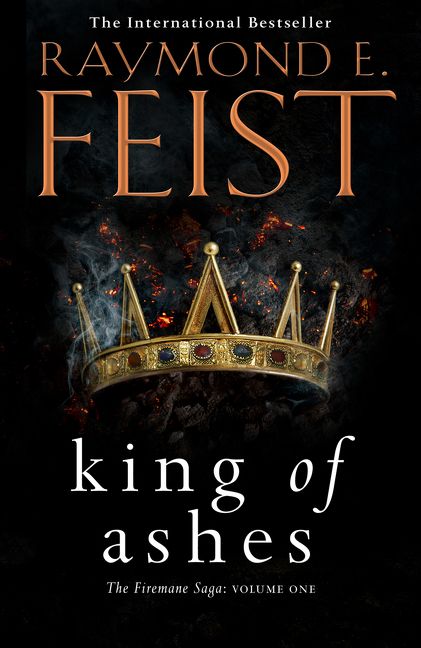
King of Ashes by Raymond E. Feist

King of Ashes Cover

Publisher: Harper Voyager

Australian Publication Date – 5 April 2018

World Publication Date – 8 May 2018

Amazon

For over 30 years, one of the most reliable cornerstones of fantasy fiction has been the books of Raymond E. Feist.  Starting with the 1982 fantasy classic, Magician, Feist has produced 30 books, all set in the worlds of Midkemia and Kelewan, as part of his long running Riftwar CycleKing of Ashes is the first book Feist has written since he ended the Riftwar Cycle in 2013.  It is also the start of The Firemane Saga, a new series which is set in a completely different universe to the Riftwar Cycle and introduces the reader to an exciting new story.

The continent of Garn was once home to five kingdoms, the greatest of which was the Kingdom of Ithrace.  Ruled by the red-haired Firemanes, Ithrace was known for its culture and creativity.  However, following a great betrayal, Ithrace was destroyed and its king executed.  In order to avoid any retribution, the power-hungry King of Sandura ordered the deaths of every member of the Ithrace royal family, and not even their legendary affinity for fire could save them.

Now, 17 years later, war is returning to Garn.  Ancient pacts of peace are failing, and the four kingdoms are out of balance.  As the kingdoms and the independent baronies prepare for a new conflict, rumours of a hidden heir to Ithrace’s throne begin to surface.

In the previously peaceful Covenant Lands, Declan, a young and talented blacksmith, is forced to flee slavers raiding his village.  Carrying the rare knowledge of crafting the legendary jewel-steel, Declan flees to the Barony of Marquensas, where he hopes to create a new life for himself.

Meanwhile, in the feared and hidden island nation of Coaltachin, three youths, Donte, Hava and Hatu, are being trained in the way of the Quelli Nascosti assassins, learning how to spy, steal and kill.  All three of the young agents are eager to explore the world outside of their island home, but they quickly find themselves under attack.  The mysterious group of assailants seem to have been trained in a similar way to the assassins of Coaltachin.  Whoever these attackers are, they are unafraid of the young assassins and have a particular interest in capturing Hatu, an orphan with red hair and a fiery temper.  As events transpire, these young people find themselves in the heart of events that will transform Garn forever.

Feist delivers a fantastic and absorbing read that once again illustrates why he is one of the preeminent writers of fantasy fiction in the world today.  His latest book is a classic fantasy tale set within another unique and memorable universe and is one of the most thrilling and addictive releases so far this year.

King of Ashes is the first book in a brand new trilogy that has definite potential to expand out into another long-running series.  As a result, Feist presented this book as a set up for the rest of the series, rather than a stand-alone book.  Substantial time was spent establishing the characters, world and overall story, and introducing elements to be further explored in future instalments of the series.  While some questions are answered towards the end of the book, a number of mysteries still remain.  King of Ashes proved very hard to put down—an impressive feat, considering it was 545 pages long in the hardcover edition.

Feist has done a lot of work building up this new fantasy location, producing some amazing settings and locations.  The characters venture to large cities, small towns, fortified keeps, grasslands, forests and various islands.  There are also several scenes set on the ocean, which allow for some intricate sequences involving ships and naval combat.  It also appears that, despite how far many of the characters travel, they have only just brushed the surface of the continent mapped out in the front of the book.  This area of land appears to be less than half of the entire continent of Garn, which indicates wider adventures in future books.  There were also some brief mentions of other continents existing on this new world, which may be a possible indication of plans to expand this series past its initial trilogy.

While Feist introduces a number of new kingdoms and peoples throughout his story, many readers will really enjoy his inclusion of the Quelli Nascosti assassins on the island nation of Coaltachin.  In the story, the nation of Coaltachin, also known as the Invisible Nation, is ruled by the Quelli Nascosti assassins, who work throughout the continent as assassins, spies and informants.  Feist spends a significant amount of time focusing on this group of assassins, displaying various aspects of their society, operations, influence throughout Garn and varied training techniques.  As a result, they are the most fleshed-out group of characters within King of Ashes and are a definite highlight of the book.  Readers will really enjoy the significant focus Feist puts on this group, as this results in a number of high-intensity scenes with covert activities and exciting action.

Feist tells most of the story through three prominent characters, Declan, Hava and Hatu.  All three of these characters have fascinating and unique accounts to follow, although all of them could be considered to be coming-of-age stories.  Hava and Hatu are both members of the Quelli Nascosti, and it is through their eyes that we see most of the secretive nation and their actions.  Hatu is involved in action throughout the continent, encountering mysterious foes and discovering his hidden destiny, while Hava’s story focuses on more specialised training and a secret side mission.  Declan’s story is a classic fantasy story of a young man trying to find his way in life while overcoming destructive elements.  There are some more classic fight scenes in this storyline, and some very detailed descriptions of blacksmithing.  Each of these storylines is extremely enjoyable to read and provides different insights into this exhilarating new fantasy universe.

King of Ashes is the latest book from fantasy legend Raymond E. Feist and represents an outstanding start to a fantastic new series.  Featuring multiple coming-of-age stories, this is a pure fantasy tale set within an intriguing and detailed new universe.  This is mandatory reading for fans of Feist’s previous work and comes highly recommended for all fans of the fantasy genre.  I cannot wait for the next book in this series.

My Rating:

Five Stars

Amazon

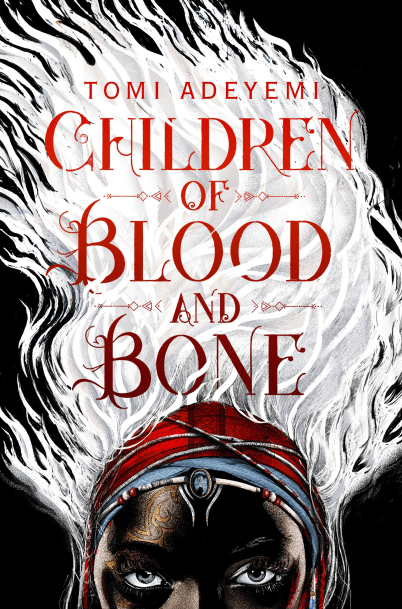
Children of Blood and Bone by Tomi Adeyemi

Children of Blood and Bone Cover.png

Publisher: Henry Holt and Company

Australian Publication Date – 13 March 2018

World Publication Date – 6 March 2018

Amazon     Book Depository

A brand new magical world is born in Children of Blood and Bone, the enthralling first book from a talented new author.

In the nation of Orisha, magic was once controlled by the maji, powerful practitioners who were respected and feared throughout the land.  However, that all changed eleven years ago, when magic suddenly and mysteriously died, leaving the maji powerless and confused.  Taking advantage of this uncertainty, the magic-fearing King Saran struck out, arresting and killing all the former maji.  Now the people of Orisha consider magic evil and all links to the old order are shunned.  Those children who would have become maji, if not for the death of magic, are known as diviners.  Made distinctive by their white hair, they have become a second-class citizenry within Orisha and are routinely targeted by abusive guards and crippling taxes as King Saran seeks to slowly kill them all off.

Zelie Adebola is one of these diviners and remembers what it was like before magic died.  Haunted by the death of her maji mother and still defiant after years of oppression, Zelie is determined to survive.  However, when a chance run-in with an ancient scroll awakens her latent magical abilities, Zelie is given an unexpected chance to restore magic to the world.  With the help of her brother, Tzain, and the rogue princess, Amari, Zelie must reclaim three artefacts and travel across Orisha before the solstice.  If they fail, magic will be gone forever.

As the trio encounter the dangers that lurk throughout Orisha they must also contend with a dangerous force that is following them.  Amari’s brother, Prince Inan, has been tasked by the king to hunt the fugitives down and ensure that magic can never return.  However, Inan’s own latent magical powers have surfaced, and he is torn between the burning powers in his head and his father’s instilled hatred of all things magical.  Will his sudden infatuation with Zelie save him, or will it lead to his destruction?

The greatest threat to the quest may come from Zelie herself, whose powers over life and death may turn out to be too dangerous to control.

Children of Blood and Bones is the first book from Nigerian American author Tomi Adeyemi.  It is a bold fantasy adventure targeted towards the young adult demographic, and has already received significant hype from various sources, including discussion about a possible movie adaption.

One of the most obvious things that will appeal to potential readers is the considerable work and imagination that Adeyemi has put into her fantasy creation.  The central focus on a group of oppressed magic users who have lost their power and influence is particularly engrossing, as is the distinctive magical practice and lore that Adeyemi has used.  The detailed landscapes and cities of the nation of Orisha do a wonderful job of catching the imagination, especially as the characters traverse a number of different locations, each with their own unique environments and features.  There are also a number of intricate battle scenes that add significant excitement to the narrative, including a particularly memorable sequence where the main characters participate in a massive ship-to-ship gladiatorial battle in a flooded desert arena.

In addition to the above elements, readers will enjoy the use of multiple character perspectives throughout Children of Blood and Bone.  Three of the main characters, Zelie, Amari and Inan, each narrate their own chapters and provide a detailed overview of the story from their point of view.  There are many quick-fire perspective changes that serve to give multiple different viewpoints of the same event.  This is particularly useful as much of the book is dedicated to Zelie, Amari and Tzain being closely pursued by Inan.  Seeing how close Inan gets to the protagonists through these separate perspectives adds a lot of tension and suspense to the book.  It also works well in enhancing many of the larger battle scenes, especially the above mentioned gladiatorial naval battle.  The different viewpoints also allow the reader a clear picture of the ideological breakdown of Adeyemi’s world, as the readers are given insight from both the oppressed diviners and the paranoid King Saran

Adeyemi’s clever use of multiple narrators also allows for a clearer view of the personal and group development of the main characters, which can be seen not just through their own eyes but through the eyes of the other narrators.  Amari’s change from spoiled princess to hardened warrior is fun and heart-warming.  The changes to Zelie and Inan as a result of their dramatic internal conflicts are much more intriguing and draw the audience in emotionally.

While Adeyemi explores several themes throughout the book, the most intriguing is her examination of power and the responsibility to wield it.  Within Children of Blood and Bone, the maji have had their magical power taken away from them and are oppressed by the king as a result.  The subsequent quest to return magic to the world raises certain ethical questions, like whether an oppressed group should suddenly have destructive powers returned to them?  Within the book there a number of characters who have dissenting views on the subject, but only Zelie and Inan are in the unique position of seeing both parts of this debate.  Inan has always been taught to fear and hate magic, but his perception of magic changes when he gains his own powers, meets Zelie and experiences the oppression brought on by his father.  As a result, his opinion about the future of magic is changed multiple times throughout the book.  Zelie on the other hand, has experienced oppression all her life, and is at first determined to bring back magic.  However, when she uses her own destructive powers and sees the devastation caused by other magic users, she starts to question her previously held beliefs.  This fascinating internal debate is masterfully woven in the story through the books narrators, and it will be interesting to see how this debate continues in any future books.

Children of Blood and Bone is an intricate and ambitious young adult fantasy debut that includes a first-rate, emotionally charged story.  Set in an inventive new universe and featuring slick use of characters and multiple narrators, Children of Blood and Bones lives up to its significant hype.

My Rating:

Four stars