Throwback Thursday: World War Z by Max Brooks

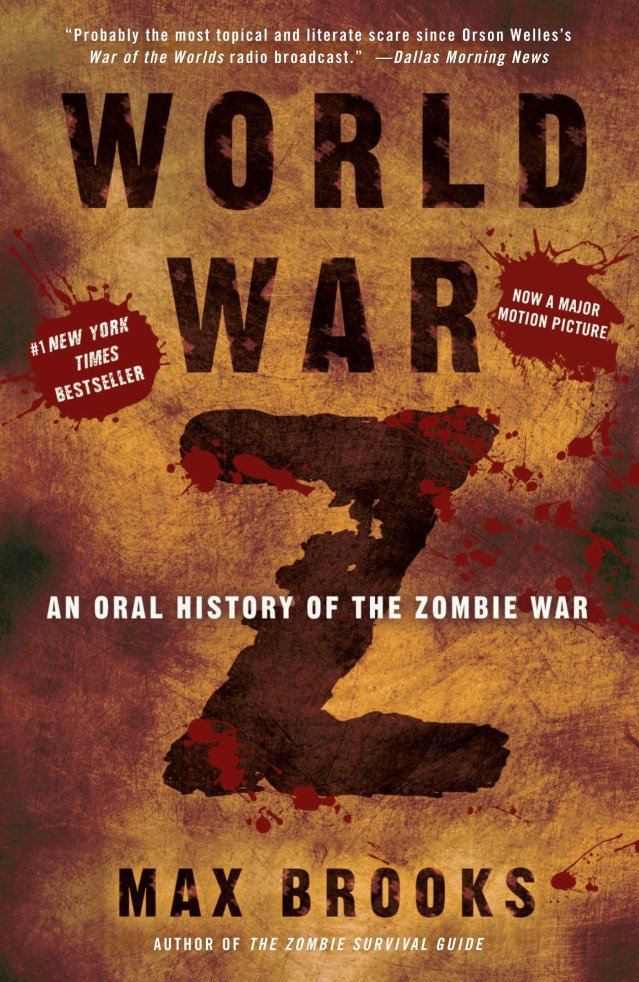
World War Z Cover

Publisher: Random House Audio (Audiobook – 14 May 2013, originally published 12 September 2006)

Series: Standalone

Length: 12 hours and 9 minutes

My Rating: 5 out of 5 stars

Amazon

Welcome back to my Throwback Thursday series, where I republish old reviews, review books I have read before or review older books I have only just had a chance to read.  For my latest Throwback Thursday review I take a look at the zombie horror classic, World War Z by Max Brooks, a truly epic and outstanding read.

One of the biggest novels that I have been meaning to read for ages was the highly regarded zombie novel, World War Z, also known as World War Z: An Oral History of the Zombie War.  Written by Max Brooks as a follow-up to his first book, the non-fictional The Zombie Survival Guide, World War Z is a unique novel that fully examines a zombie apocalypse from multiple perspectives.  I had heard some great things about this novel, and I even enjoyed the movie adaptation when it came out (more on that later).  Unfortunately, I never got a chance to read it and I kind of figured for a while that it might stay in my to-read pile for a while.  However, it moved much higher up my list of books to check out after I read Brooks’s 2020 novel, Devolution, which was one of my favourite novels of 2020 (as well as one of my favourite all-time horror novels).  I had also heard a lot of praise for World War Z‘s awesome audiobook edition, so when my wife and I needed some entertainment during a recent cross-country road trip, this was our first choice.

Plot Synopsis:

The Zombie War came unthinkably close to eradicating humanity. Max Brooks, driven by the urgency of preserving the acid-etched first-hand experiences of the survivors from those apocalyptic years, traveled across the United States of America and throughout the world, from decimated cities that once teemed with upwards of thirty million souls to the most remote and inhospitable areas of the planet. He recorded the testimony of men, women, and sometimes children who came face-to-face with the living, or at least the undead, hell of that dreadful time. World War Z is the result. Never before have we had access to a document that so powerfully conveys the depth of fear and horror, and also the ineradicable spirit of resistance, that gripped human society through the plague years.

Ranging from the now infamous village of New Dachang in the United Federation of China, where the epidemiological trail began with the twelve-year-old Patient Zero, to the unnamed northern forests where untold numbers sought a terrible and temporary refuge in the cold, to the United States of Southern Africa, where the Redeker Plan provided hope for humanity at an unspeakable price, to the west-of-the-Rockies redoubt where the North American tide finally started to turn, this invaluable chronicle reflects the full scope and duration of the Zombie War.

Most of all, the book captures with haunting immediacy the human dimension of this epochal event. Facing the often raw and vivid nature of these personal accounts requires a degree of courage on the part of the reader, but the effort is invaluable because, as Mr. Brooks says in his introduction, “By excluding the human factor, aren’t we risking the kind of personal detachment from history that may, heaven forbid, lead us one day to repeat it? And in the end, isn’t the human factor the only true difference between us and the enemy we now refer to as ‘the living dead’?”

Note: Some of the numerical and factual material contained in this edition was previously published under the auspices of the United Nations Postwar Commission.

Holy hell, that was an exceptional book!  I loved the powerful and expansive narrative contained within World War Z as Brooks attempts to fully encapsulate the entire experience of a zombie apocalypse in impressive detail.  Literally all the good things I heard about this book were true, and I loved his unique and very captivating way of capturing the horrors of this sort of experience, both from the zombies and other humans.  An exceptional and impressively inventive read, World War Z gets an easy five-star read from me.

I cannot get over how awesome and distinctive World War Z was as a concept.  Rather than a traditional novel, Brook’s masterpiece is written as an epistolary novel, written as in-universe oral history anthology of a zombie apocalypse.  The book, which was compiled by this universe’s version of Max Brooks, contained multiple testimonials and interviews, as Brooks seeks out and talks to multiple people who experienced the apocalypse and pulls together their various unique stories.  This book contains around 40 individual stories set out across five chapters which look at the various stages of the zombie war, from its origins all the way up to the postwar ‘new normal’.

At this point I need to make a quick note about the version of World War Z that we checked out.  There are a couple of different World War Z audiobooks out there, but for our trip we listened to the World War Z: The Complete Edition, which combines two separate audiobook adaptations of the novel, and contains all the stories from the original book.  I did look over a paperback edition of World War Z before I started this review, and it looks like our audiobook version covered the full stories well, although I did notice that some of the stories were shortened or missing minor parts.  In addition, the audiobook version did not feature any of the paperback’s footnotes, which contained technical details and notes from the author.  However, I don’t think I lost out on too much of the plot from some of these missing gaps.

I really fell in love with the various individual stories contained with World War Z as Brooks went out of his way to produce the most unique and moving tales that he could.  These are mostly standalone tales, although there are a few interesting crossovers as the book continues, with some character’s mentioning events or supporting figures from other stories in their interviews.  However, as you follow the stories within these five chapters (made up of Warnings, Blame, The Great Panic, Turning the Tide, and Good-Byes), you get a full sense of the entire war, and it quickly comes apparent how cleverly Brooks was crafting everything here.  I personally deeply enjoyed both the individual shorter tales and the much larger connected story of World War Z, and I was deeply impressed with the excellent writing style behind it.  Brooks is a true master of writing deeply personal, character-driven tales of survival, and you swiftly become attached to the various protagonists as they tell their unique stories.  The action within is gruesome, fast-paced and deeply terrifying, and there are multiple over-the-top descriptions of zombie and human violence that will stick with you forever.  This was easily one of the best zombie novels I have read in terms of storytelling and action, and everything about this tale is so damn compelling.

As I mentioned, there are roughly 40 separate stories contained within this anthology, each of which contains its own unique protagonist, supporting characters, settings and unique circumstances.  Naturally, with so many stories you have a bit of a range in terms of storytelling, with some being substantially better than others.  However, I felt that Brooks did a very good job of writing each of these stories extremely well, and there were none that particularly dragged the novel down.  There is a real mixture of narratives here, with particularly gruesome horror stories mixed in with more human-focused narrative, political plotlines, military thrillers, stories that balance on the edge of science fiction, and everything in between.  The spread of these stories works pretty well, with Brooks providing an entertaining mixture of storylines throughout the book so readers aren’t constantly bombarded by tales of horror or tragedy.  Instead, there are often fascinating, humorous and humanising stories thrown in amongst the horror.  This works to make the entire novel flow at a fantastic pace.

While pretty much all these stories are fun and tell some outstanding tales of the zombie apocalypse, there are a few that stood out to me as being a cut above the rest.  I had some early fun with the Stanley MacDonald storyline, which showed an amoral illegal surgeon in Brazil unwittingly transfer a zombie heart into a patient, which led to one of the earliest outbreaks in South America.  The Jesika Hendricks plot showed a brilliant, if very dark, take on ordinary citizens trying to flee the zombies only to experience the other dangers of surviving the winter in a desperate community.  There are several amazing and cynical storylines, such as the Breckinridge Scott and Grover Carison testimonies that showcase the capitalist opportunism that surrounded the initial outbreaks.  I also really liked the South African focused storyline around Paul Redeker, which showed a former Apartheid strategist using his stark and brutal plans to save the country from the undead hordes.  I loved the particularly inventive and clever testimony surrounding the character of Arthur Sinclair Junior, which focuses on how America was reorganised after the initial stages of the war, with the country setting its sights towards industry, construction and warfare, which really highlights the author’s impressive insights into the world.

Two other fantastic World War Z storylines set in Japan focus on two unique individuals, one an “otaku” (a computer-obsessed outsider who tried to live entirely online), and a blind “hibakusha” (a person affected by the atomic bombs used in WWII).  Both characters were outsiders in Japan before the zombie war, but the zombie invasion changed their entire lives and led to them becoming renowned warriors and survivors against all the odds.  These two storylines are extremely compelling, and I loved the way that the author utilised unique subsections of Japanese society and tried to imagine how those sorts of people would survive the zombies.  There was also a really intense storyline, told by Admiral Xu Zhicai, that details a Chinese submarine’s attempt to escape the zombies with their families, which turns into a brilliant, powerful and occasionally disturbing tale of survival, loyalty and family.  I also must mention the Terry Knox testimony that details the actions aboard the International Space Station and the Darnell Hackworth story that looks at the US army’s canine units that helped scout and herd zombies (yay for mini dachshunds, the real heroes of this book).  However, out all the testimonies featured within World War Z, my favourite had to be the ones focussing on soldier Todd Wainio.  Todd battled the zombies at multiple stages of the war, and his multiple entries paint a pretty grim picture but are easily some of the best depictions of the horror of the zombies and the challenges faced by the armed forces.  His first testimony about the army’s initial inability to combat the zombies is very chilling, and it was fascinating to hear about the changes to his training and equipment as the military adapted to fight this new and strange enemy.  I am honestly just scratching the surface of these testimonials here, as pretty much all of them were great in their own way.  However, the ones I mentioned here were my personal favourites, and I had a blast listening to them and seeing how they fit into the wider narrative.

For me, one of the main highlights of World War Z was Brooks’s incredible inventiveness and insights when it came to envisioning a potential world-wide zombie apocalypse.  Thanks to his amazing range of stories, Brooks showcases a vast global catastrophe that impacts everyone no matter where they are.  I loved his depiction of how the apocalypse emerged, and rather than a continuous attack that pretty much destroys everything in a single day, Brooks imagines a gradual catastrophe that is initially ignored and mishandled before it spreads uncontrollably.  This is covered in the early chapters of the book with some substantial skill, and you really get to see how and why everything falls apart, with appropriate zombie violence included.  While there is an understandable focus on America, I found it fascinating to see how Brooks imagined different countries would deal with this crisis, with different culturally informed strategies, and there are even some compelling references to real-life figures (the Nelson Mandela facsimile reacts in a very different way than you’d expect).  The author really dives into all the details of a zombie attack and examines all the pros and cons of various strategies humans could utilise, from fleeing, staying in defensible positions, or fighting back.  There are some brilliant testimonies that cover all of them, and Brooks’s dark depictions of unprepared or overconfident humans failing to understand the threats in front of them and paying the price for it are shocking, bleak and captivating.  Brooks also comes up with some truly unique and clever problems or impacts of the zombies, many of which are referenced or experienced by multiple characters, including floating zombies, marine zombies, feral children who survived without their parents, looters, civil wars, and even crazed humans pretending to be zombies.

These intriguing insights from Brooks’s imagination are further expanded on in the later chapters of the novel, where the author explores how the world order changed because of the zombie war.  Again Brooks dives into multiple countries here, and it was fascinating to witness which countries the author imagines will be destroyed by the zombies and which would thrive.  I really enjoyed his examinations of the way that America needed to reorganise itself and its subsequent battleplans, which were perfectly covered by several of the best characters.  Seeing countries likes Russia, China, Japan and more change in drastic ways a result of this apocalypse was really cool and compelling, especially as the author covers it in such a reasonable and logical manner.  Countries like Cuba and the West Indies thriving due to their isolation was pretty fascinating, and they stood as an interesting contrast to more prominent countries that were disadvantaged or never stood a chance thanks to their socioeconomic issues or unsuitable landscapes.  I loved some of the unique issues that some countries experienced, such as the infested Paris catacombs or the mystery around North Korea, and they leave some intriguing afterthoughts as a result.  Brooks also cleverly examines other unique impacts that the zombies are having on the world, such as extinctions (goodbye whales), changes in global relations, and long-term problems, and I was deeply fascinated and enthralled by all this impressive thinking.  All of this compelling insight and imagination really enhances the stories being told by various characters, especially as they all impact humanity’s potential survival, and I really lost myself in the author’s powerful and impressive vision of a zombie apocalypse.

While World War Z is primarily about survival and the wider impacts of a zombie apocalypse, Brooks also takes the time to cover a few interesting themes.  In particular, he uses this novel about zombies to examine humanity.  While there is a certain overlying theme about the indomitable human spirit and our ability to triumph no matter the odds, there are some very noticeable depictions of the worst parts of human nature.  I found his initial depictions of most people ignoring or ridiculing the slow rising zombie threat to be pretty realistic (keep in mind that this was written 14 years before COVID).  There are also some major critiques about corruption and government incompetence in the face of disaster that I also found to be very intriguing and insightful.  Many of the early chapters that talked about military attempts to fight back had some interesting parallels to the wars in the Middle East, and I really appreciated the author’s clever critiques of these conflicts through the medium of a zombie war.  I felt that Todd’s testimony about the first major battle of the zombie war was a great example of this, as he regales the reader with how politically motivated leadership and incompetence led to a massacre.  All of this added a thought-provoking and entertaining edge to many of the storylines in the novel, especially the earlier testimonies, and I felt that Brooks did an amazing job bringing some of his own insights and critiques into his writing.

As I mentioned a few times above, I listened to the extended audiobook adaptation of this novel, which I personally felt was the absolute best way to enjoy this epic read.  Running at just over 12 hours in length, we absolutely powered through the World War Z audiobook during our road trip, and it served as an excellent entertainment for a long drive.  I often find that having a story read out to you really helps you to absorb everything about the story, and this was particularly true with World War Z.  Not only did the narration allow you to focus on all the details of the testimonials, but the horror elements and action felt a lot more intense, especially when you were dragged into some of the more gruesome scenes.  I also feel that the audiobook version of World War Z had a better flow than the paperback novel.  The testimonials with the audiobook are a lot more separated out, treated as a new chapter each time the narrator changes.  This is very different from the paperback version, which throws multiple testimonials in a quick fire manner, with everything crammed together into the five chapters.  As such, I really felt the audiobook helped to highlight the uniqueness of each testimonial and you really got to focus on each story a lot more.

However, easily the best thing about the World War Z audiobook was the truly impressive voice cast that were featured within.  Brooks, a voice actor himself, recruited a crack team of international actors to fill out his cast, including several A-listers, who give some outstanding and amazing performances.  All these actors really dive into their various roles here, conveying the emotion, fear and insights of their protagonists, and their great voice work definitely enhanced the already cool stories of their characters.  I deeply enjoyed all their voice work throughout the audiobook, and I know that I enjoyed several testimonies even more because of the talented actors voicing them.  This cast is led by Brooks himself, who voices the interviewer, asking all the questions and meeting all the various figures the novel is set around.  Brooks does a really good job here, and his calm, collected interviewing style and additional narration helps to set the scene for the entire novel and moves the other character’s stories along at a great pace.

Aside from Brooks, there are a good 40 or so voice actors featured in the World War Z audiobook, and I was pretty impressed with all their performances.  Some standout early performances include a brief appearance from Nathan Fillion as Canadian soldier Stanley MacDonald; Paul Sorvino, who gives a very fun performances as the sketchy doctor Fernado Oliveira; and Martin Scorsese, who gives an unrepentant portrayal of corrupt businessman Breckinridge Scott.  Other great performances include Kal Penn as Sardar Khan, an Indian soldier who serves an excellent witness to an act of heroism; the late, great David Ogden Stiers, who brings Ukrainian solider Bohdan Taras Kondratiuk to life perfectly as he watches a great act of evil from his government; Common as dog trainer Darnell Hackworth; and Rob Reiner as “The Whacko” a radical politician/former Vice President who shares his strong opinions in a very fun outing.  I really need to highlight some intriguing voice performances from Simon Pegg, who does a pretty good Texan accent in the role of Grover Carlson; and Alfred Molina, whose Australian accent was pretty accurate (a rare talent).

The performances of Masi Oka and Frank Kamai really brought to life the two Japanese characters I mentioned above, as does Ric Young for Chinese Admiral Xu Zhicai’s elaborate testimony.  I also really need to highlight the brilliant work of Alan Alda in this book as he voices pivotal administrator Arthur Sinclair Junior.  Alda, whose voice I have loved since M*A*S*H, perfectly inhabits the role of this intriguing figure, and I loved hearing his narration of how America’s economy was changed.  However, out of all the voice actors in World War Z, my favourite was the always impressive and remarkable Mark Hamill, who voiced standout character Todd Wainio.  Hamill was one of the main reasons why Todd was such a great character, and I loved his outstanding performance as a former ground soldier recounting all the horror of the front line of the zombie war.  There is so much weariness, trauma and cynicism in Hamill’s voice as he narrates Todd’s testimony, and you really feel the character’s resentment and anger.  The way that Hamill describes all the gruesome gore and zombie violence was just so great, and his impressive range and tone helped to really enhance the insanity and horror of the moment.  These voice actors, and the rest of the impressive cast, are extremely epic here, and they turned this production into something extremely impressive.

A quick final note about the World War Z film.  Until I read this book, I really did not appreciate how wildly off-book the film adaptation was.  None of the true magic from the original story appears in the film at all, as they turned it into a generic action flick rather than a clever analysis of how a zombie apocalypse would change the world.  While I did enjoy the World War Z movie on its own, it is a terrible adaptation, with only small elements from the book appearing in the film.  While I can appreciate that this is not the easiest book to turn into a film, they didn’t even try.  I really do hope that someone does a proper adaptation of World War Z at some point, as it frankly deserves a lot better than what it got (perhaps a television series with each episode recreating one of the testimonies).

As you can clearly tell from the massive essay above, I deeply enjoyed World War Z by Max Brooks.  This was easily one of the best zombie novels I have ever read, and it definitely deserves its epic and highly regarded status.  Brooks’s distinctive and brilliant story was just plain amazing and I loved the outstanding combination of smaller testimonies coming together into one connected and thought-provoking tale.  The author cleverly examines every single aspect of a potential zombie apocalypse, and you find yourself not only loving the insane horror elements, but the fascinating political and social impacts that come with such an invasion.  Best enjoyed in the full audiobook format which features so many impressive voice actors, World War Z comes extremely highly recommended and I cannot hype it up enough!

World War Z Cover 2

Amazon

Throwback Thursday: Warhammer 40,000: Space Wolf by William King

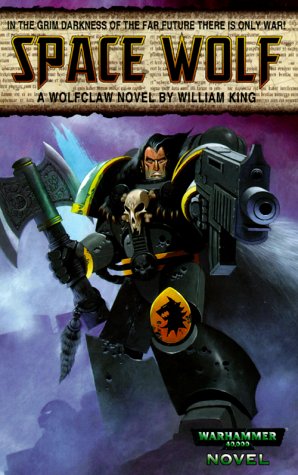
Space Wolf Original Cover

Publisher: Black Library (Paperback – 1999)

Series: Ragnar series – Book One

Length: 266 pages

My Rating: 4.5 out of 5 stars

Amazon

Welcome back to my Throwback Thursday series, where I republish old reviews, review books I have read before or review older books I have only just had a chance to read.  For this latest Throwback Thursday I dive into the world of the Space Wolves chapter of Space Marines with the classic Warhammer 40,000 novel, Space Wolf by William King.

The Warhammer 40,000 expanded universe is truly blessed with the sheer range of unique stories that it contains.  From pulse-pounding crime novels (Kal Jerico: Sinner’s Bounty), deeply fascinating novels about aliens (Ruin, Reign and Ghazghkull Thraka: Prophet of the Waaagh!), haunting horror tales (The Bookkeeper’s Skull), and even brutal war stories by common soldiers (Steel Tread and First and Only).  However, at the end of the day, most of the more intriguing stories focus on the iconic and awesome Space Marines.  These genetically enhanced and over-armoured warriors are often the true MVPs of the Warhammer canon, with some great series based on them (for example, the 50+ book Horus Heresy series).  There are a ton of great Warhammer 40,000 series around the Space Marines that I am exceedingly keen to get into, and I was recently lucky enough to find a copy of the first book of one of them which I immediately dived into.

That book was Space Wolf by William King, who I best know from his epic work in the Warhammer Fantasy franchise with his Gotrek and Felix series (check out my reviews for Trollslayer, Skavenslayer, Daemonslayer, Dragonslayer and Beastslayer).  Space Wolf is the first book in King’s six-part Ragnar series (also known as the Space Wolf and Wolfclaw series).  Focused on the character of Ragnar, a legendary member of the Space Wolves chapter, this series sounded really cool, especially as I have been really enjoying King’s writing lately.  I ended up having a great time with this novel which contains an awesome and very fun story.

In the far future, humanity is constantly at war with aliens, daemons, traitors, and heretics, all of whom wish to tear the massive and fragile Imperium of Man to shreds.  Humanities best and often last line of defence are the mighty Space Marines, the Emperor’s angels who fight the very worst xenos and spawns of the Chaos Gods.  Out of all the Space Marine chapters, one of the most respected, feared and honoured chapters are the Space Wolves.  Born from the genetic material of their legendary founder, Leman Russ, and bearing the touch of the wolf, the Space Wolves have stood tall time and time again.  But how does a mere man become a bestial and lethal Space Wolf?

On the planet of Fenris, Ragnar Thunderfist is a young warrior, content to work on his father’s ship and contend with the many dangers of his fierce and low-tech home world.  During a raid upon his village by a rival tribe, Ragnar is killed in a mightily duel after felling many enemies.  However, this is not the end of Ragnar’s journey; instead he finds himself waking up healed, resurrected by one of the mysterious Wolf Priests who watch over the planet.  Taken from the ruins of his village with other worthy aspirants, Ragnar learns that he has been chosen to become a member of the next generation of Space Wolves.

However, earning the right to join the Space Wolves is no easy task, and Ragnar soon embarks on a gruelling and lethal training regime that will test him to his very limit.  Working to hone himself into a living weapon, Ragnar will face trials, monsters and deadly rivalries as he attempts to prove himself.  But even if he is found worthy, the greatest trial involves the final transformation into a Space Marine.  The Canis Helix, which is implanted into all Space Wolves, bears a dangerous curse, which may turn even the strongest of wills into wild beasts.  Can Ragnar overcome the bestial rage that comes with this awesome gift, or will he lose his mind before he can serve the Emperor?  And what happens with the legions of Chaos arrive upon Fenris?

Space Wolf Cover 2

This was another exceptionally exciting and compelling read from William King, who perfectly starts another epic Warhammer series.  Space Wolf had a very different tone and structure to some of King’s other books that I have enjoyed, and I found myself getting really invested in this intriguing story of survival, self-discovery, and destiny.  Starting with an intriguing glance at the present, Space Wolf jumps back into the protagonist’s past, showing Ragnar’s formative years and the events that led to him being chosen by the Space Wolves.  Primarily told from the perspective of Ragnar, with a few sections told by an antagonistic alternate narrator, Space Wolf quickly turns into a fascinating examination of the intense training faced by potential Space Wolves recruits.  Most of the story follows the various stages of this intense military training and eventual genetic modification, and it was absolutely fascinating to see the changes the protagonist goes through.  While there is a lot of focus on expanding the lore and the character changes associated with it, King tells a concise and powerful story that really dives into the mind and personality of its protagonists.  This extended and brutal training sequence and initiations eventually leads up to the protagonist’s first mission as a Space Marine, which sees him and his team, many of whom you have also come to know, face off against an insidious foe on their own home world.  This last part of the book provides a ton of action, some intriguing horror aspects, and the introduction of a compelling antagonist who will likely show up in future entries in the series.  This final section really brings the entire narrative together extremely well, showcasing what the protagonist has been working towards, while also resolving some great character arcs.  I had a really fun time with this entire novel, and it has definitely made me keen to check out the rest of the series when I get a chance.

One of the most intriguing parts of Space Wolf was the way that it fits into the wider Warhammer 40,000 universe.  Specifically, this novel serves as a particularly good introduction to the legendary Space Wolves Space Marines chapter, who are one of the more popular factions in the extended universe.  King chooses to look at them from a rather unique direction, showing them purely from the perspective of the protagonist Ragnar, an inhabitant of a Norse-esque society with no concepts of space travel, advanced technology, or the wider universe outside of their lands, and whose understanding of the Emperor, the Chaos Gods, the Space Marines and more comes purely from myths and legends.  As such, for much of the novel Ragnar and his fellow initiates have no idea who the Space Wolves are, or what they have been chosen for.  The snippets they continue to get slowly inform them of the wider picture, and it was fascinating to see their blind faith that they were working towards something greater.  Their eventual initiation comes as a great shock to them, and seeing these previously simple warriors become elite Space Marines with knowledge of the wider universe results in some awesome and intriguing scenes.  I found it really fun to see the similarities and differences between the characters when they were normal and when they were Space Wolves, and it was fantastic to witness how their harsh roots results in Space Marines with some major Viking vibes to them (it’s one of the things that make them such a cool chapter).

However, King also ensures that the reader is given some intense insight into the dark side of the Space Wolves.  While their training is often harsh and lethal, and their treatment of the tribes of their home planet is very manipulative, there is something far more worrying lying beneath the surface.  The genetic manipulation that goes into creating them awakens a beast within them, with many losing their sanity or even their humanity entirely, reverting into beastlike creatures known as the Wulfen.  King does an awesome job highlighting the various ways in which the characters are changed, body and mind, throughout the course of Space Wolf, and there are some powerful scenes where they are forced to battle to control their new inner nature.  This really ends up being a particularly fascinating and well-balanced examination of the Space Wolves chapter, and I honestly could not think of a better introduction to this faction.  This cool lore, as well as the Norse-inspired aspects and Nordic-like wild settings, serve to beautifully enhance the entire narrative, and King’s choice to show all events from an uninitiated character’s perspective was just brilliant.  The use of Ragnar as a narrator also ensures that readers unfamiliar with the Warhammer franchise can also easily enjoy this novel, as they can learn about the wider universe at the same time as the protagonist.  Established fans, on the other hand, will get a lot of joy out of seeing the Space Wolves in this much detail, and they will no doubt have fun viewing the myths and unique interpretations that the various Fenris tribes place on the Space Marines and other elements of Warhammer lore.  As such, this is a novel that will really appeal to a lot of different readers, and anyone with interesting in fantasy, science fiction, or even historical fiction, will probably have a great time reading Space Wolf.

Finally, I must highlight how good Ragnar was as a point-of-view protagonist.  Not only do we get the great insights into Space Wolves initiatives that I mentioned above, but there are multiple intriguing personality and mental aspects to his character that come across extremely well in the narrative.  Ragnar starts the book as a young warrior whose life is changed in a single day as his tribe is destroyed by a rival clan, his family is killed, and he himself is killed and then resurrected by the Space Wolves.  Worse, he is resurrected alongside the man who killed him, Strybjorn Grimskull, and is forced to train and work with him, despite their hatred for each other.  This results in a great deal of inner struggle for Ragnar as he is constantly torn between his honour and new responsibilities to the Space Wolves and his desire for revenge against Strybjorn.  Watching these two constantly circle each other through the training parts of the novel is awesome, and their issues get even more intense once they undergo the genetic change and become Space Wolves with bestial urges.  These intense inner issues and rivalries proved to be an excellent central plotline for much of the novel, and I felt that they dramatically enhanced the entire narrative very well, adding in some much need drama, comradery, and character development.  I cannot wait to see more of Ragnar and his fellow Space Wolves in the future, especially after how his first mission turned out.

Overall, Space Wolf was just as impressive and awesome as I hoped it would be.  William King did an exceptional job writing a fantastic introductory Space Wolves tale, and he continues to remain one of my absolute favourite Warhammer authors, especially with the excellent range he showed here.  Readers will love this outstanding dive into the Space Wolves and the wider Warhammer 40,000 universe that this novel contains, and Space Wolf is a highly recommended novel to anyone looking for an action-packed and exciting read.

Space Wolf Cover

Amazon

Throwback Thursday – Warhammer: Broken Honour by Robert Earl

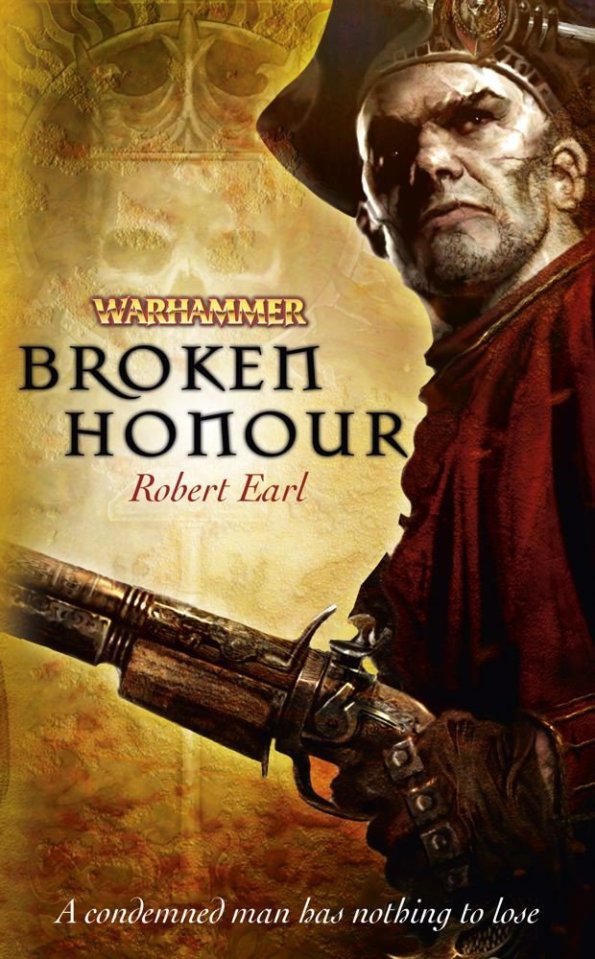
Warhammer - Broken Honour Cover

Publisher: Black Library (Paperback – 22 February 2011)

Series: Warhammer Fantasy

Length: 411 pages

My Rating: 4 out of 5 stars

Amazon

Welcome back to my Throwback Thursday series, where I republish old reviews, review books I have read before or review older books I have only just had a chance to read.  For my latest Throwback Thursday, I look at a cool standalone entry in the Warhammer Fantasy canon with the 2011 novel, Broken Honour by Robert Earl.

Damn it has been fun getting back into Warhammer fiction over the last couple of years, especially as there have been so many amazing and epic recent additions to the franchise.  I have really been having fun with the huge variety of stories associated with these iconic tabletop games, and while I have been mostly focused on the science-fiction based Warhammer 40,000 novels, I have also been dabbling with the Warhammer Fantasy subgenre.  Set in a chaotic and war-ridden world filled with all manner of creatures from classic fantasy, the Warhammer Fantasy novels contain fun and dark adventures, such as the Gotrek and Felix novels (check out my reviews for Trollslayer, Skavenslayer, Daemonslayer, Dragonslayer and Beastslayer).  I was lucky to recently find several cool Warhammer books in a second-hand shop, and I immediately dived into a particularly fun fantasy novel, Broken Honour, written by a new-to-me author, Robert Earl, who had written various other interesting Warhammer novels.  Set before the 2015 destruction of this setting and the start of the Age of Sigma, Broken Honour was a fantastic and entertaining read with a great story to it.

Chaos has once again invaded the realms of man, this time in the Imperial state of Hochland.  The ravenous beastman hordes are emerging from their deep forest lairs to begin their annual raids of the human settlements to destroy, despoil and feast on the people within.  As the armies of Hochland gather to repel them, they find themselves outmatched and outsmarted at every turn.  A powerful and dangerously intelligent beastman lord has risen to command the herd, and his unusual tactics may spell the end for every human living in Hochland.

As the Hochland baron and his advisors attempt to withstand the new threat advancing towards them, they desperately seek out any fighting men they can find.  Sensing opportunity, mercenary Captain Eriksson, a veteran fighter for sale currently only missing a regiment to command, arrives at the capital.  Keen to take advantage of the current chaos, Eriksson buys the freedom of a large group of prisoners to form a new free company.  Promised freedom and pardons for their crimes if they fight, the prisoners form a reluctant and ill-trained regiment, the Gentleman’s Free Company of Hergig, who hope to avoid the brunt of the battle in the back.

However, Eriksson and his troops soon find themselves in the very thick of the fighting, as those above them seek to use his unit to in the very worst ways.  Forced to contend with ravenous monsters, political intrigue, and a villainous lord with everything to lose, Eriksson and the Gentleman’s Free Company of Hergig will need to come together and hone their skills if they are to survive.  Can this band of rogues, thieves and criminals regain their lost honour and find redemption on the battlefield, or will they find only death and destruction as humanities most bestial enemies come to claim them?

Broken Honour was an awesome addition to the Warhammer Fantasy canon that I had an amazing time getting through.  Earl produced an exceedingly exciting and action-packed read that is essentially The Dirty Dozen in the Warhammer Fantasy universe (it is also comparable to the Last Chancers series from Warhammer 40,000).  Obviously, with a plot like that, I knew that I was going to have a lot of fun with this book, and Earl really did not disappoint.  While the narrative is a tad by the numbers, it is a pretty cool military fantasy narrative that is worked well into the Warhammer Fantasy setting.  The entire story flows really well, with the antagonists introduced up front and the protagonist, Eriksson, and his unwilling soldiers brought in quickly after that.  From there you follow the paroled Free Company as they are dragged from one conflict to the next and forced to contend with overwhelming odds.  As such, the book is loaded with a ton of outstanding action and brutal fight sequences that are guaranteed to keep you entertained.  Earl makes excellent use of multiple character perspectives to tell a deep and wide-ranging narrative, and you soon get dragged into several different character arcs, including several surrounding the antagonists.  Not only do you get to see into the heart of the beastman camp, but there are several brilliant sequences told from the perspective of a villainous Hochland noble who is trying to kill the protagonists.  This all ends up being a pretty exciting and fantastic story, and I found myself getting really caught up in the novel, powering through it very quickly.  Everything comes together really well into a great self-contained adventure, although a couple of character arcs didn’t get the conclusions that they deserved, and some storylines are never revisited, despite Earl leaving the story open for a sequel.  Despite that, Broken Honour was an excellent, easy novel to check out, and you are guaranteed to have a great time reading it.

I really liked how well Broken Honour slotted into the established Warhammer Fantasy setting, and this was a great addition to the overall canon.  Earl focuses his narrative around two particularly intriguing factions from the game here, the villainous beastmen and the human armies of the Empire, specifically from the state of Hochland.  I loved the insight into both, especially the beastmen, and the author really brings them to life in exquisite detail.  You can really feel the monstrous power, the Chaos infused evil and the beast-like mentalities contained within these creatures, and they prove to be excellent and brutal antagonists for the entire novel.  At the same time, there are some awesome insights into the soldiers of the Empire, and I loved the various depictions of their battle tactics and the various regiments.  While Earl does dive into these various Warhammer factions throughout Broken Honour, readers don’t need to know too much about them to enjoy the series, as the author does an amazing job introducing them and explaining what they are, and any fan of fantasy or dark fantasy would have a great time with this book.  Indeed, Broken Honour would serve as an excellent introduction to the Warhammer Fantasy canon for those readers unfamiliar with its details, as the story encapsulates the constant struggles and battles that occur within it, as well as the fun and larger-than-life characters it focuses on.  As such, this is a really good and entertaining Warhammer novel that will really appeal to both established fans and potential newcomers.

I really must highlight some of the great characters featured within Broken Honour, as Earl has come up with a wonderful and compelling group of figures to set the story around.  Most of the plot naturally revolves around the members of the Gentleman’s Free Company of Hergig, who are formed to face the threat within it.  Made up of over 120 former criminals, you don’t get to know all the members, but most of the ones who are featured are extremely fun and very memorable.  The leader, Captain Eriksson, proves to be a canny veteran who can manipulate events and his superiors in his favour to field a force in the war and get a lot of money.  Despite his mercenary attitude, Eriksson proves to have a conscious and builds up a fair bit of loyalty to his men, and this character growth really helps endear him to the reader.  Most of the other named Free Company members are a rather interesting and cool.  The drummer boy, Dolf, for example, proves to be an excellent human MacGuffin in the narrative as political plots revolve around his survival.  Other members of the Free Company that stood out to me include the tired veteran Sergeant Alter, the possibly mad former warrior priest Gunter, and the wily quartermaster Porter, whose moneymaking schemes and remarkable survival ability rounds out the character dynamics extremely well.

While I had fun with these protagonists, the best characters within Broken Honour are easily the baddies, with several great antagonist figures really coming together perfectly throughout the book.  The most prominent of these is Beastlord Gulkroth, who leads the beastman armies in the book.  Empowered by dark magics which have enhanced him even further than the rest of his kind, Gulkroth proves to be an intimidating and compelling figure in the novel, especially as his grasp of strategy, tactics and patience are highly unusual amongst his race.  Gulkroth spends the bulk of the novel balancing this newfound intelligence against his bestial nature, and it proves extremely interesting to see both sides of his personality come into conflict, especially as it impacts how his army attacks.  While Gulkroth is a fascinating figure, the best antagonist is Viksberg, a cowardly noble who was the sole human survivor of the first battle in the book thanks to his spinelessness behaviour.  Despite this, he manipulates the situation to make him appear as a hero and gets promoted as a result, killing anyone who knows the truth of his actions.  This eventually forces him to contend with Eriksson’s regiment, as one of them is a witness to his crimes, and he tries to get all of them killed on multiple occasions.  Viksberg’s continued attempts to kill the protagonists through indirect means really adds to the intrigue and enjoyment of the entire novel, and it was exceedingly entertaining to watch his various plots unfold.  Earl really goes out of his way to make Viksberg as despicable as possible, and you end up really disliking the entitled bugger, especially as he gets better characters killed.  You end up rooting against Viksberg in the hope that he’ll get his just deserts, only to be disappointed when he manages to survive to fight another day, which is both frustrating and extremely fun.  These brilliant antagonists, and all the other characters, add so much to the overall plot of Broken Honour, and I really appreciated the work that Earl put into his various characters.

Overall, Broken Honour by Robert Earl was an awesome and deeply entertaining Warhammer novel that I had a delightful time with.  The straightforward story is very exciting and contains some impressive character arcs that unfold to produce a riveting tale, while also providing all the action and bloodshed I could ever want in the iconic Warhammer Fantasy setting.  While I am a little disappointed that Earl didn’t write any additional novels featuring the characters in Broken Honour, I still had an awesome time with this book and it’s a great read for both Warhammer fans and those general fantasy readers.  Highly recommended!

Amazon

Warhammer 40,000 – Ghazghkull Thraka: Prophet of the Waaagh! by Nate Crowley

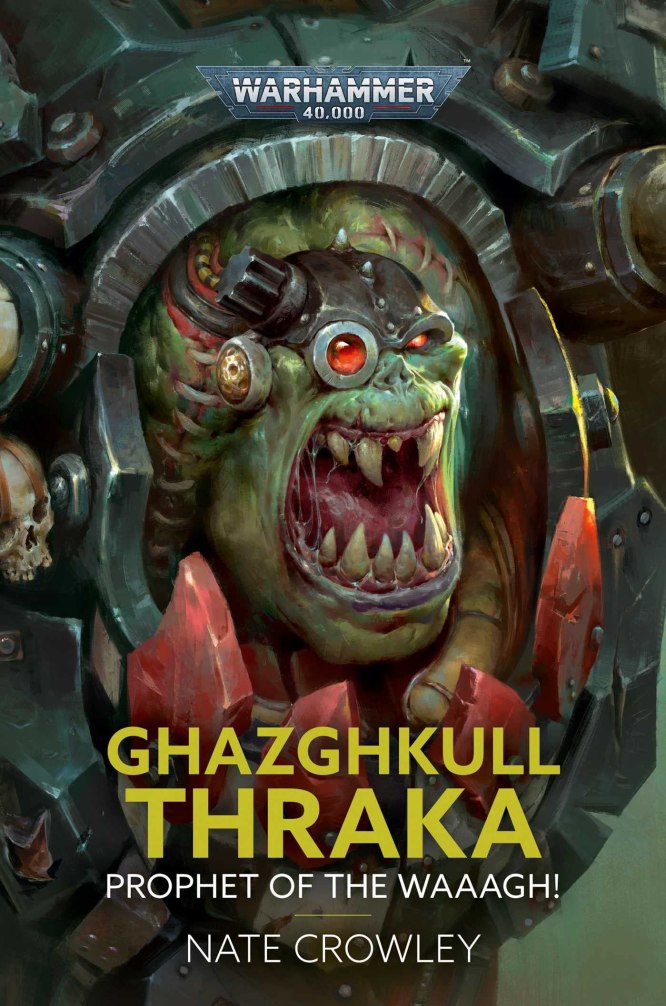
Ghazghkull Thraka - Prophet of the Waaagh! Cover

Publisher: Black Library (Audiobook – 15 March 2022)

Series: Warhammer 40,000

Length: 7 hours and 30 minutes

My Rating: 5 out of 5 stars

Amazon     Book Depository

Prepare to read one of the most amusing and downright entertaining recent additions to the Warhammer 40,000 canon with the hilarious and brilliant Ghazghkull Thraka: Prophet of the Waaagh! by outstanding author Nate Crowley.

I have been having an immense amount of fun really diving into the massive wealth of tie-in fiction surrounding the Warhammer 40,000 tabletop game this year.  Books like Steel Tread by Andy Clarke, Krieg by Steve Lyons, The Bookkeeper’s Skull by Justin D. Hill and Day of Ascension by Adrian Tchaikovsky, have really highlighted just how diverse and intense this extended universe can be.  However, the latest tie-in novel I checked out may prove to be one of my absolute favourites, as I got to learn all about one of the most iconic ork characters in this universe with Ghazghkull Thraka: Prophet of the Waaagh!

Orks are the most notorious and dangerous creatures that roam the galaxy of the 41st millennium.  Billions upon billions of the powerful, war-loving creatures can be found throughout every sector of space, fighting anyone and anything they can find, especially each other.  However, out of all these monsters, none are more feared, respected or hated than the warlord Ghazghkull Mag Uruk Thraka, chosen of the ork gods Gork and Mork and proclaimed prophet of the Waaagh!

Throughout his legendary life, Ghazghkull has done what no other ork has been able to achieve.  Bringing together innumerable warbands into one massive horde of green, Ghazghkull has warred with every faction in the cosmos, while his infamous invasions of the Imperial planet of Armageddon are the stuff of bloody legend.  Everyone knows of his epic and rivalry with his indomitable foe, Commissar Yarrick, which turned Armageddon into a perpetual warzone, but does anyone know the true story of Ghazghkull and the events that made him?

Rogue Lord Inquisitor Tytonida Falx has long attempted to discover what lurks in the minds of the xenos her order faces.  When an opportunity to find out more about Ghazghkull presents itself, she eagerly jumps at the opportunity, bringing a unique prisoner aboard her heretical ship, Ghazghkull’s banner bearer, the grot Makari.  Interrogating him, Inquisitor Falx and her team soon discover that Makari might just be the only being in the universe who knows the full truth about who, or what, Ghazghkull is, and what he plans to do next.  But, as she listens to Makari’s tale, the Inquisitor soon discovers that the shadow of Ghazghkull’s rage and desire for violence far eclipses anything that the Imperium has ever believed.

Wow, now that was a really fun and captivating read.  I knew going into Ghazghkull Thraka: Prophet of the Waaagh! that I was going to have a great time, especially after enjoying author Nate Crowley’s The Twice-Dead King novels, Ruin and Reign, but I was blown away by how awesome Ghazghkull Thraka was.  Featuring a clever and wildly entertaining story, perfectly told through various unique eyes, as well as some deeply enjoyable characters, I quickly became absorbed in the impressive story and powered through it in a couple of days.  Not only was this my favourite book from Crowley but it also probably overtakes Kal Jerico: Sinner’s Bounty as the most amusing Warhammer novel I have ever read.

I had an absolute blast with the incredible story that Crowley whipped up for Ghazghkull Thraka, as it ended up being an inventive and entertaining way to showcase an iconic Warhammer figure.  Due to his prominence within the game and the extended fiction, Ghazghkull is probably one of the most utilised non-human characters in the canon, with many different novels, game books and comics already diving into his life.  As such, Crowley needed to come up with a completely new way to examine this great character that didn’t tread on any prior works.  I think his solution to this problem was exceedingly clever, as he chose to tell the story through the eyes of the most unlikely narrator and chronicler, the grot Makari, whose unique insights and worldview turned this already known backstory into something truly special.

The story starts off in the current timeline of the Warhammer 40,000 universe and shows Inquisitor Falx obtaining Makari and interrogating him about Ghazghkull.  This causes the book to dive back into the early days of Ghazghkull as Makari chronicle his master’s existence as he saw it.  As such, you get a very specific examination of Ghazghkull’s life, with a focus on his early trials, some of his pivotal moments, and more specifically his interactions with Makari.  At the same time, the story keeps jumping back to the present, with the Inquisitor and her followers interrupting to ask specific questions and discussing whether there is any truth in what he says.  The book keeps jumping between these different perspectives, and you end up with two distinctive storylines as Makari’s presence brings some big woes for the Inquisitor in the present day.  The chronicle storyline goes at a brisk pace, especially as Makari’s interrogators get him to skip or shorten specific sections, but there is a clever and impressive logic into what parts of Ghazghkull’s life are featured or ignored.  Not only are the past and present storylines exceedingly intriguing and entertaining in their own rights, but they also come together perfectly as well, with Makari’s insights into Ghazghkull and himself impacting the actions of Falx.  While the ending was slightly too metaphysical, it served as a brilliant and powerful conclusion to this great story, and I loved seeing the entire tale come full circle in some hilarious ways.

I deeply appreciated the way that Crowley put Ghazghkull Thraka’s story together, as its distinctive and clever style really helped to enhance the chronicle contained within.  The plot device of an interrogation of an alien prisoner works extremely well to set up the main narrative, and the constant interruptions, debates and revelations that occur whenever it snaps back to the present adds to the sense of mystery and mysticism surrounding the titular figure.  While Crowley takes the story in some interesting and complex directions at times, the entire novel is paced beautifully, and there is never a single boring or slow moment within the entire thing.  I particularly liked the near constant humour that was injected into the story, a fantastic side-effect of basing the book around the funny ork species, and I laughed out loud several times as I powered through this impressively amusing read.  Like many Warhammer novels, Ghazghkull Thraka can be enjoyed as a standalone read, and the author makes sure that it features a great self-contained narrative that anyone can enjoy, even those unfamiliar with the universe and the canon.  Indeed, this would be a decent introduction to the Warhammer 40,000 canon and associated extended universe, especially as it perfectly presents one of the key factions of the universe.  Most of the unique universe elements and wider history are explained sufficiently for new readers to follow along without any issues, although some could potentially get confused by the deliberate exclusion of events previously covered in other books.  Still, Ghazghkull Thraka should turn out to be an easy and entertaining read for any science fiction fan, and I thought that this Warhammer 40,000 novel was very well written and extremely clever.

One of the things I love the most about Nate Crowley’s Warhammer novels is his brilliant ability to dive into the unique alien races of the universe and then perfectly showcase their culture and mindsets.  This was the case again in Ghazghkull Thraka, where Crowley expertly dives into the heads of the various ork and grot characters.  No matter whose perspective is shown, every scene of this book features some excellent and often highly amusing depiction of greenskin culture, as Makari attempts to explain the ork perspective as well as his place in the society as a grot.  As such, you get some incredibly detailed and compelling insights into this crude and warlike race, including their brutal hierarchy, need for violence, insane technology, and very unique worldview, which generally results in most of the book’s fantastic humour.  However, rather than the dumb, brutal and one-note figures that most authors depict, Crowley really goes out his way to show that there is a lot more to orks than you realise.  Not only do you get some excellent insights into their various clans and organisations but the various ork characters are shown to be complex beings with unique needs and the ability to formulate some very cunning plans.  There is a particularly intriguing look at the ork religion that follows the gods Gork and Mork, and this novel ends up with a spiritual edge, especially as Crowley shows the orks being extremely successful because they choose to strongly believe in themselves.  As such, you see quite a unique and compelling side to the ork race in this book, and I loved how incredibly Crowley portrayed them.

Naturally, a big part of this examination of ork culture comes from the in-depth look at the life of Ghazghkull himself.  As I mentioned before, Ghazghkull is one of the best-known characters in the entire Warhammer 40,000 canon, so most veteran readers would already be quite familiar with him and his actions.  However, Crowley does an excellent job of examining a completely new side to this character, and mostly ignores his wars at Armageddon and his intense rivalry with Commissar Yarrick, both of which have been done to death in other books.  While certain parts of his history are revisited in this novel, Crowley completely changes their implications and causes, instead focusing on Ghazghkull’s unique orkish mindset and his role as the prophet of his gods.  This new take on Ghazghkull proves to be quite unique and very captivating, as he is shown to be an overburdened being, constantly pressured by his own visions and the influence of the gods to succeed and be a uniting force for his people.  While he still retains the casual violence of his race, you really see Ghazghkull as a deep thinker, and it is fascinating to see his inner ork face off against his grand ambitions and desires.  Crowley also adds some compelling supernatural elements to his character, as Ghazghkull, as seen by Makari, bears a direct connection to the gods which he can use to alter his fellows and himself.  While this isn’t too overpowered or strange, it adds a great extra layer of menace to the character, especially for the humans, and I loved seeing the Inquisitors trying to wrap their heads around the strange occurrences.  I had a lot of fun seeing this other side of Ghazghkull, and this novel ended up being a great analysis of who they are and what they represent to their race.

I also really enjoyed the inclusion of Makari as one of the central characters, and his use as the main witness to Ghazghkull’s life worked incredibly well.  While Makari has always been associated with the character of Ghazghkull, accompanying him in his battles and waving his banner as a source of luck, Crowley really changes him in this novel and paints him as an essential part of Ghazghkull’s success and relationship with the gods.  Shown to be there the moment that Ghazghkull became the prophet, Makari follows Ghazghkull through some of his big moments and it is hilarious to see his snide view on the subject, especially as, like most grots, he a massive coward who doesn’t want to be there.  A lot of this novel’s humour is derived from Makari’s observations and responses, and I loved some of the jokes set up around it.  Crowley does an awful lot with this character, and I particularly liked how the story explained certain aspects of his previous portrayals, such as the apparent multiple versions and his surprising luck.  These are worked into the story extremely well, but it’s the relationship with Ghazghkull that becomes the most fascinating.  Just like with Ghazghkull, there is a major spiritual edge to Makari, who appears to be just as chosen and important to the plan as his master.  Makari’s mystical and religious bond enables him to have a far bigger insight into Ghazghkull’s actions than anybody else, and this really enhanced the analysis of the titular character.  However, it is in Makari’s attempts to serve and help his master achieve his destiny that we see the best Makari scenes, especially when faced with Ghazghkull’s apparent depression, the manipulation of his other followers, and his own stubbornness.  While Ghazghkull does have the inherent ork reluctance to rely on a grot, and indeed he is extremely likely to kill Makari if he starts giving advice, the moments where Makari get through to him are powerful, and I really appreciated the character work surrounding them.  There are some rocky moments between them, especially when Ghazghkull becomes dismissive of his lucky grot, and Makari’s subsequent reactions is very funny and incredibly over the top, which was so very cool.  Overall, this ended up being an excellent and surprisingly compelling portrayal of Makari, and I am exceedingly glad that Crowley featured him in this novel the way he did.

Aside from the greenskin characters, a large amount of plot revolves around the team interrogating Makari.  Crowley really went out his way to create a particularly unique group of Imperial agents who bear surprising insights into the mind of the xenos.  This team is led by Inquistor Falx, a rogue Inquisitor who bears a dangerous obsession with the alien creatures.  Falx is desperate to learn everything she can about the aliens attacking the Imperium to help defeat them and finds herself stymied by the Imperium’s controlling and non-progressive government and religion.  As such, she takes some major risks in this book to understand Makari and Ghazghkull and has some unique and dangerous methods for achieving her goals that borders on the insane/heretical.  I quite liked Falx, despite her obsessive qualities, and she proved to be a great central figure for half the novels plot, especially as her frustrations, concerns and thoughts about the evils of the Imperium, are extremely understandable.

Falx also employs a unique team of interrogators to help her with Makari, including Brother Hendriksen, a Space Wolves rune priest assigned to Deathwatch who has also fallen out of favour with the Imperium thanks to his work with Falx.  Hendriksen serves as a beastly and powerful presence on Falx’s team, and he often provides a great counterpoint to the inquisitor in both technique and common sense, often despairing at her more dangerous choices.  Crowley’s diverse cast gets even larger with the truly unique character of Cassia, a female ogryn psyker who has grown as smart as a human.  This was a fantastic and extremely distinctive addition to the cast, and her surprisingly calm demeanour, which contrasts beautifully with her immense ogryn strength, works perfectly against Hendriksen’s impatience and anger.  The final member of the team is probably the most enjoyable, with the ork character, Biter (Bites-Faces-Of-The-Face-Biter-Before-It-Can-Bite).  Biter is a member of a Blood Axes mercenary band who have dealings with Falx and who sell Makari to her, remaining behind to interpret Makari’s testimony to the humans.  Due to being a member of the Blood Axes, a group who idolise human military culture, Biter is a very distinctive figure, wearing an approximation of a military uniform and appreciating complex tactics and strategy.  However, Biter is even more intelligent and cunning than most Blood Axes, and his near human tendencies really stand out, as it is pretty unexpected from an orc.  His fantastic reactions, comedic impressions of human behaviour, and determination to antagonise the Inquisitor really make him stand out, and he was an absolute joy to behold.  These four interrogators play off each other perfectly during the present-day scenes, and their arguments, discussions and interpretations of Makari’s story give it added depth, humour and impact, especially once they start realising just how valuable their prisoner is.  This entire cast was put together extremely well, and I had an incredible time with this unique and enjoyable collection of characters.

Like most Warhammer novels I check out, I chose to grab the audiobook version of Ghazghkull Thraka, which turned out to be such a wonderful and incredible listening experience.  Not only did the story absolutely fly by in this format, allowing me to get through its seven and a half hour runtime extremely quickly, but I found that the narrative and descriptions of ork life really popped when read out.  However, the best part about the Ghazghkull Thraka audiobook is the outstanding use of narrators.  This audiobook has three separate narrators, Kelly Hotten, Paul Putner and Jon Rand, each of whom have some experience narrating other Warhammer audio productions.  Not only are each of these narrators quite talented but the way they were featured in this audiobook is extremely clever, with the voice actor changing depending on who is witnessing or telling the events of the book.  For example, Kelly Hotten serves as the narrator for the various scenes and interludes where Inquisitor Falx is witnessing Makari’s interrogation, and Hotten does a brilliant job capturing the various players of these scenes, including the Inquisitor, her unique companions, and their orkish interpreter.  Paul Putner narrates the various scenes shown directly from Makari’s perspective, and he has a lot of fun in this role, not only capturing the cowardly and sneaky mannerisms of the grot protagonist, but also providing some amusing and deep voices for the ork characters.  Finally, Jon Rand has a memorable sequence voicing Brother Hendriksen when he psychically jumps into Makari’s mind and views some of the events occurring, and he gives the character a notable accent and internal growl that fit him extremely well.  The jumps between the voice actors were done perfectly and I really loved how it changed up depending on the perspective.  All three voice actors did an amazing job with their narration, and their work, plus some fun sound effects here and there, helped to turn this into such an impressive production.  Easily the best way to enjoy Ghazghkull Thraka, you will have an incredible time listening to this audiobook.

Nate Crowley continues to shine with another entry in the Warhammer 40,000 universe, with the unbelievably entertaining Ghazghkull Thraka: Prophet of the Waaagh!  Featuring a unique and deeply amusing story that re-examines on of the canon’s most iconic alien characters, Ghazghkull Thraka has a tight and cleverly written story, loaded with action, great characters and whole mess of outstanding humour.  Not only that, but this is without a doubt one of the best portrayals of the Warhammer 40,000 orks I have seen as Crowley obviously had a ton of fun bringing them to life.  Easily one of the best (and definitely the funniest) Warhammer 40,000 novels I have been lucky enough to enjoy, Ghazghkull Thraka comes extremely highly recommended, especially in its audiobook format, and is a must read for all fans of this wonderful fandom.

Amazon     Book Depository

Amongst Our Weapons by Ben Aaronovitch

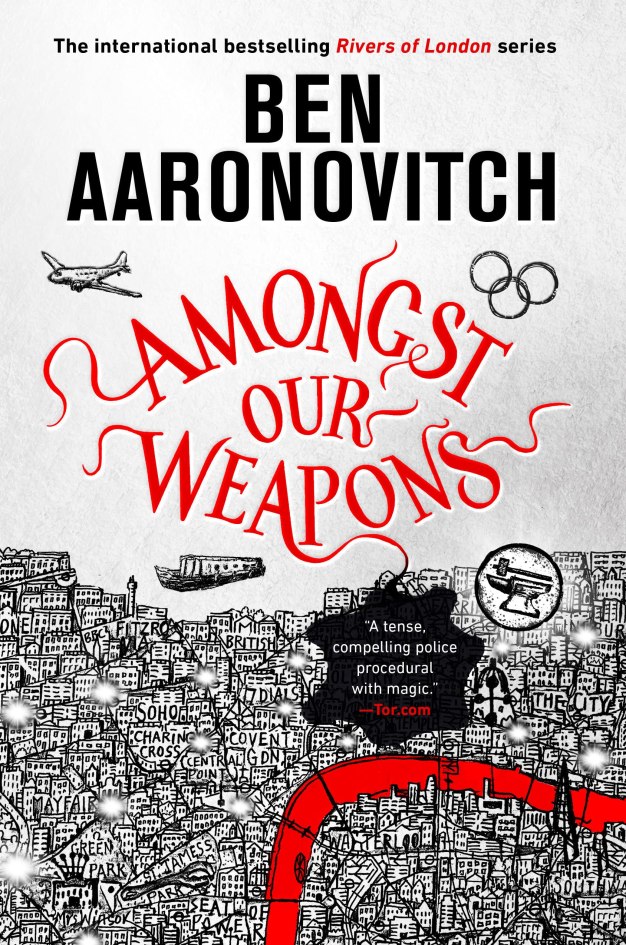
Amongst our Weapons Cover

Publisher: Orion (Trade Paperback – 12 April 2022)

Series: Rivers of London – Book Nine

Length: 406 pages

My Rating: 5 out of 5 stars

Amazon     Book Depository

One of the leading lights in the urban fantasy genre, the exceedingly talented Ben Aaronovitch, returns with the latest epic book in his brilliant Rivers of London series, Amongst our Weapons.

For the last 10 years, the fantasy world has been exceedingly impressed by the fantastic writings of Ben Aaronovitch, who came up with a real winner with his Rivers of London series (also known as the Peter Grant series).  Aaronovitch, who already had some major nerd cred as a writer of two Doctor Who serials, debuted the first book in this series, Rivers of London, back in 2011.  This book told the story of Peter Grant, a young Metropolitan Police officer who is assigned to a specialised branch of the Met that deals with magic and supernatural incidents.  This intriguing debut combined magical elements with a classic police procedural format to create an epic and captivating read.  The author has since expanded this series out to several novels, as well as a range of novellas, short stories, and even a graphic novel series, all of which continue the story of Peter Grant and Aaronovitch’s unique magical world.  I have had a lot of fun over the last few years with this series, and I have greatly enjoyed Aaronovitch’s last two entries, Lies Sleeping and False Value.  Aaronovitch is back with another exceptional read in his ninth Rivers of London novel, Amongst our Weapons, which continues the excellent format and presents the reader with an awesome new mystery.

The London Silver Vaults are a renowned underground market for silverware in the heart of London.  They are highly secured and constantly monitored, so getting away with any sort of crime in the vaults is impossible.  So when a crazed would-be robber is brutally killed in the middle of the vaults with no witnesses or cameras catching the act, the Met are forced to call in their secret weapon, Peter Grant and his fellow detectives from the Special Assessment Unit, better known as the Folly.

Specialising in investigating magical incidents, Peter and his team are quickly able to determine that the death and the murder’s subsequent escape were a result of powerful magic.  Taking the lead on the case, Peter hopes to catch the killer quickly, but are quick to discover that their investigation is about to get far too complicated.  Ancient magics and unknown powers are loose around London, and after discovering a second body, the Folly team begin to investigate the members of a mysterious college cult from Manchester that has been inactive for years.  As more attacks occur, it becomes apparent that members of the cult are being hunted down and that their killer appears to be a vengeful, spear-wielding angel.

Determined to get to the bottom of the killings, Peter dives into the history of the cult and the mysterious artefacts they uncovered.  His investigation will lead him all over England, from the colleges of Manchester all the way to the dismal North.  But even as he begins to uncover the truth behind the killings and the being responsible, does even the full might of the Folly have the power to stop an angel and the deadly magic gifted to her?  Worse, another party has involved themselves in the case, someone that Peter knows far too well.  Can Peter solve this case before it is too late, and how will he deal with the greatest challenge of his life, becoming a father to his two magical twins?

Wow, Aaronovitch continues to massively impress me, bringing together another brilliant and unique urban fantasy read.  Once again bringing together an outstanding story that features distinctive fantasy elements with a clever mystery, Amongst our Weapons was a fantastic read that I had an incredible time reading.  This book was pretty damn awesome and gets a full five-star rating from me.

I had an absolute blast with the story contained within Amongst our Weapons as Aaronovitch has once again cleverly combined complex fantasy elements with a compelling murder mystery investigation, resulting in a deeply entertaining and addictive story.  Aaronovitch starts this latest novel off strong, with the protagonist and his team immediately thrust into an investigation of a man with a mysterious magical hole blown into his chest and no witnesses who saw what happened.  This intriguing start quickly becomes even more enticing, as a second murder is soon discovered, as well as other unusual signs and discoveries at the various crime scenes.  However, the excitement does not end there, as Aaronovitch also fits in an early encounter with the powerful murder, who appears to be an exceedingly deadly angel of vengeance, as well as the sudden reappearance of recurring antagonist Lesley May, Peter’s former partner who now acts as a magical mercenary.  Throw in some great character driven storylines about the protagonist’s family, as his river goddess wife is about to give birth, and you have quite an exceptional start to the novel.  Indeed, once all these elements were set up, I was hopelessly hooked on the story, and it proved extremely hard to put this book down at all.

The rest of the narrative flows on from here extremely strongly, as the characters launch an exhaustive and intense investigation not only into the murders but into the origins of certain magical items and the history of the college cult who appear to be targeted.  This takes the protagonist on a bit of a fieldtrip outside London, exploring Manchester and the North, and introducing the characters to some intriguing new magical elements.  While parts of the story here did get a bit bogged down when it came to exploring some of the more complex new fantasy inclusions, I flew through the second part of the book, especially as it is laced with several brilliant and imaginative confrontations between the protagonist and the book’s various antagonists.  Everything comes together extremely well in the lead-up to the conclusion, which results in a fantastic battle that helps resolve everything perfectly.  I did think that it got a little too metaphysical in places, but I still deeply enjoyed this great conclusion, which should really satisfy every reader, while also setting up some interesting storylines for the future.

Aaronovitch has such a distinctive writing style for the Rivers of London series, which is put to great use throughout Amongst our Weapons.  Like most of the Rivers of London novels, Amongst our Weapons can be read as a standalone read, with Aaronovitch doing a great job of rehashing some of the relevant continued storylines when they become relevant to the ongoing story.  This book features the usual awesome blend of magic, crime fiction and character-led storylines, wrapped up with a great sense of fun and humour, which helps to produce quite an entertaining and captivating read.  I particularly loved how the author makes his novels feel like a police procedural with magic, and this is perfectly on display in Amongst our Weapons, as the protagonists engage in elaborate investigation into several unique deaths.  It is so much fun to watch these magic-wielding protagonists do research, official police investigations, paperwork, evidence collecting and various theorising as they examine both the magical and human sides of the case, and I always love how well these elements can be fit into a seemingly typical murder mystery storyline.  Everything flows extremely well through this novel, and while I think there are some minor pacing issues towards the middle, readers will power through this entire book once they get caught up in the mystery and the magic.

I have always been really impressed with the distinctive and captivating fantasy elements contained within the Rivers of London novels, which prove to be intrinsic and outstanding parts of the book.  Rather than use classic fantasy elements, the magic and unique creatures featured within this series are a lot more abstract with a focus on energy manipulation, creatures from alternate universes and godlike beings who get their powers by being embodiments of important locations.  This really gives the novels a great, unique feel that is brilliantly enhanced by the way that the various characters treat magic in an almost scientific way, especially from a policing perspective, as the protagonists are effectively investigating and monitoring it in London.  This fantastic way of examining magic proves to be quite effective in Amongst our Weapons, as you get to see all manner of theorising, analyses and scientific conclusions drawn up as the protagonists attempt to identify and quantify the new forms of magic they are dealing with, especially when they come face to face with an unknown being of immense power.  This cool magic is also quite stunningly described throughout the novel, and I loved seeing its unique and clever use throughout the various magical confrontation sequences, and there is nothing more awesome than reading about a couple of wizards face off against an apparent angel.  I find all the cool magical elements quite fascinating to explore, and I loved seeing some of the world building that occurred throughout Amongst our Weapons, with some new groups of magical users introduced or referenced throughout.  Aaronovitch actually sets up some intriguing new world-building elements throughout Amongst our Weapons, and I look forward to seeing how this expands in some of the future novels.

Finally, I really must highlight the outstanding characters featured within Amongst our Weapons, who really help to turn this awesome story into something truly special.  This cast is headlined by the book’s main protagonist and point-of-view character, Peter Grant, who I really have a lot of fun with.  Grant is a funny and bold protagonist, who has been really growing since the first novel, not only in personality and responsibility but also in magical talent.  He serves as a brilliant protagonist for Amongst our Weapons, and his dogged and clever investigation of the unusual events moved the story along at a swift and enjoyable pace.  While his police work is a major part of the character, this latest novel also focuses again on his personal life, showing his unique marriage to a river (well, the living embodiment of a river), and the upcoming birth of his likely magical children.  This puts some major responsibility on Peter’s head, which he struggles to deal with, still taking risks with his work.  Watching him obsessively chase after the culprit while also trying to balance the upcoming birth of his children was a great part of the novel, and it really helped to make the reader feel attached to him.  However, I personally loved his outstanding sense of humour throughout this novel, as much of the book’s comedic elements are thanks to this protagonist’s funny statements and clever observations about the outrageous events he is witnessing.

Aside from this excellent and relatable protagonist, Amongst our Weapons features a large and diverse cast of figures, including a combination of new people associated with the case and a huge batch of recurring characters who have been perfectly set up before.  Most of the recurring characters are re-introduced extremely well, and even new readers should be able to follow who is who amongst this unique cast of magic users and professional police officers who work together to solve crimes.  My favourite supporting character is Detective Chief Inspector Thomas Nightingale, head of the Folly and the last official wizard.  A gentlemanly figure who fought in World War II, Nightingale serves as a great mentor as well as a badass magician able to throw down with the worst creatures or dark magic users.  While not featured as heavily here as in previous novels, Nightingale has some great moments throughout Amongst our Weapons, and it was awesome to see him squaring off against the winged antagonist.  Aaronovitch also sets up some interesting storylines for him in this book, and it sounds like he will have a much more altered role in the future.  The other major character I should highlight is Lesley May, who serves as a secondary antagonist throughout this book.  Lesley, who spends most of the book as a mercenary character attempting to undermine the police’s investigation, is a great addition to the plot and I am extremely glad that Aaronovitch brought her back for this novel.  Not only do you get more of the regret-filled interactions with Peter but she serves as a great foil for the protagonists, and it was really fun to see her get involved and attempt to manipulate the situation to her advantage.  All these characters, and many more, are great additions to the fantastic and complex plot of the book, and I deeply enjoyed seeing the fantastic and powerful interactions between them.

The Rivers of London series continues to shine as one of the best and impressive urban fantasy series with Amongst our Weapons.  Ben Aaronovitch is such a talented author, and I deeply enjoyed distinctive and captivating stories he crafts, especially with its outstanding blend of unique fantasy and memorable murder mystery elements.  Amongst our Weapons is one of my favourite books from Aaronovitch I have read so far and it is a highly recommended for all fantasy fans.  If you aren’t exploring the Rivers of London, then you are really missing out!

Amazon     Book Depository

World of Warcraft: Sylvanas by Christie Golden

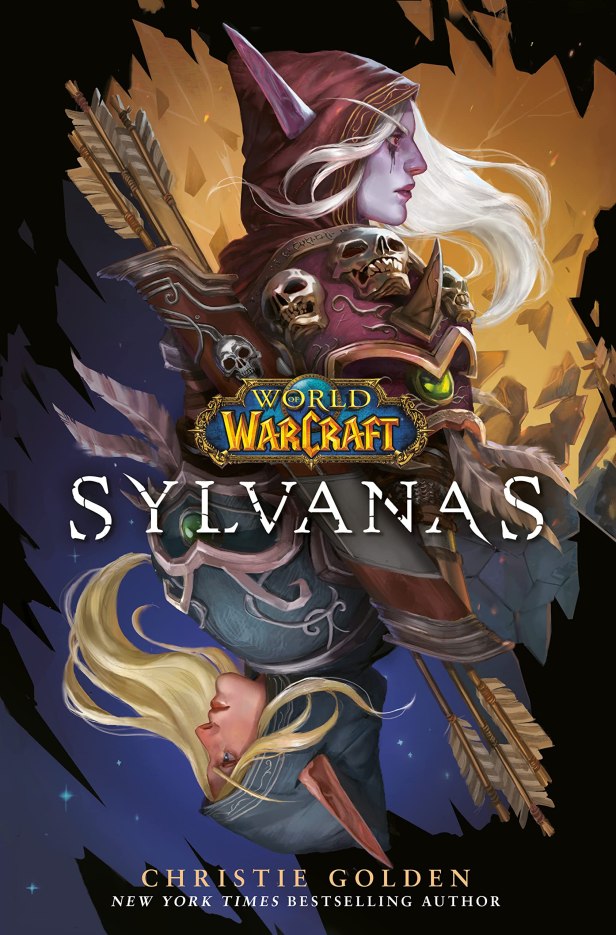
World of Warcraft - Sylvanas Cover

Publisher: Penguin Random House Audio (Audiobook – 29 March 2022)

Series: World of Warcraft

Length: 15 hours and 38 minutes

My rating: 4.5 out of 5 stars

Amazon

Prepare to find out everything you every wanted to know about one of Warcraft’s most complex characters with the brilliant Sylvanas by the always impressive Christie Golden.

There have been some great tie-in novels coming out this year across multiple franchises.  While I have mostly been sticking to Star Wars and Warhammer novels, I recently decided to dive back into the fiction surrounding a personal favourite franchise of mine, the Warcraft games.  It may surprise some people to know that the Warcraft games, which includes the absolute institution that is World of Warcraft (WOW), has a massive extended universe surrounding it, with multiple novels and comics working to enhance and support the game’s already impressively deep lore.  I have had a lot of fun with some of these over the years, but I was particularly intrigued when I managed to get a copy of the latest tie-in novel, Sylvanas by Christie Golden.  Not only did this book cover the life of one of the best characters in this franchise, Sylvanas Windrunner, but it was also written by the amazingly talented Christie Golden, an absolute master of tie-in fiction.  Golden has written some impressive Warcraft novels, including Before the Storm and the brilliant War Crimes, and she has also written tie-in novels to multiple other franchises, including one of my all-time favourite Star Wars novels, Dark Disciple.  As such, I am always really keen to check out any of Golden’s additions to this complex canon, and this turned out to be a particularly great book.

Few inhabitants of the world of Azeroth have had more of an impact on its recent history and the devastating events that have befallen it than the infamous Sylvanas Windrunner.  The Banshee Queen of the Forsaken, Sylvanas has held many titles, names and positions as she has witnessed and manipulated the entire realm for both her people and herself.  However, Sylvanas has a far deeper goal than power; she also seeks to realign the injustices of life and the meaninglessness of death, finally achieving the peace and happiness that she and the world deserve.  To that end, Sylvanas has aligned herself with the mysterious and otherworldly afterlife entity known as the Jailer.  Bound to his side and now a fugitive from both the Alliance and the Horde, Sylvanas seeks to bring his goals to fruition, no matter the cost.  However, her final task from the Jailer appears to be the most difficult, securing the fealty of imprisoned human king Anduin Wyrnn.

Reluctant to force service upon Anduin against his will, Sylvanas attempts to sway him to their side through subtler means.  To that end, she regales him with the story of her life, believing its lessons will convince Anduin of the necessity of her actions and help bind him to the Jailer’s cause.  With her captive audience listening close, Sylvanas reveals the key events from her life that shaped her, including her childhood and the tragedies of the Windrunner family, her death and damned resurrection at the hands of Arthas, and her eventual ascension to leadership of the Horde as Warchief.

However, amongst these tales of tragedy, triumph and a deep despair, Sylvanas also reveals her history with the Jailer and her first journey to the Maw.  Discovering a dark truth behind the veil of death, Sylvanas hopes to end the injustices and terrible consequences that awaits all souls, including her, by helping the Jailer achieve her goals.  But to achieve victory, Sylvanas was forced to become a force of destruction, bringing war to Azeroth and forcing another conflict between the Alliance and the Horde.  However, her worst actions may be yet to come as the Jailer’s plan for Anduin will require Sylvanas to become what she hates the most.  Daughter, sister, hero, unwitting pawn, rebel queen, Warchief, and monster, the truth of Sylvanas is revealed, and you’ll have to decide whether she is Azeroth’s greatest hero or worst villain.

Golden continues to add more and more depth to the Warcraft canon with this rich and clever novel that serves as the ultimate guide to one of the franchise’s best characters.  I had an absolute blast with this exceptional read that expertly turned the established history of Sylvanas Windrunner into a powerful and moving tale of family, tragedy and the consequences of choices.

Sylvanas contains a brilliant character-driven narrative that I think perfectly tells the tale of Sylvanas Windrunner, expanding out her life and providing details and insights about her that have never been shown in various other parts of the Warcraft fiction.  Starting during the events of the Shadowlands expansion, where Sylvanas is holding Anduin prisoner, the story soon morphs into a chronicle tale as the titular character recounts her entire life story to Anduin.  Starting off during her childhood, the first substantial part of the novel is focused on Sylvanas’s early life, the complex family relationships she had, her surprising rise to the rank of Ranger General, and her first encounter with tragedy.  This initial section of the novel, which covers most of Sylvanas’s life before her appearance in the games, is extremely detailed as Golden firmly establish this part of her life and show how her early relationships and losses would shape the rest of her life.  While this first part of the book is intriguing and vital to the story, it was a tad less exciting than I was hoping and ended up being one of the slowest parts of the novel, although once the first real tragedy occurs, it does speed up to an entertaining pace.

Following this substantial introduction, Sylvanas’s story starts to feature some major time skips, with the narrative jumping to her encounter with Arthas and subsequent death, which is shown a bit more theatrically and briefly than you would expect.  The rest of the story happens at a blistering pace, with many of the key moments of the character’s life briefly shown as the story powers through the events of the various games and expansions.  There are some fascinating moments and scenes in this second half of the book, and I had a great time seeing Sylvanas’s resurrection and enslavement to Arthas, her rebellion against her deathless master, her rise to become a leader of the Forsaken and her early days as a member of the Horde.  The story really skips along extremely quickly here, although it slows down at times to highlight Sylvanas’s interactions with the Jailer and the various things she did as his command.  These scenes are some of the most important parts of the book, as they try to highlight when and how Sylvanas started working with this villain, as well as her motivations for joining him.  These pivotal scenes are extremely interesting, and Golden masterfully works in the novel’s earlier character development into Sylvanas’s reasons for her actions.  The rest of the novel showcases Sylvanas’ more villainous turn, until she completely becomes the antagonist we encounter in Shadowlands and the end of Battle for Azeroth, which brings us full circle to the interludes between Sylvanas and Anduin.  The book ends on a fantastic and compelling note, recreating a scene from the game, and serving as a fitting conclusion to Sylvanas’s story, while also providing the reader with some much needed hope and satisfaction at a potential happy ending in the future.

Golden used some interesting storytelling techniques throughout Sylvanas, and most of them paid off extremely well to create an intense and exciting story.  While many Warcraft novels are more concerned with immediate action and intrigue, Sylvanas works well as a chronicle story which focuses on its protagonist’s complex and damaged psyche, as well as an intense portrayal of family and the difficulties and joys associated with it.  Through her reminiscing, the protagonist highlights her story extremely well, and I liked the clever use of several interludes to take the story back to the present for Sylvanas to debate her actions and choices with Anduin, whose pensive and compassionate insights add to the emotional weight of the narrative.  Both these past events and the storyline set in the present have some great moments, and I loved the novel’s overarching theme of the importance of free-will and choice, especially as the protagonist is a person who often found the events of her life and death, controlled by others.  There is an excellent balance of story elements featured throughout Sylvanas, with Golden featuring a great blend of intense character moments with cool action scenes, fun interactions and attempts to bring the novel into the established events of the wider Warcraft universe.  However, I did have some issues with the pacing of the novel.  While most of the novel flowed well, I really disliked how the author would spend a substantial amount of time going over some periods of the characters life in high detail, before quickly jumping through multiple years of subsequent events in extremely short order.  While I could see the author’s reasons for doing this, it did limit the impact of the narrative and there were multiple interesting events and characters that were only lightly featured.  Still, I had a great time getting through the plot elements that the author included, and they ended up resulting in an excellent and intense character driven story that featured some very powerful moments as the protagonist goes through absolute hell and back.

Sylvanas ended up being a particularly interesting inclusion in the wider Warcraft canon and it is one that I am extremely glad I decided to check out.  Due the multiple appearances and impacts that this titular character has had, the plot of Sylvanas encompasses the events of all the Warcraft games, including the entirety of WOW (at this point).  At the same time, the novel also ties into some of the other books, comics and other pieces of extended Warcraft fiction that are out there, particularly some that were written by Golden.  As a result, there are an awful lot of references, locations and iconic events going on in here, and Golden does an excellent job to bring all of these to life throughout the novel, with a focus on Sylvanas’s role in them.  I loved seeing so many key moments from the games and the other extended fiction re-featured or referenced throughout this novel and it was fascinating to see how they connected with the events of this book.  While Golden does really try to explain the context or importance of all of them, some readers unfamiliar with the games (or who may have stopped playing in recent years), may have difficulty at times following what is happening.  This is partially mitigated by the fact that Golden chooses to avoid or only lightly feature multiple events, especially those covered in the games, other novels and comics (several of Golden’s books are only lightly brushed on).  While I can understand Golden trying to avoid unnecessarily rehashing events that Warcraft fans would have seen before, it was one of the main reasons for the pacing issues, as it ensured that the events of the character’s childhood, which has not really been seen before, got so much focus early on.  It also requires readers to have a bit of an idea of what happened in many of the other novels and comics, especially if you wanted to get the full emotional impact.  Still, attentive readers generally should not have any issues following the book’s plot, and established fans of the franchise will really love the intriguing world building elements and revealed character histories, especially those that help to fill in several of the gaps surrounding the Jailer and their actions.

Unsurprisingly, Sylvanas also proves to be a major character study of its intriguing protagonist Sylvanas Windrunner who serves as the main point of view character as she recounts her life story.  This was one of the main things that drew me to Sylvanas, as I have been a big fan of this character ever since Warcraft III.  Golden does a brilliant job featuring this titular protagonist here, and Sylvanas ends up being both a great recreation of the characters life and an in-depth study of one particularly damaged person’s darkest emotions.  I was really impressed with how much additional depth Golden added to this already well-established character, and there are some fascinating details included here that help to explain so much about her and her actions in the latest expansions.  Thanks to the chronicle style of the novel, you get an intense look at her life, and find out all her pivotal moments and the emotions she experienced throughout them.  Golden provides a particularly impressive focus on the character’s mostly previously unseen childhood and family life, which serves as a good basis for much of the character-driven narrative.  Her earlier tragedies and heartbreaks have a great lasting impact on her and serve as some of her motivation for serving the Jailor.  From there the story covers most of her appearances in the various games, and it is fascinating to get the new Sylvanas-orientated perspectives of these events, which adds substantially to the novel’s drama as you see Sylvanas reacting to the various terrible events, including her murder and subsequent enforced enslavement by Arthas.  Golden does a brilliant job of highlighting the character’s despair, anguish and helplessness during this period, and the change into the life-long hatred that infected her was extremely powerful, and many of these moments tie into the book’s overall them of choice and free will.  However, some of the most fascinating moments occurred after the Lich King’s death (at the end of the second WOW expansion), when Sylvanas, cheated of her revenge, takes some drastic actions never seen in the games.  These actions lead her to first meet the Jailer and her eventual villainous actions, and I think that Golden was extremely successful in finally showcasing the character’s motivations, which were a little clouded in the actual game.  As such, Sylvanas ends up being show as a far more sympathetic character in this novel, which ties into her great redemption arc in the game, and you end up getting very attached to her story.  This novel really was the ultimate Sylvanas Windrunner experience and I loved learning even more about this brilliant character.

Aside from Sylvanas herself, this novel contains a massive cast of supporting characters who have varying degrees of impact on the overall story.  Due to the scope of the book’s plot, this supporting cast ends up encapsulating most of the major characters from the various Warcraft games, which is a bit excessive.  Many of these characters are only included for brief moments or are featured merely as mentions, and it can be a bit overwhelming to be bombarded with character names, especially from some more obscure figures.  However, I liked how the use of all these characters and the various interactions they had with Sylvanas helped to set up her place in the universe, and Golden does ensure that the reader is aware of the reason why the character is there and what role they play in Sylvanas’s life.

While there is a huge cast of supporting characters, several do shine through in the plot, and it was great seeing the various relationships they have with Sylvanas.  For example, all the members of Sylvanas’ family are featured throughout the book, particularly in the first half, and Golden really captures the impact, joys and struggles of family, and showcases how the extreme nature of these can really impact a character’s life.  The inclusion of the least famous Windrunner sibling, Lirath, really adds to the overall story, especially due to the unique relationship they had with Sylvanas.  I have to say that I really enjoyed how much Nathanos Marris (eventually becoming Nathanos Blightcaller) was featured in this novel, and Sylvanas contains an in-depth exploration of the unique relationship they had with the protagonist both in life and in death.  This adds some intriguing depth to the actions of this supporting character, and it was fascinating to see how the loyalties and attachments of this character were formed, as well as the unusual romance they formed which lasted lifetimes.  The brief scenes of iconic villain Arthas were pretty intense, and I appreciated the look at the torment he inflicted upon Sylvanas, especially as it becomes such a big part of her life story.  The use of Alliance leader King Anduin Wyrnn as Sylvanas’s audience for her story was extremely good as well, especially as the kind and hopeful Anduin serves as a great foil to the more cynical Sylvanas.  Watching these two jab at each other in the interludes was an excellent and emotional part of the novel, with Anduin trying to convince her back into the light at the same time she’s trying to bring him towards her side.  These scenes get even more intense and emotional when you realise that the entire reason for these conversations is that Sylvanas is trying to be merciful and give Anduin a choice to serve, something Sylvanas was never given.  All these characters, and more, really help to tell the full story of Sylvanas and are an impactful and powerful inclusion in the overall narrative.

Like most tie-in novels I enjoy, I chose to check out Sylvanas in its audiobook format, which was outstanding.  This was mainly because Sylvanas was narrated by legendary voice actor Patty Mattson, who voices Sylvanas Windrunner in WOW.  There was absolutely no way I was going to turn down listening to a story about Sylvanas that is narrated by the ultimate voice of the character, especially after her epic performances in some of the recent cinematics.  Unsurprisingly, Mattson did an incredible job with this audiobook, and hearing Sylvanas telling her own tale really helps to bring you into the narrative in a big way.  Mattson does some excellent alterations to her voice to portray a younger Sylvanas in some of the earlier scenes, and it was also extremely cool to have Mattson recreate some of the most awesome lines from the games and cinematics throughout the plot.  Thanks to this impressive narration, the Sylvanas audiobook has an amazing flow to it, and you will swiftly find yourself powering through it, even with its 15 hour and 38 minute long runtime.  The ultimate way to enjoy Sylvanas, the audiobook format comes extremely highly recommended as it really enhanced my enjoyment of this novel.

Overall, Sylvanas by Christie Golden is a brilliant and impressive novel that serves as an excellent tie-in to the Warcraft franchise.  Containing a powerful and entertaining character driven narrative, Sylvanas serves as a definitive study of the damaged and brilliant game character, Sylvanas Windrunner, and I had an outstanding time seeing their entire character arc come together here.  A must-read for all Warcraft fans, especially those enjoying the recent expansions, Sylvanas is an amazing read that I had so much fun with.

Amazon

The Hunger of the Gods by John Gwynne

The Hunger of the Gods Cover

Publisher: Orbit (Audiobook – 14 April 2022)

Series: The Bloodsworn Saga – Book Two

Length: 22 hours and 57 minutes

My Rating: 5 out of 5 stars

Amazon     Book Depository

Extremely talented dark fantasy John Gwynne returns with one of my most anticipated fantasy novels of 2022, The Hunger of the Gods, the epic second entry in The Bloodsworn Saga.

Last year, the fantasy world was aflame with discussion about a certain novel from acclaimed author John Gwynne, best known for his The Faithful and the Fallen series and its sequel Of Blood and Bone trilogy.  While I wasn’t initially intending to check this book out, the sheer amount of positive feedback and reviews convinced me that I was clearly missing out, so I grabbed a copy and ended up being deeply impressed by the elaborate fantasy saga it contained.  That novel was The Shadow of the Gods, a Norse inspired dark fantasy tale that saw three intriguing protagonists explore a deadly new fantasy world wrecked by the last battle of the dead gods, and filled with monsters, warbands and powered humans tainted by the divine ancestors.  I had an exceptional time with this great book, which really met all my expectations and ended up being one of my favourite books and audiobooks of 2021 (it also topped my favourite new-to-me authors list and best covers of 2021 list, it was just that damn awesome).  I deeply enjoyed the fantastic and elaborate tale this novel contained, and I could not wait to see how it would be continued.  As such, when I received a copy of the sequel, The Hunger of the Gods, which featured another awesome fantasy cover and plot synopsis, I immediately started reading it and was once again thrust into world of gods and heroes.

The dread dragon god, Lik-Rifa the soul-stealer, has been released from her ancient tomb and now all of Vigrid lies in peril.  Determined to unleash a new era of blood, death and conquest upon the lands, Lik-Rifa immediately begins to gather around her horde of Tainted warriors, including her own descendants, the dragon-born, terrible monsters and a cult of followers, all slaved to her will.  Hope looks bleak, especially as the warring human kingdoms remain unaware that Lik-Rifa is free and about to unleash fresh horrors upon them.

Amongst this chaos, the deadly Orka continues her hunt for her stolen son, taken by Lik-Rifa’s followers.  Now revealed as the legendary and infamous warrior, the Skullsplitter, Orka will not rest until she has her son and her vengeance, no matter the obstacles.  While Orka continues her quest, her former warband of secretly Tainted warriors, the Bloodsworn, head south, determined to rescue one of their members, while their newest initiate, Varg, continues his attempts to find vengeance for his sister.  Meanwhile, Elvar is forced to fulfil the blood oath she took to rescue another child from the dragonborn, and needs to convince her now leaderless warband, the Battle-Grim, to follow her.

As these brave warriors each take their own steps to destiny, they will all face dangerous challenges and horrendous odds.  Orka will need to come to grips with the wolf lying deep in her heart as she attempts the impossible: defying a god.  Varg and the Bloodsworn will travel to a distant land to achieve their goals, only to meet tragedy and loss.  Elvar finally attempts to claim the responsibility of leadership that she has always desired.  However, despite all their bravery and skill in arms, none of these heroes are going to be capable of fighting Lik-Rifa directly.  Instead, Elvar and her company will attempt a desperate plan, using forbidden magic to bring a dead god to life and bind it to their will.

Wow oh wow, what an incredible and awesome read.  Gwynne continues to showcase why he is one of the best current authors of fantasy fiction with The Hunger of the Gods, which perfectly continues the impressive Bloodsworn Saga in a big way.  Featuring tons of bloody action, impressive new fantasy elements, complex characters, and a powerful and elaborate narrative that is the very definition of epic, The Hunger of the Gods was another five-star read from Gwynne that is easily one of the better books I have read so far this year.

The Hunger of the Gods has an outstanding and impressive story that instantly grabs the reader’s attention and ensures that they are unable to put the book down until the very last page.  This sequel kicks off right after the epic conclusion of The Shadow of the Gods and quickly follows up on all the big revelations and events that occurred there, especially the release of the giant dragon god, Lik-Rifa, who serves as a suitably sinister and epic main antagonist for the series.  Just like the first book, The Hunger of the Gods’ narrative is told from a series of split storylines, each one focused on a specific point-of-view character.  All three character-specific storylines from The Shadow of the Gods are continued here, following Orka, Varg and Elva.  These existing storylines go in some exciting and interesting directions in The Hunger of the Gods, and I loved how the author expanded on the character’s growth and individual journeys from the first novel, while also keeping some of the existing dynamics and elements.  Gwynne also adds in two new point-of-view characters, as antagonists Gudvarr and Biorr, who were good secondary characters from The Shadow of the Gods, get their own intriguing storylines here.  These new character arcs are impressively entertaining, providing great alternate perspectives to deepen the story, while also working into the existing storylines extremely well.  All five storylines go in some great directions throughout the course of the novel, and there are some absolutely brilliant moments, twists and revelations that occur throughout, especially as many of these storylines started to come together more.  I had an excellent time seeing where everything went, and Gwynne really did a great job taking all these character stories in some appropriate directions.  Every single storyline end on an amazing note and the conclusions are guaranteed to drag readers back for the third Bloodsworn novel.

This second book in The Bloodsworn Saga is written pretty damn perfectly as Gwynne continues his magic to produce an addictive and distinctive read.  The Hunger of the Gods retains the excellent tone introduced in the first novel, ensuring that everything comes across as a Norse adventure story set within a unique, dark fantasy realm.  Everything about this book is handled extremely well, from the exceptional pacing, which ensures that you fly through this massive novel, to the intense and brutal action that is installed in every section of the book, guaranteeing that readers get that much needed adrenalin rush.  Gwynne utilises an interesting writing style here that really emphasises repetition and unique dialogue to help to make the story feel more and more like an epic Norse saga.  Just like the preceding novel in The Bloodsworn Saga, I think that The Hunger of the Gods had just the right blend of action, humour, character growth, world building and darker elements to create an excellent and enticing read.  I also have to say that I was quite impressed with how Gwynne was able to avoid middle book syndrome here, as in many ways The Hunger of the Gods was even better than The Shadow of the Gods.  While the story does slow down in places to help build up certain settings or plot elements, there is always something interesting or compelling going on, and I can honestly say that I was not bored at any point in the book.  You could almost read The Hunger of the Gods by itself with no knowledge of the preceding book and still have a brilliant time with it, especially with the detailed synopsis of the prior novel at the start.

The best thing about how this story is written is the exceptional use of multiple character perspectives.  The story perfectly flits between the five separate characters arcs throughout the novel, with a different character being focused on with each new chapter.  Thanks to the inclusions of two new characters, readers of this sequel get to enjoy a much deeper story here, especially as the new characters are associated with some of the series’ antagonists, providing some fantastic new elements.  I think the additional characters worked really well, as while the existing three protagonists are great, their storylines needed to be spaced out more in this sequel.  All five separate character storylines play off each other perfectly as the novel continues, telling an immense narrative that, while connected, still contains a fair bit of individuality as you follow their specific adventure.

I liked finally being able to see some interactions between the various protagonists and I loved seeing these outstanding and well-written characters finally come together in some intense scenes, allowing the reader to see these distinctive characters viewed through the eyes of the other protagonists.  The author had a great sense of which perspectives needed to featured at certain times, and there were some amazing contrasts as certain exciting storylines were played off each other, especially when you were able to see two sides to certain major battles or events.  In addition, this is one of those rare multi-narrative fantasy novels where it is near impossible to choose a favourite storyline or character to follow.  Each of the five storylines offers the reader something different, from a bloody revenge story, to an intriguing look at the book’s main antagonists, and all of them work extremely well in the context of the wider story.  I will say that Orka’s brilliant quest for her son has some amazing action scenes and powerful character moments, while the camaraderie and excellent larger-scale battles of Varg’s storyline ensured that I was excited to hear from this character.  In addition, Gudvarr provides some great political intrigue from the perspective of a true weasel, which was so very fun to watch.  However, I honestly had a great time with every single character, and there was not a moment that their individual stories did not enhance the overall quality of The Hunger of the Gods.

I really must highlight the incredible dark fantasy setting of The Bloodsworn Saga that is expertly used again in The Hunger of the Gods after Gwynne took the time to set it up in the first novel.  The harsh land of Vigrid, with its warring Jarls, terrifying monsters, long-dead gods, glory-seeking warbands and the feared and exploited Tainted, works so well as a background to this epic story and it really helps to expand the bloody adventures featured within.  I loved how Gwynne uses classic Norse elements like shield walls, longboats, weaponry and mindsets, and I still really love seeing this in a fantasy context, especially when combined or used against the monsters and Tainted characters.  This is further enhanced with the continued use of Norse inspired terms and dialogue throughout the novel, and it helps to give this entire series such a distinctive feel (although I kind of wish that he would stop trying to continually make “thought cage” an alternative to a person’s skull).  While the author spends a bit of time continuing these elements from the first book, The Shadow of the Gods also features some brilliant world building as Gwynne provides intriguing enhancements to the existing gods, land and people, which were already extremely intriguing.  There are also some examinations of the neighbouring nation of Iskidan, which was mentioned a few times in the first book.  Iskidan, which has elements of historical China, the Middle East and the Byzantine Empire in its construction, serves as an intriguing counterpoint to Vigrid, and it was fascinating to learn more about it.  I also loved a couple of cool, if freaky new monsters, that were featured in this book, although the flesh burrowing insect monster and the nightmare inducing tongue eaters, are a bit on the gruesome side (readers who don’t like body modifying monsters are warned to stay away).  All these awesome elements are fitted in the book perfectly, and I loved this continued dive into the dark and gruesome world Gwynne has lovingly created.

While the awesome narrative, clever storytelling and dark fantasy setting are amazing parts of the book, I would be extremely remiss if I didn’t highlight the incredible character work that Gwynne did within The Hunger of the Gods.  Just like the first book in The Bloodsworn Saga, The Hunger of the Gods features an impressive and captivating cast of characters, each of whom are expertly featured and who add some fantastic elements to the overall story.  This is particularly true for the wonderful and memorable characters from whose perspective this epic tale unfolds.  Gwynne did an incredible job introducing these excellent characters in the first book, and it was great to see two previous supporting characters promoted up to the central cast.  All five main characters are exceptional and their unique personalities and goals ensure that every chapter is different from the last which helps to produce an awesome and expansive read.

The first of these characters is Orka, an incredibly dangerous warrior who is hunting for her lost son and vengeance for her murdered husband.  Orka is a brilliant and complex figure who is easily one of the most exciting and enjoyable characters in the entire series.  Due to her single-minded determination and bloodlust, pretty much all Orka’s chapters read like a bloody revenge trip that is essentially a dark fantasy version of Taken.  Gwynne continues this excellent trend with Orka in this second novel and it was great to see this implacable warrior travel across this land, killing everyone who gets in her way as she takes big risks.  However, Gwynne adds in some extra elements to Orka’s tale in The Hunger of the Gods, especially following the revelations made at the end of The Shadow of the Gods that Orka is both Tainted and the former leader of the Bloodsworn, the legendary killer known as the Skullsplitter.  Orka actually comes across as a lot more bestial in this second book, especially after the big massacre she created at the end of The Shadow of the Gods that unleashed her inner monster.  As such, there are more scenes of Orka trying to contain her rage and anger, and there were some fantastic and clever portrayals of her inner beast throughout the book.  We also see some of Orka’s guilt and regret as the novel explores how she left the Bloodsworn and the relationships she sacrificed for the sake of her unborn son.  I also quite enjoyed seeing her as a reluctant leader in this novel as she finds herself in charge of a small team of warriors and monsters.  This enhances her sense of guilt and remembrances of her previous time with the Bloodsworn, and it adds some fun drama and even a mentoring arc as continues her work with her young student, Lif.  Orka’s storyline goes in some great directions throughout The Hunger of the Gods, and you will be enthralled with her tale right up until the last line of this book.

I also had a lot of fun with Varg in this book.  Varg, or as his warband knows him, Varg No-Sense, was probably my favourite character in The Shadow of the Gods and he continues to be an excellent part of this sequel.  While he doesn’t develop as much as some of the other characters in The Hunger of the Gods, Varg still remains an enjoyable figure.  Most of the appeal revolves around his friendship and growing sense of acceptance with his fellow Bloodsworn, and I liked seeing him continue to develop as a warrior and a free person, especially as starts to create some meaningful relationships.  Like Orka, a lot of Varg’s personal storyline deals with his desire for vengeance, as well as his issues controlling his Tainted rage, and I liked seeing how this complemented and contrasted with Orka’s experiences.  This is particularly noticeable when it comes to how he deals with loss, something he is not good at, especially when some good friends fall throughout the story.  As a result, there are some great moments for Varg in this novel, and his chapters are filled with some of the funniest supporting characters and best battle sequences.  I did find it interesting that Varg didn’t have the biggest impact on the overall storyline in this novel, even during his own chapters, but Gwynne is clearly planning some big things for him in the future, which I am really looking forward to.

Elvar, also has a great storyline in The Hunger of the Gods, and I honestly think that out of all the characters, she has the most development in this book.  Due to where her story from The Shadow of the Gods ended up (dragon gods rising and all), I was extremely excited to see more from Elvar in this novel, and it really did not disappoint as she immediately gets into action, resurrecting gods and bending them to her will.  Quite a lot of major plot elements occur through Elvar’s eyes, and she proves to be an excellent focus for all these key storylines.  I liked how Elvar grew up quite a lot in this sequel, especially after the traumatic betrayals of the previous book, and she ends up with a very different mindset throughout this sequel, especially when it comes to leadership and her need for fame.  Watching her grow and take control of the Battle-Grim is a compelling part of this novel, and it was awesome to see her come to terms with her new responsibilities.  It was also great to see how a lot of Elvar’s story comes full circle in this novel, especially when it comes to her personal history and family, and her final chapters in this novel are some of the best in the book.  I am once again extremely keen to see how Elvar’s story continues in the rest of the series, and Gwynne has left her in an incredible spot for the future.

Like I mentioned above, I was really impressed with Gwynne’s decision to start utilising two additional point-of-view characters in The Hunger of the Gods, and it really helped to turn this sequel into a much more detailed and compelling read.  Part of the reason this works so well is that these two additional characters are both complex and excellent characters, and their chapters act as a great continuation of some of the minor storylines from the first book.  The first of these characters is Biorr, former member of the Battle-Grim who was revealed to be a spy planted by Lik-Rifa’s followers and who ended up betraying and killing the Battle-Grim’s leader.  While it would be easy to hate Biorr for his actions, he becomes quite a sympathetic character.  Not only does he spend most of the book feeling intense guilt for his actions, but he also paints a pretty grim picture of his previous life as a slave, showcasing the hardships he and his fellow Tainted have suffered.  As such, you can understand many of his reasons for why he is helping Lik-Rifa, especially as she is promising a new world order for people like him.  Despite this he is still quite conflicted, and he acts as a more moderate antagonist.  This changes towards the end of the book, especially after he meets a certain divine being, and he starts to become a bit colder and more determined to support Lik-Rifa.  Despite being one of the least action-packed storylines in the novel, Biorr’s chapters were an excellent and entertaining part of the novel.  I particularly enjoyed the intriguing alternate views they gave of the main group of antagonists, making them seem more reasonable and complex, and the inclusion of Biorr greatly enhanced the entire narrative for the best.

The other new point-of-view character is Gudvarr, the conceited lordling who hunted Orka in the last book and was a particularly annoying antagonist.  I must admit that I was initially surprised that out of all the great supporting characters, Gudvarr was the one who was upgraded to main cast.  However, it soon became apparent why he was used, as Gwynne had some real fun turning him into one of the entertainingly despicable characters in the entire novel.  Gudvarr is the absolute epitome of arrogance, petty cruelty and cowardice throughout this book, and it is near impossible to have any respect for him, as he lies, brownnoses and attempt anything to gain power and reputation, often with disastrous results.  Gwynne goes out of his way to make him seem as conceited and cowardly as possible throughout the novel, mainly through his inner monologue, where he constantly hides all his insults and most cowardly thoughts to avoid getting into trouble with actual warrior.  He is such a little arseling in this novel, and you can’t help but hate him, especially as he has the devil’s luck and frustratingly manages to wiggle out of every single disaster he finds himself in.  Despite this, or perhaps because of it, I grew to really enjoy Gudvarr’s chapters as everything he did was hilarious in a sneaky and spiteful way, and it is just so damn entertaining to see him get pushed around then overcome more powerful and confident characters.  The Gudvarr chapters also provide some fantastic insight into another group of antagonists, loaded with political intrigue and deceit from one of the main courts of Vigrid.  I had an absolute blast following Gudvarr throughout the novel, and the way that his storyline in this novel comes to an end is just so perfect and really showcases what an absolute cowardly snake he is.  I cannot wait to see him get his eventual just deserts (or maybe he’ll be the only survivor), and he ended up being on of my surprisingly favourites in The Hunger of the Gods.

Aside from these main five characters, The Hunger of the Gods is filled with a massive raft of supporting characters, with a distinctive cast associated with each of the point-of-view storylines.  Gwynne handles these supporting characters beautifully; despite the cast list going on for six pages, you get to know all of them and fully appreciate everything they bring to the story.  Most of these characters support their respective storylines incredibly well and many of the characters either stand on their own as distinctive figures or have some brilliant interactions with the main characters.  Many of my favourites were members of the Bloodsworn band, with the hilarious and witty Svik being the best example of this with his tall tales, love of cheese, and calming attitude towards Varg, while an additional storyline about his connection to Orka adding some intriguing depth to his character.  You really get to enjoy many of the key Bloodsworn members, although this does mean you become way too emotionally strained when they get hurt or killed.  I also really grew to enjoy returning character Lif in this book as he continues to grow as a warrior through Orka’s tutelage.  Watching him develop is a great part of the Orka chapters, and he proves to be an excellent foil to the brutal main character.  I loved the deeper look at many of the series’ main antagonists throughout The Hunger of Gods, especially with the two new character perspectives, and it was great to see a different side to their plans and motivations.  The multiple resurrected or freed god characters proved to be an excellent addition to this second novel, with the main characters brought into their renewed war one way or another.  These gods really changed the entire story, and it was fascinating to see their interactions with the main characters, as well impact they have on everyone’s psyches.  These great characters, and many more, all added a ton to the story, and I loved how their various arcs and storylines came together.  It will be fascinating to see if anybody else becomes a point-of-view protagonists in the future (my money is on Lif), and I can’t wait to see what happens to these brilliant characters in the future.

While I was lucky enough to receive a physical copy of The Hunger of the Gods, I ended up listening to the audiobook version of it instead, which was an extremely awesome experience.  With a runtime of just under 23 hours, this is a pretty lengthy audiobook (the 19th longest audiobook I’ve ever listened to) and requires a substantial investment of time.  However, this is more than worth it as hearing this epic tale read out to you is a brilliant experience.  Not only does it ensure that you become deeply trapped in the elaborate story and are able to absorb all the great detail, but it also fits with the book’s inherit theme of an oral saga.  One of the best features of this audiobook is impressive narrator Colin Mace, a man with a ton experience narrating elaborate fantasy and science fiction audiobooks (such as The Black Hawks by David Wragg).  Mace has a commanding and powerful voice that really fits the theme of this universe and perfectly conveys all the violence, grim settings and powerful elements of the dark fantasy world.  He does a particularly good job with the character voices as well, as every character has a distinctive tone that fits their personality and actions extremely well.  I loved some of the great voices that he comes up with, including deep-voiced warriors, snivelling cowards, strange creatures, ethereal gods and more, and it helped to turn The Hunger of the Gods audiobook into quite an experience.  As such, I would strongly recommend this audiobook format as the way to enjoy The Hunger of the Gods, and I fully intend to check out the rest of this series on audiobook when it comes out.

John Gwynne continues to dominate the fantasy genre with his incredible Bloodsworn Saga.  The amazing second entry, The Hunger of the Gods, is another exceptional read that takes you on a wild and deadly adventure through Gwynne’s impressively put together dark fantasy world.  Containing an epic and powerful story, chock full of action, Norse fantasy elements and impressive characters, The Hunger of the Gods was one of the best reads of 2022 so far and I had an outstanding time reading it.  In some ways The Hunger of the Gods ended up being a better novel than the first entry in the series and is an absolute must read for all fantasy fans.

Amazon     Book Depository

Throwback Thursday: Star Wars: Kenobi by John Jackson Miller

Star Wars - Kenobi Cover

Publisher: Random House Audio (Audiobook – 27 August 2013)

Series: Star Wars Legends

Length: 13 hours and 36 minutes

My Rating: 4.5 out of 5 stars

Amazon

Welcome back to my Throwback Thursday series, where I republish old reviews, review books I have read before or review older books I have only just had a chance to read.  For this week’s Throwback Thursday I take another look awesome book from the Star Wars Legends range, Kenobi by John Jackson Miller.

As I mentioned last week, I have been going out of my way to read some of the older Star Wars Legends tie-in novels, especially after all the fun I had recently reading and reviewing Darth Plagueis.  Despite no longer being considered canon since the Disney buyout, the Star Wars Legends range contains some cracking reads, including the awesome horror read Death Troopers, the brutal prison novel Maul: Lockdown, and the fun heist novel Scoundrels.  I have been meaning to check out some other great Legends novel for a while, but the one that I have been particularly excited to read is the 2013 novel, Kenobi.

Kenobi, which was one of the last novels released as part of the Legends line, is an intriguing read that follows Obi-Wan Kenobi in the aftermath of Revenge of the Sith and follows his early adventures on Tatooine.  Not only does this book have an intriguing plot, but the upcoming release of the new Obi-Wan Kenobi television series has got me more curious about this novel and I really wanted to see what differences occur between it and the show.  I was also drawn to fact that Kenobi was written by the supremely talented tie-in author John Jackson Miller.  Miller is a great author, who has written not only some intriguing Star Wars books but also some fantastic Star Trek novels, including Die Standing, which was particularly awesome.  As such, I was pretty sure I was in for an outstanding time reading Kenobi, and I definitely wasn’t disappointed.

Star Wars - Kenobi Cover 2

These are dark days for the galaxy.  The Republic and the Jedi have fallen, and the Empire, along with its Sith masters, has risen in its place.  All hope looks lost, except for an orphaned baby boy, now living on Tatooine, and watched over by a solitary protector, former Jedi Master Obi-Wan Kenobi.  After failing to save his fallen apprentice, Obi-Wan has retreated to the wilds of Tatooine, determined to hone his abilities, protect his charge, and wait for the day that hope is ready to return to the galaxy.  Sticking to the outskirts of the planet, Obi-Wan has taken on a new persona of Ben, a mysterious bearded and robed stranger, living alone in the desert and hiding from his past.  However, despite all his attempts to blend in, Ben is still a Jedi, and trouble follows him wherever he goes.

A deadly conflict is brewing in the deserts of Tatooine as enterprising moisture farmers clash with desperate Tusken Raiders.  The settlers are terrified of a new and ruthless Tusken war chief who has leading raids against their farmsteads, resulting in series of brutal retaliatory attacks.  When the fight seeks to engulf some of Ben’s new friends, he is again dragged into a war he never asked for.  Discovering a grave injustice as innocents are killed for a matter of greed, Ben will once again call upon the powers of the Force to ensure justice is done.  But can he achieve his goals without revealing to the entire planet that he is a Jedi, or will his greatest secret be uncovered along with the galaxy’s last hope?

Wow, this was a pretty impressive and captivating Star Wars novel from Miller that does a wonderful job showing a unique period in an iconic character’s life.  Featuring a brilliant and surprising story, set in the iconic backdrop of Tatooine, Kenobi is an excellent read that I had an amazing time getting through.

I must admit that I was a little surprised with how this story turned out.  With a name like Kenobi, you would assume that the narrative would be primarily told by Obi-Wan as he tried to settle in and survive on Tatooine.  However, Obi-Wan isn’t even a point-of-view character in this book, instead the story revolves more around some of the local people of Tatooine as they encounter Obi-Wan (or Ben, as he is known to them).  While on paper this might sound weird, it actually works really well and Miller tells a taught, powerful and compelling narrative that perfectly utilises its titular character as a mysterious and somewhat unknown figure.  Focusing on a growing battle between Tatooine settlers and the Tusken Raiders, the story shows the impact of the arriving Ben on these long-standing communities.  Miller does a great job of introducing several excellent and impressive new characters who become connected to this early version of Ben Kenobi.  Their story soon devolves into a fast-paced, character-driven adventure as Ben finds himself caught between the opposing sides.  The growing war between them takes some interesting turns, including monsters, gangsters and hidden Jedi, and introduces a fantastic villain with some clever motivations.  Miller does a great job of working the desolate setting of Tatooine and the excellent characters into this story, and you soon become attached to both as they enhance the overall the story.  Everything comes together into a captivating and moving conclusion that is exciting, emotional, and a little dark in places, bringing everything together in a satisfying way.  This intriguing story proves to be exceeding addictive and I really love the distinctive tale that Miller came up with.

This proved to be a particularly good entry in the Star Wars Legends canon, and Miller does an outstanding job of tying this story into the wider universe.  Set right after the final scene of Revenge of the Sith, you get some intriguing views of the new galaxy under the Empire, as well as Kenobi’s early attempts to settle into obscurity on Tatooine (including the answer to the question: why did he keep the last name Kenobi? The answer may surprise you).  Thanks to Miller’s excellent writing and the close relationship to the third prequel film, Kenobi is an easy novel to get into for anyone who has seen the films, and most readers will really appreciate the cool story it contains.  There are multiple references to all three prequel films and A New Hope in this book, and I know a lot of people will appreciate seeing how several of these events impacted the wider Tatooine community in surprisingly ways.  Miller also makes sure to provide a ton of compelling references to some more obscure Star Wars Legends elements, including multiple characters and events from certain comics, such as Outlander arc of Star Wars: Republic and the Star Wars Legacy series.  Some references are pretty ingrained in certain part of the Tusken Raider character’s backstories and motivations, although readers can probably get away without knowing too much about them as Miller does summarise the most relevant details.  As such, there is a lot here for the hard-core Star Wars and Legends fans to enjoy with this book, and most readers will enjoy seeing how it ties into the former canon.

Star Wars - Kenobi Cover 3

I have to say that I was quite impressed with how Miller utilises the barren and desolate planet of Tatooine as a setting in Kenobi.  This book serves as a particularly good guide to Tatooine in the Legends canon, and you are soon immersed in the various cultures and landscapes of this deadly planet.  Not only are there multiple breathtaking and powerful depictions of the unforgiving desert landscape that the characters are forced to survive on but there are some fantastic looks at some of the creatures, monsters and threats that exist in the desert, most of which are encountered by the protagonists at some point.  The readers are also treated to an intensive look at some of the main groups of people living on Tatooine, particularly the moisture farmers and the Tusken Raiders.  I loved the depictions of these two different groups, with Miller amping up the resemblance to old West settlers and Native Americans in their cultures, disbursement, and conflict (the phrase “dancing with Tuskens” was used at one point).  I learnt a surprising amount about moisture farming in this novel, which was pretty fun, and it was really interesting to see some of the outcasts and settlers who take up the hard lifestyle.  However, the best depictions involve the Tuskens, who are featured pretty heavily thanks to the use of supporting character A’Yark.  You get some fascinating looks at the tough and often unexplained Tuskens throughout Kenobi and end up coming away with some compelling looks at their culture and lifestyles, as well as some mentions about their most distinctive members in the Legends canon.  I really appreciated the way that Miller portrayed them as a desperate people, thanks to several distinctive events from the films and the comics, and this becomes a major part of their motivations for fighting the settlers and coming into contact with Obi-Wan.  You really get a deep look at this entire setting and its people throughout the course of the story and I am extremely glad Miller featured them so heavily

Unsurprisingly, considering the title of this novel, the reader gets quite an intriguing look at the character of Obi-Wan Kenobi.  This version of Obi-Wan is recently arrived on Tatooine, only just removed from delivering baby Luke to his aunt and uncle, and now trying to find his place in the new, darker universe.  I really enjoyed how Obi-Wan was portrayed in this novel, especially as Miller made the interesting choice not to use him as a point-of-view character.  Instead, you see him purely through the eyes of the rest of the cast as the mysterious and weird hermit, Ben.  This actually works really well on many levels, providing at times a distant view of the protagonist that is reminiscent of Ben’s initial introductions in A New Hope.  I really enjoyed the other character’s impressions of Ben, especially as the character is trying to hide his Jedi abilities, and the fun reactions to his apparently odd actions are quite entertaining at times.

Despite Kenobi not being a point-of-view character, you do get some quite detailed impressions of his current state of mind, and it soon becomes apparent that Obi-Wan is emotionally raw after the events of Revenge of the Sith.  The other characters are quick to notice his apparent sadness, especially through certain noticeable reactions to particular topics, such as his past or the state of the galaxy.  While these other characters may not understand their significance, the reader certainly does, and Miller does a good job of showcasing his deep pain.  This troubled emotional state is also highlighted by several interludes that feature Obi-Wan’s attempted conversations with Qui-Gon Jinn in the Force, which summarise some of the recent events from Ben’s perspective while also examining his state of mind.  As the novel continues, certain events and revelations start to push Kenobi’s buttons, especially the actions of the book’s antagonist.  This eventually leads up to a big emotional outburst from Ben as he talks to one of the other characters about his failings in his past.  Watching him beat himself up for Anakin turning to the Dark Side, as well as the fall of the Jedi and the death of all his friends, is pretty heartbreaking, and it makes for the best scene in the entire novel.  I found it fascinating to see all these emotions unfurl as the plot continue, and the use of other character’s as the primary witnesses and interpreters of this, did a surprisingly good job of exploring the character’s mental state and showcasing just how alone and damaged he truly was.

While Obi-Wan does get a substantial amount of focus throughout Kenobi, the story is primarily told through the eyes of three separate point-of-view characters who Obi-Wan interacts with in different ways.  All three characters are pretty fascinating in their own right, and Miller sets up some brilliant and clever storylines around them.  My favourite of these is probably rancher and businessman Orrin Gault, who has an impressive and captivating character arc in Kenobi.  Initially portrayed as a compassionate, generous and ambitious moisture farmer who has set up the settler militia to oppose the Tusken Raids, Orrin appears to be a decent and noble figure.  However, Orrin has a dark side brought on by hidden motivations and dealings, and it soon becomes clear that many of the issues impacting the other characters are the result of his machinations.  Miller slowly reveals the full extent of Orrin’s misdeeds throughout the course of Kenobi, and he eventually turns into quite a conniving and distinctive antagonist.  The author provides some outstanding and powerful moments for Orrin throughout the book, and there are some interesting similarities between his fall and that of Anakin Skywalker.  I deeply enjoyed the full extent of his powerful arc in Kenobi, especially as Miller comes up with a particularly dark end to his story, and his inclusion really added to overall impact and strength of this book’s narrative.

The other major human character is Kallie Calwell, a store owner who runs the local watering hole and supply shop with her children and who has a close relationship with Orrin Gault.  Kallie ends up becoming one of the leading figures of the book after she and her daughter are the first settlers in the area to encounter the mysterious Ben and are instantly enthralled by his mysterious persona.  Kallie serves as a good narrator for a large portion of the novel and ends up being the central point of view figure for most of the interactions with Ben due to her romantic interest in him.  While I must admit I wasn’t the biggest fan of Kallie’s character (she was a bit too one-note and her constant family issues got tiring), she did have some intriguing scenes, especially when she interacted with Ben.  She ended up getting the most out of him emotionally, and her connection got him to open up at times to discuss his issues.

The other major point of view character was the deeply fascinating figure of A’Yark, the leader of the Tusken Raiders who have been raiding the local settlements.  Given the title of Plug Eye by the locals due to only having one mysterious red eye, A’Yark stands as a hard and uncompromising figure, determined to save their dying tribe without losing their traditions and sense of honour.  Thanks to A’Yark’s powerfully written scenes, you get a real sense of what it is to be a Tusken Raider, and they serve as captivating figure in comparison to the other characters in the book.  A’Yark has great story arc in this novel, and the intriguing growth, as well as their ability to adapt to certain situations, made them particularly fun to watch.  They also have some interesting connections to Obi-Wan and the Jedi Order, thanks to their former brother-in-law, and this results in some compelling scenes as A’Yark knows what Kenobi is and what he can do.  All these characters, and more, add some fascinating elements to the Kenobi novel, and I really appreciated the powerful and complex story that Miller wove around them.

Star Wars - Kenobi Cover 4

I doubt anyone would be surprised that I checked out Kenobi’s audiobook format, as I have a great love of the Star Wars audiobook format.  Naturally this worked out very well for me as the Kenobi audiobook was pretty damn awesome.  With a run time of just over 13 and a half hours, this was a relatively easy audiobook to get through and I managed to power through it over the course of several days.  Like most of the Star Wars audiobooks, Kenobi featured a great selection of iconic Star Wars sound effects and music with which the producers use to produce an atmosphere and help listeners visuals all the cool things going on.  Both were really good throughout Kenobi, with the sound effects in particularly being put to great use.  I did think that the use of John William’s epic score was a little more subtle here than in other books, but it still ended up enhancing some key scenes throughout the novel and giving them some extra emotional power.

I was also very impressed by the narration of the Kenobi audiobook, especially as the producers made excellent use of one of my favourite audiobook narrators, Jonathan Davis.  Davis is a brilliant narrator who has lent his epic voice out to multiple Star Wars productions over the years, including Master & Apprentice, Lords of the Sith and the Dooku: Jedi Lost audio drama.  He does another exceptional job with Kenobi, perfectly portraying all the characters of this novel with real aplomb.  He does a pretty good job with Obi-Wan, making himself sound as much like Ewan McGregor as possible, and I loved how intense he became during some of his more dramatic scenes.  Davis also provides distinctive voices for all the new characters in the novel, which I felt did a great job portraying their relevant personalities.  I particularly loved the scratchy and coarse voices of the various Tusken Raider characters, such as A’Yark, and you got a real sense of their rage and despair they have at their current situation.  This epic voice work really added to the quality of the Kenobi audiobook, and when combined with the usual awesome Star Wars sound effects and music, ensured that this was an absolute treat to listen to.

Overall, Kenobi by John Jackson Miller is a brilliant and powerful Star Wars novel that did an outstanding job of examining this complex and pivotal figure.  Perfectly examining the early days of Obi-Wan Kenobi’s life on Tatooine, this impressive Star Wars Legends novel contains an intriguing, character driven novel that provides an interesting perspective on this hidden Jedi master which I deeply enjoyed.  Making full use of some great new characters and the desolate desert setting, this was a compelling and addictive narrative that is really hard to put down.  Highly recommended, especially in its audiobook format, Kenobi is a great entry in the Star Wars Legends range and I look forward to seeing if any elements from it are used in the upcoming Obi-Wan Kenobi television show.

Amazon

Warhammer 40,000: The Bookkeeper’s Skull by Justin D. Hill

The Bookkeeper's Skull Cover

Publisher: Black Library (Audiobook – 18 January 2022)

Series: Warhammer 40,000/Warhammer Horror

Length: 4 hours and 32 minutes

My Rating: 4.5 out of 5 stars

Amazon     Book Depository

Get ready to dive back into the crazy and terrifying Warhammer 40,000 universe with the clever and exciting read, The Bookkeeper’s Skull by acclaimed author Justin D. Hill, which serves as a great entry in the Warhammer Horror sub-series.

Despite not being even halfway done yet, 2022 has already produced some epic new entries in the Warhammer 40,000 universe, including Steel Tread by Andy Clark, Reign by Nate Crowley, Day of Ascension by Adrian Tchaikovsky and Krieg by Steve Lyons, just to name a few.  After these awesome reads, there was no way I wasn’t going to check out The Bookkeeper’s Skull, especially when it had such an intriguing name.  The Bookkeeper’s Skull is an awesome book that forms part of a sub-series of Warhammer tie-in fiction known as Warhammer Horror.  This series unsurprisingly presents the reader with horror-based stories in its various universes and has already produced some very cool sounding reads.  The Bookkeeper’s Skull is my first brush with this horror series, and I was very excited to read one, especially as it was written by Justin D. Hill, a fantastic author who has been impressing recently with several great novels, including his Cadia series.  I loved the unique and clever story that Hill came up with for The Bookkeeper’s Skull.

Throughout the Imperium of Man, many planets serve the God Emperor in different ways.  For the agri-world of Potence, its only duty is to meet the iron-firm food quotas levied upon it by Imperial hierarchy, ensuring that the armies of the Imperium are supplied with all the food they need to fight the aliens and the heretics.  The enforcers, implacable lawmen with the ability to deal out death on an arbitrary basis, roam the planet and the farms of Potence, ensuring that the populace and serfs do all there is to produce the appropriate amounts.

Rudgard Howe is a new enforcer recruit who has just reported to duty.  The son of the planet’s chief enforcer, Rudgard faces a deadly future which will eventually force him to kill his older brothers to claim his dying father’s position.  But before he faces his family, he must learn the ropes by journeying out to the farmsteads of the planet and ensuring they can meet their quotas.  Travelling with a veteran enforcer, Rudgard learns the hard truths about life in the Imperium and the necessities of justice in keeping the planet running.  However, no lessons will prepare Rudgard for the horrors awaiting the enforcers at their final destination, the far-flung farmstead of Thorsarbour.

Located out in an ancient and unknown region of the planet, Thorsarbour is a cursed settlement, with its overseers poorly led and its serfs living in terror of the strange presences they claim to feel.  Finding the settlement far behind its quotas, the enforcers attempt to whip the farm into shape, but between the unnatural feeling of the land surrounding Thorsarbour and the dangerous presence of a bloody sanguinary cult amongst the serfs, they have their work cut out for them.  Worse, a series of unexplained and brutal murders are occurring around Thorsarbour, each one accompanied by mysterious strawman placed near the body.  As Rudgard tries to uncover the cause of these mysterious deaths before they destabilise their work, the enforcers begin to discover something unnatural behind them.  Can they discover the culprit before it is too late, or will the horrors of Thorsarbour consume them all?

This was a really interesting first dive into the Warhammer Horror series for me and it is one that I am very glad that I undertook.  The Bookkeeper’s Skull is an excellent novel that very quickly grabbed my attention with its clever storytelling and fantastic, fast-paced plot.  Hill manages to do a lot with this story in a very short amount of time as The Bookkeeper’s Skull has a pretty short run time.  Despite this, the reader is quickly and succinctly introduced to the main character and narrator, Rudgard, and the world of Potence, in a great couple of opening chapters, before dropping them right into the horror of Thorsarbour.  Once the narrator arrives then you are quickly struck by the unnatural and freaky nature of the location, as they encounter several of the unusual issues surrounding the farmstead.  Following the initial discovery of a multitude of bodies and death, the protagonists encounter one dangerous situation after another, as they contend with religious fanatics, terrified serfs and overseers, monstrous farm animals, mysterious strawmen, a strange and prophetic girl, and a mysterious force brutally killing off everyone in the compound.  Even with so much happening, the pace of this novel never slackens, and there is a very high death count as everything goes wrong in some very brutal way.  I was pretty hooked on this novel from the very start, and I loved where the story went, even if it did get a little predictable towards the end.  I had a fairly good idea of who was going to live and die from the start, as well as who the killer was likely to be (the title is very suggestive).  I do think that the novel slightly fell apart at the very end, as Hill chooses to leave a little too much mystery behind what sort of force might be ultimately responsible for the events of the book, but this was still an amazing story that I had a lot of fun with.

The Bookkeeper’s Skull turned out to be a pretty good Warhammer 40,000 novel, and I liked how it fit into the wider universe.  This novel is closely related to one of Hill’s other novels, Cadian Honour, which is also set on the world of Potence and features an older version of the protagonist.  I love it when a novel provides an interesting connection to an author’s previous work, especially one that provides some exciting context and personal history, and this was a great example of that.  Despite this, people interested in checking out The Bookkeeper’s Skull don’t need to have any pre-knowledge of Hill’s writing or any other Warhammer 40,000 novels to enjoy this excellent book.  Indeed, this is a fantastic introduction to both Hill’s writing and the wider Warhammer universe and could be an interesting first book to readers curious about either.

I was very impressed with how the author was able to meld horror elements into this Warhammer 40,000 novel to create a unique and impressive story.  Hill did a beautiful job of creating a powerful and creepy atmosphere for this novel right off the bat, especially as the opening chapter features a sinister and freaky toy/companion that the protagonist had as a child (seriously, WTF).  This dark atmosphere only increases as the book continues, especially once the characters arrive at Thorsarbour.  Between the brutal conditions imposed upon the serfs, the unsettling atmosphere, the undercurrent of fear, the crazed religious cult of self-mutilating fanatics, the graphic murders and the haunting presence of several otherworldly characters, you have all the elements you need for a truly impressive and memorable horror tale.  The pacing of the killings is excellent, and the reader finds themselves drawn in by their cruel and bloody nature as the bodies keep dropping in even more elaborate ways.  These killings also work well with the presence of the cult and the appearance of all the strawmen and other agricultural elements, and the book ends up with vibes reminiscent of films like The Wicker Man or Children of the Corn, especially with a pale and potentially psychic child talking about a supernatural figure responsible for the killings.  This ended up being an awesome horror read, and I find myself getting really drawn into the creepy story thanks to some of the freaky elements it contained.

This proved to be a particularly good Warhammer 40,000 novel due to the distinctive setting.  The Bookkeeper’s Skull takes place on a seemingly peaceful agri-world, which gives the reader some intriguing insights into this wider universe.  I loved the cool look at the various archaic ways that this spacefaring civilisation gets food and other resources.  The entire agri-world acts in a mostly feudalistic manner, with practically enslaved serfs doing much of the work on farmsteads.  The blend of gothic science fiction with modern and ancient agriculture elements works really well and it serves as a brilliant background for this darker tale.  Indeed, many of the book’s horror elements are derived from just how bleak and harsh the Imperium of Man truly is and just how badly they treat their own citizens (and they’re the good guys, apparently).  Hill paints some truly shocking pictures of the conditions on this world, including some very gruesome depictions of a rabid self-mutilating cult and some brutal scenes of violence that the enforcers inflict upon the people.  However, the most disturbing part of this world is Gambol, a being who is revealed to be a former criminal who had their arms and legs amputated, his mind modified by technology, and then dressed as a clown to become the protagonist’s childhood toy.  This disturbing figure, equipped with his festering flesh-plugs (shudder!), is sprung on you in the first few pages of the book and really helps to set the horror mood for the reader, as well as just how dark and horrific the Imperium can get (they do this sort of thing to a lot of people).  I loved how grim and dark Hill made this Warhammer story and you really get a sense of just how messed up everything is.

I quite enjoyed the character of Rudgard, who serves as the central protagonist and narrator.  The Bookkeeper’s Skull is told from Rudgard’s point of view in a chronicle format, so you get a real sense of this excellent character both as an experienced enforcer and the young rookie he is in this novel.  This version of Rudgard is a young and inexperienced man who is trying to live up to his family’s legacy, which includes a cruel father, two murderous brothers and an insane mother.  Sent out on routine mission with veteran enforcer Tarrini, Rudgard quickly learns all the terrible truths about his job as he essentially becomes an executioner.  Because of his past and the terrible events of this book, you get to see Rudgard turn into the no-nonsense figure from Hill’s previous novels, and I liked the continued change in his character.  I enjoyed the excellent mentor/mentee relationship he forms with Tarrini, as well as the narrators continued comments attempting or excusing some of his actions.  These considered and compelling notations from the older Rudgard give some interesting context to both the younger and older versions of the character, and it is interesting to see how much he has changed and developed over the years.  While I did think that parts of his backstory were wrapped up a little too quickly, this was still a fantastic examination of a great character and I look forward to seeing more of him in some of Hill’s other works.

I made sure to grab the audiobook version of The Bookkeeper’s Skull, which proved to be an incredible way to enjoy this brilliant novel.  Due to the shorter length of the story, this is a relatively quick audiobook with a rough run time of four and a half hours, which can be powered through extremely quickly.  I found that the audiobook format was highly conducive to the powerful horror mood of the novel and I personally felt that it really enhanced the tension and fear that the story produced.  A lot of the reason why I enjoyed this audiobook was the excellent voice work from narrator Matthew Hunt.  Hunt, who has lent his voice to several Warhammer audio productions in the past, had an excellent voice for this audiobook, and I felt that he captured both the main character and the overall tension of this novel extremely well.  Hunt moved this audiobook along at a swift and compelling pace that really grabs the attention and ensures that you keep listening as events get darker and darker.  Throw in some fantastic and fitting voices (Gambol’s near childlike voice is pretty damn freaky, and I loved the sly and manipulative voice given to the cult leader), and you have an outstanding audiobook that is really worth checking out.

Overall, The Bookkeeper’s Skull by Justin D. Hill is an outstanding and epic Warhammer Horror novel that I had a brilliant time reading.  Hill came up with a clever and captivating story that does an excellent job combining freaky horror elements with the expansive and fun Warhammer 40,000 universe.  I loved my first taste of the Warhammer Horror brand and I look forward to checking out more of it in the future, as well as some more exceptional writing from Hill.

Amazon     Book Depository

Throwback Thursday: Star Wars: Darth Plagueis by James Luceno

Star Wars - Darth Plagueis Cover

Publisher: Random House Audio (Audiobook – 10 January 2012)

Series: Star Wars Legends

Length: 14 hours and 45 minutes

My Rating: 4.75 out of 5 stars

Amazon

Welcome back to my Throwback Thursday series, where I republish old reviews, review books I have read before or review older books I have only just had a chance to read.  In my latest Throwback Thursday I look at one of the more interesting novels from the Star Wars Legends universe, Darth Plagueis by James Luceno.

With Star Wars day on the horizon, I have decided to go back and check out some of the key books in the now defunct Star Wars Legends universe.  While no longer canon, there are still some amazing books in the Legends range, including some that will no doubt serve as an inspiration for some future shows or movies.  I have already enjoyed several Legends books, such as Maul: Lockdown, Scoundrels and Death Troopers, but there are still more epic reads that I really want to check out.  Probably the one I was most interested in reading was the epic Darth Plagueis by James Luceno.  Luceno, who also wrote the fantastic novel Tarkin in the current Disney canon, is a very talented author, and I was very excited in checking out his take on the elusive and mysterious Darth Plagueis.

“Did you ever hear the tragedy of Darth Plagueis the Wise?”

Throughout the long and bloody history of the Republic, many Sith lords have risen to threaten the peace and order maintained by their hated rivals, the Jedi.  While some have put complex and deadly plans into effect, few have reached the pinnacle of power, influence or mastery of the Dark Side of the Force as the mysterious Darth Plagueis, whose malign guidance shaped the galaxy in terrible ways and introduced a great darkness.

Upon killing his master and obtaining all the power he ever desired, Darth Plagueis set out to continue his order’s greatest goal: destroying the Jedi and claiming the Republic as his own.  Using his position as a powerful member of the Banking Clan, Darth Plagueis worked to manipulate the Republic into chaos and slowly lead the Jedi to a war they had no hope of winning.  However, even a Sith as powerful as Darth Plagueis is unable to do everything on his own, and he soon seeks out a powerful Force user to take on as his apprentice, a talented politician from Naboo known only as Palpatine.

Renaming Palpatine Darth Sidious, Plagueis begins manipulating events to ensure that his apprentice becomes a major power in the Senate, planning to elevate him to the role of Supreme Chancellor while also destroying those opponents who threaten their plans.  However, despite the importance of their plan, Plagueis’s main desire is not the defeat of the Jedi but of a far older enemy, death itself.  Diving into the mysteries of the Force, Plagueis will explore avenues of power not seen for millennia as he attempts to become the immortal master of the galaxy.  But his obsession with endless life could yet be his greatest undoing.

Wow, Luceno did not disappoint with this fantastic Star Wars novel.  Darth Plagueis is an impressive and captivating read that perfectly tells the story of a particularly elusive figure.  Bringing in some heavy Star Wars elements from the extended lore, Luceno has crafted a brilliant character-driven story that I had an extraordinary time listening to.

Luceno has come up with an interesting story for the Darth Plagueis novel that achieves several goals at once.  Not only does it tell the complete story of this legendary Sith Lord but it provides some interesting context for other pieces of Star Wars fiction, while also containing a powerful story of intrigue, betrayal and darkness.  Set over a period of roughly 35 years and told from the perspectives of Darth Plagueis and Darth Sidious (with a few scenes seen from other characters, like Darth Maul), this brilliant novel does an excellent job of exploring the primary characters while also showing their malicious actions across various theatres of the Star Wars universe.  While the novel starts off a little slow, you soon become engrossed in the story as you encounter multiple layers of manipulation and politics as Plagueis attempts to control the galaxy and make his major plans.  The story is broken into three distinct periods, the first showing some of Plagueis’s early movements as a Sith Master and his initial meeting and recruitment of Sidious.  The second part of the book, set 20 years before the events of The Phantom Menace, showcases Sidious as he becomes established as a Senator as Plagueis contends with some dangerous opponents and plots as he sets up the earliest stages of his master plan.  The final third of the novel is set in the lead-up/during the events of The Phantom Menace, where you see many of the storylines come together, as well as the final chapters of the relationship between Plagueis and Sidious.

I had a really great time with this compelling story, and it is one that I feel will appeal to a lot of Star Wars fans.  While I was a little surprised at the suddenness of some of the time skips, I felt that all three major parts of the novel were really good, and I loved how well they flowed together to create one coherent and fantastic read.  The three separate time periods allow for a massive story, while also featuring some of the key moments of the main character’s lives.  Featuring a ton of intriguing and heavy bits of Star Wars lore, parts of the story do drag a little in places, especially as there is a little less action than your typical Star Wars novel.  However, I found all the politics, machinations and expansions of the Star Wars lore to be extremely fascinating, and there is a brilliant story hidden in there.  The story is also not completely bereft of action, and there are some pretty cool fight sequences scattered throughout the book, including some that show off Plagueis’s full, terrifying abilities.  This story had an excellent tone and pace to it, and I feel that everything came together extremely well and I was pretty enraptured by every damn moment of it.

Star Wars - Darth Plagueis Cover 2

This was a really good Star Wars novel, and it is one that will appeal to a wide range of fans, especially those who enjoyed the Legends range.  While Darth Plagueis is technically no longer canon, Luceno really went out of his way to connect it to the wider Star Wars canon, which is something I really appreciated about this book.  In many ways, Darth Plagueis serves as the ultimate companion to the prequel films as Luceno attempted to fill in some plot holes and unexplained bits of the movies, by exploring the entirety of the Sith’s rise to power.  Bringing in a ton of obscure lore, you get an unparalleled view of how Plagueis and Sidious manipulated events in the Legends canon to lead to the events of the films, and this really helps to fill in some gaps.  Luceno also includes multiple moments from The Phantom Menace film throughout the story, and it was pretty fascinating to see why parts of the antagonist’s plot came together like they did, as well as some excellent alternate views of certain key scenes.  I also deeply enjoyed how Darth Plagueis tied into a ton of other pieces of Star Wars Legends fiction, including books, comics and games.  Multiple prior novels are mentioned or connected to this novel in some way, and I felt that Luceno did a really good job of inserting elements from the already massive extended universe into his book and connecting the stories together and giving all of them more context and interest.  All these connections helped to create a novel that is particularly compelling and intriguing to dedicated Star Wars fans, who will love seeing the events of this book unfold.  While those fans who have only seen the movies will probably be able to enjoy this book easily enough (with only some minor confusion to some of the more obscure parts of the lore), this is a novel best enjoyed by readers who have checked out some other Star Wars Legends books and will appreciate how it fits into that wider version of the canon.

I did like a lot of the universe-building that Luceno did in this novel, as the author explored some fascinating parts of the Legends universe.  Not only does the reader get to experience a lot of obscure elements of Star Wars lore, including aliens, technology, locations and other cool things, but this also serves as one of the most impressive looks at the Sith and the Dark Side of the Force.  Due to the deep examinations of the Sith and its history by Plagueis, as well as other elements contained in the training of Palpatine, the reader is flooded with knowledge about these Dark Side users and their ways, which proves to be quite intriguing.  I had a brilliant time learning more about these deep elements of lore, especially as the characters talk about practicalities as well as history.  The difference between various forms of the Dark Side are very cool, as you see some comparisons between Plagueis’s more scientific based usage of the Force and the Dark Side sorcery preferred by Sidious.  I also found the characters’ own description and assessment of the Sith and the Force to be surprisingly deep, as the characters see themselves as more of a necessary force there to save the galaxy and the Republic from the Jedi.  Darth Plagueis also contains some fantastic detail about the history of the planet Naboo, which I also found really fascinating.  Darth Plagueis goes out of its way to explore the history of the planet and the reasons why it became a political and economic factor in the Republic in the lead-up to The Phantom Menace, and I loved seeing the political strife and manipulation that led to this initial war, as well as the rise of characters like Palpatine and Amidala.  These brilliant pieces of lore are so much fun to learn about, and I had an incredible time finding out more about the Sith in this canon.

Of course, one of the best bits of the lore that Luceno examines in this novel is the role that Darth Plagueis had in the Star Wars universe.  First mentioned in that iconic monologue in Revenge of the Sith, Plagueis remained a mostly shadowy and unknown figure until the release of this book, which serves as the ultimate guide to the character and his history.  Luceno, who at this point had been planning a Darth Plagueis story for years, does a brilliant job of telling the full story of this great character, and you get an outstanding focus on his entire life, especially his time as a Sith Master.  Plagueis, a Muun also known as Hego Damask, is portrayed as a thoughtful, powerful and manipulative being with a surprising nobility and dignity to him.  Fitted with an intriguing backstory and motivations, you see him grow into an extremely powerful Sith Lord throughout the course of the book, and it was fascinating to see all his plans and machinations.   The most significant part of the character’s motivations is his hunt for immortality through the force.  As such, you get a fantastic look at his obsessive experiments and research, as he tries to uncover this ultimate secret.  I felt that Luceno did an incredible job of working this mysterious character into the wider Star Wars canon.  There are some great moments throughout this book that show this shadowy figure manipulating key events from the shadows to bring about the events of the prequel films.  I particularly loved how Luceno fit Plagueis into some scenes from The Phantom Menace, and it is very fun to imagine him watching these moments from just outside camera shot.  This really was an incredible examination and exploration of this character, and I had so much fun finally finding out who Darth Plagueis was and how he was connected to the wider story.  Despite this story no longer being canon, this novel is really the only guide to Darth Plagueis, and it wouldn’t surprise me if it is used as the primary source material for anyone wanting to introduce him in a future film or television series.

While this book does tell the story of Darth Plagueis, in many ways it is just as much about Palpatine as it provides readers with an outstanding look at his early history.  Essentially set during the time he was Darth Plagueis’s apprentice, you get some amazing insights into who Palpatine is and how he turned to the Dark Side of the Force.  Portrayed as manipulative and insidious since birth, you get to see Palpatine at his most evil and dangerous as he learns about the Force and the Sith.  I loved how you get to see various stages of Palpatine’s early life, from his teenage years where he first learns about his powers, to his middle age where he becomes a young ambitious senator and apprentice, to his time as an experienced manipulator and Force user just before coming Supreme Chancellor.  I had a brilliant time seeing Palpatine grow as both a Sith and a politician throughout this book, and you get some fantastic views of his early interactions with key players in the Star Wars canon.  I also deeply enjoyed seeing his intriguing dynamic with Darth Plagueis.  In pretty much all his other appearances, Star Wars fans only ever see the confident and controlling Palpatine who has no-one above him.  However, in Darth Plagueis, you see a somewhat more subservient Palpatine who is forced to bow to the will of one more powerful.  Watching working under another is an interesting change of pace, although some reveals towards the end of the book (and in some other novels, such as Maul: Lockdown), show that he is never as loyal as Plagueis believes.  This truly was an outstanding depiction of Palpatine and it was so awesome to see more about our favourite soon-to-be emperor.

Aside from Plagueis and Palpatine, the Darth Plagueis novel is loaded with a ton of interesting supporting characters, many of whom had roles in the films, animated series or other pieces of Legends fiction.  These intriguing characters help to create the novel’s rich tapestry of politics, intrigue and betrayals, and all of them served some fantastic roles in the book.  I particularly enjoyed seeing the inclusion of other Sith characters like Count Dooku and Darth Maul, especially as this novel serves as a bit of an origin story for both, as you see Palpatine obtaining and training Maul as well as Plagueis and Palpatine manipulating Dooku to leave the Jedi.  I also enjoyed the intriguing look at Plagueis’s own master, Darth Tenebrous, whose brief role showed a whole other aspect to the Sith as he had his own distinctive style.  I did think that the crowd of supporting figures with their own story elements slowed the pace of the novel down a little in the middle of the book, but I ended up having a brilliant time enjoying the story set around the awesome main characters.

Unsurprisingly, I chose to listen to Darth Plagueis on audiobook rather than seeking out a physical copy of this excellent novel.  I naturally had a very fun time listening to this version of the book, which not only featured a brilliant narrator but also made excellent use of the typical Star Wars audiobook production elements.  Darth Plagueis is loaded with cool sound effects and awesome Star Wars music, all of which add to the ambiance of the story in various ways.  I particularly liked the use of John Williams’s iconic scores throughout this audiobook, which did a great job of enhancing several scenes and increasing their emotional impact.  This was particularly true for some of the darker moments in the book, as some of the music associated with the Sith, the Dark Side and death/destruction, are blasted at full volume during some key moments, such as Palpatine discovering his destructive abilities for the first time, or during a couple of massacres.  This awesome music was so cool to hear during these scenes, and you really got an increased sense of the powerful emotions and dark deeds that were going on.

I also deeply enjoyed the epic narration, as this fantastic audiobook features the vocal talents of actor Daniel Davis (whom audiences of taste will recognise as Niles from The Nanny).  Davis gives a powerful and commanding performance here, bringing some major gravitas to the role and the characters.  His voice work for the titular character, Darth Plagueis, is really good, and you get a fantastic sense of the character’s power and wisdom as the novel continues.  Davis also does a brilliant job of voicing multiple characters and species from the Star Wars films, sounding quite close to their original actors.  I loved the voice work for Palpatine, capturing much of the villain’s iconic voice, while also giving it a youthful tilt for the earlier parts of the book.  Other characters, such as Count Dooku and Darth Maul, are also expertly portrayed here, and I particularly liked Davis’s take on Christopher Lee’s amazing voice.  This outstanding voice work, combined with the sound effects and music, helped to turn this into an exceptional listen that I deeply enjoyed.  With a run time just under 15 hours, this is a descent sized Star Wars audiobook, but listeners can power through it in no time at all.  This format comes highly recommended and you will have an outstanding time listening to the Darth Plagueis audiobook.

Overall, Darth Plagueis is an impressive and addictive Star Wars Legends novel that I had an incredible time reading.  James Luceno really excels at telling complex narratives that examine character origins, and Darth Plagueis did a wonderful and comprehensive job of expanding on a mostly unknown figure.  I loved learning everything about this awesome Star Wars figure, and Luceno wove an outstanding tale of intrigue and power around him and his apprentice.  An absolute must read for all fans of the Star Wars extended universe, I cannot wait until they finally introduce this complex figure into the current canon.

Star Wars - Darth Plagueis Cover 3

Amazon