The Traitor by Anthony Ryan

The Traitor Cover

Publisher: Orbit (Audiobook – 11 July 2023)

Series: Covenant of Steel – Book Three

Length: 19 hours and 15 minutes

My Rating: 5 out of 5 stars

Amazon

Acclaimed fantasy author Anthony Ryan brings his epic and exceptional Covenant of Steel trilogy to an end in a massive way with the impressive third and final book, The Traitor.

Over the last three years I have had an outstanding time getting my first taste of the works of leading fantasy author Anthony Ryan.  A veteran author who has been enthralling fantasy audiences for over a decade, Ryan has several highly regarded series under his belt, including his Raven’s Shadow books, the Slab City Blues series, the Seven Swords series and The Draconis Memoria trilogy.  However, I have so far only had the opportunity to read his latest body of works, The Covenant of Steel trilogy, which has been more than enough to make me a major fan of this author.

The Covenant of Steel books are an outstanding series that follows an intriguing and well-developed protagonist, the notorious Alwyn Scribe.  Told in a chronicle format written by Alwyn, the Covenant of Steel books follow the protagonist as he embarks upon a powerful and exciting character journey that sees him overcome his bandit past to take on several new roles, including that of a scribe, soldier and knight, all while serving the mysterious religious figure, Lady Evadine Courlain.  I have had an epic time with this series over the last few years, and the first two books, The Pariah (one of my favourite books and audiobooks of 2021) and The Martyr (one of my favourite books and audiobooks of 2022) have been exceptional five-star reads that proved near impossible to put down.  Loaded with action, intrigue, a fantastic new world, and some complex characters, this series is so damn good, and I have been eagerly awaiting the third and final book for a while.  This third book, The Traitor, was one of my most anticipated reads for 2023, and I was so excited when I finally got the chance to listen to it.

Alwyn Scribe is a man in real trouble.  Now a renowned knight, general, spymaster, and trusted advisor, the former outlaw has relentlessly championed the cause of his lady, the Risen Martyr Evadine Courlain, and ensured she is now the most beloved and influential religious figure in all of Albermaine.  But what if he made a terrible mistake?

Cryptic visions from the past have warned Alwyn that, despite her claims to be a servant of the divine Seraphile, Evadine actually serves the Malecite, the source of all evil in the land, who will use her to bring about a cataclysmic future.  Blinded by love, Alwyn is convinced that these visions are false, and he is determined to keep Evadine alive and ensure that her vision of a united Albermaine are brought to life, even if that means starting another destructive war.

However, the closer Evadine gets to achieving her goal, the more Alwyn begins to realise that she is no longer the same woman that he swore his life to.  Her messages of peace and tolerance have been replaced by the fires of puritanical fury, and Evadine soon launches a brutal crusade to rid the country of her enemies and place herself on the throne as an Ascendant Queen.  But is she truly corrupted by the Malecite or is her brutal work a necessity to keep Albermaine safe from a greater evil?  As a devastating civil war is unleashed upon the kingdom, Alwyn will be forced to choose whose side he is truly on and what he is willing to sacrifice to keep the world from burning.

Well damn, Ryan really didn’t disappoint with this fantastic and powerful conclusion to the fantastic Covenant of Steel trilogy.  Weaving together all the elaborate elements from his first two books and then lighting everything you love on fire, The Traitor was a complex and deeply enjoyable read that I honestly couldn’t stop listening to.  Powerful, thrilling, and oh so beautifully dark, The Traitor was a perfect ending to the Covenant of Steel trilogy that got an easy five-star rating from me.

The Traitor has a heck of a powerful narrative to it that takes the protagonist and the reader to the emotional limit.  After an effective and entertaining recap of the previous two books, The Traitor starts in the immediate aftermath of the previous novel, The Martyr, with Alwyn leading Evadine’s army to war against the dangerous Ascendant Arnabus and his forces, resulting in a major, religious war.  This initial conflict is the focus for a good part of the early story, and it serves as a great warm-up for the rest of the plot, allowing for some much-needed character reintroductions and development, while also providing some intriguing new context for the main story.  This initial fight only serves as a taste for the wars to come, as Evadine seeks to overthrow the current order and rule herself.  This incoming conflict ensures that the first half of The Traitor has a range of great story elements to it, with a mixture of intrigue, political manoeuvrings, espionage, and battles, ensuring that every second of The Traitor at this point is highly entertaining.  This also serves as an excellent prelim for the anticipated change in the middle of the book, where the protagonist is finally forced to confront the fact that Evadine is no longer the woman he fell in love with.

Due to the reveal at the end of The Martyr, you had to know that Evadine was going to have some sort of fall from grace in this final novel, and when it comes, boy does it come hard.  The betrayals, shocks and losses at this point are exceedingly impactful, and you soon realise that Ryan intends to go full scorched earth with his storytelling, forcing the reader to deal with some major tragedies.  I liked the dark turns that occurred at this point in The Traitor, especially as Ryan had been hinting at them since book one, and it was awesome to get some payoff for the previous dark predictions.  This forces Alwyn to make some tough choices, and there is a major and compelling change in the protagonist’s objectives and loyalties for the second half of the book.  Thanks to the great setup at the start, as well as the major events in the middle, the reader will be very strongly caught in the narrative at this point, and even though the final half of The Traitor slows down in places, you really cannot put it down.  Ryan really dives into the lore of his land in this second half, which provides some very unique scenes and moments, even if some of these story elements got a little away from the author.  Still, this part of the book has some pretty impactful moments, and you will not be prepared for some of the key touching events.

Everything leads up to a final confrontation, which releases three books worth of pent-up emotion and revelations in some spectacular scenes.  While part of this confrontation is a bit more metaphysical than it needed to be, you honestly will be blown away with how it all comes to an end, especially as there is layer upon layer of tragedy involved, and I deeply enjoyed the compelling and satisfying resolutions that followed.  This entire story was a fantastic read from start to finish, and I really loved how Ryan wrapped up so many of his ongoing storylines and arcs here.  While most plot points are finalised here, a couple do remain unresolved, and it wouldn’t surprise me if we get a sequel series at some point.  I personally would be very keen for that, as I had such an exceptional time seeing this elaborate trilogy and ongoing narrative come together in some excellent ways.

I have always really enjoyed how Ryan set out the previous Covenant of Steel books, and he did a fantastic job of continuing his awesome writing style in this third and final book.  The author sets out The Traitor using a chronicle style told from the protagonist’s perspective, which is such an effective writing tool.  This deeply personal vision of events, combined with the author’s regretful insights of the future, really helps to drag the reader into the story, and Ryan really makes the most of this story format the entire way through.  Like with the rest of the trilogy, Ryan keeps up a pretty steady pace in The Traitor, and there aren’t a lot of quiet moments in the book.  The author really hit the right blend of powerful character focus, fantasy world building, and storytelling loaded with intrigue and action, and there is generally something for everyone here.

I loved the darker, more tragic feel that The Traitor had, especially compared to the earlier books, and it was easy to tell that this is the final book in the series.  While the detailed plot recap and cast list at the front of the book is very helpful at reminding readers of prior events, readers unfamiliar with The Pariah and The Martyr probably won’t be able to jump into this final novel too easily as there are so many details from the first two books that reader’s need to be aware of to fully appreciate the impacts of this story. As such, people new to the series should really head back to the start, and I guarantee you will have a great time doing so.  I really enjoyed how this awesome book came together, and Ryan’s ability to weave together an intense read with so many layers to it is very impressive.

One of the great highlights of the Covenant of Steel series has been the exceptional and detailed fantasy realm that the book has been set in, shown through the eyes of the narrator as he explores it.  The reader has been given a very detailed look at these settings throughout the last two novels, and it has served as a great background to the plot.  Primarily a medieval landscape dominated by a quasi-Christian religion, this background setting initially didn’t have a lot of fantasy elements to it except for a couple of wandering beings with strange powers.  But Ryan slowly built up the fantasy elements throughout the book, with cumulation of magic occurring about halfway through The Martyr, which I think was an excellent choice, as it allowed him to instead focus on character growth, other world building elements, and the general politics and wars of the realm, in excellent detail.  A lot of these political and religious elements are strongly explored throughout The Traitor, especially in the first half, and Ryan had a lot of fun showcasing the land’s dark turn towards religious conflict as his character’s embark on a bitter holy war.  The dark and destructive changes to this well utilised setting are very notable, disturbing and compelling, and it was fascinating to see how much everything changed throughout the course of the series.

The Traitor does get a lot more fantasy heavy in the second half of the book, as the protagonist returns to a hidden realm and fully experiences the mysterious magic and powers that reside there to counter the dark visions of Evadine.  I do think that there might have been a few too many magical inclusions here, as the plot did get a tad convoluted in places.  Still, Ryan definitely had some fantastic and unique ideas here, and many of these fantasy elements have been utilised in the past to great effect.  One particular ability that emerges actually brings part of the story around full circle, and it allowed for some very compelling interactions with characters from the past that I quite enjoyed.  The fantasy revelations that emerge during the big concluding confrontation are very over the top, which some readers might have issues with.  However, I quite enjoyed it, and it lead to a particularly dark final meeting between protagonist and antagonist that had me hooked the entire time.  This really was an awesome fantasy series, loaded with cool settings and unique features, and I hope that we might get to revisit them in the future, especially as the events of this book will leave Albermaine a much darker and traumatised setting.

Easily my favourite element of The Traitor, and indeed the entire Covenant of Steel trilogy, has been the complex, damaged and memorable characters that the story has focussed on.  Ryan has come up with an exceptional group of protagonists and villains over the course of the trilogy, and there are some deeply elaborate character arcs ongoing throughout the last two books.  Many of these continue and conclude here in The Traitor, and Ryan really went out of his way to finalise the development of his characters in some powerful ways that will really strike the reader in the feels.

The main character of The Traitor is once again Alwyn Scribe, who serves as the primary narrator of the trilogy as he recounts his historical adventures.  Alwyn has been a particularly compelling character throughout the series, mainly because you get to see him grow from a common outlaw to key advisor of the Risen Martyr as she begins her campaign across the country.  Ryan has done such a great job telling Alwyn’s unique tale in the previous books, and the reader should already be highly invested in his story before The Traitor even starts.  Of course, this ensures that the reader is hit even harder by some of the big moments of the book, as Alwyn goes through a lot here.  Not only is he still involved in a series of deadly wars and political battles, but now he finds himself being torn between love and his sense of right and wrong, as Evadine becomes more and more unstable.  Watching Alwyn continue to justify Evadine’s actions, even though deep down he knows she’s in the wrong, is both frustrating and understandable, as you realise just how much he is devoted to her.  This sense of frustration is only enhanced by the constant recriminations Alwyn throws towards his past self as he narrates his own story, and you can feel the regret pouring of the pages there.  While I won’t give too much away here, Alwyn ends up going through quite a lot in The Traitor, and the emotional toil that inflicts is pretty terrible, especially as he has to make some bitter and ruthless choices.  It was very touching and intense to see Alwyn’s story come full circle in some ways, especially as there are some intriguing callbacks to his past, and all the major impactful moments that affect Alwyn are expertly portrayed by the author.  Despite everything he goes through, Alwyn still maintains much of his humour, wit, ingenuity, and disrespectful attitude that were such a great part of the Covenant of Steel trilogy.  It was so much fun to once again get his unique take on events, and he ended up being a pretty perfect narrator for this fantastic series.

The other major character that I have to talk about is Evadine Courlain, the Risen Martyr and Alwyn’s love interest, who has been such a significant figure in the last two books.  A religious leader who inspired people with her visions, Evadine has always been a fascinating character, especially as you are never quite sure if she is actually divinely chosen, a delusional madwoman, or something even worse.  After the reveal at the end of The Martyr that Evadine might be an avatar of evil, you come into The Traitor naturally highly suspicious of her, and Ryan caters to these expectations by ensuring that she quickly starts to descend into further darkness.  Despite Alwyn’s continual attempts to restrain her, and justify her actions to the reader, Evadine becomes more of a darker figure as she pursues her various wars, although initially never going quite far enough to alienate her friends.  Of course, that changes about halfway through the book, and when she goes dark, she goes dark in a big way, turning into quite a fantastic and sinister antagonistic figure.  I really loved how Ryan turned Evadine here, and it is such an outstanding cumulation of so many key story arcs from the first two books.  Despite everything she does, there is still a powerful bond between Alwyn and Evadine that deeply impacts both of them, and it was fascinating to see these great characters walk the thin line between love and hate again and again.  The complex interactions between these two characters at various different points of The Traitor are beautifully written, and you have to appreciate just how damaged and dangerous their bond got at times.  Evadine honestly was the perfect counterpoint to Alwyn in The Traitor, and I cannot emphasise how impressive her entire story arc ended up being.

In addition to Alwyn and Evadine, Ryan has loaded The Traitor with an exceptional cast of supporting characters who add a great deal to the impact of the story.  This supporting cast is mostly made up of figures from the first two books, as Ryan brings back many of the old favourites and seeks to wrap up many of the intriguing storylines that have been such a fantastic part of the series.  Highlights include Alwyn’s returning comrades, such as the unstable but very likeable Ayin, disgraced knight Wilhum, former outlaw Tiler, outlaw queen turned legitimate Duchess Lorine, and Juhlina, also known as the Widow.  These characters, and more end up having some interesting roles throughout The Traitor, and it was fascinating to see the various sides that many of them chose, especially as the plot continued.  I liked some of the surprising directions Ryan took a few of these returning characters, and there are some interesting choices, romances and entertaining fates that were wonderful to see.  Ryan also features several great new characters who got a good introduction and utilisation in The Traitor, even if it was only for a single book.  Quite a few of these characters were cast in antagonistic roles, which I think worked really well, and it was amazing how quickly Ryan was able to turn some of these characters into quite hateable figures.

While I did really enjoy the return of so many great characters featured within The Traitor, readers should be warned that Ryan does go on a bit of a murder spree here.  While I won’t give too much away here, several great characters meet an untimely end in The Traitor, and this honestly gets pretty heartbreaking.  While I usually don’t love it when authors kill off most of their characters in a finale, I think it worked quite well in The Traitor, especially as each death served an important narrative purpose.  It also helped that for many of these characters, Ryan worked to resolve their storylines in advance, so readers got some closure with them, even as they were taken away.  As such, The Traitor turns into quite a bloody and impactful read at times, and you will not be prepared for just how grim and tragic it gets when it comes to your favourite Covenant of Steel characters.  I really cannot emphasise just how good Ryan’s character work is though, and I hope we see some of the surviving figures again in the future.

I ended up grabbing a copy of the audiobook version of The Traitor, mainly because it has been the format that I have enjoyed the rest of the Covenant of Steel books in.  Coming in at a bit over 19 hours, this is a decently long audiobook, but I absolutely flew through it once I got caught up in the exceptional story.  This format really lent itself to Ryan’s writing style and epic storytelling, and I deeply appreciated how listening to The Traitor allowed me to absorb all the key character moments, action and world building a lot better.  My enjoyment of this book was enhanced even further by the return of narrator Steven Brand, who has given his voice to most of Ryan’s audiobooks.  Brand is a very talented narrator with a great voice that fits this darker fantasy novel extremely well, especially as he perfectly encapsulates the protagonist, Alwyn Scribe.  Brand really brings Ryan’s chronicle style to life in Alwyn’s voice, and I really loved his take on the protagonist and all the other characters.  The sheer despair, weariness and self-loathing that Brand envisions in Alwyn’s voice at times is really moving, and I deeply appreciated how expertly he dove into the role of the main character.  The rest of characters in The Traitor also receive some great, fitting voices, and the entire cast really came to life, if but briefly.  I honestly had such a great time listening to The Traitor on audiobook and this is easily my preferred way to enjoy this fantastic book.  As such, this format comes highly recommended, and it will probably end up being one of my top audiobooks of 2023.

Honestly, after how much fun I had with the first two books in this series, as well as my lengthy write-up above, it should come as no surprise that I deeply enjoyed The Traitor.  Anthony Ryan brought his epic Covenant of Steel trilogy to a near perfect end, and I cannot emphasise enough how great and impactful this exceptional novel was.  Featuring some excellent dark moments, powerful character development, and an outstanding war-focused narrative, The Traitor delivered everything I wanted and more.  Easily one of the best fantasy books of 2023 so far, The Traitor was a joy to read from start to finish, and I am so glad I got the experience this awesome and amazing fantasy trilogy.
Amazon

Fearless by M. W. Craven

Fearless Cover

Publisher: Constable (Trade Paperback – 27 June 2023)

Series: Standalone/Book One

Length: 435 pages

My Rating: 4.5 out of 5 stars

Amazon

The talented M. W. Craven debuts an awesome thriller protagonist with his epic and intense new novel, Fearless.

Craven is an interesting thriller author who has been establishing himself over the last few years.  Craven already has a fantastic catalogue of novels behind him, including his Washington Poe and Avison Fluke series, although I had not previously had the pleasure of reading any of his books.  As such, I was intrigued when I received a copy of Fearless, which looks to be the first book in an awesome new series.  I really liked how cool Fearless sounded and I was glad I got the opportunity to check out another author who was new to me this year.

Ben Koenig is a man who knows how to disappear.  The former leader of the US Marshals’ elite Special Ops Group, Koenig was the man who brought the very worst fugitives to justice, and his relentless attitude and uncanny abilities made him feared throughout the criminal community.  But after an operation goes bad, Koenig goes into hiding, drifting from small town to small town.

After managing to stay off everyone’s radar for six years, Koenig suddenly finds his face plastered across every television screen in America.  His old boss at the US Marshalls desperately needs Koenig’s help for a personal mission, and he’ll do anything he can to get his attention.  Soon Koenig finds himself back on the job, but this time he has no limits, no backup, and no idea the amount of trouble he is about to find himself in.

His assignment will eventually lead him to the small town of Gauntlet in the middle of the Chihuahuan Desert.  Someone in Gauntlet has a dark secret that they will do anything to protect, and they have the entire town, and more, at their disposal.  However, they have never encountered anyone like Koenig and they soon begin to realise that Koenig has no fear, no mercy and no desire to stop.  But against the dangerous forces in front of him, as well as dangerous assassins from his past, can even the fearless Koenig stay alive and complete his mission?

Fearless was a very fun and over-the-top thriller from Craven, who crafts together a very intense and addictive narrative for this new book.  Starting off with a strong introduction to the character of Ben Koenig, the reader gets quickly swept up in both his unusual life and his new mission as he is drafted in to find a missing girl and revenge on the people that hurt her.  Fearless’ story has a lot of great elements to it, and Craven takes his protagonist on a wild and blood-soaked thrill ride through several great locales and impressive scenarios.  Most of the story takes place in the Texas town of Gauntlet, where Koenig investigates a mysterious solar energy company involved with his case.  Craven does a great job setting up the antagonists of this series, as well as a compelling underlying mystery about who they are and why they are there, and I loved the combination of suspense and intrigue that emerged, as well as the fear and brutality of the villains as they try to take Koenig down.  At the same time, Craven works in several compelling flashback chapters that give greater context to Koenig’s character and flesh out why he was on the run and the implications that has on his current situation.

Craven works a ton of brilliant and action-packed set pieces into the story as he goes, and the reader really sticks around to check out all the violence that emerges as a result.  The author goes pretty over the top multiple times throughout the book as he tries to make the scenarios, and his protagonist, as explosive and unpredictable as possible.  These memorable sequences mesh well with the investigative and character driven aspects of the story, and the reader really gets drawn into the entire compelling plot.  Everything leads up to the big finale, where the author unleashes several massive and exceptionally brutal fights, which really draw the reader in and ensure that they cannot stop turning the pages.  Everything ends on a very interesting note, although a couple of the final twists are clearly only there to set up the future books.  Still, this ended up being a very thrilling and enjoyable story, and I honestly managed to knock off this lengthy book in a couple of fun-filled days.

Craven utilises a pretty effective style for this book that is focused on making the novel as fast-paced and easy to read as possible.  Fearless is dominated by multiple short and impactful chapters which are very easy to power through and which encourage the reader to keep going, especially as you can get through the next exciting chapter with only a few page turns.  I honestly found myself just going and going as I was reading, as I really wanted to see what awesome event was going to pop up next in the story.  The author did a really good job of quickly and effectively setting up the protagonists, the story, and the general vibe of Fearless, and you quickly realise what sort of fun and compelling story the author has planned, which helps to keep you hooked.  The primary focus on protagonist Ben Koenig is nicely balanced with several chapters told from the perspective of the antagonists, and I loved seeing some of the different angles of the story, especially as the villains get more and more desperate, and ruthless, as the book continues.  This ended up being quite an attractive and highly accessible new series to test out, and Fearless will appeal to most thriller readers, especially those who are interested in something with a ton of action and a fun plot.  There are obviously some interesting parallels between Fearless and the Jack Reacher novels, which Craven does cleverly and humorously reference at the start.  I think this book will appeal to anyone who appreciates intense, fast, and unpredictable thrillers, and this really was a great treat.

One of the more interesting and distinctive elements of Fearless is the over-the-top protagonist, Ben Koenig.  Written as an elite former government agent on the run after upsetting the wrong crime family, Koenig is a very capable and effective killer who serves as the book’s main point-of-view character and narrator.  Koenig is a fun central figure for Fearless, and I loved his unique and entertaining viewpoint of the world, which translates through his chapters and gives the book more of a humorous edge.  Most of the novel is designed to introduce readers to the author’s new major protagonist up and I liked the intriguing background that Craven built around him in several fantastic flashback chapters.  There is a certain arrogance and cockiness to Koenig that some people might not like, but I though it fit his story arc well, and he does get called out on it a bit.  There is also a great ruthlessness to him at times, which does make you wonder if he is really a good guy.  These elements are cleverly tied into Koenig’s most defining character feature: due to a medical condition, he lacks the ability to feel any fear.  While this does seem like a bit of a weird character element, Craven does an excellent job working it into the story, and the entertaining interactions that emerge from Koenig failing to react with any fear make for some fantastic reading.  It was surprisingly fun to see Koenig blithely walk through a range of scenarios without any concern at all, such as when he’s digging his own grave, and the resulting reactions from his opponents are so much fun.  The character’s inability to feel fear does has some downsides, as Koenig’s risk assessment capability is shot, so he does end up making some mistakes from a lack of caution, which was a useful narrative handicap.  Still, the inventive ways that he gets out of several unfortunate scenarios makes for some compelling reading, and Craven really manages to stretch his imagination thanks to this protagonist.  I honestly enjoyed seeing the story from his perspective, and I look forward to reading a larger series featuring this character in the future.

Overall, I had an absolute blast reading Fearless by M. W. Craven, and it really was a particularly fun and exciting thriller.  While the story might get a bit to over-the-top crazy in places for some readers, I honestly enjoyed how silly and insane it got, as it made for some entertaining reading that I could quickly power through with a big smile on my face.  As such, I am giving Fearless a pretty good rating, and I would strongly recommend this novel to anyone who wants a huge dealing of action, funny characters, and wonderfully violent thriller storylines.

Amazon

Quick Review – The Last Orphan by Gregg Hurwitz

The Last Orphan Cover 2

Publisher: Michael Joseph (Trade Paperback – 21 February 2023)

Series: Orphan X – Book 8

Length: 342 pages

My Rating: 4.5 out of 5 stars

Amazon

The always impressive Gregg Hurwitz continues his amazing Orphan X series with the awesome and wonderful new addition, The Last Orphan.

One of my favourite spy thriller series at the moment is easily the exciting and cool Orphan X series by rising thriller author Gregg Hurwitz.  This fantastic series follows a former elite government assassin, Evan Smoak, codenamed Orphan X, who is forced to go rogue and hide himself away from his old employers.  Hoping to redeem himself after all the killing he’s done, Evan takes up a new identity, the Nowhere Man, a vigilante who helps the most desperate people in ways no one else can.  I have been a fan of this series for ages, ever since I read Out of the Dark, which pitted the protagonist against a deranged US President.  Since then, I have had an outstanding time reading the latest books in the series, including Into the Fire, Prodigal Son, and Dark Horse.  I always make it a point to pick up the new Orphan X book each year, and the latest entry, The Last Orphan, was another pretty awesome book that I was quickly able to power through.

Plot Synopsis:

As a child, Evan Smoak was plucked out of a group home, raised and trained as an off-the-books assassin for the government as part of the Orphan program. When he broke with the program and went deep underground, he left with a lot of secrets in his head that the government would do anything to make sure never got out.

When he remade himself as The Nowhere Man, dedicated to helping the most desperate in their times of trouble, Evan found himself slowly back on the government’s radar. Having eliminated most of the Orphans in the program, the government will stop at nothing to eliminate the threat they see in Evan. But Orphan X has always been several steps ahead of his pursuers.

Until he makes one little mistake…

Now the President has him in her control and offers Evan a deal – eliminate a rich, powerful man she says is too dangerous to live and, in turn, she’ll let Evan survive. But when Evan left the Program he swore to only use his skills against those who really deserve it. Now he has to decide what’s more important – his principles or his life.


The Last Orphan
was another outstanding entry in this great series and Hurwitz ensures that it features all his trademark features, including strong characters, a powerful emotional heart, and a ton of action and intrigue.

This latest Orphan X book has a very strong start to it as Evan is ambushed right at the beginning of the novel by a massive Secret Service detail, determined to finally bring him in after he went rogue on the President a few too many times.  Captured and trapped, Evan is forced to make a deal: kill mysterious industrialist Luke Devine or lose his own life.  However, Orphan X makes his own decisions about who he assassinates, and after escaping, he begins his own research into his target, hoping to determine if he deserves to die.  Investigating a mysterious death associated with Devine’s estate and the massive parties that go on there, Evan begins to make his own connections about the case and is forced to go up against Devine’s lethal and morally dangerous security detail.  There are some pretty intense scenes in this part of the book as Evan makes some curious discoveries about Devine and his company, while also being forced to protect potential witnesses from his target’s security.  At the same time, Evan begins to wonder if Devine actually deserves to die and must soon choose between his conscious and his peaceful life of anonymity.

This was a pretty good entry in this series, although possibly not the best that I have so far read (in my mind, that’s Into the Fire).  I really liked the awesome start to The Last Orphan, especially as the over-the-top and intense capture by the Secret Service was so damn cool and it was interesting to finally see Evan taken down by the Government.  However, this doesn’t last long, and once he rather easily escapes, the intensity and pace of the story kind of slows down a bit.  Don’t get me wrong; I did really enjoy the subsequent storyline set around the investigation into the mysterious industrialist and his security crew, but it was a bit of a step down after the initial excitement.  Still, this second half of the novel is a ton of fun, and Hurwitz presents his usual blend of fascinating spy thriller moments, particularly intense and brutal action, as well as the focus on Evan’s strained and unique personal life.

The villains of this story, Devine’s security detail, are some pretty over-the-top but genuinely threatening figures, and Hurwitz comes up with some excellent scenes around them, even presenting them as real threats to the protagonist.  At the same time, Hurwitz works in a very compelling morality edge to the story, as Evan tries to work out whether Devine is actually evil or just a political threat to the President.  The author makes this determination pretty hard, especially as Devine comes across as a very manipulative and unusual figure who manages to make even the legendary Orphan X doubt himself.  The big conclusion of this books is very good and features all the typical action and carnage that you would expect.  However, parts of the story go in some very surprising directions and I liked the unique ideas that Hurwitz presented here.

In addition to all the action and intrigue, quite a lot of The Last Orphan revolved around the compelling and moving emotional and personal concerns of the protagonist and his great supporting cast.  Evan has always been a very complex figure due to his unusual upbringing, his lack of personal skills, and his crippling OCD, and a fantastic recurring theme of the books has been him trying to overcome this and finally make some connections.  This continues extremely well in The Last Orphan, as he once again relies on his friends and his surrogate daughter/little sister to pull him out of the fire and keep his sanity.  There are some pretty emotional interactions between Evan and these figures throughout the course of The Last Orphan, especially as it appears that Evan might not be able to come back from his latest adventure, and I felt that this was another powerful and impressive evolution of some already deep character growth.  There are some other pretty big personal moments for Evan in The Last Orphan, including the seeming end of one relationship due to Evan’s fugitive status, and the potential development of another as Evan finally attempts to dive into his own complex past.  It will be fascinating to see how this develops in the future, and I am sure that Hurwitz has some very intense moments planned for all of us.  I honestly felt that the author got the right balance between action and emotion for The Last Orphan, and this ended up being a stronger book as a result.

Overall, The Last Orphan was a pretty awesome new entry in the great Orphan X series, and I really liked how Gregg Hurwitz continued his fantastic ongoing narrative.  Featuring an excellent blend of spy thriller fun and powerful character work, The Last Orphan was an addictive and clever read, and I am glad I got the chance to check it out.  Highly recommended, especially to established fans of the series, The Last Orphan is really worth the read.

Amazon

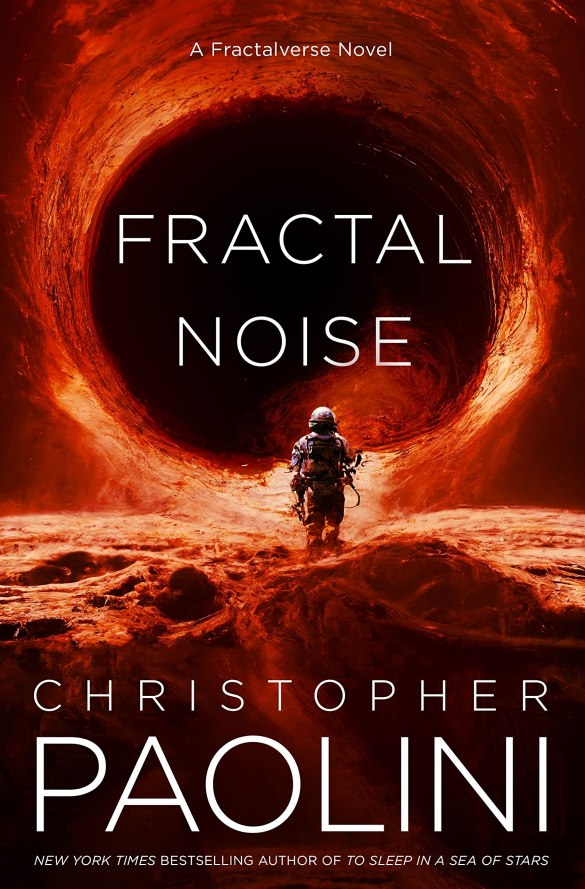
Quick Review – Fractal Noise by Christopher Paolini

Fractal Noise Cover

Publisher: Tor (Trade Paperback – 16 May 2023)

Series: Fractalverse – 0.5

Length: 287 pages

My Rating: 4.5 out of 5 stars

Amazon

Return to the epic Fractalverse of the always awesome Christopher Paolini with this standalone prequel novel, Fractal Noise, a tense and impressive dark science fiction novel.

Christopher Paolini is an author that I have been a major fan of for a very long time thanks to his iconic and epic Inheritance Cycle series.  The amazing Inheritance Cycle first debuted over 20 years ago with the amazing fantasy novel Eragon, which told the compelling story of a young hero and his dragon companion as they fight to free a conquered land.  The Inheritance Cycle series is one of my all-time favourite series due to the great story, impressive world building, and the sheer nostalgia that I hold for them.  Indeed, I am particularly excited because Paolini is also releasing a sequel to the Inheritance Cycle books later this year with Murtagh, which is one of my most anticipated reads for the second half of 2023.  However, before we get to that there is even more Paolini goodness to unwrap this year as the author has also released the intriguing science fiction novel, Fractal Noise.  A standalone prequel to his science fiction epic from a few years ago, To Sleep in a Sea of Stars, Fractal Noise was an intriguing read that I had a lot of fun reading in the last week.

Plot Synopsis:

July 25th, 2234: The crew of the Adamura discovers the Anomaly.

On the seemingly uninhabited planet Talos VII: a circular pit, 50 kilometers wide.

Its curve not of nature, but design.

Now, a small team must land and journey on foot across the surface to learn who built the hole and why.

But they all carry the burdens of lives carved out on disparate colonies in the cruel cold of space.

For some the mission is the dream of the lifetime, for others a risk not worth taking, and for one it is a desperate attempt to find meaning in an uncaring universe.

Each step they take toward the mysterious abyss is more punishing than the last.

And the ghosts of their past follow.


Fractal Noise
was a very awesome book from Paolini that I had an outstanding time getting through.  I must admit that when I first received a copy of Fractal Noise, I wasn’t too sure that I was going to read it, mainly because while I enjoyed To Sleep in a Sea of Stars, it was a bit too long and overcomplicated, and I feared this potentially unnecessary prequel would be the same.  However, I decided to give it a shot, especially as Fractal Noise was considerably shorter than the original novel in this series, and boy am I glad that I did.

Paolini sets up a simple but very effective story in Fractal Noise that is set 23 years before the events of To Sleep in a Sea of Stars, which details the discover and early exploration of a mysterious alien artefact that was mentioned in the original novel.  Just like with To Sleep in a Sea of Stars, Fractal Noise is told from the perspective of a single scientific protagonist, this time a xenobiologist names Alex Crichton, and follows them and their team as they examine a newly discovered space anomaly, an uninhabited planet with a 50km-wide perfect hole in it that is constantly relaying a continuous, overwhelming beat.  This anomaly could only have been created by a sentient species, and the scientists aboard the ship decide to journey to the planet to find any additional signs of alien life and to discover more about the hole.  However, to make it to the edge they need to land a substantial distance away and trek to it by foot in an arduous journey with many potential complications.

Paolini does a good job of quickly and effectively setting up this compelling plot in the first 50 pages of Fractal Noise while also providing great introductions to the damaged protagonist, as well as the accompanying scientists that are taking the trek with him.  However, the real story doesn’t start until the protagonists land on the planet and begin walking the distance towards the hole.  The author really goes out of his way to make this trek as arduous as possible, as the characters need to walk through wind, dust and other obstacles, all while pulling a mechanised sled behind them that slowly breaks down.  The sheer repetitiveness of this task, combined with the desolate landscape, injuries, and the unique planet that rings with a loud “thud” every few seconds, works to slowly wear down the protagonists and force them into some very dark places of their mind.  The closer they get to their goal, the harder their task becomes as the vibrations and noise produced by the hole becomes more intense and places a bigger toil on their bodies and technology.  At the same time, every setback impacts their minds even further as the four scientists soon fall to dangerous infighting as each of them is haunted by their own ghosts and their own reasons for being there.

I really liked how the entire story slowly devolved into a dark and ultra-intense psychological science fiction thriller as Paolini worked to emulate desolate real-life expeditions (such as those old-school arctic journeys), with his excellent storytelling.  The slow but unstoppable mental decline of the characters is handled perfectly, and while you are initially more worried about the protagonist, Alex Crichton, due to the recent tragedies in his life, the other characters are the ones you have to watch out for as they become more and more deranged or determined in their own ways.  Watching everyone slowly turn on each other as the journey becomes harder and harder on them is extremely compelling, and it proves hard to turn away as things get darker and darker.  The author supplements this compelling narrative with some intriguing, realistic and very-well thought out science fiction elements, especially when it comes to the physics of the planet, the obstacles they are facing, and the technology they have access to.  However, there is also a certain primitive edge to the storytelling as no matter how advanced their technology is, when it starts to fail, they are forced to dive back into more a much more basic mindset.  All this combines well with the fantastic dive into Crichton’s bleak mental state, as the protagonist begins to see the expedition as an important quest that will give him some redemption for his recent losses.

The entire story continues along this dark vein all the way to its compelling conclusion, and I was honestly pretty addicted towards the end, knocking out the last couple of hundred pages in a single night.  Watching the final snap of each protagonist was pretty brutal, but it was a necessary commutation of the complex storytelling that had been leading up to at that point.  I loved how well the barren landscape served as a background to this great story, and the constant “thump” “thump” of the planet as they drew closer gave such an outstanding atmosphere to the plot.  Paolini really pulled together an excellent read here that both serves as a continuation of his existing universe, while also giving readers a story so very different to anything that he has produced before.

Overall, I found Fractal Noise to be an outstanding and epic new novel from Christopher Paolini, which I had such a great time with.  I cannot emphasise just how intense and complex this initially simple story becomes, and the author’s ability to create forbidding settings, damaged characters, and suffocating story atmospheres has clearly grow over the years.  Due to its connections to the history of his pervious novel, Fractal Noise is perfect for fans of To Sleep in a Sea of Stars, while also being very open to new readers interested in a compelling and bleak science fiction adventure.  Fractal Noise was an exceptional read that comes very highly recommended from me and I cannot wait to see more of Paolini’s writing later this year when Murtagh comes out.

Amazon

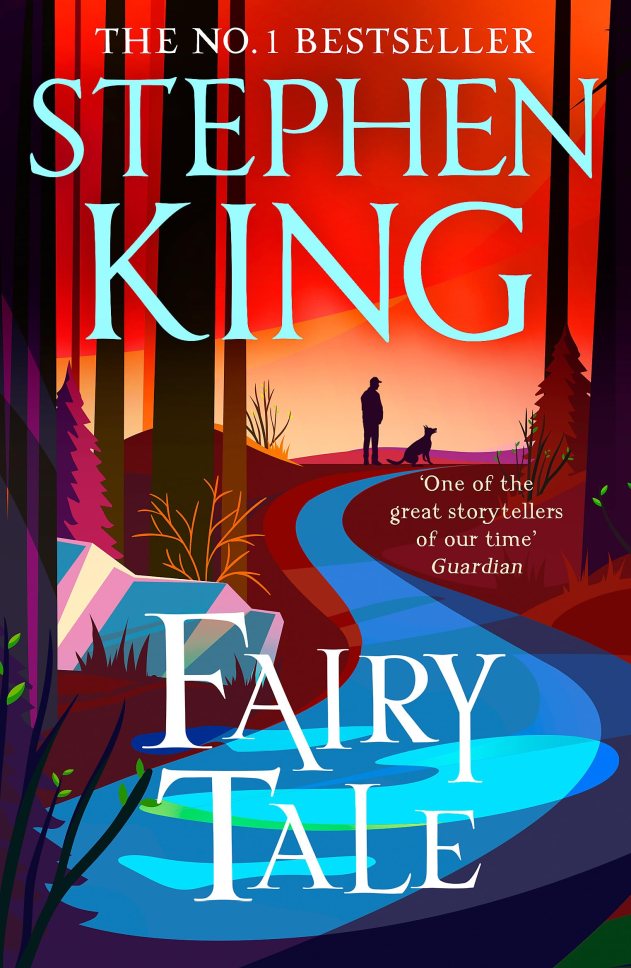
Quick Review – Fairy Tale by Stephen King

Fairy Tale Cover

Publisher: Hodder & Stoughton (Trade  Paperback – 6 September 2022)

Series: Standalone

Length: 579 pages

My Rating: 4.25 out of 5 stars

Amazon

The master of horror and thriller fiction, Stephen King, dives into the world of fantasy in a big way with his compelling 2022 novel, Fairy Tale.

I have finally started to get into some of the more recent books of legendary author Stephen King, which has usually worked out pretty well for me.  His two 2021 novels, Later and Billy Summers were both excellent reads, with the later proving to be one of my favourite novels of 2021.  We also have another new Stephen King novel, Holly, coming in a couple of months, but before we get to that I thought I would quickly review King’s 2022 release, Fairy Tale, which I read last year.  While I had fun with Fairy Tale, I failed to write a review for it, which is something I am hoping to rectify now, especially after all the recent interest people have shown in his next book.  Fairy Tale was a great dark fantasy read from King that took his typical teenager protagonist on a harrowing and compelling journey into a unique and hidden realm.

Plot Synopsis:

Legendary storyteller Stephen King goes deep into the well of his imagination in this spellbinding novel about a seventeen-year-old boy who inherits the keys to a parallel world where good and evil are at war, and the stakes could not be higher—for their world or ours.

Charlie Reade looks like a regular high school kid, great at baseball and football, a decent student. But he carries a heavy load. His mom was killed in a hit-and-run accident when he was ten, and grief drove his dad to drink. Charlie learned how to take care of himself—and his dad. Then, when Charlie is seventeen, he meets Howard Bowditch, a recluse with a big dog in a big house at the top of a big hill. In the backyard is a locked shed from which strange sounds emerge, as if some creature is trying to escape. When Mr. Bowditch dies, he leaves Charlie the house, a massive amount of gold, a cassette tape telling a story that is impossible to believe, and a responsibility far too massive for a boy to shoulder.

Because within the shed is a portal to another world—one whose denizens are in peril and whose monstrous leaders may destroy their own world, and ours. In this parallel universe, where two moons race across the sky, and the grand towers of a sprawling palace pierce the clouds, there are exiled princesses and princes who suffer horrific punishments; there are dungeons; there are games in which men and women must fight each other to the death for the amusement of the “Fair One.” And there is a magic sundial that can turn back time.

A story as old as myth, and as startling and iconic as the rest of King’s work, Fairy Tale is about an ordinary guy forced into the hero’s role by circumstance, and it is both spectacularly suspenseful and satisfying.


Fairy Tale
was a pretty awesome book, although I have to admit that it wasn’t my absolute favourite Stephen King novel so far.  While it was a great story loaded with King’s usual coming-of-age themes and great characters, it did have a few issues regarding pacing and a somewhat disconnected story.

The main issue that I had with the book was that Fairy Tale honestly felt like it was two separate novels combined into one massive read.  The first half of Fairy Tale is probably my favourite, mainly because it contains the classic King coming-of-age story as the author introduces the reader to the protagonist of Charlie Reade and his complicated life.  King really hits the reader strong from the beginning, describing the tragic events of Charlie’s young life, including the death of his mother, the alcoholic crumbling of his father, and the eventual resumption of a normal life once his father recovers from grief and drink.  These events are covered perfectly, and they form a great basis for Charlie’s story, especially as they drive him to be a better person, which leads him to try and help his elderly neighbour, Howard Bowditch.

Mr Bowditch is a fantastic character, mainly because King gets his cranky persona and loner attitude down perfectly.  The growing friendship between Charlie and Mr Bowditch, as well as Charlie’s bonding with Mr Bowditch’s old dog, Radar, forms a solid emotional centre for Fairy Tale’s narrative, which really hangs around to the end.  I had a great time with the part of the book that followed Charlie helping Mr Bowditch and Radar, and I honestly think King could have written a great story purely around that.  The combination of brilliant character work, a fun generational divide, true friendship, and even some mystery elements, really produced an excellent first part to the story.  Even the hints of the fantasy elements to come are very well done, and King did a good job of only featuring a few subtle moments meant to tease the imagination.  However, this doesn’t last nearly as long as I would have liked, as you are soon drawn into the next part of the story once Mr Bowditch dies.  This sad but expected death serves as the catalyst for the second half the story, and the reader gets a full story about the hidden realm which can be accessed via a portal in the toolshed.

Now, I was initially very onboard for this second part of the book, especially as the protagonist’s main reason to visit the fantasy realm was to find a way to save Radar.  Frankly anyone who has ever owned a dog should be pretty drawn into this part of the story, and the sheer desperation that the protagonist experiences as he journeys towards the potential restorative device made this story very relatable to me.  This desperate quest with a tangible and heartbreaking time constraint melded well with the unique new land that the protagonist found himself in, and I loved seeing King’s imagination as he crafted a dying world of mysterious and damaged figures.  The story at this point had an intriguing old-school quest vibe to it, very much like a classic fable, and I was so damn invested in seeing what happened to Radar.  However, once that part of the story was resolved, there was so much left of the book left to go, and that’s where I had a little less fun with Fairy Tale.

Don’t get me wrong, King still brought together a lot of great elements that cleverly carried on from the front of the book.  The dark fantasy realm had some great fairy tale inspirations which made for an excellent background, and the deranged figures who ruled over it were excellent villains.  King also works in a very dark storyline where Charlie experiences some major adversity that he must literally battle to overcome, all while meeting a cohort of desperate new supporting characters.  However, this part of the book just didn’t grab me as much as the first half, and there is somewhat of a disconnect between this story and the earlier awesome chapters of the book.  Still, it was pretty fun to continue, and the story morphed into a classic hero narrative, with Charlie leading a mystical revolution.  I ended up quickly getting through this chunky novel, and it was great to see Charlie grow into Mr Bowditch’s shadow as he encounters some of the events that made him.  King ends everything a pretty happy and final note, and the reader comes away from Fairly Tale fairly satisfied with how everything turned out.  I felt that the second half, while not as enticing as the first, combined well with the rest of the story and together you have a great, character-driven story, that you can really sink your teeth into.

Overall, I rather enjoyed Fairy Tale, even though it took me a little while to review it.  Stephen King showed off his unsurpassed ability to create compelling stories focused on intriguing protagonists, and I love his amazing imagination and awesome ability to make me care about these fiction figures.  While I did have some issues with the second half of Fairy Tale, this was still and excellent novel, and it is really worth checking out, especially if you are an established fan of King and his complex stories.

Fairy Tale Cover 2

Amazon

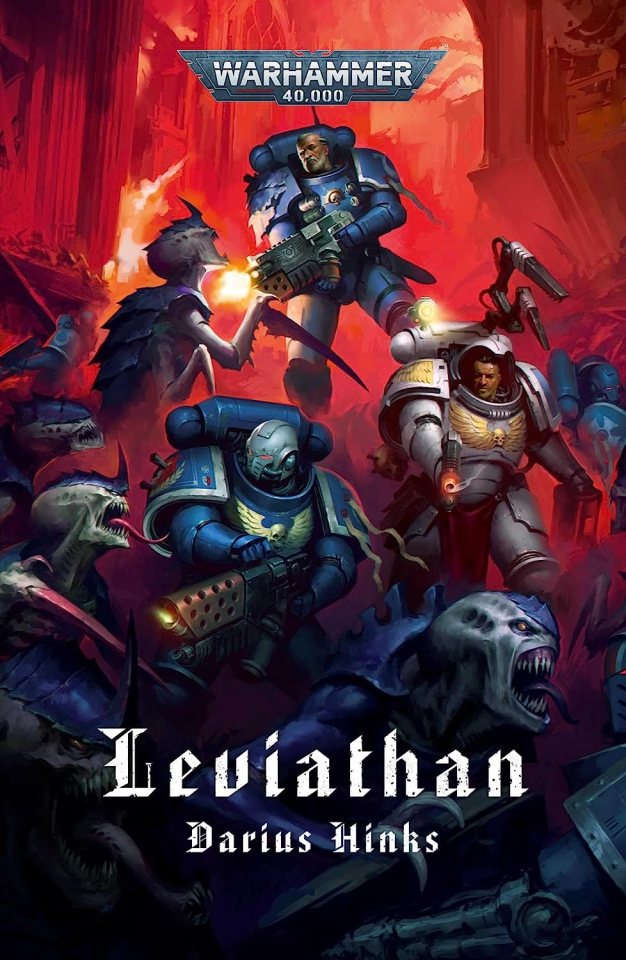
Warhammer 40,000: Leviathan by Darius Hinks

Warhammer 40,000 - Leviathan Cover

Publisher: Black Library (Audiobook – 24 June 2023)

Series: Warhammer 40,000

Length: 12 hours and 13 minutes

My Rating: 4.5 out of 5 stars

Amazon

Prepare for all-out war as the righteous Ultramarines battle the insidious Tyranids in this epic new Warhammer 40,000 novel from Darius Hinks, Leviathan.

It has been a pretty good year for Warhammer 40,000 fiction already, with several fantastic novels coming out in 2023, including Warboss and The Lion: Son of the Forest by Mike Brooks (the latter being one of my favourite books from the first half of 2023), and Shadowsun: The Patient Hunter by Phil Kelly.  However, the hits are far from over, especially as there are several fantastic new Warhammer 40,000 novels set to come out later this year.  But before we get to those, I managed to jump onto another recent release with the outstanding novel Leviathan, written by established Warhammer author Darius Hinks.  Hinks was a new author to me, but I soon grew to appreciate his latest book, especially as it showcased a dark and intense alien invasion that made for a great story.

In the far future of the 41st millennium, the besieged Imperium of Man faces many threats, but few are more deadly, unstoppable, or insidious as the unrelenting and seemingly endless hordes of the Tyranids, an alien race determined to devour everything it encounters.  While several of the larger invading Tyranid fleets have been destroyed, a splinter tendril is making its way towards the galactic centre, threatening the very heart of the Imperium.

Standing in the way of this fleet is the fortress world of Regium, an ancient planet recently taken over by Imperial forces, it now serves as a bulwark against invasions heading towards the inner-Imperium.  Many believe that Regium is secure from all threats, but when the people of the planet are haunted by parasites, strange cults, and mysterious dreams of terrifying monsters, it soon becomes clear that a Tyranid swarm is about to descend upon them.

It falls to the decorated hero, Lieutenant Castamon of the Ultramarines, to hold Regium against the foes and keep the rest of the Imperium safe.  A veteran of many battles, Castamon believes that this new Tyranid fleet will be swiftly destroyed.  However, these Tyranids are led by something far more sinister than the Ultramarines have encountered before, something cunning and ruthless that is able to disrupt minds and outthink even the cleverest of humans.  With his forces split, Regium’s defences compromised, and his allies panicking, even the vaunted Lieutenant Castamon may be unable to save Regium from the Tyranid invasion.  However, Castamon has one last trick up his sleeve, the brilliant Ultramarine Apothecary Biologis, Vultis, whose research into the Tyranid biology might be the only thing that can stop them.  Unfortunately, the enemy knows all about the Ultramarines and their plans, and the deadly creature known as the Harbinger is coming for them.

Leviathan was a pretty awesome and intense Warhammer 40,000 novel that shines a real spotlight on one of the more insidious alien races in the canon.  Featuring a strong and at times terrifying narrative, Leviathan was a great read, and I really got caught up in Hinks’s fantastic book.

Hinks pulls together an excellent story for Leviathan, and it is one that will appeal to a range of different readers, especially those fans of Warhammer 40,000 fiction.  Set around the already troubled planet of Regium, Leviathan follows an intriguing range of different human/space marine characters as they attempt to make sense and prepare for a Tyranid invasion of their world.  The early parts of the book are dedicated to introducing the key characters and the overall setting of the story, while also attempting to cast a more psychological edge to the main story as visions, doubts and other insanities haunt the populace.  There are some great early action sequences, including a disastrous shipboard incursion, and a dark hunt in some interesting terrain, and Hinks works well to set up for the second half of the book, especially as several unique, character driven stories were introduced and given some early weight.  While I enjoyed a lot of this set up, I did find the first half of the story to be a bit slow with its pacing and I was initially having trouble getting too invested in any of the characters or story elements.  However, this changed when I got to the second half of the book.

This second half masterfully builds on all the setup and character development that occurred at the start of Leviathan and readers are in for a particularly intense and gruesome narrative from this point on.  This entire second half is dedicated to the full-on invasion of Regium, as swarms of aliens, including some new creatures, emerge to decimate the populace and challenge the protagonists.  Each of the character focused plot lines set up in the first part of the book, as well as a few additional story inclusions, are perfectly thrust into this overlying chaos, and you get to see them try to survive the oncoming horrors and monstrosities.  Hinks really pulls no punches when it comes to this Tyranid invasion, and you get to witness all the devastation, the deadly transformation of the planet, and the subsequent epic battles, as the Tyranids fight against the human and Ultramarine defenders in some epic and well-crafted set pieces.  Each storyline was really good in its own way, and together they formed a fantastic and at times over-the-top overarching narrative that successfully showcased just how overwhelming the Tyranids can be.  I loved how dark Hinks made Leviathan at times, especially as he had no qualms about killing off key characters in some particularly brutal ways, which really raised the stakes for the reader.  While I did think that a lot of the plot did rely a little on the narrative stupidity of certain characters (the Ultramarines kept forgetting everything they knew about the Tyranids), the second half of the book was extremely epic, and I had real trouble putting it down.  All the separate storylines were concluded in entertaining and fitting ways, and I particularly appreciated the final plan that Hinks introduced for the main protagonists, which really fitted the outrageous feel of a lot of the plot.  This brutal and continuously exciting second half really turned Leviathan into such a great read, and I really loved how the entire thing turned out.

Leviathan proved to be an interesting and compelling addition to the wider Warhammer canon, especially as Hinks took the opportunity to really dive into some of the factions and showcase how crazy they can be.  However, I know that Leviathan has been copping a little flack in this department, mainly because some people see it as merely a promotional novel tied-in with some of the recently announced Ultramarines and Tyranid models.  While I can definitely see that, especially as Hinks spends a lot of time highlighting some of the newer Tyranid creatures in his narrative, I still enjoyed Leviathan a lot.  His depictions of the Tyranids were one of the major highlights of the book, and I loved how much he upped the horror aspect of them, showing them to be ravenous monsters who alter and devour everything they encounter.  This might be one of the better portrayals of Tyranids that I have so far seen in Warhammer fiction, and they were certainly a lot less one-dimensional here than they are in other books.  Part of this was because of the inclusion of several newer Tyranid creatures, such as the Neurotyrant and the Norn Emissary, with both being shown as unstoppable monsters with interesting abilities.  This allowed the Tyranids to attack their prey in all new ways, and it was very fun to see the various intricate tactics they were able to come up with.  Hinks tempers some of the more commercial aspects of these creatures’ inclusion by not actually using the names of the models in Leviathan, instead all you have is the protagonist’s descriptions of them when they encounter them in person.  These personal and often deeply terrified accounts of the various Tyranid bioforms really help to showcase just how terrifying and alien they are, especially to the ordinary human, and it really added a great edge to the narrative.  This darker edge is further exacerbated by the author’s powerful examination of how the planet of Regium is altered once the Tyranids arrive.  The spores constantly raining down on the planet slowly poison the various humans as they breathe in, and the depictions of the protagonists dying from within as they inhale alien matter, while their skin starts to slowly melt is pretty damn memorable and terrifying, especially as this is the first step in turning all biological matter in the planet into edible goo.  Frankly, I don’t think I’ve ever experienced the horror that is the Tyranid better than in Leviathan, and Hinks’ brilliant use of this faction enhanced the entire book.

On top of the Tyranids, Leviathan also features another intriguing major faction, the all-time classic Ultramarines chapter of Space Marines.  I mostly liked how the various Ultramarine characters were featured in Leviathan, although I did think that Hinks could have perhaps done a little more to distinguish them from other general Space Marines.  Still, Hinks goes out of his way to make the Ultramarines as badass as possible, and you really get a sense of their courage and battle prowess, especially as the severally outnumbered Ultramarines (I won’t go into the logistics of Regium’s defence here, but it did seem a tad low for such a vital planet), managed to put up quite a showing against the Tyranid swarm.  Some of the fight sequences featuring the Ultramarines in combat were pretty damn epic, and while some Space Marines did die easily for plot effect (especially when going up against a Tyranid with a new model), I felt that Hinks did a good job highlighting just how dangerous a Space Marine can be.  Hinks really tries to cover various aspects of the Space Marines throughout Leviathan, including the reverence and respect that most normal people have for them, and while this might not be the absolute best portrayal of an Ultramarine detachment ever, it was still pretty damn good, especially in those fantastic fight sequences.

I also must highlight some of the great characters featured within Leviathan as Hinks comes up with a diverse and compelling cast to tell the story with.  Thanks to the way the story is set out, each of the key plotlines revolves around some excellent characters, each with their own motivations, missions, and big moments, as they try to weather or escape the oncoming Tyranid doom.  Hinks crafts some great storylines for each of these major characters, and it proves easy to get invested in them, such as the tale of two ordinary farm workers who try to escape the monsters around them, the hapless Governor who finds himself out of his depth, or the proud Cadian leader who is drawn into war by the machinations of a delusional priest.  However, some of the best characters in Leviathan are members of the Ultramarines, and much of the story focuses on the elites of this chapter on Regium.  I really enjoyed these major Ultramarine characters, including the bold Lieutenant Castamon, the heroic leader who lives up to all the hype, the Apothecary Biologis, Vultis, whose analytical mind and desire for knowledge might hold the key to victory, and even the arrogant Sergeant Tanaro has his moments, especially in that powerful last scene.  However, my favourite character in the book is probably the scarred Ultramarine Baraca.  Baraca is a seemingly unkillable figure who has survived an insane amount of damage, but who has grown detached from even the rest of his battle brothers.  Despite appearing to be a mindless brute, Baraca is a deep and complex figure whose friendship with Vultis provides some emotional power to their scenes together.  Baraca honestly steals every scene he is in, especially his last, and Hinks writes a great storyline around him as he courts death, while trying to find his place in life.  All these characters, and more are very well written, and the impact they have on the plot is pretty impressive.

Like most Warhammer 40,000 content that I absorb, I chose to listen to Leviathan’s audiobook format, which is such a fantastic way to enjoy these intense stories.  I think that I made the right choice when it came to Leviathan, as this amazing audiobook really helped to throw me into the midst of the action.  Narrator Theo Solomon did an excellent job of setting a fast pace with his narration, and his descriptions of the massive battles, compelling heroics, and gruesome aliens was very fun to listen to.  While I wasn’t always the biggest fan of some of the character voices that he came up with, Solomon did produce some excellent tones for some of the main characters, particularly that of Lieutenant Castamon, who is made to sound very heroic and bold, which worked to showcase this intriguing protagonist.  As such, I felt that this was an excellent way to enjoy Leviathan, and with a run time of just over 12 hours, this isn’t a massive audiobook to get through, especially once you get caught up in the impressive second half.  I had an awesome time with Leviathan on audiobook, and I recently featured it on my favourite audiobooks from the first half of 2023 list.

Overall, I think that Leviathan was a pretty good Warhammer 40,000 novel and I was pretty impressed with my first book from Darius Hinks.  While I did have some issues with the story, especially in the early goings, this ended up being a very memorable and captivating read, especially thanks to the use of the cool Tyranid faction.  Loaded with carnage, brutal fights to the death, and complex characters dealing with an oncoming horde of clever aliens, Leviathan was an outstanding novel that deeply enjoyed.

Amazon

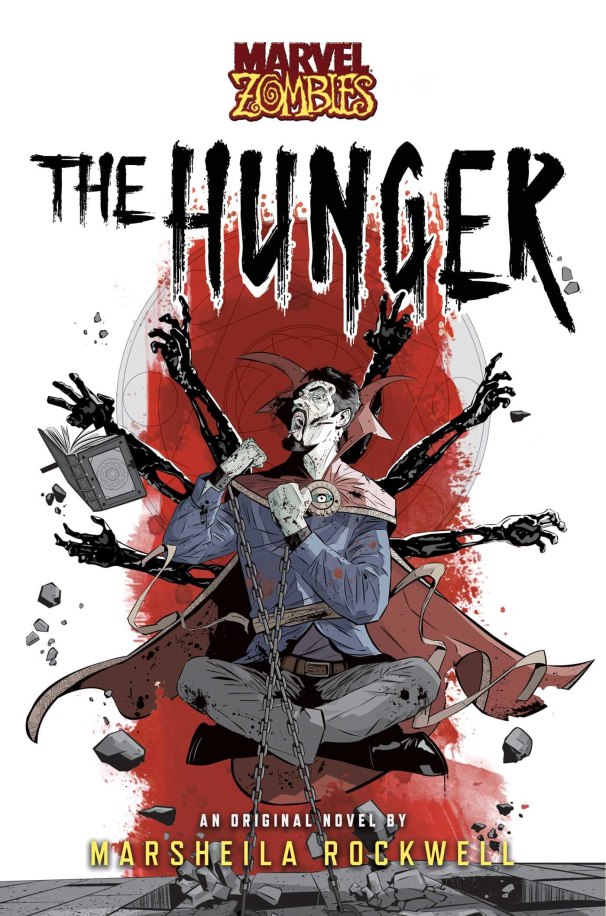
The Hunger by Marsheila Rockwell

The Hunger Cover

Publisher: Aconyte Books (ebook – 3 October 2023)

Series: Marvel Zombies

Length: 249 pages

My Rating: 4.5 out 5 stars

Amazon

Prepare to dive into a wacky, time travelling, zombie filled Marvel novel with Marsheila Rockwell’s fantastic tie-in book, The Hunger.

After having a lot of fun reading the awesome Marvel Comics tie-in novel The Tyrant Skies by David Annandale earlier this year, I thought it would be an excellent idea to dive into another amazing Marvel book, especially one with a great plot like The Hunger.  Written by intriguing fantasy and science fiction author, Marsheila Rockwell, whose previous foray in Marvel fiction produced the magic Sisters of Sorcery novel, The Hunger is an awesome upcoming book that I was very happy to get an early copy of thanks to Netgalley.  Set around the iconic Marvel Zombies concept, The Hunger was a pretty epic read that I had an outstanding time with.

When a mysterious object falls to Earth, landing in New York city, it unleashes a wave of evil and despair as the world’s greatest heroes are turned into ravenous zombies determined to feast on all living flesh.  As the zombified superheroes begin to spread out across the planet, turning or eating everything before them, only Doctor Strange can briefly retain his sanity to try and find a way to avert disaster, but despite his best efforts, his overwhelming hunger threatens all around him.

With no alternative, Doctor Strange is forced to turn to one of the few magic users left unaffected by the zombie outbreak, the librarian of the Sanctum Sanctorum, Zelma Stanton, who reluctantly takes up the burden and imprisons her zombified mentor.  Despite her lack of experience, Zelma has access to all the magical knowledge and ancient artefacts in Doctor Strange’s Sanctum Sanctorum, and she hopes to find some answer to the deadly chaos consuming her planet.  But Zelma soon realises that even all the books in the Sanctum aren’t enough; if she wants to succeed, she’s going to need help.

Pulling together a ragtag team of survivors, including Runaway witch Nico Minoru, monster hunter Elsa Bloodstone and the living embodiment of insanity, Deadpool, Zelma hopes that together they can find a solution.  But their plan to trap the zombies in a time loop backfires on them, thanks to antics of Deadpool, unsurprisingly.  Now with time fracturing all around them, an evil magic threat unleashed, and the zombie horde still determined to eat everything, Zelma and her strange team need to find a way to reverse the damaged they caused while still saving the world.  But is this group of survivors truly capable of stopping the flesh-eating nightmares waiting for them?

That was an insanely fun book about zombies and time travel shenanigans that I desperately needed, and I am sure glad that I decided to check this novel out.  The Hunger was a very entertaining book that I ended up knocking out in a few hours because of how easy and fantastic it was to read.  Rockwell came up with a very impressive story that quickly grabbed my attention and took me along a wild journey loaded with so many awesome moments.  Starting off with a great new introduction to an alternate Marvel Zombies event, where Doctor Strange and pretty much every other hero gets brutally turned into zombies, the story gets bleak very quickly and rarely lightens up after that.  The resulting narrative focuses on the intriguing figure of Zelma Stanton, a supporting character in one of the recent Doctor Strange comics, and it proves to be very interesting as you follow a young, inexperienced magician as she tries to survive in a very dangerous world.  The resulting story has a lot of great features to it as Zelma finds her courage, gathers a unique group of allies, and then finds herself getting thrown into all manner of chaos as her actions produce more zombie mayhem and every time travel issues you could think of.  The second half of The Hunger is pure, unadulterated bedlam, and I frankly loved every second of it, as Rockwell comes up with some outrageous and exciting scenarios that never really slow down.  Bringing together some well set-up storylines in some excellent ways, you honestly will find it hard to put down The Hunger once you get rolling with it, and I found the entire story to be exceedingly entertaining, especially as Rockwell wove together some complex scenes that saw the characters journey through all manner of unique points the Marvel Universe timeline.  This story was a riot from start to finish, especially the fantastic extended time travel sequences, and you will come away from this book very satisfied and honestly wanting more.

Rockwell has a great writing style that I felt really lent itself to the emotionally charged and intense story that came together in The Hunger.  Primarily told from the perspective of two young female magic users, The Hunger is a strong, character-driven tale that showcases how people grow under adversity, while also treating the reader to a brilliant amount of action, carnage and Marvel comics lore.  Rockwell really leans into the Marvel Zombies background of her story to provide some gruesome and graphic moments, which I felt helped set The Hunger apart from some of the other Marvel tie-in books.  While there is a lot of humour attached to the book, mainly thanks to the inclusion of a particular merc-with-a-mouth, The Hunger gets very deep and serious at times, and I loved the impactful dive into the traumas affecting the protagonists.  I loved the fast pace that Rockwell sets for The Hunger’s story, and frankly there was not a single moment of this book where I wanted to stop, as I just wanted to see what was going to happen next.  I did think some of the early sequences of the book felt a little simplistic in their writing, which almost threw me off.  However, Rockwell found her stride as the book continued, and I loved some of the elaborate sequences that emerged, especially those that feature multiple figures, time elements and obscure bits of Marvel lore.  Some of The Hunger’s twists were very well set up in the earlier stages of the book, and I loved how well things came together in the end, especially as Rockwell made such great use of the time travel elements to tell a very entertaining story.

The Hunger serves as a rather interesting addition to the wider Marvel lore that exists as Rockwell makes fine use of several existing storylines, concepts and characters, to create a pretty fun read.  Set in a version of the main Marvel universe that is suddenly impacted by a Marvel Zombies event, The Hunger has a ton of curious and distinctive elements to it that established fans of the comics will deeply enjoy.  Not only are there a ton of different characters present, often in zombie form, but Rockwell goes out of her way to feature or reference multiple storylines from the comics.  This includes a great mixture of more recent comics and some classic storylines, both of which work extremely well in the context of the story and its time travel elements.  I felt that Rockwell did a very good job of cleverly introducing and then utilising these different storylines throughout the course of the comics, and the resulting crazy plot encounters and big moments were pretty damn awesome.  Each of the main characters also makes sure to remember or mention many key story arcs from their history, many of which have a compelling impact on the current storyline or mental state.  The author clearly has an appreciation for the various storylines and obscure characters that she featured and I loved how random and compelling the later scenes got.  While Rockwell does go to some diverse areas of the Marvel universe and history, all of these elements and characters are explored in excellent detail so that anyone with some basic knowledge of Marvel comics can easily enjoy what is going on.  I personally loved all the cool references that emerged, as well the excellent reimagining of the Marvel Zombies storyline which helped turn The Hunger into a pretty awesome tie-in novel.

As with her previous Marvel tie-in novel, Sisters of Sorcery, Rockwell chose to focus The Hunger on three intriguing and somewhat underused female characters from the Marvel canon, Zelma Stanton, Nico Minoru, and Elsa Bloodstone.  All three characters are already epic, but it was great to see them forming a team here in The Hunger, especially when faced with an insane, world-ending threat.  Of these three characters, Zelma is probably the one I knew the least about, mainly because I’ve never read any of the Doctor Strange comics she is in, but she soon proved to be the invaluable heart of this entire novel.  Rockwell did a remarkable job of introducing and utilising Zelma as a character, even to a reader like me that has had no experience with her.  You are swiftly brought up to speed on who Zelma is and why she is involved, and soon you follow this overwhelmed magical character as she is thrust into events beyond her comprehension.  I loved the overarching narrative of this character finding her confidence and ability in this ultimate post-apocalyptic setting, and it was great to see her become the hero that Doctor Strange believed her to be.  Watching her use her unique intelligence and experiences to survive and attempt to stop all the chaos is quite compelling, and you really grow to appreciate Zelma, especially as she has very relatable doubts and concerns.  Zelma is the emotional heart of this entire book and I felt that Rockwell was very wise to use her as a central character, especially with how exceptionally she is portrayed.

In addition to Zelma, I really enjoyed the fantastic use of Nico Minoru and Elsa Bloodstone in The Hunger who served as impressive joint protagonists.  I particularly loved seeing Nico Minoru here in The Hunger, mainly because I’m such a big fan of Runaways, and Rockwell featured her in an excellent way.  Focusing on her at a key part of her character development from the comics, this already jaded and wary Nico arrives on the scene after seeing her entire adopted family turned to zombies and is swiftly forced into another harrowing adventure with a new group of strangers.  I really enjoyed exploring Nico’s fears, concerns and complex history throughout The Hunger, and she served as a great secondary point-of-view character for the plot.  These female characters are further enhanced by monster hunter extraordinaire Elsa Bloodstone, who is well suited for this sort of dark, monstrous tale.  The foul-mouthed, highly confident figure is a great addition to the focal cast of the novel, especially as her loud personality plays off the more reserved Zelma and Nico for a good chunk of the novel.  While initially shown to be mostly carefree, there are some compelling darker feelings under the surface, especially related to the start of the zombie apocalypse, and I felt that Elsa was a brilliant and great addition to the plot.

The final major character in the book really needs no introduction as Rockwell features Deadpool as the much need comic relief.  Brought into the story for very unique reasons, Deadpool is his usual blend of irrelevant humour, catchy one-liners, and all-round killing machine that works well with the female protagonists to save the day.  His constant jokes, weird comments and fourth wall breaks deeply add to the enjoyment I had of the book, even with its darker story content.  So many of the best plot moments in The Hunger revolve around Deadpool’s antics, and he really is an unsurpassed character to include in a crazy book like this.  His interactions with the other protagonists are also a lot of fun, with an intriguing blend of comedic conversations, crazed resentment, and even a grudging respect for his fellow survivors.  Throw in a ton of zombified superheroes, an overpowered magical witch from history, a fun new mount for Deadpool, and some intriguing figures from the dawn of the Marvel canon, and The Hunger has an outstanding cast that are a lot of fun to follow, especially during their darker and emotionally charged moments.

The Hunger really lived up to all its great potential and I had an epic time getting through this insane and highly exciting read.  Marsheila Rockwell produced one hell of a story here that made great use of the Marvel Zombies theme and featured a bonkers story with fantastic time travel elements, complex characters, and a ton of compelling references to the wider Marvel canon.  I honestly had such an incredible time with The Hunger and readers are guaranteed to get caught up in its cool story just like me.  Highly recommended, for all Marvel fans, you will have fun with this book.

Amazon

The Book That Wouldn’t Burn by Mark Lawrence

The Book That Wouldn't Burn Cover

Publisher: Harper Voyager (Ebook – 1 May 2023)

Series: The Library trilogy – Book One

Length: 570 pages

My Rating: 5 out of 5 stars

Amazon

One of the world’s inventive and compelling fantasy authors returns with one of his best novels yet, the highly addictive and ambitious novel, The Book That Wouldn’t Burn, which sets off his new The Library trilogy.

Few authors have had the impact on the fantasy genre than Mark Lawrence has in the last few years, as the author has truly impressed readers throughout the world with his unique and captivating novels that routinely blend fantasy and science fiction elements.  His series include The Broken Empire trilogy, The Red Queen’s War series, and The Book of the Ancestor series.  I myself only started reading Lawrence’s work a couple of years ago with his compelling The Book of the Ice series, which followed several powered teens on a grim frozen planet.  I had an outstanding time with this series, which included The Girl and the Stars and The Girl and the Mountains.  While I still have to read the third book, The Girl and the Moon, I really enjoyed these books, and it was a pretty clever series.  As such, I was very keen to check out Lawrence’s new novel, The Book That Wouldn’t Burn, especially as it had a very intriguing plot synopsis behind it.

Throughout the world, there is nothing more important, more significant, nor more permanent than the library.  Built inside a mountain near the great city of Crath, the library contains an impossible number of books fitted within innumerable rooms that no one person can access.  The sheer amount of knowledge contained within the library represents the greatest power in the world, allowing its keepers and the King of Crath to wield great control in the world.  Into this vast and elaborate repository of knowledge and secrets, two young people are about to meet in unusual circumstances.

Livira is a young girl raised in the Dust, the desolate wasteland that surrounds Crath.  Plucky, curious, and incapable of giving up, Livira is a rarity among her people as she seeks to know more about the world outside her home.  But when the alien sabbers destroy her village and kill her people, Livira finds herself lost in the wilderness.  Rescued and brought to Crath, Livira soon becomes certain that her future lies in the library.  Overcoming prejudice and her own humble background, Livira learns to navigate the library and soon begins to find out some of its deeper secrets.  However, the most mysterious of these might be another strange inhabitant of the library, Evar.

Evar and his small family have known nothing but the library their entire lives.  Released after unknown eons frozen as children inside the library’s mysterious Mechanism, Evar and his siblings have grown up in a vast chamber of the library, learning from the books and becoming masters of specialised subjects.  However, Evar has always desired more and has long tried to find a way to leave their book filled prison.  His discovery of a portal within his home soon leads him to a place outside of time where he meets an exploring Livira.  Together, the two attempt to find the true history of the library and the threats it has withstood over the years.  But dark evils haunt the library, and soon the two explorers must find a way to uncover the truth behind the sabbers, their own history, and other deadly threats waiting for them in the future.  Can these two children of the library survive the revelations in front of them, or will the truth tear them apart in ways they can’t even understand?

Well damn, now this was a seriously impressive and epic book.  Lawrence has honestly outdone himself here with this incredible read, and this might be one of the best books he is ever written, which is saying something.  The Book That Wouldn’t Burn features one of the most elaborate settings and narratives you are likely to see in fantasy fiction, and this results in a powerful and moving read that will keep you guessing time and time again.  I had an exceptional time reading The Book That Wouldn’t Burn, and it would be impossible for me to give it anything less than a five-star rating.

The Book That Wouldn’t Burn is told from two separate perspectives, that of Livira and Evar, and covers their very different lives and experiences within the libraries.  These two character-driven storylines are initially kept separate from each other as Lawrence spends a good chunk of the book introducing the protagonists, setting up their unique stories, and bringing together the elaborate setting that the story is based around.  Both of these storylines are very interesting and fun off the bat, with Livira having her life torn apart, only to find purpose in the library, while Evar details his life lived purely within the library.  While both storylines are really good, I initially got drawn into Livira’s the most, especially as her outsider perspective of the library allows you to really appreciate how alien and strange the massive house of books is.  Livira’s storyline advances at an extended clip, covering years of her life as she learns, grows, and fully develops her adventurous personality as she seeks to fully understand the secrets of the library and everything within it.  Evar’s storyline on the other hand is a little more sedate in its pacing, as it is set only along the course of a few days as he tries to finally understand the structure that has kept him prisoner for so many years.

The first half of the book that showcases these two characters’ initial introduction and growth are pretty damn entertaining, and it does a wonderful job of setting the scene for Lawrence’s elaborate story and background location.  However, the story doesn’t find its true strength until the two protagonists meet and their storylines becomes a lot more intertwined.  Due to the impossible physics and requirements of the library, there is a compelling time element to the meetings between the characters, which Lawrence captures masterfully, and which really alters their perspectives of each other.  Once they are able to properly interact, the two characters grow close and spend an interesting chunk of the novel exploring their respective worlds, as well as the history of the library.  Lawrence really lays the world building on thick during these parts of the book, and it serves to bring the two protagonists together, which just ensures the last act of the book is as tragic, moving and devastating as possible.  The author drops some massive bombshell twists around two-thirds of the way through, which completely throws you and makes you rethink everything you have thought about the preceding narrative.  I honestly was pretty damn shocked at this epic and devastating revelation, and while I had already been pretty damn addicted to the story by this point, this was the moment I realised what a masterpiece The Book That Wouldn’t Burn truly was.

The final third of the novel gets even better as certain background elements of Livira’s storyline finally come to fruition and her entire life begins burning around her.  This causes her and many of the supporting characters from her part of the book to end up interacting with the characters from Evar’s storyline, which is a very interesting change of pace from the previous parts of the book.  There are also some frenetic conflicts and some very dark moments as everything you have previously known about the settings, the characters and the history of the library is thrown around in some excellent and compelling ways.  There are several great new twists in this final section of the book, and Lawrence gets very metaphysical with the reveals, relying on his setting’s unique temporal properties to mess with your mind and bring you surprise after surprise.  I really loved just how cool and complicated this novel got towards the end, and Lawrence leaves an awesome and open conclusion for you to enjoy while drawing you in towards the next book in the series.  I came away from this narrative desperately wanting more, especially after being blown away by all the twists within the book, and I cannot wait to see what happens next.

Those who are familiar with Lawrence will know that he is a very impressive and talented author, and I really liked how he developed his story and displayed all its outstanding elements to the reader.  The Book That Wouldn’t Burn is a particularly complex read, loaded with damaged characters, elaborate storylines and an inventive major setting.  Lawrence approaches his latest novel with his usual flair and imagination, expertly showcasing every clever detail of this world to the reader and keeping them enthralled the entire way through.  Due to the complexity of the story, you really need to dive into every single word that Lawrence writes, and it honestly took me a little longer to get through this lengthy novel than I expected, mainly because of how much focus I needed to fully appreciate everything.  That said, it has a very good pace to it and there is never really a dull moment as you are constantly drawn into what is happening or the elaborate depictions of the library.

I felt that the author’s use of two narrators was particularly effective, especially as they give very different views of what is happening around them and the setting they find themselves in.  The extra expansiveness of the separate narration really helps to expand the scale of the book, and it takes some major temporal shifts for the two protagonist’s storylines to align.  Once they do, the two separate character arcs intertwine extremely well, and I loved seeing their interactions through each other’s eyes, as well as the elaborate adventures they find themselves involved with.

Lawrence also was very skilled at setting up some of the book’s big twists, and while many of them surprised me when I read them, looking back you could see the subtle clues leading up to them, and you really appreciate just how clever the author was in the earlier stages of the book.  The initial big twist is probably the best, and you really have to love how careful Lawrence was with some of the dialogue and character descriptions to pull that off.  Some of the subsequent twists are a little less shocking, mainly because you are on guard at that point, but I did like how well some of the reveals based around the protagonist’s journey through time were utilised and hinted at in earlier scenes.  The fact that there are completely different faces to some of the major early figures of the book was very cool, and it was clear that the author had a very impressive plan while writing the early stages of the book.  These excellent writing elements, and more, served to enhance an already captivating story, and I cannot get past how well Lawrence set everything up.

There is no way I can move forward without talking about the elaborate library setting that was such an epic centrepiece of The Book That Wouldn’t Burn.  I love how the author’s ultimate major setting is a library, which is something that all readers can really appreciate.  While we can all imagine a pretty massive or full library, Lawrence amped that imagination up to an 11 in this book, describing a seemingly impossible structure, made up of innumerable rooms filled with massive climbable bookshelves and a seemingly infinite number of books and tomes.  The sheer scale of this setting when described by Lawrence boggles the mind to a degree, and it really is an outstanding setting for this story as it is the perfect place for exploration, adventure, and even habitation.  The library naturally features Lawrence’s trademark blend of fantasy and science fiction elements, and the structure has a transdimensional or alien feel to it, as the protagonists find different mechanisms within the structure, as well as strange and unique ways to travel through it.  This blend of fantasy and science fiction elements worked particularly well, especially as you get to experience an intriguing contrast between ancient advanced technology and endless shelves of paper books.

The more unique elements of the library, including the portals, the robotic guardians, the locked doors, and more, are worked into the plot extremely well, and it was fascinating to see how they impacted the story, especially while the characters attempted to find out their origins.  The time travel aspects of the library proved to be particularly awesome, and I loved how Lawrence used them, and other cool features, to twist the narrative in some powerful and unexpected directions, completely changing everything you thought you knew.  It was also really effective how Lawrence explored the library through two very different sets of eyes, as Livira and Evar see it in different ways based on their respective history and cultures.  These alternate views added even more depth to the epic setting, and you have to love the continued focus on exploration, especially when it resulted in some of the best scenes in the book.  Honestly, I could go on and on for pages about just how impressive this outstanding setting is, so let me just be blunt and say: read The Book That Wouldn’t Burn, as you really won’t be disappointed when it comes to this elaborate library setting and the dark world it inhabits.

The final thing that I really need to highlight are the great characters contained within The Book That Wouldn’t Burn, which Lawrence did an outstanding job pulling together.  There is a rich and compelling cast of characters featured within this novel, and their unique stories and experiences play a big role in how the story develops.  However, most of the character work is saved for the point of view protagonists, Livira and Evar.  Both characters have intriguing and tragic backgrounds brought about by encounters with sabbers, and they have found sanctuary within the library as a result.  However, this is where their storylines differ as Livira seeks out the treasures of the library and works to get deeper within, while Evar looks to escape and find a whole new world to explore. This leads to some very conflicted character moments, and it was fascinating to see how these characters’ intriguing histories influences their understanding of the world and what they want.  Both protagonists are well established and utilized by the author in The Book that Wouldn’t Burn, and their distinctive character arcs give the book a different flavour chapter to chapter as you explore both their lives.

I personally enjoyed Livira a little more as a protagonist, as her adventurous spirit, drive to be the best and sheer pluck were quite entertaining to see, especially as it allowed her to uncover so many cool secrets about the library.  However, you also have to appreciate the darker background and narrative around Evar, a man trapped all his life in the library, and who has known only limited contact and love in his life.  Evar’s entire life has been nothing but uncertainty, abandonment and a certain amount of inadequacy as he has only known a few other people, each of whom are the absolute experts in their fields.  These two protagonists, when they meet, prove to be a powerful and interesting combination, and Lawrence was quite masterful and subtle when it came to weaving their chapters together.  You really appreciate the pain, loss and sacrifices that both protagonists make throughout the book, and the bond they formed together, soon becomes such a key part of the story.  While they do experience some major, mind-blowing setbacks, you grow really attached to both of them, and seeing them continue and dive even deeper into the unknowable heart of the library, makes for powerful reading.

Aside from Livira and Evar, The Book That Wouldn’t Burn features an extensive and compelling cast of supporting characters, whose interaction with the protagonists adds some intriguing elements to the plot, especially as many of them are filled with some great surprises.  Both Livira and Evar’s storylines had some excellent supporting figures whose appearances are primarily limited to their respective narrator’s timeline.  My favourite supporting character in the Livira chapters had to be Malar, a rough and tough solider who becomes Livira’s protector mostly against his will.  His gruff attitude is a fun contrast to Livira’s bright and curious nature, and they have some entertaining scenes together, especially as he grows to care for her, and Lawrence works in some particularly compelling story elements around him in the later part of the book.

Evar’s chapters also feature a great range of supporting characters, and due to the more constricted nature of his story and setting, you get to know them a lot better than some of the cast associated with Livira.  These characters include Evar’s adopted siblings, Starval, Kerrol and Clovis, who were also trapped in the Mechanism as children and grew up with him in the library.  However, unlike Evar, who emerged relatively normal, each of Evar’s siblings were warped by the knowledge of the Mechanism and are now masters of a particular subject, including assassination and espionage, war and psychology.  Each of these siblings is now fairly damaged as a result of their complex upbringings and childhood traumas, and it was fascinating to see their unique mindsets, especially through the eyes of Evar, who holds a special place in each of their hearts.  These characters were all raised by the animatronic constructs, the Assistant and the Soldier, servants of the library who took charge of them, and I liked the fun interactions that resulted from them, especially once Lawrence worked his twisty magic on them.  All of these characters and more are pretty damn interesting, and I loved how complex and emotionally charged their interactions became.

Frankly I could go on and on about this book, but I still do not think I would really be able to fully encapsulate just how much I enjoyed The Book That Wouldn’t Burn.  This complex and clever fantasy novel is a true masterpiece from Mark Lawrence, who utilised all his impressive writing skills and imagination to create a unique and powerful read.  The Book That Wouldn’t Burn’s elaborate narrative and massive library setting really grabbed my attention and I had such an epic time getting through this outstanding novel.  Easily one of the best fantasy books of 2023, you need to check The Book That Wouldn’t Burn out, especially if you are already a fan of Mark Lawrence’s amazing works.

Amazon

The Will of the Many by James Islington

The Will of the Many Cover

Publisher: Gallery/Saga Press/Audible Studios (Audiobook – 23 May 2023)

Series: Hierarchy – Book One

Length: 28 hours 14 minutes

My Rating: 5 out of 5 stars

Amazon

Talented Australian author James Islington delivers one of the best fantasy books of 2023 with the compelling and complex novel, The Will of the Many, an exceptional read that I had a brilliant time reading.

I am always on the lookout for epic fantasy novels to sink my teeth into, and one that caught my eye when it was first announced was the intriguing book, The Will of the Many.  Set in a cool new magical school setting, The Will of the Many sounded liked a very fun novel and I instantly wanted to read it.  It helped that it was written by James Islington, an Australian author who had been on my radar for a while thanks to his fantastic Licanius trilogy.  While I have not had a chance to check out the Licanius books, I was very keen to dive into The Will of the Many and I was glad I got the chance a couple of weeks ago.  The Will of the Many is the first book in Islington’s new Hierarchy series, which looks set to be a major addition to the fantasy landscape especially after this incredible first book

The Catenan Republic, known as the Hierarchy, rules the world, conquering and enslaving everything before it using its unique magic of Will, which drains power, strength and mental energy from the lower classes and passes it up to those above.  To gain true power and control in the Hierarchy citizens need to battle their way to the top of the pyramid of power and influence, and only those with drive, ambition, connections or no choice can rise.

Vis is an orphan boy with a hidden past, a quick mind, and an utter disdain for the entire Hierarchy.  Lodged in a Catenan orphanage, Vis bides his time while searching for an escape from a future of ceding his Will to the higher echelons of the Hierarchy.  However, his entire life is turned upside down when a powerful Catenan nobleman offers him a chance he never expected.  Ulciscor Telimus is convinced that there are dark dealings going on at the Hierarchy’s most prestigious school, the Academy, and he needs someone to go undercover and discover what has been hidden there.  If he succeeds, he will be adopted into Ulciscor’s influential family and be given a choice about his future.

Reluctantly agreeing to Ulciscor’s terms, Vis prepares to attend the Academy, only to discover it is a dangerous place of corrupt ambition, deadly secrets and deep rivalries.  To succeed, Vis will have to rise through the Academy’s ranks by any means necessary without losing who he is as a person.  But this will be no easy task, as deadly politics, long-buried power and a murderous rebel group all seek to control him.  Worse, the more he advances, the greater the chance that his secret past will be uncovered and his enemies will put him to death.  Can Vis survive against the terrible burden that is weighing him down or will he be ground down by the unstoppable Hierarchy just like everyone else?

Islington has created a pretty exceptional fantasy novel with The Will of the Many.  Featuring a powerful, intense and character-driven plot, all set within an outstanding new fantasy world, The Will of the Many had me hooked pretty early on and I dedicated a lot of time to reading it.  I really got drawn into Islington’s amazing inventiveness and this book gets an easy five-star rating from me thanks to how damn good it is.

I have lot of love for the epic and captivating narrative that Islington set up in The Will of the Many, especially as he simultaneously tells a brilliant introductory story while also expertly setting up the rest of the series.  There are some awesome scenes in the start of this book, including an intense fight club sequence, which do an excellent job getting the reader across some key aspects of the plot, while also showcasing the emotional range and complexity of the protagonist, through whose eyes the entire story unfolds.  I was honestly already very hooked by this point in the story, but Islington quickly picks up the pace and ensures that this character-driven narrative heads off in some very compelling directions.  The introduction of Ulciscor soon presents the idea of the Academy and the dark conspiracies around it, and Islington starts the gradual process of getting the protagonist to the school environment.  Ulciscor is a great addition to the plot, especially as he plays off Vis very well, and the early sequences with him result in some major world expansion and plot movement.  It also sets up the book’s established formula of adventure, world building, politics, mystery and espionage, that carries through the rest of the story, and which ends up being a very heady combination.

Islington keeps building the story as The Will of the Many progresses, and pretty much every new revelation or intriguing world detail is really fun to behold.  There is some good early action, as well as a couple of twists that I liked at this point, but the story is still very much on track for the promised magical school setting.  However, before we get there, there are a series of cool and fascinating training montages which build up Vis as a character and really highlight the difficult tasks to come.  There is also a deeper dive into the complexities of the tasks and the secrets surrounding them, and Islington does an impressive amount of set-up in this first third.  However, the real highlight of this first part of the book is a very surprising and explosive occurrence that pushes Vis into the limelight, while also ensuring that he is caught between some very dangerous people.  This big scene is extremely memorable, bloody and very well-written, and if you weren’t riveted to The Will of the Many before, you sure as hell were now.

From there the story turns into a more magical school focused narrative, which was something that I was really looking forward to.  This intriguing setting had some great elements to it, and the story set within the Academy was a brilliant and compelling blend of education, entertaining rivalries, compelling personal interactions, and a series of secrets, as Vis attempts climb up the ranks, while also completing some of the objectives the various groups trying to control him have forced him to do.  I honestly had a ton of fun during the scenes set in the Academy, and I liked how Islington built up the setting and the fantasy elements behind it, while also slowly advancing the story and the character development.  The substantial part of the novel set in or around the Academy has some fantastic moments to it, including a few big scenes where Vis is forced to encounter deadly enemies, hard tasks, or the secrets from his past, and each of these major moments expertly expands on some part of the plot or universe you are already enjoying, whether it be secrets of the world, or some political machinations that will come back to bite the protagonist later.

Everything leads up to a major extended concluding sequence as the final test of the Academy brings all manner of trouble to the protagonist in a variety of cool and intriguing ways.  Not only do some big secrets come to life but Vis manages to learn more about the magical secrets of the world and the Hierarchy, while also being forced to deal with deadly attacks and threats from a variety of corners.  There are so many epic moments in this final section of the book, and Islington did an incredible job of tying together his many, many story threads to ensure that a variety of previous hints and revelations are well utilised.  I loved some of the elaborate tests and set-ups featured here, and it was very fun to see the protagonist try to run them while also dealing with major threats from every angle.  This final sequence has some massive moments, including major betrayals, compelling reveals about the wider world, and a very tragic death, all of which served as the perfect cherry to an already outstanding story.  While many secrets and hanging storylines are resolved by the end of the plot, quite a few still remain for the sequels.  Islington has already set up some big moments and unique ideas for the future, and I am very curious to see how they turn out.

As you can no doubt tell from my expansive summary above, I really loved this captivating narrative in The Will of the Many and I think that Islington did a really good job of presenting this complex and impressive story to the reader.  The entire book has an outstanding pace to it, and there is barely a scene that is not filled with something exciting or entertaining, whether it be a moving character moment, some compelling world building, or a thrilling bit of action.  I honestly flew through this lengthy novel, and there was no point of the book where I not highly invested in the plot nor gripped by the events unfolding.  The author’s use of a first-person perspective from the character of Vis was a very good choice of narration that allowed the author to tell a compelling character-driven story that simultaneously explored a cool new setting from the outside, while also cleverly capturing all the key elements of the plot.  The intense balancing act of lies, politics, outside influences and personal relationships that the protagonist has to maintain really shines through as a result of this use of perspective, and it was deeply compelling to see Vis attempt to overcome all the obstacles in front of him.  The intense action scenes were particularly good, and Islington perfectly portrays the desperate violence, the life-and-death confrontations, and even some complex but exciting maze running, in ways that grab the reader’s attention and keep them fully engaged.  I personally loved how Islington included so many different compelling storylines, plot points, and fascinating detail into every single page of the book, and you really cannot help but get addicted as a result.

I always love seeing a cool fantasy setting for a new series, and Islington produced a pretty intriguing and compelling one for The Will of the Many.  Much of the main setting of the book sees Islington expand on an ancient Roman society, by adding in some intriguing new details like magic, powered constructs, a rigidly hierarchical community, and a deep political divide between the military, governance and religion bodies.  This results in a very interesting background for much of the story, and Islington showcases it all through the eyes of Vis, a hostile outsider with an established hatred of the Hierarchy, which works to showcase it in even more detail, especially as Vis focuses on both the negatives and the positives of the political and cultural structures around him.  I really enjoyed the clever balance of political concerns, oppressed citizenry and unique inclusions about status and magical power that were explored as a result, and it was fantastic to see them utilised in the plot, especially as Vis has to balance all of them throughout his many guises and missions.  The most fascinating part of this whole setting has to be the focus Will, the magic of the Hierarchy, which sees people at the bottom of society sacrifice part of their strength, drive and health to those above them.  The higher up in the Hierarchy you are, the more people you have ceding their strength to you, and this gives you greater powers, including better physical attributes, the ability to control and manipulate materials to certain purposes, and other magical abilities.  Islington does a really good job of exploring and expanding on this intriguing magical system throughout The Will of the Many, especially as the narrator is also learning about it as he goes.  The author has clearly put some time and great thought into this magical system, treating it like an established science, and I liked seeing the range of abilities it produces, as well as its related social and cultural impacts.  Islington makes sure to highlight that this is not a perfect society, and the cracks that Vis witnesses throughout The Will of the Many should result in some outstanding and compelling ongoing storylines.

I need to point out that one of the main reasons I chose to grab The Will of the Many is that it had a magical school setting.  I love, love, love magical school settings in fantasy fiction, and it is one of the best backgrounds for an excellent fantasy story (make sure to check out my recent list about my favourite books with magical school settings).  The Academy in The Will of the Many is an amazing example of this, and I enjoyed how Islington utilised it as a primary location for the book’s plot.  Just like the rest of the Hierarchy, the Academy is a rigidly hierarchical place based around a pyramid structure, with the most talented students at the top, and the other students below battling to take their place.  This made for a great background of study, competition and rivalries for much of the plot, and it was fun to see the protagonist try to reach the higher classes in a short time period, especially as he was required to overcome numerous obstacles while also coming to terms with the distinctive social structure of the Academy.  Islington adds a further twist to this education setting by introducing the Labyrinth as a unique educational and testing tool.  Essentially, the Labyrinth sees participants run through an elaborate maze while being chased, manipulating a magical gauntlet to move around walls and doors, all to prove that the participant has the concentration and focus to control vast amounts of Will.  Islington did an outstanding job of showcasing this Labyrinth in multiple scenes of The Will of the Many, and it produces some very exciting and compelling scenes, especially when the stakes around it get very high.  There is also a very complex, and highly enjoyable final test that serves as a great background for much of the final confrontation.  Islington clearly has a highly inventive streak when it comes to these unique fantasy inclusions, and I personally loved every second spent in this highly competitive magical school setting.  I hope that we see more of it in the future, and this was honestly one of the better magical schools that I have personally seen in fantasy fiction.

I also must highlight the captivating and nuanced characters that were featured within The Will of the Many, especially the main protagonist, Vis, through whom we see most of the events occurring.  Vis is an outstanding central protagonist, as he is a highly educated individual who sees all the flaws in the society he is forced to live in, and goes into the story with many secrets around him, including the fact that he is secretly the deposed prince of a realm recently conquered by the Hierarchy.  Due to his many losses, his outsider status, and the sheer resentment he holds towards the Hierarchy and those who use Will, Vis has a great deal of anger, bitterness and lack of social ability that he needs to overcome.  Vis proves to be the perfect character for the complex and morally grey narrative that Islington envisions, as Vis has to put all his learned deceit and ability to keep secrets and survive to good use to infiltrate the Hierarchy and the Academy, while being blackmailed by several different people.  Vis has an interesting analytical mind, and I wonderful time seeing him try to work through the various problems, conflicts, and hostile situations he encounters, especially as nearly everything about him is a lie that he needs to keep straight.  Despite his past and the pressures he is under, he is still a mostly kind and noble figure, trying to stay true to his original ideals while still doing what is right in a very corrupt world, and it was wonderful to see him grow throughout the course of the story and finally learn to trust again.  I grew quite attached to Vis as the story continued, and it really hurts to see him suffer time and time again, especially once he comes to terms with the traumas of his past.  I am very excited to see his story continue in the future, especially as it seems like it is going to get quite complex and multifaceted in the next book.

The rest of the cast of The Will of the Many is also very strong, and I liked the compelling and varied supporting characters that Vis has to interact with, including classmates, his new adopted family, rivals, political opponents, high-ranking members of the Hierarchy, and a dedicated group of rebels with dark plans for the future.  The powerful and intriguing interactions that occurred between Vis, who is often lying about his intentions, and these other fantastic characters results in some amazing scenes, and I loved the unique relationships that Vis was able to form with them.  You grow pretty attached to some of these characters as well, and I had my heart broken with one major fatality towards the end of the novel.

To check out this impressive novel I chose to grab an audiobook copy of The Will of the Many, which proved to be a pretty exceptional way to enjoy this fantastic read.  I have a lot of love for the audiobook format when it comes to massive fantasy novels, especially as I find myself really able to absorb the complex narratives and vast new worlds extremely well when listening to it.  This was definitely the case with The Will of the Many audiobook which really allowed me to get to grips with the powerful story it contained, and I lapped up every second that I listened to.  It definitely helped that The Will of the Many audiobook featured an outstanding narrator in the form of Euan Morton, whose work I have previously enjoyed in several Star Wars audio productions (Tarkin, Dooku: Jedi Lost and Doctor Aphra).  Morton has a unique voice that I felt gave The Will of the Many some real gravitas and impact when read out, especially with the distinctive, accented tone he utilised for both Vis and the main narration of the story.  This specific great voice was pretty impressive, and it really helped to make the protagonist’s speech really stand out throughout the audiobook.  The rest of the accents and tones he utilised for the other characters in the book really worked, and I loved how much range Morton had, covering a range of different characters perfectly and gifting them very fitting voices.  All this really helps to make The Will of the Many an absolute pleasure to listen to, and I cannot recommend this format enough to people interested in this book.  With a run time of just over 28 hours, The Will of the Many audiobook does represent a substantial time challenge for potential listeners (it is the 10th longest audiobook I’ve ever listened to).  However, I would say it is well worth the investment, especially as it does not take long for you to get obsessed with this awesome book and its elaborate story.  An exceptional audiobook that is easily the best way to enjoy this amazing fantasy tale.

Unsurprisingly, I loved The Will of the Many, and it was a pretty great introduction to James Islington’s brilliant writing and inventiveness.  The Will of the Many is a captivating fantasy read that makes excellent use of its dark setting and magical school focus to craft a powerful, character-driven tale.  This is easily one of the best fantasy novels of 2023 so far and I would strongly recommend it to anyone wanting an epic read to really lose themselves in.  An exceptional novel that perfectly sets up a bold new fantasy series!

Amazon

Falling Sky by Harry Sidebottom

Falling Sky Cover

Publisher: Zaffre (Trade Paperback – 17 January 2023)

Series: Warrior of Rome – Book Nine

Length: 375 pages

My Rating: 4.5 out of 5 stars

Amazon

One of the best and most compelling authors of Roman historical fiction, Harry Sidebottom, returns with another outstanding entry in his Warrior of Rome series, Falling Sky.

There are many outstanding authors who specialise in historical fiction set in ancient Rome, however, one of my absolute favourites is the always impressive Harry Sidebottom, who has been dominating the genre for most of my reviewing career.  Sidebottom has written some amazing novels over the years, including his Throne of the Caesars trilogy and some excellent standalone novels, like The Lost Ten and The Return.  However, my favourite series is his Warrior of Rome novels, which follow the Roman general Ballista, a former barbarian hostage turned Roman nobleman.  This series is pretty damn epic and was amongst some of the earlies novels I ever reviewed.  His debut novel, Fire in the East, remains one of the best siege novels I have ever had the pleasure of reading, and the rest of the series is also very impressive and inventive.  I have really loved some of his more recent Warrior of Rome books, such as The Last Hour and The Burning Road, and I was very happy to see that Sidebottom was continuing this series with Falling Sky.

AD 265, Gaul.  The usurper Postumus has been declared Emperor by his soldiers and has taken control of key territories west of Rome, including Gaul, Germania, Hispania and Britannia.  Setting up his capital within Gaul, Postumus hopes to maintain control of his new empire and peacefully coexist with Emperor Gallienus.  However, Gallienus wants vengeance for the death of his son at Postumus’s hands and has assembled a massive army to cross the Alps, take back Gaul, and kill his rival.

Amongst the Roman troops gathered to attack Gaul is Ballista, one of Gallienus’s most loyal supporters.  Determined to fight one more battle and then retire to Sicily with his family, Ballista finds himself at the forefront of the fight as one of Gallienus’s most able commanders.  However, Ballista has a far more troubling problem to deal with than battle.  His recent actions in Rome exposed a massive conspiracy to kill Gallienus and install a new Emperor.  While he was able to foil the assassination, the leader of the conspiracy remains at large, and Ballista is convinced that it was the Praetorian Prefect Volusianus, the man charged with keeping Gallienus safe.

With no evidence to support his suspicions, all Ballista can do is watch Volusianus and wait for him to slip up.  However, Volusianus is aware of Ballista’s suspicions and is determined to kill him before his machinations can be revealed.  When Ballista is sent on a dangerous mission deep into enemy territory with a column of cavalry, it represents the perfect opportunity for Volusianus to strike using spies and traitors.  However, the greatest threat to Ballista may come from the turning tides of war, as he and his men soon find themselves trapped far behind enemy lines.  Pursued by the enemy and surrounded by traitors, can even the legendary Ballista survive both the war and his friends in Rome?

This was another brilliant and captivating historical read from Sidebottom that perfectly continues the Warrior or Rome series with another exciting adventure.  Falling Sky is a very thrilling read, and it was one that I was able to finish off quite quickly, especially once I got caught up in its fantastic and fun narrative.

Falling Sky has a very fast-paced narrative that sees the forces of the Emperor Gallienus, including Ballista, return to Gaul (France) to end Postumus’s rebellion and restore the Empire.  The initial chapters set the scene brilliantly, as you get reacquainted with Ballista and his recent adventures, as well as some insights into his suspicions around Volusianus’s role in the recent assassination of the emperor.  Featuring some great early battle sequences in the Alps, you soon get a great idea of the war to come, especially when you also see some events through the eyes of Postumus and his forces.  The centre of the book is dominated by a pivotal major battle sequence with both armies clashing in a brutal series of chapters that really leaves an impression.  It also sets the rest of the story up extremely well, as the still suspicious Ballista is sent out on a dangerous mission he isn’t supposed to come back from.  This cavalry focused plot dominates the second half of the book and features a great blend of action, historical logistics, and espionage as Ballista tries to keep his troops alive, while a traitor in his ranks works to bring him down by any means necessary.  This leads to an excellent final third of the book, when Ballista and his troops are forced to retreat through half of Gaul, while traitors and problems from the protagonist’s past wait for him.  This turns into a fantastic chase sequence between enemy regiments, and I really loved how epic and intense it got in places.  The entire story wraps up really well, and I had a wonderful time getting through this awesome read.

Falling Sky turned out to be a pretty awesome book, and I loved how Sidebottom set his latest novel out.  There was an interesting change of style in Falling Sky from some of his previous novels, as Sidebottom had recently been experimenting with blending different thriller genres with historical settings.  Falling Sky, however, represents a more classic historical fiction war novel, with a focus on battles, major recorded events, and the continued growth in Ballista’s character as he becomes more and more disenchanted with Rome.  While I had a ton of fun with Sidebottom’s previous unique formats, I also enjoyed him returning to the style from the previous Warrior of Rome novels, with a compelling focus on historical war.  The author still does maintain some interesting thriller elements, including the fun espionage moments as Volusianus and the hidden traitors work to take out Ballista.  In addition, the thrilling and extensive flight of Ballista and his forces really ratchets up the tension for the end of the novel and I enjoyed how complex and powerful it became, easily resulting in it some of the best parts of the book.

The author’s use of perspective was also pretty effective, especially in the first half of the novel, which sees different chapters told from the point of view of several different key characters, including Ballista, Volusianus, Postumus and Volusianus’s spy in Ballista’s regiment.  Alternating point-of-view characters really helped to produce a more extensive and compelling plot, and I loved seeing the countermoves of Ballista and Volusianus, while also getting insights into Postumus’s rebellion.  This use of perspective changes towards the end of the novel as there is a much greater focus on Ballista as the primary narrator as he leads his troops in their escape.  I appreciated Sidebottom’s decision to mix things up this late in the novel, and it really helped to emphasise just how desperate and compelling this final section of plot truly was.  While Falling Sky is part of the larger Warrior of Rome series, it can be read as a standalone novel, especially for any fans of fun historical adventure and military fiction.  Sidebottom does an excellent job of quickly recapping necessary information and events from the previous novels throughout Falling Sky, and readers can grasp key connections and details to follow along with the plot.  The events of Falling Sky actually fall between the two previous books in the series, The Last Hour and The Burning Road, which was apparently caused by a change in the publishing schedule.  That does mean that if you have read The Burning Road in advance of this novel, the stakes of Falling Sky’s plot are slightly reduced.  However, I still had a ton of fun with this outstanding novel, and I really enjoyed how Sidebottom wrote the story.

I was also deeply impressed by the historical aspects of Falling Sky, which was one of the book’s strongest features.  Sidebottom has always excelled at exploring fantastic aspects of Roman culture and history, and Falling Sky is a pretty good example of this, especially has he closely examined Emperor Gallienus’s second invasion of Gaul in the second half of the 3rd century.  This period of Roman history doesn’t get a lot of love from other historical fiction authors, and as a result, Sidebottom’s books always feel quite unique, and I always have a great time learning more about this point of Roman history.  Sidebottom really does a good job exploring the origins of the war with Postumus’s Gallic Empire, and it was fascinating to see how this part of the Roman Empire splintered off and managed to hold out against the main Roman army for so long.  This results in some deeply intriguing scenes where politics, loyalties and personal ambitions are heavily featured, and a Roman civil war novel always contains some brilliant battles as the two armies utilise similar strategies.  Falling Sky also has some outstanding depictions of Gaul and the Alps during this period, especially as the protagonist ends up spending much of the book traversing the landscape at high speed.  Not only was it really cool to see historical depictions of so many different parts of modern-day France (the map up front was very useful), but many of these locations served as fantastic backdrops for the vicious battles that emerged.

In addition to cleverly examining the historical backdrop to the narrative, Sidebottom also ensures that his representations of the Roman soldiers and battles were as detailed as possible.  You can clearly tell that Sidebottom has done a ton of research when it comes to the depictions of the various soldiers, and you can practically see how they would have marched or engaged in battle.  The author’s epic battle scenes are particularly cool to read, and the clashes between the two opposing Roman armies are perfectly showcased, allowing you to fully experience the brutality and carnage.  However, the best historical highlight of Falling Sky revolves around the Roman cavalry, which Ballista commanded for much of the book.  Sidebottom spends much of book diving into and detailing as many aspects and experiences of the classic Roman cavalry as he can, including their practices, strategies, and general experiences.  This comes across extremely well in many scenes of Falling Sky, and it was fascinating to see Ballista get to grips with his new cavalry command and turn them into an effective force.  The sheer detail that accompanies the cavalry into every major fight of Falling Sky is very cool and I loved seeing the author’s depictions of how they would have fought and what strategies a commander like Ballista would have utilised in several different scenarios.  I had such an amazing time seeing these historical details and more get translated across into a thrilling action novel, and Sidebottom clearly has so much love for all things Roman.

Harry Sidebottom remains one of my absolute favourite authors of Roman historical fiction, especially when it comes to his Warrior of Rome novels.  Falling Sky is an outstanding new addition to the series, and I loved its clever war focused plot that saw one of Sidebottom’s best characters leading in compelling circumstances.  Loaded with action, espionage, and impressive historical detail, Falling Sky is an amazing book that I had an incredible time reading.  Highly recommended to all fans of the historical fiction genre.

Amazon