The Gathering by C. J. Tudor

The Gathering Cover

Publisher: Michael Joseph (ebook – 16 April 2024)

Series: Standalone/Book One

Length: 412 pages

My Rating: 5 out of 5 stars

Amazon

Acclaimed author C. J. Tudor continues her excellent run of clever and dark thrillers with the intense, inventive, and gripping horror murder mystery, The Gathering.

C. J. Tudor is a talented and highly inventive author who has been producing some intriguing reads over the last couple of years. Starting with her 2018 debut, The Chalk Man, Tudor has consistently produced some compelling books with clever horror or psychological thriller elements. Her other books include The Hiding Place (also titled The Taking of Annie Thorne), The Other People, The Burning Girls and The Drift.  While Tudor’s intriguing novels have often stood out to me, generally because their unique plots, I unfortunately haven’t had the opportunity to read any of her prior works, which is something I really regret.  However, this has recently changed as I was lucky enough to receive a copy of Tudor’s latest book, The Gathering, an intriguing murder mystery thriller with some distinctive element behind it.

Welcome to the small town of Deadhart, Alaska, home to a small population of living humans and a colony of vampyrs.  Maligned and hunted beings throughout the world, vampyrs in America now have legal protection from unsanctioned killings, as long as they don’t harm any humans.  While members of the Colony attempt to stay away from humans, old hatreds, prejudices and grudges rear their ugly head when a young teenager is found murdered with his throat ripped out and his body drained of blood.

Detective Barbara Atkins, a specialist in vampyr killings and physiology, is sent to Deadhart to determine if a vampyr committed the murder and authorise a cull if the Colony is unwilling to hand over the perpetrator.  Arriving in the small town, Barbara finds the local inhabitants afraid and angry, looking for vengeance for the death of the boy and determined to wipe out the vampyrs for good, especially as this case bears a striking similarity to a previous killing blamed on the Colony 25 years ago.

Beginning her investigation, Barbara soon discovers that there is far more to the case then initially appears.  Much of the evidence has been staged, and no one is willing to tell her the truth about what has really going on in town.  When more deaths occurring throughout Deadhart and the town in uproar, Barbara deputises former Deadhart sheriff Jenson Tucker, whose investigation into the previous killings nearly left him for dead.

As Barbara and Jenson attempt to discover the culprit, it soon becomes clear that someone is attempting to stir up a conflict between the people of Deadhart and their vampyr neighbours.  With both settlements on the warpath, Barbara and Jenson need to dive into Deadhart’s dark history to truly understand the crime before them.  But is the killer a bloodthirsty vampyr, a psychotic human with a taste for chaos, or something far worse?

Tudor absolutely blew me away with this exceptional and highly clever read.  The Gathering was a brilliant book that expertly combined an inventive and well-established concept with a complex murder mystery.  Loaded with intriguing and damaged characters and a dark story of death, revenge and oppression, The Gathering was an extremely awesome book that I could not turn away from.

Thanks to its vampyr focused murder mystery, I knew I was going to really enjoy the plot behind The Gathering well in advance of reading it, and boy was I proven right.  Tudor does a wonderful job quickly and effectively setting the scene, and you are soon introduced to the town of Deadhart, the concept of vampyrs and the particulars of the murder.  What follows is a complex case as protagonist Barbara Atkins is forced to investigate as an outsider, as most of the town is filled with anti-vampyr sentiment.  Further complications are added when Atkins finds a range of dark secrets hidden throughout Deadhart, both in the present and in the past, which have bearing on the modern case.  At the same time, the various residents of Deadhart and the Colony react in different ways to the murder, using it to restart old grudges or bring long-festering hurts to the surface.

The Gathering’s narrative progresses at a fast and compelling pace, and you are soon treated to revelation after revelation, as well as several additional killings.  I loved the combination of a modern-day investigation and dives back into various periods of Deadhart’s history that emerged, especially as clues in the past have huge bearings on the modern story.  Tudor cleverly builds up several simultaneous mysteries and ongoing storylines, and soon the protagonist is not only trying to discover who the killer is but prevent a war between Deadhart and the Colony.  Everything leads up nicely to a pretty epic conclusion, which was well foreshadowed, with some pretty awesome revelations coming to the fore.  I loved how well several compelling character arcs came full circle during this confrontation, and the main antagonist of the plot proved to be quite sinister and well established.  Several other tertiary mysteries are also solved near the end, and Tudor ensures that many storylines are tied off in a satisfying and clever way.  There are some awesome twists at the end, including one surrounding one of the book’s most compelling characters, and this last twist in particular is likely to lead to additional books in the series.  I honestly was the hooked the entire way through this amazing story, and I really appreciate how Tudor brought it together.

I’m a huge sucker for classic for thrillers with distinctive twists to them, and The Gathering was a great example of this.  Tudor managed to pull together a complex murder mystery that not only features an isolated Alaskan town with a dark history and multiple complex and haunted characters, but also contains an elaborate vampiric society and history.  All these elements are used extremely well throughout The Gathering, and I was extremely impressed with how Tudor was able to tie everything so effectively together.  Tudor makes sure to tell multiple character-focused storylines at the same time, which allows for a more multifaceted plot that goes in some very interesting direction.  The split focus on several captivating and distinctive figures works wonders to enhance this, and Tudor uses this to showcase the rising tension in the town, and the various perspectives surrounding it.  There are some great plot lines here, and the way that they interacted and came together was very impressive.  I was particularly impressed by the chapters that kept coming back to an unnamed figure being held prisoner by a mysterious captor.  This storyline was weaved throughout the novel, and I was constantly left guessing about who the figures were and how it would work into the main story.  The reveal surrounding it was not what I was expecting, but I loved how well it set up a major twist at the end.  Other character-focused storylines also proved to be just as compelling, and the way everything came together was very impressive.  I honestly knocked out this book in just over a day, it was that damn good, and I cannot emphasise how cleverly Tudor brought everything together.

One aspect of this book that I really must highlight is just how great a setting Deadhart proved to be as it enhances the plot of The Gathering in so many excellent ways.  The well-written depictions of the frigid Alaskan wilderness and secluding storms allows Tudor to bring together a classic thriller background of an isolated, snowed-in town, where the protagonist is unable to get backup and is forced to rely on unlikely help from the local outsider.  While this always makes for a great story background, Tudor enhances it by building up a dark history around Deadhart and the Colony, that plays so well into the modern storyline.  This unique history of the town was expertly explored by Tudor, and it worked to produce a much more complicated mystery, one dotted with historical grudges and family feuds.  I particularly loved how effectively Tudor explored the growing terror infesting Deadhart as the killings continue, as both the humans and the isolated vampyrs begin to fear what is to come.  This undercurrent of fear and the resulting rage it leads to is almost palpable at times, and you can fully understand how and why the various characters act the way they do.

Another element of The Gathering that really impressed me was how well Tudor set up an alternate world where vampyrs exist.  The whole concept of the vampyrs as biological offshoots with several classic vampiric traits, including blood drinking and an aversion to sunlight, is quickly and effectively established by Tudor, who does a wonderful job of immediately bringing readers into this world.  As the book continues, the reader gets a more in-depth look at the vampyrs, their biology, their psychology, and their history, especially when it comes to their interactions with humans.  This examination of the interaction with humans is particularly key, as Tudor explores the prejudices that emerged, as humans learned to hate the entire species.  Featuring some fantastic parallels between other social rights issues, the relationship between the two species is explored in detail, and then applied to isolated Deadhart.  Watching the prejudices of the town come to light again was a great part of the book, especially as it is well contrasted by looks at the vampyr community.  As the story continues, you soon realise that there are monsters on both sides of the biological line, and figuring out who is crossing this line is a major part of the plot.  Defining vampyrs in both a scientific and social way proved to be very interesting, and I liked the attempts at humanising the figures and making them less of a horror monster.  That being said, there are some dark and scary scenes in The Gathering, especially when the vampyrs get angry.  Overall, the use of vampyrs is in The Gathering was very cleverly, and Tudor really highlighted her writing ability by setting this up so effectively.

The final element of the book I want to highlight is the amazing group of complex and damaged characters featured throughout The Gathering.  Tudor clearly has an aptitude for bringing together a compelling cast, as the reader is treated to a range of different figures, each of whom have their own compelling histories and dark pasts mottled by the troubled relationships between humans and vampyrs.  The most prominent of these is the visiting detective, Barbara Atkins, who is forced to battle mystery, local hatred, and her own unique feelings about vampyrs as she determines whether a cull is required.  Showcased as the calm and reasonable inclusion to the investigation, Barbara finds herself severely tested by the town’s prejudices and mistrust, while trying to find the truth no matter what.  Much of Barbara’s actions are guided by rationality, although there is an intriguing look back into her past, as her own experiences with small towns with vampyr colonies plays a big role in her motivations.  As such, she is an excellent central protagonist, and I loved how well she played the outsider figure coming into town.

In addition to Barbara, The Gathering also features a complex group of locals, each of whom have their own connection to Deadhart’s dark history and the hostile relationship between the town and the Colony.  Standouts include former sheriff Jenson Tucker, whose previous investigation of a vampyr death left him as the town pariah.  Tucker goes through a powerful redemption arc in The Gathering, and he proved to be an able secondary protagonist as he comes to terms with his many secrets.  Other great characters include an ancient vampyr, trapped in the form of a child, whose connection to the dark side of Deadhart becomes a driving force for their revenge.  There is also a mysterious local preacher determined to bring violence to the vampyrs, and who proves to be an intriguing counterpoint to the main protagonist Barbara.  Finally, the various members of an original Deadhart family with a long simmering hatred for all thing vampyr, adds a great amount of drama to the plot, not only because of their connections to the previous killing in town but because their well-established fear of vampyrs leads to much of The Gathering’s conflict.  These characters, and more, are very well written, and their dark attitudes, fearful actions and unique viewpoints add a great deal to this already impressive and emotionally charged novel.

C. J. Tudor deeply impressed me as The Gathering turned out to be one hell of a read. Expertly utilising her inventive and clever alternate world in conjunction with a captivating mystery, Tudor wrote a particularly epic tale in The Gathering, and I had such a lot of fun getting through it. An intense and powerful read, The Gathering is one of the best books I have read so far in 2024 and I cannot recommend it enough.

The Gathering Cover 2

Amazon

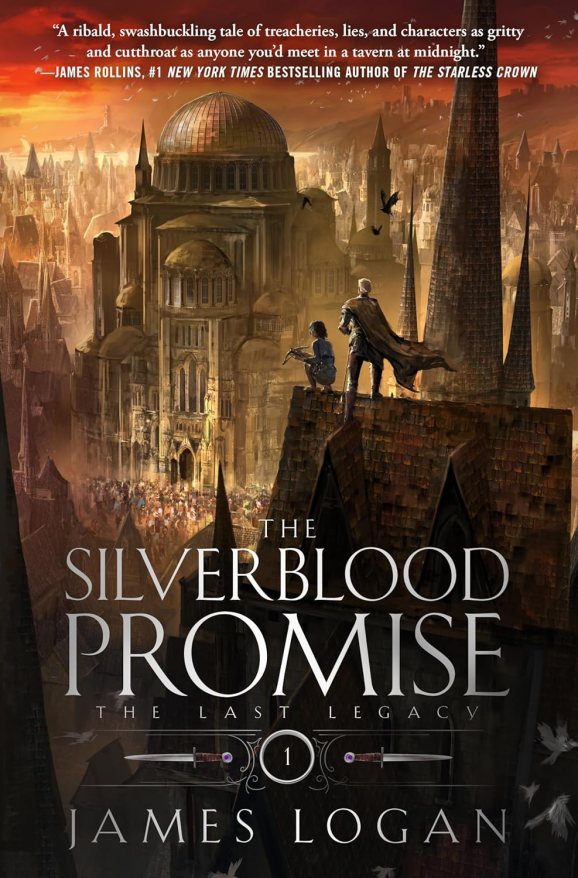
The Silverblood Promise by James Logan

The Silverblood Promise Cover

Publisher: Arcardia (Trade Paperback – 30 April 2024)

Series: The Last Legacy – Book One

Length: 595 pages

My Rating: 4.75 out of 5 stars

Amazon

Promising new author James Logan presents an epic fantasy debut in the form of The Silverblood Promise, the first entry in his planned The Last Legacy series, and one of my most anticipated books of 2024.

Lukan Gardova, the disgraced heir of a noble family, is a man who has lost everything following a duel that ended tragically.  Forced to drop out of his prestigious academy and abandoned by his family, Lukan travels the wild edges of the world, gambling, drinking, and seeking what adventure he can.  Despite his malaise and despair, Lukan is still shaken when he is informed that his estranged father has been murdered by mysterious assassins.

Armed with fresh purpose and a determination to find out who was responsible for his father’s death, Lukan follows the only clue he has, a note his dying father wrote in his own blood.  The names it contains lead him to Saphrona, an old and prosperous city ruled by merchant princes where everything can be bought.  Filled with rogues, scoundrels, thieves, and miscreants, Saphrona seems an unlikely place to find his reclusive, academic father’s killers.

Engaging in an exhaustive search throughout Saphrona, Lukan discovers that the answers he seeks lie with one of the city’s merchant princes.  Unfortunately, they have been condemned to death for the murder of another merchant prince, and if Lukan wants the information they have, he will first have to prove their innocence.  Working with an unlikely group of criminal acquaintances, Lukan follows the few clues surrounding the merchant prince’s unusual murder.  But the further he digs, the more danger he finds himself in.  There is a deadly conspiracy at work in Saphrona, one that seeks to undermine everything the city stands for.  Forced to contend with desperate nobles, deadly criminals, and dangerous forces beyond his comprehension, Lukan fights to keep his promise and find the truth behind his father’s murder.

Wow, now this was an awesome debut from Logan and one that I was really glad I got the chance to read.  The Silverblood Promise has been on my radar for a while, and Logan did not disappoint with its excellent and exciting story, which is loaded with action, intrigue, cool fantasy elements and some great characters.  Entertaining and fast-paced, The Silverblood Promise was an absolute joy to read, and I had an amazing time getting through it.

The Silverblood Promise has a deeply compelling narrative behind it that kept drawing me in with its intrigue, revelations and exciting adventure.  While this is a lengthy novel, I honestly powered through it as it proved very easy to get caught up in the story.  Logan maintains a very fast pace the entire way through The Silverblood Promise, and I enjoyed the mixture of action, character development and unique fantasy inclusions that the reader is treated to.  Starting off with a strong introduction that effectively showcases the protagonist and his current situation, the reader is quickly thrust into the main background city of Saphrona, which proves to be a fantastic setting.  Able to quickly interpret his one clue, the protagonist works with several connected figures to try and contact the person his father sent him after.  What follows is a series of interlocking quests as Lukan must befriend a master forger, mastermind a break-in to a notorious prison, and then discover who set up one of the city’s leaders for murder.  This results in a constant stream of adventures as Lukan jumps from one hurdle to the next, uncovering dark secrets about the city, and making unlikely friends.

The revelations about the true villain of the story occurs about two-thirds of the way through The Silverblood Promise, and while it isn’t too surprising, their methods and motivations are, especially as they reveal some interesting figures to the story.  Forced to go up against some big fish, Lukan is caught up in their power play, which adds a lot of chaos to the narrative, and must desperately come up with a plan to fight back.  The resulting carnage and confrontations are well handled, and I loved the great combinations of intrigue, battles and clever ploys that brought everything together.  All the action within The Silverblood Promise is sharp and well written, and you get drawn into the many confrontations and battles of wits that emerge.  Logan proved very able at hiding hints about the big bad’s schemes throughout much of the plot, and it was fun to see it all come together.  I had such a great time with this impressive story, and I ended up reading the last 300 pages of the book in less than a day, it was that damn good.  The reader comes away both satisfied and wanting more, which is lucky as it is clear Logan has some big plans for the series, with the adventure set to continue.

I felt that Logan came up with an excellent fantasy setting for The Silverblood Promise, and I really enjoyed how he utilised the new world throughout his plot.  Filled with magic, adventurers, complex cities, mysterious interdimensional beings, and powerful artefacts from long-lost advanced races, there is so much for the reader to enjoy here, especially when hints about far greater hidden powers are also included.  While a couple of the fantasy elements in The Silverblood Promise are a little derivative of other fantasy works, I personally didn’t mind, mainly because Logan makes them his own and they fit nicely into the fast and intense narrative of The Silverblood Promise.

While I loved the new fantasy world as a whole, the setting highlight of this book is the city of Saphrona, where most of the plot is set.  Saphrona proves to be a complex and compelling trade city ruled by merchant princes and filled with dangerous commerce, criminal enterprises, alien structures, unlikely monsters, and all manner of political intricacies and plots.  Readers will really enjoy unwinding the various elements of this city and it proved to be fun watching the protagonist explore Saphrona and attempt to find answers and stop a major disaster unfold.  In a way Saphrona becomes a character in its own right as the book progresses, and I really appreciated how effectively Logan introduced the reader to the setting and inserted the story in its survival and underlying politics.  Logan also ensured that readers got a good deal of information about some of the other locations outside of Saphrona, which are likely to become relevant to the plot in future books of the series.  While a of map of the continent or Saphrona would have been appreciated, readers come away with a great sense of the world and will be interested in seeing more stories within it.  Indeed, it looks like Logan plans to set each of The Last Legacy books in a different city of the world, and I for one am very excited to see what other memorable locations Logan will come up with.

I also really need to highlight the fun and memorable characters who were featured throughout The Silverblood Promise.  Logan did a great job pulling together an intriguing and often outrageous cast for his first book, and I loved some of the awesome storylines that emerged.  Most of the focus revolves around protagonist and primary point-of-view character, Lukan Gardova, a former noble turned roguish adventurer who finds himself way over his head in Saphrona.  Lukan is a great central figure for this book, and he brings a lot of emotion to the story due to his disastrous past and determination to find his father’s killer.  I felt that Logan provided just the right amount tragic history for his protagonist to enhance the dramatic tone of the book, and the character’s frustrations at the dangerous tasks he finds himself involved with, as well as his own stubborn need to move forward, were very relatable.  Lukan also provides a fun scoundrel vibe to the plot at times, and it was interesting to see his cynical perspective on events throughout the book.  I liked how Logan set Lukan up as a newcomer to the main setting of Saphrona, as this allowed the reader to see the city fresh through the eyes of someone unfamiliar with it, which enhanced the majesty, strangeness and cruelty of the setting.  As such, I felt that Lukan was an excellent central protagonist, and I look forward to seeing how his story evolves in the future, especially as there are many more secrets around his family that need to be revealed, and other character elements that need to be expanded upon.

Aside from Lukan, The Silverblood Promise features an interesting array of fun figures, the majority of whom are locals to Saphrona.  I loved all the unique characters that emerged, especially as Lukan is forced to deal with killers, scheming nobles, a mysterious forger, a blind beggar with way too much knowledge, an unlikely crime lord and a notorious band of mercenaries that Lukan is forced to alternatively fight or make deals with.  One of the most distinctive characters is an infamous thief who joins the main cast late in the story, but who proves to be a fantastic addition thanks to her skills, kindness and pragmatism.  However, my favourite character would have to be the young street urchin and pickpocket, Flea, who forms an unlikely partnership with Lukan early in the story.  Hired by Lukan to help him around the city, Flea proves to be an invaluable ally, despite her age, and works to keep her benefactor alive against all manner of dangers.  Bold, curious and utterly unflappable, Flea is a highly entertaining figure, especially as she keeps jumping into danger while also proving to be far wiser than Lukan.  Flea and Lukan serve as fun contrasts to each other, and I liked their entertaining banter and the touching bond they form throughout the course of the book.  This fantastic partnership really helped to make The Silverblood Promise that much more special, and all the characters featured within this book were really well written and cleverly featured.

Overall, The Silverblood Promise is an excellent and exciting fantasy novel that had me hooked the entire way through.  Intense, compelling and wildly entertaining, The Silverblood Promise was very awesome, and James Logan did wonders with his debut novel.  I will definitely be grabbing the eventual sequel to The Silverblood Promise when it comes out, and I cannot wait to see how this adventure continues and how Logan develops as an author.

Amazon

Extinction by Douglas Preston

Extinction Cover

Publisher: Forge Books (ebook – 23 April 2024)

Series: Standalone/Book One

Length: 384 pages

My Rating: 4.5 out of 5 stars

Amazon

Entertaining author Douglas Preston presents Extinction, a wild science fiction thriller that will drag you in with is amazing and exciting story.

Preston is a veteran author who has been writing compelling novels for 30 years.  Preston is best known for his many collaborations with fellow author Lincoln Child, which have resulted in an impressive body of work, including several standalone novels, the long-running Agent Pendergast series, the Gideon Crew series and the Nora Kelly and Corrie Swanson books.  In addition to his work with Child, Preston has also written several of his own series, including the Tom Broadbent novels, the Wyman Ford books and his standalone novel, Jennie.  While I love the unique sound of many of these books, I have never had the opportunity to read anything from Preston before.  However, when I managed to get my hands on a copy of his new book, Extinction, I dove into it as soon as I could due to its awesome-sounding story.

Deep in the Colorado Rockies lies the exclusive and world-famous Erebus Resort.  Based in a massive 100,000-acre valley, the Erebus Resort contains many wonders of genetic science as clones of woolly mammoths, Irish Elk, giant ground sloths and other extinct species roam the valley, brought back to life, and turned into gentle tourist attractions.  The Erebus Resort seems like the most perfect place in the world, but nothing is what it seems.

When a billionaire’s son and his new wife are kidnapped on their honeymoon in the wild countryside surrounding the resort, Agent Frances Cash of the Colorado Bureau of Investigation is sent out to investigate.  Working with local county sheriff James Colcord, the two lead a force of police and Erebus security to try and locate the missing pair.  However, when the two hikers are found brutally murdered and mutilated, apparently by a group of ecological terrorists, the case takes a dark turn.

Determined to find the killers hiding out in the wilds, Cash and Colcord coordinate an exhaustive search while also trying to uncover the dark secrets hidden within the Erebus labs.  But with the body count mounting and the Erebus staff attempting to cover up the truth, Cash and Colcord find themselves pushed to the limit, especially as there is something unusual about their potential suspects.  The further they dig, the more they discover that the killers are there to pay back an old grudge and will do anything to get their revenge.

Extinction was an awesome book from Preston, and it was honestly as fun and addictive as I was hoping it would be.  Combining a great thriller storyline with some entertaining science fiction elements, Extinction was a pretty epic read which I powered through extremely quickly due to the very exciting and thrilling story.

Preston comes up with quite an entertaining and over-the-top narrative for Extinction, which is frankly glorious in just how crazy things get.  Starting off with a gruesome murder in a gigantic nature preserve with genetically resurrected creatures, the story quickly evolves into an elaborate and thrilling mystery with a background that is going to remind readers of Jurassic Park (although one character insists they are nothing alike).  The first third of the book serves as a great introduction to many of the key elements of Extinction, including the resort, the main characters, and the initial search for answers, while the hints of a wider conspiracy are also shown to the reader.  Things get even more interesting in the second third of the book, where further deaths are revealed, several intriguing and often annoying characters are introduced, and the potential antagonists of the story are somewhat revealed.  It is the later which most got my attention, as the protagonists face off against an unusual group of apparent terrorists with some distasteful and extreme methods.

I honestly was hooked after the first two thirds of the book, and I loved where the unique mystery was going.  However, it was the final third of Extinction that really sealed just how much I enjoyed this epic novel.  There are some big, if not especially surprising, reveals here about who is responsible for the attacks and why, which I was completely there for as it was so bonkers and fun.  The resulting chaos that results from these revelations is just perfect, as there are numerous outrageous and highly violent sequences that grab your attention.  Many of the supporting cast, including several particularly unlikeable characters, meet an ironic or suitably entertaining end, which really highlights the book’s focus on hubris and karma.  There are so many fun moments here, as well as some dark and serious pieces, as the protagonists try to survive and come to terms with what is going on.  I absolutely powered through this part of the book as I was so intrigued to find out how the story was going to come to an end.  Preston leaves everything on a very interesting note, and I frankly came away from the story very, very happy.

Preston did a great job of presenting this dark, if slightly exaggerated, narrative and I liked his writing style in Extinction.  In particular, he utilised the tried and tested thriller method of splitting the story amongst several intriguing characters, who told various aspects of the story.  While most of it was reserved for the well-written and compelling protagonists, Agent Frances Cash and Sheriff James Colcord, you also get to see the story through the eyes of several supporting cast members, which includes antagonists, supporting members of Cash and Colcord’s investigation, and other people located in the resort, including Cash’s politically minded boss, a grieving billionaire, and the unlucky members of a film crew working nearby.  This interesting range of characters and perspectives added some extra drama to the story, especially as Cash is forced to deal with incompetence, politics and coverups, while you also get some fantastic viewpoints of the events leading up to the inevitable carnage.  It helped that several of the characters that Preston chose to focus on where pretty unlikeable, and it proved very entertaining to see them get caught in the crossfire.

I think Preston did a good job of balancing the thriller and science fiction elements of Extinction to produce the best story.  The initial novel is primarily a crime fiction read, with the protagonist’s investigation and search taking priority while the park and its genetically engineered creatures serve as an intriguing and distinctive background.  However, as the story progresses, there are some interesting dives into the science surrounding the creation of the cloned animals, as well some of the interesting real-life history of the related genetic sciences.  This genetic science leads to some very fun and major reveals in the plot, and Extinction soon turns into a full-fledged science fiction read with some pretty over-the-top discoveries.  I feel that the inevitable science fiction story of Extinction was greatly enhanced because Preston drew the reader in with the exciting thriller elements, and it kept you guessing about who or what the antagonists were going to be.  While much of the genetics featured within Extinction is a bit overexaggerated for plot reasons, there is a grain of real science at its core, which makes the book a bit scarier to a degree.  Preston makes sure to highlight, both in the plot and his notes at the end, that much of what is being discussed is possible and could be seen in real life sooner than you’d think.  As such, you come away from Extinction being a little thoughtful, while also really appreciating the great story Preston has provided to you.

Overall, Extinction by Douglas Preston was an extremely fun book that I was very glad I decided to check out.  Loaded with some outrageous moments and exciting sequences, Extinction had me on the edge of my seat for its entire narrative, and I honestly got so caught up in seeing how events would unfold.  Dark, brutal, and gloriously unrestrained, readers will get all the excitement and thrills they could want out of Extinction, while finding the underlying mystery to be intriguing, concerning, and entertaining in equal measures.  A great novel that will no doubt bring me back to Preston’s writings in the future.

Extinction Cover 2

Amazon

Play of Shadows by Sebastien de Castell

Play of Shadows Cover

Publisher: Jo Fletcher Books (Trade Paperback – 26 March 2024)

Series: Court of Shadows – Book One

Length: 482 pages

My Rating: 5 out of 5 stars

Amazon

Prepare yourself for a riveting good time in the impressive and wildly entertaining fantasy novel, Play of Shadows by the always amazing Sebastien de Castell.

Last year I had the very great pleasure of being introduced to Sebastien de Castell when I received a copy of his book The Malevolent Seven.  Set outside his major series, The Malevolent Seven was a wickedly clever and chaotic book that followed seven dangerous mages who suddenly find themselves as humanity’s last hope.  I had a wonderful time with The Malevolent Seven, and it honestly was one of the most entertaining fantasy books I read in 2023.  As such, I was curious to read more from de Castell and I recently got the chance when I received a copy of his new novel, Play of Shadows.  Serving as the first official book in his new Court of Shadows series, Play of Shadows is set within de Castell’s overarching Greatcoats universe, where most of his novels have been set, including his original Greatcoats books, the Spellsinger series and his Argosi series.  While I haven’t had the pleasure of reading any of de Castell’s Greatcoats books before, I loved the awesome sounding story of Play of Shadows, and I decided to check it out, which proved to be a very wise decision.

Damelas Chademantaigne is one of the most unfortunate people in the entire city of Jereste.  The grandson of two legendary Greatcoats, Damelas has always had a strong sense of justice, but he lacked the skills with a sword needed to back it up.  So when he finds himself forced to accept a duel from the Vixen, the most feared duellist in the entire city, to save his ailing grandfather, his chances of surviving the night seem impossible.  However, a fleeing Damelas finds sanctuary in the most unlikely of places: the Operato Belleza and its resident acting company, the Knights of the Curtain.

Now part of the illustrious company, Damelas finds himself protected by the city’s laws regarding actors and begins to eek a living as a minor player.  However, his temporary haven soon becomes a deadly trap when one night he spontaneously manifests the spirt of the city’s greatest historical villain, Corbier, the Red-Eyed Raven.  Identified as a newly emerged Veristor, an actor who can literally bring the past to life during a play, Damelas begins to constantly hear Corbier’s voice in his head and finds himself exploring the notorious rogue’s life each time he appears on stage.  Forced to continue by the machinations of Jereste’s new duke, Damelas begins to tell the untold true history of Corbier, and it soon becomes apparent that he was far from the unrepentant monster everyone believed him to be.

As the play continues, Damelas gains the attention of the entire city, who become enthralled with finding out the truth.  However, not everyone wants the past to come out, and soon Damelas finds out just how dangerous the theatre can be as he is targeted by the city’s nobles, a militant band of bravos, and the Vixen seeking her pound of flesh.  Diving deeper into Corbier’s mind, Damelas beings to uncover a deadly conspiracy that threatens the entire realm.  But can a mere actor, even one personifying a legendary fighter, survive the onslaught of villains on his tail?  It’s going to take all of Damelas’s courage and skills as an actor, as well as the help of an eccentric collection of fellow players to make it to final curtain.

Wow, now this was an outstanding and epic book that I could just not put down.  I was unprepared for how impressive Play of Shadows would be as de Castell unleashes a brilliant and complex read, loaded with intrigue, adventure, and a ton of theatrical humour.  Entertaining and enthralling in equal measures, this was an incredible read and one that gets a full five-star review from me.

Play of Shadows is an epic book full of big personalities, big stakes, and an elaborate story of intrigue, adventure, and self-discovery.  Set in the Three Musketeer’s inspired realm of the Greatcoats books, Play of Shadows initially seems set to feature the same focus on duels, bravos and rogues, as the rest of the series as the protagonist is forced to flee a fight from the infamous duellist, the Vixen, which sets him on course for his destiny.  However, the first scene of Play of Shadows, in which Damelas escapes his pursuers by tricking his way into becoming an actor, changes expectations and perfectly sets the scene for the rest of the exciting, compelling, and wildly entertaining novel.  I love how de Castell set a fantasy novel around the theatre , and having the protagonist be an actor rather than a master swordfighter is a great touch, especially for a Greatcoats book.  Indeed, much of the book is set out like a play, which proves to be a clever guideline for the plot, while also allowing in the author’s fantastic humour about actors, the theatre, and the protagonist’s unlikely situation.

From there the story evolves into a compelling direction, as Damelas finds himself at the centre of the all the intrigue infecting the city, especially once he starts to manifest the great historical villain Corbier, the Red-Eyed Raven, as part of a legendary magical gift.  This allows him to showcase the true events surrounding the past, which differ very greatly from the established history of the city.  Due to the deep secrets hidden amongst the true history, the protagonist finds himself the target of many interested parties and becomes a tool in the battle between shadowy forces.  The plot of Play of Shadows then begins to revolve around the three separate acts of the resulting play that tells the real story of Corbier.  Each of these different acts reveal new secrets about the past that impact the present, and prove to be excellent centres for the plot, especially as each performance becomes increasingly deadly for Damelas and his fellow players, and there intense, action-packed, tragic moments occurring after each of them.

Between each of these acts of the play, Damelas is forced to interact with a variety of deadly and over-the-top figures, each of whom have a different motive to help or to kill the protagonist.  The author also uses this time to provide new insights into both the historical and present-day conspiracies being uncovered as Damelas and his friends attempt to discover the true secrets of the city.  De Castell does a really good job of building up the stakes in each of these intermissions, and there are some amazing set-pieces loaded here, from high-intensity duels, larger-scale battles between unlikely foes, and a raft of political intrigue and personal issues.  Everything leads up to Play of Shadow’s massive climax, where the final act of the play unfolds, and all the secrets are revealed.  There are some excellent twists and turns here, and while a couple of reveals are a little overly foreshadowed, the overall picture that is exposed is quite interesting and ensures that the rest of the trilogy is going to be very interesting.  The big climax fight is so over-the-top bonkers, as all manner of magic, betrayals, personal vendettas, duels, and even an outrageous monologue, are used to resolve the issue.  The reader comes away intensely satisfied, amused, and very curious about the future of the series.

Play of Shadows was a fast-paced, exciting, and continuously amusing book that was so much fun to get through, while also maintaining a darker edge that struck readers with tragedy and intense moments when they least expected it.  This set-up of the book around the various acts of the play worked extremely well, and I loved how de Castell kept bringing the book back to the importance of the arts, even in the swordcraft-focused nation of the Greatcoats series.  The magic of performance, both literal and figurative, is a major part of the book’s setting, which I thought was a clever choice from de Castell that made Play of Shadows really stand out.  Much of the book’s humour is derived from the outrageous members of the acting troupe and their takes on the dramatic events overtaking their city.  This comedic feature of the book was so much fun, and some of the best scenes involved the actors attempting to pivot the scenes around the protagonist’s unlikely visions.  Other highlights include impromptu moments that made the actors great heroes in real life, or a sudden, extremely risqué monologue that manages to keep an approaching army at bay.  This overarching action and entertaining theatre focus is well-balanced by a high level of intrigue and a dash of mystery, due to the elaborate conspiracies that seem to be infesting the city.  De Castell does an exceptional job of contrasting these intriguing elements throughout Play of Shadows, and I really got drawn into its story as a result.

As I mentioned above, Play of Shadows falls within de Castell’s wider Greatcoats universe, which I personally don’t have any experience with.  I must admit that I was initially a little wary of reading Play of Shadows, not only because I had no pre-knowledge of the other Greatcoats books, but because de Castell also released another Court of Shadows book last year with Crucible of Chaos, which serves as book zero in the series (Play of Shadows is the first official novel).  However, my fears proved to be for naught as Play of Shadows stands on its own and easily welcomes new readers in.  While there are references to the wider Greatcoats universe, having no pre-knowledge of this doesn’t impact a reader’s enjoyment or understanding of this book, and anything that does is naturally explained.  Even the inclusion of a couple of characters from the previous series towards the end of the story was well handled, and the reader can easily follow what is happening while getting a good idea about who the characters are.  The same is true for the apparent prequel, Crucible of Chaos, and people can easily start the Court of Shadows series here, rather than with book zero.  While I am sure that established Greatcoats fans would probably get a little more out of these references than I was, this is a very good book for those readers who want to experience de Castell’s style or wider universe for the first time.  As such, I would recommend Play of Shadows to all fantasy fans, and you really don’t need to do any other reading first.  I am really looking forward to seeing how the Court of Shadows series continues, and I may also go back and read some of the other Greatcoats’ books, mainly because I am really enjoying de Castell’s writing and unique stories.  I must try and read Crucible of Chaos before anything else though, and I will be interested in seeing how it unfolds and connects with this current book.

One of the great highlights of Play of Shadows is the excellent cast of characters featured throughout the book, all of whom add so much to the fantastic plot of the book.  Naturally, most of the focus goes towards central protagonist and point-of-view character Damelas Chademantaigne, whose unexpected exploits in the theatre lead to so much drama.  Damelas is a great entertaining fantasy protagonist, with a complex past, an often-irreverent take on current events that leads to a good chunk of the book’s excellent humour, and a desire to change the world, even if it wants to kill him.  De Castell works in some amazing character development for Damelas, as he attempts to escape his pragmatic past that saw him run from a duel, to become the unlikely hero of his city.  Watching him gain the skills and courage he needs thanks to the murderous spirit in his mind is just great, and de Castell does a wonderful job of highlighting his abilities as a Veristor.  The tight line between controlling his gift and insanity is quite thin, and I loved the various sequences where he tried to showcase the past on stage, only for it to go in unexpected directions.  Damelas goes through a lot in Play of Shadows, especially as he witnesses the many tragic consequences of his search for the truth, and I felt that de Castell perfectly showcases his doubts, fears and anger at how he is being manipulated.  This was some incredible character work and I look forward to seeing how de Castell features Damelas in the future books now that he has found his purpose.

The rest of the cast of Play of Shadows are also quite impressive, and I love the huge array of outrageous and memorable figures that de Castell expertly dropped into the story.  The historical ghost, Corbier the Red-Eyed Raven, was a brilliant ethereal figure in Damelas’s head, and the author has a lot of fun contrasting the instinctive and expert killer that is Corbier, with the inexperienced and pragmatic Damelas.  In addition, Damelas’s acting companions, the Knights of the Curtain, also prove to be exceptional figures, and you really grow to care for this outrageous and eclectic group of actors.  Every Knight brings something fun to the table, although my favourite had to be Damelas’s best friend, Beretto, the gentle giant, who steals every scene he’s in with his jokes, insights, and desire to ship Damelas with dangerous killers.  However, props also need to go to head actor Abastrini and director Shoville, both of whom rise above expectations and show they have heart and the true passion of an actor.  I also had a lot of fun with the Vixen, the ruthless duellist who serves as one of the best villains in the book.  Her vengeful pursuit of Damelas is a major part of the book, and the various encounters they have, especially once Damelas gains the skills and courage to fight back, are very awesome.  Throw in a beautiful assassin, a sarcastic musician who doubles as a secret agent, a duke with a complex past, and Damelas’s grandfather, a legendary retired Greatcoat who has some brilliant scenes, including one amazing sequence that shows why you don’t mess with old fighters, and the cast of Play of Shadows is something truly special.  I had so much fun witnessing the battles and hijinks of this amazing group of characters, and I cannot wait to follow their future adventures in the rest of the series.

Overall, Play of Shadows was a particularly impressive novel from Sebastien de Castell that has made me very keen to read the rest of his books.  Loaded with action, intrigue, humour, and an entertaining ode to the magic of the theatre, Play of Shadows was a remarkable and highly fun fantasy novel that I could not get enough of.  Easily one of the best books I have so far read in 2024, Play of Shadows comes highly recommended, and I cannot wait to see how this outstanding series continues.  You will not be disappointed by this book!

Amazon

Lone Wolf by Gregg Hurwitz

Lone Wolf Cover 2

Publisher: Michael Joseph (Trade Paperback – 20 February 2024)

Series: Orphan X – Book 9

Length: 420 pages

My Rating: 4.5 out of 5 stars

Amazon

Leading thriller author Gregg Hurwitz continues his high-octane Orphan X series in a big way with the epic and compelling novel, Lone Wolf.

The Orphan X books by Gregg Hurwitz is an epic series that follows a former elite government assassin, Evan Smoak, known to the intelligence community as Orphan X.  Upon leaving the program, Smoak decided to make up for his prior misdeeds by becoming an elite vigilante, The Nowhere Man, who helps those with nowhere else to turn.  This series started back in 2016 with Orphan X, although I personally started reading it with the fourth book, Out of the DarkOut of the Dark had a great plot behind it that really drew me in, as Evan went to war with a corrupt US President.  This resulted in an amazing and highly entertaining read that made me a fan of Hurwitz’s writing and ensured I would grab the next book in the series, Into the FireInto the Fire was a particularly epic read, and the Orphan X books quickly entered my yearly must-read books list as a result.  I have since had an outstanding time reading the following releases, with Prodigal Son, Dark Horse and The Last Orphan being awesome in their own way.  As such, when 2024 came around, I had very little choice but to read the latest Orphan X book, Lone Wolf, which took the protagonist in another interesting direction with a deadly adventure.

Evan Smoak, better known as either as Orphan X or the Nowhere Man, is suffering a personal crisis.  Having reached out to his long-lost father, Evan is in a dangerous emotional spiral, and is no longer the calm and confident secret agent he once was.  Looking for an easy mission to get back into his stride, Evan finds himself with an unusual job, helping a young girl find her lost dog.  Initially reluctant, Evan agrees to help, but this unlikely job will lead the infamous vigilant into all manner of trouble.

An elite female hitwoman is in Los Angeles, taking out a range of seemingly unconnected people.  Known only as the Wolf, she excels in targeted strikes and apparent accidental deaths, leaving no trace behind.  However, her final kill leaves behind two witnesses when Evan arrives on the scene looking for the lost dog.  Forced to intervene to save the daughter of the Wolf’s last victim, Evan finds himself a target of an assassin just as deadly as himself.

With the girl he just saved still in danger from a vengeful Wolf, Evan decides to save her and stop this killer terrorising his city.  But first, he needs to work out who hired her and what secrets lie behind their deaths.  His investigation leads him to two rival tech billionaires, both of whom had a motive for hiring the assassin and organising the killings.  To save the day, Evan needs to find out which of them is responsible and destroy them and the psychotic killer they hired.  But is the emotionally compromised Nowhere Man up to the task?

Lone Wolf was another outstanding addition to the Orphan X series that really showcased Hurwitz’s distinctive writing style.  Blending an intense, action-packed story, with some outstanding character development, this was an amazing book that I deeply enjoyed reading.

Hurwitz comes up with a pretty excellent story for Lone Wolf that dragged me in very quickly.  Starting off with some intense and personal character work around Evan Smoak that follows through from the last few books, Hurwitz does a good job setting the scene for much of the story off the bat, especially when it comes to the protagonist’s distracted headspace and his reliance on his unconventional family.  The author also spends this time introducing one of the book’s main villains, the Wolf, who serves as an effective mirror for Orphan X.  This initial setup works very well, as you quickly get drawn into the plot by the Wolf callous nature, while also getting invested in the protagonist’s emotional well-being.  These story aspects quickly collide, as Evan, who finds himself helping his recently discovered niece, accidently intrudes upon one of the Wolf’s kills.  The resulting extended action sequence is glorious, as Evan is forced to contend with the assassin and an army of cops, while trying to keep the daughter of the Wolf’s last victim alive.  This entire action scene is a major highlight of the first half of the book, and Hurwitz wrote a brilliant continuous and frenetic chase sequence that pushes Evan to the limit.

Following this chase sequence, the pace of the book slows down a little, although Evan still finds himself in trouble as he enters a game of cat-and-mouse with the Wolf over the fate of the bystander he just saved.  Forced to determine who hired the Wolf, Evan begins a compelling investigation angle where he probes two rival billionaires with twisted and unique morals.  At the same time, Evan also finds himself in several intriguing personal situations, including trouble with his half-brother, mentoring his adopted daughter, and even a rather entertaining side-story about a battle for control of his building’s HOA.  These work to keep the unique feel of the Orphan X series intact, and I loved how emotionally rich the book got at times.

The final third of Lone Wolf is mostly awesome, starting off with a great sequence that sees Evan interrogate a gang of thugs who have details he needs about the Wolf.  The very entertaining and over-the-top way he goes about getting said information is so damn good, and it was another major highlight off the book.  Unfortunately, the rest of the novel seems a little rushed, and frankly Hurwitz could have benefited from including another 100 pages or so to really wrap everything up perfectly.  While it is still a fun and exciting read, the reveal about who is truly behind everything isn’t too surprising, despite some attempts at misdirection.  In addition, the final confrontation against the main antagonists is somewhat weak, and could have been a little more epic, especially as one character went down way too easily.  Still, the deep character development aspects of the story end up being extremely strong, and I liked the intriguing final twist that is going to cause additional drama in the next book.  As such, I felt this was a really good story and I got so wrapped up in it.

I really enjoyed how Lone Wolf came together, especially as Hurwitz brought his usual blend of intensity and compelling human moments to this latest book.  There is a great balance here between character development and thriller action, which I deeply appreciated.  Indeed, I felt this was one of the better-balanced novels that Hurwitz has written recently.  While the action sequences are always the highlight of this book, I have really appreciated how Hurwitz seeks to offset them with more typical moments, and the focus on character relationships and ordinary occurrences, such as a funny HOA election, adds a certain level of fun to the book.  I really do think this was a great entry in the Orphan X series, and like most of the books in this series, Lone Wolf can mostly be read as a standalone, as Hurwitz is good at revisiting the key plot points from the previous books.  However, those readers going in with a greater understanding of some of the characters, especially the protagonist and his complex relationships, will get a bit more out of this book, and it was fantastic to see the further development.

As I have alluded to a few times above, a lot of Lone Wolf’s strength lies in the excellent character work that Hurwitz layers into the story.  Much of this is done to attempt to humanise the usually deadly protagonists featured within, especially as many of them are trying to adjust to a more civilian focused life after years being government assassins.  The most prominent of these is Evan Smoak, the infamous Orphan X who his trying to redeem himself as the Nowhere Man.  While Evan is usually a calm figure, minus his OECD, in this book he finds himself completely outside of his headspace as a bad encounter with his biological father at the start throws him completely out of whack.  This was a very interesting situation, and it was really moving to see this implacable figure so out of sorts and relying on his family, both adopted and newly discovered, to find himself.  Watching Evan grapple with the many personal battles surrounding him is an amazing part of the book, and you really get drawn into his emotional concerns.  At the same time, Evan continues to struggle with the more mundane elements of a normal existence, and the various awkward encounters he has with certain family members and the residence of his building, show you just how lost and damaged he truly is.  All this results in a great portrait of a complex figure, and Evan Smoak is honestly one of the best and most unique thriller protagonists out there.

While Evan is the focus of the book, he would be nothing without the unique array of side characters that have been drawn to him over the years and who supporting him in various ways.  The most prominent of these is Joey Morales, Evan’s surrogate daughter and former trainee spy who serves as his tech support.  Flippant, immature and only slightly more normal than her mentor, Joey serves as the major humanising force in Evan’s life and is a key ally, despite being a teenager.  Joey is always a fun highlight, especially as she can push the protagonist’s buttons while bringing out his protective side.  However, I liked how Hurwitz showed in Lone Wolf that despite her advanced knowledge of the world of espionage, she is still a teenager girl, and the scenes where Evan talks her through a social crisis, is surprisingly heartwarming and really captures their close relationship.  The other major character is Tommy Stojack, Evan’s armourer and one of the few constant figures in his life.  While cantankerous and unusual, Tommy serves as Evan’s rock for much of the series, and it was great to see him in this role again.  While Tommy isn’t too controversial in Lone Wolf, there were some interesting developments with him that are going to be cool to follow in the next book.

Of course, no thriller would be complete without its villains, and Hurwitz did a great job of this with both the Wolf and the nefarious billionaire who may be behind her.  Both are threatening in their own way, although I think I preferred the Wolf, as her deadly skills, ruthlessness, and enjoyment of the kill, made her an interesting opponent for Evan.  The billionaire figure was also great, and his various monologues about the state of society and how his control of personal information allows him to control people in so many ways, was nearly as menacing as the killing.  Throw in some intriguing new family elements for the protagonist, as well as the eccentric residence of his apartment complex (minus his long-term love interest who has been seemingly cut from the books), and this was an excellent group of characters whose interactions deeply enhanced the narrative.

Gregg Hurwitz continues to impress with his latest addition to the very cool Orphan X series with Lone Wolf.  An emotionally charged thriller with powerful character work, Lone Wolf is an outstanding read that comes highly recommended.  I cannot wait to see how Hurwitz follows up Lone Wolf in the future and I remain a massive fan of this amazing series.

Lone Wolf Cover

Amazon

The Atlas Maneuver by Steve Berry

The Atlas Maneuver Cover

Publisher: Hachette Audio (Audiobook – 20 February 2024)

Series: Cotton Malone – Book 18

Length: 13 hours and 21 minutes

My Rating: 4.5 out of 5 stars

Amazon

The always exciting Steve Berry continues his long-running Cotton Malone series with the intriguing and addictive novel, The Atlas Maneuver, which once again blends modern plots with historical riddles.

Over the last few years, I have been having a wonderful time getting to know the works of acclaimed thriller author Steve Berry.  Known for his intricate and complex works that dive into the past, Berry is an amazing author whose style and story focus really appeals to me.  I have had a wonderful time getting through the last several books in his main series, the Cotton Malone books, as well as his standalone novel, The Omega FactorCotton Malone is a particularly fun series following the titular Cotton Malone as he attempts to stop sinister modern-day plots that have their roots in ancient conspiracies and secrets.  All the Cotton Malone books I have read have been extremely epic in their own way, including The Malta Exchange, The Warsaw Protocol, The Kaiser’s Web, and The Last Kingdom (one of my favourite books of 2023), and I cannot recommend them enough.

As World War II entered its final phase, the retreating Japanese hid vast quantities of looted gold and other stolen valuables throughout the Philippines.  Stored in hidden underground bunkers, the gold was supposed to be used to rebuild Japan after the war and expand its interests.  But with the location of the vaults lost, most of the gold remained hidden, except for a small fraction recovered by the United States government and the nascent CIA, who kept it for themselves in secret.

In the present day, retired Justice Department agent Cotton Malone, is in Switzerland, working for an old CIA friend to keep a potential asset safe.  However, when someone tries to take his target out, Cotton soon finds himself thrust into the middle of a dangerous battle between a shadowy branch of CIA and the Bank of St. George, one of the world’s oldest financial institutions, with whom the recovered gold was entrusted.

Forced to act, Cotton begins to unravel a dangerous conspiracy and discovers that the directors of the Bank of St. George are seeking to initiate a radical plot involving bitcoin, the elusive online currency, which could destabilise the entire financial world and leave them in control.  Working with a skilled Japanese agent, his lover, and a ghost from his past, Cotton seeks to stop the plot before it is too late.  But with a deadly team of CIA assassins also closing in, no-one is safe and everyone is a target.

This was a pretty interesting novel from Berry that I had an excellent time with.  Thanks to its unique thriller story combining historical secrets with contemporary mysteries and plots, The Atlas Maneuver proved to be an amazing and intricate novel that I found to be quite impressive.

I really enjoyed the compelling story that Berry came up with for his latest novel, especially as he once again successfully blends an elaborate historical conspiracy with an exciting modern thriller story.  This story came together extremely well and overall proved to be quite an exciting read as Berry comes up with several compelling story arcs that you become absorbed in.  Starting off with a glimpse at the origins of the hidden Japanese war loot, The Atlas Maneuver soon jumps to Cotton Malone as he finds himself drawn into a plot to disrupt the world economy by a powerful bank through bitcoin.  Working with an old flame whose financial brilliance is behind much of the bank’s plans, Cotton desperately tries to keep her safe, while also contending with a relentless Japanese agent.  At the same time, Cotton’s partner Cassiopeia Vitt and old CIA associate Derrick Koger attempt to discover the location of the lost wartime gold that was supposed to be in the bank’s possession.  Their inquiries lead them into conflict with the bank, as well as a shadowy arm of the CIA that attempts to take out everyone associated with the case.

The alternating thrusts of the hunt for lost gold and the attempts to stop the elaborate financial attack make for great reading, and Berry continuously raised the stakes while also dragging the story back to the past with the fun historical inclusions.  While the story did drag in places, especially around the middle, I honestly couldn’t turn away from this book at times, especially when the action got particularly intense and there were multiple fun figures to follow.  Berry perfectly sets up the big conclusion of The Atlas Maneuver, which has surprisingly more devastation than expected.  I loved the dark and ironic ending to some of the storylines that emerged, and I felt this strong finish enhanced the entire book as a result.  Berry also leaves the story on an excellent emotional cliffhanger, that I feel is really going to pay off later in the series, and I will ensure I come back for the next Cotton Malone book.

I really liked how Berry set out his methodical and intense story as he once again relied on his classic style that prioritised historical inclusions, while also ensuring that the new book is accessible to all readers.  Thanks to the author’s excellent use of multiple perspectives, you get a great wide-angle perspective story, which allows you to understand the motivations, desires and actions of most of the opposing parties.  I always love books that show the story from the antagonist’s perspective, and this was a great example of that as you got to see the leader of the evil bank manipulate one of the other main characters, while also trying to implement her wider plan.  Berry utilises these multiple perspectives to tell an excellent overarching story, and while the parts focusing on Cassiopeia Vitt and Derrick Koger felt a little too detached from Cotton Malone’s storyline, for the most part this was a very cohesive tale.  The writing is also very tight and fluid in The Atlas Maneuver as Berry does a great job moving the story along, while also including his trademark historical lectures and flashbacks.  The mixture of modern-day action, elaborate schemes and examinations of the past was pretty on-point for this latest Cotton Malone book, and you really get drawn into the story as a result.  There were also some fantastic character interactions, especially as the protagonist is forced to interact with a love interest from his past who looks set to change the status quo of the series.  I had such a good time reading this book, and it proved to be an excellent addition to Cotton Malone series.

I always love the elaborate and compelling dives into various parts of history that Berry takes the reader on in the Cotton Malone series.  Berry, who clearly does his research on all things history, once again set his new novel around a unique piece of history, which has intriguing implications for the modern day thriller storyline.  In this case, much of the story revolves around Yamashita’s gold, the infamous treasure hoard supposedly located in the Philippines.  The author does a deep dive into the subject highlighting all the history surrounding it, as well as mentioning many of the intriguing details that followed it as people attempted to find it.  Much of the plot of The Atlas Maneuver revolves around the fate of this gold, and Berry really does a great job of highlighting its importance and the cultural implications surrounding it.  While certain elements of Yamashita’s gold featured in The Atlas Maneuver were exaggerated or changed for narrative purposes, you really get a good grounding in history surrounding it.  I found this focus on the lost treasure to be highly fascinating, especially as it wasn’t something I was too familiar about before.  However, this only proved to be the tip of the historical iceberg, as other intriguing historical events were also cleverly featured throughout the book.  compelling examinations about the early days of the CIA, banking history, the financial affairs of Switzerland and Luxembourg, and post-war recovery of Japan are also covered in interesting detail, much of which helps to give context to the current story and which are cleverly inserted into the modern-day plot.  These historical elements are truly fascinating, and I love the unique conspiracies and hidden secrets that Berry creates utilising them.

In addition to this 20th century history, Berry also chooses to dive into something a little more modern with a detailed look at bitcoin, which also has a significant impact to the plot of The Atlas Maneuver.  Berry dives into the history surrounding bitcoin, how it came into being and how it eventually expanded out in a major currency.  While some of this history is altered for the book, there is still a lot of detail about its origins and how it become prevalent throughout the world, which I honestly didn’t know a lot about, and was quite fascinating.  Berry also tries to capture other aspects of bitcoin, such as its function, how it is mined, and how it is currently viewed throughout the world.  There is a focus on bitcoin’s potential, and how it can be used to change economies and grant financial freedoms to people.  I liked how Berry took a neutral, if hopeful, stance around bitcoin, as while certain characters are critical of the cryptocurrency, many see its potential and hope to make the world a better place through its usage.  I honestly found the entire inclusion of bitcoin to be highly interesting, and the focus on its manipulation, creation and exploitation drove the plot to some cool places.

Another aspect of all Berry’s books that I really enjoy is his highly detailed examinations of various intriguing places that his protagonists end up in.  These background settings are always a key part of the book, and I like how well Berry incorporates them into the story, especially as the history or unique locations are invariably explored or utilised in the plot.  While The Atlas Maneuver lacks some of the grandiose sites that I enjoyed in the previous books, there is still a range of cool locations featured here that are well done.  This includes deep looks at several cities and locations with Switzerland and Luxembourg, as well as a lengthy excursion to Morocco.  Berry loving describes all the historical cities, lakes and other key locations in high detail, and it is always very clear when he is working from memory, especially as some of his characters’ reactions clearly mirror his own.  These detailed depictions always allow the reader to effectively envision the locations quite clearly, and it is a lot of fun imagining the daring exploits taking place in these picturesque locales.  I always love Berry’s descriptions of these locations, not only because I find the history fascinating, but because there are so many places featured in these books that I want to visit.  As such, this is a great part of The Atlas Maneuver, and I cannot wait to see what cool locations Berry features in his next book.

As has been my custom with most of the Cotton Malone series, I ended up listening to The Atlas Maneuver on audiobook, which ended up being a pretty great way to enjoy this book.  Coming in a nearly 13 and a half hours, this is a moderately long audiobook, so it took me a little while to get through it.  However, I felt that the way it helped to portray the intense action and thrilling storyline was very impressive, especially as having the story read out to me engrained the elaborate historical details a little better.  The Atlas Maneuver once again featured the fantastic voice work of veteran audiobook narrator Scott Brick, who has lent his voice to all the previous Cotton Malone books.  Brick has a very serviceable voice that works well for the thriller books he usually narrates, especially as it helps to highlight the great action sequences and elaborate conspiracies.  Thanks to his good voice work, the plot of The Atlas Maneuver moves along at a brisk pace, and I really got swept up in the elaborate story.  As such, I feel that the audiobook version is a great way to enjoy The Atlas Maneuver, and I had an excellent time getting through it.

Overall, The Atlas Maneuver by Steve Berry was an amazing book that I had an outstanding time getting through.  Once again successfully combining intriguing and elaborate historical conspiracies with an exciting thriller storyline, The Atlas Maneuver was a blast from start to finish and will be deeply appreciated by both fans of the long-running Cotton Malone series and new readers experiencing Berry’s writing for the first time.  A compelling read that comes highly recommended.

Amazon

Quick Review – I Will Find You by Harlan Coben

I Will Find You Cover

Publisher: Century (Trade Paperback – 16 March 2023)

Series: Standalone

Length: 407 pages

My Rating: 4.5 out of 5 stars

Amazon

Last year I was lucky enough to read and review the new Harlan Coben novel, I Will Find You.  This was the first book I had read from Coben, a man renowned for his twisty and tricky thriller books, and it proved to be a pretty cool read.  While I really enjoyed I Will Find You, I never actually got around to reviewing it, which was a pretty major regret I had about my writing last year.  However, as I just received a copy of Coben’s new book, Think Twice, I figured this would be a good time to finally review this amazing book.

Plot Synopsis:

David and Cheryl Burroughs are living the dream – married, a beautiful house in the suburbs, a three year old son named Matthew – when tragedy strikes one night in the worst possible way.

David awakes to find himself covered in blood, but not his own – his son’s. And while he knows he did not murder his son, the overwhelming evidence against him puts him behind bars indefinitely.

Five years into his imprisonment, Cheryl’s sister arrives – and drops a bombshell.

She’s come with a photograph that a friend took on vacation at a theme park. The boy in the background seems familiar – and even though David realizes it can’t be, he knows it is. It’s Matthew, and he’s still alive.

David plans a harrowing escape from prison, determined to do what seems impossible – save his son, clear his own name, and discover the real story of what happened that devastating night.

The first thing I need to point out about I Will Find You is that Coben came up with a pretty awesome standalone concept that really draws your attention from the get-go.  An innocent man trapped in prison for a crime he didn’t commit is always a great start to the story, but combine that with proof that his murdered child is still alive and with someone else, and you have yourself a real winning plot that I really fell in love with.  Coben easily has the writing chops to back this story idea up, and the resulting book turns into an impressive read.

I really enjoyed so many great elements of I Will Find You, especially as Coben throws in his trademark twists, elaborate action-set pieces, and fantastically complex character motivations.  The book starts with an awesome, if slightly coincidental, prison break (thank God for family connections) and develops into a good fugitive storyline with an investigative bent to it.  The resulting chase between the protagonist and his pursuers, both official and unofficial keeps the pulse racing, and I loved the combination of two fast-talking cops leading the main pursuit, and a shadowy, influential family invested in his capture/death.  The investigation angle works out very well, and the combination of Matthew’s straightforward methods, and the subtler results from Rachel, the sister-in-law, allow for some intriguing progress towards the plots conclusion.

The various resulting twists that lead up to the end of the book are well handled, and I loved how compelling Coben was able to make the plot of I Will Find You.  I particularly loved the elaborate, sinister, and slightly oddball motivations behind the actual crime, as well the lengths the antagonist was willing to go to secure what they wanted.  The unique relationships that also emerge make for some fun reading, and the compelling and over-the-top main story is well balanced with the inherent tragedy of the protagonists and the sorrow they feel for their loss.  The entire book comes to quite a fantastic conclusion which, while it could have used a little more explaining, proved to be very satisfying.

While I did enjoy the story that Coben came up with for I Will Find You, and he presented it extremely well, I did myself disliking certain elements of the plot, namely that the author relied way too much on coincidence and story elements that come out of nowhere.  A good example of this is the machinations of a certain mob-boss, which helped lead to the protagonist’s situation.  While the eventual confrontation between David and this mobster is really well written, I honestly think their involvement in the whole affair could have been set up better, as their actions, while interesting to the plot, was a bit of a sudden inclusion.  This, and other confidences and unanswered questions, conspired to throw me off the groove of the story at key points of the book, so I didn’t have as much fun as I possibly could of.  Still, this is a mostly minor issue for me, and I had an overall exceptional time with this book.

I Will Find You was a pretty novel book, and it proved to be a fantastic introduction to Harlan Coben for me.  The elaborate and intense story writing really grabbed me, and I loved the author’s ability to pull together a great character-driven twist.  As such, I Will Find You is well worth checking out, especially to those who are already fans of the author.

I Will Find You Cover 2

Amazon

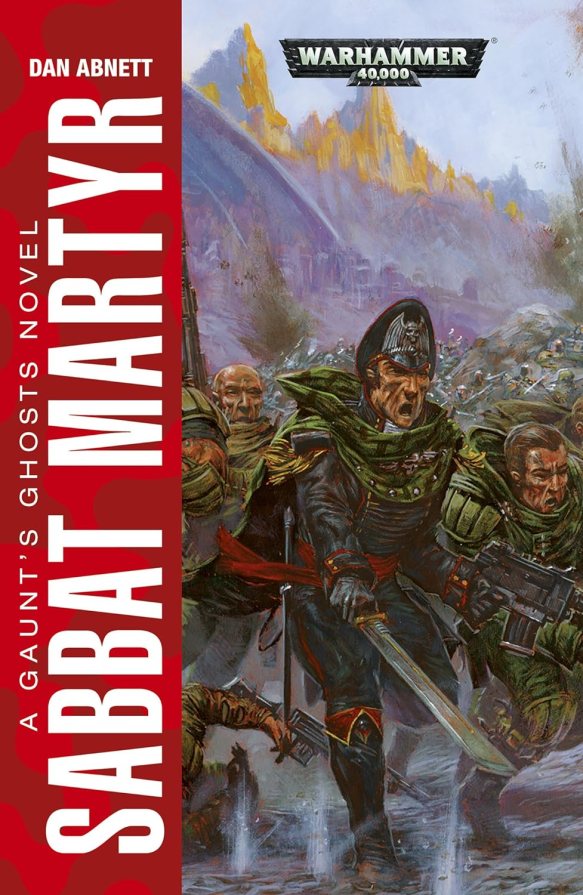
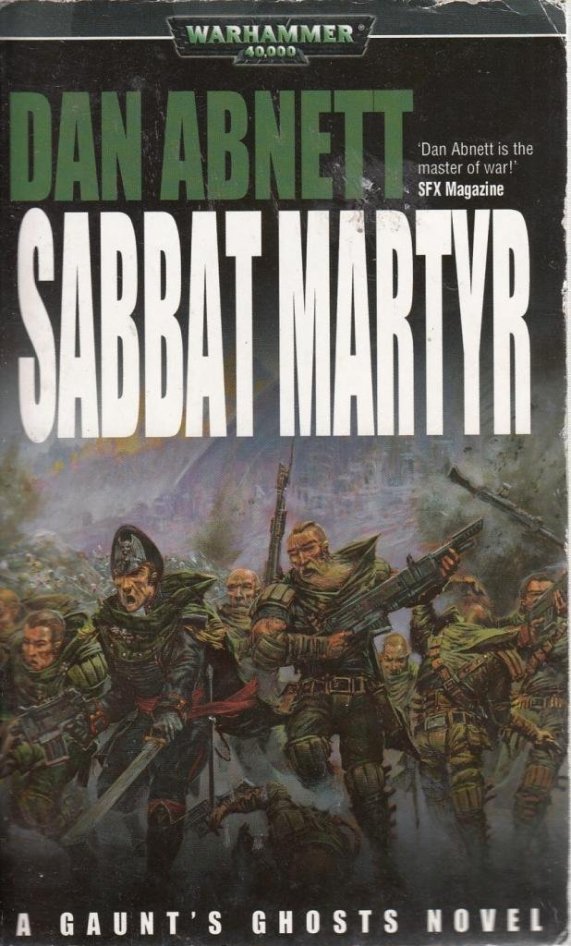
Warhammer 40,000: Sabbat Martyr by Dan Abnett

Sabbat Martyr Cover

Publisher: Black Library (Audiobook – 1 December 2002)

Series: Gaunt’s Ghosts – Book Seven

Length: 10 hours and 35 minutes

My Rating: 4.75 out of 5 stars

Amazon

In addition to my review for Straight Silver, I also present a review for the impressive and epic seventh novel in Dan Abnett’s Gaunt’s Ghosts series, Sabbat Martyr.  This was an outstanding and fantastic addition that perfectly followed on from some of the previous books in the series, including Necropolis, Honour Guard and The Guns of Tanith, while also throwing the beloved protagonists into all manner of trouble.

It is a time of miracles in the Imperium of Man.  As Warmaster Macaroth continues his extensive and exhaustive Sabbat World Crusade, the forces of the Imperium are stretched like never before.  However, word has reached the ears of all the faithful in the Sabbat Worlds that the legendary Saint Sabbat has reincarnated on the isolated and pious world of Herodor.  There, in Civitas Beati, a holy city dedicated to her, the reborn Saint awaits the faithful, the pilgrims, and the mighty warriors of the Imperium.

Amongst those summoned to Herodor are the battle tested and weary soldiers of the Tanith First-and-Only, better known as Gaunt’s Ghosts.  Thanks to their previous victories, as well as their involvement in miracles associated with the Saint, the Ghosts and their leader, Colonel-Commissar Gaunt, have been personally chosen by Sabbat to be her honour guard.  However, nothing on Herodor is as it seems, and Gaunt finds himself drawn into deceptive military politics and the manipulated beliefs of the city.  Worse, the forces of the Emperor of Mankind aren’t the only ones who have heard the call of the new Saint.

As Gaunt attempts to establish order in the city, an unstoppable danger appears on the horizon in the form of the infamous followers of Chaos, the Blood Pact.  Lead by the terrible Chaos warlord, Enok Innokenti, the invading forces of Chaos have one mission: find and kill the reborn Saint, and, by doing so, rob the Imperium of hope.  Desperately outnumbered and faced with impossible odds, Gaunt and his ghosts will need to do all they can to save the Saint and the city.  However, the dread Innokenti will have the Saint’s head by any means necessary and has sent nine deadly and corrupt killers to ensure this happens.  Can Gaunt and the Tanith First-and-Only pull off a miracle in the name of their blessed saint, or is this their final battle?

Abnett pumps up the feels and brings together some amazing storylines in this seventh excellent Gaunt’s Ghosts book.  An action-packed and highly intense read, Sabbat Martyr was another exceptional read, and one that I absolutely powered through thanks to its addictive and powerful story.

Sabbat Martyr has a pretty impressive story behind it, especially as Abnett wraps up the Saint sub-series within the larger Gaunt’s Ghosts books, in a big way.  Starting off fairly typically, with the Ghosts arriving on a new world to take care of some riffraff, Abnett quickly sets the scenes and revisits several of the key existing storylines and character arcs.  However, Sabbat Martyr goes in some intriguing new directions as Gaunt and his soldiers encounter what appears to be a reborn Imperial Saint, who has inspired a new bout of religious fervour and devotion in the region.  This proves to be an interesting new angle which ties this book into the larger concerns of the Warhammer 40,000 universe, rather than focusing on the fight of the common footslogger.  I liked this change of focus, especially as it fits with the hints raised in the preceding novels, and the initial intrigues of the novel added a level of uncertainty that worked quite nicely.  A fantastic, extended battle scene ended the first third of the book nicely, especially as it leads to some big revelations and sets the scene for the second half of the book.

The second half of Sabbat Martyr is where things get really interesting.  Abnett cleverly uses the start of this half to quickly extend several great character arcs, which sets some figures up for some dark times, while others are restored in interesting ways.  However, you don’t have a chance to fully appreciate that, as Abnett then launches the reader right into a new phase of war, as deadly enemies literally rain down around the protagonists.  Essentially the entire second half of the book is pure warfare, as the forces of Chaos arrive and harry the Imperial forces on every front, including with an extended space combat sequence.  From there, the enemy arrives on Herodor in force, including the nine promised deadly killers, and all the protagonists are thrust into a deadly battle for survival.

I loved this last part of the book, especially as Abnett knows how to write an exceptional war sequence.  Expertly splitting the story between numerous point-of-view characters, the resulting carnage is epic, with the protagonists forced into intense street fighting to survive.  All these battles are well crafted, and show the protagonists at their most desperate, as they are slowly pushed back with seemingly no hope to win.  I really loved these battles, as well as the simultaneous character arcs that tied into them, and you really get drawn in towards the big climax.  I did think that Abnett slightly rushed this last half, mainly because he was trying to fit in too much at once.  While the nine killers get a good introduction, they weren’t utilised as effectively as they could have been, and their appearances are a little briefer than you would have liked.  Indeed, there is so much potential material in this second half that Abnett could have honestly fit his story across two books and really expanded everything out.  Still all the big battles are very epic, and the big climatic fight sequence proves to be everything you could have wanted.  Abnett wraps everything up with some major tragedy, as multiple character arcs come full circle in a big and emotionally charged way.  As such, readers, especially established fans of the series, come away from Sabbat Martyr shaken while Abnett clearly and decisively ends a major chapter in the Gaunt’s Ghosts series.

Abnett does a really good job bringing this epic story to life, and I deeply appreciated just how dark and intense Sabbat Martyr got in places.  Expertly utilising multiple character perspectives to tell an elaborate story, you really get sucked into the massive carnage that emerges, and I really must commend Abnett for the impressive battle scenes.  Abnett has his methodology set for the Gaunt’s Ghosts books by this point in the series, and I love how smoothly his story unwinds.  The blend of character focussed storytelling and intense action makes for an exciting read, and I really got invested in this outstanding seventh entry in the series.  I did appreciate how Abnett took his protagonists into the much wider realm of faith, saints and holy power that is well established in other Warhammer 40,000 fiction, but not something we’ve typically seen in this series.  It honestly made for a unique change of pace, and Abnett does a great job wrapping ongoing storylines around it.  I also appreciated how several loose ends and antagonists from previous novels got revisited here, including one of the big issues I had with Honour Guard which got nicely resolved here.  This does mean that unlike the other Gaunt’s Ghosts books, Sabbat Martyr is less accessible for new readers, although Abnett does a good job of summarising old storylines where needed.  As such, this proved to be an epic entry in the wider series, and I really enjoyed how this chapter of the Gaunt’s Ghosts books came to an end.

As with all the Gaunt’s Ghosts books, the heart of Sabbat Martyr lays in the extended cast of protagonists from whom the elaborate story emerges.  Abnett has a very well-established cast of characters for Sabbat Martyr, and it was frankly moving to see how this story unfolded for them.  The author does a good job splitting the story amongst the cast, and I appreciated how this book, unlike the previous novel, didn’t overdo the number of primary cast members.  The resulting character arcs and personal stories proved to be very moving and intense to different degrees, and Abnett really got dark in places, especially when it came to bringing certain character storylines full circle.

Now, I won’t go into too much detail about the characters here, because I don’t want to ruin some major parts of the book.  However, I will say that Gaunt is once again a great central figure, and it was intriguing to see him impacted by his fate, as well as the many friendships he’s made throughout the series.  In addition, Gol Kolea gets a nice addition to his story, which I really appreciated, while one of the original Ghosts, Brin Milo, finds himself going on some bold new adventures that tie in nicely to his long-hinted destiny.  The feud between Lijah Cuu and Hlaine Larkin that was such a dark and memorable part of Straight Silver, comes to a great conclusion here, and Cuu really proves to be the ultimate villain of this series.  Agun Soric’s battle with his unusual messages is another highlight, especially as Abnett works in some powerful personal struggles, as well as a very dark ending that will leave you hurting.  All these character arcs, and more, are handled perfectly and all readers, especially those who have enjoyed the rest of the series, will really appreciate how Abnett continues or concludes them here.  However, I may never forgive Abnett for the big tragedy that occurs at the end that ensures the Tanith First-and-Only will never be the same again.

It goes without saying that I ended up listening to Sabbat Martyr on audiobook, especially after how impressed I have been with the previous Gaunt’s Ghosts audiobooks.  Coming in with a run time of 10 and half hours, Sabbat Martyr was another descent length Warhammer 40,000 audiobook that I just flew through.  This format works so well to tell epic Warhammer 40,000 stories, and I loved how effectively the fight sequences came through in Sabbat Martyr, as you can so easily envision Abnett’s massive action set pieces.  A lot of how effective Sabbat Martyr’s audiobook is comes down to excellent narrator Toby Longworth, who is one of my favourite audiobook narrators.  Longworth, the established narrator for all things Gaunt’s Ghosts (as well as Abnett’s other audiobooks like, Xenos, Malleus and Hereticus), has long perfected the voices he uses within these audiobooks, and it was great to hear his established tones and voices again.  The narrator really has all the key characters down and love the fitting and effective voice each of them has.  This impressive voice work deeply enhances an already awesome story, and you really get to feel the emotions and actions of each of the characters.  I honestly had such a great time listening to the Sabbat Martyr audiobook, especially in some of the more intense action scenes which swept my imagination away, and this is easily the best format by which to enjoy this amazing book .

With fire, blood and faith, Abnett wraps up a major part of his iconic Gaunt’s Ghosts series in a big way with the epic Sabbat Martyr.  Loaded with war, personal conflict, powerful developments, and some memorable tragedy, Sabbat Martyr was a worthy and intense addition to the series, and one that I couldn’t stop listening to.  I had such an exceptional time with this book, and Sabbat Martyr, and indeed the entire Gaunt’s Ghosts series, is required reading for all Warhammer 40,000 fans.

Sabbat Martyr Cover 2

Amazon

Warhammer 40,000: Straight Silver by Dan Abnett

Straight Silver Cover

Publisher: Black Library (Audiobook – 1 December 2002)

Series: Gaunt’s Ghosts – Book Six

Length: 9 hours and 52 minutes

My Rating: 5 out of 5 stars

Amazon

After having a blast reading and reviewing The Traitor’s Hand, my desire for more things Warhammer 40,000 needed to be sated, so I dove into the exceptional and gritty Gaunt’s Ghost book by Dan Abnett, Straight Silver.

While there are some truly impressive Warhammer 40,000 authors out there, few can match Dan Abnett in terms of quality and impact.  One of the most significant authors of Warhammer fiction, Abnett has produced a great number of books in the franchise over the years, which includes several must-read series for all Warhammer fans.  These include his substantial contributions to the massive Horus Heresy series, as well as the iconic Inquisitor extended series.  The Inquisitor books include his impressive and highly compelling Eisenhorn trilogy, made up of Xenos, Malleus and Hereticus, and which are amongst my favourite literary trilogies.  While I am a huge fan of these novels, probably his most grounded and well-known contribution to the Warhammer 40,000 canon are the Gaunt’s Ghosts novels.

The Gaunt’s Ghosts books are an extended series that follows the members of the Tanith First-and-Only, a weary and battle-hardened regiment of Imperial Guard soldiers.  Led by Colonel-Commissar Ibram Gaunt and known for their stealth abilities and the destruction of their home planet, the Tanith First-and-Only have taken up the name Gaunt’s Ghosts and are fighting in the massive Sabbat World Crusades hoping to find a new planet to call home.  This series emphasises the common human soldier and the gruelling realities of war in the grim Warhammer 40,000 future, and it is one of the most compelling series out there.  I have had an outstanding time with this series and all the books I have read, including First and Only, Ghostmaker, Necropolis, Honour Guard, The Guns of Tanith, and the prequel novel The Vincula Insurgency, have been extremely epic and complex, perfectly blending great characters with intense action.  Despite still having several books to go, the Gaunt’s Ghosts novels are one of my favourite Warhammer 40,000 series for a very good reason and I had no hesitation diving into the next book of the series, Straight Silver, when I needed something fun to read.

As the massive Sabbat World Crusades gain traction against humanity’s enemies, the Imperial forces finally have the capacity to send aid to the long-isolated planet of Aexe Cardinal.  There the loyalist nations of the Aexe Alliances have been locked in a gruelling 40-year war against the Chaos corrupted Shadik Republic.  Amongst the Imperial reinforcements sent to Aexe Cardinal are the veteran Ghosts of the Tanith First-and-Only, who are ready to make a dent in a new foe.

However, upon arriving on Aexe Cardinal, the Ghosts are surprised to find themselves under the command of the Aexe Alliance rather than their own generals.  Forced to serve the whims of their new allies for political reasons, the Ghosts are soon thrust into the archaic way of fighting that have led the war to linger for decades.  Worse, their new commanders refuse to use the Ghosts to their full potential, and the lightly armoured scouts find themselves fighting in bloody trench warfare.

Forced to endure confined conflict in ill-maintained trenches, the Ghosts find death constantly on the horizon as raids, bombardments, gas weaponry, and their own shattered morale begin to take their toll.  To keep his regiment alive and sane, Gaunt volunteers his troops for the most dangerous missions where the Ghost’s scouting skills can be best utilised.  However, the resulting campaigns will test Gaunt and his troops to the utter limit as the relentless forces of Chaos come crashing down upon them.

Straight Silver proved to be an exceptional entry to this amazing Warhammer 40,000 series.  Featuring some powerful and gritty action that took its protagonists to dark places, this sixth entry in the Gaunt’s Ghosts series was so damn good that I managed to power through it in no time at all.

Abnett did a brilliant job coming up with a particularly intense and dark story that plants the protagonists and the reader into the middle of a gritty warzone.  The main story is initially a little basic, with the Ghosts arriving on a new planet and finding themselves caught up in another long-standing war.  However, the book takes an outstanding turn when the Ghosts, who work best as a scout force, are forced into an elaborate trench warfare scenario.  Thanks to the excellent World War I inspired setting, the Ghosts are figuratively thrust back into the past and are forced to fight an old-fashioned type of war with their lasguns going up against firearms, chemical shells, and fixed lines of trenches.  The constant grim trench battles, raids and fights across no man’s land that dominate the first half of this book are very intense, gory, and pointless, and the reader is swiftly drawn into the unusual and dangerous scenario the Ghosts find themselves in.  Abnett masterfully captures so many aspects of this grim scenario, and you have to appreciate how brutal he makes the battles and the terrible conditions the characters find themselves in.

All these initial battles are expertly shown through the eyes of the many recurring characters of the Gaunt’s Ghosts series, and you swiftly begin to feel their despair and the rising tensions within them.  This works well with many of the existing character arcs, as several figures deal with grudges, uncertainty about duty, and growing relationships.  This excellent use of character arcs and perspectives humanises the fight, and you can’t help but get dragged even more into their hopeless situations.  I particularly enjoyed how Abnett deliberately made the antagonists a purely human force, with no named enemy characters serving as the villain.  This helps to reinforce that the true antagonist of the plot is human nature and their ability to wage unforgiving war, as the two opposing armies destroy everything around them.

While Abnett could have kept the characters in the trenches for a while and still had a good book, he chooses to accelerate the plot about halfway through Straight Silver, as the Ghosts are given a chance to prove themselves by going on two deadly missions.  This splits the story, as Gaunt leads half the characters on a series of deadly raids behind enemy lines, while another small group of key characters find themselves away from the fighting as they scout a critical location in the woods.  Naturally both storylines result in deadly chaos for the relevant protagonists, but I loved how they played out.  The storyline with Gaunt was brutal infiltration across no man’s land at its finest, and there are so many shudder-inducing moments as they continuously encounter the horrors of war.  The other storyline is much more a slow burn, as the characters find themselves isolated in the woods and only have themselves to fight with, as the grudges and resentments introduced at the start of the book are refreshed.  While the characters come together when an enemy presents itself, they are still caught up in their raw emotions, and this results in some dark moments.  Both storylines are resolve in an impressive and compelling manner, and the reader will come away enthralled, excited, and a little angry, as one excellent villain gets away with everything again.  You are honestly left wanting more, especially as Abnett throws in some tantalising hints for the future, and the bloody battles and horrors of Straight Silver will stay with you long after you’ve finished.

As with most books in the Gaunt’s Ghosts series, Straight Silver can be read as a mostly standalone read, as many of the key characters and story arcs are expertly reintroduced throughout the course of the book.  While readers will always get more out of Straight Silver if they read the other Gaunt’s Ghosts books first, especially as that will allow them to become more attached to the characters, a new reader can easily pick up Straight Silver and have an outstanding time getting through it.  Straight Silver and the Gaunt’s Ghosts books can also be readily enjoyed by those people with minimal pre-knowledge of the Warhammer 40,000 universe.  The Gaunt’s Ghosts books exist in their own little pocket of the universe, with the story completely focused on their own struggle as soldiers.  As such, this makes these books perfect entry level reads for those wishing to learn more about Warhammer 40,000 fiction, and anyone with a love for science fiction or military fiction is going to love Straight Silver.

I’m always impressed with the amazing range of characters that Abnett fits into each of his Gaunt’s Ghost novels, as the author tries to constantly capture the entire experience of the regiment in a Band of Brothers sort of way.  Unlike his Eisenhorn books, which had one perspective character, the Gaunt’s Ghosts follow many different protagonists, which allows you to see a massive picture of events unfolding.  This works really well, and I loved the huge range of unique perspectives and personalities that emerged, as well as the different views of the fights and internal conflicts.  I did think that Straight Silver might have featured a few too many different perspectives, as Abnett tried to bring some new characters to the fore.  This meant that several of the established cast from the previous book didn’t have a chance to shine here and were often sidelined, while the newer characters didn’t impress as much in their first big appearance.

There were still a ton of great character arcs going on, and even with less time in the spotlight, many of these characters made the most of it.  Main protagonist Colonel-Commissar Ibram Gaunt gets a good showing, especially as he is forced into conflict with his friend, the highly moral Chief Medic Tolin Dorden, and he is forced to balance his responsibilities as a Commissar with the love he holds for his soldiers.  Newly promoted Sergeant Tona Criid proves to be an absolute badass character, and it was great to see her take command and kick butt.  Sergeant Agun Soric has some great scenes as he slowly comes to realise his latent psychic abilities, while the formerly charismatic Gol Kolea is a hard figure to read about, after suffering a head wound in the previous book and losing his intelligence.  However, the best storyline in Straight Silver involves the mad sniper Hlaine Larkin and the nefarious trooper Lijah Cuu (sure as sure).  Thanks to their interactions in the previous book, the slippery murderer Cuu has a major grudge against Larkin and is determined to kill him, just like he did Bragg.  This results in a deadly game of cat and mouse between the two, as Larkin tries to survive both the enemy and Cuu.  Cuu comes away as such a good villain for this book (even more than the enemy), and you can’t help but hate the guy, especially as there is something slick and scary in his every appearance.  These characters, and many more, helped to turn Straight Silver into an exceptional read, and you really get wrapped up in their unique experiences of war.

I doubt anyone who has every read one of my Warhammer reviews will be surprised that I ended up listening to Straight Silver on audiobook.  All Warhammer books are so much better in this format, and the Gaunt’s Ghosts audiobooks are a great example of this, especially with narrator Toby Longworth.  Longworth, who is one of my favourite audiobook narrators, has lent his voice to most of Abnett’s Warhammer audiobooks, and he always does a remarkable job moving the story along and describing the book’s epic battle sequences.  This is extremely evident in Straight Silver, and I very quickly powered through this audiobook because of how good it is.

I especially loved the awesome voices that Longworth came up with for the various characters featured throughout the book, and he goes out of his way to ensure that every figure has their own distinctive and fitting voice.  Many of these voices are carried over from the previous audiobooks, and it was great to get the continuity for each of the recurring characters, so much so that by this point listeners of the other Gaunt’s Ghosts books can figure out who is talking just by hearing their particular tone.  One thing I particularly appreciate is the range of accents that Longworth distributes across the audiobook.  Each group of soldiers, such as the original Tanith troopers, the new Verghastite recruits, and the soldiers of Aexe Cardinal, are given their own distinctive accents, and this cool attention to detail is what makes Longworth such a good narrator.  This was such an epic audiobook; with a runtime of nearly ten hours, most people can power through it, especially when they get caught up in the epic story.

Straight Silver is a particularly epic and impressive addition to the Gaunt’s Ghosts series as Dan Abnett takes his fame regiment down into battle hell.  Loaded with intense moments, a powerful background setting, and multiple engaging character arcs, Straight Silver is an exceptional read, and it is honestly one of the strongest Gaunt’s Ghosts books I have so far read.  An utterly addictive Warhammer 40,000 novel, I can give it no higher honour as a reviewer than to say the moment I finished it, I instantly grabbed the next book in the series, read it, and will be putting up a review for it now.

Amazon

Warhammer 40,000: The Traitor’s Hand by Sandy Mitchell

The Traitor's Hand Cover

Publisher: Black Library (Audiobook – 1 January 2005)

Series: Ciaphas Cain – Book Three

Length: 9 hours and 6 minutes

My Rating: 4.75 out of 5 stars

Amazon

After updating my list about my favourite Warhammer 40,000 novels last week, I was keen for more action from this awesome franchise, so I decided to quickly listen to the entertaining and fun novel, The Traitor’s Hand by Sandy Mitchell.

One of the things that I like most about the Warhammer 40,000 franchise is the sheer range of different stories and genres that can be found within it.  For example, one of the most popular series is a particularly funny and amusing series that focuses on a Blackadder-esque Imperial Commissar as he finds himself involved in all manner of over-the-top heroics.  This series is the Ciaphas Cain books, which follows the titular protagonist who has accidently become regarded as a great hero of the Imperium of Man, despite most of his actions being more for self-preservation.  The first two books in this series, For the Emperor and Caves of Ice, were extremely fun reads, and I have been meaning to check out the next book in the series for a while.  As such, when I had my recent Warhammer 40,000 craving, the third Ciaphas Cain book, The Traitor’s Hand, was an easy choice.

Commissar Ciaphas Cain, hero of the Imperium or unrepentant coward?  Constantly forced into the direst of circumstances despite doing everything in his power to avoid them, Cain has built up a reputation he considers entirely undeserved, especially as being known as a hero always seems to get him into trouble.  His latest assignment will test him like none other, especially when he is forced to go up against the great archenemy of the Imperium, the forces of Chaos.

With a Chaos fleet approaching the tidally locked planet of Adumbria, Cain and the soldiers of the Valhallan 597th are rapidly redeployed towards the planet to aid in its defence.  Despite wishing to stay off the frontlines, Cain’s experience and uncanny ability to find trouble forces him to join in the hunt for a Chaos cult hidden throughout the planet that has awakened in advance of the coming fleet.  However, the more he digs, the more he discovers that there is something far more sinister going on within the planet than anyone realises.

As the invading enemy arrives on the planet, it soon becomes apparent that two rival bands of Chaos worshippers are attacking Adumbria with very different goals in mind.  Leading the fight against the enemy, Cain needs to work out just what their objectives are before the world is destroyed in the Chaos crossfire.  However, with deadly enemy forces all around and a rival commissar determined to undermine him, can even the terminally lucky Cain stop them, especially when an old nightmare returns seeking revenge against him.

The Traitor’s Hand was an extremely awesome book from Mitchell that I had so much fun getting through.  Containing the outstanding blend of action, humour and intriguing characters that the Ciaphas Cain series is known for, The Traitor’s Hand was pretty damn epic, and I managed to power through it in about a day of intense listening.

This third Ciaphas Cain novel had a great story behind it that I had a wonderful time listening to.  While it does follow some similar story conventions to the previous books in the series, in that Cain and the Valhallan 597th arrive on a planet to face one foe, only for Cain to inadvertently discover another threat hidden under the surface, I think Mitchell did a good job distinguishing this book from the previous entries.  The introduction of a rival Commissar and alternating bands of Chaos worshippers makes for a great central storyline, and you get really involved in the battle for the planet and the attempts to discover a hidden Slaaneshi cult who are performing dark rituals.  The entire story evolves in a familiar manner, with Cain’s attempts to avoid a fight leading him into darker situations each time, while his keen insights allow him to determine where the true threat to the planet is located.  The big final sequence for The Traitor’s Hand was pretty damn awesome, as Cain leads a small force into a massive battle royale between warring Chaos warbands while also facing a dangerous foe from his past.  While the big bad’s identity was overly foreshadowed, their inclusion was very intense and lead to a gripping conclusion.  I do wonder if this repetitive story structure is going to be sustainable for the series in the future, but I really got stuck into this entertaining and exciting narrative and powered through it so damn quickly.

I absolutely loved the fun style of the Ciaphas Cain books which Mitchell once again uses to tell a fantastic story.  Primarily told from the first-person chronicle perspective as Cain recounts his many adventures, you get to see his insights into events that occur.  While on the surface this appears to be a typical Imperial Guard focused Warhammer 40,000 story, it is a much lighter read, as the book revolves around Cain’s continued attempts to get out of danger only to encounter worst problems.  It is really entertaining to see his excuses and manipulations, especially as nearly every action he does is calculated to avoid danger, which he shamelessly admits to.  The continued increase of stakes, desperate response from Cain and the inevitable lucky escape makes for some fun reading, and Mitchell does an excellent job of layering a strong amount of comedy into a usually dark universe.  This humour is expertly enhanced by the overarching narration of the book, provided by Inquisitor Vail’s editorial notes as she collates Cain’s memoirs.  Vail’s various notes, quotes and included histories of the story provides some much-needed context to the plot, while the entertaining and often sarcastic way they are delivered works extremely well.  I think that Mitchell got the right blend of humour, action, and dark moments throughout the course of The Traitor’s Hand, and I really got engrossed in the hilarious and action-packed story that emerged.  I did feel at times that Mitchell did get a bit repetitive with some of his phrases and lines, which you really notice with an extended read, but this is honestly a pretty minor complaint, and The Traitor’s Hand proved to be an amazing read.

I liked how well Mitchell featured the Warhammer 40,000 universe in The Traitor’s Hand, especially as he once again seeks to showcase the horrors of the franchise from the eyes of a human solider, even one as lucky as Ciaphas Cain.  The various Chaos factions prove to be great villains in this story, and I loved the cool comparisons between the Slaaneshi cult and the Khorne-worshipping warband.  You also get a great insight into the life of the common soldier or civilian, and it was fun to see the various responses many of them have to the reveals about Chaos and their dark designs.

Like most of the Ciaphas Cain novels The Traitor’s Hand can easily be read as a standalone book, and no real pre-knowledge of the Warhammer 40,000 universe is really needed.  Indeed, I really appreciated how efficiently Mitchell is able to ease new readers into the wider Warhammer 40,000 universe.  In addition, readers don’t really need to have checked out the prior Ciaphas Cain novels either, as Mitchell does a good job of summarising the necessary key points from these books when needed.  There were some strong references to the Ciaphas Cain short story, The Beguiling, which if you had read would have increased the impact of The Traitor’ Hand to a degree, however, it is also not necessary to have read it first, as Mitchell recaps it very well.  Overall, I felt this was a great piece of Warhammer 40,000 fiction that many people can get into.

A key highlight of any Ciaphas Cain novel is the excellent character work that Mitchell installs into the story.  This is certainly the case in The Traitor’s Hand, with most of the character work revolving around the protagonist and main point-of-view character, Commissar Ciaphas Cain.  While Mitchell has done a great job setting up this figure in the previous two books, it is always so much fun to see a story through Cain’s eyes, especially as the protagonist bears the duality of being a hero and a coward at the same time.  Fitted with a well-honed sense of survival, Cain is constantly trying to find ways to get out of danger and has proven quite adept at manipulating people to get what he wants.  However, due to bad luck or because he finds himself trapped by his own legend, Cain is constantly dragged into the most dangerous situations possible.  While it would be easy to dislike a character like this, readers quickly become aware that Cain isn’t as big a coward as he believes, and instead he is quite a skilled, brave and caring leader whose “cowardly” actions are often borne by shrewd assessment and tactical awareness.  Throw in his excellent sense of humour, his entertaining insights into the universe, and his vast experiences with the many different things trying to kill humans in the Warhammer universe, and Cain is such a great protagonist to follow.

Aside from Cain, The Traitor’s Hand features a raft of other great characters, each of whom bring a lot to the story.  For example, Inquisitor Vail, despite not appearing in person, serves a big role in the book, editing Cain’s unreliable manuscripts.  I loved her witty over-arching narration and notes throughout the book, and it was fun to have someone constantly calling out Cain for his wilder statements.  I also loved the continued inclusion of Cain’s aid, Jurgen, the man capable of killing anything in the galaxy with his trusted meltagun.  I love how Mitchell sets Jurgen up as the Baldrick to Cain’s Blackadder in this series, especially with his attitude, hygiene and loyalty, although he proves to be a vital ally.  It was also interesting to see Mitchell continue to explore just how vital Jurgen is to Cain’s success, especially due to his status as a Blank, and I love the entertaining team the two characters combine into.  New character Commissar Tomas Beije, an old school rival of Cain’s, serves as a great secondary antagonist for much of the story, and it was entertaining to finally see a character suspicious of Cain’s status as hero, especially as he looks deranged spouting out accusations we know to actually be true.  Finally, the various members of the Valhallan 597th, many of whom were introduced to us at the same time as Cain, continue to grow as characters and serve great supporting roles in the story, and it was touching to see how their relationship to the protagonist has grown over the years.

I have often said throughout my many reviews on the subject that the best way to enjoy a Warhammer 40,000 novel is its audiobook format.  Nowhere is that truer than the Ciaphas Cain audiobooks, which really capture the zany feel of the series through its excellent narration and style.  Most of this is due to the excellent use of multiple narrators, whose mixture of voices creates a particularly epic read (indeed this one of my favourite audiobook series with multiple narrators).  The Traitor’s Hand features four separate narrators, each of whom add so much to my enjoyment of this audiobook.  Each of these narrators has a distinctive role, with the amazing Stephen Perring providing the bulk of the narration in this series, as he narrates the chapters told from the protagonist’s perspective.  Perring serves as an epic centre for this audiobook, especially as he does such a good job capturing the larger-than-life Ciaphas Cain with his acting.  Perring’s take on Cain’s cocky dialogue, as well as his more honest chronicling of events, is impressive, and I love how he captured the various aspects of Cain’s character.  There are some other great voices featured throughout these chapters as well, as Perring assigns fitting and entertaining voices to each of the major characters.  My favourite of these is probably Jurgen, especially as Perring really tries to make him sound as much like Tony Robinson as possible.

While Perring does most of the narration in The Traitor’s Hand, the additional voice actors also add a lot to the story, especially Penelope Rawlins.  Rawlins voices the character of Inquisitor Vail, the Imperial Inquisitor and acquaintance of Cain who is compiling the memoirs for publication.  As such, Rawlins voices the prelude, chapter introductions and footnotes contained in this book to showcase the editorial notes that this character is adding in to make Cain’s ramblings easier to read.  Rawlins serves as a good contrast to Perring, especially as her character’s more serious tones are the direct opposite of Perring’s flippant take on Cain.  I love how seamlessly the production works Rawlins’ voice into the various points of the audiobook where her character cuts into the main story, and you really get into the groove of her explaining key details about the universe and the characters.  Throw in the additional voice work of Emma Gregory and new narrator Andrew Spooner, who give their voices to various in-universe texts that provide additional information for the reader, and you have a strong team who masterfully enhance Mitchell’s brilliant story.  These great actors really help to make this entire audiobook production so much fun to listen to, and with a runtime of just over nine hours, you can very easily sit back and listen to The Traitor’s Hand in one fantastic sitting.

With The Traitor’s Hand, Sandy Mitchell continues to showcase why he is one of the strongest, and funniest, authors of Warhammer 40,000 fiction.  Filled with the series’ trademark humour, intriguing characters and intense action, The Traitor’s Hand was an entertaining audiobook from start to finish that I could not turn off.  An outstanding and highly recommend novel, The Traitor’s Hand was so damn good, and I cannot wait to see how Mitchell continues this amazing series.

Amazon