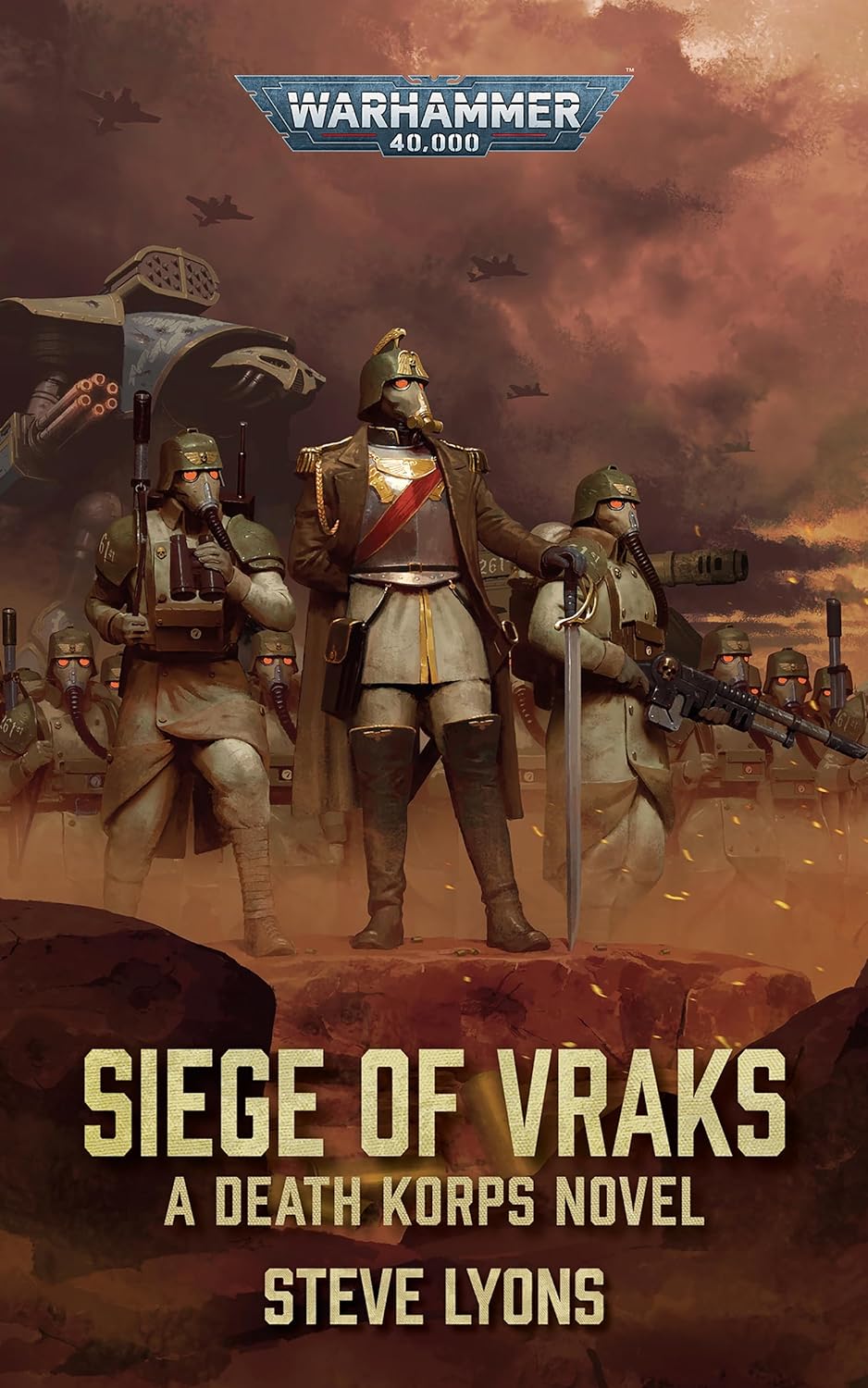
Warhammer 40,000: Siege of Vraks by Steve Lyons

Publisher: Black Library (Audiobook – 22 June 2024)

Series: Warhammer 40,000

Length: 9 hours and 48 minutes

My Rating: 4.5 out of 5 stars

Amazon

The always impressive Steve Lyons once again dives into the wars of the legendary Death Korps of Krieg with this epic new novel that shows just how massive a Warhammer 40,000 campaign can be with the ultra-exciting and intense Siege of Vraks.

I have been having a ton of fun with Warhammer 40,000 fiction this year, as complex books like Da Big Dakka by Mike Brooks, Deathworlder by Victoria Hayward and Lord of Excess by Rich McCormick have greatly impressed me.  However, few have had the scale or pure brutality of the amazing new release, Siege of Vraks by Steve Lyons.  The third standalone book by Lyons that focuses on the Death Korps of Krieg (see my reviews for Dead Men Walking and Krieg), Siege of Vraks brings to life a massive event from the Warhammer 40,000 canon (as featured in several game books), with the long-running siege of the planet of Vraks.

In the far future, humanity has been forced to fight on many brutal battlefields, but none are as infamous as the slaughter that occurred on the planet Vraks.  Once a vital armoury world used to supply regiments throughout the Imperium of Man, Vraks has become tainted by humanity’s greatest enemy.  Thanks to a corrupted cardinal, the entirety of Vraks’s population has fallen under the sway of the Chaos Gods and have risen in rebellion against the rest of the Imperium, believing themselves to be fighting in the god Emperor’s name.

Desperate to reclaim the vital world, the Imperium has no choice but to send in a massive besieging invasion force to purge the traitors.  Only a completely relentless force has a chance of success on the bloody fields of Vraks, and to that end the stoic soldiers of the Death Korps of Krieg have been chosen to lead the attack.  Experts at sieges, fanatically stubborn, and desperate to wipe away the stain of their planet’s historical betrayal, the soldiers of Krieg are prepared to destroy their enemy no matter the cost.

However, even with the implacable Krieg soldiers leading the assault, Vraks is no simple planet to conquer.  Its massive central fortress is impregnable, and the entire population of planet has been mobilised to fight against the Krieg, equipped with the massive arsenal of weapons previously held in Vraks’s armoury.  To defeat their enemy, the Krieg will need to spend years and millions of soldiers to slowly approach and wear down Vraks’s fortresses.  But with the constant battle drawing the attention of other malign Chaos forces to Vraks, can even the massed forces of the Krieg win this impossible siege, or will these fearless soldiers finally face an army even their devotion and dedication to duty is unable to overcome?

Siege of Vraks was another particularly strong Warhammer 40,000 novel from Lyons, who excels at diving into the grimdark core of Warhammer fiction.  Filled with an insane amount of action, Siege of Vraks proves to be an intense and addictive siege novel that cleverly explores a well-established lore event and presents it in an outstanding and moving way to the reader.

The story of Siege of Vraks is one of action, sacrifice and self-discovery, as it recounts the events of the titular siege in its own compelling way.  Starting off with a quick prelude that covers the events that led up to the conflict, the main story starts a few years into the war and then goes all the way to the very conclusion of the siege which occurs after years of brutal fighting.  Rather than having one concise narrative thread, Siege of Vraks is instead made up of a series of connected storylines set around key events of the war.  Each of the initial chapters features a new central character caught up in a different battle and scenario of the war, and often focuses on them fighting in dangerous or impossible situations.  While these initial chapters are often linked by the inclusion of recurring character Confessor Ignea Tenaxus or by showing different sides to the same battle, for the most part they are unconnected and some of their messages and themes remain self-contained within the chapter.  However, as the book continues, a few point-of-view characters return for another chapter, often years removed from their last appearance.  These characters, especially Colonel Tyborc, will then continue their storylines from the previous appearances, which often play into the larger events of the overall siege in some interesting ways.  While I imagine the slightly disjointed way that Lyons tried to capture the siege might not be for everyone, especially those who would prefer seeing every event from one character’s eyes, I thought that it was extremely clever and fit into the unique mindset of the Krieg regiment.

The rest of the book takes places over a series of years as Lyons attempts to capture the entire epic and lengthy sieges.  The author includes multiple time skips here to showcase the dragging length of the battle, often interspersed with useful context inclusions that provide an overview of the carnage.  These time skips move the story along at a sensible pace and the reader is never lost, especially when it comes to the key recurring characters. While Lyons is primarily showing the carnage of war from the perspective of the fighter on the ground, you get a good understanding of just how big the scope of the fighting is, and really get drawn into the over-the-top action.  The loosely connected character arcs continue in the second half of Siege of Vraks, and there are some complex stories being featured here.  I particularly enjoyed the fascinating standalone chapter that followed the interrogation of a local inhabitant of Vraks after he defected and pretended to be a member of a Krieg regiment.  While other chapters featuring recurring character Colonel Tyborc provides some unique insights into the mindset of a Krieg soldier and what being a hero means to them.  All these chapters are loaded with some intense action, intriguing discussions, or shocking occurrences, as the horrors of war, and even darker things, take their toll on the Krieg soldiers.  Everything leads up to the conclusion of the siege, with final battles, deadly confrontations, and despair in the aftermath, leaving plenty for the reader to get drawn into.  This ended up being a particularly epic narrative which I personally really enjoyed.

As I mentioned above, Lyons features a more fractured narrative structure in Siege of Vraks that shows detailed snapshots of key parts of the larger war and the lives of certain protagonists.  Considering that the overall siege lasts many, many years and features a lot of smaller, pointless battles, this is honestly the best way of doing it, and I think that Lyons’s choice provided the best view of this conflict, while also taking the time to explore multiple characters and storylines.  The resulting book has an interesting flow to it, as you are introduced to new dark scenarios and figures in peril, and forced to watch them participate in a pointless, unrelenting conflict.  While some may not connect with the way in which Lyons dived the book between characters and time periods, I really appreciated the way it was told, and other readers’ dislike will be well bridged by the book’s awesome action.  There are so many impressive battle sequences featured throughout Siege of Vraks, and you see the Krieg soldiers and their allies face off against all manner of opposing forces, from corrupted civilians to daemons and traitor Space Marines.  All these scenes are particularly epic, as Lyons succeeds in showcasing the elaborate big battles of the franchise, and you really get drawn into the resulting carnage.  There is a palpable desperation in many of these sequences, as the Krieg soldiers face off against terrible odds, and Lyons also adds in a bit of horror in places, as Warhammer 40,000 zombies, disgusting daemons, and even more terrors enter the fray.

Due to all this cool action, Siege of Vraks is a highly accessible read to those readers unfamiliar to Warhammer fiction, and any general fans of science fiction and military fiction can have fun with the over-the-top battles featured in the book.  Indeed, I personally felt that Siege of Vraks was one of the few of the franchise novels that really captured the epic scope of a Warhammer 40,000 war, as this book captures a literal world-spanning conflict with millions upon millions of casualties.  Lyons really takes the time to explore just how devastating a full-on war in the franchise can be, and I appreciated seeing the extent of this slaughter here, compared to other Warhammer books that focus primarily on one regiment or relatively small-scale conflicts.  As such, long-term Warhammer fans will also get a lot out of Siege of Vraks, especially as Lyons really does a good job of capturing this event, which has been discussed in some of the games books for ages and showing it to the reader from the soldier’s perspective.  However, the thing that will appeal most to established Warhammer 40,000 readers, is Lyons’ portrayal of the awesome Krieg soldiers.

Due to their dour background, German World War I aesthetic, and the utter devotion to death and duty, the Krieg are a particularly popular faction in the Warhammer 40,000 games and extended fiction, and Lyons is the undisputed author of them.  His previous books have all explored different aspects of the faction, with Krieg looking at their history and the events that made them, while Dead Men Walking showed them as near-soulless automaton, especially through the eyes of the desperate civilians they were there to save.  In Siege of Vraks, Lyons goes a slightly different way and presents a more nuanced and complex portrayal  that fans of his previous works will really appreciate.  For the first time, Lyons features several Krieg perspective characters, and you are given some intriguing insights into their mind, which proves to be highly fascinating.  While on the surface they are dedicated and fanatical fighters, you do see some threads of humanity in several of the characters, such as ambition, fear and uncertainty.  I liked how Lyon tries to humanise the Krieg soldiers in places, especially around main character Colonel Tyborc who struggles with the notion of being a hero when all he wants is to fight the war and redeem his planet.  Tyborc’s arc proves to be particularly compelling in places, especially as his experiences cause him to doubt the war they are fighting in, and lead to an infamous showing of fear.  Despite this attempt at showcasing humanity, Lyons is clear that the Krieg have their own unique drive and take on human nature, such as when one Krieg character sends his older Commissar on a suicide mission because he believes its more merciful than letting him retire.  As such, there are some complex depictions of the Krieg here in Siege of Vrak, which serve as an interesting comparison to some of the author’s previous novels, and I felt that Lyons’ dive between different Krieg characters produced a very complex read.

Unsurprisingly to anyone who has read one of my Warhammer 40,000 reviews, I chose to enjoy Siege of Vraks in its audiobook format.  I have waxed poetic many times about how awesome I find Warhammer audiobooks to be, and this proved to be the case again with Siege of Vraks.  The many intense and over-the-top battles really come across in an epic way when read to you, and I personally find that I can envision the action much more effectively this way.  I also find that the complex character interactions and personal developments that Lyons loads up into the story are expertly captured by this format, and I believe that I got a lot more out of the audiobook than reading a physical copy.  It helped that excellent narrator Timothy Watson returned for Siege of Vraks.  Watson has previously really impressed me with Lyons’ previous audiobooks, as well as in The Lion: Son of the Forest by Mike Brooks, and it was great to see him continue to add his own spin these Krieg-focused books.  Watson is very effective at conveying the excessive violence and intensity of the Warhammer universe with his narration, and you really get drawn into the action as a result.  I also really love the Germanic accents that Watson attributes to the various Krieg characters, especially as it fits into their faction aesthetic.  While the various Krieg characters all sound a little similar (which does fit into their potential clone background), the narrator does a good job differentiating between these characters, and you are never in doubt about who is talking.  This excellent narration really helped to drag me into the Siege of Vraks audiobook, and I honestly flew through its near 10 hour long run.  There is honestly no better way to enjoy Siege of Vraks then on audiobook, and you are going to have a great time doing so.

Overall, Steve Lyons’s Siege of Vraks was a particularly epic and intense piece of Warhammer 40,000 fiction, that is going to appeal to a lot of different readers.  Loaded with massive and over-the-top action sequences, Siege of Vraks had me hooked from the very beginning, especially as the author once again expertly showcases the iconic Death Korps of Krieg.  This was such a great read, and all fans of Warhammer fiction and excessively massive science fiction battles, are in for an amazing treat with Siege of Vraks.
Amazon

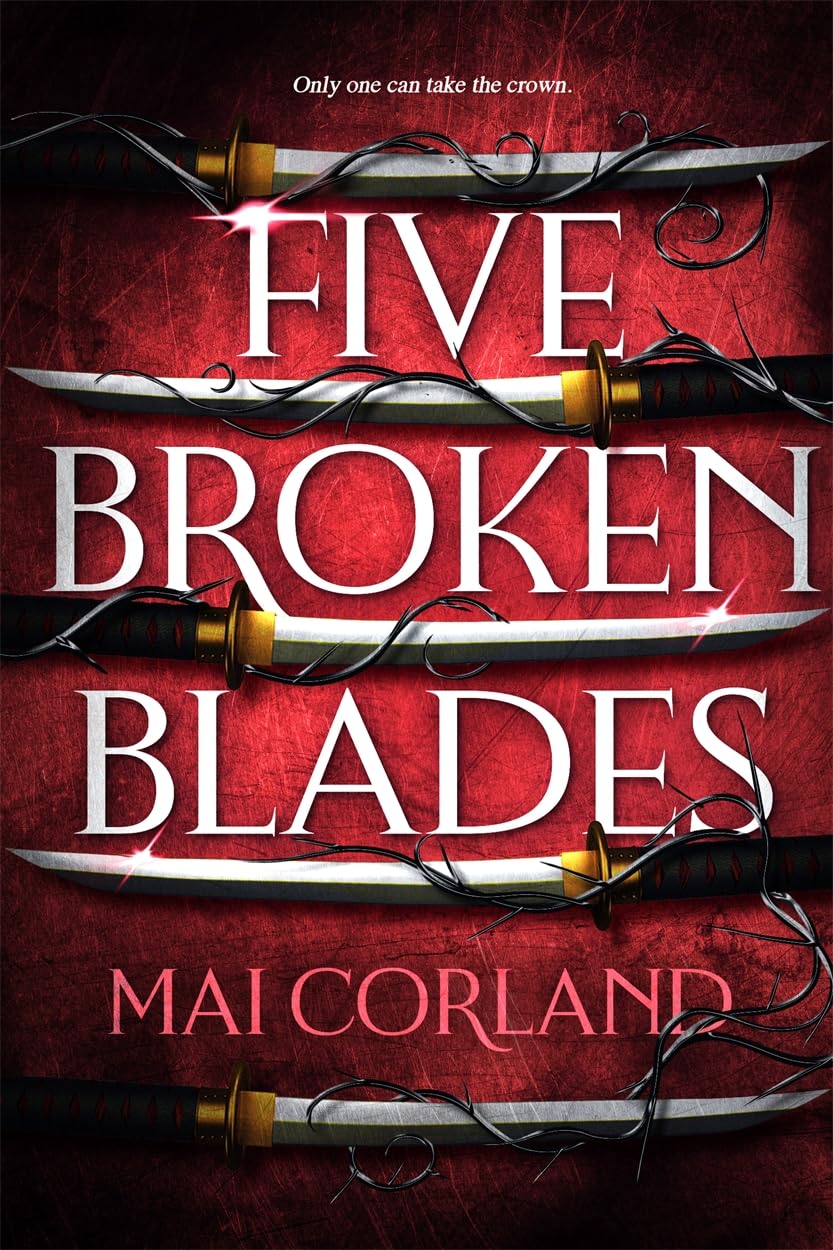
Five Broken Blades by Mai Corland

Publisher: Recorded Books (Audiobook – 7 May 2024)

Series: The Broken Blades – Book One

Length: 15 hours and 1 minute

My Rating: 4.5 out of 5 stars

Amazon

I was in the mood for some awesome fantasy fiction, so I decided to check out something a little different for me, Five Broken Blades by new author Mai Corland.  The debut adult book from Corland, who previously wrote children’s and young adult fiction under the name Meredith Ireland, Five Broken Blades was an addictive and exciting fantasy novel with some tragic romance at its core.

In the kingdom of Yusan, the God King Joon is a tyrannical and despised figure whose rule has seen the lives of the poor and innocent disadvantaged even further.  There are many people who want Joon dead, but to even think about it is high treason, punished by the most painful of deaths.  Worse, killing the king is next to impossible, as he is immortal, granted extended life and invulnerability by his magical crown.  Despite this, a small group of desperate killers are about to try to take him down.

Mysteriously summoned from across the nation, five of the most dangerous killers and rogues in Yusan have been tasked with working together and doing the impossible, stealing Joon’s crown and killing him in public.  Each of the five has their own reason for taking part in this apparent suicide mission, including a hired hitman seeking the money he needs for his redemption, a trapped poison-maiden hoping to gain freedom for herself and her sister, the royal spymaster looking for revenge, a banished prince who wants his life back, and a slippery thief seeking to reconnect with her family.

As the group begin to put their plan into motion, these independent killers will need to learn to work together with the rest of the group if they have any hope of surviving.  However, each of them has their own deeper motivations regarding their planned mission, and none of them truly trusts the other rogues they have been tasked with working with.  As they get closer to their goal, the five experience setbacks, twisted romance and unexpected opportunities.  But can they succeed and kill a God King, especially when they have a traitor in their midst?

Five Broken Blades was an excellent and highly enjoyable novel from Corland, who produced an amazing debut adult fantasy novel.  A clever fantasy novel with some entertaining romance elements, Five Broken Blades has an outstanding story of deceit, betrayal and bloodshed set in a Korean-influenced fantasy realm, which really drew me in with its impressive and fun story.

I had an outstanding time with the elaborate story that Corland came up with for Five Broken Blades, and the author produces an intense and moving, character-driven story.  Despite the name and the discussion about the five killers in the synopsis, there are actually six protagonists in this book, which produces a well-balanced narrative with a variety of intriguing character perspectives, arcs and motivations.  Corland starts the book by initially focusing on three of the protagonists and working the reader into their own unique circumstances and backstory.  The author does a good job of quickly and effectively introducing these figures in the initial chapters of the book, and then pairing them off with an additional protagonist who seeks to bring them into the main assassination plot of the book.  These new characters generally serve as great foils for the initial protagonists, and Corland then works to expand their roles in the book, providing their own backgrounds and motivations for being there.  Once established together, these three pairs of characters, then set off to meet up with the other protagonists as they plan their attempted regicide.

The first half of the book primarily focuses on the three separate pairs as they set up their own storylines both individually and as a couple, which I felt worked to really hammer home the complex character arcs Corland was setting up.  There are some fantastic moments in these early pages, including fights against monstrous birds, pirate warfare, and some intense personal scenes.  While the romantic entanglements that emerge within all three of these initial pairs are very predictable and forced, you generally grow attached to all six protagonists, and it proves interesting to see the various hidden motivations and background, especially as Corland expertly trickles out their respective secrets to the reader.  While I quite enjoyed getting to know the characters separately, I felt that Five Broken Blades’s story really took off once all six characters joined together in one group.  The six protagonists all play off each other nicely, and it was intriguing to see the different opinions they had of the rest of the group.  The mismatched styles and motivations make for some compelling interactions, and Corland also works in a particularly intense fight sequence, that helps to cement the protagonists as a team.

While there is some excellent camaraderie, and more romantic tension, the second half of the narrative is strongly defined by mistrust and secrets.  Corland does an excellent job of showcasing the conflicting motivations and hidden desires of the protagonists to the reader, and it was entertaining seeing the various ways the characters all lied to each other as they progressed.  Everything leads up to an intense final act, where the assassination attempt is made, and everyone’s secrets are brought out into the light.  There are some excellent reveals here, and I loved the big twist that comes out as a result.  While I did feel that the identity of the traitor in the group was slightly predictable, the full extent of their motivations and the reasons why they are there was compelling, and it ties in well with all the other clever reveals.  The last few chapters of Five Broken Blades were so damn good, especially as nearly every big question from the book is answered, and I loved the excellent cliff-hanger that Corland left it on, as it really raises the bar for the sequel’s potential plot.

I really enjoyed how Corland set out Five Broken Blades, and the exciting narrative came across in an excellent way.  The key highlight of this is probably the use of six separate perspective characters to tell the complex story.  While too many narrators can sometimes ruin a story, I felt that Corland had the right balance, as Five Broken Blades’ story never felt too crowded or diluted.  While the author probably could have left out Tiyung’s perspective, for the most part the split and switch between narrators worked extremely well, and I loved how it enhanced the overall story and allowed the author to explore multiple compelling character arcs.  The way in which the specific character-focused chapters started off long at the start of the book, allowing for introductions and initial character development at the front, and then got shorter once all six protagonists were together, was very clever as well, and I appreciated how the sudden shift in perspectives with the shorter chapters helped with some of the books more intense or action-packed scenes.

Corland ensures that there is a great mixture of different story elements featured throughout Five Broken Blades, and I personally appreciated how the focus on the characters was balanced with action and so much intrigue.  All this is well surrounded by an intriguing new fantasy realm, Yusan, with some distinctive Korean influences.  While I did feel that parts of this world were a little basic, for the most part this was an excellent background setting, and I appreciate how well Corland worked her fantasy ideas into the larger narrative.

Another key aspect of Five Broken Blades was the inclusion of multiple romance arcs, due to this book being marketed as a romantasy.  I must admit that I’m not the biggest fan of romantasy fiction, and while a good romance arc can greatly enhance a fantasy story, I don’t go out of my way for books that feature excessive romance added in purely to make it a mixed genre novel.  Still, I gave Five Broken Blades a chance, and I honestly thought that Corland did a great job with the romance elements.  While two of the main three romances are very forced (although Euyn and Mikail’s arc of betrayal and forgiveness was pretty strong), for the most part they were fun or interesting to see unfold.  It helped that they didn’t overwhelm the rest of the story and instead were well balanced against the constant machinations of the characters.  Indeed, the romances added an extra layer of heartbreak to some of the betrayals, which ensured a more intense plot.  As such, Five Broken Blades was a romantasy most fantasy fans can probably enjoy, although people will have issues with the predictable way that all three of the initial pairs of protagonists couple up.

While the excellent and twisty story is a great part of Five Broken Blades, the best part of this book is the well-crafted main characters who the narrative is set around.  Corland came up with six excellent protagonists for this book, all of whom have complex and tragic backstories that come into play throughout the course of the book.  Indeed, the narrative is strongly driven by each of their personal tales and experiences, and you really get drawn into the backgrounds and thoughts of the protagonists, especially as understanding their motivations and interactions with the other protagonists is key to working out the upcoming twists.

Of these characters, I felt that Royo and Sora were probably the best written, and I loved their complex stories filled with tragedy, regret and a loss of freedom.  Royo, the tough street thug with a severe need for redemption proves to be the heart of the story, especially as he has a particularly tragic backstory.  He is well matched by the beautiful Sora, a young woman who was forced into a life of death as a poison-maiden, whose poisonous body brings death to those who try to get close to her.  Required to perform assassinations to keep her sister safe, Sora longs for freedom, and will take any opportunity to get revenge and ensure her sister’s safety.  Royo and Sora and well matched by the entertaining pairing of Euyn and Mikail, whose respective arcs were nearly as complex as theirs.  Euyn, the former crown prince of Yusan, had been forced from his life of luxury due to his murderous predilections, and now seeks to become king after years on the run and a better understanding of the common people.  However, Euyn is constantly bedevilled by his former lover Mikail, the royal spymaster, who blows into his life once again to recruit Euyn for the plot against his brother.  Mikail is probably the most entertaining figure in the book, and I loved his constant manipulation of the others.  Corland did a good job of building up a complex backstory behind Mikail, and you grow to like him even more once you understand the reasons behind his inner rage and the lengths he wishes to go to resolve it.

While these four protagonists are pretty awesome, I did feel that the story was slightly let down by the other two protagonists Aeri and Tiyung.  Tiyung is underused (he’s not one of the titular five broken blades), and his unrequited love with Sora and rebellion against his father had some benefit for the story.  However, I had a hard time liking the character of Aeri.  While she did grow on you a little as Five Broken Blades continued, I honestly felt that Aeri’s bubbly personality really didn’t match the other figures in the book, and it was hard to take her seriously as a protagonist.  Corland makes her way too manic (and horny if we’re being honest), and her chapters are a bit too discordant to the rest of the book.  Still, she had some interesting background elements, and there were some compelling reveals around her that explain her unusual behaviours.  Throw in several great additional characters, including some villainous nobles, and this proved to be an outstanding cast, who really help to turn Five Broken Blades into a distinctive and powerful read.

I ended up grabbing the audiobook version of Five Broken Blades, which I always find to be a great medium to enjoy a fun fantasy book.  This proved particularly true for Five Broken Blades, and I loved how well the audiobook format enhanced its compelling and exciting story in some fun ways.  I particularly enjoyed the inclusion of six separate narrators, Greg Chun, Zion Jang, Roger Yeh, Donald Chang, Jaine Ye and Sophie Oda, each of whom voiced the chapters of a particular point of view character.  I really love audiobooks with multiple narrators, and when done right it can help to produce an epic listen.  I felt that the Five Broken Blades audiobook was a great example of this, as all six narrators did an amazing job voicing their protagonist throughout the novel, and you really saw them dive into the role of their specific character, capturing their essence and personality.  While this mixture of narrators does result in an interesting array of different takes on the main characters when they appear in other protagonist’s chapters (a natural side effect of having multiple narrators), I honestly felt the flow of this audiobook was extremely strong, and narrators came together extremely well to produce an excellent overall performance.

Audiobook highlights include Royo’s narration, which really captured the tortured and tough nature of the figure, as well as his exasperation of Aeri’s antics.  Sora was also perfectly showcased as a reluctant assassin in all her manipulative glory, and you really felt for her tragic story because of the voice work.  I was also a big fan of the audiobook’s main portrayal of Euyn, and I also loved his narrator’s take on Mikail, which I felt was a little better than that character’s own voice actor.  While I wasn’t the biggest fan of Aeri’s chapters, especially towards the beginning, for the most part this was an overall epic production, and I really loved how this elaborate audiobook came together.  With a runtime of 15 hours, this is a lengthy audiobook, but that really gave the six narrators the room they needed for their performance, and I managed to get through this audiobook relatively quickly.  This was an overall fantastic and elaborate audiobook, and I would strongly recommend this format to anyone interested in checking out Five Broken Blades.

I ended up having an outstanding time with Five Broken Blades, especially as Mai Corland came up with an excellent and captivating story of betrayal, intrigue and complex motivations.  An entertaining and addictive read from the very beginning, Five Broken Blades was a great fantasy read that makes excellent use of all its story elements, characters, and romantic inclusion.  An impressive debut adult novel from Corland, Five Broken Blades is really worth the read, and I am really keen for the sequel coming out early next year.

Amazon

Warhammer 40,000: Renegades: Lord of Excess by Rich McCormick

Publisher: Black Library (Audiobook – 6 April 2024)

Series: Warhammer 40,000: Renegades – Book Two

Length: 14 hours and 17 minutes

My Rating: 5 out of 5 stars

Amazon

Prepare to break the bounds of sensation, desire and treachery in the amazing Warhammer 40,000 novel, Lord of Excess by Rich McCormick, the second book in the fantastic Renegades series.

I have been having a great time with the huge variety of unique and elaborate Warhammer 40,000 books coming out in recent years, and it is always fun to see the impressive reads the franchise is producing.  One of the things I particularly enjoy about the Warhammer 40,000 fiction machine is the way in which it gives new authors the chance to shine, with several talented authors writing their very first book as part of the Warhammer canon.  I have already talked about one particularly good Warhammer 40,000 debut this year with Deathworlder by Victoria Hayward, but another incredible first novel I had the great pleasure of reading was Lord of Excess by new author Rich McCormick.

Lord of Excess was an exceptional book that was released as part of the loosely connected Renegades series that looks at a different band of traitor Space Marines as they make their dark way through the universe.  For example, the first Renegades book, Harrowmaster by Mike Brooks, looked at the nefarious Alpha Legion, and I am sure that future entries will dive into the other traitor legions with some fun stories.  Lord of Excess is the second Renegades book, and it provides the reader with an outstanding and unique story focussed on the ultimate beings of excess, the Emperor’s Children.

At the dawn of the Imperium, the Emperor’s Children were the master of mankind’s most loyal and revered Space Marine Legions, dedicated to the fight for humanity while seeking perfection in all things.  However, during the tumultuous events of the Horus Heresy, the Emperor’s Children followed their Primarch into treachery, and turned against their Emperor, falling into the service of the ruinous powers of Chaos.

Now, millennia later, the Emperor’s Children are a twisted remnant of their former glory.  Scattered into smaller warbands, the Emperor’s Children now only seek pleasure and sensation in hedonistic service to the Chaos God Slaanesh, the lord of obsession and excess.  One such band is the feared and infamous group known as the Adored.  Lead by the tainted Space Marine Xantine, the Adored has ravaged the galaxy for centuries, taking slaves and bringing untold torment, but Xantine has never found what he truly desires, until now.

Suddenly dropped out of the Warp, the Adored find themselves in orbit about the isolated planet of Serrine.  A wealthy and corrupt planet of the Imperium, Serrine has been long cut off from the rest of humanity due to corrupted currents of the Warp.  Sensing the opportunity to carve out a place for himself, Xantine decides to take control of Serrine, and turn it into the perfect society, dedicated to loving him.  However, making true perfection is an impossible task, and Xantine soon finds his rule challenged by both the population of Serrine and those closest to him.  Worse, there are darker forces at work within the bowels of Serrine, and soon the world will be engulfed in perfect destruction.

Lord of Excess was an exceptional and impressive Warhammer 40,000 novel that achieved so very much for the reader.  Featuring a complex and compelling tale of betrayal, deceit and corruption, loaded with fun characters and larger-than-life personalities, Lord of Excess was an entertaining and elaborate read from the very start, and I could not get enough of it.

I really loved the story contained with Lord of Excess, and I find it hard to believe that this was McCormick’s very first novel.  The plot of Lord of Excess is an elaborate and continuous tale of woe and failed ambition as it charts main character, Xantine of the Emperor’s Children, as he attempts to bring perfection to the world of Serrine.  Starting off by introducing Xantine and his renegade Space Marines, you are soon shown the world of Serrine, an isolated and mismanaged Hiveworld with plenty of its own problems, including an uprising from a genestealer cult.  Taking advantage of these chaotic events, an obsessive Xantine leads his mostly apathetic Emperor’s Children to the planet’s surface, telling the locals they are there to save them.  This proves to be an intriguing start, as the reader is shown a battle between two very different group of villains, which is essentially the equivalent of the cenobites from Hellraiser facing off against xenomorphs from Alien (with both sides using a lot of purple).  This fight against the genestealers is a fun first part of the book, and I honestly thought that McCormick was going to stretch that conflict out for the entirety of Lord of Excess.  However, the author instead chooses to cleverly end this conflict about a third of the way through the book, and the rest of the novel goes in some very interesting directions.

Following this introduction, Lord of Excess than goes through a series of time skips, as you follow the unlucky course of Serrine under the “benevolent” rule of the Emperor’s Children.  Each new version of Serrine you see is somehow worse the previous version, and it proves extremely entertaining to watch the inherent downsides of the protagonist’s twisted version of perfection.  The plot cleverly rotates between the machinations of Xantine and his Adored as they fight over the course of their warband, and several intriguing human inhabitants of Serrine, whose reaction to the fate of their planet varies across the emotional spectrum.  The plot goes in some very interesting and entertaining directions, as Xantine finds himself continuously beset by betrayal, mostly of his own making, while many others are driven to extreme lengths by Xantine’s actions, and other malign foes hiding beneath Serrine’s surface.  Things continuously get darker and darker as the plot continues, leading up to a brutal and amusing conclusion.  I loved the various elaborate twists and captivating revelations that McCormick cleverly worked into the plot, and his accompanying character work really helps to sell it.  The book ends on a fantastic note, with devilish and deserved endings for many members of the cast, and the ultimate fates of everyone really reminds you that Lord of Excess is a grimdark book focussing on deranged villains.

McCormick really showcased his effective and powerful writing style in Lord of Excess, and I loved the elaborate and multifaceted book that he ended up creating.  The fantastic story has so many deep elements to it, and it transcends the typical action-focused Warhammer fiction by providing nuanced portrayals of society, human nature, and the impossible search for perfection.  That’s not to say that there isn’t action in Lord of Excess, as McCormick loads the book with multiple over-the-top and entertaining fight sequences that prove hard not to love.  However, he also balances these battles with intriguing character work, long-running elaborate story elements, and complex depictions of intriguing Warhammer features.  The way in which the author cleverly shifts the narrative around several fantastic characters works to create a fun and layered story with many moving parts to it.  I also love how descriptive and visual McCormick got at times.  The author clearly had fun describing the many excesses and mutations of the Adored, and you really got a clear and vivid sense of the twisted nature of the beings involved.  This ended up being such an outstanding read, and McCormick did such a great job bringing his elaborate story to life in the absolute best way.

I felt that Lord of Excess was a pretty awesome Warhammer 40,000 novel, that will really appeal to a varied audience.  Established Warhammer fans will love the fantastic depictions of the Emperor’s Children featured within this book, and I love how well McCormick captured the complexities of these renegade Space Marines and the depths to which they have sunk.  While he doesn’t do a full deep dive into the history of the Emperor’s Children, McCormick provides some detailed flashbacks into their past, that Warhammer readers will appreciate, which also providing some good context for new readers.  While this book did spend a lot of time examining the Emperor’s Children, it also featured its own unique and clever narrative, which really utilised the grimdark nature of the wider Warhammer setting to its advantage.  Readers are gifted by a truly complex and intense read, and I felt that Lord of Excess is an amazing example of just how good a Warhammer 40,000 novel can be.  This would be a pretty good entry point for new readers keen to check out the elaborate Warhammer 40,000 fictional universe, especially as you can get an amazing sense of the overall cruel, deadly and often ironic nature of this fantastic overarching setting.

Easily the key strengths of Lord of Excess were the elaborate, distinctive and damaged characters that McCormick centred his story around.  There are some brilliant characters featured in this book, from ancient traitor Space Marines lost in their own obsessions, to the normal inhabitants of Serrine, whose lives are irrevocably turned upside down by the arrival of the Adored.  These elaborate character arcs are very intriguing, and McCormick expertly features them throughout his story, ensuring that the reader becomes intrigued by the fates of these various figures.  The most prominent character is the Adored leader, Xantine.  An ambitious and twisted being, Xantine finds himself drawn to the world of Serrine and sees it as an opportunity to create a perfect world, much like the previous planets the Emperor’s Children called home.  Xantine proves to be an intriguing central figure for the book, especially as you get drawn into his obsession and the disdain of his followers for his vision.  Thanks to the machinations of the daemon S’janth, who shares Xantine’s body, you get some fascinating insights into this character’s mind, and you soon appreciate the depths of his determination to be perfect, which stems from his daddy issues and dark personal history.  I loved seeing how the events of the book were driven with this figures love of perfection, and Xantine proved to be an excellent dark heart to this entire story.

In addition to Xantine, Lord of Excess features several other great characters, all of whom are damaged in fantastic and intriguing ways.  This includes the various members of the Adored, each of whom has their own unique obsessions and focuses.  McCormick really had fun when it came to these corrupted figures, and there are some delightfully over-the-top characters as a result.  These other members of the Adored often come into conflict with Xantine, primarily due to their incompatible obsessions, and I loved the barbed interactions that followed, especially as Xantine both loves and hates his fellow renegades.  While several of these characters stood out, the best one was probably Vavisk.  Vavisk, a Noise Marine, is obsessed with finding the perfect sound, and often finds himself lost in his horrifying music.  However, Vavisk is also Xantine’s closest friend, and the unique bond of brotherhood between these two figures, proves to be a key part of the book, especially as the potential for it to break is always there.

Other major characters include several inhabitants of Serrine who attempt to survive the actions of Xantine.  Due to a creation myth, many people on Serrine initially see Xantine as a destined saviour, and the eventual revelation of his true nature leads to much heartache for them.  These characters provide an outstanding alternative perspective to that of Xantine and the other Adored, and I loved seeing the various reactions to the evil that came to their planet.  Key figures include the young man Arqat, whose rage at the injustices performed against him drives him to some dark places.  The mysterious Cecily founds salvation and escape thanks to the patronage of Xantine, although her loyalty costs her deeply.  While the foppish noble Pierod, seeks to take advantage of the arrival of the Adored, which has blistering ups and downs for him.  I really enjoyed these three human characters, and their unique storylines, some of which were nearly as extensive as Xantine’s, helped to turn Lord of Excess into a particularly brilliant read as you get drawn into their various tales of woe and opportunity.  While Pierod’s story was probably the most entertaining, due to his naked ambition and greed, you honestly connect to all three of them, and it proves fascinating to see where their encounters with the Adored takes them.  McCormick writes some grim and fitting fates for all three of them, and the other humans of Serrine, and seeing the journey they take to get there, is so damn entertaining.

As with most Warhammer 40,000 novels I enjoy, I ended up grabbing Lord of Excess on audiobook, which is just the best way to appreciate a piece of Warhammer fiction.  Coming in with a runtime of over 14 hours, the Lord of Excess audiobook is a decent length, but one you can get through quickly once you become caught up in the outstanding plot.  I love how well this format highlighted the epic narrative featured with Lord of Excess, and you get a real sense of the plot’s chaotic delights, unnatural horrors, and devilish figures when they are read out to you.  It helped that the Lord of Excess audiobook was helmed by one of the very best Warhammer 40,000 narrators, Richard Reed.  Reed has been killing it in recent years with his work in Warhammer 40,000 fiction, including The Infinite and the Divine by Robert Rath, Ruin and Reign by Nate Crowley and Grim Repast by Marc Collins, all of which were greatly enhanced by his impressive voice work.  His work in Lord of Excess is particularly awesome, as he once again produces an impressive range of unique voices to fit the big personalities of the plot.  This includes multiple mutated and utterly corrupted Space Marines, and Reed provides very fitting voices for them, as well as the unlucky humans caught up in their machinations.  The over-the-top story comes out so much better because of Reed’s compelling narration, and I love how effectively he captured the various insane figures.  This amazing voice work turned the Lord of Excess audiobook into something very special, and I had an exceptional time getting through it.

Lord of Excess by Rich McCormick is an absolutely brilliant and amazing piece of Warhammer 40,000 fiction that I could not get enough of.  Expertly combining elaborate elements of the Warhammer 40,000 canon with a complex narrative and darkly damaged characters, Lord of Excess was so much fun to read, and it proves impossible not to get caught up in this epic debut.  This might be one of the smartest and most compelling pieces of Warhammer 40,000 fiction release so far in 2024.  A truly outstanding Warhammer 40,000 book from a particularly amazing new author, Lord of Excess comes very highly recommended, and Rich McCormick is an author with big things in his future.

Amazon

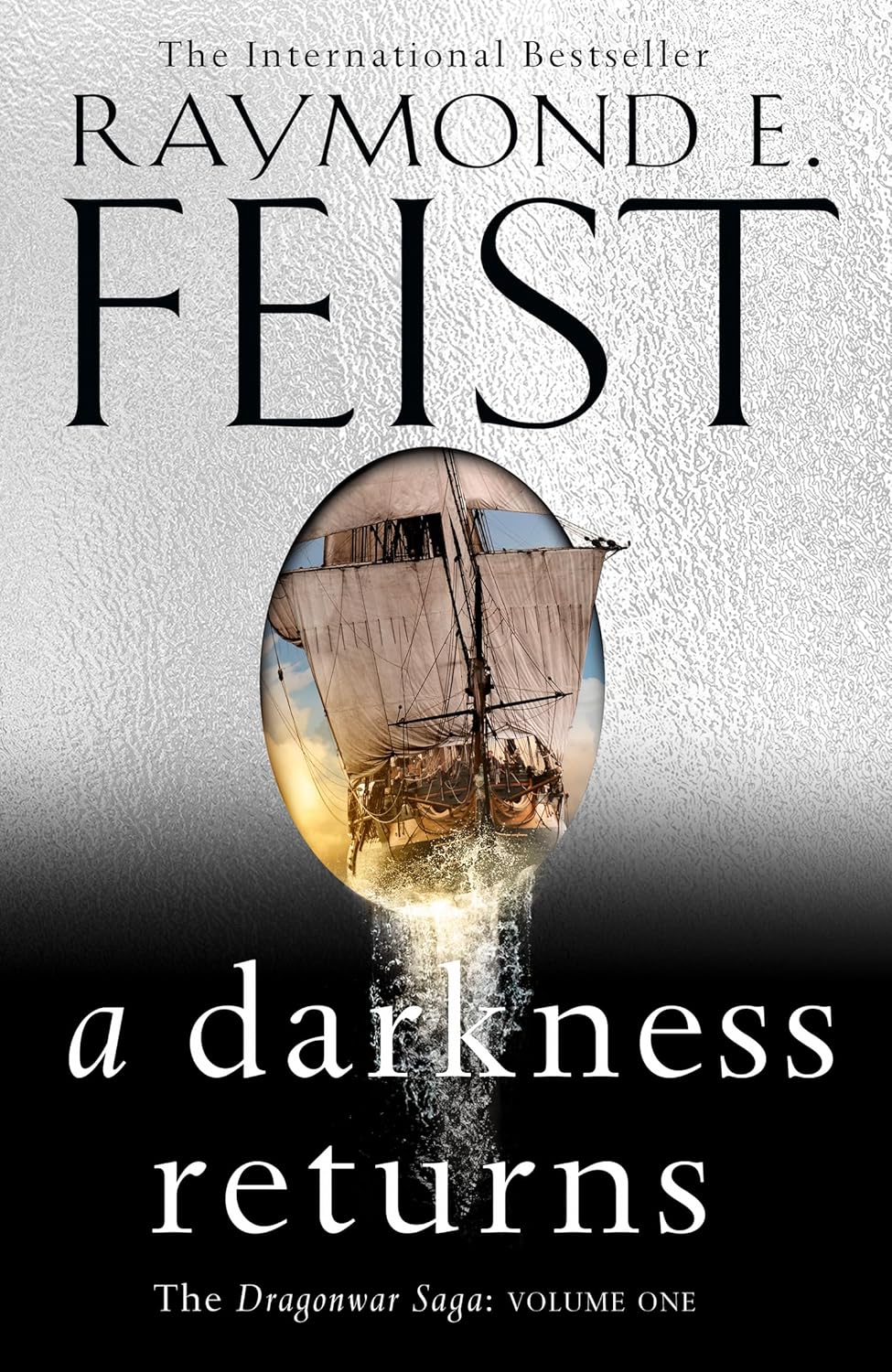
A Darkness Returns by Raymond E. Feist.

Publisher: Harper Voyager (ebook – 1 August 2024)

Series: Dragonwar Saga – Book One

Length: 480 pages

My Rating: 4.5 out of 5 Stars

Amazon

Prepare to return to one of the most iconic realms of fantasy as acclaimed author Raymond E. Feist presents the reader with another high fantasy adventure set across multiple worlds with A Darkness Returns.

Raymond E. Feist is one of the most impressive and long-running authors of fantasy fiction in the world today, who has been writing intriguing reads for over 40 years.  Feist is best known for his extensive Riftwar Cycle, a connected series of books that follow a variety of threats and conflicts on several fantasy words created by Feist.  Starting with Magician in 1982, The Riftwar Cycle initially focused on a war between two different fantasy worlds joined together by a magical rift in space, with the realm of Midkemia, which had a more classic European fantasy vibe, being invaded by armies from the Asian inspired world of Kelewan.  Feist would write an interesting array of different storylines as he continued to expand his fantasy series across many years of internal plot, and there ended up being nearly 30 books in the Riftwar Cycle, which ended back in 2013.  I have been a huge fan of this series for years, as it was one of the first fantasy series I ever really got into, thanks to various unique sub-series that moved the history of Midkemia and its associated realms along at an intriguing pace.  Key highlights for me include the associated Empire trilogy, that Feist co-wrote with fellow fantasy author Janny Wurts, and Talon of the Silver Hawk, which was one of the first big fantasy novels I read as a young teenager.

While Feist apparently ended his Riftwar Cycle books some years ago, it turns out that he couldn’t leave his original world alone for too long.  His next trilogy, the Firemane Saga, which started back in 2018 with King of Ashes, initially showed a captivating adventure on the new fantasy world of Garn, following a whole new group of protagonists.  However, as the series continued with Queen of Storms and Master of Furies, it became apparent that the Firemane Saga existed in the same dimension as the Riftwar Cycle, with several characters from Feist’s original novels having cameo appearances.  The final book, Master of Furies, identified a major threat lying dormant beneath Garn, and the novel ends with the protagonists of the Firemane Saga travelling through a rift to Midkemia to learn how to defeat it.  This new novel, A Darkness Returns, is set immediately after the events of Master of Furies and seeks to bring together the worlds of the Riftwar Cycle and the Firemane Saga for one epic adventure, while also introducing Feist’s new The Dragonwar Saga series.  Naturally, as a fan of both prior series and Feist’s writing in general, I was very excited, and A Darkness Returns has been one of my most anticipated books of 2024.

A new darkness is rising, one that could destroy two worlds and everything in them.

After finally defeating the nefarious Pride Lords on their home planet of Garn, Hatushaly, last scion of the Firemane dynasty, has agreed to travel to the world of Midkemia to attempt to learn how to harness his unique magic.  Accompanied by his wife Hava and their trouble-seeking friend Donte, Hatu finds Midkemia to be a strange world, but one filled with boundless opportunity and magic as he begins to study on the peaceful Sorcerer’s Island, under the tutelage of the great magician Magnus, and Magnus’s reincarnated father, Pug.

As the newcomers settle into Midkemia and attempt to find their place in this new world, word quickly reaches them of the trouble they left behind on Garn.  The nefarious Church of One has risen to power and seeks to enslave or destroy everything in front of it.  The only independent nation left is the newly formed kingdom of Marquensas, under the rule of the benevolent King Daylon Dumarch.  There, Hatu’s friend Declan Smith, a master swordsmith and Daylon’s newly discovered brother, has been declared prince and struggles to accept the new responsibilities thrust upon him.

As Declan leads the newly formed Marquensas army against the invading forces of the Church of One, it becomes apparent that there is something far more sinister behind the fanatical soldiers.  A dark presence is guiding them, one the magicians of Midkemia are painfully familiar with: the Dread creatures from the Void.  Having waged several destructive wars to hold back the malign influence of the Void, Magnus and Pug are determined to save Garn as well, and it soon becomes apparent that the only thing that can save it is Hatu’s unique magic.  As Hatu learns to control his powers, he must work with his friends, both new and old, to find a way to hold back the oncoming darkness before both his home, and the other worlds in his dimension, are destroyed for good.

A Darkness Returns sees Feist back in fine form as he combines two of his iconic worlds into one impressive and exciting story.  Following several excellent protagonists across a series of compelling adventures, A Darkness Returns was the classic high fantasy story I had really been craving, and I had such an amazing time with this book.

I deeply enjoyed the story contained with A Darkness Returns, and Feist produced a fantastic read that strongly harkens back to his original stories.  Set shortly after the events of Master of Furies, A Darkness Returns’ plot follows key protagonists from both the more recent Firemane Saga trilogy and Feist’s classic Riftwar Cycle as they complete a series of connected adventures across the worlds of Garn and Midkemia.  Feist focuses on several different character arcs and storylines simultaneously, which presents a rich and complex narrative with a bit of something for everyone.  The main protagonist of the Firemane books, Hatu, finds his story strongly enmeshed with that of key Riftwar Cycle characters Magnus and Pug, who attempt to uncover the secrets of Hatu’s magic as well as the dangers hiding in Garn.  At the same time, we have a more classic fantasy war story back in Garn as Declan and his brothers prepare for battle against the encroaching Church of One, with his arc feature several small-scale battles.  There are also some intriguing storylines around Hava’s attempts to get back to life on the sea, no matter which world she’s on, the ever-unpredictable Nakor, begins to explore certain multi-dimensional areas to quantify the threat coming for both worlds, while Donte goes rogue and starts his own criminal organisation in Midkemia.

I found myself getting really stuck into the various storylines that Feist came up with for A Darkness Returns, and this proved to be a very fun story.  Each character arc went in some interesting directions, and they all proved entertaining in their own way.  I personally found myself getting more drawn towards the parts of the books focusing on Declan and his brothers’ military actions in Garn and Donte’s burgeoning criminal enterprise in Midkemia, which prove to be an excellent contrast to the more magical theory laden storylines of Hatu, Magnus and Pug.  As the book progresses, Feist works to bring the various storylines together, usually done by having the magical characters using rifts to transport between worlds and working with the other relevant protagonists.  I think this helped to create an overall compelling narrative, as the various characters work together to discover the full extent of the threats facing them.

I did feel that A Darkness Return’s narrative did get a little overcomplicated towards the end the book, especially as Feist, through his characters, started diving into all the magical theory and knowledge that the author has been building up for 40 years.  This made parts of the last half of the book a little hard to get through, especially for the more casual reader, as there were a lot of elaborate concepts to digest.  The story also suffers a little from being the first book in a new series, with Feist having to spend a lot of time setting stuff up and revisiting old storylines, and as a result A Darkness Return’s conclusion is a little less epic or memorable than it could have been.  However, those who weather through some of the more problematic aspects of this narrative through it are in for a lot of fun with A Darkness Returns, as Feist produces some outstanding and exciting moments while also setting up a lot of future adventures.  I ended up really enjoying where each of the separate storylines went, and readers are in for a fun mixture of magic, military action, and criminal adventure.  These separated storylines come together extremely well as the book continues, and it proves hard not to get addicted to the overall story.  I think that A Darkness Returns proved to be a strong start to this new series, and I am confident it will only get better from here.

One of the things that might possibly impact a person’s ability to enjoy A Darkness Returns is their prior experiences with reading Feist’s books.  As I mentioned above, A Darkness Returns is heavily related to both the author’s more recent Firemane Saga, and his long-running Riftwar Cycle, which started back in the 1980s.  As a continuation of both series, the plot of A Darkness Returns is heavily enmeshed with the events that occurred in the prior books, and there are constant references back to them.  While Feist does do a pretty good job of recapping these events, especially those featured in the Riftwar Cycle, I could see a reader who is unfamiliar with the past 40 years of Feist fiction getting lost as A Darkness Returns continues.  While dedicated fantasy lovers can probably get away with starting their Feist experience with A Darkness Returns, I would probably recommend reading the Firemane Saga first at a minimum to understand the history around several of the main characters and the world of Garn.  As such, this book might not be for everyone, especially those looking for a new series to start off with.  However, fans who have read a lot of Feist’s work in the past are in for a real treat, as you once again get to visit two of Feist’s epic worlds and see figures from both interact for the first time.  I especially enjoyed the long-awaited return to the world of Midkemia, which was such a vital part of my early fantasy experiences, and it was fascinating to see how it has changed since the previous books.  I appreciated seeing Midkemia through the eyes of the fresh characters from Garn, which ensured some extra recapping that will help returning readers.  It proved quite entertaining to see these newer characters find out all the magical and interdimensional craziness that occurred during the many Riftwar Cycle books, and I deeply enjoyed getting back to Feist’s most iconic setting.

Another great highlight of A Darkness Returns was the large and varied cast of characters that Feist focussed the story around.  Most of these characters were established figures from previous books, and it was great to get a continuation of many of their storylines, especially as Feist left many character arcs open from their last appearances.  It was fun to see many of these characters interact throughout A Darkness Returns, especially as a major feature of this book was figures from separate series coming together for the first time.  This includes the intriguing returning cast of the Firemane Saga, who were a key part of this book.  These younger figures (young in the sense that they are all in their early 20s and because Feist only created them recently), serve in great contrast to the older wizard from the Riftwar Cycle, especially with their more energetic adventures.  My favourite of these characters was either the dependable and brave Declan or the brash wildcard character Donte, both of whom had the best segments in A Darkness Returns.  The primary protagonist of the book, Hatu, while interesting, did have too much of a chosen-one vibe around him, and I think Feist decreases his enjoyability by making him too powerful and all-knowing.  Still, it was great to see all these Firemane Saga characters again, and Feist set up some interesting storylines and interactions around them.

However, the characters that Feist fans are probably most excited to see again where Magnus, Pug and Nakor all of whom are major established figures in the Riftwar Cycle.  All three characters are quite fascinating in their own ways and have long histories in Feists books.  Magnus has long been one of the main wizards of the series, and it was great to see him return here as the elder statesman guiding the various younger characters.  Nakor is an entertaining trickster who is the reincarnation of long-running figure of the same name.  While the details of his reappearance in this series does get a little technical, he was still a lot of fun, and it was great to once again see his more unusual approach to magic.

However, the most interesting figure was the returning Pug.  Pug has been Feist’s main character since the very first Riftwar Cycle book, Magician, with many of the subsequent plots revolving around his magical adventures, and he is probably one of fantasy fiction’s most iconic protagonists.  Pug was killed off in the final Riftwar Cycle novel, although the last scene saw his son, Magnus, finding him resurrected as a young man without any memory of his past life.  However, this reincarnation story element is at an end as with his return in A Darkness Returns, Feist utilises the strange magics of Hatu to bring back Pug’s old personality.  While you could argue that Feist might be better off stepping away from this long-running character, I personally loved seeing Pug again, and it gave me a major nostalgia hit.  Between these great figures and more, I really loved the cast of A Darkness Returns, and it was so much fun to see the figures from both series come together for one massive adventure.  I look forward to seeing how their storylines further advance through the rest of The Dragonwar Saga, and I have no doubt that Feist will provide them with exciting stories and massive tragedy.

I had an amazing time getting through A Darkness Returns, and it was so much fun to have another high fantasy adventure from Raymond E. Feist.  Between the nostalgia, the exciting action, fantastic characters, and the ambitious way in which Feist brought together two of his major series, A Darkness Returns has a lot going for it, and it proves hard not to get caught up in the resulting story.  While there are a few issues that may turn off newer readers, I personally had an outstanding time, and all established Feist fans are guaranteed to love A Darkness Returns.  An overall awesome and impressive read from one of fantasy fiction’s most enduring authors.

Amazon

Sentinel by Mark Greaney

Publisher: Sphere (Trade Paperback – 25 June 2024)

Series: Josh Duffy – Book Two

Length: 475 pages

My Rating: 4.5 out of 5 stars

Amazon

In the mood for some awesome thriller action?  Look no further than the latest novel from the always impressive Mark Greaney, Sentinel.

Thriller author Mark Greaney has been on a real roll lately.  Not only does he continue to impress with his iconic Gray Man spy thriller series, but he just released a second book in his Josh Duffy series, with Sentinel.  Readers of this blog will know that I am a big fan of Greaney, having had an exceptional time with his Gray Man novels, including The Gray Man, Mission Critical, One Minute Out, Relentless, Seirra Six, Burner and The Chaos Agent.  I was also very excited to receive a copy of Sentinel, especially after having really enjoyed the first Josh Duffy novel, Armored.  Following a former military contractor who finds himself caught up in dangerous escort missions in foreign countries, the Josh Duffy books are a lot of fun, and I had an amazing time with the intense and action-packed Armored, which saw all hell break loose in Mexico.  Sentinel is a very worthy sequel to Armored, as the protagonist and his family, find themselves caught up in a deadly coup.

After a lifetime of military contract work, Josh Duffy has found more stable employment as part of the Bureau of Diplomatic Security, protecting diplomats and ambassadors in Washington.  When his State Department wife, Nikki, is transferred to Ghana, Josh and their two children join them, hoping to start up a new life in the stable African nation.  However, things are about to get explosive as a group of Chinese spies have begun to implement an elaborate scheme to overthrow the Ghanaian government and replace it with one less friendly to the West.

Unaware of these machinations, both Josh and Nicole find themselves accompanying a group of American, European and Ghanian politicians and officials to an important dam as part of a vital diplomatic mission.  However, their simple photo-op quickly turns into a deadly firefight as the officials and their bodyguards find themselves under unexpected attack from a large army of rebels and their Chinese hired mercenary minders.

Cut off from help and with the rest of the country in chaos thanks to the Chinese led coup, Josh finds himself fighting to save both himself and his protectees from the forces arrayed against them.  Forced on the run, Josh attempts to lead everyone to safety and work out who is responsible for the destruction going on around them.  But when an old enemy from his past reappears, Josh finds himself forced to choose between his mission and his family.

This was a fantastic and very exciting new novel from Greaney, that provides readers with a particularly awesome experience.  Loaded with excellent and realistic action, Sentinel is an amazing book to get through, and I loved how intense it turned out to be.

The plot of Sentinel proved pretty damn impressive, as the author serves up an exciting, action-packed thrill ride.  I have always appreciated Greaney’s ability to create complex scenarios to set his thrillers around, and Sentinel was a particularly good example of this, with an engineered coup in Ghana serving as the basis for the plot.  The author does an excellent job setting the scene for this coup right at the start of Sentinel before transitioning the reader across to protagonist Josh Duffy and his family.  Much of the first half of the book is split between the Duffys getting used to their roles in Ghana, and the antagonists moving the pieces around to finally initiate the plan, and readers come away very invested in both, while waiting for the inevitable carnage.

Once the antagonists begin to put their plans in motion, Sentinel turns into a particularly intense read.  The action flies thick and fast around the protagonists, as all-out war descends on them and they are forced to fight for their survival.  Greaney loads the centre of Sentinel with a continuous string of firefights and high-energy action set pieces, and the reader is left constantly on the edge of their seat as they watch the carnage unfold.  The plans of the antagonists are constantly changing thanks to the actions of Duffy and others, and I loved how frenetic and complex the narrative got.  At the same time, Duffy comes across an old adversary who begins to make the fight personal, and the protagonists soon find themselves targeted by everyone involved in the conspiracy.  All the action leads up to a big final confrontation, as the protagonists are predictably forced to try and save their family.  This leads to an additional great fight sequence, and the reader comes away sated from all the action and fights, as well as satisfied with the comeuppance to the antagonists.  While part of a larger series, Sentinel’s narrative ensures that this is a fantastic standalone novel, and you can have so much fun with this excellent read.

As with all Greaney’s books, Sentinel was a clever and well-crafted thriller novel that has an excellent flow to it.  Serving as a sequel to the first book but standing on its own merits, Sentinel is highly action-orientated, perhaps more so than the author’s Gray Man books.  As a result, there are a ton of high-octane battle sequences and firefights, as the protagonists constantly find themselves fighting for their lives.  These scenes are extremely well written, and Greaney has a real talent for showcasing multi-layered fight sequences featuring multiple figures.  A lot of this is down to the way in which Greaney effectively shifts the perspective between the various combatants, both protagonist and antagonist, so the reader gets a great view of all sides of the battle.  The author also does an effective job setting up a compelling and intriguing narrative frame for this action in early pages of the book, and you really get drawn into the complex narrative that has some interesting political and social takes on the country of Ghana.  The excellent use of perspective changes helps to really highlight the complexity of the antagonist’s schemes, and it proved fascinating to see their plans in constant motion, especially when impacted by the actions of the protagonist.  As such, readers really get drawn into the elaborate plot of Sentinel and are treated to a ton of awesome action sequences guaranteed to get the blood flowing.

Sentinel also features a bevy of great characters, including scheming foreign agents, deadly mercenaries, and all manner of good guys.  Greaney as always does an excellent job of splitting the plot between multiple perspective characters, and the reader is given a good sense of each of these figures, as well as the role they play in the larger plot.  Naturally most of the focus goes to returning protagonists, Josh Duffy and his wife Nikki, who are constantly at the centre of the action.  Due to this being the second book in the series, Greaney focuses less on these two characters’ backstories, and instead examines the current state of their family, and their attempts to forge a new life working together.  While Josh is generally the main character, Nikki serves as a good supporting figure him, and they prove to be a fun husband and wife duo, especially when their family is in danger.

Other characters of note include Ghanian elite police officer, Isaac Opoku, who finds himself caught up in the major assassination plot impacting the Duffys.  Isaac is an excellent and likeable supporting protagonist who provides some local insights into events, and whose impromptu team up with Josh proves to be quite entertaining.  I also loved the inclusion of South African mercenary Conrad Tremaine, who serves as the book’s primary antagonist.  A maniac working to ensure the larger plan goes off, Tremaine serves as a great foil to Josh, especially as the two have a contentious history.  The various interactions between the two are a ton of fun, and I liked how Greaney set up and then utilised this fantastic villain.

Sentinel by Mark Greaney was an outstanding and deeply exciting action thriller which is guaranteed to keep your attention.  Featuring some fantastic fight sequences and a compelling plot, Sentinel was another impressive book from Greaney, and one I had a hard time putting down.  An excellent sequel to Armored, Sentinel comes highly recommended, and I hope that Greaney continues this series in the future.

Amazon

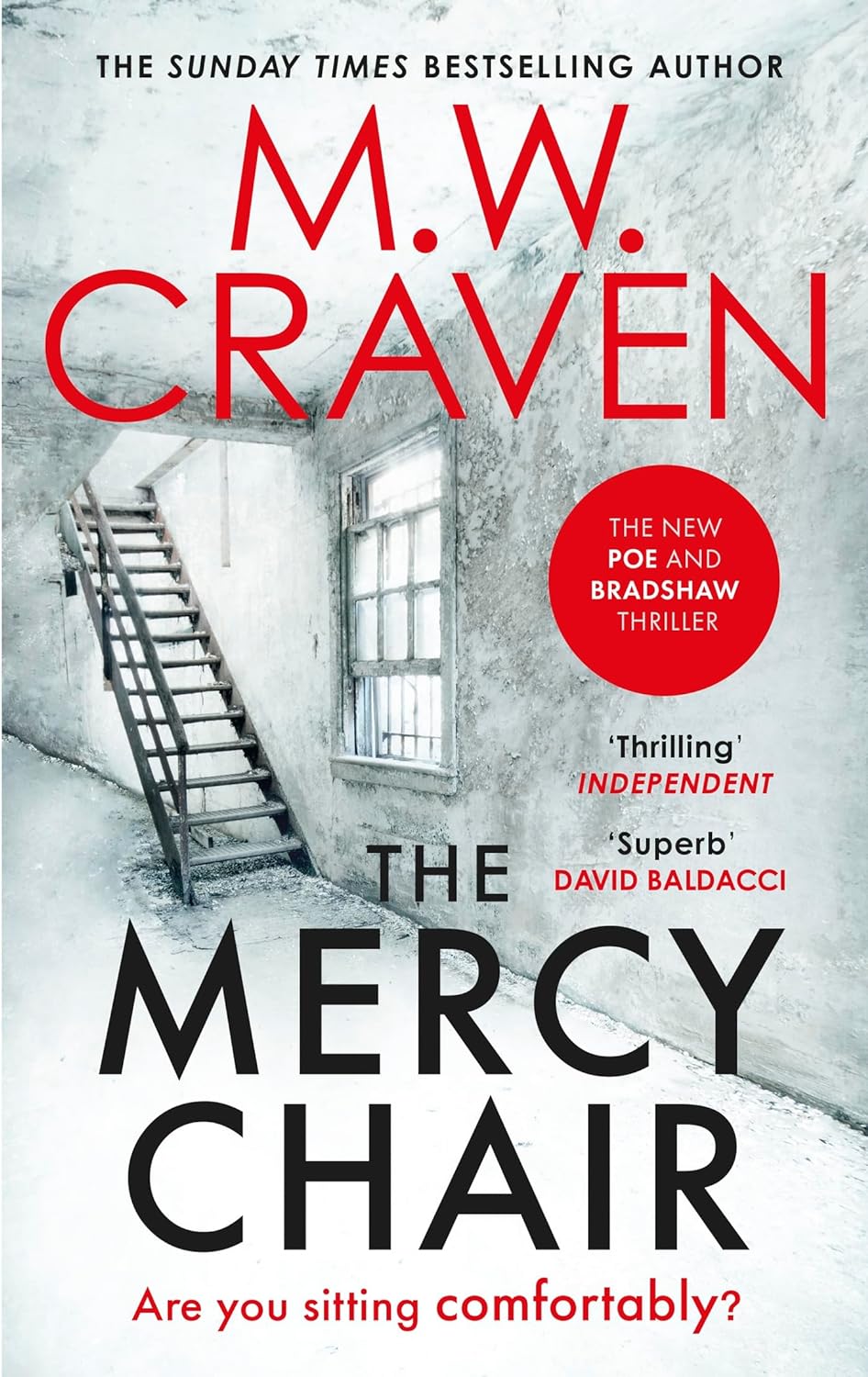
The Mercy Chair by M. W. Craven

Publisher: Constable (ebook – 6 June 2024)

Series: Washington Poe – Book Six

Length: 420 pages

My Rating: 5 out of 5 stars

Amazon

Acclaimed author M. W. Craven introduces one of the darkest novels of 2024 with the complex and highly addictive thriller, The Mercy Chair.

M. W. Craven is an interesting author who I am becoming a bigger and bigger fan of the more I read. I started getting into his work last year with the awesome Fearless, which saw a lawman turned drifter go up against a deadly drug cartel. I had an amazing time with Fearless, and I am looking forward to the sequel, Nobody’s Hero, in a few short months.  However, before we get to Nobody’s Hero, I need to rave about Craven’s other 2024 novel, The Mercy ChairThe Mercy Chair was a captivating and unique novel from Craven that served as a part of his Washington Poe series.  The Mercy Chair is the sixth entry in this great English crime fiction series, and frankly I have still not recovered from how epic and shocking its narrative turned out to be.

Detective Sergeant Washington Poe of the National Crime Agency has seen many unsettling things during his career as a police officer, especially since he started teaming up with unusual civilian analysist Tilly Bradshaw to investigate the worst murders England has to offer.  However, his latest case has impacted him in ways few others have, and months after the events in question, Poe sits down with a psychologist to tell a tale of woe and despair unlike any other.

The case is an investigation into the brutal death of controversial religious figure Cornelius Green in Cumbria.  The victim, the leader of an extreme conservative church, has been found tied to a tree and stoned to death by someone who wanted him to suffer.  Brought in due to the brutality surrounding the killing and the religious significance of the victim, Poe and Tilly set about trying to discover which of Green’s many enemies or supporters might have wanted him dead.

Digging into their victim’s past, Poe and Tilly begin to believe that Green’s death might be connected to another infamous slaying of a religious family that occurred in the area many years ago.  Believing that the original killer, a troubled young member of Green’s church, has returned, the detectives attempt to uncover what caused her to snap and kill her parents and brother.  However, their investigation soon uncovers a series of terrible events from the past that still haunt many to this day.  What is the mercy chair, and how did a twisted religious figure bring so much despair to so many?

Gosh this was a damn impressive read!  The Mercy Chair was a particularly epic book that I have not been able to stop thinking about.  Exceedingly dark and hauntingly addictive, The Mercy Chair is guaranteed to steal your breath away with its many twists and turns.  An easy five-star read; The Mercy Chair ended up being one of my favourite books from the first half of 2024 for some very good reasons.

I cannot emphasise just how good the narrative of The Mercy Chair turned out to be, as Craven really dug deep to produce the most twisted and haunting narrative he could.  Starting off in an interesting way, with the traumatised protagonist, Washington Poe, recounting the events of his previous case to a psychologist, which instantly ensures that the reader knows something bad is about to happen.  The resulting set-up for the case proves to be very effective, and you are soon presented with an intriguing scenario of a religious leader stoned to death.  Craven also presents some compelling complications to the case in the form of an unwanted assistant for Poe and Tilly, the interest of the local bishop, and strange connections to a previous mass killing.  This first half of the book is very strong, and I honestly got hooked on the book very early due to Craven’s strong writing and ability to set up a good murder case.  The author does a great job of layering a lot of clues and hints about the events to come in this first half, not that it does you a lot of good, as there are so many sinister surprises to come.

While I really enjoyed the first half of The Mercy Chair, the second half is what really makes this book a first-rate thriller, as Craven brings all the darkness and thrusts the reader into a world of emotional pain.  I honestly cannot go into too much detail about what happens in the second half of the book, as too many hints could ruin The Mercy Chair for potential readers.  However, I will say that Craven is a dark genius, and I still cannot get over how crazy and harrowing things got.  The case goes in some very disturbing and inventive directions, and the author unleashes a multitude of twists, most of which are very well-set up in advance.  While I saw a few surprises coming or was able to guess the significance of certain subtle inclusions, I honestly could not predict everything that Craven’s diabolical mind came up with.  Trust me when I say that The Mercy Chair’s story gets darker and darker the more you progress through it, and no matter how many times you think it can’t get any worse, it does.  The author ends the narrative in a very interesting place right after a final massive twist comes out, and you really will not be prepared for every surprise that comes your way here.

I really appreciated the great way that Craven told his latest novel, especially when it comes to The Mercy Chair’s unique narrative set up where the protagonist discussed the case with a psychologist sometime after the actual case.  The transition between Poe’s perspective of the case as it unfolds and his discussions with the psychologist after the fact really enhances the impact of the story in so many interesting ways.  In particular, you get some fascinating discussions around the psychology and people involved in the events, and I loved the multiple dark hints that the protagonist gave the audience about how more bad things were still to come.  This, combined with the multitude of elaborate and clever clues and hints featured throughout the entire story, really heightened anticipation for the later parts of the book, although even with all these hints, I wasn’t prepared for just how dark things got.  I felt that Craven really hit the right balance of mystery, intriguing character development for the protagonists, and utter suspense at the events occurring, and frankly once you get stuck into the main murder, its near impossible to get away from this book.  While The Mercy Chair is the sixth book in the Washington Poe series, it can easily be read as a standalone novel, even by those readers unfamiliar with the series.  Craven does an excellent job setting up the story and reintroducing the protagonists, so new readers can easily drop in here without any issue at all.  While long-term fans of the author/series will probably get a little more out of The Mercy Chair in terms of character growth, anybody can have an epic time with this book, especially if they love gritty and shocking mysteries with some brilliant twists.

It’s hard to talk about The Mercy Chair without mentioning the outstanding characters featured within, although I honestly risk spoiling certain story elements if I discuss the new figures in the book.  However, I do need to highlight the great way that Craven continues the outstanding partnership between main character Detective Sergeant Washington Poe and civilian analysist Tilly Bradshaw, which has been such a fantastic part of the previous Washington Poe books.  Poe, a gruff and fractious veteran cop, plays off the brilliant and socially awkward Tilly perfectly, and they form a rather unusual pairing that works extremely well throughout the course of the mystery.  There is a certain level of humour to their interactions, especially as both can be outrageous in their own way, and I liked the sibling vibes that Craven set up between them throughout the book.  While the author does reiterate a lot of his protagonist’s character traits from the previous books, there is also some excellent emotional development amongst the two.  Poe, who has grown from an angry loner into somebody capable of holding down a romantic relationship, ends up going through some major emotional and psychological issues thanks to the grim impacts of this case.  Watching Poe lose his grip on his calm is very powerful, especially as his deteriorating mental state corresponds with growing intensity of the investigation and the terrible revelations he uncovers.  I honestly grew so attached to Poe because of his frank narration of events throughout the book, and his partnership with Tilly honestly made this book for me.  Craven leaves Poe and Tilly’s story in an interesting place at the end of The Mercy Chair, and I look forward to seeing how they overcome their latest obstacles in the next book.  Throw in a great cast of supporting characters, including some complex victims and perpetrators and a bunch of fun recurring figures, and The Mercy Chair’s characters really help to make this story something very special.

With The Mercy Chair, M. W. Craven has officially become one of my favourite thriller authors and I cannot emphasise just how incredible this novel is.  Craven produces an outstanding and powerful story that features a particularly clever and shocking mystery that I could not get enough of.  Loaded with elaborate twists, complex characters, and so many dark revelations, The Mercy Chair is guaranteed to make you an instant fan of Craven, no matter how hard you try to forget his narrative’s intense tragedy.  I loved this book so much, and I honestly wonder what would have happened if Craven had gotten his way and made it even darker.

Amazon

Point Nemo by Jeremy Robinson

Point Nemo Cover

Publisher: Podium Audio (Audiobook – 5 April 2024)

Series: Standalone/Book One

Length: 9 hours and 31 minutes

My Rating: 5 out of 5 stars

Amazon

The always entertaining and intense Jeremy Robinson returns with a compelling and dark science fiction adventure that takes the reader on one hell of a mushroom trip with Point Nemo.

Jeremy Robinson is an intriguing author who has been contributing some exiting and wild books to various genres for nearly 20 years.  Best known for his over-the-top science fiction and horror thrillers, Robinson has written a ton of fantastic books over the years, including his Chess Team, Nemesis Saga and Antarktos Saga series, as well as an awesome collection of standalone novels.  I am mostly familiar with the books in Robinson’s more recent Infinite Timeline connected universe, which feature a huge collection of compelling standalone novels that gradually came together as the series continued.  I had a wonderful time with several entries from this universe, including Tribe, The Dark and Mind Bullet, the latter two of which were amongst my favourite books and audiobooks of 2021.  I have been meaning to read a lot more of Robinson’s books, and I finally got the chance when I grabbed a copy of his latest audiobook, Point Nemo.  Originally a screenplay by Robinson, the author morphed Point Nemo into a complex novel that I really got stuck into.

Alien life has been discovered, and it’s far closer to Earth than we ever realised.  Mission Specialist Julie Rohr, an astrobiologist, has been sent to the International Space Station to study a strange, migratory space dust called xylem that has unusual properties that could benefit all of humanity.  However, despite appearing benign, the xylem is both alive and extremely insidious, causing the International Space Station to fail and crash towards Earth, dragging Julie with it.  The destination of the crash landing is Point Nemo.

Lying in the heart of the South Pacific, Point Nemo is the most remote and desolate place on the entire planet.  Thanks to its strong and isolating currents, Point Nemo is essentially a dead zone, devoid of life or any form of land, which makes it the perfect place for the world governments to crash their satellites.  However, that is no longer the case, as a mysterious island has begun growing in the middle of Point Nemo without anyone knowing.  Worse, the island appears to be made up of xylem, and it has begun moving towards inhabited waters.

Determined to investigate this mysterious occurrence and rescue Julie and her research, the US government sends in a small team to find her.  Among the team is Julie’s estranged father, renowned mycologist Dr Finn Maddern, who journeys from his isolation in the Amazon rainforest to save his daughter.  However, that might prove to be harder than expected as the xylem-forged island is swiftly evolving, becoming ever more dangerous and giving birth to an array of strange and terrifying creatures.  As the team begins to suffer tragic loses, it quickly becomes apparent that the island has hostile intentions for all of humanity, and if it escapes Point Nemo, it could destroy all life on the planet.  Can Julie and her father find the secrets of the alien island before its too late, or will they end up food for the malicious life forms coming for all of humanity?

Jeremy Robinson produces another high intensity, clever, and exciting read that had me hooked the entire way through.  Point Nemo was a very impressive science fiction thriller that make excellent use of the author’s intriguing story concept to create an intriguing and haunting story.

Point Nemo had an outstanding and epic narrative behind it that is heavy on the action, intriguing science fiction elements, and just a bit of body horror, which allows for an intense and fast-paced read.  Starting off with a few explosive space station crashes, and never slowing down from there, Point Nemo grabbed my attention very early on, and I liked the unique scenarios that Robinson kept introducing to the plot.  There is a fast but comprehensive introduction to the various key players to the story, including primary protagonist and point of view character, Dr Finn Maddern, a literal jungle-man scientist who joins to the team to save his daughter.  The protagonists are soon dropped onto the mysterious island, where they quickly begin to understand the unique makeup of the island, and the unusual biological processes going on.  I felt the first half of this book was very strong, and while it loses a little of its storytelling punch due to the need to introduce the scenario, it was still extremely gripping.

The second half of Point Nemo is where things really pick up, as Robinson begins to unleash the full horror of the island the protagonists find themselves trapped on.  There are some gruesome deaths, insane action sequences, and some very dark moments, as the protagonists begin to understand the full horror of the quickly evolving alien island, and desperately try to find a way to either escape or stop the island from destroying the world.  This leads up to a very desperate and compelling conclusion, as the protagonists risk everything to save the day, only to encounter tragedy and more and more deadly alien creatures.  The various action sequences littering the second half of the Point Nemo were exceptional and I really liked the sheer tension that Robinson was able inject into the book at times, especially in the final, extended struggle.  I cannot emphasise how captivating and exciting this second half of Point Nemo was, and I powered through it so damn quickly.  Robinson ends everything on an interesting note that potentially hints at a sequel to come, and I look forward to seeing how he might expand on this fantastic narrative in the future.

Robinson has a very fun and distinctive style for his novels which he reuses again for Point Nemo.  Told pretty much exclusively from the first-person perspective of his excellent and compelling protagonists Finn Maddern, the reader is quickly thrust into the action while also being treated to some very relatable insights from his protagonist.  As is typical with a Robinson book, Point Nemo moves very fast and is very explosive at time, with the protagonists quickly falling in line with the adventure into the unusual scenario.  This book did feel a little overly cinematic at times, probably because that this novel was originally a screenplay, but Robinson has done an outstanding job of fleshing out his original concept into a complete and complex book.  Readers unfamiliar with Robinson’s style might not fully appreciate the more casual dialogue and character traits that he utilises, but I think it works extremely well, especially as there is a lot of fun humour and realistic reactions spread out here.

All the protagonists are very relatable and human in their portrayal, and I found myself getting attached to those that survived.  Even those who die due to their own mistakes are quite easy to understand (to a degree, one character’s death was very frustrating), as they have very human traits of stubbornness and pride.  Protagonist Finn Maddern was easily the standout of the book, and while his brilliance and humour are typical Robinson protagonist traits, you have to love his jungle scientist background, especially as it sets him up very nicely as a protagonist for this book without turning him into an impossible action hero.  Finn’s central perspective for the vast majority of the story is very easy to follow, and Robinson builds him up as quite a complex figure with a powerful past thanks to his first-person narration.  The author does switch up the perspective of Point Nemo at times, especially towards the end, and this proves to be quite an effective writing move at times, as it really shows how serious and game-changing events are getting.  Point Nemo ended up being a very good standalone book from Robinson, which can be easily enjoyed by any reader looking for a highly thrilling read, although established fans of the author will no doubt appreciate the fun joke references to some of his other works.

I think one of the strongest elements of Point Nemo was the unique science fiction elements that Robinson came up with as the basis for his story.  A mysterious alien spore that crashes satellites, enhances biology, creates a massive, connected living island in the ocean and evolves various crazy alien creatures is an outstanding concept that the author uses to full effect in their narrative.  The author does an excellent job of breaking down the science behind these elements and presenting it to the reader in a compelling way.  There are also some fun dives into mycology, especially as Earth fungi and mushrooms bear some interesting similarities to the alien spores and play a big role in the overall story.  The unique island and its fantastic creatures prove to be an amazing part of the book, and I loved how crazy and over-the-top Robinson made them.  The various dangers and creatures encountered by the protagonists are legitimately scary at times, and Robinson allows them to make his story particularly gruesome at times.  This includes some dark body horror moments that will stick in my mind, and which allows for a particularly shocking narrative that will keep readers very engrossed.  I honestly cannot talk up Robison’s science fiction elements enough, especially as this very inventive story basis allowed for a particularly exciting and captivating narrative.

There are several series and authors out there whose works I would always recommend that potential readers should check out on audiobook.  Jeremy Robinson is one of these, as all the novels of his that I have enjoyed have been in their audiobook format, which were really damn awesome.  This is once again true for Point Nemo, which proved to be an incredible listen.  Coming in with a run time of nine and a half hours, the Point Nemo audiobook was a lot of fun, especially as it enhanced Robinson’s exciting adventure, while also showcasing the intense action in all its gory glory.  It also helped that Point Nemo was narrated by the legendary R. C. Bray, who is one of my favourite audiobook narrators.  Robinson and Bray have a great partnership going, with Bray narrating most of the author’s recent books.  Bray has an incredible voice that works extremely well for thrillers and high excitement tales, and any audiobook read by him becomes instantly better.  His tones work wonders in the first-person chapters of Point Nemo, and I loved the deep and likeable tones he assigns to the various characters.  His narration for the main character, Finn Maddern, was particularly good, and Bray really captured the multiple elements of this complex character.  I love how Bray was able to simultaneously bring out Finn’s humour, passion and intensity with his voice work, and you really get drawn into his personal journey as a result.  Due to this voice work, as well as how the story was enhanced by being read out, I would strongly recommend the audiobook format as the best way to enjoy Point Nemo.

Jeremy Robinson continues to show why he is one of the best and most insanely inventive authors of the science fiction thriller.  Point Nemo is an exciting, addictive, and slightly insane read that had me hooked all the way through, especially as Robinson brought out some amazing and impressive science fiction elements to really enhance his action-packed story.  I had such a great time with Point Nemo, especially with its audiobook format with narrator R. C. Bray, who helped to turn this into a five-star read.  I cannot recommend Point Nemo enough, and I look forward to more books from Robison in the future, especially if the audiobooks are as epic as this one was.

Amazon

Warhammer 40,000: Deathworlder by Victoria Hayward

Warhammer 40,000 - Deathworlder Cover

Publisher: Black Library (Audiobook – 23 April 2024)

Series: Warhammer 40,000

Length: 11 hours and 1 minute

My Rating: 4.75 out of 5 stars

Amazon

Debuting author Victoria Hayward presents one of the year’s most compelling entries to the Warhammer 40,000 canon, with the outstanding and grim novel, Deathworlder.

I have made no bones about how much love I have for Warhammer 40,000 extended fiction, which honestly features some of the very best media tie-in novels currently being written.  One of the things I particularly love about Warhammer fiction is the sheer range of compelling and impressive authors that are adding to the lore and narrative of this universe.  While a good chunk of the novels come from grizzled veteran Warhammer authors, the Black Library has also been cleverly utilising a range of intriguing new writers to offer fresh stories to the franchise, and some of the best books in recent years have been an author’s very first novel.  In 2023 alone there were several outstanding Warhammer 40,000 novels from first time authors, including The King of the Spoil by Jonathan D. Beer, Creed: Ashes of Cadia by Jude Reid, and Longshot by Rob Young, all of which were among my favourite debuts of the year.

2024 also looks set to a be a good year for authors making their debut through Warhammer fiction, especially when it comes to Deathworlder, the very first novel by exciting new author Victoria Hayward.  Featuring a compelling and exciting plot, Deathworlder has been on my radar for a while, and I ended up grabbing Deathworlder on audiobook as soon as I could.

There are many dangerous foes and deadly enemies stalking the galaxy in the far future, but none are as insidious, destructive and terrifying as the alien menace, the tyranids.  Made up of innumerable biological lifeforms, the tyranids traverse the galaxy, devouring entire planets and adding it to their biomass.  Hundreds of former human planets have fallen to the hivefleets of the tyranids, and the next world to be consumed is the planet of Lazulai.

Once a magnificent planet of beauty and rich resources, Lazulai is currently on the brink of destruction.  The armies of humanity were unable to hold back the invading tyranid hordes, and now the planet has begun to change as it is devoured by the alien lifeforms covering its surface.  Only a few small pockets of resistance remain, including the 903rd Catachan Night Shrikes, who garrison one of the last fortresses still standing.  However, hope remains in the most unlikely of places.

Receiving intelligence about a mysterious piece of archeotech that may hold the key for saving the entire system, Major Wulf Khan is given one final mission to retrieve the technology.  Leading a small mixed squad, Major Khan must use all the innate Catachan skills of infiltration and survival in extreme environments to lead her soldiers through the alien jungles that have sprouted up in the wake of the tyranid advance.  However, while the Catachans might be the best jungle fighters humanity has to offer, they are facing off against an unstoppable foe, capable of adapting to the greatest of obstacles.  Can Khan and her Catachans prove they are the deadliest survivors in the galaxy or will the tyranid horde consume them alongside the last remnants of Lazulai?

Deathworlder was a particularly dark and intense Warhammer 40,000 novel that grabbed my attention from the very beginning.  Hayward came up with a wonderful story that expertly highlighted the opposing Warhammer factions while also making full use of some very strong character work to tell an emotionally charged narrative.

I really liked how Deathworlder’s story unfolded as it proved to be a gritty, character-driven tale of survival.  Starting off by expertly showing the end of the planet setting and the despair being felt by the various protagonists, the story quickly moves along into the main quest, with the Catachan protagonist, Major Wulf Khan, leading a small squad of troops out to recover valuable technology before the planet dies.  The story is primarily split between the perspectives of Khan and the Cadian Lieutenant Kaede Anditz, who joins the squad as a guide towards their final objective.  This leads to an intriguing first half of the book, as the eclectic squadron of protagonists begins their trek towards the objective.  There are some dark and grim moments here, especially as large chunks of the protagonist’s comrades get killed in the lead-up to their mission, and the reader is soon engulfed in the horrifying early stages of the destruction of the planet.

The second half of Deathworlder only gets darker, as the protagonists encounter more and more obstacles on their quest.  I really appreciated how Hayward focused on the alien and human monsters that the protagonists are forced to deal with, and the author ensures that emotions are constantly running hot as the characters encounter worse and worse things.  A particularly powerful moment splits the perspectives of the book even further, while also leading to some very dark experiences.  There are some excellent action set pieces, compelling character moments, and dark examinations of humanity on the edge, through this part of the book, and I honestly found it impossible to put Deathworlder down at times as a result.  Everything leads up to the final sequence as the protagonists encounter even darker surprises and revelations as they attempt to survive.  There are several exceedingly tense moments where you are constantly left wondering if any of the protagonists are going to make it, and I loved how desperate things got.  Hayward ends everything on an intriguing note, and readers will come away very moved by how this great narrative came together.

I felt that Hayward had a great dark tone for Deathworlder that really showcases just how deadly and hopeless parts of the Warhammer 40,000 universe can be.  The focus on characters who had already accepted that they were going to die, as well as the terrible changes that a loss in this universe can result in, gave a particularly intense edge to the book, which I felt made helped it really stand out.  Things get quite dark in Deathworlder, as Hayward really wanted to highlight the terrors of the tyranid, and I honestly got a major horror vibe at times, especially when it came to some particularly gruesome deaths (the field of stuck soldiers still makes me shudder).  While there is plenty of action, tragedy and lore dumps, I felt that the author’s decision to really focus on the book’s unique characters and camaraderie was very clever, and I became really invested due to the exceptional character work.  Deathworlder also proved to be a very strong addition to the Warhammer 40,000 franchise, and Hayward ensures that there is plenty of appeal for both established fans and new readers.  Indeed, I felt that Deathworlder would be a very good entry point into the larger fiction surrounding the Warhammer 40,000 franchise, especially as Hayward’s fresh writing shows just how complex a novel set in this grimdark universe can be.

While Deathworlder would be a good entry point for new readers, established Warhammer 40,000 fans will also get quite a lot out of this book, especially as Hayward expertly highlights two exceptional factions, the Catachans and the tyranids.

Essentially an army of Rambos, the Catachans have been a fan favourite regiment for ages and are always a great inclusion to any narrative.  I have read a few books around the Catachans, including Catachan Devil by Justin Woolley.  These novels, while fun, always tend to focus on the more stereotypical aspects of the Catachans: muscles, jungle craft and big knives.  However, Hayward takes a bit more of nuanced look at the Catachans in Deathworlder, showing them to be a complicated group of soldiers who fall back on the hard-talking jungle killer personas when the going gets tough.  While one very fun character does live up to the stereotype, primarily for comedic effect, for the most part the Catachans are shown as practical survivors, who in this book, are at the end of their tethers.  As such, you see a much more compelling side to the Catachans, and it was fascinating to see how complex the members of the regiment are, as well as how damaged they are by the constant fighting and slaughter.  The author’s use of alternative perspectives allows the readers to see the Catachans in various lights, both from within their own minds, and through the eyes of the Cadian Lieutenant Kaede Anditz, who grows to respect their culture and methods as the book continues.  I really appreciated this more realistic and grounded look at the Catachans in Deathworlder, and Hayward really showcased her ability to portray an iconic human regiment.

While the Catachans get a lot of the focus, you also really need to highlight the tyranids in Deathworlder, who serve as an outstanding antagonist.  While I have enjoyed a few great books where the tyranids were terrifying monsters, including Day of Ascension by Adrian Tchaikovsky, Leviathan by Darius Hinks and Duty Calls by Sandy Mitchell, Deathworlder might be one of the best portrayals of the tyranids that I have so far read.  That is primarily because Hayward’s story is set on a world already being devoured by the tyranids.  The resulting scenes of destruction, despair and digestion prove to be quite horrific, and few writers have really captured just how disturbing this scenario would be.  I felt the various scenes where the protagonists, who themselves are being slowly digested by falling spores, encounter the continuous horrors of the dying world, were so damn good.  The human experience with these horrors is a key part of Deathworlders appeal, and the despairing reactions from both the hardened soldier protagonists, as well as civilians they encounter along the way, really sells just how horrifying the situation truly is.  Even the more typical tyranid threat is well represented in Deathworlder.  The author really captures the fear associated with hordes of ravenous, chitinous aliens as they overrun simple soldiers.  While the tyranids are occasionally depowered by the protagonist’s plot armour, for the most part they are outstanding monsters, and the constant threat they could suddenly represent, proves to be a fantastic part of the novel.  As such, fans who love tyranids are in for a real treat with Deathworlder, and seldom are they a better monstrous villain than in this book.

I cannot write my review of Deathworlder without once again mentioning the impressive characters featured within this book.  Hayward excelled at introducing and exploring complex and damaged protagonists, and their very human, very determined actions, prove to be the true heart and soul of the narrative.  You go through a lot with these characters, and their overwhelming humanity in the face of continuous horrors and loss makes for a very powerful read.  There are some great characters here, including main protagonist Major Wulf Khan, a grizzled Catachan fighter who finds her desire to complete the mission constantly challenged by the losses of those around her.  Her trusted orderly, Sergeant Rutger Haruto, proves to be an excellent backup, especially as his constant curiosity and sensible nature helps to keep his commander in check.  Alternate point-of-view character Lieutenant Kaede Anditz is another excellent addition to the cast, and I think that his unique perspective of the Catachans he suddenly finds himself serving with ensured that their compelling portrayal in Deathworlder really came through.  Anditz is also going through a lot of trauma, especially after witnessing the slaughter of every Cadian soldier on Lazulai, and Hayward really ensures that his guilt and horror really shine through in his chapters.

While the characters above are great, my favourite was probably Trooper Falke Adair.  A muscled Catachan with a heavy flamer, Adair is essentially a walking Catachan stereotype, something she really acts up as the book continues.  Crass, disrespectful and always looking for a fight, Adair steals any scene she becomes a part of, and her over-the-top mannerisms and actions are very entertaining.  However, as the book continues, and characters, particularly Anditz, get closer to her, you see that much of her bravado is a front, and she proves to be one of the most complex figures in the entire novel.

I also must highlight the brilliant character of Lamya.  A Genestealer Cult propagandist, Lamya is captured at the start of the novel and dragged along by the squad for her knowledge.  An arrogant and slightly unhinged noble turned tyranid-worshipping stooge, Lamya plays off the other characters perfectly, and her distain for those around her is so much fun.  However, the more they traverse Lazulai, the more Lamya comes face to face with the horrors that her cult helped to bring to her planet.  Caught between her own beliefs and the horrors she witnesses, Lamya goes quite insane as the book continues, while also providing some of the most compelling perspective of events in the entire novel.  Throw in a scheming Tech Priest and a silent Catachan sniper, and this proves to be an outstanding cast of main characters that you really grow attached to as you watch their intense personal and physical journey.

Unsurprisingly, I chose to check out Deathworlder on audiobook, which is just the best way to enjoy a Warhammer novel.  This was very much the case with Deathworlder, and I loved how effectively and vividly the story came across as it was being read out to me.  The exciting action, captivating characters, and horrendous horrors of the narrative really came to life, especially when read out by talented narrator Gabrielle Nellis-Pain, whose work on The King of the Spoil audiobook last year was very fun.  Nellis-Pain did another outstanding job with Deathworlder, and I love how effectively she told Hayward’s elaborate story.  I particularly enjoyed the excellent voices she gifted to the various characters within Deathworlder, and she very effectively captured the cool protagonists in all their martial glory.  This was particularly true for the over-the-top Catachan protagonists, and you could really visualise the muscular characters as she narrated.  Nellis-Pain also ensured that appropriate alternate accents were given to characters from other human factions, such as the Cadians or the Adeptus Mechanicus, and I particularly enjoyed how well the narrator expressed the mechanical nature of the latter.  I honestly believe that this book wouldn’t have been as impactful if I had physically read it, and I strongly recommend the audiobook version as a result.  Coming in with a run time of 11 hours, Deathworlder was so much fun to listen to, and you can power through it in no time at all.

With her very first novel, Deathworlder, debuting author Victoria Hayward shows she is a writing force to be a reckoned with, especially when it comes to Warhammer fiction.  Deathworlder was an outstanding Warhammer 40,000 novel that features a truly dark and intense narrative, loaded with great characters and compelling depictions of Warhammer universe.  An exceptional read from start to finish, I cannot talk this novel up enough, and I am really intrigued to see how Hayward follows up her amazing debut.

Amazon

Quick Review – Alien Clay by Adrian Tchaikovsky

Alien Clay Cover

Publisher: Tor (Audiobook – 28 March 2024)

Series: Standalone

Length: 13 hours and 55 minutes

My Rating: 4.5 out of 5 stars

Amazon

Adrian Tchaikovsky continues to dominate the science fiction genre with his intriguing new novel, Alien Clay, an awesome read that blends high-concept science with a fantastic and insightful look at human nature.

Chronic overachiever Adrian Tchaikovsky is an author who is swiftly becoming one of my favourite science fiction and fantasy writers.  A master of complex and highly inventive fiction, Tchaikovsky has deeply impressed me in recent years with some of his outstanding works, including Day of Ascension (one of my favourite Warhammer 40,000 novels), the novella Ogres, City of Last Chances (one of my favourite audiobooks of 2023) and House of Open Wounds (one of my favourite books of 2023).  Due to how awesome these recent books have been, I have been keeping a close eye on Tchaikovsky’s upcoming releases, and I was pleasantly surprised to find out that he had four books coming out in 2024, including three science fiction reads and a cool fantasy release.  The first out this year is the fantastic novel, Alien Clay, which saw a group of convicts deal with unnatural issues inside and outside their prison complex on a hostile alien world.

Plot Synopsis:

They travelled into the unknown and left themselves behind . . .

On the distant world of Kiln lie the ruins of an alien civilization. It’s the greatest discovery in humanity’s spacefaring history – yet who were its builders and where did they go?

Professor Arton Daghdev had always wanted to study alien life up close. Then his wishes become a reality in the worst way. His political activism sees him exiled from Earth to Kiln’s extrasolar labour camp. There, he’s condemned to work under an alien sky until he dies.

Kiln boasts a ravenous, chaotic ecosystem like nothing seen on Earth. The monstrous alien life interacts in surprising, sometimes shocking ways with the human body, so Arton will risk death on a daily basis. However, the camp’s oppressive regime might just kill him first. If Arton can somehow escape both fates, the world of Kiln holds a wondrous, terrible secret. It will redefine life and intelligence as he knows it, and might just set him free . . .


Alien Clay
was another awesome and complex read from Tchaikovsky that combined his trademark love of high-concept science fiction, with cynical examinations of human nature and society.  Set in a dark future where a tyrannical government places intense doctrinal limitations on scientific study, Alien Clay is told from the perspective of Professor Arton Daghdev, an ecologist who has been exiled to the Kiln labour camp in dramatic fashion due to his radical scientific and political thoughts.  Initially employed as a lab assistant researching the highly unusual biology and apparent extinct intelligent life on Kiln, Arton walks the thin line between rebel and survivor.  However, his actions soon lead to him to be forced to explore the planet’s surface, and the changes wrought by the alien biology outside will have a profound effect on everyone left on Kiln.

This proved to be another excellent standalone novel from Tchaikovsky, and you must appreciate his ability to craft another unique setting and set up a compelling narrative within it.  The alien planet the narrative is set around is loaded with unusual biological life that bonds with both itself and the human invaders in a very memorable manner, and I loved how weird things got at times.  Tchaikovsky blends the story of the protagonist attempting to survive on the planet, with an intriguing focus around political ideology, revolution, and scientific freedom of the future human society.  As such, Alien Clay turns into a mixture of science fiction adventure and a political dystopian thriller, as the protagonist is forced to navigate both to survive.  These elements are explored in immense detail by the author, and I loved how effortlessly he brings the unique future to life while also layering in some subtle critiques and observations about our own current society and where it is possibly going.

Tchaikovsky did a great job of showcasing all the unique features of Alien Clay through the eyes and mind of his protagonist, who is the position to understand all the science, politics, and social elements of the setting.  Loaded with a tragic and complex backstory, Arton proves to be a compelling and relatable protagonist to follow.  Forced to overcome the enforced conflicts of his society, the shock at being trapped on an alien world, his stymied scientific curiosity, and so many more setbacks, Arton attempts to find solace in the groundbreaking biology of Kiln.  However, when his plans for Kiln go out the window, thanks to the fantastically villainous warden of the prison camp, Arton and a group of other entertaining and compelling prisoners find out just how alive Kiln can be.  Tchaikovsky does an excellent job of combining various story elements, including the adventures on Kiln, Arton’s personal rebellious history, and all manner of scientific weirdness, into a single cohesive narrative, and the resulting explosive plot goes in some very interesting directions.  The author keeps the tension and intrigue up for as long as he can, including through cleverly skipping a key part of the story and only featuring it later through flashbacks.  The ending of the book is very Tchaikovsky and makes excellent use of his scientific and social observations and messaging.

I ended up listening to the audiobook version of Alien Clay, which proved to be a very enjoyable and interesting experience.  The audiobook, which had a run time of just under 14 hours, did a great job of telling Tchaikovsky’s complex story, and I appreciated how the story was presented in this format.  The unique and intriguing ideas from Tchaikovsky, both scientific and political in nature, really come across more effectively in this format, and I felt that I understood the many nuanced themes and messages that Tchaikovsky was trying to impart with his story a little better.  I also really enjoyed the narration featured in the Alien Clay as narrator Ben Allen proved to be an excellent addition to the production.  Allen did an amazing job capturing the complex figures with Alien Clay, and his compelling tones really helped to convey all the weird science and alien creatures that the protagonist encountered, as well as the intense personal issues surrounding the protagonist and his companions.  I honestly really enjoyed the Alien Clay audiobook, and I felt that this was a really great way to enjoy this compelling story.  There is also a fun interview between Allen and Tchaikovsky at the end, that will definitely appeal to fans of the author.

Overall, Alien Clay was a clever and unique science fiction novel that I had a fantastic time listening to.  Blending Adrian Tchaikovsky’s brilliant imagination and ability to tell a compelling and complex story, Alien Clay had me hooked the entire way through, and I loved how inventive and scientifically crazy the story got at times.  I am hoping to get to Tchaikovsky’s second novel of the year, Service Model, soon, and I have no doubt it is also going to be an outstanding read.

Amazon

Alien Clay Cover 2

The Chaos Agent by Mark Greaney

The Chaos Agent Cover

Publisher: Sphere/Audible (Audiobook – 20 February 2024)

Series: Gray Man – Book 13

Length: 17 hours and 34 minutes

My Rating: 5 out of 5 stars

Amazon

One of the leading authors of the spy thriller genre, Mark Greaney, returns with another epic entry in his iconic Gray Man series, The Chaos Agent.

Readers of this blog will know that I am a massive fan of thriller author Mark Greaney, who has been wowing the world with his elaborate and exciting stories for years.  Ever since I started reading thrillers, Greaney has been a major figure in my yearly reading schedule, with books like Armored and Red Metal (cowritten with Hunter Ripley Rawlings IV), ensuring that he became a must-read author for me.  However, his most iconic body of work is his Gray Man series, which follows legendary former CIA agent and assassin Court Gentry, known as the Gray Man, as he engages in carnage across the world.  This series, which people may be familiar with thanks to the Netflix adaptation, is so damn good, and I really love the elaborate and intense stories that emerge.  This includes the impressive first novel The Gray Man, as well as later books like Mission CriticalOne Minute Out (one of my favourite books and audiobooks of 2020), Relentless (one of my favourite books and audiobooks of 2021) and Sierra Six (one of my favourite books and audiobooks of 2022) and Burner (one of my favourite books and audiobooks of 2023).  Naturally, I grabbed Greaney’s latest novel, The Chaos Agent, the first chance I could, and it proved to be another amazing read.

Across the world, elite scientists are being murdered in a series of elaborate and well-coordinated assassinations.  The killers are well equipped, well prepared, and seem capable of striking across multiple countries.  The only connection between the killings is the area of expertise the victims are known for, as someone is targeting the world’s leading experts in artificial intelligence and robotics.

As the killings continue, it appears that only two major assassins aren’t involved in the plot, the Gray Man, Court Gentry, and his lover Zoya Zakharova.  Hiding out in Central America after their last mission once again forced them to become fugitives, Court and Zoya are seeking the quiet life together after all their years apart.  But an assassin’s work is never done, and soon an old family friend of Zoya’s seeks them out, hoping that they can help identify the individuals behind the attack.  Initially reluctant to get involved, Court and Zoya soon find themselves targeted by association, and must flee an army of dangerous killers and mysterious advanced combat drones.

Forced to find out who is hunting them, Court and Zoya soon discover that the killings are linked to a deadly proposed artificial intelligence weapon that could change everything about modern warfare.  To discover what’s truly going on, the two former agents and their allies need to investigate the one survivor of the ongoing assassinations.  But with their target now protected by an old friend of theirs, Zack Hightower, in an isolated fortress, Court and Zoya will need to use all their connections and luck to find the truth before it’s too late?

The Chaos Agent was another excellent novel from Greaney, who continues to highlight why he is one of the world’s leading spy thriller writers.  This latest Gray Man novel ended up being a lot of fun, especially as Greaney goes a little overboard with the plot, and I deeply enjoyed the resulting adventure.

Greaney came out of the bag with something very exciting in The Chaos Agent, which is mainly down to how over-the-top and crazy the main narrative ended up being.  This story starts off relatively low-key, with a couple of random killings, and an update on the lives of the protagonist, Court Gentry, and his partner Zoya Zakharova.  Naturally, it doesn’t take long for Gentry and Zakharova to get dragged into the action, and this starts an intense fugitive arc for them, as they find themselves being hunted by various killers across central America.  At the same time, the other supporting characters of the book are investigating the worldwide plot around the assassination of various AI experts.  This results in a compelling investigation angle that continues for a large portion of The Chaos Agent, and it was fun to not completely know the identity of the book’s antagonist until towards the end.  This first half of The Chaos Agent definitely got my attention, and the compelling action, intense mystery, and intriguing characters help to draw the reader in.

The second half of The Chaos Agent is where things start to get particularly interesting, as Greaney amps up the story and throws it into overdrive.  In particular, the antagonists get even more crazy, which is well shown in an intense action sequence involving Gentry and Zakharova in contact’s house in Central America.  These additional opponents give The Chaos Agent a real science fiction edge to them, and it was a gloriously over-the-top inclusion that I really loved.  The various character storylines soon come together after that, as all the characters end up in Cuba investigating who is truly behind everything and why.  There are some cool sequences here, including complex and intricate multi-perspective operations as various players manoeuvre around each other to achieve their goals.  This all leads up nicely to the big extended finale, where all hell breaks loose as Greaney sets up a massive firefight with various sides thrown into the mix.  The action here is intense, with the carnage flying thick and fast, and with so many perils coming for the protagonists.  It all ends on a pretty big cliffhanger that will play nicely into the next book in the series, especially as two major supporting characters find their situation drastically changed due to their decisions.

I deeply enjoyed how this cool novel unfolded, and Greaney utilises his trademark writing style to great effect with this excellent story.  The high-intensity action, fast-paced plot, and intriguing overarching storyline came together wonderfully, and it proves very hard not to get drawn into The Chaos Agent as a result.  I particularly love how Greaney so effortlessly jumps between different character perspectives throughout the course of the book, which allows for a more complex and enhanced story.  These quickfire changes in perspective also work extremely well in some of the book’s more intense sequences, especially as seeing the various participants continuously react to other character’s actions, allows for some outstanding scenes.  Good examples of this include a sequence in the Cuban docks where Gentry and a rival assassin move around each other trying to simultaneously protect or kill their target.  These scenes, and more, are true highlights of this book, and I love how well they were able to incorporate the particularly eccentric inclusions that Greaney featured within The Chaos Agent.

As with most of the books in the Gray Man series, The Chaos Agent can easily be read as a standalone novel.  Greaney does a good job of recapping any the relevant key events from the prior novels where needed so new readers can enjoy this book without knowing anything about the rest of the series.  That being said, established Gray Man readers will probably get a little more out of The Chaos Agent, especially when it comes to seeing how the various character relationships unfold.  It also helps that this proved to be a particularly memorable entry in the series.  Not only does Greaney go all out with his very inventive and exciting story, but there is a great combination of story elements there that everyone can enjoy.  The intense action pairs well with a deep dive into modern technology elements, and Greaney pulls together an intriguing mystery about who is behind everything, rather than showing the antagonist from the get-go.  While some of the twists around the true antagonist are a little predictable, Greaney played them out well, and they worked into the massive status quo changes at the end of the book.  I will admit that I did find some of Greaney’s writing, including the dialogue, to be a little robotic at times in The Chaos Agent, which is kind of ironic when you consider the story focus.  The way some parts of the writing or dialogue came together just didn’t feel right to me at times, and that slightly decreased my enjoyment of the book.  Still, the awesome story more than made up for it, and I felt this was an awesome addition to the overall series, especially as the epic ending has got me extremely excited for the next book.

One of the things that I really enjoyed about The Chaos Agent was Greaney’s intriguing look at the future of AI and how it could be utilised in the military and intelligence fields.  Greaney clearly did some research on the subject, and several characters spend significant time lecturing about the potential advantages and dangers of AI weaponry.  I found this to be utterly fascinating, and this ends up being quite a key part of the book, especially once the protagonists find themselves beset by advanced drones and other distinctive weaponry.  As I mentioned above, Greaney uses this AI concept to make The Chaos Agent a little more science fiction than his previous novels.  While I won’t go into too much detail here, as frankly it is best experienced in the context of the story, some of these elements were very outrageous, and it made the story quite fun with some unique action.  While it was very over-the-top, Greaney did paint everything with a film of realism, and I came away from The Chaos Agent with a healthy respect and fear for the potential future of AI in the military, especially as Greaney is probably right and someone will use it to kill the rest of us.

Aside from the complex writing and cool AI elements, The Chaos Agent’s story is also enhanced by a great cast of characters who are cleverly showcased throughout the plot.  This includes protagonist Court Gentry and his partner Zoya Zakharova, who were reunited in the last book.  Gentry and Zakharova form an effective team as the main protagonists of The Chaos Agent, and it was fun to see them in action again.  However, Greaney also adds in an element of dissention, especially as neither really has the ability to trust other people, and they are both concerned about their potential future.  Their combined storyline goes in some interesting directions, and the final twist of the book ensures that their relationship will be a big part of the next entry in the series.  Greaney also brings back fun recurring character Zack Hightower, who worked with Gentry and Zakharova in the past.  Hightower is always great value for money, and he had an interesting run in The Chaos Agent as he’s hired as security for a tech billionaire being targeted.  Hightower ends up being an integral part of the book, and it was great to see him working with Gentry and Zakharova again, especially as his new job leads to some dark moments for him.  Throw in an excellent supporting cast, which includes some recurring faces and some new intriguing antagonists, and this ended up being an excellent book that makes fantastic use of its characters.

I have always found that the best way to enjoy one of the Gray Man novels is to listen to it in its audiobook format, which really enhances the story.  This is once again true for The Chaos Agent, which turned out to be such an epic listen.  The audiobook format, which has a substantial runtime of 17 and a half hours, proved to be a lot of fun, and I deeply appreciated how well it enhanced Greaney’s already fun story and writing style.  The constant movement between perspective characters, especially in the action sequences, comes across really well, and the intense fights feel so much more real and impactful when they are read out.  It helps that The Chaos Agent was once again narrated by Jay Snyder, who has voiced all the other Gray Man novels.  Snyder has a great vocal range that really lends itself to a spy thriller novel like The Chaos Agent, and all the over-the-top tough characters are captured extremely well in this audiobook, with Snyder expertly bringing back recurring voices from the previous Gray Man audiobooks.  The rest of the extended cast also get appropriate and fitting tones, and you can see Snyder is really trying to get the voices to match the characters.  This includes accents, as Snyder tries to capture many of the ethnicities captured within The Chaos Agent’s story, including a pretty good attempt at the New Zealand accent.  As such, I really found myself getting drawn into The Chaos Agent’s story while listening to it, and while Snyder can also be a tad robotic at times, this audiobook format was a pretty exceptional way to enjoy this amazing book.

Overall, The Chaos Agent was another excellent addition to one of the very best spy thriller series currently running.  Mark Greaney always goes all out with his amazing Gray Man novels, and The Chaos Agent is one of his most intense and gripping reads yet.  Clever, compelling, and featuring some particularly fun story features, The Chaos Agent is an excellent read that gets another five-star rating from me.

Amazon