Waiting on Wednesday – Upcoming Star Wars Tie-in Novels

Welcome to my weekly segment, Waiting on Wednesday, where I look at upcoming books that I am planning to order and review in the next few months and which I think I will really enjoy.  Stay tuned to see reviews of these books when I get a copy of them.

I have never made it a secret that I am a huge fan of the Star Wars extended universe, having devoured several of the books and comics in the last year.  After reviewing the first 2019 entry into the Star Wars extended universe, the young adult novel Queen’s Shadow, last week I thought this would be a good time to talk about some of the upcoming books in the franchise.  There are three Star Wars novels being released in the next four months that I am very much looking forward to.  These three novels represent a very interesting spread of stories across the Star Wars timeline, and each have some very intriguing story premises.

The first of these books is Master and Apprentice, by Claudia Gray, which is coming out in a few weeks.
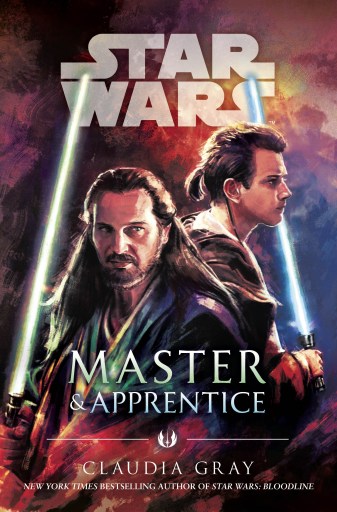
Master & Apprentice Cover.jpg
Master and Apprentice is an intriguing novel that will focus on the relationship between Qui-Gon Jinn and his young apprentice, Obi-Wan Kenobi.  While previous novels have explored Obi-Wan’s apprenticeship with Qui-Gon, none of these are considered canon anymore, so it will be interesting to see how this relationship is explored in the new extended universe.  This will be fourth Star Wars novel from Claudia Gray, who has already contributed to the current Star Wars extended universe with Lost Stars, Bloodline and Leia, Princess of Alderaan.

Goodreads Synopsis:

An unexpected offer threatens the bond between Qui-Gon Jinn and Obi-Wan Kenobi as the two Jedi navigate a dangerous new planet and an uncertain future.

A Jedi must be a fearless warrior, a guardian of justice, and a scholar in the ways of the Force. But perhaps a Jedi’s most essential duty is to pass on what they have learned. Master Yoda trained Dooku; Dooku trained Qui-Gon Jinn; and now Qui-Gon has a Padawan of his own. But while Qui-Gon has faced all manner of threats and danger as a Jedi, nothing has ever scared him like the thought of failing his apprentice.

Obi-Wan Kenobi has deep respect for his Master, but struggles to understand him. Why must Qui-Gon so often disregard the laws that bind the Jedi? Why is Qui-Gon drawn to ancient Jedi prophecies instead of more practical concerns? And why wasn’t Obi-Wan told that Qui-Gon is considering an invitation to join the Jedi Council—knowing it would mean the end of their partnership? The simple answer scares him: Obi-Wan has failed his Master.

When Jedi Rael Averross, another former student of Dooku, requests their assistance with a political dispute, Jinn and Kenobi travel to the royal court of Pijal for what may be their final mission together. What should be a simple assignment quickly becomes clouded by deceit, and by visions of violent disaster that take hold in Qui-Gon’s mind. As Qui-Gon’s faith in prophecy grows, Obi-Wan’s faith in him is tested—just as a threat surfaces that will demand that Master and apprentice come together as never before, or be divided forever.

This sounds like it will have a complex and character driven plot that will really plumb the depths of this Jedi Master and apprentice relationship.  This is actually the furthest back the new extended universe books have explored, and I am quite excited to see the earlier adventures of these two iconic characters.  I am extremely curious to see how Qui-Gon Jinn is characterised in this book, and I would love to see some discussion about his relationship with Count Dooku.  Master and Apprentice sounds absolutely incredible, and I have already requested a copy.

Alphabet Squadron Cover.jpg
The second book is the ultra-exciting-sounding Alphabet Squadron by Alexander Freed.  Alphabet Squadron, which is set to be released in early June, is the first book in a new original Star Wars trilogy, featuring New Republic pilots in the post-Return of the Jedi timeline.  Freed is another established Star Wars author, having written two books in the current canon, Twilight Company and the Rogue One: A Star Wars Story novelisation, as well as a series of Star Wars comics in the now defunct extended universe.  Alphabet Squadron also has a synopsis out, although I chose to use the one I found on the Penguin Random House website as it contains a lot more detail.

Penguin Random House Synopsis:

On the verge of victory in a brutal war, five New Republic pilots transform from hunted to hunters in this epic STAR WARS adventure. Set after Return of the Jedi, Alphabet Squadron follows a unique team, each flying a different class of starfighter as they struggle to end their war once and for all.

The Emperor is dead. His final weapon has been destroyed. The Imperial Army is in disarray. In the aftermath, Yrica Quell is just one of thousands of defectors from her former cause living in a deserters’ shantytown—until she is selected to join Alphabet Squadron.

Cobbled together from an eclectic assortment of pilots and starfighters, the five members of Alphabet are tasked by New Republic general Hera Syndulla herself. Like Yrica, each is a talented pilot struggling to find their place in a changing galaxy. Their mission: to track down and destroy the mysterious Shadow Wing, a lethal force of TIE fighters exacting bloody, reckless vengeance in the twilight of their reign.

The newly formed unit embodies the heart and soul of the Rebellion: ragtag, resourceful, scrappy, and emboldened by their most audacious victory in decades. But going from underdog rebels to celebrated heroes isn’t as easy as it seems, and their inner demons threaten them as much as their enemies among the stars. The wayward warriors of Alphabet Squadron will have to learn to fly together if they want to protect the new era of peace they’ve fought so hard to achieve.

While I was always going to get this book no matter what, the moment I saw the plot summary mention of Hera Syndulla, of Star Wars Rebels fame, I knew I would move heaven and Earth to get this book.  I absolutely loved Star Wars Rebels and I am extremely keen to read anything that explores the fates of any of the characters from the show.  Aside from the presence of Hera Syndulla, there are so many other cool elements of Alphabet Squadron that make me really want to check it out.  First of all, the focus on a fighter squadron has so much potential for action and adventure, and I am anticipating a ton of awesome dog fights and wonderful examples of ship-to-ship battles in space.  I am also looking forward to the requisite training and analysis of the various flying techniques that tend to follow those sorts of stories, and a squadron made up of one of each of the Rebel Alliance’s iconic ships sounds pretty damn awesome to me.  Finally, I am excited to see the start of a whole new, original Star Wars series, focusing on a whole new bunch of characters.  While the Star Wars books that focus on the characters from the films, shows and games are really cool, it will be interesting to see an extended universe book whose plot is not as closely linked with the overarching story of the movies and televisions shows.  I have a feeling that this might be the Star Wars book I enjoy the most in 2019, and I have high hopes for it.
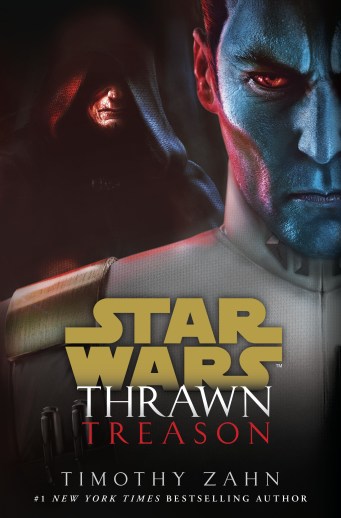
Thrawn Treason Cover.jpg

The final book that I will be looking at is Treason, the third book in the Thrawn series by master of Star Wars novels, Timothy Zahn.  Treason, set to be released in July, will continue the story of one of the best villains of the Star Wars extended universe, Grand Admiral Thrawn.  Grand Admiral Thrawn was introduced in 1991’s Heir to the Empire and is one of the most iconic characters in the previous extended universe, serving as a major antagonist for several books.  Thrawn proved so popular that Disney resurrected him for their extended universe, featuring him as a villain in Star Wars Rebels.  In addition, Disney also invited Zahn to reimagine his character’s origin in 2016, with the first book in this series, Thrawn.

Goodreads Synopsis:

Grand Admiral Thrawn faces the ultimate test of his loyalty to the Empire in this epic Star Wars novel from bestselling author Timothy Zahn.

“If I were to serve the Empire, you would command my allegiance.”

Such was the promise Grand Admiral Thrawn made to Emperor Palpatine at their first meeting. Since then, Thrawn has been one of the Empire’s most effective instruments, pursuing its enemies to the very edges of the known galaxy. But as keen a weapon as Thrawn has become, the Emperor dreams of something far more destructive.

Now, as Thrawn’s TIE defender program is halted in favor of Director Krennic’s secret Death Star project, he realizes that the balance of power in the Empire is measured by more than just military acumen or tactical efficiency. Even the greatest intellect can hardly compete with the power to annihilate entire planets.

As Thrawn works to secure his place in the Imperial hierarchy, his former protégé Eli Vanto returns with a dire warning about Thrawn’s homeworld. Thrawn’s mastery of strategy must guide him through an impossible choice: duty to the Chiss Ascendancy, or fealty to the Empire he has sworn to serve. Even if the right choice means committing treason.

This should be a really interesting read, and I believe that it will be the final book in the Thrawn series.  Thrawn is an amazing character to read about, and the adventures of the Empire’s ultimate tactician are some of the best stories in the entire Star Wars universe.  I really enjoyed the second book in this series, Alliances, which saw Thrawn team up with Darth Vader, although the plot of this book sounds like it will be more closely associated with the first book in the series, Thrawn.  I have not had a chance to enjoy the first Thrawn novel yet, although I am planning to listen to it before Treason comes out.  I imagine that this book will wrap up the character’s story before his final appearance in Star Wars Rebels, and I am very intrigued to see how this story arc finishes up.  I will be interested to see Thrawn try and work against the Death Star project, and the return to his home planet has some intriguing potential as well.  Overall, this sounds like another enjoyable instalment in the Thrawn series, and I am quite looking forward to see how the author ends this series, and where he will go from here.

While I may try and get physical copies of these books, preferably before their release dates, I will be strongly tempted to seek out the audiobook versions of these books instead.  Star Wars audiobooks are something special, and I love how they utilise the franchise’s iconic sound effects and music to enhance the story and make them sound out.  I will have to see how I go, but do not be surprised if one or more of the follow up reviews to this article involve the audiobook versions of these books.

I am very excited for these next three Star Wars novels, and I know that I will love all of them.  I love how these books represent such a wide range of stories, and I think that the new Star Wars extended universe is in excellent shape.  Stand by to see what I think of these amazing sounding tie-in novels.

Firefly: The Magnificent Nine by James Lovegrove

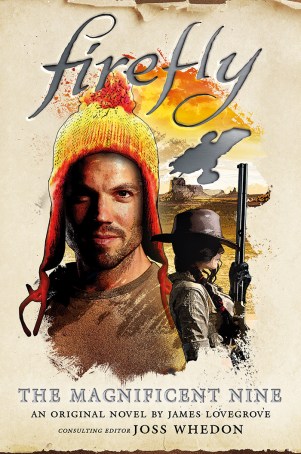
Firefly The Magnificent Nine Cover

Publisher: Titan Books (Hardcover Format – 19 March 2019)

Series: Firefly – Book 2

Length: 331 pages

My Rating: 4.5 out of 5 stars

Amazon     Book Depository

Fresh off writing the fantastic first book in this new series of Firefly tie-in novels, author James Lovegrove has crafted another amazing Firefly book that focuses on one of the more entertaining members of the Serenity crew, the hero of Canton, the man they call Jayne.

As I mentioned when I reviewed the first book in this new series of Firefly novels, Big Damn Hero, and in one of my subsequent Waiting on Wednesday entries, I am a massive fan of the Firefly franchise and was particularly eager to read the second book in this new series, The Magnificent Nine, which sounded liked it had an amazing plot.  As a result, I made sure to order this copy online well in advance and was extremely happy when it came last week so close to the worldwide release date.  I managed to read through it in about a day, and once again had the amazing feeling of being transported back into Firefly universe.

Out in the darkness of the verse, the crew of the Firefly class ship Serenity is up to its old tricks, searching for smuggling jobs that will keep them flying, while at the same time staying off the Alliance’s radar.  While Captain Malcolm Reynolds is used to anticipating the needs and wants of the inhabitants of his ship, he is completely thrown when a request for an unpaid mercy mission comes from one of the most unlikely members of his crew.  Serenity’s resident disgruntled mercenary, Jayne Cobb, suddenly asks that the ship be diverted to the backwater world of Thetis.  An old flame of Jayne’s, Temperance McCloud, has reached out requesting aid.  A vicious bandit, Elias Vandal, is threatening her small town of Coogan’s Bluff with a horde of trigger-happy thieves and murderers.  Mal initially does not take the request seriously, but then Jayne does the unthinkable and offers up his most prized possession, his beloved gun, Vera, as payment for the crew’s help.

Arriving at Thetis, the crew find that not only are the inhabitants of Coogan’s Bluff reluctant to get involved in any sort of fight, but a well-armed force of killers is waiting for them and spoiling for a fight.  However, the most shocking discovery is the fact that Temperance is raising a teenage daughter, born less than a year after Temperance and Jayne parted ways and named Jane McCloud.

This was a pretty epic read and one I had a lot of fun with.  Lovegrove once again hits it out of the park with this amazing novel that featured a great story, excellent coverage of the Firefly crew and some new interesting characters and events.  The Magnificent Nine is set between the events of the television series and the film Serenity, before Inara and Shepherd Book leave the ship.  Once again, I liked how this new entry into the Firefly book series felt exactly like a new episode of the television show, although it uses some of the show’s existing episodes, like Jaynestown or Heart of Gold, as inspiration.  I also quite liked how the story emulated some classic westerns such as The Magnificent Seven, which obviously inspired this book’s name, while also utilising science fiction elements.  I actually enjoyed this book a bit more than the preceding Firefly novel, Big Damn Heroes.  I felt that the story was more fast paced, significantly more action packed, and less widely spread out that the first book.  I also quite enjoyed the author’s use of the existing characters from the show as well as the intriguing new side characters that are introduced in this book.  The main story contains some interesting twists and turns, some of which are easy to see coming, but one or two of which come out of nowhere and are quite surprising.  The end result is a thrilling and character driven story which is enhanced by its association with the Firefly television show.

One of my favourite things about this book is the focus on the character of Jayne, especially as we get to see his underutilised noble side come out once again.  Throughout the run of the television show and most of the follow-up movie, Jayne is a selfish mercenary more concerned with his own self-interest and personal gain than the lives of his fellow crewmembers.  Jayne is not above sacrificing or betraying members of his own crew, namely the Tam siblings, if it will benefit him in some way.  His joining the crew of Serenity even involved him betraying and shooting his former captain when Mal offered him a better paying job and his own room on the ship.  That being said, there are a few instances where Jayne will do the right thing and act the hero, resulting in some memorable moments for the character.  The most notable of these occurred in the episode Jaynestown, where Jayne’s core beliefs are rocked by an entire community who venerate them as a great hero of the masses.  In The Magnificent Nine, Jayne’s noble side once again comes out when he receives a request for help from his former lover and her daughter.  As a result, he makes a series of impulsive and foolish actions throughout the book in order to try to do what he sees as the right thing, and these often result in some excellent sequences throughout the book.

Seeing this more noble version of Jayne emerge once again is fantastic and will be greatly appreciated by a huge number of Firefly fans.  Jayne is always a widely entertaining character in the Firefly franchise, and I felt that Lovegrove did a great job of portraying the character in this story.  I really enjoyed seeing another Jayne-centric storyline, and I liked how the author makes sure to utilise a number of classic Jayne elements throughout The Magnificent Nine, including the return of his iconic bobble hat and his favourite gun, Vera.  However, there are some interesting new Jayne moments as well, as Lovegrove goes back and explores some elements from his past, including how he met Temperance, and how she helped turn him into the man he is today.  This is an outstanding novel for those fans who love the character of Jayne, and I had a lot of fun watching him get another personal adventure.

As The Magnificent Nine mostly focuses on Jayne, the rest of the crew do take a bit of a backseat in this book.  That being said, all of them get one or two scenes focused on them, in one way or another.  Lovegrove once again does a great job of capturing the characters from the show, and rehashing their various quirks, relationships and the other minutiae of their personalities, even with these limited scenes.  While some of the characters do not get too much action in this book, I thought that Mal and River in particular were showcased well.  In this book, Mal plays the long-suffering captain who finds himself dragged into all manner of trouble by his crew, which forces him to act as the ship’s annoyed father figure.  River, the psychotic psychic, also gets a pretty good run in this book.  While Lovegrove does not explore her mind to any great degree, she gets some fun scenes, including one where she takes out intruders in Serenity, and another where she steals Vera and uses it in a firefight.

The side characters introduced in this book are pretty memorable, and the storylines revolving around them were very interesting.  Jayne’s former love interest, Temperance McCloud, is a pretty badass woman, and it’s fun to see the sort of woman Jayne would fall in love with.  There are also a number of secrets from Temperance’s past that come into play and add some emotional depth to hers and Jayne’s story.  The villain of this story, Elias Vandal, is a fairly dark antagonist, acting as a sort of Charles Manson-like character, forming a cult of personality that draws in the planets outcasts and loners while also claiming to be a former Reaver.  I quite liked Vandal as the story’s villain.  I thought he was well written out, and the various layers to his past and the way he controls his gang are quite intriguing.  Young Jane McCloud is another great side character, and I liked her interactions with River and Jayne.  She forms a great friendship with River, and the two get up to all sorts of fun antics.  I also liked the unconventional father-daughter relationship that occurred between Jayne and Jane, especially when they were forced to work together.

As mentioned above, The Magnificent Nine contains a large amount of action, with a huge number of firefights and other battles throughout the book.  I liked the way that many of the battles had a western theme, with the skilled gunfighting heroes fighting large swathes of bandits and goons.  However, the utilisation of science fiction elements really helped enhance them and, in some cases, increase the humour value.  I liked the Mad Max-like chase scene that featured not only horses but also dune buggies, motorbikes and Firefly’s mule.  There is also a spaceship assisted lassoing that was quite fun, and I liked seeing a classic trope like a lasso assisted by science fiction elements.

I absolutely loved Firefly: The Magnificent Nine, which turned out to be another ultra-fun romp back into one of my favourite television shows.  Lovegrove has a real skill for bringing these characters to life, and I really enjoyed the thrilling story he wrote for The Magnificent Nine.  The author’s portrayal of Jayne Cobb really shines through in this book, and it was great to see another story based around this awesome and funny character.  This book is best appreciated by fans of the franchise, although I feel there is a lot in this book for new fans to enjoy.  While this book was an amazing amount of fun to read, I now have to wait another six months for my next taste of the Firefly verse; how will I survive?

Amazon     Book Depository

Waiting on Wednesday – Spaceside by Michael Mammay

Welcome to my weekly segment, Waiting on Wednesday, where I look at upcoming books that I am planning to order and review in the next few months and which I think I will really enjoy.  Stay tuned to see reviews of these books when I get a copy of them.

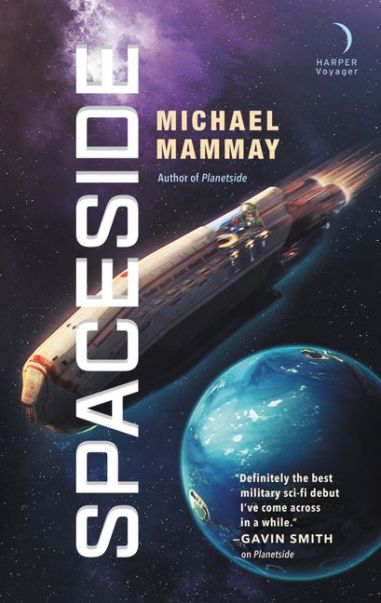
Spaceside Cover.jpg

For this week I look at Spaceside by Michael Mammay, the sequel to one of my favourite books from 2018, PlanetsidePlanetside was an incredible debut from Mammay, who blended together mystery and science fiction elements to create an outstanding space military thriller with an absolutely explosive ending that I still cannot get over.  As a result, I have huge hopes for Spaceside, which is set to be released in August, and I am very excited to see how Mammay tops his amazing first book.

Goodreads Synopsis:

Following his mission on Cappa, Colonel Carl Butler returns to a mixed reception. To some he is a do-or-die war hero. To the other half of the galaxy he’s a pariah. Forced into retirement, he has resettled on Talca Four where he’s now Deputy VP of Corporate Security, protecting a high-tech military company on the corporate battlefield—at least, that’s what the job description says. Really, he’s just there to impress clients and investors. It’s all relatively low risk—until he’s entrusted with new orders. A breach of a competitor’s computer network has Butler’s superiors feeling every bit as vulnerable. They need Butler to find who did it, how, and why no one’s taken credit for the ingenious attack.

As accustomed as Butler is to the reality of wargames—virtual and otherwise—this one screams something louder than a simple hack. Because no sooner does he start digging when his first contact is murdered, the death somehow kept secret from the media. As a prime suspect, he can’t shake the sensation he’s being watched…or finally succumbing to the stress of his past. Paranoid delusion or dangerous reality, Butler might be onto something much deeper than anyone imagined. But that’s where Butler thrives.

If he hasn’t signed his own death warrant.

I have to say that the plot for this new book sounds really intriguing.  I am looking forward to seeing Butler investigate another complex science fiction crime.  I like that that author has taken the story into a somewhat new direction, focusing on a corporate crime, but I hope the story spends a good amount of time exploring the repercussions of his actions in the first book.  There are so many ways that the awesome story that was started in the first book could be continued, and I look forward to seeing if the conspiracy he uncovered in Planetside plays into this new mystery.

I am very confident that this book will be pretty epic, and Spaceside is currently sitting at the top of my must-read list for 2019.  I have not decided if I will get a physical copy of this book or try and get the audiobook version.  R. C. Bray did an incredible job narrating the audiobook version of Planetside, so I would like to listen to the sequel.  However, if I get an advanced copy of the trade paperback of this book, I very much doubt I will be able to restrain myself enough to wait for the audiobook version.  Sigh, life is so hard when it comes to awesome upcoming books.

Star Wars: Queen’s Shadow by E. K. Johnston – Audiobook Review

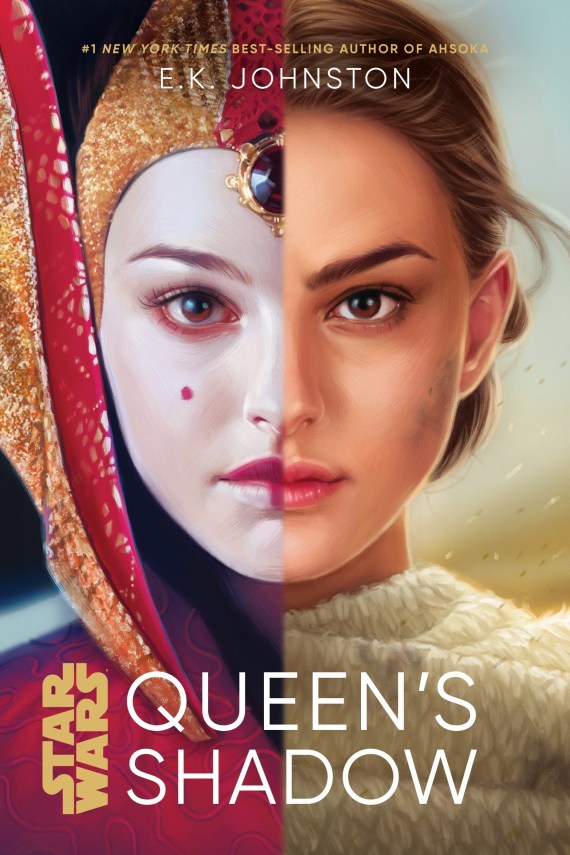
QueensShadow Cover.jpg

Publishers: Disney Lucasfilm Press and Listening Library (5 March 2019)

Series: Star Wars Extended Universe

Length: 8 hours 22 minutes

My Rating: 4 out of 5 stars

Amazon

The female protagonist of the Star Wars prequel movies, Padmé Amidala, gets a story mostly worthy of her, as young adult fiction author E. K. Johnston attempts to bridge the character gap between the first two Star Wars prequel movies in Queen’s Shadow, the first Star Wars novel of 2019.

While The Phantom Menace had its flaws, one of the things that the first Star Wars prequel film did right was the character of Queen Amidala, the young, fierce and strong democratically elected Queen of Naboo, who was able to lead her people to freedom.  Portrayed by a young Natalie Portman, the character appeared in the other two prequel movies, where her relationship with Anakin Skywalker became a key plot point of the entire series.  While I am not the biggest fan of how Padmé was portrayed in the second and third prequel films, I was quite excited to read a novel that explored the character in more detail, especially one written by Johnston, who did such a fantastic treatment on the popular character Ahsoka Tano in her one previous foray into Star Wars fiction.  After my previous awesome experiences with Star Wars audiobooks, such as Ahsoka, I chose to listen to this book’s audiobook format, which was narrated by Catherine Taber.

Four years after ensuring the defeat of the Trade Federation on Naboo, Queen Padmé Amidala has served the last elected terms of office and is no longer Queen.  Now free of the responsibilities of ruling, Padmé and her loyal handmaidens now have time to think about a new future.  However, before Padmé can put any plans in place the new Queen of Naboo presents her with a job she cannot refuse: become the new representative of Naboo in the Galactic Senate.

Accepting the role, Senator Amidala travels to Coruscant, the capital of the Galactic Republic, to take up her seat, accompanied by a completely new support staff.  She is quick to discover that her experiences as a ruler have not prepared her for the demanding and treacherous world of galactic politics.  The Senate is a hotbed of corruption and bureaucracy, and Padmé is already considered by many to be a puppet of Chancellor Palpatine.  She also has number of powerful enemies throughout the galaxy who seek not only to discredit her but also to kill her.

However, Padmé Amidala is used to being underestimated, and with Sabé, her former decoy and shadow, watching her back, she begins to forge the political alliances she needs to finally bring some change the galaxy.

This was an interesting piece of Star Wars fiction that I quite enjoyed.  However, it is not without its flaws, and there were a few things that I disliked about the story that resulted in me dropping my overall rating slightly.  But before I talk about the parts of the story that I had issue with, I want to mention the elements of this book that I enjoyed quite a bit.

Queen’s Shadow is an amazing Padmé Amidala story that helps redeem the character after her less than stellar showings in the second and third Star Wars prequel movies.  This book helps make people forget about the helpless, pregnant damsel from Revenge of the Sith (although some deleted scenes from that movie do show some of the politics she was involved with), and instead focuses on her role as a canny political operator.  I was also quite happy that Anakin did not appear as a character in this book; I preferred to see Amidala stand on her own without being defined by her relationship with a Jedi.

Johnston did a spectacular job of creating a novel that bridges the gaps in Padmé’s story between the first and second prequel movies.  At the end of The Phantom Menace Padmé is still queen of Naboo, but by the start of Attack of the Clones she has become a senator, with very little discussion in the movies concerning how this came about.  While I am sure that some of the books and comics in the old Star Wars extended universe would have covered this period of Padmé’s life, Queen’s Shadow is one of the first stories to explore this in the new Disney owned and operated Star Wars extended universe.

The author spends a significant amount of time focusing on Padmé’s early days in the Galactic Senate, including how she formed some of her early alliances, such as with Bail Organa and Mon Mothma, and how she became such a significant force in the Senate.  In addition to this, we get to see how and why several of the minor Naboo characters from The Phantom Menace left Padmé’s side, and how several new characters, such as her new handmaidens and her security guard, Gregar Typho, came into her service.  In addition to serving as a bridge between the two prequel movies, Queen’s Shadow also ties into The Clone Wars animated television show, showing Padmé’s first contact and initial relationships with some of the characters who originated in the animated show, such as Senators Rush Clovis and Mina Bonteri.  While the book does spend time setting up events for Attack of the Clones, Johnston ensures that Padmé and the other main characters reflect on the events that occurred during The Phantom Menace, and the people that helped them during these adventures, such as Qui-Gon Jinn and little Anakin Skywalker.  Overall, I felt that this really helped tie in the events between the two books and is an excellent new piece of Star Wars cannon.

In my opinion, one of the cleverest parts of The Phantom Menace was the revelation towards the end of the film that Queen Amidala was actually being played by two separate actresses: Natalie Portman and Keira Knightley.  In the context of the film, Natalie Portman’s character, Padmé, was the real queen of Naboo, while Keira Knightley’s character, Sabé, was a decoy used for security purposes.  While Padmé portrayed the Queen at the start of the movie, when the Trade Federation invaded there was a subtle switch and Sabé took on the role while Padme could be seen disguised as a nondescript handmaiden in the background.  The two characters would then switch between portraying Queen Amidala throughout the film, with Sabé taking on the role whenever there was a chance the Queen could be captured or killed, while Padmé took on the role herself when official discussions or speeches needed to be made.  Handmaiden Padmé also got her own scenes when Sabé was taking on the role as Queen, allowing the viewers to see this side of the character.  This was and still is an amazing and ingenious part of the movie, which worked due to the similarity in appearances between the two then relatively unknown actresses, a downplaying of Knightley’s role in the film, as well as because of the elaborate makeup, hairstyles and dresses that Queen Amidala wore.  As a result, the general audience were quite surprised at the time, especially as cast lists were not as easily available on the internet at the time.

As a result, I was extremely happy that Johnston chose to explore the utilisation of the queen’s decoy in some detail throughout this book.  Quite a lot of time is spent discussing the techniques behind the Amidala persona, from the distracting makeup and costumes, to the quick-change techniques that Padmé and her handmaidens utilise, and even several discussions about the ‘Amidala voice’, the imperious tone that Portman and Knightly both performed in The Phantom Menace.  I found this entire exploration of this decoy angle incredibly fascinating, and it gave me a completely new appreciation for how the decoys were utilised in the first prequel film.  The decoys were also a key part of Queen’s Shadow, as Padmé still continues to utilise them as a senator, allowing her to avoid danger and slip away at social gatherings so she can undertake other covert tasks.  The scenes where they utilise them are quite intriguing, and I liked the author’s thoughts on the psychology behind the effectiveness of the decoys and how they are still an effective technique in an advanced science fiction society.  It was interesting to note that both of Padmé’s decoys who appear the films, Sabé and Cordé (who was blown up at the start of Attack of the Clones), have major roles in this book, with both taking on the Amidala persona at some point in the story.

While it was intriguing to see Cordé learn to take on the role of Amidala in this book, the original decoy, Sabé, was a much bigger part of the plot.  Sabé has a significant role within the book and is actually Queen’s Shadow’s secondary protagonist, performing undercover work on Padmé’s behalf.  The relationship between Padmé and Sabé was a really interesting and emotional subplot to explore, as Sabé is quite loyal to the former queen.  How Sabé defines herself as Padmé’s friend and confidant is a significant part of Sabé’s story, and Johnston spends time attempting unravel this complicated relationship.  The overall result is a fascinating inclusion to this story, and one that adds some real emotional depth to the story.

In addition to the focus on the decoy characters, Johnston also spends time looking at the role of Padmé’s royal handmaidens, the young hooded women who followed Padmé around in the first film.  I had never really given the handmaidens much thought before this book, apart from how Padmé was able to hide her identity by taking up a handmaiden’s garb for several parts of the film.  However, Johnston does a fantastic job of explaining the actual role of these characters as Padmé’s confidants, covert operatives, undercover bodyguards and potential body doubles.  I really liked how Johnston was able to turn these minor characters from the films into a significant part of her book, and it was quite interesting to see them be deployed to help with Padmé’s political moves.  Each of the handmaidens, both those who only appeared in The Phantom Menace and those who only appeared in Attack of the Clones, are explored in some detail throughout the book.  The reader gets a real sense of each of the characters personalities, what skills they bring to Padmé’s table and the fates of those handmaidens who served Padmé during the invasion of Naboo are also explained by this book.  This look at the handmaidens is an excellent part of the book, and one that I actually found quite fascinating.

Aside from the look at Padmé and her associates, Queen’s Shadow also examines a number of other aspects of the Star Wars universe during this time period.  For example, there is quite a large focus on politics, both on Naboo, and within the Galactic Senate.  The galactic politics in particular is quite intriguing, and I liked seeing Padmé’s initial impression of Senate procedure and its many shortcomings.  Johnston has also included some fun media articles throughout the book, showing how negative news coverage is being used to disadvantage or advantage Padmé’s political ambitions, which I found to be quite amusing.  There are also some hints at the coming Separatist movement, as several planets are showing discontent with the Republic and certain actions are taking place to undermine security throughout the galaxy.  All of the features are pretty interesting, and I had fun reading about them throughout this book.

Now, while I obviously quite enjoyed many of the elements that Johnston explored in this book (having gone on about them for over two pages), I have to admit that the overall story is actually a bit boring in places and the story really does not go anywhere.  There are some big points, including a quick assassination attempt, piracy, large-scale disasters and potential political crisis, but many of these events has any real significance, follow through or any sort of actual conclusion.  This could potentially be alright if Queen’s Shadow is the start of a larger storyline or a new book series, but I am not too sure how likely that is.  Not only is there no real indication that Johnston will be continuing this story, but the epilogue of the book kind of puts a damper on that, which I will discuss below.

BEWARE SPOILERS BELOW:

The epilogue of the book shows Padmé’s funeral, as shown at the end of Revenge of the Sith.  While I did like how Johnston alluded to the funeral at the start of Queen’s Shadow’s by using the same descriptions of Padmé’s floating flower-covered body, and the funeral does put a final end to the story.  The epilogue did show Sabé talking with Senator Organa, so this book could potentially set up a follow-up book focusing on the former decoy either joining the Rebel Alliance or investigating Padmé’s death.  However, this does not really fit with some of the open story points from this book, as the Trade Federation are the most likely people behind the assassination attempts and the piracy, and who cares about the Trade Federation after Revenge of the Sith?  In addition, this book only really explored around a year of Padmé’s life as a senator, and I think it would make more sense to follow more of Padmé’s early political career, especially as there is still around five more years until Attack of the Clones begins.  I suppose you could maybe do a split-timeline story that follows Padmé and Sabé before and after Revenge of the Sith, with the two storylines coming together, although I am not sure how well that would work.  I would like to see Johnston explore this more and give her overall story more shape, I just do not know how likely that is at this point.

END OF SPOILERS

While the somewhat pointless story does bring Queen’s Shadow rating down a bit, its audiobook features really help raise it up again, especially with its excellent narrator Catherine Taber.  The audiobook version of Queen’s Shadow runs for around eight hours and 20 minutes, so it is an easy book to get through quickly.  Catherine Taber is the actress who voiced Padmé in The Clone Wars animated show and is also the most recent person to portray the character on screen.  As a result, she is the perfect narrator for this book, as she already perfected a great Natalie Portman imitation voice for the show.  Taber did a fantastic job narrating this book, as she not only is the perfect voice for Padmé but also has an amazing range for the other characters featured in the book.  I appreciated how she was able to craft similar voices for the handmaiden characters, many of whom were chosen to be handmaidens because they were physical and audible matches to Padmé.  This is particularly true of Sabé, and as a result Taber ensures she has pretty much the same voice that Padmé does.  Other high points of Taber’s narration include her rendition of the Amidala voice, as well as the creepy tones she utilises for Chancellor Palpatine, especially when he kept saying “my dear”.  As always, the producers of this Star Wars audiobook load up this version with all sorts of sound effects and classic Star Wars music.  I felt that these sound effects and music really helped enhance the story, and gave it some real atmosphere, and I liked the way that certain things, such as holo-messages between the characters, were altered to make them sound more realistic.  I would strongly recommend the audiobook format of Queen’s Shadow as the best way to enjoy this story, and I thought it was just wonderful.

Queen’s Shadow is marketed as a young adult novel, and it is quite a good novel for a younger audience to enjoy, with only minor sexual references, coarse language, drug use and violence throughout the book.  However, there really is not any upper age limit on enjoying this book, and older readers can just as easily explore Johnston’s story.  While there is no age limit, readers should ideally be a Star Wars fan to fully enjoy Queen’s Shadow.  At the very least, readers should have watched all of the prequel films first to get a full handle on what is happening.  While I imagine someone with no prior knowledge of Star Wars might be able to enjoy reading this, it is probably not the best young adult science fiction book to pick out.  As a result, this book is recommended more for established fans of the franchise, and as a pretty hard-core Star Wars fan myself, I know I enjoyed all of the references and character exploration that Johnston did a lot more.

In the end, I decided to award Queen’s Shadow four stars out of five.  While I really loved all the intriguing elements that Johnston explored in this book, the lagging story did make it a little harder to enjoy.  That being said, I would not hesitate to grab another Star Wars book from Johnston, as she has an outstanding understanding and appreciation of the Star Wars universe.  I do hope that this story is continued in some way, and if it does, I will definitely check out the audiobook version of it, especially if it is narrated once again by Catherine Taber.  Interesting reading, Queen’s Shadow is worth checking out, especially if you are an established fan of the Star Wars franchise.

Amazon

The Secret Runners of New York by Matthew Reilly

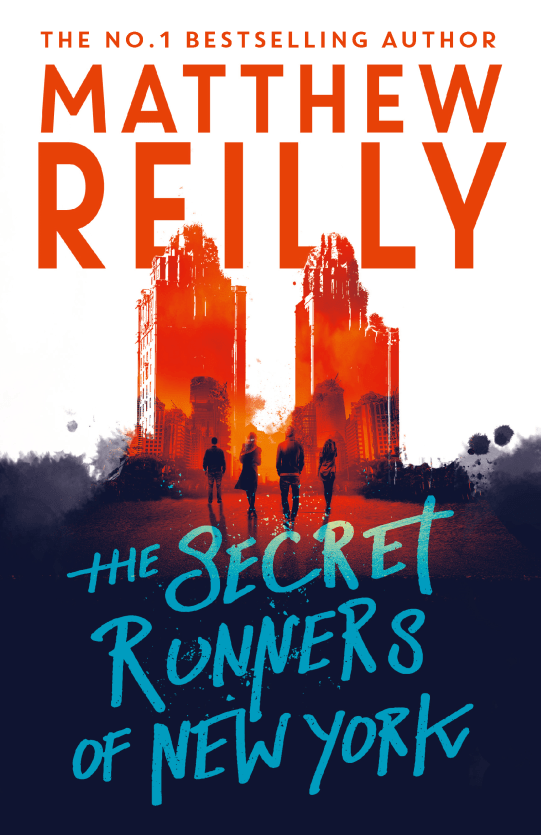
The Secret Runners of New York Cover

Publisher: Pan Macmillan Australia (Trade Paperback Format – 26 March 2019)

Series: Standalone/Book 1

Length: 328 pages

My Rating: 4.5 out of 5 stars

Amazon

The end of the world has nothing on the horrors of high school in this fast-paced and widely entertaining new book from bestselling Australian author Matthew Reilly.

When Skye Rogers and her twin brother, Red, are forced to move to New York city, they are enrolled in the prestigious The Monmouth School, learning institute of choice for the city’s ultra-wealthy and social elite.  Even among the children of the rich and powerful there exists a well-established hierarchy, and in The Monmouth School, the top of the social ladder are the friends and cronies of the Collins sisters, Misty and Chastity.  Despite only wanting a quiet existence in her new school, Skye finds herself drawn into their orbit against her better judgement.

Skye soon discovers that hanging out with the Collins sisters is very different from the usual high school cliques.  The social group is probably the most exclusive in New York, and it comes with certain privileges.  Thanks to an ancient family secret, the Collins sisters are able to activate an ancient tunnel beneath Central Park that allows teenagers to run through an alternate version of New York: a post-apocalyptic nightmare littered with ruined buildings and filled with crazed survivors.

When Skye and her fellow runners find evidence that the New York they are visiting is actually a future version of their own timeline, they need to find a way to come to terms with the end of the world, especially as the apocalypse appears to be only days away.  As society starts to crumble and the poor rise up against the rich, Skye tries to find a way to use her knowledge of the future to save everyone she loves.  However, Skye is about to learn that her new friends are far more concerned with revenge and are planning to use the end of the world to take her down.

Matthew Reilly is a veteran author of weird and electrifying fiction, having written a number of intriguing books in the last 20 years, many of which fall within the techno-thriller or science fiction genres.  In addition to a number of fun sounding standalone novels, Reilly has also published two substantial series, the Shane Schofield series and the Jack West Jr series.  Matthew Reilly is one of those authors that I have been meaning to check out for some time, as a number of his novels sound absolutely bonkers and really creative.  I am particularly drawn to his 2014 release, The Great Zoo of China, which essentially sounds like Jurassic Park with dragons; his 2013 historical thriller The Tournament; and the books in the Jack West Jr series, which features secret organisations fighting for control of ancient artefacts with world-and universe-ending potential.

I was therefore very excited to get an advanced copy of The Secret Runners of New York, due to its intriguing time travel and armageddon concepts.  I actually really enjoyed The Secret Runners of New York and had a lot of fun reading it.  The book features a surprisingly entertaining use of over-the-top high school drama that actually combines really well with the interesting science fiction elements mentioned above.  The result is an unpredictable and amusing overall story that I had a very hard time putting down and which I powered through in very short order.

The book revolves around the students at The Monmouth School (you have to say the “The”; it’s that type of place), New York’s premier high school for the rich and snooty.  Please remind me to never send any of my theoretical children to any school thought up by Reilly, as the author creates a learning institution that is essentially a viper’s nest of bitchiness, enforced social hierarchy and petty revenge, all of which is enhanced by the fact that the characters are all ultra-rich or have massive superiority complexes.  The quote below from main character Skye, one of the few well-adjusted characters in the book, shows her experiences within the first few minutes at The Monmouth School:

“In the space of a few minutes I’d seen a taunt about sluttiness, a threatened punch to the uterus, some humble bragging by the Head Girl about the school’s social status and a dose of good old-fashioned mean-girl passive aggressiveness from Misty.  School, I reflected sadly, was school no matter how high the tuition fees were.”

I have to admit I did find Reilly’s portrayal of most of the rich teenage girls in this book to be a tad extreme and unrealistic (yes, in a book featuring time travel, that’s what I am finding unrealistic).  I have never been and never will be a teenage girl, but I hope that teenage girls in high school couldn’t possibly be as petty and vicious as the girls portrayed within this book, even if they are the daughters of the uber-privileged.  That being said, I found this over-the-top viewpoint of high school life to be extremely entertaining and it was a fantastic element throughout the book.  Watching the level-headed and somewhat cynical protagonist have to deal with this insanity was a lot of fun, especially when you would imagine most people would be more concerned with the end of the world than with who made out with which guy.  An unbelievably amusing part of the story, these high school elements are great, just try and avoid thinking about it too much.

In addition to the look at the mean girls of high school, I did quite enjoy Reilly’s critique of the ultra-rich and powerful in New York City.  The protagonist finds herself drawn into the world of debutant balls, society politics and the other classy responsibilities of being rich in New York.  Again, this is an interesting part of the story, and the rich characters with their extravagant lifestyles do offer a nice disconnect from reality.  I liked Reilly’s examination of how the rich would be targeted during apocalyptic events such as the one portrayed within this book, and it played nicely into some of the current protests and perceptions of the 1%.  it’s another glorious over-the-top element for this book that provides the reader with a lot of entertainment and a real dislike of most of the privileged characters.

The science fiction parts of this book are incredibly well done and are an excellent part of this book.  Not only is there a devastating cosmic storm that will wipe out most of humanity in hours, but there is an unrelated magical tunnel that the protagonists can use to visit the future.  Reilly does an amazing job creating a devastating and crazy post-apocalyptic New York City for the readers to explore.  I was really impressed with all the brutal descriptions of how the city was in ruins and had been dramatically reclaimed by nature as the infrastructure falls into disrepair, and the whole thing is an amazing setting that Reilly uses to full effect.  I really liked how the author uses the time travel elements within the book.  Watching the protagonists slowly work out that this world is a future version of their own timeline is amazing, and it was great seeing them see all the testimonials and letters from their families describing the events that are yet to happen in their future.  The various time travelling shenanigans used by both the protagonists and antagonists of this book helped enhance this already exciting story, and I loved the way that the characters are able to see the consequences of their actions in both timelines before they actually happen.

The author has also utilised some eye-catching visual elements throughout the book to enhance the story being told.  There are a number of maps used to show the key locations of the book, and there are even a couple of diagrams used to explain the potential time travel issues in this book.  I personally liked the way that the font changed to signify the characters going into a different timeline and thought it was a nice touch.  A range of other text techniques are used to signify angry or desperate messages on different locations, such as walls or the entirety of buildings, often conveying the emotion behind these messages.  All these visual treats are great, and they really make this book stand out.

The Secret Runners of New York is currently being marketed to the teen and young adult audiences, but this book is really on the edge of what young adult fiction is.  While it is focused on teenage characters in high school, there are a significant number of very adult inclusions throughout the book.  It is interesting to note that in an interview at the back of the book, Reilly himself indicates that he does not see this story as being as a piece of young adult fiction, and I think that is shown in the way that he wrote this over-the-top story.  There is a high level of violence, drug use, coarse language and sexual references featured throughout this book, and as a result, I would say it is not really appropriate for the younger audiences and is probably more suited for older teenage readers.  This is definitely one of those young adult marketed books that adult readers can really enjoy, and there is no upper limit on enjoying this crazy tale.

This was an incredibly entertaining and captivating book that I had a lot of fun with.  Matthew Reilly pulls no punches when it comes to portraying the book’s petty and vicious teenage rich girl antagonists, which turns an already intriguing science fiction book into a wild thrill ride of revenge, betrayal and insanity.  I have to say that I quite enjoyed my first taste of Matthew Reilly’s writing and I am extremely keen to check out some of his other works in the future.  At the moment The Secret Runners of New York is a standalone book, although the author leaves a number of storylines open for sequels or prequels, and I would be interested to see where he takes the story next.

Amazon

Throwback Thursday – The Andromeda Strain by Michael Crichton

The Andromeda Strain Cover.jpg

Publishers: Brilliance Audio (Audiobook Edition – 26 May 2015)

                        Knopf (12 May 1969)

Series: Standalone/Book 1

Length: 8 hours 15 minutes

My Rating: 4.5 out of 5 stars

Amazon     Book Depository

Reviewed as part of my Throwback Thursday series, where I republish old reviews, review books I have read before or review older books I have only just had a chance to read.

For this week’s Throwback Thursday I take a look at a classic techno-thriller from legendary author Michael Crichton, The Andromeda Strain.

The Andromeda Strain was released nearly 50 years ago, in May 1969, and represented a bold new direction from Crichton, who had previously done several pulpy crime novels, such as Odds On and Scratch One, under the name John Lange, as well as the medical crime thriller A Case of Need, which he wrote under the name Jeffrey Hudson.  The Andromeda Strain was considered to be part of the new techno-thriller genre and is still considered to be a major example of this genre.

I have only read three of Crichton’s books before, including Jurassic Park (for obvious reasons), The Lost World and Pirate Latitudes.  While I have always intended to go back and read some more of Crichton’s works, I have never had the time to do so.  However, with the recent announcement that The Andromeda Evolution is being released in November to correspond with the 50-year anniversary of The Andromeda Strain, I thought this would be the perfect opportunity to check out one of Crichton’s earlier books.  For that reason, I listened to the audiobook version of The Andromeda Strain narrated by David Morse.

When a military satellite comes down in the small town of Piedmont, Arizona, nearly all the residents in the town die.  They are victims of a mysterious new pathogen that either instantly clotted all the blood in their body or drove them to suicide.  The military quickly activate the Wildfire protocol, and a small government team of scientists and doctors take command of Piedmont and the satellite.

Believing that the satellite contains an extraterrestrial organism, the team bring it and the two survivors of Piedmont, an old man and a baby, to a secret and secure underground Wildfire laboratory for study.  Deep in the laboratory, the team attempt to identify and categorise the organism which has been given the codename Andromeda.  However, Andromeda is evolving a way no member of the Wildfire team believed possible, and not even the laboratory’s nuclear bomb safeguards may be enough to keep it contained.

After listening to The Andromeda Strain over a couple of days, I found it to be an extremely thrilling and complex novel that I really got into and which I am eager to review.  However, after 50 years and thousands of reviews I am not too sure how much I can really say about this book that has not already been said.  That being said, when looking at this book from a 2019 perspective, I feel that The Andromeda Strain is still an extremely strong techno-thriller, with some expert storytelling and an in-depth scientific base that is still relevant in this modern era.

In this book, Crichton utilised a very dry, detailed and scientific approach to his writing, slowly covering every aspect of the events unfolding before each of the protagonists, while also providing the reader with backstory on the characters and briefings on the various relevant scientific and political components of the book.  Despite this somewhat less exciting writing style, Crichton is still able to create quite a thrilling atmosphere throughout the book as the story gets closer to the inevitable disaster part of the plot.  Crichton really adds to the suspense by mentioning the various mistakes that the protagonist are making and hinting at all the problems going on around them that will eventually lead to the release of the Andromeda microbe.

I did feel that the book ended rather suddenly, and I was surprised that the investigation part of the story was still going with only a short amount of the book left to go.  I found it interesting that the part of the story that dealt with the release of Andromeda and the subsequent race to stop the nuclear explosion about to wipe out the lab was introduced so late in the book and solved so very quickly.  I was expecting a large portion of the story to focus on the main characters getting past all of the impressive contamination protocols in order to stop the nuclear explosion.  Instead, this was all solved within about 10 minutes of audiobook narration, or probably five to 10 pages of a normal book.  While I was surprised about this, I suppose it does make sense in the context of the rest of the story, where the characters and briefing material did mention several times that there was a three-minute delay between the bomb arming and the explosion.  This was all extremely thrilling, and I felt that the book is still capable of keeping authors on the edge of their seats.

One of the things that really surprised me about the book was the advanced level of technology that was featured within a story written and set in 1969.  Perhaps this is simply ignorance as a result of being a child of the 90s, but I feel it is more likely the result of Crichton having a great understanding of technology and potential future advances that might be utilised within a high-level government laboratory.  Certainly, the scientific features of this book are extremely impressive, and I felt that they were still extremely relevant and understandable in a 2019 context.  For example, all the extreme quarantine methods surrounding the Wildfire laboratory sound like perfectly reasonable steps that modern laboratories could use to keep pathogens contained.  All the discussions about viruses and micro-organisms were also incredibly detailed, and I felt that much of the information discussed around those is still relevant today, and modern audiences will still be able to understand and consider it quite easily.

I did find the concept of the Odd-Man Hypothesis to be extremely interesting.  In essence, the Odd-Man Hypothesis states that out of all the humans in the world, unmarried men are the most likely to make the best and most dispassionate decision in the face of an emergency.  This becomes a key part of the story, as one of the characters is designated as the Odd-Man and is the only person with the ability to shut off the laboratory’s nuclear self-destruct device.  Now this is one theory that does not translate to more modern times, although, in fairness, most of The Andromeda Strain’s characters did not take it that seriously either.  That being said, it was an extremely intriguing element to read about, and I enjoyed the discussion around its viability and use within the context of the story.

As I mentioned above, I chose to listen to The Andromeda Strain in its audiobook format.  There are actually a number of different audiobook versions of The Andromeda Strain out there, each with different narrators, such as an earlier version narrated by Chris Noth.  I ended up listening to the most recent audiobook version of this book, although I imagine a new version is sure to follow soon, especially with a sequel about to come out.  The version I listened to was narrated by actor David Morse and was released in 2015.  This version is 8 hours and 15 minutes long, and I found myself powering through it very quickly.

I think that the audiobook was a really great way to listen to The Andromeda Strain, as it allows the reader to absorb the huge amount of scientific detail and discussion a lot easier.  I felt that David Morse was an excellent narrator for this book, and that his basic narration voice perfectly fit the books tone and style.  Morse also comes up with some great voices for this book, and I was particularly impressed by his weary old man voice.  As a result, I would highly recommend the audiobook version of The Andromeda Strain, as it is definitely an outstanding way to the listen to this fantastic story.

Overall, I loved this dive back into the past and I had a lot of fun listening to this classic techno-thriller.  Crichton is an amazing author, especially when it comes to a more science-based story, and I am incredibly impressed that his story still holds up 50 years after it was first published.  I am extremely curious to see where the upcoming sequel, The Andromeda Evolution, takes the story, and how well new author Daniel H. Wilson replicates Crichton’s style.  This book has also encouraged me to check out some more of Crichton’s works, and I am looking forward to reading some more of this author’s excellent techno-thrillers, as well as some of his intriguing historical fiction pieces.

Amazon     Book Depository

Star Trek Discovery: The Way To The Stars by Dr Una McCormack

Star Trek Discovery - The Way To The Stars Cover

Publisher: Gallery Books (Trade Paperback Format – 8 January 2019)

Series: Star Trek Discovery – Book 4

Length: 276 pages

My Rating: 3.75 out of 5 stars

Amazon     Book Depository

Get ready to dive into the extended Star Trek universe with The Way To The Stars, the latest tie-in novel to the franchise’s current show, Star Trek Discovery.

While most people would be familiar with the iconic Star Trek television shows and movies, some may be unaware that there is an extremely rich and extensive Star Trek universe across a variety of different media formats.  This is particularly true when it comes to the vast number of Star Trek novels which utilise the franchise’s massive universe.  Since 1967, during the run of the original Star Trek television series, a bevy of authors have contributed to this extended universe by creating a huge number of novels made up a range of different series and publishers.  There are now over 840 Star Trek novels, not only complementing the various Star Trek movies and television shows but also creating a series of new adventures.

With the announcement of the latest Star Trek television show, Star Trek Discovery, in late 2017, a new series of related novels was commissioned for release around the same time.  This new series focused on several of the characters featured within Star Trek Discovery, providing intriguing character history and a series of new, exciting adventures.  The first book in this series, Desperate Hours, was released in 2017, days after the premier episode of Star Trek Discovery.  These books have so far covered several of the show’s key characters, including Michael Burnham, Saru, Gabriel Lorca and Philippa Georgiou, while a fifth book out later this year will focus on Christopher Pyke and the original crew of the U.S.S. Enterprise.  I actually have a copy of the second book in this series, Drastic Measures, on my bookshelf at home, and I have been intending to read it for some time.  I will hopefully get to that, and the other books in the Star Trek Discovery book range, at some point in the future.

I have to admit that I am more of a casual Star Trek fan and I have more of a preference for Star Wars (and with that, I lose several Trekkies reading this review).  That being said, I have watched a number of the movies and I am really enjoying Star Trek Discovery at the moment.  This book is the first actual Star Trek novel that I have had the pleasure of reading, and there are several cool-sounding upcoming Star Trek novels that I am probably going to try and check out.

The Way To The Stars focuses on the character of Sylvia Tilly, the young, brilliant and awkward Starfleet cadet and essential member of the U.S.S. Discovery’s crew.  However, when she was 16, years before she joined Starfleet, her life was going down a different path.  The daughter of a high-ranking United Federation of Planets (the Federation) diplomat, Tilly finds herself under intense pressure to succeed.  Forced by her domineering mother to abandon her love of science and engineering to pursue a career as a diplomat, Tilly is shipped off to an elite off-world boarding school.

Forced out of her comfort zone, and continuously micromanaged by her mother, Tilly begins to crack under the pressure until, for the first time in her life, she rebels.  Escaping the school and embarking on a dangerous off-world trip, Tilly seeks her own path in life, which will eventually lead her join Starfleet and adventure out into the stars.

The Way To The Stars is the fourth entry in the Star Trek Discovery book series, and it is written by veteran science fiction and tie-in novel author, Dr Una McCormack.  Dr McCormack is an expert when it comes to the novelisation of popular science fiction television shows, having written a number of Doctor Who tie-in novels throughout her career.  Dr McCormack also has a large amount of experience when it comes to the Star Trek extended universe, having authored several novels that continue the adventures of The Next Generation and Deep Space Nine television series.

This book was a little different to what I anticipated it would be.  Rather than featuring an action-packed adventure with Starfleet like the previous books in the Star Trek Discovery series, The Way To The Stars mainly focused on Tilly’s school and family life.  While this was still a very interesting and enjoyable read, I kept expecting pirates, aliens or some sort of antagonist to drop in and take over the school, forcing Tilly to use the engineering skills that her mother and school friends were so dismissive of to save the day.  So it was a tad disappointing to find this book only contained a mostly school-based story, more concerned with Tilly’s studies, her overbearing mother and her problems making friends.  Do not get me wrong; there are a lot of fun and enjoyable elements to these parts of the story, and the later part of the book in which Tilly runs away from school and tries to make her own way in space are very interesting.  It was, however, somewhat lighter than what I was expecting from a Star Trek novel, and its tone and writing style reminded me more of a young adult school novel.

That said, this was still a very enjoyable novel as Dr McCormack does an amazing job of bringing one of Star Trek Discovery’s most entertaining characters to life while placing her in a fun and interesting coming of age story.  The author makes great use of the Star Trek elements to tell her story, and I found it fascinating to see the advanced interplanetary schooling (rich boarding schools are rich boarding schools no matter what planet they are on), as well as Tilly’s adventures on human planets and ships outside of Federation space.  The latter parts of the book set on the Starfleet ship were fun, and it was great to see the adventures of a scientific ship, as well as Tilly’s contributions to their voyage.  The resultant first contact that they make was interesting, and it was cool to see elements from the part of the story set in the school come into play during this bit.  Overall, I did have a lot of fun reading The Way To The Stars, and found it to be a very well-written story with a lot of intriguing elements to it.  I really got into the story and managed to read it in only a couple of days, so many people should have fun reading it.

One of the things that I did like about The Way To The Stars was the way the author brought the book’s main character, Tilly, to life.  Within Star Trek Discovery, Tilly, as portrayed by Mary Wiseman, is a fun, brilliant and neurotic character who serves as the show’s moral centre and heart.  Despite mostly being a kind and thoughtful person, Tilly is regularly able to take control of a situation and act in a command capacity, often with humorous results.  I felt that Dr McCormack’s portrayal of Tilly within this book did an excellent job of either showing that these were already existing qualities/personality traits or else examined the first time that Tilly ever showcased these traits.  It was really good to see where Tilly came from and the sort of influences she had in her life to turn her into the character that is so beloved in the show.  As a result, The Way To The Stars is an excellent coming of age story, and I really enjoyed the way that the author wrote the character within the book.

This book is strongly related to the Star Trek Discovery television show; however, I do not believe that too much pre-existing knowledge or fandom experience is required to enjoy The Way To The Stars.  Dr McCormack has an inclusive writing style and I believe that anyone with even a basic knowledge of Star Trek will be able to pick this book up and enjoy the fun story within.  It should go without saying, though, that those people who are fans of the Star Trek universe will get a lot more out of this story.  This is especially true for fans of Star Trek Discovery, who will appreciate this deeper dive into the protagonist’s backstory and the examination of her early life.  I believe that The Way To The Stars is considered to be a canon story within the Star Trek universe; however, I doubt that the events within will have any impact on the show.  Still, it is quite an interesting inclusion that will really interest those who have come to enjoy the characters of Star Trek Discovery.

Star Trek Discovery: The Way To The Stars is a fun and enjoyable tie-in novel that does an amazing job of examining the past of a key character of the show.  Dr McCormack creates an interesting coming-of-age story that will appeal to hardcore Trekkies and casual science fiction readers alike.  I quite enjoyed my first foray into the Star Trek extended universe, and I am planning to try and get some of other Star Trek books coming out later this year.  Stay tuned to see me go further beyond the final frontier.

Amazon     Book Depository

Waiting on Wednesday – The Andromeda Evolution by Michael Crichton and Daniel H. Wilson

Welcome to my weekly segment, Waiting on Wednesday, where I look at upcoming books that I am planning to order and review in the next few months and which I think I will really enjoy.  Stay tuned to see reviews of these books when I get a copy of them.

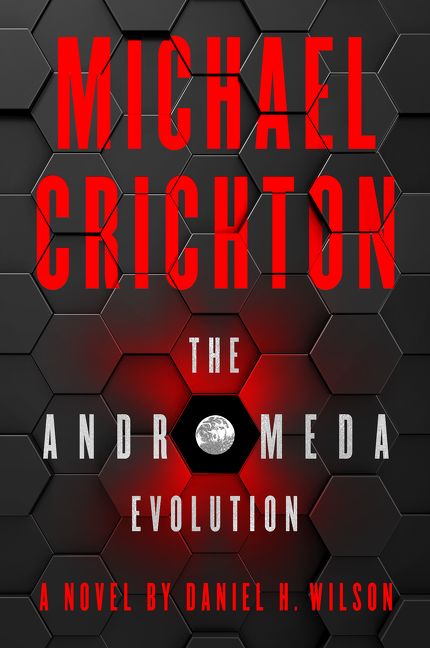
The Andromeda Evolution Cover

In this week’s Waiting on Wednesday, I take a look at The Andromeda Evolution, the recently announced sequel to Michael Crichton’s game-changing novel, The Andromeda Strain.

Michael Crichton is one of the most iconic authors of the last 50 years, having written a series of varied and highly regarded novels, many of which were turned into movies.  It goes without saying that you have heard of his most famous novel, Jurassic Park, which was adapted into the movie of the same name.  Between his debut in 1966 and his death in 2008, Crichton released 28 full-length fiction books, including Congo, Sphere, The Lost World, Rising Sun, Binary and Eaters of the Dead (also known as The 13th Warrior).  These books were mostly released under his own name, but several novels were released under the pseudonym John Lange.

One of Crichton’s most famous books was his 1969 release, The Andromeda Strain, his first foray into the science fiction genre.  It followed a group of scientists as they attempted to contain and study an extraterrestrial microbe, known as Andromeda, within a high-tech government laboratory.  While not his first book, this was the novel that helped launch his career, and was highly regarded by reviewers at the time of its release.  It is also considered to be one of the first books of the techno-thriller genre, and its success no doubt encouraged Crichton to write more science fiction works, such as Jurassic Park.

It was announced only a couple of weeks ago that a sequel to The Andromeda Strain will be released later this year to mark the 50th anniversary of its release.  The Andromeda Evolution will be released worldwide on 12 November 2019 and has been written by bestselling science fiction author Daniel Wilson.

No real plot details for this book have been released yet, and it will be interesting to see where the story goes.  The Andromeda Strain ended with Andromeda evolving and being released into the upper atmosphere, where it was severely impacting the space programs of the United States and the Soviet Union.  From what very little is known, it appears that in the new book the microbe will somehow evolve again to become a much more serious threat.  I am deeply intrigued to see how this new book will continue the story told in The Andromeda Strain, especially as the author could take the story in so many different directions.  I am very curious about what causes the disease to evolve again, and what new impacts this will have on Earth.  I imagine that this book will be set in more modern times, which also offers up a range of possibilities.  In particular, this might create an alternate timeline for Earth, as the lack of a space race might have severely altered history.

I am quite excited for the author chosen to continue this story, Daniel Wilson.  Wilson is one of the most intriguing authors of science fiction at the moment, having written several bestselling techno-thrillers, including his epic Robopocalypse series.  I think that Wilson’s writing style and imagination will mesh quite well Crichton’s original concept, and the resulting collaboration will be something special.

I am a bit uncertain whether The Andromeda Evolution will be based on any notes Crichton left behind, or whether it was only inspired by the original novel.  The three previous Michaels Crichton novels that were released after his death (Pirate Latitudes, Micro and Dragon Teeth) were either completed or partially written by Crichton himself.  However, as Wilson is credited as the author on the cover, I am thinking that the story is mostly based on his ideas.  This new perspective on the story may prove to be extremely interesting, and it could be the first in a new wave of Michael Crichton inspired techno-thrillers.

The Andromeda Evolution should prove to be an extremely interesting release for later in the year, and I am very eager to check it out.  Check back here tomorrow for a throwback review for The Andromeda Strain, and I may update this post later when more plot details about The Andromeda Evolution become available.

Waiting on Wednesday – Howling Dark by Christopher Ruocchio

Welcome to my weekly segment, Waiting on Wednesday, where I look at upcoming books that I am planning to order and review in the next few months and which I think I will really enjoy.  Stay tuned to see reviews of these books when I get a copy of them.

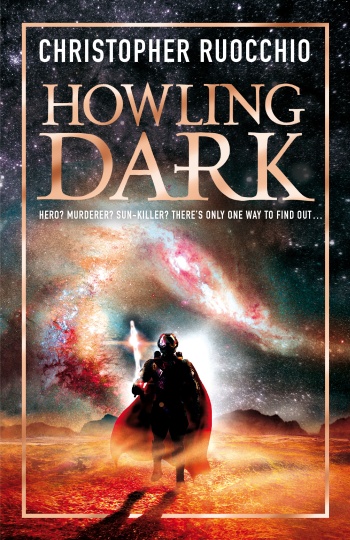
Howling Dark Cover.jpg

For my latest Waiting on Wednesday I will be looking at one of the science fiction releases of 2019 that I am looking forward to, Howling Dark by Christopher Ruocchio, set to be released in July.  Ruocchio made a remarkable debut last year with Empire of Silence, the first book in his Sun Eater series, which chronicles the life of the universe’s most infamous hero, Hadrian Marlowe, the man who blew up a sun to stop an alien invasion at the cost four billion human lives.  The Sun Eater series is formatted as a written retrospective, told from the perspective of Hadrian, detailing the events that turned him from a prospective scholar to the biggest mass-murderer in the universe.

I was extremely impressed by Empire of Silence last year, and it even made it onto my Top Ten Books of 2018 list.  I really enjoyed the captivating and epic space opera adventure that featured within this book and I am very curious to find out what events force the mild-mannered protagonist to cause such destruction and how he will justify his actions.  I was also a massive fan of the gigantic and intriguing science fiction universe that Ruocchio crafted in his first book and I am eager to return to it.  I have wanted to feature this book in my Waiting on Wednesday series for a while, but I needed to wait for one of the book’s covers to be released.  This wait was well worth it, as the cover I found is a spectacular and eye-catching piece of art.

I have found two separate plot summaries for Howling Dark so far, including the Goodreads synopsis and a different synopsis found on the Hachette Australia website:

Goodreads:
The second novel of the galaxy-spanning Sun Eater series merges the best of space opera and epic fantasy, as Hadrian Marlowe continues down a path that can only end in fire.

Hadrian Marlowe is lost.

For half a century, he has searched the farther suns for the lost planet of Vorgossos, hoping to find a way to contact the elusive alien Cielcin. He has not succeeded, and for years has wandered among the barbarian Normans as captain of a band of mercenaries.

Determined to make peace and bring an end to nearly four hundred years of war, Hadrian must venture beyond the security of the Sollan Empire and among the Extrasolarians who dwell between the stars. There, he will face not only the aliens he has come to offer peace, but contend with creatures that once were human, with traitors in his midst, and with a meeting that will bring him face to face with no less than the oldest enemy of mankind.

If he succeeds, he will usher in a peace unlike any in recorded history. If he fails…the galaxy will burn.

Hachette Australia:

Hadrian Marlowe may be revered as a hero and despised as a murderer, but there’s only one way to hear his true story: relayed in his own words, in this incredible fusion of space opera and epic fantasy.

It was not his fight.

But he will still be the one to end it.

The galaxy remembers Hadrian Marlow as a hero, who burned every last alien Cielcin from the sky. The man remembers how he tried to save them – to negotiate with them, to learn more of them – and how his attempts were frustrated by his own side and creatures stranger still than any Cielcin he’d encountered thus far.

Defying his orders, at the cost of love, position and power, Hadrian Marlowe’s path might have ended in fire . . . but the road to it was winding, and leads through intrigue, and battle, to war . . .

I find the two contrasting plot synopses to be very interesting, as they focus on different aspects of the overall story.  The Goodreads synopsis follows the plot that the end of Empire of Silence sets up, where Hadrian has been recruited by the Sollan Empire on a secret mission to try and communicate with the aliens known as the Cielcin and try and make some sort of peace with them.  The Goodreads synopsis hints a lot of captivating story details as well as indicating that Howling Dark will have a widespread and complex plot.  I am quite excited by this plot synopsis, as it suggests additional antagonists and problems outside finding a way to communicate with the Cielcins.  It also sounds like Ruocchio will be expanding out his universe in a variety of different ways, and I am quite excited to see what it turns into.

The synopsis from Hachette Australia is also interesting, as it provides hints more in touch with the overall series rather than this specific book.  I like the constant secrecy about what drove Hadrian to destroy the Cielcin, which is hinted at in plot snippets like this.  I also like the line about “how his attempts were frustrated by his own side and creatures stranger still than any Cielcin he’d encountered thus far”.  The references to his own side hints at interference from the Chantry, an inquisitorial-type religious organisation controlling the Sollan Empire.  This could be a potentially intriguing inclusion to Howling Dark, as the protagonist came into various conflicts with the Chantry on a number of occasions in the first book, and their strict anti-technology religious control of the Sollan Empire was an extremely interesting part of the universe.  I wonder if the stranger creatures he mentions are a reference to the former humans mentioned in the Goodreads synopsis or “the oldest enemy of mankind”.

Based on both of these synopses, this story sounds like it will be as epic, compelling and inventive as the first book in this series.  I am very excited about Ruocchio’s second book and I am eager to continue the incredible story set out in Empire of Silence.  I am already predicting that Howling Dark will make it onto my Top Ten Reads of 2019 and cannot wait until I get my hands on this book.

Waiting on Wednesday – Firefly: The Magnificent Nine by James Lovegrove

Welcome to my weekly segment, Waiting on Wednesday, where I look at upcoming books that I am planning to order and review in the next few months and which I think I will really enjoy.  Stay tuned to see reviews of these books when I get a copy of them.
Firefly The Magnificent Nine Cover.jpg

After my recent review of the first book in the new Firefly series, Big Damn Hero, for this week’s Waiting on Wednesday I will be looking at the second book in the series, The Magnificent Nine.  I am massive Firefly fan, so I am extremely eager to read any new instalments in the Firefly series.  After James Lovegrove’s strong first entry with this series, I am very keen to check out his follow-up book, especially as it has an extremely intriguing-sounding plot.

Goodreads Synopsis:

The second original novel tying into the critically acclaimed and much-missed Firefly series from creator Joss Whedon.

An old flame of Jayne Cobb’s, Temperance McCloud, sends a message to Serenity, begging him for help. She lives on the arid, far-flung world of Tethys, and bandits are trying to overrun her town to gain control of their water supply: the only thing standing between its people and dustbowl ruin. Jayne tries to persuade the Serenity crew to join the fight, but it is only when he offers Vera, his favourite gun, as collateral that Mal realises he’s serious.

When the Serenity crew land at a hardscrabble desert outpost called Coogan’s Bluff, they discover two things: an outlaw gang with an almost fanatical devotion to their leader who will stop at nothing to get what they want, and that Temperance is singlehandedly raising a teenage daughter, born less than a year after Temperance and Jayne broke up. A daughter by the name of Jane McCloud…

One of the most amusing episodes from the original Firefly series was the seventh episode, Jaynestown, which focused on Serenity’s morally deficient mercenary and framed him in a vaguely good light for the first time in the series.  This plot synopsis sounds a bit like this episode, and I am very keen to see more of Jayne’s past, as well as some characters that can bring out the character’s better side.  The whole bandit situation is also reminiscent of the series’ 13th episode, Heart of Gold, which saw Serenity’s crew defend a settlement against a band of attackers.  The combination of both of these plots could result in some story magic, and I am looking forward to what is sure to be an action-packed bag of fun.  I am also very curious to see if the child, Jane McCloud, is actually Jayne’s daughter.  Personally, I think it could go either way.

The Firefly shows, comics and books have always been a fantastic combination of the science fiction and western genres, so I am quite excited about the name of this latest book, The Magnificent Nine.  Obviously, this is a reference to the famous western movie, The Magnificent Seven (or the movie it was based, the Japanese film Seven Samurai), which featured a band of highly skilled adventurers defending a village from a group of bandits.  So I am looking forward to seeing several scenes where the eclectic Serenity crew trains the villagers to defend themselves, before leading them into battle against the bandits, and I am sure this book will be a fun homage to this classic western movie.

The Magnificent Nine is set to be released in about a month, and I cannot wait to get a copy of it.  I did want to combine this review with a Waiting on Wednesday for the third book in this series, Generations, but only the very bare-bones synopsis of the plot has been released so far.  That being said, I am already in love with it and keen to check it out.  Bring on the next instalment of the Firefly universe!!!