Nucleus by Rory Clements

Nucleus Cover.jpg

Publisher: Zaffre

Australian Publication Date – 1 March 2018

World Publication Date – 25 January 2018

Amazon     Book Depository

In June 1939, war is on the horizon.  While many in England still hope to avoid another conflict with the Germans, it is becoming clearer that war may be unavoidable.  Nazi Germany is aggressively moving throughout Europe, while back in England the IRA has embarked on a new bombing campaign.

While the world watches and waits, many governments have turned their focus towards a dangerous new arms race.  Advances in nuclear fission have allowed scientists to envision a potentially game-changing weapon: an atomic bomb.  Many believe that the research at Cambridge’s Cavendish Laboratory will lead to the creation of the first bomb, and the laboratory is now the subject of intense scrutiny.

While holidaying in America, Cambridge professor Tom Wilde is summoned to the White House to meet President Roosevelt.  The president requests that Wilde use his position to spy on the research at Cavendish and report their progress to the Americans.  Upon his return to Cambridge, Wilde begins to suspects that Nazi spies may have infiltrated the laboratory when one of the Cavendish researchers is brutally murdered.  As he investigates further, he learns that the murder may be connected to a wealthy family with Nazi sympathies and the famous movie star sister of one of his colleagues.  Wilde is forced into a web of spies and assassins as he tries to discover what terrible plans the Nazis have for Cavendish.  What does his long-lost cousin have to do with this plot, and how do these attacks tie into a kidnapped child that Wilde’s girlfriend, Lydia, is searching for in Germany?

Nucleus is a pulse-pounding thriller that combines mysterious events and spycraft with a dark historical background and a grounding in nuclear physics.  This is the second book in Clements’ Tom Wilde series, and the follow-up novel to his 2017 bestseller, Corpus, which was a stunning historical thriller that featured a plot against the royal family.

Clements has a lot of experience with historical thrillers, having previously examined espionage during the Elizabethan era in his acclaimed John Shakespeare series.  In Nucleus, Clements combines several intriguing storylines into one compelling plot that will draw the reader into the book’s many mysteries.  With a series of hidden adversaries, twisting character loyalties and several shocking conclusions, Clements tells a first-rate thriller that combines well with his story’s historical setting and locations.

Clements uses his latest book to once again explore the period of calm immediately before World War II.  Clements does a masterful job of depicting the dread and apprehension filling England as the whole country found itself drawing closer and closer to war.  This bleak and foreboding historical period is the perfect setting for Clements’ thriller, especially as the characters realise the major repercussions their actions could have on the world.

The historical locations used throughout Nucleus are an essential part of the book and add a lot to the story.  Clements once again returns to the Cambridge backdrop that was one of the defining features of Corpus.  The academic background is used less during this book, but the reader is compensated by being able to see the famous Cavendish Laboratory.  There is also a harrowing journey into Nazi Germany for one of the characters, Lydia, which Clements uses to full effect, highlighting the terror many German citizens felt during that time and their attempts to flee the country before it was too late.  Another highlight of the scenes set in Nazi Germany was the interesting focus on some of the groups attempting to get refugees out of the country, such as the Quakers and the staff at the British Embassy.  The reader also experiences Lydia’s palpable dread as she comes into direct contact with the dark mechanisms of the Nazi machine, and these scenes contain an amazing and appropriate level of suspense.

Due to it being a major plot point for Nucleus, Clements spends a significant amount of time focusing on the state of nuclear science in the 1930s.  Clements does a good job of explaining the science in some detail without it getting too complicated.  As a result, the reader receives a basic understanding of nuclear science of the time, at least enough to appreciate what the spies and nuclear physicist characters within the book are up to and are attempting to achieve.  This is a good balance to have and it allows the reader to experience the fascinating early history of nuclear fission and the early arms race for the atomic bomb.

By infusing his excellent storytelling with a dark historical period, Clements once again delivers with an exhilarating historical thriller.  Featuring a gritty and captivating storyline and making full use of its excellent historical setting, Nucleus is guaranteed to blow you away.

My Rating:

Four and a half stars

Amazon     Book Depository

The Throne of Caesar by Steven Saylor

The Throne of Caesars Cover

Publisher: Constable

Australian Publication Date – 6 March 2018

World Publication Date – 20 February 2018

Amazon

Steven Saylor’s long-running ancient Roman detective series returns as Gordianus the Finder deals with the most infamous murder in Roman history: the assassination of Julius Caesar.

For decades, Gordianus the Finder has been the most respected investigator in all of ancient Rome.  After a lifetime of solving crimes and murders for the city’s rich and powerful, Gordianus is determined to retire from the investigative game and enjoy a life of luxury.  However, one last surprise has been thrust upon him: Gordianus’ adopted son Meto has spent years in the service of Caesar as his trusted aid and ghost-writer, and Caesar now seeks to reward Meto by making his father a senator.  Reluctantly accepting this rise in station, Gordianus’ ascension will take place in five days’ time, on the Ides of March.

Caesar has an ulterior motive for meeting with Gordianus.  Warned by visions and prophets, Caesar believes that his life may be in danger, and that disaster may strike before the conclusion of the Ides.  He requests that Gordianus keep his ears to the ground and quietly question leading members of the Roman nobility to see if there is any basis to his concerns.  While initially sceptical of any attempts on the dictator’s life, Gordianus’ suspicions are aroused when one of Caesar’s old rivals, Senator Cicero, also asks him to watch out for potential conspiracies.  As Gordianus begins his investigation, he finds himself in the middle of dangerous historical events, and even the legendary Finder may be unable to stop what is to come.  The Ides of March are approaching, and Caesar’s life isn’t the only one at risk.

The Throne of Caesar is the 16th book in the Roma Sub Rosa series, a series that also includes three prequel novels and two collections of short stories.  Saylor began in 1991 with Roman Blood, set in 80 B.C. some 36 years before the events of this book, and he has slowly been working towards the assassination of Julius Caesar.  Indeed, the last three instalments of the series were prequels produced while Saylor perfected his account of this famous murder.  It was definitely worth the wait, as Saylor has produced an extremely detailed and well-researched account of the infamous killing.

Gordianus’ investigation and social interactions are used to introduce the reader to many of the key people involved with the plot, as well as to discuss the political atmosphere that lead up to the assassination.  The Ides of March is the centrepiece of the novel.  It is clear that Saylor has consulted the key historical records of the killings, as he has made sure to include several of the lesser-known events that happened on the day.  For example, Saylor includes descriptions of the supposed visions Caesar’s wife, Calpurnia, had the night before, and Decimus Brutus’ intervention at Caesar’s residence the morning of the Ides.  Saylor also dedicates a good part of the book to examining the aftermath of Caesar’s death, including the political manoeuvrings that immediately followed, as well as the violent funeral.  As a result, the description of the killings and the surrounding circumstances are first rate, and this aspect of the book will appeal to Roman history buffs.

As Saylor discusses in the author’s notes, writing a murder mystery around the assassination of Julius Caesar is particularly hard, as his death is one of the most well-known events in Roman history, with all the conspirators condemned to historical infamy.  Saylor, however uses this to his advantage and manages to create a large amount of suspense by counting down the days until the 15th of March and hinting at the events that are to come.  All the reader can do is keep going through the novel, knowing that Gordianus will be unable to stop the murder, even as he gets closer and closer to the truth.

Saylor also compensates for the lack of mystery around the death of Caesar by including a second murder subplot.  Elements of this additional murder mystery are hidden in the background of most of the book, as the reader’s attention is directed towards the upcoming assassination, and the investigation into the second murder comes to the fore after Caesar’s death.  The actual events of the second murder are unique and will be of particular interest to fans of a certain Shakespearean play.

One of the best features of The Throne of Caesar is the significant incorporation of Greek mythology throughout the book.  Several Greek myths are discussed, and parts of the plot mirror elements of these myths.  Many of these myths are also included as centrepieces of two Roman epic poems written by Gaius Helvius Cinna, a famous historical poet, which are a major part of the plot.  While one of the plays featured is completely fictional and with no historical basis, the other play is Zmyrna, considered by Cinna to be his greatest achievement, the text of which is unfortunately lost to history.  Saylor provides an interesting possible narrative for the lost play, which flows into the plot of his mystery with great effect.  The overall effect of Saylor including these myths and legends is very striking, and it provides the reader another viewpoint into the lives of the ancient Roman characters who put great stock in these old and religious stories.

The latest addition to the Roma Sub Rosa series is a meticulously detailed and well-crafted book that acts as a unique and powerful chronicle of an important historical crime.  A suspenseful and compelling read, The Throne of Caesar serves as a great continuation of the story of Gordianus the Finder, and it will be interesting to see where Saylor takes the series next.

My Rating:

Four and a half stars

Amazon

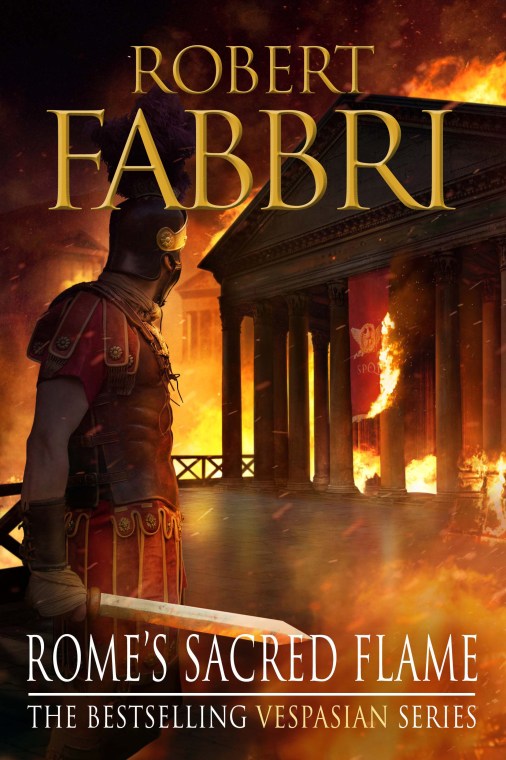
Rome’s Sacred Flame by Robert Fabbri

Rome's Sacred Flame Cover

Publisher: Corvus

Australian Publication Date – 1 February 2018

World Publication Date – 24 January 2018

Amazon

Explore the dark side of Roman history in the new novel from veteran historical fiction author Robert Fabbri.

In Rome, 63 AD, Nero reigns as Emperor.  Meanwhile, Vespasian has been given the lucrative appointment of Governor of Africa, exploiting the rewards of his previous adventures.  Before Vespasian can settle into the role of governor, he must first travel to the remote desert kingdom of Garama to negotiate the release of hundreds of Roman citizens held as slaves.  He and his companions, Magnus and Hormus, arrive on the eve of a slave revolt that threatens the entire kingdom.  Forced to flee across the desert with hundreds of freed slaves and few provisions, the Romans must avoid the chaos of Garama while also dealing with traitors in their midst and harsh desert conditions.

However, even revolting slaves and desperate conditions hold little danger compared to the problems brewing within Rome.  Nero’s reign has reached new peaks of insanity and chaos.  Like his predecessors, Nero is depraved and deranged, humiliating the citizens of Rome while destroying all who displease him. When he returns to Rome, Vespasian soon discovers that all the previous Emperors he had survived were nowhere near as dangerous as Nero.  Vespasian determines that it is time for the reign of Nero and the unstable Julio-Claudian bloodline to end.

However, Vespasian has made many enemies over the years, and all are plotting to use the unstable Emperor as a deadly weapon to destroy him and his family.  Vespasian must use all his skill and daring to survive while also trying to turn the chaos to his own advantage.  With conspiracies and danger all around, few will survive, especially with the Great Fire of Rome about to engulf the city.

Fabbri is a prominent and prolific author of Roman historical fiction whose distinctive books have one of the most entertaining examinations of Roman history.  Rome’s Sacred Flame is the eighth book in Fabbri’s Vespasian series, not including Arminius: The Limits of Empire, a recent standalone novel which runs parallel to the events of earlier books in the series.

This is an engaging series exploring the exploits of the future Emperor of Rome, Vespasian, during the earlier days of his life as he rose to power.  Fabbri makes use of what little is known about Vespasian’s early political career by including all the moments of his life recorded in the surviving Roman histories.  Fabbri also works the character of Vespasian into a number of key historical events that happened during his lifetime, such as famous deaths, ascensions, wars and other more infamous incidents.  All of the books in the Vespasian series describe a wide range of memorable episodes in Roman history, even though it is unlikely, but not impossible, that Vespasian, who was a prominent senator during these times, would have been involved.

Rome’s Sacred Flame continues this trend by inserting Vespasian right into the middle of some of the more interesting events of the Emperor Nero’s reign.  Through Vespasian’s eyes we see some of Nero’s infamous parties, one of the more significant plots against the Emperor’s life, the brewing persecution of the Christians, and, most importantly, the Great Fire of Rome, during which, some sources indicate, the Emperor played the lyre as the city burned.  Many fans of history will love the detail that Fabbri goes into when he examines all the events surrounding the fire: the politics of the time, the initial outbreak of the fire, the attempts to fight it, Nero’s supposed response, the fire’s conclusion and the eventual rebuilding of the city.

Readers will also be intrigued by Fabbri’s inclusion and interpretation of the Garmantes and their capital city of Garama.  The Garamantes were the people of a small kingdom that historians and archaeologists believe existed in south-western Libya around the same time as the Roman Empire was at its peak.  Many historical fiction writers have neglected the Garamantes in their works, instead favouring the more impressive enemies of Rome, so Fabbri’s use of the limited historical and archaeological facts available to create a unique society and civilization for his story is particularly interesting.

Like the other books in Fabbri’s Vespasian series, Rome’s Sacred Flame contains a large number of scenes that focus on the supposed depravity of Rome, especially during the reigns of last Julio-Claudian emperors.  This results in a compelling and engaging narrative, especially as Fabbri takes pains to describe these scenes in great detail, building a terrific story on what little historical evidence is available.  It is also offers something different to many of the other current Roman historical fiction series, which recently have tended to shy away from exploring these events to the same degree.

Once again, Fabbri has produced a highly exciting and thoroughly entertaining addition to his best-selling series.  Fans of Roman historical fiction will love the unique viewpoints and historical conclusions Fabbri explores in Rome’s Sacred Flame, as well as the exploration of Rome’s supposed dark side.

My Rating:

Four and a half stars

Amazon

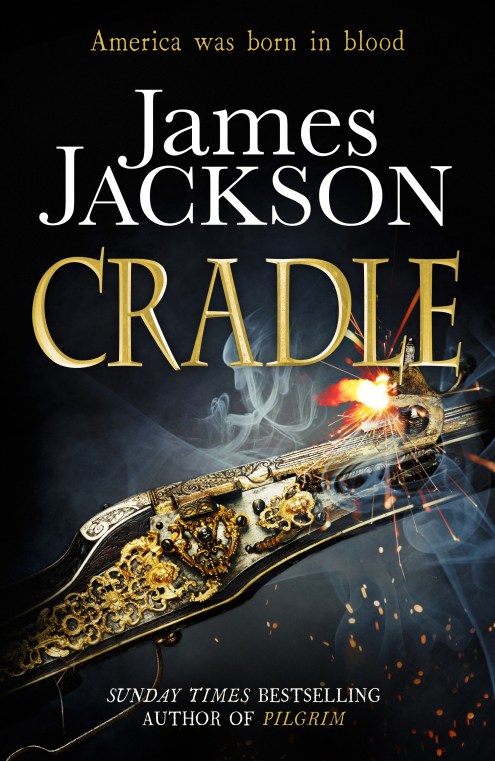
Cradle by James Jackson

Cradle Cover

Publisher: Zaffre

Australian Publication Date – 1 January 2018

World Publication Date – 2 November 2017

Amazon     Book Depository

Death, despair and political espionage!  Welcome to the dawn of America in Cradle, the latest book from historical fiction veteran James Jackson.

1607 AD. Jamestown, on the shore of Virginia, is England’s first colony in the New World.  Life is a dangerous struggle for survival, with the settlers forced to endure starvation, disease and relentless attacks from the natives.  Worse, Jamestown has the ire of its namesake, King James of England, who is violently opposed to the settlement.

However, while Jamestown suffers from the king’s displeasure, Prince Henry supports the mission and views Jamestown as a symbol of England’s ambition and colonial intent.  Resolute that Jamestown must succeed, the young prince instructs intelligencer Christian Hardy to travel to Virginia and ensure its survival against any threats.  In response, the king instructs his chief advisor, Hardy’s former employer, the spymaster Robert Cecil, to sabotage the colony.

Hardy finds Jamestown near starvation and constantly under attack by warriors of the Powhaten nation.  The town survives only through the actions of a brave few, including the legendary John Smith, while split loyalties, incompetence and dissent ensure that the colony moves closer to destruction.  As Hardy works to save the town, a far more insidious threat approaches: his old foe, the deadly renegade Realm.

This is the ninth book from Jackson and his third to feature the character of Christian Hardy as its protagonist.  A fourth book, Blood Rock, featured the Hardy’s father, also named Christian Hardy, as its protagonist.  Cradle is a direct sequel to Jackson’s previous novel, the action-packed Treason, which featured a captivating account of the Gunpowder Plot.

Jackson continues his examinations of some of the more interesting and unique areas of history, this time looking at the initial days of the Jamestown settlement.  The early settlement of Virginia falls within a turbulent time in world history, and creation of Jamestown itself is a fascinating example of colonisation gone wrong.  Jackson does an amazing job of capturing and conveying the brutality and depravation that the inhabitants of the town experienced during their ill-planned expedition.  The descriptive writing provides the reader with a vivid picture of the violent battles, ghastly conditions, cannibalism and torture that the settlers were forced to endure.

Readers will be love the large amount of well-researched historical detail about Jamestown that Jackson has included in Cradle.  The story covers a number of key events which occurred in America and England which affected the colony, and Jackson has made sure to include a large number of real life historical figures who were part of the Jamestown community.  Jackson’s dedication to historical detail shines through, as some of the events incorporated into the plot only have minor mentions in the historical record.  One particular inclusion that many will find enticing is a more accurate and realistic account of James Smith and Pocahontas.  People familiar with the Disney version of the story will find this retelling of events particularly enlightening.

A noticeable feature of Jackson’s novels, whether historical or contemporary, is his love of spies and espionage.  Many of his novels that focus on historical events include subplots or detailed examinations of espionage going on behind the scenes.  This is extremely prevalent in the novels featuring Christian Hardy, as they focus on the intelligence-gathering that started under the reign of Queen Elizabeth I.  Fans of this historical espionage will not be disappointed, as a large portion of Cradle is spent examining the espionage that may have been manipulating Jamestown, both in Virginia and back in Europe.  In addition, Jackson has done a superb job of combining the political thriller storylines into this historical fiction novel and including alternative but plausible motives for the actions of real historical figures.  The fictional character of Hardy is seamlessly inserted into this historical novel, and readers will enjoy watching him influence and bring about real historical events, like the brutal death of John Ratcliffe, who many may remember as the main antagonist of Disney’s Pocahontas.

The ninth book from James Jackson is an over-the-top account of the circumstances surrounding the original Jamestown settlement.  Featuring highly detailed and brutal descriptions of the formation of America and making full use for Jackson’s propensity for thrilling spy stories, Cradle is perfect for those looking for some exhilarating action and adventure in their historical fiction.

My Rating:

Four stars