City of Bastards by Andrew Shvarts

City of Bastards Cover

Publisher: Hyperion

Australian Publication Date – 31 July 2018

World Publication Date – 5 June 2018

Amazon     Book Depository

Young adult fantasy author Andrew Shvarts has a dramatic return with City of Bastards, an explosive and incredible follow-up to his electrifying 2017 debut.

After her father’s declaration of rebellion against the crown, Tilla, bastard daughter of Lord Kent, turned against him by rescuing the king’s daughter, Princess Lyriana, from his clutches.  Fleeing her father’s lands in the west of the Kingdom of Noveris, Tilla, Lyriana, and Tilla’s boyfriend, Zell, make the journey to the capital city of Lightspire, the opulent and magical city where Lyriana’s father reigns.

Attempting to put aside the horrors she experienced while fleeing from the west, Tilla settles down in a life of luxury as a student in the city’s prestigious university.  However, not everything is as shiny and golden as Tilla had hoped it would be.  She faces ostracism from the most of the city’s population as her father continues to wage war against the kingdom.  On top of that, Zell appears unsatisfied with city life and is growing distant from her.  Tilla and Lyriana are still mourning the death of Tilla’s brother, Jax, and not even their hard partying lifestyle is making them feel any better.

Their new lives are only destined to last for so long before disaster strikes.  When Tilla finds her roommate dead, she knows that a mysterious mage she encountered is behind the death.  But no-one seems willing to believe her, and the death is quickly ruled a suicide and pushed under the rug.  When she is then attacked by the rogue mage, something considered impossible, Tilla begins to realise that there is something very rotten in the heart of the Lightspire.  With her father apparently keeping the king’s invincible army of mages at bay, and shadowy cultists sowing chaos in the city, Tilla uncovers a terrible plot that could shake the entire foundation of the kingdom.  With the king’s inquisitor hunting her as a traitor and the whole word turned against her, can Tilla and her friends stop the evil unfolding in front of them before it’s too late?

City of Bastards is Shvarts’s second book, and is the sequel to last year’s release, Royal Bastards.  This is a fantastic new series of young adult fantasy books, with a third entry already planned for 2019.  These books are marketed towards a young adult audience, but this is a series that will also prove to be massively appealing to older readers as well.  Fair warning to parents: this is probably not the best series for younger readers, as the huge amounts of drugs, drinking, sex and teen angst make this books more appropriate for an mid to older teenage audience.

This novel contains a truly captivating story of intrigue and murder in the heart of a magnificent and magical city.  Shvarts combines some excellent thriller and fantasy elements together to create a superb overall narrative, which includes a large-scale conspiracy that proves to be particularly impressive.  There is a well-written and absorbing investigation angle getting towards the conclusion of this plot, and the full scope of this conspiracy is very elaborate and uses some intriguing magical elements.  There are a number of surprising twists, betrayals and dramatic reveals that will hook the readers, while the conclusion of the story is epic in its size and consequences.  Overall, this is an extremely compelling fantasy thriller story that has not been simplified for a younger audience.

Shvarts has also created an intricate and intriguing cityscape that serves as an excellent setting for the story.  There are some memorable locations visited throughout the course of the narrative, and the author does a fantastic job showing the differences between the richer areas of the Lightspire and the districts where the everyday citizens live.  Exploration through the city by the protagonist highlights this class difference and the corruption of the rich, all of which forms a significant story element later in the book.  The author also introduces some fascinating fantasy elements, such as large-scale magical messages, unique methods of transportation, rebellious anti-magic fanatics, the kingdom’s hidden magical heart and substantial catacombs under the city that hold dark and powerful secrets.  All of these elements play a significant role in City of Bastards’ story, and meld in perfectly with the protagonist’s investigation and the vast underlying conspiracy.

The entirety of City of Bastards is narrated by the book’s protagonist, Tilla.  Shvarts does an amazing job of capturing the essence of a modern teenager in the book’s narration, and the reader really feels that they are accompanying a rebellious young woman on her quest throughout the city.  As a result, the book is filled with sarcasm, funny jokes, humorous observations and a certain amount of complaining about the situation.  The story is also infected with a bit of teen angst, which is amusing to see amongst storylines dealing with the future of a civilisation and will no doubt prove to be relatable to many readers.  In addition to the humour, this narration also allows the reader to see the protagonist’s many vulnerabilities throughout the course of the story.  Overall, the protagonist’s narration adds a lot to this book, and is definitely one of its more appealing features.

A highlight of the book has to be the realistic focus on trauma and the powerful consequences of the first book.  Some of the very best young adult books are those which do not shy away from heavy topics, featuring gritty and realistic portrayals of trauma and PTSD as they try to highlight the often unseen or unconsidered costs of their character’s attempted heroism or battles for survival.  In City of Bastards, Tilla, Lyriana and Zell spend a significant amount of time dealing with the terrible things the encountered in the first book, including the death of Jax, Tilla’s brother and Lyriana’s love interest.  Lyriana’s transformation is the most dramatic, as is she suffering not only from Jax’s loss but also from the guilt and trauma following her decision to break her oath of pacifism and kill someone with her magic.  As a result, she turns from the sensible and respectful character she was in Royal Bastards to a hard-drinking wreck who acts out in a number of different ways and has a hard time dealing with her feelings.  Tilla is also traumatised by the death of Jax, and while at times she seems to be processing it better, her depression is compounded by the dramatic changes in her life and the outright disdain that many characters show her.  Overall, this realistic portrayal of trauma and vulnerability in the characters is very well written and adds a real emotional edge to the story.

City of Bastards is an amazing piece of young adult fantasy that makes substantial use of its new setting to create an epic, conspiracy-laden storyline that proves to be exceedingly captivating.  This is a powerful sequel to Andrew Shvarts’s first book, and fans of Royal Bastards will be entranced by the author’s focus on the first book’s devastating consequences.  This is one of the best pieces of young adult fiction of 2018.  I had a real hard time putting this book down, and it comes highly recommend.

My Rating:

Four and a half stars

Amazon     Book Depository

Early Riser by Jasper Fforde

Early Riser Cover.jpg

Publisher: Hodder & Stoughton

Publication Date – 2 August 2018

Amazon

One of modern literature’s quirkiest writers returns after a six-year hiatus to produce the eccentric and incredibly entertaining new release, Early Risers.

In an alternate version of our Earth, the entire world freezes over each winter, plunging the planet into a deep cold for the entire season.  Humanity has adjusted to this different climate by developing ways to hibernate each winter, sleeping through the long, cold months in specially designed habitations and ensuring that their bodies have enough stored fat to keep them alive.  Only a few weird and unconventional individuals choose to ignore their bodies’ need to sleep, and instead spend winter awake.  One such group are the Winter Consuls, a collection of misfits and rogues responsible for ensuring the safety of the sleeping population, whilst also patrolling against the horrors of the winter world.

In Wales, Charlie Worthing is about to experience his first winter as a new recruit in the Winter Consuls.  His first mission sees him drawn to Sector Twelve, base of the powerful HiberTech company and one of the most disreputable areas of the country, known for its controversial Winter Consuls.  Trapped within this sector, Charlie must contend with all the dangers that winter can hold.  Between the cold, his desire to fall asleep, the stamp-collecting addicted Villains, the mindless and cannibalistic Nightwalkers and the possibly mythical WinterVolk, Charlie is unlikely to survive his first winter.

However, all these threats pale in comparison to the damaging potential of a viral dream being passed around the inhabitants of Sector Twelve.  When Charlie starts to have the same dream, he finds himself thrust into a dangerous conspiracy with world changing consequences.  As Charlie becomes a target, he must work out who in this unforgiving world he can really trust, and who is using him to further their own aims.

Jasper Fforde is an exceptional author who has produced several novels since his 2001 debut, all of which were remarkable and very different from your standard read.  With an unusual style and superb skill, Fforde’s work is reminiscent of some of the novels produced by authors such as Terry Pratchett or Lemony Snicket.  Fforde has created some enjoyable and addictive reads over the years, including Shades of Grey, the Nursery Crime Division books and his exceptional Thursday Next series.  Early Riser is a standalone novel that takes the reader to another unique alternate Earth and presents them with an intriguing and very original story.

Fforde has a pattern of creating unique worlds to act as settings for his entertaining narratives.  These worlds often have elaborate rules and details that make the book’s story very distinctive.  For example, Shades of Grey is set in a world where people can only perceive limited shades of colour and social hierarchy is determined by how many shades and hues a person can identify.  The Thursday Next series is set in an alternate version of Earth where the Crimea War never ended, time travel exists and journeys into the literary world is both possible and heavily policed by characters from famous books.

Fforde continues this trend in Early Riser, creating another detailed alternate Earth setting.  This version of Earth experiences exceedingly cold winters and humanity has to hibernate each year as a result.  This is an absolutely eccentric and inventive concept, and it is fascinating to see how Fforde adapts a new fictional world around it and looks at how humanity has adapted to having to hibernate.  Like several of his other books, the story of Early Riser is set within this world’s version of Wales.  There is a focus on different types of technologies, especially those that help people successfully hibernate, different buildings and new societal norms.  One example of this is the concept that, in this colder world, larger, fatter people are more desirable and socially acceptable as they are more likely to survive their hibernation period, whilst skinny people, or those who choose not to hibernate, are seen as detrimental wastes of space.  Fforde further backs this up by creating an inventive alternate history for the world, including some funny and satirical depictions of an appropriately altered entertainment world.  Many elements of these alternate histories and new social norms are told directly within the story, but Fforde also fleshes out these ideas with a huge range of extra and very humorous details in footnotes and in-universe book excerpts at the start of every chapter.

Fforde has also ensured that Early Riser is particularly memorable by filling his story with a range of interesting and creative characters and threats.  Throughout the book, the protagonist encounters and examines the history, background and lore behind the threats roaming around the winter.  These include the Villains, aristocratic thieves who are the descents of British nobility who act in a stereotypically upper class way and are obsessed with stamp collecting and obtaining domestic servants through force.  There are also Nightwalkers, humans whose minds failed to withstand the hibernation process.  As a result, the Nightwalkers have been reduced to a zombie-like state and are potentially cannibalistic, although their urges can be controlled with comfort food.  Fforde has also included the mysterious WinterVolk, supernatural beings who reside in the winter world and have certain powers and tendencies.  There is particular focus on the Gronk, one of the newer WinterVolk, and the author includes discussions about the Gronk’s formation, its first appearance, its habit of taking the unworthy and only leaving behind their carefully folded clothes in the snow, all while singing Rodgers and Hammerstein hits.  In addition there are a range of wacky side characters throughout the series.  These side characters usually have some sort of zany quirk or a distinctive characteristic that proves to be entertaining for the reader whilst the protagonist often has to play straight man.  The standout example of this has to be the two one-eyed women who are both trying to get the protagonist on their side and who share an interesting connection with each other.  All of these imaginative literary inventions combine into one substantial and unforgettable story that will charm the reader with its quirky and fun nature.

While it is easy to focus on the unusual and humorous inclusions that Fforde has filled Early Riser with, readers will also enjoy the book’s compelling story.  The narrative is very stimulating and enjoyable, as it initially focuses on the protagonist’s introduction to life in the winter world, and then shifts to him attempting to unravel the conspiracy surrounding Sector Twelve.  Like many of the other inclusions within this book, the conspiracy is very complex and a tad strange, but it works well as the focus for a central investigative narrative.  Readers will enjoy the journey to the end of the mystery, and there are a few interesting twists along the way.  Overall, I thought that the inclusions and elements mentioned above worked well with the mystery, and while many of the solutions and suspects are bizarre, the book’s many unique inclusions do not overwhelm the story, but instead enhance it, resulting in a great story.

Jasper Fforde has once again produced a distinctive piece of literature that stands out thanks to its elaborate and original concept, its many fun story details and inclusions, and a solid and gripping central story.  Some readers may find the plot and story elements a bit weird, but this book will easily charm those who get in to Early Riser’s unashamed quirkiness and silly nature.  This is definitely one of the most inventive books of this entire year and a creative and exceptional new read from a fanciful and fantastic author.

My Rating:

Four and a half stars

Amazon

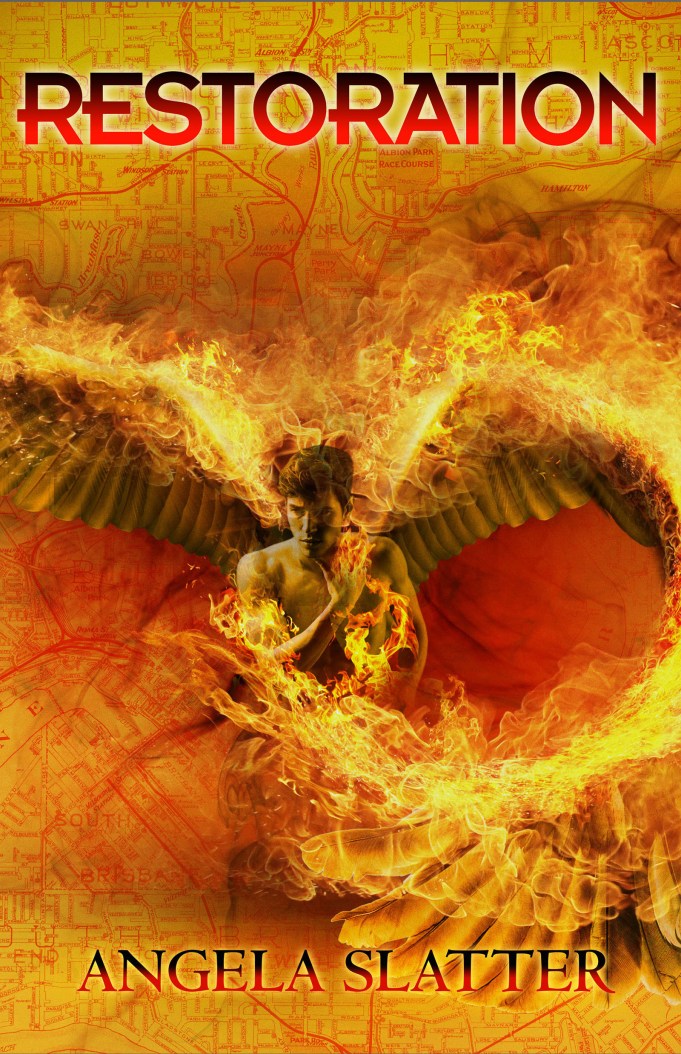
Restoration by Angela Slatter

Restoration Cover

Publisher: Jo Fletcher Books

Publication Date – 9 August 2018

Amazon     Book Depository

One of the very best authors of Australian crime fantasy returns with another outstanding release in her fast-paced and exceedingly entertaining Verity Fassbinder series.

In a world where the magical beings known as the Weyrd remain hidden from the Normal, non-magical population, Verity Fassbinder is a half-Weyrd, half-human agent for Brisbane’s Weyrd Council and is charged with policing the city’s Weyrd population.  However, following an adventure to the underworld, Verity has been forced into the employ of a crazed fallen angel, and must take up his quest to find two secretive artefacts hidden in Brisbane.  In order to protect those she loves from her murderous new employer, Verity has sent her family away and resigned her position with the Weyrd Council.  Saddled with a murderous Kitsune, Joyce, as a driver and spy, Verity must find a way to recover these mysterious two items without giving ultimate power to the creature holding everything she love hostage.

As if her involuntary quest wasn’t hard enough, Verity is also forced to contend with a myriad of other problems from Brisbane’s Weyrd population.  The vengeful sorceress Dusana Nadasy is back in town, determined to kill Verity for the role she played in the death of her family.  The angel Tobit is refusing to take Verity’s calls, Weyrd Council politics is seriously starting to annoy her, literal ghosts from her past are haunting her and her friends the Norns have developed strange new powers.  Finally, her contact in the Brisbane police, Inspector McIntyre, needs her help investigating a series of desecrated corpses of Normal women found around Brisbane whose bodies show the distinctive impact of Weyrd magic.  What Verity does not know is that all of these strange occurrences will play a part in her quest for the fallen angel’s prize and will change her life forever.

Restoration is the third book from Australian author Angela Slatter and represents the third book in her Verity Fassbinder series.  Restoration is an exceptional example of the benefits of combining two genres, and contains incredible fantasy and mystery elements blended together into a powerful final narrative set in modern day Brisbane.

Throughout Restoration, Slatter has surrounded her central storyline with an elaborate series of smaller mysteries and adventures, all of which cleverly tie into the protagonist’s hunt for the artefacts.  Each of the smaller plot lines and investigations is very interesting, and readers will be amazed about how interlocked the story really is.  Those who have read the previous books in the Verity Fassbinder series will also enjoy how Slatter expertly utilises elements and plot lines from the earlier books in the series throughout Restoration.  This is a fun feature, and really shows off how much planning and foreshadowing Slatter included in her first two books, as even minor observations and actions from the earlier books have some big impacts in the latest volume.  Despite this, Restoration is still an excellent book to come into this series with.  The author makes sure all the relevant details of the last two books are fully explained and explored.  As a result, new readers will be able to follow everything that is happening within Restoration, while also being tempted to check out the earlier books in this fabulous series.  Fans will enjoy how the storylines and side quests come together in the end of the book for a big and exciting confrontation sequence that serves as an epic conclusion to the first three books in the Verity Fassbinder series.

In addition to the book’s strong mysteries, the author has also included a range of enticing fantasy elements for the readers to enjoy.  The huge variety of fantasy aspects included within Restoration have been pulled together from a range of different cultural backgrounds.  As a result, the book’s protagonist interacts with creatures that have their origins in Greek, Germanic, Norse and Japanese mythologies and culture, as well as the usual ghosts, magic users and generally powered individuals.  There are also strong components from the Judeo-Christian religion that play a significant part in the story and which tie in well with the other fantasy elements.  The great mystery elements mentioned above work in conjunction with these fantasy features to create an amazing story.  Slatter comes up with some terrific fantasy based motives, plots and suspects for the reader to enjoy, and this helps create an intriguing and entertaining overall narrative.  The protagonist’s hunt for the artefacts, the “grail” and the “tyrant”, leads to a greater insight into this universe’s magical and religious roots, and turn into some intriguing pieces of this universe’s lore.  In addition, the protagonist’s curiosity about her Weyrd ancestors leads to her finding out some fascinating facts about their history, as well as a detailed bit of fictional mythology from Slatter.  This focus on the family she is descended from also hints at these characters being involved in future additions of this series, and will no doubt prove to be excellent antagonists.  Overall, the book’s fantasy elements are highly enjoyable and add sufficient wonder and enhancement to an already outstanding book.

Restoration is mostly set within the Australian city of Brisbane and its local environs.  Slatter, a Brisbane local, has created a detailed and personal depiction of her city and it serves as a fun location for this book’s plot.  People familiar with Brisbane will appreciate the descriptions of city and enjoy the concept of a hidden and chaotic fantasy world lying just below its surface.  Special note should be given about the inclusion of the University of Queensland, Slatter’s alma mater, as a setting within the book, and it is always fascinating to see a location that the author is familiar with and passionate about.

Slatter has continued to use the humour-laden tone of writing that was such a standout of the first two books in the Verity Fassbinder series.  The protagonist is a remarkable character who does not care who she annoys or who gets in her way as she tries to achieve her goals.  This nonconformist attitude and general disregard for the rules for the Weyrd Council has a great way of getting the reader to support her, and as a result she has always been a very likable main character.  The jokes and humour that inhabit the narrative as she encounters a range of strange and dangerous situations help lighten the tone of the dark investigations she is involved with.  Things get serious towards the end, especially when the protagonist’s family gets involved and this helps raise the stakes in the readers mind, although some humour is still involved.  Audiences will love the sass and humorous observations that inhabit this whole book, and it fits in well with the overarching urban fantasy crime narrative that Slatter has cultivated.

Restoration is another superb read from Angela Slatter and an outstanding addition to one of the best fantasy crime series in the world today.  The books in this series are up there with The Dresden Files and the Peter Grant series, and are fantastic examples of this combination of genres.  The third book in this Australian series makes full use of its elaborate mystery, intriguing fantasy elements, exciting Brisbane setting and distinctive humour to create an extraordinary read that comes highly recommended.

My Rating:

Five Stars

Amazon     Book Depository

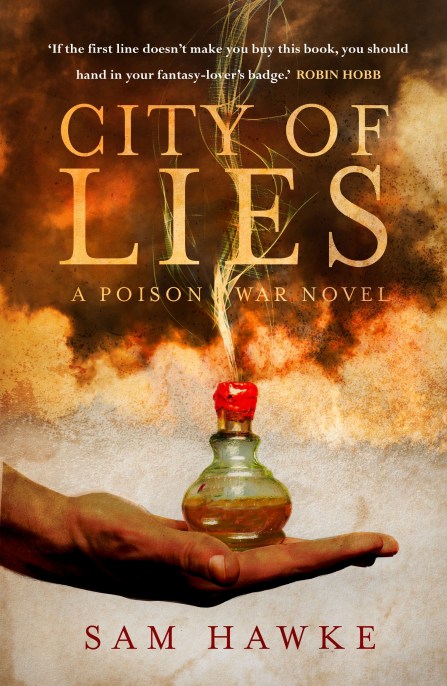
City of Lies by Sam Hawke

City of Lies Cover.jpg

Publisher: Bantam Press

Publication Date – 3 July 2018

Amazon     Book Depository

Poison, murder, conspiracy, and war are all on the way for readers of City of Lies, one of the best fantasy reads of the year from Canberra author Sam Hawke.

In the country of Sjona, the capital city of Silasta is a glittering beacon of culture and art.  Young nobleman Jovan and his family serve a special role, subtly protecting Sjona’s ruler, the Chancellor, and his heirs from being poisoned.  As a result of his training, Jovan is now capable of detecting and identifying poisons that could be slipped to his charges.  While his uncle and mentor directly protects the Chancellor, Jovan serves the Chancellor’s carefree young heir, Tain.

When Jovan and Tain return to the city following a diplomatic journey, they are soon placed in a terrible situation.  The impossible has happened: an unidentified poison has been slipped to the Chancellor, killing him and Jovan’s uncle.  Without their respective mentors’ guidance both young men are thrust into new roles: Tain as an untested Chancellor, and Jovan now responsible for the safety of his nation’s ruler.

However, things can always get worse.  A mysterious army has arrived undetected at the gates of Silasta, and the city, which has never known anything but peace, is soon besieged.  The army appears to be made up of Sjona’s peasants and contains powerful individuals in control of spirits.  With the majority of the military far away fighting in another conflict, few professional soldiers are left to defend Silasta, and Tain must lead a desperate defence against a superior force.

As the siege continues, it soon becomes apparent that not everything is as it seems.  Why is the city being attacked, and how did no one see this coming?  A deep conspiracy lies across the capital and no one can be trusted, not even Silasta’s ruling council.  It also appears that the person who killed the Chancellor is still at large within the city and is aiming to poison Tain as well.  As Jovan utilises all his skill to protect his friend, his sister Kalina searches for the traitors hiding inside their walls.

City of Lies is Australian author Sam Hawke’s debut novel and represents an outstanding first outing from a remarkable new talent.  This ambitious book contains a fantastic plot, with some unique story elements and an elaborate thriller narrative that combines perfectly with the book’s overarching fantasy narrative.  This is the first book in Hawke’s planned Poison War series, and is focused on two separate point-of-view characters, Jovan and Kalina, who each narrate around half the book.

This book contains an amazing and extremely compelling overarching thriller narrative that sees the protagonist attempt to unravel the conspiracies surrounding their city.  Hawke has put a lot of work into creating an elaborate and multilayered plot that draws the reader in with its significant intrigue.  The is so much for the reader to discover as the protagonists try to work out who the army attacking them is, what their motives are, and how the siege relates to the secrets of the ruling class.  This intrigue-driven storyline is amped up even more once it is revealed that the person who poisoned the chancellor might not be a member of the army camped outside the city.  Hawke presents the reader with a number of likely suspects, most of whom are on the city’s ruling council, as well as a range of interesting and plausible motives for the betrayal.  The full extent of the interwoven conspiracies is quite impressive, and Hawke presents an extremely captivating storyline of the protagonists unravelling the plot that is guaranteed to pull in the reader’s full attention.  This is definitely a high point of this fantastic book.

One of City of Lies’ standout features is Hawke’s substantial focus on poisons and role the main character plays in protecting the city’s ruler from harmful substances.  At the start of the story, the Chancellor and the protagonists’ uncle are both poisoned and killed by an unknown toxin.  Jovan, who already served Tain as his ‘proofer’, a combination food taster, poison master, and trusted personal chef, spends the rest of the book trying to defend Tain from a poisoner he knows is out there, who apparently has access to a poison he has no idea how to detect or cure.  The battle of wits between Jovan and the poisoner is an intense part of the book’s narrative, and the reader can feel the desperation that Jovan feels trying to keep his friend and, by extension, his city alive.  There are some great scenes throughout this book as Jovan attempts to work out how poison could be administered to Tain, as well as trying to work out potential cures and solutions to the poison’s victims.

In addition to examining the tension that the book’s poison elements elicit, Hawke also spends a significant amount of time exploring the various toxins of her universe and the techniques of the book’s poison ‘proofers’.  The descriptions of these skills in training is utterly fascinating, and the author has come up with some amazing ideas that prove to be enthralling for the reader.  In addition, Hawke has chosen to deepen the audience’s interest and knowledge of her universe’s poisons by including a page of the protagonist’s ‘proofer tome’ before each chapter in the book.  These pages contain a description of the poison, what effects it has when administrated and what clues the proofer can use to identify the poison in food, such as taste or texture.  This is a fun addition that also contains some information relevant to the book’s plot, and the readers will find themselves deeply exploring the lore being presented to them.  Another cool feature was the way in which Jovan uses his knowledge and cache of poisons in an offensive manner against his opponents to compensate for his lack of martial skill.  There are some fantastic scenes where Jovan uses a range of different substances in the middle of battles, as well as some excellent sequences where he doses potential opponents in advance of a confrontation.

Special mention should also be given to the wonderful fantasy setting that Hawke has created for City of Lies.  The vast majority of the plot is set within the capital of Silasta, a large city that has a reputation and preference for culture and the arts, whilst viewing violence and warfare as a distasteful profession.  The author does an amazing job describing this city’s many wonders, whilst at the same time creating a unique societal setup that plays brilliantly into the story’s intriguing elements.  While the focus of this book is solely within the nation of Sjona, expect the sequels to follow adventures in other countries mentioned.

The siege elements of this book are also very enjoyable and offer another interesting point to this fantastic book.  I’m always a fan of a good siege storyline, especially when it’s told from the point of view of the defenders.  The parts of the book that focus on the siege are extremely well written and provide the book with some substantial action sequences.  It is also fun to see how a city mostly made up of peace-loving artists and performers can defend itself without an army to help.  Hawke produces some great ideas for her defenders, which also ties into the fantastic poison elements above, when the protagonists use their knowledge to create some defences for their city.

Overall, City of Lies is an intrigue-studded masterpiece of a fantasy novel that combines together a range or magnificent story elements with an excellent setting and an addictive overarching thriller narrative.  Hawke’s use of poisons as a key plot point is just incredible and represents one of the most interesting parts of this book, and I am intrigued to see how she will continue to use poisons in future entries in this series.  This is a five-star debut from Hawke, and I would wholeheartedly recommend City of Lies to any fans of the fantasy genre.

My Rating:

Five Stars

Amazon     Book Depository

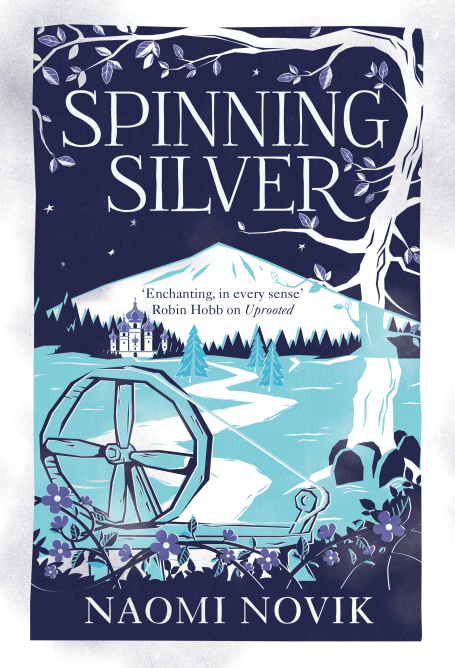
Spinning Silver by Naomi Novik

Spinning Silver Cover.png

Publisher: Macmillan

Publication Date – 10 July 2018

Amazon     Book Depository

From award-winning fantasy author Naomi Novik comes an innovative novel that repackages the classic fairy tale Rumpelstiltskin and portrays a fresh and much darker take on a story no longer fit for children.

Miryem is the daughter of an ineffective village moneylender, whose kind nature is taken advantage of by their neighbours.  Forced to harden her heart and take over the family business, Miryem is soon successful in her new career and quickly turns her family’s fortunes around.  As her business grows, rumours soon spread that she has the ability to turn silver into gold.  But words have power, and this boast has been overheard by the king of the Staryks, powerful fairies who hold dominion over winter.  The Staryk king sets Miryem an impossible task: to turn three increasing amounts of silver coins into gold.  If she fails, she dies, but if she succeeds, an even worst fate awaits her: marriage to the cruel king in his harsh kingdom of ice.

Forced to find a way to escape her life of captivity, Miryem finds a common cause with Irina, the daughter of a powerful nobleman.  Irina has caught the attention of the Tsar and has used magical Staryk silver to win his hand in marriage.  However, the Tsar has a dark secret that could threaten the realm, and Irina must find a way to survive his terrible powers.  With no other choice, Miryem, Irina and Miryem’s servant, Wanda, embark on a daring quest to free themselves from these terrible forces.

The story within Spinning Silver is told through first person narrations from a variety of the characters featured within the book.  The three main characters, Miryem, Wanda and Irina, each have their own adventures and narrate the vast majority of the book.  Other side characters, such as Wanda’s younger brother, Stepon, and Irina’s old maid, Magreta, also narrate several parts of the book, although these sections are usually tied into the storylines of the main characters.

Naomi Novik is an exciting name in fantasy fiction, best known for her nine Temeraire books set in an alternate version of 19th century Europe in which the English and French fought the Napoleonic War with the help of dragons.  Her latest book, Spinning Silver, is more reminiscent of her 2015 release, UprootedUprooted, which is currently being looked at for a movie adaptation, was a standalone fantasy novel that utilised common fairy tale elements to create a unique and enthralling tale.

Spinning Silver is a dark and gripping fantasy story that is a loose adaption of the story of Rumpelstiltskin.  The book’s main character, Miryem, is this story’s version of the local village girl who runs afoul of the magical creature.  However, rather than being a miller’s daughter whose father claims she can weave straw into gold, Miryem is a money lender and businesswoman who earns gold through her business acumen and mercantile skill.  Her initial challenge to change a material, in this case silver, into gold is done in a much more practical way than making a deal with a supernatural force.  This is a fantastic and modern twist on a key point of this classic story, and Novik follows up with an inventive fantasy narrative which uses other key elements from the original fairy tale to an amazing effect.

Novik weaves several other unique story points from Rumpelstiltskin into this story, and readers will enjoy seeing several memorable elements of a story they have known since childhood inserted into a new and more adult fantasy tale.  For example, in the fairy tale, the imp Rumpelstiltskin appears to the miller’s daughter three times to spin straw into gold.  The first time he appears he demands the daughter’s necklace as payment for this gift, while during his second visit he demands her ring.  Novik reverses this in her story, by having Miryem use the silver she has been given to create a ring and a necklace, which she can then sell to raise the gold she requires.  Another example is the idea of the miller’s daughter having to fill three rooms with gold to marry the king and stay alive.  In Spinning Silver, the fairy king demands that Miryem turn all the silver in three rooms into gold or else be killed.  Novik instils her character with a certain amount of logic, which allows her to come up with a simple and clever solution to this task.  Other parts of the book that have their roots in the fairy tale include the fairy king only allowing Miryem to ask three questions every night, his unwillingness for anyone to know his name and the general death sentence hanging over her head should she fail any of her undertakings.  Novik’s ingenious use of elements associated with Rumpelstiltskin is a highlight of this book which results in a bold and captivating new story.

In many ways, this is a story about exploitation, as the main characters try to overcome their situation and take control of their own lives.  For example, Wanda and her bothers live with an abusive father, and Wanda attempts to use her connections to Miryem to earn enough money to flee.  Another character, Irina, is initially exploited by her father, who sees her as a political tool rather than a daughter.  However, her exploitation by her eventual husband, the Tsar, is far worse, and Irina is forced to think of some inventive ways to manipulate the Tsar and his demonic ally in order to gain her freedom and keep her people alive.  While Miryem does have a loving family, the entire village exploits Miryem and her family.  Miryem is forced to become a hardened moneylender and then must outsmart the Staryk king to stay alive.  Watching the characters change their nature and way of thinking in order to overcome the people using them is a fantastic piece of this story.

Like her previous book, Uprooted, Novik has set her book in an Eastern European landscape, during an unknown period of history.  Despite the Germanic origins of Rumpelstiltskin, the setting of Spinning Silver feels somewhat more like Russian or Slavic in origin, with Tsars and Russian currency included in the narrative.  The dark, snow-filled forests that surround the story’s towns and cities are the perfect backdrop for this story, and Novik does an amazing job of conveying the cold and hidden menace that they contain.  Several of the characters in the book, including Miryem, are Jewish, and Novik spends time exploring how this group were treated and exploited.  There are many examples of the other characters, especially the inhabitants of Miryem’s village, treating these characters poorly, which reflects the poor treatment that the Jewish population suffered throughout Eastern Europe, while also focusing on the role they often played as moneylenders.  Overall, the dark Eastern European setting helps turn the usual child-friendly story into something colder and more hostile, and it is fascinating to see Novik’s supernatural and fantasy elements included in this historical situation.

Naomi Novik has completely reinvented one of our oldest and best-known fairy tales into a deeply fascinating and captivating story.  This book highlights Novik’s fantastic understanding and utilisation of key elements of the original tale and makes full use of its deeply haunting setting and compelling dark twists.  Spinning Silver is an excellent outing from Novik, who once again shows why she is one of the most creative minds in fantasy fiction.

My Rating:

Four stars

Amazon     Book Depository

Throwback Thursday: The Inheritance Cycle by Christopher Paolini

Inheritance Cycle.png

Publishers: Paolini LLC, Knopf Books, Random House AudioBooks

Publication dates:

Eragon – 2002                    Amazon     Book Depository

Eldest – 2005                     Amazon     Book Depository

Brisingr – 2008                  Amazon     Book Depository

Inheritance – 2011            Amazon     Book Depository

Reviewed as part of my Throwback Thursday series, where I republish old reviews, review books I have read before or review older books I have only just had a chance to read.

For my first edition of Unseen Library’s Throwback Thursday series, I have decided to review an important series from my youth, the Inheritance Cycle.  Loved by many, strongly criticised by others, the Inheritance Cycle is a highly inventive young adult fantasy series with an epic narrative of good versus evil

Released between 2002 and 2011, the Inheritance Cycle is the first series from author Christopher Paolini and contains four books.  Since its initial release, the first book in the series, Eragon, has been adapted into a movie starring Jeremy Irons, John Malkovich, Robert Carlyle, Djimon Hounsou and Rachel Weisz.  Despite its strong cast, the movie was a poor adaption of the source material and flopped both critically and financially.  As is often the case, however, the books are stronger than the film.
Eragon Cover.png

I received a copy of Eragon as a birthday gift a short time after its initial release in 2002 and powered through it in short order, as I was instantly hooked by the ambitious plot, massive amounts of lore, and the inventive fantasy elements.  Following Eragon I made sure to grab every other book in the Inheritance Cycle as soon as they came out and I considered it one of my favourite series.  Having re-listened to the entire Inheritance Cycle a few times on audiobook I still massively enjoy the series, although I have noticed a few flaws with the franchise.

The books are all set in the world of Alagaësia, a land filled with classic fantasy elements such as dragons, elves, dwarfs and magic, in addition to a few unique creatures and powers.  Many years before the start of the series, an order known as the Dragon Riders were formed to keep peace and harmony in Alagaësia.  The elven and human Riders were bound to their sentient dragons and formed a lifelong partnership with them, gaining powerful magical abilities as a result.  Following years of peace, the Dragon Riders were wiped out by a crazed former member of the order, Galbatorix, and his followers.  After destroying the Riders and driving the dragons to near extinction, Galbatorix conquered the human kingdoms of Alagaësia and forced the elves and dwarfs into hiding.
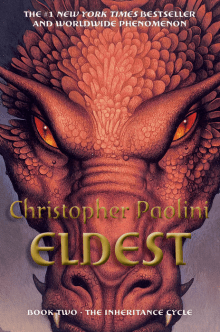
Eldest Cover.png

The first book in the series, Eragon, starts with the titular character, the young human Eragon, receiving one of the last surviving dragon eggs, which hatches forth the dragon Saphira.  Following an attack by Galbatorix’s servants, Eragon, Saphira and their mentor, Brom, are forced to flee their village of Carvahall and travel throughout Alagaësia before finally joining up with the rebel organisation, the Varden.  Along the way, Eragon and Saphira lose Brom, encounter the mysterious Murtagh, and rescue the elf Arya from Galbatorix’s captivity.

The following books in the series follow Eragon and Saphira as they lead the fight against Galbatorix while also learning about their powers and the history of the riders.  They encounter new mentors, find out terrible secrets about Eragon’s past, and eventually confront Galbatorix in a final battle.  At the same time, Eragon’s cousin Roran becomes a fugitive from the crown and must lead the entire village of Carvahall in an epic journey to the Varden.  There is also a focus on young political rebel Nasuada, who becomes leader of the Varden in the second book, and examines the trials and tribulations of leading a war against an all-powerful magic tyrant.
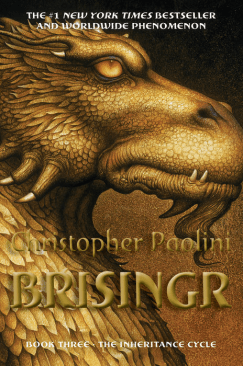
Brisingr Cover.png

The last two times that I enjoyed the books in the Inheritance Cycle, I chose to listen to them by audiobook, which are narrated by the outstanding Gerard Doyle.  Eragon is the shortest audiobook at 16 hours 27 minutes, while Inheritance, the finale, clocks in at 31 hours 28 minutes.  I am a huge fan of listening to books with large amounts of internal lore, history and background as it means I am less likely to miss an interesting fact or accidently skip over something with tired eyes.  As Paolini has created a massive amount of background lore and detail to accompany his story, I would heartily recommend listening to the Inheritance Cycle, as I felt that I absorbed so much more from the series as a result.  Doyle is an excellent narrator for this series, and at no point did I find his voice work either distracting or annoying.  His character voices are done very well, and he was able to produce excellent voices for both the male and female characters, as well as the various fantasy species.  I particularly enjoyed the Scottish accent that Doyle attributed to the character of Murtagh, as I felt it fit the character perfectly and made him very distinctive throughout the series.  Other features of the audiobook editions of this series that might appeal to potential listeners are the exclusive interviews with the author that were included at the end of two of the books.

Without a doubt, the best feature of this entire series is the sheer amount of imagination and lore that Paolini has invested in his book’s settings and history.  Each of the books in the Inheritance Cycle contains an incredible amount of background information, elaborate settings and a huge range of fantasy creatures, each with their own skills and history.  Paolini’s immense creativity is particularly evident in the series’ complex rules of magic that are a major feature of all the books.  The detailed explanation provided in Eragon is massively expanded upon in the later books in the series, and represents a significant part of the narrative.  It is also incredible to consider that Paolini created a completely new language for this magic.  With huge amounts of effort expended in creating complex lore, magic and history for all the races and peoples of Alagaësia, it is worth reading this entire series just to see all of these wonderful inclusions.
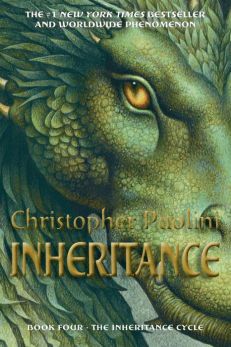
Inheritance Cover.png

There are some amazing story elements contained within the Inheritance Cycle books.  Paolini has created an epic fantasy adventure that draws the reader in and makes them care about the battle for Alagaësia.  This series has everything from impressive duels to large-scale battles that range from small groups of soldiers fighting to massive pitched battles and sieges.  There is also a significant amount of magic, politics, intrigue, romance, family and everything else that makes up a great fantasy story.  The main character, Eragon, is a classic hero coming into his great power storyline that fantasy fans will appreciate and enjoy.  However, I personally thought that the storylines that focused on Eragon’s cousin Roran were the best parts of the entire series, and business really picked up when he was made a point of view character in Eldest.  Roran is a much more grounded and likable character than Eragon, especially as he has to rely on his skill, cunning and luck to survive in a world where massive monsters and powerful magicians run rampart.

The first book, Eragon, is the only edition in the Inheritance Cycle that is told completely from the viewpoint of its titular character.  This book is a superb introduction to the series and spends significant time laying down the groundwork for the next three books.  Some great characters are introduced within this first novel, and there are a range of terrific battle scenes, the establishment of some fantastic relationships and some deep emotional moments.

The second book, Eldest, is another amazing part of this series.  Eragon spends a significant part of the book physically crippled following the final battle in Eragon, and Paolini’s descriptions of his despair and hopelessness are particularly vivid.  I am a real sucker for fantasy teaching sequences, so the scenes where Eragon learns magic, history and other subjects in the elven kingdom were really enjoyable for me.  However, the standout parts of this book focus on Eragon’s cousin Roran and the inhabitants of Carvahall.  Eragon’s actions in the first book results in Carvahall being targeted by Galbatorix and his forces, and Roran and the villages must first defend their home and then attempt to flee to the Varden.  Their exodus has some great scenes, including an extended voyage at sea, and is it fascinating to see how Eragon’s adventures impact the people he left behind.  Special mention should also be made of the scenes told from the viewpoint of Nasuada as she takes control of the Varden and leads its invasion of Galbatorix’s kingdom.  The final battle sequence of the book is another huge highlight, as the reader gets to see Eragon unleash his new powers in a massive battle scene.  The combination of the book’s three storylines into one conclusion is particularly enjoyable and epic, and there are some amazing battles and several important character revelations for the protagonist.

The third book, Brisingr, represents another fun addition to the series.  Eragon sets out on a journey of discovery during his arc.  Of particular note is the extremely intriguing look at dwarf politics and emotional reveals about Eragon’s heritage and family.  Roran’s arc is action-packed and exciting as it focuses on his role as a new member of Varden as he works his way up to becoming a high-ranking commander in the army.  The devastating conclusion to this book provides an emotional punch to the reader as one of the most likable characters meets their end.

Inheritance, the final book in the Inheritance Cycle, draws this story to its epic conclusion.  Readers who have enjoyed the first three entries in this series will have no choice but to see how this adventure ends.  Once again Roran’s arc shines through as the most enjoyable part of the entire book.  Not only does this arc focus on his own fantastic siege storyline, but it is through Roran’s eyes that we watch the massive battle for Galbatorix’s capital.  While Eragon and most of the other supporting characters are fighting Galbatorix, Roran is the only point of view character observing the fierce street-to-street combat happening in the city below.  Roran’s epic battles in this sequence more than make up for certain deficits with the main fight between the remaining Dragon Riders above.  That being said, Eragon, Arya and Angela’s earlier confrontation with a group of fanatical priests in tunnels below an ancient temple has a certain sinister edge to it that will appeal to some readers.  Offering a satisfying conclusion with a number of intriguing storylines left open for future books, this is a superb final chapter for the entire Inheritance Cycle.

While this series has a lot of great features and positive points in its favour, there are a few negative issues that need to be addressed.  When it was released, one of the main criticisms the Inheritance Cycle received was about its similarities to other works, and it’s honestly not hard to see some striking resemblances to the original Star Wars movies.  The Dragon Riders are extremely similar to Jedi, down to the unbreakable, colour-coded swords.  Obi-Wan Kenobi’s monologue from A New Hope about the destruction of the Jedi can pretty much be substituted for Brom’s description of the fall of the Riders.  The main character, Eragon, is essentially Luke Skywalker.  When we first encounter him he is living with a gruff uncle and suddenly receives a MacGuffin (in this case a dragon egg rather than a droid) that dramatically changes his life.  The arrival of the MacGuffin results in the death of his guardian and he flees the only home he knows with a mentor character.  The mentor character, Brom, the former Rider, has way too many similarities with Obi-Wan as he gives the protagonist his early, uncompleted training, provides him with his first weapon, and then dies about two-thirds through the first volume.  In the course of the first book Eragon also meets up with a rogue-like character, rescues a trapped female who he first sees from a distance (through magical scrying rather than a hologram) who later turns out to be a princess, and then flees to a rebel stronghold for an epic confrontation.  In later books Eragon meets a Yoda-like character in Oromis and finds he is related to the Darth Vader equivalent, Murtagh (after Murtagh obtains a red sword).  He eventually faces the Emperor-like villain, Galbatorix, at the very end of the series, and is forced to have a final duel with Murtagh in front of him.  Upon Galbatorix’s death and the utter destruction of his ultimate base, the heroes liberate the whole world from the control of the evil empire and Eragon sets out to teach a new generation of Riders.

These are only some of the more obvious similarities to Star Wars, and they are pretty glaring; however, this has never ruined the series for me.  Other criticisms about similarities to fantasy works such as Lord of the Rings, due to the inclusions of dwarfs and elves are a bit harder to credit, as these are hardly unique fantasy races anymore and Paolini does a fantastic job creating distinctive histories and traits for these races.

One thing that I really disliked about the series, however, is the terrible romantic arc between Eragon and the elf Arya.  Eragon pretty much falls in love with her the second he sees her, but Arya is strongly opposed to his romantic advances for various reasons.  Eragon’s unrelenting pursuit of her, especially in the second book, is very uncomfortable, and his depression and self-pitying attitude following her rejections are some of the worst parts of the series.  While their relationship in the third and fourth books becomes more natural and builds up as a result of mutual respect, I’m personally glad that Paolini doesn’t pull the trigger on their relationship at the end of the series.

I was also not a big fan of the extreme amount of self-doubt that Paolini injected into his protagonist, possibly to counterbalance the overpowered nature of Eragon.  Eragon spends way too long feeling sorry for himself, and the scenes where he deals with these feelings of inadequacy and doubt are some of the hardest to get through.  These character flaws, along with the Arya romance subplot, make it hard for the reader to like Eragon at times, and are part of the reason that I feel Roran is the better hero in the series.

While they did have some amazing parts, the third and fourth books in the series did seem to drag at times.  While I enjoyed Brisingr, when you view the whole series, I feel that Paolini could have probably gotten away with turning the series into a trilogy and simply incorporating some of the key story points into Inheritance instead.  The final conclusion of Inheritance is also a bit clichéd, especially when, out of nowhere, Eragon is able to use magic to make Galbatorix understand all the pain his actions have caused.  It’s a pretty weak way to end this epic confrontation, but luckily the reader isn’t too disappointed, especially with the epic Roran storyline down in the city ramping up the action in this part of the book.

Despite the above criticisms, I still rate all of the books in the Inheritance Cycle four stars out of five.  While this rating may be slightly bolstered by nostalgia, I do believe that this is an excellent series that will appeal to many fantasy fans, especially those younger readers who are only just starting to read the genre.  With an absolutely incredible amount of fantasy details, world history and established lore, I am still amazed by Paolini’s sheer imagination every time I go back to this series.  There are some electrifying storylines within all four of these books, as well as enough action, be it physical, mental or magical, to make any action junkie’s pulse run wild.  Readers looking for the next epic fantasy series to enjoy will find an incredible adventure awaits within the Inheritance Cycle.

My Rating (Series and Each Book):

Four stars

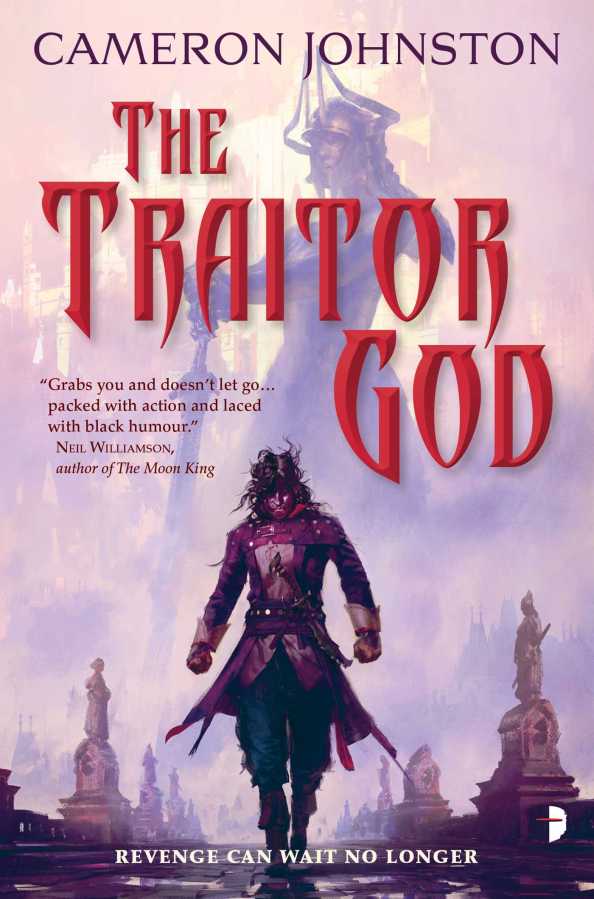
The Traitor God by Cameron Johnston

The Traitor God Cover

Publisher: Angry Robot

Publication date – 5 June 2018

Amazon

Prepare yourself for dark magic and a powerfully inventive adventure in The Traitor God, one of 2018’s best fantasy debuts from exciting new author Cameron Johnston.

Ten years ago, reviled mind-bending magician Edrin Walker fled his home city of Setharis with demons biting at his heels.  On that night, a god died, his mentor disappeared and Edrin’s memories of the events surrounding his exile were erased from his mind.  All Edrin remembers is that he made a deal with somebody extremely powerful.  In exchange for him leaving the city, this mysterious figure guaranteed the safety and long life of his closest friends.

Edrin has spent the last 10 years wandering the wilderness, living day to day and evading the creatures hunting him.  Content with his decision and new life, his exile ends the moment he witnesses the death of his best friend, Lynas.  In one terrible night, Lynas was brutally murdered and skinned alive, and Edrin saw every minute of it through their powerful mental link.  Now, with nothing left to lose, Edrin will return home, his only intention to burn everyone and everything until he finds the person responsible for his friend’s death.

However, returning to Setharis is a dangerous proposition.  Not only is he still being hunted by demons, but the Arcanum, Setharis’s governing body of magicians, will kill him the moment they find out he is still alive.  Beyond caring, Edrin will risk everything to get revenge, and woe betide any man, magician, demon or god who gets in his way.

This is an extraordinary first novel from Johnston, who has produced a stylish and highly addictive sword and sorcery fantasy adventure with a morally corrupt protagonist, a great new fantasy setting and a huge number of magical battle sequences.

The Traitor God contains an impressive dark fantasy action story that effortlessly captures the reader’s imagination and attention and drags them through every page of the book.  What starts as a revenge investigation and rampage turns into a fight for the future of an entire city, as mysterious forces are unleashed.  The story is told solely from the perspective of the protagonist, Edrin, and as a result it has been noticeably infected with his dark humour and well-developed scepticism.  The familiar storyline of a hero returning home and finding that everything has changed works well within The Traitor God.  Readers will enjoy watching the powerful magician manipulate the new generation of criminals and bystanders who are unfamiliar with what he can do.  While the eventual revelation of who is responsible for the murder is a tad predictable, the investigation getting there is amazing, and fans will enjoy seeing the protagonist confront his enemies.  The scope of the villain’s evil plot is quite impressive and results in some massive scenes towards the end of the book.  I really enjoyed the cunningness and ingenuity of the protagonist and had fun watching him come up with clever solutions to the difficult and unique problems he encounters.  There is one amazing scene towards the end of the book when his plan to finish off a powerful antagonist is slowly revealed to the reader.  The reveal of the protagonist’s master plan, which is kept hidden from the reader due to magical plot elements, is done perfectly within this scene, and the audience will enjoy the clever ideas and dark humour used within.

The vast majority of the plot of Johnston’s book is set within the city of Setharis, which is controlled by an army of powerful magicians.  The city is a great setting for this dark fantasy novel as the protagonist is forced to conduct his investigation through its corrupt and crime-ridden streets.  It is clear that Johnston has spent significant time creating Setharis, and Edrin explores vast swathes of it during his adventures.  The exploration of the Arcanum is particularly intriguing, and readers will be shown the noticeable differences between the sanctuary of magicians and the dwellings where the city’s poor live.  Edrin’s observations about the inequalities and corruption of the Arcanum are unique among the book’s magicians.  This allows Johnston to show off the arrogance of the other magicians, which plays into the plot while at the same time endearing Edrin to the reader.  The setting of Setharis is an amazing part of this novel, and readers will look forward to returning to it in Johnston’s future works.

One of the best parts of The Traitor God is the sheer amount of exceptional magical and fantasy elements that have been packed into it by the author.  Edrin has unique magical mind powers that allow him to control people he encounters, and these are surprisingly dark powers for a fantasy protagonist to have.  These powers are intriguing, as they are known and feared throughout Johnston’s fantasy world, and Edrin suffers significant discrimination as a result.  The scenes where Edrin uses his mind-bending abilities are well presented by Johnston, as he successfully endeavours to show the effect Edrin’s power has on the other character’s minds.

The other magicians that feature in The Traitor God also have magical powers that catch the reader’s imagination when they are presented in the book.  The book features magicians with powers to nullify the magic of other magicians, sniffers who can smell and identify magicians from a distance, magicians who use body enhancement magic to become epic soldiers, and one extremely skilled hydromancer.  Johnston has also created some fascinating rules and abilities that affect all of the magicians within the book, including Edrin, and result in some wonderful story elements.  A great example of this revolves around the rule that magic permeates every cell of a magician’s body and leaks out of them into items like their clothing or bedding.  Johnston uses this fact to great effect throughout the story, as his protagonist is constantly forced to find constructive ways to avoid enemies who can detect his magic.  The author has also created memorable descriptions of the way that magicians are forced to access their magical power.  Johnston establishes that magicians within The Traitor God have to be careful about the magic they draw into themselves, lest they burn themselves out or go mad with power.  There are several scenes where Edrin is forced to draw large amounts of magic into himself to face powerful opponents or save the lives of his friends, and the resultant internal battles to retain control and his sanity are a fantastic part of the narrative.

While Johnston goes into incredible detail about the rules and roles of the magicians of Setharis, he has also included some alternative magical users who do not follow the same rules.  The comparison between these two different groups of magic users is quite distinctive, and scenes where they come into conflict with each other are quite destructive and highly enjoyable.  Johnston has made sure to include a number of unique demonic creatures the hunt and harry the protagonist.  These creatures are quite distinctive, and Johnston cleverly ties their hunting ability into his rules about magical scents and detection.  The most memorable magical creature within the book is also the largest, and results in some significant, fast-paced and explosive scenes throughout the book.  Overall, the electrifying and distinctive magical and fantasy elements within The Traitor God are one of the book’s most intriguing characteristics and highlight just how imaginative and creative Johnston is.

There are a tremendous number of action-filled sequences throughout the book as the main character and his allies fight criminals, demons, magicians and gods.  As a result, The Traitor God will appeal to wide range of readers eager to get their latest dose of intense fantasy action.  There are brawls, chases, complex magical duels, fights with monstrous foes, large-scale magical warfare within a city, and even a fight between two gigantic magical constructs.  Various elements that Johnston sets up when describing the city of Setharis or the magical abilities and rules of his magician characters often come into play during these scenes, and the author does a great job of winding his own lore into these fantastic sequences.  Those drawn to magical and fantasy action and battles will find all their needs and more are met within this book.

In his debut book, Cameron Johnston has shown that he is author with an immense and powerful imagination and the ability to skilfully transcribe his ideas into a powerful narrative.  The Traitor God is a fantastic piece of dark fantasy, with some incredibly thrilling action and adventure subplots.  This book is a highly recommended read, and Johnston is an author that fantasy fans will need to keep an eye on.

My Rating:

Four and a half stars

Amazon

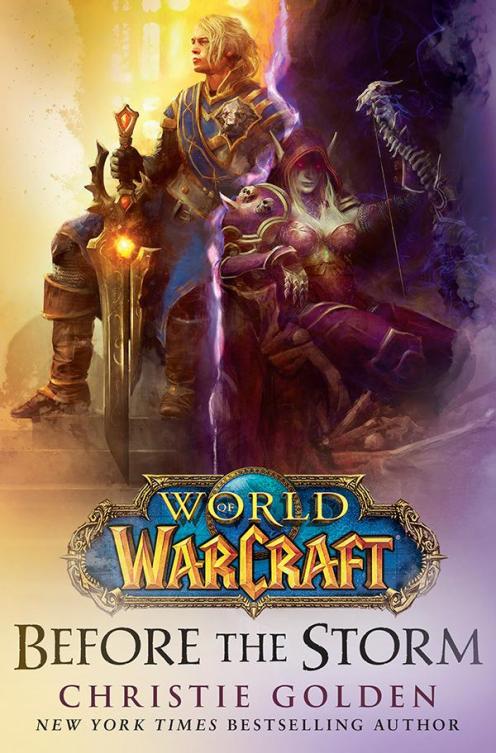
Word of Warcraft: Before the Storm by Christie Golden

Before the Storm Cover.jpg

Publisher: Titan Books

Publication Date – 12 June 2018

Amazon

War is once again coming to Azeroth in the brand new World of Warcraft novelisation from the queen of tie-in books and Blizzard Entertainment’s new in-house novelist Christie Golden.

The world of Azeroth is constantly at war, and for generations its inhabitants have known nothing but conflicts and threats.  Perhaps the greatest enemy that the people of Azeroth ever faced were the demonic Burning Legion, who are the root of many of the world’s great conflicts.  Now, after a devastating campaign, the Burning Legion has finally been defeated, although Azeroth’s victory came at a great cost.  As his final act of destruction, the leader of the Burning Legion, the Titan Sargeras, struck a great blow against Azeroth, plunging his gigantic sword into the surface of the planet and leaving a gaping wound in the side of the world.

Now both factions of Azeroth, the Alliance and the Horde, can finally recover and come to terms with the destruction caused by their demonic foes and the dramatic changes that have rocked their hierarchies.  Following the death of his father, young Anduin Wrynn has inherited the throne of the human kingdom of Stormwind, and serves as the new leader of the Alliance.  At the same time, the Horde is now under the sway of its new Warchief, the banshee queen of the Forsaken, Sylvanas Windrunner.  Both new leaders must come to terms with the running of their respective factions and the current peace blessing the land.

But there is always tension simmering between the Alliance and the Horde, and many predict that a new conflict is just around the corner, especially when both sides make a startling discovery: the blow from Sargeras’s sword has caused the very essence of Azeroth to bleed forth from the ground.  This new substance, known as Azerite, is extremely powerful, containing the very strength of Azeroth, and with the potential to be used as a mighty weapon by whichever side controls it.

As both factions investigate the wound in Azeroth and this strange new material, King Anduin seeks to finally forge peace between the Alliance and the Horde.  In order to achieve this peace, Anduin embarks on an ambitious plan to win the Forsaken to his cause and gain the trust of Sylvanas.  But Sylvanas has her own vision for the future of Azeroth, and woe betide anyone who stands between the Dark Lady and her goals.  Will peace finally be achieved, or will the discovery of Azerite result in a new war between the Alliance and the Horde?  And what role will Calia Menethil, long lost sister of the Lich King Arthas Menethil, play in this new era?  One thing is certain: the Battle for Azeroth starts here.

Before the Storm is the latest tie-in book to the massive Warcraft video game franchise.  People who have never played these games may be surprised to know that this franchise has a rich narrative history.  The original Warcraft games came with a substantial amount of lore and plot that were in some ways just as revolutionary as the game’s mechanics.  This tradition of great storytelling has continued over the years, and every single one of the games has contained a range of intricate and compelling storylines.  Many of these stories are incredibly elaborate and have great potential for future adaptations.  For example, this reviewer would be especially keen to see the corruption of Arthas and the rise of the Lich King told on the big screen.

The game’s narrative tradition has also resulted in a huge number of tie-ins that are mostly targeted towards fans of the game.  There are currently over 30 Warcraft books, as well as a number of comics and even some manga.  The vast majority of these adaptations are considered canon, and have been subsequently referenced in the plot of the games, including the franchise’s main game, the MMORPG World of Warcraft.  For example, in one of the previous novels, The Shattering: Prelude to Cataclysm, Cairne Bloodhoof a major character from Warcraft III: Reign of Chaos and the leader of the Taurens in World of Warcraft, is killed off, and this carried through to the game in several different ways.  Before the Storm is the latest book in this extended universe, and has been released as a tie-in for the upcoming Battle for Azeroth expansion, which is out in August.

The author of this latest novel, Christie Golden, has a bibliography of over 50 books, and has substantial experience writing tie-in books for big franchises.  In addition to her debut Ravenloft trilogy, Golden has written 15 Star Trek novels, five Star Wars books, and a number of full-length and short story tie-ins for franchises such as Assassin’s Creed, Invasion America, Buffy the Vampire Slayer and Angel.  Golden has also written a number of books for Blizzard, with five books based on Starcraft and 10 based around the Warcraft games.  Her previous Warcraft novels include stories that help cement the franchise’s established lore, the official novelisation of the recent Warcraft movie, and novels that have established the plot prior to several of World of Warcraft’s expansions.  For example, her 2014 novel, War Crimes, heavily set up the Warlords of Draenor expansion, while also presenting an elaborate novel that highlighted the crimes of the previous expansions main antagonist.  Golden has incredible knowledge of Warcraft’s lore and narrative history, having provided significant contributions to it in the past, and readers will appreciate the way that this new book connects with several of her previous Warcraft novels.

Before the Storm is a fun and exciting fantasy novel that has been expertly set within the World of Warcraft universe.  The narrators visit a number of key locations that feature within the games and Golden has done an amazing job of describing these distinctive and well-explored background settings.  There are some great locations used within the story, including several of the game’s main cities, such as Stormwind, Ironforge, Orgrimmar and the Undercity.  People familiar with the latest expansions will also love the addition of the Netherlight Temple, the priest class hall, as a key setting within this book, as it is such a unique and niche location within the game.

A large proportion of the novel is told from the perspectives of the leaders of the Alliance and the Horde, Anduin Wrynn and Sylvanas Windrunner.  If the awesome trailer for Battle for Azeroth is anything to judge by, the next World of Warcraft expansion will focus heavily on these two characters as they lead their factions into a large-scale war against each other.  Golden has made sure to explore both of these respective characters’ mindsets and examine potential future motives for the upcoming in-game conflict.  Other parts of the story are told from the perspective of a range of minor characters, many of whom are actually interactable NPCs within the game.  This range of perspectives gives a wide angle viewpoint of the story being told in both the book and the game, and allows the author to show off the different motivations and differences between the two rival factions.  Players will also love to see this story woven around minor NPCs they may have interacted with in the game, especially as this book may explain why they may have moved or disappeared in future versions of the game.  This is a great adaptation of the current World of Warcraft universe and Golden has successfully transplanted several key and iconic aspects of the game into this book, creating an excellent addition to this extended universe.

While a number of the different Warcraft races are featured within Before the Storm, many readers will enjoy Golden’s focus on the undead playable race, the Forsaken.  While many of the franchise’s previous novels have featured Forsaken characters, Golden has chosen to do a deeper examination of this race now that their ruler is the Warchief of the Horde.  There are some particularly interesting discussions about the role the Forsaken play within Azeroth and how the other races view them.  Readers will be intrigued by the examination about their current level of humanity, and whether they can still maintain connections to the family they had before they died, and will be intrigued by Golden’s fascinating analysis.

As an official World of Warcraft tie-in, Before the Storm is naturally a desirable read for those who are familiar with the franchise and the game’s current storylines.  As mentioned above, there are a ton of elements that will appeal to those gamers currently awaiting the next expansion, as this book ties in to its central storyline.  However, Golden makes sure to elaborate on a range of prior events in the franchise and this will ensure that former players will be able to jump in and follow from when they were last familiar with the story.  In addition, Golden’s writing is fairly accessible, and the game elements don’t massively overwhelm the story, ensuring that readers unfamiliar with the games will be able to enjoy this fantastic fantasy adventure without getting too lost.

Christie Golden has once again created a fun and electrifying novelisation of the Warcraft universe.  Before the Storm is a great tie-in to the upcoming game release, Battle for Azeroth, and serves as an excellent precursor of the exciting stories that will feature within the new expansion.  Making full use of the franchise’s significant lore and a range of iconic settings, Golden has produced a deep and thrilling fantasy tale that that will massively appeal to all fans of the Warcraft games.

My Rating:

Four stars

Amazon