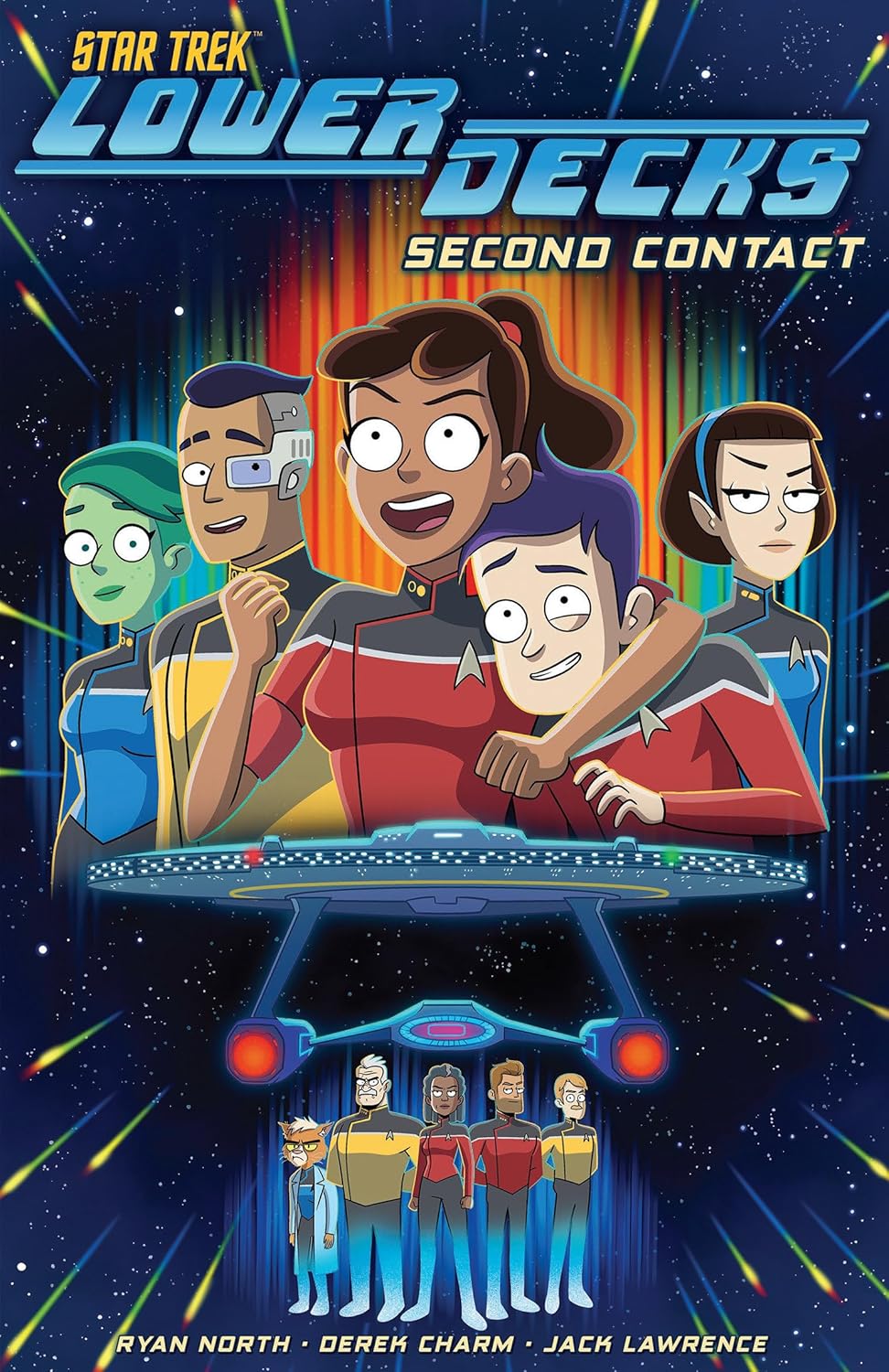
Star Trek: Lower Decks, Vol. 1: Second Contact

Publisher: IDW Publishing (Paperback – 16 September 2026)

Series: Lower Decks (2024) – Volume One

Writer: Ryan North

Artists: Derek Charm and Jack Lawrence

Length: 144 pages

My Rating: 4.5 out of 5 stars

Amazon

The hilarious adventures of the Lower Decks crew continue in the highly entertaining Star Trek comic, Second Contact, an outstanding and amusing read that will deeply appeal to all fans of the animated series.

I’ve been a little slack with my comic book reading in 2025, but one of the things I was unable to turn down was the first volume of a comic series provide new adventures for one of my favourite Star Trek television series, the comedic Lower Decks animated series.  Second Contact is the first volume of the 2024 IDW Lower Decks ongoing comic series, which follows on from the previously released miniseries.  Written by veteran comic author Ryan North and featuring art from Derek Charm and Jack Lawrence, Second Contact features issues #1-6 of this new series and contains three fantastic and awesome adventures of the chaotic crew of the U.S.S. Cerritos.
Plot Synopsis:
The crew of the U.S.S. Cerritos is back in a new ongoing comic series that’s a big, fun adventure from the hit TV show Star Trek: Lower Decks.

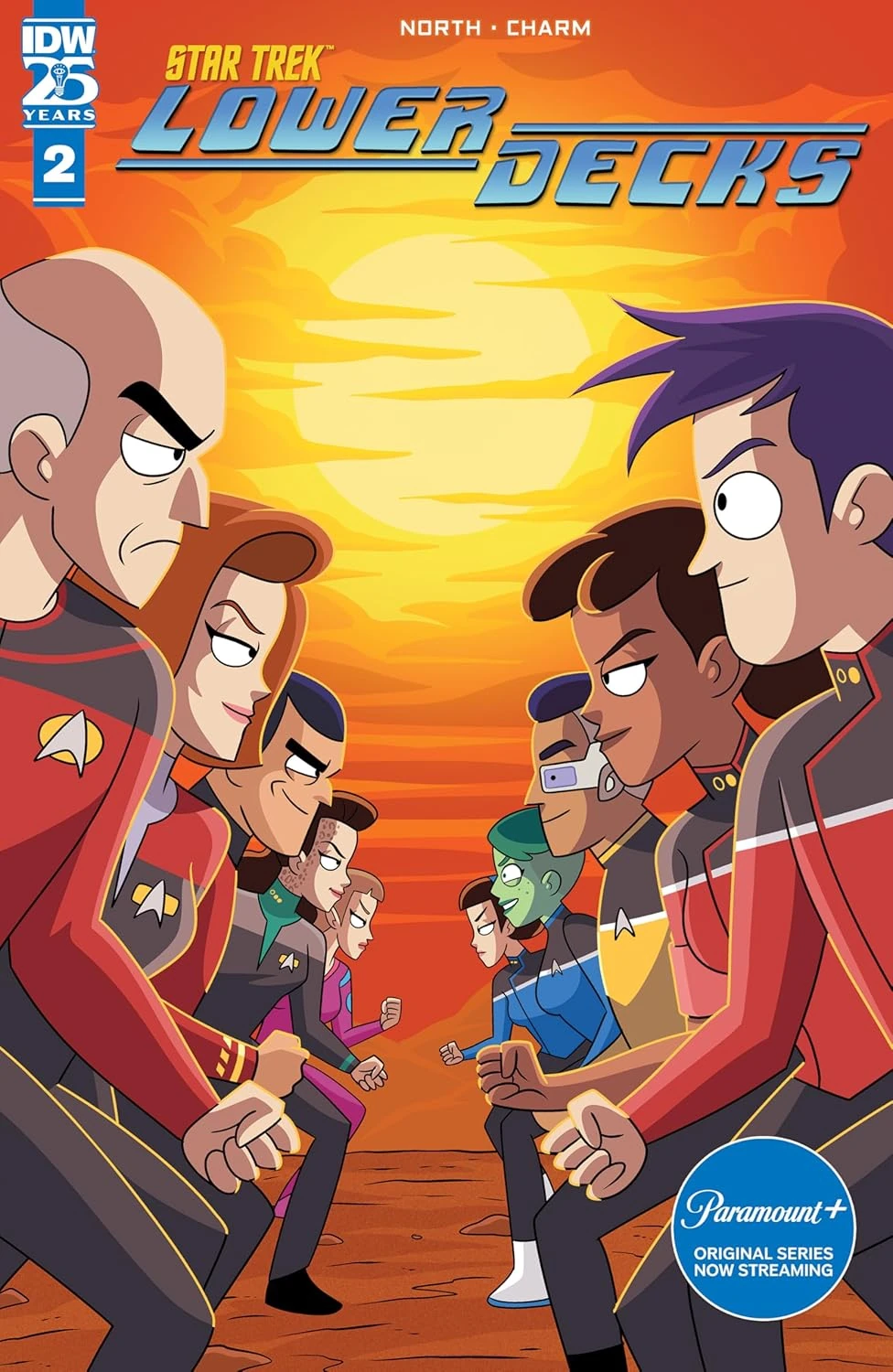
First up, a mysterious ghost ship appears just in time, as Mariner is becoming increasingly frustrated by the lack of thrills aboard the Cerritos! The thrill level increases significantly when the team is beamed onto an equally mysterious surface of an unknown world populated by an alien race that wishes to learn more about mentorship…through a battle royale! Enter Jadzia Dax, Montgomery Scott, Kathyrn Janeway, T’Pol, and Jean-Luc Picard as the mentors and the Lower Deckers as the mentees!

The Cerritos’ next mission is a supply run to Tavela Minor, but they first need to stop by the Alecto system to get some supplies to, uh, supply them with. However, just before they warp, they see the Alecto system isn’t only missing; it doesn’t exist. Like at all. Now they have a space mystery at hand: What could cause a whole star system to disappear?

Then, suspicious after the Cerritos docks for its second baryon sweep in the same year, Mariner sneaks into a command meeting. There, the Department of Temporal Investigations tasks the crew with finding a time traveler who is rewriting Federation history at an alarming rate. Mariner finds her friends and tells them what’s really going on…only for the timeline to change around them! Obviously, something has gone wrong with Command’s mission, and per usual, it’s now up to Mariner, Tendi, Rutherford, and Boimler to save the day!

Second Contact was a very fun and compelling addition to the Lower Decks canon that sent its loveable cast on several great new adventures.  Loaded with intriguing adventures, light-hearted character moments and the self-referential humour fans of the Lower Decks animated series will know and love, Second Contact was a great comic I had an awesome time getting through.
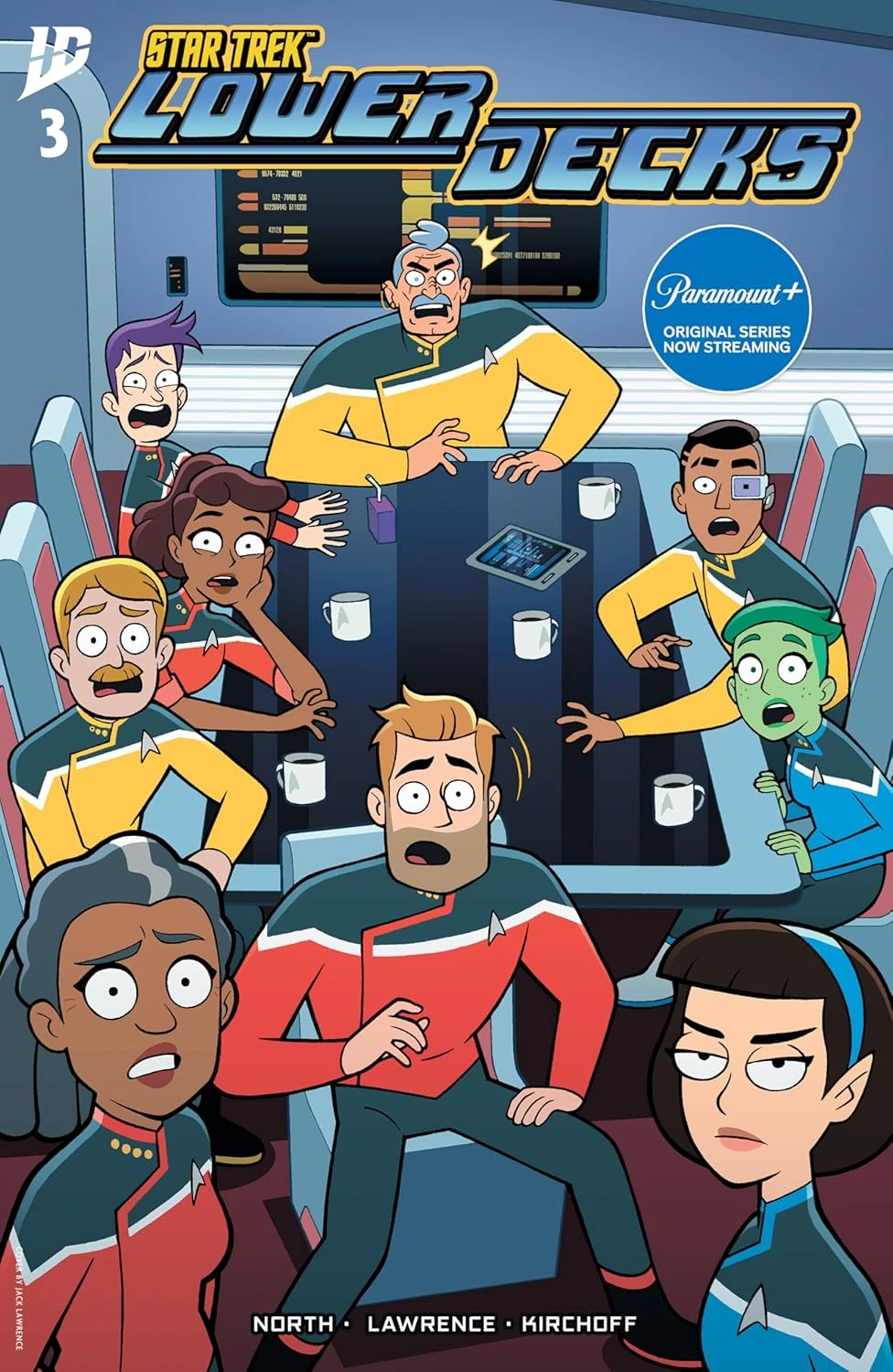
North comes up with three great new adventures for these first issues of the Lower Decks comic, which balances fun with some deep cuts into Star Trek lore.  Set during the animated series’ fourth season, the three stories of Second Contact each run for two issues and stand on their own extremely well, with plenty of laughs, crazy moments and some fun looks at the well-established main cast of Mariner, Tendi, Rutherford, Boimler and T’Lyn as well as the main cast bridge crew.

Of these three main storylines in Second Contact, my favourite was probably the first, which sees the Cerritos crew encounter the abandoned U.S.S. Bonadventure, a starship dedicated fans may remember from the Star Trek: The Animated Series episode The Time Trap.  However, the protagonists’ attempts to study the ship go sideways, with the five newly minted Starfleet lieutenants transported to a mysterious planet by the Excalbians in an entertaining homage to The Original Series episode, The Savage Curtain.  With each Lower Decks member paired with an iconic figure from one of the first five Star Trek live-action series, the cast are forced into a hilarious death fight scenario, which goes off the rails in some very creative ways.  North clearly had a lot of fun parodying two classic Star Trek episodes, mainly through jokes about Kirk’s actions, and the references come fast and thick here.  It’s also hard not to laugh at the viciously over-the-top interpretation of some of your favourite Star Trek characters, especially when they engage in a ridiculous, televised death match, all while the main cast critique the resulting tropes, as well as the various inconsistencies in the setting and the places they visit.  This was a very strong starting point for the series, which includes one of my favourite jokes about Boimler, who, after being paired with Picard, mentally requests the ‘Early Picard. Really stern, the super hard-ass Picard. The one who just got the Enterprise and is really mean about it for some reason’, version of the character, due to his issues with authority figures.
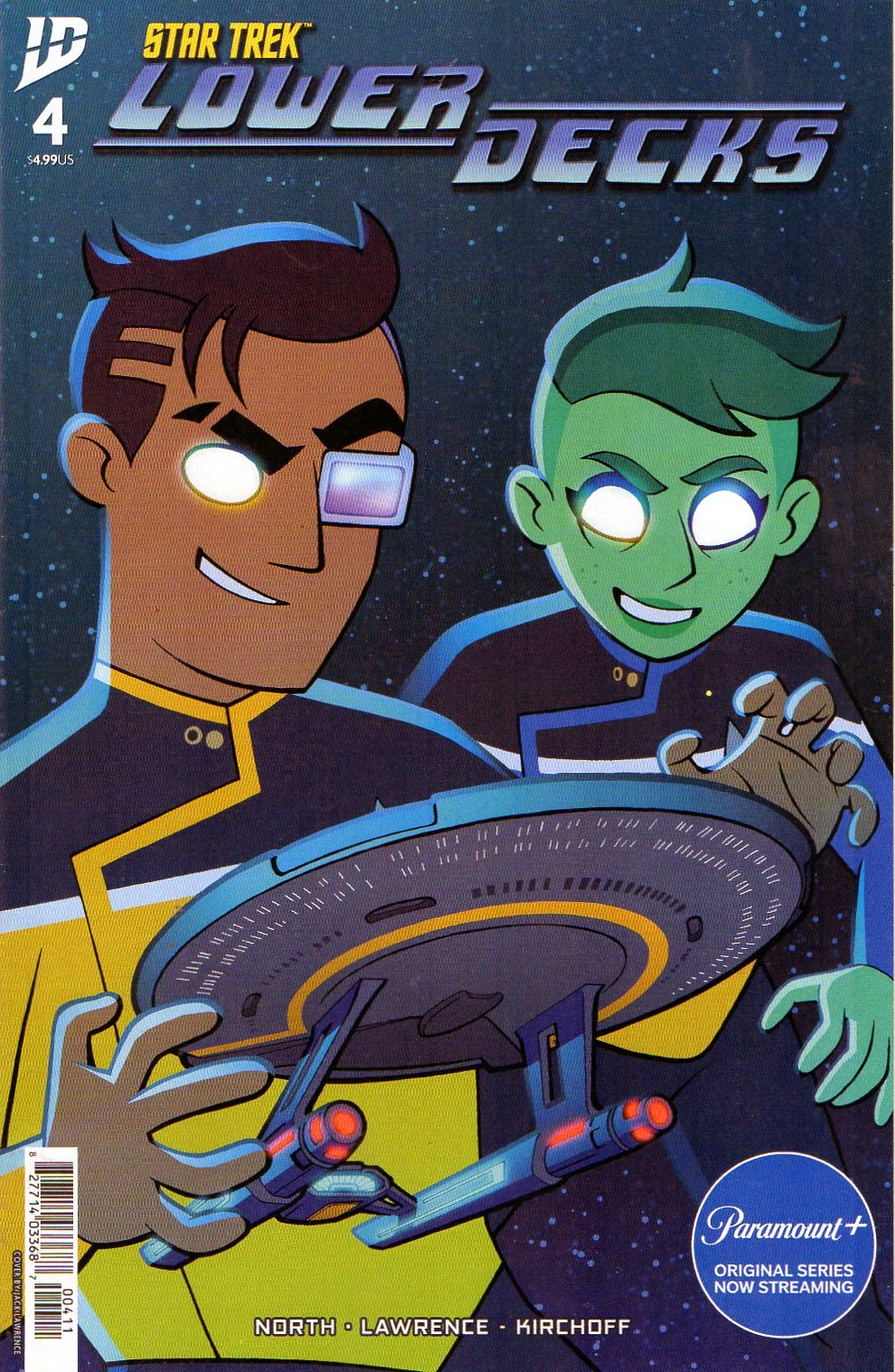
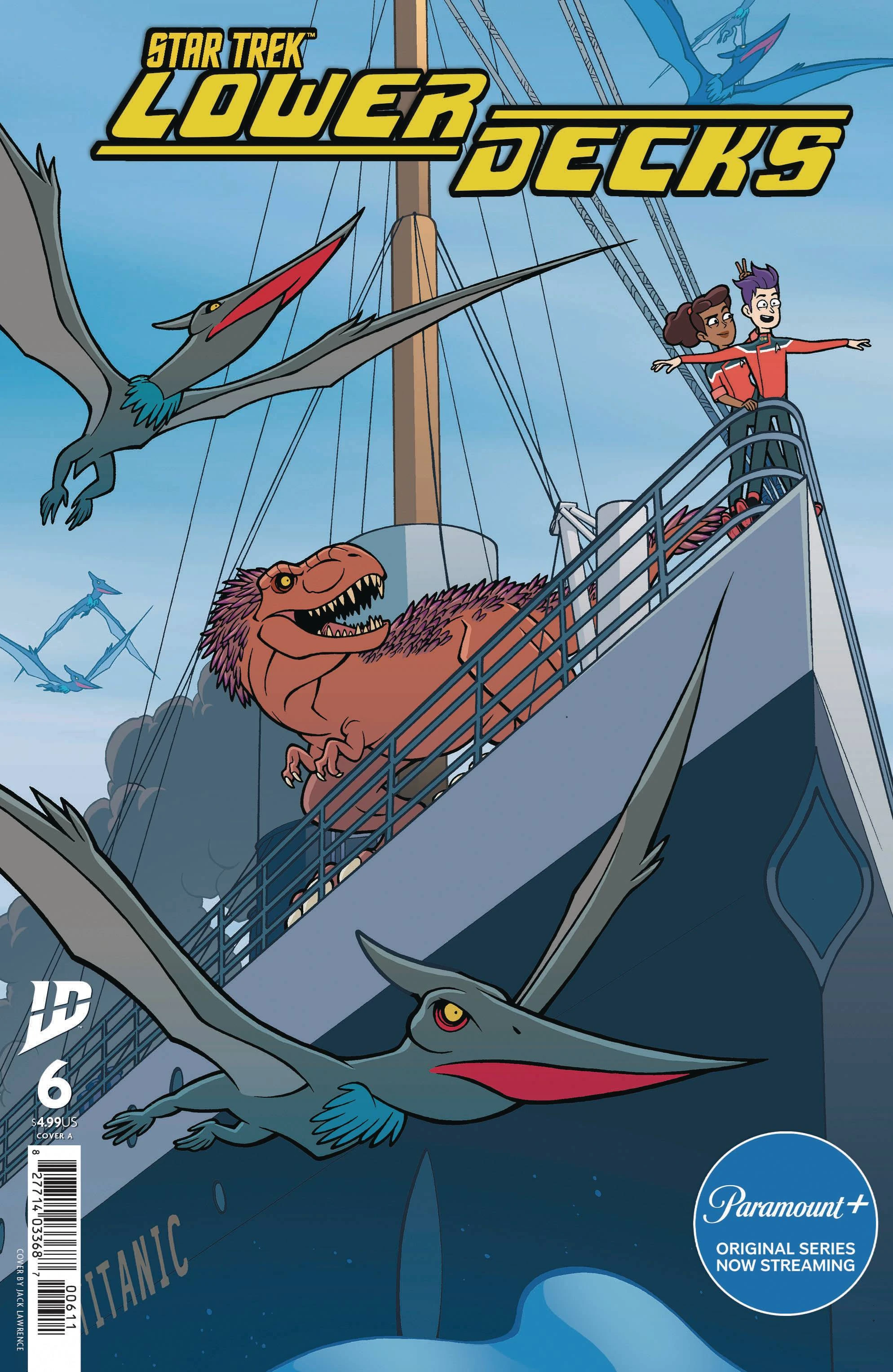
North keeps the intriguing narratives coming quick and fast with the next two adventures, each of which are well laid out in their respective two issues.  This includes a satirically science-heavy story, where the Cerritos investigates a disappearing system, only to encounter unlikely life from another universe.  This narrative, which features some great moments for the always entertaining and light-hearted pairing of Tendi and Rutherford, was a particularly touching inclusion, especially as North veers away from the comic’s typical comedic tone to provide a darker, and reflective conclusion.  However, the humour soon returns with the third and final story in Second Contact, which throws the cast into an unlikely time travel story.  A loving homage to Star Trek’s many time travel episodes, this story sees the five main characters chase the bridge crew and a temporal fugitive who are mucking up the timelines in several inventive ways.  Initially forced to navigate through various hostile versions of the Cerritos, filled with some ridiculous alternate alien crews, they eventually journey to classic time travel destinations the Titanic and the Late Cretaceous, all with inevitable hilarious results.  This third story was a very amusing entry that allowed the Lower Decks crew to get another taste of time travel after the hilarious crossover episode, Those Old Scientists, with the comic format allowing for some particularly inventive and over-the-top scenarios.  All three of these stories come together extremely well, and while they mostly serve as standalone adventures, it is a particularly exciting and compelling overall narrative for Second Contact that you can’t turn away from.

I really enjoyed how North pulled these first six issues together, and you get a good look at his style and understanding of both general Star Trek lore and the specific feel of Lower Decks.  The writing within these comic issues was very similar in style and substance to the animated show, with the loveable characters engaged in several bonkers missions with clever and satirical ties to the wider Star Trek universe.  The main cast of Lower Decks are perfectly captured by North’s writing, and I honestly heard all their fun lines in the character’s respective voices from the show, no matter how ridiculous the statement.  The amazing humour of the original animated series is also perfectly emulated in this comic, with a great combination of outrageous moments and references to classic Star Trek lore.  There are some truly amazing comedic moments here, including some hilarious takedowns of previous Star Trek moments, which range from subtle comments from the protagonist, to a full on bloody brawl between five of the franchise’s most iconic figures thanks to ratings-obsessed aliens.  Throw in some additional self-aware commentary at the bottom of each page from a now-omniscient Badgey, who serves as the comic’s narrator, and this was a very funny read, especially if you loved the Lower Decks show.  While they humour and storylines of the comic are geared towards the more hardcore fans of the franchise, Second Contact is open to all readers, and even those who only have a passing familiarity with Star Trek can have a blast with this comic.
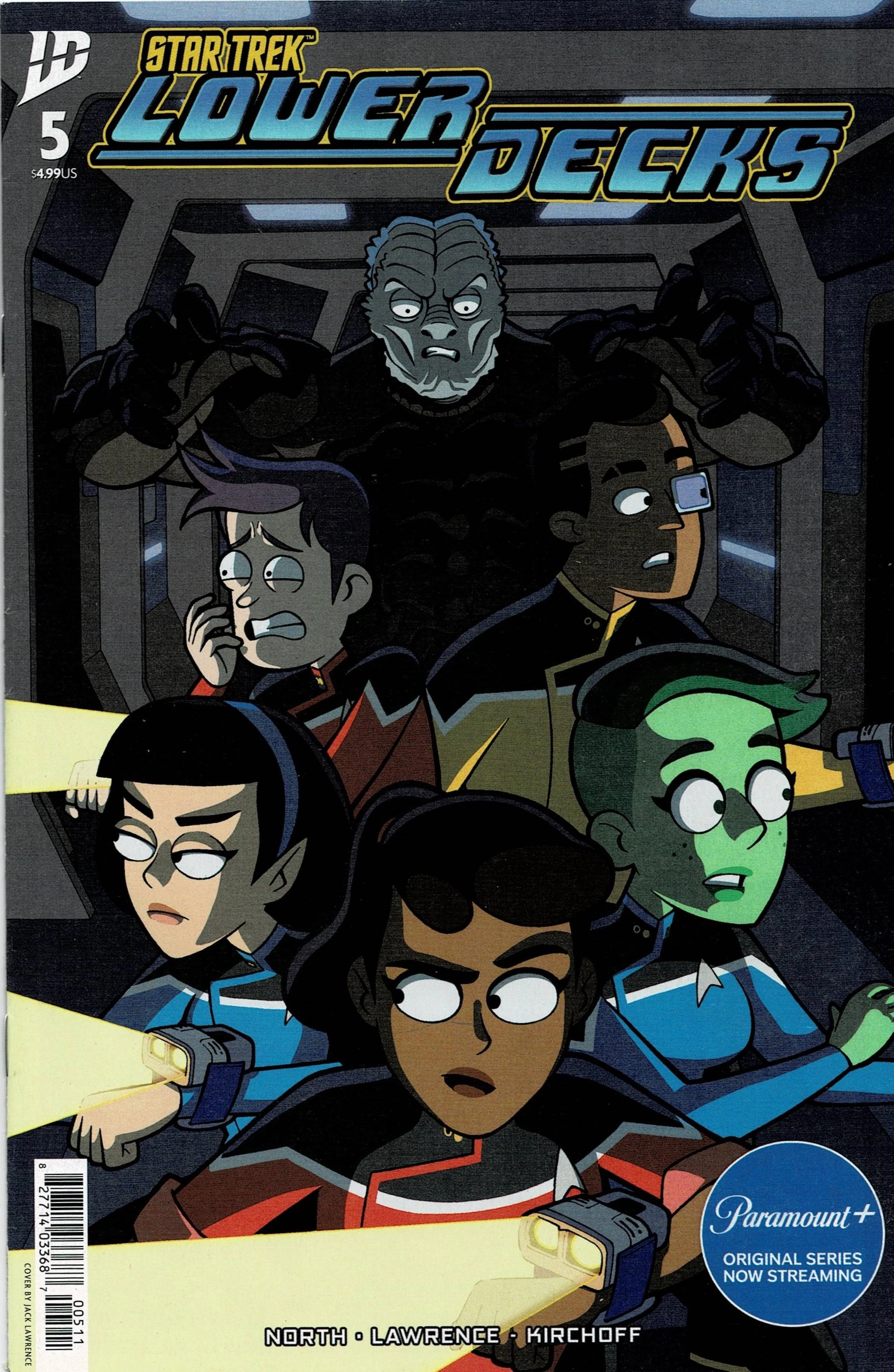
The final thing I want to highlight about the issues contained within Second Contact was the fantastic comic art.  Made to emulate the cartoon style of the animated series, the more simplistic panels and content work well to continue the Lower Decks feel in this comic, which I appreciated as a fan of the show.  There are some interesting minor artistic and stylistic changes after issue 2, after Jack Lawrence tagged in, but both artists did a great job replicating the show’s characters, even if they also went in some amusing directions.  I personally loved some of the sequences by artist Derek Charm where he drew some panels in a manner more reminiscent of Star Trek: The Animated Series, primarily to help mock the old-school cartoon.  There are also some extremely exaggerated and evil drawings of several classic characters, including Picard, Janeway, Scotty and more, as they engage in some overly dramatic moments of villainy.  This includes a glorious double spread where these alien duplicates all switch from nice to derange in only a couple of panels, accompanied by some very crazy moments (such as Scotty casually turning the team’s spacesuits into improvised bombs), all of which added to the humour of the story.  The other artist, Jack Lawrence also has some excellent drawn moments in these comics, including a series of trippy science moments, such as a blank section of space suctioning up planets, as well an exaggerated sequence of time travel, which enhanced the narrative of these entries. This great art from Charm and Lawrence was very fun, and I enjoyed their entertaining visual takes on the Lower Decks cast.

Star Trek: Lower Decks contained in wildly entertaining fashion with this great new comic.  Featuring some fantastic stories, amazing humour and awesome artwork, Second Contact was an outstanding first volume in this series, and it was one I had a blast getting through.  Highly recommended for all Star Trek and Lower Decks fans, especially those who like self-aware jokes about this iconic franchise.
Amazon

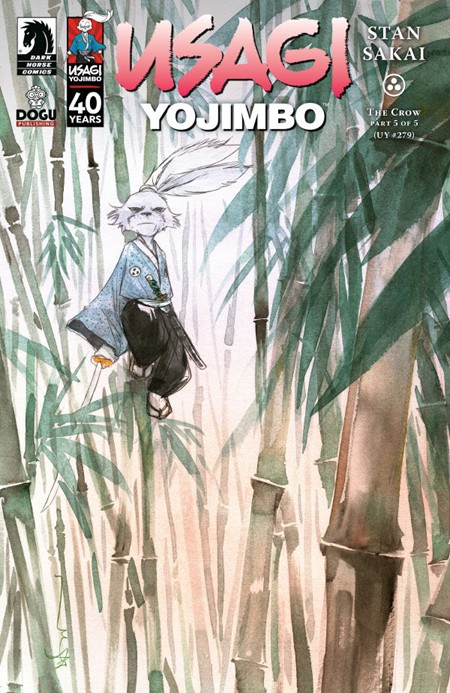
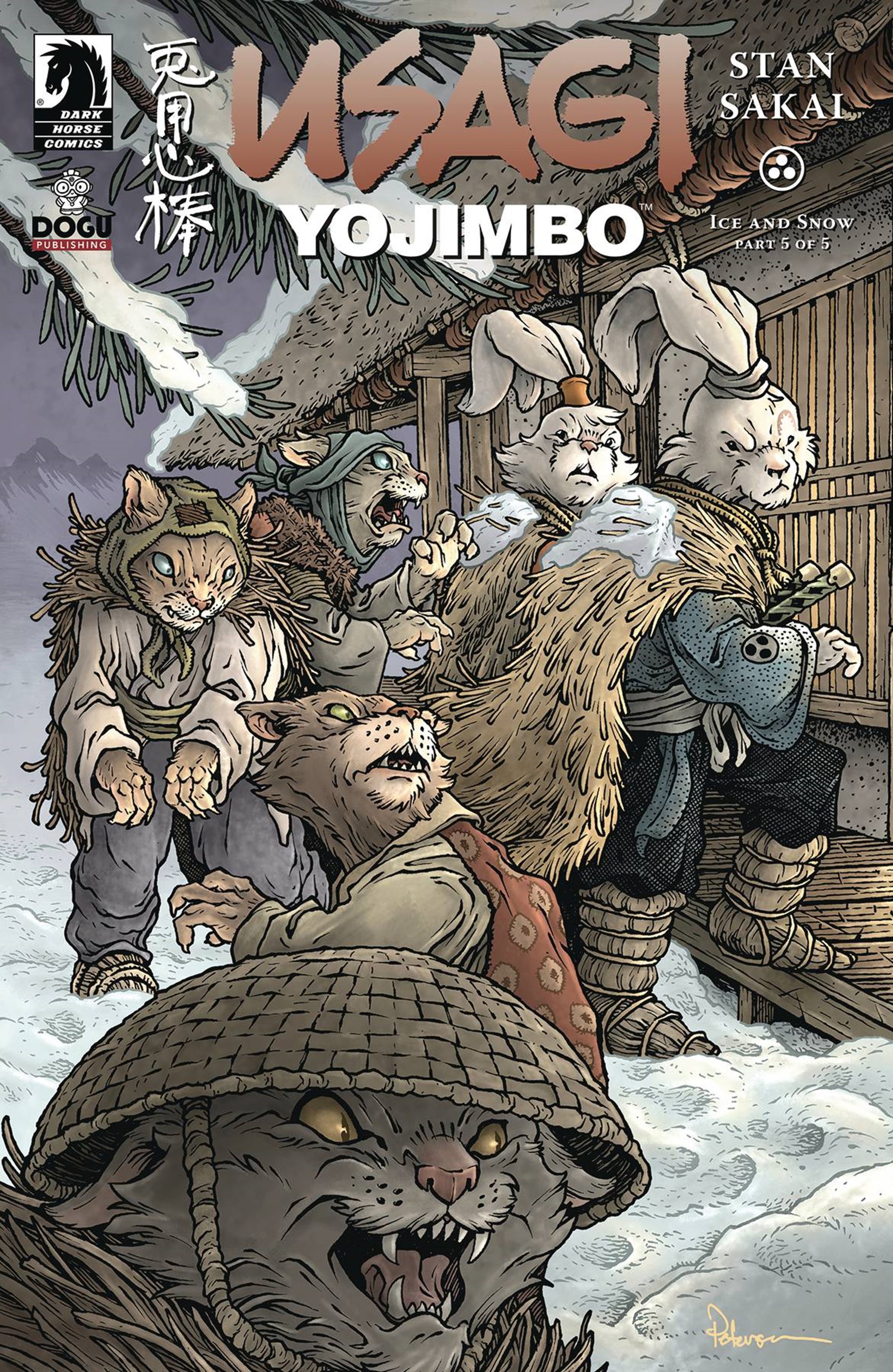
Waiting on Wednesday – Usagi Yojimbo: Volume 41: Ten Thousand Plums by Stan Sakai

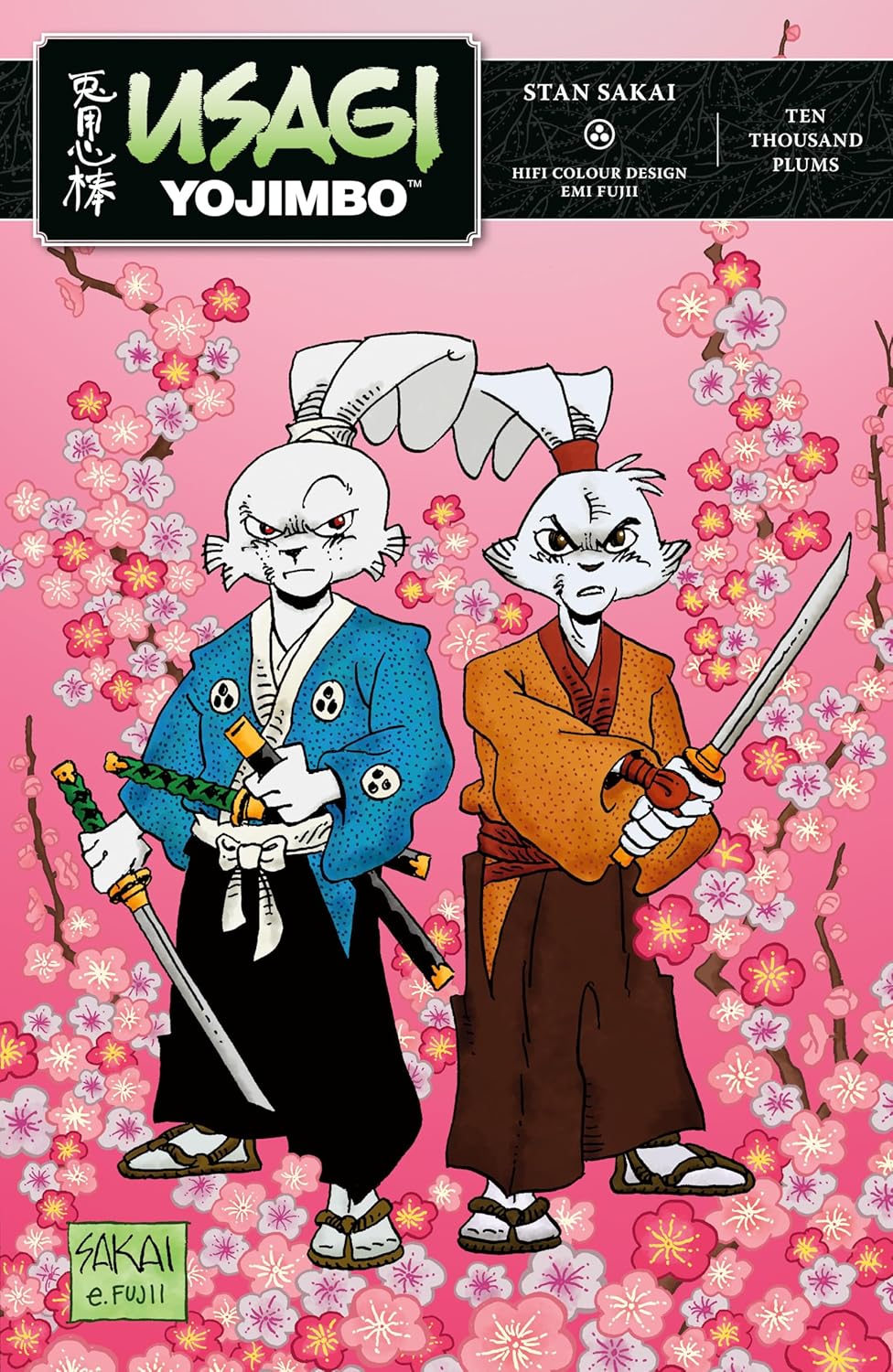
Welcome to my weekly segment, Waiting on Wednesday, where I look at upcoming books that I am planning to order and review in the next few months and which I think I will really enjoy.  Stay tuned to see reviews of these books when I get a copy of them.  For this week’s Waiting on Wednesday post, I highlight the next volume of the epic Usagi Yojimbo series by Stan Sakai, Ten Thousand Plums, which should be another exceptional entry in this amazing comic series.

Amazon

Fans of this blog will be more than familiar for my love of the exceptional Usagi Yojimbo series by Stan Sakai.  A particularly awesome comic that has been running since 1984, the Usagi Yojimbo stories follows a rabbit ronin as he faces all manner of foes in an alternate version of feudal Japan populated with anthropomorphic animals.  Thanks to its clever stories, great use of Japanese culture, complex characters and stunning artwork, the Usagi Yojimbo series has long been a favourite of mine and I currently have every single volume of it sitting proudly on my shelf.

Needless to say, getting the any new volumes of Usagi Yojimbo is a major priority for me each year, and I am always excited when I find out when the next comic is dropping.  As such, I was very, very happy to recently find out that the 41st volume of the series, Ten Thousand Plums, is set for release later this year.  This volume is particularly exciting for me, as we’d usually only get one volume a year and I was worried that the 40th volume of the series, The Crow, which I had a blast with earlier this year, was going to be me only Usagi Yojimbo hit of the year (barring one of my many re-reads, such as for volume 15: Grasscutter II).  However, it looks like this is one of the blessed years where we get more than one volume, and this new entry sounds pretty damn cool.

Currently set for release in late November 2025, Ten Thousand Plums will see the protagonists visit a beautiful valley, filled with thousands of plum trees, only to encounter mysterious deaths, suspicion and other dark occurrences.  I am already very intrigued by this comic’s unique new plot, and I cannot wait to see how it unfolds.

Plot Synopsis:

Murder and arson are plaguing the valley of ten thousand plums.

The trees within the valley of ten thousand plums are beautiful to behold. But the umeboshi, or pickled plums, made in the local village are renowned for their strong medicinal properties, and a favorite of the Shogun. As a series of deadly events grip the valley with fear, the Shogun’s samurai strongman is immediately suspicious when Usagi, Yukichi, and Gen are found wandering among the prized foliage…can their appearance be a mere coincidence?

A new adventure starring Usagi Yojimbo by legendary creator Stan Sakai, with beautiful color work by HiFi Colour Design.

Now this sounds like it is going to be a particularly cool Usagi Yojimbo story that will allow Sakai to really show off both his artistic talent and ability to craft great, mystery filled narratives.  Mysterious events around an intriguing location with a connection to a specific Japanese product (in this case, pickled plums) will allow Sakai to really dive into historical practices, and I cannot wait to see what cool narrative emerges.  At the same time, having Usagi and his companions become involved with the interests of the Shogun really increases the stakes of the plot, and may have some interesting long-term implications for the simple wanders.

While I think the story of Ten Thousand Plums is going to be amazing, one of the things that I am very much looking forward to for this new volume is the exceptional artwork.  Sakai always excels at painting breathtaking landscape shots as the background for his stories, especially as he really showcases the beautiful Japanese wilderness, or the iconic feudal towns.  It sounds like we will be in a for a real artistic treat in Ten Thousand Plums, as the entire narrative will be set to the background of thousand of flowering plum trees.  The multitude of trees and their blossoms is going to look so impressive when drawn by Sakai, and I cannot wait to see how it frames every single panel, especially now that the volumes are in colour.  Throw in Sakai’s usual brilliant artwork around combat, towns and unique characters, and this upcoming volume is going to be a real visual treat, and I can see this being one of Sakai’s more visually ambitious volumes.

Look, I was always going to be grabbing the new Usagi Yojimbo volume the second it came out, but hearing about Ten Thousand Plums’ impressive plot has made me even more eager for it.  Stan Sakai’s next volume sounds so damn cool, and I cannot wait to get my hands on even more Usagi Yojimbo comic-awesomeness this year.  As such, Ten Thousand Plums is now one of my most anticipated releases coming out later this year, and I already now it will be one of the best comics I read this year.

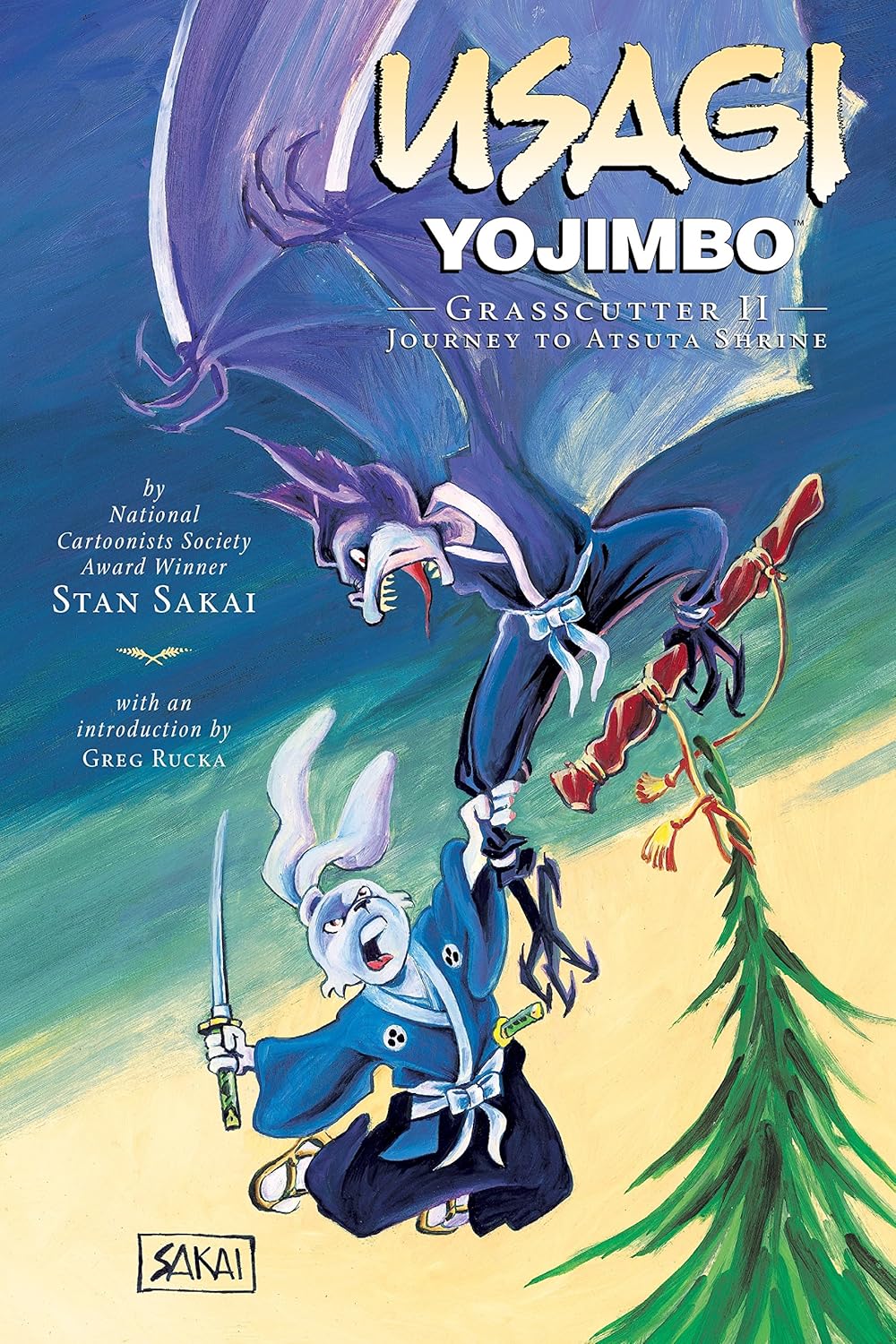
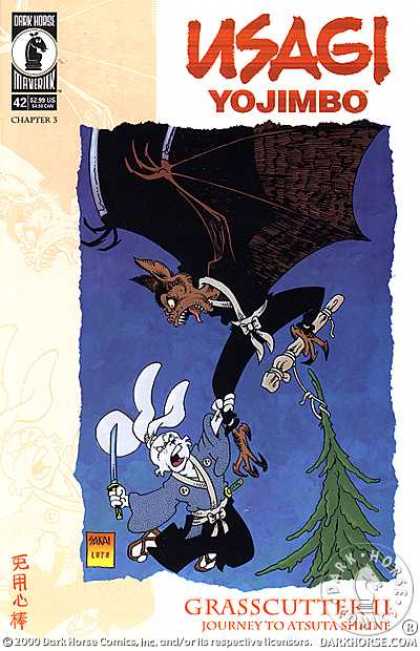
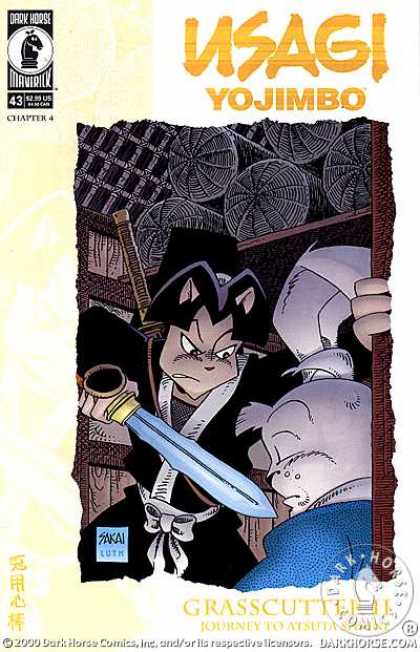
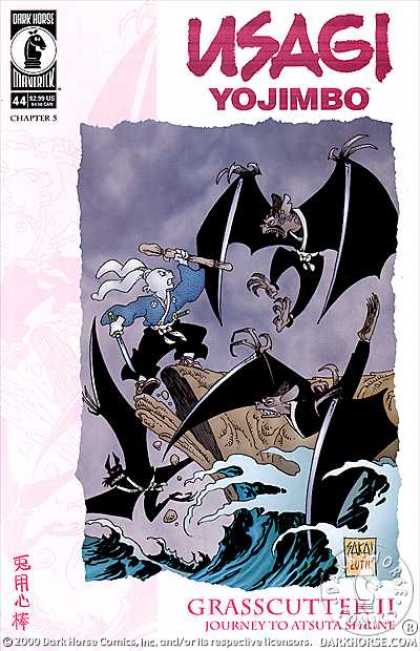
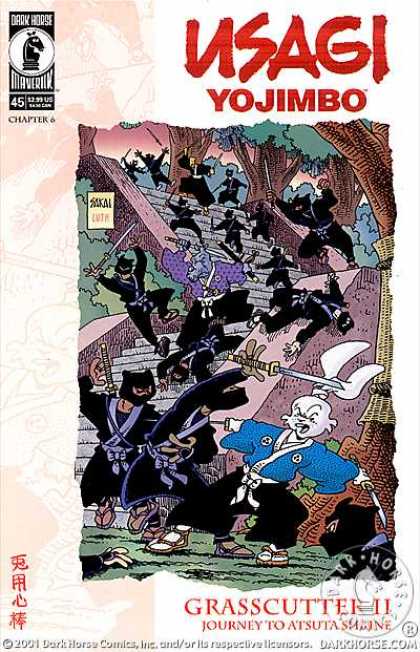
Usagi Yojimbo: Volume 15: Grasscutter II- Journey to Atsuta Shrine by Stan Sakai

Publisher: Dark Horse Comics (Paperback – 1 February 2002)

Series: Usagi Yojimbo – Volume 15

Length: 184 pages

My Rating: 5 out of 5 stars

Amazon

The classic adventures of Usagi Yojimbo continue as I look back at the 15th brilliant volume, Grasscutter II – Journey to Atsuta Shrine, one of Stan Sakai’s more ambitious and powerful comics, which sees the protagonist and his friends caught up in the tides of fate and history.

Ever since I read the recently released 40th volume of Stan Sakai’s iconic Usagi Yojimbo comic series, The Crow, I have been in a major Usagi Yojimbo mood, so I decided to go back and continue reviewing the older volumes of this classic comic, which follows a rabbit ronin in a version of Feudal Japan populated with anthropomorphised animals.  I reviewed the first 14th volumes during COVID lockdown, and had a lot of fun doing so, especially as Usagi Yojimbo is one of my favourite comic series.  I have been meaning to restart reviewing the older comics for a while, and I’m not going to throw away this sudden surge of creative energy, so this is the perfect time to bring out my review for the 15th volume in the series, Grasscutter II.

Grasscutter II is one of Sakai’s most impressive comics in the series.  Featuring issues #39-45 of the first Dark Horse Comics run on the Usagi Yojimbo series, Grasscutter II serves as the gripping sequel and conclusion to the intense and pivotal story contained in the 12th volume, Grasscutter.  This previous volume saw Usagi and his friends become embroiled in the recovery of the legendary sword Kusanagi and the foiling of a major plot to rebel against the Shogun.  A dark and compelling entry in the series, Grasscutter featured an amazing story with major implications for the Usagi Yojimbo series.  This was such a key volume, and it is interesting to see how Sakai follows it up here, especially as he needed to make Grasscutter II’s story in just as epic, if not more impressive.

Following dark events of magic and death, few people are aware that the legendary Imperial sword Kusanagi has been recovered from the sea.  Forged by the gods and wielded as a symbol of Imperial authority for generations, Kusanagi, or the Grasscutter sword has the potential to reshape the power structure of Japan, as whoever holds it could rally all the country to their cause, bringing war and destruction to a currently peaceful nation. 

Hidden at a small temple, the sword is currently guarded by the honourable samurai Miyamoto Usagi, the irrepressible bounty hunter Gen, and the head priest Sanshobo.  However, the three know that they cannot keep the sword hidden for long, with dangerous foes seeking to uncover its secrets.  The only place that the sword will be truly safe and out of the hands of those who would use it for political gain is the sacred shrine of Atsuta, where a replica of the sword currently rests.

Embarking on a noble quest, Usagi, Gen and Sanshobo hope to sneak the sword to the shrine before anyone knows they have it.  However, the road to safety is long, and it soon becomes apparent that dangerous foes know exactly what they are carrying.  Pursued by two rival ninja clans who will stop at nothing to possess the sword as fuel for their own dark ambitions, Usagi and his comrades will need to fight tooth and nail to survive and keep the sword out of their hands.  But with old friends and new bitter rivals revealing themselves, can even Usagi and his skilled companions avoid the tragedy that stalks them?

Grasscutter II was an epic and captivating classic entry in one of the best ongoing comic series.  Serving as an effective follow up to the bloody events of Grasscutter, Grasscutter II blended together a ton of outstanding action with some great character moments to create a memorable and beautifully drawn addition to the series that gets a very easy five-star rating from me.

This 15th volume of the Usagi Yojimbo series has a very gripping and intense storyline that seeks to combine Japanese history and mythology with the author’s action-packed style.  Starting with a beautifully drawn prologue that gives some interesting historical and mythological context to the sacred shrine of Atsuta, Sakai quickly moves into the main story, with Usagi, Gen and Sanshobo starting their journey to the shrine after being forced to protect the sword in the previous volume, Demon Mask.  At the same time, two rival bands of ninja, the Komori ninja and Neko ninja, discover that the existence of the sword and move quickly to intercept the companions, hoping to claim it for their own conflicting reasons.  The Neko ninja, led by Chizu, who has a complicated history with Usagi, catch up to the protagonists around the same time as the Komori ninja, leading to a wild three-way brawl.  Forced to work together, Chizu joins Usagi and his friends to recover the sword, which raises some interesting conflicts and issues, especially as Chizu has very different plans for the Kusanagi sword.

The second half of Grasscutter II is epic the entire way through, as Sakai continues to feature impressive action, while also allowing several character arcs to develop and conclude in tragic ways.  This includes the companions meeting up with the excellent supporting character Ikeda, who had such a great redemption arc in the previous Grasscutter volume.  Following some initial betrayal from Chizu, Usagi, Gen and Sanshobo follow her and enter battle with the Komori ninja, which ends in a dark moment of honour and loyalty from another interesting supporting figure.  While this initially seems to wrap up the main story, a fun twist ensures that Grasscutter II enters a fantastic concluding arc that sees that protagonists enter one last battle before achieving their goal.  This big battle is one of the most brutal and intense in the entire volume, and results in the book’s final tragic moment, which proves to be a fitting end to one amazing figure.  Loaded with powerful emotion, sacrifice and grief, this ending to Grasscutter II wraps up the entire story perfectly and ensures you are hooked all the way to the final blow.

This was another great volume from Sakai that successfully pushes the overall narrative of the series onwards and results in some intriguing changes to the comics, both in this book and the future.  As with all of Sakai’s work, Grasscutter II features a great combination of action, intrigue, character work and beautiful art that comes together perfectly to create an exceptional comic that is impossible not to finish in one sitting.  There are some truly great moments in Grasscutter II that help to make it stand out amongst Sakai’s other outstanding work, including the cool battle sequences.  The various scenes that feature the protagonists caught between two different schools of ninja were the best, and Sakai had fun showcasing the scary fighting ability of the blade-winged Komori ninja, as well as the established tricks of the Neko ninja.  This fantastic clash of styles allowed for some brilliant sequences, which were so damn epic to see unfold.  While I had a lot of fun with Grasscutter II, I must say that it probably isn’t the best volume of Usagi Yojimbo to start the comic on.  While Sakai does a good job revisiting some of the key plotlines and characters, you probably should read the previous Grasscutter volume to fully appreciate the plot, as well as some of the other earlier volumes to understand some of the character arcs.  Still, this is a very impressive Usagi Yojimbo entry, and a key read for established fans of the series who will have an exceptional time with Grasscutter II.

While fans will probably enjoy Grasscutter II’s exceptional action the most, I personally thought that it was some of the great character work in this volume that helped to make it particularly good.  Thanks to the volume featuring one extended storyline, Sakai takes his time to set up some outstanding character moments that work perfectly alongside the complex narrative and cool artwork.  While Usagi and Gen are their usual fun selves (there opposing views on honour, duty and what is right is always fun), I thought it was several returning supporting characters who really stole the show in Grasscutter II, especially as Sakai wove some great storylines around each of them.  This includes the former samurai turned monk Sanshobo, who has been an excellent recurring figure since his introduction in the series’ 10th volume, The Brink of Life and Death.  Not only does he mesh well with Usagi and Gen, acting as a voice of reason between the two strong-willed characters, but Sakai also brings one of his main character arcs full circle when he encounters his former lord.  Sanshobo has some great moments in Grasscutter II, especially his grief at the end, and I liked how Sakai utilised him as part of the main trio.

Another impressive character in Grasscutter II is Ikeda, who Sakai has built up as a wonderful figure.  Introduced in the moving story, The Patience of the Spider (contained in the 11th volume, Seasons) and expanded on in the first Grasscutter story, Ikeda is a former lord and general who learned to enjoy the quiet life of a peasant after his defeat.  Reunited by chance here with his former retainer Sanshobo, Ikeda proves to be an interesting addition to the cast.  Not only do his insights into the Neko ninja, who he greatly distrusts due to his history with them, result in a key plot point, but he is also once again tempted to achieve power, something he decides against in a great continuation of his storyline.  However, it is in the final sequence where Ikeda’s full character is revealed, where he serves as a willing rearguard to the companions to ensure the Neko ninja don’t get the Grasscutter sword.  His big battle sequence is very well portrayed, especially with how Sakai features his old war wound, and his final scene is one of the most badass inclusions in any Usagi Yojimbo comic.  An extremely well-written and complex character who is used to his full potential in this last appearance.

The final characters I want to mention are the various members of the Neko ninja who appear in this volume, primarily as antagonists.  Long-time opponents of Usagi, the Neko ninja represent the more classic ninja styles in the Usagi Yojimbo universe and prove to be great foils to the protagonist’s samurai style.  This includes their leader, Chizu, who has a long and complicated history with Usagi.  Simultaneously serving as both an alternate protagonist, antagonist and potential love interest to Usagi, Chizu has a lot of storylines in Grasscutter II, which Sakai makes full use of.  Forced to hunt for the Grasscutter sword against her better judgement, Chizu desires nothing more than to throw the sword back into the ocean to keep it out of anyone’s hands, and will betray anyone, including Usagi for that goal.  This results in some intriguing personal issues amongst the protagonists, especially as Usagi tries to see the best in her, while Gen forms an instant, mutual dislike of her.  Chizu’s inner conflicts become a key part of the plot, and her appearance here will have major impacts for her storyline going forward, especially when it comes to her ambitious number two, Kagemaru, who has been angling for power for several volumes now.  Kagemaru proves to be a ruthless alternate antagonist in Grasscutter II, and I liked how well Sakai set him up as both a physical and political threat going forward.  The final Neko ninja character I should mention is Saru, a former member of the clan betrayed by Kagemaru in the previous volume.  Seeking revenge on Chizu, who Saru believes was behind the betrayal, Saru stalks Chizu for much of the volume, resulting in some excellent sequences of ninja-on-ninja violence.  A compelling figure, Saru ends up redeeming herself in a particularly moving sequence and makes an impact despite her relatively short appearance.  These great ninja characters, and indeed the entire case of Grasscutter II, deeply enhanced the impact of the comic’s narrative, and I had an outstanding time seeing their arcs unfold.

As with all the Usagi Yojimbo comics I review, I must highlight the outstanding artwork that is such a brilliant feature of Grasscutter II.  Featuring Sakai’s classic pre-colour style of drawing, Grasscutter II’s art is very visually impactful, and I loved the fantastic black-and-white panels that cleanly show the complex actions and characters.  Every panel is extremely striking, and I love how effectively Sakai showcases everything in such detail, including the actions of his many characters.  I am always impressed with how well Sakai implies movement and activity with his drawings, and you really get the flow the scene from his panels.  I particularly appreciate how well the intense fight sequences come across in Grasscutter II, especially as there are so many scenes of carnage that occur within this volume.  The various battles, which usually involve a range of ninja, are so well drawn, and I loved the complex array of combat that flitters along the pages.  Some of these scenes are quite elaborate, and I loved seeing all the multiple black-clad figures moving around the established cast, especially in some of the bigger fight sequences.

In addition to great fights, Sakai does a great job capturing the emotive nature of his cast with his fantastic drawings of the major characters.  The intense reactions of many of his characters help to make the scene pop, and I love how well Sakai showcases the emotional range that the story elicits.  Highlights include the final face of one badass warrior while the grief of another usually calm figure really hammers home the seriousness of the moment.  All this amazing action and great character drawings is perfectly supported by Sakai’s trademark drawings of the picturesque Japanese landscapes, towns and temples that serve as an amazing backdrop to the main story.  Sakai has some real talent of showcasing Feudal Japan with his artwork, and you can often feel the world through which the characters are trapsing.  I particularly appreciated Sakai’s portrayals of a wild oceans beneath a ragged cliff, which was a setting for several of the volume’s more visually powerful panels.  The harsh waves striking around the combatants was especially impactful, and you could almost feel the wave’s strength as the characters fight at their edge.  Throw in Sakai’s interesting take on a classic Japanese legend at the very start of the volume in the prologue and Grasscutter II’s art comes together in a truly perfect manner, especially as this volume features some of the artist’s most ambitious fight sequences.

Based on my rambling paragraphs above, I think it is safe to say that I had an amazing time reading the 15th Usagi Yojimbo volume, Grasscutter II.  Featuring the exceptional storytelling and artwork of the legendary Stan Sakai, Grasscutter II achieves so much with its ambitious plot, long-term, character driven storytelling, and amazing sequences of combat and chaos.  A brilliant, classic addition to a truly incredible comic series, Grasscutter II comes highly recommend, and I had such a great time getting through it yet again.

Amazon

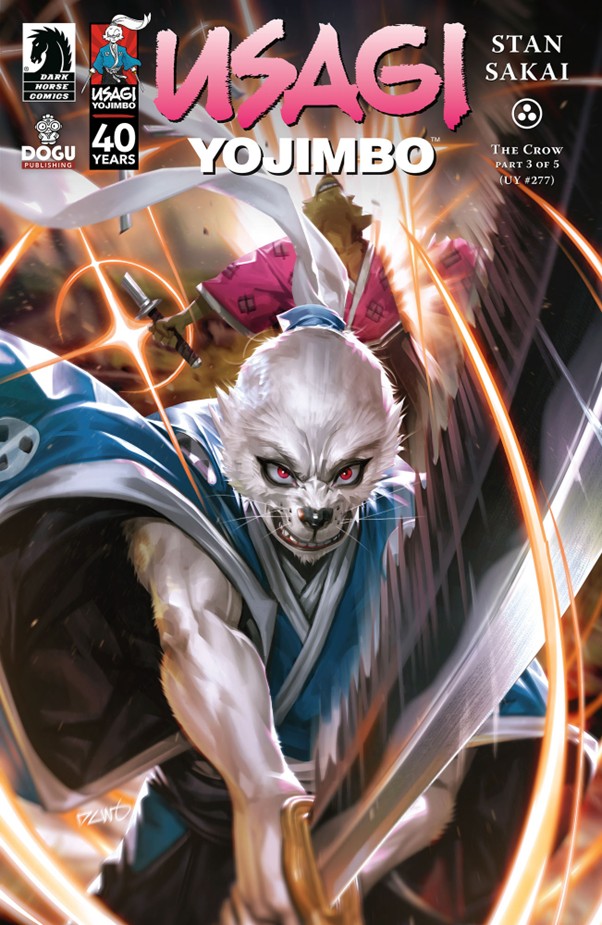
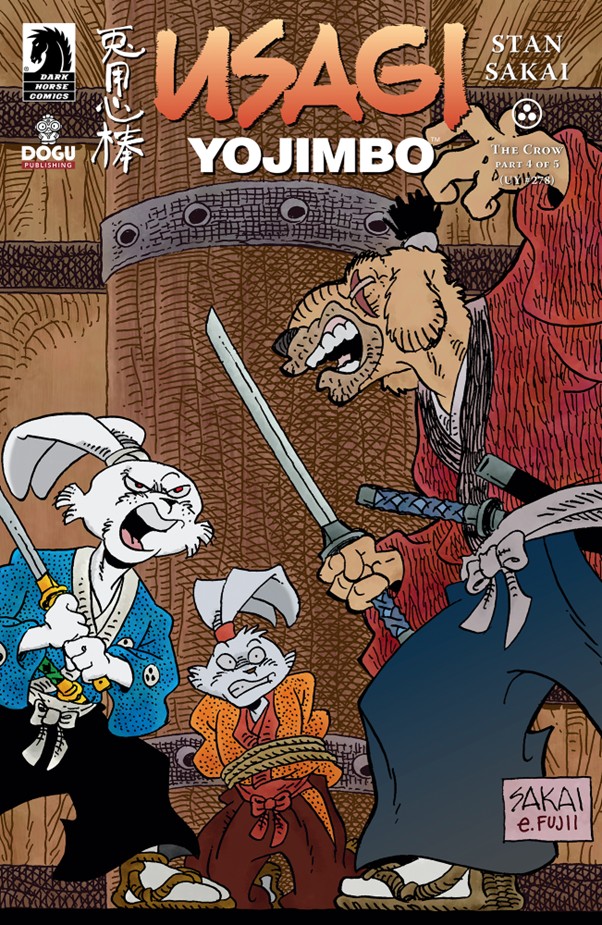
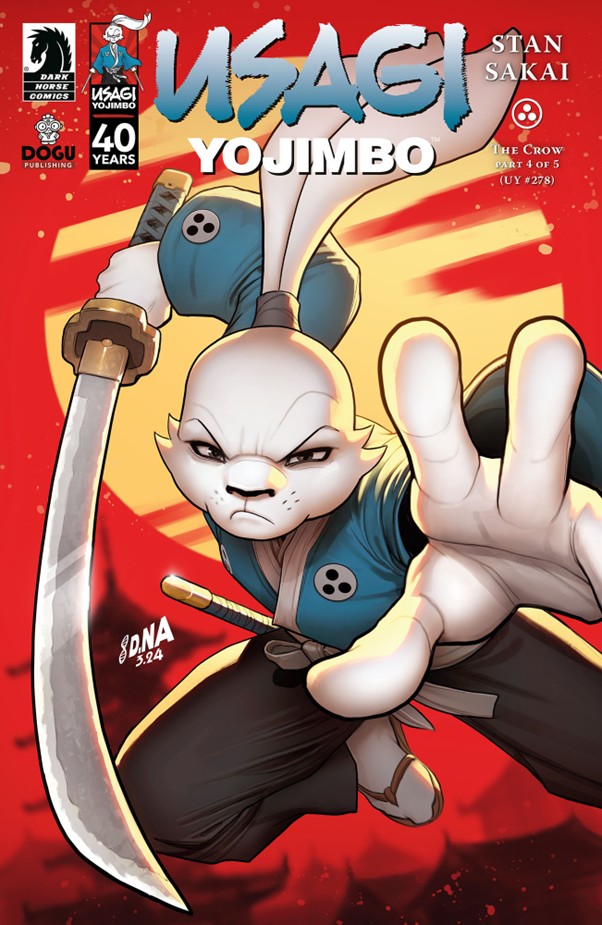
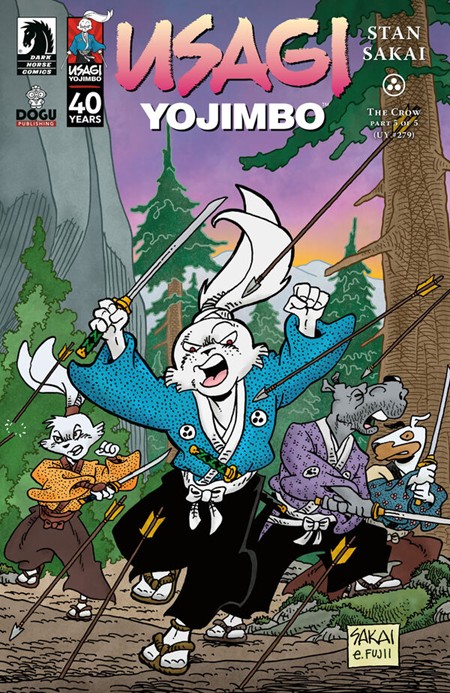
Usagi Yojimbo: Volume 40: The Crow by Stan Sakai

Publisher: Dark Horse Comics (Paperback – 21 January 2025)

Series: Usagi Yojimbo – Volume 40

Length: 152 pages

My Rating: 5 out of 5 stars

Amazon

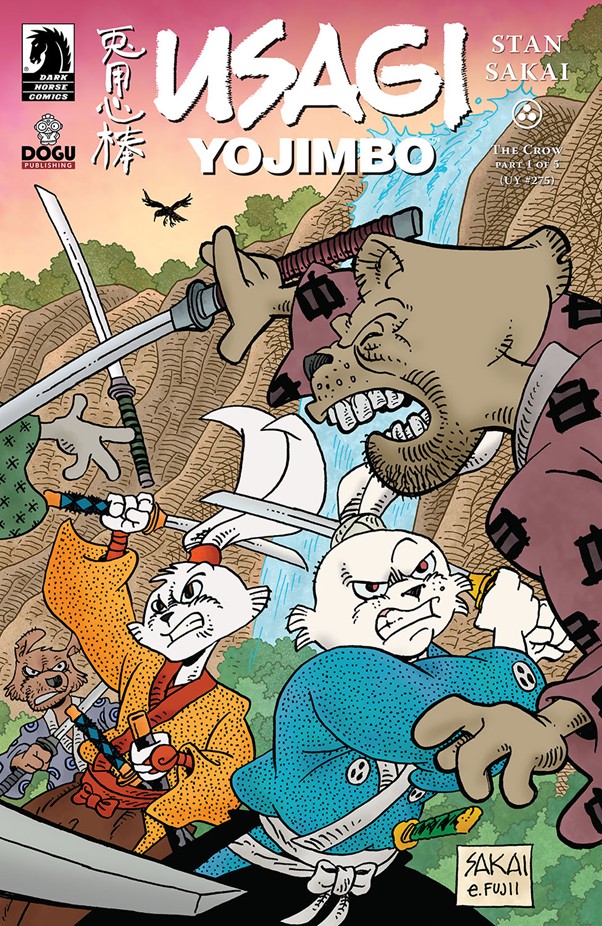
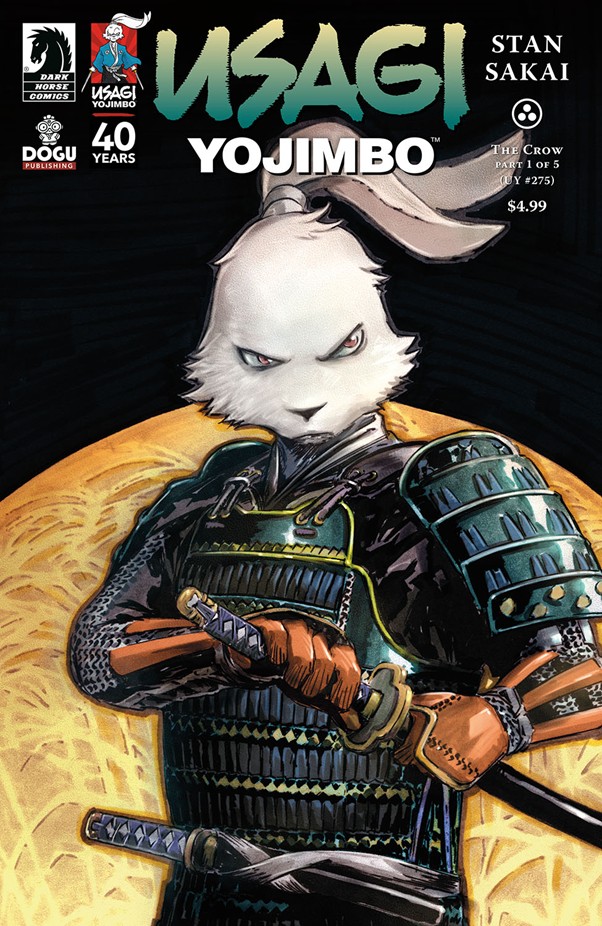
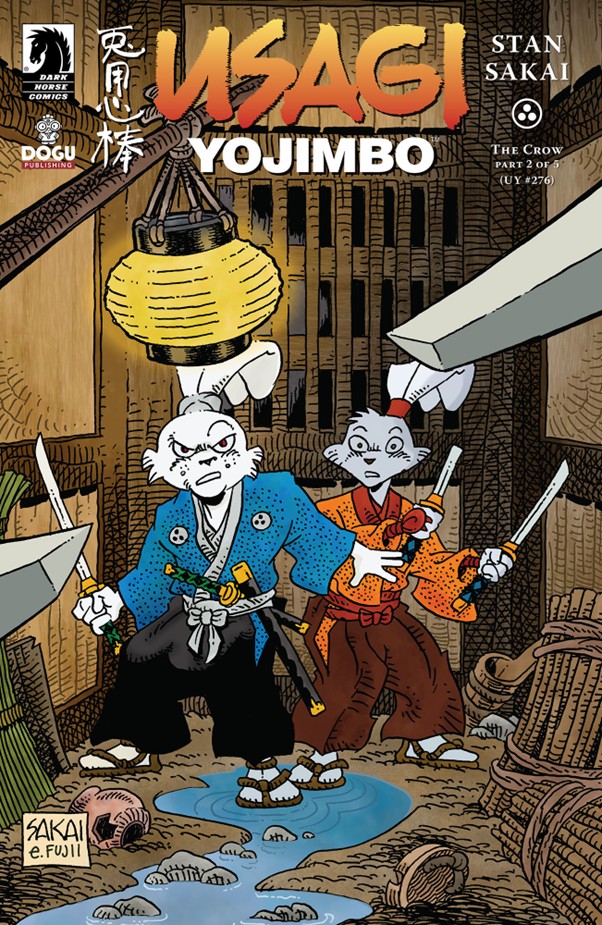
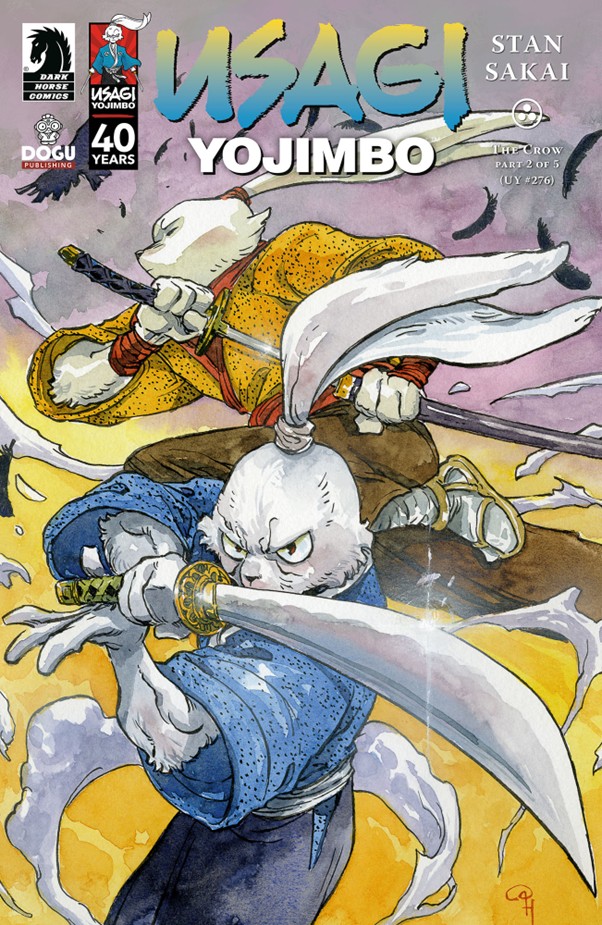
Stan Sakai’s iconic Usagi Yojimbo comic series powers through to its 40th volume, with the compelling and action-packed collection, The Crow, which proves to be another intense and impressive read.

Readers of this blog will know that I have a lot of love for the amazing Usagi Yojimbo series by Stan Sakai, which has remained one of my favourite comic series for years.  Following a rabbit ronin in an alternate version of Feudal Japan populated by anthropomorphic animals, the Usagi Yojimbo series combines cool art and great characters with a fantastic Japanese samurai aesthetic to create a particularly awesome comic series.  I love the various elaborate stories and scenarios that Sakai comes up with for the Usagi Yojimbo comics, and it is a real highlight of my reading year to check out the new Usagi Yojimbo volume.

This latest volume, The Crow, is the 40th collected volume of the long-running Usagi Yojimbo comic and contains issues #275 to #279 of the series.  This is the second volume of the current Dark Horse Comics run of Usagi Yojimbo, which started last year with volume 39, Ice and Snow (one of my favourite books of 2024), and continues some of the ongoing storylines from the other recent volumes.  This volume is once again written and drawn by Sakai, with Hi-Fi Colour Design colouring in Sakai’s illustrations.  The Crow was another interesting addition to the series I was really looking forward to, as it follows Usagi and his unlikely companions into deadly danger.

Following their encounter in the mountains with the murderous Jei, Miyamoto Usagi and his cousin, Yamamoto Yukichi, have finally escaped the freezing north of Japan and have journeyed to warmer climes.  However, just because they are out of the ice and snow doesn’t mean they have escaped trouble.

Closing in on the nearest town, Usagi and Yukichi come across a man being attacked by four ruffians.  Interceding in the fight and driving the attackers off, Usagi and Yukichi initially believe that the man they rescued was a merchant being robbed.  However, when they arrive at their destination, they find the place overrun by disreputable bounty hunters on the hunt for a big reward, including Usagi’s old companions Gen and Stray Dog.  Once again conned into paying for lunch, Usagi and Yukichi are shocked to discover that the focus of the bounty hunters’ attention is the person they saved, a dangerous bandit warlord known as Jimmu due to his crow companion.

Despite their intentions to avoid the hunt for Jimmu, the two rabbit ronin find themselves dragged into the fight by the deadly mercenary Inuyoshi, another acquaintance of Usagi who is also seeking Jimmu’s bounty.  Initially forced into conflict with Inuyoshi, Usagi and his friends soon find themselves unlikely allies of Inuyoshi’s bounty hunter band, as they must work together to take down Jimmu and his massive bandit army.  But with skilled warriors on both sides, and no mercy on the horizon, will Usagi and his associates survive unscathed?

The Crow was another exceptional comic from Sakai, who continues his Usagi Yojimbo series with masterful style.  Featuring one major story that pitted the protagonists against an array of deadly warriors, The Crow had me hooked from the very beginning, and I finished the entire volume within an hour of getting my hands on it.  An outstanding comic with great art and some brilliant character arcs, The Crow unsurprisingly gets a full five-star rating from me and was so damn good.

I felt that The Crow had a particularly strong story behind it, as Sakai continues his recent trend of featuring a single multi-issue story in the volume, rather than a series of smaller short stories like in many of his earlier volumes.  This allowed the author to produce a complex, interwoven narrative that features several intriguing character-focused storylines.  Featuring the old classic start, with Usagi and Yukichi rescuing a traveller from assailants, you are drawn into familiar Usagi Yojimbo ground of bandits and bounty hunters, as the rabbit samurai encounter two of Usagi’s oldest companions, the money-focused Gen and Stray Dog.  This allows for some excellent early story tension, as the naïve and highly honourable Yukichi clashes with the morally flexible and cynical bounty hunters, especially when they discover that the traveller Yukichi helped was the notorious bandit chief Jimmu.  Sakai quickly moves the story into its central arc, when Yukichi is kidnapped by returning figure Inuyoshi, who seeks to keep Usagi, Gen and Stray Dog out of his hunt for Jimmu.

This kidnapping arc proved to be quite interesting, especially as the formerly honourable Inuyoshi verbally clashes with Yukichi and is forced to find his honour in the face of betrayals within his own gang of bounty hunters.  I really enjoyed some of the compelling interactions between some of the cast in the central part of the story, and Sakai cleverly works events so that Usagi and his friends can find and rescue Yukichi.  This central part of the story also features some great action sequences, especially a brutal, multi-page ambush by Jimmu who robs a merchant convoy.  The revelation about the true size of Jimmu’s bandit army inevitably results in Usagi’s group teaming up with Inuyoshi to find and defeat Jimmu, which results in a massive battle that takes up most of the final quarter of the volume.  This battle was everything you could hope for, and Sakai is in fine form with his drawings as he portrays the various fights.  The final duels between bounty hunters and Jimmu have some outstanding and memorable moments, and Sakai ensures there is some powerful tragedy that will live with a certain protagonist.  Sakai ensures that all the key character-driven story arcs are well wrapped up, and there are some touching moments that perfectly define some of the major protagonist’s personalities or struggles in this volume, which I felt made The Crow really stand out.  A very impressive overall story from Sakai, that shows just how interesting and intense his writing can be, even when he returns to his well-trodden tales of bandits and bounty hunters.

One of the things that I felt Sakai did particularly well in The Crow was to feature an array of great characters, whose combined arcs come together extremely well in the context of the larger story.  There is an awesome collection of characters in this volume, including old favourites, returning one-shot figures, and some intriguing new characters who proved to be excellent additions to the overall story.  Sakai does an excellent job balancing a number of these character storylines within the course of The Crow’s four issues, and there are some moving and compelling moments as a result.

A lot of the volume focuses on the three longer-term recurring members of the cast, Gen, Stray Dog and Usagi himself, who are the veteran presence in The Crow.  While they are featured quite prominently, Sakai doesn’t provide a massive amount of development for them, as they mostly fall into the same routines as they previously have, with Gen being the money-fixated conman, Stray Dog being the seemingly selfish and unfriendly killer, while Usagi is his usual honourable self.  I did like how Sakai once again painted Usagi more as a mature and world-weary figure, especially when compared to Yukichi, and it was interesting to see how much more realistic he is here than in some of his earlier encounters with Gen and Stray Dog.  Sakai also has fun once again featuring the dichotomy of Stray Dog, whose selfish outer-shell is cleverly balanced by his actual charitable actions, which are used to great effect for a secondary character towards the end of the volume.  Finally, Gen was his usual self, although considering how fun that is, I was happy with the result.

While these three long-running figures were well utilised, I felt that Sakai did his work with two more recent, returning additions to the Usagi Yojimbo universe with Yamamoto Yukichi and the mercenary Inuyoshi.  Yukichi, Usagi’s cousin introduced in volume 36: Tengu War!, has proven to be an interesting traveling companion for the protagonist, especially as he is very similar to a younger Usagi.  His naivety and unbending belief in honour without compromise is on full display in this volume, especially in his first interaction with Gen and Stray Dog, and it is interesting to compare him to the now more flexible Usagi.  Inuyoshi on the other hand is an intriguing figure who was introduced in the story The Sword of Narukami in the series’ 27th volume, A Town Called Hell.  A formerly honourable samurai betrayed by his lord’s heir, Inuyoshi has become a much more deadly and disreputable figure since his last encounter with Usagi.  I really liked how Sakai devolved Inuyoshi since his last appearance, both in his art and personality, as while he still maintains some of his honour, he has become even more ruthless, going so far as to capture Yukichi to keep Usagi and his companions away.  These two characters are in a way antithesis of each other, with one strictly holding onto samurai ideals while the other has abandoned them and is now more interested in money and survival.  The two play off each other extremely well, despite some major fractious moments, and I liked how they both gain something from the experience, with Yukichi getting a lesson in the real world, while Inuyoshi remembers some of his old honour.  Inuyoshi’s appearance here also perfectly wraps up some of the open storylines from The Sword of Narukami, and I appreciated that Sakai finally provided some closure for a one-off tale from several years ago.

Aside from these great major characters, Sakai rounds out the cast of The Crow with some additional fun figures who each add some fantastic elements to the comic.  The volume’s main antagonist, Jimmu, proves to be a ruthless and competent outlaw leader, and I liked how his crow companion gave him a distinctive edge and allowed for some intriguing and well-drawn battle scenes.  The street urchin, Isamu, was a great mischievous figure who reminded me of a young, but brave, version of the recurring Snitch character.  Isamu has some fantastic interactions with some of the main characters, and it wouldn’t surprise me if we see more of him in the future.  Finally, Sakai has fun including a comedic merchant duo who get caught up in one of Jimmu’s raids.  Their entertaining banter during several scenes had me chuckling, especially when their newly discovered brotherhood is ruined by some ill-matched confessions, and they provided an excellent bit of humour amongst the darker story elements.  These great characters all filled their roles perfectly, and I deeply enjoyed how effectively Sakai utilised them in this fantastic narrative.

As with all the Usagi Yojimbo comics, I really need to highlight Sakai’s exceptional artwork featured within The Crow.  Sakai does another remarkable artistic job in this latest volume, and the comics are just gorgeous as he effortlessly brings his elaborate stories and characters to life with his amazing drawings.  All the characters are lovingly drawn, and their resultant actions, especially the cool battle sequences, are so intense and expressive.  I was particularly impressed with Sakai’s portrayal of rival samurai Inuyoshi, who had previously appeared once some years ago.  It was absolutely fascinating to see how Sakai’s drawing style has changed in the intervening years (I had a look at A Town Called Hell after reading The Crow), as Inuyoshi has so much more detail and depth in this appearance.  His scarred and somewhat more deranged appearance perfectly matched his darker personality, and I really think that he looked even more impressive in colour, which has only been a recurring feature since volume 34, Bunraku and Other Stories

These excellent character drawings are only matched by Sakai’s superb landscape drawings, which provide beautiful and powerful pictures of the story’s background setting.  These background drawings, whether they be depictions of historic Japanese towns or of the shaded natural forests, come across extremely well, and you really feel yourself becoming immersed in the setting as a result.  I must once again mention the awesome action scenes scattered throughout The Crow.  Sakai is a master of drawing epic sword clashes in his comic style, and you can feel every thrust and cut that the various samurai characters make.  Highlights for me this time included two massive group battle sequences that each have their own fantastic moments, cool duels against the bandit leader and his bird companion, and a somewhat graphic but very well-drawn decapitation panel which was both epic and gnarly.  This art once again perfectly enhances and compliments Sakai’s outstanding writing, and I love how even after 40 Usagi Yojimbo volumes, Sakai is still producing such masterful and moving pictures.

Stan Sakai continues to impress and wow me with his outstanding Usagi Yojimbo comic series.  This latest volume, The Crow, was another captivating comic, loaded with striking drawings, intense action, and some excellent samurai characters.  I felt that The Crow was a particularly strong entry in this always incredible series, and I am so very glad we were gifted a volume this early in the year.  I am hoping that we will get another volume later in 2025, but until then, do yourself a favour and make sure to check out the first exceptional 40 volumes of one of the best ongoing comic series.

Amazon

Top Ten Tuesday – Most Anticipated Thrillers, Crime Fiction, Historical Fiction and Comics releasing in the First Half of 2025

Welcome to my second Top Ten Tuesday list of the week, were I look at my most anticipated thrillers, crime fiction and historical fiction novels coming out in the first half of 2025. Traditionally I usually only do one list to represent the top upcoming books for the year, however, I was inspired to separate out the fantasy and science fiction novels into my previous list, while this list will feature epic reads from the other major genres that I am interested in.

Despite only just starting, 2025 is already shaping up to be an epic and exciting year for books with a huge range of impressive and highly anticipated novels due for release in the next 12 months.  This includes exciting debuts, anticipated sequels and the latest entries in beloved bestselling series.  The first half of the year is looking particularly awesome, with a substantial number of incredible upcoming releases that I am deeply looking forward to. 

Even though I excluded fantasy and science fiction books, this ended up being a rather difficult list to pull together due to all the awesome releases coming out in Australia or on Netgalley between 1 January 2025 and 30 June 2025.  There were way too many extraordinary upcoming books that I could have included, and I ended up having to make some very tough calls and cutting several novels that have an immense amount of potential.  Despite this, I am rather happy with the eventual choices that I made, and I think that this list reflects the upcoming novels and comics I am going to have the most fun reading. However, there are also some interesting new books that I am discussing for the first time here, so that should give this list a bit of variety.  So let us get to my selections and find out which upcoming novels are my most anticipated releases for the first half of 2025.

Honourable Mentions:

Open Season by Jonathan Kellerman – 6 February 2025

An interesting and entertaining new murder mystery from one of my yearly must-read authors, Open Season continues the awesome Alex Delaware series and pits the detective protagonists against a killer determined to take out Hollywood hopefuls.

Amazon


Pacific Heights by S. R. White – 25 March 2025

One of the more interesting authors of Australian crime fiction, S. R. White (see my reviews for Prisoner, Red Dirt Road and White Ash Ridge) is set to release a standalone whodunnit with Pacific Heights.  Featuring a cool plot about detectives trying to unwind different stories about who killed someone from five separate witnesses, Pacific Heights sounds really awesome, and I cannot wait to check it out.


The Pilgrim’s Revenge by Scott Mariani by 24 April 2025

An exciting and intense revenge thriller set in the time of King Richard the Lionheart; The Pilgrim’s Revenge should be a very epic read.

Amazon


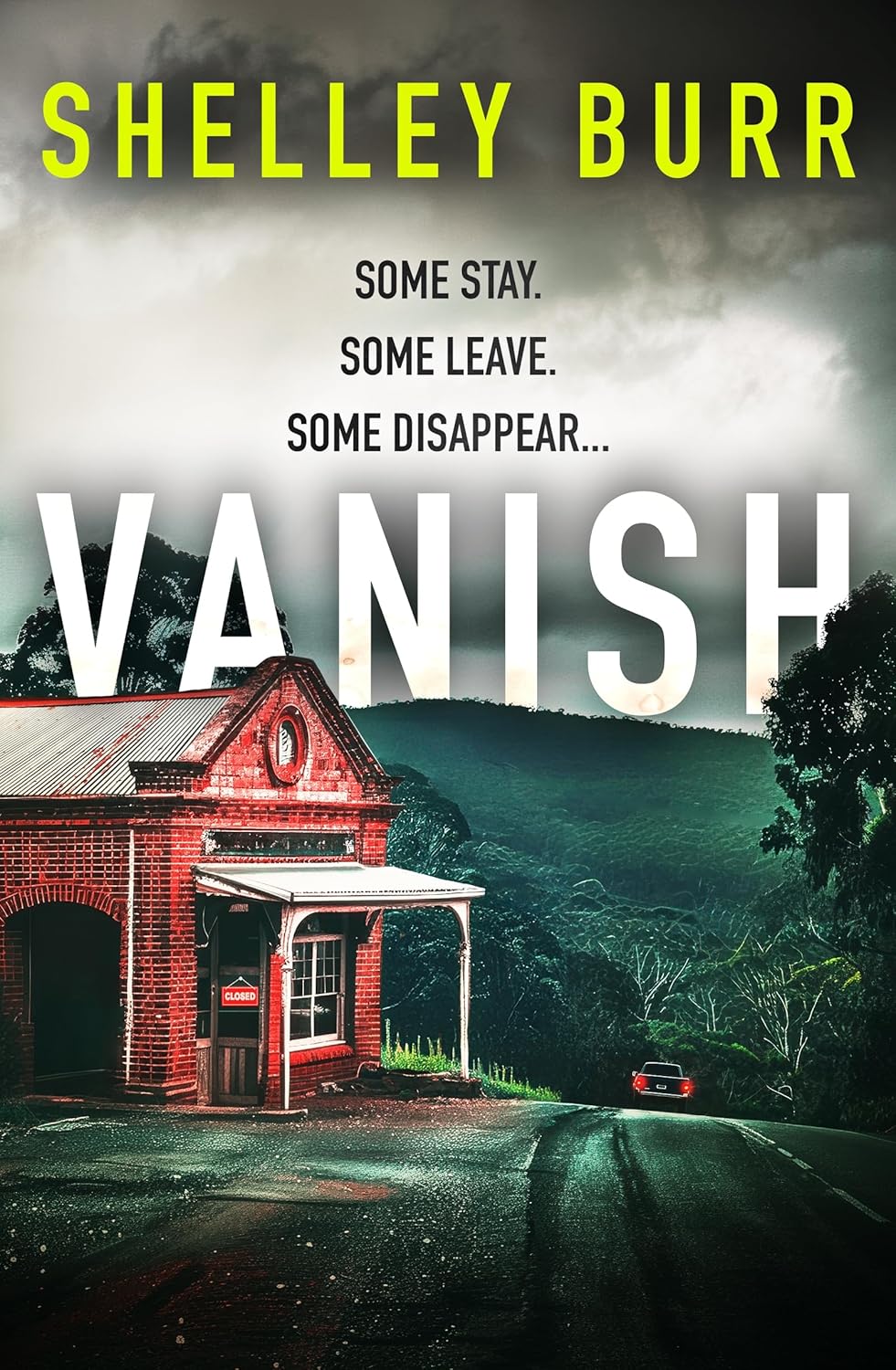
Vanish by Shelley Burr – 30 April 2025

Rising Australian author Shelley Burr follows up her excellent first two crime fiction novels, Wake and Ripper with the intriguing third entry Vanish.  Once again set in a small Australian community, Vanish will see the series’ damaged protagonist investigate a problematic commune as he attempts to find out the truth behind a long-lost missing girl.  Sure to be one of the top Australian releases of 2025.

Top Ten Tuesday:

Grave Danger by James Grippando – 14 January 2025

Back in 2024 I had the pleasure of reading my first book from impressive James Grippando, Goodbye Girl, a fantastic entry in the author’s Jack Swyteck series.  A compelling and twisty legal thriller, Goodbye Girl was really fun to read, and I am now quite keen to continue the series.  As such, I am planning to grab the upcoming book, Grave Danger, as soon as it comes out.  Featuring an intriguing case about international child custody and murder, Grave Danger has some real potential, and I know I am going to have a great time with this awesome book.

Amazon


Usagi Yojimbo: Volume 40: The Crow by Stan Sakai – 4 February 2025

A very easy inclusion to this list was the next entry in one of my favourite comic book series with volume 40 of the Usagi Yojimbo series, The Crow.  I only just published a review of the previous volume, Ice and Snow, a few days ago, so I am quite excited to see that a new entry is coming out very soon.  Set to continue some of the author’s excellent ongoing storylines about the titular rabbit ronin, The Crow should be another awesome volume in the series, and I cannot wait to get my hands on it the first chance I get.

Amazon


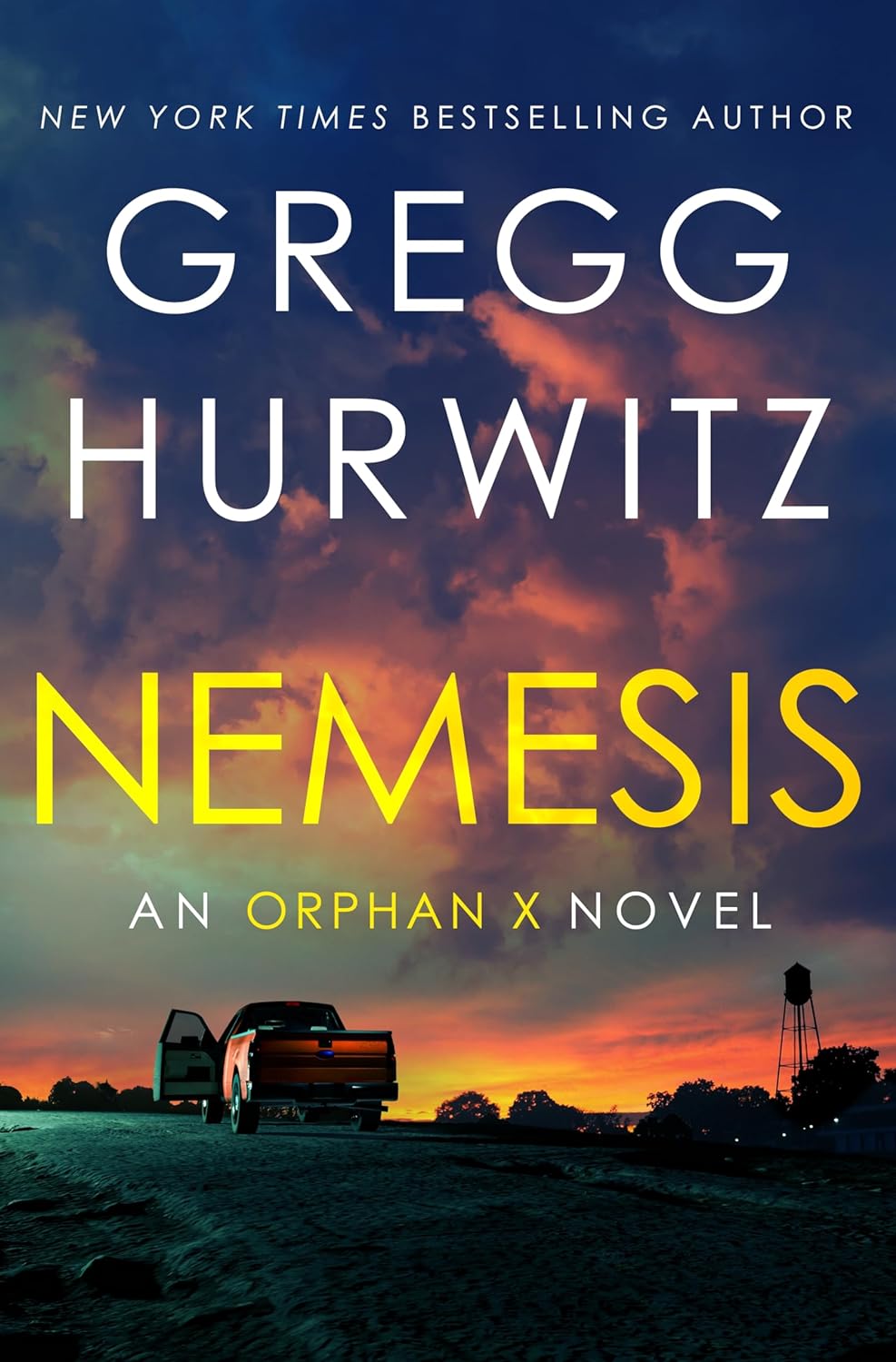
Nemesis by Gregg Hurwitz – 11 February 2025

Early 2025 is filled with a ton of great spy thrillers from some of my favourite authors, and that includes the new Orphan X book from Gregg Hurwitz, Nemesis.  Set after the events of the 2024 book, Lone Wolf, Nemesis will see the former government assassin turned vigilante protagonist square off against his best friend over secrets that were kept from him.  However, other shadowy players soon reveal themselves, and Orphan X will need to fight deadly enemies and a former friend to survive.  This looks set to be a particularly compelling and emotionally charged addition to the series and I cannot wait to check it out.

Amazon


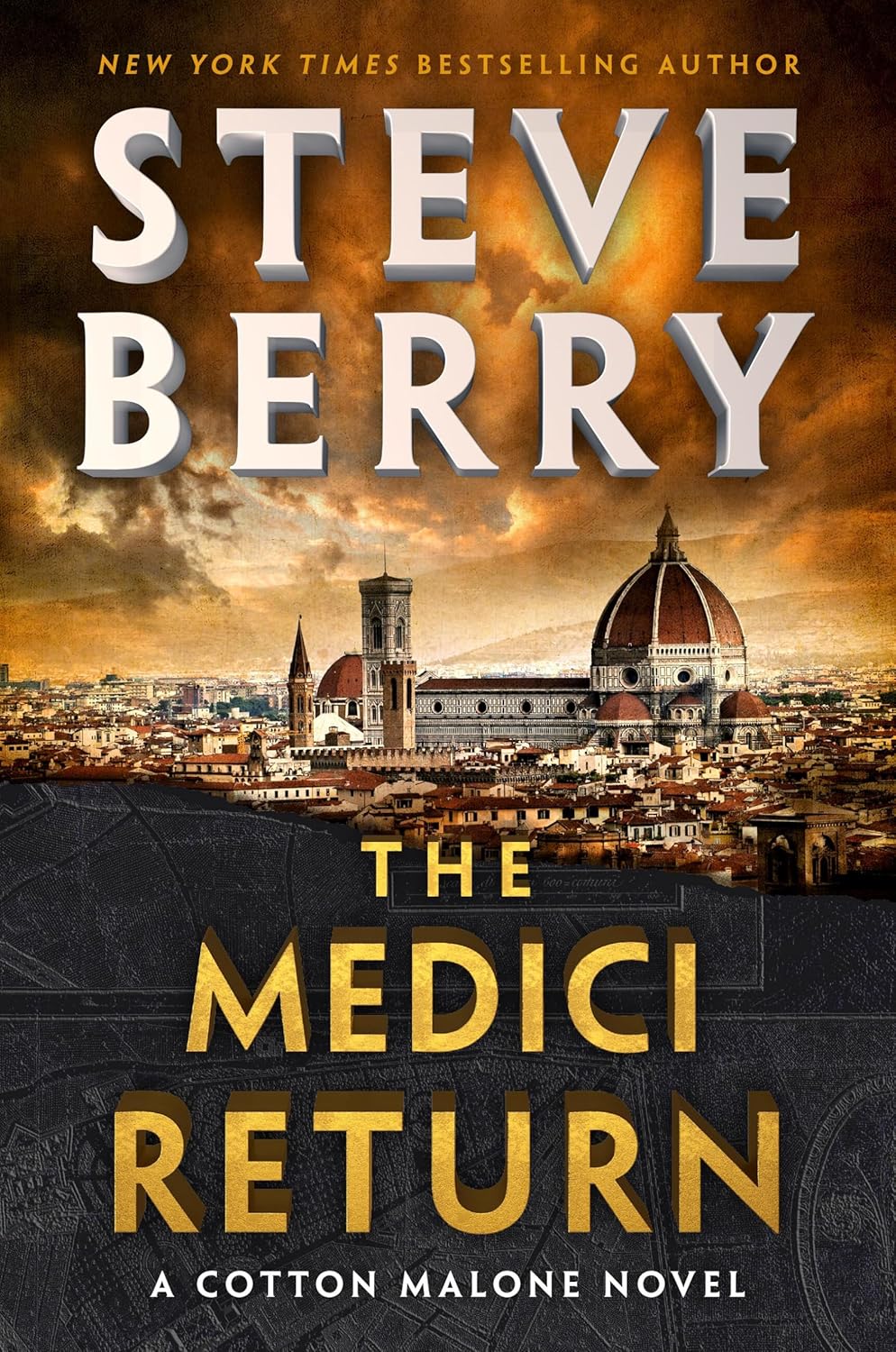
The Medici Return by Steve Berry – 11 February 2025

Each year I have a ton of fun with the entertaining and elaborate Cotton Malone books by Steve Berry that combine modern thriller storylines with hidden historical secrets and elaborate historical settings.  Books like The Malta ExchangeThe Warsaw ProtocolThe Kaiser’s WebThe Last Kingdom and The Atlas Maneuver, have all really impressed me, and the Cotton Malone books are now a must-read for me each year.  This includes the early 2025 release, The Medici Return, which will see a dark conspiracy emerge in Italy when an ancient debt owed by the church threatens to destabilise everything.  This sounds like another awesome thriller, and I cannot wait to dive into the history of the famous Medici family with this new fantastic book.

Amazon


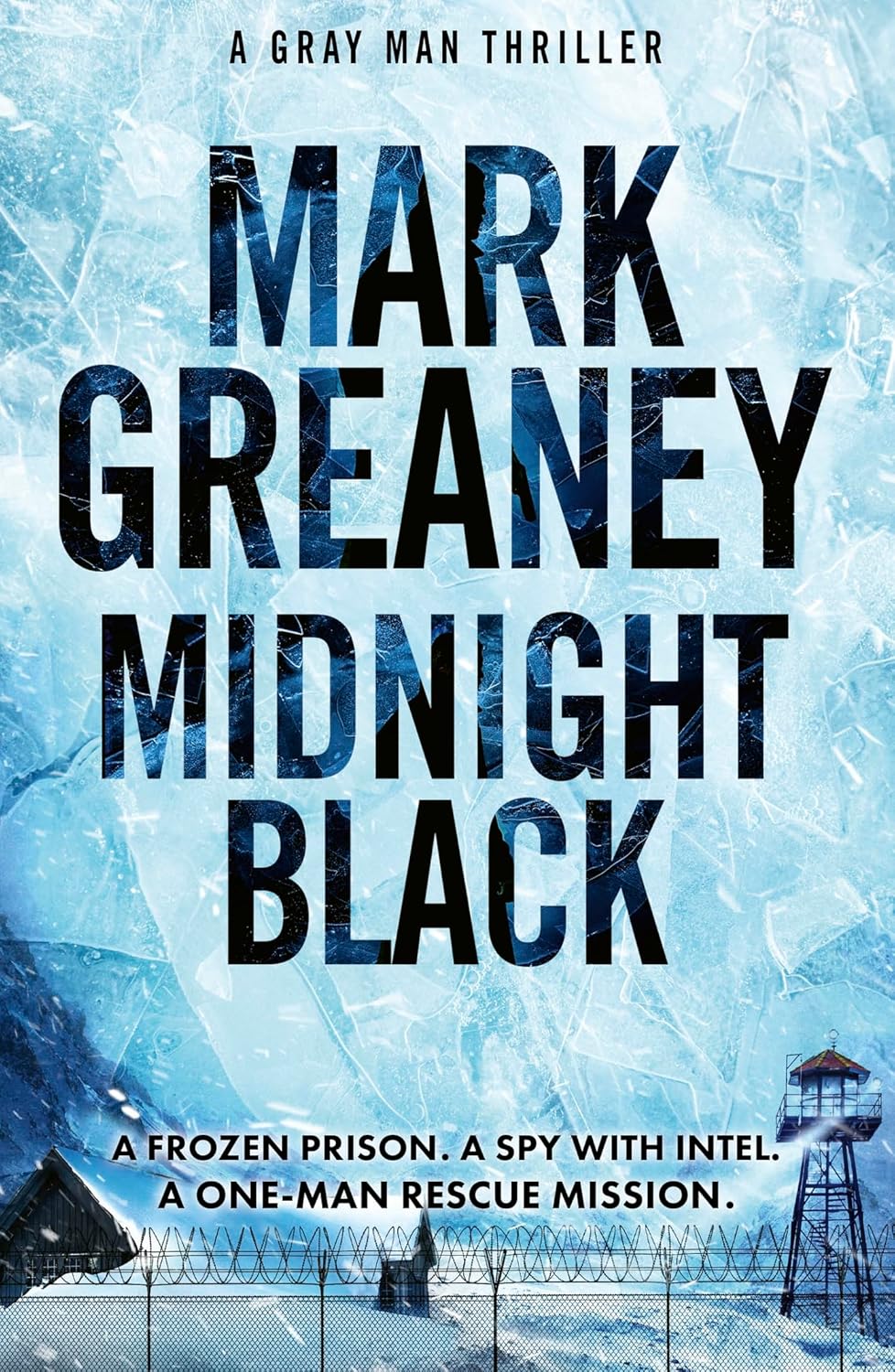
Midnight Black by Mark Greaney – 18 February 2025

A spy thriller book I am particularly keen to get my hands on this year is Midnight Black by Mark Greaney.  The 14th book in Greaney’s Gray Man series, Midnight Black follows on after the cliffhanger ending of The Chaos Agent and sees the titular assassin protagonist burn through Russia and Siberia to free his imprisoned love interest.  This latest Gray Man book has the potential to be one of the most intense and impressive novels of 2025, and I cannot wait to see how Greaney continues his elaborate and always action-packed series.

Amazon


Burn to Shine by Jonathan Maberry – 4 March 2025

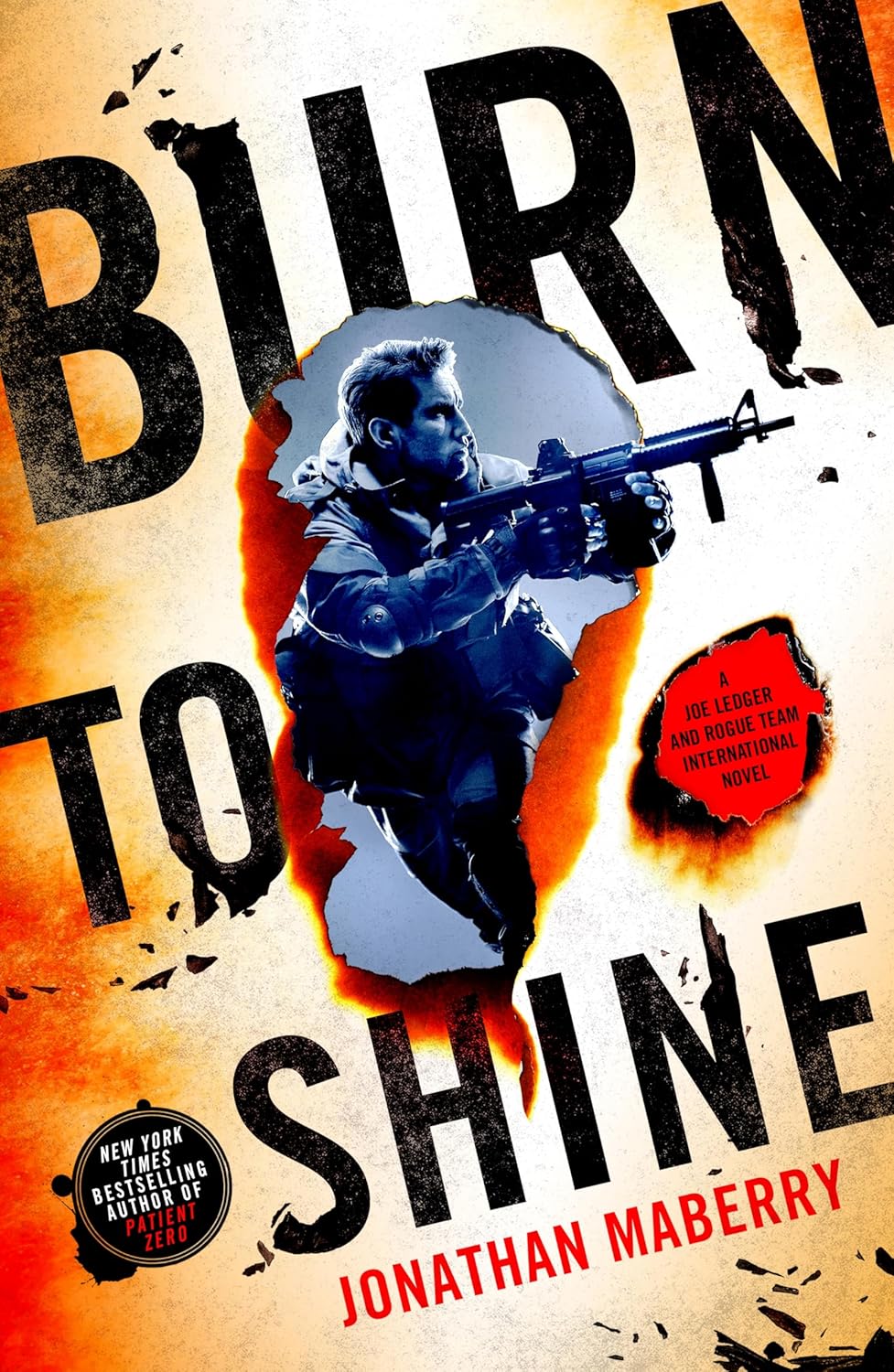
Readers of this blog will know I am a huge fan of Jonathan Maberry, so the inclusion of his next big thriller, Burn to Shine, on this list should come as no surprise, especially after I just published reviews of his 2024 books NecroTek and The Dragon in Winter.  Once again focussing on the author’s iconic protagonist, Joe Ledger, Burn to Shine will be the fourth book in the Rogue Team International series, which has previously featured such awesome books as Rage (one of my favourite books and audiobooks of 2019), Relentless (one of my favourite books and audiobooks of 2021), and Cave 13 (one of my favourite books and audiobooks of 2023).  This new entry in the series will see Ledger and his team deal with a new world-ending threat, with old enemies returning, seeking revenge.  I really love the sound of this new book, and I already know it’s going to get a five-star rating from me.

Amazon


A Death in Berlin by Simon Scarrow – 13 March 2025

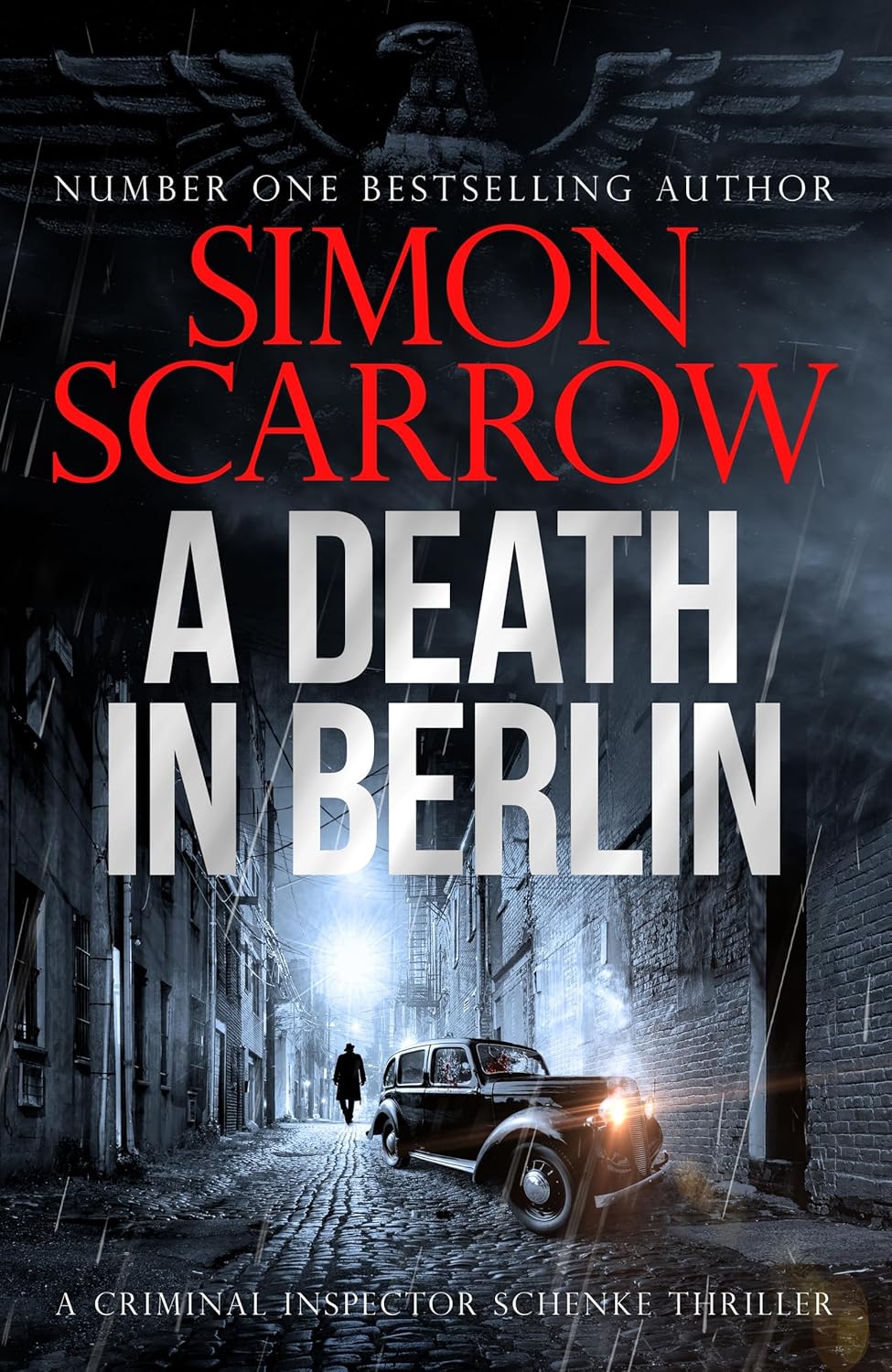
After wowing me last year with Revenge of Rome, one of my favourite historical fiction authors, Simon Scarrow looks set to continue one of his other cool series with the third Berlin Wartime thriller, A Death in Berlin.  Following on from Blackout and Dead of Night, A Death in Berlin will once again place Scarrow’s complex protagonist, the last honest detective in Berlin, as he tries to investigate dark crimes in the shadow of World War II and the crimes of the Nazi regime.  I have deeply enjoyed the previous Berlin Wartime thrillers, and I cannot wait to see what elaborate story Scarrow has for us this time.

Amazon


The White Fortress by Boyd and Beth Morrison – 15 April 2025

The awesome team of thriller author Boyd Morrison and historian Beth Morrison return with the third book in their Tales of the Lawless Land series, The White Fortress.  Continuing the story started in The Lawless Land and its sequel The Last True Templar, The White Fortress will once again follow the author’s excommunicated knight protagonist and his adventurous wife as they become embroiled in dangerous quests across 14th century Europe.  This time, the pair end up in Croatia, where they become involved in a deadly plot involving a prophecy and a lost codex written by Marco Polo.  I have had an amazing time with the first two books in the series and I cannot wait to see how this wonderful pair of authors continue their ambitious and thrilling historical series.

Amazon


Nightshade by Michael Connelly – 20 May 2025

One of my most anticipated upcoming murder mysteries is the new Michael Connelly novel, Nightshade.  While the cover for Nightshade has yet to be released, the plot synopsis sounds really cool as Connelly introduces a new police protagonist assigned to the idyllic Catalina Island off the coast of Los Angeles who is forced to investigate a sinister murder when a body washes up on the shore of the island.  I love the idea of exploring a new Connelly character, especially one based around a cool setting, and this should end up being an excellent and strong murder mystery from this always compelling author.

Amazon


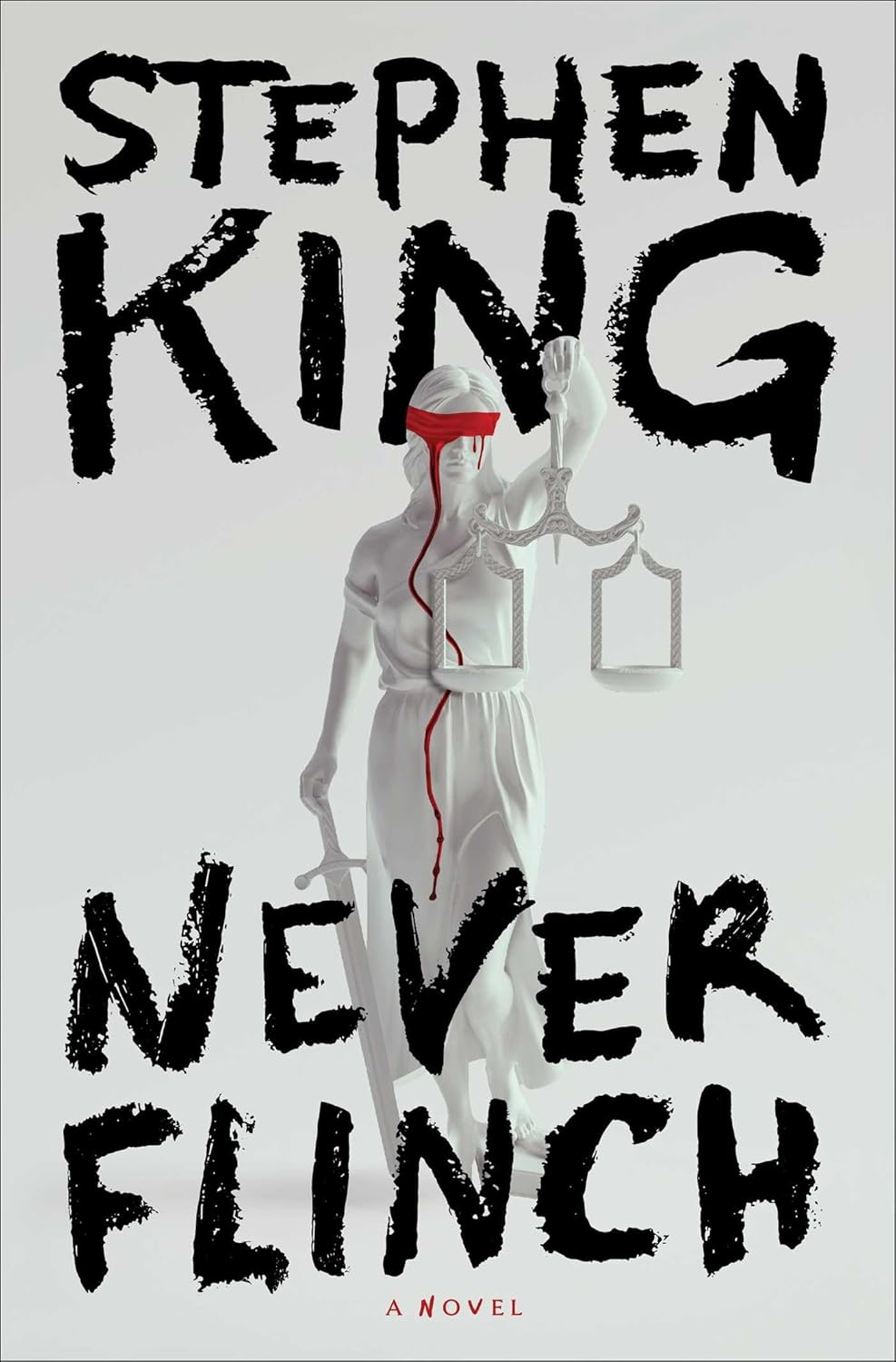
Never Flinch by Stephen King – 27 May 2025

The final book I want to highlight on this list is probably the one I am most excited for this year with the new Stephen King novel, Never Flinch.  I have been having such a great time getting into Stephen King’s incredible books these last few years, and some of his most recent releases, such as Later, Fairy Tale, Billy Summers and You Like It Darker, have completely enthralled me. However, my favourite Stephen King books have so far been his compelling dives into crime fiction. Starting with the dark and powerful Mr Mercedes and featuring the three outstanding Bill Hodges books, King has expanded his crime fiction works by focussing on the unique protagonist of Holly Gibney. The subsequent Holly Gibney focused books, The Outsider (one of my favourite horror novels) and Holly (one of my favourite books and audiobooks of 2023), were extremely exceptional, and I have loved the brilliant, yet shocking, narratives they contained.  As such, I am very, very keen to read the upcoming Holly Gibney book, Never Flinch.  Set to follow this great protagonist as she deals with two dangerous opponents, a serial killer and a stalker, Never Flinch sounds incredible, and I have no doubt this will be one of the best things I read in 2025.

Amazon


That is the end of this list.  I am extremely happy with how my latest Top Ten Tuesday article turned out and this list contains an intriguing collection of upcoming books that should prove to be incredible reads.  I think that nearly every one of these books has the potential to get a full five-star rating from me and I cannot wait to see what amazing and exciting stories they contain.  While I am waiting to get my hands on these books, why not let me know if any of the above interest you, as well as what your most anticipated releases for the next six months are in the comments below.  Also, make sure to check out my other Top Ten List with the top upcoming fantasy and science fiction books of 2025.

Waiting on Wednesday – Usagi Yojimbo: Volume 40: The Crow by Stan Sakai

Welcome to my weekly segment, Waiting on Wednesday, where I look at upcoming books that I am planning to order and review in the next few months and which I think I will really enjoy.  Stay tuned to see reviews of these books when I get a copy of them.  For this week’s waiting on Wednesday, I highlight the next awesome volume of one of my favourite comic book series with Usagi Yojimbo: The Crow by Stan Sakai.

Amazon

Fans of this blog will know that I am a massive fan of the Usagi Yojimbo comic series by iconic writer and artist Stan Sakai, indeed I literally just published a review for the 39th volume, Ice and Snow (one of my favourite books of 2024), yesterday.  Following a rabbit ronin who travels around an animal filled Feudal Japan, the Usagi Yojimbo series is a classic comic that combines intriguing samurai focused storylines with beautiful artwork to great effect.

Sakai has been on a real roll of late with this series, especially since he adapted colour to his artwork, and there have been some truly impressive volumes, including Bunraku and Other Stories (one of my favourite books of 2020), Homecoming (one of my favourite books of 2021), Tengu War! and Crossroads (both of which were among my favourite books of 2022) and The Green Dragon (one of my favourite books of 2023).  All these comics have been extremely epic with some inventive narratives, and I have so much fun reading them multiple times.

Due to how awesome I always find the Usagi Yojimbo series, it is a must-get for me each year, and I always grab the new comic the second it comes out.  Usually, fans of the series are forced to wait a whole year between volumes, but luckily for us they are releasing the next inclusion very soon with the 40th volume in the series The Crow.  Currently set for release in early February 2025, The Crow will pit Usagi against a new dangerous opponent, while old friends return to cause even more trouble.


Plot Synopsis:

The adventures continue for the rabbit ronin Usagi and his cousin Yukichi!

Finally making it out of the frozen mountains, Usagi and Yukichi come across a merchant being attacked by four brigands.

They rescue the supposed merchant only to discover much later that he is really a criminal with a huge bounty on his head! Of course, wherever there is a huge reward you will find bounty hunters Gen and Stray Dog…and other unscrupulous trackers!


While brief, the above plot synopsis is full of potential, and I like the sound of where The Crow’s story is going.  While having Usagi rescuing a merchant with dark secrets is a bit of a common occurrence in the Usagi Yojimbo series, the inclusion of a hidden criminal and the return of Usagi’s old friends Gen and Stray Dog should result in a fun and exciting narrative.  Gen, the surly and greedy rhinoceros samurai is always a great comedic character, especially when teamed up with the bounty obsessed Stray Dog, and it will be great to once again seem them interact with the more straightlaced Usagi.  Throw in rival trackers and other potential villains and The Crow should be another action-packed blast, filled with well-drawn carnage.

To be honest, I already know that I am going to grab this new Usagi Yojimbo volume the moment it comes out and I will love it unconditionally.  I have such a great respect and appreciation for this exceptional series, and I refuse to believe I will find anything to hate in this upcoming comic, especially if Stan Sakai keeps up all the skill and creativity he’s been putting into the last few volumes. I cannot wait to see the elaborate stories contained within The Crow, as well as the awesome and captivating artwork, and I’m sure this will be something special.  The Crow is already one of my most anticipated reads for the new year and it is almost guaranteed to get a five-star rating from me.  Check back in a couple of months to see my glowing review for Usagi Yojimbo: The Crow, and make sure to also check out my other Waiting on Wednesday this week for When the Moon Hits Your Eye by John Scalzi.

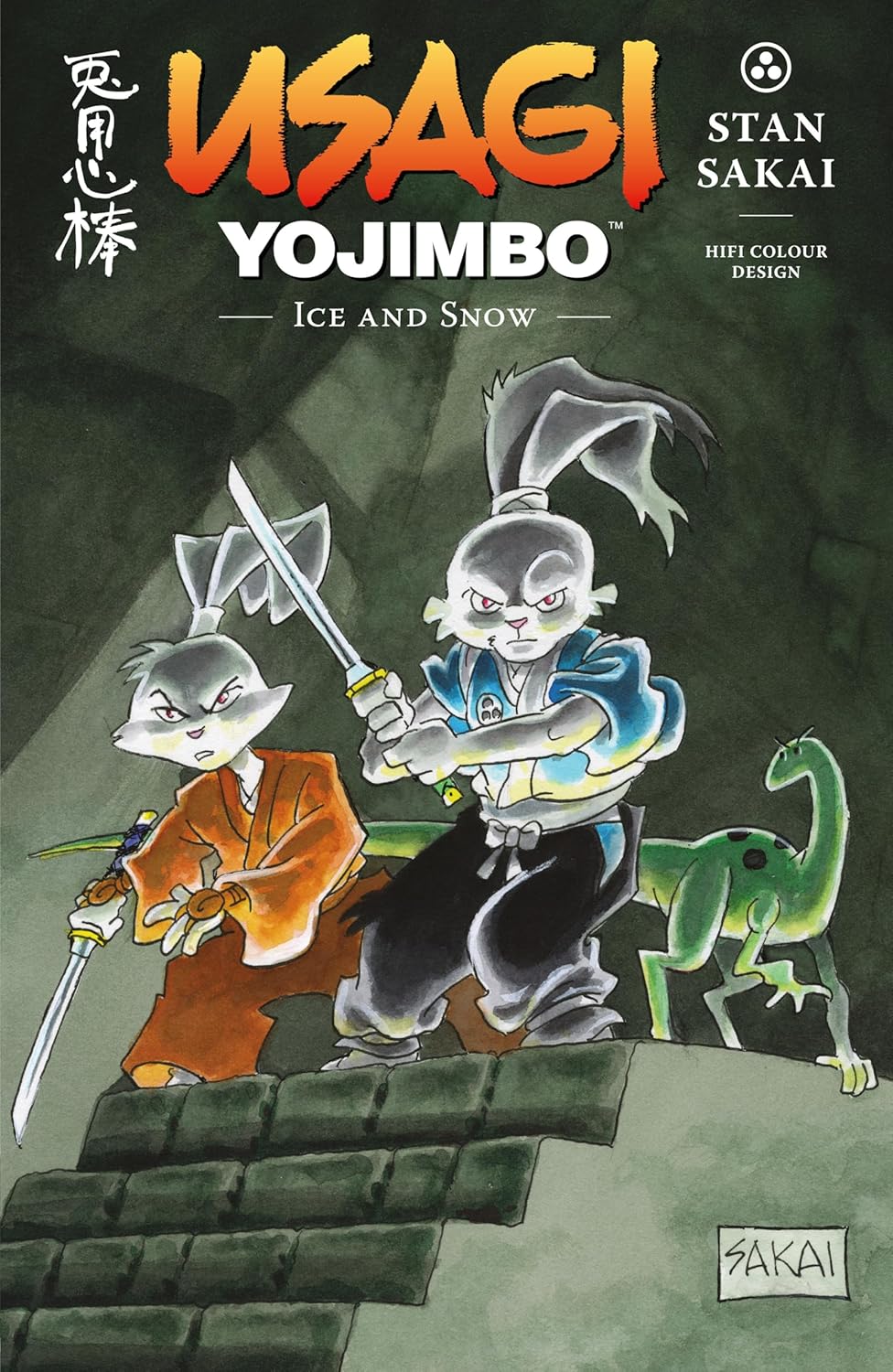
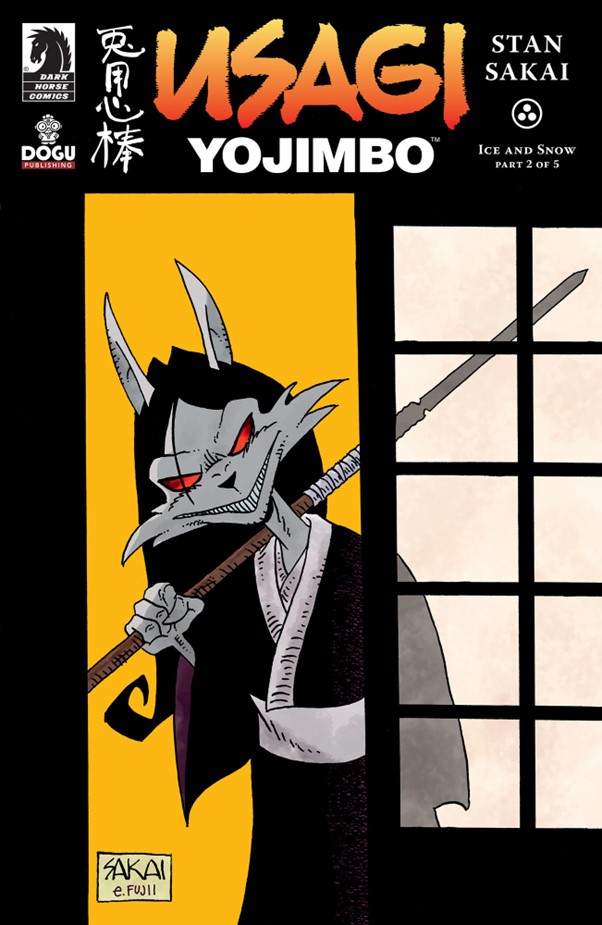
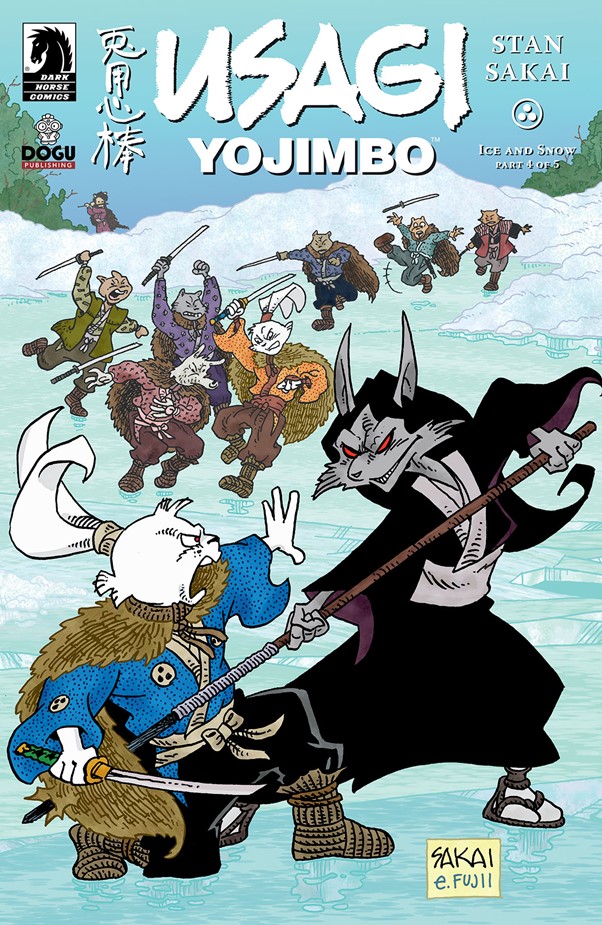
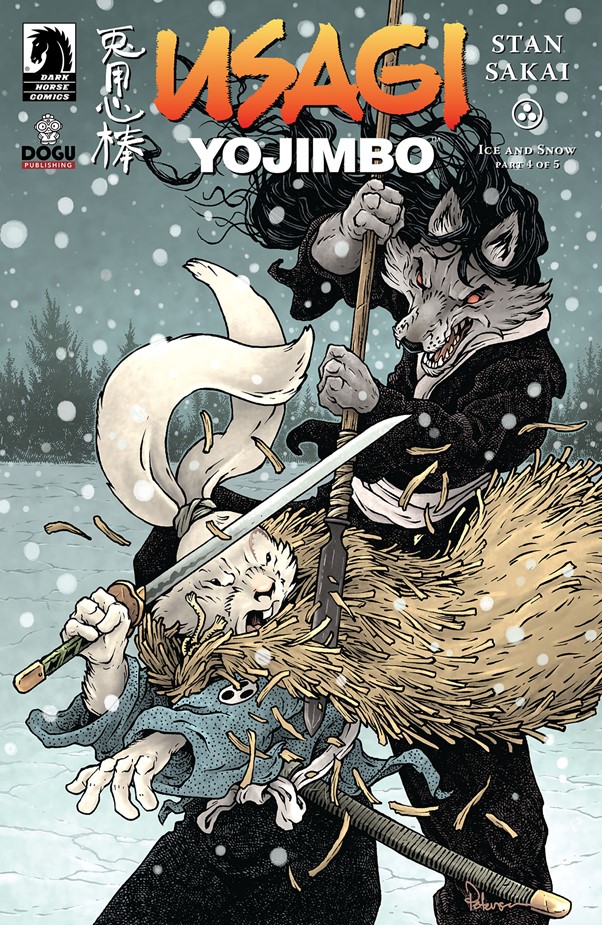
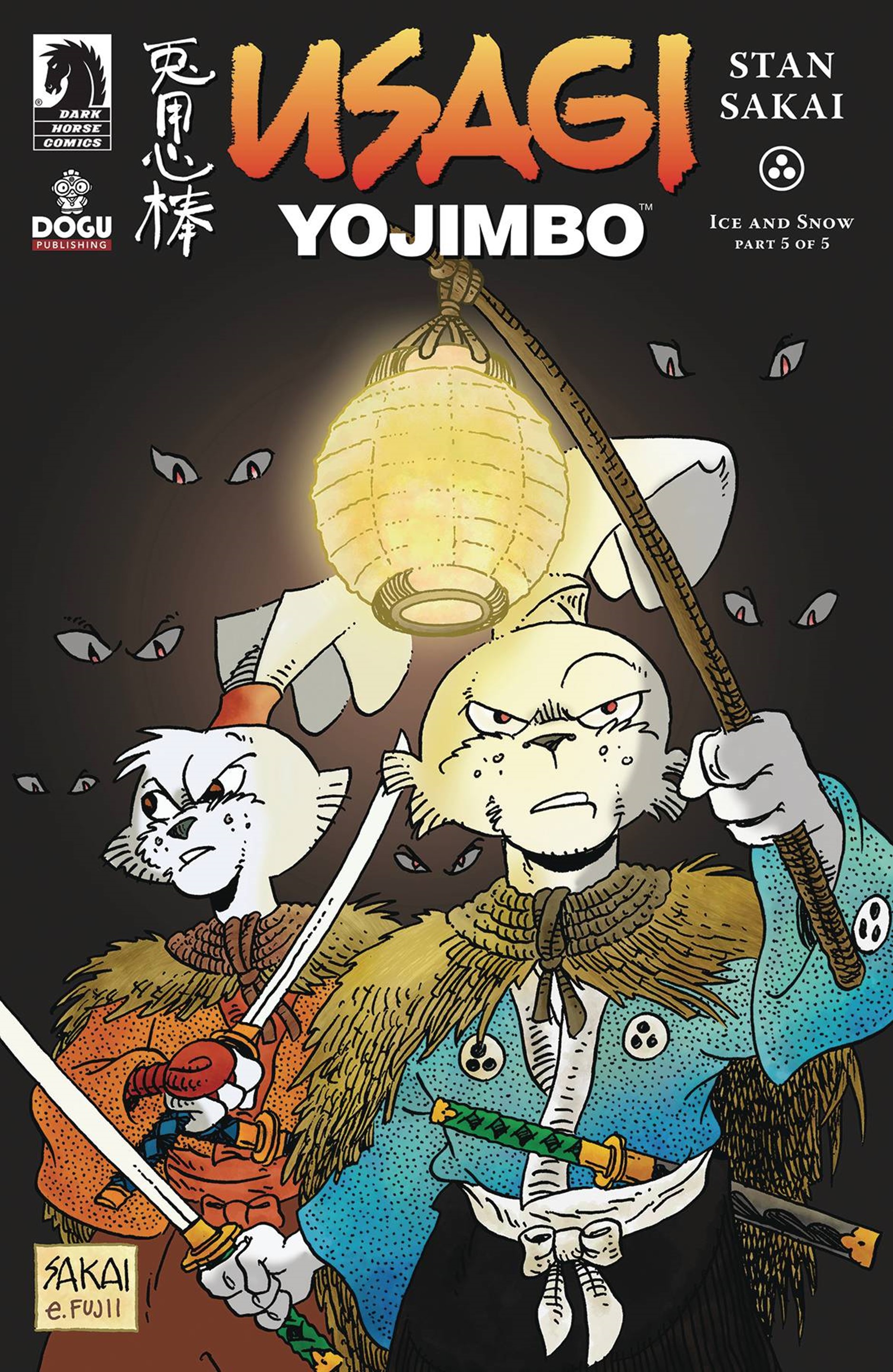
Usagi Yojimbo: Volume 39: Ice and Snow by Stan Sakai

Publisher: Dark Horse Comics (Paperback – 26 November 2024)

Series: Usagi Yojimbo – Volume 39

Length: 160 pages

My Rating: 5 out of 5 stars

Amazon

Acclaimed comic author and artist Stan Sakai continues his iconic Usagi Yojimbo series in a big way with the exceptional 39th volume, Ice and Snow.

Fans of this blog will know that I am a massive fan of the incredible Usagi Yojimbo comic series, which I have been reading for many years and is one of my favourite comic book series.  The brainchild of Stan Sakai, who both writes and draws the comic, Usagi Yojimbo is a unique series that follows a rabbit ronin samurai as he wanders around an anthropomorphic feudal Japan, getting involved in all manner of deadly and dangerous adventures, both mundane and supernatural.  The Usagi Yojimbo comics are so much fun, and I love the compelling stories, distinctive artwork and memorable characters who are contained within its beautiful pages.  This series has been so damn awesome of late, with some amazing coloured volumes, including Bunraku and Other Stories (one of my favourite books of 2020), Homecoming (one of my favourite books of 2021), Tengu War! and Crossroads (both of which were among my favourite books of 2022) and The Green Dragon (one of my favourite books of 2023).

This latest volume, Ice and Snow, is an intriguing addition to the series as it continues to follow some of the storylines from the previous volumes while also featuring a single overarching narrative rather than several shorter stories.  Ice and Snow is also the series’ return to Dark Horse Comics, who previously published the series for 22 years (from Volume 8: Shades of Death to Volume 33: The Hidden).  This return to Dark Horse has allowed for another intriguing read that featured a major confrontation between Usagi and one of his most dangerous foes.

Miyamoto Usagi, travelling ronin and occasional Yojimbo, continues to wander the lands, seeking adventure and helping his friends where possible.  Now travelling with his cousin Yukichi, Usagi finds himself moving through the cold and snowy mountain tops of Northern Japan, having just escaped a confrontation between rival ninja clans in the pair’s last adventure.  Determined to return to warmer climates, Usagi and Yukichi once again find themselves in trouble amongst the mountain peaks.

Cold and seeking shelter, Usagi and Yukichi encounter nothing but bandits and mysterious creatures as they continue their journey.  Desperate for warmth, they decide to spend the night inside the hut of strange woman, only to find themselves trapped by the cold heart of a dangerous spirit, Yuki-Onna, the lady of the snow, who is determined to feast on them.

However, the attentions of a powerful spirt of the snow are the least of Usagi and Yukichi’s problems, as a far more terrifying monster haunts the mountains.  The demonic black spearman Jei, the Blade of the Gods, has long hunted Usagi, believing that by killing the rabbit ronin he will ascend to godhood.  Now leading a group of mountain bandits, Jei relentlessly chases after Usagi and Yukichi, determined to end their feud once and for all.  Can Usagi once again weather the dark storm that is the unstoppable Jei, or will this be the moment he finally falls to his deranged nemesis’s black blade?

Ice and Snow was another amazing volume from Sakai that provides a cool new adventure for the author’s iconic protagonist.  Featuring an excellent main storyline loaded with peril and dark confrontation, Ice and Snow had me hooked the entire way through, especially as it featured Sakai’s gorgeous artwork.

Made up of five separate issues, Ice and Snow features a powerful single storyline which plays to the author’s strengths as he places his protagonists in mortal danger against foes new and old.  The story starts immediately after the events of the previous volume, The Green Dragon, with Usagi and his current travelling companion, Yukichi, still moving through the frigid mountains of Northern Japan.  Encountering the usual array of bandits, Usagi and Yukichi are thrust into action quickly and the initial combat sets the scene nicely for the rest of the comic.  The two soon move from mortal concerns to the supernatural, as the mysterious woman that Usagi and Yukichi seek shelter with predictably turns out to be a deadly monster (Usagi really should know better by this point), determined to eat their lifeforce. 

While these initial battles between Usagi, Yukichi and their various opponents are compelling and exciting, especially the intense fight against Yuki-Onna that was so well showcased by Sakai’s artwork, the best part of the early story involves the return of deranged supernatural warrior Jei.  Travelling with his young companion, Keiko, Jei brings his trademark terror to the local bandits, taking over their gang with violence and fear.  However, when he discovers that Usagi is nearby, he leads his new forces on a lethal hunting mission.  Jei honestly steals the entire comic in these sequences, as he terrorises and murders various members of the bandit gang to make his point.  There is also a fantastic fight between Jei and Yuki-Onna, which was a fantastic battle of the monsters that really highlights Jei as a powerful supernatural threat.

The final major sequence of the comic involves Jei catching up to Usagi and engaging in a brutal fight on a frozen river.  The sheer fear that is shown by the usually implacable Usagi really highlights to the reader just how dangerous Jei is, and I love how well Sakai utilises him as a villain here.  The battle between the two was dark, personal and pushes Usagi more than his usual fights, especially as the sinister Jei just won’t stop coming for him.  Sakai makes sure to have no conclusive end to this conflict, as Usagi will continue to be hunted and haunted by Jei.  This is honestly the best end you could imagine at this point in the series, especially as it plays into the horror movie inspiration for Jei, and readers are left wanting another awesome encounter between the two. 

The final issue in Ice and Snow wraps up this mountainous arc of the series on a somewhat ironic note, as Usagi, Yukichi, and the few survivors of Jei’s bandits seek shelter in an isolated village, only to encounter more monsters in the form of cat demons.  This last battle serves as a great horror cherry at the end of an impressive supernatural Usagi Yojimbo volume, and Sakai had fun with the artwork around the monstrous opponents.  I really enjoyed the overall narrative that Sakai stuck into this volume, and frankly I had and exceptional time with the high-threat, quick paced, multi-issued narrative that took up the entire volume.

This was probably one of the stronger recent Usagi Yojimbo stories, and I loved watching the protagonists attempt to survive an onslaught of supernatural foes.  Sakai cleverly continues a multitude of long-running storylines, including the winter journey from the last couple of volumes, which sees Usagi act as a wise mentor to his younger companion, Yukichi.  However, I was extremely happy that we got to see the continued enmity between Usagi and Jei that has been such an impressive part of the series since the third volume, The Wanderer’s Road (which was first released in 1989).  Inspired by Jason from the Friday the 13th series, Jei is a brilliant villain, and Sakai has done a wonderful job to continuously make him the most intimidating figure in the entire franchise.  Jei honestly seems unstoppable at times, and I love the way he manages to destroy all his opponents except the final rabbit, Usagi.  Sakai manages to make Jei even more sinister by continuing to include Jei’s unlikely travelling companion, Keiko.  A young child who accompanies and is cared for by Jei, Keiko is a true innocent who has been adopted by the Jei as a herald.  Watching this harmless child play in the background of Jei’s various atrocities honestly makes the entire situation even more creepy, and she is such a brilliant part of the antagonist’s aesthetic, especially now that her flute which warns people of Jei’s coming (I loved Usagi’s dark comments about this at the end of issue 4).  Combine this with Usagi’s absolute dread at encountering Jei again, as well as the sheer certainty of his inevitable return, and Jei was so damn intimidating here it was just amazing.
I can’t move away from this latest Usagi Yojimbo volume without highlighting the brilliant artwork that Sakai features within his comic.  Every page of this comic is loaded with well-drawn and powerful pieces of art, which effortlessly combine with the compelling writing to tell the powerful story.  Drawn exclusively by Sakai and featuring colouring from Hi-Fi Colour Design, the art in Ice and Snow is beautiful and highly impactful, as Sakai showcases the actions of his characters and the settings they find themselves in.  While every scene is fantastic in its own way, I must highlight the multiple nature shots featured throughout Ice and Snow.  Sakai channels his love for winter throughout this volume, and you are gifted with some breathtaking drawings of the snow-covered landscape the characters are travelling through.  These landscape shots are so pretty, especially now they are in colour, and the contrast between the white of the snow and the orange sky is amazing.  This includes some wonderful full-page drawings that feature multiple characters within them and all of them look so damn cool.

In addition to the wonderful landscapes and backgrounds that each of the outdoor scenes contain, I also must highlight how well the character actions are drawn throughout Ice and Snow.  Sakai does such an effective job of drawing his characters moving around the world, and you can easily envision what movements are implied from each picture.  The artist’s drawings work really well to portray combat, as the multiple sword fights and other encounters look so cool, and you can see the moving swirl of combat around each panel.  Some of these fight scenes are really dramatic and well set out, and I loved how effectively showcases the skill of his protagonists.

I also love at how impactful some of the character drawings were in this volume, especially when it came to the monsters that Usagi encountered.  Not only do we get some cool cat demons in the last issue, but the lady of the snow, Yuki-Onna, has a great monstrous look around her that makes her seem quite intimidating.  I personally loved the cool panel where an enflamed Yuki-Onna flees from Usagi, and the screaming skull shots that resulted from it were freaky.  However, it is the drawings of Jei that really hit me the hardest in Ice and Snow.  Sakai cleverly backs up his great writing around this character by showing him at his psychotic best, with his unnatural face and expression looking so awesome.  Jei was honestly intimidating or crazy in every single panel he appeared in, and I loved how scary he comes across in colour.  I especially love how impressive the fight between Jei and Usagi looked, as the desperation of their battle and the powerful emotion on both participants faces (with Keiko playing in the background) really hammers home the hatred and fear shared between the two.  I particularly enjoyed this really cool panel where a near-defeated Jei emerges from the frozen river to strike one more time.  Not only does this look so awesome, but it is a clever homage to Jei’s Friday the 13th inspiration, with the deranged killer getting one last surprise swing in.  All these impressive drawings were so amazing to look at, and I loved how Sakai’s artistic style is as impactful and powerful as ever.

Based on my gushing review above, I guess it is obvious that I had an exceptional time with this latest Usagi Yojimbo volume, Ice and Snow, which featured a powerful story loaded with the author’s best supernatural inclusions.  Stan Sakai’s writing and drawings are still very impressive, and I love how moved I was by them in Ice and Snow, even after all these years of being an Usagi Yojimbo fan.  This was such a great comic and it gets a very easy, if inevitable, five-star rating from me.  I cannot wait to continue this series into 2025, especially as the next volume is out very soon and features another awesome sounding story. 

Amazon

Top Ten Tuesday – My Favourite X-Men Live Action Movies (Ranked – August 2024)

Top Ten Tuesday I s a weekly feature that currently resides at The Artsy Reader Girl and features bloggers sharing lists on various book topics.  The official task for this week’s Top Ten Tuesday was for participants to highlight books that featured travel elements.  While this was interesting, I’m going to do something a little different, especially as I’m in a real comic book movie mood.  In particular, I want to talk about the X-Men movie franchise now that the 20th Century Fox era has come to an end.

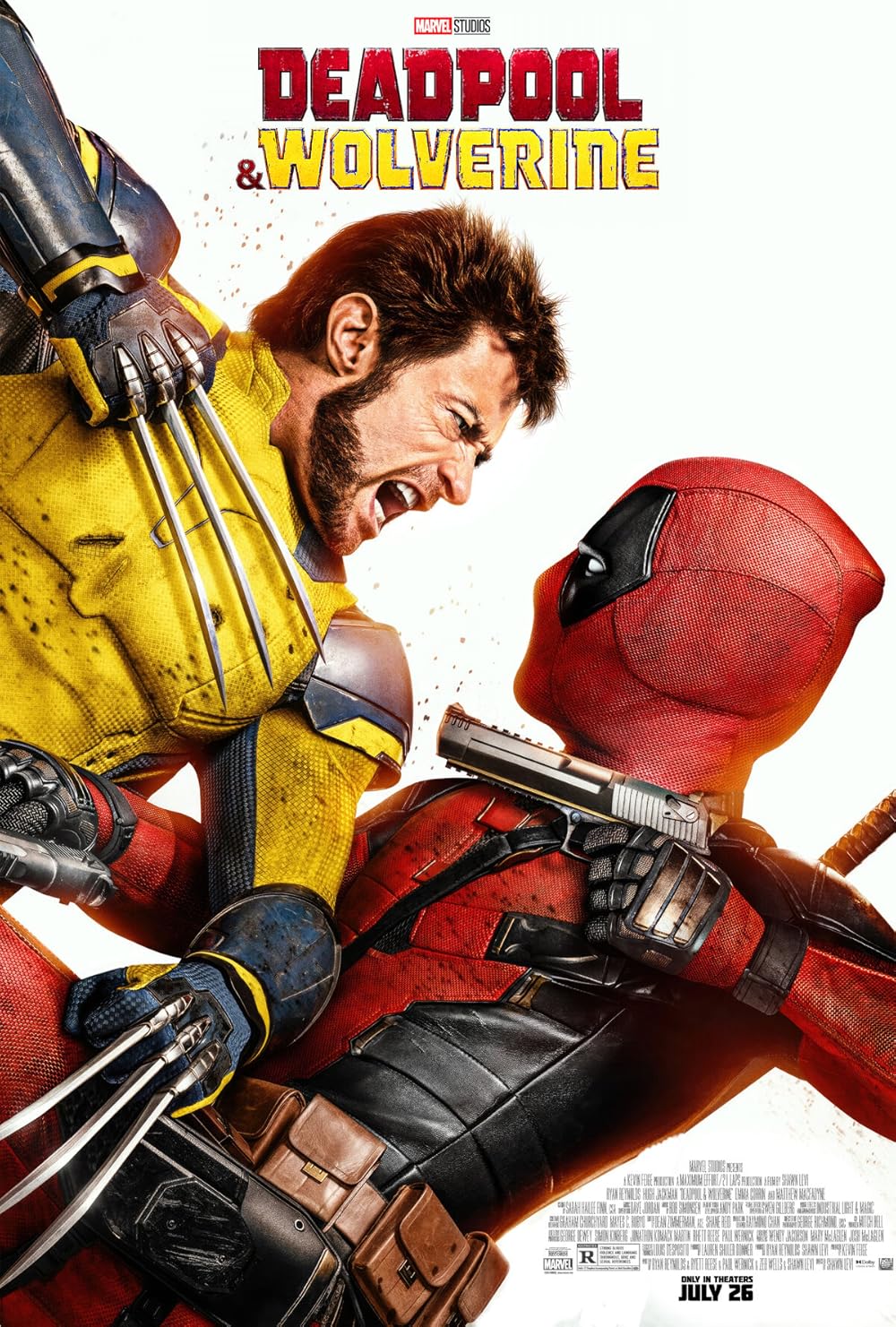
I am sure that it will come to no surprise to anyone that I am a major fan of all things comic related, which includes the fabulous works coming out of Marvel.  Naturally, this includes the iconic and classic X-Men movies that were produced by 20th Century Fox.  The recently released Deadpool & Wolverine saw the end of the 20th Century Fox X-Men films, with the comic franchise now officially incorporated in the Marvel Cinematic Universe.  I think that enough time has passed since the movie’s release that I can finally start talking about it on this blog without spoiling anything for people out there.

The X-Men films represent a key part of comic book movie history, as they have been a substantial corner of the genre since the year 2000.  Following the iconic Marvel Comics superhero team of mutants, the X-Men films feature a range of cool storylines, characters and epic actors, as well as some exceptional graphics and productions.  The first X-Men films were some of the top movies in the genre at the time, helping the fan the early popularity of comic book films.  While the franchise has had its ups and downs over the years, it has still maintained its relevancy, and produced some true classics.  It has also continued to be a gamechanger right up until its most recent entry, especially as it helped to popularise R-rated comic book films.  I honestly have so much love for the X-Men film franchise, and I have had to the very great pleasure of viewing all of them multiple times.

Between my love for the X-Men films and the recent release of Deadpool & Wolverine, I thought this would be a good opportunity to quickly provide my personal ranking for the films in this franchise.  I have included all 13 of the live-action X-Men films released by 20th Century Fox, as well as the MCU released Deadpool & Wolverine.  Ranking these various films proved to be an interesting task, and I had a fun time trying to weigh the pros and cons of each entry.  I made sure to consider factors such as casting, story, graphics, legacy and how they handled the original source material.  However, the most important thing that I considered was how much I would want to watch this film again.  While I struggled a little in places, especially at the beginning of the list, I was able to come up with a ranking that I think captures my personal feelings and opinions about these various films.
Spoiler Warning below


List (Ranked – Reverse Order):

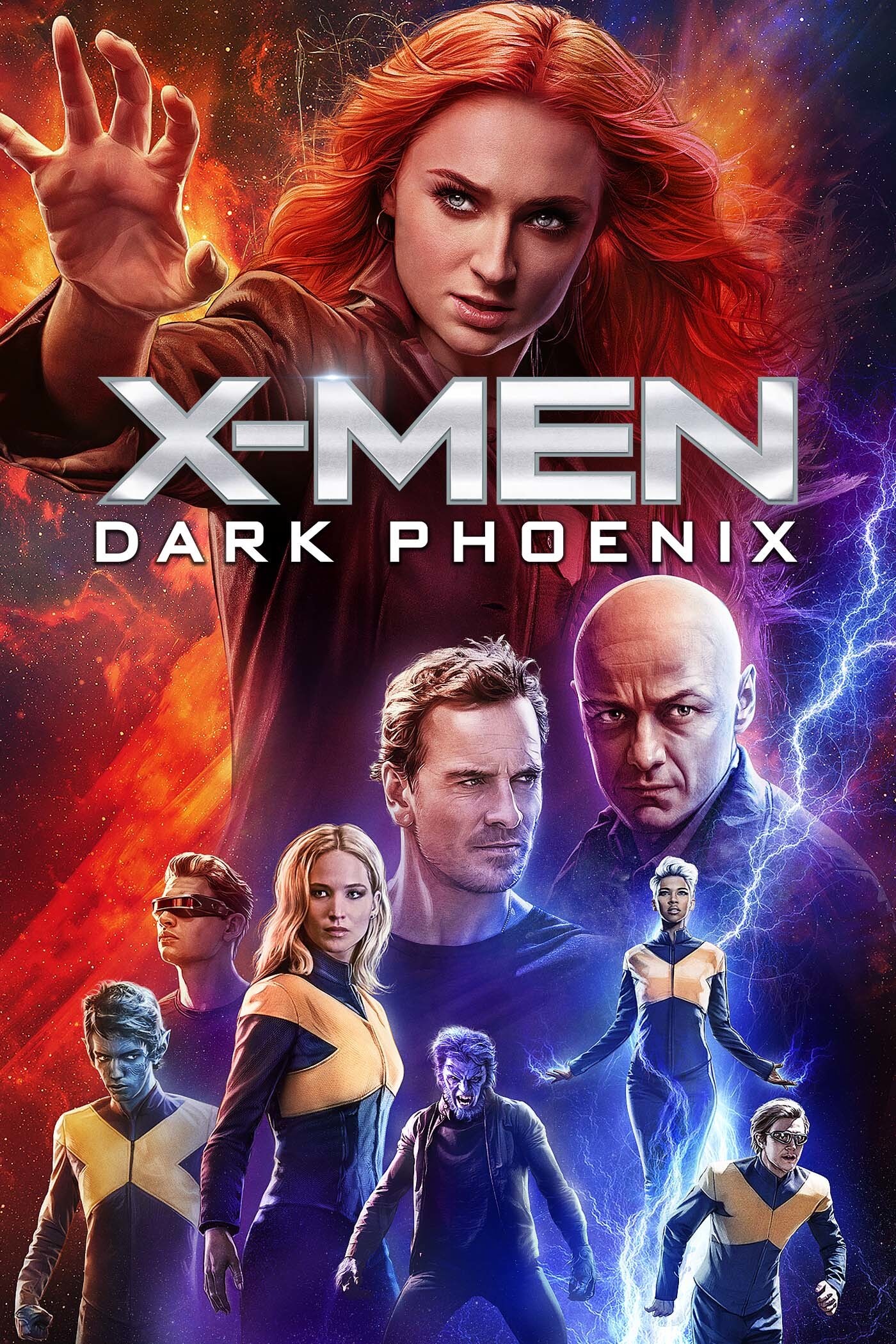
14. Dark Phoenix

Starting at the bottom, we have the last movie to focus on the actual X-Men team, Dark Phoenix which featured the prequel characters first introduced in X-Men: First Class.  The second attempt to adapt The Dark Phoenix Saga comic into a film, Dark Phoenix was dull, by the numbers, and very predictable in its story telling.  While it still features an excellent cast, you can tell that most of the veteran actors were getting tired at this point, as evident by Jennifer Lawrence’s limited screentime.  In addition, Sophie Turner, while doing her best, fails to truly connect to the Jean Grey role, while Jessica Chastain is a particularly unmemorable villain.  Despite that, there are still some great scenes in this movie, including two fantastic action set-pieces, but overall, it was a disappointing film, especially when compared to other X-Men content being released around the same time. 


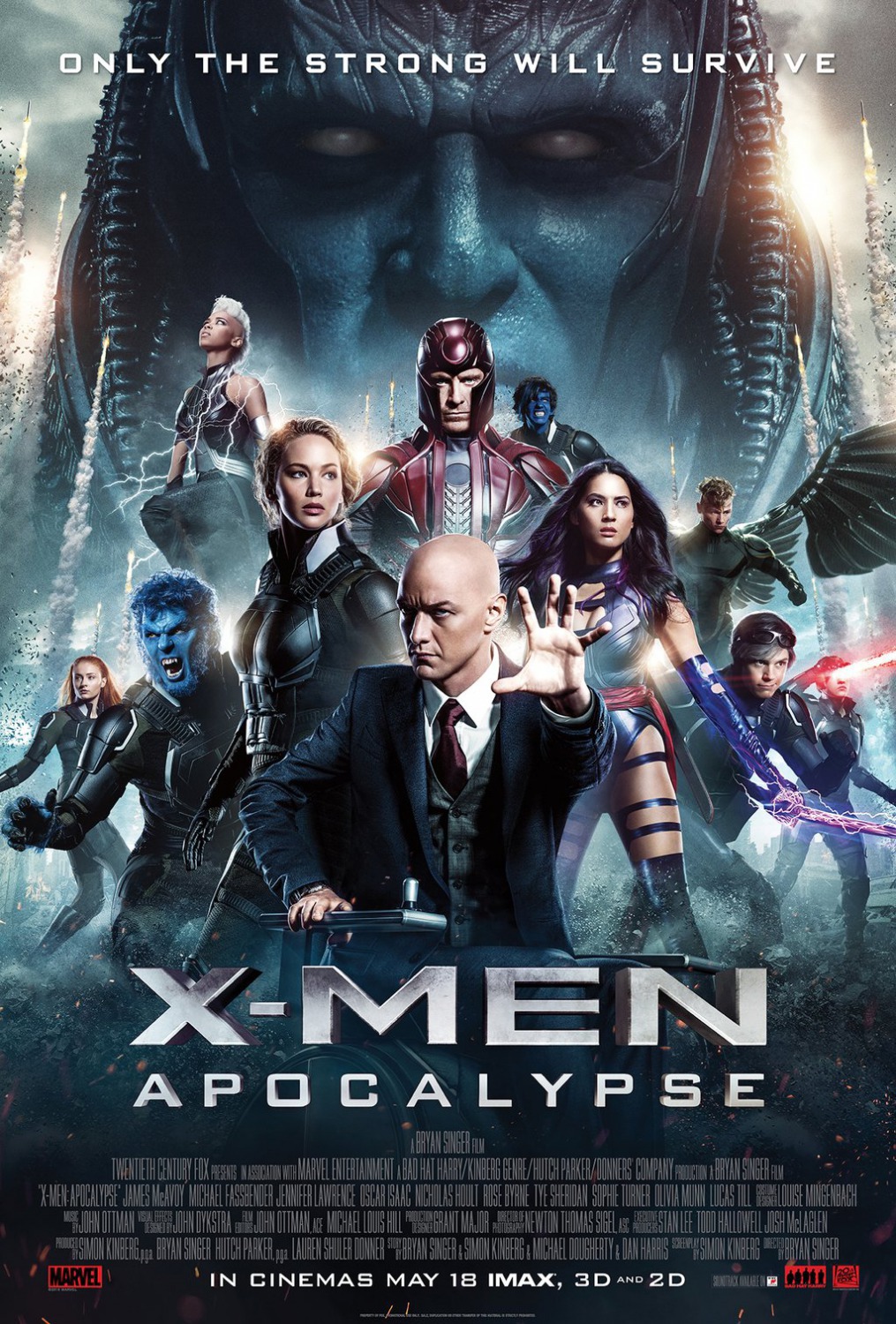
13. X-Men: Apocalypse

I must admit that in the lead up to X-Men: Apocalypse, I was naively excited for this film.  The franchise was riding high after an epic revival, and they were looking to bring the major villain Apocalypse to the screen.  This movie had all the potential in the world, and yet it ended up being a major disappointment.  Oscar Isaac, while fun, didn’t do the character of Apocalypse justice, and the overall design of the villain was weird.  In addition, many of the new actors to the franchise were a little underwhelming, although props to Kodi Smit-McPhee and Alexandra Shipp for their great portrayals of the young Nightcrawler and Storm.  Moreover, the story was very weak in places, and was honestly a letdown after the previous well-written prequel films.  Despite this, X-Men: Apocalypse is still a fun movie with some impressive elements.  The main cast continues to excel, the graphics were awesome, there was a particularly fun Quicksilver sequence, as well as a bloody Wolverine cameo.  While it didn’t live up to its full potential, I would still rewatch X-Men: Apocalypse, and it is possible to really enjoy it.


12. The New Mutants

The final X-Men film released by 20th Century Fox, The New Mutants was an interesting spin-off that focused on five new, young and damaged mutant characters, trapped in a facility designed to control their rampaging powers.  Events take a dark turn as various supernatural creatures start to haunt the students, as the secrets of their mentor/jailer come to light.  The New Mutants was a rather unique addition to the franchise, that simultaneously introduced new characters, while trying to set up a horror story in the X-Men universe.  While the film suffered from production delays, creative issues and studio interference, I still think it was a good film, and I applaud the creators for trying to do something different.  The small cast enthusiastically dive into their roles, and while the producers were clearly trying to cash in on the success of other franchises with some of their casting choices, the young actors were more than up for the task.  Highlights include Anya Taylor-Joy as a deliciously devilish Magik, Henry Zaga as a fairly accurate Sunspot, Maise Williams who brings her charm to the conflicted character of Wolfsbane, while Blu Hunt effectively holds down the main role of Dani Moonstar.  There is even a cameo from everyone’s favourite dragon, Lockheed, which hardcore X-Men fans will really appreciate.  The end result, despite suffering a little from being played more as a teenage supernatural story than a pure dark horror narrative, was pretty watchable, and it’s unfortunate that some of the cast will never get a chance to revisit these characters.


11. X-Men Origins: Wolverine

The best way to describe X-Men Origins: Wolverine is as a fun and action-packed movie that has one of the weakest plots in the franchise.  Focussing on the origins of Wolverine, this film saw Hugh Jackman strike out on his own with a new supporting cast.  Best known for its epic title-card montage and the terribly mishandled introduction of Ryan Reynold’s Deadpool, this Wolverine focused film had some cool moments, but struggled to rise above its basic narrative.  Still, the cast was pretty on-point, including Liev Schreiber impressive performance as Sabretooth, and while Ryan Reynold’s appearance was far too brief, he did manage to show off how naturally he’d fit the role of the Merc with a Mouth, which led to great things down the line.
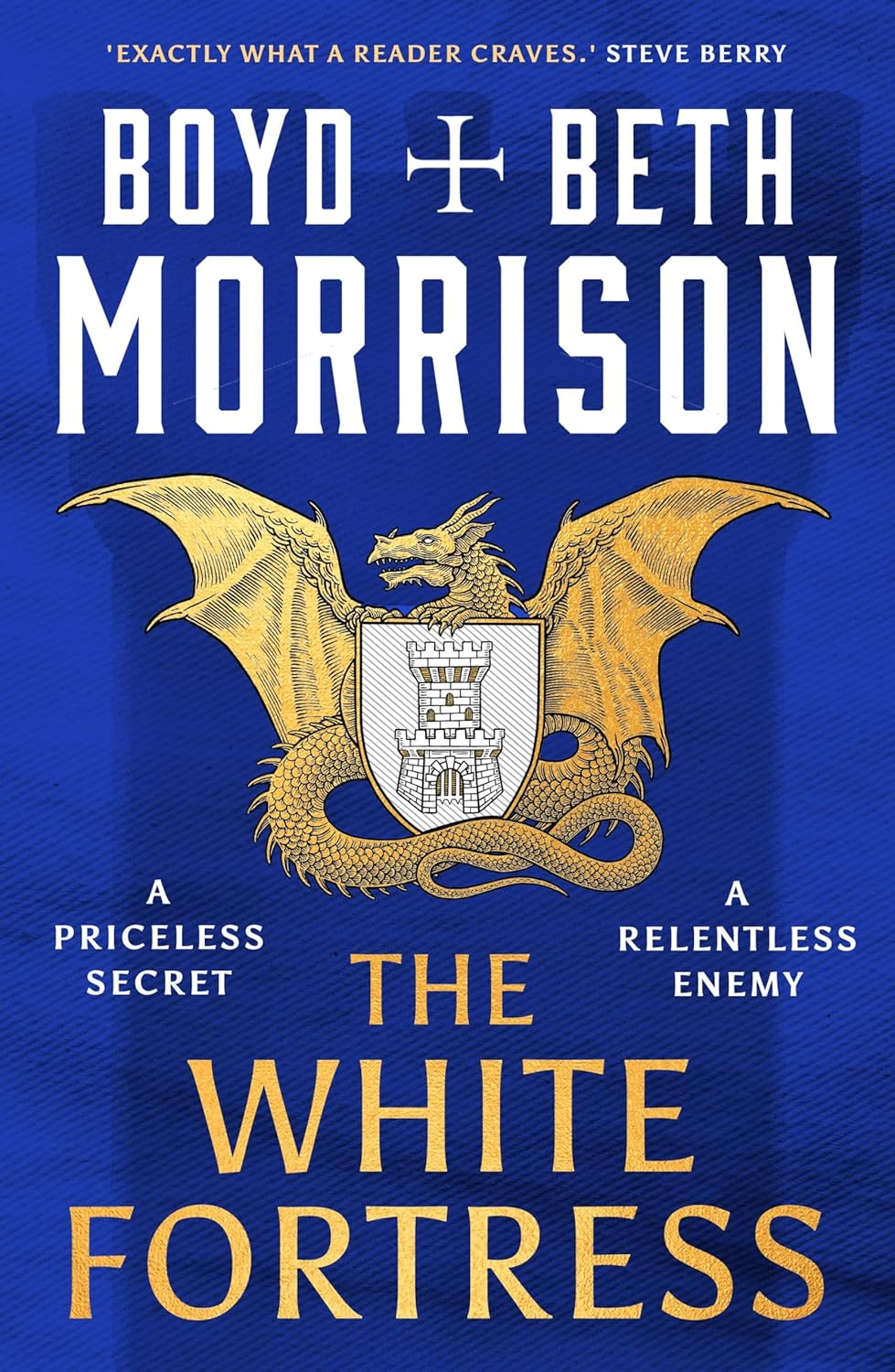
 

10. X-Men: The Last Stand

The other film that tried to adapt The Dark Phoenix Saga was the third X-Men film, The Last Stand.  Coming off the first two excellent entries in the series, expectations were high for The Last Stand, however, the third film in the trilogy proved to be the worse (something Bryan Singer would later regret making fun of in X-Men: Apocalypse).  Just like with its future successor, The Last Stand completely failed to adapt the complex The Dark Phoenix Saga in a compelling way, alienating both comic fans and general audiences with its weak story and cliched moments.  While The Last Stand still featured the incredible main cast from the first two movies, two key actors only had limited screen time, while parts of Famke Janssen’s performance as the newly formed Phoenix were questionable.  In addition, several new supporting cast members failed to impress, with the obvious exceptions of Kelsey Grammer as Beast, and Elliot Page as Kitty Pryde.  While flawed, this was still a fun movie with some awesome scenes, and you have to love the excellent acting talent who came back for it.  However, I really hope no one tries to do another live action adaptation of The Dark Phoenix Saga.


9. The Wolverine

Another solo Wolverine outing, The Wolverine was an impressive Hugh Jackman film that covered some of the comic character’s adventures in Japan.  A substantially stronger movie then X-Men Origins: Wolverine, The Wolverine has a slick and complex story that covers the protagonist’s grief and trauma after the events of The Last Stand.  While not a perfect film, especially with some ridiculous story elements at the end (why did it need a giant robot?), this was an excellent and moving entry in the X-Men franchise, although it probably would have been better with a hard-R rating.  Still, I’m a big fan of the film’s excellent Japanese cast, and Hugh Jackman was once again amazing as Wolverine.  While it wasn’t a perfect adaptation of the comics it was based around, it is an outstanding and distinctive film.


8. X-Men: First Class

After the end of the original trilogy and the failure of X-Men Origins: Wolverine, fans were uncertain where the franchise could go.  Luckily Matthew Vaughn stepped up and gave the series new life by creating a prequel X-Men film set during the Cuban Missile Crisis.  Partially based around the First Class comics, X-Men: First Class looked at the origins of the X-Men in this universe, and brought in a whole new group of actors to portray several classic roles.  While the plot of the film was a little predictable, the result was spectacular, especially when it came to the cast.  James McAvoy and Michael Fassbender were perfectly cast as younger versions of Professor X and Magneto, and both actors really gave their all to the roles, diving into the issues and quirks of the characters, while also exploring the origins of their lifelong friendship.  Other great casting choices include Jennfier Lawrence as Mystique and Nicholas Hoult as Beast, both of whom would go on to anchor the franchise with McAvoy and Fassbender, while Kevin Bacon was a sinister, if generic, villain.  The rest of the cast was ok, although I think the fact that most of them were killed off-screen before the next movie, tells you all you need to know about how forgettable they were.  The 1960s aesthetic and historical tie-ins of the plot were also very cool, although it did create some timeline issues going forward.  Overall, a pretty amazing film, and one that resulted in some excellent sequel films going forward.


7. X-Men

At the halfway point of this list, we have the original film that kicked off the entire movie franchise with X-Men.  While relatively low budget and with less complex graphics than modern audiences might expect for a superhero epic, X-Men nonetheless captured the world’s imagination in some major ways.  Featuring an excellent story that cleverly introduced the X-Men universe, with some modern twists, X-Men was a compelling film that set up a lot of future story elements.  A strong part of its success was due to its perfect cast, with a relatively unknown Hugh Jackman stealing the show as Wolverine, while Famke Janssen (Jean Grey), James Marsden (Cyclops), Halle Berry (Storm) and Anna Paquin (Rogue) all perfectly portrayed their respective characters.  However, the real genius lay with the inclusion of acclaimed veteran actors Patrick Stewart and Ian McKellen as Professor X and Magneto.  Stewart and McKellen were born to play their respective characters, and the two perfectly acted off each other, bringing some impressive gravitas and passion to the film.  These performances, and more, ensured that this film was exceptional, and it was a slam-dunk movie in the very early days of the comic book film. 


6. X2

While X-Men set up the franchise, its sequel, X2, was the film that cemented the X-Men films as a cornerstone of superhero movie genre.  Bringing back the cast from the first film to great effect, X2 had a larger budget, which Bryan Singer put it to full use to create some exceptional sequences.  Starting off with the still memorable Nightcrawler sequence, the film goes from strength to strength, as the X-Men compete with Brian Cox’s sinister Willaim Stryker.  While James Marsden’s Cyclops does get somewhat sidelined in this film (a recuring theme of the X-Men film franchise), the rest of the cast get their moment to shine, and I loved how complex and emotionally charged parts of the plot got, especially around Wolverine’s past and Jean Grey’s future.  This was honestly one of the films that made me fall in love with the superhero genre, and it was a particularly exceptional entry from the early 2000s.


5. X-Men: Days of Future Past

The next film on this list might be the most ambitious and creatively clever X-Men entry, with Days of Future Past.  An elaborate film, Days of Future Past sought to combine the original trilogy with the universe introduced in First Class by bringing together the casts of both in a narrative with two separate timelines.  Anchored once again around Hugh Jackman, the film sees him interact with both his original cast mates and the main actors from First Class in a gripping and compelling time travel performance.  Both sets of actors were exceptional here, with McAvoy and Fassbender perfectly playing younger, angrier versions of Professor X and Magneto, while Stewart and McKellen bring a believable weariness to the older incarnations of the characters.  I really have to highlight McAvoy’s performance here as a damaged and pained figure trying to reconcile his past trauma and future legacy, and his scenes with Jackman, Fassbender, Lawerence, and even a future version of himself with Stewart, are some of the best parts of the entire movie.  Special mention also goes to newcomer Evan Peters, who is a major highlight of the first half of Days of Future Past as Quicksilver.  I personally think that Days of Future Past has some of the best writing in the entire franchise, perfectly playing the two timelines off each other, and producing an emotionally charged and trauma laden narrative.  The final big sequence is particularly epic, with scenes from both timelines showcased to some moving music, all leading up to one character making their choice and changing the timelines to come.  I have so much for Days of Future Past, and I think it was the best film to feature the full X-Men team.


4. Deadpool

As we come into the final four of this list, I feel the need to point out that the following top entries are all R-rated films.  While I don’t necessarily think that a comic book film needs to be R-rated to be awesome, it definitely helped with the following films, and the reason why they were allowed to be this extreme has its roots in Deadpool.  Bringing back Ryan Reynolds after his appearance in X-Men Origins: Wolverine, Deadpool was a film that never seemed fated to happen, and indeed it took leaked footage from an unknown source (cough, no idea who that could be), for it to eventuate.  However, eventuate it did, and boy were we the richer for it.  The resulting film, while not as complex as some of the later Deadpool entries, was filled with comedic genius, as Reynold’s madcap Wade Wilson steals the show with his insane humour and fourth-wall breaking jokes.  A clever and impressive origin film that reimagines the hero as a tragic, and brutal, protagonist, Deadpool was a laugh riot from the very beginning, and director Tim Miller made full use of the R-rating to produce some gruesome, if hilarious, action sequences.  Everything about this film was great, and it should be rightly celebrated for giving us the Marvel Jesus we deserve, both here, and in its two sequels.


3. Deadpool & Wolverine

The latest film in the X-Men film franchise, Deadpool & Wolverine is a particularly fun entry that introduces the X-Men to the MCU.  Serving as the very first R-rated film in the MCU, Deadpool & Wolverine reunites Ryan Reynolds with Hugh Jackman in an insane and compelling romp through the multiverse.  I cannot emphasise how long fans had been waiting to see a proper Deadpool and Wolverine team-up, and this film did not disappoint, bringing all the over-the-top action, references and humour, you would expect and more.  Loaded with extremely awesome and clever cameos and serving as a love-letter to all the 20th Century Fox Marvel films, Deadpool & Wolverine was one of the better recent MCU films, and fans came away extremely satisfied with its outrageous story.
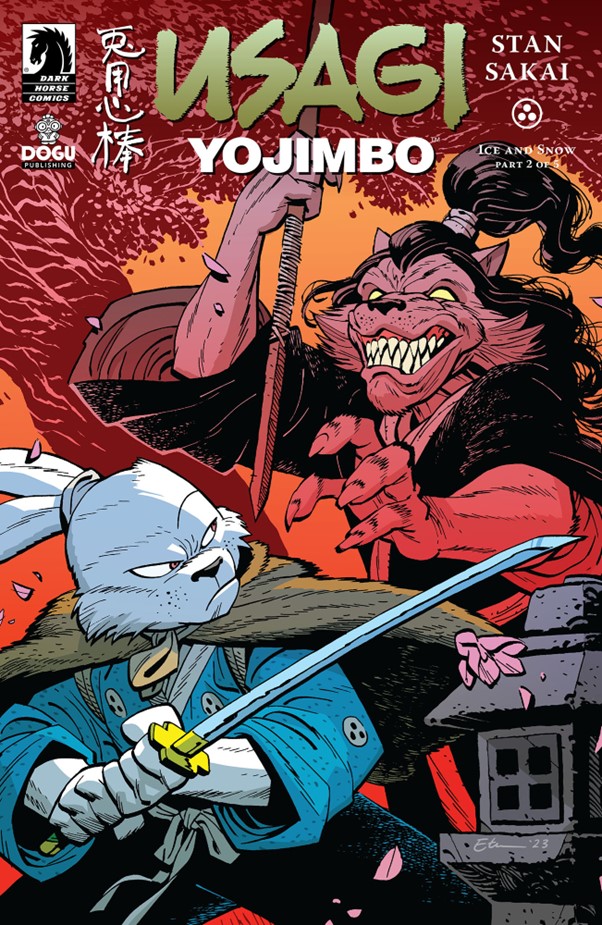
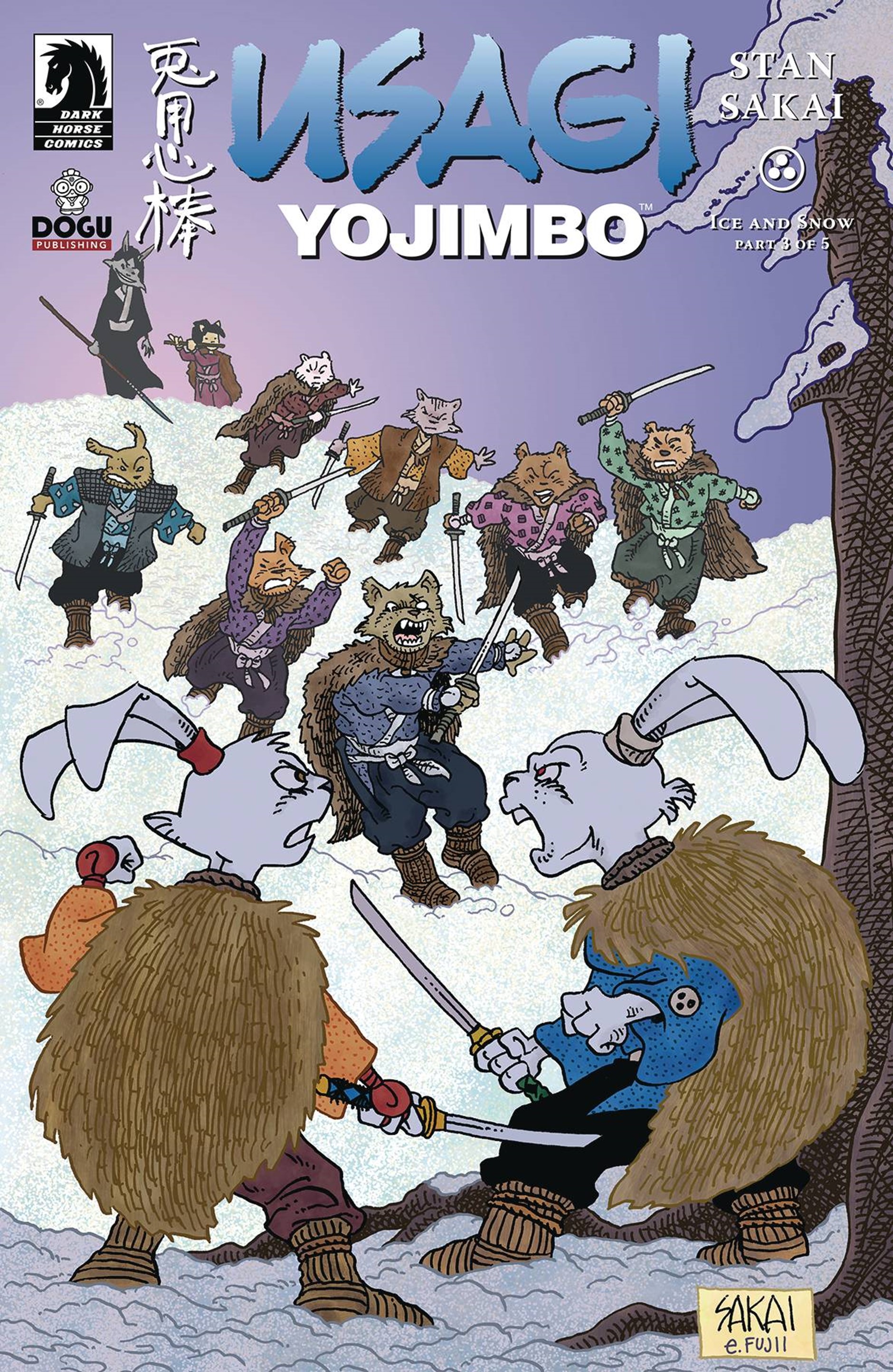
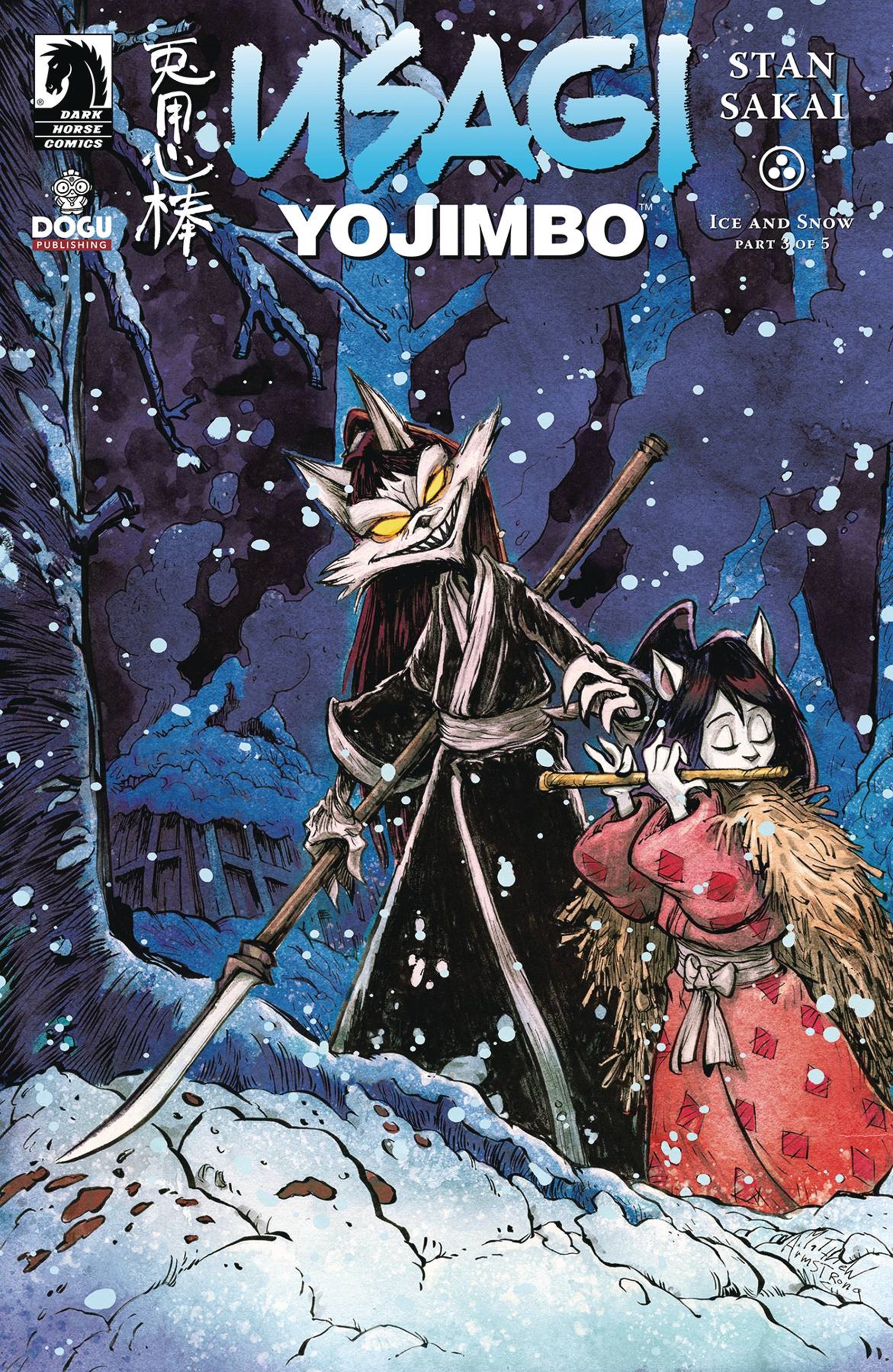
 

2. Deadpool 2

While Deadpool & Wolverine was really impressive, my favourite Deadpool film is the second entry, Deadpool 2.  An outstanding sequel to the first Deadpool, Deadpool 2 expanded on the best story elements from the first film, while also bringing together another insane, but clever, new narrative.  Setting Deadpool against Josh Brolin’s Cable, this film had so many great moments as the creative team blended comedy with complex storytelling.  I particularly love the way the audience was misdirected in advance with the X-Force team prominently featured in the trailer, only for their appearance to be cut short in dramatic fashion, and viewers honestly did not know where the story was going at times.  Zazie Beetz Domino and Julian Dennison’s Rusty, were both exceptional additions to the cast, and you have to love how effectively they were able to show off Domino’s ill-defined luck powers.  This might honestly be the funniest comic book film I have ever had the pleasure of watching, and it is so far the pinnacle of Ryan Reynold’s comedic genius.


1. Logan

I doubt anyone will be too surprised that Logan tops my list as my favourite X-Men film.  Generally considered one of the best comic book films of all time (I have it in my top three with Infinity War and The Dark Knight), Logan is an exceptional movie that shows just how complex and powerful a comic book adaptation can be.  Partially based on the Old Man Logan graphic novel, Logan follows an aging former Wolverine in a dark future where mutant-kind is in decline, and the X-Men are all dead.  Taking care of a near incapacitated Charles Xavier, Logan goes on one last mission to save a young girl, Laura, who has a dark connection to him.  This was an outstanding film that combines a compelling X-Men story with a grim Western aesthetic.  Hugh Jackman and Patrick Stewart give some of the best performances of their careers, while newcomer Dafne Keen proved to be a fantastic X-23/Laura.  Director James Mangold produces something truly special with the tight and compelling story, and viewers are treated to emotional gut-punch after emotional gut-punch.  I honestly came away from Logan a changed man, and if a comic movie is going to make to you cry, it will be Logan.  Easily the undisputed best film of the entire X-Men franchise, and a very worthy number one place on this list.


Well, that is the end of my new X-Men film list.  I think it turned out pretty well, and I really had fun pulling it together.  It will be interesting to see if this list gets updated again in the future, especially with the fate of the X-Men films tied into the MCU, but I hope this will be something I can revisit again at some point.  Make sure to let me know what you think about my ratings above, and don’t worry about hurting my feelings if you have different opinions about the films in question.

The Sandman – Act III (Audiobook), written by Neil Gaiman and performed by a full cast

Publisher: Audible Original (Audiobook – 28 September 2022)

Series: The Sandman – Volume 3

Script: Neil Gaiman and Dirk Maggs (script adapter)

Director: Dirk Maggs

Length: 11 hours and 31 minutes

My Rating: 5 out of 5 stars

Amazon

After falling in the love with the epic The Sandman comics thanks to their exceptional audiobook adaptations, I finally got to the third audiobook act in this exceptional series by Neil Gaiman, which was another amazing listen.

I have had an outstanding time listening to the first and second volumes of the audiobook adaptations of The Sandman comic.  Set partially in the DC universe, the original series, which started in 1989, is one of the most iconic comics of all time and features a unique adventure that only Neil Gaiman can come up with.  Following Dream, the anthropomorphic personification of dreams and human imagination, The Sandman is a truly amazing comic that blends horror, fantasy and superhero elements together.  Some people might be more familiar with the recent Netflix series that adapted the first couple of comics, and which has a second season on the way.

This series has proven to be extremely exceptional, with Act I perfectly introducing the characters and setting up the initial storyline, while Act II continues some of the key story points and places Dream against various foes, including Lucifer and other dangerous mythical figures.  Not only do these audiobooks feature an incredible story and powerful characters but they are brought to life by a truly awesome cast of celebrity actors and audiobook narrators who really lend their all to this performance.  As such, when going on a couple of fun road trips this year, Act III was a very easy choice to listen to, and I was extremely curious to see how this series would continue.

In a universe of strange and deadly creatures, many beings are considered immortal, but only seven siblings can truly claim to be endless.  The Endless, each a personification of a universal concept, are powerful and mesmerizing in their own way, but the most enchanting and mysterious is Dream.  Known by many names, including Morpheus, this being governs the Dreaming, a vast realm of creation’s collected dreams and stories, protecting the imagination that makes life worth living.  But circumstances outside of his control have set him on a dark path that not even he can escape from.

After being freed from captivity and deciding the future of Hell, Morpheus finds himself troubled by another failed romance, his own complex past, his previous monstrous decisions, and his often contentious relationship with his family.  Visited by his troubled youngest sibling Delirium, Dream embarks on an unusual quest alongside her to find their missing brother, the one member of the Endless to ever give up their role and responsibility, Destruction.  But their prodigal sibling does not wish to be found, and many obstacles lie between an Endless reunification.  To succeed in their quest, Morpheus will need to revisit the most painful chapter from his past.  However, no-one, not even a member of the Endless, comes away from a meeting with Destruction unscathed!

Unsurprisingly, Act III proved to be an exceptional listen, and I once again got wrapped up in the elaborate and compelling web of stories and characters that The Sandman is well known for.  Adapted once again by director Dirk Maggs and featuring all of Gaiman’s impressive storytelling and dark characterisations, The Sandman – Act III, was an outstanding listen, and one that I could not get away from.  Adapting the Brief Lives and Worlds’ End arcs of The Sandman comic, as well as several additional short stories, Act III was an exceptional addition to this series, especially with the truly exceptional voice cast.

Act III continues the same format and style of the previous The Sandman audiobook adaptations, with the comic broken into several distinctive parts to best tell the elaborate story from the comics.  The previously drawn adventures are brought to life here through a combination of excellent narration by Neil Gaiman, who covers many of the characters’ actions and movements, sound effects to represent other unseen elements, and the dialogue of the various characters, with their respective actors often describing the moments going on around them.  This results in an intriguing but complex listening experience, and with a runtime of 11 hours and 31 minutes, it is one that you can get through very quickly if you have the time.

This latest audiobook adaptation starts off in an interesting place with the short story The Song of Orpheus, which originally appeared in the Fables & Reflections collection of stories.  The Song of Orpheus is a fantastic retelling of the classic Greek myth of Orpheus, with the character reimagined as the son of Morphius and the muse Calliope, the latter of whom was featured in the story Calliope in the Dream Country collection (featured in the Act I adaptation).  Gaiman does an excellent job of bringing together the classic Greek mythology of the Orpheus legend with his own characters and the result is a seamless and complex tale.  Orpheus’ ill-fated marriage and journey to save his love is aided and hindered by the various members of the Endless, with Morpheus serving as a complex distant father figure.  The resulting story may seem familiar to those with knowledge of Greek mythology, but there are some added intriguing twists, and the inclusion of Gaiman’s characters ensure that there is even greater tragedy than the original Greek myth envisioned.

When I started this audiobook, I thought that The Song of Orpheus was interesting start to this act, and in hindsight it was quite a clever decision, as it sets up some of the other arcs extremely well.  The story ensures that listeners are well warned about the tragedy and elaborate storylines contained in Act III, while also drawing you in with its inventiveness and complexity.  It is also a brilliant production thanks to the combination of cast and background music effects.  Regé-Jean Page (of Bridgerton fame), proves to be an outstanding Orpheus, who stands as an interesting contrast to the other established voice actors of this story.  There are also some epic musical accompaniment and sound effects that prove vital in showcasing the full impact of this story, and which you honestly need when telling a story about the mythical musician Orpheus.  I felt that the musical elements of this chapter deeply helped to enhance the story, especially as there was some great sadness in the sound effects that mirrored the story.  This was honestly a very strong start to Act III, and I loved how well it led into the first main story, Brief Lives.

Brief Lives is a particularly epic main story arc for this audiobook which serves as both the plot and emotional heart of Act III.  Initially focusing on the incredibly fun character of Delirium, who we only briefly saw in Act II, Brief Lives sees Dream accompany his sister on a road trip to find their lost brother, Destruction.  This results in several intriguing mini story arcs as the mismatched and chaotic siblings travel through the mortal world, encountering their family, friends, and former associates of Destruction.  At the same time, sinister events begin to impact people associated with their search, and Dream must navigate the increased collateral damage his quest is incurring.

I really loved this arc, and I think that Brief Lives might be one of the stronger The Sandman storylines.  The road trip storyline with Dream and Delirium worked to tell this story in a fantastic manner, and I enjoyed how the author took the opportunity to quickly and effectively introduce new intriguing characters whose worlds become impacted by their interactions with the Endless.  The long-anticipated reveal about the missing Endless was great, and Gaiman loads in some intriguing examinations about family, destiny and duty.  Brief Lives is loaded with a great combination of dark mystery, the author’s gothic vibe, a fantastic layer of humour, and an intense amount of tragedy, all wrapped up with the most unique familial interactions you are likely to see in fiction.  The author takes the storylines in some interesting directions, and the resulting emotional richness proves very hard to ignore.  The ending of Brief Lives is particularly moving, with a resolution of family drama followed by additional tragedy millennia in the making.  This also proves to be quite a key story in the wider The Sandman story, with the consequences radiating out from the events of this road trip have chaotic impacts in the future.

I have to say that I was really impressed with how Brief Lives came together.  Not only does the elaborate story come across clearly and interestingly with the chapter split, but you really get drawn into every single supporting character that shows up.  I particularly enjoyed seeing Delirium getting a whole arc to shine in, and actress Kristen Schaal is perfect as the embodiment of personal chaos, bringing an immense childlike glee to the madcap antics of her character.  Schaal perfectly plays off the more serious characters in this story arc, and you can really feel the dancing chaos beneath the surface of her mind as well as how scattered and unconnected she is.  The reveal of Destruction as a character was also quite interesting, and I like the author’s take of him being a warm, thoughtful and entertaining destroyer, whose duty has deeply damaged him.  David Harewood brings some real compassion and charm to the role of Destruction, and I enjoyed how he played off the sarcastic talking dog Barnabas, voiced by veteran voice actor Harry Myers.  The portrayal of Brief Lives also makes excellent use of some musical accompaniment to enhance the emotional impact of the plot, including in some of the story’s heaviest scenes, and this ended up being the most compelling part of Act III to listen to.

The other major storyline in The Sandman – Act III, is the intriguing anthology storyline, Worlds’ End.  Like some of the previous arcs in The Sandman, Worlds’ End is more of an indirect addition to the plot, loaded with short stories that show snippets of Dream, the Endless, and other supporting characters, interacting with new and unique figures.  However, Worlds’ End is also quite distinctive, especially as Neil Gaiman surrenders his narrator duties in this arc, and instead features multiple guest narrators telling their own tales in a similar manner to The Canterbury Tales.  The plot of this arc starts with character Brant Tucker (voiced by Wil Wheaton) and his colleague crashing their car in a freak storm and then finding refuge in the mysterious Worlds’ End inn.  Within the inn, they discover multiple unusual travellers from across time and the realms, who have been scattered due to a reality storm and are seeking shelter.  To pass the time, the various guests tell stories based on their lives, which paint a complex tapestry of their experiences and the long-reaching influence of the Endless.

I have a lot of love for the various short stories that Gaiman fills The Sandman comics with, but I felt that the collection featured with Worlds’ End were some of his strongest.  There are five central stories featured within, and they each provide a complex and wildly different tale of life, loss and adventure, all set in the contexts of different worlds and experiences.  Gaiman manages to tell some complex tales in the short time he has with each entry, and the reader comes away with intriguing visions of these unique worlds and characters.  There are a few times where the narrative devolves into a story within a story, as narrators begin to recount tales that were told to them (and in a couple of cases you have a story within a story within another story).  However, even these prove to be very captivating, and it is a testament to how good a storytelling Gaiman is that readers can moved into multiple interlocking tales and still be intrigued by what is going on.  There is also a great mixture of tales here, from a Lovecraftian inspired dream tale, to a hilarious fantasy adventure told by a rambunctious Faerie, and even a classic nautical adventure tale of a handsome sailor boy, which features the return of fan favourite character Hob Gadling.  However, my favourite story was The Golden Boy, an intriguing retelling of the story of Prez Rickard, the teenage president protagonist of the classic, if short-lived, Prez comics, which proves to be quite entertaining and haunting, while also showing an idealised vision of America.

I felt that these five stories came across in a very organic way with the differing narrators, and it proved to be a lot of fun to experience the talents of several new or underutilised vocal talents in a strong way here.  Wil Wheaton was a great main narrator for the overarching story, and I felt he portrayed a good everyman character experiencing the unnatural for the first time.  Billy Boyd and Colin McFarlane both shine as narrators and central characters for their respective stories, and I quite enjoyed the performances of KJ Apa and Jon Culshaw in The Golden Boy, while Simon Jones was an impactful addition to the funeral-focused story Cerements.  These actors, and many others, helped to turn Worlds’ End into a compelling and distinctive arc, and I liked how effectively it contrasted with the other The Sandman arcs we have enjoyed.  This entire storyline ends on an ominous and prophetic note, as the listener is given a glimpse of major events to come, and Worlds’ End proved to be a great way to conclude Act III.

Overall, these main stories, as well as an additional couple of short stories, proved to be very impressive to read, and I love the complex plots and themes that the author tried to impart.  The continuation of a larger storyline, combined with multiple short stories that expands The Sandman universe, works to create an elaborate experience for the listener, and I deeply appreciate the immense imagination that Gaiman puts into his work.  The flow from larger, cohesive storylines to a series of shorter tales also works extremely well, and I love how the obvious palate cleaner short stories take on a compelling life of their own.  No matter how short, each of the stories in Act III were very well written, and the distinctive blend of dark storytelling, gothic imagination and complex characters makes for some addictive listening.  I especially love the recurring trend of normal humans, as well as other more supernatural beings, encountering the various Endless by chance, only to find their lives altered by the experience, often for the worst.  The often capricious nature of Dream, as well as some of his siblings, really comes through with Gaiman’s writing and the subsequent acting, and you cannot appreciate just how well-written these figures, and indeed the entire character cast of The Sandman, are, until you experience it for yourself.

Before we get to the end of this review, I must once again strongly compliment just how awesome these The Sandman audiobooks are.  Gaiman, Maggs and others do such an incredible job of converting the original comics into this new format, and all the original ideas, actions and compelling figures come across perfectly in the audiobook.  The combination of clever narration and on-point dialogue allows listeners to really appreciate the unfolding actions taking place, and effective sound effects add that extra layer of understanding.  Throw in some outstanding musical moments, which prove to be particularly impactful in Act III, and this entire audiobook hits the reader hard and ensures that are constantly caught up in the elaborate ideas of the original author.  All the storylines come across perfectly, with some slight alterations in the order they appear, and you really come away with an outstanding appreciation for The Sandman, even if you’ve never read the comics.

It goes without saying that Act III once again featured an incredible cast of actors and voice specialists, all of whom perfectly portray the characters they are assigned to.  I love how all the key stars from Act I and Act II, once again returned here, and their outstanding voices, combined with some awesome new figures, ensured that every word of this audiobook delighted its audience.  I have already mentioned a few key actors above, but I really want to once again highlight the outstanding recurring key cast, who do such a great job here.  Series lead James McAvoy is just perfect as Morpheus, and his resonate and powerful voice consistently captures the ethereal, arrogant, and thoughtful qualities of the titular protagonist every time.  It is such a pleasure to listen to McAvoy perform once again in Act III, and his excellent voice plays off every other actor in this audiobook so damn well.

Other key returning stars include Kat Dennings, who perfectly portrays Gaiman’s warmer, caring, female Death, who is frankly one of the best characters in the entire series.  Andy Serkis has a lot of fun as the raven Matthew, and his scenes with Dream and Delirium are hilarious.  Jeffrey Wright, Justin Vivian Bond and Miriam Margolyes each do an amazing job of bringing Destiny, Desire and Despair to life, and you can really feel their ancient power and alternating views of humanity.  Justin Vivian Bond’s portrayal of the feckless and fickle Desire is particularly noteworthy, and I love how well this unique character came across.  Multiple other actors and established audiobook narrators provide a range of compelling and memorable voices throughout Act III, including several of my favourite audiobook narrators like Ray Porter and Toby Longworth, and I loved every one of their voices.  Finally,  Neil Gaiman himself serves as an outstanding central narrator for much of the Act III.  Gaiman’s distinctive voice perfectly fits the gothic and mysterious vibe of The Sandman comics, and there is no-one else who could narrate these complex ideas and experiences, better than the author who originally came up with them.  You will frankly struggle to find a better cast of voice actors in any other audiobook out there, and this outstanding vocal team makes Act III, and indeed all The Sandman audiobooks, something extremely special to enjoy.

Act III of The Sandman audiobook was another exceptional listen and one that proves pretty impossible to stop listening to.  The combination of captivating storylines, outrageous characters, and a huge array of vocal and acting talents make this an easy five-star listen, and I can personally guarantee that The Sandman – Act III makes for an excellent accompaniment to a long road trip.  While I’m sure that recent controversies might impact this, I hope we get the fourth act in this epic series soon, and I cannot wait to see how Morpheus’s tragic and complex tale ends.

Amazon

The Sandman – Act II (Audiobook) by Neil Gaiman and performed by a full cast

The Sandman - Act II Cover

Publisher: Audible Original (Audio Drama – 22 September 2021)

Series: The Sandman – Volume 2

Script: Neil Gaiman and Dirk Maggs (script adapter)

Director: Dirk Maggs

Length: 13 hours and 47 minutes

My Rating: 5 out of 5 stars

Amazon

The gloomy and complex fantasy adventures of Neil Gaiman’s The Sandman continues in this epic second audiobook volume that once again brings Gaiman’s unique imagination and characters to life with an outstanding cast of actors.

Back in 2022 I had an outstanding time listening to the first volume of the audiobook adaptation of The Sandman comic.  The original series, which started in 1989, is one of the most iconic comics of all time and features a unique adventure that only someone as twisted and imaginative as Neil Gaiman can come up with.  Following Dream, the anthropomorphic personification of dreams and human imagination, The Sandman is a truly interesting comic that blends horror, fantasy and superhero storylines together.  Some people might be more familiar with the recent Netflix series that adapted the first couple of comics and which has a second season on the way.

While I loved the show, I personally had a much better time with the audiobook version of the comics that was released a couple of years ago.  Featuring a truly exceptional cast of celebrity and established audiobook narrators, the first volume of this series was so damn good, and I loved how well it established the characters and universe of The Sandman while also adapting Gaiman’s unique vibes and dark themes.  This first volume was extremely addictive, and I made sure to listen to the second volume shortly after.  The second volume, or Act II as it will be called in this review, continues the comic storyline and features some amazing stories, fun characters and new cast members.

In a universe of strange and deadly creatures, many beings are considered immortal, but only seven siblings can truly claim to be endless.  The Endless, each a personification of a certain universal or human concept, are powerful and mesmerizing in their own way, but the most enchanting and mysterious is Dream.  Known by many names, including Morpheus, this being governs the Dreaming, a vast realm of creation’s collected dreams and stories, protecting the imagination that makes life worth living.  But circumstances outside of his control have set him on a dark path that not even he can escape from.

Still dealing with the consequences of his forced absence from his realm, Morpheus is working to recover everything he lost while avoiding the enemies he made along the way.  The most powerful of these is Lucifer, the fallen angel and lord of Hell, whom Morpheus insulted when he stormed Hell to take back his stolen helm.  Despite not wishing to cross Lucifer again, Morpheus is convinced to set right the biggest wrong of his life and free his former lover from Hell.  However, he is unprepared for the reception that awaits him as Lucifer chooses to damn him in a far more sinister way: by gifting him control of his dark domain.

Finding himself in possession of the key to Hell’s gates, Lucifer must determine who will become the new ruler of Hell.  Setting up a gala in the Dreaming, Morpheus receives visits from an array of gods, demons, angels, and other immortal beings, each of whom seek to control Hell for their own reason.  Soon, Morpheus finds himself in the middle of a host of scheming beings, many of whom will turn on their host to get what they want.  At the same time, weird things are happening in the Dreaming, as an ancient and unstable realm begins to drag in inhabitants from the real world and influence the waking world.  Can Morpheus ensure his realm stays whole whilst dealing with the most dangerous beings in creation?

This was another outstanding adaptation of The Sandman comics that was so damn epic to listen to.  Adapted by director Dirk Maggs and featuring all Gaiman’s impressive storytelling and dark characterisation, The Sandman – Act II was extremely impressive, and you really get drawn into the unique world of the original comics.  Adapting issues #21-40 and #50 of the original comics, The Sandman – Act II brings together the stories of Season of Mists and A Game of You, and several entries from Fables & Reflections.  All these adaptations are so damn good, and I love the elaborate and epic cast that helps to bring the tale to life.

Due to how the audiobook is set out, there are three distinctive parts to The Sandman – Act II, which provided their own unique stories and characters.  The first of these is titled Season of Mists, and features Morpheus finding himself wrapped up in the fate of Hell.  Starting with an entertaining and dysfunctional family dinner, where Morpheus reunites with all his siblings (bar one), the story then turns to Morpheus’s biggest regret, his relationship with the ancient African queen Nada (whose story was told in the last audiobook), which trapped her soul in Hell.  Travelling to Hell to free her, Morpheus finds that Lucifer has banished all the demons and damned souls from his realm and is abdicating as ruler, leaving the key to Hell’s gates with Morpheus.  Morpheus is soon tasked with deciding the fate of the dimension, which results in a flurry of immortal beings arriving at his home to request the key.  The resulting conference proves to be highly entertaining as Morpheus is forced to deal with all manner of bargains, schemes and betrayals as everyone seeks his favour.  I loved how the entire dramatic conference unfolds, and the interactions between the various over-the-top figures and the implacable Morpheus results in some great drama and hilarious sequences.  The conclusion of this storyline is amazing, as a new irony overtakes the denizens of Hell, Morpheus finds himself meeting various beings who will change him in the future, and the seeds are set for a new story around Lucifer (as seen in his own comic and television series).

Honestly, this is probably the best part of The Sandman – Act II, as not only is Season of Mists particularly gripping, but it makes full use of both the existing voice cast and several new figures to really enhance the content.  The battle of wits between several larger-than-life characters is extremely compelling and clever, and Gaiman does a remarkable job expanding the canon of The Sandman.  There are so many subtle and delightful character interactions scattered throughout this storyline, and listeners will love the impressively devious stakes that are being discussed.  This includes some fantastic and deep soul searching for the protagonist, who is forced to revisit one of his darkest deeds.  Thanks to his own experiences of being locked away, Morpheus understands his harsh past actions a lot better, especially when prompted by members of his family.  I always appreciated how Gaiman shows that Morpheus isn’t really a hero but a force of nature who arrogantly follows his own whims.  However, in this case he is a somewhat better person, even if he is still selfish in his actions, and it takes some real prompting for him to do the right thing.

Gaiman also makes sure to feature some additional amazing character arcs, the most intriguing being Lucifer’s when he decides to perform the ultimate rebellion against his father by abandoning Hell.  Lucifer’s portrayal by a returning Michael Sheen is exceptional, especially during his interactions with Morpheus, and his take on the events that led him to rule Hell are very powerful.  In addition to Sheen, Season of Mists also features the inclusion of several amazing new actors, each of whom are used to their full potential.  Jeffery Wright and Kristen Schaal are perfect additions to the Endless, voicing the taciturn Destiny and the bubbly Delirium respectfully.  However, it is the one-two punch of Bill Nighy as Odin and David Tennant as Loki that really sold this chapter to me.  Bill Nighy and David Tennant are two of my absolute favourite actors, and their takes on these two Norse gods are just amazing.  While Nighy brings gravitas and cruelty to Odin, Tennant’s wheedling, manipulative Loki was so damn fun, and both were the highlight of every scene there were in.  The rest of the cast in this chapter were epic as well, and this entire section was such a highlight of The Sandman – Act II, with its placement at the top of the book successfully drawing listeners in and ensuring they don’t go anywhere.

The other main storyline in The Sandman – Act II was titled A Game of You, and is an adaptation of one of the less popular comic arcs.  This story is an intriguing female-led additional to the series, which primarily follows Barbie, a minor figure from the previous The Doll’s House arc, who has uprooted her life and moved to New York to live with an eclectic mixture of residents in an apartment building.  When figures from Barbie’s long-lost dreams arrive in the waking world, Barbie is dragged back into a fantasy adventure, while her friends in New York deal with minions of the mysterious Cuckoo, a dream parasite preying on Barbie’s mind.  The resulting attempts to help Barbie result in chaos and tragedy as they trespass into the Dreaming and come face to face with Morpheus as a he fulfills an old bargain.

Now I must admit that A Game of You was a little weaker than I was hoping, especially when compared to the preceding Season of Mists.  The decision to focus on Barbie, who honestly didn’t stand out too much in her previous appearance, was an interesting choice by Gaiman, and this arc doesn’t have the most engrossing story.  However, I did still have a great time listening to this part of the audiobook, especially as it focuses on showcasing both the magic and danger of dreams, as well as the impacts that interactions with Morpheus can have on mortals.  The more distinctive fantasy focus of this story makes for a nice change of pace, and I liked how well Gaiman simultaneously showed events occurring inside and outside of the protagonist’s dreams.

One side effect of listening to A Game of You immediately after Season of Mists is that the less substantial cast is a lot more noticeable.  That’s not to say that A Game of You doesn’t have great characters.  There are some amazing figures featured here, including several unique protagonists who have compelling connections to previous story arcs from the series.  There are also some nicely progressive LGBT+ elements for a comic released in 1991-92, especially when it comes to the trans woman character, Wanda, who is handled with tact and who has a particularly impactful story arc.  There are also fewer celebrity voice appearances in this arc, although I did rather enjoy the inclusion of actress Emma Corrin of The Crown fame as the ancient witch Thessaly, as her intense and distinctive voice added a lot to this fantastic character.  While it is easy to nitpick A Game of You, especially after some of the previous arcs, this is s till a particularly impressive storyline, which is masterfully brought to life with this production, producing something that is very fun to listen to.

These two main storylines are impressively augmented by a series of short stories scattered throughout the course of the audiobook.  Most of these short stories fall between Season of Mists and A Game of You, with several more wrapping events up.  There is also a short story in the middle of Season of Mists that showcases the impacts the closure of Hell has, which leads to the Dead Boy Detectives series.  Gaiman comes up with some truly interesting and unique shorter stories to add to the main plot of the book.  Most of these stories involve various mortals or other supernatural creatures encountering either the Endless or some of Morpheus’s creations, and they usually serve as some form of cautionary tale.  I loved the intriguing underlying themes that Gaiman loaded into each story, including about the impermanence of power and examinations of the human condition, and the author also has fun in launching his distinctive characters into various historical periods.

While all the shorter stories contained in The Sandman – Act II are awesome in their own way, a couple do stand out due to their excellent stories and fantastic performances.  For example, the complex story Three Septembers and a January, retells the tale of Joshua Abraham Norton, self-declared Emperor of the United States, with Dream and his siblings shown to be responsible for his strange actions.  This story is both fascinating and dark, as you witness a man torn apart by the whims of the ethereal siblings.  Listeners grow particularly attached to this tale due to the performance of John Lithgow as Joshua Norton, who adds some excellent humour and no small amount of tragedy with his moving voice work.  Other great stories include Thermido, which sees the return of Lady Johanna Constantine from the first audiobook.  Voiced by the absolutely fabulous Joanna Lumley, this story follows Constantine as she steals into France during the height of the revolution to steal something from Robespierre.  This story was fast-paced, clever, and substantially dark, all of which helped it to stand out, especially with the compelling twists and ironic historical fates.  It was also amazing to get a whole story told by Joanna Lumley, who was somewhat underutilised in the first audiobook.  Finally, the tale August, which follows Augustus Caesar as he disguises himself as a beggar and tells his life story to a dwarf, proves to be quite impressive, especially with Brian Cox playing the titular character.  Each of these shorter stories are masterfully presented, and I loved how complex and powerful their stories were, even with the shorter length the author had to work with.

Overall, I really appreciated the entire story of this volume.  The blending of two fantastic main storylines, as well as the scattering of intriguing and unique short stories, makes for quite an epic continuous listen.  The short stories were well utilised as the director spread them out amongst the audiobook providing a good break between the two extended plotlines, as well as some fun listens in the epilogue.  Not only were all the entries in The Sandman – Act II fantastic and compelling, but each of them had such a distinctive feel that really highlights the author’s style and ability to blend various genres together into one powerful story.  The interesting array of over-the-top characters makes for quite a fantastic listen, especially as Gaiman attempts to capture the many burdens of having cosmic responsibility, while other stories look at how characters are affected by dreams and imagination.  The mixture of fantastic tales and dark moments is always cleverly undercut with moral lessons or complex observations about the human experience.  You honestly come away from The Sandman in deep thought while still being traumatised or wildly entertained by how events unfolded.  There is honestly nothing else quite like The Sandman in fiction, and I always have great admiration for the elaborate and multifaceted tales that Gaiman comes up with.

Just with the first volume of this epic audiobook collection, the production really captures the epic nature of the comic, which makes it a real joy to listen to.  Even with its runtime of nearly 14 hours, this is such an easy and addictive audiobook to listen to, and it proves hard to ever stop listening to the elaborate story that emerges.  A lot of this is down to the impressive nature of the production surrounding this audiobook, as the director goes out of his way to enhance the audio experience for the listener.  Everything about this audiobook, from the emotionally charged music, the elaborate sound effects, and the brilliant cast of actors and narrators, is designed to remind you what an imaginative and unique story you are listening to.  Heck, even the way that the various chapter titles are announced is epic, and I always get a kick out of the impressive way they are read out.  Honestly, the entire audiobook production is just perfect, and anyone who listens to it is in for an exceptional time they will not forget.

As part of my hyping up of the audiobook production, I have to highlight the sheer range of talent lending their voices to this audiobook production, without whom The Sandman – Act II would be nowhere near as exceptional as it was.  I have mentioned several of the newer voice actors in the review already, but The Sandman – Act II also featured the exceptional returning cast from the first audiobook, each of whom provided fantastic new performances that really stuck in the mind.  For example, Andy Serkis is so much fun as Matthew the Raven, while Justin Vivian Bond and Miriam Margolyes serve as fantastic and fitting versions of Desire and Despair respectively.  Kat Dennings proves to be an outstandingly effective incarnation of Death, especially as her positive portrayal captures the more compassionate and likeable version of Death that Gaiman envisioned for his comic.  Even Neil Gaiman has a key vocal role in the production, serving as the narrator who highlights events and details not captured by the dialogue.  Gaiman proves to be an impressive narrator for this story, and his distinctive and wise voice matches the feel of The Sandman perfectly.  However, most of these are overshadowed by James McAvoy, who plays the titular Sandman, Morpheus, in this production.  McAvoy is honestly perfect in this role, and the gravitas, sense of unknowing, and great sadness of this character is so perfectly portrayed by the actor’s voice.  McAvoy does such a good job portraying the imperialistic and arrogant tone and personality of Morpheus and the reader can really envision his actions and thoughts.  McAvoy honestly does the best presentation of this character it is possible to do (television series included), and you will fall in love with his take on this sinister and mysterious figure.

The Sandman – Act II is an outstanding and incredible audiobook production that does such a remarkable job of bringing more of Neil Gaiman’s iconic comic to life.  Perfectly adapting the distinctive and dark comics into a new format, listeners get the benefit of both an excellent narrative and some amazing audiobook production with a remarkable cast.  An absolute joy to listen to from start to finish, The Sandman – Act II was a brilliant follow-up to the first production, and I cannot recommend it enough.

Amazon