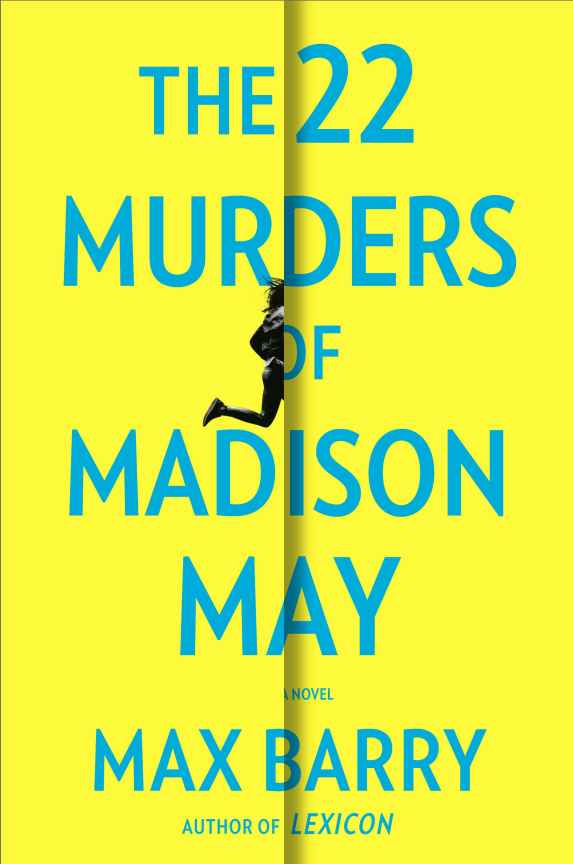
The 22 Murders of Madison May by Max Barry

The 22 Murders of Madison May Cover

Publisher: Hachette Australia (Trade Paperback – 30 June 2021)

Series: Standalone

Length: 322 pages

My Rating: 4.5 out of 5 stars

Amazon     Book Depository

From the unique mind of leading Australian science fiction author Max Barry comes the fantastic and very clever alternate universe thriller, The 22 Murders of Madison May.

Madison May has been murdered and she has no idea why!

Madison, a young real-estate agent suddenly finds herself on the wrong side of a knife wielding client with zero regard for keeping his identity hidden from the police.  His final act before killing her is to profess his undying love to her.  However, Madison has never seen her murderer before in her life, at least, not in this life.

When word of Madison’s death reaches the desk of the Daily News, it falls to rising reporter Felicity Staples to follow up.  Despite a dislike for murder cases, Felicity soon finds herself wrapped up in investigating the brutal killing of the beautiful Madison May, especially as some unusual designs have been carved into the walls.  However, things take a turn for the strange when Felicity sees the suspected murderer at the subway in a dangerous confrontation with another fugitive from justice.  Moments after seeing them, Felicity can only watch in surprise as they vanish before her eyes and her universe is turned upside down.

Returning to her apartment, Felicity notices several minor changes to her life.  Her boyfriend suddenly knows how to cook, one of her cats is missing, and no-one at work remembers anything about her story or Madison May.  As strange events keep occurring, Felicity is soon forced to face the fact that she has been transported to an alternate dimension.  Reeling from the revelation, Felicity is even more stunned when a slightly different Madison May turns up murdered, the victim of the same killer.  Chasing after the mysterious people hovering around the case, Felicity discovers that a dangerous stalker is moving from dimension to dimension, determined to find the perfect Madison May to fall in love with, and killing any version he doesn’t like.  Can Felicity stop the killer before he takes out another version of Madison May, or will her forays into interdimensional travel have consequences she could never imagine?

Wow, this was a very fun and captivating read that I really enjoyed.  The 22 Murders of Madison May is the latest novel from Australian Max Barry, an author of several intriguing science fiction novels, including Providence, Jennifer Government, and Machine Man.  This was the first novel of Barry’s that I have had the opportunity to read, and I am very glad that I did, as Barry has created an outstanding and fun science fiction thriller that makes great use of some cool alternate dimension travel to produce an exquisite and awesome story.

Barry has come up with an extremely exciting and compelling narrative for this fantastic novel, which makes excellent use of its unique science fiction hook.  The novel starts off with the brutal murder of the first Madison May, which leads to the involvement of protagonist Felicity.  It does not take long for Felicity to get dragged into an alternate universe after encountering the killer and a fugitive engaged in a fight.  Forced to deal with the unusual differences in her life and the revelations of what has happened to her, Felicity attempts to save the lives of several different Madison Mays, while also avoiding the attentions of a group of interdimensional travellers who jealously guard their secrets.  What follows is a series of thrilling scenes where Felicity and her ally, Hugo, jump from alternate universe to alternate universe trying to stop the killer, with varying degrees of success.  This all eventually leads up to a fantastic and impressive conclusion where Felicity is forced to make some major, life-altering decisions, while also facing off against the monster she’s been chasing.  This proved to be an extremely captivating and fascinating novel, which honestly takes no time at all to get hooked on.  I loved the brilliant blend of psychological thriller and compelling science fiction elements, which seamlessly work together to produce an outstanding and memorable standalone story.  I powered through this book in a couple of days, and I deeply enjoyed every second I spent reading this intense and cleverly written story.

I have to say that I deeply appreciated the fascinating concept of alternate dimensions and interdimensional travel that Barry features.  Not only does the author do a good job explaining the science and philosophy behind this science fiction feature, but he also ensures that it works to full effect within the narrative.  In this book, dimensional travellers move from one reality to the next, taking over the lives of the version of themselves living in that dimension.  This results in the travelling characters awakening in a world with slight deviations from the last one they visited.  Barry features several separate dimensions within The 22 Murders of Madison May, and it was always quite fascinating to see the slight differences that occur, good and bad.  This is most prominently shown through the eyes of protagonist Felicity, who ends up visiting several alternate realities, some of which severely shake her.  However, you likewise get to see several different versions of the titular murder victim, Madison May, which results in a fascinating examination of how decisions and missed opportunities can impact your life.  It was also cool to see the various ways in which the alternate dimension travel could be manipulated, most noticeably by the book’s antagonist.  This vicious killer was constantly manipulating events to find a version of Madison May that would love him the same way that he loved her, and it was both creepy and intriguing the way in which Barry combined an alternate reality story with a tale of a fanatic serial killer.  It was very interesting to see the way the villain was able to change the course of his dimensional travels to suit his needs, such as by framing one of his pursuers for murder, and then ensuring that they only travelled to dimensions where they were locked up in prison.  I felt that Barry did a great job introducing and utilising this cool concept, and it really worked to create an epic and powerful narrative.

The author has also come up with some fun and complex characters in The 22 Murders of Madison May, who are enhanced by the fact that you get a very detailed and compelling snapshot into various versions of their lives.  The main character is Felicity Staples, a bold and clever reporter who finds her entire life upside down.  Felicity initially lives an ordinary life, with a boyfriend and two cats, while hunting for political corruption.  However, the events of this story really mess her around, as she is bounced around slightly different versions of her life.  These various involuntary jumps really have an impact on her, especially as she experiences both positive and negative changes which make her question her choices and relationships.  At the same time, she becomes obsessed with saving Madison May and stopping the killer, so much so that she constantly throws her life in danger.  The combination of these choices and the changing realities proves to be quite wearing on her, especially as she is forced to make some major sacrifices in her own life to try and save Madison’s.  This makes for quite a strong and likeable protagonist, and I deeply enjoyed seeing her intense and tragic narrative unfold completely.

I also really enjoyed supporting character Madison May.  The Madison Mays are essentially nobodies who have the very classic backstory of being a struggling actress who moved the big city and is dealing with a terrible boyfriend.  However, in one reality she was given her big break and appeared in a film in a small role.  However, this big break was a double-edged sword, as it gained the attention of a stalker, who, upon failing to meet her in his world, travelled between dimensions and started hunting her down.  Throughout the course of the book, you see multiple versions of Madison May, each of whom has a slightly different life, whether she is still struggling as an actress, on the cusp of a big break, or has given up acting altogether.  The author does a really good job of quickly and concisely setting up each of these new versions of Madison May, and you quickly get a feel for who the character is and the choices that change her.  Because she is not travelling through alternate dimensions, it is always fascinating to see the different interactions she has with her killer, as well as the reactions to the strange events occurring around her.  As a result, you get a fairly detailed examination of this character’s life, and it proves very hard not to like her and hope that she is able to overcome the latest attempts on her life.

The final character I want to focus on is the novel’s main antagonist and the killer of Madison May, Clayton Hors.  Clayton is a compelling and intense villain who starts his journey as an obsessed fan who falls in love with Madison May after seeing her in a movie in his reality and starts stalking her, eventually getting caught.  While this would usually be the end of the story, Clayton was able to obtain an item that allowed him to travel through dimensions, so he started stalking Madison in every reality he can find, assessing each version to find the perfect match to the one he fell in love with, and then attempting to make them love him in return.  This is some deeply disturbing antagonist creation here, and I really appreciate the way in which Barry amps up a dangerous and obsessed sociopath by giving them the ability to stalk their victims across the dimensions.  There are so many elements to this character which turn them into quite a memorable villain, from his unwavering determination to get what he wants, his short and violent temper, an inability to be satisfied with the girls he finds, and an obsession that can withstand constant dimensional travel.  I particularly found the descriptions of his arms, which are scarred and cracked by the various bite marks of Madison May from across the dimensions, to be a horrific masterstroke from Barry, and it was very disturbing to see versions of Madison May who attempt to bite down on his arm in self-defence to find that their teeth already match the indentations there.  Clayton was an outstanding and disturbing villain, and he really helped turn this excellent science fiction thriller into something very special and dark.

The 22 Murders of Madison May is a brilliant and distinctive science fiction thriller that I had an amazing time reading.  Australian author Max Barry has written an exceptionally clever story that perfectly combines a disturbing tale of murder and obsession, with an adventure in interdimensional travel.  I loved this awesome story, and I will have to make sure I check out some more of Max Barry’s novels in the future because I had a fantastic time getting through The 22 Murders of Madison May.  A highly recommended read.

Amazon     Book Depository

Waiting on Wednesday – Aurora’s End by Amie Kaufman and Jay Kristoff

Welcome to my weekly segment, Waiting on Wednesday, where I look at upcoming books that I am planning to order and review in the next few months and which I think I will really enjoy.  I run this segment in conjunction with the Can’t-Wait Wednesday meme that is currently running at Wishful Endings.  Stay tuned to see reviews of these books when I get a copy of them.  For this latest Waiting on Wednesday, I check out the upcoming third and final book in a particularly fun young adult series with Aurora’s End by Amie Kaufman and Jay Kristoff.

Aurora's End Cover

Over the last few years, one of the most entertaining and exciting young adult series out there has been the cool and impressive Aurora Cycle books by bestselling Australian authors Amie Kaufman and Jay Kristoff.  Kaufman and Kristoff, who both have some great individual series under their belts, have formed an excellent and outstanding team to create The Aurora Cycle novels.

Starting in 2019 with Aurora Rising, this fantastic series follows a mismatched team of teenaged space cadets who act as galactic peacekeepers.  However, on their first mission they encounter Aurora, a girl out of time whose extended cryogenic sleep has somehow given her physic powers.  Thrust into the midst of a galaxy spanning conspiracy, the team were declared renegades and are forced to go on the run.  Their epic story continued in Aurora Burning, another excellent novel which expanded many of the plot points from the first book, while also introducing some great new characters and plot lines.  Aurora Burning ended on a massive cliff-hanger, with the lives of all the protagonists hanging in the balance, and the end of the world seconds away.

That leads to the focus on this article, Aurora’s EndAurora’s End is the upcoming third and final entry in The Aurora Cycle which will provide readers with the big conclusion to entire overarching plot.  Currently due to be released on 9 November 2021, Aurora’s End has a awesome sounding plot synopsis already available, as well as the beautifully haunting cover above.

Synopsis:

The squad you love is out of time. Prepare for the thrilling finale in the epic, best-selling Aurora Cycle series about a band of unlikely heroes who just might be the galaxy’s last hope for survival.

Is this the end?

What happens when you ask a bunch of losers, discipline cases, and misfits to save the galaxy from an ancient evil? The ancient evil wins, of course.

Wait. . . . Not. So. Fast.

When we last saw Squad 312, they working together seamlessly (aka, freaking out) as an intergalactic battle raged and an ancient superweapon threatened to obliterate Earth. Everything went horribly wrong, naturally.

But as it turns out, not all endings are endings, and the team has one last chance to rewrite theirs. Maybe two. It’s complicated.

Cue Zila, Fin, and Scarlett (and MAGELLAN!): making friends, making enemies, and making history? Sure, no problem

Cue Tyler, Kal, and Auri: uniting with two of the galaxy’s most hated villains? Um, okay. That, too.

Actually saving the galaxy, though?

Now that will take a miracle.

It looks like Kaufman and Kristoff have some fun plans in place for this final book, and I for one am very excited for it.  I have a lot of love for this series, due to the eclectic mixture of protagonists, the amazing humour and the vast and impressive narrative.  As a result, I am quite eager to see how the entire series ends, especially after that great cliff-hanger.

Based on the synopsis above, it looks like all the main protagonists will be coming back for this book in one way or another, and I am really keen to see how their story arcs end up.  It also looks like we are going to get some time-travel shenanigans, as some of the team are trapped in the time-stream, attempting to change their future.  This was hinted a bit in the previous novels, especially Aurora Burning, and it will be cool to see how the time travel elements ties everything together.  It will be rather fun to see these over-the-top characters attempt to deal with all the consequences of time travel, and you can imagine they are going to get a lot of stuff wrong.  Readers should also be prepared for a lot of drama and heartbreak, as the authors left several emotional storylines open at the end of the second novel which are going to be very hard to resolve.

This final book in the Aurora Cycle has a lot going for it, and I think that we are going to be in for an exceptional time with Aurora’s End.  Kaufman and Kristoff have done an incredible job with the first two books and the series, and there is some great setup going into Aurora’s End.  I already know that this final novel is going to feature a lot of outstanding humour, great character work and some clever storylines, and I am extremely confident that these two talented authors will be able to tie everything together perfectly.  This will probably be one of the best young adult novels of 2021, and I am very much looking forward to it.  I can only hope that I will not get too emotional if one of the amazing characters gets hurt or killed (you never know with final books).

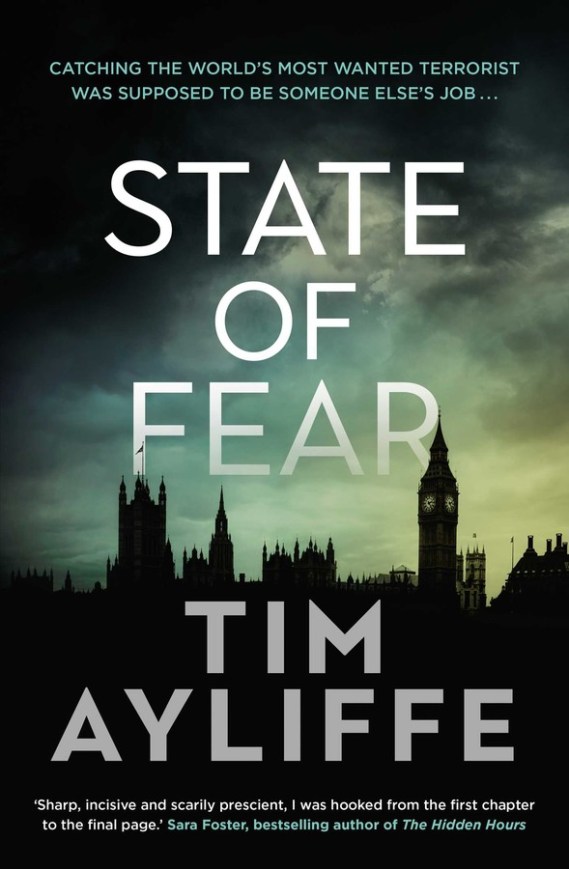
State of Fear by Tim Ayliffe

State of Fear Cover

Publisher: Simon & Schuster Australia (Trade Paperback – 22 July 2019)

Series: John Bailey – Book Two

Length: 390 pages

My Rating: 4.5 out of 5 stars

Amazon

One of the fastest-rising Australian thriller writers, Tim Ayliffe, follows up his impressive debut with an excellent second entry in his John Bailey series, State of Fear.

Tim Ayliffe is a talented author who debuted in 2018 with The Greater Good, the first John Bailey book.  This novel explored political corruption and international interference in Australia and made excellent use of the author’s experiences as a journalist.  I really enjoyed this first book and was rather interested when I received the second novel from Ayliffe, State of Fear, in 2019.  Unfortunately, I did not get a chance to read State of Fear when it first came out, and it has been in my to-read pile for a while, until I received a copy of the third John Bailey novel, The Enemy Within, a few weeks ago.  I rather liked the sound of the third book’s plot, and I really wanted to read and review it.  However, before checking out The Enemy Within I thought it would make more sense to read State of Fear first, and boy am I glad that I did.

Throughout his long career as a journalist and war correspondent, John Bailey has faced many dangers and been in several terrible situations.  However, his worst encounter was with the notorious terrorist mastermind, Mustafa al-Baghdadi, who kidnapped Bailey while he was reporting on the invasion in Afghanistan and relentlessly tortured him mentally and psychically.  Following his release from the terrorist group and a retirement from working in active war zones, Bailey thought that his days of dealing with terrorists was over, but he was wrong.

Speaking at a conference on Islamic terrorism in London, Bailey is horrified when a radicalised terrorist murders a woman in front of the convention centre.  Rattled, Bailey returns home to Sydney, only to find his troubles have followed him there.  The son of his former driver in Bagdad has gone missing, and Bailey has been implored to help.  Investigating, Bailey finds that the son has been in contact with some dangerous men with connections to Islamic terrorist cells.  Worse, it appears that they are planning to launch a massive attack in Sydney.

Desperate to save his friend’s son from making a terrible mistake, Bailey attempts to make sense of the terrible events unfolding in Sydney.  However, the deeper he goes, the clearer it becomes that Mustafa al-Baghdadi is back, and he is targeting Bailey personally.  As Bailey and everyone he loves comes under attack, Bailey is forced to turn to his old friend, CIA agent Ronnie Johnson, to find Mustafa and take him down.  But will they be able to stop Mustafa before it is too late, or will the world’s most dangerous terrorist destroy everything that Bailey holds dear?

State of Fear was an excellent and powerful novel that takes its great protagonist on a rough and dangerous journey through hell and back.  Ayliffe has definitely grown as an author since his first novel, and this second book is a compelling and intense novel with a well-crafted narrative.  Starting off with an intense beginning, the protagonist is swiftly shoved into his latest harrowing adventure, as the terrorist he thought he escaped violently bursts back into his life.  This is a very captivating novel, and despite its longer length I found myself powering through it in a very short amount of time.  The protagonist goes through a real wringer as he is forced to visit the ghosts of his past while trying to stop his foe’s latest plot.  Featuring a sprawling and deadly investigation through the suburbs of Sydney, the story eventually journeys back to London, where the protagonist and his friends engage in a deadly and dramatic fight to stop a deadly attack.  There is so much going on in this story, and the reader will experience outstanding action, powerful drama, and some major tragedy, especially in the novel’s dramatic conclusion.  This is a fantastic book which stands on its own and can easily be read by people unfamiliar with the other John Bailey novels.  I had an exceptional time reading State of Fear and it is really worth checking out.

Ayliffe works a lot of fun elements into this novel that make it quite a unique read.  Perhaps one of the most prominent of these is his experience and knowledge as a journalist which helps to produce a very Australian centric view of the events that are being depicted.  For example, Ayliffe includes a very detailed and compelling look at radical Islamic terrorism and how it is occurring both in Australia and in the wider world, particularly England.  Using several real-life Australian cases as basis, Ayliffe manages to expose and explore the heart of the issue, and he paints a fair and captivating picture of how individuals are lured into radical Islam as well as the consequences of their actions.  There are some very intriguing and powerful discussions included within this novel, especially around how the Islamic and migrant community in Australia feels isolated and prejudiced against, and I really appreciated the compelling inclusion in the novel.

Other intriguing elements contained within State of Fear include Ayliffe’s experiences with modern media and how journalist stories are produced and distributed.  There are some fascinating and fun journalistic scenes contained within this novel, and you have to assume that the protagonist’s extremely negative views about the swing to online social media based journalism has to reflect some of the author’s personal feelings.  Another great feature of this novel was the way in which Ayliffe once again used his novel to highlight the city of Sydney.  While a good portion of this novel is set in London (which Ayliffe also does a great job portraying), the scenes set within Sydney are a particular highlight.  The author really dives into showcasing this city, with the protagonist visiting several real-life suburbs and locations throughout the course of the book, distributing local knowledge as he goes.  As a result, this book is filled with some fun references that locals and Sydneysiders will really appreciate, and I enjoyed how Ayliffe spent the time to write a love letter to his city.

In addition to a fantastic story and excellent setting, Ayliffe also ensures that State of Fear is loaded with some complex and memorable characters.  The most prominent of these is series main protagonist and primary point of view character John Bailey.  Bailey is an outstanding veteran reporting character, and Ayliffe portrays him as a broken older news hound who is trying to balance his addictive career with holding onto his family.  This protagonist is the very definition of a damaged character, as he has experienced great trauma, both psychical and emotional, over the years thanks to his work as a war correspondent.  Despite this trauma, Bailey has experienced some major growth since the first book in the series, mainly thanks to the actions of major people in his life, and he is now a much more functional human being, allowing the reader to really connect with his struggles and damage.  Unfortunately, the events of this novel really hit him hard, as he experiences fresh pain while also revisiting his traumatic past through a series of dark flashbacks.  Despite this, Bailey keeps moving forward trying to solve the case, and it was great to see his determination and resolve, even under the worse of circumstances.  The ending of the novel is pretty bad for Bailey, and he goes through some tragic moments that will no doubt rock him for the rest of the series.  All of this makes for an incredible central protagonist, and readers will fall in love with this damaged and compelling character.

Aside from Bailey, State of Fear also contains several great supporting characters, most of whom are holdovers from The Greater Good, and who find themselves in all sorts of trouble in this book.  The most prominent of these is Bailey’s romantic partner, Detective Chief Inspector Sharon Dexter, who serves as a secondary point-of-view protagonist for parts of the book.  Dexter is a tough, no-nonsense cop whose past with Bailey led to a romantic relationship in the first book.  Despite having a very complex and unusual relationship with Bailey, Dexter proves to be an excellent supporting character, acting as the sensible and official support to Bailey who tries to keep him out of trouble.  While she has a bit of a cold exterior, especially when Bailey stuffs up or lies to her, Dexter is another character the reader can easily get attached to, and her involvement in the story is quite essentially the overall powerful narrative.

I also quite liked the inclusion of Bailey’s editor, Gerald Summers, another aging newsman who serves as Bailey’s emotional rock and best friend and who has an amazing run in this book.  Gerald is an outstanding and loveable character, which of course means he is going to suffer a little bit, so prepare yourself for that.  You also have to like Ronnie Johnson, the maverick CIA agent who spends most of his time living on Bailey’s couch, but who proves to be an effective and very dangerous operative when he needs to.  Ronnie has been a favourite character of mine ever since the first book (I mean, he kills an Australian Prime Minister Harold Holt style), and he does some cool things in this second novel.  Finally, I felt that Mustafa al-Baghdadi was a pretty good overarching antagonist for State of Fear.  Ayliffe did a good job portraying a manipulative religious zealot with grand plans for vengeance and the advancement of his cause.  Despite being hidden for most of the book, this character contains a great deal of menace, and I really enjoyed the sinister flashback sequences that featured him and Bailey.  I did think that some of his reasons for vengeance on Bailey were a bit weak (I mean, he had to know that the first thing Bailey was going to do when freed was to share what he knew with the Americans), but he was an overall great villain with major impacts on the narrative.  Each of these characters were well written and established, and I felt that their combined narratives really improved this fantastic novel.

State of Fear by Tim Ayliffe was an outstanding and captivating read that presents a powerful and moving adventure of journalist John Bailey.  Containing an intense narrative about terrorism, some unique elements and amazing characters, State of Fear is an excellent read which swiftly grabs the reader’s attention and refuses to let them go.  I had an incredible time reading this novel and I am still kicking myself for taking so long to check it out.  I have already read the third entry in the John Bailey series, The Enemy Within, and I am hoping to get a review out for it soon.

Amazon

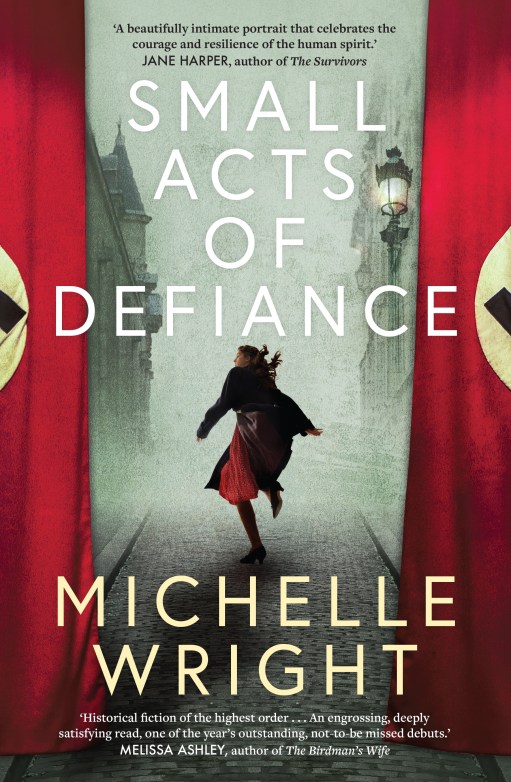
Small Acts of Defiance by Michelle Wright

Small Acts of Defiance Cover

Publisher: Allen & Unwin (Trade Paperback – 1 June 2021)

Series: Standalone

Length: 344 pages

My Rating: 4.5 out of 5 stars

Amazon     Book Depository

Impressive debuting Australian author Michelle Wright transports the reader back to the horrors and struggles of occupied Paris with the moving historical drama, Small Acts of Defiance.

May 1940.  Following the tragic death of her father, Australian teenager Lucie and her French mother Yvonne are left without any means of supporting themselves in Australia.  Reaching out to the only family they have left, Yvonne’s estranged brother Gerard, Lucie and her mother are convinced to journey back to Yvonne’s home city of Paris to live with Gerard in his apartment.

Despite having reservations about leaving for a Europe rocked by the early stages of war, Lucie is quickly enchanted by the beauty and culture of the city.  However, shortly after their arrival, disaster strikes and the French army suffers a catastrophic defeat, allowing the Nazis to invade France and occupy Paris.  Forced to adapt to the new regime, Lucie and her family attempt to survive as well as they can.

While wishing to remain safe and unnoticed by the Nazis, Lucie is drawn into the conflict when she befriends several people around Paris who resent the German occupation.  Encouraged by their strength and determination, Lucie experiments with using her artistic talents to engage in small acts of defiance against the Nazis and the puppet Vichy French government.  However, when she witnesses the Nazis’ increased attacks against Paris’s Jewish population and the attitudes of her authoritarian uncle, Lucie is drawn even deeper into the fight.  How far will Lucie go to save her new home, and what difference can even a few small acts of defiance truly have?

Small Acts of Defiance was a fantastic and moving novel from a promising new author that did an excellent job highlighting the horrors and troubles of occupied France.  Author Michelle Wright, an Australian who has spent considerable time in Paris, has written an outstanding novel with a story that is both beautiful and devastating, as she tells the intriguing and intense tale of Lucie and her experiences during the war.

Wright has produced a fast-paced and deeply moving narrative for Small Acts of Defiance.  The author swiftly sets the scene for the main characters of Lucie and her mother, who move to Paris right before the invasion while still dealing with the traumatic aftermath of Lucie’s father’s death.  It really does not take long for the historical horror to occur, as Paris is swiftly conquered by the Nazis, although Wright ensures that there is just enough time for Lucie, and the reader, to become enchanted with the city before its occupation.  Following the invasion, you are introduced to several great supporting characters who help Lucie to fully see how evil the Nazis and their French collaborators are, especially as some of her new friends are Jewish.  This centre part of the novel is great, and it was fantastic to see Lucie find her feet while also starting her initial acts of defiance.  However, while all appears mostly right, you know that tragedy is on the horizon, especially as the Jewish characters you become close to slowly have more and more restrictions placed upon them, which can only lead to disaster and despair.  Once the inevitable happens, the story really intensifies, as the protagonist witnesses true horrors and atrocities which slowly costs her some people she is really close to.  Readers will not be prepared for how dark and tragic the book becomes, although you cannot help but keep reading, especially as there is a little bit of hope for some characters.  The conclusion of Small Acts of Defiance is pretty intense and satisfying, especially as the protagonist achieves several great things while there is some good news for the other supporting characters.  This entire narrative very well written, and I loved the dramatic and powerful tale that Wright created here.  There is so much amazing and moving character development, especially around Lucie, which really grounds the novel and helps keeps the readers glued to the pages.  Wright has a real talent for writing hard and dark scenes, and I was utterly enthralled by this powerful story.

I was deeply impressed by the sheer amount of historical detail that Wright put into her debut novel, which is no doubt a side effect of all the time she spent in Paris.  The author covers the entirety of the Nazi occupation, from the French defeat, to the chaos of the invasion and the subsequent control of the city by the Germans.  There are so many interesting details and facets of history contained within the story, and I found myself getting really engrossed in the spectacular portrayal of this key historical location.  Wright spends time focusing on the various attitudes and reactions of the citizens of Paris, which ranged from outrage to acceptance or even outright support of the new regime.  The depictions of the puppet Vichy government and its actions was particularly intriguing, especially as the author examines the reason it had some support from the French.  This is particularly shown by Lucie’s uncle, an authoritarian former solider who respected the military general put in charge of the country, and who felt disenfranchised by the previous free French government.  There was also a lot of focus on the gradual crackdown and eventual deportation of the city’s Jewish population.  Due to the protagonist befriending several Jewish characters, you get to see the various restrictive laws come into effect, and the way that the Jewish population was dehumanised and destroyed one step at a time.  All of these proved to be deeply fascinating, and I loved how Wright was able to work it all into her intense and excellent story.

One aspect of this historical detail that I found extremely intriguing was the storyline surrounding the protagonist’s attempts at defying the Nazi and Vichy governments.  Unlike most historical fiction protagonists who fight back with guns, political speeches or brazen heists, the hero of Small Acts of Defiance at first uses art to subtly push back against authority.  This is achieved by drawing pamphlets or subtle symbols of French freedom in the postcards that she sells, small things that could still get her in trouble.  As the war progresses, the protagonist gets involved in other small ways, such as helping to pass information to the Allies or assisting the city’s remaining Jewish population.  I found these small acts of resistance to be a fascinating part of the book’s plot, and it was rather interesting to see the effect that even these minor actions could have on the character’s moral.  It also resulted in some compelling comparison to some of the more radical members of the French Resistance, especially some of Lucie’s friends, who take more drastic actions and face several physical and moral consequences as a result.  While Lucie does become more involved later in the book, I felt that it was really intriguing to see the various small, non-violent ways that French citizens could have helped in the war effort, and I think that it was a fantastic part of this captivating narrative.

Small Acts of Defiance was an incredible debut from Australian author Michelle Wright that does an amazing job capturing the tragedy, division and defiance that occurred during Nazi occupation of Paris.  Featuring a moving and captivating tale that surrounds one girl’s small attempt to help her friends and her new city, Small Acts of Defiance is an outstanding historical drama that comes highly recommended.  I am very intrigued to see what additional novels Wright creates in the future, and I am extremely glad I got the opportunity to read her fantastic first novel.

Amazon     Book Depository

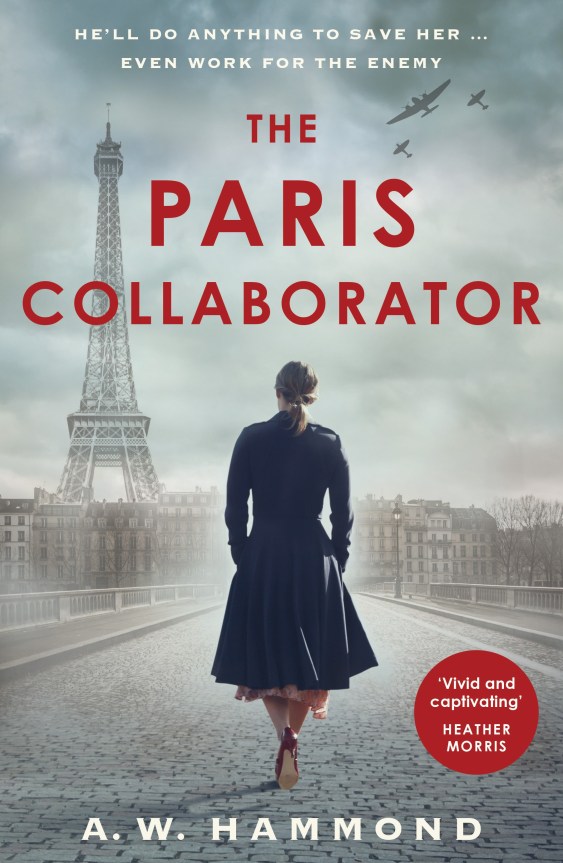
The Paris Collaborator by A. W. Hammond

The Paris Collaborator Cover

Publisher: Echo Publishing (Trade Paperback – 4 May 2021)

Series: Standalone

Length: 312 pages

My Rating: 4.5 out of 5

Amazon     Book Depository

Amazing Australian thriller author A. W. Hammond presents his first historical read with The Paris Collaborator, a clever and exciting novel set in occupied Paris.

August 1944.  With Allied forces advancing towards Paris, the Nazi occupation of the city seems to be nearly at an end.  But just because the Germans are poised to leave does not mean that the city is any less dangerous, especially for those whose loyalties are in question.  Since the Germans arrived, former teacher Auguste Duchene has taken on a whole new profession to survive: finding missing children.  With his impressive observational skills, Duchene has proven to be a keen investigator, but his talents are about to get noticed by all the wrong people.

Despite his desire to only help reunite lost families, Duchene is forced into working for a violent faction of the French Resistance after they threaten the safety of his collaborating daughter, Marienne.  Recruited to find a missing priest and the cache of stolen weapons he was hiding for them; Duchene reluctantly begins his search.  However, hours after he begins working for the Resistance, he is approached by a senior Nazi officer who blackmails him into finding a missing German soldier.

Caught between two dangerous masters, Duchene has no choice by to comply with both if he and Marienne are to survive.  With only 48 hours until both groups will deliver on their deadly threats, Duchene scours Paris for both the missing men.  However, the more he discovers, the more he begins to realise that the cases may be connected, and that he may be only able to satisfy one of his employers.  Worse, the Gestapo have taken an interest in Duchene’s investigation and are determined to interfere for their own ends.  Can Duchene find his targets before it is too late, or will everything he love be taken away from him?

This was an awesome and fantastic novel from an impressive author who I was not too familiar with before I picked up this outstanding read.  A. W. Hammond has previously written two Australian thrillers under the name Alex Hammond.  These books, 2013’s Blood Witness and 2015’s The Unbroken Line, were intriguing legal thrillers that focused on his Will Harris protagonist.  The Paris Collaborator is the author’s first foray into historical fiction, and he did an exceptional job producing a clever and addictive historical thriller.  I had an incredible time reading The Paris Collaborator and I ended up finishing it off in a few short days once I got drawn into its cool and memorable narrative.

Hammond has come up with an excellent thriller storyline for The Paris Collaborator that is exciting and clever, and which also makes great use of its historical backdrop.  This is a very fast-paced story, and it really does not take long for it to take off, as unconventional missing child investigator Duchene is drawn into the conflicting webs of radical French Resistance fighters and an influential Nazi officer.  Forced to work on both cases on a very lean timeline, the protagonist conducts a hurried investigation, trying to find hints of two different missing persons while also trying to survive in the middle of a chaotic and failing city.  With the interference of the Gestapo, Duchene is trapped in the middle of a three-way battle for his loyalties, as each of these very dangerous groups threatens to kill him and his daughter unless he complies.  This results in a very epic final third of the book, as the protagonist runs around Paris, which is in the middle of overthrowing its German occupiers, trying to find the last pieces of the puzzle with everybody trying to kill or capture him.

This was a very captivating and high-stakes story, and I loved all the thrilling intrigue, action and suspense as the protagonist jumps from one bad situation to the next.  The overall investigation had some rather intriguing twists to it, many of which took me pleasantly by surprise, although they were very well set up in hindsight.  I absolutely lost it when the final twist was revealed, as it was so outrageous and surprising that I ended up laughing for several minutes.  This reveal, while a little hilarious, did fit nicely into the dark tone of the novel, and I felt it was an outstanding way to wrap up this novel, especially as it is guaranteed to stick in the reader’s mind.  I deeply enjoyed The Paris Collaborator’s clever story, and this ended up being one of the more entertaining and unique thrillers I have read all year.

While readers will definitely remember the amazing thriller story, I also must highlight the exceptional historical setting that was featured in The Paris Collaborator.  Hammond chose to set his clever story amid the final days of the Nazi occupation of Paris, which I really enjoyed.  The author does an outstanding job of portraying this intriguing historical setting, and I loved the exploration of an occupied city on the edge, with minimal resources, a thriving black market, a near-rebelling populace, nervous soldiers starting to pull out and a dangerous resistance movement planning their next strike.  Hammond makes great use of this unique setting throughout the story, and I really appreciated the way he featured historical elements like the Resistance, the Gestapo and the German army throughout the story.  The final part of the book is set during the French uprising to free Paris from the Nazis, and I loved how the protagonist had to overcome all the obstacles this put in his way, from tanks attempting to put down dissent, to crowds determined to kill any Germans they could find.  This was an outstanding depiction of occupied Paris and I felt that Hammond perfectly utilised it throughout this amazing book.

One of the most intriguing aspects of the historical setting of The Paris Collaborator is the compelling focus on the French mentality of collaboration and resistance.  Throughout the novel, the protagonist encounters a wide range of different characters who have survived the Nazi occupation by working for, engaging with, or falling in love with German soldiers, much to the disgust of their fellow French citizens.  The protagonist himself is considered by some to be a collaborator, not only because he has helped wealthy French collaborators find their children but because he finds himself working for various Nazis throughout the course of the book.  This forces the protagonist to walk a thin line, as he must appear to be a patriotic Frenchman disgusted with the occupiers while also making sure that he does not enrage any of the Nazis who are employing him, something he does not do particularly well.  As a result, Duchene, and several supporting characters, encounters dangerous reactions from some French characters and Resistance members, and this really adds to the tension and danger that he encounters.  I think that Hammond did an excellent job examining and portraying this mentality of anti-collaboration throughout the novel, especially as it is cleverly layered into nearly every interaction the protagonist has.  Some of the actions of French characters who were actively resisting against the Germans were also pretty intriguing, including one particularly over-the-top one that is definitely going to stick in my mind.  It was also fascinating to see what some people would do to avoid being labelled as a collaborator, even if that means completely changing who they are.  I really enjoyed the author’s examination of how collaborator would have been viewed during this turbulent period of history and it ended up being an excellent and compelling addition to The Paris Collaborator’s narrative.

The Paris Collaborator by A. W. Hammond is an outrageous and impressive historical thriller that comes highly recommended.  Hammond has written a fantastic fast-paced story that is heavy on action, intrigue, and amazing twists, all set amid Paris in the final days of the Nazi occupation.  I had a lot of fun getting through this awesome novel, and thanks to some outstanding reveals and exciting moments, The Paris Collaborator is really going to stick in my mind.  Readers are guaranteed a thrilling and clever time with this book and will power through it in no time at all.

Amazon     Book Depository

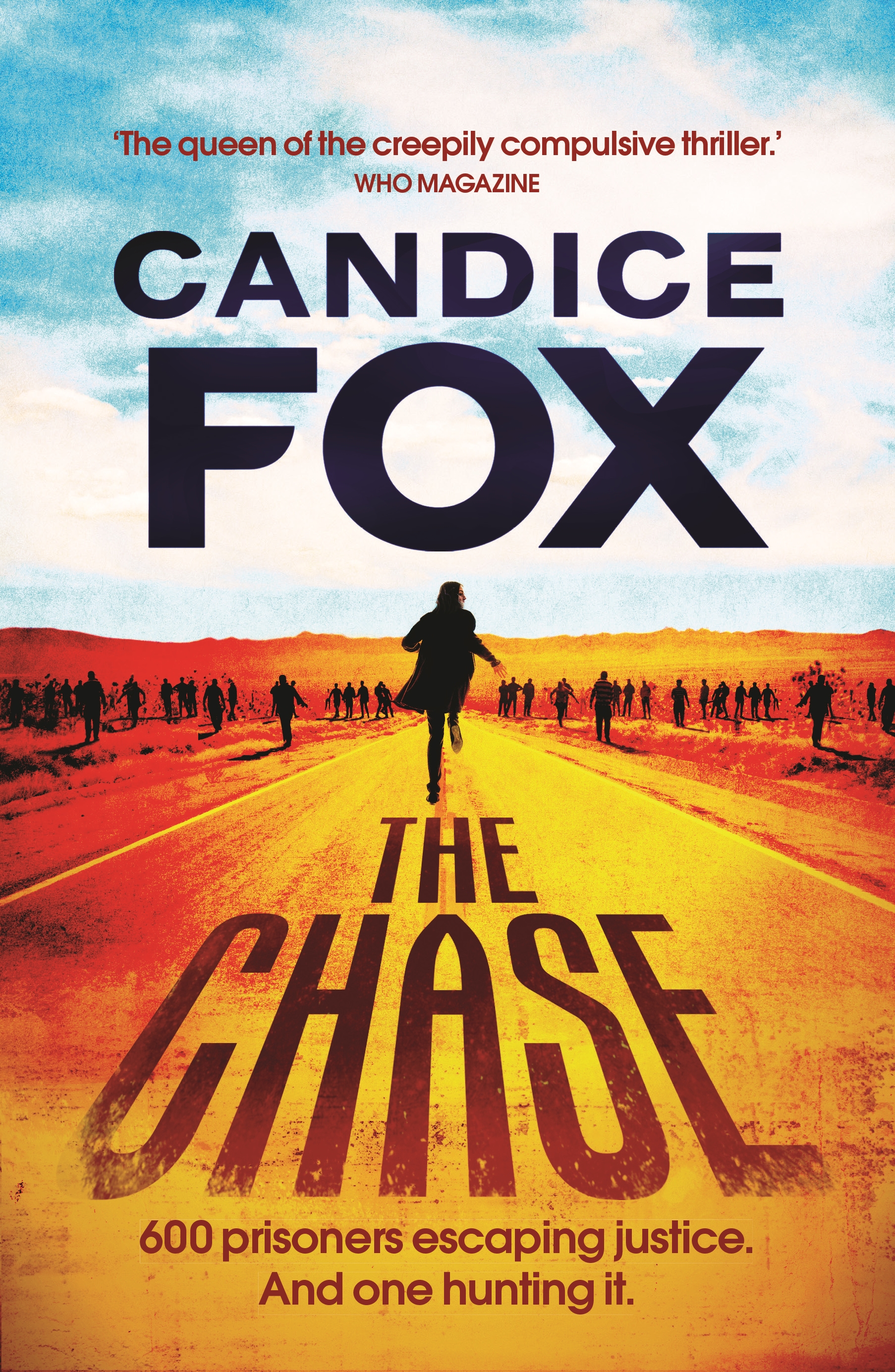
Quick Review – The Chase by Candice Fox

The Chase Cover

Publisher: Bantam Press (Trade Paperback – 30 March 2021)

Series: Standalone

Length: 449 pages

My Rating: 4 out of 5 stars

Amazon     Book Depository

Australian thriller author Candice Fox returns with another fast-paced and intriguing thriller novel, this time utilising an extremely fun prison break premise to create The Chase, a compelling and addictive read.

Candice Fox is a bestselling Australian author who debuted in 2014 with Hades, the first novel in her Archer & Bennett trilogy, a fantastic Australian crime series that followed two very damaged detectives.  She then followed that up with her Crimson Lake trilogy, as well as collaborating on the Detective Harriet Blue series with James Patterson.  Since then Fox, has written a couple of standalone crime fiction novels set in America, including the 2020 release Gathering Dark, which is the only previous novel of Fox’s that I have read and which proved to be a fun and fantastic book.  As a result, I was interested in reading more of Fox’s work, especially after I saw what kind of story her new novel would feature. 

Synopsis:

When more than 600 of the world’s most violent human beings pour out from Pronghorn Correctional Facility into the Nevada Desert, the biggest manhunt in US history begins.

But for John Kradle, this is his one chance to prove his innocence, five years after the murder of his wife and child.

He just needs to stay one step ahead of the teams of law enforcement officers he knows will be chasing the escapees down.

Death Row Supervisor turned fugitive-hunter Celine Osbourne is single-minded in her mission to catch Kradle. She has very personal reasons for hating him – and she knows exactly where he’s heading . . .

I am sure that I was not the only person drawn in by The Chase’s cool plot synopsis, I mean, 600 convicts escaping from prison at the same time, who can resist that?  I really enjoyed this book’s awesome story and I ended up finishing the entirety of The Chase in just over a day.  This was mainly because The Chase had such a strong and captivating start to it, with someone using deadly blackmail to instigate a mass breakout as cover to free one unknown prisoner.  This was one of the more awesome starts to a novel that I have seen, and I really loved the initial moments of this story, with the prisoners all heading off in various directions, including protagonist John Kradle, while other protagonist Celine Osbourne is left in shambles with all her Death Row charges escaping.

Fox soon breaks this narrative up into several smaller stories; you follow Kradle as he makes his escape, you also see Osbourne dealing with the fallout of the escape, and there are short descriptions of some of the other escapees and the people that encounter them.  The main two storylines surrounding Kradle and Osbourne continue in an awesome way towards the middle of the book.  I had a great time seeing Kradle attempt to evade the police and overcome an insane killer who is tagging along with him, while also heading home to solve the murder of his wife and child.  Osbourne’s story was also very compelling, as it details some of the initial hunts for the escaped fugitives, the investigation into who was responsible for the breakout, and the start of Osbourne’s obsessive hunt for Kradle.  The various smaller stories of the other escapees prove to be fun interludes to the main narratives, and Fox also includes key flashbacks to enrich the backstory of her central protagonists and showcase the reasons for emotional and combative history with each other.

Unfortunately, I found the last half of The Chase to be somewhat of a letdown after its outstanding beginning.  Kradle’s hunt for his family’s killer soon becomes one of the least interesting parts of the entire book, especially as it has no connection with the wider breakout.  His investigation is also loaded with way too many coincidences, unusually helpful witnesses, and strange motivations.  The eventual reveal of the killer was honestly pretty weak, and Kradle’s entire storyline only concludes satisfactorily due to a serendipitous appearance from a supporting character.  I was also not amazingly impressed with the identity of the person behind the prison escape, and I think that Fox missed a few opportunities, such as maybe tying Kradle’s personal investigation into a larger conspiracy.  Still, there were some fantastic highlights in this second half of the book, including Osbourne’s gradually changing relationship with Kradle, the action-packed conclusion to Osbourne’s hunt for the organisers of the prison break, as well as the extended and entertaining storyline of one escapee who managed to make the most of their situation.  While I would have loved a couple more extended storylines about some other outrageous inmates, I think that this was an overall good narrative, and I did have a lot of fun getting to the end.

I did really enjoy several of the characters featured in this fantastic novel.  The most prominent of these is John Kradle, the Death Row inmate accused of killing his wife and son.  Kradle is a likeable character, and you are quickly drawn into his desperate hunt for the person who framed him.  Fox makes great use of several flashback sequences to explore Kradle’s past, which paints an intriguing picture of a former recluse who eventually finds love and ends up raising a son by himself.  The reader does a feel a lot of sympathy for this unusual character, and he proves to be a fun protagonist to follow.  The other major character in The Chase is the supervising prison guard of Pronghom Correctional Facility’s Death Row, Celine Osbourne.  Osbourne is a strong and independent character who becomes obsessed with hunting Kradle and dragging him back to Death Row.  I really enjoyed Osbourne as a character, especially as Fox comes up with a very traumatic and clever backstory for her that perfectly explains her obsession.  Both lead characters serve as perfect focuses for The Chase’s narrative, and I had a great time seeing how their arcs unfolded, even if one was a little weaker than the other.

Fox also made use of several great side characters throughout The Chase.  My favourite is probably street hustler Walter Keeper, better known as Keeps, the one inmate at Pronghom who did not escape, as he was due to be released.  Keeps is dragged into Osbourne’s hunt for Kradle somewhat against his will due to his knowledge and intelligence.  Keeps serves as a good supporting act to Osbourne for much of the book, although his character arc goes in some very entertaining and ironic directions as the narrative progresses.  I also quite enjoyed tough-as-nails, no-nonsense, US Marshal Trinity Parker, who leads the manhunt.  Parker is a very entertaining character who serves as a perfect foil to Osbourne’s obsessions, mainly due to her absolute refusal to take any BS from her.  While I do think that Parker was a little over-the-top at times, she was still a fun addition to the cast.  The final character I want to talk about is one of the escapees, Old Axe.  Axe is a geriatric inmate who escapes from Pronghom on a whim and slowly makes his way to freedom.  I quite enjoyed the various sequences that highlighted Axe’s escape efforts, even if they were tinged with a sinister edge, but his arc was one of the more distinctive parts of the book.  All these characters were great, and I was really impressed that Fox was able to introduce them, build up their backstory and also provide satisfying conclusions for all of them in just one novel.

Overall, I really enjoyed The Chase and I felt that Candice Fox wrote a very entertaining and compelling narrative.  While this book did have its flaws, I had a fantastic time getting through it and readers will find it very hard to put this exciting novel down.  This was an awesome and addictive thriller, and I cannot wait to see what this amazing Australian author comes up with next.

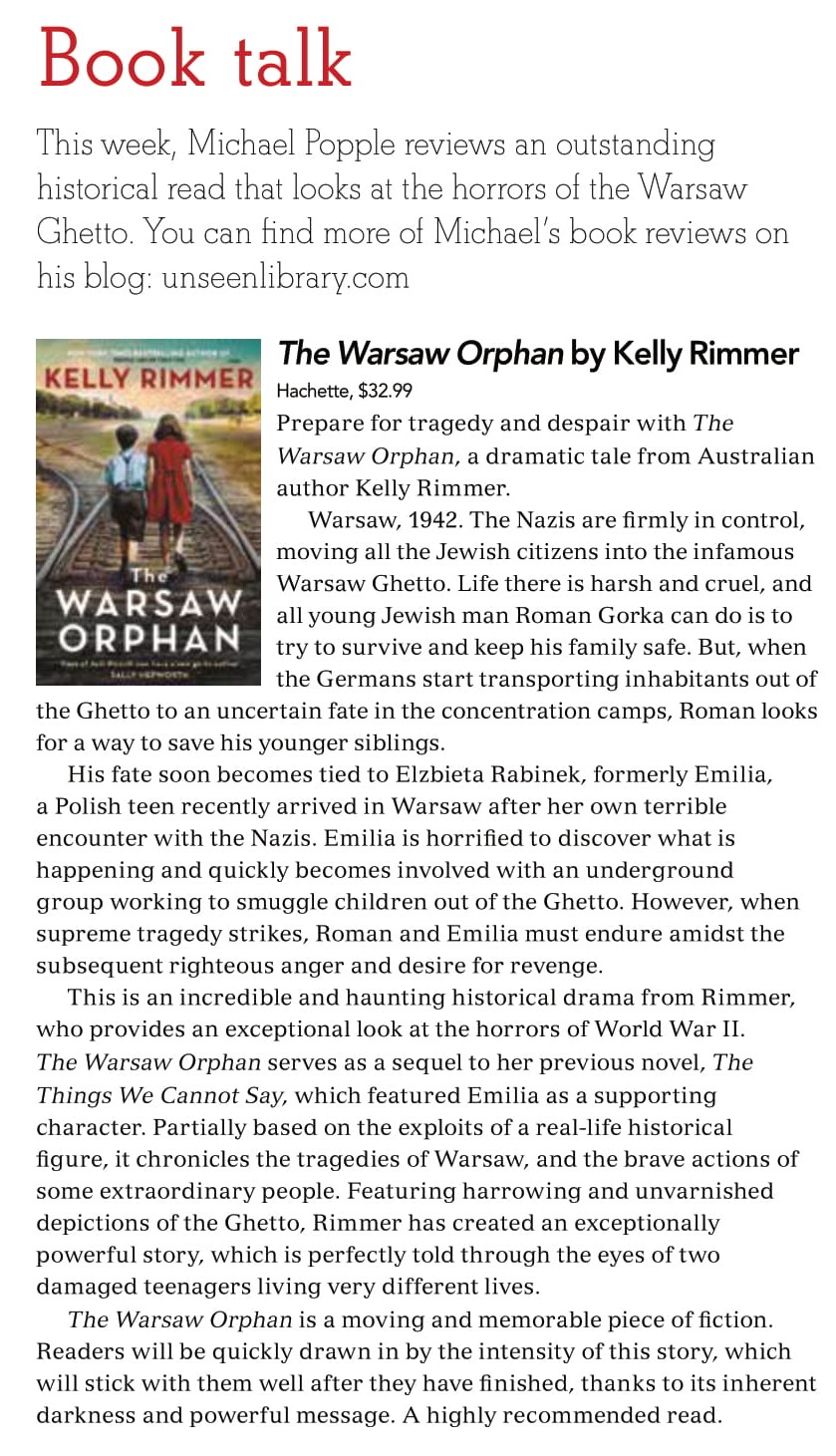
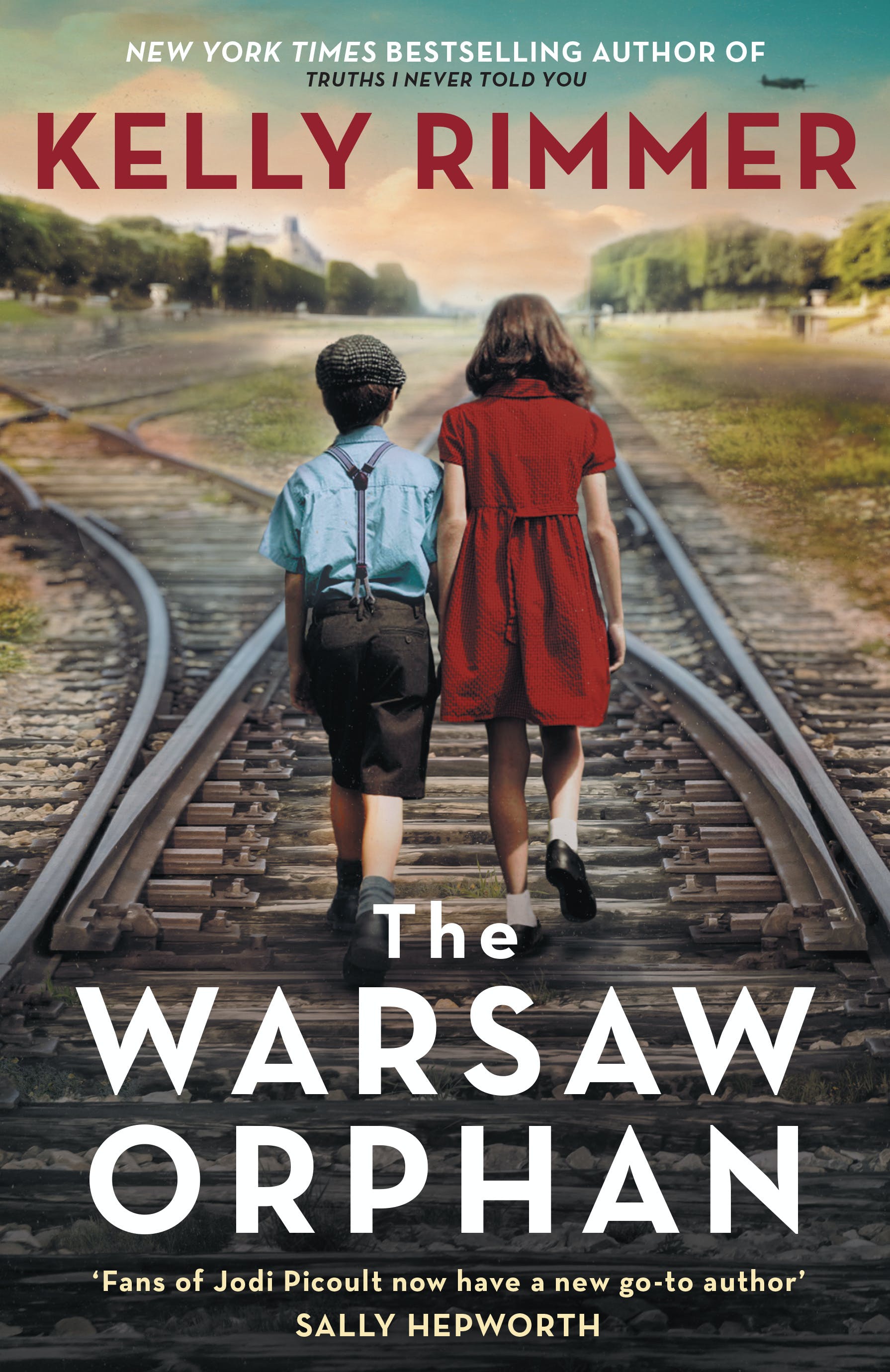
The Warsaw Orphan by Kelly Rimmer

The Warsaw Orphan Cover

Publisher: Hachette Australia (Trade Paperback – 28 April 2021)

Series: Standalone/sequel to The Things We Cannot Say

Length: 416 pages

My Rating: 5 out of 5 stars

Amazon

Prepare to have your heart broken again and again as Australian author Kelly Rimmer presents a captivating, powerful and dark historical drama, The Warsaw Orphan.

Warsaw, 1942.  The Nazis have a firm control over all of Poland and have moved the entire Jewish population into the infamous Warsaw Ghetto.  Vastly overcrowded and with limited supplies, life is extremely hard in the Ghetto, and many have given up all hope.  For Jewish teen Roman Gorka, all he can do is try to survive and earn enough to keep his family alive.  However, when rumours spread through the Ghetto about the Nazi plans to transport them to “work camps” out in the forest, Roman knows that it is time to act.  Knowing that the lives of himself and his parents are already forfeit, Roman attempts to find a way to save his younger siblings.

At the same time, a young woman, Elzbieta Rabinek, has just arrived in the city and appears to be a typical Polish girl living with her family.  However, Elzbieta is hiding a dangerous secret: her real name is Emilia, and she is the younger sister of an executed Jewish sympathiser.  Fleeing her village with her new family, Emilia is kept hidden from any potential pursuers.  But when Emilia discovers the truth about the Ghetto, she becomes determined to help and joins an underground group of women working to smuggle Jewish children to safety.

As Emilia becomes more involved with the secret work of her organisation, she soon encounters Roman.  Working together to save Roman’s younger sister, the two grow close and soon their fates are inevitably tied together.  But when a terrible tragedy strikes, both Roman and Emilia will be thrown into disarray.  As Warsaw becomes overwhelmed with fire and despair, can these two young people survive with hope, or will they be washed away in a flood of righteous anger?

Wow, just wow.  This was an incredibly touching historical drama that has really impressed me thanks to its moving story and striking portrayals of life in World War II Warsaw.  The Warsaw Orphan is the latest novel from Australian author Kelly Rimmer, who has previously produced moving novels such as Truths I Never Told You and Before I Let You GoThe Warsaw Orphan is actually a sequel to Rimmer’s previous book, The Things We Cannot Say, with some of the supporting characters from the previous novel appearing in more prominence in this latest novel.

I was lucky enough to receive a copy of The Warsaw Orphan a few weeks ago and thought it sounded like an intriguing novel, especially as it was from a new-to-me Australian author.  Based on the synopsis for the book, I knew going in that this would be a dark and emotionally rich novel, but I was very surprised with how compelling and poignant the narrative it contained would be.  Using the perspectives of the two narrators, Roman and Emilia, Rimmer paints a grim and powerful picture of the situation in Warsaw which the two protagonists find themselves in at the start of the book.  Both story arcs progress on their own separate way for a while, and it is intriguing to see the different experiences of two people living only a few streets away from each other in Warsaw.  It does not take long for the protagonists to encounter each other, combining the narrative together.  While the initial joining of their character arcs brings some hope to the story, Rimmer makes sure to quickly crush that with despair and heartbreak as both protagonists experiences tragedy after tragedy, as a series of different historical catastrophes engulf Warsaw and its people.  Every time the two central characters appear to be close to some sort of happiness, some new danger or disaster seems to befall them, and the reader is forced to sit back and watch as they endure their latest hardship.  While this novel is emotionally tough to read at times, Rimmer’s excellent storytelling ensures that you keep moving forward, especially as you become really invested in the lives of her two protagonists and the struggles of the various peoples of Warsaw.  While you may be left emotionally ragged and drained by the end of this book, readers will come away from this story extremely satisfied and with a little bit of hope.

I must really highlight the author’s outstanding and powerful depiction of historical events and places throughout The Warsaw Orphan.  Rimmer has clearly done her research on the subject and utilises a lot of fascinating and horrifying historical elements to great effect throughout the narrative.  For example, much of the story surrounding Emilia and the organisation she joins that helped to smuggle Jewish children out of the Ghetto is based on real life Polish hero Irena Sendler, with various features of Sendler’s work and personality imparted on some supporting characters.  The portrayal of occupied Warsaw is also extremely impressive, and you get a real sense of life in the city.  This is especially true of the Ghetto, as the author spends a significant amount of time exploring what happened within.  Rimmer pulls no punches when it comes to the horrors of the Ghetto and the brutalities the Nazi regime imparted on the Jewish population.  The various descriptions of the Ghetto are extremely harrowing, but through them the reader gets a sense of what the people within would have experienced.  I particularly appreciated the way in which she tried to capture the uncertainty that many of the characters, both Jewish and non-Jewish, had about the Nazis’ plans and you get a real sense of the fear and confusion in the lead up to the deportations.  Rimmer ends up covering all the key events that occurred in Warsaw between 1942 and 1947, and readers get some powerful and detailed views of the forced deportations to the camps, the Warsaw Ghetto Uprising, the Warsaw Uprising, the German retreat and the subsequent Soviet occupation.  The author shows every dark aspect of these historical events as her point-of-view characters find themselves involved in them, often to their great detriment.  All these powerful and remarkable historical events and locations serve as a great backdrop to this dramatic tale, and I found it fascinating to learn more about some of these events.

Rimmer has come up with an incredible pair of young point-of-view characters for this book, Roman and Emilia.  Roman is a Jewish teen living in the Warsaw Ghetto with his family.  Through his eyes you get to see many of the horrors of the Ghetto, starvation, Nazi oppression and the constant fear and death.  Rimmer does an impressive job of capturing the inner thoughts and feelings of someone caught up in these terrible events, and I really appreciated the strong sense of survival and desperation you get from him.  This quickly morphs in anger, righteousness and revenge when Roman experiences one tragedy too many, and he becomes in a number of dangerous fights against his oppressors.  Not only does this result in a number of brutal war sequences, but Rimmer paints a picture of a rebellious soul whose anger and moral outrage overwhelm his senses and force him to do darker and more dangerous deeds.  This depiction of anger and rage is quite powerful, and definitely fits an individual who loses everything and does not know what to do.

Emilia, on the other hand, is a somewhat more innocent figure, who, despite not being Jewish, has her own experiences with oppression after witnessing her brother dying in The Things We Cannot Say.  Due to the events of this previous book, she has fled to Warsaw with her adoptive parents, hiding under an assumed name.  Despite the troubles she is running from, Emilia chafes under the rules her guardians put in place, especially once she learns what is happening in the Ghetto.  Despite her fear, uncertainty and loyalty to her guardians’ wishes, Emilia soon becomes involved in the smuggling of children.  I really liked how Rimmer decided to utilise her previous character in this novel, and the author does a great job of revisiting parts of her story so that new readers can appreciate what has happened in her past.  Emilia proves to be a really interesting character throughout the book, and I loved the contrast in views between her views of Warsaw and Roman’s darker experiences.  Watching a non-Jewish citizen experience the horrors of the Ghetto for the first time is pretty moving, and the reader feels a certain kinship to her as they are also witnesses to the various tragedies.  I loved the storyline surrounding Emilia joining the movement to save Jewish children, and the author utilises her to tell this group’s very unique tale extremely well. 

Both Roman and Emilia have some fantastic storylines in The Warsaw Orphan, and I really liked the way their two separate character arcs come together.  These two characters experience an immense amount of grief, regret, violence and despair throughout the book, and their connection is one of the few things to keep them going.  Rimmer sets up both characters extremely well throughout The Warsaw Orphan and readers will quickly become obsessed with their unique tales and harrowing experiences.  I think both character storylines worked extremely well on their own, but together they tell an even more tragic story, as these two fall in love amongst the worst moments of human history.  Seeing the various tragedies and poor decisions that impact their relationship is pretty heartbreaking, and the reader is left in hope that they both survive in the end.  I think that Rimmer did an exceptional job creating and developing these two characters, and it is a mark of her writing ability that I ended up caring so much for them both. 

The Warsaw Orphan by Australian author Kelly Rimmer is an exceptional and incredible historical drama that comes highly recommended.  Rimmer has produced a first-rate story that perfectly utilises two tragic protagonists, an extremely dark and atrocious historical period and an addictive, if tragic, story of love, loss and survival.  The Warsaw Orphan is a powerful and compelling book that will stick in your mind long after you finish its final harrowing page.

Amazon

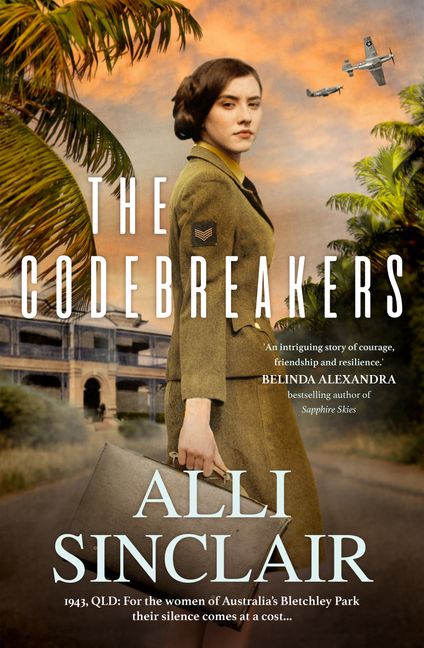
Quick Review – The Codebreakers by Alli Sinclair

The Codebreakers Cover

Publisher: HQ (Trade Paperback – 3 March 2021)

Series: Standalone

Length: 460 pages

My Rating: 4.5 out of 5 stars

Amazon     Book Depository

Interested in a fantastic historical fiction novel that looks at a unique and overlooked part of Australia’s history?  Then make sure to check out The Codebreakers by bestselling author Alli Sinclair, an amazing and dramatic novel that I found to be extremely captivating and powerful.

Synopsis:

1943, Brisbane: The war continues to devastate and the battle for the Pacific threatens Australian shores. For Ellie O’Sullivan, helping the war effort means utilising her engineering skills for Qantas as they evacuate civilians and deliver supplies to armed forces overseas. Her exceptional logic and integrity attract the attention of the Central Bureau-an intelligence organisation working with England’s Bletchley Park codebreakers. But joining the Central Bureau means signing a lifetime secrecy contract. Breaking it is treason.

With her country’s freedom at risk, Ellie works with a group of elite women who enter a world of volatile secrets; deciphering enemy communications to change the course of the war. Working under immense pressure, they form a close bond-yet there could be a traitor in their midst. Can the women uncover the culprit before it’s too late?

As Ellie struggles with the magnitude of the promise she’s made to her country, a wedge grows between her and those she holds dear. When the man she loves asks questions she’s forbidden to answer, how will she prevent the double life she’s leading from unravelling?

The Codebreakers was an amazing and well-written historical drama from Australian author Alli Sinclair, who has previously penned several other great historical novels.  This latest book from Sinclair tells the impressive and captivating tale of some of the most unique women in Australia’s storied war history, the secret codebreakers of Central Bureau.  This proved to be an impressive and captivating read that I powered through in a quick amount of time, especially as Sinclair came up with a clever and compelling narrative.

Throughout this outstanding tale, Sinclair not only covers the intricacies of a fascinating group of female codebreakers, also known as the Garage Girls (they worked out of a garage), but also includes some excellent character-driven drama as the protagonist is forced to come to terms with the secrecy of her work as well as the various tragedies that befall her and her friends as the war takes it harsh toll.  Throw in an intriguing spy thriller angle, as the Garage Girls find out that one of their own may be a traitor, and this becomes quite an intriguing and exciting read.  I loved the great blend of excitement, adventure and tragedy that the author produced, and I really liked how she not only showed the protagonist’s entire tenure with the Garage Girls but also featured the tragic aftermath of the war, where the consequences of the protagonist’s decisions and the loneliness of missing friends and colleagues forces her to choose a different path.  Readers will swiftly find themselves very attached to the main protagonist and her amazing story, and I had a great time seeing this entire tale unfold.

I must highlight the excellent historical aspects of The Codebreakers as Sinclair has clearly done some intense research on this period.  I really enjoyed the intriguing examination of the Central Bureau codebreakers who were active in Brisbane during WWII and who helped to decrypt transmissions and provide vital information to the Allies.  Throughout this great book, Sinclair really goes into great detail about the work the codebreakers would have done and some of the impacts of their work.  She also tries to examine the mentality that surrounded these codebreakers, both in their work and outside it, as each codebreaker was forbidden to talk about their work to anyone, both during the war and after it.  This proves to be an intriguing and intense central part of the novel’s drama, and it is apparently based on interviews that Sinclair did with surviving members of the real-life Garage Girls.  This was an impressive and amazing basis for this great story and I deeply enjoyed learning more about this fascinating and formerly-secret women.

I also enjoyed the way in which the author perfectly captured the feel of mid-war Brisbane throughout The Codebreakers’ story.  Sinclair laces her narrative with a lot of fascinating discussions about various military attacks that hit Australia, wartime polices and general thoughts and feelings about the war and the people involved with it.  However, I was most impressed with Sinclair’s attempts to capture the mentality of the people on the home front in Brisbane at the time.  Not only did you get the frustrations of the common Australian citizen/soldier as they dealt with the deployed American soldiery, but there is also the sadness and regret of those that survived.  You could almost feel the despair of several characters in this book, especially after the deaths of some of their loved ones, and it was a truly moving inclusion in this fantastic and powerful read.  All of these historical inclusions were really remarkable, and I had an outstanding time exploring Sinclair’s vision of this intriguing and momentous period of Australian history.

The Codebreakers by Alli Sinclair was an awesome and moving historical drama that proved to be an exceptional examination of a truly unique group of Australian women.  Sinclair makes perfect use of the amazing historical basis for her novel and turns it into quite an exciting and captivating tale of resilience, friendship and romance, which comes highly recommended.  I really enjoyed this fantastic novel and I loved learning so much about the codebreakers of Australia’s Central Bureau.

Amazon     Book Depository

The Last Convict by Anthony Hill

The Last Convict Cover

Publisher: Michael Joseph (Trade Paperback – 2 February 2021)

Series: Standalone

Length: 368 pages

My Rating: 4 out of 5 stars

Amazon

Acclaimed Australian author Anthony Hill once again dives into the unique history of Australia’s colonial past with a fascinating examination of a truly remarkable individual in The Last Convict.

Perth, 1938.  Samuel Speed in an old man living his last days in a dreary public-run home for destitute old men, with no family or friends to take him in.  At 98 years old, Samuel knows that he does not have long to live and is content with his lot in life, but an unexpected opportunity to tell his tale has been given to him.  A local newspaper has requested an interview with him after they discover that he is the last person left alive who was transported as a convict to Australia.

As Samuel begins his interview, he is transported back to his past to a fateful day in Oxford in 1863 when, as a young, starving teenager, he helped set a barley stack alight in the hopes of being arrested to receive food and a warm bed in prison.  However, he is unprepared for the full consequences of his actions when a judge harshly sentences him to seven years hard labour on the other side of the world.  Boarding the transportation ship, Belgravia, everything from his past is taken from him, including his name, and he begins the long, arduous journey to Fremantle Prison in Western Australia.

Forced to endure years of backbreaking labour, isolation and enforced routine on his life, Samuel’s only relief is a newfound love of reading, as he enjoys escapism in several classic novels.  Eventually obtaining his ticket of leave in 1867 and full freedom in 1871, Samuel seeks to forge a new life for himself.  However, as he continues to work hard, he soon begins to understand that even though he is no longer in prison, he is still very much trapped by circumstances outside of his control.  What kind of man will Samuel become, and how deep does a person’s life sentence truly run?

The Last Convict is a fantastic and powerful historical novel from Anthony Hill that provides an impressive examination of an intriguing figure from Australia’s history.  Hill is an intriguing author from my home city of Canberra who has written several historical novels throughout his career, all of which examine unique individuals from Australia’s past, such as his novel Captain Cook’s Apprentice which followed a cabin boy aboard the Endeavour as it made its journey to Australia, or Soldier Boy, which followed Australia’s youngest-known soldier during WWI.  This latest novel from Hill continues this trend as the author takes a look at Samuel Speed, the last known surviving convict transported to Australia from England.

I really enjoyed the excellent narrative that Hill pulled together for his latest novel, and The Last Convict proved to be an exciting and fascinating tale of survival and determination.  Thanks to a trove of intriguing historical information and articles (all of which is either provided or referenced at the end of the novel), Hill provides the reader with a detailed and compelling bibliographic tale of Samuel’s life.  The story is set around a real-life interview that Samuel Speed had with the Mirror in 1938, and The Last Convict showcases both the elderly Speed sitting down for the interview and his visions of the past as he gets wrapped up in his captivating memories.  The resulting tale is a powerful and stirring narrative that combines historical fact, obtained from both the interview and other sources, as well as some dramatisation from the author.  I really enjoyed the clever narrative that resulted and I think that Hill did his historical protagonist justice, painting him as a conflicted and entertaining figure with both regrets and contentment about how his life turned out.  While many of the events that occurred in this novel have a strong historical basis, Hill did make several leaps (which he acknowledges in his notes) throughout the book.  I think that a lot of these literary creations of the character’s life worked well, and I like to think that Samuel was the amiable bibliophile that Hill made him out to be.  I found myself really getting drawn into this epic and captivating tale, especially as the author did a fantastic job portraying a number of fascinating scenes, locations and events from history, and it painted a vivid picture.  I also quite enjoyed the way in which Hill told the story through an excellent combination of flashback sequences and scenes featuring the older Samuel telling his tale to the newspaper.  All of this results in a fantastic and enjoyable narrative and I am really glad that I got the chance to experience this interesting take on the intriguing figure that was Samuel Steel.

One of the things that I loved the most about The Last Convict was the exceptional amount of historical detail that the author chucked into this book.  Hill is a massive history buff who has done an impressive amount of research for this novel, and he goes out of his way to populate this novel with all manner of facts and fascinating depictions of day-to-day life that a person like Samuel Steel would have experienced.  As a result, the reader gets a captivating, comprehensive and authentic-feeling examination of the convict experience in the latter half of the 19th century.  This includes fantastic depictions of how a person would be tried; their incarceration in England, including some of the horrendous bits of hard and painfully repetitive labour they would be required to undertake; all the way up to their transportation across to Western Australia.  The author also dives into the experiences of a convict living in Western Australia in the second half of The Last Convict, and there are some fantastic and intriguing discussions about what a person would have experienced once they arrived in a vast new land.  I found all the discussion about the various tasks, the intricate tickets of leave and day-to-day life of a convict locked up in Freemantle Prison (which is a cool building to visit) to be exquisitely done, and the reader gets an amazingly wide-ranging amount of knowledge on the subject.

Another fun historical aspect of the novel was the range of entertaining historical anecdotes that the character of Samuel Steel told to the reporter during the story regarding major historical figures that Samuel would have had knowledge of.  Not only do these anecdotes help to flesh out the story and help to fit into a couple of minor references featured in the Mirror interview, but they also proved to be a rather intriguing inclusion.  Hill goes into substantial detail recounting tales of several outrageous and famous Western Australian historical figures and their major moments, which included infamous prison escapes and other shenanigans.  I found these parts of the book to be incredibly fascinating, especially as I was unfamiliar with several of the stories that were mentioned, including one mass escape of Irish convicts that nearly started an international incident between the colony of Western Australia and the United States.  These stories added some great context to Samuel’s tale and helped the reader to envision the lives of other convicts or people in power that may have had some influence over the protagonist’s way of life or who he may have gossiped about.  I also quite liked the author’s decision to make Samuel a fan of classic novels, which was added in due to a passing reference to a Mark Twain story that Samuel made during his interview, and because Samuel had an association with the Braille Society, who ended up burying him.  Hill expands on this to paint Samuel as a lover of other novels, especially Dickens, and suggests that he would have started reading whilst a convict looking to pass the time.  Not only is this a rather likeable and relatable character trait, but it allowed the author to explore what sort of literary works a person like Samuel might have been interested in and may have had access to.  I enjoyed the author’s depictions of this classic novels and the protagonist’s potential reaction to them, and it proved to be an intriguing part of the book’s plot.  Overall, I felt that all these cool historical elements really helped to elevate Hill’s story within The Last Convict and readers are in for a fantastic blast of information about colonial Western Australia that is extremely fascinating and interesting.

The Last Convict is another clever and meticulously researched Australian historical fiction novel from Anthony Hill that provides the reader with a powerful and compelling window into the life of an interesting figure from history.  Loaded with Hill’s usual intense levels of fascinating historical detail, I had a lot of fun reading The Last Convict.  I look forward to seeing which Australian historical figure Hill looks at in his next book and I will be grabbing a copy to read.

Amazon