Quick Review – Conviction by Frank Chalmers

Conviction Cover

Publisher: Allen & Unwin Australia (Trade Paperback – 5 July 2022)

Series: Standalone/Book One

Length: 354 pages

My Rating: 4 out of 5 stars

Amazon     Book Depository

The Australian crime fiction debut hits keep on coming with the excellent and highly exciting first novel from Frank Chalmers, Conviction, with takes the reader on an amazing journey back into 1970s rural Australia.

Plot Synopsis:

A town ruled by fear. A cop who won’t be broken. A pulse-pounding debut thriller that pulls no punches.

A STUNNING NEW VOICE IN CRIME FICTION

Queensland in 1976 churns with corruption. When Detective Ray Windsor defies it, he is exiled deep into the state’s west. It’s easy out there to feel alien in your own country.

Royalton is a town on its knees, stricken by drought, riven by prejudice, and plagued by crimes left largely uninvestigated by the local police chief, Kennedy, and his elusive boss.

Mutual dislike between Kennedy and Ray gradually turns ugly as Ray and his new partner, Arshag, uncover a pattern of crimes that no one seems concerned about solving. But when two girls from local immigrant families are found dead and another disappears, Ray and Arshag are forced to take the law into their own hands. Not knowing who to trust, nor how deep the corruption runs, how long will it be before their lives are also threatened?

A spare and uncompromising crime thriller that pulls no punches.


Conviction
is a compelling and fun crime fiction thriller that sets a bold protagonist against a brace of criminals and dirty cops in a remote and hopeless town.  Essentially reading like a contemporary Australian western, with protagonist Detective Ray Windsor acting as the new sheriff in town, Chalmers crafts together a compelling read that is very easy to get through.

Conviction has a very interesting and complex story to it that sees the new cop arrive in the remote town of Royalton and get caught up in a series of crimes.  Not only is he forced to deal with the corruption of his peers and a local crime ring that has been stealing stock and damaging the local farms, but he is also investigating two recent violent deaths of young immigrant women.  This results in quite a fantastic series of investigation elements, as Detective Windsor attempts to solve these crimes while being constantly hampered by his colleagues.  The novel also deals with Ray’s attempt to integrate into the Royalton community, and he soon finds some unexpected connections and friends which draw him in.  Taking place over the course of several months, Conviction’s plot goes in some exciting and intense directions, and the reader is provided with intriguing plotlines that are loaded with action and excitement.  The eventual reveals lead to some big moments, and while the identity of the book’s villains is well-foreshadowed and not especially surprising, watching the protagonist attempt to overcome them is fun.  This ended up being a great and enjoyable piece of Australian fiction, and I had a good time getting through this awesome debut.

Like many impressive Australian crime fiction novels, one of the best things about Conviction is its excellent setting in a rural Australian town.  Royalton is a compelling location, which even in the 1970s, is starting to fall apart and feel the strain as more and more people left the country to live in the big cities.  Royalton has many of the best features that make up a small-town setting, from the sunburned countryside, the various surrounding farms, the neglected buildings within the town itself, as well as a colourful cast of people living in it.  I felt that Royalton in Conviction was a pretty good example of this compelling Australian setting, and the intriguing historical context makes it stand out from other recent Australian crime fiction books.  I particularly liked how Chalmers depicted the town as having a large migrant population, which is an accurate representation of most of Australia, and the stratification of classes that resulted based on nationality and culture gave the story another fascinating dimension that I felt added a lot to the story.  The farms surrounding the town are also under siege by an organised group of criminals who are working to bankrupt them for their own nefarious reasons, and this adds to the tension in Royalton.  All this proves to be rich ground for the intense and compelling crime fiction narrative that Chalmers crafted together, and I felt that this was an amazing setting for Conviction.

However, the best thing about Conviction was the eclectic and troubled group of characters who can be found within.  The author comes up with some great and flawed figures throughout Conviction, and the reader soon gets some intriguing views of the sort of people who would live in such a remote and troubled town.  Naturally most of the focus is on Detective Ray Windsor, who immediately finds himself in all manner of trouble once he arrives in Royalton.  Now, I must admit that I had a hard time liking Windsor in this book, as he is a bit of an over-the-top hero who is prone to violence at a drop of hat.  While this attribute does help him out in some of the situations, I was never too attached to him as a character, especially when he flew off the handle.  Still, I liked the compelling background that Chalmers attributed to Windsor, especially his dark childhood, and the portrayal of an honest cop sent out to the country as a punishment was well explored.  There are some great moments with Windsor in the book, and I did enjoy seeing his take on the case and the corruption going on around town.  The author also did a good job setting up Windsor’s growing attachment to Royalton, especially once he gets to know the people within.  This, as well as his commitment to getting the job done, eventually win the reader over, and you are rooting for him to succeed as the story continues.  The rest of the cast are also really good, and I deeply enjoyed some of the other characters featured within Conviction.  I felt that Chalmers did a particularly good job with the villains of this book, and it was satisfying to see Windsor standing up to them and finally bringing them to justice.  An awesome group of characters that Chalmers did a good job bringing to life.

Overall, I felt that Conviction was a pretty awesome novel that the debuting Frank Chalmers should be proud of.  This fantastic novel has a great crime fiction narrative that not only crosses into historical fiction territory but which works as an exceptional example of a rural Australian story.  All these elements work extremely well together, and I had a blast getting through Conviction, which is really worth checking out.

Amazon     Book Depository

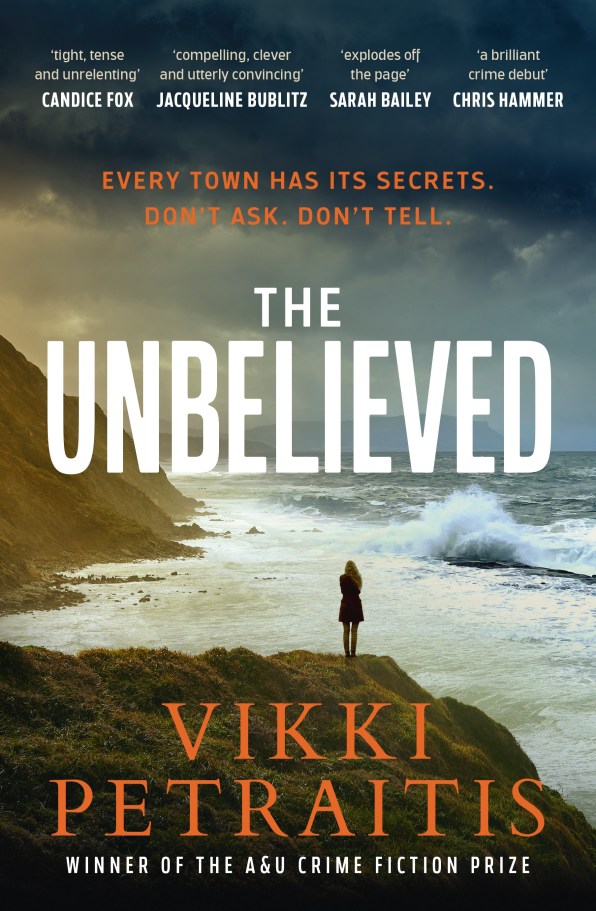
The Unbelieved by Vikki Petraitis

The Unbelieved Cover

Publisher: Allen & Unwin Australia (Trade Paperback – 2 August 2022)

Series: Standalone/Book One

Length: 373 pages

My Rating: 5 out of 5 stars

Amazon     Book Depository

Debuting author Vikki Petraitis delivers an impressive and deeply moving Australian thriller skilfully set around the powerful subject of sexual violence with The Unbelieved.  This is Petraitis’s first novel, which has been receiving a large amount of buzz, including some awards.  As such, I was very interested in checking it out, especially as it had a very interesting plot, and this ended up being one of the most compelling and memorable Australian debuts of 2022.

Senior Detective Antigone Pollard has spent many years investigating terrible and destructive crimes in Melbourne.  After one case goes horribly wrong, Antigone decides to seek the quieter life and moves to her grandmother’s house in the Victorian coastal town of Deception Bay, where she was raised.  However, her attempts at finding peaceful policing quickly go up in smoke when a series of drug assisted sexual attacks occur throughout Deception Bay and the neighbouring towns.

After a sting operation at the local pub reveals a suspect who attempts to drug her, Antigone believes that they have perpetrator dead to rights.  However, they are soon forced to let him go when the male witnesses to the event refuse to cooperate and her superior attempts to brush the case under the rug.  Reaching out to the community, she finds a wall of silence and shame surrounding sexual crimes in Deception Bay, which has failed to lead to any convictions in the town.

Determined to stop the attacks no matter what, Antigone continues her investigation against her superior’s wishes, and uncovers a series of attacks across town.  Attempting to break through the fears of the women of Deception Bay, Antigone and her partner begin closing on the information they need.  However, Antigone also finds herself under threat from all corners and must work swiftly before she is shut down for good.  But can she succeed before another girl is attacked, and what happens when the darkness from her past rears its ugly head again?

Wow, I was not prepared for just how good and moving The Unbelieved was going to be.  Vikki Petraitis has really shown off her skill and talented as a writer with her first book, presenting a powerful read on an extremely relevant subject that strikes the reader hard.  Featuring an exciting and very clever mystery storyline that also intensely examines violence against women in Australia, The Unbelieved is an outstanding novel that gets a full five-star rating from me.

At its centre The Unbelieved has an exceptional multifaceted narrative that follows detective Antigone Pollard as she finds herself investigating terrible events occurring around Deception Bay.  Detective Pollard initially attempts to stop a series of sexual attacks, but she soon becomes involved in several other cases while trying to fit in to the community, despite opposition from some of its male residents.  As her case develops and more victims come forward, Pollard also finds herself investigating a suspicious death, a historical murder-suicide, a series of domestic violence cases, and more.  These investigations are often hampered by her superior and problematic members of the community, and Pollard also finds herself being threatened or attacked as she attempts to do her duties.  At the same time, elements from her past in Melbourne are revealed through a series of well-crafted flashbacks that expand on her motivations and begin to bleed into her current cases, especially once a prior suspect is brought back into the light.

Petraitis takes the story in some interesting directions throughout the course of The Unbelieved, and I loved the fantastic combination of the compelling yet heartbreaking cases that are explored throughout.  This investigation angle is well balanced with the character development of the protagonist, as well as the emotional exploration of several interesting supporting characters, and you really get involved in the narrative and the character’s fates as The Unbelieved continues.  The story becomes more complex as the book unfolds, and the protagonist finds herself caught up in a devious local conspiracy that seeks to take her down at the same time.  There are some brilliant twists and reveals throughout the plot, and I loved how several of the storylines developed.  The entire book was very well paced out, and I found myself getting really absorbed in so many key elements of the plot, especially as the author blends compelling investigations with dark, emotional examinations of the victims.  This all leads to up to a moving, thought-provoking and extremely satisfying conclusion that will leave every reader caught up in the plot happy.  I particularly enjoyed the final twist that Petraitis left the story on, and the way it was hinted at through the rest of the novel was extremely clever.  I honestly had such a remarkable time reading this great narrative, and there are so many excellent story elements to enjoy within it.

Easily the most distinctive part of The Unbelieved is the author’s detailed and powerful examination of the current situation of sexual and domestic violence in Australia.  Most of the book’s plot revolves around the investigation and attempted conviction of multiple sexual predators, and the author does not hold back in showcasing just how dark and damaging these sorts of cases can be.  Multiple viewpoints of the impacts of these crimes are examined throughout The Unbelieved, and readers are in for some emotionally devastating moments as you see so many of the different aspects of them.  There is a particularly good and dramatic look at how police investigating sexual crimes are impacted, especially when they are unable to get justice for the victims.  More importantly, Petraitis spends a lot of time exploring how Australian society perceives sexual crimes, and the book is loaded up with characters who don’t see them as a big deal or attempt to blame the victim.  There are multiple interludes within The Unbelieved that show short transcripts of interviews with people involved with these crimes, either as a witness or the accused, and the unguarded and unsupportive comments they make are both enlightening and a little infuriating.  Throw in some comments and interviews by the author’s accurate depiction of a typical Australian radio shock jock, which really boil the blood, and you have an excellent depiction of some of the main issues and attitudes towards sexual crimes, such as victim blaming.  These issues become a key part of the book’s plot, especially when the system fails so many victims, and it leads to some extremely emotional and painful moments.  I felt that Petraitis did a spectacular job working this confronting subject into the plot of her novel, and it certainly gave The Unbelieved a powerful edge that is hard to ignore.

I also really appreciated Petraitis’s examination of regional towns in Australia, which proves to be a great setting for this compelling book.  Rural and remote settings are always an excellent feature of Australian fiction, and I think that Petraitis used it extremely well in The Unbelieved.  The transfer of a big-city cop to the small town she grew up in results in a great change of pace for the protagonist, and the change in priorities and issues helps to add to the narrative complexity of The Unbelieved.  The use of this small-town setting comes into play throughout The Unbelieved in multiple intriguing ways, from the constant spread of rumours, the lack of secrets, and the fact everyone knows each other, and I liked how this affected several aspects of the police investigation plot line.  However, the most important part of this setting is the wall of silence that springs up during the book.  Many people know about the sexual and domestic violence going in in Deception Bay, but are unwilling to talk for various reasons, often keeping secrets from the police.  This becomes a key complication in the investigation, and it was fascinating and moving to see the protagonist attempt to overcome it.  As such, I felt that this small-town setting worked extremely well for The Unbelieved’s plot, especially with its specific criminal focus, and it definitely enhanced the story for me.

The final thing that I need to highlight is the excellent protagonist that Petraitis works the story around in Detective Antigone Pollard.  Pollard is an emotionally charged badass who has returned to her hometown after a devastating case in Melbourne, and now finds herself amid all manner of dark criminal activity.  While she is raw from the impacts of her last case and there are some dramatic moments surrounding here, the author portrays her as a practical and very capable cop, who takes charge and starts to clean up Deception Bay.  I really do think that Petraitis hit the right balance of vulnerable and determined in Pollard, and you grow quite attached to her as the book continues, especially once you learn the full extent of her last case.  Combine Pollard with several other fantastic characters in The Unbelieved, such as her partner, Detective Senior Constable Warren “Wozza” Harvey, and her loyal dog, Waffles, as well as some slimy villains, and you have a great cast for The Unbelieved that really add to the overall quality of this remarkable book.

With her impressive debut novel, The Unbelieved, Vikki Petraitis has set herself up as an exceptional talent in the Australian crime fiction game and she is a major new author to watch out for.  The Unbelieved has an outstanding crime fiction narrative to it that does an amazing job balancing a compelling mystery storyline with powerful dive into a sensitive and highly relevant subject.  Thanks to its well-written plot, clever mystery, distinctive setting and great characters, The Unbelieved comes together perfectly, and it proves to be extremely hard to put down.  While this book might be best avoided by those readers triggered by depictions of sexual violence, I cannot recommend this powerful novel enough, and it stands as one of the better Australian crime fiction books and debuts of 2022 so far.

Amazon     Book Depository

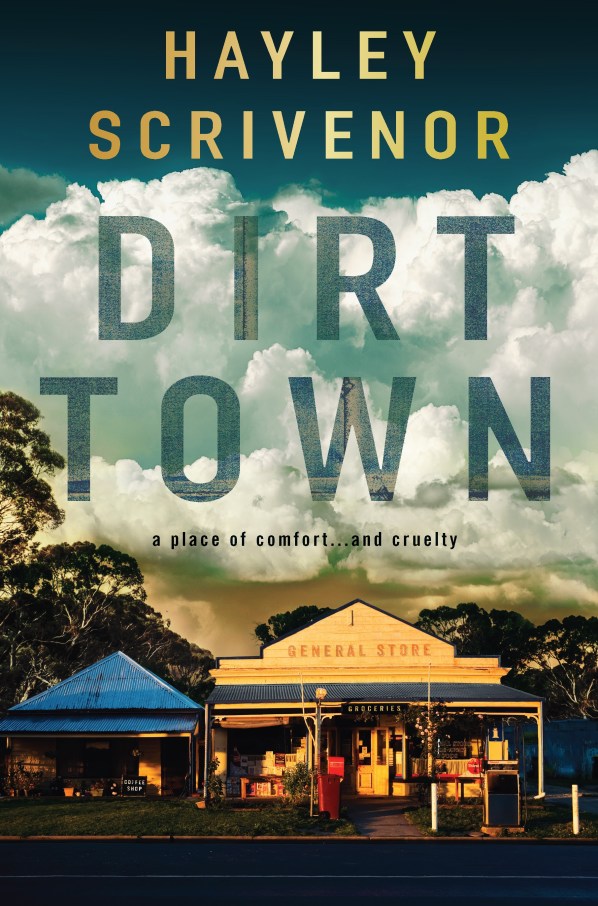
Quick Review – Dirt Town by Hayley Scrivenor

Dirt Town Cover

Publisher: Macmillian (Trade Paperback – 31 May 2022)

Series: Standalone

Length: 359 0ages

My Rating: 4.25 out of 5 stars

Amazon     Book Depository

Intriguing new author Hayley Scrivenor presents her powerful and excellent debut novel with the powerful and dramatic Australian mystery, Dirt Town.

Plot Synopsis:

My best friend wore her name, Esther, like a queen wearing her crown at a jaunty angle. We were twelve years old when she went missing.

On a sweltering Friday afternoon in Durton, best friends Ronnie and Esther leave school together. Esther never makes it home.

Ronnie’s going to find her, she has a plan. Lewis will help. Their friend can’t be gone, Ronnie won’t believe it.

Detective Sergeant Sarah Michaels can believe it, she has seen what people are capable of. She knows more than anyone how, in a moment of weakness, a person can be driven to do something they never thought possible.

Lewis can believe it too. But he can’t reveal what he saw that afternoon at the creek without exposing his own secret.

Five days later, Esther’s buried body is discovered.

What do we owe the girl who isn’t there?

Character-rich and propulsive, with a breathtakingly original use of voice and revolving points of view, Hayley Scrivenor delves under the surface, where no one can hide. With emotional depth and sensitivity, this stunning debut shows us how much each person matters in a community that is at once falling apart and coming together.

Esther will always be a Dirt Town child, as we are its children, still.


Dirt
Town was a fantastic and clever novel that contains a lot of interesting elements and moving parts to it that I had an amazing time reading.  Set in the small Australian country town of Durton in late 2001, the crux of Dirt Town’s plot revolves around the sudden disappearance of local schoolgirl Esther, who vanishes on her way home.  The subsequent search and police investigation into the disappearance soon involves several different inhabitants of Durton, including Esther’s friends, family and other connections, many of whom are dragged into the case over the course of the following days.  The investigation and the eventual reveal of what happened to Esther slowly but surely tears the town of Durton apart, as everyone’s secrets come spilling out.

The story focuses on several intriguing protagonists, including Esther’s best friend, Ronnie, who attempts to find her without really realising what is going on; their fellow schoolmate Lewis, who witnessed something relevant to the case but is unable to say anything out of fear of being outed; the various relatives to the children; the cops that come to investigate; and more.  This strong focus on these complex characters allows Scrivenor to weave together a compelling and exciting tapestry of personal stories that are altered for the worse when Esther goes missing.  All the characters react to the disappearance in different ways, and the reader gets a deep and captivating look into their lives, which often reveal long-buried secrets, fears and insecurities that the investigation brings to the light.  At the same time, the hunt for the missing child reveals other crimes going on around Durton, and everyone is moved in some way by the events of the narrative.  The eventual reveal about what happened to Esther and who was involved is very intense, and I really loved the clever, heartbreaking twist that Scrivenor utilised here.  The author layers the story with some clues, but it is still shocking to see what unfolded, and the series of events that led up to it and followed from there.  Dirt Town ends with a satisfying, if very bittersweet, conclusion, and I really appreciate the impressive debut narrative the Scrivenor produced here.

This was a pretty moving and distinctive novel, as Scrivenor blends several genres together into a single riveting tale.  While mostly framed as a mystery novel, Dirt Town also has a strong drama aspect to it, especially when it comes to examining the lives and secrets of the various townsfolk.  This ensures that you get quite a lot of unique character interactions throughout Dirt Town, and it was very moving and powerful to see how everyone was impacted by the events of the plot, often in quite substantial and painful ways.  It is also a particularly good piece of rural Australian fiction, as Scrivenor, who grew up in a small country town herself, does an amazing job portraying the tight-knit community, isolated landscape, and the feeling of decline that many of these towns experience during times of hardship.  Scrivenor added in a distinctive, disassociated chorus narrator, which is essentially the joint voice of the town, which produces some poetic and insight examinations of the impacts that the case has on the town and its people, as well as providing compelling insights into how the town is generally faring.  These separate elements blend well into a captivating and moving story, and you can find yourself getting quite drawn into Dirt Town as a result.

Overall, I felt that Dirt Town by Hayley Scrivenor was an outstanding and very distinctive debut novel, and one that sets Scrivenor up as an interesting rising talent in Australian fiction.  A recommended read, especially for those who love complex stories in Australia’s unmatched rural setting, Dirt Town was an outstanding book that is well worth checking out.

Amazon     Book Depository

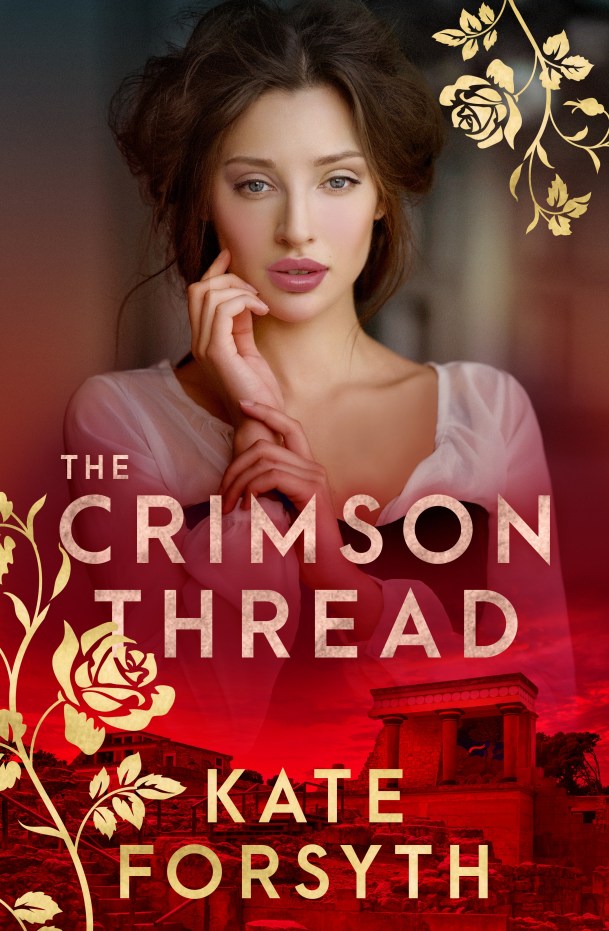
The Crimson Thread by Kate Forsyth

The Crimson Thread Cover

Publisher: Vintage Books Australia (Trade Paperback – 5 July 2022)

Series: Standalone

Length: 360 pages

My Rating: 4.5 out of 5 stars

Amazon     Book Depository

One of Australia’s premier authors presents another compelling and powerful historical drama with The Crimson Thread by Kate Forsyth.

Kate Forsyth is a very talented Australian author whose work I have long been a fan of.  While Forsyth is best known these days for her intense historical dramas, I personally am a big fan of her The Witches of Eileanan series, which I read when I was younger.  The Witches of Eileanan books, which were Forsyth’s debut series, follows a group of powerful magical users in a troubled fantasy realm filled with dragons, mages and monsters, as they attempt to overthrow a dark anti-magic tyrant and save the world from multiple impending threats.  Filled with great characters, impressive magic, a complex setting and some brilliant and occasionally dark storylines, this was a particularly awesome and epic series, and it was among the earliest fantasy books that I ever checked out.  I deeply enjoyed The Witches of Eileanan books and the sequel Rhiannon’s Ride series, and I have been meaning to reread them all for a while.  In the meantime, I decided it would be good to check out one of her more recent works with The Crimson Thread.  This intriguing and captivating historical drama is a lot more consistent with Forsyth’s current writing focus and I was very interested in seeing something from this genre.

By May 1941, the Nazis have conquered Greece and the island of Crete lies before them as the next land to control.  As the island prepares for invasion, young Cretan woman, Alenka, attempts to find some semblance of normality amongst the chaos, but chance meetings with two Australian soldiers stationed on the island will change her life forever.  When the Germans finally invade Crete in a massive and long-running battle, Alenka finds herself stuck in the middle of the fighting and eventually chooses to hide the Australians when the Germans win.

These two soldiers are Jack and Teddy.  Lifelong best friends, the rambunctious Teddy and the shy, scholarly Jack, joined the army together to see the world, only to get caught up in the chaos of the war.  Separated during the retreat to Crete, Jack and Teddy manage to reunite on the island, with both falling for the alluring Alenka upon meeting her.  When the Germans invade and they are trapped behind enemy lines with no hope of escape, both go to ground, seeking out help from Alenka and her allies in Crete’s resistance movement.

As the Germans tighten their hold on the island, Alenka, Jack and Teddy find themselves in constant danger as they attempt to find some way for the Australians to escape.  However, their attempts to evade the Nazis are not their only trouble, as Jack and Teddy’s once close friendship starts to deteriorate through jealously and anger.  Worse, Alenka’s brother, Axel, is a dangerous Nazi collaborator, whose long simmering anger and resentment threatens everything Alenka holds dear.  As Axel searches for a way to destroy his sister and her friends, all will be forced to make some hard choices, both on the battlefield and in love.

This was a deeply moving and highly detailed historical drama from Forsyth that I had a wonderful time reading.  Balancing a captivating historical tale of invasion in a unique World War II setting with a powerful tale of romance, broken friendships and family betrayals, The Crimson Thread is an outstanding novel which really highlights Forsyth’s impressive skill as an author.

The Crimson Thread has an excellent and fast-paced narrative that quickly drags readers in with the wartime action and keeps them there with the subsequent drama and tragedy.  Told from various intriguing perspectives, The Crimson Thread does a great job of quickly introducing you to the key characters and settings before bringing the terror in the form of a sudden and devastating Nazi invasion.  What follows is captivating tale of survival, endurance and resistance, as the three central protagonists attempt to evade and outwit the occupiers while also dealing with their own simmering feelings of love, betrayal and jealousy.  Forsyth weaves together some hauntingly tense and moving scenes throughout this narrative, as you see the characters thrust into all manner of dangerous and tragic circumstances amid the horrors of war.  The entire narrative has an excellent blend of action, high-stakes espionage and deep personal drama that I found myself really drawn to, all of which fits together perfectly with the distinctive setting and period.  The entire narrative takes place over the course of several years, and I deeply appreciate the long-term storylines that Forsyth utilised as you got to see the various characters grow and change throughout the war, often for the worst.  I loved the focus on camaraderie, identity and historical pride that was worked into the story, and all the unique plot points come full circle by the end.  Forsyth ends the entire excellent story of survival and war on a tragic, but hopeful note, and while you may end up with some conflicting feelings about the fates of some of the focal characters, readers are going to come away from The Crimson Thread both moved and satisfied with the story conclusion.

One of the things that I have always appreciated about books set during World War II are the sheer number of unique stories that can be written, as there were so many different battlefields, conflicts and personal dramas that resulted from them.  While I am fairly knowledgeable about history and World War II, I honestly knew very little about the occupation of Crete during the war, nor did I realise that Australian and New Zealand soldiers were stationed there when the Germans invaded.  As such I was pretty in the dark when it came to the historical context of the novel, but Forsyth was well on hand here and spent substantial time exploring the entire Nazi conquest and occupation of Crete during the war.  Everything is covered here, including the initial 11-day battle to take control of the island, the subsequent disorganised evacuation of Allied forces, the harsh occupation of the Cretans, which included several massacres, the resistance movements, and everything else that occurred from first day to the end of the war.  I was particularly intrigued by the role that Australian troops played during this conflict, and Forsyth made sure to really highlight why they were there and the various hurdles they faced during this war, including being trapped behind enemy lines with few options to escape.  All of this is worked into the story in a clever and impressive way, and the various characters find themselves involved in many of the key events, either as witnesses or participants.  You really find yourself getting drawn into the midst of these compelling historical events, and I personally found it incredibly fascinating to see them, especially as Forsyth did some substantial research for this book.

I also really appreciated Forsyth’s dive into the culture, history and iconic landscape of the main setting of Crete.  Most of this book takes place on this beautiful island, and I felt that Forsyth really captured the heart and soul of Crete and its people throughout the story.  There are some compelling dives into the identity and culture of the Cretan people, including the importance of their dress, their customs, their speech, and their defiant nature.  Due to most of this explanation being done to show the undercover Australian citizens how to blend, it proves to be very informative, and readers without much pre-knowledge of Crete come away with a lot of detail and appreciation for its people.  There are also some fun dives into the history of the island, particularly its ancient association with legend of the Minotaur and palace of Knossos.  Due to my background in archaeology, I found this to be extremely interesting, especially as there are also some compelling depictions and discussions about the famous excavations that took place on Crete during this period.  Throw in some breathtaking and highly detailed descriptions of the various environments and settlements on Crete, including its treacherous and massive mountains, which serve as a great setting for some particularly intense scenes, and you get an outstanding appreciation for this island.  All of this is utilised in The Crimson Thread’s story really well, as the characters, like the reader, really get to know the island and how it impacts many of their decisions and actions.

Forsyth also came up with some excellent and distinctive characters for The Crimson Thread, and their unique and emotionally rich storylines are a powerful part of this great book’s story.  This includes Alenka, who finds herself caught between her culture, her troubled family past, and her attraction to the two Australian soldiers she grows close to.  Despite primarily being shown as a strong and clever woman, Alenka goes through some real tragedies and trauma in this book that slowly wear away at her psyche.  I found it fascinating to see her growth throughout the book, as well as her attempts to overcome the various obstacles and indignities that come her way.  Alenka was really well counterbalanced by her brother, Axel, a dark and dangerous youth who serves as the book’s central antagonist.  Initially shown as a youth who grows into a dangerous teenager throughout the narrative, Axel is a complex figure.  A half-Cretan boy who is the result of an extramarital affair with a German archaeologist, Axel has borne the shame of his heritage for most of his life and endured the ridicule and disdain of everyone on the island.  Focusing on his German heritage, Axel becomes obsessed with Hitler and the Nazis and quickly grows to be a valuable collaborator for the occupiers, helping them root out the resistance and hidden Allied soldiers.  While he is an extremely repulsive and evil figure, you fully understand while he idolises the Nazis and tries to join them because of how well Forsyth explored Axel’s motivations and past.  Forsyth writes a very dark storyline around Axel, and it was fascinating to see him corrupted by both his own unfair past and the invading Nazis.

The other two main characters are the Australian soldier protagonists, Jack and Teddy.  Despite being old friends, these two are very much the opposite of the other, with Teddy being a wild, confident and arrogant figure, while Jack is a kind and shy man with a stutter.  While you wouldn’t think that they would be friends, Forsyth does a good job establishing their bond, and you fully understand why they are close to each other.  Both characters are interesting in their own right, and I appreciated how Forsyth highlighted their differences and showed how their relationship eventually broke down over their mutual attraction to Alenka.  Teddy’s slow crawl from causal larrikin to arrogant jerk is subtle, but well formed, and the author shows some compelling, but damning, change in views in his mind throughout The Crimson Thread.  Jack, on the other hand, grows from unconfident scholar to strong-willed fighter, all thanks to his love of Alenka.  I loved how Forsyth showed all his artistic skills and passions, such as poetry, as a strength, and it was pretty fun to see him succeed in the specialised spy school both characters end up in.  This poetry actually had an interesting role in the wider book, and you can see a great example of it at the start of different chapters.  Forsyth really excelled at creating some amazing and captivating character arcs throughout The Crimson Thread, and I had an outstanding time getting close to these figures and experiencing their triumphs and dark pains.

Overall, The Crimson Thread was a wonderful and deeply moving read that ended up being one of the better historical dramas I have read this year.  Kate Forsyth continues to shine as an extremely talented Australian author, and I had fun exploring a book from her current genre of choice.  Featuring some damaged characters, a powerful story and some exquisite dives into Crete and its wartime history, The Crimson Thread is a captivating and clever novel that I had an outstanding time reading.

Amazon     Book Depository

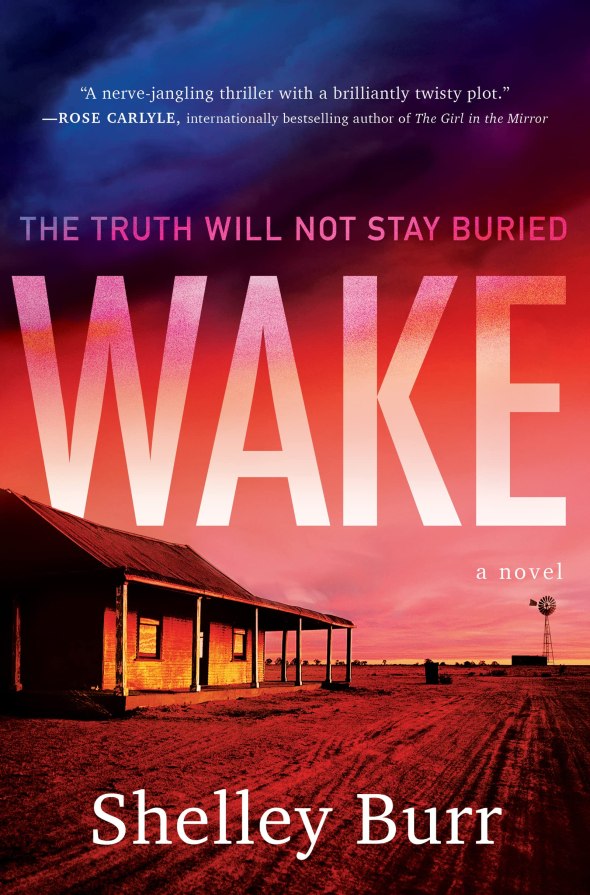
Wake by Shelley Burr

Wake Cover

Publisher: Hachette Australia (Trade Paperback – 27 April 2022)

Series: Standalone

Length: 360 pages

My Rating: 4.5 out of 5 stars

Amazon     Book Depository

2022 is proving to be quite the year for Australian crime debuts, with several compelling and thrilling read already out.  However, one of the more impressive recent debuts is probably the amazing release by new Canberran author Shelley Burr, Wake, a gripping and powerful crime thriller that takes the reader on a wild and emotionally charged ride.

Nannine is a small rural town in the harsh heart of New South Wales, punished by drought and slowly declining as the local agriculture industry starts to deteriorate.  However, Nannine will always have one harrowing claim to fame: the unsolved disappearance of Evelyn McCreery.  In 1999, young Evelyn disappeared from her rural house in the dead of night, right from the bedroom that she shared with her twin sister, Mina.

Now, 19 years after Evelyn’s disappearance, Mina lives a reclusive life on the destocked family farm, desperately seeking some shreds of normality.  However, the shadow of the unsolved case and the subsequent massive media storm that bombarded her family still haunts her, especially as many question whether she had a role in the tragic events, while others constantly attempt to claim the massive reward the family posted.  However, despite the time and her attempts to not get involved in the craziness again, Mina finds old wounds reopened when Lane Holland arrives in town.

Lane is a private investigator and failed Federal Police cadet who has made a living out of cracking cold cases involving missing girls.  Interested in claiming the substantial reward, Lane begins his own in-depth investigation of Evelyn’s disappearance, and his determination and insights soon grab Mina’s attention and she finds herself drawn close to Lane.  However, Lane has his own personal reasons for solving the case, and his dark ghosts could end up dragging Mina down with him.

This was an excellent and captivating debut novel from Shelley Burr, which is already gaining some major recognition, including some major Australian awards.  While I knew I was likely to enjoy this amazing novel, I ended powering through Wake in a day as I got really hooked on its compelling and intense outback story.

I deeply enjoyed Wake’s awesome story, especially as Burr makes sure that it contains all the necessary elements to grab your attention.  This novel starts in the modern day, 19 years after the disappearance that rocked Nannine, and sees newcomer Lane Holland arrive to attempt to solve the case.  The introduction of this sleuth character helps to jumpstart the narrative, especially as his new investigation allows the reader to find out all the relevant details about the old case, while also revealing the lasting issues it had on the various protagonists, including the long-running infamy of being involved with such a major case.  Most of the first half of the book revolves around Lane trying to find his feet in the investigation and get close to Mina, while also finding himself involved in a separate case involving another missing girl.  At the same time you get to know Mina from her perspective, and find out just how messed up she is because of the disappearance and media scrutiny.  All the key characters, major story elements, hints and settings are perfectly set up in the first half of Wake, and the captivating mystery and damaged characters really drag you in and ensure that you become deeply invested in seeing how the case unfolds.

After some big reveals about halfway through the novel, the story intensifies even further, especially once you fully understand Lane’s drive and get to know the characters even better.  There are some compelling twists and turns in this second half of the book, with multiple theories and red herrings to cleverly distract the reader, while major personal moments hit all the key characters.  This all perfectly sets up the big finale, as all the plot points, tragic backstories and hidden hints come together extremely well for the major reveal.  I really liked how Wake’s story concluded, and I think both the solution to the mysteries and the resolution of all the character arcs was pretty ingenious, especially with how well it tied together the various character’s secrets, histories and regrets.  Overall, the reader will come away very satisfied with how everything is tied up, and this ended up being a very impressive and compelling narrative that was well-paced and loaded with some great surprises, major moments, and a very intriguing central mystery.

There were many cool elements to Wake that I deeply enjoyed and which I felt helped to enhance the mystery-laden story.  I liked the rural setting of Nannine, a fictional town that captures the heart of feel of many rural Australian communities, especially those that are suffering from many issues such as drought and the slow decline of the agricultural economy.  This decaying agricultural town serves as the perfect backdrop to this amazing story, and you really get to see how the small-town vibes and attitudes affect the investigation of the case.  I also appreciated the fantastic dive into the over-the-top press coverage that surrounds famous crime cases.  The disappearance attracted a massive media focus, and Burr spends a lot of time exploring how it initially covered the case, how it morphed over the years, and the lasting impact that growing up as a media sensation had on both Mina and the other supporting characters from Nannine.  I particularly enjoyed the examination of how the case became a favourite of true-crime fanatics, which is primarily shown through a series of posts on the murder forum that appears in front of multiple chapters.  These posts highlight the attitudes, theories, mindsets and more of the true-crime internet community and serves as an intriguing weather vane for the wider Australian community.  I loved these posts, not only because they were entertaining and realistic but because it proved to be a great way to provide the reader with some interesting context while also having some impacts on the main story.  Throw in the great way that Burr utilised several flashback sequences, some hidden clues in character names, some clever insights into missing person cases, and other outstanding elements, and you have a really impressive book that will easily keep your attention.

I also need to highlight Wake’s awesome damaged characters that the plot focuses on.  Burr has come up with some sensational and powerful story arcs for these great characters, and their various histories, connections and life events add some excellent emotional heft to the story that I really enjoyed.  This includes Mina McCreery, who serves as a major point-of-view character for most of the plot.  Mina is the twin of the disappeared Evelyn, and has spent the last 19 years living in her disappeared sister’s shadow.  Not only did she have to deal with the emotional backlash of her sister being either killed or abducted but she also had to experience the intense media scrutiny and other issues associated with the major case, especially as her mother ended up becoming a media sensation to keep the focus on Evelyn’s case.  Due to this, the strained relationship she had with her sorrowful mother, and certain suspicions from some that she had something to do with her sister’s disappearance, Mina now lives a solitary life, avoiding most people and not having many friends.  This makes her rather standoffish, angry and a little paranoid (for good reason) for most of the novel, and she has a hard time connecting to anyone, especially Lane.  The events of this book really shock her in some major ways, as the years of repressed trauma and emotional uncertainty come to the surface again, especially once secrets and long-hidden truths come to the surface.  I felt that the author did an amazing job highlighting all the major issues contained within Mina’s psyche, and the subsequent emotional moments were a fantastic and powerful part of the book.

Aside from Mina, the other major character in Wake that I need to discuss is private investigator Lane Holland, who arrives in Nannine to investigate the case.  Burr created something really impressive in Lane, a former police cadet turned private investigator, as he ends up having one of the more intense and memorable character arcs in the entire novel.  Initially seen as an unwelcome outsider by most of the other characters, apparently interested in only the reward money, Lane is able to prove himself to Mina and other characters and manages to gain their trust.  However, everything you think you know about Lane is blown out the water when you find out his surprising connection to the case, as well as his motivations for investigating it.  Burr sets up the connections extremely well in the early parts of the novel, putting in several clever hints and suggestions, while also doling out useful flashbacks to Lane’s past that explain everything.  These revelations, as well as some insights into Lane’s personal history and motivations, help to both intensifies the story, while also dragging you closer to Lane as a character, hoping that he will succeed for everyone’s goods.  Burr takes Lane’s character arc into some very dark, by captivating, directions, and his entire story comes together in a brilliant and powerful way, especially with some major decisions made towards the end of the book.  These two excellent, intense, and very damaged central characters, really acted as the heart-and-soul of Wake, and I was really drawn into the outstanding narrative Burr wove around them.

With her excellent debut novel, Wake, Shelley Burr has successfully entered the world of Australian crime fiction in a big way.  Featuring a captivating and distinctively dark murder mystery narrative that sees damaged characters bring a notorious cold case into the light, Wake was a gripping and deeply thrilling read that I had a fantastic time reading.  A moving and enthralling novel, Wake was an exceptional Australian crime debut and I am extremely excited to read more stories from Burr in the future.

Wake Cover 2

Amazon     Book Depository

One Foot in the Fade by Luke Arnold

One Foot in the Fade Cover

Publisher: Orbit (Trade Paperback – 26 April 2022)

Series: Fetch Phillips – Book Three

Length: 439 pages

My Rating: 4.75 out of 5 stars

Amazon     Book Depository

One of Australia’s fastest rising fantasy authors, Luke Arnold, returns with the third novel in his Fetch Phillips series, the fantastic and impressive One Foot in the Fade.

Back in 2020, Australian actor turned author Luke Arnold made his fantasy debut with his first Fetch Phillips novel, The Last Smile in Sunder City.  This very clever and intense read, which ended up being one of my favourite debuts of 2020, was set in the unique landscape of Sunder City, a formerly majestic fantasy city facing hard times in a world that has just lost all its magic, causing all the fantasy creatures and beings who lived there to become deformed and dying beings.  The story focused on the character of Fetch Phillips, a human private investigator responsible for the disaster, who tries to redeem himself by helping the disenfranchised former magical beings.  Arnold followed it up later that year with a sequel, Dead Man in a Ditch, which was just as impressive and exciting as the first book.  Both these novels were extremely good, and they perfectly set up Arnold’s intriguing and magic-less universe.  I have been rather keen to see how the story continues so I was quite excited when I received a copy of the third book, One Foot in the Fade, a few weeks ago.

A new dawn has risen in the formerly magical Sunder City.  Under the leadership of human business mogul Thurston Niles, the city is entering a technological age, leaving behind its mystical roots and providing everyone, both human and former magical being, with cars, guns and electricity to service their needs.  Most are content with the new way of life, all except man-for-hire Fetch Phillips.  Still ridden with guilt for the role he played in destroying the world, Fetch spends his days taking on odd jobs for former magical beings while also desperately searching for any way to bring back the magic.

After his latest assignment, recovering stolen artefacts still containing traces of their power, ends badly, Fetch’s hopes for bringing back magic are at an all-time low, until a new clue literally and fatally lands at his feet.  An Angel has fallen from the sky at a great height, his formerly decayed wings once again feathered and whole, clearly the result of magic.  But who or what is responsible for reinvigorating the unfortunate Angel’s magic?

Desperate to uncover the roots of this new mystery, Fetch discovers a former Genie, Khay, whose body is slowly losing its hold on reality.  Still apparently capable of granting wishes, including returning a person’s magic to them, Khay may be the best chance for Fetch to redeem himself.  However, in order to make her powerful enough to bring magic back, Khay requires a legendary crown located at the deadly and isolated Wizard city of Incava.  Pulling together a small team, Fetch embarks for Incava to reclaim the crown.  But the further Fetch goes on his quest, the more he begins to realise that not everything is as it seems.  Blinded by his obsession with magic and redemption, Fetch walks a dangerous path that may end up damning him once again.

This was another extremely awesome read from Arnold who continues to showcase his impressive talent as a fantasy author.  One Foot in the Fade did a brilliant job continuing from the previous Fetch Philips novels, and I loved revisiting the deformed and depressed world of Sunder City.  Loaded with complex characters and powerful settings, this latest story was particularly captivating, and I think that One Foot in the Fade is probably Arnold’s best novel yet.

I really appreciated the powerful and intriguing narrative contained with One Foot in the Fade as Arnold has come up with some deeply fascinating and intense storylines that make this novel very hard to put down.  Taking place shortly after Dead Man in a Ditch, One Foot in the Fade’s story places Fetch Phillips right into the action as he attempts to recover some magical artefacts.  Thrown off by his villainous corporate antagonist, Fetch falls into despair, only to immediately find a dead angel whose magic has been returned to them.  This leads him into a hunt for the being responsible for the miracle, quickly finding Khay, who reunites his faith and hope in magic.  Bringing together a new team of comrades, Fetch travels outside of Sunder City on an epic quest to retrieve a legendary magical crown in order to empower Khay’s abilities.  This works as a particularly fun and exciting centre to the entire narrative, and Arnold really pumps up the action and danger in this part of the book, seeing the protagonists deal with all manner of dangers, deadly creatures, former allies with their own agendas, a mysterious secret society, a giant Minotaur, and even some surprising and very dark magic.

I had an absolute blast with the first two-thirds of the novel, especially with all its action, intriguing new characters and world building; however, it is the final third that really turns One Foot in the Fade into something truly special as Arnold adds in some intense and intriguing twists.  Despite Fetch’s best efforts, everything turns pear-shaped on him as some of the supporting characters are revealed to be far darker and more damaged than he ever believed.  Thanks to some big and dramatic tragedies, Fetch is forced to make some hard decisions that will deeply impact him and change the entire course of the story.  These later twists and revelations are pretty well set up throughout the first two-thirds and the novel, and I really appreciated the way in which Arnold brought the entire story together in such a clever and enjoyable way.  While there are a few excessive plot points that slightly distract the main story, One Foot in the Fade’s narrative was pretty tight and never really slows down.  I love the cool blend of dark fantasy, detective noir and urban fantasy elements contained within this impressive read, and Arnold has come up with a pretty bleak, character-driven narrative that really gets to the heart of the protagonist while also exploring the possibilities of redemption.  The reader will find themselves getting quite drawn into this epic story, and I myself powered through most of it in a single night.  Despite the author’s best efforts to recap the necessary background, One Foot in the Fade is a little hard to read by itself and I feel that most readers should read the first two books in this series first, although this is hardly a chore.  I really enjoyed the hopeful end note of this third novel, and I cannot wait to see where the rest of the series goes from here.

While the Fetch Phillips novels all have great narratives to them, their best qualities are the unique and striking settings.  Primarily set in the once majestic and glorious Sunder City on the fantasy continent of Archetellos, the stories generally explore how the city has changed since magic left the world.  The first two books in this series saw Sunder City as a decaying metropolis, filled with depressed and dying magical beings who were trying to adapt to the new world.  However, in the second book, an industrious human company is starting to provide technological alternatives to everything formerly powered by magic.  Since then, the entire feel and tone of the city has changed, with Sunder City transforming into an industrious and factory orientated city, with 1920’s-esque technology like cars, firearms (that everyone carries) and neon signs.  I really appreciated the brilliant and logical way that Arnold keeps changing the feel and look of his great setting every novel, especially as every change seems to match the series’s overarching noir feel.  I had a lot of fun seeing the comparisons between the setting’s current technology and the former magical glory, and watching the protagonist compete against the march of progress.  Arnold doubles down with the world building in One Foot in the Fade, with some interesting new additions that I found really fascinating.  Not only are we introduced to multiple new magical races, all of whom have been impacted by the death of magic in their own unique ways, but a large portion of the novel takes place outside of Sunder City, as the characters head to another former major settlement, the Wizard city of Incava.  The journey to and into Incava showcases multiple new interesting features about the larger continent of Archetellos, and I appreciated how much time Arnold put into expanding it.  Incava itself proves to be a particularly haunting and deadly setting for a good part of the book, and the various dangers within really amp up the action-packed story.  Overall, Arnold remains well on top of the cool settings in this novel, and readers will once again be entranced by the fantastic and distinctive setting of this series.

One Foot in the Fade also boasts a great array of complex and damaged characters whose personal journeys and intense pain really enhance the impressive narrative.  This is particularly apparent in series protagonist and first-person narrator Fetch Phillips, a man with a particularly intense backstory.  Due to bad choices in his past, Fetch is moderately responsible for the death of magic in the world and all the bad things that went with it.  This led him into an extremely dark spiral and he has spent the rest of the books trying to redeem himself.  However, this has not been easy, especially as he was forced to go up against his magical mentor and best friend in the second novel and his guilt is at an all-time high at the start of One Foot in the Fade.  As such he is particularly obsessed with bringing back magic in this novel and embarks on the quest to repower his new Genie friend and redeem himself no matter the cost.  This obsession blinds him (and by extension the reader) to the risks of what he is doing, and he ends up endangering his friends, while also ignoring some troubling signs from other characters that hinted at the books tragic ending.  This is easily the most obsessed we have seen Fetch throughout the entire series, and it really fits into his brilliantly written character arc which sits at the core of the moving narrative.  Watching him continue to try and fail is always very heartbreaking, and you really feel for Fetch throughout this novel, even with all the mistakes he’s made.  As such, he serves as an excellent centre for the story, and I have a great time following his personal tale, especially as Arnold has also imbued him with a good sense of humour.  The author also sets up a few intriguing character developments and changes throughout One Foot in the Fade that I think will lead to some very compelling storylines in the future, so I look forward to seeing where Fetch goes in the future.

Aside from Fetch, Arnold has filled this novel with a substantial collection of excellent supporting characters, each of whom adds their own distinctive flair to the narrative as well as a complex and often damaging relationship with the protagonist.  One Foot in the Fade features a combination of new and existing supporting characters, and it was interesting to see who returned after the events of the last book.  It was great to see more of former Witch and academic Eileen, one of Fetch’s main compatriots, who helps him throughout most of the book.  Eileen serves as Fetch’s sense of reason, and her more measured approach to the tasks at hand balance well with the protagonist’s more impulsive nature.  I also enjoyed seeing more of futurist company leader Thurston Niles, who is serving as something of an overarching series antagonist.  Thurston, who was introduced in the second book, is the human businessman whose company is responsible for the industrialisation of Sunder City and all its new technology.  While his appearances are a little brief in this novel, he serves as an excellent alternative human character to Fetch and I am really enjoying their rivalry.  Despite appearing as the villain due to his desire to replace magic completely with technology, Thurston has more layers and he actually appears to enjoy Fetch’s efforts to bring back magic.  Their various interactions in this novel are pretty entertaining, and I look forward to seeing their conflict continue in the rest of the series.

The author also introduces several great new characters in One Foot in the Fade, and their interesting and often self-contained storylines are pretty impressive.  My favourite was Theodor, a Werewolf adventurer who Fetch and his friends hire to help get to Incava.  Despite being disfigured and partially disabled (Werewolves and other shape-changers were also partially transformed into dark human-animal hybrids without their magic), Theodor is a badass hunter and tracker who quickly becomes one of the more likeable figures in the novel.  Theodor serves as a mentor to many of the characters, especially Fetch, and it was fun to watch him teach the city slickers how to survive out in the wilds.  Due to the way that Theodor’s storyline in One Foot in the Fade ends I am very curious to see if or how he returns in the future, and I am sure that Arnold will come up with some plot points elements for him.  The other impressive new character was Khay, the Genie who serves as the book’s sentient McGuffin.  Arnold paints a tragic picture around Khay as a Genie literally fading away due to the death of magic.  Only able to survive through certain magical objects and granting wishes to people, namely returning their magic, Kay is just as obsessed as Fetch to achieve their objective.  However, there is a powerful and captivating alternate side to Khay, and the consequences of her actions will have some lasting impacts in the entire series.  These outstanding characters, and more, are an impressive and very important part of One Foot in the Fade, and I really appreciate how much effort Arnold put into making them so relatable and memorable.

With One Foot in the Fade, Australian author Luke Arnold continues to showcase his amazing literary talent, bringing together an epic new story with his already distinctive characters and settings.  Thanks to the powerful and intense new narrative, this third Fetch Phillips novel is probably Arnold’s best novel so far and it is really worth checking out.  I cannot wait to see how Arnold impresses me with the next book.

Amazon     Book Depository

Quick Review – Esther’s Children by Caroline Beecham

Esther's Children Cover

Publisher: Allen & Unwin Australia (Trade Paperback – 3 May 2022)

Series: Standalone

Length: 361 pages

My Rating: 4.25 out of 5 stars

Amazon     Book Depository

Prepare to read about one of the more unique experiences of World War II with an excellent and moving historical drama, Esther’s Children by fantastic Australian author Caroline Beecham.

Plot Synopsis:

Inspired by the extraordinary life of Esther Simpson, Esther’s Children is a powerful novel of love and courage.

Austria, 1936: Esther ‘Tess’ Simpson works for a British organisation that rescues academics from the cruel Fascist and anti-Semitic regimes taking hold in Europe. On a dangerous trip to Vienna to help bring aid to Europe’s threatened Jewish scholars, Esther meets Harry Singer, a young Jewish academic and musician.

Tess works tirelessly to rescue at-risk academics and scientists from across Europe, trying to find positions for them in Britain and America. In 1938, she secures employment for Harry at Imperial College, London, their love affair intensifying as the world heads into war, yet they are separated once again as Britain moves to intern European refugees.

With Harry detained on the Isle of Man while still waiting for news of his parents, Esther and the Society plead with the government for the interned scientists’ release. When Harry is eventually liberated, his future with Esther is by no means secure as he faces an impossible choice.

Confronting the horrific dangers of World War Two with remarkable integrity and bravery, Esther Simpson is revealed as an exceptional heroine.

This was a rather great read from Caroline Beecham, who once again plumbs the highs and lows of history’s greatest struggle to produce an excellent read.  Beecham, who has written several other intriguing historical dramas, including 2020’s Finding Eadie, is a talented Australian author whose novels usually feature an intriguing hook around World War II.  Her latest novel, Esther’s Children, is probably my favourite one of her books so far, and tells another powerful and intense story about love, survival, and the evils committed during war time.

In Esther’s Children, Beecham has written a particularly clever and compelling story that follows the life of real historical figure Esther Simpson.  Adding in some fictional and dramatic details, Esther’s Children turns into a multi-year tale that showcases Esther’s work as she attempts to rescue academics from Nazi controlled countries in the lead-up to the war and beyond.  In particular, it follows her interactions with fictional character/love interest Harry Singer, as she attempts to get him out of Vienna and into England.  This forms the basis for an intense and heartbreaking story as these two ill-fated lovers are forced to ] contend with the obstacles placed before them, including the encroaching war, the machinations of the Nazis, the bureaucracy surrounding asylum seekers coming to England, and subsequent prejudice faced even after Harry has reached safety.  Told using a split perspective between Esther and Harry, you get an intense inside look at both characters as they attempt to overcome the odds keeping them apart, while also experiencing some of the horrors brought on by the Nazis and others, with the reader hit by constant frustration at everything that happens to these characters.  This entire story moves at a brisk and intense pace, and you will be swiftly drawn into the clever and touching narrative that is driven by these two characters’ experiences.  The way everything turns out is both poignant and heartbreaking, and I felt that this was a great and captivating read.

Esther’s Children’s dramatic story is greatly enhanced by the captivating and fascinating historical details that Beecham has set it around.  The author has clearly done a ton of research to pull her story together, and I was very impressed with some of the unique elements it contains.  Not only do you have some fantastic, if very disturbing, depictions of the Nazi movement taking over Austria, but the story goes out of its way to highlight the work done to get certain (primarily Jewish) academics out of Europe.  Focusing on the work of Esther Simpson, a unique figure from history who I was pleased to learn a lot about in this novel, you see the Society for the Protection of Science and Learning attempt to help these academics emigrate and find them jobs in England’s educational and government settings.  This novel really focuses on the impact that Esther had for many famous academics (her children, many of whom appear in the plot) and I found it fascinating to learn about her work and the people she helped.

However, I personally thought that the most fascinating historical aspect of this book was the subsequent imprisonment of these scholars and scientists by the English once the war broke out.  I must admit that I was unaware of just how widespread and unfair the interment of German nationals in England was during the war, and I was very surprised to find out that so many refugees and fleeing Jews were also incarcerated in places like the Isle of Man, often alongside Nazi sympathisers.  Shown directly through the eyes of one of her protagonists, Beecham paints a pretty grim picture of the terrible life that these incarcerated people would have experienced, and it was pretty heartbreaking to see all these people who had already lost everything get locked up by the country they were trying to help.  I really appreciated the powerful emotional weight that the author loaded into all the historical scenes, and they really work to expand on the dramatic and romance elements of the entire novel.  I cannot wait to see what unique historical element Beecham will explore in her future novels, but I am sure it will be fascinating.

Overall, Esther’s Children is a particularly powerful and captivating read that really highlights Caroline Beecham’s great skill as a historical drama author.  Expertly combining intriguing and dark elements of history with a dramatic tale of love, loss and regret, Esther’s Children becomes harder and harder to put down as the story progresses and you are drawn into the character driven narrative.  An excellent historical drama that is really worth checking out.

The German Wife by Kelly Rimmer

The German Wife Cover

Publisher: Hachette Australia (Trade Paperback – 27 April 2022)

Series: Standalone

Length: 450 pages

My Rating: 5 out of 5 stars

Amazon

One of Australia’s best authors, Kelly Rimmer, returns with another beautiful and exceedingly moving historical drama, The German Wife, which takes readers to the edge of despair and back again with its deep and bleak plot.

Kelly Rimmer is an outstanding author who specialises in writing great historical drama novels and who was one of the better authors I was lucky enough to experience for the first time last year when I received a copy of her 2021 novel, The Warsaw OrphanThe Warsaw Orphan was a brilliant and extremely powerful read that showcased multiple sides of the horror and terror experienced in the Warsaw Ghetto while also telling the unique tale of two young people who tried to smuggle young children outside the ghetto walls.  Brutal, extreme and yet filled with hope, this was a deeply moving novel that ended up an incredible read.  Due to how great this novel was, I was extremely keen to check out more stuff from Rimmer and I was extremely happy when I found myself receive a copy of her latest novel, The German Wife.

Berlin, 1930.  Sofie Rhodes can only watch in horror as the Nazi Party starts to take control of her country, slowly morphing it into a nation of hatred and fear.  Already facing financial ruin after World War I and the Depression, Sofie and her husband, Jürgen, find themselves receiving special attention from the Nazis due to Jürgen’s scientific speciality.  When Jürgen is forcibly recruited to Hitler’s top-secret rocket project, Sofie finds herself constantly under surveillance and forced to conform to Nazi ideology, including turning her back on her Jewish best friend, Mayim.

Many years later, in 1950, Sofie and her remaining children emigrate to a small town in Alabama to be with Jürgen, whose past with the Nazis has been pardoned and erased in exchange for his work on the US space program.  Determined to make a new life for herself and her family in America, Sofie soon discovers old and new prejudices both from the hostile Americans and the other German families living in town with them.

Isolated and hated, Sofie finds her path crossing with American housewife Lizzie Miller, who has her own history of loss and despair during the Depression.  Shocked that her husband and government are so eager to be working with former Nazis, Lizzie keeps finding herself in conflict with Sofie, while rumour and gossip about the Rhodes family swirl around town.  When these rumours lead to violence and anger, the new community will be torn apart as the true history of the Rhodes family comes tumbling out.  Can this troubled family finally find redemption in a new land, or will the horrors of the war and Nazi ambition follow them wherever they go?

Damn, this was an intense and captivating read.  Rimmer went all out with the emotional feels here in The German Wife, producing a powerful, moving and tragic tale of love, loss and moral compromise.  Perfectly portraying some fascinating elements of the darkest part of our history, this was an exceptional read that gets a full five-star rating from me.

I cannot emphasise enough how good the story in The German Wife was as Rimmer produced a deeply dramatic historical tale with an impressive scope that comes together beautifully.  Split between its two point-of-view characters, Sofie Rhodes and Lizzie Miller, The German Wife presents a complex, time-hopping narrative as the reader is shown the protagonists conflict as well as the events that led them to meet for the first time.  Half the book takes place in 1950 Alabama, where both ladies live with their respective families, while the other half of the book goes back and sequentially examines their pasts from 1930 onward.  This provides the reader with an intriguing view of both the Depression in America and the rise of Nazism in Germany, while also providing some intriguing context for the characters’ actions in 1950.  This mixture of perspectives and time periods works extremely well, and Rimmer melds them together perfectly to tell a taught and emotionally rich tale.  The past injustices and emotional traumas that occur in these earlier timelines contrast perfectly with the issues they are having in the 1950s, and it was great to see all the events that built towards the attitudes and emotions they had when they were older.  It also provides three unique storylines (1930s America, 1930s Germany and 1950s America), all three of which contained some intriguing side characters and captivating historical elements, which was extremely compelling.

Out of the three main plot lines that The German Wife contained, I personally thought the examinations of Sofie and Jürgen’s time in Nazi Germany were the best.  These scenes are particularly compelling, as they show the characters thrust into the middle of events they can’t escape from as they are forced to work with the Nazis and accept the changes to the country.  Watching these inherently good characters make compromise after compromise and suffer constant emotional trauma and betrayal is pretty heartbreaking, but it produces some brilliant and memorable scenes that will really hit you in the feels.  This context, and Lizzie’s excellent backstory, are worked into the 1950s storyline extremely well, and the various time periods compliment each other well, especially as Rimmer works to provide several cryptic hints about past events in the future chapters, which really adds to the reader’s apprehension.  All these storylines, including the one in the 1950s, which examines the many issues the Rhodeses face when they emigrate to America, as well as the conflict that occurs between Sofie and Lizzie, are brilliantly written and loaded with emotional moments that hit you hard.  There is also some great character work contained with The German Wife as Rimmer really builds up her central two characters, as well as the excellent supporting cast, providing them with captivating and compelling personal histories, which are fully explored in the flashback scenes.  This great story, combined with the fantastic characters and the historical settings, is a narrative that will sit with me for a long time.

Rimmer also provides a detailed and impressive look at various historical elements that occurred between 1930 and 1950 in both America and Germany.  The author clearly did a ton of research on multiple subjects before writing this book, and it really shows as the story progresses.  These historical elements include a pretty comprehensive look at life in America during the Depression, as one point of view characters journeys around several parts of the deeply impacted South, and there are some great scenes, especially some of the early ones that take place in an extremely dusty climate.  There is also a great examination of both the Nazi and American rocket programs that occurred during this period, as Jürgen serves as a technician for both governments.  I found the examination of the V2 program to be extremely interesting, and Rimmer goes into exquisite detail here, with Jürgen serving as an intriguing stand-in for historical figure Wernher von Braun.  This allows for the reader to see a slightly abridged version of the program (its shown through the eyes of his wife who is getting most of her knowledge second hand), but there is still a lot of great detail here, including the eventual change in objectives, the continued failure, the desire for it to succeed by the Nazis, as well as all the terrible things that resulted from it.  However, a good part of the book is also reserved to examine one of the most fascinating parts of the Nazi rocket program, the subsequent responsive Operation Paperclip by the Americans, which pardoned many of the German scientists and moved them to America with altered pasts to help their fledgling space program.  I loved seeing this movement to another country told through the eyes of both a wife of one of the scientists and an American citizen who finds out about the program, and it produces some brilliant and clever scenes that help showcases this extremely well.

I also really need to highlight Rimmer’s examination of the Nazi takeover of Germany that occurred in all Sofie’s flashback chapters.  Rimmer already has a lot of experience showcasing the evils of the Nazis from her previous books, but The German Wife probably contains one of her best depictions of this as it showed how a normal German citizen’s life was turned upside down in just a few years.  The author really hammers home just how creatively evil the Nazis were in corrupting their own country, as you see the full gradual process take effect.  The author meticulously recounts every change that the Nazis implemented, all of which served to ensure the loyalty of its people and to terrorise those they hated.  You get to see the full range of controls that the Nazis enacted, including threatening job security, disappearances by the secret police, control of the media, turning friends and neighbours against each other, providing a common enemy, and even brainwashing children in the schools.  All of this is pretty damn intense, especially as there are some notable modern parallels, and it is darkly fascinating to see everything that the Nazis did.  However, the true brilliance of the way that Rimmer explores it in The German Wife, is to show how people like the Rhodes reacted to it.  Watching them become horrified by the changes to their country and the people around them is pretty intense, but the real drama occurs when they are forced to make compromises.  Sofia and Jürgen are constantly faced with the choice of helping the Nazis (either directly or indirectly by not opposing them), or to face various consequences for themselves and their families.  Their decisions, despite always appearing to be their best option, eventually drag them deeper into complicity with the Nazis, so much so that Jürgen becomes a reluctant member of the SS and bears some responsibility for utilising slave labour in terrible conditions.  This is such a horrifying thing to witness, especially as the reader is left to wonder what they would have done in a similar situation.  They way the scenarios are written, with the Rhodes punished every time they move away from the party goals really ensure that you have no idea how you would have acted it makes some of the reactions from the 1950s American characters sound extremely naïve as a result.  This was such a powerful and impressive inclusion from Rimmer and I felt that this brilliant portrayal of the Nazi’s techniques for control of their own citizens added so much to book’s outstanding plot.

With The German Wife, Kelly Rimmer continues to shine as one of Australia’s most exceptional authors of historical dramas.  This outstanding contains an extremely moving and heartbreaking tale from some of the darkest moments in 19th century history.  With powerful views of life during both the Depression and the rise of the Nazis, readers will quickly become engrossed with this impressive tale and well-written central characters.  The German Wife was insanely good and will leave readers stunned with how the story comes together.  A deeply memorable and intense read, I cannot recommend this book enough.

Amazon

Daughters of Eve by Nina D. Campbell

Daughters of Eve Cover

Publisher: Allen & Unwin Australian (Trade Paperback – 29 March 2022)

Series: Standalone

Length: 370 pages

My Rating: 4.5 out of 5 stars

Amazon     Book Depository

Impressive debuting Australian author Nina D. Campbell presents one of the most intense, captivating, and thought-provoking thrillers of 2022 so far, with the outstanding Daughters of Eve.

Detective Emilia Hart is a dedicated New South Wales homicide detective whose gender and experience often sees her regulated the domestic violence murders.  When a prominent defence attorney is expertly shot in front of her, Hart jumps at the opportunity to investigate a high-profile case, despite opposition from her superiors.  However, this proves to be no simple investigation, especially when a second dead man with similar bullet wounds is also found.

As Hart and her colleagues investigate, they struggle to find any connection between the two victims until more men start dying and the killer releases a brazen manifesto to the world.  Claiming to be part of an organisation known as The Daughters of Eve, determined to tip the scales of justice once and for all, the killers reveal that their victims have been abusive men responsible for terrible acts against women.  They also claim that they are only just getting started, and they soon ask the public to identify more violent men for them to hunt down.

As more bodies start to drop, chaos starts to reign across Sydney, especially when a series of copycat murders begin around Australia.  Facing immense pressure from all around, Hart doggedly pursues the case, trying to find a link between the victims and the women they hurt.  However, with angry male protestors storming the city and soldiers deployed on the street, Hart is unprepared for how much her world is about to change, especially as the killer may be closer than she ever realised.

Daughters of Eve was an exceptional and outstanding first novel from Campbell that really sticks out.  Featuring a particularly powerful narrative that combines a terrific and clever mystery with some of the darkest elements of modern society, Daughters of Eve proves to be extremely addictive, and I actually ended up reading it in just one day once I got hooked on its powerful events.

I loved the intense and captivating murder mystery that this book contains, especially as it sets the protagonist down a moving and memorable rabbit hole.  Daughters of Eve has an awesome start, with a sleezy defence attorney shot down by a sniper in the middle of Sydney right in front of the protagonist.  This ensures her a key role in the investigation, and she quickly discovers that there is much more to the case, especially once more bodies drop with each of the victims identified as a potential abuser or rapist.  This initial part of the mystery is very well written, with several key elements set up for later in the book, while the reader is left guessing with the various potential suspects or motivations.  While this early investigation is ongoing, you get to know more about the protagonist, Emilia Hart, and her complex life, including her unique personal relationships and compelling professional life, especially as she works with several terrible people.

The story takes an excellent turn about halfway through when The Daughters of Eve organisation emerges and takes credit for the murders.  The entire city erupts into chaos as angry, scared men attempt to regain control, soldiers are deployed to the street, and multiple murders occur across Australia.  Hart and her colleagues are stuck desperately investigating more obscure potential suspects to discover who is behind the initial murders, while they try not to get overwhelmed by other events.  This middle section of Daughters of Eve goes into some very dark directions, especially when certain revelations and secrets come out.  This eventual leads up to the big reveal about who the killer is, which, while a little predictable, serves as a major and compelling moment in the plot, and was very well handled by the author.  The story continues for a decent while after the killer is arrested, as the events further deteriorate, and the protagonist finds herself extremely involved in everything going on.  It all leads up to the moving and dramatic conclusion, which, while tragic in its own way, leaves the reader on a somewhat hopefully note that think really worked.  This was an incredible and deeply moving story, and I deeply enjoyed the brilliant combination of captivating mystery and dark tone.

Without a doubt, the most memorable part of Daughters of Eve is the strong and powerful look at sexual and domestic violence that exists within the world today, as much of the story focuses on victims-survivors and abusive men.  Campbell paints an appropriately bleak picture of how society can hurt women of all ages, which gives the story a very grim, if realistic, coating that will both shock and move you.  Featuring multiple female characters, each with their own unique story, you get a deep understanding of some of the violence or discrimination out there, and the various issues and societal problems surrounding it, such as the restrictions on policing it.  There are so many dark elements about abusive men and sexual violence throughout this book, and I think Campbell utilised it perfectly throughout Daughters of Eve to create her captivating tale.  I particularly appreciated the way in which Campbell envisions the reaction that would occur if some vigilante women did start to target abusive men in a violent way.  The subsequent counterviolence, male protests, and over-the-top use of authorities and the military is a cynically entertaining inclusion, and the subsequent comparison between this and the existing violence against women makes for a harsh counterpoint.  While parts of the reaction by authorities, politician and men might seem somewhat unrealistic, certain recent events might potentially suggest that Campbell is right, and it is probably exactly how events would occur.  While I do think that Campbell did get a little heavy handed with some of these elements throughout the book, it produced a very emotional and confronting story that expertly enhanced the main mystery narrative.  I would probably suggest that people who are triggered by sexual and domestic violence may want to avoid Daughters of Eve because of these inclusions; this is a very thought-provoking part of the book that will stick with you for a long time.

Naturally, such dark and dramatic elements necessitate several strong and complex central characters, and Campbell uses them to great effect throughout the book.  Daughters of Eve’s main character is point of view protagonist Emilia Hart, who proves to be an excellent central focus for the entire plot.  Hart is a character with a substantial amount of baggage, and her own terrible childhood and long experience as a police officer, especially one who primarily deals with domestic murders, ensures the events of this book deeply impact her.  Watching her try to come to terms with some of the outrages she witnesses, as well as the deep personal stakes that emerge, is pretty inspirational and moving, and you end up feeling really connected to her.  The rest of the characters in this book are fantastic and they all add a great supporting edge to Hart’s story.  This includes Emilia’s adopted daughters, both of whom have their own tragic backstories, her brash but loyal police partner, and her surprisingly understanding love interest from Melbourne.  You get a real sense of some of the terrible sexism and violence experienced by women every day, and each of the characters in Daughters of Eve do a good job exploring this.  I really grew attached to several of the characters in this great cast and found their powerful stories to be brilliant.

Daughters of Eve ended up being an exceptional and distinctive Australian thriller and it is one that I am really glad I got the opportunity to read.  Nina D. Campbell hit her debut out of the park, and I really got addicted to the excellent, dark and moving story that her first book contained.  With some very powerful and insightful elements, Daughters of Eve will stick with you well after you have finished powering through its amazing story.  I cannot wait to see what Campbell produces next, and I look forward to reading more stuff from this exciting new Australian author.

Amazon     Book Depository