Warhammer 40,000: Lelith Hesperax: Queen of Knives by Mike Brooks

Publisher: Black Library (Audiobook – 27 July 2024)

Series: Warhammer 40,000

Length: 5 hours and 59 minutes

My Rating: 4.5 out of 5 stars

Amazon

One of the rising stars of Warhammer fiction, Mike Brooks, presents another exciting, character-focused narrative within the grimdark Warhammer 40,000 universe with awesome novel, Lelith Hesperax: Queen of Knives.

Those familiar with the franchise will know that Warhammer 40,000 fiction is on fire at the moment.  There are some very talented authors out there writing exciting and compelling adventures based on the game’s various factions, and readers are finding out just how fun and complex stories written in this universe can be.  Out of all the fantastic authors writing Warhammer fiction in recent years, one of the most impressive is Mike Brooks, who is shaping up to be one of the franchise’s big writers.  A talented fantasy and science fiction author, Brooks has been producing some excellent books in recent years that either focus on unique Warhammer 40,000 characters or one of the game’s non-human factions.  Books like Huron Blackheart: Master of the Maelstrom, The Lion: Son of the Forest (one of my favourite books and audiobooks of 2023), Brutal Kunnin, Warboss and Da Big Dakka (one of my favourite books and audiobooks from the first half of 2024), have been extremely epic, and I am always down for more stuff from Brooks as a result.  As such, I made sure to grab a copy of his other 2024 Warhammer 40,000 novel, Lelith Hesperax: Queen of Knives, which was another interesting and memorable addition to the canon.

In the far future, the fallen and capricious drukhari heal and hold back the grim prospect of death by inflicting pain on others.  The dark streets of their city, Commorragh, run red with blood as millions of prisoners are killed in their gladiatorial arenas to slake their citizens’ bloodlust and need for suffering.  To survive in this brutal city, a drukhari needs to be smart, deceitful or a natural killer, and no killer is more revered in Commorragh than Lelith Hesperax.

A legendary gladiator, Lelith Hesperax has long reigned as the Grand Succubus of the most powerful Wych Cult in Commorragh, her blades having carved through thousands of challengers, potential rivals and alien captives.  But after years of fighting for herself, Lelith has found a new cause to draw blood for.  Abandoning Commorragh, Lelith now fights against daemonic hordes alongside the nomadic cultists of the Ynnead, who seek a different way to survive as a species.  However, while she’s been away, new rivals strike at Lelith’s holdings back at Commorragh.

Warned by the mysterious Harlequins of a rising threat against her, Lelith returns to Commorragh to find that much has changed.  Her Cult of Strife is no longer feared or respected, and many of the city’s inhabitants openly plot against her and her followers.  Shocked at how far her status has fallen in her absence, Lelith knows that the only person capable of causing this much disruption to her empire is the undisputed ruler of Commorragh, Asdrubael Vect.  Forced to contend against the schemes of a master manipulator, Lelith believes that the only way to survive is to remind the city just how dangerous she is.  But with Vect’s web of manipulation surrounding her, can even Lelith cut herself free, especially when her opponent forces her to fight against the only person in Commorragh she doesn’t want to kill?

Mike Brooks continues to showcase just how good he is at bringing the various complex figures of the Warhammer 40,000 universe to life with this exciting new read.  Expertly capturing the legendary drukhari killer, Lelith Hesperax: Queen of Knives was an awesome and captivating read I had a lot of fun getting through.

This latest book from Brooks is a quick but very intense and well-written read that successfully gets into the head of an iconic drukhari character from the games.  Told exclusively from the perspective of the main character, Lelith Hesperax, Queen of Knives moves at an extremely fast pace; after a fast introduction to set up how much Lelith’s life has changed since leaving to work with the cultists of the Ynnead, you are thrust into the action when a bored Lelith is warned about a rising threat back in Commorragh.  This effectively brings the reader back to the main setting, which is for the best, as Commorragh is a particularly awesome location for any Warhammer 40,000 novel.  The protagonist is soon embroiled in a sinister array of intrigue, as it becomes clear that the undisputed leader of the drukhari, Asdrubael Vect, is working against her, and is using a figure from Lelith’s past, Morghana Nathrax, as his catspaw.

Forced on the backfoot in a fight for the first time in her life, Lelith attempts to find a way to counter the moves of her shadowy opponent, while also trying to avoid a fight with Morghana.  This results in some excellent action set pieces and moments of intrigue, as Lelith gets back to her dread drukhari roots.  The fight sequences surrounding the protagonists are sharp, exciting, and necessarily brutal, and I appreciated how well Brooks balanced the action with overlying intrigue and plotting.  The author also spends a good chunk of time diving into the protagonist’s personality and past, and a few well-placed flashbacks help to provide additional emotional attachment and show Lelith’s complicated relationship with Morghana.  Everything leads up to the inevitable confrontation, which goes in some very interesting and emotionally charged directions.  While I felt that Brooks could have added in another layer of intrigue to the protagonist’s final ploy to make the book really stand out, the conclusion of the book was generally pretty satisfying, and Queen of Knives turned out to be an excellent standalone read.

Due to the book being deliberately focused on one iconic protagonist, Queen of Knives does by necessity have a character-driven plot, which revolves around some fantastic figures.  Naturally the most prominent of these is the book’s sole perspective character, Lelith Hesperax, who proved to be quite an awesome protagonist to follow.  Brooks chooses to jump readers right into the midst of Lelith’s current adventure at the start of Queen of Knives rather than immediately focusing on her backstory, which I think worked from a narrative perspective, as it brought readers quickly into the plot.  There is a useful drip feed of information about her past and her nature as the book continues, enough that reader’s unfamiliar with the protagonist can easily enjoy Queen of Knives, while also allowing Brooks to control the audience’s understanding of the protagonist’s motivations and feelings.  Readers soon come to appreciate that Lelith is a complex figure, torn between her love of violence and glory and the new path of redemption she finds herself on with the cult of Ynnead.  As such, Queen of Knives proves to be a key chapter in Lelith’s story, as she returns to her old ways, only to discover a new side to her life and a potential romance.  I loved seeing Brooks’ examination of the protagonist’s various complex layers, and it made for quite a moving book as a result.

The main protagonist is well balanced by several great supporting characters, each of whom have their own unique impact on the narrative.  The two I really want to focus on include new character Morghana Nathrax, a figure from Lelith’s past who develops a real love-hate relationship with the protagonist.  Morghana’s well-balanced admiration and hatred of Lelith ensures that conflict is inevitable between them, even though Lelith wants to keep her alive, and Brooks writes quite a complex relationship between them.  However, my favourite supporting character is the main antagonist of Queen of Knives, the notorious ruler of Commorragh, Asdrubael Vect.  Vect is a particularly awesome figure in the Warhammer 40,000 canon, so it was cool to see him utilised here in Queen of Knives.  Even though Vect only appears in one sequence at the end of the novel, Brooks does an outstanding job building him up as a brilliantly devious figure, effortlessly manipulating all the drukhari in the city, including Lelith and her followers.  You really come to appreciate the fear that all Commorragh has for Vect as the book continues, and his one appearance ensures that you understand why he commands such fear.  I really loved how well Brooks built up these characters, and it made for some awesome reading as a result.

I felt that Queen of Knives was a great Warhammer 40,000 novel, especially as Brooks expertly explores and utilises so many cool lore elements throughout his story.  It proves to be a deeply compelling look at the iconic and always enticing drukhari faction.  The drukhari, or the dark eldar, as older fans may know them, are the Warhammer 40,000 universe’s resident space elf murder pirates, and have a long history in the game.  Despite that, there isn’t a lot of fiction out there about them, with Brooks’s other 2024 novel, Da Big Dakka, being the only recent book to strongly feature their perspective that I can recall, and even then, more focus was given to the ork characters in that book.  As such, it was a real pleasure to have a novel completely dedicated to the drukhari, and Brooks does an outstanding job diving into the faction’s culture, mentality and other vital lore elements.  This includes a fantastic look at the iconic dark city of Commorragh, one of the most dangerous places in the Warhammer 40,000 canon.  A noted seat of deceit, bloodshed and easy death, Commorragh did not disappoint as a background setting from Queen of Knives, and Brooks ensures it plays a key part in the story.  Throw in some other interesting, if relatively brief, looks at the other Aeldari sub-factions (particularly the Ynnari), and there is a lot of interesting lore here for Warhammer 40,000 fans to appreciate.  As such, Queen of Knives is probably best enjoyed by those who already have an established connection to the franchise, although thanks to Brooks’s excellent writing, a new reader could probably come in and enjoy Queen of Knives without too much context.

As with most things Warhammer that I enjoy, I made sure to grab a copy of Queen of Knives on audiobook, which proved to be as epic as always.  The fast-paced plot, intense action and unique characters of Queen of Knives unsurprisingly came across extremely well in the audiobook format, and I really got absorbed into the story as a result, especially when it came to the elaborate depictions of the sinister city of Commorragh.  Coming in with a runtime of six hours, Queen of Knives is a relatively short Warhammer audiobook to get through, and I managed to knock it off quickly once I got stuck into it.  I really enjoyed how Queen of Knives came together, and I particularly enjoyed the narrator Antonia Beamish.  Beamish, whose work I previously enjoyed on the Warhammer Horror audiobook Sepulturum, was really impressive with her narration of Queen of Knives, and I liked her take on the main protagonist.  You really get a sense of the predatory nature of the various drukhari characters that Beamish voices throughout this audiobook, and I felt that these figures were all given fitting and impressive voices.  This great voice work helped ensure that the audiobook was once again the best way to enjoy this excellent book, and you are guaranteed to have a lot of fun listening to Queen of Knives.

Overall, Lelith Hesperax: Queen of Knives was another amazing book from Mike Brooks, who once again showcases his ability to write complex Warhammer 40,000 fiction.  Combining a compelling and intrigue laden narrative with great character work and a particularly distinctive Warhammer 40,000 setting, Queen of Knives was so much fun, and I really powered through it.  A highly recommended read, I look forward to seeing what Brooks will write next.

Amazon

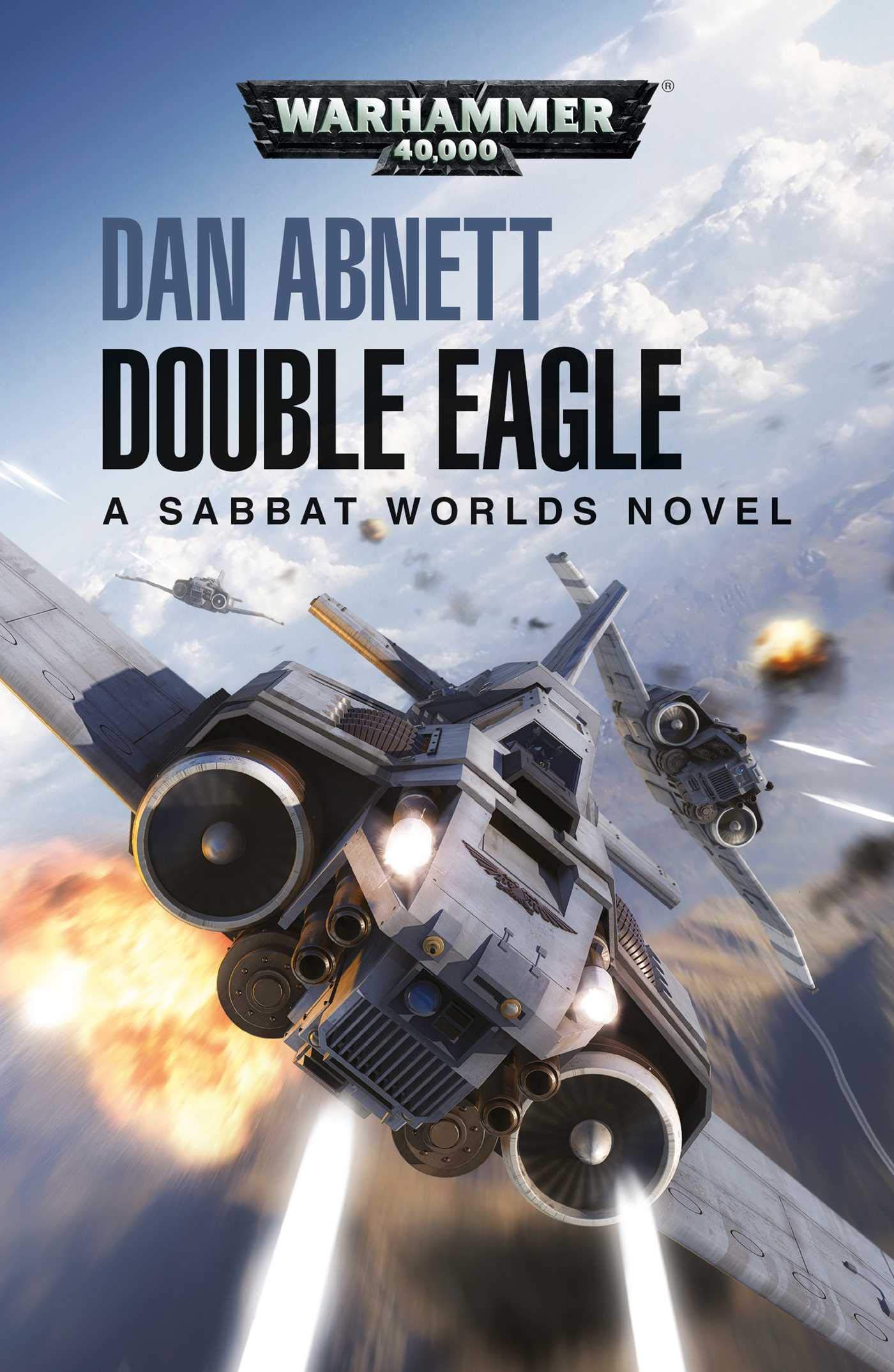
Warhammer 40,000: Double Eagle by Dan Abnett

Publisher: Black Library (Audiobook – 1 January 2004)

Series: Warhammer 40,000/Sabbat Worlds

Length: 10 hours and 16 minutes

My Rating: 5 out of 5 stars

Amazon

The master of Warhammer fiction, Dan Abnett, takes to the skies with the deeply addictive and ultra epic fighter pilot novel Double Eagle.

Readers familiar with this blog will know that I have been extremely damn obsessed with Warhammer fiction the last couple of years, having spent a substantial amount of time reading and reviewing numerous books from the franchise.  Of the many Warhammer fiction authors I have read during this period, one of the most impressive is the legendary Dan Abnett, who has written so many exceptional and powerful books around the franchise, including several series considered to be the seminal texts of the extended universe.  I have had a ton of fun with many of his books, including his brilliant Eisenhorn trilogy (Xenos, Malleus and Hereticus), and he has multiple entries in my current favourite Warhammer 40,000 books list.  However, his best-known series is the iconic Gaunt’s Ghosts books, which I am currently in the middle of reading.

The Gaunt’s Ghosts books are a beloved and key series of Warhammer 40,000 fiction that seeks to give readers a moving look at the lives of the frontline human soldier in this grimdark universe.  Set in an extended, multi-planet campaign, known as the Sabbat Worlds Crusade, the Gaunt’s Ghosts books follow a ragged regiment of soldiers as they attempt to survive the dark servants of Chaos coming for them.  I am having an exceptional time reading the Gaunt’s Ghosts series, and in 2024 alone I have read two particularly epic entries, Straight Silver and Sabbat Martyr.  However, before I dive any further into the series, I decided to read the spin-off novel, Double Eagle, which I have had on my to-read list for a while now.  Double Eagle was an interesting and unique novel that follows members of an airmen wing who were introduced in the fifth Gaunt’s Ghosts book, The Guns of Tanith.  Set after their mission with the Ghosts, Double Eagle follows these pilots, including a few characters from The Guns of Tanith, in a brutal new campaign.

War has engulfed the Sabbat World system as the forces of the Imperium of Man attempt to reclaim multiple worlds invaded by the forces of Chaos.  After years of fighting, the Imperium’s crusade has reached a tipping point, with victory or defeat for the entire campaign hanging on the results of a few key battles.  While the fighting is fierce throughout the system, nowhere is it more desperate than the beleaguered world of Enothis.

After failing to conquer the Chaos footholds on Enothis, the infantry and armoured forces of the Imperium are in full retreat, attempting to traverse miles of hostile terrain to return to safe territory, all while being harassed by relentless enemy aircraft.  With the fate of the planet in the balance, the commanders of the crusade deploy multiple squadrons of Imperial fighters and bombers to Enothis to turn the entire conflict into an air war.  If the Imperial pilots can hold back the advancing tides of Chaos and allow the ground forces to regroup the war for Enothis may be won.  But if the airmen fail, then Enothis and the entire Sabbat Worlds campaign is doomed.

Amongst the pilots sent to Enothis are the elite flyers of the Phantine Air Corps.  Veterans from the recent war to liberate their home planet of Phantine, the pilots of the Phantine Air Corps are determined to do their bit in this new conflict.  But the battle for Enothis will be unlike anything seen before, as thousands of Chaos aircraft descend on the planet, hoping to obliterate the defenders.  Severely outnumbered, can even the dogged Phantine pilots hold back the approaching tide of dark air machines before the planet is conquered, especially with an unnaturally skilled Chaos ace stalking the skies, determined to bring every opposing pilot down in flames?

Just when I think that Dan Abnett couldn’t impress me even more, I go and read Double Eagle.  A brilliant, intense, and exceptionally well-written novel that focuses on a particularly cool aspect of the Warhammer universe, Double Eagle blew me away with its great characters and elaborate air combat sequences.  I had an incredible time with Double Eagle, and it gets an easy five-star rating from me.

I deeply, deeply enjoyed Double Eagle, as Abnett took the brief of a Battle of Britain-inspired Warhammer 40,000 story and applied his usual impressively detailed style and powerful character-driven storytelling to produce an outstanding and addictive read.  Perfectly spinning off from the previous Gaunt’s Ghosts books and bringing the reader to another adventure in the expansive Sabbat World Crusades, Double Eagle has a brilliant narrative loaded with action that goes hard and fast for your feels and refuses to let go once it has you firmly in your grasp.

Double Eagle starts off quickly, getting the reader across the brutal new campaign and the importance of the aerial war that emerges, you are soon introduced to multiple characters and shown some initial awesome sequences with some explosive dogfights.  From there the story moves at a fast but smart pace, as you follow several distinctive and often overlapping character arcs throughout the length of the brutal campaign on Enothis.  You really get dragged into each major protagonist’s story as they attempt to survive the flying war.  There are some excellent battle scenes in this first half of the book and Abnett really shows how epic he can make a fighter pilot dogfight very early on.  The characters each experience some highs and lows in the first half of the book, and it doesn’t take you long to get attached the protagonists and their complex personal tales within the confines of the main story.

However, it is the second half of the book where everything comes together perfectly.  Each of the protagonists experience some version of personal loss or difficulty, and the impact of the war slowly drains them, taking them to some dark places.  Abnett sets up a brilliant underdog narrative around the protagonists, as the massive fleet of Chaos airships seek to crush them.  You can really see the parallels between this narrative and the Battle for Britain at this point, especially as the tired and severely outnumbered Phantine fighters and their local allies attempt to hold back the overwhelming and often Germanic-inspired forces coming for them.  Everything leads up to a massive final confrontation, as the protagonists engage in a series of brutal and drawn-out dogfights and aerial confrontations as we lead up to the finale.  While a couple of the character arcs leading up to this are a tad unsurprising, the way that Abnett writes them makes you love every second it.  The author brings everything to an epic close with continued and captivating action that honestly is impossible not to react to at times.  There are some very powerful moments at the closes, especially when some characters get everything they want, and you come away from Double Eagle wishing Abnett had made this book even longer.

Abnett once again masterfully crafts his compelling narrative together in such an effective way that I honestly just couldn’t stop listening to this book.  Making excellent use of multiple complex perspectives, you are swiftly drawn into the lives of several ordinary soldiers drafted into the deadly aerial war against a massive opposing fleet.  Featuring a range of complex characters arcs, Abnett expertly balances the character-driven plot between the various perspectives, while also featuring an epic war story that hits in all the right places.  Abnett’s use of quick-fire perspective changes works to create an excellent and fast-paced narrative, and it works especially well in some of the novel’s more intense sequences.  Speaking of action, you can’t talk about Double Eagle without discussing the amazing and epic aerial fight scenes and dogfights that make the book so damn distinctive.  Abnett did a remarkable job of harnessing the energy and feel of classic World War II fighter combat and bringing it into the Warhammer 40,000 universe.  Featuring many, many awesome sequences of aerial combat, Double Eagle really feels like you’re in a futuristic Battle for Britain as you witness fights between small groups of fighters fending off mass raids from Chaos forces, as well as sequences from the perspective of Imperial bombers.  The resulting dogfights between advanced fighter craft works so damn well in the context of the story, and you are treated to some truly epic sequences.  I was constantly enthralled by the brilliant aerial combat and flight sequences, and Abnett did an exceptional job expressing the intensities of flight, the ultra-fast pace nature of the combat, and the craziness of a massed aerial battle.  I could have honestly spent many, many more hours listening to Abnett’s descriptions of aerial combat, and there are so many excellent writing elements to this book that drag you in.

Double Eagle also proved to be an interesting and particularly strong Warhammer 40,000 novel that is really going to appeal to a wide range of readers.  Spinning off from the Gaunt’s Ghosts books, Double Eagle is tailor made for fans of the original series, although familiarity with the Gaunt’s Ghosts books isn’t necessary to enjoy this epic book.  While there are a few references, returning characters, and discussions about the overarching Sabbat Worlds Crusade, for the most part any reader can easily dive into Double Eagle and follow the story with no issues at all.  As with most tie-in books in the franchise, Double Eagle is best enjoyed by existing Warhammer fans, who will once again enjoy Abnett’s compelling insights into the canon.  I know that I really loved the exploration of Warhammer 40,000 air combat, and I loved how Abnett explored the physics, as well as the reasons why aerial fighters are still utilised in a universe where space travel exists.  However, I also felt that Double Eagle would serve as a pretty good entry point to any new readers interested in finding out why the Warhammer 40,000 universe is so damn cool.  Indeed, readers who are a fan of aerial focused military fiction or World War II fighter combat fiction can very easily jump into the new world here, as Abnett really presents a tale they would enjoy.  I need to read more Warhammer books from Abnett (I have several currently in my queue), and I currently very excited to read the recently announced sequel to Double Eagle, Interceptor City, which is set to be released later this year.

I found that the writing element that really brought Double Eagle together where the excellent characters at the heart and soul of the plot.  Focusing on several intriguing pilot characters, Abnett dove into the mindset of these flyers and did an amazing job capturing their love of the air and their desire to be the best.  However, as the book continues, you see a darker side to many of these characters, as the toil of war drags them down into their own mental hells.  While it did take me a little while to get across every protagonist, I eventually got drawn into the excellent character-focused storylines that Abnett set up in Double Eagle, and it was great to see the return of several characters introduced in The Guns of Tanith.  This includes the Phantine flight commander, Bree Jagdea, and the bombardier Oskar Viltry.  Jagdea proves to be a great centre for much of the plot, and her steady determination to keep her flight together and survive the various rigors of war, really strike a chord with the reader.  Viltry’s narrative is a little more complex, as the veteran pilot is suffering from trauma after being shot down and captured in The Guns of Tanith.  Certain about his own impending death, Viltry spends much of the book as a morose and depressed figure, until he finds someone worth living for.  Viltry’s storyline proves to be particularly heartfelt, especially as he has a relatively nice romance angle, and I felt that Abnett really captured his trauma and desire for a better life.

Aside from Jagdea and Viltry, Double Eagle also features several other impressive perspective characters who really bring the narrative together.  This includes young Phantine pilot, Vander Marquall, who serves as a major protagonist.  A rookie pilot fighting in his first campaign, Marquall has a massive desire to prove himself.  His obsession with becoming an ace and being respected becomes an overwhelming part of his character, and you find yourself occasionally disliking him, while also simultaneously cheering him on.  Thanks to his interactions with the other characters, Marquall gets some much-needed perspective at times (that scene with his mechanic at the end was brilliant), and I felt he had one of the most complex, dark and relatable storylines in the entire book.  Abnett rounds out the characters with local pilots August Kaminsky, a wounded veteran no longer allowed to fly, and Enric Darrow, a rookie without a plane after getting shot down in the opening scenes by the novel’s big bad.  While parts of Kaminsky and Darrow’s storylines are a little predictable, you really get invested in their various battles, especially as Abnett produces some interesting character moments and interactions for them.  I especially loved the hilarious exchanges between Kaminsky and Jagdea during one fun sequence, and Darrow proves to be a very likeable and determined young character to get behind.  These main characters, plus an excellent supporting cast, were great to follow in Double Eagle, and it will be awesome to continue at least one survivor’s story in the upcoming sequel.

It should come as no surprise to anyone that I ended up listening to Double Eagle on audiobook, as there is frankly no better way to enjoy an epic Warhammer 40,000 novel.  While I always gush about how much I enjoy a Warhammer audiobook, I frankly really need to emphasise just how impressive and exceptional Double Eagle was in this format.  The many, many aerial combat sequences come across so damn well when they are read out to you, and I loved how easily it was to visualise the fast-paced and exceptional flight scenes.  You really get lost in the battles when you listen to them, and I was frankly buzzing the entire time I was listening to Double Eagle.  Part of the reason this audiobook was so damn good was the inclusion of one of my favourite audiobook narrators Toby Longworth.  Longworth has lent his voice to most of Abnett’s Warhammer 40,000 novels in recent years, and frankly the two are a match made in heaven.  The story comes across so effectively in Longworth’s voice, and he really makes every scene, especially the exciting action sequences, that little more epic.  I also really love the fantastic and compelling voices he uses for the various characters.  While a couple of character voices sounded the same as those Longworth used in the Gaunt’s Ghosts audiobooks, I felt that they perfectly fit every figure they were assigned to, and you really get drawn into the matching character arcs as a result.  Frankly this audiobook was perfect, and I had so much fun listening to it.  With a run time of just over 10 hours, the Double Eagle audiobook is very easy to power through, and that is exactly what I did.

With an elaborate, powerful and addictive story about glorious battles in the sky, Double Eagle was a particularly epic Warhammer 40,000 novel that proves impossible not to fall in love with.  Another exceptional novel from Dan Abnett, who once again shows why he is one of the best authors of Warhammer fiction, Double Eagle had me hooked from the very first chapter, and I honestly couldn’t stop reading it until the very end.  This book comes very highly recommended, and I cannot wait to read the sequel later this year.

Amazon

Warhammer 40,000: Daemonbreaker by Jude Reid

Publisher: Black Library (Audiobook – 24 August 2024)

Series: Warhammer 40,000

Length: 7 hours and 27 minutes

My Rating: 4.25 out of 5 stars

Amazon

Gird yourself in faith, fury and fire, as fantastic author Jude Reid presents her latest Warhammer 40,000 novel, Daemonbreaker, which follows a complex figure as she blazes forth into the darkness of the Warhammer 40,000 universe.

After having a wonderful time with Warhammer 40,000 novels like Deathworlder by Victoria Hayward, Lord of Excess by Rich McCormick, Siege of Vraks by Steven Lyons and Oaths of Damnation by Robbie MacNiven, there was no way I was going to stop loving this franchise this year, so I eagerly dove into the cool new audiobook, Daemonbreaker by Jude Reid.  Reid, who really impressed me last year with Creed: Ashes of Cadia (one of my favourite debuts of 2023), presents an intriguing and dark novel that follows members of the Adepta Sororitas, the Warhammer 40,000’s resident nuns-with-guns.

On the battlefields of faith and fury, few warriors in the Imperium of Man can match the battle prowess of Celestian Sacresant Aveline of the Order of the Sacred Rose.  A deadly sister of the Adepta Sororitas, devoted to killing the mutants, witches, heretics and daemons that oppose the Emperor, Aveline is always eager for greater combat, and soon finds the ultimate opportunity she has been waiting for, defending the fortress world of Cadia from the ravening forces of Chaos as they embark on their 13th Black Crusade.

However, before Aveline can join her sisters in the massive battle for Cadia, she has been assigned final sacred duty.  Sent to Orrison VIII, a minor shrine world in the Cadia Gate system, Aveline is tasked with securing the desert world for the Emperor and scouring the forces of Chaos from its surface.

Desperate to find glory on Cadia, Aveline chafes at the slow speed of the mission on Orrison VIII, especially as their primary target, a deranged Chaos sorcerer, is content with playing a slow game of cat-and-mouse with her.  However, when Aveline finally gets her chance to face the enemy, she finds herself confronting a dark foe who knows her name and has a sinister scheme to destroy her and her sisters through her own arrogance.  If Aveline is unable to stop the dark Chaos forces before her, a deadly foe will be unleashed upon Holy Terra that could destroy the heart of humanity as it faces its darkest moment.

Daemonbreaker was a fantastic and compelling Warhammer 40,000 novel that expertly features an iconic faction and looks at the faith and emotions lying beneath their militant surface.  Jude Reid continues to impress with this cool novel and I had an excellent time getting through the intense and exciting story, which seeks to bring to life the figure of Celestian Sacresant Aveline who recently got her own model in the game.

I must admit, before diving too far into this review, that I sometimes found it a little hard to connect with Daemonbreaker at times, primarily because I’ve never been a massive fan of the Adepta Sororitas as a faction.  They’re honestly a little too one-note for me at times, and I never been especially drawn to their fiction as a result.  However, I felt that Reid was able to lift her narrative above some of the inherent limitations of this faction throughout the course of the book.  It helped that Daemonbreaker was a relatively shorter Warhammer 40,000 novel, so Reid sped up the plot, which in turn kept the reader from getting bogged down.  The resulting story is exciting and intriguing, as author quickly sets up the primary plot of the hunt for Chaos on Orrison VIII, while some initial compelling action set pieces help grab the reader’s attention.

The main narrative moves at a quick pace, with the protagonist leading her force into several encounters out in the desert while battling her own emotional turmoil and disappointment.  However, everything in the story changes around the halfway point of Daemonbreaker, when the author decides to throw the entire status-quo of the book on its head.  Thanks to a combination of the protagonist’s mistake and a major Warhammer 40,000 universe event, everything gets substantially more desperate for the protagonists, and Reid goes a little nuclear stacking the odds against them.  While there are a few gaps in the storytelling, the second half of Daemonbreaker is extremely fun and exciting, as the protagonists face impossible odds and encounter the very worst the universe has to offer.  There is a ton of tragedy and some horrifying moments as the reader races towards the end of the book, and it proves harder and harder to put it down as you near the conclusion.  Reid loads up some big final battles that showcase just how grim things can get in this universe, before the expected miracle brings things to a close.  Readers come away from Daemonbreaker feeling pretty satisfied with how things come to an end, although I did feel that part of the plot was a bit thin in places.

Reid has a great handle on writing Warhammer 40,000 fiction, and this is on display again in Daemonbreaker.  There is a notable cutdown in the exposition and Reid brings the reader right into the action and carnage which made it an easier book to get through, especially considering the faction focus.  The various action sequences come across as gritty and powerful, and you can feel the raw emotions of the protagonists as they encounter their dark opponents and the dreadful things they need to overcome.  Reid ensured that this was a concise and well-contained narrative through her use of two point-of-view characters, and I appreciated the excellent alternating perspectives.  Both protagonists were very well written, with the main story around Celestian Sacresant Aveline being the most prominent.  A deadly, if arrogant, sister of the Emperor, Aveline finds her devotion challenged by her own selfish desires and issues, which leads to dark things in the middle of the book.  While I didn’t always connect with Aveline as a character, I felt that Reid wrote a rather good redemption arc around her, and she becomes a lot more likeable and relatable in the second half of the book, especially as she comes to recognise her hubris and flaws.  Recognising these things allows her to fully appreciate her fellow sisters and leads her into the right place for the final arc of the plot to unfold.

Aveline is well balanced by the second perspective character, Novitate Gwineth, a young, keen and determined figure, whose eagerness to become a member of the Adepta Sororitas is drawn from her impending doom.  Reid writes an interesting and unique Warhammer storyline around Gwineth having haemophilia, which ensures that her days on the battlefield and in life are limited.  Wishing to die as a full sister, Gwineth’s keenness becomes a key part of the plot, and I loved seeing her grow into the role she wishes, especially as her innocence and determination are a driver for the rest of the cast.  The rest of the characters within Daemonbreaker are also very fun, if sparingly used.  I do perhaps wish that the author had added in additional perspective, preferably from a villain’s point of view, as I feel that would have enhanced the narrative to a degree, especially to provide some missing plot answers or explain the motivation and plans of the antagonists.  However, for the most part, this was a very well-written story with some intriguing protagonists, and one that I had an excellent time getting through.

The author has really gotten the hang of showcasing the grim and intriguing Warhammer 40,000 universe, and I loved some of the directions and figures that she featured within Daemonbreaker.  I especially felt that Reid does an excellent job examining Adepta Sororitas faction, the Sisters of Battle, within the book.  The various different units and figures of the faction are dropped into the plot fairly seamlessly, and even someone unfamiliar with the Adepta Sororitas unit types can easily appreciate their role in the plot.  I must also once again emphasise that Reid was able to overcome my disinterest in the classic Adepta Sororitas depictions with her clever narrative and compelling writing.  While this was a great Warhammer 40,000 novel, I feel that Daemonbreaker is perhaps a book best left to established Warhammer fans, as Reid does feature some heavy lore elements, and Adepta Sororitas players will probably get the most out of it.  Still, a new reader can easily come along and have a lot of fun with Daemonbreaker, as Reid’s story gets quite intense, personal and brutal.  You may have to ignore the fact that Daemonbreaker mainly written to promote a new model released in the tabletop game, but if you can get past that, this is a book well worth checking out.

Naturally, I ended up grabbing Daemonbreaker on audiobook, as this format is the absolute best way to enjoy a Warhammer book.  I really cannot emphasise how much more epic a Warhammer 40,000 tale comes across when it is read out to you, and I always have so much more fun listening to it.  This is particularly true when it comes to all the epic action, and I felt that the carnage in Daemonbreaker was very strongly enhanced by the audiobook format, with listeners also able to appreciate the compelling characters and intriguing lore while it’s being read out to you.  With a runtime of around seven and a half hours, this is a relatively short audiobook, and one that listeners can really power through, especially when they get caught up in the action and compelling character arcs.

One of the big highlights of this audiobook for me was the fact it was narrated by the appropriately named Faith Alabi, who really dives into the complex Adeptus Sororitas characters with her voice.  Each of the key protagonists is given their own unique voice, and I liked how well Alabi expressed their holy rage, and personal issues.  Alabi’s excellent voice work is cleverly supported by some fun additional audio enhancements, which I thought was a fun way to express some unique elements of the Warhammer 40,000 canon.  For example, the cybernetic figures, such as members of the Adeptus Mechanicus, have a noticeable robotic voice modulation that really tries to capture their machine nature, while communication occurring over vox-casters (radios), are filled with static and sound effects to emulate how the voices would sound in real life.  In addition, certain audio effects give dark and otherworldly voices to the antagonists, such as a particularly booming tone that makes the dialogue of a Chaos sorcerer antagonist that more impactful, or freaky vocal effects that make a major daemon seem even more powerful.  These audio effects work extremely well alongside Alabi’s narration, and I really appreciate the effort the producers made to drag listeners further into the story.  As such, those who decide to check out Daemonbreaker on audiobook are in for a very fun treat and this is such an awesome way to enjoy this fantastic addition to the Warhammer 40,000 canon.

Daemonbreaker was another amazing Warhammer 40,000 outing from Jude Reid, and one I was very glad I checked out.  The author effectively brings the main character to life in this book while also showcasing a compelling and intense Warhammer narrative of sacrifice, tragedy and holy war.  As such, Daemonbreaker is an excellent read for all fans of Warhammer 40,000 fiction, and I cannot wait to see what Reid takes on in the future.

Amazon

Warhammer 40,000: Oaths of Damnation by Robbie MacNiven

Publisher: Black Library (Audiobook – 24 August 2024)

Series: Warhammer 40,000

Length: 10 hours and 57 minutes

My Rating: 4.5 out of 5 stars

Amazon

Prepare to follow the most damned heroes in the Warhammer 40,000 canon in the impressive and intense new novel from Robbie MacNiven, Oaths of Damnation.

Recurring readers of this blog will know that I am constantly in the mood for fun and exciting Warhammer 40,000 action, which is why I listened to the awesome new book, Oaths of Damnation, the moment I could.  Written by new-to-me veteran Warhammer author Robbie MacNiven, a man with a lot of experience writing about complex Space Marines, Oaths of Damnation was one of the more intriguing Warhammer 40,000 books of 2024, and I really loved the opportunity to check out the infamous Exorcists Space Marines Chapter.

In the far, war-torn future, the Imperium of Man is under constant attack from the forces of the Chaos gods and their deadly daemon servants.  Few within the Imperium, even amongst the legendary Space Marines of the Adeptus Astartes, can fight against the daemons of Chaos on an equal footing, but there is one Space Marines Chapter, the Exorcists, that takes the battle to them in the most unorthodox and heretical of ways.

The Exorcists are an elite and secretive Chapter of Space Marines who make the ultimate sacrifice to fight the forces of Chaos.  Willingly accepting daemonic possession as part of their initiation, prospective Exorcists need to banish the daemon within themselves to join the Chapter.  Those who succeed become fierce warriors who are now resistant to the corruption of Chaos at the cost of their own fractured souls.  However, those that fail suffer a fate worse than death as they become Broken Ones, living prisons for the daemons summoned and expelled by the rest of the Chapter.  Few in the Imperium know the sacrifices that this Chapter makes to fight the enemy; if it were to become common knowledge, all the Exorcists would be put to the flame as heretics.

As such, when a dark conspiracy sees a Broken One containing a powerful daemon, the Red Marshal, escape from the Exorcists custody, the Chapter sends a unit of its elite Hexbreakers to hunt it down before their secrets are exposed.  Led by the dogged Almoner-Lieutenant Daggan Zaidu and powerful psyker Codicier Torrin Vey, the Exorcists strike force journeys to Fidem IV, a planet littered with ancient battlefields, to hunt down the Broken One and destroy the daemons within.

But as the Exorcists battle across the planet looking for their prey, it soon becomes clear that members of the Word Bearers traitor Space Marines Legion are on Fidern IV, seeking the Broken One for their own sinister purposes.  Worse, a dangerous connection exists between Zaidu and the Red Marshal, one that could endanger the entire mission.  Can the Hexbreakers succeed and hunt down the Broken One before it is too late, or will their Chapter’s darkest secret be unleashed upon the entire Imperium in a wave of blood?

Oaths of Damnation was a particularly intriguing and intense Warhammer 40,000 novel that really showcased MacNiven’s skill as an author.  Featuring a detailed look at a particularly cool faction in the Warhammer 40,000 canon, Oaths of Damnation was an excellent and exciting read that constantly grabbed my attention and refused to let go.

I really enjoyed the fantastic narrative contained within Oaths of Damnation, especially as MacNiven was able to produce a book that allowed him to tell his own distinctive story while also expertly highlighting the Exorcists Chapter.  Oaths of Damnation’s story starts off strong, with a look at the Broken One’s bloody escape from the Exorcists’ custody, which effectively sets up the Red Marshal as a deadly antagonist.  The following story moves at a quick pace as. With only a minimal amount of exposition and introduction, the protagonists set forth to Fidern IV to find the escaped Broken One, only to encounter opposition from the desperate daemon and the Word Bearers.

What follows is a series of intense and well-written battle sequences as the Exorcists pursue their target across the planet and fight against the various forces of Chaos.  MacNiven ensures a compelling story structure, as the protagonists face determined opposition, brutal fights and unexpected setbacks on the way to victory.  The author also spends time diving into the psyche of several key characters, which adds some intriguing intensity of the plot, especially as many find themselves distracted or conflicted by the mission.  MacNiven anchors the end of story on two massive action set-pieces that push the Exorcists to the limit and force them to face their internal and external daemons.  I liked some of the fun, if not unexpected, twists that MacNiven threw in in the lead up to the final battle, and the constant prophetic hints about dark events to come really enhanced the intensity of the plot towards the end.  The final confrontation is particularly impactful and moving, especially as there are some major sacrifices being made and all manner of carnage to behold.  I really appreciated the dark ending that MacNiven left the story on, and no-one should come into Oaths of Damnation looking for a happy ending.

MacNiven did an outstanding job capturing the dark and grim nature of the Warhammer 40,000 universe with his writing, and I felt that this was an extremely strong read overall.  While there are some complex lore events contained within, for the most part Oaths of Damnations was an accessible novel, even for those readers unfamiliar with the canon (although some basic Warhammer 40,000 knowledge would be helpful).  The author does an excellent job exploring the plot through the perspective of multiple complex characters, which resulted in a very compelling read, as many of the protagonists are forced to continually overcome their literal inner daemons.  I felt that this focus on damaged characters, as well as the intriguing examination of some unique Warhammer lore, helped Oaths of Damnation escape the ‘bolter porn’ label that many Space Marine novels are painted with.  That being said, Oaths of Damnation does have some particularly striking action sequences that fans of Warhammer 40,000 battles will really enjoy.  MacNiven clearly has a gift for showcasing Space Marines in all their martial glory with his writing, and you really get a sense of their power, intensity, and sheer destructive capability.  I also deeply enjoyed how he richly depicted their fighting capability and style, and the way in which he detailed the impacts of the bolt shells, the durability of the power armour, and the strength of their attacks, was honestly some of the best representations of Space Marines in combat I have ever seen.  I really cannot emphasise how impactful MacNiven’s writing style was, and Oaths of Damnation is a great book for all Warhammer fans, especially those buzzing for some Adeptus Astartes action after playing Space Marine 2.

A major highlight of this book for Warhammer 40,000 fans is the inclusion of the very cool Space Marines Chapter, the Exorcists.  A band of secretive and hidden Space Marines who willingly allow themselves to be possessed so they can learn to fight daemons better is an awesome concept, and MacNiven did an outstanding job showcasing this to the readers of Oaths of Damnation.  With only minimal lore dumps at the start of the novel, MacNiven ensures that the reader gets a sufficient and intriguing idea of who the Exorcists are and how they become lethal daemon fighters, and it proves fascinating to dive deeper and deeper into their Chapter as the book continues.  Not only is there is a great focus on how and why they damn themselves, but I also really appreciated the comprehensive way in which MacNiven tried to explore the other side effects of becoming an Exorcists, as well as the unique culture that they share.  The concept of the lingering bond that each Exorcist holds with their Never-brother, the daemon that possessed them, so much so that they still hear fragments of their voices and gain personality traits or combat abilities reminiscent of their former possessor, was particularly cool, and the author does an excellent job of showcasing it.  MacNiven also expertly covers the concept of the Orison Cults, social and ceremonial cults of the Exorcists dedicated to specific rituals and combat styles, and which serve a vital part in the larger Exorcists culture.  It was fascinating to see the ways that the now practically soulless Exorcists try to retain their humanity throughout their day to day lives, and how they replace the holes in their being with ritual and false comradery.  This combination of Exorcists’ lore, and MacNiven’s compelling dive into the deeper motivations and minds of its members, made for outstanding reading and it fun to see this complex and damaged Chapter in action.

I also have a lot of love for the compelling main characters featured within Oaths of Damnation.  While Space Marine characters in Warhammer fiction can sometimes be a little dull, the main two protagonists of this book, Almoner-Lieutenant Daggan Zaidu and Codicier Torrin Vey, each has a complex background and connection to the target that ensures that the reader is drawn into their story.  Zaidu’s is particularly fun, as Zaidu feels substantial guilt and anger at the damage caused by the Red Marshal, as it was the daemon that formerly possessed him.  Determined to end the connection between them once and for all, Zaidu lets his recklessness control him in many parts of the book, and it was deeply compelling to see how obsessed he became.  Vey on the other hand is a veteran Space Marines librarian, who stands as the beacon of knowledge to the group.  The man responsible for Zaidu’s possession by the Red Marshal, Vey bears a lot of guilt within himself, and he works hard to keep Zaidu safe from his own anger, impatience and desperation to kill his Never-brother.  Vey and Zaidu play off each other perfectly throughout Oaths of Damnation with their troubled mentor/mentee relationship, and MacNiven makes sure to hit all the right emotional notes to get the reader involved in their tales of personal woe.

In addition to Zaidu and Vey, MacNiven provides some fantastic alternative perspectives from several other members of the Exorcists who journey to Fidem IV.  As with the main two characters, each of these Exorcists are deeply troubled and damaged because of their former daemonic possession, and each then battles with the side-effects of the process, as well as the lingering taint of their Never-brothers.  This ensures that Oaths of Damnation has a rather dour tone to it at times, but seeing these damaged, yet highly determined and loyal Space Marines in battle is powerful and really drags the reader in.  The Exorcist characters are well balanced by a raft of compelling and distinctive villains, including a darkly charismatic Dark Apostle with great ambitions and a weary veteran Word Bearer who has started to question his role in the universe.  However, the most important villain is the fallen daemon known as the Red Marshal, who hungers for freedom and a return to power.  You get several intriguing trips into the Red Marshal’s mind, and I enjoyed seeing his boiling rage and determination to regain his god’s dark favour.  These great characters really helped elevate Oaths of Damnation’s plot, and I enjoyed seeing all their respective narratives unfold.

As usual, I ended up grabbing this cool Warhammer 40,000 novel on audiobook, which is my preferred way to enjoy books from this franchise.  While all Warhammer audiobooks are great, I felt that Oaths of Damnation came across particularly well in this format, and you really got dragged into the action and excitement as it was read out to you.  I personally found myself absorbing the complex lore surrounding the Exorcists a little better while listening to it, which helped with the overall impact of the story.  Oaths of Damnation also strongly benefited from the excellent narration of Charles Armstrong.  Armstrong, who previously impressed me with his narration of the Warhammer Crime audiobook, Bloodlines by Chris Wraight, did another excellent job in Oaths of Damnation as he expertly showcased the elaborate story with his voice.  I particularly enjoyed his compelling take on the various characters featured within the novel, especially the main protagonists, and he really captured their dark inner feeling and dedication in multiple scenes.  This proved to be an epic audiobook, and, with a runtime of just under 11 hours, it is one that dedicated listeners can get through fairly quickly.  I personally would recommend this format as the best way to enjoy Oaths of Damnation, or indeed any Warhammer 40,000 novel.

Oaths of Damnation was a particularly strong and exciting piece of Warhammer 40,000 fiction that I had an incredible time getting through.  Robbie MacNiven has produced another gripping and intriguing read that cleverly dives into the complex lives of a unique Space Marines chapter, and I loved every second of it.  An intense, dark and action-packed read, Oaths of Damnation really expresses the grimdark nature of the Warhammer 40,000 universe and you’ll have a very hard time escaping once you get sucked in.

Amazon

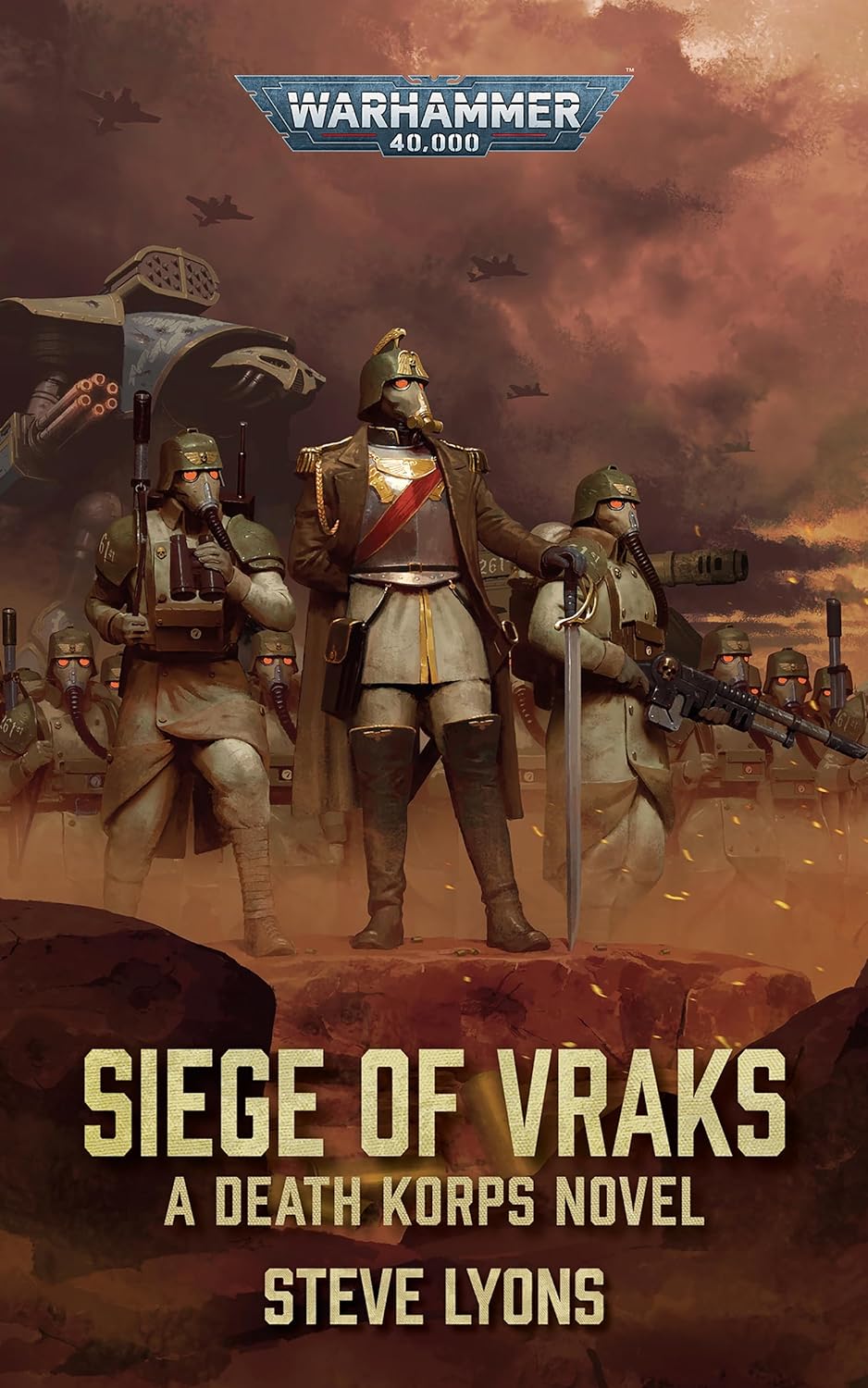
Warhammer 40,000: Siege of Vraks by Steve Lyons

Publisher: Black Library (Audiobook – 22 June 2024)

Series: Warhammer 40,000

Length: 9 hours and 48 minutes

My Rating: 4.5 out of 5 stars

Amazon

The always impressive Steve Lyons once again dives into the wars of the legendary Death Korps of Krieg with this epic new novel that shows just how massive a Warhammer 40,000 campaign can be with the ultra-exciting and intense Siege of Vraks.

I have been having a ton of fun with Warhammer 40,000 fiction this year, as complex books like Da Big Dakka by Mike Brooks, Deathworlder by Victoria Hayward and Lord of Excess by Rich McCormick have greatly impressed me.  However, few have had the scale or pure brutality of the amazing new release, Siege of Vraks by Steve Lyons.  The third standalone book by Lyons that focuses on the Death Korps of Krieg (see my reviews for Dead Men Walking and Krieg), Siege of Vraks brings to life a massive event from the Warhammer 40,000 canon (as featured in several game books), with the long-running siege of the planet of Vraks.

In the far future, humanity has been forced to fight on many brutal battlefields, but none are as infamous as the slaughter that occurred on the planet Vraks.  Once a vital armoury world used to supply regiments throughout the Imperium of Man, Vraks has become tainted by humanity’s greatest enemy.  Thanks to a corrupted cardinal, the entirety of Vraks’s population has fallen under the sway of the Chaos Gods and have risen in rebellion against the rest of the Imperium, believing themselves to be fighting in the god Emperor’s name.

Desperate to reclaim the vital world, the Imperium has no choice but to send in a massive besieging invasion force to purge the traitors.  Only a completely relentless force has a chance of success on the bloody fields of Vraks, and to that end the stoic soldiers of the Death Korps of Krieg have been chosen to lead the attack.  Experts at sieges, fanatically stubborn, and desperate to wipe away the stain of their planet’s historical betrayal, the soldiers of Krieg are prepared to destroy their enemy no matter the cost.

However, even with the implacable Krieg soldiers leading the assault, Vraks is no simple planet to conquer.  Its massive central fortress is impregnable, and the entire population of planet has been mobilised to fight against the Krieg, equipped with the massive arsenal of weapons previously held in Vraks’s armoury.  To defeat their enemy, the Krieg will need to spend years and millions of soldiers to slowly approach and wear down Vraks’s fortresses.  But with the constant battle drawing the attention of other malign Chaos forces to Vraks, can even the massed forces of the Krieg win this impossible siege, or will these fearless soldiers finally face an army even their devotion and dedication to duty is unable to overcome?

Siege of Vraks was another particularly strong Warhammer 40,000 novel from Lyons, who excels at diving into the grimdark core of Warhammer fiction.  Filled with an insane amount of action, Siege of Vraks proves to be an intense and addictive siege novel that cleverly explores a well-established lore event and presents it in an outstanding and moving way to the reader.

The story of Siege of Vraks is one of action, sacrifice and self-discovery, as it recounts the events of the titular siege in its own compelling way.  Starting off with a quick prelude that covers the events that led up to the conflict, the main story starts a few years into the war and then goes all the way to the very conclusion of the siege which occurs after years of brutal fighting.  Rather than having one concise narrative thread, Siege of Vraks is instead made up of a series of connected storylines set around key events of the war.  Each of the initial chapters features a new central character caught up in a different battle and scenario of the war, and often focuses on them fighting in dangerous or impossible situations.  While these initial chapters are often linked by the inclusion of recurring character Confessor Ignea Tenaxus or by showing different sides to the same battle, for the most part they are unconnected and some of their messages and themes remain self-contained within the chapter.  However, as the book continues, a few point-of-view characters return for another chapter, often years removed from their last appearance.  These characters, especially Colonel Tyborc, will then continue their storylines from the previous appearances, which often play into the larger events of the overall siege in some interesting ways.  While I imagine the slightly disjointed way that Lyons tried to capture the siege might not be for everyone, especially those who would prefer seeing every event from one character’s eyes, I thought that it was extremely clever and fit into the unique mindset of the Krieg regiment.

The rest of the book takes places over a series of years as Lyons attempts to capture the entire epic and lengthy sieges.  The author includes multiple time skips here to showcase the dragging length of the battle, often interspersed with useful context inclusions that provide an overview of the carnage.  These time skips move the story along at a sensible pace and the reader is never lost, especially when it comes to the key recurring characters. While Lyons is primarily showing the carnage of war from the perspective of the fighter on the ground, you get a good understanding of just how big the scope of the fighting is, and really get drawn into the over-the-top action.  The loosely connected character arcs continue in the second half of Siege of Vraks, and there are some complex stories being featured here.  I particularly enjoyed the fascinating standalone chapter that followed the interrogation of a local inhabitant of Vraks after he defected and pretended to be a member of a Krieg regiment.  While other chapters featuring recurring character Colonel Tyborc provides some unique insights into the mindset of a Krieg soldier and what being a hero means to them.  All these chapters are loaded with some intense action, intriguing discussions, or shocking occurrences, as the horrors of war, and even darker things, take their toll on the Krieg soldiers.  Everything leads up to the conclusion of the siege, with final battles, deadly confrontations, and despair in the aftermath, leaving plenty for the reader to get drawn into.  This ended up being a particularly epic narrative which I personally really enjoyed.

As I mentioned above, Lyons features a more fractured narrative structure in Siege of Vraks that shows detailed snapshots of key parts of the larger war and the lives of certain protagonists.  Considering that the overall siege lasts many, many years and features a lot of smaller, pointless battles, this is honestly the best way of doing it, and I think that Lyons’s choice provided the best view of this conflict, while also taking the time to explore multiple characters and storylines.  The resulting book has an interesting flow to it, as you are introduced to new dark scenarios and figures in peril, and forced to watch them participate in a pointless, unrelenting conflict.  While some may not connect with the way in which Lyons dived the book between characters and time periods, I really appreciated the way it was told, and other readers’ dislike will be well bridged by the book’s awesome action.  There are so many impressive battle sequences featured throughout Siege of Vraks, and you see the Krieg soldiers and their allies face off against all manner of opposing forces, from corrupted civilians to daemons and traitor Space Marines.  All these scenes are particularly epic, as Lyons succeeds in showcasing the elaborate big battles of the franchise, and you really get drawn into the resulting carnage.  There is a palpable desperation in many of these sequences, as the Krieg soldiers face off against terrible odds, and Lyons also adds in a bit of horror in places, as Warhammer 40,000 zombies, disgusting daemons, and even more terrors enter the fray.

Due to all this cool action, Siege of Vraks is a highly accessible read to those readers unfamiliar to Warhammer fiction, and any general fans of science fiction and military fiction can have fun with the over-the-top battles featured in the book.  Indeed, I personally felt that Siege of Vraks was one of the few of the franchise novels that really captured the epic scope of a Warhammer 40,000 war, as this book captures a literal world-spanning conflict with millions upon millions of casualties.  Lyons really takes the time to explore just how devastating a full-on war in the franchise can be, and I appreciated seeing the extent of this slaughter here, compared to other Warhammer books that focus primarily on one regiment or relatively small-scale conflicts.  As such, long-term Warhammer fans will also get a lot out of Siege of Vraks, especially as Lyons really does a good job of capturing this event, which has been discussed in some of the games books for ages and showing it to the reader from the soldier’s perspective.  However, the thing that will appeal most to established Warhammer 40,000 readers, is Lyons’ portrayal of the awesome Krieg soldiers.

Due to their dour background, German World War I aesthetic, and the utter devotion to death and duty, the Krieg are a particularly popular faction in the Warhammer 40,000 games and extended fiction, and Lyons is the undisputed author of them.  His previous books have all explored different aspects of the faction, with Krieg looking at their history and the events that made them, while Dead Men Walking showed them as near-soulless automaton, especially through the eyes of the desperate civilians they were there to save.  In Siege of Vraks, Lyons goes a slightly different way and presents a more nuanced and complex portrayal  that fans of his previous works will really appreciate.  For the first time, Lyons features several Krieg perspective characters, and you are given some intriguing insights into their mind, which proves to be highly fascinating.  While on the surface they are dedicated and fanatical fighters, you do see some threads of humanity in several of the characters, such as ambition, fear and uncertainty.  I liked how Lyon tries to humanise the Krieg soldiers in places, especially around main character Colonel Tyborc who struggles with the notion of being a hero when all he wants is to fight the war and redeem his planet.  Tyborc’s arc proves to be particularly compelling in places, especially as his experiences cause him to doubt the war they are fighting in, and lead to an infamous showing of fear.  Despite this attempt at showcasing humanity, Lyons is clear that the Krieg have their own unique drive and take on human nature, such as when one Krieg character sends his older Commissar on a suicide mission because he believes its more merciful than letting him retire.  As such, there are some complex depictions of the Krieg here in Siege of Vrak, which serve as an interesting comparison to some of the author’s previous novels, and I felt that Lyons’ dive between different Krieg characters produced a very complex read.

Unsurprisingly to anyone who has read one of my Warhammer 40,000 reviews, I chose to enjoy Siege of Vraks in its audiobook format.  I have waxed poetic many times about how awesome I find Warhammer audiobooks to be, and this proved to be the case again with Siege of Vraks.  The many intense and over-the-top battles really come across in an epic way when read to you, and I personally find that I can envision the action much more effectively this way.  I also find that the complex character interactions and personal developments that Lyons loads up into the story are expertly captured by this format, and I believe that I got a lot more out of the audiobook than reading a physical copy.  It helped that excellent narrator Timothy Watson returned for Siege of Vraks.  Watson has previously really impressed me with Lyons’ previous audiobooks, as well as in The Lion: Son of the Forest by Mike Brooks, and it was great to see him continue to add his own spin these Krieg-focused books.  Watson is very effective at conveying the excessive violence and intensity of the Warhammer universe with his narration, and you really get drawn into the action as a result.  I also really love the Germanic accents that Watson attributes to the various Krieg characters, especially as it fits into their faction aesthetic.  While the various Krieg characters all sound a little similar (which does fit into their potential clone background), the narrator does a good job differentiating between these characters, and you are never in doubt about who is talking.  This excellent narration really helped to drag me into the Siege of Vraks audiobook, and I honestly flew through its near 10 hour long run.  There is honestly no better way to enjoy Siege of Vraks then on audiobook, and you are going to have a great time doing so.

Overall, Steve Lyons’s Siege of Vraks was a particularly epic and intense piece of Warhammer 40,000 fiction, that is going to appeal to a lot of different readers.  Loaded with massive and over-the-top action sequences, Siege of Vraks had me hooked from the very beginning, especially as the author once again expertly showcases the iconic Death Korps of Krieg.  This was such a great read, and all fans of Warhammer fiction and excessively massive science fiction battles, are in for an amazing treat with Siege of Vraks.

Amazon

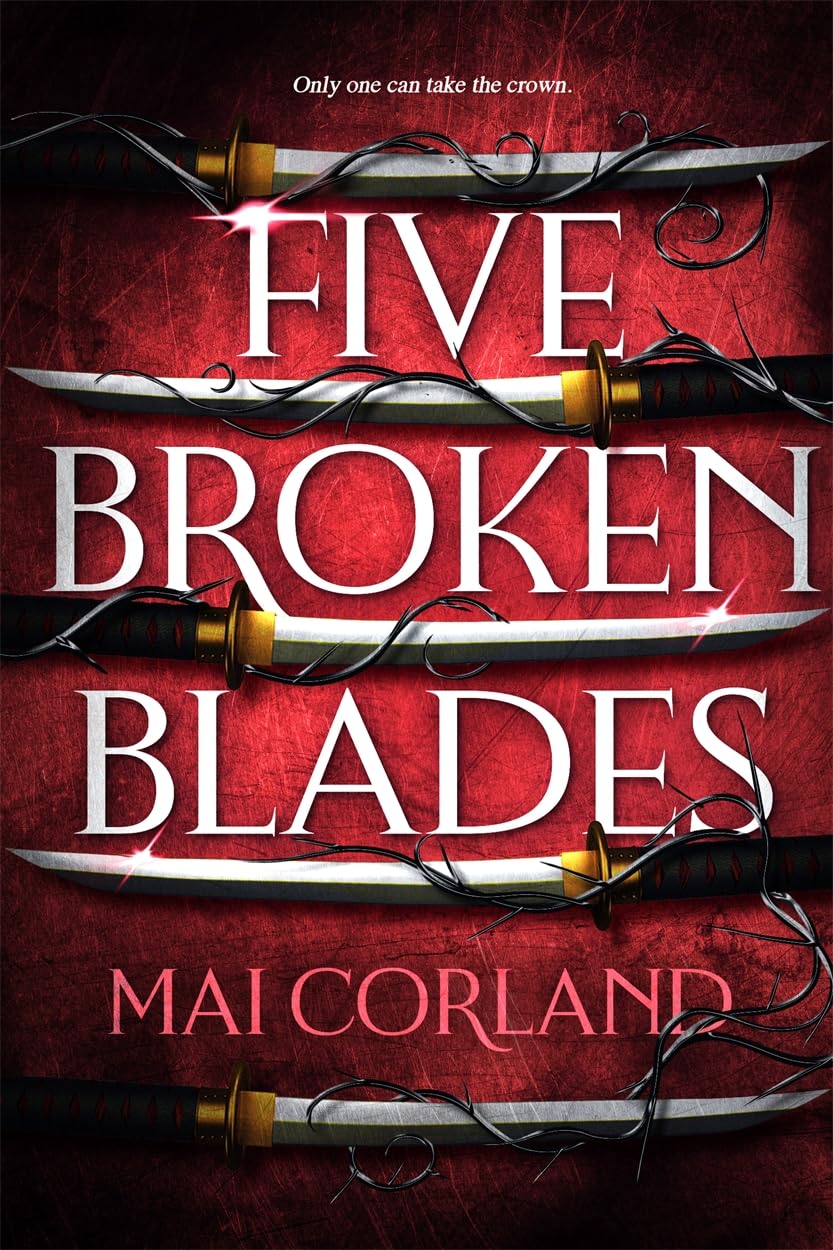
Five Broken Blades by Mai Corland

Publisher: Recorded Books (Audiobook – 7 May 2024)

Series: The Broken Blades – Book One

Length: 15 hours and 1 minute

My Rating: 4.5 out of 5 stars

Amazon

I was in the mood for some awesome fantasy fiction, so I decided to check out something a little different for me, Five Broken Blades by new author Mai Corland.  The debut adult book from Corland, who previously wrote children’s and young adult fiction under the name Meredith Ireland, Five Broken Blades was an addictive and exciting fantasy novel with some tragic romance at its core.

In the kingdom of Yusan, the God King Joon is a tyrannical and despised figure whose rule has seen the lives of the poor and innocent disadvantaged even further.  There are many people who want Joon dead, but to even think about it is high treason, punished by the most painful of deaths.  Worse, killing the king is next to impossible, as he is immortal, granted extended life and invulnerability by his magical crown.  Despite this, a small group of desperate killers are about to try to take him down.

Mysteriously summoned from across the nation, five of the most dangerous killers and rogues in Yusan have been tasked with working together and doing the impossible, stealing Joon’s crown and killing him in public.  Each of the five has their own reason for taking part in this apparent suicide mission, including a hired hitman seeking the money he needs for his redemption, a trapped poison-maiden hoping to gain freedom for herself and her sister, the royal spymaster looking for revenge, a banished prince who wants his life back, and a slippery thief seeking to reconnect with her family.

As the group begin to put their plan into motion, these independent killers will need to learn to work together with the rest of the group if they have any hope of surviving.  However, each of them has their own deeper motivations regarding their planned mission, and none of them truly trusts the other rogues they have been tasked with working with.  As they get closer to their goal, the five experience setbacks, twisted romance and unexpected opportunities.  But can they succeed and kill a God King, especially when they have a traitor in their midst?

Five Broken Blades was an excellent and highly enjoyable novel from Corland, who produced an amazing debut adult fantasy novel.  A clever fantasy novel with some entertaining romance elements, Five Broken Blades has an outstanding story of deceit, betrayal and bloodshed set in a Korean-influenced fantasy realm, which really drew me in with its impressive and fun story.

I had an outstanding time with the elaborate story that Corland came up with for Five Broken Blades, and the author produces an intense and moving, character-driven story.  Despite the name and the discussion about the five killers in the synopsis, there are actually six protagonists in this book, which produces a well-balanced narrative with a variety of intriguing character perspectives, arcs and motivations.  Corland starts the book by initially focusing on three of the protagonists and working the reader into their own unique circumstances and backstory.  The author does a good job of quickly and effectively introducing these figures in the initial chapters of the book, and then pairing them off with an additional protagonist who seeks to bring them into the main assassination plot of the book.  These new characters generally serve as great foils for the initial protagonists, and Corland then works to expand their roles in the book, providing their own backgrounds and motivations for being there.  Once established together, these three pairs of characters, then set off to meet up with the other protagonists as they plan their attempted regicide.

The first half of the book primarily focuses on the three separate pairs as they set up their own storylines both individually and as a couple, which I felt worked to really hammer home the complex character arcs Corland was setting up.  There are some fantastic moments in these early pages, including fights against monstrous birds, pirate warfare, and some intense personal scenes.  While the romantic entanglements that emerge within all three of these initial pairs are very predictable and forced, you generally grow attached to all six protagonists, and it proves interesting to see the various hidden motivations and background, especially as Corland expertly trickles out their respective secrets to the reader.  While I quite enjoyed getting to know the characters separately, I felt that Five Broken Blades’s story really took off once all six characters joined together in one group.  The six protagonists all play off each other nicely, and it was intriguing to see the different opinions they had of the rest of the group.  The mismatched styles and motivations make for some compelling interactions, and Corland also works in a particularly intense fight sequence, that helps to cement the protagonists as a team.

While there is some excellent camaraderie, and more romantic tension, the second half of the narrative is strongly defined by mistrust and secrets.  Corland does an excellent job of showcasing the conflicting motivations and hidden desires of the protagonists to the reader, and it was entertaining seeing the various ways the characters all lied to each other as they progressed.  Everything leads up to an intense final act, where the assassination attempt is made, and everyone’s secrets are brought out into the light.  There are some excellent reveals here, and I loved the big twist that comes out as a result.  While I did feel that the identity of the traitor in the group was slightly predictable, the full extent of their motivations and the reasons why they are there was compelling, and it ties in well with all the other clever reveals.  The last few chapters of Five Broken Blades were so damn good, especially as nearly every big question from the book is answered, and I loved the excellent cliff-hanger that Corland left it on, as it really raises the bar for the sequel’s potential plot.

I really enjoyed how Corland set out Five Broken Blades, and the exciting narrative came across in an excellent way.  The key highlight of this is probably the use of six separate perspective characters to tell the complex story.  While too many narrators can sometimes ruin a story, I felt that Corland had the right balance, as Five Broken Blades’ story never felt too crowded or diluted.  While the author probably could have left out Tiyung’s perspective, for the most part the split and switch between narrators worked extremely well, and I loved how it enhanced the overall story and allowed the author to explore multiple compelling character arcs.  The way in which the specific character-focused chapters started off long at the start of the book, allowing for introductions and initial character development at the front, and then got shorter once all six protagonists were together, was very clever as well, and I appreciated how the sudden shift in perspectives with the shorter chapters helped with some of the books more intense or action-packed scenes.

Corland ensures that there is a great mixture of different story elements featured throughout Five Broken Blades, and I personally appreciated how the focus on the characters was balanced with action and so much intrigue.  All this is well surrounded by an intriguing new fantasy realm, Yusan, with some distinctive Korean influences.  While I did feel that parts of this world were a little basic, for the most part this was an excellent background setting, and I appreciate how well Corland worked her fantasy ideas into the larger narrative.

Another key aspect of Five Broken Blades was the inclusion of multiple romance arcs, due to this book being marketed as a romantasy.  I must admit that I’m not the biggest fan of romantasy fiction, and while a good romance arc can greatly enhance a fantasy story, I don’t go out of my way for books that feature excessive romance added in purely to make it a mixed genre novel.  Still, I gave Five Broken Blades a chance, and I honestly thought that Corland did a great job with the romance elements.  While two of the main three romances are very forced (although Euyn and Mikail’s arc of betrayal and forgiveness was pretty strong), for the most part they were fun or interesting to see unfold.  It helped that they didn’t overwhelm the rest of the story and instead were well balanced against the constant machinations of the characters.  Indeed, the romances added an extra layer of heartbreak to some of the betrayals, which ensured a more intense plot.  As such, Five Broken Blades was a romantasy most fantasy fans can probably enjoy, although people will have issues with the predictable way that all three of the initial pairs of protagonists couple up.

While the excellent and twisty story is a great part of Five Broken Blades, the best part of this book is the well-crafted main characters who the narrative is set around.  Corland came up with six excellent protagonists for this book, all of whom have complex and tragic backstories that come into play throughout the course of the book.  Indeed, the narrative is strongly driven by each of their personal tales and experiences, and you really get drawn into the backgrounds and thoughts of the protagonists, especially as understanding their motivations and interactions with the other protagonists is key to working out the upcoming twists.

Of these characters, I felt that Royo and Sora were probably the best written, and I loved their complex stories filled with tragedy, regret and a loss of freedom.  Royo, the tough street thug with a severe need for redemption proves to be the heart of the story, especially as he has a particularly tragic backstory.  He is well matched by the beautiful Sora, a young woman who was forced into a life of death as a poison-maiden, whose poisonous body brings death to those who try to get close to her.  Required to perform assassinations to keep her sister safe, Sora longs for freedom, and will take any opportunity to get revenge and ensure her sister’s safety.  Royo and Sora and well matched by the entertaining pairing of Euyn and Mikail, whose respective arcs were nearly as complex as theirs.  Euyn, the former crown prince of Yusan, had been forced from his life of luxury due to his murderous predilections, and now seeks to become king after years on the run and a better understanding of the common people.  However, Euyn is constantly bedevilled by his former lover Mikail, the royal spymaster, who blows into his life once again to recruit Euyn for the plot against his brother.  Mikail is probably the most entertaining figure in the book, and I loved his constant manipulation of the others.  Corland did a good job of building up a complex backstory behind Mikail, and you grow to like him even more once you understand the reasons behind his inner rage and the lengths he wishes to go to resolve it.

While these four protagonists are pretty awesome, I did feel that the story was slightly let down by the other two protagonists Aeri and Tiyung.  Tiyung is underused (he’s not one of the titular five broken blades), and his unrequited love with Sora and rebellion against his father had some benefit for the story.  However, I had a hard time liking the character of Aeri.  While she did grow on you a little as Five Broken Blades continued, I honestly felt that Aeri’s bubbly personality really didn’t match the other figures in the book, and it was hard to take her seriously as a protagonist.  Corland makes her way too manic (and horny if we’re being honest), and her chapters are a bit too discordant to the rest of the book.  Still, she had some interesting background elements, and there were some compelling reveals around her that explain her unusual behaviours.  Throw in several great additional characters, including some villainous nobles, and this proved to be an outstanding cast, who really help to turn Five Broken Blades into a distinctive and powerful read.

I ended up grabbing the audiobook version of Five Broken Blades, which I always find to be a great medium to enjoy a fun fantasy book.  This proved particularly true for Five Broken Blades, and I loved how well the audiobook format enhanced its compelling and exciting story in some fun ways.  I particularly enjoyed the inclusion of six separate narrators, Greg Chun, Zion Jang, Roger Yeh, Donald Chang, Jaine Ye and Sophie Oda, each of whom voiced the chapters of a particular point of view character.  I really love audiobooks with multiple narrators, and when done right it can help to produce an epic listen.  I felt that the Five Broken Blades audiobook was a great example of this, as all six narrators did an amazing job voicing their protagonist throughout the novel, and you really saw them dive into the role of their specific character, capturing their essence and personality.  While this mixture of narrators does result in an interesting array of different takes on the main characters when they appear in other protagonist’s chapters (a natural side effect of having multiple narrators), I honestly felt the flow of this audiobook was extremely strong, and narrators came together extremely well to produce an excellent overall performance.

Audiobook highlights include Royo’s narration, which really captured the tortured and tough nature of the figure, as well as his exasperation of Aeri’s antics.  Sora was also perfectly showcased as a reluctant assassin in all her manipulative glory, and you really felt for her tragic story because of the voice work.  I was also a big fan of the audiobook’s main portrayal of Euyn, and I also loved his narrator’s take on Mikail, which I felt was a little better than that character’s own voice actor.  While I wasn’t the biggest fan of Aeri’s chapters, especially towards the beginning, for the most part this was an overall epic production, and I really loved how this elaborate audiobook came together.  With a runtime of 15 hours, this is a lengthy audiobook, but that really gave the six narrators the room they needed for their performance, and I managed to get through this audiobook relatively quickly.  This was an overall fantastic and elaborate audiobook, and I would strongly recommend this format to anyone interested in checking out Five Broken Blades.

I ended up having an outstanding time with Five Broken Blades, especially as Mai Corland came up with an excellent and captivating story of betrayal, intrigue and complex motivations.  An entertaining and addictive read from the very beginning, Five Broken Blades was a great fantasy read that makes excellent use of all its story elements, characters, and romantic inclusion.  An impressive debut adult novel from Corland, Five Broken Blades is really worth the read, and I am really keen for the sequel coming out early next year.

Amazon

Warhammer 40,000: Renegades: Lord of Excess by Rich McCormick

Publisher: Black Library (Audiobook – 6 April 2024)

Series: Warhammer 40,000: Renegades – Book Two

Length: 14 hours and 17 minutes

My Rating: 5 out of 5 stars

Amazon

Prepare to break the bounds of sensation, desire and treachery in the amazing Warhammer 40,000 novel, Lord of Excess by Rich McCormick, the second book in the fantastic Renegades series.

I have been having a great time with the huge variety of unique and elaborate Warhammer 40,000 books coming out in recent years, and it is always fun to see the impressive reads the franchise is producing.  One of the things I particularly enjoy about the Warhammer 40,000 fiction machine is the way in which it gives new authors the chance to shine, with several talented authors writing their very first book as part of the Warhammer canon.  I have already talked about one particularly good Warhammer 40,000 debut this year with Deathworlder by Victoria Hayward, but another incredible first novel I had the great pleasure of reading was Lord of Excess by new author Rich McCormick.

Lord of Excess was an exceptional book that was released as part of the loosely connected Renegades series that looks at a different band of traitor Space Marines as they make their dark way through the universe.  For example, the first Renegades book, Harrowmaster by Mike Brooks, looked at the nefarious Alpha Legion, and I am sure that future entries will dive into the other traitor legions with some fun stories.  Lord of Excess is the second Renegades book, and it provides the reader with an outstanding and unique story focussed on the ultimate beings of excess, the Emperor’s Children.

At the dawn of the Imperium, the Emperor’s Children were the master of mankind’s most loyal and revered Space Marine Legions, dedicated to the fight for humanity while seeking perfection in all things.  However, during the tumultuous events of the Horus Heresy, the Emperor’s Children followed their Primarch into treachery, and turned against their Emperor, falling into the service of the ruinous powers of Chaos.

Now, millennia later, the Emperor’s Children are a twisted remnant of their former glory.  Scattered into smaller warbands, the Emperor’s Children now only seek pleasure and sensation in hedonistic service to the Chaos God Slaanesh, the lord of obsession and excess.  One such band is the feared and infamous group known as the Adored.  Lead by the tainted Space Marine Xantine, the Adored has ravaged the galaxy for centuries, taking slaves and bringing untold torment, but Xantine has never found what he truly desires, until now.

Suddenly dropped out of the Warp, the Adored find themselves in orbit about the isolated planet of Serrine.  A wealthy and corrupt planet of the Imperium, Serrine has been long cut off from the rest of humanity due to corrupted currents of the Warp.  Sensing the opportunity to carve out a place for himself, Xantine decides to take control of Serrine, and turn it into the perfect society, dedicated to loving him.  However, making true perfection is an impossible task, and Xantine soon finds his rule challenged by both the population of Serrine and those closest to him.  Worse, there are darker forces at work within the bowels of Serrine, and soon the world will be engulfed in perfect destruction.

Lord of Excess was an exceptional and impressive Warhammer 40,000 novel that achieved so very much for the reader.  Featuring a complex and compelling tale of betrayal, deceit and corruption, loaded with fun characters and larger-than-life personalities, Lord of Excess was an entertaining and elaborate read from the very start, and I could not get enough of it.

I really loved the story contained with Lord of Excess, and I find it hard to believe that this was McCormick’s very first novel.  The plot of Lord of Excess is an elaborate and continuous tale of woe and failed ambition as it charts main character, Xantine of the Emperor’s Children, as he attempts to bring perfection to the world of Serrine.  Starting off by introducing Xantine and his renegade Space Marines, you are soon shown the world of Serrine, an isolated and mismanaged Hiveworld with plenty of its own problems, including an uprising from a genestealer cult.  Taking advantage of these chaotic events, an obsessive Xantine leads his mostly apathetic Emperor’s Children to the planet’s surface, telling the locals they are there to save them.  This proves to be an intriguing start, as the reader is shown a battle between two very different group of villains, which is essentially the equivalent of the cenobites from Hellraiser facing off against xenomorphs from Alien (with both sides using a lot of purple).  This fight against the genestealers is a fun first part of the book, and I honestly thought that McCormick was going to stretch that conflict out for the entirety of Lord of Excess.  However, the author instead chooses to cleverly end this conflict about a third of the way through the book, and the rest of the novel goes in some very interesting directions.

Following this introduction, Lord of Excess than goes through a series of time skips, as you follow the unlucky course of Serrine under the “benevolent” rule of the Emperor’s Children.  Each new version of Serrine you see is somehow worse the previous version, and it proves extremely entertaining to watch the inherent downsides of the protagonist’s twisted version of perfection.  The plot cleverly rotates between the machinations of Xantine and his Adored as they fight over the course of their warband, and several intriguing human inhabitants of Serrine, whose reaction to the fate of their planet varies across the emotional spectrum.  The plot goes in some very interesting and entertaining directions, as Xantine finds himself continuously beset by betrayal, mostly of his own making, while many others are driven to extreme lengths by Xantine’s actions, and other malign foes hiding beneath Serrine’s surface.  Things continuously get darker and darker as the plot continues, leading up to a brutal and amusing conclusion.  I loved the various elaborate twists and captivating revelations that McCormick cleverly worked into the plot, and his accompanying character work really helps to sell it.  The book ends on a fantastic note, with devilish and deserved endings for many members of the cast, and the ultimate fates of everyone really reminds you that Lord of Excess is a grimdark book focussing on deranged villains.

McCormick really showcased his effective and powerful writing style in Lord of Excess, and I loved the elaborate and multifaceted book that he ended up creating.  The fantastic story has so many deep elements to it, and it transcends the typical action-focused Warhammer fiction by providing nuanced portrayals of society, human nature, and the impossible search for perfection.  That’s not to say that there isn’t action in Lord of Excess, as McCormick loads the book with multiple over-the-top and entertaining fight sequences that prove hard not to love.  However, he also balances these battles with intriguing character work, long-running elaborate story elements, and complex depictions of intriguing Warhammer features.  The way in which the author cleverly shifts the narrative around several fantastic characters works to create a fun and layered story with many moving parts to it.  I also love how descriptive and visual McCormick got at times.  The author clearly had fun describing the many excesses and mutations of the Adored, and you really got a clear and vivid sense of the twisted nature of the beings involved.  This ended up being such an outstanding read, and McCormick did such a great job bringing his elaborate story to life in the absolute best way.

I felt that Lord of Excess was a pretty awesome Warhammer 40,000 novel, that will really appeal to a varied audience.  Established Warhammer fans will love the fantastic depictions of the Emperor’s Children featured within this book, and I love how well McCormick captured the complexities of these renegade Space Marines and the depths to which they have sunk.  While he doesn’t do a full deep dive into the history of the Emperor’s Children, McCormick provides some detailed flashbacks into their past, that Warhammer readers will appreciate, which also providing some good context for new readers.  While this book did spend a lot of time examining the Emperor’s Children, it also featured its own unique and clever narrative, which really utilised the grimdark nature of the wider Warhammer setting to its advantage.  Readers are gifted by a truly complex and intense read, and I felt that Lord of Excess is an amazing example of just how good a Warhammer 40,000 novel can be.  This would be a pretty good entry point for new readers keen to check out the elaborate Warhammer 40,000 fictional universe, especially as you can get an amazing sense of the overall cruel, deadly and often ironic nature of this fantastic overarching setting.

Easily the key strengths of Lord of Excess were the elaborate, distinctive and damaged characters that McCormick centred his story around.  There are some brilliant characters featured in this book, from ancient traitor Space Marines lost in their own obsessions, to the normal inhabitants of Serrine, whose lives are irrevocably turned upside down by the arrival of the Adored.  These elaborate character arcs are very intriguing, and McCormick expertly features them throughout his story, ensuring that the reader becomes intrigued by the fates of these various figures.  The most prominent character is the Adored leader, Xantine.  An ambitious and twisted being, Xantine finds himself drawn to the world of Serrine and sees it as an opportunity to create a perfect world, much like the previous planets the Emperor’s Children called home.  Xantine proves to be an intriguing central figure for the book, especially as you get drawn into his obsession and the disdain of his followers for his vision.  Thanks to the machinations of the daemon S’janth, who shares Xantine’s body, you get some fascinating insights into this character’s mind, and you soon appreciate the depths of his determination to be perfect, which stems from his daddy issues and dark personal history.  I loved seeing how the events of the book were driven with this figures love of perfection, and Xantine proved to be an excellent dark heart to this entire story.

In addition to Xantine, Lord of Excess features several other great characters, all of whom are damaged in fantastic and intriguing ways.  This includes the various members of the Adored, each of whom has their own unique obsessions and focuses.  McCormick really had fun when it came to these corrupted figures, and there are some delightfully over-the-top characters as a result.  These other members of the Adored often come into conflict with Xantine, primarily due to their incompatible obsessions, and I loved the barbed interactions that followed, especially as Xantine both loves and hates his fellow renegades.  While several of these characters stood out, the best one was probably Vavisk.  Vavisk, a Noise Marine, is obsessed with finding the perfect sound, and often finds himself lost in his horrifying music.  However, Vavisk is also Xantine’s closest friend, and the unique bond of brotherhood between these two figures, proves to be a key part of the book, especially as the potential for it to break is always there.

Other major characters include several inhabitants of Serrine who attempt to survive the actions of Xantine.  Due to a creation myth, many people on Serrine initially see Xantine as a destined saviour, and the eventual revelation of his true nature leads to much heartache for them.  These characters provide an outstanding alternative perspective to that of Xantine and the other Adored, and I loved seeing the various reactions to the evil that came to their planet.  Key figures include the young man Arqat, whose rage at the injustices performed against him drives him to some dark places.  The mysterious Cecily founds salvation and escape thanks to the patronage of Xantine, although her loyalty costs her deeply.  While the foppish noble Pierod, seeks to take advantage of the arrival of the Adored, which has blistering ups and downs for him.  I really enjoyed these three human characters, and their unique storylines, some of which were nearly as extensive as Xantine’s, helped to turn Lord of Excess into a particularly brilliant read as you get drawn into their various tales of woe and opportunity.  While Pierod’s story was probably the most entertaining, due to his naked ambition and greed, you honestly connect to all three of them, and it proves fascinating to see where their encounters with the Adored takes them.  McCormick writes some grim and fitting fates for all three of them, and the other humans of Serrine, and seeing the journey they take to get there, is so damn entertaining.

As with most Warhammer 40,000 novels I enjoy, I ended up grabbing Lord of Excess on audiobook, which is just the best way to appreciate a piece of Warhammer fiction.  Coming in with a runtime of over 14 hours, the Lord of Excess audiobook is a decent length, but one you can get through quickly once you become caught up in the outstanding plot.  I love how well this format highlighted the epic narrative featured with Lord of Excess, and you get a real sense of the plot’s chaotic delights, unnatural horrors, and devilish figures when they are read out to you.  It helped that the Lord of Excess audiobook was helmed by one of the very best Warhammer 40,000 narrators, Richard Reed.  Reed has been killing it in recent years with his work in Warhammer 40,000 fiction, including The Infinite and the Divine by Robert Rath, Ruin and Reign by Nate Crowley and Grim Repast by Marc Collins, all of which were greatly enhanced by his impressive voice work.  His work in Lord of Excess is particularly awesome, as he once again produces an impressive range of unique voices to fit the big personalities of the plot.  This includes multiple mutated and utterly corrupted Space Marines, and Reed provides very fitting voices for them, as well as the unlucky humans caught up in their machinations.  The over-the-top story comes out so much better because of Reed’s compelling narration, and I love how effectively he captured the various insane figures.  This amazing voice work turned the Lord of Excess audiobook into something very special, and I had an exceptional time getting through it.

Lord of Excess by Rich McCormick is an absolutely brilliant and amazing piece of Warhammer 40,000 fiction that I could not get enough of.  Expertly combining elaborate elements of the Warhammer 40,000 canon with a complex narrative and darkly damaged characters, Lord of Excess was so much fun to read, and it proves impossible not to get caught up in this epic debut.  This might be one of the smartest and most compelling pieces of Warhammer 40,000 fiction release so far in 2024.  A truly outstanding Warhammer 40,000 book from a particularly amazing new author, Lord of Excess comes very highly recommended, and Rich McCormick is an author with big things in his future.

Amazon

The Outsider by Stephen King

Publisher: Hodder & Stoughton/Simon and Schuster Audio (Audiobook – 22 May 2018)

Series: Standalone/Holly Gibney series

Length: 18 hours and 41 minutes

My Rating: 5 out of 5 stars

Amazon

After years of having it on my to-read list, I finally got around to checking out The Outsider by Stephen King, and boy was it a particularly epic book.

Fans of this blog will know that I have been getting more and more into Stephen King lately, especially as I have been lucky enough to receive copies of his more recent books.  I have so far deeply enjoyed Mr Mercedes, Later, Billy Summers (one of my favourite books of 2021), Fairy Tale, Holly (one of my favourite books and audiobooks of 2023), and You Like it Darker (one of my favourite books from the first half of 2024).  These have all been amazing reads in their own way and I really enjoyed the elaborate stories, dark plots, and complex characters that King comes up with.  However, one of my new favourite King novels with a captivating scenario was the fantastic read The Outsider.

Released back in 2018, The Outsider was an intriguing novel that really caught my attention with its unique concept.  I immediately identified it as a book I wanted to read, but I was unable to fit it into my reading schedule back then, which I deeply regret now.  Despite not reading it when came out, The Outsider remained firmly in mind, especially as it had connections to the Bill Hodges trilogy, which I had also heard good things about.  This need to check out The Outsider was dramatically increased after I read Holly last year and was blown away by the elaborate and exceedingly dark story.  As such, I have been looking for an opportunity to enjoy The Outsider for a while, and a recent road trip gave me all the excuse I needed, and boy was I glad that I did.

It is the worst crime to ever occur in the history of Flint City.  A young boy, Frankie Peterson, has been brutally killed, raped and mutilated, his violated body left on display out in the local park.  The Flint City police, led by detective Ralph Anderson, are determined to find the monster responsible for Frankie Peterson’s death, and they soon zero in on a prime suspect, local sports coach and one of Flint City’s most respected citizens, Terrence Maitland.

With unassailable evidence and numerous witnesses placing him at the scene, the police have a watertight case against Maitland, and Anderson orders the public arrest of the coach in front of his family, friends, and the entire town.  However, despite the DNA, fingerprints, and numerous reliable witnesses indicating that Maitland killed Frankie, Maitland insists that he is innocent and has an airtight alibi for the time of the murder, having been in a major public conference in another city, surrounded by unimpeachable witnesses.

Determined to prove that Maitland committed the murder, Anderson and his colleagues attempt to destroy his alibi.  But the further they dig, the more apparent it becomes that Maitland was nowhere near the scene of the crime, and Anderson begins to believe Maitland’s pleas of innocence.  With lives being destroyed all around him and the citizens of Flint City baying for Maitland’s blood, Anderson is forced to figure out how a man can be in two places at once.  But when the situation takes a dark turn, both Anderson and Maitland’s supporters call in unusual investigator Holly Gibney, whose own experience with impossible cases will take them in the darkest of directions.

Well damn, that was particularly awesome.  I knew I was going to love The Outsider well before I read it, but even I was unprepared for how impressive and captivating this novel proved to be.  Featuring King’s typical elaborate storytelling, powerful characters, and unique insights into the human mind, The Outsider was a complex and sinister read that will have you hooked from the very beginning and which gets a very easy five-star rating from me.

King presents the reader with an incredibly, dark, complex and thoughtful narrative that burrows into your head and refuses to leave.  Starting off strong and proceeding into darker and more horror-lined territory, this complex narrative sucked me in almost instantly thanks to the very impressive initial story concept.  Introducing a particularly gruesome murder, The Outsider starts off in crime fiction/legal thriller territory, as King showcases the details of the initial arrest of Terrence Maitland, while also bringing in a few key characters.  These early chapters are cleverly offset by a series of short inclusions that showcase police interviews and forensic evidence for the main investigation, all of which firmly paints Maitland as the killer.  However, events take an outstanding turn shortly into the book, when Maitland reveals an impossibly airtight alibi that flies in the face of the substantial evidence of the police.  The full extent of this alibi is particularly compelling, especially with King name-dropping one of his peers, and it really turns the entire plot on its head.  The subsequent scenes are extremely intriguing, as the reader sees both sides of the case, and find themselves wondering if Maitland committed the crime, is completely innocent, or whether something far more sinister is going on.  I honestly love every second of this first half of The Outsider, and I cannot emphasise just how exceptional and thought-provoking this complex scenario proved to be.

At around the halfway point, The Outsider features a substantial moment that changes the entire tone and focus of the plot.  While I was initially a little disappointed with this, mainly because I was already loving the direction the story had been going up to that point, it helps turn The Outsider into a more typical King novel, loaded with complex horror elements that reflect dark human nature.  The author also deeply enhances the story’s emotional drama, placing several characters in terrible situations, and amping up the desperate tragedy of the plot.  Thanks to the introduction of recurring King protagonist Holly Gibney, the protagonists start to consider a more unnatural solution to the crime and begin to investigate accordingly.  I quite enjoyed the dive into the darker, supernatural side of the story, and the resulting investigation is quite unique, requiring the grounded protagonists to believe in the unknown.  King ensures that the supernatural investigation elements of the book come across in a compelling and sensible manner, and it was intriguing to see how the character’s reached their conclusions.  The case eventually leads the protagonists on an extended trip to Texas, which ends with a series of showdowns.  King keeps the intensity of the plot going all the way to the very end, and readers will be left guessing about who’s going to survive and how the story will unfold.  The chase for the culprit and the big showdown were a very solid conclusion to the entire narrative, and you will come away extremely satisfied with how The Outsider ended.

I really enjoyed how this book came together, and I personally think that this was one of the stronger King novels I have so far had the pleasure of reading.  A lot of this comes down to the initial clever scenario, which King does an extremely good job of setting up.  The whole idea of someone accused of a crime they are innocent of and have a perfect alibi for really makes you think, and King utilises it to perfection, diving into the thoughts of the police, the alleged perpetrator, and the various family members associated with it.  It helped that King once again returned to his favourite setting of a small American town, and he was able to capture the resulting chaos as rumour and fear spread throughout Flint City.  You can really feel the emotional turmoil of all the people in the town, especially the main characters, and it helped to deeply enhance the impact of every scene, especially when you have no idea whether Maitland committed the crime or not.  The way in which the author starts off as a more traditional crime fiction story also works extremely well and helps to drag the readers into the plot with its mystery.  However, the transition over to horror is particularly effective, and the way in which the darkness infecting the plot goes from that created by ordinary humans to something more supernatural, is an effective and powerful part of the book.  This proved to be a particularly haunting and moving read that will keep you up late at night thinking about how you would react in the exact same scenario.

While most of King’s books prove to be standalone reads, The Outsider is connected to the author’s previous Bill Hodges series due to the inclusion of a major supporting character.  I had heard in advance that readers needed to be familiar with the Bill Hodges books to fully appreciate this book, however, I felt that The Outsider stood on its own merits as a standalone novel.  New readers can easily dive into The Outsider’s excellent story without any issues and will become enthralled in King’s complex mystery and his excellent depictions of human nature.  Established fans of the Bill Hodges books will probably get the most out of The Outsider, especially as it is a continuation of King’s unique look at the crime fiction genre, and the return of a key character offers a lot of opportunities for those who loved his previous trilogy.  However, I would say that this is a book that pretty much all mystery, thriller or horror fans can really enjoy, as there is something for everyone here, although some readers should be warned about how dark and graphic this story can get.

I really need to highlight the outstanding character work that King featured within The Outsider.  This fantastic book featured a rich cast of complex small-town characters who find themselves caught up the twisted darkness of a small child’s murder and the subsequent revelations about who was behind it.  King does such an exceptional job of diving into the various mindscapes of the impacted characters, from the obsessed investigating detective who is taking the case personally, to the distressed wife of the apparent killer, and even the confused accused himself.  The complicated mindscapes of all these characters, and more, are shown in exquisite detail throughout The Outsider, and you really grow attached to their powerful personal tales.

While I don’t want to go into too much specific detail about the book’s primary cast here for spoiler reasons, I will say that the way the various characters deal with events and the many dark twists makes for quite a personal and emotionally charged read, and it was fascinating to watch so many characters try to let go of their conventional thinking and try to see the world in a different light.  I also must highlight the intriguing way in which King enhances his cast in the second half of The Outsider by bringing in investigator Holly Gibney from the Bill Hodges trilogy.  Holly, the slightly unusual but brilliant private eye, proved to be a compelling addition to the plot, and it proved very interesting to see her interact with the established cast, especially as Holly has a much more open mind due to her previous experiences.  Fans of the Bill Hodges books will really love seeing Holly return, and her compelling character development since her original appearance in Mr Mercedes proves to be a great part of the book.  I really cannot emphasise just how impressive the various characters, as well as their complex development, is in The Outsider, and you will have to check it out.  Be warned though, no one comes out of this book unscathed, including the reader when they become attached to these great figures.

As I mentioned above, I managed to enjoy The Outsider while out on a road trip, which meant that I listened to the audiobook version of it.  I have had some great success with Stephen King audiobooks in the past, and The Outsider was another impressive example of how this format can enhance the powerful story within.  Coming in with a substantial runtime of nearly 19 hours, listeners do require a bit of a time investment for The Outsider audiobook, but it is well worth it.  I felt that I got a fantastic sense of the story while listening to it, and I love the intense depictions of the characters, the small-town setting, and the dark deeds being done within.

In addition to the great way it brings to the story to life for the reader, one of the big highlights of The Outsider audiobook was the inclusion of veteran actor Will Patton as the narrator.  Patton, who has lent his voice to several of King’s previous audiobooks, does an outstanding job narrating The Outsider.  His softly spoken and measured voice really fits the dark and sinister story contained within The Outsider, and you get an excellent sense of the personal horror and complex emotions that the events of this book unleash.  Patton also does an outstanding job voicing the eclectic and damaged characters featured within The Outsider.  Patton infected many of these characters with his southern accent, which fit the small-town vibe of The Outsider extremely well, and you can really imagine King’s characters a lot better with Patton’s voice behind them.  Highlights for me include his take on the antagonist of The Outsider’s real voice, as well as an entertaining old lady found down in Texas, who steals all the scenes she’s in, especially with Patton’s exaggerated tones.  However, I did feel that Patton overplayed the awkward nature of Holly Gibney when she entered the plot.  Patton made all of Holly’s dialogue, as well as the description of events in the chapters told from her perspective, very subdued and halting, which messed with the flow of the audiobook.  While I know that he was trying to capture Holly’s ethereal and damaged nature with this narration, it was honestly a bit distracting.  Despite this slight annoyance, this ended up being an awesome way to enjoy The Outsider and I can personally guarantee that it is an incredible accompaniment to a long road-trip.

Overall, The Outsider proved to an outstanding and exceptional book from the always impressive Stephen King that I could not get enough off.  Featuring both an incredible mystery and some brilliant dark horror moments, The Outsider is a particularly gripping and intense read that will live rent free in the dark corners of your brain.  Highly recommended and one of my new favourite Stephen King books.

Amazon

The Sandman – Act III (Audiobook), written by Neil Gaiman and performed by a full cast

Publisher: Audible Original (Audiobook – 28 September 2022)

Series: The Sandman – Volume 3

Script: Neil Gaiman and Dirk Maggs (script adapter)

Director: Dirk Maggs

Length: 11 hours and 31 minutes

My Rating: 5 out of 5 stars

Amazon

After falling in the love with the epic The Sandman comics thanks to their exceptional audiobook adaptations, I finally got to the third audiobook act in this exceptional series by Neil Gaiman, which was another amazing listen.

I have had an outstanding time listening to the first and second volumes of the audiobook adaptations of The Sandman comic.  Set partially in the DC universe, the original series, which started in 1989, is one of the most iconic comics of all time and features a unique adventure that only Neil Gaiman can come up with.  Following Dream, the anthropomorphic personification of dreams and human imagination, The Sandman is a truly amazing comic that blends horror, fantasy and superhero elements together.  Some people might be more familiar with the recent Netflix series that adapted the first couple of comics, and which has a second season on the way.

This series has proven to be extremely exceptional, with Act I perfectly introducing the characters and setting up the initial storyline, while Act II continues some of the key story points and places Dream against various foes, including Lucifer and other dangerous mythical figures.  Not only do these audiobooks feature an incredible story and powerful characters but they are brought to life by a truly awesome cast of celebrity actors and audiobook narrators who really lend their all to this performance.  As such, when going on a couple of fun road trips this year, Act III was a very easy choice to listen to, and I was extremely curious to see how this series would continue.

In a universe of strange and deadly creatures, many beings are considered immortal, but only seven siblings can truly claim to be endless.  The Endless, each a personification of a universal concept, are powerful and mesmerizing in their own way, but the most enchanting and mysterious is Dream.  Known by many names, including Morpheus, this being governs the Dreaming, a vast realm of creation’s collected dreams and stories, protecting the imagination that makes life worth living.  But circumstances outside of his control have set him on a dark path that not even he can escape from.

After being freed from captivity and deciding the future of Hell, Morpheus finds himself troubled by another failed romance, his own complex past, his previous monstrous decisions, and his often contentious relationship with his family.  Visited by his troubled youngest sibling Delirium, Dream embarks on an unusual quest alongside her to find their missing brother, the one member of the Endless to ever give up their role and responsibility, Destruction.  But their prodigal sibling does not wish to be found, and many obstacles lie between an Endless reunification.  To succeed in their quest, Morpheus will need to revisit the most painful chapter from his past.  However, no-one, not even a member of the Endless, comes away from a meeting with Destruction unscathed!

Unsurprisingly, Act III proved to be an exceptional listen, and I once again got wrapped up in the elaborate and compelling web of stories and characters that The Sandman is well known for.  Adapted once again by director Dirk Maggs and featuring all of Gaiman’s impressive storytelling and dark characterisations, The Sandman – Act III, was an outstanding listen, and one that I could not get away from.  Adapting the Brief Lives and Worlds’ End arcs of The Sandman comic, as well as several additional short stories, Act III was an exceptional addition to this series, especially with the truly exceptional voice cast.

Act III continues the same format and style of the previous The Sandman audiobook adaptations, with the comic broken into several distinctive parts to best tell the elaborate story from the comics.  The previously drawn adventures are brought to life here through a combination of excellent narration by Neil Gaiman, who covers many of the characters’ actions and movements, sound effects to represent other unseen elements, and the dialogue of the various characters, with their respective actors often describing the moments going on around them.  This results in an intriguing but complex listening experience, and with a runtime of 11 hours and 31 minutes, it is one that you can get through very quickly if you have the time.

This latest audiobook adaptation starts off in an interesting place with the short story The Song of Orpheus, which originally appeared in the Fables & Reflections collection of stories.  The Song of Orpheus is a fantastic retelling of the classic Greek myth of Orpheus, with the character reimagined as the son of Morphius and the muse Calliope, the latter of whom was featured in the story Calliope in the Dream Country collection (featured in the Act I adaptation).  Gaiman does an excellent job of bringing together the classic Greek mythology of the Orpheus legend with his own characters and the result is a seamless and complex tale.  Orpheus’ ill-fated marriage and journey to save his love is aided and hindered by the various members of the Endless, with Morpheus serving as a complex distant father figure.  The resulting story may seem familiar to those with knowledge of Greek mythology, but there are some added intriguing twists, and the inclusion of Gaiman’s characters ensure that there is even greater tragedy than the original Greek myth envisioned.

When I started this audiobook, I thought that The Song of Orpheus was interesting start to this act, and in hindsight it was quite a clever decision, as it sets up some of the other arcs extremely well.  The story ensures that listeners are well warned about the tragedy and elaborate storylines contained in Act III, while also drawing you in with its inventiveness and complexity.  It is also a brilliant production thanks to the combination of cast and background music effects.  Regé-Jean Page (of Bridgerton fame), proves to be an outstanding Orpheus, who stands as an interesting contrast to the other established voice actors of this story.  There are also some epic musical accompaniment and sound effects that prove vital in showcasing the full impact of this story, and which you honestly need when telling a story about the mythical musician Orpheus.  I felt that the musical elements of this chapter deeply helped to enhance the story, especially as there was some great sadness in the sound effects that mirrored the story.  This was honestly a very strong start to Act III, and I loved how well it led into the first main story, Brief Lives.

Brief Lives is a particularly epic main story arc for this audiobook which serves as both the plot and emotional heart of Act III.  Initially focusing on the incredibly fun character of Delirium, who we only briefly saw in Act II, Brief Lives sees Dream accompany his sister on a road trip to find their lost brother, Destruction.  This results in several intriguing mini story arcs as the mismatched and chaotic siblings travel through the mortal world, encountering their family, friends, and former associates of Destruction.  At the same time, sinister events begin to impact people associated with their search, and Dream must navigate the increased collateral damage his quest is incurring.

I really loved this arc, and I think that Brief Lives might be one of the stronger The Sandman storylines.  The road trip storyline with Dream and Delirium worked to tell this story in a fantastic manner, and I enjoyed how the author took the opportunity to quickly and effectively introduce new intriguing characters whose worlds become impacted by their interactions with the Endless.  The long-anticipated reveal about the missing Endless was great, and Gaiman loads in some intriguing examinations about family, destiny and duty.  Brief Lives is loaded with a great combination of dark mystery, the author’s gothic vibe, a fantastic layer of humour, and an intense amount of tragedy, all wrapped up with the most unique familial interactions you are likely to see in fiction.  The author takes the storylines in some interesting directions, and the resulting emotional richness proves very hard to ignore.  The ending of Brief Lives is particularly moving, with a resolution of family drama followed by additional tragedy millennia in the making.  This also proves to be quite a key story in the wider The Sandman story, with the consequences radiating out from the events of this road trip have chaotic impacts in the future.

I have to say that I was really impressed with how Brief Lives came together.  Not only does the elaborate story come across clearly and interestingly with the chapter split, but you really get drawn into every single supporting character that shows up.  I particularly enjoyed seeing Delirium getting a whole arc to shine in, and actress Kristen Schaal is perfect as the embodiment of personal chaos, bringing an immense childlike glee to the madcap antics of her character.  Schaal perfectly plays off the more serious characters in this story arc, and you can really feel the dancing chaos beneath the surface of her mind as well as how scattered and unconnected she is.  The reveal of Destruction as a character was also quite interesting, and I like the author’s take of him being a warm, thoughtful and entertaining destroyer, whose duty has deeply damaged him.  David Harewood brings some real compassion and charm to the role of Destruction, and I enjoyed how he played off the sarcastic talking dog Barnabas, voiced by veteran voice actor Harry Myers.  The portrayal of Brief Lives also makes excellent use of some musical accompaniment to enhance the emotional impact of the plot, including in some of the story’s heaviest scenes, and this ended up being the most compelling part of Act III to listen to.

The other major storyline in The Sandman – Act III, is the intriguing anthology storyline, Worlds’ End.  Like some of the previous arcs in The Sandman, Worlds’ End is more of an indirect addition to the plot, loaded with short stories that show snippets of Dream, the Endless, and other supporting characters, interacting with new and unique figures.  However, Worlds’ End is also quite distinctive, especially as Neil Gaiman surrenders his narrator duties in this arc, and instead features multiple guest narrators telling their own tales in a similar manner to The Canterbury Tales.  The plot of this arc starts with character Brant Tucker (voiced by Wil Wheaton) and his colleague crashing their car in a freak storm and then finding refuge in the mysterious Worlds’ End inn.  Within the inn, they discover multiple unusual travellers from across time and the realms, who have been scattered due to a reality storm and are seeking shelter.  To pass the time, the various guests tell stories based on their lives, which paint a complex tapestry of their experiences and the long-reaching influence of the Endless.

I have a lot of love for the various short stories that Gaiman fills The Sandman comics with, but I felt that the collection featured with Worlds’ End were some of his strongest.  There are five central stories featured within, and they each provide a complex and wildly different tale of life, loss and adventure, all set in the contexts of different worlds and experiences.  Gaiman manages to tell some complex tales in the short time he has with each entry, and the reader comes away with intriguing visions of these unique worlds and characters.  There are a few times where the narrative devolves into a story within a story, as narrators begin to recount tales that were told to them (and in a couple of cases you have a story within a story within another story).  However, even these prove to be very captivating, and it is a testament to how good a storytelling Gaiman is that readers can moved into multiple interlocking tales and still be intrigued by what is going on.  There is also a great mixture of tales here, from a Lovecraftian inspired dream tale, to a hilarious fantasy adventure told by a rambunctious Faerie, and even a classic nautical adventure tale of a handsome sailor boy, which features the return of fan favourite character Hob Gadling.  However, my favourite story was The Golden Boy, an intriguing retelling of the story of Prez Rickard, the teenage president protagonist of the classic, if short-lived, Prez comics, which proves to be quite entertaining and haunting, while also showing an idealised vision of America.

I felt that these five stories came across in a very organic way with the differing narrators, and it proved to be a lot of fun to experience the talents of several new or underutilised vocal talents in a strong way here.  Wil Wheaton was a great main narrator for the overarching story, and I felt he portrayed a good everyman character experiencing the unnatural for the first time.  Billy Boyd and Colin McFarlane both shine as narrators and central characters for their respective stories, and I quite enjoyed the performances of KJ Apa and Jon Culshaw in The Golden Boy, while Simon Jones was an impactful addition to the funeral-focused story Cerements.  These actors, and many others, helped to turn Worlds’ End into a compelling and distinctive arc, and I liked how effectively it contrasted with the other The Sandman arcs we have enjoyed.  This entire storyline ends on an ominous and prophetic note, as the listener is given a glimpse of major events to come, and Worlds’ End proved to be a great way to conclude Act III.

Overall, these main stories, as well as an additional couple of short stories, proved to be very impressive to read, and I love the complex plots and themes that the author tried to impart.  The continuation of a larger storyline, combined with multiple short stories that expands The Sandman universe, works to create an elaborate experience for the listener, and I deeply appreciate the immense imagination that Gaiman puts into his work.  The flow from larger, cohesive storylines to a series of shorter tales also works extremely well, and I love how the obvious palate cleaner short stories take on a compelling life of their own.  No matter how short, each of the stories in Act III were very well written, and the distinctive blend of dark storytelling, gothic imagination and complex characters makes for some addictive listening.  I especially love the recurring trend of normal humans, as well as other more supernatural beings, encountering the various Endless by chance, only to find their lives altered by the experience, often for the worst.  The often capricious nature of Dream, as well as some of his siblings, really comes through with Gaiman’s writing and the subsequent acting, and you cannot appreciate just how well-written these figures, and indeed the entire character cast of The Sandman, are, until you experience it for yourself.

Before we get to the end of this review, I must once again strongly compliment just how awesome these The Sandman audiobooks are.  Gaiman, Maggs and others do such an incredible job of converting the original comics into this new format, and all the original ideas, actions and compelling figures come across perfectly in the audiobook.  The combination of clever narration and on-point dialogue allows listeners to really appreciate the unfolding actions taking place, and effective sound effects add that extra layer of understanding.  Throw in some outstanding musical moments, which prove to be particularly impactful in Act III, and this entire audiobook hits the reader hard and ensures that are constantly caught up in the elaborate ideas of the original author.  All the storylines come across perfectly, with some slight alterations in the order they appear, and you really come away with an outstanding appreciation for The Sandman, even if you’ve never read the comics.

It goes without saying that Act III once again featured an incredible cast of actors and voice specialists, all of whom perfectly portray the characters they are assigned to.  I love how all the key stars from Act I and Act II, once again returned here, and their outstanding voices, combined with some awesome new figures, ensured that every word of this audiobook delighted its audience.  I have already mentioned a few key actors above, but I really want to once again highlight the outstanding recurring key cast, who do such a great job here.  Series lead James McAvoy is just perfect as Morpheus, and his resonate and powerful voice consistently captures the ethereal, arrogant, and thoughtful qualities of the titular protagonist every time.  It is such a pleasure to listen to McAvoy perform once again in Act III, and his excellent voice plays off every other actor in this audiobook so damn well.

Other key returning stars include Kat Dennings, who perfectly portrays Gaiman’s warmer, caring, female Death, who is frankly one of the best characters in the entire series.  Andy Serkis has a lot of fun as the raven Matthew, and his scenes with Dream and Delirium are hilarious.  Jeffrey Wright, Justin Vivian Bond and Miriam Margolyes each do an amazing job of bringing Destiny, Desire and Despair to life, and you can really feel their ancient power and alternating views of humanity.  Justin Vivian Bond’s portrayal of the feckless and fickle Desire is particularly noteworthy, and I love how well this unique character came across.  Multiple other actors and established audiobook narrators provide a range of compelling and memorable voices throughout Act III, including several of my favourite audiobook narrators like Ray Porter and Toby Longworth, and I loved every one of their voices.  Finally,  Neil Gaiman himself serves as an outstanding central narrator for much of the Act III.  Gaiman’s distinctive voice perfectly fits the gothic and mysterious vibe of The Sandman comics, and there is no-one else who could narrate these complex ideas and experiences, better than the author who originally came up with them.  You will frankly struggle to find a better cast of voice actors in any other audiobook out there, and this outstanding vocal team makes Act III, and indeed all The Sandman audiobooks, something extremely special to enjoy.

Act III of The Sandman audiobook was another exceptional listen and one that proves pretty impossible to stop listening to.  The combination of captivating storylines, outrageous characters, and a huge array of vocal and acting talents make this an easy five-star listen, and I can personally guarantee that The Sandman – Act III makes for an excellent accompaniment to a long road trip.  While I’m sure that recent controversies might impact this, I hope we get the fourth act in this epic series soon, and I cannot wait to see how Morpheus’s tragic and complex tale ends.

Amazon

Top Ten Tuesday – My Favorite Audiobooks from the First Half of 2024

Top Ten Tuesday is a weekly feature that currently resides at The Artsy Reader Girl and features bloggers sharing lists on various book topics.  The official topic for this week’s Top Ten Tuesday required participants to pick a single book and list the top ten things they love about it.  While this is an interesting idea, and one I might come back to later, I’m instead going to continue my recent trend of discussing books from the first half of the year and highlight my favourite audiobooks from the first half of 2024.  This is a continuation of my Top Ten list from a couple of weeks ago that featured my favourite overall novels from the first half of 2024.

I have a great deal of love for the audiobook format, and it is one of the main ways that I tend to check out books.  Each year I enjoy a great number of different audiobooks and use the format to enjoy both recent releases and older novels.  I have been a major fan of audiobooks for years, and it is amazing the various ways in which listening to a book can enhance your enjoyment.  A great narrator can really bring you into the story, and I find that listening to a book enhances the amount of detail that you can take in.  In addition, other features, such as captivating voices, music and sound effects can really make an audiobook something special, and there some great examples of that out there.  This year alone I have listened to a ton of outstanding audiobooks, includes some of my favourite books from early 2024.  Because I love this format so much, I thought I would take this opportunity to highlight my favourite audiobooks from the first half of the year.

To pull this list off I had a look at all the 2024 releases that I listened to on audiobook to figure out my favourites.  It turns out that I have already gone through quite a few this year so there was a very large collection of potential additions to this list.  I was eventually able to whittle it down to the ten audiobooks I consider to be the best.  There is a bit of a crossover with my previous Favourite Books from the First Half of 2024 list, but I think there are enough new additions to make this list worthwhile.  I made sure to feature only the very best audiobooks on this list, and, in addition to the quality of the baseline novel, I also looked at audiobook production and narration.  In my experience an outstanding narration or use of music and sound effects can enhance the plot, and I think that all the audiobooks listed below were exceptional listens that are really worth checking out.

In addition, I also featured my typical generous Honourable Mentions section, which featured some great books from the first half of the year that I didn’t feature in my main list for various reasons, as well as a couple of pre-2024 audiobooks that really impressed me.  With these honourable mentions, I am very happy with how the overall list turned out and I think that the below entries really highlight what my favourite audiobooks from the first half of the year are.

Honourable Mentions:

Warhammer 40,000: Siege of Vraks, written by Steve Lyons and narrated by Timothy Watson

Warhammer 40,000 - Siege of Vraks Cover

My first honourable mention is the awesome Warhammer 40,000 audiobook, Siege of Vraks, which is the audiobook I am currently listening to.  The successor to Lyon’s previous novels, Dead Men Walking and Krieg, Siege of Vraks is a great book that covers the epic and bloody siege of the same name.  While this is an amazing audiobook, I’m leaving it as an honourable mention for the moment as I have only just started listening to it and I need to see how it unfolds fully.  Still, based on what I have listened to so far, this could end up being one of my favourite audiobooks of 2024.

Amazon


Alien Clay, written by Adrian Tchaikovsky and narrated by Ben Allen

Alien Clay Cover

An outstanding and cool science fiction audiobook from and insanely inventive author.

Amazon


Skin Game, written by Jim Butcher and narrated by James Marsters

Skin Game Cover

One of my favourite pre-2024 audiobooks I listened to in the first half of the year.  Skin Game was one of the better books in the iconic Dresden Files series, and I loved how well the fun fantasy heist story was told by narrator and actor James Marsters.

Amazon


Warhammer 40,000: Straight Silver, written by Dan Abnett and narrated by Toby Longworth

Straight Silver Cover

I have had the pleasure of listening to a few pre-2024 Warhammer 40,000 audiobooks in the first half of the year, however my favourite is Straight Silver.  An epic entry in the fantastic Gaunt’s Ghosts series, Straight Silver was an intense and compelling book, especially when read out by the talented Toby Longworth.

Amazon

Top Ten List:

NecroTek, written by Jonathan Maberry and narrated by Ray Porter

Necrotek Cover

For the first entry on this list, I had to include the latest audiobook from Jonathan Maberry, NecroTek, which proved to be an exceptional dark science fiction adventure.  Maberry is one of my favourite authors at the moment, and he consistently produces gripping and dark reads that turn into exceptional audiobooks, especially when narrated by his long-time audiobook collaborator Ray Porter.  Porter has an amazing voice, and I love how he takes Maberry’s elaborate stories and makes them even more special.  NecroTek was an exceptional audiobook, and I cannot wait to get my hands on the second Maberry/Porter audiobook coming out in 2024, The Dragon in Winter.

Amazon


Point Nemo, written by Jeremy Robinson and narrated by R. C. Bray

Point Nemo Cover

Few audiobooks were as impressive as Point Nemo by Jeremy Robinson this year.  A fast-paced and highly awesome science fiction thriller, Point Nemo had an outstanding plot behind it that followed a fun band of adventurers as they attempted to uncover the secrets of an island created from alien spores.  The story and action of Point Nemo are very amazing on their own, but I felt that the narration of R. C. Bray added even more to it.  A very talented voice actor who has lent his voice to many of Robinson’s works, Bray is one of my favourite narrators, and I really love the fantastic energy and power he gave to Point Nemo’s audiobook.  An exceptional listen that I cannot recommend enough.

Amazon


Goodbye Girl, written by James Grippando and narrated by Jonathan Davis

Goodbye Girl Cover

I was eager to try out the intriguing legal thriller, Goodbye Girl by James Grippando, this year, and decided to grab it on audiobook because narrator Jonathan Davis had previously voiced some great Star Wars audiobooks.  Goodbye Girl proved to be an amazing listen, and I deeply enjoyed how effectively the compelling and entertaining legal thriller elements came across in this medium.  A wonderful and thrilling audiobook that had me hooked the entire way through.

Amazon


Warhammer 40,000: Da Big Dakka, written by Mike Brooks and narrated by Harry Myers

Da Big Dakka Cover

Unsurprisingly, I have several Warhammer audiobooks featured on this list, as it is frankly the best format to enjoy this extensive franchise in.  The first of these is the outstanding and hilarious Da Big Dakka by Mike Brooks.  The sequel to Brooks’ previous books, Brutal Kunnin and Warboss, Da Big Dakka followed a rowdy group of orks as they raided a dark fortress filled with torture obsessed space elves.  I laughed pretty much the entire way through this audiobook, especially with the fantastic narration of Harry Myers, who effectively captured the many excentric participants in this battle.  An amazing and highly entertaining audiobook that you won’t be able to stop listening to.

Amazon


The Chaos Agent, written by Mark Greaney and narrated by Jay Snyder

The Chaos Agent Cover

One of my favourite thriller authors, Mark Greaney, continues to impress with his latest Gray Man novel, The Chaos Agent.  An exciting and impressive read, The Chaos Agent had a great story behind it that was even crazier than usual.  As with most of the books in this series, I grabbed The Chaos Agent on audiobook, which proved to be an excellent experience.  Veteran narrator Jay Snyder has always done a great job with the Gray Man audiobooks, and his work in The Chaos Agent was on point again.  I really enjoyed this fantastic audiobook, and the format really enhances the excitement and intensity of the plot.

Amazon


Star Trek: Pliable Truths, written by Dayton Ward and narrated by Robert Petkoff

Star Trek - Pliable Truths Cover

I ended up having a brilliant time listening to the latest Star Trek audiobook from Dayton Ward, Pliable Truths.  A compelling and entertaining book that serves as a bridge between The Next Generation and Deep Space Nine shows, Pliable Truths was a lot of fun and will really appeal to Star Trek fans.  Of course, no Star Trek audiobook is complete without the impressive narration of Robert Petkoff, who has lent his great voice to so many audiobooks in the franchise.  Petkoff’s ability to mimic key Star Trek characters is well known and he does another outstanding job in the Pliable Truths audiobook, enhancing this already awesome book in an outstanding way.

Amazon


Warhammer: The Old World: Lords of the Lance, written by Graham McNeill and narrated by Peter Kenny

Lords of the Lance Cover

This year the Warhammer franchise brought fans back to the iconic Old World fantasy setting, including through the exceptional book Lords of the Lance.  Written by one of the Black Library’s best authors, Graham McNeill, Lords of the Lance was an exciting and addictive adventure story that saw the legendary knights of Bretonnia traverse some of the most hostile terrain in the setting to face off against an army of the dead.  Expertly narrated by Peter Kenny, this amazing story was loaded with action, compelling characters, and a fantastic appreciation for the setting.  I really had a lot of fun listening to the Lords of the Lance audiobook, and it was the best way to experience this amazing story.

Amazon


The Atlas Maneuver, written by Steve Berry and narrated by Scott Brick

The Atlas Maneuver Cover

I had a lot of fun listening to the new Cotton Malone book by Steve Berry, The Atlas Maneuver.  Another intricate and captivating spy thriller that makes use of fun historical conspiracies, The Atlas Maneuver was a great book and I felt that the excellent audiobook version, narrated by Scott Brick, enhanced its unique elements.  An outstanding listen from one of my favourite thriller series.

Amazon


Crucible of Chaos, written by Sebastien de Castell and narrated by Joe Jameson

Crucible of Chaos Cover

I’m slightly cheating with this next entry as Crucible of Chaos came out in 2023.  However, due its late December 2023 release date, as well as it’s connection to the fantastic 2024 novel, Play of Shadows, I have decided to include it as part of this list.  Crucible of Chaos was an exceptional book from talented fantasy author Sebastien de Castell, that saw an unlikely investigator and his noble steed attempt to uncover the cause of insanity and chaos in a famous monastery.  A clever and funny read, Crucible of Chaos was an impressive audiobook, and I had a lot of fun with how Joe Jameson, another favourite narrator of mine, brought it too life.

Amazon


Warhammer 40,000: Deathworlder, written by Victoria Hayward and narrated by Gabrielle Nellis-Pain

Warhammer 40,000 - Deathworlder Cover

The final audiobook I want to highlight on this list is the amazing Warhammer 40,000 production, Deathworlder.  Written by debuting author Victoria Hayward, Deathworlder was a grim and complex tale of survival in a planet full of horrors.  Featuring two of the most compelling factions in the Warhammer 40,000 canon, Deathworlder was so damn good, and I deeply appreciated how effectively the audiobook version captured the turmoil and intensity of the plot.  Narrator Gabrielle Nellis-Pain did an amazing job bringing the traumatised protagonists to life, and the resulting audiobook came across masterfully.  A deeply impressive audiobook and one of the best Warhammer reads from the first half of 2024.

Amazon


Well, that’s the end of this latest list.  As you can see, there have been some very good audiobooks out in the first half of 2024.  It will be interesting to see which books make the cut later in the year, especially as I currently have several major 2024 audiobooks currently sitting on my phone, waiting to be listened to.  While I get to that, make sure to let me know what your favourite audiobooks of 2024 so far are in the comments below.