Throwback Thursday – Star Wars: Death Troopers by Joe Schreiber

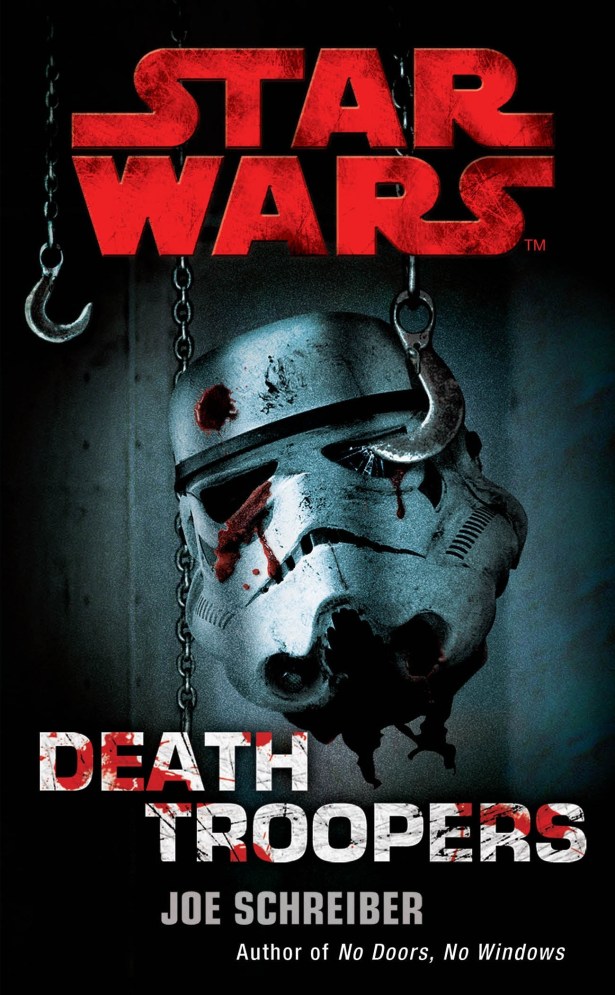
Death Troopers Cover.jpg

Publisher: Random House Audio (Audiobook Edition 13 October 2009)

Series: Star Wars Legends

Length: 6 hours 42 minutes

My Rating: 4.25 out of 5 stars

Amazon

Reviewed as part of my Throwback Thursday series, where I republish old reviews, review books I have read before or review older books I have only just had a chance to read.

In this week’s Throwback Thursday, I look at an entertaining blend of horror and Star Wars with Death Troopers, a book from the Star Wars Legends collection which I listened to in its audiobook format.

Death Troopers is set a short time before the events of Star Wars: Episode IV – A New Hope.  The Imperial prison barge Purge is the temporary home of the galaxy’s worst criminals, rebels and murderers.  Carrying over 500 prisoners, as well as guards, stormtroopers and other personnel, the ship is a floating hive of scum and villainy, where the guards are just as bad as the inmates.  En route to a permanent prison facility, the engines fail, stranding the Purge in an uninhabited area of space.  Rescue appears to be weeks away, unless the crew can fix the engines.  The discovery of an apparently deserted Star Destroyer offers hope to the Purge’s crew, but the ghost ship contains a dark secret.

A boarding party sent to scavenge parts for the Purge inadvertently brings back something lethal: a virus that spreads incredibly fast and soon infects everyone aboard the ship.  Within hours, only a few survivors are left alive: the ship’s compassionate doctor, the sadistic captain of the guards, two young teenage brothers and a certain pair of smugglers.  However, these survivors soon discover that the sudden and bloody death of everyone on the ship is the least of their problems.  Shortly after dying the bodies of the Purge’s crew and passengers violently reanimate.  These creatures are driven, unstoppable and have a hunger for the flesh of the living.  As the survivors attempt to flee the Purge, they soon find that the Star Destroyer above is not as abandoned as they had believed.  The dead have risen, and their greatest desire is to infect the entire Star Wars universe.

Zombies!  In a Star Wars book!  How can I possibly resist that?  No seriously, tell me how it is even possible not to check out a book with that sort of premise.

Death Troopers is a 2009 release from horror, thriller and tie-in novel author Joe Schreiber, who wrote several fun-sounding books between 2006 and 2015.  These novels include two additional Star Wars novels, all of which fall in the Star Wars Legends line of novels.  Indeed, his third Star Wars novel, 2014’s Maul: Lockdown, was actually the last novel released in the Star Wars Legends series of books.  His other Star Wars novel, 2011’s Red Harvest, is a prequel to Death Trooper, and is set in the Old Republic, thousands of years before the events of Death Troopers.

The Star Wars Legends series of books is the current incarnation of the old Star Wars expanded universe, which, in addition to the six Star Wars movies that George Lucas produced, included all the books, comics, video games and television series that were endorsed by Lucasfilm.  All of these entries were considered canon, so at one point there were actually proper zombies in the Star Wars canon.  While the original expanded universe did have a dedicated fan base, it did not survive the Disney buyout of Lucasfilm intact.  In order to allow for the new movies, Disney declared that, with the exception of the films and The Clone Wars television show, everything created before 25 April 2014 would no longer be considered canon.  However, rather than disavow all of these previous Star Wars media items, Disney rebranded this original expanded universe as the Star Wars Legends collection and kept it as a deep pool of ideas and characters for any future writers of the franchise.

It’s no secret that I am a bit of a Star Wars fan, having reviewed several tie-in books and comics in the last year.  While my current interest mostly lies within Disney’s expanded universe, I did grow up with a number of books and games in what is now the Star Wars Legends range.  Star Wars books and comics are going to form a significant part of my upcoming Throwback Thursday entries, but I had not intended to dive back into the Star Wars Legends range until I had gotten through all the books in the Disney expanded universe, as I wanted to stick with what is currently canon.  However, I happened to come across the cover and plot synopsis for Death Troopers the other day, and the moment I saw it I knew that I had to read it.  I immediately grabbed an audiobook copy, narrated by Sean Kenin, and started listening to it.

While I loved the plot synopsis, I was worried that Death Troopers was going to be a Star Wars novel first that featured some light zombie elements and minimal gore.  However, what I was not expecting was an extremely terrifying and well-written zombie novel that makes full use of its Star Wars setting to create a dark, gruesome and somewhat scary story.  I was very impressed with Schrieber’s ability to craft an amazing zombie novel.  His creations are pretty darn terrifying, especially as the author paints some detailed and horrifying descriptions to go along with his story.  The introduction of the zombies is done perfectly, in my opinion, as Schreiber goes for a slow burn approach.  Following the introduction of the virus, the book’s survivors slowly explore the ship, searching for a way to escape.  The author slowly builds up the tension by having things move around out of the characters’ sight, the bodies slowly disappear, bloody handprints appear in places and the characters hear all sorts of noises.  The characters of course have no idea what is happening, and blame their imagination or paranoia, but the reader knows full well what is happening.  Even when the first zombie is actually seen, panic and realisation still does not immediately set in for the rest of the characters, much to the reader’s frustration.  It is not until well after halfway through Death Troopers that the zombies are revealed in all their horror, and from there the pace of the book picks up, as the characters must find a way to quickly get away from the creatures hunting them.  This slow introduction of the zombies was a fantastic part of the book and represents some outstanding horror writing from Schreiber.

Despite this being a Star Wars novel, Schreiber does not dial back on the blood, gore or horror, and there are quite a few dark scenes throughout the book.  I was on the edge of my seat for quite a lot of it and felt that this was a great piece of horror fiction.  There are quite a few dark scenes, such as cannibalism, jaunts in rooms full of body parts and some fairly gross surgical scenes, all of which Schreiber describes in shocking detail.  I did find the story to be a bit predictable in places, and it was pretty easy to predict which of the characters would live or die.  There were also quite a few unanswered questions (what the hell was the lung room for?), although they may be answered in the prequel book Schreiber wrote a couple of years later.  I also thought that the way Schreiber ended the plot line about the zombies attempting to escape the Star Destroyer and infect the rest of the universe was a bit of an anti-climax, but overall this was a pretty fun story that I quite enjoyed.

I felt that Schreiber was quite clever in his use of the Star Wars elements throughout Death Troopers.  It is quite obvious that Schreiber is a fan of the franchise and he has a wonderful understanding of the history, technology and characters that have appeared in other Star Wars works.  As a result, he is able to craft an excellent Star Wars setting for this story that presents the reader a good idea of how this book appears in relation to the rest of the franchise.  However, what I really liked was how Schreiber did not overuse the Star Wars elements, and the reader’s focus was never taken away from the zombie part of the book.  I also felt that several of the Star Wars elements really helped to enhance the horror aspects of the book.  Having the familiar turn into something different can often be quite scary for people, and to see the often-ridiculed Imperial Stormtrooper turned into a ravenous, mutilated zombie was quite something.  The inclusion of fan favourite characters Han Solo and Chewbacca was also a nice touch.  Not only do you have some familiar characters for the readers to enjoy but you also raise the stakes of the story when both of these beloved characters come close to being eaten by zombies.

Another benefit of combining Star Wars and zombie fiction is that for once characters are completely justified in not knowing what a zombie is.  There are quite a few other major zombie movies or television shows set in fictional worlds that are supposed to mirror ours, and yet the protagonists have no idea what zombies are, despite how much they are used in fiction.  This always frustrates me, and while it was a minor thing, I was very happy to read a book where the character’s lack of understanding about zombies is completely understandable.  Overall, I really liked how the author presented the Star Wars elements within the book, and I was impressed by the way he used it to make the zombie elements even scarier.

If you are tempted to check this book out, I would highly recommend that you listen to the book in its audiobook format.  At just over six and a half hours, this did not take me a long time to get through, but I was absolutely amazed at how much the audiobook format enhanced the story.  This is mainly down to the fantastic sound effects that were scattered throughout the story.  The producers of this book did a superb job inserting a range of zombie sound effects throughout the background of the book’s narration.  This includes sounds such as screams, disturbing eating sounds, moans and other assorted sounds of horror, with the continued screams being particularly off-putting.  None of these sounds overwhelm or totally distract from the narration, but I found hearing them when the narrator describes a horror scene really enhanced the tension and dread I experienced.  I also thought that the disconnected, whispered and screamed echoes of the chapter names was a very nice touch and it really added to the overall atmosphere of the book. In addition to these horror based sound effects, there are quite a few classic Star Wars sound effects for the reader to enjoy and get nostalgic about, including some of the classic music from the movies.

Sean Kenin’s narration was also extremely well done, as the narrator was able to create a series of fun and distinctive voices.  I thought that Kenin’s Han Solo was very convincing, and it sounded a lot like the movie version of the character.  I also found that having this horror story narrated to me helped bring me into the centre of the action and really experience the horror and dread that was present there.  The narration of the descriptions can be a bit disturbing at times, and I would recommend not eating during one or two scenes; trust me on that.  As a result, I would highly recommend that people wanting to check out Death Troopers should definitely use the audiobook version of it, as in my opinion it does an amazing job enhancing this already fun story.

I am happy to say that I was not disappointed by this entertaining combination of zombie literature and the iconic Star Wars universe.  This was a pretty dark story, which also includes some familiar elements from a franchise that I truly love.  Because of this I had an outstanding time reading Death Troopers and felt that it was a great example of both a zombie novel and a piece of Star Wars fiction.  In my mind the book itself is four stars out of five, but I had so much fun with its audiobook format that I am raising it up to four and a quarter stars.  An overall fantastic and unique read, Death Troopers is really worth checking out for fans of either zombies or Star Wars and is perfect for those who love both.  I am very curious to check out Schreiber’s other Star Wars books in the future, as both of them sound like a lot of fun.

Amazon

Throwback Thursday – The Dragon Factory by Jonathan Maberry

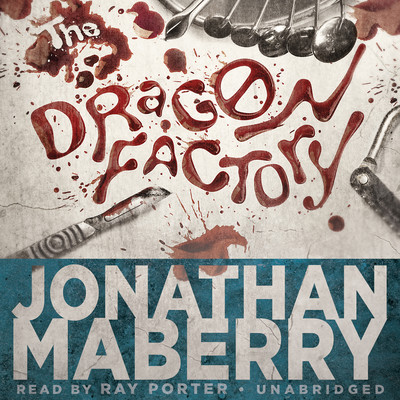
The Dragon Factory Cover.jpg

Publishers: St. Martin Griffins

                        Blackstone Audio

Publication Date – 2 March 2010

Amazon     Book Depository

Reviewed as part of my Throwback Thursday series, where I republish old reviews, review books I have read before or review older books I have only just had a chance to read.

My quest to get through all of the books in Jonathan Maberry’s Joe Ledger series continues.  In this week’s Throwback Thursday I look at the second epic entry in what is fast becoming one of my favourite series of all time, The Dragon Factory.

It has been only a few months since former police officer Joe Ledger joined the elite and top-secret American intelligence agency, the Department of Military Sciences (DMS).  Working with the DMS and its mysterious leader, Mr Church, Ledger has helped save the country and the world from a variety of unique scientific threats.  Therefore, Ledger is extremely surprised when one morning a team from the NSA ambushes him and attempts to place him under arrest.

Without any warning, Ledger and the DMS find themselves caught in the crossfire between two rival organisations of rogue geneticists who have already drawn first blood against the DMS.  One of these organisations works on perfecting the world’s deadliest diseases, while the other seeks to create an army of genetically enhanced soldiers and terrifying animal hybrids.  Both of these factions are well funded, have remained hidden from the world’s intelligence agencies and have access to game-changing technology.  However, one has a terrifying vision for the future that they will go to any lengths to achieve.

As Ledger leads his team in an all-out war against these rival groups, they begin to uncover the full extent of these villains and the connection they have with Church and the DMS’s secret past.  The Extinction Clock has started to count down, and the entire world will be changed when it hits zero.  Forced to battle impossible odds, will Ledger be able to save the world again or will death and tragedy rain down around him?

Those who have been following my reviews in the last few months will remember that I first experienced Jonathan Maberry’s amazing Joe Ledger series when I read last year’s epic release, Deep Silence, which was among my top 10 reads of 2018Deep Silence was the 10th book in the series, and its clever writing, over-the-top elements and outstanding audiobook adaption made me immediately go back and check out the first book in the series, Patient Zero.  I found Patient Zero, with its focus on weaponised zombies, to be just as entertaining as Deep Silence, while also serving as an amazing start to the series.  Because of how much I enjoyed Deep Silence and Patient Zero, I decided to check out the other books in the Joe Ledger series as soon as possible.  The Dragon Factory is the second book in this series, and it continues the epic adventure started in Patient Zero.  Featuring excellent antagonists, fun new elements and a killer storyline, The Dragon Factory is an amazing book which I experienced in its audiobook format.

Having read the first book and the latest book in this series before reading this second instalment gave me an interesting insight when it came to reading The Dragon Factory.  While Patient Zero was a great book, I felt that The Dragon Factory is the book in the series where Maberry really hit his stride.  I found that this second book contained a much better combination of character focus, humour, intense action and the books fantastic science fiction elements.  The overall story of The Dragon Factory was absolutely incredible and extremely compelling, allowing me to rush through this book in no time at all.  I loved several of the twists that Maberry inserted into this book, although I did see the book’s big plot development coming from some distance away.  However, knowing it was coming did not lessen the impact for me, and it represents some amazing writing from the author.  There was a lot less horror elements in The Dragon Factory than the other Joe Ledger books I have read, but it still contains a healthy dose of mad-science elements, and I loved all the scientific discussions included throughout the book.

One of the best things about the Joe Ledger series is the wide range of viewpoints that the author employs to show the protagonist’s actions and to highlight the plots, schemes and planning of the various antagonists.  This allows the reader to get a much more widespread view of the various actions being taken by the book’s various characters, and the reader gets to see events that happened weeks before the book’s main storyline at various points throughout the narrative.  Maberry uses this to particular effect in The Dragon Factory, and it enhances many of the books various story elements.  I also loved how each of the main story chapters had a timer at the top counting down how many hours were left on the Extinction Clock.  I thought this was an extremely clever literary device that served at least two purposes in the book.  Not only did it add a real sense of dread to the story as the countdown leads closer and closer to a devastating event but it was also useful in highlighting the chronological order in which some of the chapters occurred, which was extremely useful during some of the later action sequences.

One of the most entertaining parts of The Dragon Factory was the amazing new villains that Maberry focused on.  In this book the protagonists find themselves up against two sets of geneticists, each with their own specialities and goals.  As the story progresses, the reader gets a deep understanding of both groups’ motives, plans, creations and the various moves and counter-moves they make against each other and the DMS.  Watching the two different groups attempt to attack or manipulate their rivals is an intriguing part of the plot, and it was fascinating to see the impacts the protagonist’s actions had on their villains schemes and overall plans.  Having geneticists as the villains not only allowed Maberry to create a series of memorable and destructive creatures for the protagonists to fight but it also added some very fun edges to the conflicts between the rival villain establishments.  While the motivations of one group are quite a basic, the motivations of the other group are very over the top, and the full list of their fictional crimes is quite insane.  I honestly laughed out loud when certain details about this group were revealed towards the end of the book, but it was an extremely out-there twist that I loved so much.  Maberry does a really good job of fleshing out all the main antagonists, which I think helps create a much richer and more enjoyable story.

Maberry is a bit of an action fanatic, so those readers who are looking for some fictional fights have come to the right book.  There is a huge range of different action sequences throughout this book as the DMS and the two rival groups of evil scientists unleash their forces against each other.  I am always amazed at the level of detail Maberry is able to convey in his action sequences, as he paints a vivid picture of the combat while also discussing the various tactics and techniques behind them.  For example, when the main protagonist engages a skilled opponent in an epic knife fight, not only does the reader get a great description of the battle that’s taking place but they also get an understanding of the various moves being utilised and the advantages and disadvantages of the different knives.  I really enjoy the way that the author goes into the psychology of the fight, and it really shows how much research and thought has gone into these sequences.  The genetically enhanced super soldiers and weird animal hybrids are pure fun, and provide the reader with some extreme and wildly entertaining pieces of violence.  An easy choice for any action junkie, you will not be disappointed with this read.

Joe Ledger continues to serve as a fantastic protagonist for this series, and I love his uber-sarcastic personality.  Ledger is the only point-of-view character whose chapters are told from the first person perspective.  This is an interesting differentiation which highlights Ledger’s importance to the plot and helps showcase his fighting ability.  Ledger, like Maberry, is a martial arts enthusiast, and the author uses his character’s first person perspective to really show off his fight scenes and show the devastating fight moves that he can perform.  The first-person perspective also allows Maberry to explore the unique psyche of his protagonist, as Ledger’s mind is broken up into three separate personalities following a traumatic event in his childhood.  This has always been an interesting character trait for Maberry’s protagonist, but it was especially intriguing to see how Ledger and his mind react to certain traumatic events that occurred in this other book.  Mr Church continues to shine as the best secondary character in this series, and his calm persona, mysterious past and the sheer badassery that comes off him are absolutely amazing.

Without question, the best way to check out The Dragon Factory is in its audiobook format, which goes for a very enjoyable 16 hours.  The main reason for this has to be the incredible narration from Ray Porter, who has narrated all the books in the Joe Ledger series.  The narration a great way to absorb all the action, plots and science, and Porter does an amazing job of vocalising all of the characters, especially Ledger and Mr Church.  I loved the way that Porter was able to capture Ledger’s sarcasm and humorous edge for most of the book, and then turning on a dime to capture the harder and more vicious parts of the character when he gets enraged or upset.  The voice work on Mr Church is once again exceptional; every time he voices the character I can almost see the calm and mysterious figure, and I love how Porter makes him sound like a cross between Tom Hanks and JFK.  This is some first-rate voice work, and I find it adds an incredible amount to this excellent story.

After absolutely loving Patient Zero and Deep Silence I never once doubted that I would enjoy The Dragon Factory.  I was amazed by how much fun I had with this book, which I found to be insanely addictive and near impossible to stop listening to.  Featuring all of the elements of this series that I already loved, as well as some outstanding new features, this was an insane read that I cannot recommend enough.  Without a doubt this needs to be experienced in its audiobook format, and Porter has to be one of my favourite audiobook narrators at the moment.  I am already planning to dive into the third book of this series, so keep an eye out for my review of it in the next month.

My Rating:

Five Stars

Amazon     Book Depository

Throwback Thursday – Promise of Blood by Brian McClellan

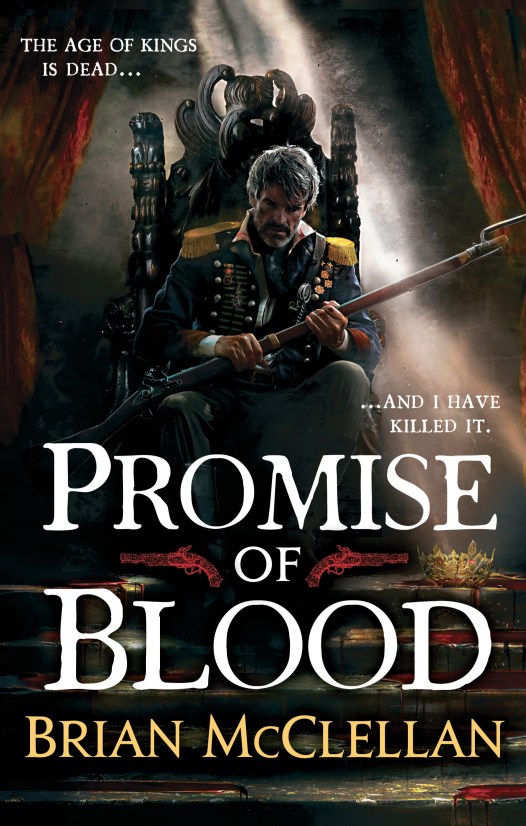
Promise of Blood Cover.jpg

Publishers: Orbit

                        Hachette Audio

Publication Date – 16 April 2013

Amazon

Reviewed as part of my Throwback Thursday series, where I republish old reviews, review books I have read before or review older books I have only just had a chance to read.

One of the saddest realities of being a bibliophile is that no matter how hard you try or how much spare time you have, no one can read every great book that comes out every year.  I am no exception to this rule, as for years I was mainly focused on the historical fiction genre.  While this is a fantastic genre to focus on, it did mean that I missed out on many of the biggest science fiction and fantasy releases for the last several years.  Ever since I expanded my attention to a range of other genres, I have been seeking out and reading a number of different fantasy or science fiction books and series, many of which I have or will review on my blog and on Goodreads.  One of the series that I have heard constantly praised by friends, fantasy fans and other book reviewers is The Powder Mage trilogy by Brian McClellan.  Nearly every fantasy reviewer and their dog has read and said good things about these books and, as a result, The Powder Mage trilogy has long been at the top of my to-read list.  So when I was recently able to fit the first book in the trilogy, Promise of Blood, into my reading schedule, I thought I would try it out and see if it lived up to everyone’s hype.

The Powder Mage trilogy are the debut novels of fantasy author Brian McClellan, and are a flintlock fantasy series, which is a modern fantasy sub-genre that features pre-industrialisation civilisations who utilise flintlock firearms with fantasy elements.  The Powder Mage trilogy started in 2013 with Promise of Blood, which the author followed up with a new book in 2014 and 2015.  Following the success of his initial trilogy, McClellan introduced a second trilogy, the Gods of Blood and Powder trilogy, which is set 10 years after the events of The Powder Mage trilogy.  This second trilogy is still ongoing, with the third and final book set to be released in November of this year.  In addition to these two main trilogies, McClellan has also written a number of novellas and short stories set in the same universe as his main books, which expand on his fantasy world.

McClellan has created a new and captivating fantasy world in order to contain the stories in his two main trilogies.  The Powder Mage trilogy is primarily set in the nation of Adro, one of nine nations that were founded thousands of years ago by the god Kresimir, which are together known as The Nine.  By the start of the first novel, Promise of Blood, the nations of The Nine have reached a level of technology equivalent to Europe’s pre-industrial revolution period, with flintlock firearms in heavy use.  Magic is also common in this world, with the nations of The Nine containing three separate levels of magical ability.  These include the privileged, extremely powerful sorcerers who can wield a range of devastating elemental abilities; the marked, lesser mages with more specific gifts; and the knacked, who have one specific magical talent, like a perfect memory or not needing to sleep.  The privileged of The Nine are generally organised into sorcery cabals, with the most powerful organised into a Royal Cabal loyal to the King of their nation.

Promise of Blood starts with Field Marshal Tamas, the highest-ranked military officer of Adro, leading a bloody coup against his country’s corrupt king and nobility.  During the coup, Tamas and his powder mages, marked whose abilities are powered by gunpowder, assassinate every member of Adro’s Royal Cabal.  However, every member of the Royal Cabal said one thing before they died, “You can’t break Kresimir’s Promise”.  In order to find out the meaning of these mysterious words, Tamas hires former police inspector Adamat to investigate.  While Adamat sets out to uncover meaning behind these mysterious final words, Tamas begins the difficult process bringing order to his country.  However, it soon becomes apparent that staging the coup was the easiest part of his endeavour.

Tamas’s coup provokes a war with the Kez, one of Adro’s rival nations in The Nine, whose previous attempts to control Adro’s king, led to Tamas overthrowing him.  As Tamas deals with assassins, Royalists, deposed nobles and Kez magicians, it soon becomes apparent that someone on Tama’s council has betrayed him.  Brought in by Tamas to investigate who betrayed him, Adamat finds his loyalties tested when mysterious figures target him and his family.  At the same time, Tama’s estranged son, Taniel Two-Shot, embarks on a hunt for a surprisingly powerful member of the Royal Cabal who escaped Tamas’s powder mages.

Both Adamat and Taniel’s missions reveal dark secrets about the formation of their country.  With dark omens in the sky and ancient legends come to life, can Tamas and his forces stop the destruction of Adro, or will the mysterious forces arrayed against them succeed in their mission to summon forth an ancient power?

To be honest, even before I heard about this trilogy from other book lovers and reviewers, I thought the synopsis was pretty cool and the idea of gunpowder-wielding mages was an interesting concept.  I listened to the audiobook format of Promise of Blood, narrated by Christian Rodska, which goes for a lengthy 19 hours.  Now the question is; did this book live up to the hype?  The answer is yes.  I loved this book, I thought it was massively creative, filled with incredible action, had some complex, if mostly male, characters and made use of some excellent fantasy elements.

I really enjoyed the story within this book and I thought it was an amazing combination of intrigue, action and fantasy storytelling.  I liked the idea of starting the book just as a successful coup had taken place and the focus on the immediate aftermath of such a significant event.  The story is essentially broken into three main parts.  About a third of the book is told from Adamat’s point of view and really focuses on the intrigue elements of the story.  Adamat at first investigates “Kresimir’s Promise”, which is a fairly interesting part of the book, as it dives into the history of the country, and quickly reveals that shadowy forces are at play behind the scenes.  This initial investigation only lasts for a short part of the book, before Adamat is drawn into the larger investigation about the traitor in Tamas’s council.  This is a very well done investigation part of the book as the reader is presented with five suspects, each of whom is hiding several secrets and many of which have suspicious employees.  In addition, Adamat has to deal with a mysterious figure who is blackmailing him, and who keeps the identity of his employer secret.  These multiple layers of intrigue and lies ensures that the reader is looking in several different directions and have a much harder time guessing who these antagonists are.

Another third of the book is told from Taniel’s point of view, and follows him as he first hunts down a powerful privileged, and then finds himself stuck in the middle of a large battle for the survival of Adro.  While there are quite a lot of reveals about some of the book’s underlying fantasy elements in this part of the book, the main focus is on the action, as Taniel and his allies fight a number of opponents, and Taniel reveals while he is known as Two-Shot.  There is some interesting character work in this section as Taniel works through his feelings for his father, finds himself having to choose between obeying orders and the life of his best friend, and him coming to terms with his weird relationship with the powerful female character, Ka-poel.

The final main part of the book is told from the point-of-view of Tamas himself, and deals with the fallout from his coup and the multitude of issues he has to deal with in the aftermath.  The parts of the book focusing on Tamas are the most important chapters within Promise of Blood, as they bridge the other two sections of the book due to Taniel and Adamat not really interacting too much during the book.  The Tamas chapters have the best balance of Promise of Bloods’ excellent combination of fantasy elements, intrigue and action.  Throughout these chapters, Tamas is constantly forced to deal with the political infighting and betrayals occurring all around him, while also being targeted by assassination or capture by his various enemies.  Tamas also encounters a number of hints about the true nature of the fantasy events impacting Adro, including from a bizarre chef, and I loved the layers of intrigue that surrounded something most of the characters believed was a myth.  I really liked Tamas as a character, and I found him to be an intriguing combination of a calm, tactical genius and an absolute rage monster.  Despite alienating most of the people around him, especially Taniel, deep down Tamas is a good man who has been forced to make the hard decisions no-one else will.  However, when enraged he is an absolute terror to behold, especially to someone who has crossed his friends or family, and during these scenes of anger he gives several of the best lines, such as the one that appears on the cover:  “The age of kings is dead, and I have killed it”.  He is an absolutely great character and a fantastic focus for this trilogy.

In addition to these three main characters, a small portion of the book is narrated by female character Nila.  Nila’s character really is not explored too much in Promise of Blood, although she is given a good introduction, and I understand she will become a much bigger character in the next books in the trilogy.  On top of the main characters, there are several excellent side characters who really make this book extra awesome.  This includes Tamas’s bodyguard, Olem, a sarcastic and funny man who acts as Tamas’s moral compass for much of the book, and who also has certain ideas about people shooting his dog.  There is also Sousmith, Adamat’s bodyguard, a former boxer who acts as a fun foil to Adamat’s detective character.  While several characters at the Mountain Watch are also enjoyable, you have to love Ka-poel, the mute, witch who serves as Taniel’s spotter.  She has some crazy magic to her, and I have a vague feeling (without knowing anything about the plot of the future books) that she is some sort of young god or something.  I liked the way that Ka-poel was able to express everything, despite being a completely non-verbal character, although the implied romance between her and Taniel was a tad weird, especially as it started the moment he realised she was older than she looked.

The world building in this book is extremely impressive and it serves as an outstanding introduction to the key elements of the series’s universe.  While the other magical and fantasy elements of this book are pretty awesome, I especially loved the powder mages, and their magic is easily the best part of the book.  The powder mages have a unique blend of abilities, all of which are powered by eating or snorting gunpowder.  Consuming the powder gives them focus, enhanced perception, great strength and stamina.  In addition, they have control over gunpowder, igniting at will, and using their abilities to manipulate bullets in flight.  Each of the characters have different abilities on top of that.  Tamas can ricochet bullets around a room; Taniel can fire bullets further than anyone else, as well as firing two bullets at once; while another powder mage, Vlora, can ignite powder from a distance.  These characters in battle are absolutely fantastic, and I love it when these characters, especially Tamas, fully unleash their abilities.  The fight scenes between the powder mages and the privileged were exceptionally amazing, and I loved the contrast between the more traditional fantasy magic of the privileged and McClellan’s more unique powder magic.  That being said, when the privileged unleash their abilities they can be much more destructive, and some of their fights are pretty impressive.

I had a wonderful time listening to the audiobook format of Promise of Blood, and I thought that it was a spectacular way to enjoy this amazing story.  The action sequences, especially when the magic and bullets are flying, really come to life when narrated, and audiobooks always help me absorb complex new fantasy worlds such as the one in this series.  Rodska’s narration is really well done, and I found that he really captured the essence of the characters.  I especially thought he got the gruff and powerful voice of Tamas down perfectly, and it was an extremely realistic personification of the character’s voice.  I really hope that Rodska does the narration for the other books in McClellan’s series, and I would easily recommend the audiobook format of Promise of Blood to anyone interested in this series.

Overall, I really loved Promise of Blood and I found that it lived up to its substantial hype.  It’s easily a five-star novel in my eyes.  I loved this book so much that I am planning to listen to the remaining books in The Powder Mage trilogy as soon as I can, and I will probably also try and listen to the first two books in the Gods of Blood and Powder before the final book comes out in November.  McClellan is a fantasy genius, and anybody who loves action and explosions should invest the time to read this book.

My Rating:

Five Stars

Amazon

Waiting on Wednesday – Queen’s Shadow and Superman: Dawnbreaker

Welcome to my weekly segment, Waiting on Wednesday, where I look at upcoming books that I am planning to order and review in the next few months and which I think I will really enjoy.  Stay tuned to see reviews of these books when I get a copy of them.

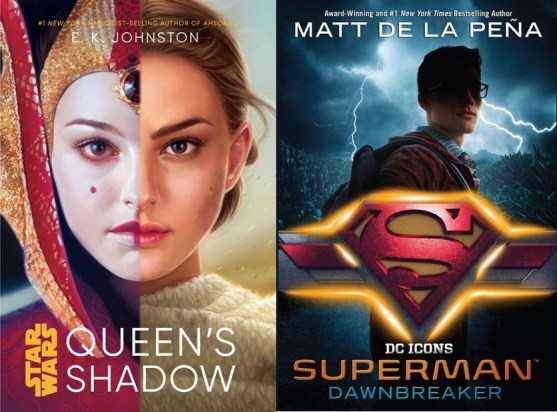
waiting on wednesday 9 jan 2019 picture

I have never made any secret about the fact that I love novels that tie-in to movies, televisions shows, video games and comic books, with multiple examples featured on my blog and Goodreads page.  Therefore, it should come as no surprise that a huge number of tie-in novels are going to appear on my must-read list for the future.  This week I am taking a look at two intriguing young adult tie-in novels that are going to be released in early March 2019: the latest Star Wars novel, Queen’s Shadow, by E. K. Johnston and the fourth book in the DC Icons series, Superman: Dawnbreaker, by Matt de le Pena.

I am a massive fan of both the Star Wars and DC Comics universes, and generally go out of my way to watch, read or play anything associated with these franchises and extended universe.  Honestly, I am going to get both of these books no matter what, but I may as well try and discuss what about these books I am most excited about.

Both of these books have some pretty awesome-sounding story premises.  Queen’s Shadow will apparently follow a young Padmé Amidala immediately after the events of The Phantom Menace, as she transitions from Naboo’s queen to its representative in the Galactic Senate.  I think it is a story with some potential, as this book is likely to become a bit of a political thriller/espionage hybrid, and will explore the politics of the Republic leading up to the Clone Wars.  No doubt Padmé will see some forms of corruption and intrigue, as well as the future Emperor’s devious plots.  I am also looking forward to Padmé getting a story to herself.  While Padmé started off as a badass ruler in the movies, most of her appearances were overshadowed by that frankly terrible romance with Anakin (he’s an angry, stalking man-child who attempted to hit on her by talking about sand, and the whole age gap is pretty darn creepy).  Therefore I will be extremely happy to get a story which will hopefully have no appearances from Anakin, and which will allow the character of Padmé to live up to her own potential (although I will not be surprised if creeper teenage Darth Vader makes some sort of appearance in this book).

While Queen’s Shadow has an interesting-sound story premise, I am actually a bit more intrigued about the proposed story in Dawnbreaker.  It sounds like it will focus on a young Clark Kent still living in Smallville as he learns to control his powers and find his calling as a hero.  Clark will find some dark secrets in the heart of his small town and be forced to investigate.  I have no doubt that this will be an intriguing re-imagination of Superman’s origin, and I am eager to see what sort of mystery or villain will be behind these terrible events.  Just from the synopsis alone, I think this book has potential, and I am looking forward to uncovering all of the story’s hidden secrets.

Another reason why I am hoping to get copies of both of these books is due to my previous experiences with these authors or franchises.  I have been in a real Star Wars expanded universe mood for the last few years now, but I am also excited to get another entry from E. K. Jackson.  I previously read her last entry in the Star Wars universe, Ahsoka, and I was struck by the author’s understanding of the character and the intriguing young adult storyline she was able to create.  As a result, I am eager to see this author’s treatment of another strong female Star Wars character, and I hope she will craft another great story.  I have not previously read anything from Dawnbreaker author Matt de le Pena before, but I have read some of the previous books in the DC Icons series before, such as the last book, Catwoman: Soulstealer.  I really enjoyed the unique ways the author of that book was able to alter the established origin story of Catwoman, so I am very eager to see the new and different story DC will allow in Dawnbreaker.

While I will be very happy with physical copies of both these books, there is a very strong chance that I will seek out audiobook copies.  Both Queen’s Shadow and Dawnbreaker will have their audiobook formats released at the same time as their paperback formats, and neither audiobook sounds like it will be too long, with Dawnbreaker apparently clocking in at around eight hours, while Queen’s Shadow is only a little longer, at 10 hours.  After listening to the audiobook version of the previous DC Icons book, Catwoman: Soulstealer, I know that they will do a good job with it and produce an enjoyable and easy-to-listen-to book.  I am really excited about the audiobook version of Queen’s Shadow.  Not only is it likely to have the same high-quality production value, music and sound effects that the previous Star Wars audiobooks have all featured, but it will also be narrated by Catherine Taber, the voice of Padmé in the Star Wars: The Clone Wars animated movie and television series.  With Natalie Portman extremely unlikely to narrate an audiobook, Taber is the perfect voice to get for this book.  Not only does she have a perfect Padmé voice, but fans of extended Star Wars universe cartoon shows will love to see her jump back into the character, especially as she is likely to voice the character again in the recently announced new season of The Clone Wars television show.  With the producers going all out for Queen’s Shadow’s audiobook format, it will be a hard target for me to miss and will no doubt be an incredible way to enjoy this book.

These two books will be among the first two tie-in books of 2019 that I seek out, so I am really hoping that I will enjoy them.  I think both of them have intriguing sounding stories, and I have had some great experiences with their respective franchises and their specific authors or series.  I am very likely to get the audiobook version of Queen’s Shadow, but I will have to see how I go with Dawnbreaker.  I have no doubt that I will really love both of these books, and I am definitely going to get copies of both.

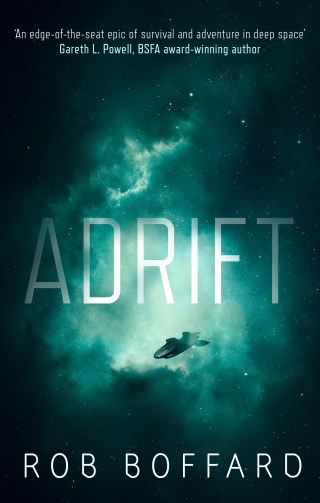
Quick Review – Adrift by Rob Boffard

Adrift Cover

Publishers: Orbit/Audible Studios

Publication Date – 5 June 2018

Amazon     Book Depository

For this review I will be looking at Adrift by Rob Boffard, a book I listened to a few months ago, but which I did not get a chance to review at the time.  With the end of 2018 fast approaching, I decided to do a quick review for this book in order to clear my review schedule for the new year.

Goodreads Synopsis:

In the far reaches of space, a group of tourists board a small vessel for what will be the trip of a lifetime – in more ways than one…

They are embarking on a tour around Sigma Station – a remote mining facility and luxury hotel with stunning views of the Horsehead Nebula.

During the course of the trip, a mysterious ship with devastating advanced technology attacks the Station. Their pilot’s quick evasive action means that the tour group escape with their lives – but as the dust settles, they realize they may be the only survivors . . .

Adrift in outer space, out of contact with civilization, and on a vastly under-equipped ship, these passengers are out of their depth. Their chances of getting home are close to none, and with the threat of another attack looming they must act soon – or risk perishing in the endless void of space.

What initially drew me to this book was the pretty cool-sounding synopsis above.  I had not read anything from author Rob Boffard before, but a story featuring a group of mismatched passengers attempting to survive out in space with only a small, poorly equipped ship sounded like an intriguing read.  After enjoying Adrift, I think I might check out Boffard’s Outer Earth series in the future.

Adrift turned out to be a pretty compelling read, featuring a great story in space.  While the action was a little lighter than your standard science fiction read, this is more than made up for by some powerful drama as the characters deal with the stresses of their situation.  There are also some thrilling intrigue elements as the protagonists attempt to unwrap the difficult situations inside and outside of the ship, as well as one particularly shocking and unexpected moment in the middle of the book.  There were a few good action sequences as well, including several epic flight scenes, and a memorable spaceflight featuring a little old lady.

This book is primarily a character-driven story, as the story mainly focuses on the passengers aboard the tourist ship.  Each of the various characters gets decent coverage in this book, with a particular focus on the three main point-of-view characters and the two secondary point-of-view characters.  After the first few chapters, my initial impression of all the characters in the ship was, ‘What a bunch of losers and arseholes!’  The passengers of the ship are made up of several abrasive characters who initially seemed to overshadow most of the other characters, including two timid main point-of-view characters.  However, as the book is explored further, the background of all of the characters is explored in some detail, and the reader gets an idea of why some of the characters are the way they are.  The events of the story help develop these characters further, and by the end the surviving characters are all much more likeable.  I was impressed by the emotional range that Boffard was able to write, and the various reactions to the situations about the tourist ship came across as quite realistic.

I ended up listening to Adrift in its audiobook format, which was narrated by Katie Scarfe.  The audiobook runs for a little bit over 15 hours, so readers need to invest a bit of time in getting through this book.  I thought that Scarfe did a good job with her narration, coming up with a number of good voices for her distinctive characters, and moving the story along quickly.  Scarfe had a bit of work to do with the primary cast of characters, as not only did she have to do Russian, Irish and British accents, as well as several random accents the ship’s computer system blurted out through the course of the book, but she also had to do a range of ages across both genders, from a young male child to an elderly lady.  Fortunately, Scarfe was able to produce pretty good accents for each of these characters, and it was possible to get an idea of gender and age with the various narrations.  I also thought she did a good job capturing the range of emotion that flowed from her characters, from despair to anger at their situation.  Overall, the audiobook format is a great way to enjoy Adrift, and I would recommend it for those who prefer to listen to their books.

Adrift by Rob Boffard is a clever and fairly captivating read that makes great use of its character-driven storyline.  This was a good standalone novel, and readers will find a lot to enjoy with this intense science fiction read.

My Rating:

Four stars

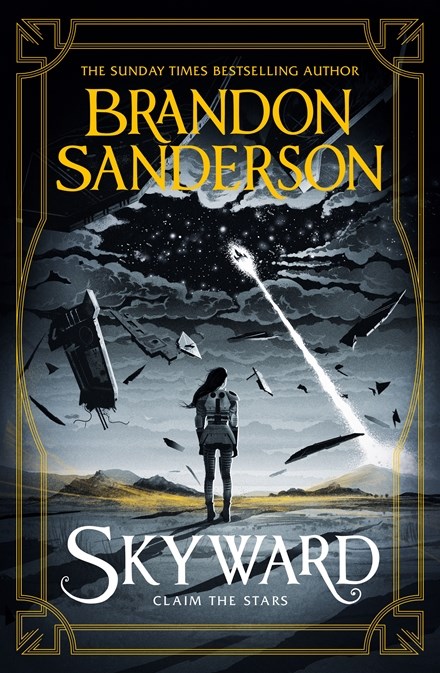
Skyward by Brandon Sanderson

Skyward Cover.jpg

Publishers: Gollancz

                        Audible Studios

Publication Date – 6 November 2018

Amazon

Legendary fantasy and science fiction author Brandon Sanderson once again delivers an incredible five-star read with Skyward, a brilliant young adult science fiction story that follows the journey of an energetic young protagonist at she attempts to claim the stars.

As of right now, I have only had the opportunity to read one of Sanderson’s novels, the epic fantasy book, The Way of Kings, which was easily one of the best fantasy reads of the last decade and which I gave a five-star review here.  After enjoying The Way of Kings I was keen to see how Sanderson’s writing ability translated to the young adult science fiction genre.  I have to say I was in no way disappointed, as Sanderson once again creates an amazing and exciting piece of literature, all set within an incredibly detailed new fictional landscape.  Skyward is the first book in Sanderson’s planned Skyward series, which is to be made up of a total of four books.  The second book in this series, Starsight, has apparently already been written, with a release planned for November 2019, while the third and fourth books, both yet untitled, already have tentative release dates in 2021 and 2022.  Starsight is already on my must-read list for next year, and will appear in my Waiting-on-Wednesday series of blog posts the moment the cover gets released.

Far in the future and on another planet, humanity has been under constant attack for hundreds of years.  A mysterious alien race known as the Krell pursued the human fleet across the stars, forcing it to crash on a desolate planet.  Those humans that survived were forced to flee below the planet’s surface, hiding in caves and only re-emerging when they gained the ability to create space fighters capable of fighting off the alien craft.  Now the Defiance Defence League (DFF) fights a constant war against the Krell, who are determined to wipe out the DFF’s main base and the production facilities beneath it.

Since she was a young girl, Spensa Nightshade has always dreamed of becoming a DDF pilot, the elite defenders of humanity, in order to claim the stars.  However, years ago, her father deserted during the most famous battle in DDF history and was shot down by his comrades.  Having been forced to live for years as a daughter of a coward, Spensa is eager to forge her own heroic destiny, but the DDF will never accept her into their flight program.

But with the war going badly and new pilots needed, Spensa is given a chance to join the DDF, thanks to the actions of her father’s old wingmate.  Joining a class of misfit cadets who dub themselves Skyward Flight, Spensa learns to fly the DDF’s ships against the Krell and quickly shows her determination and skill.  However, her father’s legacy is constantly weighing her down, whether by the sabotage of the DDF or the constant fear that deep down she might also be a coward.  With the Krell attacks getting worse, will Spensa find her place as a pilot, or will a terrible secret from the past come back to haunt her?  And through it all, what role will the ancient spaceship Spensa discovers have on the fate of humanity?

I not only received a physical copy of Skyward from Hachette Australia, but I also listened to a copy of this book in its audiobook format, which is narrated by Sophie Aldred and goes for just a little over 15 hours.  Both versions are pretty cool.  The trade paperback version of this novel contains a couple of great maps at the start of the novel that some readers may find useful when it comes to navigating around the story.  There is also a series of intriguing drawings throughout the book that show off several of the ships, both human and alien, that are featured in the story, all of which are juxtaposed against the main ships that the protagonist and her wingmates train and fight in.  The later parts of the book also contain some fantastic illustrations of flight manoeuvres and abilities, which prove informative when utilised with Skyward’s many aerial flight sequences.  I personally preferred the audiobook format of Skyward to the physical copy, as it allowed me to enjoy the many action-packed aerial scenes a whole lot more.  I also loved the narration by Aldred, who was able to create a number of excellent voices for the book’s various characters.

The reason I am giving Skyward such a high-star review is because it is an incredible piece of young adult science fiction that not only has an amazing story but which also contains several outstanding characters and some of the best ship-to-ship action sequences I have ever seen, all of which is combined with Sanderson’s trademark knack for large-scale world building.

I had a lot of fun with the story contained within this book, as Sanderson sets forth a layered and powerful narrative for the reader to enjoy.  Told primarily from the point of view of the protagonist, Spensa, Skyward contains a fantastic coming-of-age storyline set within a flight academy where the cadets learn how to fly in defence of their planet.  I always love a good school based learning narrative, and Sanderson has created an outstanding version of this, where the main characters spend most of the story learning the theory behind flying, while also engaging in real-life combat situations as they train.  As a result, there are heartbreaking losses, great emotional connections forged, and secrets and hints about the overall story slowly released to the reader, all while the protagonist is forced to contend with the machinations of a biased authoritarian figure who even gets to narrate a few chapters to highlight the reasons for her actions.  Overall this is an addictive and exciting story that will really stick in the reader’s imagination.

Sanderson has once again created a detailed and captivating new world in which to set his new series.  The book is set within a new planet that humans from Earth crashed upon years ago in the past, fleeing from a mysterious alien force.  For years the humans lived a nomadic lifestyle in the caves beneath the planet before finally fighting back using newly fabricated fighter craft.  Sanderson has created a fantastic world to host this story, exploring a society forced to live in caves and eventually creating a military base on the surface.  I love how the author has created a ton of new societal rules and features, as well as a world above and beneath the surface of this alien planet.  There is also some really cool and unique technology that comes into play throughout the book, especially in the many aerial combat sequences.  The aliens are mostly a mystery for the entirety of the novel, although I did really enjoy the reveals about them.  I imagine Skyward’s fictional universe will be expanding out in the future instalments of this series and I am very excited to see where this goes.

Some of the best things about this book are the excellent characters that the author has populated his story with.  Of particular note is the main protagonist and point-of-view character, Spensa, who is a really fun and complex character to see this story through.  Spensa is a great character whose life has always been defined by her father’s legacy.  As a result, she puts on an extremely brave and aggressive front to everyone she meets as she tries to convince people she is not a coward.  Because of this, Spensa is quite an eccentric character, spouting out long expositions about how she will harm her opponents, which is quite amusing at times.  However, as the reader gets further into the book, they find out how vulnerable she truly is, as deep down her father’s actions and legacy have had quite an impact on her.  As she progresses into flight training and becomes more and more like her father, she must content with the trials of war, emotional issues with her friends and loved ones, the DDF’s indoctrination against cowards and the secrets that have been kept from her.  The internal conflict and fear that follows is really well written by Sanderson and forms a captivating emotional centre for this amazing narrative.

Quite a lot of time is spent looking at the other cadets that make up Skyward Flight.  Each member of this flight has a unique personality and is given a callsign to make them more distinctive.  There is a fun camaraderie between these characters, and they form quite a close-knit team.  Sanderson spends significant time building up several of these characters, and Spensa, much like the reader, gets quite attached to them.  As a result, when tragedy hits the team, there are some significant emotional blows that come with it.  I liked how the different friendships and relationships help Spensa grow as a character, as she started out the book a bit of a loner.  These side characters are absolutely fantastic, and add another great emotional feature to Skyward’s story.

While Spensa and Skyward Flight are all great characters, my favourite character in all of Skyward had to be the sentient spaceship, M-Bot.  M-Bot is an advanced spaceship who, for various reasons, is obsessed with mushrooms, spends much of the book cracking bad jokes and forms a close relationship with Spensa, the human who discovers it.  M-Bot has to be one of the funniest and quirkiest characters in the whole book, providing several of the book’s best jokes and funniest lines.  The ship’s relationship with Spensa is really well written, as it attempts to balance its existing command code with its new friendship.  This results in some amazing scenes, and I never thought before this book that I would get emotional about a spaceship.  M-Bot is particularly great in the audiobook version, as Aldred gives the ship an excellent Irish accent that really fits the character’s personality perfectly and makes M-Bot stand out throughout the book.

Easily my favourite thing about Skyward has to be the insane and incredibly well-written aerial combat sequences that fill this book.  All of the battles take place within the planet’s atmosphere among falling debris fields, resulting in some elaborate and exciting dog-fights between the DDF fighters and the Krell.  Quite a number of battles feature throughout Skyward, as the protagonist and her companions attempt to stop the Krell destroying humanity’s only hope of leaving the planet.  The author spends significant time exploring the physiology of these aerial fights, including the various tactics, training and technology utilised by the DDF and the Krell.  In particular, Sanderson has created some unique technology to help create some truly amazing combat sequences, including light-lances, which are energy beams that the DDF fighters use to not only throw Krell fighters around but to also help their ships do precise and elaborate manoeuvre around the falling debris.  I also loved how Spensa and her flight got better as the book progressed, reflecting their training and their ability to work together as a team.  All of these battle scenes are fast paced and incredibly well written, and the reader constantly finds themselves placed into the middle of these epic battle sequences.  I found that the audiobook version of Skyward was particularly effective at bringing me into these combat scenes, and I was often on the edge of my seat as I listened to them.  There are a number of these amazing sequences throughout the book, whether they were real battles or simulations.  Highlights for me have to be a high-speed chase through a giant, ancient factory crashing down to the ground, or the final high-stakes battle that serves as an epic conclusion to the whole story.  These battles are truly an amazing feature of Skyward, and I cannot wait to see what incredible aerial battles feature in the future books of this series.

Skyward is one of my favourite books of 2018 and is definitely one of the best young adult books I have read this year.  Brandon Sanderson once again cements his legacy as one of modern fiction’s best fantasy and science fiction authors, as readers are treated to an epic science fiction read set in a rich and detailed new world.  Featuring some amazing characters and outstanding depictions of aerial combat between humans and aliens, this book comes highly recommended.  I have made no secret about how much I am looking forward to future entries in this series and cannot wait to see where Sanderson takes this story next.

My Rating:

Five Stars

Amazon

Mass Effect: Annihilation by Catherynne M. Valente

Mass Effect Annihilation Cover

Publishers: Titan Books

                        Blackstone Audio

Publication Date – 6 November 2018

Amazon     Book Depository

A new galaxy, a ship full of disparate alien species, what could possibly go wrong?  Veteran author Catherynne M. Valente brings to life a new adventure in the Mass Effect universe with Mass Effect: Annihilation, the third official tie-in novel to the 2017 video game, Mass Effect: Andromeda.

This was a really good piece of science fiction that expertly built on the intricate extended universe that has been created around the Mass Effect video game franchise.  I should preface this review by mentioning that I am a huge fan of this video game series, and one of the best things about it is the great universe and intriguing storylines that have been produced as a result.  While I know that many people had some valid criticisms about the latest game in the series, Andromeda, I actually really enjoyed the new addition to the series’ story and lore and had a lot of fun playing it and exploring all the additional plot that is hidden outside of the main missions.  One of the many mysteries that I hoped to get an answer about was the fate of Quarian ark, so I was very eager to read this book when I first heard about what it was going to focus on.

For those unfamiliar with the Mass Effect franchise, the first game was released in 2007 and is set in a universe where humanity has gained spaceflight and by 2183 has expanded throughout the Milky Way galaxy.  Once they were outside of our solar systems, humans met with several alien races which governed large portions of the galaxy.  The three main species, the Asari, the Salarians and the Turians, formed a ruling council on the ancient alien space station, the Citadel, which served as a capital city for these races and several other allied species.  The game series followed the human protagonist, Commander Shepard, as he (or she, depending on your settings), investigates the resurgence of the Reapers: ancient, sentient space ships who appear every 50,000 years to destroy all sentient organic life.  While Shepard is able to delay the appearance of the Reapers in the first two games, they launch a full-scale attack in Mass Effect 3, leading to significant, galaxy-changing events.

The game Mass Effect: Annihilation is based on, Mass Effect Andromeda, is the fourth Mass Effect game released and a loose sequel to the original series.  Andromeda is set over 600 years after the events of Mass Effect 3, and follows a group of explorers and colonists from the Milky Way galaxy as they travel to the Andromeda galaxy in an epic one-way trip to find new planets to settle on.  This was a result of the Andromeda Initiative, a joint exercise from a number of Citadel species in order to settle in the new galaxy.  The Initiative launched their ships to Andromeda in the period between Mass Effect 2 and 3.  Each of the main Citadel races, humans, Asari, Salarians and Turians sent an ark ship to Andromeda, each filled with 20,000 cryogenically frozen members of their respective species.  These four arks were launched at the same time, and the plan was for them to dock in the Nexus, a miniature version of the Milky Way Citadel sent in advance of the arks, which was to be used as a staging ground while the Pathfinders found and explored new planets for their races to settle on.  During the events of Mass Effect: Andromeda, mention was made of a fifth ark, built by the Quarians and filled with several other alien races, that was supposed to launch soon after the initial four arks.  However, this fifth ark made no appearance during Andromeda, and was one of the game’s unsolved mysteries, perhaps destined to never be solved, as there is currently no plans to continue the Mass Effect game franchise (although it is too big a franchise for them not to do something else with it in the future).

The Mass Effect games have inspired a number of additional media releases over the years.  Four Mass Effect books were written between 2007 and 2012 to correspond with the original game trilogy, as well as a number of comic book series.  Following the release of Mass Effect: Andromeda in 2017, a new trilogy of books was commissioned which further explored key events or characters mentioned in the fourth game.  Annihilation is the third and final book in the Mass Effect: Andromeda book trilogy.

As the Reaper fleet begins to appear in the Milky Way galaxy, a fifth ark is launched by the Andromeda Initiative to bring another 20,000 settlers to the Andromeda galaxy.  Built by the planetless Quarians, the ark Keelah Si’yah is the only ark to hold colonists from a number of different races, including Quarians, Drell, Elcor, Batarians, Volus and Hanar.  Despite having different outlooks, opinions, biological requirements and reasons to leave the Milky Way, these races are united in their decision to reach the new galaxy and find new planets to settle on.

As the ship reaches the end of its 600-year long journey, problems are soon identified aboard the ship.  One of the ark’s Sleepwalker teams, a small team of individuals tasked with checking on the status of the ark as it flies through space, is suddenly awoken years before the Keelah Si’yah is scheduled to dock with the Nexus.  The ship’s virtual intelligence has identified certain discrepancies in the readings of several Drell cryopods.  Investigating the pods, the Sleepwalker team find that their inhabitants have died from a disease, something that is supposed to be impossible while frozen.  Even worse, the ships systems are all reporting that everything is fine, and that the inhabitants of the pods are still alive.

The Sleepwalker team quickly discover that the dead colonists have all been infected by a virulent disease, one that seems capable of jumping across to the vastly different alien species.  The team are desperate to find out the cause of the disease, but their investigation is severely hampered by a number of system failures across the ark, while the ship’s computers continue to insist that everything is all right.  As the failing systems start to randomly unfreeze more and more colonists, the disease quickly spreads across the ark.  It soon becomes apparent that the disease has been artificially created, and that someone is launching a deliberate attack against the Keelah Si’yah and its crew.  As the various colonists turn on each other in fear and confusion, can the Sleepwalker team find a cure and uncover who is behind the attack, or will everyone on the ark die before reaching Andromeda?

The author of this book, Catherynne M. Valente is not an author I was very familiar with before listening to Annihilation, but she appears to have produced a wide range of different novels, some of which are quite quirky in content.  I do remember seeing and trying to get a copy of her 2018 release, Space Opera, earlier this year, mainly because it sounded like such a fun read, what with it essentially being Eurovision in space.  Luckily, I was able to obtain a copy of Annihilation a week ago and powered through its audiobook format, narrated by Tom Taylorson.

Mass Effect: Annihilation has an exciting and intriguing story that expands on the established lore of the Mass Effect universe while also providing the reader with a compelling science fiction mystery.  The story is broken up into three main parts: the characters attempting to identify and cure the disease, the attempts to fix the ship’s broken system and an investigation into who or what initiated the attack on the ark and its inhabitants.  As a result, there is a good combination of medical, technical and investigative scenes that come together into a rather intriguing overall narrative.  There is not a lot of action, but the focus on the various problems around the ship is very interesting.  The link between the various parts of the book and the final solution to who is behind them was also quite clever and the reasons behind it were quite interesting.  There are some certain dark moments, especially when it comes to the reveal of who was behind it.  Annihilation is obviously going to appeal a lot more to readers who are familiar with the games and who enjoy the backstory of this series, but this is a great story with plenty for other readers to enjoy, and I felt that Valente makes this story accessible for outside readers.

One of the most interesting parts about Annihilation is the fact that the book focuses on the less prominent alien races in the Mass Effect universe.  Aside from one prologue that follows a human, every single character is a member of six less common races in the lore and games, the Quarians, Drell, Volus, Batarians, Hana and Elcor.  This is unique, as the games and the previous novels tend to mostly focus on human characters, or feature a significant number of characters from the games more prominent races, such as the token sexy alien species, the Asari, or the gigantic and war loving Krogan.  The other main council races, the Turians and the Salarians, are also extremely prominent compared to the six races featured within this book, with great Turian and Salarian characters appearing frequently in the games or the books (I am the very model of a scientist Salarian).  In pretty much all of the games, the protagonist can choose members of the above aliens to be a part of the team.  However, Annihilation completely changes this around, as four of the six races that the book focuses on have never had usable characters in any of the games and are mostly minor side characters.  Of the other two races, the Quarians do get a good examination within the games, with one of their members quite a key character.  The Drell are explored to a much lesser degree, although badass Drell assassin Thane Krios as a useable teammate in the second game.

I was pleasantly surprised to read a book where these six less commonly featured races were so prominent.  Valente has a great understanding of these races and spends a significant part of the book exploring each race’s various quirks, important parts of their biology, culture, society or lifestyle, as well as certain parts of their history.  The author does a fantastic job expressing all these racial traits throughout the book, and even new readers to the franchise can quickly gain an understanding of what these species are and what is key to all of them.  For example, Valente is able to expertly capture the various speech characteristics of each of the races featured in Annihilation.  This includes the heavy breathing of the Volus, the lack of personal pronouns in the Hanar’s dialogue, the rolling stream of Drell memories that they say aloud when flashing back to important memories, and even the Elcor habit of prefacing their sentences with their emotional state.  These are all done incredibly consistently throughout the book and really add a lot of authenticity to the story.  These vocal patterns can also be particularly entertaining, especially when it comes to the Elcors, as nothing is more amusing than having an angry Elcor calmly telling everyone how enraged he is.  The various alien species did have the potential to make the investigation into the virus hard to understand, but the author cleverly got around this by having the characters compare the disease, cures and other relevant aspects to common and recognisable human disease.  Overall, these alien inclusions are fantastic, and it was great to see these more obscure fictional species finally get the limelight in a Mass Effect story.

While the alien races as a whole are great inclusions in Annihilation, Valente has also created some amazing characters to make up the Sleepwalker team investigating the issues plaguing the ark.  These characters include the team’s leader, Quarian Senna’Nir vas Keelah Si’yah, Drell detective Anax Therion, Elcor doctor Yorrik, former Batarian crime lord Borbala Ferank, Volus tailor Irit Non and a religiously fanatic Hanar apothecary.  Each of these characters is pretty fun, and all of them have demons in their past that are explored throughout the book.  For example, Senna’Nir is obsessed by computer intelligences, something that is forbidden by the other Quarians following a terrible event in their history.  As a result, Senna’Nir spends large portions of the book coming to terms with his secret obsession, and it is quite an interesting subplot which also allows the introduction of one of the best side characters, a sassy Quarian grandmother virtual intelligence.  Each of the characters’ backstories is fairly compelling and each add a lot to the story.  Borbal Ferank’s crime lord persona is also a lot of fun throughout the book, as she casually mentions her previous crimes and familiar betrayals that are quite common for Batarians.  There are also the mysteries around Anax, as the ultimate infiltrator gives several versions of her past throughout the book to various characters to get the answers and stories she requires.

Easily the best character in Annihilation is Yorrik, the Shakespeare-obsessed Elcor doctor who spends the entire book trying to cure the virus infecting the ark.  He was extremely amusing throughout the entire book, as he spend significant parts of the book dropping jokes in his emotionless tone, or attempting to engage his companions in discussion about his extremely long Elcor adaptions of Hamlet or Macbeth.  Yorrik is a fantastic character throughout the entire book, and he is definitely the person the reader gets the most attached to.  Never have Shakespearian quotes been more appropriate for the fate of an alien.  I also really loved the unique partnership between Anax and Borbala.  The detective and criminal make a great team, and the two have a lot of fun investigating the attack on the ship, and it was great seeing the two of them get closer to each other through the course of the book.  Valente has done an incredible job with the characters in this book, and their histories, relationships and unique viewpoints really make this novel awesome.

I listened to the audiobook version of Annihilation, which I found to be an amazing way to enjoy this book.  At just under nine hours long, this is an easy audiobook to get through, but it is one I had a lot of fun with.  One of the best things about the audiobook version was the fact that they got Tom Taylorson, the voice of the male protagonist in Mass Effect: Andromeda, to narrate this audiobook, which is just awesome for those people who have played the game.  Taylorson does an excellent job portraying each of the characters in this book and I loved all the voices he came up with.  He also managed to get all of the unique voice patterns and vocal particularities of the various alien species down perfectly, and each alien species sounded exactly as they did in the games.  This is an outstanding piece of audiobook narration, which really added a lot to how much I enjoyed this book.

Overall, I am going to give Mass Effect: Annihilation a rating of four and a half stars.  I will admit that one of the main reasons I am giving it such a high rating is because of my love of all things Mass Effect and because of how much I love the franchises lore and expanded fictional history.  I am aware that people who are not as familiar with Mass Effect may not enjoy it as much, but I hope that most readers will appreciate the great characters, interesting story and excellent audiobook adaption.  This is great piece of science fiction and an excellent tie-in novel that is a perfect read for fans of the Mass Effect franchise.

My Rating:

Four and a half stars

Amazon     Book Depository

Waiting on Wednesday – Alien: Echo by Mira Grant

Welcome to my weekly segment, Waiting on Wednesday, where I look at upcoming books that I am planning to order and review in the next few months and which I think I will really enjoy.  Stay tuned to see reviews of these books when I get a copy of them.

Alien Echo Cover

For this week’s Waiting on Wednesday review, I will be looking at one of the more interesting looking movie tie-in books of early 2019, Alien: Echo by Mira Grant. If you look back at some of the books I have reviewed in the past, it is pretty clear that I love novels that tie in to movies, television shows, video games and comic book series.  Therefore, when I saw this tie-in to the classic Alien movies, I knew that I would have to read it, especially as it’s being written by skilled horror author Mira Grant.

Horror is not my favourite genre in the world; however, I have read a couple in the last year, and one of my favourites has got to be Into the Drowning Deep by Mira Grant.  So far this is the only Mira Grant book I have read, except for a short story in a Night of the Living Dead zombie short story book, but I have been intending to check out some of her other series, such as her Newsflesh or Parasitology series.  However, if Grant can make mermaids bloody terrifying like she did in Into the Drowning Deep, I can not wait to see what she does with one of film’s most iconic horror creatures.

Here is what the plot is sounding like at the moment:

An original young adult novel of the Alien universe

Olivia and her twin sister Viola have been dragged around the universe for as long as they can remember. Their parents, both xenobiologists, are always in high demand for their research into obscure alien biology.

Just settled on a new colony world, they discover an alien threat unlike anything they’ve ever seen. And suddenly the sisters’ world is ripped apart.

On the run from terrifying aliens, Olivia’s knowledge of xenobiology and determination to protect her sister are her only weapons as the colony collapses into chaos. But then a shocking family secret bursts open—one that’s as horrifying to Olivia as the aliens surrounding them.

The creatures infiltrate the rich wildlife on this virgin colony world—and quickly start adapting. Olivia’s going to have to adapt, too, if she’s going to survive…

As you can see, this book has a pretty cool synopsis, and I like the sound of two young people fleeing through a strange new planet, being pursued by an entire planet of aliens. I am also loving the cover of this book, especially the alien eggs appearing in both of the young women’s eyes.  Early prediction based off the synopsis: the girls are either clones, part alien, androids or some variation of the three.

Alien: Echo is apparently going to be an original young adult novel, and I will be interested to see how writing it for a young adult audience will affect the horror elements of the Alien franchise.  This book is coming out in early April 2019, and I will probably get it in its audiobook format, which will apparently be narrated by Kate Marcin.  I have not heard anything narrated by Marcin before, but I am hoping that the audiobook format will bring the reader right into the middle of the horror.  Plus, at around eight hours, it should allow me to breeze through this book fairly quickly and get out a review ASAP.

I am really looking forward to this one, and do not be surprised if this kick-starts me into reading a few more Mira Grant books in 2019.

Catwoman: Soulstealer by Sarah J. Maas

Catwoman Soulstealer Cover.jpg

Publishers: Penguin Random House

                        Penguin Random House Audio

Publication Date – 7 August 2018

Amazon

One of DC Comics’ most iconic and badass female antiheroes is re-imagined in this bold new novel from young adult fiction bestseller Sarah J. Maas.

Selina Kyle is a rough street kid growing up in the slums of Gotham City.  She looks after her sister while scraping a living as a gang member and pit fighter.  When her luck finally runs out, her potential is seen by the mysterious Talia al Ghul who saves her and recruited into the League of Assassins.

Two years later, Selina has returned to Gotham City with a plan to turn the city on its head as Catwoman, the master thief and criminal mastermind.  Using the alias of the spoiled socialite Holly Vanderhees, Selina has returned at an ideal time; Batman is not in the city, away on a vital mission, and he has left his protégé Batwing behind to safeguard the city.  Initiating a series of high-profile thefts, Selina soon has the attention of Batwing and GCPD, especially when she starts teaming up with her new BFFs Poison Ivy and Harley Quinn to wreak havoc around the city.

While Batwing searches the city for this mysterious new villain, his alter ego, Luke Fox, encounters his mysterious new neighbour, Holly, and the two find themselves drawn to each other as their alter-egos battle in the night.  While Selina is able to outfox Batwing, a far more destructive force is about to be unleased upon Gotham.  Catwoman stole something from the League of Assassins and now a cadre of their most lethal assassins are descending on the city.  Will Selina be able to survive their deadly attentions, what is Catwoman’s plan, and who will be left standing in the aftermath?

This is the third book in the DC Icons series, a series of young adult books that provide re-imagined origin stories for younger versions of DC’s most iconic characters outside of the other established DC universes.  Featuring a range of different authors, the first book in the series, Wonder Woman: Warbringer, focused on Wonder Woman before she left Themyscira to become a hero, while the second book, Batman: Nightwalker, followed a teenage Bruce Wayne as he attempts to stop a series of murders in Gotham City.  A fourth book in the DC Icons series, Superman: Dawnbreaker, is currently set to be released in March 2019 and will follow a young Clark Kent as he investigates strange happenings in Smallville.

Soulstealer is the first of these DC Icons books that I have read, and I was quite impressed with the new and unique Catwoman story that it contained, as well as the cool new versions of several DC characters, including Poison Ivy, Harley Quinn and Batwing.  I listened to this book in its audiobook format, read by Julia Whelan.  I quite enjoyed having the story narrated to me, especially as it only took around 10 hours to get through.  While I initially had misgivings about whether I would like this series, after reading and loving Soulstealer I will definitely be getting a copy of Dawnbreaker when it is released next year, and Warbringer and Nightwalker will both be appearing future versions of my Throwback Thursdays reviews.

The author of Soulstealer, Sarah J. Maas, is one of the biggest names in modern young adult fiction, having written two best-selling young adult series in the last six years.  Her long-running Throne of Glass series finished earlier this year, and she has also created the A Court of Thorns and Roses series.  Soulstealer is the first Sarah J. Maas book that I have had the pleasure of reading, but after really enjoying the intricate story and fantastic characters within the novel I am keen to see what her fantasy books are like.  As a result, her Throne of Glass series is high on my list of books to check out in the future, especially after seeing just how awesome the artwork is on some of those covers and collected box sets.

Maas has installed a fantastic and clever story into her debut DC novel, and I really enjoyed how she re-imagined the origins of prominent comic book character.  Soulstealer contains a younger version of Catwoman, introducing her as a teenager gang member and focusing on her initial life of crime.  After the introductory paragraph, the story jumps ahead two years to Selina’s return to Gotham and her initial adventures as Catwoman, while also featuring several flashbacks to her training with the League of Assassins.  This main story is then told from two separate point-of-view characters, Selena and Batwing, and shows the characters in both their costumed adventures and as the people behind the masks in their civilian identities.  Soulstealer has a tight and intricate storyline that contains the perfect balance of comic book action, relationships, backstory, references and variations to comic lore, as well as a number of heists and intricate plots.  I loved Catwoman’s overall plan, as she engages in a play to take over Gotham while really nursing an ulterior motive that pits her against the League of Assassins.  I loved the slow reveal of this complex and insane plan, as well as the lengths she goes to bring her plan to pass, including making some dangerous partnerships.

One of the most interesting and significant changes that Maas makes to Catwoman’s origin story in this novel is the fact that she never meets or associates with Batman.  In nearly every previous iteration of Catwoman, her story has always been intertwined with Batman’s, as the two were usually each other’s main love interest, either as Batman and Catwoman or Bruce Wayne and Selina Kyle.  However, in Soulstealer, Catwoman is substantially younger than Batman, who starts his crusade years before she is trained by the League of Assassins.  In addition, Batman is not present in Gotham when she returns to the city and throughout the book the two characters have no interactions at all.  Instead, Catwoman’s main love interest is the Luke Fox version of Batwing, who has been defending Gotham in Batman’s absence.  This results in a similar romance plot to some of the classic Batman and Catwoman storylines, where the two characters meet and start to fall in love with each other in both of their personas, despite their apparently different personalities.  This is a fun little romance that does get serious at times, as the two characters are mirrored by their personal traumas and backstories, such as a Selina’s life on the streets and with the League, versus Luke’s PTSD as a result of his time as a marine.  There are also some great moments when the two characters face off against each other, and some of the book’s best laugh-out-loud moments came when Catwoman messes with either Batwing or Luke, sometimes at the same time.  To my mind, the funniest scene in the book had to be when Batwing, after getting injured and rescued by Catwoman, awakens half-naked in a darkened room, only to find out that he is actually in Commissioner Gordon’s spare bedroom.  The moment Luke walks out to find Gordon and his family staring at them was pretty darn funny, especially when Batwing attempted to play it off nonchalantly while silently cursing Catwoman.

One of the elements of Soulstealer that I really appreciated was the references and re-imagined versions of several DC comics characters that appeared throughout the novel.  A huge range of DC characters, many tied into the Batman comics, appear throughout the book in a number of different capacities.  The characters that appear range from the iconic to the obscure and are enough to delight both hardcore comic fans and those with a more casual knowledge of these comics.  Several major Batman characters appear throughout the story; I will refrain from mentioning the full roster of characters to cut down on spoilers, although there is one appearance that was particularly awesome.  While a number of these characters have key or interesting differences between their mainstream comic book counterparts, it is clear that Maas has a real understanding and appreciation for the lore behind these characters.  It is also incredibly fascinating to see how Maas changes these characters for the purposes of her story, and the subtle tweaks that are made to accommodate this different universe.

Of all these additional characters, two of the best and significant inclusions are fellow supervillains Poison Ivy and Harley Quinn, who team up with Catwoman to bring a little chaos to Gotham.  In the comic universe, these three supervillains occasionally form a team known as the Gotham City Sirens, and it was great to see them together in this book.  Like Catwoman, both Poison Ivy and Harley Quinn are quite young and have slightly altered origin stories which somewhat mirror the new origin story of Catwoman.  However, some of the key elements that made these characters so great in their comic book origins remain alive in these book adaptations of the characters and which work extremely well with Maas’s fantastic Soulstealer storyline.  For example, in this story, Harley is still obsessed with the Joker, no matter how much it impacts her relationship with the others, and there are a lot of discussions between Catwoman and Ivy about the roots of her obsession and insanity.  There is also a very clear and acknowledged romantic connection between Ivy and Harley that adds a really interesting element to the story, especially as Harley’s insanity stands in the way of the more serious relationship Ivy desires.  The inclusion of these characters adds in a defining friendship for a main character who has never had the option of friends before, and it’s also a lot of fun seeing these three characters work together, especially as they have such diverse skill sets and range of attitudes.  Overall, I really loved the fact that Maas included Poison Ivy and Harley Quinn as key characters in her novel, and it was a lot of fun to see her version of these young villains banding together for the first time and forming an outstanding partnership.

Rather than read a physical copy of this book, I grabbed the audiobook copy of Soulstealer and listened to that instead.  The audiobook is narrated by Julia Whelan, who does an amazing job capturing the essence of the book’s main character, Catwoman/Selina Kyle.  When focused on Catwoman’s point of view, the listener gets a real sense of the character’s emotions and attitude, and the voices that Whelan assigns to the other main female characters, Ivy, Harley and Talia, are fairly distinctive and fit well with the character.  I thought that the voice that the narrator used for the book’s other point-of-view character, Batwing/Luke Fox, was very serviceable and conveyed the character well enough.  However, I was a tad disappointed that the narrator did not do too much with several of the other iconic Batman characters in the story, such as Alfred, Batman or Commissioner Gordon, especially as these major characters have all been portrayed by amazing actors or voice actors in the past.  Still, the audiobook version is a great way to enjoy this story and it certainly helped me power through this novel quickly without forcing me to skip over any of its important elements.

Catwoman: Soulstealer is an excellent young adult superhero novel from acclaimed author Sarah J. Maas.  This book is a fantastic standalone novel that re-imagines an iconic DC comic book character.  No great previous insight into Catwoman or the DC universe is required, and those with even a glancing knowledge of the comic book characters will be able to enjoy this novel to its full potential.  This serves as a very good young adult novel that will hopefully draw in a younger generation of readers into this established universe, and I appreciated Maas’s casual inclusions of a number of LGBT+ elements.  Soulstealer comes highly recommended and it has certainly sparked my interest in checking out all the other books in the DC Icons range.

My Rating:

Four and a half stars

Amazon

Throwback Thursday – The Way of Kings by Brandon Sanderson

The Way of Kings Cover.jpg

Publishers: Tor Books

                       Macmillan Audio

Publication Date – 31 August 2010

Amazon

Reviewed as part of my Throwback Thursday series, where I republish old reviews, review books I have read before or review older books I have only just had a chance to read.

In this week’s Throwback Thursday I will be reviewing one of the best pieces of fantasy fiction from the last decade: The Way of Kings by Brandon Sanderson.  I listened to this book for the first time earlier in the year and have been seeking to review it for some time.  However, I just finished reading the latest Brandon Sanderson book, Skyward, which I will be reviewing next week, and decided that this would be the perfect opportunity to finally get a review of The Way of Kings together.

Brandon Sanderson is one of the best writers of fantasy and science fiction in the world today, with several iconic series created by him.  These include the Mistborn series, the Wax and Wayne series, the Warbreaker series, The Reckoners series and his latest book, Skyward, which serves as the first book of his new Skyward series, just to name a few.  Perhaps the biggest indication of how highly regarded Sanderson is the fact that he was the author chosen to finish off Robert Jordan’s iconic Wheel of Time series of fantasy books, generally considered one of the most important fantasy series ever created, and the second bestselling series since The Lord of the Rings.  Following Jordan’s death, Sanderson put several of his series on hold to write the final three books in the Wheel of Time series, finishing off these epic fantasy novels with the help of Jordan’s notes.

The Way of Kings is the first book in Sanderson’s most iconic series, The Stormlight Archives, an epic fantasy series set in gigantic fantasy world.  The Stormlight Archives is a massive series from Sanderson with at least 10 books currently planned.  The first three of these books have already been released, with a fourth planned for 2020.  Each of these books is a massive undertaking to read, each totalling over 1,000 pages.  I chose to listen to The Way of Kings in its audiobook format, read by Michael Kramer and Kate Reading.  At over 45 hours in length, it does take a while to get through, but it was well worth it for the epic adventure within.

The Stormlight Archives is set within the world of Roshar, which has seen much chaos and bloodshed and is constantly beset by powerful storms, known as highstorms.  Centuries ago, a recurring event, known as the Desolation, unleashed the demonic Voidbringers upon the lands, devastating all before it.  To counter these creatures, the legendary Knights Radiant were formed.  They were powerful warriors with magical powers who wielded the epic magical armour and swords known as Shardplate and Shardblades.  After years of fighting, the Desolation was stopped and the Voidbringers defeated.  With their task complete, the Knights Radiant abandoned their weapons and disappeared.  Centuries later, when the main story is set, these events have become myths and legends, with many doubting that they ever existed.  However, the remaining pieces of Shardplate and Shardblades have become valuable commodities to the warring nations that have sprung up since the end of the Desolation, as they allow normal men to become the mightiest of warriors.

The main story of The Way of Kings begins with the assassination of the powerful King of Alethkar, Gavilar Kholin by Szeth-son-son-Vallano, apparently on the order of the Parshendi, a recently discovered race of humanoids who Gavilar was seeking peace with.  This killing results in a war between the Alethi and the Parshendi on the Shattered Plains.  After years of fighting, the war has mostly stymied, with neither side gaining a significant advantage, as the two armies compete for magical resources on the Plains.

This book has three distinctive main plot lines that lie mostly unconnected throughout the course of the novel.  The first plot follows the brother of the slain King Gavilar, Dalinar Kholin, and his sons, as they serve the new king on the Shattered Plains.  After years of fighting, Dalinar has grown weary of war and the competitive and caste based Alethkar way of life and attempts to find solace in the ancient book The Way of Kings, a volume that his brother became obsessed with before his death.  Questioning the merits of his people’s current ways of life, Dalinar attempts to find a way to unite the squabbling highprinces in a final strike against the Parshendi, while also dealing with visions of the past that affect his ability to lead.

The second plot line follows Kaladin, a former solider to an Alethi lord.  Kaladin was betrayed and has been sold into slavery.  Transported to the Shattered Plains, Kaladin is forced to become a bridgeman, carrying the heavy bridges into battle that the armies require to cross the canyons and broken landscape of the Shattered Plains.  Bridgeman have low life expectancies and are usually targeted first by the Parshendi in the battles that dominate the plains.  Determined to survive, Kaladin attempts to form his unit of bridgemen into an effective team in order to minimise casualties in each battle.  But the lord he serves has no interesting in having his bridgeman survive, and Kaladin must utilise newly discovered magical abilities if he is to keep his unit alive.  A part of this storyline also follows a younger Kaladin and shows how he gained his skills and abilities, and the events that resulted in his enslavement.

The final storyline follows Shallan Davar, a minor noblewoman and scholar who seeks the patronage of Jasnah Kholin, the current king’s sister, who is Dalinar’s niece.  While Shallan succeeds in becoming Jasnah’s apprentice, she is really plotting to steal an item of great value from Jasnah that will ensure her families survival.  But as she makes her plans, she finds herself embroiled in a series of plots while also uncovering her own powerful magic.

In addition to these three main storylines, there are a series of interludes that help build up the world in which The Stormlight Chronicles is set, while also briefly introducing a number of characters who are likely to become major players in future volumes of this series.  Each interlude also features an extended sequence that focuses on Szeth-son-son-Vallano, the assassin forced to kill King Gavilar, as he finds himself controlled by a mysterious organisation that appears to be behind many of the books more mysterious events.

Quite frankly, there is so much going on within The Way of Kings.  Not only are there several substantial storylines that combine together into one massive and captivating overall narrative, but Sanderson also creates a massive and detailed new fantasy world with significant history and character backstories to form the basis of this massive series.  It is actually quite amazing that Sanderson has managed to combine so much together into one book without it getting away from him, but The Way of Kings is proof that it is possible.

Without a doubt, the most impressive thing about The Way of Kings is the sheer amount of world building that Sanderson is able to cram into one book.  There is so much that forms the basis of The Stormlight Archive’s universe, from its magical based technology, to the iconic weapons and armour, the unique battle tactics, the creatures found within, the caste system based upon eye colour and this world’s history.  Every different nation appears to have its own unique and fascinating culture, all of which come into play within the plot of the story in some way or another.  For example, the Shin culture results in the character of Szeth-son-son-Vallano becoming a servant to whoever holds his Oathstone, while the Alethi culture produces quite a lot of backstabbing and conflict due to the competitive nature of its citizens.  There are some really fun cultural details added into these world cultures, such as women being the sole scholars of this world, while men do not even learn to read, or several cultures requiring all the women to wear gloves on one hand.

In addition to the culture, the world of Roshar is pretty impressive in itself.  One of the most distinctive and defining features of Roshar is the continuous gigantic storms, known as high storms, that devastate the land on a regular basis.  As a result, the people have had to adapt to these conditions, and there are a number of interludes where the protagonists have to shelter for periods from the storm.  I loved the way that Sanderson was able to come up with a range of impacts that these destructive storms would have on this world, such as the way that plants would grow and become reactive in response to constantly being hit by storms.  A large portion of the story is set around the landscape known as the Shattered Plains, which, as the name suggested, is a shattered landscape made up of a series of massive canyons and gaps between plateaus, haunted by giant monsters and prone to flash floods during high storms.  There are a number of massive battles and smaller explorations occurring in this landscape throughout the book, and it serves as a distinctive background which quite a number of fantastic plot points build up around.

All of this world building is quite incredible, but it is also impressive in the way that Sanderson has linked this world to some of the other series he has created or is currently planning to create.  This shared universe, known as The Cosmere, is made up of a number of worlds where some of his fantasy books are set.  The books in The Cosmere share several characters who travel from world to world, as well as some overarching themes and plot points.  For example, some of the chaos that the characters explore is the result of a massive conflict that affects all the books within The Cosmere universe.  There are several aspects of this explored within The Way of Kings, and it results in some interesting storytelling.

In addition to the massive world in which this book is set, Sanderson has filled The Way of Kings with a series of incredible storylines.  I really enjoyed each of the storylines, as each of them added something different to the book.  The storylines that focused on Dalinar Kholin and his family provide the reader with large-scale battles and a deep look at the culture, history and lifestyle of one of the main nations on Roshar, while also exploring the mystery of the disappearing Knights Radiant.  The storylines that are mostly told from the point of view of Shallan Davar are a bit slower paced, but contain an intriguing storyline of research, teaching, ethical deliberations, various plots and even a planned heist of a magical item.  Without a doubt however, my favourite storylines focused on the Kaladin and his attempts to turn his bridgemen into a cohesive unit.  These storylines contain some great scenes of comradery, friendship and training, while also allowing for some intense and clever battle sequences.  The storylines focusing on Kaladin’s youth were among my least favourite in the entire book, but they were still intriguing as they allowed the reader to see how Kaladin gained his complicated personality, his hatred for the world’s noble class and his determination to save lives.  In addition, I have no doubt that all that backstory will serve an important part in a future book in the series.  All three of these main storylines, as well as the shorter stories contained within the interludes, come together perfectly to form a complex narrative that interweaves subtly for most of the book.  While there are some brief mentions or crossovers for the majority of The Way of Kings, Sanderson does not focus too much on bringing these characters together until the very end of the story.  This allows Sanderson to set up each of these main characters and their associated minor characters in more detail, and allows them to be defined on their own terms.

I really loved how each of the main point-of-view characters within The Way of Kings is incredibly complicated.  For example, Dalinar Kholin is a person who spent years becoming the most feared warrior in the world.  Nicknamed the Blackthorn, his skill in battle and bloodlust helped unite Alethkar under his brother’s rule and he was considered the epitome of Alethi warrior culture.  However, after the death of his brother, Dalinar is weighed down with guilt, and his desire to follow ancient codes of conduct and the teachings of The Way of Kings causes him to doubt everything he previously knew.  Szeth-son-son-Vallano, is a killer without peer, but he is not in control of his own actions, due to becoming Truthless.  Forced to obey whoever holds his Oathstone, Szeth is constantly forced to kill for a rotating string of masters, and he despairs at the death he deals around him.  Finally there is Kaladin, a man so full of regret and despair for the friends and family he has lost, he is constantly drawn to the brink of sanity.  He is brought out of his stupor by his desire to help the men on his bridge crew and his relationship with the spren Syl, and is a fantastic character to follow, especially when Sanderson spends time simultaneously examining his past and previous tragedies.  Each of these storylines also features a huge number of intriguing side characters, and the reader can get quite attached to a number of these, especially the members of Kaladin’s bridge crew, who unfortunately have a short life expectancy.

Those people who like a healthy dose of action with their incredible storytelling will not be disappointed with The Way of Kings, as it features an incredible number of battles and warfare throughout its various storylines.  There are so many different and unique action sequences throughout this book for the reader to enjoy, and the inclusion of the epic magical weapons and armour, Shardblades and Shardplate, in many of these scenes provide some truly awesome moments.  There are a number of fantastic large-scale battles throughout the book, often with the character of Dalinar leading the charge.  However, I always quite enjoyed the sequences where Kaladin and his bridge crew are forced to carry a massive bridge at the front of the army.  These scenes are always extremely intense as the bridgemen come under intense fire and many die in the attempts to cross the gorges that make up the Shattered Plains.  As the book continues, Kaladin and his crew experiment with a number of different techniques and strategies to try and stay alive during these assaults, with varied and intriguing results.

While all the above scenes are pretty epic, nothing can top the sequences where Szeth-son-son-Vallano unleashes his full potential.  Szeth has unique magical abilities and wields a powerful Shardblade so is quite a powerful opponent, even against Full Shardbearers (those wielding both a Shardblade and Shardplate, essentially indestructible warriors).  There are two great scenes where Szeth unleashes his abilities against his opponents.  The first time is one of the best opening scenes in fantasy fiction as he storms the palace of King Gavilar, taking out a number of opponents with his abilities.  Quite frankly, if this scene were to be the first thing that was shown in an adaption of this series, it has the potential to be one of the most epic opening moments in movie or television history.  This is actually topped later in the book, when Szeth falls into a trap against one of his targets, who utilises a number of Shardbearers against him.  This scene is great not only because it has a number of additional opponents for the assassin but because Szeth unleashes his full rage when he realises how many people his opponent has sacrificed to trap Szeth.  All of these action sequences are fairly epic, and are enough to make any action junkie extremely happy.

At this point, I have not had the chance to read any additional books in The Stormlight Archive, mainly as I have not had time to dive into such a big book with so many other great reads coming out this year.  That being said, I fully appreciate how much of a great introduction to this series The Way of Kings is.  It sets up so much of the universe and starts each of these major storylines and introduces several fantastic main characters.  I have no doubt that future books in these storylines will be awesome, and I really appreciate how well Sanderson introduces his series.  I fully intend to read the next books in this series soon, and my goal is to get through the second and third book in The Stormlight Archive before the fourth book is released in 2020.

I listened to the audiobook version of The Way of Kings and have to say it was an incredible way to enjoy this incredible book.  The publishers utilise two separate narrators, Michael Kramer and Kate Reading, who split the book between them.  Kramer reads the chapters told from male characters’ point of view, while Reading does the same for chapters told from a female characters’ point of view.  Both of these narrators are pretty epic and do an amazing job portraying their various characters and bringing them to life.  I would mostly recommend using the audiobook version of The Way of Kings because I find it helps the reader remember all the insane amount of information, detail and lore that the author has crammed into this book.  I also loved the way that the narration dragged me into the centre of some of these epic battles, and it is definitely one of the best ways to enjoy The Way of Kings.

Overall, The Way of Kings is an incredible piece of fantasy fiction and really lives up to the hype.  This is the perfect book to start exploring Sanderson’s work, and readers can expect a massive read, chock full of intricate and detailed world building, intense and unique action and a series of outstanding characters.  This is some of the best fantasy fiction you will ever read.  Clear out your calendar and make room to read this book.

My Rating:

Five Stars

Amazon