Star Wars: Master & Apprentice by Claudia Gray – Audiobook Review

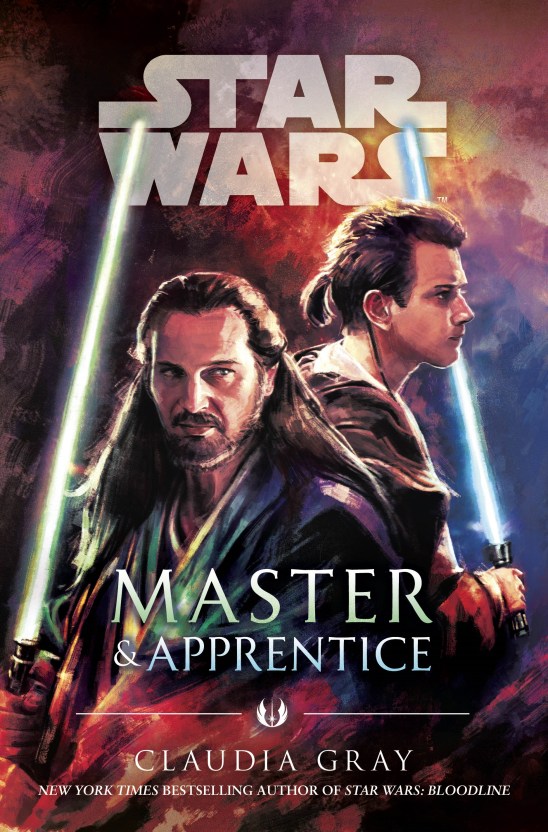
Master & Apprentice Cover

Publisher: Random House Audio (16 April 2019)

Series: Star Wars

Length: 11 hours and 42 minutes

My Rating: 4.75 out of 5 stars

Amazon

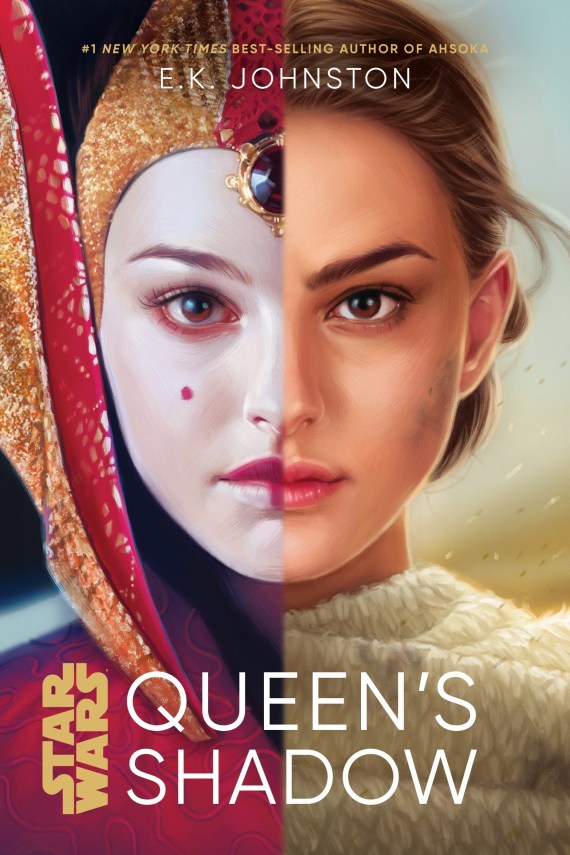
2019 is shaping up to be an amazing year for fans of the new Star Wars extended universe, a group of which I consider myself to be a proud member, with so many awesome Star Wars books and comics being released.  After reviewing the first Star Wars book for 2019, Queen’s Shadow, a few weeks ago, I have been really looking forward to getting to grips with the franchises second 2019 novel, Master & Apprentice by Claudia Gray.

Master & Apprentice is a canon Star Wars novel set around eight years before the events of Star Wars Episode I: The Phantom Menace.  It focuses on two of the main characters from this prequel movie, Jedi Knight Qui-Gon Jinn and his Padawan, Obi-Wan Kenobi.

Qui-Gon Jinn is an experienced and powerful Jedi Knight, having been trained in the Force by the legendary Count Dooku, who himself was trained by Master Yoda, and is ready to face any threat or danger that lies in front of him.  However, his greatest challenge may prove to be his own Padawan, Obi-Wan Kenobi.  The two Jedi are polar opposites to each other: while Obi-Wan is by-the-book and rigid in his respect of rules and protocol, Qui-Gon routinely shows very little regard for the rules and laws that bind the Jedi and constantly finds himself at odds with the Jedi Council.  Despite years of working together, the two Jedi struggle to understand each other.  Qui-Gon sees every mistake of Obi-Wan’s as his own, while Obi-Wan is unable to understand the reasoning behind Qui-Gon’s actions, nor his obsession with the ancient Jedi prophecies that many see as dangerous and unreliable.  Their tenuous and strained relationship is further tested when Qui-Gon is unexpectantly offered a place on the Jedi Council, a move that would likely end their partnership.  With feelings of betrayal and failure hanging over both of them, they are suddenly assigned a critical mission that is likely to be their last as master and apprentice.

Fellow Jedi Rael Averross, another former apprentice of Dooku, has requested Qui-Gon’s help with a difficult political dispute on the planet of Pijal.  Averross has been serving as regent for the planet’s young queen, who is days away from ascending to the throne and signing an important treaty.  A series of attacks which has rocked the planet is apparently the work of The Opposition, a band of political performance artists turned terrorists.  Once the two Jedi arrive on the planet, they quickly find that the situation is far more complicated than initially believed.  With corruption and secrets around every corner, Qui-Gon and Obi-Wan attempt to get to the bottom of everything, even utilising a pair of jewel smugglers to help with their inquiries.  However, their investigations are hampered by their opposing points of view, which only worsen when Qui-Gon places great stock in a dark vision of the future he has foreseen.  Can they overcome their differences to unravel the plot, or will they fail their mission?

Claudia Gray, also known as Amy Vincent, is a prolific and experienced author, best known for her first body of work, the Evernight series, which started in 2008.  Since then she has written a number of other series, including the Spellcaster, Firebird and Constellation series, as well as the standalone novel Fateful.  Gray also has a huge amount of experience writing Star Wars fiction, having previously written three Star Wars tie-in novels in the new extended universe, including Lost Stars, Bloodline and Leia, Princess of Alderaan.  As a result, the story of Qui-Gon Jinn and Obi-Wan Kenobi is in safe hands as Gray produces an outstanding, compelling and character-driven novel that delves deep into the Star Wars lore to create an amazing story.

Master & Apprentice presents a clever and exciting story that sees the protagonist attempt to uncover the mysterious events unfolding on Pijal, while also dealing with their many personal and emotional issues.  The story is told from the perspective of a range of characters in the book, and each of them adds their own thoughts and experiences to the story.  The overall story arc on Pijal becomes quite complex, with many different and intriguing sides to the conflict, and the people behind the events are not who you think.  I had an amazing time enjoying this book.

In this fantastic piece of fiction Gray goes into some intriguing parts of the Star Wars universe and lore.  This is actually the furthest back the new extended universe books go, so it offers the reader a great opportunity to see some of aspects of the pre-movie Star Wars universe.  While there are some hints at the events to come, as well as references to some major characters in the upcoming movies, the book contains a significant amount of new content and antagonists.  It is actually quite refreshing to read a Star Wars book that is not tied into the Skywalker family or featuring the Empire or the First Order as an antagonist.  I quite enjoyed the look at the pre-The Phantom Menace universe, including the new planet of Pijal, and the inclusion of the immoral Czerka Corporation, who previously appeared in the pre-Disney Star Wars universe.  While those fans of the Star Wars franchise who like to consume more than the movies will absolutely love this book, Master & Apprentice should prove to be fairly easy to read for those people who have at least seen The Phantom Menace, as it is a pretty intriguing science fiction adventure.

Those readers who are interested in a deeper dive into the Jedi of the Republic era are in for a real treat in this book, as Gray delves into aspects of their history and lifestyle.  Throughout Master & Apprentice there are a number of scenes set in the Jedi Temple, as well as a number of discussions about how and why the Jedi do what they do.  Perhaps one of the key things highlighted in this book is how the traditional Jedi master and apprentice program worked.  Several different apprenticeships are shown, and the reader gets a good idea of what is entailed in this relationship, what training the Padawans go through and how the process turns them into the eventual guardians of peace in the galaxy.

One of the most unique and fascinating aspects of Star Wars and Jedi lore that Gray examines are the fabled Jedi prophecies.  The prophecies were created long ago by an ancient group of Jedi sages, and are reputed to reveal events from the future.  The prophecies become a key part of the story, as not only do they drive a wedge between Qui-Gon and Obi-Wan but they are also shown to have a major influence over Dooku when Qui-Gon was his Padawan.  The prophecies have been mentioned in the movies before, with the most famous prophecy about the coming of a chosen one who will bring balance to the Force, referring to Anakin Skywalker/Darth Vader.  While the chosen one prophecy is referenced in Master & Apprentice, several other prophecies are mentioned, including one that comes true in this book.  I was really quite intrigued by the author’s examination of the prophecies; while they have been mentioned in the movies, I did not know too much about them.  Dedicated fans will no doubt have fun trying to tie some of these prophecies into the movies and other associated pieces of Star Wars media.  For example, there is one that clearly refers to Princess Leia that is repeated a couple of times.  I personally was very curious about one prophecy that was mentioned towards the end of the book, which was referenced as being obsessed over by Count Dooku.  It was a particularly portentous-sounding prophecy, and I wonder if it will have anything to do with recent revelations in the trailer for the next Star Wars movie, The Rise of Skywalker.

The story contained within Master & Apprentice is a strong, character-driven affair which features a compelling central cast, each of whom gets an in-depth analysis from Gray.  Not only is there some compelling examinations of the main two characters, Qui-Gon and Obi-Wan, but Gray also introduces several intriguing and entertaining new characters who really add a lot to the story.

There is a great examination of the younger Qui-Gon Jinn and Obi-Wan Kenobi in this book, as Gray examines not only the relationship between the two characters but also aspects of their past and their personalities.  When the two characters are introduced in the first prequel film, The Phantom Menace, very little is known about them, save that Obi-Wan is nearing the end of his apprenticeship and the two of them disagree on certain matters, such as the future of Anakin Skywalker.  Master & Apprentice offers a whole new, deeper examination of these characters and explores how these two Jedi came together and appeared so close, despite some differences in their personalities and styles.  I thought that this deep dive into the relationship between these key movie characters was utterly fascinating, and it made me reconsider aspects from the movie.  The strained relationship between the two characters becomes a major factor of the book, and Gray creates an emotional storyline around it as Qui-Gon and Obi-Wan work to overcome their issues while facing external threats.  This was an excellent part of the book which readers will quite enjoy.

In addition to looking at their relationship and how the two characters become close, Gray also looks at other aspects of their past.  This is particularly true for Qui-Gon, as Gray spends time highlighting Qui-Gon’s apprenticeship to Dooku and his friendship with Rael through a series of flashbacks.  These flashback scenes are quite interesting as they show several key events that were responsible for turning Qui-Gon into the character he was in the movie and go a long way to explain why he was such a hesitant master for most of Master & Apprentice.  There was also an intriguing and extended look at how and why Qui-Gon became so obsessed with the Jedi prophecies.  Qui-Gon’s research and fascination with the prophecies becomes a major part of the book, which really appealed to me, and which also explains a lot about the Qui-Gon’s actions in The Phantom Menace.  For example, it explains why Qui-Gon was so sure that he had found the Chosen One in Anakin Skywalker, and why he was determined to train him, even if it meant defying the will of the council.  These storylines also explain certain aspects of Obi-Wan’s personality that occur within the movies.  For example, the bond and respect that are formed between Obi-Wan and his master explain why he was so willing to take on Anakin as an apprentice after Qui-Gon’s death in The Phantom Menace.  It also adds another layer to Anakin’s betrayal in Revenge of the Sith, as Anakin has not only betrayed Obi-Wan and the Jedi but also Qui-Gon’s memory and his belief in Anakin as the chosen one.  This might explain why Obi-Wan, upon defeating Anakin, so passionately shouted “YOU WERE THE CHOSEN ONE.”  There were also some cute aspects to Obi-Wan’s life that are explained, such as why he had such an aversion to flying and how he was able to ride the lizard mount in Revenge of the Sith.  I quite liked how both characters developed over the course of the book, and I felt that Gray did an amazing job bringing these characters to life and providing an excellent story about their past.

While Gray’s portrayal of the main two characters is really good, I also have to say how much I loved some of the side characters that the author introduced in this book.  My favourite has to be Rael Averross, the unconventional Jedi who has a connection to Qui-Gon’s past.  Rael Averross is pretty much the opposite of all the Jedi readers would mostly be familiar with.  He’s a hard drinking, womanising (which he claims is technically not against the rules of being a Jedi), death stick using scoundrel, who hates nearly every aspect of being a Jedi Knight.  He was an extremely entertaining character whose actions and scruffy appearance are part of a persona the character has created to disguise the guilt, fear and resentment from his past.  I also liked how he was the only character able to identify and point out what the actual result of someone fulfilling the prophecy and finding the chosen one, something that every other Jedi apparently missed.  Rael was such an interesting counterpoint to the other Jedi characters in Master & Apprentice, and his influence on a young Qui-Gon was quite intriguing.  It will be interesting to see if Rael shows up again (I believed he is used in a recent Star Wars audiobook, Dooku: Jedi Lost) as he has the potential to be a key character in the new Disney expanded universe.

Other characters utilised within this book are the two jewel smugglers co-opted by the Jedi to be their guides on Pijal, Pax and Rahara.  While both these characters are a lot of fun, the standout one has to be Pax.  Pax is a gaudy and socially inept character whose inability to interact with other people is due to the fact he was raised by a ship full of protocol droids.  Pax is full of sass, sarcasm and insults, and is easily the most entertaining character in this entire book.  Rahara is also a great character.  A former slave of the Czerka Corporation, Rahara is the more normal of the two characters.  However, her former enslavement still haunts her and drives much of her more noble actions in this book.  Individually, both these characters are pretty cool, but together they form a great team who play off each other well.  Their emotional attachment to each other is another great part of the book and seeing the lengths that the usually pragmatic Pax will go to for Rahara is very heart-warming.

There were also a few flashback scenes featuring Qui-Gon’s mentor and future Star Wars antagonist Count Dooku.  All of these scenes were shown from the point of view of Qui-Gon as Dooku’s apprentice, and they paint a picture of a rigid and severe Jedi who was already showing signs of being tempted to the Dark Side of the Force.  This was a very intriguing portrayal, although I believe that the audiobook Dooku: Jedi Lost, which was released around the same time as Master & Apprentice, contains a lot more of Dooku’s backstory and motivations, and I am definitely going to check this other audiobook out at some point.

As usual, I was deeply, deeply impressed with the audiobook version of this Star Wars book.  The company behind these audiobooks really go the extra mile to make them special, and these tie-in novels are quickly becoming my favourite series to listen to rather than read.  The Master & Apprentice audiobook runs for 11 hours and 42 minutes, and I found that I was able to get through this book quite quickly.  I always find I absorb a lot more of the story with the audiobook format, and with this book I was really able to enjoy the character strife, as well as the new world building that Gray included.  Props need to be given to the amazing sound effects that seem to permeate nearly every single scene in this book.  Firstly, I absolutely love how the incredible and iconic music from the Star Wars movies is used during some of the book’s major scenes.  The music, especially some of the big orchestral moments that defined key parts of the original Star Wars movies, is quite incredible and it does an amazing job of forcefully dragging the reader into the story.  The additional sound effects used throughout the book easily replicate the actions going on around the characters, often using established and recognisable sound from the movies.  I also loved how some of the sound effects could be so effective at creating an appropriate background for the scene by adding in engine noises or the susurration of a loud crowd.

The audiobook format of Master & Apprentice is narrated by Jonathan Davis, who has previously provided his voice to several other Star Wars audiobooks.  I was deeply impressed with Davis’ incredible voice acting range in this book, as the voices he comes up with for the characters are outstanding.  For example, he produces incredible voices for the book’s two main characters, Qui-Gon and Ob-Wan as he damn near succeeds in replicating the two actors voices from The Phantom Menace.  On top of that, his Yoda voice is spot-on, and sounded just like Frank Oz in the movies.  I also liked the voices that the narrator came up with for some of his new characters.  His voice for Rael, for example, does an amazing job capturing the character’s personality, including his more carefree attitude, and the simmering anger that exists for most of his interactions with Qui-Gon.  I also quite like the voice and tone he uses for Pax, and the character’s inbuilt arrogance and emotional shallowness really shine through.

Master & Apprentice is so far my favourite Star Wars book of 2019, and I absolutely fell in love with its excellent story and powerful character work.  Gray takes her readers deep into the Star Wars lore, allowing fans of the franchise to further examine two of the best characters from The Phantom Menace movie.  The combination of Jonathan Davis’ exceptional narration and the production company’s perfect use of classic Star Wars music and sound effects resulted in an absolutely fantastic audiobook that comes highly recommended.  This is one hell of a book, and I cannot wait to see how the rest of the year’s Star Wars books turn out.

Amazon

Throwback Thursday – The Tomorrow Series by John Marsden

28110461.jpg
Publishers: Pan Macmillan Australia and Bolinda Audio

Books:

1. Tomorrow, When the War Began (1993) – Amazon     Book Depository

2. The Dead of the Night (1994) – Amazon     Book Depository

3. The Third Day, the Frost (1995) – Amazon     Book Depository

4. Darkness, Be My Friend (1996) – Amazon     Book Depository

5. Burning for Revenge (1997) – Amazon     Book Depository

6. The Night is for Hunting (1998) – Amazon     Book Depository

7. The Other Side of Dawn (1999) – Amazon     Book Depository

Series Rating: 5 out of 5 stars

Reviewed as part of my Throwback Thursday series, where I republish old reviews, review books I have read before or review older books I have only just had a chance to read.

For this week’s Throwback Thursday review, I dive back into one of the most popular and iconic Australian fiction series of all times, John Marsden’s epic Tomorrow series.

Tomorrow, When the War Began Cover.jpg

The Tomorrow series, by bestselling and award-winning Australian author John Marsden, is a powerful and thought-provoking young adult series that was released in the 1990s.  Made up of seven books, the series began in 1993 with Tomorrow, When the War Began and ended in 1999 with The Other Side of Dawn.  The Tomorrow series follows a small group of young teenage protagonists as they deal with a foreign invasion of Australia which forces them to hide in the bush and engage in a guerrilla war to win.  Thanks to its strong characters, frank depictions of war and trauma and its excellent utilisation of Australia’s bush and rural landscape, the Tomorrow series has become one of the most highly regarded and popular Australian series of all times, with millions of copies sold in Australia alone (which, considering our relatively small population, is pretty impressive).  It is also considered a must-read series for young Australian readers, and it is still required reading in many schools to this day.

I have been a major fan of this series for a very long time.  I remember reading these books while I was at school, both for classes and for my own enjoyment, and I was enthralled by its depictions of war and its captivating story, which stoked my imagination for years.  Re-reading it at an older age, I began to appreciate the more complex nature of its story and the characters portrayed within.  I have re-read or re-listened to these books many times over the years, and it still remains one of my most favourite series of all times.  I have actually been planning to review this as part of my Throwback Thursday series for some time, and after recently mentioning it in my First Ten Books I Reviewed list, where it placed No. 1 thanks to a review project at school, I have decided it was time to share why I love this series and why those who readers unfamiliar with it should check it out.

The Tomorrow series is set in the 1990s, around the same time as the books were written, in a fictional area of Australia.  The plot revolves around seven teenagers, Ellie, Corrie, Homer, Fiona, Lee, Robyn and Kevin, who live in and around the rural town of Wirrawee.  During the holiday period they decide to head out to a remote and mostly unexplored area of the bush, known as Hell, for a week of camping.  Isolated from the rest of the world, they are mostly unaware of events transpiring beyond their bush hideaway.  Once they finish their trip, they emerge from Hell to find their farms and houses abandoned and their town occupied by soldiers.  It soon becomes apparent that all of Australia has been invaded by a foreign nation, with Wirrawee being one of the initial points of occupation due to its proximity to a harbour that is vital to the invader’s supply network.  Using Hell as a base, the protagonists have to come to terms with the new reality they find themselves in, and they must band together to not only survive, but to try and find some way to oppose the invading army.
The Dead of the Night Cover.jpg
The first book, Tomorrow, When the War Began, sets up the story and introduces the readers to the main characters.  The book starts with the seven main characters heading off into the bush, and then returning to find that their world has changed.  Not knowing what had happened and only initially finding that their families are missing, they venture into Wirrawee and encounter their first batch of enemy troops.  After some initial conflicts, which include Lee getting shot, Ellie blowing up an enemy patrol and Corrie’s house getting destroyed by a missile, the group retreats back to Hell with newcomer Chris, who had also managed to hide from the invaders.  Once back in the bush, they initially work on gathering information about the enemy forces and on turning Hell into a long-term home for themselves.  However, as it becomes obvious that the war is going poorly for Australia and the invading army is here to stay, they decide to attempt a major act of sabotage.  Their plan works, but tragedy forces two members of the group to surrender themselves to enemy custody while the rest of the group remain hidden in Hell.  Tomorrow, When the War Began is an excellent novel that does a great job introducing the reader to the characters and setting up an amazing story.  While Tomorrow, When the War Began would have been a great standalone novel, it also does an outstanding job setting up the rest of the series.  There are so many good parts to this novel, but I have to say that the early scenes in which the protagonists start putting the clues together and slowly begin to work out that their town and country have been invaded are among some of the best in the entire series, especially with the tension and uncertainty that the characters are experiencing.

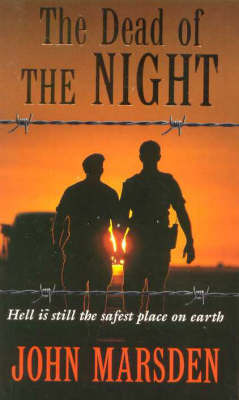
The second book in the series, The Dead of the Night, starts only a few weeks after the events of the first book.  Still reeling from the loss of two of their friends, the remaining members of the group engage in more attacks or acts of sabotage, before finding a group of adult rebels who have managed to avoid capture.  However, the teenage protagonists quickly realise that the adult rebels have no idea what they are doing, and disaster strikes when they encounter the enemy.  The protagonists manage to escape back to Hell, where they successfully undertake another massive attack, although another unforeseen tragedy is revealed in the aftermath.  This is a great follow-up to Tomorrow, When the War Began and it continues several interesting story threads from the first book, while also setting up some new characters and situations.  The scenes with the teenage protagonists encountering the adult rebels are not my favourite, but the counterpoints between the two groups are extremely fascinating.  In addition, the various covert actions that the group undertakes in this book, as well as the characters starting to show evidence of war trauma, offers some well-written and powerful moments to the series.

The next book, The Third Day, the Frost (released as A Killing Frost in the US and Canada), takes the protagonists out of their comfort zone as they leave Hell and the Wirrawee area in order to launch a seemingly impossible attack on the enemy’s nearby harbour complex.  Their hopes are buoyed when they manage to reconnect with a lost friend whose newfound knowledge may prove to be the key to pulling off their attack.  However, their success is short lived as they fall into the clutches of the enemy army and are soon sentenced to death.  They eventually manage to escape, but their freedom comes at a great cost.  This is easily one of the darker books in the Tomorrow series, especially the parts where the remaining main characters are caught and held in prison.  Some of the sequences in the book are pretty cool, especially the assault on Cobbler’s Bay, and this book is one of the ones I enjoy the most in the entire series.

The Third Day, The Frost Cover.jpg

Following the events of The Third Day, the Frost, the series experiences a seven-month time-skip as the remaining main characters recover in New Zealand.  As a result, the fourth book, Darkness, Be My Friend, feels a lot like it is the beginning of a slightly different second half of this series, resulting in some significant changes and character developments.  This book starts with the protagonists being asked to return to Australia in order to escort a band of army commandoes to a high-value target in the Wirrawee area.  While initially reluctant to return, the protagonists eventually agree to head back for a short mission.  However, when the commandoes go missing, the protagonists find themselves once again trapped in occupied territory and are forced to use their wits and experience to survive and fight back.  Darkness, Be My Friend is a really interesting and significant instalment in the series.  Not only are there a number of major changes in Wirrawee, including several shocking deaths, but this is the book where the trauma and PTSD angles of Marsden’s storytelling really come into effect, as all of the main characters are completely shell-shocked after the events of the first three books, and it takes them a lot to get back to their former operational readiness.  This book does feature some great scenes, including a night-time escape on horseback and a failed attack on the enemy which necessitates another desperate escape.

The fifth book in the series, Burning for Revenge, sees the protagonists once again holed up in Hell, hiding from the enemy army.  With no chance of extraction back to New Zealand, the young guerrillas decided to leave their sanctuary and find a new target to attack.  Fate intervenes, and they find themselves in a position to do a lot of damage to the enemy.  I really enjoyed Burning for Revenge, even though it suffers from some pacing issues.  The major offence takes place in the middle of the book, and while the corresponding sequences are epic in their scale, destruction and savagery, the second half of the book, in which the characters hide out in a nearby city, really peters out in comparison.  The parts of the book set in the city do offer an interesting change of location, and also feature some compelling story points, but it does seem to be a bit lacking after the big attack.  But the major action sequence, the lengthy escape and the significant story developments that occur more than make up for it.

The next book, The Night is for Hunting, is set right after the events of Burning for Revenge and sees the protagonists still hiding out in the suburbs of Stratton.  Their new way of life is shattered when they witness troops capturing some of the wild street children who also haunt the ruins of Stratton.  Rescuing the small group from the enemy, the protagonists escape back to Hell, and must find a way to adapt to their new charges.  However, Hell may not be the safe haven they remember; violence visits them in the bush for the first time.  The Night is for Hunting is probably my least favourite book in the Tomorrow series, although it still is an extremely enjoyable book and an essential part of the series.  It is a little hard to deal with this book’s change of focus from war to childcare, but the focus on the new war orphans who require care allows for some interesting scenes and some intriguing character development.  Most of the child characters are pretty annoying, but their leader, Gavin, more than makes up for it, as the deaf badass has some amazing scenes through this book.  The final action sequences above Hell are also quite jarring, as the bush location that has been built up as a safe haven for your favourite characters is invaded.
Darkness, Be My Friend Cover.jpg
The seventh and final book in the Tomorrow series, The Other Side of Dawn, begins immediately after the conclusion of the sixth book.  After taking out the enemy patrol that infiltrated Hell, the protagonists need to escape before the soldiers are reported missing.  However, instead of an extraction back to New Zealand, they are given a new mission: to venture out and perform as many attacks as possible.  The war is in its final days and any damage they can do will help determine the future of Australia.  Setting off again, the protagonists prepare for their final battle.  Who will survive and what will the country look like after they are done?  This is a really good conclusion to the series that features a number of great scenes.  Not only are many of the story threads that ran through the entire series wrapped up but the protagonists find themselves drawn further into the wider war than they ever have been before.  Marsden tries some different stuff in this book, including a significant amount of the book focusing on an isolated Ellie, and it works to create not only an enjoyable novel but also an excellent end to this great series.

While all seven books in the series are deeply entertaining and extremely well written, their real strength lies in their continuation as a series.  Marsden does an outstanding job linking all of the books in the series together, creating one lengthy and captivating story that you cannot wait to get to the end of.  The sheer amount of character development that occurs throughout the series, as well as the various attacks and input in the war effort, is amazing, and the Tomorrow series really needs to be read in its entirety and in order.

The Tomorrow series is told from the first-person perspective of the main character, Ellie, who is chronicling the adventures of the protagonists so there is a record of what they did during the war in case they are captured or killed.  I always quite enjoyed having the story told in this manner, as it gave the series a lot of realism and is supposed to evoke other famous wartime chronicles.  Ellie is a unique narrator, as she really does not tell a straight story of the entire adventure.  While she endeavours to cover all the events that are occurring, she goes off on a huge number of tangents, recalling stories from her past, analysing the thoughts and feelings in her head, or engaging in some deep emotional debate about the situations the characters find themselves in.  While this may seem random, it goes a long way to explaining the narrator’s thought process, as it helps her break down events she cannot quite handle and interpret them as something more recognisable to her.  It is also through her eyes that we see the other characters, and as such we get a really good idea of their past and their potential motivations, as Ellie knows huge amounts about their past and tells a number of funny stories or analogies that help highlight their character traits and personalities.  Because all of the main characters are her friends, Ellie’s feelings of closeness and love for these characters really shines through and ensures that the readers really care for all the other characters.  One of the things I quite liked about the chronicle format of this series was that Marsden went out of his way to explain the text’s creation and how the protagonist was able to preserve them through the war.  The chronicles also have an impact on the story, especially in the second book, as the characters read and react to Ellie’s inner thoughts and observations about the series’ opening events.
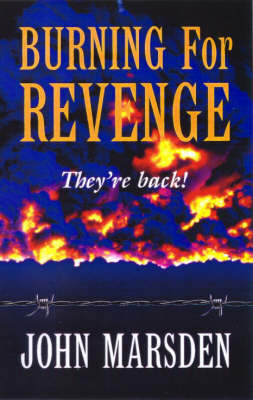
Burning For Revenge Cover.jpg

I absolutely love the overarching story concept of this series, which sees Australia being invaded by a hostile enemy force who quickly takes over the country, forcing a small group of young people to fight back.  While some comparisons with Red Dawn can be made, there are some significant differences to the story, such as its focus on Australia, character development and the more realistic story of young people surviving in a war zone.  I always felt that the idea that Australia, with its relatively small population and relative isolation from Europe and America, could be invaded and completely conquered in such a short period is a lot more realistic than similar events occurring in America.  In addition, the way that the teenage protagonists operate is a lot more realistic in the Tomorrow series.  The characters spend most of their time mainly trying to survive and avoid capture or death at the hands of their enemy.  Even when they attempt an attack, they plans usually attempt to avoid a direct fire fight, as they realise that any attempts to do so would likely see them killed.  Instead, they mostly travel without guns, hoping that if captured, the enemy would believe they were kids who were hiding and not actual guerrillas.  I also liked how the protagonists’ planned assaults on the enemy are more opportunistic in nature and rely more on improvisation and everyday items rather than training or proper military explosives or weapons.  Most of their attacks involve petrol, gas and weapons farmers would use (although one attack was achieved by toasters), and even when they receive some better equipment from the New Zealand army, they utilise it in a way adult soldiers would not think about.  The author’s depiction of Australia’s invasion is really interesting, and the attack and the international reaction to it feel quite realistic, even in more modern times.  I really love the ideas that Marsden comes up with when it comes to the actions his protagonists undertake to survive the war, and it is clear that he dedicated a lot of time and attention to coming up with these actions.  As a result of this, and the realistic depiction of Australia being invaded, the Tomorrow series has always fired my imagination about what I would do if Australia were invaded, and I have to admit I would be tempted to do what these protagonists would do and try and hide out in the bush.

The way that the war is depicted in this series is quite intriguing.  Due to the story being told from Ellie’s perspective as a chronicler, the reader only gets a fairly narrow view of the war, as the protagonists lack any knowledge of what is happening due to their isolation.  Having the protagonists only finding out about the invasion days after it occurs, and then retreating to their hidden base for long periods of a time is quite a cool concept, and I always found that it added so much to the story, especially realism; you cannot expect teen civilians in the bush to have knowledge of troop movements.  Another clever plot device that the Tomorrow series makes use of is the fact that the series has no singular antagonist; instead, the protagonists see every member of the invading army as an equal threat.  While the character of Major Harvey in the second and third book is an antagonist, he is really just a cog in the military machine that is conquering Australia.  Much more negative focus is put on the enemy army as a whole, even though they are fairly faceless, with only one member of their forces ever really named, and that was in the last book.  I always felt that Marsden considered war and the reasons for it as the book’s primary villain, as the harsh depictions of it and its aftermath are very convincing.

As you would expect from a series that focuses on invasion, war and guerrilla attacks, there is a heck of a lot of action going on within these books.  Marsden has some real skill when it comes to writing these scenes, and the reader is dragged right into the middle of the carnage as the narrator describes everything that they see.  I was also impressed with how realistic these scenes were, and the author does not pull any punches when it comes to describing the carnage, with some truly gruesome or violent events occurring all over the place.  There are a huge number of scenes that come to mind in the series, but the one that I would say is the most descriptive is the airfield sequence in Burning for Revenge.  The devastation, destruction and fire that occur in the scene is just insane, and you can’t help but feel the heat of the flames and explosions that are occurring all around the narrator.  This intense action adds so much to the story and really highlights the author’s skill as a writer.

The Nigh is for Hunting Cover.jpg

One of the most distinctive aspects of the Tomorrow series is Marsden’s extremely realistic and insightful depictions of emotional and psychological trauma as a result of war and death.  The inclusion of this sort of trauma is prevalent throughout the entire series and affects all of the characters in some way or another.  Marsden started featuring these depictions of trauma quite early in the series, as within the first book alone two of the characters suffer from panic attacks after seeing or being forced to commit severe acts of violence.  This trauma continues to define many of the characters throughout the rest of the books, and large parts of the series deal with them trying to come to terms with the various traumatic experiences, the deaths of loved ones and all the horrendous acts of violence they have committed.  The most obvious example of these occurs in the fourth book, Darkness, Be my Friend, where at the start all the surviving characters are deeply shell-shocked and emotionally distraught after everything they have done, as well as only narrowly escaping from the death sentence at the enemy prison and witnessing another one of their friends dying.  Even after months recovering in New Zealand, none of them have come close to coming to terms with what happened to them, and the stream of emotion that followed the discussions about heading back to Australia really cuts to the reader’s core.  This is especially true when at least two characters have mental breakdowns when back in Australia, especially Kevin, whose mind essentially shuts down for most of the fifth book in response to everything that happens.  Some of Ellie’s descriptions of the depression or despair she experiences throughout the course of the series are just heartbreaking, but they really drive home how the war has affected her and how devastating the events of the book are.

The Tomorrow series features a fantastic core group of characters who are thrust unprepared into a war setting.  The characters are a diverse and interesting bunch.  Due to his background as a teacher in a rural area of Australia, Marsden has a good idea of the lifestyle of rural kids, and he incorporates this into his characters.  After the various adventures with these characters, the reader does really start to care for them, and they really feel the dark points strongly, such as when they are imprisoned.  I liked the way that Marsden portrayed their relationship, as the characters become dependent on each other in their isolation and situation.  Each of the main characters goes through some significant character development throughout the books, as the situations they face force them to become more responsible or more vicious, depending on their circumstances.  None of the characters are unaffected by this, whether it is the initially rebellious Homer turning into a compassionate leader, or the initially pampered Fiona becoming a more independent and resilient person.  Perhaps the best example of character changes is Lee.  In the first book he is a more easy-going character whose main story arc involves his romance with Ellie.  However, when he witnesses the brutality of the enemy in the second book, he starts to show more signs of violence and anger, killing several soldiers in brutal fashion.  When he finds out that his parents have died, he becomes eager for vengeance, acting out more against the group and putting them in danger with his decisions.

As the narrator, we spend the most time with Ellie, and as a result we really get a deep dive into her character, personality and motivations.  Throughout the series, so many things happen to Ellie that fundamentally change her as a person.  One of the things I really liked about this series as a whole is the way that Ellie maintains her quirky outlook on life even when terrible things happen to her or when she is forced to do terrible things to survive.  Ellie is the first one of the characters to kill someone, and the many deaths she witnesses or is forced to participate in haunt her for all of the books.  With her strong and overwhelming personality, I always thought that Ellie was an outstanding main character for this series, and she is a fantastic creation of Marsden.
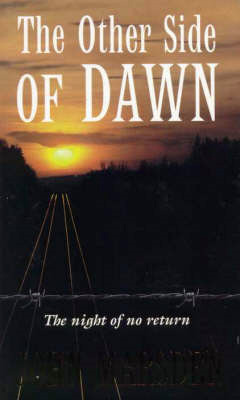
The Other Side of Dawn Cover

Much of the Tomorrow series is set in the Australian bushland.  Marsden is a very descriptive author, and throughout the course of his books, he really brings the bush to life with his fantastic writings.  The reader really gets a sense of the beauty and strangeness of the bush, and the narrator, who has spent her entire life near the bush, gives several poetic and inspiring accounts of why she loves the bush so much.  There are a number of great bush locations featured throughout the series, and this landscape takes on a life of its own at times.  I loved the location and thought that it contrasted well with some other locations, such as the city the characters spend time in during the last three books.  The immortal bush remains undamaged through the entire series, while the city becomes more and more devastated every time the characters visit.  I loved the use of the bush, and it is an outstanding location that adds so much to the series.

These books are an excellent young adult series that are a must read for its intended audience.  Some of the violence and other content may be considered a bit much for some younger audiences, although I did read this when I was quite young and I personally think that the underlying lessons and themes well outweigh the risks.  Marsden, as a teacher who worked with teenagers, really wanted to portray a group of teenage protagonists in a positive light by showing them as capable beings rather than as the lazy troublemakers of popular media.  Without a doubt, Marsden was able to achieve this, showing a group of teenagers who able to adapt and survive in the most hostile of locations, becoming heroes and survivors where their contemporaries were mostly captured in the early days of the invasion.  Even those adults they encounter after the invasion are mostly incompetent, especially the group known as Harvey’s Heroes in The Dead of the Night.  These characters, including some of their antagonists, actually try to treat them like children, which is galling when the protagonists are far more capable.  However, the protagonists are able to survive where the adults do not, and even some of the professional soldiers they work with in the later books are unable to do the things they do.  As a result, this book does a great job of showing what teenagers are capable of when they face adversity.  However, while it does show them stepping up, the books do not glorify war for young people, as all their actions are done out of necessity, and they are left with some terrible mental and physical scars.  I would strongly recommend this series for all young readers, and I believe that older readers will become enthralled in the story contained within.

As the Tomorrow series is one of the most popular and well-known book series in Australia for the last 20 years, there have been a couple of attempts at adapting the books to the screen.  While this is not necessarily important to enjoying the story, it is intriguing to see how these adaptations have gone, especially as I do not think either of them gets the story 100% correct.  The first adaption the Tomorrow series had was the 2010 film, Tomorrow, When the War Began, which stared a young, mostly Australian cast, a couple of whom have gone on to some international success.  I quite liked the film, which I felt mostly captured the heart and intent of the first book.  However, there were some scenes that were way over the top or slightly stupid, such as having the religious Robyn killing a whole bunch of soldiers while the camera pans sadly to a playground to represent innocence lost, or the final scene showing the protagonists outfitted like a major paramilitary group.  The film also did a really good job of moving the story out of the 90s and setting it in 2010 by cleverly inserting recent technology into the story.  For example, there is one memorable scene where all the characters simultaneously check their cell phone reception when they first discover Ellie’s farm abandoned, rather than having one person checking the landline.  The second adaptation was a television show that ran for one season in 2016.  While it roughly covered the events of the first book, they really took a lot of artistic licence, which honestly did not pay off.  For example, they spent a huge amount of time focussing on what was happening with the captured parents, even though the parents where pretty much non-entities in the first book.  Stuff like this really added nothing to the story, and I personally thought it was quite stupid and kind of ruined the show for me.

twtwb_quad_large2.jpg

Marsden actually continued the story of the Tomorrow series in a sequel trilogy known as The Ellie ChroniclesThe Ellie Chronicles ran between 2003 and 2006 and focused on Ellie as she struggles to adapt to life in post-war Australia.  I have actually not had the chance to read or listen to The Ellie Chronicles before, which is weird considering how much I love the Tomorrow series.  I have a copy of these books and I will try to get through them at some point in the future as I am deeply curious to see what happens to these beloved characters in peace time (Is the leader of the Australian terrorist group mentioned in the synopsis Lee?  He was still pretty murderous at the end of the series).

While I originally read the physical copies of these books, I mostly choose to listen to the stories on audiobook.  The audiobooks are all narrated by Suzi Dougherty, and mostly run for around seven hours, with the final book, The Other Side of Dawn, running for over nine hours.  When I do my re-listen of these books, I try to get through the entire series in one go and I am generally able to do so quite quickly, as the compelling story keeps me enraptured for all seven books.  Doherty does an amazing job when it comes to these books and she comes up with some outstanding voices for all the characters she portrays.  I especially feel she gets the character of Ellie down perfectly, which has a real trickle-down effect to the rest of the book, as Ellie is the character narrating the entire series.  I really enjoy listening to the series and I think I become a lot more attached to the series when I do.  I would strongly recommend listening to the Tomorrow series on audiobook; it is an amazing way to enjoy these fantastic books.

As you can see from my rather long review, there is so much about the Tomorrow series that I enjoy.  To my mind it is one of the best book series I have ever read, and even after the many years since I first read it, I am still enthralled by the epic story it contains.  Each of the books within the Tomorrow series is excellent, but when taken as a whole, the series becomes some sensational.  I highly recommend this entire series and I am so glad that many Australian schools still require their students to read it.
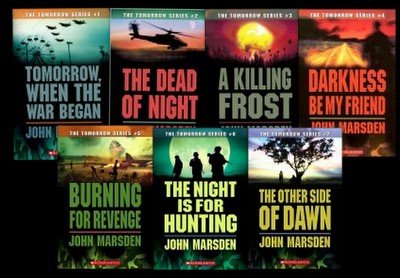

51eYr9CzIAL

The Malta Exchange by Steve Berry – Audiobook Review

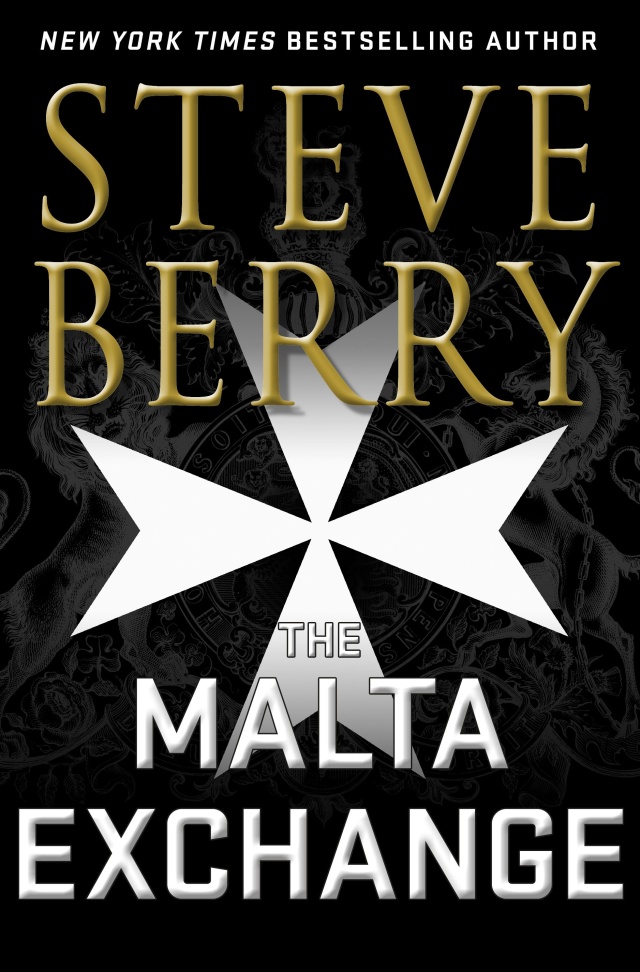
The Malta Exchange Cover

Publishers: Hodder & Stoughton and MacMillan Audio (5 March 2019)

Series: Cotton Malone – Book 14

Length: 13 hours and 31 minutes

My Rating: 4.5 out of 5 stars

Amazon

From the brilliant mind of international thriller sensation Steve Berry comes the 14th book in his acclaimed Cotton Malone series, The Malta Exchange.

When the pope unexpectedly dies, opportunity and chaos grips the Vatican.  As the world’s cardinals arrive in Rome in preparation for the conclave to elect a new pope, one cardinal, the controversial Kastor Gallo, suddenly leaves for an impromptu visit to Malta.  He has been summoned for a clandestine meeting, the results of which could hand him the papacy.  The only witness to this meeting is United States Justice Department operative Luke Daniels, whose covert observations of the meeting is quickly compromised, forcing him to fight for his life.

While Daniels attempts to uncover what is happening in Malta, his former colleague, Cotton Malone, is in Italy working for British intelligence.  An Italian collector claims to have letters between Churchill and Mussolini that could prove extremely damaging to Churchill’s legacy, and MI6 is eager to recover them.  What is meant to be a quick mission for Malone is complicated when armed men kill the collector and steal the letters.  Malone is able to trace his assailants to the legendary Knights of Malta, and his chase to recover the letters leads him into a hunt from a mysterious document from the reign of Emperor Constantine.

This document, revered by the Knights of Malta and feared by the church, has been lost for hundreds of years.  Hunted by some of history’s greatest tyrants, including Napoleon and Mussolini, this secret document not only has the potential to influence the current concave if revealed, but it could also tear the church down completely.  As a secret society within the modern incarnation of the Knights of Malta and elements of the Entity, the church’s intelligence organisation, both attempt to claim the document, Malone and Daniels once again team up to recover the document and destroy the conspiracy threatening to envelope them and the entire Catholic world.

Steve Berry is a veteran author of thrillers that focus on complex conspiracies, having written a number of exciting books since his 2003 debut.  While Berry has written four standalone novels, including The Amber Room, The Romanov Prophecy and The Third Secret, he is probably best known for his long-running Cotton Malone series of books.  The Cotton Malone series, which began in 2006 with The Templar Legacy, is made up of 14 books, each of which features the series titular character, retired U.S. Justice Department operative Cotton Malone as he is forced to investigate a series of elaborate conspiracies or secrets with origins in history.

The Malta Exchange features several characters from the previous books in the series.  While this is the 14th book in the series, The Malta Exchange can easily be read as a standalone book, as no prior knowledge of the Cotton Malone series is required to enjoy this story.  While there are some mentions of previous adventures in the series, none of these brief references are really relevant to this book’s story.  Likewise, the series’ recurring characters are re-introduced in some detail, and no pre-existing knowledge of them is needed.  Those readers who are already familiar with this series will enjoy another amazing thriller from Berry, although there may be some repetition, as the protagonists once again dive into another elaborate conspiracy centred with a secret order associated with the Catholic Church.  As one of my reviewer colleagues who is somewhat more familiar with this series than me stated, “How many conspiracies can one man wander into?”  Still, for those people who have enjoyed Berry’s stories before, The Malta Exchange is another exceptional read with a thrilling mystery that is a lot of fun to unravel.

While I received a physical copy of this book to read, I ended up listening to the audiobook format of The Malta Exchange narrated by Scott Brick.  This book was an absolutely fantastic piece of thriller fiction as the reader is thrown into an extremely intriguing and wide-reaching conspiracy involving hidden documents, major historical figures and deep dives into the history and background of several fictional and real-life organisations.

This is an excellent book for thriller fans, as The Malta Exchange contains a number of intense and complex conspiracies and plots overlayed across each other to create an addictive and enjoyable read.  The main plot focuses on the search for a long-lost document that originated during the reign of Emperor Constantine, which has the potential to damage or destroy the Catholic Church.  As a big fan of the historical fiction genre, I loved how this central mystery cleverly utilised a number of massive historical events and figures in its overall conspiracy.  For example, this central conspiracy has ties to Emperor Constantine, the founding of the Catholic Church, Napoleon, Mussolini, the Crusades and important events in World War II.  It even features a number of cool flashbacks to Mussolini and Napoleon’s life, showing how they were embroiled in this conspiracy.  This results in a treasure hunt so large, mysterious and potentially world-changing you cannot help but be intrigued and eager to see how it ends.  On top of that, a number of secret organisations with conflicting agendas and plots are duking it out around the hunt for this document and the reader is uncertain of their true motivations until later in the story.  All these story threads come together incredibly well at the end of the story, resulting in an intense, intelligent and entertaining thriller storyline that I could not wait to fully uncover.

Except for a couple of chapters featuring flashbacks to historical figures like Mussolini or Napoleon, The Malta Exchange is told from the point of view of four main characters: Cotton Malone, Luke Daniels, Cardinal Kastor Gallo and a mysterious ‘knight’ who remains unnamed for most of the book.  Malone and Daniels serve as good central protagonists, and I liked the contrast in their styles and personalities.  While Malone is the older, wiser and occasionally more careful protagonist who puts together the various clues around the hidden location of ancient document, Daniels is the younger, more action orientated character who does a number of crazy stunts throughout the book while also hiding his intelligence and cunning behind a convincing “good ol’ boy” routine.  The unnamed knight is The Malta Exchange’s main antagonist, whose identity remains hidden for much of the book.  This knight is an interesting character, and it is always fun to see the antagonist’s point of view as they attempt to outwit the protagonists.  While the reveal of this character’s secret identity is somewhat obvious due to there only being a few significant secondary characters, the antagonist’s overall plan was quite ingenious and devious.  Kastor Gallo is another interesting character; a self-serving Cardinal who wants to become Pope, he skirts the line between protagonist and villain in this story.  While the character considers himself an honest and pious priest, he is not particularly likeable due to his extremely conservative religious views and unbridled arrogance.  Still it was fun watching him try to manipulate the other characters, as well as his plot to try and gain the papacy.  There are several other fantastic side characters whom I will not discuss in any detail lest I hint at the identity of the unnamed knight above, but they really add a lot to this story.

One of the things that really impressed me about this book was the way that Berry dived into several organisations and locations in extreme and intriguing detail, particularly when it comes to two specific organisations.  The first of these organisations is the Knights of Malta, otherwise known as the Sovereign Military Order of Malta or the Sovereign Military Hospitaller Order of Saint John of Jerusalem, of Rhodes and of Malta.  Throughout this book, Berry spends a significant amount of time exploring this order, from their origins as the Knights Hospitaller and the Crusades, to their current existence as a massive charitable organisation.  Berry examines a large amount of their history, how they are organised, where they are located, what they do, their political status and how they have evolved over the years, and this amazing examination is further extended out into the incredible history of the nation of Malta.  Even the order’s leadership crisis between 2016 and 2018 is somewhat represented in the book, as the author describes a similar crisis affecting the organisation featured within The Malta Exchange.  All of this is deeply fascinating, and I really enjoyed the author’s examination of this organisation and how he was able to utilise the Knights of Malta’s actual history to the degree he did, with only a few alterations to fit his story.

The second organisation that Berry dives into is the Catholic Church, as a number of key aspects of the church and the Vatican come into play throughout the plot.  Like with his deep dive into the Knights of Malta, the author included a number of detailed examinations about church history, organisation and key events, like the selection of a new pope, that I quite enjoyed learning more about, and which fit incredibly well into the story.  The part of the examination into the church that I enjoyed the most was the look at the church’s supposed intelligence organisation, the Entity.  While the church has never confirmed they have an official intelligence organisation, several historical books have discussed its potential activities, and a number of thriller writers have utilised such an organisation, often known as the Entity, to great effect.  Perhaps because thrillers are not a genre that I read an awful lot of, this was the first book I have read that featured a church intelligence agency.  I really liked the idea of a secret intelligence organisation working for the Vatican, and Berry really utilises them well throughout his book, making them out as one of the most elite and effective intelligence organisations on the planet, who people really should not mess with.  I absolutely loved all the Catholic Church inclusions that the author featured and that, combined with the captivating examination of the Knights of Malta, helped turn this into an amazing overall story.

As I mentioned above, I chose to listen to the audiobook version of The Malta Exchange, which was narrated by Scott Brick.  This was not a massively long audiobook, only clocking in at around 13 and a half hours, and I was able to power through this really quickly, especially as I become more and more enthralled with the book’s compelling story.  I was quite glad that I chose to listen to this book rather than read it.  While you do lose out on some of the book’s visual elements, like some of the diagrams of anagrams or secret codes that feature throughout the physical copy, I found that listening to The Malta Exchange really helped me absorb the massive conspiracy storyline, as well as the history and organisation examinations, a hell of a lot more.  Brick has an amazing voice for thrillers, and I quite enjoyed listening him narrate this fantastic novel.  The voices he creates for the various characters in this book are quite good, and I liked some of the accents that he came up with.  I would strongly recommend the audiobook version of The Malta Exchange, although readers will still be able to get a huge amount out of the physical copy of the book.

The Malta Exchange by Steve Berry is an incredible and addictive ancient conspiracy thriller that I had an amazing time reading.  Once you get sucked into the book’s various conspiracies and mysteries it is hard to pull yourself out until each and every one of them is untangled.  What I enjoyed most about the main conspiracy was the author’s ability to explore fascinating history and famous organisations in outstanding detail, and then use these events to really enhance his story.  The end result is an awesome novel that comes highly recommend from me.  Appealing and accessible to established fans of the Cotton Malone series, as well as other fans of the thriller genre, I was really glad I decided to check this book out and I am curious to see what historical conspiracy Malone uncovers next.

Amazon

Throwback Thursday – Moving Pictures by Terry Pratchett

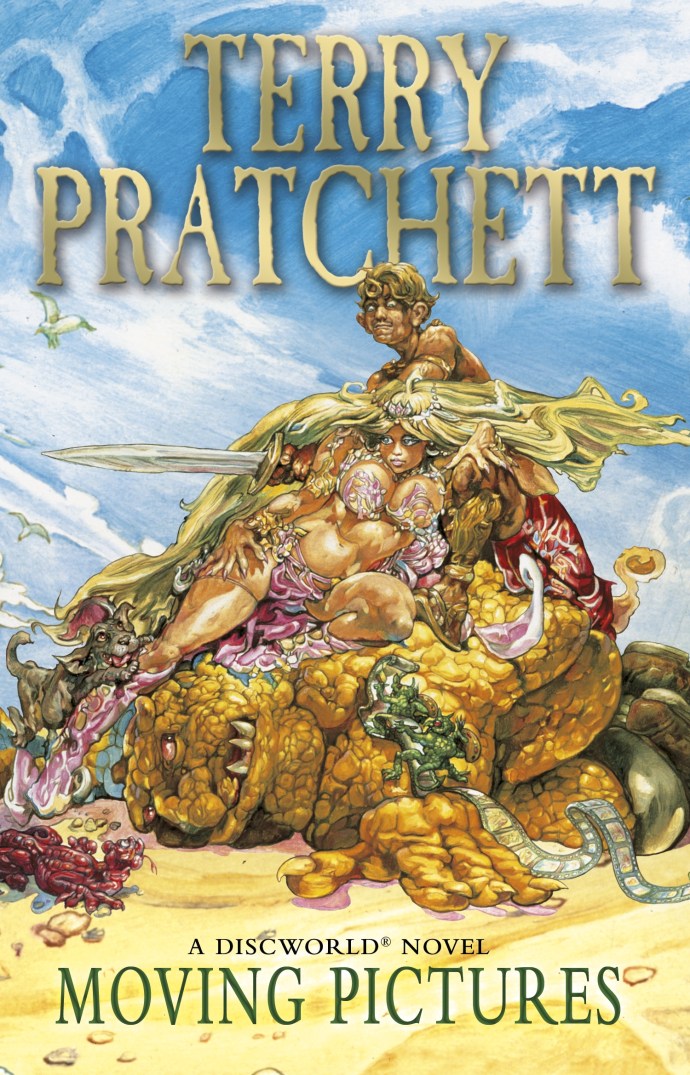
Moving Pictures Cover

Publishers: Corgi and ISIS Audiobooks (14 November 1991)

Series: Discworld – Book 10

Length: 332 pages or 10 hours and 8 minutes

My Rating: 5 out of 5 stars

Amazon

Reviewed as part of my Throwback Thursday series, where I republish old reviews, review books I have read before or review older books I have only just had a chance to read.

Because my blog shares the name of a building featured in Terry Pratchett’s Discworld series, some people might have assumed that I am a fan.  You would be right, so very, very right.  I have loved Discworld since I was a small child, and my appreciation and respect for the complex writings of the late, great genius, Sir Terry Pratchett, has grown with me.  The Discworld series represents one of my ultimate comfort series of books.  It’s the series that I go back to at any time when I want something fun and familiar to enjoy.  I have read all of the adult books set in Discworld multiple times (I have yet to read all of the young adult ones), and it is an unusual year when I do not listen or read some of these books in my spare time.  Pretty much every single book in this series deserves five out of five stars or higher (with one or two exceptions that I may mark down to a 4.75 with a heavy, heavy heart), and you are unlikely to find any real criticisms about this book below.  After nearly a year of running this blog, the continued exclusion of a review of any of Pratchett’s Discworld is a travesty, and one that I seek to rectify in this somewhat late Throwback Thursday with a review of the 10th book in the series, Moving Pictures.

Before I review Moving Pictures, here is some quick context of the Discworld series for those people unfamiliar with these books.  Discworld is the main series of Sir Terry Pratchett, set upon the Discworld, world and mirror of worlds.  The Discworld, or the Disc, is a flat world that rests on the backs of four massive elephants, who themselves stand on the back of a gigantic turtle swimming in space, Great A’Tuin.  The Discworld itself features a huge range of different nations and continents that bear striking similarities to real-world locations.  This series is, without a doubt, the best series that utilises a combination of fantasy and satire in the entire world.  The seamless blend of the two elements is just incredible, and both elements do an unbelievable job at enhancing each other.  Before his death, Pratchett wrote 41 books in the Discworld series, six of which are considered young adult books.  While the books can be read in any real order, the series were mostly written in chronological order (with the exception of Small Gods), and events from earlier books in the series are often referenced.  Although most of the Discworld stories are self-contained, a number of the books are linked together by a recurring main character and are subsequently grouped together into subseries.  These include the Rincewind, Witches, City Watch, Death, Tiffany Arching and Moist von Lipwig subseries, in addition to a few standalone books that fall outside of any of the subseries.  Characters often appear in other Discworld books outside of their subseries, and there are a string of side or secondary characters who appear in multiple subseries and standalone books.

The book I am reviewing, Moving Pictures, is a standalone book that does not really fall within any of the main subseries.  It is sometimes considered part of minor subseries, called the Industrial Revolution subseries, with The Truth and Monstrous Regiment, but I am not a big fan of that distinction.  As it is the first Discworld book I am reviewing, you might think that it is my favourite book in the entire series, which is not true; although it does get five out of five stars from me and I have enjoyed it an amazing number of times, it is not my absolute favourite Discworld book, although it is high on the list.  It is, however, an easier one for me to review as there is a lot I can say about it.

Goodreads Synopsis:

‘Holy wood is a different sort of place. People act differently here. Everywhere else the most important things are gods or money or cattle. Here, the most important thing is to be important.’

People might say that reality is a quality that things possess in the same way that they possess weight. Sadly alchemists never really held with such a quaint notion. They think that they can change reality, shape it to their own purpose. Imagine then the damage that could be wrought if they get their hands on the ultimate alchemy: the invention of motion pictures, the greatest making of illusions. It may be a triumph of universe-shaking proportions. It’s either that or they’re about to unlock the dark terrible secret of the Holy Wood hills – by mistake…

The blurb above is a bit vague on the details of what is actually happening in Moving Pictures.  Essentially, the alchemists of Ankh-Morpork, the largest city on the Discworld (and a central location for many of the books), suddenly develop filmmaking, which they call moving pictures, and set up a filming base at the ancient and abandoned Holy Wood.  The moving pictures issue a weird siren call to the inhabitants of the Discworld, dragging all manners of people and creatures from across the lands and infecting them with their magic (not a metaphor).

Among those drawn to Holy Wood are Victor Tugelbend, a former student wizard, and Theda “Ginger” Withel, a small-town girl with big dreams.  Thanks to the magical on-screen chemistry between them, Victor and Ginger quickly become the superstars of the fledgling moving pictures industry, especially when the Discworld’s most infamous salesman, Cut-Me-Own-Throat Dibbler, comes to town and takes over the studios.

However, reality on the Discworld is always a bit thin, and Lovecraftian monsters (a favourite recurring antagonist of Pratchett’s early Discworld novels) are revealed to be the ones who planted the idea of moving pictures and Holy Wood in the alchemists’ heads.  Using the new sort of magic created by Holy Wood, the creatures start to break through.  With the wizards of Unseen University, the people who are supposed to guard against these sorts of incursions, distracted by the arrival of an unconventional new Archchancellor, it is up to Victor, Ginger and a ragtag band of other Holy Wood characters to save the day.

This book has so many moving parts to it that it’s hard to know where to begin when reviewing it.  While the main story is concerned with the introduction of moving pictures into the Discworld, there are a number of other entertaining storylines going on throughout the book, each one complementing the main story and creating an amazing overall narrative.  The major appeal of this book is its sharp and intelligent satire of the movie business, which also examines the nature of a film industry in a world as crazy as the Discworld.  I also quite like all the amazing characters, either introduced or built up in this book, many of whom appear in later books in the series.

This book is absolutely hilarious and filled with a huge number of clever and outrageous jokes and observations about the film industry, all of which lie on top of Pratchett’s usual humour about day-to-day life in the Discworld and his random observations, many of which are perfectly introduced in the book’s footnotes.  The main storyline is an amazing portrayal of the hectic early days of the film industry, placed in a fantasy setting.  The cameras are powered by miniature demons (who paint the pictures really, really fast), the lighting is done by salamanders, actors of all species make up the cast, the audience eat ‘banged grains’ while watching the ‘clicks’ and the film’s monsters and villains are all trolls in crude costumes.  However, literal movie magic is making people do strange things (strange even for Discworld folk), talking animals are showing up looking for work, Dwarfs are singing “Hihohihohiho” as they work, characters routinely burst into song and dance in the rain, and one producer keeps threatening to turn people into stars, all while the book’s few straight-characters look on in bemusement.  All of this is amazing, and the sheer number of fantasy-assisted jokes throughout the book is pretty unbelievable.

At its heart, Moving Pictures is a satire and a critique about the film industry as a whole.  Quite a large amount of the story is dedicated to parodying the real-life the crazy effect that movies can have on audiences and the people who make them, as the book shows some ridiculous events.  The story also reflects the insubstantial nature of fame and the fragility of dreams surrounding the movie industry.  The fast-moving world of the film industry is also shown, although sped up even more for comedic and story value, as they film creators are constantly searching and finding new advancements in their field.  A great example of this is shown when Cut-My-Own-Throat Dibbler invents and then continually advances the art of advertisement, so that, within a few short weeks, the film industry goes from ineffective text advertisements to eye-catching posters and explorations of product placement and subliminal messages.  Pratchett handles these critiques very skilfully, and you cannot help but laugh aloud as he skewers the film industry quite cleverly throughout Moving Pictures.

Pratchett also filled Moving Pictures with a ton of references to iconic films and elements of the film industry.  Many of the characters involved with the films are caricatures of famous movie actors, with Victor playing all the typical romantic or manly male heroes of the day, and Ginger is essentially Marilyn Monroe.  Several films are parodied throughout the book, such as Gone With The Wind, which becomes Blown Away, an epic love story set around a famous Ankh-Morpork Civil War.  There is a rather good King Kong parody, in which a gigantic woman kidnaps a poor defenceless Ape (the Librarian) and drags him to the roof of the tallest tower in Ankh-Morpork, all while two wizards on a broomstick shoot at it with a crossbow, with one shouting “If it bleeds, we can kill it!”  That is only scratching the surface of the references featured within this book.  A golden figure with a name starting with O plays a big part in the story, the various studios are all parodies of real-life studios, and there a huge number of funny and subtle references to various famous films.  Examples of these include Wizard of Oz, Lassie, Lawrence of Arabia, Indiana Jones, Looney Tunes, Blues Brothers, Casablanca, Tarzan and Star Trek just to name a few.  Readers can go through this book multiple times and not pick up every detail, which is a testament to the cleverness of Pratchett and his ability to come up with some hilarious references.

I have always found the way that Pratchett utilises or re-uses his characters to be extremely fascinating; while some characters appear in multiple books, a number of his main characters, especially from his earlier books, are only used once. There are several examples of this, including Mort from Mort, Pteppic from Pyramids and Esk from Equal Rites (who did appear in a later young adult novel, but there was a significant time gap between the writing of these two books).  While Pratchett may have simply had only one story in mind for these characters, I have a feeling that he simply did not like how they turned out and decided not to use them again under any circumstances.  Mort is probably the best example of this.  Despite being the protagonist of the first Death subseries book Mort, he never appears in any of the Death subseries books again (aside from one brief flashback), and is instead replaced by his own daughter, Susan.  It is interesting to note that most of the main characters who were never or rarely used again are somewhat similar to each other, being young heroes without too many obvious flaws to them.  On the other hand, the unique main characters Pratchett creates with notable flaws, such as Rincewind, the wizard who has turned cowardice into an art form, or the overly cynical and dangerous alcoholic Sam Vimes, helm multiple books.

If I have to make one criticism about this book, it is the weak and somewhat inconsistent main characters, Victor and Ginger.  Ginger is a generic female character, and while she is a good parody of Marilyn Monroe and other early screen actresses, she is pretty one-dimensional and unlikeable.  Victor starts out with some very interesting character traits, as he is described as an extremely lazy person, whose unique brand of laziness forces him to become a brilliant student wizard in order for him to succeed in his quest to fail every test he ever takes by a certain point margin to ensure he remains a student.  However, these character traits are pretty much thrown out the window a few chapters in and he becomes a typical male hero for the rest of the book.  While this sort of straight-man character was needed for this wacky adventure, it is surprising that the character never again really shows the slightest hint of some of these earlier established character traits.  It is interesting to note that neither Victor or Ginger appear in any of the subsequent Discworld novels, so I think there is a strong possibility that Pratchett might also have disliked how these characters turned out.

While one or two of his earlier main characters were somewhat unimpressive, Pratchett always managed to make up for this by creating a range of memorable and enjoyable side characters.  It was always interesting to see which of these side characters would appear in various later books, as you knew Pratchett had to like them as well.  For example, Granny Weatherwax was a supporting character in Equal Rites, but Pratchett must have liked writing her, as she became a major character in the Discworld series, even getting her own subseries with several other witch characters.  Moving Pictures is perhaps the best example of Pratchett’s love of side characters; while Victor and Ginger never appear in the Discworld again, many of the side characters introduced or developed in this book have major roles later in the series.

For example, I was always impressed with how this book turned two minor characters from Guards! Guards!, Cut-Me-Own-Throat Dibbler and Detritus the troll, and gave them more expanded roles in Moving Pictures.  Dibbler was an opportunistic merchant who got a couple of good, if minor, scenes in Guards! Guards!, but in Moving Pictures, Pratchett transformed him into a ruthless and extremely savvy salesman who gets in the front door of every major new opportunity inflicted on the Discworld, but is often forced by circumstances back to becoming a sausage-in-a-bun merchant.  Dibbler was absolutely fantastic as the stereotypical sleazy film producer, and it is unsurprising why he suddenly became a major recurring character throughout the Discworld books, not only appearing in nearly every book set in Ankh-Morpork but also having clones of him appear in the other nations and cities, all of whom sell disgusting local delicacies.  Detritus is another great example, as he goes from the simple bouncer introduced in previous books to a troll seeking love and a new way of life.  Pratchett comes up with a great personality for Detritus in this book, and it carries through to the City Watch subseries when he joins the Watch in Men at Arms and becomes a major recurring character in this subseries and other books set around Ankh-Morpork.  Other recurring characters, Death and the Librarian, are as awesome as ever, but Dibbler and Detritus are the real standout stars of this book.

Several new characters introduced in this story also make a number of reappearances throughout the rest of the Discworld series.  A good example of this is the talking dog, Gaspode, who is a fantastic and sarcastic character through the book.  He has some great scenes, with the highlight being his friendship with Laddie, a Lassie parody and idiot who Gaspode takes under his wing.  The idea of a clever, underappreciated and sarcastic talking dog side character apparently worked so well that Pratchett found a way to return his magical intelligence and ability to speak a few books later in Men at Arms (the same book Detritus reappeared in) and he then featured in several additional books.

You also have to love the new wizard characters that Pratchett also created for this book.  Before Moving Pictures, the faculty of Unseen University, with the exception of the Librarian and Rincewind, were replaced each book with a new group of senior wizards, thanks to the competitive nature of succession in the university.  However, this 10th book introduces a brand new and more permanent faculty of Unseen University, led by Archchancellor Mustrum Ridcully.  Ridcully is a fantastic character as he is big, loud and sporty man who is generally the complete opposite to any other wizard previously shown in the Discworld series.  I really enjoyed his storyline and found it to be one of the most entertaining in the entire book.  Pratchett must have agreed, as Ridcully became the only recurring Archchancellor in the Discworld series.  This also allowed for the creation and stabilisation of unique characters to make up the senior faculty of Unseen University, including the Bursar, the Dean, the Chair of Indefinite Studies and the Lecturer in Recent Runes.  While the other wizards have a fun romp breaking out to go see the moving pictures, the Bursar has a great story, as you get to see the first signs of madness that would afflict him throughout every other book he appears in, as he first encounters the stress associated with working under Ridcully.  I also liked the introduction of a young Ponder Stibbons, whose bad day while trying to escape from the university is pretty humorous, but also the complete departure from his later role as the only serious member of the faculty.  Thanks to their entertaining storylines, the wizards would appear in multiple books in the rest of the Discworld series, and while they never had their own specific subseries, they would get major inclusions in several other subseries, including substantial stories in The Last Continent, Soul Music, Lords and Ladies and The Hogfather, as well as their own novel, Unseen Academics.

While I have physically read most of the books in the Discworld series, including Moving Pictures, these days I tend to only listen to the audiobook formats of these books.  The Discworld audiobooks are pretty awesome, and the two narrators for the series, Nigel Planer and Stephen Briggs, both do an incredible job.  I find that the humour in the Discworld novels is massively enhanced by the narration, and I love listening to the stories this way.  At 10 hours and 8 minutes, this is not a long audiobook, and I always tend to power through these books really, really quickly.  Planer is a comedy veteran and has an awesome audiobook voice, and it is quite impressive the sheer range of different and distinctive voices he can come up with.  I also like his incredible consistency when it comes the multiple books in the Discworld series; for example, voices he creates for Moving Pictures are generally the same used for that character in later books he narrated.  The audiobook format of Moving Pictures is my preferred way to enjoy this book, and it is really worth trying out.

As you can see from my extremely long rant above, I absolutely love Moving Pictures and the Discworld series.  Pratchett created an incredibly complex and extremely funny novel that laughs right at the heart of the film industry.  The sheer range of references in this book is amazing, and the creation and enhancing of the various side characters featured in this book has massive ramifications for many of the later Discworld novels.  If you have yet to experience the joy of Terry Pratchett’s Discworld series, get on it as soon as you can.  It is well worth it, and Moving Pictures is a great place to start your Pratchett adventure.  I fully intend to review more books in this series in the future.

Amazon

Halo: Renegades by Kelly Gay – Audiobook Review

Halo Renegades Cover.jpg

Publishers: Gallery Books and Simon & Schuster Audio (19 February 2019)

Series: Halo

Length: 8 hours 37 minutes

My Rating: 4.25 out of 5 stars

Amazon     Book Depository

In this review, I dive into the expanded media universe surrounding the popular Halo video game franchise, as I review one of their latest tie-in books, Renegades by Kelly Gay.

I remember way back in 2001 when we first got the X-Box, the original Halo (or Halo: Combat Evolved) was one of the first games we got on the system, and it was definitely one of the best games we had at the beginning of the platform.  The graphics on Halo were just incredible for the time, and it represented a fantastic evolution in the first-person shooter genre.  The Halo series has since expanded out in a number of addition games, including the five main games (Halo to Halo 5), two additional first-person shooters (ODST and Reach) and two real-time strategy games (Halo Wars 1 and 2).  I have ended up playing most of the games in this series and have quite enjoyed the fun action and excitement that come with the series.

Like many other video game franchises, writers have taken advantage of the Halo series’ popularity to create a range of tie-in novels, comics, animation and other media items.  There has even been talk of a live-action Halo movie for some time, although we are probably a long way off from that.  Halo is one of those games where the creators actually invested in a complex backstory and extended history, much of which is revealed within the game’s impressive cut scenes.  While I quite enjoyed the extended Halo backstory revealed in the games, I never got too into the media tie-ins associated with the franchise.  The only other book in this franchise I have read is Halo: Contact Harvest, which I bought in Philippines to supplement my reading material on an extended trip.  While I did actually really enjoy Contact Harvest, which focused on one of the most entertaining side characters in the original game trilogy, I did not have a chance to read any of the other books written about the games until now.  Since starting my blog, I am always keen to expand my range and decided to listen to the audiobook version of this book for something different.  I did have to choose between Renegades and the recently released young adult Halo book, Battle Born, but ended up going with Renegades in the end.  I may yet check out Battle Born at a later date.

For those unfamiliar with the franchise, the games are set in the 26th century, after humanity has journeyed away from Earth and formed an interstellar civilisation.  Some years before the events of the first game, humanity comes into contact with an advanced alliance of alien races, collectively known as the Covenant, who engage in a brutal war against humanity.  As part of this war, a human ship fleeing the Covenant lands on an artificial ring planet, known as Halo.  The Halo rings were created millennia ago by a now extinct race of beings, the Forerunners, to stop the creatures destroying their civilisation, the parasitic race known as the Flood.  However, the only way to defeat the Flood was to wipe out all life in the galaxy to starve the Flood, and then reseed life, including humanity, back into the galaxy.  Throughout the course of the first three games, the protagonist attempts to save humanity from the Covenant and the Flood, eventually forming an alliance with elements of the Covenant and bringing the war to an end.  Halo 4 and 5 are set a few years after the original trilogy, and feature the protagonist dealing with surviving members of the Forerunners and a whole set of other threats.

Renegades is set in the year 2557, approximately around the same times as Halo 4, and follows the adventures of the human salvage ship Ace of Spades.  After the events of the book Halo: Shadow and Smoke, the crew of the Ace of Spades are still reeling from the losses they experienced and are eager to get revenge of the Sangheili (Elite) Covenant commander Gek’Lhar.  Captain Rion Forge is also determined to use the information they recovered in their last adventure to locate and rescue her father’s missing ship, the Spirit of Fire.

However, Gek’Lhar is not the only enemy they have made.  The United Nations Space Command’s (UNSC) Office of Naval Intelligence (ONI) works to collect or control all valuable or dangerous pieces off Forerunner technology in the galaxy, and the crew of the Ace of Spades are the only people aside from Gek’Lhar who have knowledge of a massive debris field filled with valuable Forerunner technology.  In the middle of a daring heist to steal information from Gek’Lhar, Forge and her crew find themselves captured by ONI operatives, who confiscate the coordinates to the debris field, as well as all the crew’s assets and salvaged technology.

Left with nothing but their ship, the Ace of Spades crew need to find the next big score, and information Forge secretly obtained from ONI during their arrest may provide them with what they need.  ONI are on route to secure a remote and desolate planet, which contains the remains of one of their ships, which apparently crashed with classified technology aboard.  The contents of the ship may be the crew’s best option to reclaim their stolen possessions, so they set out to get there first.  Beating ONI to the planet, the Ace of Spades crew make a surprising discovery of an advanced robot calling itself 313 Guilty Spark.

Halo: Renegades is a terrific novel from author Kelly Gay, who creates an exciting and compelling story with a huge number of connections to the Halo universe.  Gay is a well-established author of science fiction and fantasy fiction, best known for her Charlie Madigan series, and who also writes under the pen name of Kelly Keaton.  Renegades is the direct sequel to Gay’s 2016 novella Smoke and Shadows, but it also continues stories started in the games and introduced in The Forerunner Saga of books.

The first thing I have to talk about when it comes to Halo: Renegades is the sheer range of Halo references and backstory from across the Halo games and extended media utilised in this book.  Not only is the story set in the post-Halo 3 universe but the book takes place around the time of the events of Halo 4, with several of the events from the fourth game commented on and having some impact on the story.  In addition, one of the main protagonists of the book, Rion Forge, is the daughter of one of the main characters from the first Halo Wars, Sergeant John Forge, and Rion Forge spends a good part of this book trying to find her father and the ship from Halo Wars 1 and 2, the Spirit of FireRenegades also features 313 Guilty Spark, one of the main antagonists from the original trilogy, as a major point-of-view character in the book, and characters from the Spartan Ops additional content of Halo 4 appear in various minor roles throughout the book.  That is on top of all the information contained in the previous books in the Halo extended universe.  Renegades takes place directly after the events of Gay’s preceding Halo novella, Smoke and Shadows, and all the events that occur in that book are incredibly relevant.  In addition, the events and characters explored in The Forerunner Saga, a trilogy that dove deeply into several key Forerunner characters from the various games, also play a significant role throughout Renegades.

Now, with all these references to various games and books, how easy is the plot of Renegades to follow, especially for those with limited or only basic knowledge of the Halo universe?  I would say that Renegades is a perfect book for hardcore fans of the Halo series who have enjoyed some of the books mentioned above and who will appreciate all the references and discussion that occurs within.  People with slightly less knowledge of the franchise may struggle during certain parts of the plot and have a hard time understanding the relevance of what is happening.  Having played all the games and having done some background reading, I thought that I would be able to follow everything that was going on, but I actually struggled with some aspects of the plot, especially with the extensive discussion about ancient Forerunner characters.  While I did struggle a little, I found that as I stuck with the book, all the relevant parts were eventually explored in some additional detail, helping to fill in the picture.  I do think that the author took the reader’s knowledge of the events of all the video games a little for granted, and there were some gaps in the story that, while I was able to fill them in, people less familiar with the games might have trouble with.  That being said, Gay did a fantastic job of making the story accessible to those people who had not read her direct prequel story, Smoke and Shadows, and readers were quickly able to get a good understanding of Gay’s earlier entry into the Halo universe.  In the end, if you have very little knowledge of the Halo games, this probably is not the book for you, and while you might be able to enjoy the adventure within, you are extremely likely to get lost a number of times throughout the complex plot.

Aside from the intensive amount of inclusions from the various Halo games and media tie-ins, I felt that Renegades was an overall awesome book that was a lot of fun to listen to.  Gay presents an entertaining character based novel that has a good amount of new, original story content while also utilising the main aspects of the Halo universe.  The author presents the story from a range of different character perspectives, allowing for a richer and fuller story for the reader to enjoy.  There is a little less action than you would expect from a Halo tie-in novel, but there are still a number of action sequences throughout the book to keep fans of combat and firefights interested.  I quite liked where the story went, and I was extremely glad that I decided to read this book.

I thought that the camaraderie of the crew of the Ace of Spades served as a good emotional heart to this story, and I liked the time that Gay spent exploring the familiar relationship that had formed among the members of the crew, and the strain that recent events had placed upon them.  I also enjoyed how the story focused on a gang of salvagers, and it was interesting to see how they fit into the wider Halo universe.  It also meant the story featured a few heists-like sequences, as the team uses intelligence rather than brute-strength to defeat their opponents.

One of the more interesting characters utilised in Renegades was the character of 313 Guilty Spark.  Spark was a Forerunner Monitor; an intelligence left behind to maintain the Halo rings and help activate them in case of another Flood infestation.  Spark appeared in all three of the original Halo games, including Halo: Combat Evolved as the main antagonist, and Halo 3, in which he was apparently killed.  However, The Forerunner Saga of books revealed he had survived the events of Halo 3 and was actually a former ancient human who had been transformed into a monitor long ago by the Forerunners.  Spark had quite a good redemption arc within this book, as well as good a redemption arc, as someone who killed off Sergeant Major Johnson deserves.  While Spark has his own agenda for most of the book, his time among the crew starts to rekindle his lost humanity and slowly turns him into a somewhat likeable character.  I did enjoy the duality that Gay portrayed within Spark, as the character tries to figure out who exactly he is: the ancient human, the Forerunner monitor or something entirely different.  His subsequent quest to find out who he is becomes a major part of the story, and it was interesting to see how it tied into the larger Halo universe, especially in relation to the Forerunners.  I was slightly disappointed that his role in the original three Halo games was not really mentioned or explored, but it was still a compelling character arc that I found to be most intriguing.

As I mentioned before, I chose to listen to the audiobook format of this novel, narrated by Justine Eyre.  Like many tie-in novels, this is a relatively short audiobook, only going for 8 hours and 37 minutes, making it fairly easy to get through this book quickly.  I quite enjoyed listening to this book rather than reading it, as it allowed me to absorb the deep dive into the Halo lore a little easier.  I also found that the audiobook format helped enhance some of the action sequences, such as the awesome spaceship fight sequences in the centre of the book.  Justine Eyre did a fantastic job of narrating this story, and the voice she provides for the base narration and the book’s central character, Rion Forge, is perfect, encapsulating the strong and determined nature of Forge that Gay sets forth in the book.  I quite liked the voices that Eyre utilises for the other human members of the Ace of Spades crew, and she does some decent and varied voices for the book’s alien characters.  I had a little trouble liking Eyre’s voice for Guilty Spark, mainly because Tim Dadabo did such an incredible job with the character in the games; however, this did not really negatively impact my experience with Renegades.  As a result, I would definitely recommend the audiobook format of this tie-in novel, as I found it to be an awesome way to enjoy this amazing story.

Kelly Gay did an excellent job following up her 2016 Halo novella, Smoke and Shadow, and I had an absolute blast listening to Halo: Renegades.  The book contains an outstanding story that goes deep into the lore of the Halo franchise and successfully pulls in elements from several games and novels to create a fantastic overall read.  While some readers may have trouble following some parts of the story, I had a great time reading it, and I know that established fans of this particular franchise will really love Gay’s new book.  I really hope that Gay continues the story of Rion Forge, 313 Guilty Spark and the rest of the crew of the Ace of Spades in the future, and I would be quite interested to see them try to navigate the post-Halo 5 universe.  This is definitely a series that I will be keeping an eye on.

Amazon     Book Depository

Top Ten Tuesday – Top Ten Longest Audiobooks That I Have Listened To

Top Ten Tuesday is a weekly meme that currently resides at The Artsy Reader Girl and features bloggers sharing lists on various book topics. This week participants get an Audio Freebie week, so I get to choose any audiobook topic that I want.  Regular readers of my blog will know that I love audiobooks, so I was very keen to participate in this topic.  Because of some recent long books that I have read and listened to, I have gotten very curious about the top ten longest audiobooks I have ever had the pleasure of listening to.

Therefore, I have decided to go back and list of all the audiobooks I have listened to and their run times to see which ones were the longest.  For consistency’s sake, I will use the run times as stated on either Audible or Amazon, and I will only use the versions and narrators that I listened to.  For example, I have only listened to the Harry Potter audiobooks narrated by Jim Dale and not the Stephen Fry versions, which are apparently longer, so I will therefore list the run times for the Jim Dale versions.

I am very curious to see what makes up my Top Ten List.  I have an idea of what will be at the top, but I am expecting quite a few Harry Potter books in the top ten.  Let us have a look:

1. The Way of Kings by Brandon Sanderson, narrated by Michael Kramer and Kate Reading – 45 hours and 48 minutes

WAY OF KINGS MM REV FINAL.indd

2. The Wise Man’s Fear by Patrick Rothfuss, narrated by Nick Podehl – 42 hours and 55 minutes

The Wise Mans Fear Cover.jpg
3. Magician by Raymond E. Feist, narrated by Peter Joyce – 36 hours and 14 minutes

Magician Cover
Technically two books combined together (Magician: Apprentice and Magician: Master), but as I will always listen to them together, I am counting it as one book.

4. A Game of Thrones by George R. R. Martin, narrated by Roy Dotrice – 33 hours and 45 minutes

A Game of Thrones Cover.jpg

5. Mistress of the Empire by Raymond E. Feist and Janny Wurst, narrated by Tania Rodrigues – 32 hours and 1 minutes

Mistress of the Empire Cover

6. Inheritance by Christopher Paolini, narrated by Gerrard Doyle – 31 hours and 29 minutes

Inheritance Cover

7. Servant of the Empire by Raymond E. Feist and Janny Wurst, narrated by Tania Rodrigues – 30 hours and 42 minutes

Servant of the Empire Cover

8. Brisingr by Christopher Paolini, narrated by Gerrard Doyle – 29 hours and 34 minutes

Brisingr Cover

9. The Name of the Wind by Patrick Rothfuss, narrated by Nick Podehl – 27 hours and 55 minutes

The Name of the Wind Cover.jpg
10. Harry Potter and the Order of the Phoenix by J. K. Rowling, narrated by Jim Dale – 27 hours and 2 minutes

The Order of the Phoenix Cover.jpg

This was a very surprising result for me.  While I was expecting books such as The Way of Kings and The Wise Man’s Fear to make the cut, I really did think that Order of the Phoenix would be higher up on the list.  I was also very surprised that two books from Feist and Wurst’s The Empire Trilogy made the list, and I really did not think that Inheritance and Brisingr were that long.  Still, it’s a good result, which I have no doubt will change in the future, especially as some of the books I am keen to listen to, such as The Ember Blade (30 hours and 40 minutes long) would make it onto this list, knocking Order of the Phoenix off.  I am sure that with a different narrator or production company, some of these audiobooks would be longer or shorter; still, it was quite interesting to see.

As a bit of bonus material, and because I already had the run times listed, here are the next top ten books as an Honourable Mention.

Honourable Mentions:

11. Red Seas under Red Skies by Scott Lynch, narrated by Michael Page – 25 hours and 34 minutes

12. The Republic of Thieves by Scott Lynch, narrated by Michael Page – 23 hours and 43 minutes

13. Eldest by Christopher Paolini, narrated by Gerrard Doyle – 23 hours and 29 minutes

14. Before They Are Hanged by Joe Abercrombie, narrated by Steven Pacey – 22 hours and 38 minutes

15. The Blade Itself by Joe Abercrombie, narrated by Steven Pacey – 22 hours and 15 minutes

16. The Lies of Locke Lamora by Scott Lynch, narrated by Michael Page – 21 hours and 59 minutes

17. Harry Potter and the Deathly Hallows by J. K. Rowling, narrated by Jim Dale – 21 hours and 36 minutes

18. Harry Potter and the Goblet of Fire by J. K. Rowling, narrated by Jim Dale – 21 hours and 12 minutes

19. Cold Iron by Miles Cameron, narrated by Mark Meadows – 19 hours and 29 minutes

20. Promise of Blood by Brian McClellan, narrated by Christian Rodska – 19 hours

So that is where some of the other Harry Potters are.  With all 20 books being fantasy, I think it is obvious that I need to branch out into some longer books from other genres in order to break up this fantasy monopoly.  While I have reviewed some of the books on this list, I am planning to get to the rest at some point in the future.  However, I think most of those require a re-listen before I am able to do proper review of them; now I just have to find the time to fit them into my reading schedule.  I was quite happy with the interesting result of this Top Ten Tuesday, and I will have to revisit this list at some point in the future.  Feel free to comment below about the longest audiobook you have ever listened to.

Star Wars: Queen’s Shadow by E. K. Johnston – Audiobook Review

QueensShadow Cover.jpg

Publishers: Disney Lucasfilm Press and Listening Library (5 March 2019)

Series: Star Wars Extended Universe

Length: 8 hours 22 minutes

My Rating: 4 out of 5 stars

Amazon

The female protagonist of the Star Wars prequel movies, Padmé Amidala, gets a story mostly worthy of her, as young adult fiction author E. K. Johnston attempts to bridge the character gap between the first two Star Wars prequel movies in Queen’s Shadow, the first Star Wars novel of 2019.

While The Phantom Menace had its flaws, one of the things that the first Star Wars prequel film did right was the character of Queen Amidala, the young, fierce and strong democratically elected Queen of Naboo, who was able to lead her people to freedom.  Portrayed by a young Natalie Portman, the character appeared in the other two prequel movies, where her relationship with Anakin Skywalker became a key plot point of the entire series.  While I am not the biggest fan of how Padmé was portrayed in the second and third prequel films, I was quite excited to read a novel that explored the character in more detail, especially one written by Johnston, who did such a fantastic treatment on the popular character Ahsoka Tano in her one previous foray into Star Wars fiction.  After my previous awesome experiences with Star Wars audiobooks, such as Ahsoka, I chose to listen to this book’s audiobook format, which was narrated by Catherine Taber.

Four years after ensuring the defeat of the Trade Federation on Naboo, Queen Padmé Amidala has served the last elected terms of office and is no longer Queen.  Now free of the responsibilities of ruling, Padmé and her loyal handmaidens now have time to think about a new future.  However, before Padmé can put any plans in place the new Queen of Naboo presents her with a job she cannot refuse: become the new representative of Naboo in the Galactic Senate.

Accepting the role, Senator Amidala travels to Coruscant, the capital of the Galactic Republic, to take up her seat, accompanied by a completely new support staff.  She is quick to discover that her experiences as a ruler have not prepared her for the demanding and treacherous world of galactic politics.  The Senate is a hotbed of corruption and bureaucracy, and Padmé is already considered by many to be a puppet of Chancellor Palpatine.  She also has number of powerful enemies throughout the galaxy who seek not only to discredit her but also to kill her.

However, Padmé Amidala is used to being underestimated, and with Sabé, her former decoy and shadow, watching her back, she begins to forge the political alliances she needs to finally bring some change the galaxy.

This was an interesting piece of Star Wars fiction that I quite enjoyed.  However, it is not without its flaws, and there were a few things that I disliked about the story that resulted in me dropping my overall rating slightly.  But before I talk about the parts of the story that I had issue with, I want to mention the elements of this book that I enjoyed quite a bit.

Queen’s Shadow is an amazing Padmé Amidala story that helps redeem the character after her less than stellar showings in the second and third Star Wars prequel movies.  This book helps make people forget about the helpless, pregnant damsel from Revenge of the Sith (although some deleted scenes from that movie do show some of the politics she was involved with), and instead focuses on her role as a canny political operator.  I was also quite happy that Anakin did not appear as a character in this book; I preferred to see Amidala stand on her own without being defined by her relationship with a Jedi.

Johnston did a spectacular job of creating a novel that bridges the gaps in Padmé’s story between the first and second prequel movies.  At the end of The Phantom Menace Padmé is still queen of Naboo, but by the start of Attack of the Clones she has become a senator, with very little discussion in the movies concerning how this came about.  While I am sure that some of the books and comics in the old Star Wars extended universe would have covered this period of Padmé’s life, Queen’s Shadow is one of the first stories to explore this in the new Disney owned and operated Star Wars extended universe.

The author spends a significant amount of time focusing on Padmé’s early days in the Galactic Senate, including how she formed some of her early alliances, such as with Bail Organa and Mon Mothma, and how she became such a significant force in the Senate.  In addition to this, we get to see how and why several of the minor Naboo characters from The Phantom Menace left Padmé’s side, and how several new characters, such as her new handmaidens and her security guard, Gregar Typho, came into her service.  In addition to serving as a bridge between the two prequel movies, Queen’s Shadow also ties into The Clone Wars animated television show, showing Padmé’s first contact and initial relationships with some of the characters who originated in the animated show, such as Senators Rush Clovis and Mina Bonteri.  While the book does spend time setting up events for Attack of the Clones, Johnston ensures that Padmé and the other main characters reflect on the events that occurred during The Phantom Menace, and the people that helped them during these adventures, such as Qui-Gon Jinn and little Anakin Skywalker.  Overall, I felt that this really helped tie in the events between the two books and is an excellent new piece of Star Wars cannon.

In my opinion, one of the cleverest parts of The Phantom Menace was the revelation towards the end of the film that Queen Amidala was actually being played by two separate actresses: Natalie Portman and Keira Knightley.  In the context of the film, Natalie Portman’s character, Padmé, was the real queen of Naboo, while Keira Knightley’s character, Sabé, was a decoy used for security purposes.  While Padmé portrayed the Queen at the start of the movie, when the Trade Federation invaded there was a subtle switch and Sabé took on the role while Padme could be seen disguised as a nondescript handmaiden in the background.  The two characters would then switch between portraying Queen Amidala throughout the film, with Sabé taking on the role whenever there was a chance the Queen could be captured or killed, while Padmé took on the role herself when official discussions or speeches needed to be made.  Handmaiden Padmé also got her own scenes when Sabé was taking on the role as Queen, allowing the viewers to see this side of the character.  This was and still is an amazing and ingenious part of the movie, which worked due to the similarity in appearances between the two then relatively unknown actresses, a downplaying of Knightley’s role in the film, as well as because of the elaborate makeup, hairstyles and dresses that Queen Amidala wore.  As a result, the general audience were quite surprised at the time, especially as cast lists were not as easily available on the internet at the time.

As a result, I was extremely happy that Johnston chose to explore the utilisation of the queen’s decoy in some detail throughout this book.  Quite a lot of time is spent discussing the techniques behind the Amidala persona, from the distracting makeup and costumes, to the quick-change techniques that Padmé and her handmaidens utilise, and even several discussions about the ‘Amidala voice’, the imperious tone that Portman and Knightly both performed in The Phantom Menace.  I found this entire exploration of this decoy angle incredibly fascinating, and it gave me a completely new appreciation for how the decoys were utilised in the first prequel film.  The decoys were also a key part of Queen’s Shadow, as Padmé still continues to utilise them as a senator, allowing her to avoid danger and slip away at social gatherings so she can undertake other covert tasks.  The scenes where they utilise them are quite intriguing, and I liked the author’s thoughts on the psychology behind the effectiveness of the decoys and how they are still an effective technique in an advanced science fiction society.  It was interesting to note that both of Padmé’s decoys who appear the films, Sabé and Cordé (who was blown up at the start of Attack of the Clones), have major roles in this book, with both taking on the Amidala persona at some point in the story.

While it was intriguing to see Cordé learn to take on the role of Amidala in this book, the original decoy, Sabé, was a much bigger part of the plot.  Sabé has a significant role within the book and is actually Queen’s Shadow’s secondary protagonist, performing undercover work on Padmé’s behalf.  The relationship between Padmé and Sabé was a really interesting and emotional subplot to explore, as Sabé is quite loyal to the former queen.  How Sabé defines herself as Padmé’s friend and confidant is a significant part of Sabé’s story, and Johnston spends time attempting unravel this complicated relationship.  The overall result is a fascinating inclusion to this story, and one that adds some real emotional depth to the story.

In addition to the focus on the decoy characters, Johnston also spends time looking at the role of Padmé’s royal handmaidens, the young hooded women who followed Padmé around in the first film.  I had never really given the handmaidens much thought before this book, apart from how Padmé was able to hide her identity by taking up a handmaiden’s garb for several parts of the film.  However, Johnston does a fantastic job of explaining the actual role of these characters as Padmé’s confidants, covert operatives, undercover bodyguards and potential body doubles.  I really liked how Johnston was able to turn these minor characters from the films into a significant part of her book, and it was quite interesting to see them be deployed to help with Padmé’s political moves.  Each of the handmaidens, both those who only appeared in The Phantom Menace and those who only appeared in Attack of the Clones, are explored in some detail throughout the book.  The reader gets a real sense of each of the characters personalities, what skills they bring to Padmé’s table and the fates of those handmaidens who served Padmé during the invasion of Naboo are also explained by this book.  This look at the handmaidens is an excellent part of the book, and one that I actually found quite fascinating.

Aside from the look at Padmé and her associates, Queen’s Shadow also examines a number of other aspects of the Star Wars universe during this time period.  For example, there is quite a large focus on politics, both on Naboo, and within the Galactic Senate.  The galactic politics in particular is quite intriguing, and I liked seeing Padmé’s initial impression of Senate procedure and its many shortcomings.  Johnston has also included some fun media articles throughout the book, showing how negative news coverage is being used to disadvantage or advantage Padmé’s political ambitions, which I found to be quite amusing.  There are also some hints at the coming Separatist movement, as several planets are showing discontent with the Republic and certain actions are taking place to undermine security throughout the galaxy.  All of the features are pretty interesting, and I had fun reading about them throughout this book.

Now, while I obviously quite enjoyed many of the elements that Johnston explored in this book (having gone on about them for over two pages), I have to admit that the overall story is actually a bit boring in places and the story really does not go anywhere.  There are some big points, including a quick assassination attempt, piracy, large-scale disasters and potential political crisis, but many of these events has any real significance, follow through or any sort of actual conclusion.  This could potentially be alright if Queen’s Shadow is the start of a larger storyline or a new book series, but I am not too sure how likely that is.  Not only is there no real indication that Johnston will be continuing this story, but the epilogue of the book kind of puts a damper on that, which I will discuss below.

BEWARE SPOILERS BELOW:

The epilogue of the book shows Padmé’s funeral, as shown at the end of Revenge of the Sith.  While I did like how Johnston alluded to the funeral at the start of Queen’s Shadow’s by using the same descriptions of Padmé’s floating flower-covered body, and the funeral does put a final end to the story.  The epilogue did show Sabé talking with Senator Organa, so this book could potentially set up a follow-up book focusing on the former decoy either joining the Rebel Alliance or investigating Padmé’s death.  However, this does not really fit with some of the open story points from this book, as the Trade Federation are the most likely people behind the assassination attempts and the piracy, and who cares about the Trade Federation after Revenge of the Sith?  In addition, this book only really explored around a year of Padmé’s life as a senator, and I think it would make more sense to follow more of Padmé’s early political career, especially as there is still around five more years until Attack of the Clones begins.  I suppose you could maybe do a split-timeline story that follows Padmé and Sabé before and after Revenge of the Sith, with the two storylines coming together, although I am not sure how well that would work.  I would like to see Johnston explore this more and give her overall story more shape, I just do not know how likely that is at this point.

END OF SPOILERS

While the somewhat pointless story does bring Queen’s Shadow rating down a bit, its audiobook features really help raise it up again, especially with its excellent narrator Catherine Taber.  The audiobook version of Queen’s Shadow runs for around eight hours and 20 minutes, so it is an easy book to get through quickly.  Catherine Taber is the actress who voiced Padmé in The Clone Wars animated show and is also the most recent person to portray the character on screen.  As a result, she is the perfect narrator for this book, as she already perfected a great Natalie Portman imitation voice for the show.  Taber did a fantastic job narrating this book, as she not only is the perfect voice for Padmé but also has an amazing range for the other characters featured in the book.  I appreciated how she was able to craft similar voices for the handmaiden characters, many of whom were chosen to be handmaidens because they were physical and audible matches to Padmé.  This is particularly true of Sabé, and as a result Taber ensures she has pretty much the same voice that Padmé does.  Other high points of Taber’s narration include her rendition of the Amidala voice, as well as the creepy tones she utilises for Chancellor Palpatine, especially when he kept saying “my dear”.  As always, the producers of this Star Wars audiobook load up this version with all sorts of sound effects and classic Star Wars music.  I felt that these sound effects and music really helped enhance the story, and gave it some real atmosphere, and I liked the way that certain things, such as holo-messages between the characters, were altered to make them sound more realistic.  I would strongly recommend the audiobook format of Queen’s Shadow as the best way to enjoy this story, and I thought it was just wonderful.

Queen’s Shadow is marketed as a young adult novel, and it is quite a good novel for a younger audience to enjoy, with only minor sexual references, coarse language, drug use and violence throughout the book.  However, there really is not any upper age limit on enjoying this book, and older readers can just as easily explore Johnston’s story.  While there is no age limit, readers should ideally be a Star Wars fan to fully enjoy Queen’s Shadow.  At the very least, readers should have watched all of the prequel films first to get a full handle on what is happening.  While I imagine someone with no prior knowledge of Star Wars might be able to enjoy reading this, it is probably not the best young adult science fiction book to pick out.  As a result, this book is recommended more for established fans of the franchise, and as a pretty hard-core Star Wars fan myself, I know I enjoyed all of the references and character exploration that Johnston did a lot more.

In the end, I decided to award Queen’s Shadow four stars out of five.  While I really loved all the intriguing elements that Johnston explored in this book, the lagging story did make it a little harder to enjoy.  That being said, I would not hesitate to grab another Star Wars book from Johnston, as she has an outstanding understanding and appreciation of the Star Wars universe.  I do hope that this story is continued in some way, and if it does, I will definitely check out the audiobook version of it, especially if it is narrated once again by Catherine Taber.  Interesting reading, Queen’s Shadow is worth checking out, especially if you are an established fan of the Star Wars franchise.

Amazon

Lies Sleeping by Ben Aaronovitch

Lies Sleeping Cover.jpg

Publishers: Gollancz and Orion Audio (Audiobook format – 15 November 2018)

Series: Rivers of London – Book 7

Length: 10 hours 25 minutes

My Rating: 5 out of 5 stars

Amazon     Book Depository

Prepare to dive headfirst into one of the best urban fantasy series in the world today, with the seventh book in Ben Aaronovitch’s Rivers of London series, Lies Sleeping.

London is a magical place, especially for Peter Grant, Detective Constable and apprentice wizard.  Peter is a member of an elite unit of the London Metropolitan Police, known as the Folly, which is tasked with investigating magical crimes and protecting the city from all sorts of magical threats.  The person at the top of the Folly’s most wanted list is Martin Chorley, also known as the Faceless Man, a magical criminal mastermind who is determined to do whatever it takes to gain power.  However, despite the Met and the Folly’s considerable resources, Chorley is always able to stay one step ahead of those chasing him.

During a routine attempt to subtly panic several of Chorley’s known associates, a magical creature attacks a potential witness.  Peter’s investigation soon reveals that the witness had ordered the forging of a large and mysterious bell, which Chorley is desperate to get his hands on.  As Peter and his team dig deeper in the bell’s construction, they quickly begin to realise that Chorley is the final stages of his master plan, a plan tied deeply into the heart of London’s dark and bloody history, and one which could cause untold disaster for the entire city.

As the clock ticks down, Peter needs to work out the connection between London’s past and the mysterious magical events occurring all over the city.  Can Peter and his team once again save the day, or will their adversary finally obtain the power he has always desired?  Moreover, what will Peter do when he comes face to face with the woman who betrayed him to Chorley, his old partner in the Met, Lesley May?

Ben Aaronovitch is a highly regarded author with an interesting writing history to his name.  His writing career began back in the late 1980s and early 1990s, when he wrote a couple of Doctor Who television serials, including the highly regarded serial Remembrance of the Daleks, as well as three entries in the Virgin New Adventures series of Doctor Who books.  The Virgin New Adventure series chronicled the adventures of the Doctor after the television show’s hiatus in 1989.  Aaronovitch’s three entries in this book series sound incredibly interesting, although they were considered to be somewhat controversial at the time due to their more adult content.  Aaronovitch did not get around to writing his fantasy work until 2011, when he wrote the urban fantasy Rivers of London.  This was the first book in the author’s Rivers of London series of books (alternatively known as the Peter Grant series or the PC Grant series), for which the author is best known for.  The Rivers of London series is very highly regarded, and Aaronovitch has worked hard to expand on the story and universe of this series, writing a number of novellas, short stories and graphic novels on top of the series’ main seven books.

Before Lies Sleeping, I had never got around to reading any of Aaronovitch’s books, despite hearing good things about his main series.  As a result, I was very happy that I finally managed to check out the series earlier this year.  I did receive a trade paperback edition from Hachette Australia, but in the end, I chose to listen to the audiobook version of this book, narrated by Kobna Holdbrook-Smith.  I have to say that I was extremely impressed with this brilliant book and found that I really enjoyed the excellent and captivating story.  Lies Sleeping easily gets a full five-star rating from me, and I fully intend to go back and check out the other books in this series.  This book is an excellent blend of the fantasy and crime fiction genres, both of which come together perfectly to create an extremely compelling and complex read.

Lies Sleeping will prove to be extremely appealing to huge range of people; not only pre-existing fans of the series but also those readers who have not read any of the Rivers of London books before.  As a first-time Aaronovitch reader, I found that it was incredibly easy to step in and enjoy this series, as the author did a fantastic job making Lies Sleeping accessible to everyone.  While Aaronovitch has created a huge amount of lore around his series, including in his novellas and comics, the reader does not need to have any knowledge of these or the previous six books in the series to fully understand the entirety of Lies Sleeping’s story.  However, those readers who do have experience with this series will love how the story continues to development, as well as the massive and surprising twists that occur throughout the book.

At the core of this book lies a series of intriguing mysteries that take place throughout London.  In order to achieve his villainous goals, the antagonist has embarked on a series of seemingly random and chaotic crimes and ventures, all of which apparently form part of his master plan.  These various mysteries or criminal events were really interesting, and I liked trying to work out how they would all come together.  I particularly liked how various parts of these mysteries were deeply tied into the history of London, and the protagonist needed to gain a historical understanding of some of various myths and legends surrounding London.  Watching the protagonist attempt to unwind the complex plan of the book’s villains was extremely compelling, and I had a great time trying to work out what was happening myself.  One or two threads of these mysteries did go unsolved in this book, and I will be curious to see if they are picked up in any of the future entries in this franchise.

Aaronovitch is clearly a very creative writer, as he utilises a huge range of different and fairly unique fantasy elements throughout this book.  While there are a large number of wizards, spells and elvish beings throughout the book, the main focus is on the titular rivers of the series.  The more common magical beings encountered in this series are the personifications of the various rivers and waterways (current and historical) that flow through and around London.  These beings are similar to gods, although the term genius loci may be more appropriate, and have a huge range of powers.  These are a really intriguing addition to the book, and it was interesting to see the protagonist attempt to deal and interact with the various river characters, including his girlfriend, Beverly Brooke (yes, the main character of this series is dating a river).  There is also a huge range of other genius loci, or similar beings, that are featured within the story, including the mysterious and insane Mr Punch.  The magic that the human characters utilise is complex and slightly less ostentatious than some classic pieces of fantasy, but when the master wizards get to work it can be quite impressive.

One of the things I liked best about this book is how the author could create a realistic British police narrative and ensure magic became part of the procedure.  The Folly may be a special branch of the Metropolitan Police, but it is still part of the police force, and as such the characters are forced to follow standard procedure when investigating magical crimes.  Having these elite magical characters fill out paperwork and other various elements of day-to-day police life was deeply amusing.  I did like seeing how regular law enforcement tactics, anti-crime strategies and police combat techniques could be utilised against magical opponents.  The overall fantasy elements of this book are really enjoyable, but I really liked to see them be blended with a classic British police story.

Aaronovitch has done a fantastic job creating a huge and intriguing group of characters for this series.  The protagonist of Lies Sleeping and the Rivers of London series is Peter Grant, police officer and official wizard’s apprentice.  Peter is the sort of protagonist I really enjoy (sarcastic, funny and determined) so I quite enjoyed having him narrate the story, making a number of great jokes throughout.  The other police characters make up a great supporting and diverse cast, with a range of different abilities and characteristics.  I especially liked the classy and wise Detective Chief Inspector Thomas Nightingale, the last officially sanctioned English wizard and Peter’s mentor.  He is an extremely charming and old-fashioned character who has a huge amount of magical power at his fingertips and who can be quite intimidating if he puts his mind to it.  I also quite enjoyed the other magical characters that appeared throughout the book, as Aaronovitch has created a bevy of river gods and associated genius loci characters.  I liked how many of these ancient characters portrayed modern characteristics and ways of speaking, even when talking in a historical context.  Long-time readers of the series will also enjoy the further exploration of several recurring characters, including finally revealing the backstory of the mysterious Mr Punch.

While the protagonists and supporting cast are great characters, I really liked the antagonists in this story.  The main villain of the story is Martin Chorley, also known as the Faceless Man.  He is an excellent antagonist who is built up as a master planner, master magician and crazy villain before you even see him in the book.  His master plan was fairly complex, and the character’s overall arc in this book featured some massive twists that I did not see coming.  Lesley May is another really complex character who is a great addition to the series.  Her relationship with Peter is one of the best parts of the book, as even after her betrayals earlier in the series, he is still trying to save her from herself.  The way this works out in the end is quite dramatic, and it will be interesting to see where it goes from there.

While a large part of this book is set out more as a slow and steady police procedural, there are some fantastic action sequences within Lies Sleeping.  These come about when the protagonist attempts to stop the plans of the Faceless Man, and all manner of chaos erupts.  Nothing highlights this better than an extended action sequence which involves Peter chasing after a van on a bicycle, throwing fireballs, while all manner of debris is magically flung at him and several pursuing police vehicles.  The magical duels between some of the participants, mainly Nightingale and Martin Chorley, can be particularly impressive, but I personally liked how many of the confrontations devolved into fist fights as both sides attempt to distract the other and disrupt their castings.  Plus, where else are you likely to see British police with truncheons attempt to fight evil wizards?  These amazing action sequences really added to the story, and it was great to see all this magic in action, rather than being theorised the entire time.

While I would have already been tempted to give Lies Sleeping a five-star review, the thing that definitely clinches it for me is the amazing audiobook adaption of the novel, narrated by actor Kobna Holdbrook-Smith.  At nearly 10 hours and 30 minutes, this is a moderately easy audiobook to get through, and I had an absolute blast listening to it.  Holdbrook-Smith has an amazing voice and his work narrating this audiobook was just incredible.  His voice for protagonist and story narrator Peter perfectly encapsulated the character and got the full force of his witty and enjoyable personality across to the reader.  I really liked all the voices that Holdbrook-Smith created for the various characters featured throughout Lies Sleeping, especially for some of the magical creatures, who had an air of ancient wisdom in their voices.  However, without a doubt my favourite voice was the one for Nightingale.  The voice chosen for Nightingale is full of all sorts of old British class, and I thought it fit the character perfectly and was one of my favourite parts of this whole audiobook.  Aside from the outstanding voice work, I also quite liked the jazzy music that was played at the start of each chapter.  It gave the book a real noir private investigator feel, and I like how it added to the tone of the book as a whole.  The audiobook version of this book also helped me understand the story a bit better as an outsider to the series, and that, combined with Holdbrook-Smith’s brilliant voice work, makes me completely happy to recommend the audiobook format of Lies Sleeping.

Aaronovitch once again delivers a spectacular read that expertly combines amazing fantasy and crime fiction elements into one widely outstanding narrative.  There are so many excellent elements to this book, and I had absolutely loved my first foray into the Rivers of London series.  I strongly recommend listening to the Lies Sleeping audiobook, narrated by the very talented Kobna Holdbrook-Smith, but those readers who prefer to read their books will also find much to enjoy about this fantastic book.  This is one of the best urban fantasy books I have ever had the pleasure of reading.  I fully intend to go back and check out all the preceding books in this series, and I can’t wait to see where the series goes next.  Five stars all the way.

Amazon     Book Depository

The Raven Tower by Ann Leckie

The Raven Tower Cover

Publishers: Orbit and Hachette Audio (Audiobook Format – 26 February 2019)

Series: Standalone/Book 1

Length: 12 hours and 1 Minute

My Rating: 4.25 out of 5 Stars

Amazon     Book Depository

The bestselling author of the Imperial Radch series, Ann Leckie, presents her first foray into fantasy fiction with The Raven Tower, an intriguing fantasy read that I have been looking forward to for a while, and which attempts something new and different in its presentation.

The Raven Tower is set in a world filled with gods whose power and abilities can be gifted to humans in exchange for worship and offerings.  For centuries, a powerful god known as the Raven has ruled over the rich kingdom of Iraden, offering protection and prosperity from atop a tower in the city of Vastai.  The human ruler of all of Iraden is known as the Raven’s Lease and has been chosen by the Raven to bear his power and enact the god’s will.  However, this power comes at a price, as each Lease must sacrifice himself to the Raven in order to keep the god strong and Iraden safe.

When Eolo and his lord, Mawat, heir to the Raven’s Lease, return to Vastai, they find the city in chaos.  Mawat’s father, the former Lease, went missing just before he was required to pay the Raven’s price.  In his place, Mawat’s uncle, Hibal, has taken the throne and has been named the new Raven’s Lease.  Determined to find out what happened to the former Lease and reclaim the throne for his master, Eolo attempts to uncover the many secrets of Vastai.  But as Eolo investigates he discovers that something ancient and mysterious is concealed within the Raven’s Tower: a secret from Iraden’s past that the Raven has kept hidden for centuries.  It is clear there will be a reckoning, but is Eolo ready to pay the price?

To be honest, I found that The Raven Tower was a very challenging book to critically examine and assign an overall rating for.  Before I had even started reading it, I saw that a number of other reviewers had noted that had great difficulty with this book, mainly due to the author’s unique way of narrating the story.  As a result, I chose to listen to the audiobook version of The Raven Tower, narrated by Adjoa Andoh, in the hopes that this would make it easier for me to follow along.  The audiobook version of the book is around 12 hours long, and I managed to get through it in around a week.  While I did also experience some issues with the way the book was set out, I actually began to appreciate this unique format the more that I stuck with the story, and this turned out to be a really enjoyable piece of fantasy fiction.

For this book, Leckie chose to utilise a noticeably different second person limited narration format to tell her story.  The story is told by a god known as the Strength and Patience of the Hill, who not only tells the main story in Vastai, specifically focusing on the character Eolo, but who also describes all the events of its own life that led up to this period of time.  This god has a very unique way of speaking that impacts how the Vastai story is told.  In particular, the god constantly describes what Eolo is doing, but, at the same time, it has no idea of what is going on inside Eolo’s head.  As a result, it makes very generic statements and guesses about Eolo’s memories, state of mind or thought process.  Take for example the following line, said as Eolo explores the docks near the tower: “I don’t think you grew up near the sea, and so you likely knew very little about boats or tides.”  Having this being make guesses about the protagonist’s thoughts or feelings is a little unusual, and I was very confused about why the author had written her book this way, and for a large portion of the book I really thought that it would have made more sense to have a more traditional narrator system.  However, as I read deeper into the story, it became a whole lot clearer why Leckie had set her story out in this way, and I was able to really appreciate it use.

As the book progresses, the two halves of the story start to come together.  Taken separately, both parts of the story are fairly interesting.  The storyline focusing on Eolo and the mystery surrounding the Raven’s Lease is fairly intriguing mystery filled with politics, murder, mystery and the fate of an entire nation.  The second storyline, which looks at the backstory of the Strength and Patience of the Hill, helps build up Leckie’s new world while also explaining much about the book’s primary fantasy element, the gods, as well as the Raven’s rise to power.  While both these storylines are quite fascinating in their own right, when they start coming together in the later part of the book, it creates a much more complete and intense story.  The author’s use of the Strength and Patience of the Hill as the book’s primary narrator becomes a lot clearer, and I actually really liked how this unconventional narration was utilised.  I also really enjoyed the fantastic twists that occurred at the end of the book, and the author’s excellent lead-up to these events was really quite clever and subtle.  Overall, this turned into quite an amazing story, and I was very glad that I stuck with it and got all the way through.

One of the main things that I enjoyed about The Raven Tower was the interesting fantasy elements that Leckie utilised throughout her story, mostly shown in the form of the gods that inhabit this world.  The gods in this book are quite an interesting creation from Leckie, who has come up with a number of rules surrounding them, all of which is explored by the narrator.  In this world, the gods have a finite amount of power, which they gain from worship and which they lose by altering the world, either for their own benefit or in order to answer prayers.  The gods’ power is tied to their speech; anything they say as a fact, their power will act to make it so.  For example, if they say that an object will turn, then their powers will act to make it turn.  However, if the action they want to accomplish takes more power than they have access to, then they will die or become extremely weak.  As a result, the gods are forced to speak extremely carefully, lest they inadvertently make a command that will take way too much energy.  The gods, therefore, try to avoid absolutes in their conversations and have to use words such as “I think” or “I heard” to get around this.  Leckie consequently has to have her narrator, the Strength and Patience of the Hill, utilise this language throughout the entire book, as to the god addresses the main character Eolo (even if Eolo does not hear them).  That is why there are so many unusual language choices throughout the book, such as the recurring “Here is a story that I have heard”.  While these language choices did throw me at first, once I understood why it was happening, I got used it and I thought it was extremely creative and commendable that the author stuck with this throughout the entire story.

In addition to this use of language, Leckie spends considerable time exploring the limitations and abilities of the gods throughout her book.  Leckie uses all sorts of different narrative devices to showcase this, from the Strength and Patience of the Hill’s personal memories and experiments, conversations they have with other gods, as well as telling stories about other gods and how they utilise their powers (there is one particularly amusing story about a god-powered spear I liked).  It is clear that the author put a lot of thought into her universe’s gods and the abilities that they have, and the exploration of these ideas were some of my favourite parts of the book.  I was also extremely impressed with how Leckie was able to utilise these fantasy ideas so effectively in her story, and I liked the bearing that they had on both the plot and the way the book was written.

Another interesting aspect of The Raven Tower is the characters that the author has used within the story.  The main protagonist is Eolo, whose attempts to get to the bottom of the mysterious events in Vastai are a large focus in the book.  Eolo is a pretty boss protagonist, able to disguise his intelligence and cunning behind an ignorant peasant facade, while quickly unravelling what has occurred in the city and then playing the politics to get the best result for her master.  Eolo is actually a transgender character, and I was really impressed with how well-written this part of the character’s identity was, and with how it was explored within the book.  In addition to Eolo, there are also several other intriguing characters used throughout the book.  Once you get the hang of its speech pattern, the Strength and Patience of the Hill is a pretty good narrator, and I found the god’s backstory and way of seeing the world to be incredibly intriguing.  I quite liked the character of Tikaz, who serves as one of the main female characters in the book, as well as Eolo’s potential love interest.  Tikaz is fleshed out incredibly well, and I loved the various interactions that she has with Eolo.  The book’s main villain, Hibal, is suitably evil and conniving, and he even has a pair of creepy twins serving as his henchmen.

I need to point out the fantastic job Leckie did coming up with one of the main characters in the book, Mawat.  Mawat is the heir to the Raven’s Lease, who finds his position usurped by his uncle.  However, rather than write him as a noble character we are supposed to feel sympathy for, Mawat immediately has a temper tantrum and spends the rest of the book acting as an unreasonable child, completely ignoring Eolo’s advice and even attacking his loyal servant whenever he hears something he does not like.  While a large amount of this is necessary for the story, I liked the reversal of the noble disenfranchised heir trope that is often utilised in fantasy, and instead we are left with a more complex character.

I quite liked the audiobook format of The Raven Tower and found it to be a really great way to enjoy this book.  I definitely think it helped me follow the plot and navigate the different narrative devices of this book, and I absorbed more information about Leckie’s fantasy elements.  I quite enjoyed Adjoa Andoh’s narration throughout the book and thought their voice was perfect for the mysterious and wise Strength and Patience of the Hill, who narrated most of the text.  I especially liked how Andoh was able convey the Strength and Patience of the Hill’s anger at certain key points of the book and to make the god’s voice quite menacing.  Apart from the Strength and Patience of the Hill, the other character voices throughout The Raven Tower were fairly distinctive and matched the personalities of the characters quite well.  I was especially fond of the fitting accents she assigned to some of the human characters, such as Tikaz or the god known as the Myriad.  Overall, I would strongly recommend that readers check out the audiobook format of The Raven Tower, as it may prove to be an easier way to enjoy this intricate story.

As I mentioned above, I had a hard time giving this book an overall rating.  When I first started reading it and I encountered the strange narration style for the first section of the book, I thought I might have to give it a low score.  However, once I started to get more into the story and the lore behind the gods of this world was explained in some detail, I ended up changing my score to something closer to 4 out of 5 stars.  This reflected my appreciation of Leckie’s inventiveness, but also had a few demerits due to the slow start and issues I had getting into the story.  However, I ended up changing this to a 4.25 out of 5 stars in the end, once I appreciated how the two separate storylines came together and that superb ending.  As a result, I would highly recommend The Raven Tower to fantasy readers, and I encourage people to see past the issues at the start of the book.  Leckie is an outstanding author, and her first foray into fantasy featured some unique elements that turned The Raven Tower into one of the most distinctive and clever reads of 2019.  The Raven Tower works incredibly well as a stand-alone book, but if the author decides to return to this world in the future I would be extremely curious to see where she takes the story next.

Amazon     Book Depository

Throwback Thursday – The Andromeda Strain by Michael Crichton

The Andromeda Strain Cover.jpg

Publishers: Brilliance Audio (Audiobook Edition – 26 May 2015)

                        Knopf (12 May 1969)

Series: Standalone/Book 1

Length: 8 hours 15 minutes

My Rating: 4.5 out of 5 stars

Amazon     Book Depository

Reviewed as part of my Throwback Thursday series, where I republish old reviews, review books I have read before or review older books I have only just had a chance to read.

For this week’s Throwback Thursday I take a look at a classic techno-thriller from legendary author Michael Crichton, The Andromeda Strain.

The Andromeda Strain was released nearly 50 years ago, in May 1969, and represented a bold new direction from Crichton, who had previously done several pulpy crime novels, such as Odds On and Scratch One, under the name John Lange, as well as the medical crime thriller A Case of Need, which he wrote under the name Jeffrey Hudson.  The Andromeda Strain was considered to be part of the new techno-thriller genre and is still considered to be a major example of this genre.

I have only read three of Crichton’s books before, including Jurassic Park (for obvious reasons), The Lost World and Pirate Latitudes.  While I have always intended to go back and read some more of Crichton’s works, I have never had the time to do so.  However, with the recent announcement that The Andromeda Evolution is being released in November to correspond with the 50-year anniversary of The Andromeda Strain, I thought this would be the perfect opportunity to check out one of Crichton’s earlier books.  For that reason, I listened to the audiobook version of The Andromeda Strain narrated by David Morse.

When a military satellite comes down in the small town of Piedmont, Arizona, nearly all the residents in the town die.  They are victims of a mysterious new pathogen that either instantly clotted all the blood in their body or drove them to suicide.  The military quickly activate the Wildfire protocol, and a small government team of scientists and doctors take command of Piedmont and the satellite.

Believing that the satellite contains an extraterrestrial organism, the team bring it and the two survivors of Piedmont, an old man and a baby, to a secret and secure underground Wildfire laboratory for study.  Deep in the laboratory, the team attempt to identify and categorise the organism which has been given the codename Andromeda.  However, Andromeda is evolving a way no member of the Wildfire team believed possible, and not even the laboratory’s nuclear bomb safeguards may be enough to keep it contained.

After listening to The Andromeda Strain over a couple of days, I found it to be an extremely thrilling and complex novel that I really got into and which I am eager to review.  However, after 50 years and thousands of reviews I am not too sure how much I can really say about this book that has not already been said.  That being said, when looking at this book from a 2019 perspective, I feel that The Andromeda Strain is still an extremely strong techno-thriller, with some expert storytelling and an in-depth scientific base that is still relevant in this modern era.

In this book, Crichton utilised a very dry, detailed and scientific approach to his writing, slowly covering every aspect of the events unfolding before each of the protagonists, while also providing the reader with backstory on the characters and briefings on the various relevant scientific and political components of the book.  Despite this somewhat less exciting writing style, Crichton is still able to create quite a thrilling atmosphere throughout the book as the story gets closer to the inevitable disaster part of the plot.  Crichton really adds to the suspense by mentioning the various mistakes that the protagonist are making and hinting at all the problems going on around them that will eventually lead to the release of the Andromeda microbe.

I did feel that the book ended rather suddenly, and I was surprised that the investigation part of the story was still going with only a short amount of the book left to go.  I found it interesting that the part of the story that dealt with the release of Andromeda and the subsequent race to stop the nuclear explosion about to wipe out the lab was introduced so late in the book and solved so very quickly.  I was expecting a large portion of the story to focus on the main characters getting past all of the impressive contamination protocols in order to stop the nuclear explosion.  Instead, this was all solved within about 10 minutes of audiobook narration, or probably five to 10 pages of a normal book.  While I was surprised about this, I suppose it does make sense in the context of the rest of the story, where the characters and briefing material did mention several times that there was a three-minute delay between the bomb arming and the explosion.  This was all extremely thrilling, and I felt that the book is still capable of keeping authors on the edge of their seats.

One of the things that really surprised me about the book was the advanced level of technology that was featured within a story written and set in 1969.  Perhaps this is simply ignorance as a result of being a child of the 90s, but I feel it is more likely the result of Crichton having a great understanding of technology and potential future advances that might be utilised within a high-level government laboratory.  Certainly, the scientific features of this book are extremely impressive, and I felt that they were still extremely relevant and understandable in a 2019 context.  For example, all the extreme quarantine methods surrounding the Wildfire laboratory sound like perfectly reasonable steps that modern laboratories could use to keep pathogens contained.  All the discussions about viruses and micro-organisms were also incredibly detailed, and I felt that much of the information discussed around those is still relevant today, and modern audiences will still be able to understand and consider it quite easily.

I did find the concept of the Odd-Man Hypothesis to be extremely interesting.  In essence, the Odd-Man Hypothesis states that out of all the humans in the world, unmarried men are the most likely to make the best and most dispassionate decision in the face of an emergency.  This becomes a key part of the story, as one of the characters is designated as the Odd-Man and is the only person with the ability to shut off the laboratory’s nuclear self-destruct device.  Now this is one theory that does not translate to more modern times, although, in fairness, most of The Andromeda Strain’s characters did not take it that seriously either.  That being said, it was an extremely intriguing element to read about, and I enjoyed the discussion around its viability and use within the context of the story.

As I mentioned above, I chose to listen to The Andromeda Strain in its audiobook format.  There are actually a number of different audiobook versions of The Andromeda Strain out there, each with different narrators, such as an earlier version narrated by Chris Noth.  I ended up listening to the most recent audiobook version of this book, although I imagine a new version is sure to follow soon, especially with a sequel about to come out.  The version I listened to was narrated by actor David Morse and was released in 2015.  This version is 8 hours and 15 minutes long, and I found myself powering through it very quickly.

I think that the audiobook was a really great way to listen to The Andromeda Strain, as it allows the reader to absorb the huge amount of scientific detail and discussion a lot easier.  I felt that David Morse was an excellent narrator for this book, and that his basic narration voice perfectly fit the books tone and style.  Morse also comes up with some great voices for this book, and I was particularly impressed by his weary old man voice.  As a result, I would highly recommend the audiobook version of The Andromeda Strain, as it is definitely an outstanding way to the listen to this fantastic story.

Overall, I loved this dive back into the past and I had a lot of fun listening to this classic techno-thriller.  Crichton is an amazing author, especially when it comes to a more science-based story, and I am incredibly impressed that his story still holds up 50 years after it was first published.  I am extremely curious to see where the upcoming sequel, The Andromeda Evolution, takes the story, and how well new author Daniel H. Wilson replicates Crichton’s style.  This book has also encouraged me to check out some more of Crichton’s works, and I am looking forward to reading some more of this author’s excellent techno-thrillers, as well as some of his intriguing historical fiction pieces.

Amazon     Book Depository