The Ballad of Songbirds and Snakes by Suzanne Collins

The Ballad of Songbirds and Snakes Cover

Publisher: Scholastic Audio (Audiobook – 19 May 2020)

Series: The Hunger Games – Book 0

Length: 16 hours and 16 minutes

My Rating: 4 out of 5 stars

Amazon

It is time to return to Panem as bestselling young adult fiction author Suzanne Collins presents the thrilling prequel to her acclaimed The Hunger Games series, The Ballad of Songbirds and Snakes.

It has been 10 years since the third and final book in The Hunger Games trilogy was published. Since then the series has gone from strength the strength, thanks to the four films that converted these books into an ultra-popular franchise. Like many, I jumped onto The Hunger Games bandwagon after the first film was released, and I ended up listening to all three of the novels in quick succession. This of course turned me into a pretty major fan of the franchise, and I eagerly watched the next three films as they were released. As a result, I was extremely intrigued when I heard that Collins was writing a prequel novel, and I have been looking forward to it for some time. I ended up listening to the audiobook version of The Ballad of Songbirds and Snakes right after its release, and it proved to be an extremely interesting book that I rather enjoyed.

It has only been a decade since the Capitol won the war that ravished Panem, defeating the Districts and forcing them back under Capitol control. As punishment for their crimes, every year two children from each of the 12 surviving Districts are forced to compete in the Hunger Games, a brutal fight to the death from which there is only one survivor. While many in both the Capitol and the Districts view the Games as distasteful, for one young man it represents an invaluable opportunity.

Coriolanus Snow is a young academy student whose family has fallen on hard times after the war. Coriolanus’s one chance to get into the Capitol university and have a chance at wealth and prestige is to successfully mentor one of the tributes in the annual Hunger Games and ensure that they win. The odds seem to be against him when he is given the female tribute from District 12, generally considered the lowest tribute with the worst odds of surviving. However, when his tribute, the wild and alluring Lucy Gray Baird, sings on stage at the reaping, Coriolanus’s hopes rise, as her antics capture the attention of everyone in the Capitol. Determined to succeed no matter the cost, Coriolanus soon finds his fate entwined with that of Lucy Gray. But as he gets closer and closer with his tribute, just how far is Coriolanus willing to go, and how will his decisions now affect the future of Panem forever?

The Ballad of Songbirds and Snakes is a captivating and entertaining read that serves as a fascinating prequel to the original Hunger Games novels. Collins comes up with a fantastic, character-driven story that focuses on the main antagonist of the first trilogy, President Snow, while also diving back into the past of her unique dystopian future, showing the early days of the Hunger Games. I have to admit that I had rather high expectations going into this novel, and I ended up being a little disappointed at times with how it turned out. This was a rather less exciting read than the previous Hunger Games books, as Collins spends a lot of time exploring society, human nature and the psyche of the villainous protagonist. It was also way too long, and I think it could have been shortened down a little. Despite probably being my least favourite Hunger Games novel so far, The Ballad of Songbirds and Snakes is still a really good book that I had an amazing time listening to it.

This book contains an intriguing plot that follows the protagonist as he becomes involved in the events of the 10th annual Hunger Games. The story is broken up into three distinctive parts, each of which takes up about a third of the book’s narrative. The first part deals with the lead-up to the Hunger Games, the second part follows the actual Hunger Games as Snow watches from the outside, while the last third of the book details the aftermath of the games, and features a new adventure for the protagonist. Each of these three parts proved to be enjoyable in their own right, and together they formed a rather compelling overall narrative. I was a little surprised that the actual Hunger Games ended about two-thirds of the way into the story. When the novel suddenly jumped to a post-Hunger Games storyline with third of the book still to go, I honestly thought that Collins had made a mistake, and would have been better off portraying an extended Hunger Games. However, this third part served as a rather good conclusion to the entire novel, and I actually really liked some of the major plot elements that occurred there, especially as they were the most transformative part of the novel for the main character. There are a lot of cool moments within this story, as well as a bevy of supporting characters, many of whom Collins is able to give a bit of depth to with a few short paragraphs. I actually really enjoyed where this story went, and while I did envision it going in a different direction, I think that Collins did a good job with it in the end.

One of the key things about The Ballad of Songbirds and Snakes is that it serves as an origin story for President Snow, the main antagonist of the original Hunger Games trilogy. It features an 18-year-old Snow as the main character and is told completely from his perspective. I understand that quite a few people were not exactly thrilled that President Snow was the focus of this novel, and many did not want to see a book that followed a young version of him. While I can understand their feelings about this, I personally enjoyed seeing something that focused on Snow and his early history. I have read and enjoyed many stories in the past that focus on a villain, or which features them as a major protagonist, and it can often be quite fun to see their perspectives and motivations. The Ballad of Songbirds and Snakes is a good example of this, and I found it fascinating to see a younger Snow and watch his involvement in his first Hunger Games.

Collins has an interesting take on the character of the young President Snow, and presents the reader with some key moments from his life, as well as some of the people who helped shape him into the villain we know in the later books. The author spends time exploring elements of his childhood, such as showing how he suffered during the war, not only losing both his parents, but also nearly dying from starvation as the Districts besieged the Capitol. There are also some intriguing examinations of his family, such as the grandmother who gifted him his love of roses, and the revelation that the character of Tigress, who appeared in the third book (fourth movie), is actually Snow’s cousin and closest living relative. However, despite these more humanising elements, Snow is shown to be a truly irredeemable person even before the transformative events of the novel. From the very start of the book, Collins portrays him as a manipulative and conceited individual, constantly sucking up to people in order to get what he wants, resentful of those around him who have more than he does and concerned most of all with status. While there are some intriguing nature versus nurture elements to his early behaviours, Snow is shown to be just an unpleasant person. This of course makes him a hard protagonist to get behind for this book, and for most of the story you really were not rooting for him to succeed. Despite this, I found his story to be rather compelling and I enjoyed seeing this mostly amoral teenager attempt to succeed, while presenting the reader with various, weak or selfish justifications for his actions in his mind.

While he is already a pretty despicable person, it is the events of The Ballad of Songbirds and Snakes that truly turn him into the cutthroat person that takes control of the Capitol in the future. Thanks to a combination of his experiences and some perceived betrayals (which are always worse from his point of view), as well as the mentorship of the Capitol’s sadistic head gamemaker, Doctor Gaul, Snow becomes much more ruthless and ambitious, and some of his actions towards the end of the book show just how evil he has become. It was also cool to see him embrace the philosophy around the Hunger Games, as well as developing a hatred of District 12 and certain other symbols and songs, all of which the character would carry with him to the main trilogy 60 years in the future. All of this analysis of Snow’s character formed a captivating heart to the story, and I liked the more villain-centric novel, even if this great antagonist did come across as a winy child at times. I will be intrigued to see more of the events that influenced Snow in the future, although I can appreciate that many others would prefer stories based around Collins’s protagonists.

The other major character that I have to discuss is Snow’s tribute from District 12, Lucy Gray Baird. Lucy Gray is an entertaining and likeable character who steps off the page right at the moment of her introduction and sticks in the mind. Lucy Gray is a very different tribute to that of Katniss from the main trilogy, being a singer and rebellious entertainer who effortlessly makes everyone fall in love with her, and who relies on cunning and underhanded tactics to survive rather than martial prowess. She also serenades both the reader and the other characters with a variety of different songs, and I quite enjoyed seeing several of the musical numbers she came up with, especially as you find out the origins of one of the musical pieces that appear in the original trilogy. Lucy Gray is the character who the reader is most drawn to, and you find yourself even hoping that Snow succeeds, as this will ensure Lucy Gray’s survival. Snow and Lucy Gray end up having a bit of an awkward romance, which on the surface seems nice, although you only see it from Snow’s point of view, and he becomes rather possessive of her in his own mind. I would have been interested to see Lucy Gray’s thoughts on Snow, as it could have really changed the whole dynamic of their relationship. Overall, though, Lucy Gray is a great new character, and the way her arc in this book ends really helps drive home how terrible Snow can be.

The thing that I think most people, especially established fans of The Hunger Games novels, will enjoy about this prequel novel is the substantial world building that Collins does. The author does an outstanding job showing off an early version of Panem, which is still recovering from the impacts of the war, and where control over the Districts is not yet complete. This is a rather different Capitol to what you see in the other The Hunger Games books, as there are no elaborate costumes, outrageous styles, strange cosmetic surgery or excessive luxuries. Instead it is a far more subdued Capitol, with less food, traumatised people and rubble still in the streets. This made for a curious contrast to what we see in the future books, and it was interesting to see the differences and similarities. There are also some exciting flashbacks to the war itself from the memory of Snow, and it was cool to learn a little more about that. Naturally, The Ballad of Songbirds and Snakes contains a lot of foreshadowing to the events of the original Hunger Games trilogy, and fans will enjoy seeing historical views of certain key events, locations and people.

One of the most fascinating aspects of this world building is the author’s exploration of the early Hunger Games and how they took place. These Games are very different to the elaborate affairs shown in the original trilogy. Up until this point the Hunger Games are rather basic, with the tributes simply thrown into an abandoned sports arena with a bunch of weapons. There are some great comparisons between these more basic games and the games that we are more familiar with, such as the way that the tributes are treated, as rather than the luxurious train with all the fancy food that Katniss and Peeta travelled in, the tributes for these Hunger Games arrive starved and injured in a livestock train. This is also the games where they start to experiment with some of the elements that are recognisable from the main games, such as having a mentor, brief interviews with a Flickerman (in this case, Lucky Flickerman, the local news weatherman and amateur magician), gambling and sponsors. It was really cool to see the origins of these ideas, and why they were implemented, and it makes for a truly fascinating addition to the book. Collins also really dives into the philosophy behind the Games, and why the leaders of the Capitol were so eager for them to succeed and why they believed that they helped control the Districts. The origin of the Games is also revealed, as well as some of the key players, and I think it served as an invaluable piece of this universe’s lore. I quite liked learning more about the early days of the Hunger Games, and I imagine that a lot of readers will love to find out how such a terrible event came to pass.

The actual Hunger Games that took place in The Ballad of Songbirds and Snakes was a shorter and more barebones affair than what we have seen before. The tributes are fighting in an actual sporting arena, rather than a terraformed zone, and most of them spend the time hiding in the tunnels. Due to the fact that we are seeing it from Snow’s point of view, and because the arena only has a couple of cameras that only cover a fraction of the area, there are a lot of periods of inactivity and blank time, where the reader has no idea what is going on. This made for a much more disrupted experience, and while it was interesting to see the games unfold from the outside (something we saw a little bit of in the movie, but not in the books), it was nowhere as exciting as it could have been. That being said, there are still some really cool moments of child murder, and I did like seeing the mentor’s role in winning the games. The way in which the games came to an end was also rather clever, and it played into the events occurring outside with Snow. While it could have been longer, more exciting and perhaps more intense, this was still a fun part of the novel, and I look forward to seeing more fights to the death in any future Hunger Games novels Collins writes.

As I mentioned above, I ended up listening to the audiobook version of The Ballad of Songbirds and Snakes rather than grab a physical copy, and I am rather glad that I did, as it proved to be a great way to enjoy this book. The Ballad of Songbirds and Snakes audiobook is narrated by Santino Fontana and has a run time of just over 16 hours. This was a rather extensive run time for a Hunger Games novel; it was around five hours longer than any of the previous audiobooks in the series. That being said, I was able to get through this audiobook in a rather short period of time, and I found myself really engaged by this format, as it helped explore all the elements of this earlier version of Panem. Santino Fontana proved to be a very good narrator for this novel and he does an excellent job bringing the book’s large host of characters to life. The various voices he does fit the characters rather well, and I thought that his narration helped to highlight how horrible Snow could be at times. I also liked how Fontana’s narration worked with the multiple songs that Collins featured throughout the novel, and his spoken version of them sounded rather cool. As a result, I would definitely recommend the audiobook version of The Ballad of Songbirds and Snakes to people interested in checking this book out, as it was a wonderful format to enjoy this great story with.

The Ballad of Songbirds and Snakes was a curious and unique new addition to The Hunger Games franchise, which I thought turned out to be a rather good read. Collins ended up writing an intriguing, character-based narrative that showed a new side to the main antagonist of her original trilogy. While this book is not without its flaws, I had a wonderful time reading it, and once I got into its plot I had a hard time putting it down. Ideal for those fans of the previous Hunger Games novel, this book should make for an interesting movie in the future, and I am planning to grab any future novels from Collins set in this universe.

Amazon

WWW Wednesday – 3 June 2020

WWW Wednesday is a weekly meme hosted by Taking on a World of Words, where bloggers share the books that they’ve recently finished, what they are currently reading and what books they are planning to read next. Essentially you have to answer three questions (the Three Ws):

What are you currently reading?
What did you recently finish reading?
What do you think you’ll read next?

So, let’s get to it.

What are you currently reading?

Lionheart by Ben Kane (Trade Paperback)

Lionheart Cover

Over the last week or so I have been on a roll when it comes to awesome historical fiction novels, so I thought I would quickly check out the new book from Ben Kane which sounded really cool.  I am very glad that I decided to read Lionheart as it is an outstanding read, full of action and historical detail.  I have made a lot of progress with Lionheart over the last few days and I should finish it off soon.

What did you recently finish reading?

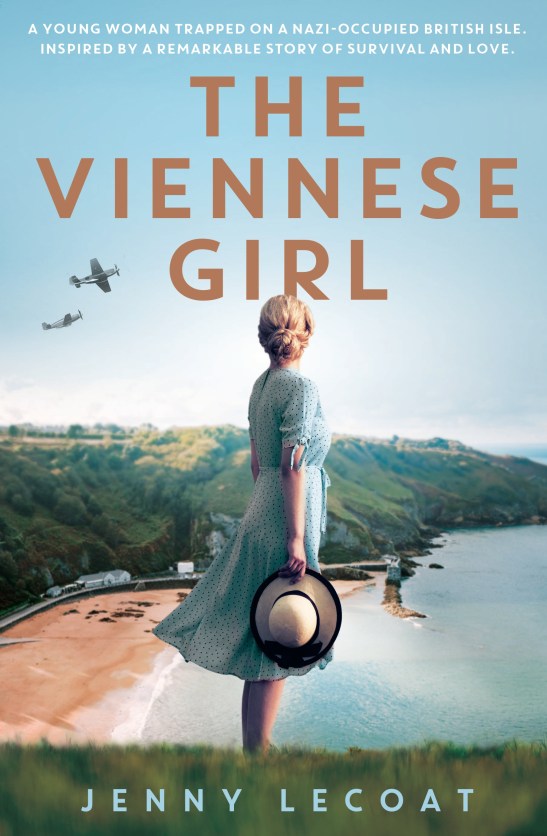
Viennese Girl, Songbirds and Snakes Covers

The Viennese Girl by Jenny Lecoat (Trade Paperback)

The Ballad of Songbirds and Snakes by Suzanne Collins (Audiobook)

I ended up really enjoying this Hunger Games prequel and I will try to get a review for it up as soon as I can.

What do you think you’ll read next?

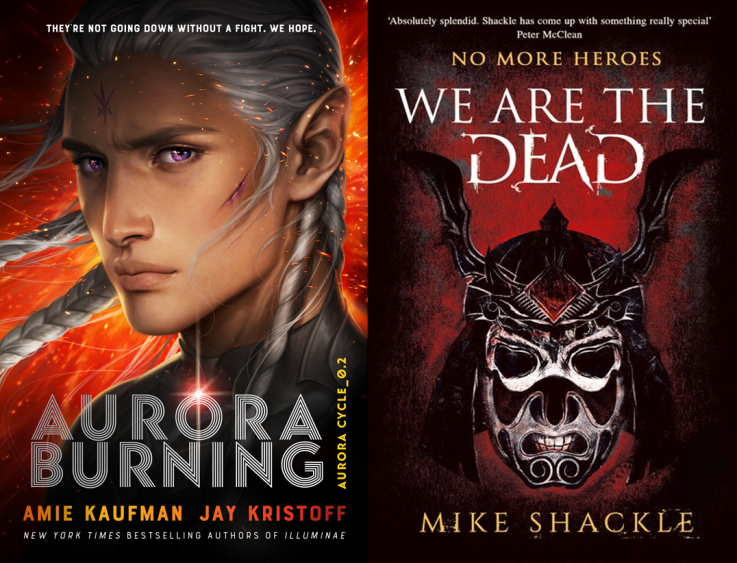
Aurora Burning, We are the Dead Covers

Aurora Burning by Amie Kaufman and Jay Kristoff (Trade Paperback)


We Are The Dead
by Mike Shackle (Audiobook)


That’s it for this week, check back in next Wednesday to see what progress I’ve made on my reading and what books I’ll be looking at next.

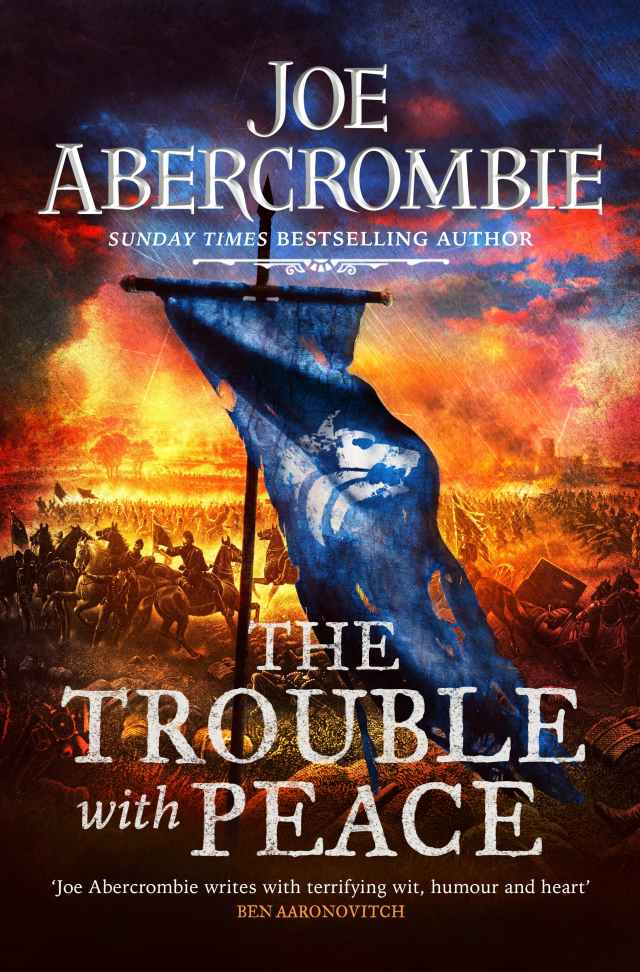
Waiting on Wednesday – The Trouble with Peace by Joe Abercrombie

Welcome to my weekly segment, Waiting on Wednesday, where I look at upcoming books that I am planning to order and review in the next few months and which I think I will really enjoy.  I run this segment in conjunction with the Can’t-Wait Wednesday meme that is currently running at Wishful Endings. Stay tuned to see reviews of these books when I get a copy of them. For my latest Waiting on Wednesday article, I take a look at The Trouble with Peace by Joe Abercrombie, which is easily one of this year’s most anticipated fantasy releases.

The Trouble with Peace Cover

Now this is a book that I have been eagerly waiting for ever since I finished off the previous entry in the series. The Trouble with Peace, which is set for release in September 2020, will be the second book in the Age of Madness trilogy and the eighth overall novel in Abercrombie’s epic First Law series.

The First Law books are an outstanding dark fantasy series that follows several extremely flawed and complicated protagonists as they navigate the wars and politics of the chaotic fantasy nation, known as the Union, and its surrounding landscapes (especially a barbaric northern kingdom). This series started back in 2006 with The Blade Itself, and is currently made up of two trilogies, the initial First Law trilogy and the three standalone novels that are loosely collected into the Great Leveller trilogy. The First Law books are considered by many (myself included) to be amongst some of the best dark fantasy novels ever written, and pretty much all new dark fantasy novels are compared against them. Each of the books in this series is characterised by intense violence, brutally realistic characters, deadly politics and all manner of action, death and destruction. I listened to the audiobook versions of the original First Law trilogy a couple of years ago, and absolutely loved them. While I have not yet had a chance to read any of the books in the Great Leveller trilogy yet, I did jump at the chance to read the new First Law book last year, A Little Hatred.

A Little Hatred was the first book in Abercrombie’s Age of Madness trilogy, which once again transports the reader to the Union, 28 years after the events of the First Law trilogy. This new trilogy focused on the troubled offspring of several of the surviving characters from the original three books, and features new conflicts, bloodshed and diabolical politics as war and chaos once again come to the Union. A Little Hatred was a really impressive read, and I absolutely loved the captivating story, the new characters and the changes that occurred in the Union in the intervening years, including the start of an industrial revolution. I powered through A Little Hatred in very short order and it was easily one of my favourite books of 2019, getting a full five stars from me.

As a result, I am very excited to check out this second entry in The Age of Madness, especially after the stunning conclusion to the first book, which saw the death of one of the main characters from the original trilogy. A cool cover (see above) and an interesting synopsis have already been released, and I am looking forward to learning more about this book.

Goodreads Synopsis:

Conspiracy. Betrayal. Rebellion.
Peace is just another kind of battlefield…

Savine dan Glokta, once Adua’s most powerful investor, finds her judgement, fortune and reputation in tatters. But she still has all her ambitions, and no scruple will be permitted to stand in her way.

For heroes like Leo dan Brock and Stour Nightfall, only happy with swords drawn, peace is an ordeal to end as soon as possible. But grievances must be nursed, power seized and allies gathered first, while Rikke must master the power of the Long Eye . . . before it kills her.

The Breakers still lurk in the shadows, plotting to free the common man from his shackles, while noblemen bicker for their own advantage. Orso struggles to find a safe path through the maze of knives that is politics, only for his enemies, and his debts, to multiply.

The old ways are swept aside, and the old leaders with them, but those who would seize the reins of power will find no alliance, no friendship, and no peace, lasts forever.

While this is a long synopsis, it only gives a really basic description of what is going to happen in this book. Still, there are some interesting details, such as the line: “The old ways are swept aside, and the old leaders with them”. As the book ended with the death of a couple of major characters from the First Law universe, this line makes me think that Abercrombie is going to go on a bit of a killing spree and perhaps take out some more key characters from the prior trilogies. This would not be too surprising, considering how A Little Hatred was pretty much exclusively dedicated to the new cast of characters, but I am sure that any of these potential deaths will result in some rather shocking moments.

As for the rest of the synopsis, it sounds like The Trouble with Peace will continue to focus on the plot arcs that were introduced in the first book. As I mentioned above, Abercrombie came up with some really good storylines in this first novel, so I am rather excited to see what developments happen in this book. I am particularly keen to see the unready Orso deal with suddenly becoming king, and that will no doubt be a great moment when he finally realises that someone else actually holds all the power in his realm. The whole Breakers angle should also prove to be interesting, and I am looking forward to seeing how that turns out, mainly because, while I am pretty sure who is behind the Breakers (although if I’m wrong I will be pleasantly surprised), I am intrigued to see what their endgame is. I am also curious to see what happens with the character of Stour Nightfall after he killed his uncle in the previous book to become King of the North, especially as most of his story will probably be told by Jonas Clover, who was easily my favourite character in A Little Hatred.

Overall, I am extremely eager to get my hands of The Trouble with Peace when it comes out in a few months. Every book in the First Law series has so far turned out to be an outstanding read, and I see no reason why this latest book will be any different. The previous novel, A Little Hatred, was a very addictive read, and with the character arcs and storylines continuing in this new book, there is very little chance that I will not have an incredible time reading The Trouble With Peace, and I strongly believe that this latest First Law novel will once again be one of my top reads for the year.

The Viennese Girl by Jenny Lecoat

The Viennese Girl Cover

Publisher: Allen & Unwin (Trade Paperback – 28 April 2020)

Series: Standalone

Length: 266 pages

My Rating: 4.5 out of 5 stars

Amazon     Book Depository

Love, war, endurance. Debuting author Jenny Lecoat presents an impressive and compelling historical drama with The Viennese Girl, a fantastic read based on a remarkable true story.

June 1940. The inhabitants of the Channel Island of Jersey can only watch as the German army invades and takes complete control of their island without any opposition. Abandoned by the British and forced to fend for themselves, the people of Jersey must get ready to endure a lengthy occupation that will last to the very end of the war.

For young Jewish girl Hedy Bercu this is a nightmare situation. Having already successfully fled from the Nazis when they invaded her home of Vienna, Hedy once again finds herself trapped and persecuted, only this time she has nowhere to escape to. Forced to do everything she can to survive, Hedy tries to hide her true identity and even accepts a job as a translator in the German headquarters. However, Hedy is not content to simply sit back and let the Nazis win without a fight, and she begins to engage in several small acts of resistance which bring her to the attention of a German lieutenant, Kurt Neumann.

Kurt finds himself instantly smitten by the mysterious Hedy, and he attempts to pursue a relationship with her, without knowing about her tragic past. But when Hedy’s attempts at sabotage are discovered, her Jewish heritage is revealed to all and she becomes the most sought-after fugitive on the island. Can Hedy rely on her friends and Kurt to survive, and how will she escape detection from the Nazis on their most isolated and heavily occupied territory?

The Viennese Girl is a great debut novel from television writer Jenny Lecoat, which turned about to be quite an intriguing historical drama that I am really glad that I checked out. A very important thing to know about this novel is that it is actually based on a true story of the Jersey occupation. The main characters contained within this story are all real people, and their tale has been mostly unknown until a recent publication by Dr Gilly Carr in the Journal of Holocaust and Genocide Studies.

Lecoat provides an exquisite novelisation of these historical events within The Viennese Girl and turns it powerful and captivating narrative of romance and resistance that follows two real-life star-crossed lovers, Hedy and Kurt, as they attempt to survive a terrible situation. The story is shown from the dual perspectives of Hedy and Kurt, whose different viewpoints show off various aspects of the German occupation of Jersey. This book makes great use of a combination of a dramatic and tension filled storyline, fantastic portrayals of real-life characters, a distinctive historical setting and a compelling romance to make for an amazing read.

The lives of and the relationship between the two main characters, Hedy and Kurt, forms an excellent centre to this book. Both are intriguing characters in their own right. For example, Hedy is a Jewish girl doing everything she can to survive after being trapped by the Nazis a second time. She is rightly bitter and terrified about the entire situation, but brave enough to fight back against the Germans with small acts of sabotage. Naturally, the parts of the book told from Hedy’s point of view are filled with all manner of tension as she is terrified of being taken away by the Nazis, a feeling that only intensifies as the book proceeds. There is also a prevailing sense of loneliness and despair brought on by her situation, the lack of people on Jersey who she can trust and the knowledge of what has happened to her Jewish friends and family back home. Kurt, on the other hand, is a reluctant member of the German army who has become disenfranchised with his more radical Nazi colleagues. He has some rather surprising views for a German officer, and a distinct dislike for many of the people he serves with, and there is a bit of sadness in him as he watches the war consume Jersey. This, and the instant attraction he feels for Hedy, compels him to help her without really knowing anything about her. Kurt then goes to some amazing lengths to help save Hedy in the future once he knows the full detail of her history and manages to outthink some determined opponents.

The author makes sure to spend time exploring both of these characters through the course of the occupation, as well as examining their history, feelings and intentions. Despite all the inherently problematic issues that would occur with such a romance, the two fall in love and start a dedicated relationship. Their romance is an essential part of the story, and I think that Lecoat did a wonderful job showing how such a romance could occur, as well as exploring all the drama that resulted. I liked how the romance managed to help make each of them better, and it healed certain holes in their hearts and minds. I really enjoyed this romance, and I ended up being pleasantly surprised after finishing this book to find that Kurt was a real person who really did fall in love with and help Hedy (due to the unlikely situation, I had assumed that he was either a fictional character or an embellished version of someone). The knowledge that this romance actually happened really enhanced Lecoat’s incredible story for me, and I am rather glad to have seen how it unfolded.

In addition to Hedy and Kurt, I also have to highlight the character of Dorothea Weber (née Le Brocq), who was also a real person featured heavily in Dr Carr’s article. Dorothea was the wife of Hedy’s best friend and fellow refugee Anton, who would eventually become Hedy’s close companion and saviour after she hides Hedy in her house for the later years of the occupation. Dorothea was a rather complex character who has a rather interesting act within this novel, especially when it comes to her relationship with Hedy. For the first half of the book, Hedy sees Dorothea as an interloper and distraction to her friendship with Anton and is a bit annoyed by the attention she gets, her apparent helplessness and obsessions with American films and actresses. However, as the war progresses and Anton is conscripted into the German army, their relationship grows, especially as both of them face their own form of persecution. While Hedy is oppressed for her Jewish heritage, Dorothea faces ostracism from her friends and family for marrying an Austrian, especially one who ends up in the German army, and is labelled a Jerrybag (a derogative term for Jersey girls who were sleeping with the enemy). While she comes across as extremely naïve at the start of the book, Dorothea really grows as a character throughout the book, and continually shows off her surprising inner strength by standing up to people and not hesitating to take Hedy in and hide her from the Germans, despite the obvious risks. I really enjoyed learning about Dorothea’s story, and she became a fantastic part of this book, and it was rather gratifying to learn how the real Dorothea has been deservedly honoured by both the Jewish community and Britain in recent years.

I also really enjoyed learning more about the German occupation of Jersey during the Second World War. This was honestly a topic that I knew very little about, but which proves to be a rather fascinating backdrop to this character driven story. Lecoat, a Jersey native, does a fantastic job showcasing all the details of this invasion, and follows the entirety of the occupation in her story, right up until the end of World War II (the occupiers were some of the last German forces to surrender). The author captures a number of key moments from the occupation in the story while also including several historical figures in her narrative. I also liked how she endeavoured to highlight what day to day life for the inhabitants of Jersey would have been like with the Germans there, and it was interesting to see her interpretations of the islander’s attitudes, how they dealt with the Germans and how desperate the situation got at times throughout the occupation. This proved to be a really interesting and distinctive element to the novel, and I quite enjoyed learning more about this part of World War II that is often overlooked in other historical fiction novels.

Overall, The Viennese Girl is a superb and memorable historical drama novel that is very much worth checking out. Lecoat hit it out of the park with her debut novel, and I was absolutely enthralled by her amazing narrative of courage, survival and love in the most unlikely of circumstances. This was a really impressive novel, and it’s story is going to stick with me for a very long time.

Amazon     Book Depository

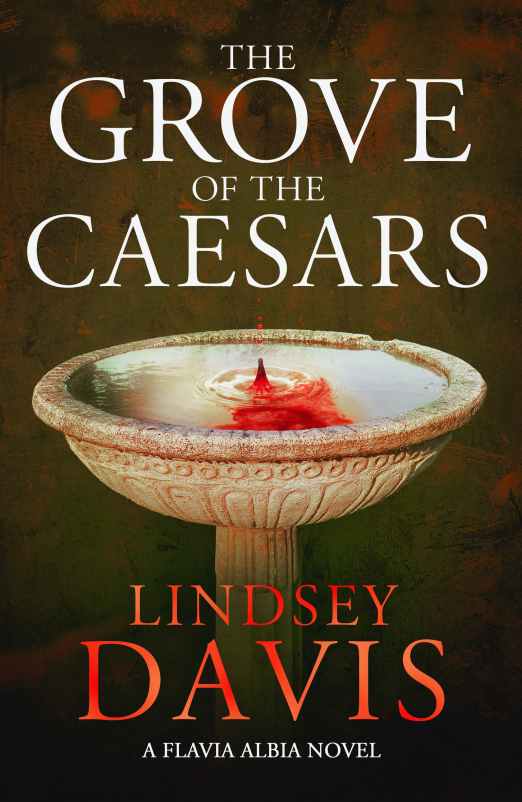
The Grove of the Caesars by Lindsey Davis

9781529374278

Publisher: Hodder & Stoughton (Trade Paperback – 2 April 2020)

Series: Flavia Albia – Book Eight

Length: 399 pages

My Rating: 5 out of 5 stars

Amazon

Get ready for an outstanding historical murder mystery as one of my favourite authors, Lindsey Davis, returns with another book in her amazing Flavia Albia series, The Grove of the Caesars.

“Don’t go to the Grove.”

Rome, 89 AD. Flavia Albia, professional informer and all-around busy body, is still adjusting to domestic life with her new husband. When he is called away for a family emergency, Flavia takes up the reins of his construction business and begins to supervise several of their projects, especially a demolition and construction job within the sprawling gardens outside the city that Caesar long ago gifted to the people of Rome.

Ignoring the subtle warnings of those men familiar with the gardens to stay away from them and their accompanying sacred grove, Flavia visits the worksite, where she finds a series of mysterious scrolls buried in a cave. Why has someone buried a mass of scrolls from obscure Greek philosophers, and what dark secrets do the scrolls hold? Before Flavia can investigate any further, a woman is brutally murdered at a party held at the grove, and two of Flavia’s slaves go missing.

It turns out that there is a killer lurking in the sacred grove; one who targets women and who has successfully avoided detection for years. With the local vigiles failing to properly investigate the crime, Flavia decides to take on the case. However, can Flavia catch a murderer clever enough to escape justice for two decades, especially once the Emperor’s sinister secret agent Karus takes over the investigation? Forced to work with Karus once again, can Flavia find justice for all the murdered women, or will she end up as the next victim of one of Rome’s most dangerous killers?

The Grove of the Caesars is a deeply compelling and highly entertaining novel that once again follows the clever and likeable protagonist, Flavia Albia, as she investigates a gruesome murder in the heart of ancient Rome. This is the eighth book in the excellent Flavia Albia series, which acts as a sequel to the 20-book long Marcus Didius Falco series of historical murder mystery novels. I have been a major fan of the Flavia Albia books for years, having read and reviewed all the previous novels in the series as soon as they came out (make sure to check out my reviews for the previous three books, The Third Nero, Pandora’s Boy and A Capitol Death). All of Davis’s previous novels have been extremely enjoyable, and I have been looking forward to reading The Grove of the Caesars for some time now, and once again Davis did not disappoint. The Grove of the Caesars is another outstanding read that successfully combines together a great murder mystery storyline with a detailed historical setting and engaging central protagonist to produce a captivating narrative that I ended up reading in very short order.

At the centre of this amazing novel is a captivating and dark mystery storyline that sets the protagonist against a cunning and vicious serial killer. The Grove of the Caesars actually has two mysteries contained within it, one involving buried scrolls that the protagonist finds hidden within a cave, and the more pressing case of the murderer within the gardens. Flavia ends up working on both cases simultaneously, and the two mysteries wrap together quite well to produce a great storyline, especially when also combined with some of the other plot elements that Davis throws into it. Both of these mysteries are really clever, and the author makes sure to fill the book with all manner of alternative suspects, intriguing swerves and false leads to keep the reader guessing right up to the end. There were a number of fantastic elements to these mysteries, from the impressive way that they were investigated to the stunning developments and the great conclusions both of them had, including some surprising revelations that came out at the end of the case of the buried scrolls. Davis once again makes sure to portray the investigation in a very modern manner, so that this case felt more like a contemporary mystery novel at times, which I thought worked really well with her enjoyable protagonist and which fit in with the very modern way that the author portrays her historical setting. I was a bit surprised about how dark this book got at times, as Davis, usually has a bit of a lighter tone with her writing, even though they follow murder mysteries. However, the central case of the serial killings was pretty gruesome at times as the antagonist, who displayed a number of characteristics associated with more modern serial killers, did some rather horrible things to his various victims. While it did give this book a bit of a stronger tone at times, I felt that having such an evil antagonist really helped to drag me into the story, as I looked forward to seeing him get caught, and this was overall a really excellent mystery storyline.

Another key aspect of the story is the detailed and compelling historical setting of ancient Rome. Historical Rome always has such potential as a setting, and Davis always does a fantastic job of bringing the city to life in all its chaotic glory, while also making all the inhabitants seem a lot more modern in their actions and attitudes. The Grove of the Caesars was no different, and I really enjoyed seeing the fun way that Davis melds her captivating mystery with this cool setting to create a great story. However, Davis also makes sure to set this story apart by her exploration of one of ancient Rome’s most fascinating features, Caesar’s gardens. The gardens are a sprawling set of sacred groves, forested areas, winding paths, statues and other intriguing features that were originally commissioned for Caesar himself and then gifted to the city after his death. Davis does an amazing job exploring this historically impressive garden, including its location, features and history, and I had a fantastic time learning more about it. It also serves as a really distinctive and compelling setting for The Grove of the Caesars’s story, and I enjoyed seeing the protagonist explore it trying to find hints and clues to the various crimes. I also enjoyed the more sinister air Davis gave the gardens once the reader knows that there is a killer stalking them, especially at night, and which helps to add a bit of tension to the story in the scenes where the protagonists is walking in the gardens alone.

One of the best parts of this book has to be the fun central protagonist, Flavia Albia, who is one of my favourite main characters in fiction at the moment. Flavia serves as The Grove of the Caesars’s sole narrator and point-of-view character, and it is through her eyes that we see most of the story unfold. For the most part, Flavia is a very confident and collected individual with bundles of sass and sarcasm and an unbelievable amount of life experience and cynicism after years spent working as an informant and investigator in Rome. It is thanks to this entertaining world view that most of the book’s humour is derived, as Flavia is full of all manner of funny comments and amusing observations about the world around her. This provides a much lighter tone for most of the novel, as Flavia can be rather sarcastic and witty, even during the darkest of moments. However, in The Grove of the Caesars she does get rather angry in places, especially after witnessing so much violence against women and other helpless characters, and her rage towards the book’s primary antagonist is quite palpable at times, making for some rather dramatic scenes. I also enjoyed the way that Davis works in a large amount of the protagonist’s home and family life into the story, and it is always entertaining to see Flavia interact with her outrageous and eccentric extended family, who offer help and hindrances to her life and investigations in equal measures. I also liked how the author has continued the storyline that sees Flavia and her husband take in and adopt a variety of interesting stray characters they encounter in their cases and add them to their growing household. It was rather fun to see characters who were first introduced in prior books make an impact on this novel’s mystery, and it makes for a fun continuity. I look forward to seeing more of Flavia Albia in the future, and I cannot wait to see what crazy adventures she gets up to next time.

I also have to highlight the wildly entertaining big story moment that occurred about two-thirds of the way into the book. In her last few books, Davis has taken to include a major sequence that features Flavia finding herself in the midst of an over-the-top situation. This includes the very funny sequence in Pandora’s Boy which saw an all-out brawl between a huge group of mixed participants in a collapsing temple, or the rather outlandish chase sequence that occurred in The Third Nero, that featured legionnaires, heavy Persian cavalry, chariots and an elephant in the heart of Rome. In The Grove of the Caesars, Davis makes sure to include another of these outrageous moments, this time featuring a desperate boat chase taking place in the middle of a park, thanks to a disused maritime gladiatorial arena. This chase sequence is filled with all manner of mishap and chaotic moment, as Flavia and several other key characters take to several dilapidated boats to try and resolve the situation, which has a rather extreme ending. Needless to say, this was my favourite part of the entire book, and I found myself laughing several times as events unfolded.

Lindsey Davis has once again shown why she is one of the best authors of historical murder mysteries, as The Grove of the Caesars is a wildly entertaining and addictive read. Davis has pulled together and exceptional story, filled with two compelling mysteries, great characters and an intriguing and distinctive historical setting. I had an amazing time reading this book, and it gets a full five-star review from me. I am eagerly awaiting Davis’s next novel (apparently titled A Comedy of Terrors), and I cannot wait to get my next Flavia Albia fix, this time next year. In the meantime, make sure to check out The Grove of the Caesars if you are in the mood for an exciting and clever read.

Amazon

WWW Wednesday – 27 May 2020

WWW Wednesday is a weekly meme hosted by Taking on a World of Words, where bloggers share the books that they’ve recently finished, what they are currently reading and what books they are planning to read next. Essentially you have to answer three questions (the Three Ws):

What are you currently reading?
What did you recently finish reading?
What do you think you’ll read next?

So, let’s get to it.

What are you currently reading?

Viennese Girl, Songbirds and Snakes Covers

The Viennese Girl by Jenny Lecoat (Trade Paperback)

The Viennese Girl is an intriguing historical drama that chronicles life of a Jewish refugee trapped on the British Channel Islands during the Nazi occupation.  I only started reading this interesting debut today, but I have made some great progress and should hopefully finish it soon.

The Ballad of Songbirds and Snakes by Suzanne Collins (Audiobook)

The much anticipated prequel to The Hunger Games, The Ballad of Songbirds and Snakes is an interesting novel that follows the life of a young President Snow during the 10th annual Hunger Games.  I am about two hours into this book at the moment, and so far it’s quite good.  I am enjoying seeing the early days of the Hunger Games, and I am intrigued about where this story is going.

What did you recently finish reading?

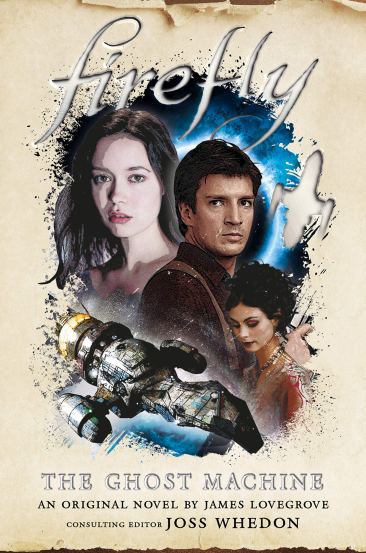
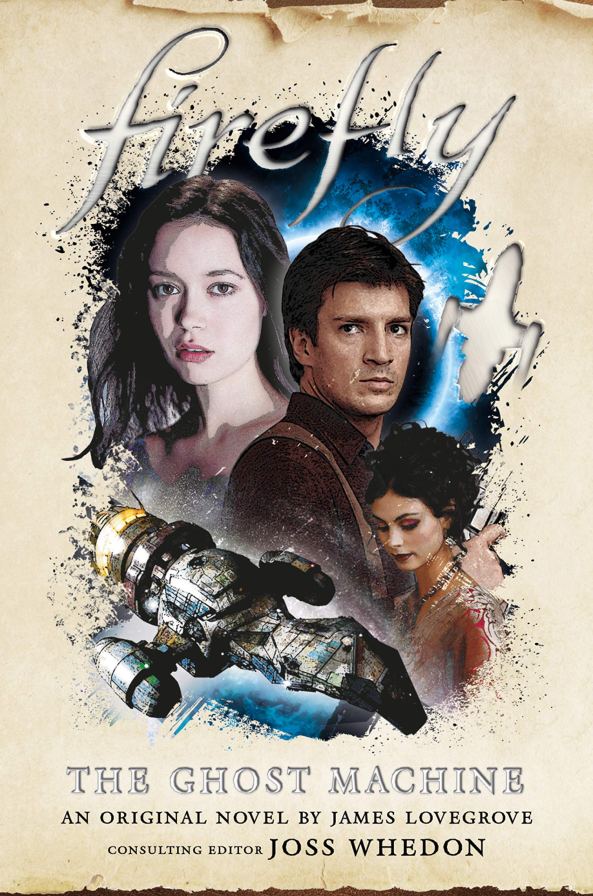
Firefly: The Ghost Machine by James Lovegrove (Hardcover)

Firefly The Ghost Machine Cover
Race the Sands by Sarah Beth Durst (Audiobook)

Race the Sands Cover
The Grove of the Caesars by Lindsey Davis (Trade Paperback)

The Grove of the Caesars Cover
What do you think you’ll read next?

Aurora Burning by Amie Kaufman and Jay Kristoff (Trade Paperback)

Aurora Burning Cover


That’s it for this week, check back in next Wednesday to see what progress I’ve made on my reading and what books I’ll be looking at next.

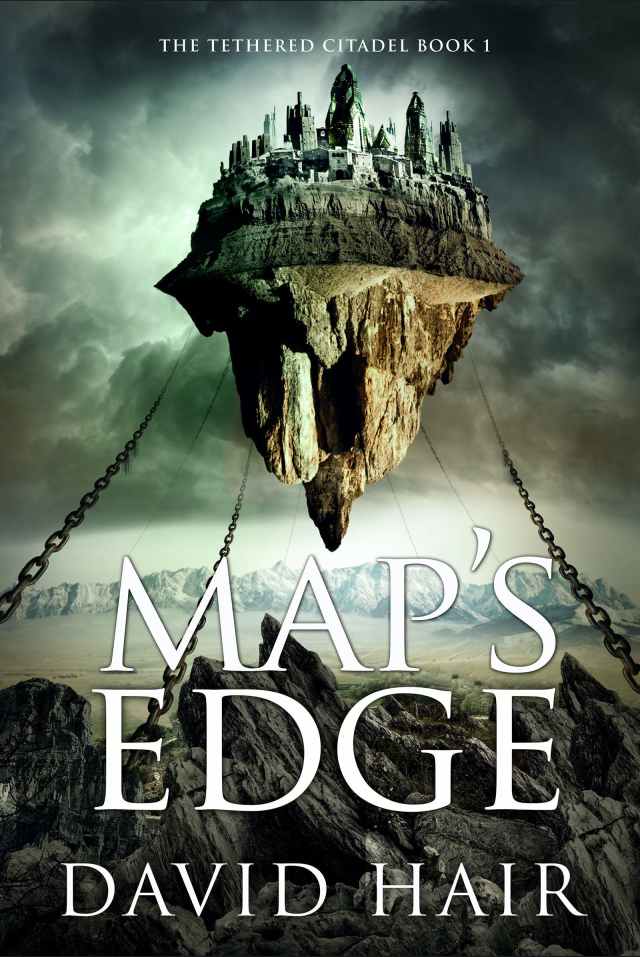
Waiting on Wednesday – Map’s Edge by David Hair

Welcome to my weekly segment, Waiting on Wednesday, where I look at upcoming books that I am planning to order and review in the next few months and which I think I will really enjoy.  I run this segment in conjunction with the Can’t-Wait Wednesday meme that is currently running at Wishful Endings. Stay tuned to see reviews of these books when I get a copy of them. In this week’s Waiting on Wednesday, I check out a rather intriguing sounding fantasy release that is set to come out later this year, Map’s Edge by David Hair.

Map's Edge Cover

David Hair is a New Zealand-born fantasy author who has been pumping out captivating novels since his 2009 debut, The Bone Tiki. Hair has so far produced four awesome-sounding series, including the Aotearoa series, The Return of Ravana series, The Moontide Quartet and The Sunsurge Quartet. I have had not had the pleasure of reading any of these books yet, although I have heard some good things about them, and a couple have caught my eye in recent years. In particular, I really like the sound of The Sunsurge Quartet, and I will have to try and check it out at some point.

In the meantime, Hair has not slowed down in the slightest, and even after finishing The Sunsurge Quartet earlier this year with Mother of Daemons, he already has another book coming out in a few months’ time. This book is Map’s Edge, which is currently set for release on 13 October 2020. Map’s Edge is the first book in Hair’s new The Tethered Citadel series, which I believe is not connected to any of his previous series or books, and which should hopefully be a good starting point for me to check out this author.

Goodreads Synopsis:

Dashryn Cowl has run out of places to hide. The erstwhile sorcerer of the Imperial College fled the Bolgravian Empire when his high-flying family fell from grace, but the tyrannical empire is still hunting for him.

So when he gets his hands on a map showing a place outside the known lands rich in istariol, the mineral that fuels sorcery, he sees a way back to power. There’s only one problem: it means masquerading as an Imperial Cartomancer (an instant death sentence) and finding some dupes to help him mine the istariol in secret, no questions asked.

But somehow, amid the dangers of the road (floods and avalanches, beasts, barbarians and monsters), a strange thing begins to happen: Dashryn starts to care about his ragtag followers and their strange odyssey into the ruins of an ancient forgotten civilisation.

But his past won’t let him be: the implacable Imperial Bloodhound Toran Zorne has caught his scent, and Zorne has never yet failed to bring his quarry to ground.

At the edge of the map, there’s no going forward and no going back . . .

Now that is a really impressive and exciting plot synopsis. Map’s Edge sounds like it is going to be an awesome and enjoyable book, and I am curious to see how this intriguing story pans out. The whole idea of a rogue wizard conning a whole lot of people in order to take them on an epic quest for power and riches has a lot of potential, and I am anticipating an extremely entertaining and action packed novel, with a lot of fun moments.

Due to the combination of its intriguing plot and the fact that it is a good starting point to check out an author that I am unfamiliar with, I am looking forward to reading this book. Map’s Edge has a cool premise behind it, and I think that it could turn out to be an extremely entertaining novel that I am going to have an amazing time reading, and I cannot wait to see where Hair’s new series goes.

Firefly: The Ghost Machine by James Lovegrove

Firefly The Ghost Machine Cover

Publisher: Titan Books (Hardcover – 28 April 2020)

Series: Firefly – Book three

Length: 335 pages

My Rating: 4.5 out of 5 stars

Amazon     Book Depository

Get ready to dive into the minds of chaotic crew of Serenity as bestselling author James Lovegrove presents the third original tie-in novel to Joss Whedon’s epic science fiction television show, Firefly, The Ghost Machine.

Since the end of 2018, Titan Books have been publishing an exciting series of Firefly novels, which follow the exploits of the infamous crew both during and after the events of the original show. Since the planned third novel, Generations, was delayed towards the end of last year, all of the released Firefly novels have been written by author James Lovegrove, who is probably best known for his Pantheon series, as well as his various Sherlock Holmes novels (which feature some intriguing and unique stories around the iconic character). I have been really enjoying these recent Firefly novels, due to my love of the franchise and the excellent quality of the books involved, and I had an amazing time reading the first two entries in this series, Big Damn Hero and The Magnificent Nine. Due to how much I have enjoyed the prior books and the franchise as a whole, I was rather excited to read The Ghost Machine, and I was not disappointed. Lovegrove (with Whedon credited as a consulting editor), has produced a fantastic and compelling novel, with a really intriguing central plot premise.

Set between the events of the television show and the film, Serenity, this novel focuses on the crew of the Firefly class spaceship, Serenity, as they tour the verse looking for work, legal, illegal and all shades in between. This time, Captain Malcolm Reynolds has accepted a contract from crooked businessman Badger to pick up package on a remote planet and bring it back to him. However, Mal is less than thrilled when he discovers that the cargo is a flightcase stolen from the notorious Blue Sun Corporation, which likely contains advanced tech designed for the Alliance military.

Refusing to let such a potentially problematic cargo aboard his ship, Mal, Zoe and Jayne are forced to kill the sellers in order to leave. However, what Mal does not realise is that Jayne has snuck the package aboard Serenity without telling anyone. As Serenity leaves the planet, each member of the crew suddenly begins to live out their biggest fantasy. Mal finds himself living a peaceful family life with Inara, Jayne is back on his family’s ranch with his little brother’s damplung cured, Wash imagines that he is the owner of a vast shipping empire, and Zoe dreams that the Independence won the battle of Serenity Valley and defeated the Alliance in the Unification War.

What the crew does not realise is that the flightcase contained an experimental urban pacification device known as The Ghost Machine. This machine causes people to fall into a fugue state while imagining their greatest desires, but the tech is dangerously faulty. Soon the crew’s visions of riches, rewards and happy lives become distorted and turned into terrible nightmares that threaten to tear apart their psyches. Worse, with Wash out of commission and not steering the ship, Serenity is on a collision course with a nearby moon. The only person not affected by the machine is River Tamm, whose own mind is dangerously askew at the best of times. But with River sedated and unconscious, can she do anything to help her friends and save the ship, or will The Ghost Machine claim its next victims?

Well, that was shiny! The Ghost Machine is an excellent and enthralling Firefly tie-in novel which was a real pleasure to read. Lovegrove has pulled together one hell of a character-driven narrative which presents the reader with a perilous situation, while also diving deep into the hearts and minds of the iconic crew members. This a clever and compelling story which would have honestly made a spectacular episode of the television show, which I think is high praise in itself. The entire book is extremely slick and captivating, and once I got into it I could not stop reading it, managing to polish off the last 300 pages in a single night. Lovegrove has honestly outdone himself with this book, and I think that The Ghost Machine is my favourite of all the current Firefly books.

As I mentioned above, The Ghost Machine is the third Firefly tie-in novel that has been released, although it was initially intended to be the fourth. Each of these Firefly novels, including The Ghost Machine, are standalone novels, and you do not need to have read any of the prior tie-in books before reading this latest release, nor are there any issues involved with Generations being released out of sequence. I found that The Ghost Machine was very accessible to all readers, and even those people who are not as familiar with the events of the television show should be able to follow and enjoy what is going on within this book. That being said, this novel, like all tie-in books, is specifically designed to be enjoyed by major fans of the franchise, and Lovegrove has filled The Ghost Machine with a number of fun references and callbacks. In particular, quite a number of minor characters from the television show are referred to or appear throughout the book, either within the various dream sequences or back in the real world, and there were even a couple of mentions of characters who only appeared in Lovegrove’s prior novel. There is also a fantastic sequence that replays the opening events of the very first Firefly episode, except with a twist, and some of the plot elements of this book have some interesting connections to the Serenity film set after the events of The Ghost Machine. As a result, fans of the show are going to have a great time reading this novel, although more casual science fiction fans will probably enjoy it as well.

Just like the television show it ties into, The Ghost Machine’s story is very character driven, and focuses on the members of Serenity’s crew. In this story, Lovegrove focuses on all seven remaining characters (as this is set between Firefly and Serenity, Inara and Shepherd Book have both left the ship) equally, and each of them serves as a point-of-view character for several chapters in the book, with one or two chapters also told from the perspective of a non-crewmember like Badger. As the story revolves around each character living out their own unique fantasy, this proved to be the best way to tell the story. I was quite impressed by the way that Lovegrove was able to create distinctive and compelling storylines for each of these main characters in the few chapters each of them had, and all of their character arcs came together extremely well to make an excellent overall narrative. I also think that Lovegrove did a fantastic job portraying all the crew members, and each of them came to live in a similar manner to how they were in the show. This excellent character work added quite a lot to the narrative, and it was great to see some more of these beloved characters.

One of the most intriguing aspects of this book is the visions that each member of the crew experiences because of the titular Ghost Machine. All the characters, with the exception of River, find themselves living a dream version of their life, where their deepest desires have come to pass. It was deeply interesting to see what each member of the crew’s desires where, and it says a lot about each of their personalities and mindsets, while also showing what some of them think about their fellow crew members. For example, Mal’s vision of a happy life with Inara speaks volumes about his true feelings for her after she left Serenity, especially as in this dream he would be willing to live on an Alliance planet just to make her happy. Jayne’s vision of a peaceful life on the family ranch with his brother cured of his terminal illness seems quite at odds with his usual gruff exterior, and it was nice to see that there is more to his character than his desire for violence and money. Simon, who misses the family life and medical career he left behind, imagines a seemingly nice sequence in which he and River are back home safe, but which also includes a relationship with Kaylee. I personally really enjoyed seeing Zoe’s vision of the Independence winning the battle for Serenity Valley and the Unification War, which made for some fascinating alternate history scenes, and which shows that she still is not over how the war ended. I also had to laugh at Wash owning a company called Pteranodon Incorporated in his dreams, due to his love of dinosaurs.

While it was really intriguing to see what each of the characters deepest desires were, it was also cool to see these desires get turned into nightmarish scenarios. The second part of the novel becomes significantly darker as each of these scenarios dissolve into truly terrible situations that play into the characters fears. Lovegrove comes up with some compelling and at times horrifying alterations to each character’s desires, and it was interesting to see each of them unfold. For example, you have a Reaver ship coming down near Mal’s new family home, Wash getting his company taken away by an unlikely source, and Simon finding himself being literally hunted by his family for pursuing a relationship with a mechanic rather than a rich, socially acceptable woman. Each of these changes in scenarios made for some great reading, and I also liked how they also revealed some more details about each character’s inner psyches, such as Simon assuming that his formal family would approve of his budding romance with Kaylee, or the fact that Zoe was always cautious of the mysterious Shepherd Book, and had suspicions about what his past could of have been. Even River, who is the only person who realises that what she is seeing is a dream, is affected by what she and the others think, which limits her ability to save the ship, adding a whole new layer of suspense to the story. Actually, the whole River character arc is actually really exciting, as she ends up bouncing around each of the other character’s nightmares. It was intriguing to see the various ways that she communicated with these characters, especially as she is significantly more mentally intact in these interconnected dreams. The inclusion of all these compelling visions and nightmares really enhances the entirety of The Ghost Machine’s narrative, and it was a fantastic and clever story element.

Overall, The Ghost Machine is an outstanding and wildly entertaining Firefly tie-in novel that was an amazing treat to read. James Lovegrove has come up with an imaginative story, full of action and excitement that also gets right to the heart of several key characters from the television show. I really loved the multiple creative dream sequences that made up most of the book, and it made for an extremely fascinating story. This was an awesome and addictive novel, and it is a must-read book for all fans of the Firefly franchise.

Amazon     Book Depository

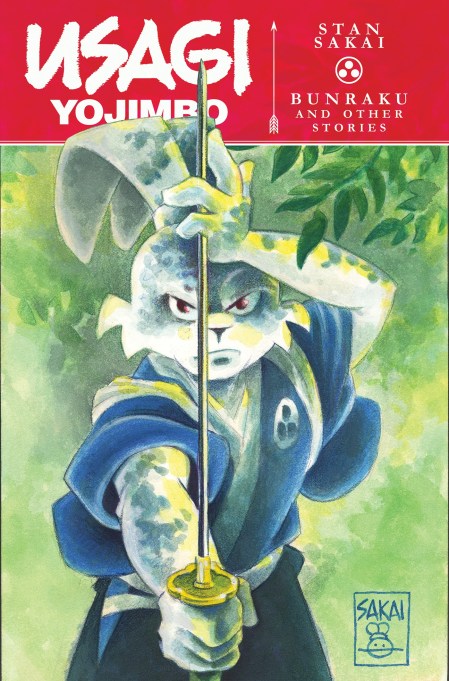
Usagi Yojimbo: Volume 34: Bunraku and Other Stories by Stan Sakai

Usagi Yojimbo Bunraku and Other Stories Cover

Publisher: IDW Publishing (Paperback – 21 April 2020)

Writer, Artist and Letterer: Stan Sakai

Colourist: Tom Luth

Series: Usagi Yojimbo – Book 34

Length: 178 pages

My Rating: 5 out of 5 stars

Amazon

It is once again that wonderful time of the year when the brand-new volume of the ongoing comic series, Usagi Yojimbo, comes out. Legendary comic creator Stan Sakai returns with the 34th volume in this series, Bunraku and Other Stories, which contains four epic and entertaining stories taking place in the unique setting of a version of feudal Japan inhabited by anthropomorphic animals.

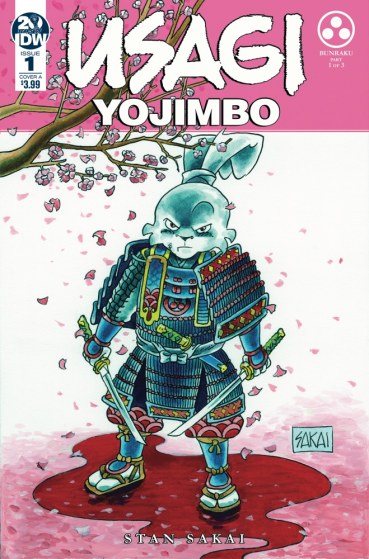
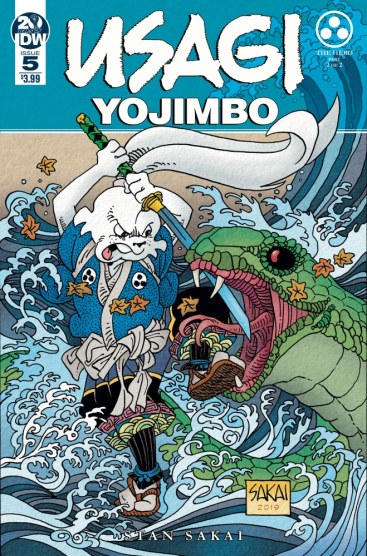
Usagi Yojimbo #1

Those who are familiar with my blog will know that I am a massive fan of the Usagi Yojimbo series, having read all of the comics that have been released, and this is easily one of my favourite series at the moment. I have been eagerly reading these comics for years, and since starting this blog I have been enjoying reviewing entries in the series, such as the prior two volumes, Mysteries and The Hidden (Mysteries was actually the first comic I ever reviewed on this blog), as well as some of the older volumes of the comic. As a result, I was extremely keen to get a copy of the new volume, and Bunraku and Other Stories was one of the top books I wanted to check out this autumn.

This latest volume is a rather special one, as it contains the first Usagi Yojimbo issues that Sakai has written for IDW Publishing. This series has been published by Dark Horse Comics since 1997, and their style was similar to that of the publisher before them, Fantagraphics Books. This move to IDW Publishing brings with it some very intriguing stylistic changes, namely that fact that each issue is now completely in colour. This is a massive departure from the previous entries in the series, each of which were originally released in black and white, and it brings the stories to life in a whole new manner. In order to do this, the series now employs a colourist, Tom Luth, who previously worked on Groo the Wanderer with Sakai. In addition, this latest volume is also physically different from all the previous volumes, as Bunraku and Other Stories is noticeably taller, which surprised me a bit when I saw it the first time, and which is seriously going to mess up aesthetics of my bookshelf. However, having the taller volume allows for slightly bigger panels than were typically featured in the previous Usagi Yojimbo stories, which I quite enjoyed.

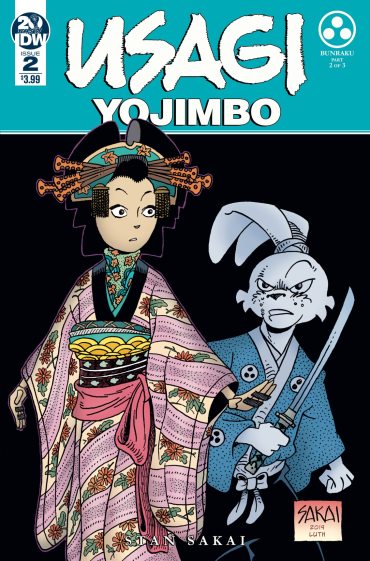
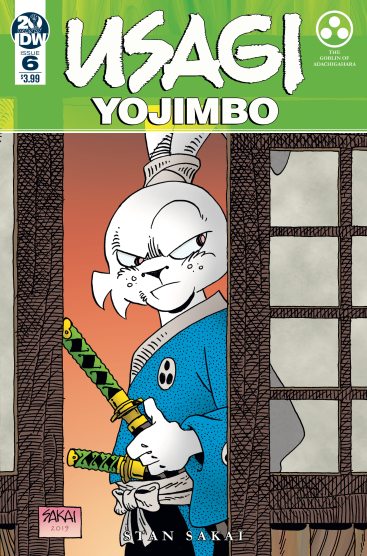
Usagi Yojimbo #2

However, even with some of these physical changes, this is still the same old Usagi Yojimbo. Sakai has once again produced some outstanding and deeply enjoyable stories, equipped with his trademark art style and his fantastic and loveable characters. Bunraku and Other Stories contains Issues #1-7 of the new, IDW Publishing, run on the series, and is made up of four separate stories.

The first of these stories is titled Bunraku, and it is the main story of this entire volume, made up of the first three issues. In this story, Usagi is enjoying a bunraku, a traditional Japanese puppet play, when he encounters an old acquaintance, Sasuke, the Demon Queller. Sasuke’s endless hunt for demons and monsters has led him to the bunraku theatre, where he senses that a new evil has taken hold. Despite his reluctance to get involved in another one of Sasuke’s dangerous missions, Usagi agrees to help, especially after they find a corpse that has been supernaturally drained of its life energy. Together, Usagi and Sasuke find that a dangerous and malevolent being has infected the bunraku theatre, and they must do everything in their power to end it.

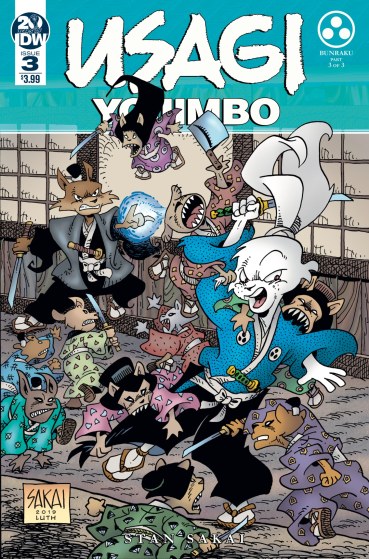
Usagi Yojimbo #3

Bunraku serves as an exciting and compelling first story in this volume, and I quite enjoyed its supernatural storyline. The Usagi Yojimbo series has a rich history of featuring Japan’s various supernatural monsters and demons in its narratives, and this is easily one of the better ones they have done. The antagonists of this story are rather creepy, and they serve as extremely deadly opponents to Usagi, who finds himself dramatically outclassed at several points throughout the story. I also liked the return of Sasuke, who has shown up in several supernatural storylines since his first appearance back in volume 14. Sasuke is a rather distinctive and intriguing character in this series, as he has dedicated his life to hunting and destroying demons and monsters, many of whom are opponents far beyond normal samurai like Usagi. Despite his tremendous magical powers, Sasuke often finds himself severely drained after each fight, but his drive to complete his mission spurs him on, despite how weary or physically weakened he becomes. Usagi and Sasuke have some interesting interactions throughout this story, as Usagi has become more wary of Sasuke after their last several encounters. Sasuke insists that Usagi helps him once again, and even guilts Usagi into working with him, which makes for a very unusual team dynamic. I thought it made sense that Usagi would be reluctant to get involved, as he or someone he loves has nearly died each time Sasuke has appeared so far. There was also a rather interesting moment when their antagonist asks Sasuke if Usagi was being groomed to replace him, a question that Sasuke does not provide an answer to, and which makes me think we will be seeing a lot more of this character in the future.

One of the more intriguing aspects of the story of Bunraku is the fascinating examination and depiction of the bunraku puppet shows. I always love it when Sakai highlights cool aspects of Japanese history, culture or industry in his stories, and this entry was really amazing. The whole concept of a life-size puppet theatre was really intriguing, and Sakai did a great job examining it, showing what sort of stories they produced and how elaborate their performances could be. This unique art form also turned out to be an awesome basis for this horror adventure story, and I really liked how Sakai worked it into the plot. I also really enjoyed the artwork contained within this first story, and Sakai has come up with some rather impressive sequences and scenes that not only do a fantastic job conveying the action that is occurring but which really highlight the horror aspect of the narrative. The various supernatural opponents in this book are shown to be quite scary and threatening, and I loved the way that Usagi’s face looked absolutely terrified as he fought against them. The use of colour in this first story is also extremely cool, and I loved how it helped bring the whole story to life. I particularly liked the way that the colour really enhanced all of Sasuke’s magical abilities and made them look that much more distinctive and mystical. There is one amazing sequence in which Sasuke turns his sword into flames, which looked so damn awesome and it put me in mind of that one iconic scene from the recent Demon Slayer anime. All in all, this was an outstanding and enjoyable first story in this volume, and readers are in for a real treat right of the bat.

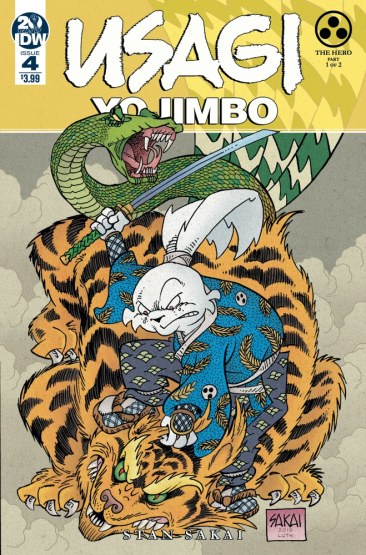
Usagi Yojimbo #4

The next story that is featured within this volume is the two-issue tale, The Hero. In this entry, Usagi, still journeying across the countryside, has encountered an interesting fellow traveller, a famed author who is journeying to her father’s house. The author, Lady Mura, has written several novels, including a tragic tale of heroism that she lets Usagi read. As the two travel together, Usagi learns that Mura is the wife of a high-ranking samurai who is jealous of his wife’s writing ability, as the fame she gains from that far exceeds his reputation as a warrior. While Usagi is able to protect Mura from many of the dangers on the road, including bandits, how will he react when he encounters her husband, especially as the strict rules of honour that bind all samurai forbids him from interfering?

This is a rather heavy and clever story that I think is potentially the best entry in the entire volume. Sakai has crafted together an excellently written and well-thought out narrative that cuts deep into the reader’s emotional core before the end. The character of Lady Mura is an extremely tragic figure, as even after all Usagi does to protect her, her story still ends in heartbreak, just like all her novels. Despite how her story ends, she is able to pass on some inspiration to Usagi about the true nature of a hero, which is how she sees Usagi. There are some really intriguing discussions about the code of the samurai that binds all the major characters within this story, and the problems and compromises that occur because of it are in full display throughout The Hero. I also think that Sakai came up with a perfect ending for the entire story, which felt extremely satisfying, considering what had happened throughout the course of the narrative. The artwork in this story is also really cool, as not only do you have some of the most impressive depictions of the varied and beautiful feudal Japanese landscape (which look so impressive in colour) but you also have some amazing scenes that show fragments of Lady Mura’s novels. These scenes place Usagi in the role of the hero of the classic story (Sakai has done something similar in prior stories like My Lord’s Daughter in the sixth volume, Circles) and show him taking on an undead horde and their evil master, and they are some amazing drawn sequences. The Hero is a truly great story, and I think that Sakai has done an outstanding job coming up with this tragic and heartfelt tale.

Usagi Yojimbo #5

The next story, Adachi, is one of the more interesting entries in this volume, and it was one that I was curious to check out. This story was actually written in commemoration of the 35th anniversary of the series and features a fresh take on the very first Usagi Yojimbo story, The Goblin of Adachigahara, which I previously reviewed in the first volume, The Ronin. In this new version of the story, Usagi returns to the scene of one of his greatest personal tragedies, the battle of Adachigahara Plain (or Adachi Plain in later Usagi Yojimbo stories), where his lord, Mifune, died after one of his generals betrayed him. In the course of this battle, Usagi, who served as Lord Mifune’s bodyguard, was able to perform an essential service by fleeing the battlefield with Mifune’s head, keeping it out of the hands of the treacherous general and the evil Lord Hikiji. Usagi has journeyed back to this place to pay respects to the place he buried his late lord’s head, which only he knows the location of. However, he senses that he is being watched and continues his journey, eventually seeking shelter at the hut of an old lady, who warns him of a goblin that haunts the mountain. Later that night, the goblin attacks the house, trying to kill Usagi, but Usagi is able to trick him and engage him in a fair fight. The goblin is revealed to be the general who betrayed Mifune, who was disgraced and banished by Lord Hikiji due to Usagi’s actions in denying Hikiji his lord’s head. Now determined to claim Mifune’s head and claim what is owed to him, the goblin seeks to kill Usagi, who manages to win, thanks to the help of the old lady, revealed to be the general’s wife, who has remained in exile with him.

This is a really interesting updated version of the story, which I quite enjoyed reading. The whole story is actually a combination of three prior Usagi Yojimbo stories, with some new elements thrown in. The first part of the story, which shows Usagi reliving the events of Adachi Plain, utilises parts from two stories, including Samurai (which appeared in the second volume, Samurai) and Return to Adachi Plain (which appeared in the 11th volume, Seasons). This combination provided a much richer examination of the battle, especially Usagi’s role within it, and I think the two separate sequences merged together well, while also looking even more impressive in colour. The story then continues to focus on the events that previously occurred within The Goblin of Adachigahara, although there are some interesting additions. This includes the goblin deliberately targeting Usagi, due to his role in his dishonour, and Usagi finding out the identity of his attacker before killing him. Knowing that this is the general who betrayed his beloved lord adds a whole new emotional element to the story for Usagi, and their fight is a lot more vicious and elaborate. I also liked the way that Sakai spent time enhancing the visuals surrounding the goblin. While he looked rather cool in the original story, in Adachi, Sakai has made him look even more awesome and intimidating, especially in colour. I also found it interesting that Sakai has turned this whole event into a more recent story in Usagi’s timeline, rather than being an event that occurred quite early in his adventures. The change in the chronology is intriguing, especially as there is a rather great scene in the middle where Usagi, upon visiting the grave his former lord, begs to be released from his vow of service, perhaps so that he can pledge fealty to his friend, Lord Noriyuki of the Geishu Clan. Overall, I thought that this was a clever new take on a classic Usagi Yojimbo story, and fans of this series will appreciate this anniversary special.

Usagi Yojimbo #6

The fourth and final story in this volume is The Swords of the Higashi, which serves as a light-hearted and entertaining conclusion to this volume. The Swords of the Higashi sees the always amusing Usagi Yojimbo side character, Gen, involved in a whole new batch of trouble. This time, Gen and his occasional partner Stray Dog are attempting to recover two extremely valuable stolen swords from a group of bandits. Killing the bandits, the two bounty hunters run into Usagi, who decides to accompany them back to the sword’s owners, the Higashi clan. However, the three ronin make the mistake of leaving one of the bandits alive, and they must contend with a continued flurry of attacks as they make their way back to town.

Now this was a fun and enjoyable story that I found to be extremely hilarious. There are several great elements to this story that I really enjoyed, including the fantastic use of the three main characters, Usagi, Gen and Stray Dog, and their banter as they wander the wilderness is rather entertaining. There is also the really funny extended sequence which sees the characters come under constant attack from bandits and bounty hunters as they attempt to return the blades. Each of these attacks is led by the same bandit, who finds the three companions, gets his cohorts to attack them, and then runs away in a panic when the protagonists win, only to return with a new group of bandits and repeat the cycle a short time later. This repeated turn of events is extremely funny, mainly due to the ridiculousness of the situation and because of the way that Usagi and his friends get more and more exhausted and exasperated with each new cycle. Sakai does an amazing job of making all three protagonists look scruffier and more dispirited with each new attack, and their reactions each time are deeply entertaining, from the way that Stray Dog keeps yelling at Gen for it being his fault, Gen’s growing resentment and frustration at the bandit whose life he saved, and the usual stoic Usagi getting more and more exhausted with each fight: “I’ve been through battles less tiring than today!”. Sakai wraps this whole amusing episode up with a rather clever conclusion to the story, which sees another classic Usagi Yojimbo side character get the best of everyone, and which makes all of Usagi, Gen and Stray Dog’s effort be for nought, which is just so mean considering all they went through. This was an outstanding story that had me laughing the entire way through, and I thought it was the perfect way to end this entire volume.

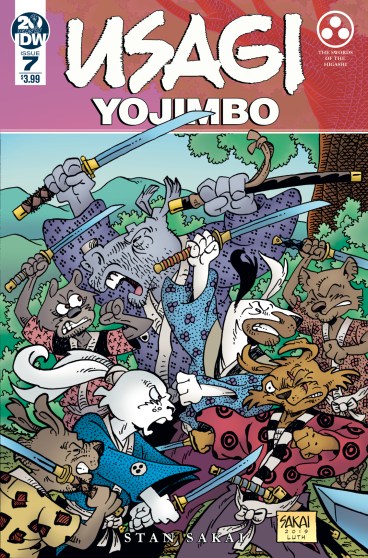
Usagi Yojimbo #7

The latest Usagi Yojimbo volume, Bunraku and Other Stories, is another incredible comic from Stan Sakai that I absolutely loved. Sakai has once again produced several exciting and clever stories, filled with great characters, powerful emotional moments, clever examinations of classic Japanese culture and a number of visually stunning sequences, which are so much fun to read. With the comics now in full and glorious colour, this was an outstanding new entry in the series, and is a must read for all Usagi Yojimbo fans. It gets a full five-star rating from me and comes highly recommended.

Amazon

Waiting on Wednesday – Relentless by R. A. Salvatore

Welcome to my weekly segment, Waiting on Wednesday, where I look at upcoming books that I am planning to order and review in the next few months and which I think I will really enjoy.  I run this segment in conjunction with the Can’t-Wait Wednesday meme that is currently running at Wishful Endings. Stay tuned to see reviews of these books when I get a copy of them. For my latest Waiting on Wednesday, I take a look at the next upcoming novel from acclaimed bestselling fantasy author, R. A. Salvatore, Relentless, the third and final book in his Generations trilogy.

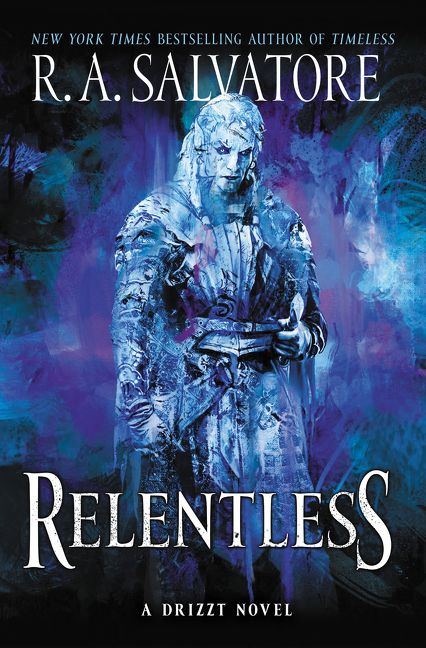
Relentless Cover

I have long been a massive fan of R. A. Salvatore, and he is easily one of my favourite authors at the moment. I only just finished reading and reviewing his latest novel, Song of the Risen God, and I thought that this would be a good time to examine his next book, Relentless.

As I mentioned above, Relentless is the third book in Salvatore’s Generations trilogy, and it will conclude the stories started in the two previous novels in the series, Timeless and Boundless. The Generations trilogy is the latest series to focus on Salvatore’s most iconic character, the Drow ranger Drizzt Do’Urden, and his long-time adventuring companions. This series has been a rather intriguing one, as it saw Drizzt reunite with his long-lost father, Zaknafein, whom Salvatore killed off some 30 years previously (he literally died twice in two separate books in 1990). Salvatore has made sure to fill his latest books with his usual blend of intense action, major battles and great characters, and he has also utilised an intriguing split-timeline narrative, all of which combines together into some rather enjoyable reads. The previous novel, Boundless, ended on quite a cliffhanger with pretty much all the key characters facing some manner of mortal danger. As a result, I am extremely keen to check out Relentless, as I am very curious to see how the entire trilogy concludes.

Relentless is currently set for release in late July 2020, and it is easily one of the books that I am most looking forward to in the second half of 2020. I am already rather excited for it, as not only does the above cover look extremely epic, but this book has a rather intriguing plot synopsis.

Goodreads Synopsis:

Displaced in time and unexpectedly reunited with his son Drizzt Do’Urden, Zaknafein has overcome the prejudices ingrained in him as a drow warrior to help his son battle the ambitious Spider Queen and stem the tide of darkness that has been unleashed upon the Forgotten Realms. Though Zaknafein has endured the most difficult battles, survival has come at a terrible cost, and the fight is far from over.

Facing demons and driders, Zaknafein carries the entire weight of Menzoberranzan surrounding Gauntlgym on his shoulders once more. But the chances of survival for him and his old friend and mercenary Jarlaxle look bleak. Trapped in a desperate and seemingly hopeless situation, the legendary warriors must reach deep inside themselves to face the impossible.

While the burdens Zaknafein bears are more than enough for one of Menzoberrazan’s greatest warriors, fate holds further challenges. When circumstances take an unexpected turn, Zaknafein discovers he must not only conquer the darkness but learn to accept the uncontrollable: life itself.

The stakes have never been higher for R. A. Salvatore’s most beloved creations in this final volume of his latest bestselling trilogy begun with Timeless and Boundless. A story of brave heroes filled with dangerous thrills, Relentless also considers eternal questions about morality, purpose, sacrifice, and the definition of harmony. Exciting, imaginative, and thought-provoking, it takes fans on an action-packed ride that will challenge their assumptions and leave them breathless and satisfied. 

Now that is a really cool plot outline that is just brimming with raw potential. I was already exceedingly excited for Relentless due to how much I enjoyed the prior books in this series and the aforementioned respect that I bear towards Salvatore as an author of captivating fantasy novels, but I also really like the contents of that synopsis. Relentless has a very epic-sounding plot, and I now cannot wait to get my hands on this fantastic upcoming read.