

The Viennese Girl by Jenny Lecoat

The Viennese Girl Cover

Publisher: Allen & Unwin (Trade Paperback – 28 April 2020)

Series: Standalone

Length: 266 pages

My Rating: 4.5 out of 5 stars

Amazon     Book Depository

Love, war, endurance. Debuting author Jenny Lecoat presents an impressive and compelling historical drama with The Viennese Girl, a fantastic read based on a remarkable true story.

June 1940. The inhabitants of the Channel Island of Jersey can only watch as the German army invades and takes complete control of their island without any opposition. Abandoned by the British and forced to fend for themselves, the people of Jersey must get ready to endure a lengthy occupation that will last to the very end of the war.

For young Jewish girl Hedy Bercu this is a nightmare situation. Having already successfully fled from the Nazis when they invaded her home of Vienna, Hedy once again finds herself trapped and persecuted, only this time she has nowhere to escape to. Forced to do everything she can to survive, Hedy tries to hide her true identity and even accepts a job as a translator in the German headquarters. However, Hedy is not content to simply sit back and let the Nazis win without a fight, and she begins to engage in several small acts of resistance which bring her to the attention of a German lieutenant, Kurt Neumann.

Kurt finds himself instantly smitten by the mysterious Hedy, and he attempts to pursue a relationship with her, without knowing about her tragic past. But when Hedy’s attempts at sabotage are discovered, her Jewish heritage is revealed to all and she becomes the most sought-after fugitive on the island. Can Hedy rely on her friends and Kurt to survive, and how will she escape detection from the Nazis on their most isolated and heavily occupied territory?

The Viennese Girl is a great debut novel from television writer Jenny Lecoat, which turned about to be quite an intriguing historical drama that I am really glad that I checked out. A very important thing to know about this novel is that it is actually based on a true story of the Jersey occupation. The main characters contained within this story are all real people, and their tale has been mostly unknown until a recent publication by Dr Gilly Carr in the Journal of Holocaust and Genocide Studies.

Lecoat provides an exquisite novelisation of these historical events within The Viennese Girl and turns it powerful and captivating narrative of romance and resistance that follows two real-life star-crossed lovers, Hedy and Kurt, as they attempt to survive a terrible situation. The story is shown from the dual perspectives of Hedy and Kurt, whose different viewpoints show off various aspects of the German occupation of Jersey. This book makes great use of a combination of a dramatic and tension filled storyline, fantastic portrayals of real-life characters, a distinctive historical setting and a compelling romance to make for an amazing read.

The lives of and the relationship between the two main characters, Hedy and Kurt, forms an excellent centre to this book. Both are intriguing characters in their own right. For example, Hedy is a Jewish girl doing everything she can to survive after being trapped by the Nazis a second time. She is rightly bitter and terrified about the entire situation, but brave enough to fight back against the Germans with small acts of sabotage. Naturally, the parts of the book told from Hedy’s point of view are filled with all manner of tension as she is terrified of being taken away by the Nazis, a feeling that only intensifies as the book proceeds. There is also a prevailing sense of loneliness and despair brought on by her situation, the lack of people on Jersey who she can trust and the knowledge of what has happened to her Jewish friends and family back home. Kurt, on the other hand, is a reluctant member of the German army who has become disenfranchised with his more radical Nazi colleagues. He has some rather surprising views for a German officer, and a distinct dislike for many of the people he serves with, and there is a bit of sadness in him as he watches the war consume Jersey. This, and the instant attraction he feels for Hedy, compels him to help her without really knowing anything about her. Kurt then goes to some amazing lengths to help save Hedy in the future once he knows the full detail of her history and manages to outthink some determined opponents.

The author makes sure to spend time exploring both of these characters through the course of the occupation, as well as examining their history, feelings and intentions. Despite all the inherently problematic issues that would occur with such a romance, the two fall in love and start a dedicated relationship. Their romance is an essential part of the story, and I think that Lecoat did a wonderful job showing how such a romance could occur, as well as exploring all the drama that resulted. I liked how the romance managed to help make each of them better, and it healed certain holes in their hearts and minds. I really enjoyed this romance, and I ended up being pleasantly surprised after finishing this book to find that Kurt was a real person who really did fall in love with and help Hedy (due to the unlikely situation, I had assumed that he was either a fictional character or an embellished version of someone). The knowledge that this romance actually happened really enhanced Lecoat’s incredible story for me, and I am rather glad to have seen how it unfolded.

In addition to Hedy and Kurt, I also have to highlight the character of Dorothea Weber (née Le Brocq), who was also a real person featured heavily in Dr Carr’s article. Dorothea was the wife of Hedy’s best friend and fellow refugee Anton, who would eventually become Hedy’s close companion and saviour after she hides Hedy in her house for the later years of the occupation. Dorothea was a rather complex character who has a rather interesting act within this novel, especially when it comes to her relationship with Hedy. For the first half of the book, Hedy sees Dorothea as an interloper and distraction to her friendship with Anton and is a bit annoyed by the attention she gets, her apparent helplessness and obsessions with American films and actresses. However, as the war progresses and Anton is conscripted into the German army, their relationship grows, especially as both of them face their own form of persecution. While Hedy is oppressed for her Jewish heritage, Dorothea faces ostracism from her friends and family for marrying an Austrian, especially one who ends up in the German army, and is labelled a Jerrybag (a derogative term for Jersey girls who were sleeping with the enemy). While she comes across as extremely naïve at the start of the book, Dorothea really grows as a character throughout the book, and continually shows off her surprising inner strength by standing up to people and not hesitating to take Hedy in and hide her from the Germans, despite the obvious risks. I really enjoyed learning about Dorothea’s story, and she became a fantastic part of this book, and it was rather gratifying to learn how the real Dorothea has been deservedly honoured by both the Jewish community and Britain in recent years.

I also really enjoyed learning more about the German occupation of Jersey during the Second World War. This was honestly a topic that I knew very little about, but which proves to be a rather fascinating backdrop to this character driven story. Lecoat, a Jersey native, does a fantastic job showcasing all the details of this invasion, and follows the entirety of the occupation in her story, right up until the end of World War II (the occupiers were some of the last German forces to surrender). The author captures a number of key moments from the occupation in the story while also including several historical figures in her narrative. I also liked how she endeavoured to highlight what day to day life for the inhabitants of Jersey would have been like with the Germans there, and it was interesting to see her interpretations of the islander’s attitudes, how they dealt with the Germans and how desperate the situation got at times throughout the occupation. This proved to be a really interesting and distinctive element to the novel, and I quite enjoyed learning more about this part of World War II that is often overlooked in other historical fiction novels.

Overall, The Viennese Girl is a superb and memorable historical drama novel that is very much worth checking out. Lecoat hit it out of the park with her debut novel, and I was absolutely enthralled by her amazing narrative of courage, survival and love in the most unlikely of circumstances. This was a really impressive novel, and it’s story is going to stick with me for a very long time.
Amazon     Book Depository

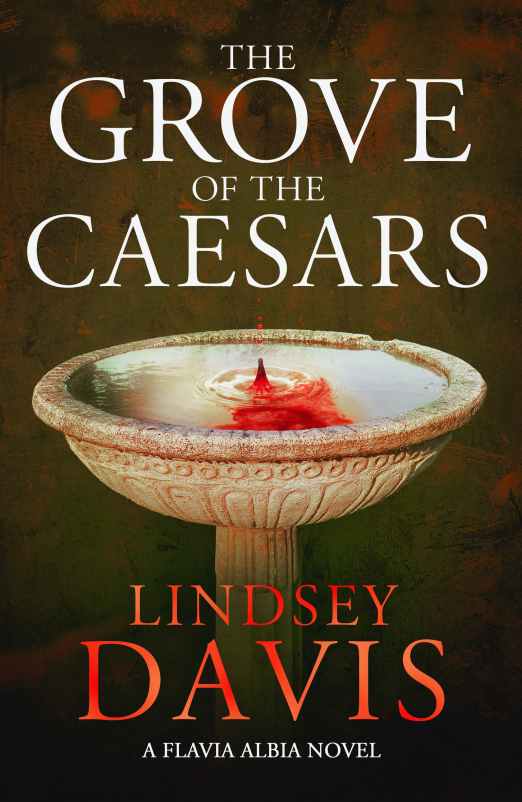
The Grove of the Caesars by Lindsey Davis

9781529374278

Publisher: Hodder & Stoughton (Trade Paperback – 2 April 2020)

Series: Flavia Albia – Book Eight

Length: 399 pages

My Rating: 5 out of 5 stars

Amazon

Get ready for an outstanding historical murder mystery as one of my favourite authors, Lindsey Davis, returns with another book in her amazing Flavia Albia series, The Grove of the Caesars.

“Don’t go to the Grove.”

Rome, 89 AD. Flavia Albia, professional informer and all-around busy body, is still adjusting to domestic life with her new husband. When he is called away for a family emergency, Flavia takes up the reins of his construction business and begins to supervise several of their projects, especially a demolition and construction job within the sprawling gardens outside the city that Caesar long ago gifted to the people of Rome.

Ignoring the subtle warnings of those men familiar with the gardens to stay away from them and their accompanying sacred grove, Flavia visits the worksite, where she finds a series of mysterious scrolls buried in a cave. Why has someone buried a mass of scrolls from obscure Greek philosophers, and what dark secrets do the scrolls hold? Before Flavia can investigate any further, a woman is brutally murdered at a party held at the grove, and two of Flavia’s slaves go missing.

It turns out that there is a killer lurking in the sacred grove; one who targets women and who has successfully avoided detection for years. With the local vigiles failing to properly investigate the crime, Flavia decides to take on the case. However, can Flavia catch a murderer clever enough to escape justice for two decades, especially once the Emperor’s sinister secret agent Karus takes over the investigation? Forced to work with Karus once again, can Flavia find justice for all the murdered women, or will she end up as the next victim of one of Rome’s most dangerous killers?

The Grove of the Caesars is a deeply compelling and highly entertaining novel that once again follows the clever and likeable protagonist, Flavia Albia, as she investigates a gruesome murder in the heart of ancient Rome. This is the eighth book in the excellent Flavia Albia series, which acts as a sequel to the 20-book long Marcus Didius Falco series of historical murder mystery novels. I have been a major fan of the Flavia Albia books for years, having read and reviewed all the previous novels in the series as soon as they came out (make sure to check out my reviews for the previous three books, The Third Nero, Pandora’s Boy and A Capitol Death). All of Davis’s previous novels have been extremely enjoyable, and I have been looking forward to reading The Grove of the Caesars for some time now, and once again Davis did not disappoint. The Grove of the Caesars is another outstanding read that successfully combines together a great murder mystery storyline with a detailed historical setting and engaging central protagonist to produce a captivating narrative that I ended up reading in very short order.

At the centre of this amazing novel is a captivating and dark mystery storyline that sets the protagonist against a cunning and vicious serial killer. The Grove of the Caesars actually has two mysteries contained within it, one involving buried scrolls that the protagonist finds hidden within a cave, and the more pressing case of the murderer within the gardens. Flavia ends up working on both cases simultaneously, and the two mysteries wrap together quite well to produce a great storyline, especially when also combined with some of the other plot elements that Davis throws into it. Both of these mysteries are really clever, and the author makes sure to fill the book with all manner of alternative suspects, intriguing swerves and false leads to keep the reader guessing right up to the end. There were a number of fantastic elements to these mysteries, from the impressive way that they were investigated to the stunning developments and the great conclusions both of them had, including some surprising revelations that came out at the end of the case of the buried scrolls. Davis once again makes sure to portray the investigation in a very modern manner, so that this case felt more like a contemporary mystery novel at times, which I thought worked really well with her enjoyable protagonist and which fit in with the very modern way that the author portrays her historical setting. I was a bit surprised about how dark this book got at times, as Davis, usually has a bit of a lighter tone with her writing, even though they follow murder mysteries. However, the central case of the serial killings was pretty gruesome at times as the antagonist, who displayed a number of characteristics associated with more modern serial killers, did some rather horrible things to his various victims. While it did give this book a bit of a stronger tone at times, I felt that having such an evil antagonist really helped to drag me into the story, as I looked forward to seeing him get caught, and this was overall a really excellent mystery storyline.

Another key aspect of the story is the detailed and compelling historical setting of ancient Rome. Historical Rome always has such potential as a setting, and Davis always does a fantastic job of bringing the city to life in all its chaotic glory, while also making all the inhabitants seem a lot more modern in their actions and attitudes. The Grove of the Caesars was no different, and I really enjoyed seeing the fun way that Davis melds her captivating mystery with this cool setting to create a great story. However, Davis also makes sure to set this story apart by her exploration of one of ancient Rome’s most fascinating features, Caesar’s gardens. The gardens are a sprawling set of sacred groves, forested areas, winding paths, statues and other intriguing features that were originally commissioned for Caesar himself and then gifted to the city after his death. Davis does an amazing job exploring this historically impressive garden, including its location, features and history, and I had a fantastic time learning more about it. It also serves as a really distinctive and compelling setting for The Grove of the Caesars’s story, and I enjoyed seeing the protagonist explore it trying to find hints and clues to the various crimes. I also enjoyed the more sinister air Davis gave the gardens once the reader knows that there is a killer stalking them, especially at night, and which helps to add a bit of tension to the story in the scenes where the protagonists is walking in the gardens alone.

One of the best parts of this book has to be the fun central protagonist, Flavia Albia, who is one of my favourite main characters in fiction at the moment. Flavia serves as The Grove of the Caesars’s sole narrator and point-of-view character, and it is through her eyes that we see most of the story unfold. For the most part, Flavia is a very confident and collected individual with bundles of sass and sarcasm and an unbelievable amount of life experience and cynicism after years spent working as an informant and investigator in Rome. It is thanks to this entertaining world view that most of the book’s humour is derived, as Flavia is full of all manner of funny comments and amusing observations about the world around her. This provides a much lighter tone for most of the novel, as Flavia can be rather sarcastic and witty, even during the darkest of moments. However, in The Grove of the Caesars she does get rather angry in places, especially after witnessing so much violence against women and other helpless characters, and her rage towards the book’s primary antagonist is quite palpable at times, making for some rather dramatic scenes. I also enjoyed the way that Davis works in a large amount of the protagonist’s home and family life into the story, and it is always entertaining to see Flavia interact with her outrageous and eccentric extended family, who offer help and hindrances to her life and investigations in equal measures. I also liked how the author has continued the storyline that sees Flavia and her husband take in and adopt a variety of interesting stray characters they encounter in their cases and add them to their growing household. It was rather fun to see characters who were first introduced in prior books make an impact on this novel’s mystery, and it makes for a fun continuity. I look forward to seeing more of Flavia Albia in the future, and I cannot wait to see what crazy adventures she gets up to next time.

I also have to highlight the wildly entertaining big story moment that occurred about two-thirds of the way into the book. In her last few books, Davis has taken to include a major sequence that features Flavia finding herself in the midst of an over-the-top situation. This includes the very funny sequence in Pandora’s Boy which saw an all-out brawl between a huge group of mixed participants in a collapsing temple, or the rather outlandish chase sequence that occurred in The Third Nero, that featured legionnaires, heavy Persian cavalry, chariots and an elephant in the heart of Rome. In The Grove of the Caesars, Davis makes sure to include another of these outrageous moments, this time featuring a desperate boat chase taking place in the middle of a park, thanks to a disused maritime gladiatorial arena. This chase sequence is filled with all manner of mishap and chaotic moment, as Flavia and several other key characters take to several dilapidated boats to try and resolve the situation, which has a rather extreme ending. Needless to say, this was my favourite part of the entire book, and I found myself laughing several times as events unfolded.

Lindsey Davis has once again shown why she is one of the best authors of historical murder mysteries, as The Grove of the Caesars is a wildly entertaining and addictive read. Davis has pulled together and exceptional story, filled with two compelling mysteries, great characters and an intriguing and distinctive historical setting. I had an amazing time reading this book, and it gets a full five-star review from me. I am eagerly awaiting Davis’s next novel (apparently titled A Comedy of Terrors), and I cannot wait to get my next Flavia Albia fix, this time next year. In the meantime, make sure to check out The Grove of the Caesars if you are in the mood for an exciting and clever read.

Amazon