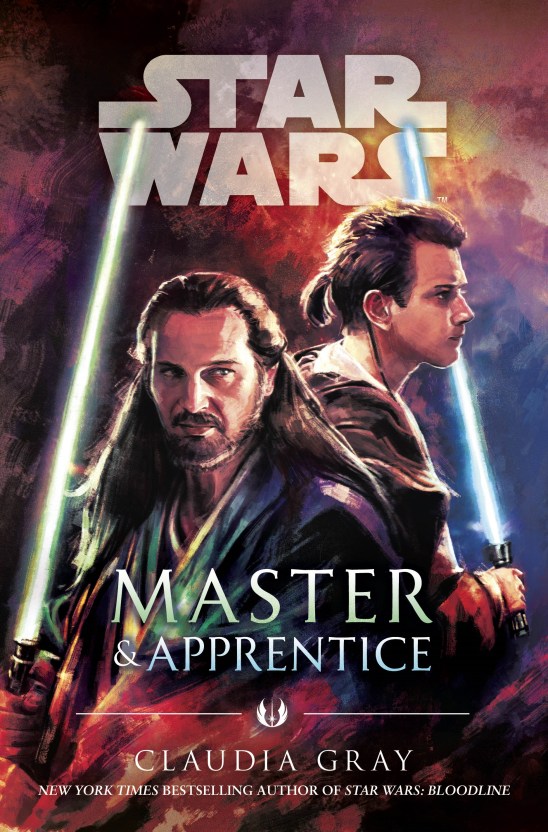
Star Wars: Master & Apprentice by Claudia Gray – Audiobook Review

Master & Apprentice Cover

Publisher: Random House Audio (16 April 2019)

Series: Star Wars

Length: 11 hours and 42 minutes

My Rating: 4.75 out of 5 stars

Amazon

2019 is shaping up to be an amazing year for fans of the new Star Wars extended universe, a group of which I consider myself to be a proud member, with so many awesome Star Wars books and comics being released.  After reviewing the first Star Wars book for 2019, Queen’s Shadow, a few weeks ago, I have been really looking forward to getting to grips with the franchises second 2019 novel, Master & Apprentice by Claudia Gray.

Master & Apprentice is a canon Star Wars novel set around eight years before the events of Star Wars Episode I: The Phantom Menace.  It focuses on two of the main characters from this prequel movie, Jedi Knight Qui-Gon Jinn and his Padawan, Obi-Wan Kenobi.

Qui-Gon Jinn is an experienced and powerful Jedi Knight, having been trained in the Force by the legendary Count Dooku, who himself was trained by Master Yoda, and is ready to face any threat or danger that lies in front of him.  However, his greatest challenge may prove to be his own Padawan, Obi-Wan Kenobi.  The two Jedi are polar opposites to each other: while Obi-Wan is by-the-book and rigid in his respect of rules and protocol, Qui-Gon routinely shows very little regard for the rules and laws that bind the Jedi and constantly finds himself at odds with the Jedi Council.  Despite years of working together, the two Jedi struggle to understand each other.  Qui-Gon sees every mistake of Obi-Wan’s as his own, while Obi-Wan is unable to understand the reasoning behind Qui-Gon’s actions, nor his obsession with the ancient Jedi prophecies that many see as dangerous and unreliable.  Their tenuous and strained relationship is further tested when Qui-Gon is unexpectantly offered a place on the Jedi Council, a move that would likely end their partnership.  With feelings of betrayal and failure hanging over both of them, they are suddenly assigned a critical mission that is likely to be their last as master and apprentice.

Fellow Jedi Rael Averross, another former apprentice of Dooku, has requested Qui-Gon’s help with a difficult political dispute on the planet of Pijal.  Averross has been serving as regent for the planet’s young queen, who is days away from ascending to the throne and signing an important treaty.  A series of attacks which has rocked the planet is apparently the work of The Opposition, a band of political performance artists turned terrorists.  Once the two Jedi arrive on the planet, they quickly find that the situation is far more complicated than initially believed.  With corruption and secrets around every corner, Qui-Gon and Obi-Wan attempt to get to the bottom of everything, even utilising a pair of jewel smugglers to help with their inquiries.  However, their investigations are hampered by their opposing points of view, which only worsen when Qui-Gon places great stock in a dark vision of the future he has foreseen.  Can they overcome their differences to unravel the plot, or will they fail their mission?

Claudia Gray, also known as Amy Vincent, is a prolific and experienced author, best known for her first body of work, the Evernight series, which started in 2008.  Since then she has written a number of other series, including the Spellcaster, Firebird and Constellation series, as well as the standalone novel Fateful.  Gray also has a huge amount of experience writing Star Wars fiction, having previously written three Star Wars tie-in novels in the new extended universe, including Lost Stars, Bloodline and Leia, Princess of Alderaan.  As a result, the story of Qui-Gon Jinn and Obi-Wan Kenobi is in safe hands as Gray produces an outstanding, compelling and character-driven novel that delves deep into the Star Wars lore to create an amazing story.

Master & Apprentice presents a clever and exciting story that sees the protagonist attempt to uncover the mysterious events unfolding on Pijal, while also dealing with their many personal and emotional issues.  The story is told from the perspective of a range of characters in the book, and each of them adds their own thoughts and experiences to the story.  The overall story arc on Pijal becomes quite complex, with many different and intriguing sides to the conflict, and the people behind the events are not who you think.  I had an amazing time enjoying this book.

In this fantastic piece of fiction Gray goes into some intriguing parts of the Star Wars universe and lore.  This is actually the furthest back the new extended universe books go, so it offers the reader a great opportunity to see some of aspects of the pre-movie Star Wars universe.  While there are some hints at the events to come, as well as references to some major characters in the upcoming movies, the book contains a significant amount of new content and antagonists.  It is actually quite refreshing to read a Star Wars book that is not tied into the Skywalker family or featuring the Empire or the First Order as an antagonist.  I quite enjoyed the look at the pre-The Phantom Menace universe, including the new planet of Pijal, and the inclusion of the immoral Czerka Corporation, who previously appeared in the pre-Disney Star Wars universe.  While those fans of the Star Wars franchise who like to consume more than the movies will absolutely love this book, Master & Apprentice should prove to be fairly easy to read for those people who have at least seen The Phantom Menace, as it is a pretty intriguing science fiction adventure.

Those readers who are interested in a deeper dive into the Jedi of the Republic era are in for a real treat in this book, as Gray delves into aspects of their history and lifestyle.  Throughout Master & Apprentice there are a number of scenes set in the Jedi Temple, as well as a number of discussions about how and why the Jedi do what they do.  Perhaps one of the key things highlighted in this book is how the traditional Jedi master and apprentice program worked.  Several different apprenticeships are shown, and the reader gets a good idea of what is entailed in this relationship, what training the Padawans go through and how the process turns them into the eventual guardians of peace in the galaxy.

One of the most unique and fascinating aspects of Star Wars and Jedi lore that Gray examines are the fabled Jedi prophecies.  The prophecies were created long ago by an ancient group of Jedi sages, and are reputed to reveal events from the future.  The prophecies become a key part of the story, as not only do they drive a wedge between Qui-Gon and Obi-Wan but they are also shown to have a major influence over Dooku when Qui-Gon was his Padawan.  The prophecies have been mentioned in the movies before, with the most famous prophecy about the coming of a chosen one who will bring balance to the Force, referring to Anakin Skywalker/Darth Vader.  While the chosen one prophecy is referenced in Master & Apprentice, several other prophecies are mentioned, including one that comes true in this book.  I was really quite intrigued by the author’s examination of the prophecies; while they have been mentioned in the movies, I did not know too much about them.  Dedicated fans will no doubt have fun trying to tie some of these prophecies into the movies and other associated pieces of Star Wars media.  For example, there is one that clearly refers to Princess Leia that is repeated a couple of times.  I personally was very curious about one prophecy that was mentioned towards the end of the book, which was referenced as being obsessed over by Count Dooku.  It was a particularly portentous-sounding prophecy, and I wonder if it will have anything to do with recent revelations in the trailer for the next Star Wars movie, The Rise of Skywalker.

The story contained within Master & Apprentice is a strong, character-driven affair which features a compelling central cast, each of whom gets an in-depth analysis from Gray.  Not only is there some compelling examinations of the main two characters, Qui-Gon and Obi-Wan, but Gray also introduces several intriguing and entertaining new characters who really add a lot to the story.

There is a great examination of the younger Qui-Gon Jinn and Obi-Wan Kenobi in this book, as Gray examines not only the relationship between the two characters but also aspects of their past and their personalities.  When the two characters are introduced in the first prequel film, The Phantom Menace, very little is known about them, save that Obi-Wan is nearing the end of his apprenticeship and the two of them disagree on certain matters, such as the future of Anakin Skywalker.  Master & Apprentice offers a whole new, deeper examination of these characters and explores how these two Jedi came together and appeared so close, despite some differences in their personalities and styles.  I thought that this deep dive into the relationship between these key movie characters was utterly fascinating, and it made me reconsider aspects from the movie.  The strained relationship between the two characters becomes a major factor of the book, and Gray creates an emotional storyline around it as Qui-Gon and Obi-Wan work to overcome their issues while facing external threats.  This was an excellent part of the book which readers will quite enjoy.

In addition to looking at their relationship and how the two characters become close, Gray also looks at other aspects of their past.  This is particularly true for Qui-Gon, as Gray spends time highlighting Qui-Gon’s apprenticeship to Dooku and his friendship with Rael through a series of flashbacks.  These flashback scenes are quite interesting as they show several key events that were responsible for turning Qui-Gon into the character he was in the movie and go a long way to explain why he was such a hesitant master for most of Master & Apprentice.  There was also an intriguing and extended look at how and why Qui-Gon became so obsessed with the Jedi prophecies.  Qui-Gon’s research and fascination with the prophecies becomes a major part of the book, which really appealed to me, and which also explains a lot about the Qui-Gon’s actions in The Phantom Menace.  For example, it explains why Qui-Gon was so sure that he had found the Chosen One in Anakin Skywalker, and why he was determined to train him, even if it meant defying the will of the council.  These storylines also explain certain aspects of Obi-Wan’s personality that occur within the movies.  For example, the bond and respect that are formed between Obi-Wan and his master explain why he was so willing to take on Anakin as an apprentice after Qui-Gon’s death in The Phantom Menace.  It also adds another layer to Anakin’s betrayal in Revenge of the Sith, as Anakin has not only betrayed Obi-Wan and the Jedi but also Qui-Gon’s memory and his belief in Anakin as the chosen one.  This might explain why Obi-Wan, upon defeating Anakin, so passionately shouted “YOU WERE THE CHOSEN ONE.”  There were also some cute aspects to Obi-Wan’s life that are explained, such as why he had such an aversion to flying and how he was able to ride the lizard mount in Revenge of the Sith.  I quite liked how both characters developed over the course of the book, and I felt that Gray did an amazing job bringing these characters to life and providing an excellent story about their past.

While Gray’s portrayal of the main two characters is really good, I also have to say how much I loved some of the side characters that the author introduced in this book.  My favourite has to be Rael Averross, the unconventional Jedi who has a connection to Qui-Gon’s past.  Rael Averross is pretty much the opposite of all the Jedi readers would mostly be familiar with.  He’s a hard drinking, womanising (which he claims is technically not against the rules of being a Jedi), death stick using scoundrel, who hates nearly every aspect of being a Jedi Knight.  He was an extremely entertaining character whose actions and scruffy appearance are part of a persona the character has created to disguise the guilt, fear and resentment from his past.  I also liked how he was the only character able to identify and point out what the actual result of someone fulfilling the prophecy and finding the chosen one, something that every other Jedi apparently missed.  Rael was such an interesting counterpoint to the other Jedi characters in Master & Apprentice, and his influence on a young Qui-Gon was quite intriguing.  It will be interesting to see if Rael shows up again (I believed he is used in a recent Star Wars audiobook, Dooku: Jedi Lost) as he has the potential to be a key character in the new Disney expanded universe.

Other characters utilised within this book are the two jewel smugglers co-opted by the Jedi to be their guides on Pijal, Pax and Rahara.  While both these characters are a lot of fun, the standout one has to be Pax.  Pax is a gaudy and socially inept character whose inability to interact with other people is due to the fact he was raised by a ship full of protocol droids.  Pax is full of sass, sarcasm and insults, and is easily the most entertaining character in this entire book.  Rahara is also a great character.  A former slave of the Czerka Corporation, Rahara is the more normal of the two characters.  However, her former enslavement still haunts her and drives much of her more noble actions in this book.  Individually, both these characters are pretty cool, but together they form a great team who play off each other well.  Their emotional attachment to each other is another great part of the book and seeing the lengths that the usually pragmatic Pax will go to for Rahara is very heart-warming.

There were also a few flashback scenes featuring Qui-Gon’s mentor and future Star Wars antagonist Count Dooku.  All of these scenes were shown from the point of view of Qui-Gon as Dooku’s apprentice, and they paint a picture of a rigid and severe Jedi who was already showing signs of being tempted to the Dark Side of the Force.  This was a very intriguing portrayal, although I believe that the audiobook Dooku: Jedi Lost, which was released around the same time as Master & Apprentice, contains a lot more of Dooku’s backstory and motivations, and I am definitely going to check this other audiobook out at some point.

As usual, I was deeply, deeply impressed with the audiobook version of this Star Wars book.  The company behind these audiobooks really go the extra mile to make them special, and these tie-in novels are quickly becoming my favourite series to listen to rather than read.  The Master & Apprentice audiobook runs for 11 hours and 42 minutes, and I found that I was able to get through this book quite quickly.  I always find I absorb a lot more of the story with the audiobook format, and with this book I was really able to enjoy the character strife, as well as the new world building that Gray included.  Props need to be given to the amazing sound effects that seem to permeate nearly every single scene in this book.  Firstly, I absolutely love how the incredible and iconic music from the Star Wars movies is used during some of the book’s major scenes.  The music, especially some of the big orchestral moments that defined key parts of the original Star Wars movies, is quite incredible and it does an amazing job of forcefully dragging the reader into the story.  The additional sound effects used throughout the book easily replicate the actions going on around the characters, often using established and recognisable sound from the movies.  I also loved how some of the sound effects could be so effective at creating an appropriate background for the scene by adding in engine noises or the susurration of a loud crowd.

The audiobook format of Master & Apprentice is narrated by Jonathan Davis, who has previously provided his voice to several other Star Wars audiobooks.  I was deeply impressed with Davis’ incredible voice acting range in this book, as the voices he comes up with for the characters are outstanding.  For example, he produces incredible voices for the book’s two main characters, Qui-Gon and Ob-Wan as he damn near succeeds in replicating the two actors voices from The Phantom Menace.  On top of that, his Yoda voice is spot-on, and sounded just like Frank Oz in the movies.  I also liked the voices that the narrator came up with for some of his new characters.  His voice for Rael, for example, does an amazing job capturing the character’s personality, including his more carefree attitude, and the simmering anger that exists for most of his interactions with Qui-Gon.  I also quite like the voice and tone he uses for Pax, and the character’s inbuilt arrogance and emotional shallowness really shine through.

Master & Apprentice is so far my favourite Star Wars book of 2019, and I absolutely fell in love with its excellent story and powerful character work.  Gray takes her readers deep into the Star Wars lore, allowing fans of the franchise to further examine two of the best characters from The Phantom Menace movie.  The combination of Jonathan Davis’ exceptional narration and the production company’s perfect use of classic Star Wars music and sound effects resulted in an absolutely fantastic audiobook that comes highly recommended.  This is one hell of a book, and I cannot wait to see how the rest of the year’s Star Wars books turn out.
Amazon

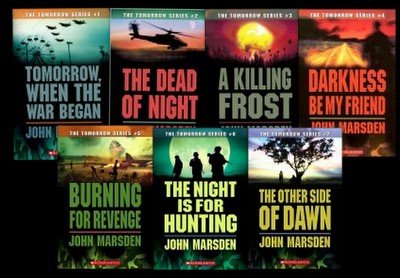
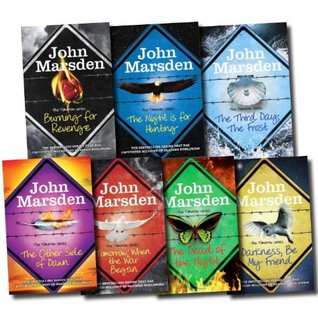
Throwback Thursday – The Tomorrow Series by John Marsden

28110461.jpg
Publishers: Pan Macmillan Australia and Bolinda Audio

Books:

1. Tomorrow, When the War Began (1993) – Amazon     Book Depository

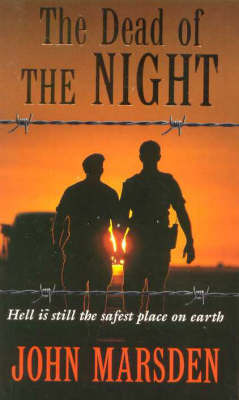
2. The Dead of the Night (1994) – Amazon     Book Depository

3. The Third Day, the Frost (1995) – Amazon     Book Depository

4. Darkness, Be My Friend (1996) – Amazon     Book Depository

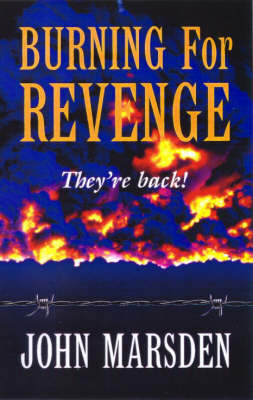
5. Burning for Revenge (1997) – Amazon     Book Depository

6. The Night is for Hunting (1998) – Amazon     Book Depository

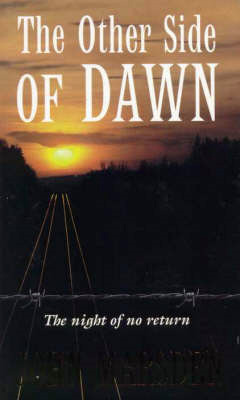
7. The Other Side of Dawn (1999) – Amazon     Book Depository

Series Rating: 5 out of 5 stars

Reviewed as part of my Throwback Thursday series, where I republish old reviews, review books I have read before or review older books I have only just had a chance to read.

For this week’s Throwback Thursday review, I dive back into one of the most popular and iconic Australian fiction series of all times, John Marsden’s epic Tomorrow series.

Tomorrow, When the War Began Cover.jpg

The Tomorrow series, by bestselling and award-winning Australian author John Marsden, is a powerful and thought-provoking young adult series that was released in the 1990s.  Made up of seven books, the series began in 1993 with Tomorrow, When the War Began and ended in 1999 with The Other Side of Dawn.  The Tomorrow series follows a small group of young teenage protagonists as they deal with a foreign invasion of Australia which forces them to hide in the bush and engage in a guerrilla war to win.  Thanks to its strong characters, frank depictions of war and trauma and its excellent utilisation of Australia’s bush and rural landscape, the Tomorrow series has become one of the most highly regarded and popular Australian series of all times, with millions of copies sold in Australia alone (which, considering our relatively small population, is pretty impressive).  It is also considered a must-read series for young Australian readers, and it is still required reading in many schools to this day.

I have been a major fan of this series for a very long time.  I remember reading these books while I was at school, both for classes and for my own enjoyment, and I was enthralled by its depictions of war and its captivating story, which stoked my imagination for years.  Re-reading it at an older age, I began to appreciate the more complex nature of its story and the characters portrayed within.  I have re-read or re-listened to these books many times over the years, and it still remains one of my most favourite series of all times.  I have actually been planning to review this as part of my Throwback Thursday series for some time, and after recently mentioning it in my First Ten Books I Reviewed list, where it placed No. 1 thanks to a review project at school, I have decided it was time to share why I love this series and why those who readers unfamiliar with it should check it out.

The Tomorrow series is set in the 1990s, around the same time as the books were written, in a fictional area of Australia.  The plot revolves around seven teenagers, Ellie, Corrie, Homer, Fiona, Lee, Robyn and Kevin, who live in and around the rural town of Wirrawee.  During the holiday period they decide to head out to a remote and mostly unexplored area of the bush, known as Hell, for a week of camping.  Isolated from the rest of the world, they are mostly unaware of events transpiring beyond their bush hideaway.  Once they finish their trip, they emerge from Hell to find their farms and houses abandoned and their town occupied by soldiers.  It soon becomes apparent that all of Australia has been invaded by a foreign nation, with Wirrawee being one of the initial points of occupation due to its proximity to a harbour that is vital to the invader’s supply network.  Using Hell as a base, the protagonists have to come to terms with the new reality they find themselves in, and they must band together to not only survive, but to try and find some way to oppose the invading army.

The Dead of the Night Cover.jpg
The first book, Tomorrow, When the War Began, sets up the story and introduces the readers to the main characters.  The book starts with the seven main characters heading off into the bush, and then returning to find that their world has changed.  Not knowing what had happened and only initially finding that their families are missing, they venture into Wirrawee and encounter their first batch of enemy troops.  After some initial conflicts, which include Lee getting shot, Ellie blowing up an enemy patrol and Corrie’s house getting destroyed by a missile, the group retreats back to Hell with newcomer Chris, who had also managed to hide from the invaders.  Once back in the bush, they initially work on gathering information about the enemy forces and on turning Hell into a long-term home for themselves.  However, as it becomes obvious that the war is going poorly for Australia and the invading army is here to stay, they decide to attempt a major act of sabotage.  Their plan works, but tragedy forces two members of the group to surrender themselves to enemy custody while the rest of the group remain hidden in Hell.  Tomorrow, When the War Began is an excellent novel that does a great job introducing the reader to the characters and setting up an amazing story.  While Tomorrow, When the War Began would have been a great standalone novel, it also does an outstanding job setting up the rest of the series.  There are so many good parts to this novel, but I have to say that the early scenes in which the protagonists start putting the clues together and slowly begin to work out that their town and country have been invaded are among some of the best in the entire series, especially with the tension and uncertainty that the characters are experiencing.

The second book in the series, The Dead of the Night, starts only a few weeks after the events of the first book.  Still reeling from the loss of two of their friends, the remaining members of the group engage in more attacks or acts of sabotage, before finding a group of adult rebels who have managed to avoid capture.  However, the teenage protagonists quickly realise that the adult rebels have no idea what they are doing, and disaster strikes when they encounter the enemy.  The protagonists manage to escape back to Hell, where they successfully undertake another massive attack, although another unforeseen tragedy is revealed in the aftermath.  This is a great follow-up to Tomorrow, When the War Began and it continues several interesting story threads from the first book, while also setting up some new characters and situations.  The scenes with the teenage protagonists encountering the adult rebels are not my favourite, but the counterpoints between the two groups are extremely fascinating.  In addition, the various covert actions that the group undertakes in this book, as well as the characters starting to show evidence of war trauma, offers some well-written and powerful moments to the series.

The next book, The Third Day, the Frost (released as A Killing Frost in the US and Canada), takes the protagonists out of their comfort zone as they leave Hell and the Wirrawee area in order to launch a seemingly impossible attack on the enemy’s nearby harbour complex.  Their hopes are buoyed when they manage to reconnect with a lost friend whose newfound knowledge may prove to be the key to pulling off their attack.  However, their success is short lived as they fall into the clutches of the enemy army and are soon sentenced to death.  They eventually manage to escape, but their freedom comes at a great cost.  This is easily one of the darker books in the Tomorrow series, especially the parts where the remaining main characters are caught and held in prison.  Some of the sequences in the book are pretty cool, especially the assault on Cobbler’s Bay, and this book is one of the ones I enjoy the most in the entire series.

The Third Day, The Frost Cover.jpg

Following the events of The Third Day, the Frost, the series experiences a seven-month time-skip as the remaining main characters recover in New Zealand.  As a result, the fourth book, Darkness, Be My Friend, feels a lot like it is the beginning of a slightly different second half of this series, resulting in some significant changes and character developments.  This book starts with the protagonists being asked to return to Australia in order to escort a band of army commandoes to a high-value target in the Wirrawee area.  While initially reluctant to return, the protagonists eventually agree to head back for a short mission.  However, when the commandoes go missing, the protagonists find themselves once again trapped in occupied territory and are forced to use their wits and experience to survive and fight back.  Darkness, Be My Friend is a really interesting and significant instalment in the series.  Not only are there a number of major changes in Wirrawee, including several shocking deaths, but this is the book where the trauma and PTSD angles of Marsden’s storytelling really come into effect, as all of the main characters are completely shell-shocked after the events of the first three books, and it takes them a lot to get back to their former operational readiness.  This book does feature some great scenes, including a night-time escape on horseback and a failed attack on the enemy which necessitates another desperate escape.

The fifth book in the series, Burning for Revenge, sees the protagonists once again holed up in Hell, hiding from the enemy army.  With no chance of extraction back to New Zealand, the young guerrillas decided to leave their sanctuary and find a new target to attack.  Fate intervenes, and they find themselves in a position to do a lot of damage to the enemy.  I really enjoyed Burning for Revenge, even though it suffers from some pacing issues.  The major offence takes place in the middle of the book, and while the corresponding sequences are epic in their scale, destruction and savagery, the second half of the book, in which the characters hide out in a nearby city, really peters out in comparison.  The parts of the book set in the city do offer an interesting change of location, and also feature some compelling story points, but it does seem to be a bit lacking after the big attack.  But the major action sequence, the lengthy escape and the significant story developments that occur more than make up for it.

The next book, The Night is for Hunting, is set right after the events of Burning for Revenge and sees the protagonists still hiding out in the suburbs of Stratton.  Their new way of life is shattered when they witness troops capturing some of the wild street children who also haunt the ruins of Stratton.  Rescuing the small group from the enemy, the protagonists escape back to Hell, and must find a way to adapt to their new charges.  However, Hell may not be the safe haven they remember; violence visits them in the bush for the first time.  The Night is for Hunting is probably my least favourite book in the Tomorrow series, although it still is an extremely enjoyable book and an essential part of the series.  It is a little hard to deal with this book’s change of focus from war to childcare, but the focus on the new war orphans who require care allows for some interesting scenes and some intriguing character development.  Most of the child characters are pretty annoying, but their leader, Gavin, more than makes up for it, as the deaf badass has some amazing scenes through this book.  The final action sequences above Hell are also quite jarring, as the bush location that has been built up as a safe haven for your favourite characters is invaded.

Darkness, Be My Friend Cover.jpg
The seventh and final book in the Tomorrow series, The Other Side of Dawn, begins immediately after the conclusion of the sixth book.  After taking out the enemy patrol that infiltrated Hell, the protagonists need to escape before the soldiers are reported missing.  However, instead of an extraction back to New Zealand, they are given a new mission: to venture out and perform as many attacks as possible.  The war is in its final days and any damage they can do will help determine the future of Australia.  Setting off again, the protagonists prepare for their final battle.  Who will survive and what will the country look like after they are done?  This is a really good conclusion to the series that features a number of great scenes.  Not only are many of the story threads that ran through the entire series wrapped up but the protagonists find themselves drawn further into the wider war than they ever have been before.  Marsden tries some different stuff in this book, including a significant amount of the book focusing on an isolated Ellie, and it works to create not only an enjoyable novel but also an excellent end to this great series.

While all seven books in the series are deeply entertaining and extremely well written, their real strength lies in their continuation as a series.  Marsden does an outstanding job linking all of the books in the series together, creating one lengthy and captivating story that you cannot wait to get to the end of.  The sheer amount of character development that occurs throughout the series, as well as the various attacks and input in the war effort, is amazing, and the Tomorrow series really needs to be read in its entirety and in order.

The Tomorrow series is told from the first-person perspective of the main character, Ellie, who is chronicling the adventures of the protagonists so there is a record of what they did during the war in case they are captured or killed.  I always quite enjoyed having the story told in this manner, as it gave the series a lot of realism and is supposed to evoke other famous wartime chronicles.  Ellie is a unique narrator, as she really does not tell a straight story of the entire adventure.  While she endeavours to cover all the events that are occurring, she goes off on a huge number of tangents, recalling stories from her past, analysing the thoughts and feelings in her head, or engaging in some deep emotional debate about the situations the characters find themselves in.  While this may seem random, it goes a long way to explaining the narrator’s thought process, as it helps her break down events she cannot quite handle and interpret them as something more recognisable to her.  It is also through her eyes that we see the other characters, and as such we get a really good idea of their past and their potential motivations, as Ellie knows huge amounts about their past and tells a number of funny stories or analogies that help highlight their character traits and personalities.  Because all of the main characters are her friends, Ellie’s feelings of closeness and love for these characters really shines through and ensures that the readers really care for all the other characters.  One of the things I quite liked about the chronicle format of this series was that Marsden went out of his way to explain the text’s creation and how the protagonist was able to preserve them through the war.  The chronicles also have an impact on the story, especially in the second book, as the characters read and react to Ellie’s inner thoughts and observations about the series’ opening events.

Burning For Revenge Cover.jpg

I absolutely love the overarching story concept of this series, which sees Australia being invaded by a hostile enemy force who quickly takes over the country, forcing a small group of young people to fight back.  While some comparisons with Red Dawn can be made, there are some significant differences to the story, such as its focus on Australia, character development and the more realistic story of young people surviving in a war zone.  I always felt that the idea that Australia, with its relatively small population and relative isolation from Europe and America, could be invaded and completely conquered in such a short period is a lot more realistic than similar events occurring in America.  In addition, the way that the teenage protagonists operate is a lot more realistic in the Tomorrow series.  The characters spend most of their time mainly trying to survive and avoid capture or death at the hands of their enemy.  Even when they attempt an attack, they plans usually attempt to avoid a direct fire fight, as they realise that any attempts to do so would likely see them killed.  Instead, they mostly travel without guns, hoping that if captured, the enemy would believe they were kids who were hiding and not actual guerrillas.  I also liked how the protagonists’ planned assaults on the enemy are more opportunistic in nature and rely more on improvisation and everyday items rather than training or proper military explosives or weapons.  Most of their attacks involve petrol, gas and weapons farmers would use (although one attack was achieved by toasters), and even when they receive some better equipment from the New Zealand army, they utilise it in a way adult soldiers would not think about.  The author’s depiction of Australia’s invasion is really interesting, and the attack and the international reaction to it feel quite realistic, even in more modern times.  I really love the ideas that Marsden comes up with when it comes to the actions his protagonists undertake to survive the war, and it is clear that he dedicated a lot of time and attention to coming up with these actions.  As a result of this, and the realistic depiction of Australia being invaded, the Tomorrow series has always fired my imagination about what I would do if Australia were invaded, and I have to admit I would be tempted to do what these protagonists would do and try and hide out in the bush.

The way that the war is depicted in this series is quite intriguing.  Due to the story being told from Ellie’s perspective as a chronicler, the reader only gets a fairly narrow view of the war, as the protagonists lack any knowledge of what is happening due to their isolation.  Having the protagonists only finding out about the invasion days after it occurs, and then retreating to their hidden base for long periods of a time is quite a cool concept, and I always found that it added so much to the story, especially realism; you cannot expect teen civilians in the bush to have knowledge of troop movements.  Another clever plot device that the Tomorrow series makes use of is the fact that the series has no singular antagonist; instead, the protagonists see every member of the invading army as an equal threat.  While the character of Major Harvey in the second and third book is an antagonist, he is really just a cog in the military machine that is conquering Australia.  Much more negative focus is put on the enemy army as a whole, even though they are fairly faceless, with only one member of their forces ever really named, and that was in the last book.  I always felt that Marsden considered war and the reasons for it as the book’s primary villain, as the harsh depictions of it and its aftermath are very convincing.

As you would expect from a series that focuses on invasion, war and guerrilla attacks, there is a heck of a lot of action going on within these books.  Marsden has some real skill when it comes to writing these scenes, and the reader is dragged right into the middle of the carnage as the narrator describes everything that they see.  I was also impressed with how realistic these scenes were, and the author does not pull any punches when it comes to describing the carnage, with some truly gruesome or violent events occurring all over the place.  There are a huge number of scenes that come to mind in the series, but the one that I would say is the most descriptive is the airfield sequence in Burning for Revenge.  The devastation, destruction and fire that occur in the scene is just insane, and you can’t help but feel the heat of the flames and explosions that are occurring all around the narrator.  This intense action adds so much to the story and really highlights the author’s skill as a writer.

The Nigh is for Hunting Cover.jpg

One of the most distinctive aspects of the Tomorrow series is Marsden’s extremely realistic and insightful depictions of emotional and psychological trauma as a result of war and death.  The inclusion of this sort of trauma is prevalent throughout the entire series and affects all of the characters in some way or another.  Marsden started featuring these depictions of trauma quite early in the series, as within the first book alone two of the characters suffer from panic attacks after seeing or being forced to commit severe acts of violence.  This trauma continues to define many of the characters throughout the rest of the books, and large parts of the series deal with them trying to come to terms with the various traumatic experiences, the deaths of loved ones and all the horrendous acts of violence they have committed.  The most obvious example of these occurs in the fourth book, Darkness, Be my Friend, where at the start all the surviving characters are deeply shell-shocked and emotionally distraught after everything they have done, as well as only narrowly escaping from the death sentence at the enemy prison and witnessing another one of their friends dying.  Even after months recovering in New Zealand, none of them have come close to coming to terms with what happened to them, and the stream of emotion that followed the discussions about heading back to Australia really cuts to the reader’s core.  This is especially true when at least two characters have mental breakdowns when back in Australia, especially Kevin, whose mind essentially shuts down for most of the fifth book in response to everything that happens.  Some of Ellie’s descriptions of the depression or despair she experiences throughout the course of the series are just heartbreaking, but they really drive home how the war has affected her and how devastating the events of the book are.

The Tomorrow series features a fantastic core group of characters who are thrust unprepared into a war setting.  The characters are a diverse and interesting bunch.  Due to his background as a teacher in a rural area of Australia, Marsden has a good idea of the lifestyle of rural kids, and he incorporates this into his characters.  After the various adventures with these characters, the reader does really start to care for them, and they really feel the dark points strongly, such as when they are imprisoned.  I liked the way that Marsden portrayed their relationship, as the characters become dependent on each other in their isolation and situation.  Each of the main characters goes through some significant character development throughout the books, as the situations they face force them to become more responsible or more vicious, depending on their circumstances.  None of the characters are unaffected by this, whether it is the initially rebellious Homer turning into a compassionate leader, or the initially pampered Fiona becoming a more independent and resilient person.  Perhaps the best example of character changes is Lee.  In the first book he is a more easy-going character whose main story arc involves his romance with Ellie.  However, when he witnesses the brutality of the enemy in the second book, he starts to show more signs of violence and anger, killing several soldiers in brutal fashion.  When he finds out that his parents have died, he becomes eager for vengeance, acting out more against the group and putting them in danger with his decisions.

As the narrator, we spend the most time with Ellie, and as a result we really get a deep dive into her character, personality and motivations.  Throughout the series, so many things happen to Ellie that fundamentally change her as a person.  One of the things I really liked about this series as a whole is the way that Ellie maintains her quirky outlook on life even when terrible things happen to her or when she is forced to do terrible things to survive.  Ellie is the first one of the characters to kill someone, and the many deaths she witnesses or is forced to participate in haunt her for all of the books.  With her strong and overwhelming personality, I always thought that Ellie was an outstanding main character for this series, and she is a fantastic creation of Marsden.

The Other Side of Dawn Cover

Much of the Tomorrow series is set in the Australian bushland.  Marsden is a very descriptive author, and throughout the course of his books, he really brings the bush to life with his fantastic writings.  The reader really gets a sense of the beauty and strangeness of the bush, and the narrator, who has spent her entire life near the bush, gives several poetic and inspiring accounts of why she loves the bush so much.  There are a number of great bush locations featured throughout the series, and this landscape takes on a life of its own at times.  I loved the location and thought that it contrasted well with some other locations, such as the city the characters spend time in during the last three books.  The immortal bush remains undamaged through the entire series, while the city becomes more and more devastated every time the characters visit.  I loved the use of the bush, and it is an outstanding location that adds so much to the series.

These books are an excellent young adult series that are a must read for its intended audience.  Some of the violence and other content may be considered a bit much for some younger audiences, although I did read this when I was quite young and I personally think that the underlying lessons and themes well outweigh the risks.  Marsden, as a teacher who worked with teenagers, really wanted to portray a group of teenage protagonists in a positive light by showing them as capable beings rather than as the lazy troublemakers of popular media.  Without a doubt, Marsden was able to achieve this, showing a group of teenagers who able to adapt and survive in the most hostile of locations, becoming heroes and survivors where their contemporaries were mostly captured in the early days of the invasion.  Even those adults they encounter after the invasion are mostly incompetent, especially the group known as Harvey’s Heroes in The Dead of the Night.  These characters, including some of their antagonists, actually try to treat them like children, which is galling when the protagonists are far more capable.  However, the protagonists are able to survive where the adults do not, and even some of the professional soldiers they work with in the later books are unable to do the things they do.  As a result, this book does a great job of showing what teenagers are capable of when they face adversity.  However, while it does show them stepping up, the books do not glorify war for young people, as all their actions are done out of necessity, and they are left with some terrible mental and physical scars.  I would strongly recommend this series for all young readers, and I believe that older readers will become enthralled in the story contained within.

As the Tomorrow series is one of the most popular and well-known book series in Australia for the last 20 years, there have been a couple of attempts at adapting the books to the screen.  While this is not necessarily important to enjoying the story, it is intriguing to see how these adaptations have gone, especially as I do not think either of them gets the story 100% correct.  The first adaption the Tomorrow series had was the 2010 film, Tomorrow, When the War Began, which stared a young, mostly Australian cast, a couple of whom have gone on to some international success.  I quite liked the film, which I felt mostly captured the heart and intent of the first book.  However, there were some scenes that were way over the top or slightly stupid, such as having the religious Robyn killing a whole bunch of soldiers while the camera pans sadly to a playground to represent innocence lost, or the final scene showing the protagonists outfitted like a major paramilitary group.  The film also did a really good job of moving the story out of the 90s and setting it in 2010 by cleverly inserting recent technology into the story.  For example, there is one memorable scene where all the characters simultaneously check their cell phone reception when they first discover Ellie’s farm abandoned, rather than having one person checking the landline.  The second adaptation was a television show that ran for one season in 2016.  While it roughly covered the events of the first book, they really took a lot of artistic licence, which honestly did not pay off.  For example, they spent a huge amount of time focussing on what was happening with the captured parents, even though the parents where pretty much non-entities in the first book.  Stuff like this really added nothing to the story, and I personally thought it was quite stupid and kind of ruined the show for me.

twtwb_quad_large2.jpg

Marsden actually continued the story of the Tomorrow series in a sequel trilogy known as The Ellie ChroniclesThe Ellie Chronicles ran between 2003 and 2006 and focused on Ellie as she struggles to adapt to life in post-war Australia.  I have actually not had the chance to read or listen to The Ellie Chronicles before, which is weird considering how much I love the Tomorrow series.  I have a copy of these books and I will try to get through them at some point in the future as I am deeply curious to see what happens to these beloved characters in peace time (Is the leader of the Australian terrorist group mentioned in the synopsis Lee?  He was still pretty murderous at the end of the series).

While I originally read the physical copies of these books, I mostly choose to listen to the stories on audiobook.  The audiobooks are all narrated by Suzi Dougherty, and mostly run for around seven hours, with the final book, The Other Side of Dawn, running for over nine hours.  When I do my re-listen of these books, I try to get through the entire series in one go and I am generally able to do so quite quickly, as the compelling story keeps me enraptured for all seven books.  Doherty does an amazing job when it comes to these books and she comes up with some outstanding voices for all the characters she portrays.  I especially feel she gets the character of Ellie down perfectly, which has a real trickle-down effect to the rest of the book, as Ellie is the character narrating the entire series.  I really enjoy listening to the series and I think I become a lot more attached to the series when I do.  I would strongly recommend listening to the Tomorrow series on audiobook; it is an amazing way to enjoy these fantastic books.

As you can see from my rather long review, there is so much about the Tomorrow series that I enjoy.  To my mind it is one of the best book series I have ever read, and even after the many years since I first read it, I am still enthralled by the epic story it contains.  Each of the books within the Tomorrow series is excellent, but when taken as a whole, the series becomes some sensational.  I highly recommend this entire series and I am so glad that many Australian schools still require their students to read it.

51eYr9CzIAL

Waiting on Wednesday – The Institute by Stephen King

Welcome to my weekly segment, Waiting on Wednesday, where I look at upcoming books that I am planning to order and review in the next few months and which I think I will really enjoy.  Stay tuned to see reviews of these books when I get a copy of them.

Stephen King is one of the most, popular fiction authors in the world today, producing a huge number of thrilling and inventive books over the years, many of which have been turned into iconic works of film.  Stephen King mania is pretty strong these days, with the It movies and the Castle Rock television show in particular being extremely popular, although there is are a huge plethora of other recent or upcoming films and television shows highlighting the author’s popularity.  His latest book, 2018’s The Outsider has garnered over 91,000 ratings and over 10,000 reviews on Goodreads alone.  As a result, I am sure that King’s upcoming book, The Institute, is already set to become one of the bestselling books of 2019, and I imagine quite a few reviewers and bloggers are just as eager as me to review this book.

I have not read as many Stephen King novels as I perhaps should have, having only read Cell and Sleeping Beauties, which he wrote with his son Owen.  However, I really enjoyed both of these books and I am extremely keen to check out some more of the author’s work.  I have previously mentioned how I deeply regret not getting around to reading The Outsider last year, and I still intend to read it at some point.  I am extremely keen to check out this latest book.

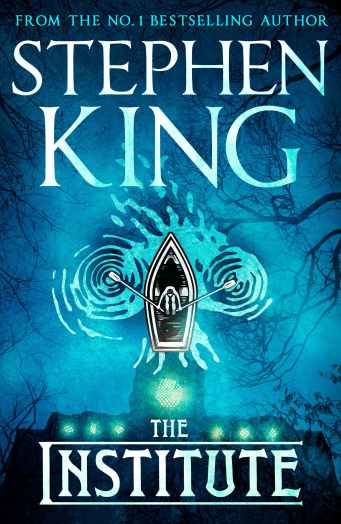
The Institute is set to be released on 10 September this year, and some interesting details of this book have already been released, including two separate plot synopses and two intriguing looking covers, although the first cover is my favourite of the two.

The Institute Cover 1.jpg
Synopsis 1:

Deep in the woods of Maine, there is a dark state facility where kids, abducted from across the United States, are incarcerated. In the Institute they are subjected to a series of tests and procedures meant to combine their exceptional gifts – telepathy, telekinesis – for concentrated effect.

Luke Ellis is the latest recruit. He’s just a regular 12-year-old, except he’s not just smart, he’s super-smart. And he has another gift which the Institute wants to use…

Far away in a small town in South Carolina, former cop Tim Jamieson has taken a job working for the local Sheriff. He’s basically just walking the beat. But he’s about to take on the biggest case of his career.

Back in the Institute’s downtrodden playground and corridors where posters advertise ‘just another day in paradise’, Luke, his friend Kalisha and the other kids are in no doubt that they are prisoners, not guests. And there is no hope of escape.

But great events can turn on small hinges and Luke is about to team up with a new, even younger recruit, Avery Dixon, whose ability to read minds is off the scale. While the Institute may want to harness their powers for covert ends, the combined intelligence of Luke and Avery is beyond anything that even those who run the experiments – even the infamous Mrs Sigsby – suspect.

Thrilling, suspenseful, heartbreaking, The Institute is a stunning novel of childhood betrayed and hope regained.

The Institute Cover 2.jpg
Synopsis 2:

In the middle of the night, in a house on a quiet street in suburban Minneapolis, intruders silently murder Luke Ellis’s parents and load him into a black SUV. The operation takes less than two minutes. Luke will wake up at The Institute, in a room that looks just like his own, except there’s no window. And outside his door are other doors, behind which are other kids with special talents—telekinesis and telepathy—who got to this place the same way Luke did: Kalisha, Nick, George, Iris, and ten-year-old Avery Dixon. They are all in Front Half. Others, Luke learns, graduated to Back Half, “like the roach motel,” Kalisha says. “You check in, but you don’t check out.”

In this most sinister of institutions, the director, Mrs. Sigsby, and her staff are ruthlessly dedicated to extracting from these children the force of their extranormal gifts. There are no scruples here. If you go along, you get tokens for the vending machines. If you don’t, punishment is brutal. As each new victim disappears to Back Half, Luke becomes more and more desperate to get out and get help. But no one has ever escaped from the Institute.

As psychically terrifying as Firestarter, and with the spectacular kid power of It, The Institute is Stephen King’s gut-wrenchingly dramatic story of good vs. evil in a world where the good guys don’t always win.

Both of these synopses sound incredibly fascinating and have really stoked my interest in this book.  The whole government institute full of psychics reminds me a bit of Eleven in Stranger Things, but I am sure that King will add a much darker edge to his story, probably with some child murder.  King has a proven ability to bring young child protagonists to life and have them lead a horror or thriller novel aimed at an adult audience, so I have high hopes for how this book will turn out.

The Institute is set to be the latest hit from the master of modern horror and thriller fiction, Stephen King, and is currently high on my list of books to read for September.  No doubt this will be one of the year’s major releases and I am really looking forward to checking out another piece of King’s magic (or psychic powers in this case).  With a deeply intriguing plot, I am sure that I will enjoy this and the eventual film of television series that results from it.

Superman: Dawnbreaker by Matt de la Peña

Dawnbreaker Cover.jpg

Publisher: Penguin Books (Trade Paperback – 5 March 2019)

Series: DC Icons – Book 4

Length: 290 pages

My Rating: 4 out of 5 stars

Amazon     Book Depository

Bestselling young adult fiction author Matt de la Peña attempts to put his own spin on the classic origins of one of DC Comics’ most iconic superheroes, Superman, in the fourth and final instalment of the DC Icons book series.

The DC Icons series is made up of four young adult books that present new and modernised origin stories for four of DC Comics’ most iconic and recognisable characters.  Written by some of the world’s best young adult fiction authors, this series has so far looked at Wonder Woman, Batman and Catwoman, and this final book, Dawnbreaker, takes a look at Superman.  Each of the stories in the DC Icons series stands alone and does not connect to either the main DC comic universe or the other DC Icons books.  I have so far only had the opportunity to read one of the previous books in the DC Icons series, Soulstealer by Sarah J. Maas, which presented an imaginative and captivating new version of Catwoman’s origin story.  I really liked Soulstealer when I read it late last year, and I have been looking forward to Superman: Dawnbreaker for a while.

In Dawnbreaker, the reader is taken to the sleepy Kanas town of Smallville, home to awkward high school student Clark Kent.  Clark has always been different to the other young people around him, as he is gifted with abilities that make him stronger, faster and resistant to injury.  Afraid of these powers and the potential reactions of the people around him if they found out, Clark tries to live a more ordinary life, hiding his abilities and only confiding in his parents.  However, Clark is finding it harder and harder to disguise what he can really do, especially when he has the power to help those around him.

However, Clark is not the only person with secrets in Smallville.  When Clark finds fellow student Gloria Alvarez crying one day after school, he begins to see that there is something dark at the heart of the town he loves.  People are disappearing; men are skulking around the Kent farm attempting to enter a barn that his father always keeps locked, a large corporation is buying up land around town, and several wealthy young people, including the mysterious Lex Luthor, are suddenly taking an interest in both Smallville and Clark.

Teaming up with his best friend, Lana Lang, Clark attempts to uncover what is really happening in his town.  But the further down the rabbit hole they go, the more Clark begins to realise that only his abilities will be able to stop the terrible events occurring around them.  Can Clark become the hero that his town and the world needs?

De la Peña is an award winning young adult author who has written a number of intriguing and thought-provoking books which often look at young people from disadvantaged or ethnic backgrounds.  De la Peña debuted in 2005 with Ball Don’t Lie, which was later developed into a motion picture of the same name.  Some of his other notable works include We Were Here, I Will Save You and the highly acclaimed children’s book, Last Stop on Market Street.  His most famous book is probably his second novel, Mexican WhiteBoy, which was actually banned in Tucson for five years due to its “critical race theory”.  Dawnbreaker is de la Peña’s first foray into comic book fiction.  While he has previously written some science fiction books, such as The Living and his instalment of the Infinity Ring series, Curse of the Ancients, I was interested to see how he went writing in this new genre.

I personally think that de la Peña did a great job with this book, as he was able to craft together a compelling and exciting novel that contains an excellent combination of mystery, superhero origin story and teen drama.  The mystery and young adult storylines are particularly good, and I quite enjoyed seeing where those parts of the story went.  However, I did have some minor issues with the Superman origin story part of the book, namely because I had seen this origin story so many times before.  I honestly found parts of Dawnbreaker to be very similar to some of the previous versions of Superman that I have seen in both comics or screen adaptions like the Smallville television show (which I may mention again a few times, as I was a massive fan of the show).  Of course, readers who have not already been exposed to so many iterations of Superman’s origin story will not have the same problem.

I fully recognise that this was always going to be a problem for any author attempting to write this sort of book.  For the last 81 years, Superman has been one of the most, if not the most, iconic and recognisable comic book superheros in the world.  As a result of the commercial appeal of the character, there have been so many different versions of Superman over the years, nearly all of which at some point have shown him as a younger Clark Kent living in Smallville.  Because of all of these comics, novels, movies, television shows, games and animated features, the character’s origin story has really been done to death.

Still, de la Peña does do a great job portraying the character of Clark Kent and presenting a more modern version of the hero.  In particular, he did an outstanding job of capturing the character’s identity issues.  An important part of Clark Kent/Superman’s character has always been his fear of hurting anyone with his power or exposing his family to danger.  De la Peña’s take on this character aspect is fantastic, as his version of Clark is extremely vary of using his powers anymore after he previously lost control and hurt someone.  As a result, he finds himself somewhat socially isolated in this book, as he attempts to distance himself from others to make sure they do not realise that he is different and subsequently reject or fear him.  However, events keep conspiring against him, as he keeps finding himself drawn into situations where his powers could help or save people and he has to decide what to do.  I felt that de la Peña covered this part extremely well, and the emotional and ethical internal debates that occur within the protagonist during these events were spot on and some of the best writing in the entire book.  The eventual creation of the Superman identity later in the book is a great result of some of these events, and it is shown to be a natural progression for the character.

Another issue I had with this book was how compacted the origin story felt.  While some origin stories would build up to Clark becoming Superman and an alien saviour over an extended period (although perhaps Smallville’s 10 seasons were a bit over the top), Dawnbreaker covers all of this rather quickly.  At the start of the book, Clark is a teenager with powers (mostly strength and invulnerability at that point), but he has no idea where they come from or what their full extent is.  Within a few days, he finds out that his an alien, he learns all his additional abilities (x-ray vision, heat vision, artic breath and the ability to fly) and he takes on the Superman identity for the first time.  While I certainly understand de la Peña’s desire to portray all these iconic Superman elements in this book, it did make Dawnbreaker’s story feel a bit rushed.

There is some great utilisation of characters within this book.  As I mentioned above, the examinations of Clark’s inner self are done perfectly and really cover important aspects of the character.  I also felt that de la Peña made good use of several classic Superman comic characters, specifically Lana Lang and Ma and Pa Kent, and there were a few clever references to other major characters associated with Superman.  I was a tad disappointed in the portrayal of perennial Superman villain, Lex Luthor.  While he is a key character with his own agenda, there are no real signs of the super scientist and utterly ruthless businessman he is in the comics, nor was there the close friendship that devolved into antagonism that features in some comics, as well as the excellent version that appeared in Smallville.  Still the new, original characters that appear in this book are really well done and offer some unique new inspirations for Superman that I quite enjoyed.

I also quite liked the way that de la Peña attempted to introduce relevant and divisive political and social issues into Dawnbreaker, such as racism and immigration.  This can be mainly seen in treatment of Mexican immigrants (both legal and illegal) in Smallville.  Not only have several of these immigrants gone missing without the police caring, but also people in the town are harassing some of the remaining immigrants, and there are attempts to pass a targeted stop-and-search law.  I thought this was an intriguing and thought provoking inclusion for this book, and it was interesting to see such issues discussed in a comic book tie-in novel.  A Superman book is a great place for this sort of storyline to be explored, as the character is probably the most famous illegal alien in fiction, and Clark’s empathy for these immigrants once he finds out the truth of his past is an interesting inclusion.

Like the other books in the DC Icons series, Dawnbreaker is targeted at a young adult audience.  This is quite a good book for younger audiences, as not only does it present an exciting and fun adventure at an American high school, but it would also serve as an excellent introduction of this iconic character’s origins for this younger cohort.  Younger readers will no doubt appreciate the author’s more modern take on this beloved superhero and be intrigued by how his story starts.  There is also quite a lot for older readers in this book, especially fans of comic books and Superman, and an adult audience can easily enjoy Dawnbreaker.

Superman: Dawnbreaker by Matt de la Peña is a compelling and exciting story that attempts to present an updated origin of one of comic’s most iconic superheros.  Featuring some new takes on the character of Clark Kent, as well as bringing some more contemporary issues to bear in the story, this is an fantastic and enjoyable book and one a wide range of readers can appreciate.  Dawnbreaker is an excellent conclusion to the DC Icons series, and I still fully intend to check out the first two instalments in this series in the near future.

Amazon     Book Depository

Waiting on Wednesday – Salvation Lost by Peter F. Hamilton

Welcome to my weekly segment, Waiting on Wednesday, where I look at upcoming books that I am planning to order and review in the next few months and which I think I will really enjoy.  Stay tuned to see reviews of these books when I get a copy of them.

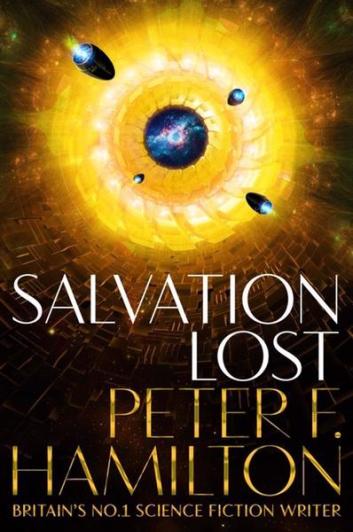
Salvation Lost Cover

There are many great science fiction books coming out within the next year, but one of the ones I am most looking forward to is Salvation Lost by Peter F. Hamilton.  Salvation Lost is the second book in the Salvation Sequence and follows on from the author’s 2018 release Salvation.

I read Salvation last year and reviewed it both on my blog and in The Canberra Weekly.  Before Salvation, I had not had the pleasure of reading any of Hamilton’s previous works, but I was keen to dive into his latest novel as it had a very intriguing premise behind it, and some of Hamilton’s previous works sounded like they were a lot of fun.  I was surprised how much I enjoyed Salvation, as I had an amazing time unravelling the epic and widespread space opera featured within this excellent book.  Hamilton made amazing use of several different timelines, a number of compelling science fiction based mysteries and some outstanding writing to create a book that got an easy five stars from me and an honourable mention on My Top Ten Reads for 2018 list.

As a result, I am extremely eager to see what comes next in the Salvation Sequence and cannot wait until October when Salvation Lost will be released.

Pan Macmillan Synopsis:

Fight together – or die alone . . .

In the twenty-third century, humanity is enjoying a comparative utopia. Yet life on Earth is about to change, forever. Feriton Kane’s investigative team has discovered the worst threat ever to face mankind – and we’ve almost no time to fight back. The supposedly benign Olyix plan to harvest humanity, in order to carry us to their god at the end of the universe. And as their agents conclude schemes down on earth, vast warships converge above to gather this cargo.

Some factions push for humanity to flee, to live in hiding amongst the stars – although only a chosen few would make it out in time. But others refuse to break before the storm. As disaster looms, animosities must be set aside to focus on just one goal: wiping this enemy from the face of creation. Even if it means preparing for a future this generation will never see.

The second book in the Salvation Sequence sounds just as captivating as the first book, and I am extremely eager to see how the storylines that were started in Salvation are continued.  I also am very much looking forward to seeing how the advanced human civilisation that Hamilton developed across a range of different timelines in the first book starts to come crashing down as the Olyix invade.  I have no doubt that the invasion part of this book will be a hell of a lot of fun to read, and I look forward to seeing how it contrasts with the more subtle and undercover infiltration that occurred in the initial book.

I am extremely confident that Salvation Lost will be another extraordinary release from Peter Hamilton, and I am sure that it will be one that I will deeply enjoy.  I look forward to getting a copy, and I am sure it will result in quite a complex and lengthy review from me.

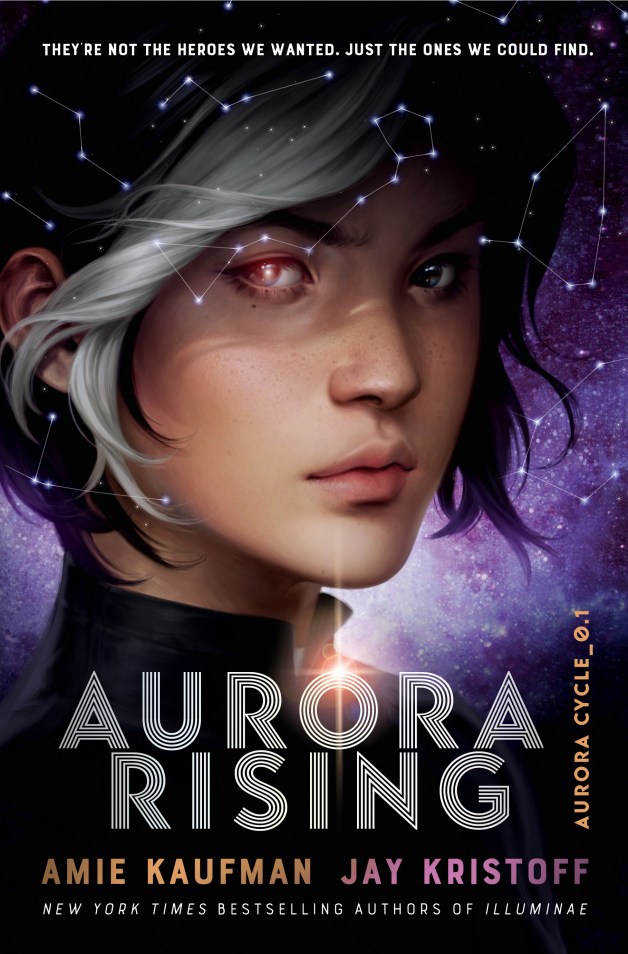
Aurora Rising by Amie Kaufman and Jay Kristoff

Aurora Rising Cover

Publisher: Allen & Unwin (Trade Paperback – 6 May 2019)

Series: Aurora Cycle – Book 1

Length: 470 pages

My Rating: 5 out of 5 stars

Amazon

The superstar team of Australian young adult fiction authors Amie Kaufman and Jay Kristoff comes together once more to create an outstanding, heartfelt and deeply entertaining new novel that may prove to be one of the best young adult books of 2019.

Kaufman and Kristoff are two of the biggest and most creative authors currently writing young adult fiction.  Kaufman is probably best known for her work with Meagan Spooner, where they have co-authored the Starbound trilogy and Unearthed series of books, the second book of which, Undying, was released earlier this year.  She is also in the process of writing her own Elementals series, with the second book, Scorch Dragons, released a month ago.  Kristoff first came into prominence with The Lotus War series, which debuted in 2012.  Since then he has also written The Nevernight Chronicle, the final book of which is set to be released in September, while his latest book, Lifel1k3, was one of the most talked about young adult releases of 2018.  Kristoff’s sequel to Lifel1k3, Dev1at3, is set to be released in a month, and he is currently working on an epic fantasy series, Empire of the Vampire, with the eponymous first book set to be released in September next year.

Kaufman and Kristoff have previously collaborated on the bestselling and award winning The Illuminae Files, a space opera epistolary series made up of three books which ran between 2015 and 2018.  Their latest collaboration, Aurora Rising, is another epic piece of young adult science fiction and is the first book in their planned Aurora Cycle series, which is currently set to feature another two books, released in 2020 and 2021.

Aurora Rising is set in the year 2380 and follows a spacefaring team of young adventurers as they attempt to save the galaxy.  In the future, humans have expanded out deep into the Milky Way, with fast intergalactic travel made possible through the Fold, dangerous space found on the other side of literal folds in the universe.  The Aurora Legion are an independent peacekeeping force made up of humans and several friendly alien races.  In order to complete their various humanitarian, exploration and peacekeeping missions, the Aurora Legion sends teams of young legionnaires, who can better withstand the rigors of the Fold, into the field.  Each team is made up of six highly trained and skilled individuals, who together can solve any problem they encounter.

Tyler Jones is the star graduating cadet of the Aurora Academy, who, thanks to his dedication and ability, will be given first pick of his fellow graduating cadets to form an elite team.  However, when an unscheduled joyride forces him to perform a risky rescue in the Fold, he misses the cadet draft, leaving him with a team of the cadets none of the other graduating squad leaders wanted.  These include (the descriptions were copied from the blurb due to accuracy):

  • His sister, Scarlet – A cocky diplomat with a blackbelt in sarcasm;
  • His best friend, Cat – A tomboy pilot who’s totally not into her squad leader, in case you were wondering;
  • Zila – a sociopath scientist with a fondness for shooting her bunkmates;
  • Finian – a smart-ass tech-whiz with the galaxy’s biggest chip on his shoulder;
  • Kal – an alien warrior with anger management issues.

Forced to make the most of his bad luck, Tyler leads his team on a routine mission that quickly turns hairy when a hostile force of aliens seek to destroy them.  However, genocidal aliens are the least of their problems, when they discover that the girl Tyler saved in the Fold, Aurora O’Malley, has stowed away on their ship.  Aurora, the only survivor of a colony ship long thought lost, is 200 years out of time and desperate to figure out what happened to her colony and the family she left behind.  The squad discovers that she is far more significant than they could ever imagine when she displays strange abilities and impossible knowledge of both the past and future.  When shadowy government agents attempt to arrest Aurora, the squad are forced to go rogue to solve the mystery and end up in a race to save the galaxy.

Aurora Rising is a spectacular read, as these skilled authors take the reader through an intense young adult science fiction adventure in an intriguing new universe.  The book’s story as a whole is an outstanding mixture of intense action, enjoyable science fiction elements and excellent character work, all wrapped up with clever storytelling that is both compelling and humorous.  There are a number of great scenes and epic moments throughout this book that really highlight this book’s unique style and the writer’s ability to tell a story.  For example, I personally liked an extended sequence that followed the protagonists as they embarked on an elaborate and seemingly impossible heist on a massive space station ruled by a vicious crime lord.  The overall result is a near perfect read that I had an absolute blast checking out.  This is an amazing piece of young adult fiction, with enough action and relatable characters to appeal to all manner of potential teen readers.  Older science fiction readers will also have a great time with this book, especially as it sets up a captivating and ambitious new trilogy that will appeal to a huge and diverse audience.

This book is told from the first-person perspectives of the book’s seven protagonists, which includes Aurora and all six members of Tyler’s squad, each of whom gets a series of chapters throughout the book to tell the story.  Kaufman and Kristoff make good use of the chapters each of the characters narrate and the reader gets a good idea of each character’s individual personality, as well as important snippets into their individual backstory.  The authors also try to differentiate these chapters out a bit for some of the characters.  For example, Zila’s chapters are rather short, blunt and analytical in nature, matching her personality, while Scarlet’s chapters feature her listing off the humorous pros and cons of her ex-boyfriends, figuring out which ones to stay in contact with.  I really enjoyed how the authors told the story through these seven separate narrators, as not only did it bring me closer to the characters but it allowed the authors to showcase various perspectives of some of the more impressive sequences and events, allowing for a fuller and more intense story.

Aurora Rising features an outstanding complement of main characters, as each member of the squad, including Aurora, are looked at in some detail.  I was very impressed with how the authors where able to create such expansive and intriguing backstories for all seven main characters, as each of them has their own issues or concerns.  For example, Tyler and Scarlett are living in the shadow of their dead father’s heroics and trying to make him proud, Cat is deeply in love with Tyler and is having a hard time keeping her feelings in check, and Zila struggles with her disconnection with other people brought on by her tragic past.  Other examples include the team’s two alien members: Finian, who to hides his feelings of abandonment behind his brilliance and snark; and Kal, who is torn between guilt about what his race’s warrior caste, of which he is a member, has done to his home planet and his surprising feelings for one of the other members of his squad.  Aurora is perhaps one of the most complex characters, waking after 200 years to find that everything and everyone she knew is dead and parts of her past have been hidden for nefarious reasons.  Add into that her discovery of uncontrollable mental abilities and the feeling that something mysterious is guiding her and she has a lot to worry about.  One of the best things about this book is that whilst all seven characters are fairly complex individually, the book’s true strength revolves around the fact that when these characters come together they are an extremely dysfunctional crew.  The crew starts off as a rebellious and overly sarcastic mess unable to work together effectively, even with their individual abilities and strengths.  However, as the book continues, they do learn to cooperate to a degree, and the reader is made to really care for them, both individually and as a whole.  I loved how these character relationships expanded and strengthened throughout the book, and I had a lot of fun with this humorous and entertaining group of people.

I really enjoyed the universe that Kaufman and Kristoff crafted to fit around this enjoyable and intriguing story.  Visions of humanity’s future can always be a bit hit or miss, but I thought that the science fiction setting that the authors utilise in this book, which sees humanity expanding and interacting with other races while dark secrets and wars build up in the background, to be a fun and well-thought-out setting.  The characters visit an interesting and inventive number of locations through the book, all of which really add to Aurora Rising’s adventure and action.

I liked the author’s concept of the Aurora Legion, an intergalactic peacekeeping organisation that sends teenage operatives into action due to science fiction reasons.  One of the things I quite enjoyed about this was how these teams were designed to have six members whose joint abilities and specialities would allow them to anticipate and overcome any problem.  As a result the teams are made up of:

  • Alphas – leaders
  • Faces – diplomats
  • Aces – pilots
  • Gearheads – mechanics/inventors/technicians
  • Tanks – combat specialists
  • Brains – science officers/medics

This team breakdown proved to be quite an interesting concept, even if they do sound like party roles in a MMORPG (tank, healer, DPS etc).  I liked this idea and the various characters slid into the roles quite effectively.

I also had a lot of fun with the universe-expanding insertions that Kaufman and Kristoff placed before a number of the book’s chapters.  These insertions are written as information pages being read by Aurora on her uniglass, an AI tablet called Magellan, who has a playful sense of humour and who also provides some amusing commentary within the story.  These information pages provide the reader extra information about the universe, including about the Aurora Legions, the roles of the squads’ various members, the history of the universe, alien species, locations the protagonists visit and other relevant inclusions.  While each of these pages contains universe factual information, Magellan adds humorous twists to each of these pages which are very entertaining and really fit into the easy going and entertaining mood of most of the book.  However, these information pages do change and get more serious in the darker parts of the book, which also helps prepare the reader for the shift in mood.  I loved these inclusions, not only appreciating the inventive universe building they allowed, but also the fun take on the classic idea of in-universe media inclusions.

Aurora Rising is an absolutely fantastic book that blasts off with action, humour and amazing characters to create a deeply compelling and relentlessly entertaining story.  Australian authors Kaufman and Kristoff are an outstanding writing duo, and their latest collaboration is an amazing piece of young adult fiction that brilliantly establishes their new trilogy and ensures that future instalments of the Aurora Cycle will be some of the most sought after young adult books for 2020 and 2021.  Aurora Rising comes highly recommended from me, and it is one of my favourite new young adult books of 2019 so far.

Amazon

Book Haul – 1 May 2019

The books have been coming in a little slow the last couple of weeks but I have gotten five outstanding novels that I am really looking forward to read.

The Unbound Empire by Melissa Caruso

The Unbound Empire Cover (WoW)

I have been looking forward to this book for a while now, especially after how I much I enjoyed The Defiant Heir.  This is currently at the top of my reading list and I am hoping to get to it next.

The Emerald Tablet by Meaghan Wilson Anastasios

The Emerald Tablet Cover

I was lucky enough to get an advanced proof of The Emerald Tablet.  After enjoying the first book in the series, The Honourable Thief, I am hoping to get to this one soon as well.

Emperor of Rome by Robert Fabbri

Emperor of Rome Cover

Another one that I have been looking forward to for a while.  I have been a huge fan of the Vespasian series for a while, including the previous book in the series, Rome’s Sacred Flame, so I am really excited to see how the series ends.

The New Achilles by Christian Cameron

The New Achilles Cover.jpg

Christian Cameron is one of the best authors of historical fiction in the world today.  After enjoying his latest fantasy book that he wrote as Miles Cameron, I am quite excited to see him head back to ancient Greece.

Dark Blade by Steve Feasey

Dark Blade Cover.jpg