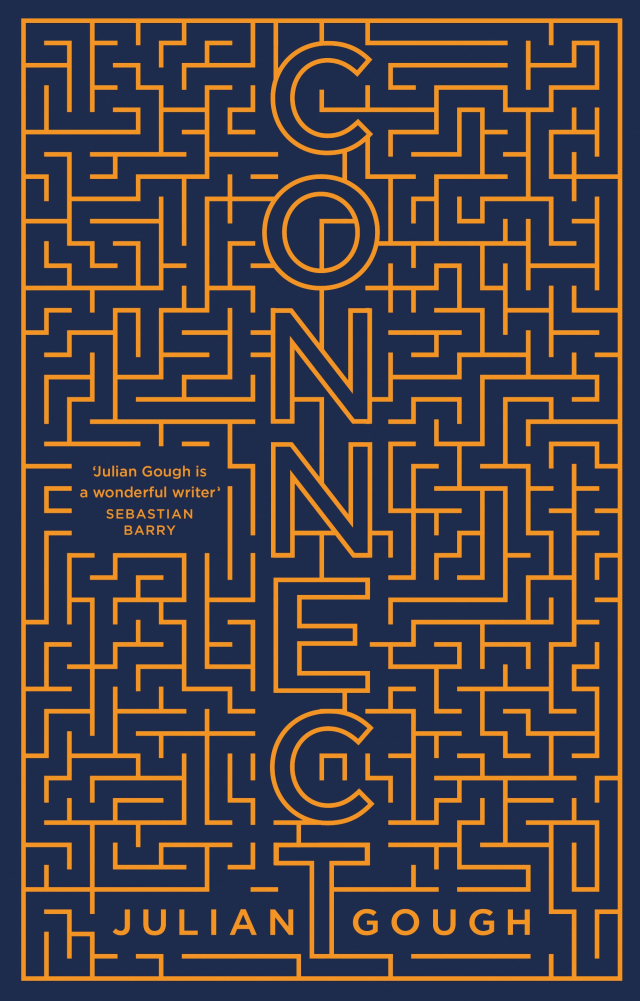
Connect by Julian Gough

Connect Cover

Publisher: Picador

Publication Date – 8 May 2018

Amazon     Book Depository

For those looking for a darkly complex and intense techno-thriller, look no further than Connect by Julian Gough, a unique novel that also critiques future trends and humanity’s increasing reliance on technology.

In the very near future, computer technology has been incorporated into nearly everything, linking the world and helping with all aspects of day to day life.  In Nevada, awkward young teen Colt is a talented hacker living with his mother, Naomi.  Seeking to create a perfect replication of the real world in virtual space, Colt has also developed a dangerous fascination with his mother’s biotech research.

When Colt submits his mother’s revolutionary work to a biotech conference, Naomi comes to the attention of the government, including Colt’s father, a high-ranking spook, Ryan, concerned with its potential implications.  However, Colt has also taken the opportunity to inject himself with the experimental biotech, turning himself into something new: a hybrid of man and technology.  Colt and Naomi are soon considered to be threats to the government, and Ryan activates an experimental defence network to hunt them down.  Colt and Naomi are forced to go on the run and must try to avoid a barrage of killer drones programmed to target and kill them at any cost.  Will Colt’s new abilities be enough to overcome the computer intelligence seeking them, or will the future of technology be changed forever?

Connect is an inspired new novel from Gough which represents a different direction from his previous writings.  Connect is a fascinating read and an interesting techno-thriller that examines the future of technology, creates a compelling dialogue and makes significant use of some excellent narrative elements.

The main story is an absorbing thriller that pits the protagonists against some sizeable opponents and threats.  One of their main opponents is an advanced and experimental computer program that is connected to every piece of technology in the country.  As a result, the protagonists are forced to find ways to avoid the overwhelming surveillance hunting them. Not only must they avoid pursuit from teaching devices and video cameras but they must also find a way to go low tech in a society that has computers connected to everything.  There are some great scenes where the characters are forced to out-think drones hunting them and try to find ways around the tracking programs that determine when and where to attack.  All of these play wonderfully into the book’s thriller storyline, and there is some real excitement when the protagonists encounter and attempt to counter these technological threats.

Gough spends a significant amount of Connect examining the future of technology and ends up offering some significant commentary on our reliance on technology and its potential influence on us.  The story is set in the immediate future, where everything is controlled by computers and certain things common in our current world no longer exist.  For example, most cars are self-driven, everything has become exceedingly automated and cash has become nearly obsolete.  In other words, it is a picture of how our world is likely to turn out in the next few years, based on current advances in technology.  Gough scrutinises how this over-reliance on technology could be detrimental to humanity, and how it could be turned against us by hackers and governments.  There is also an examination of the automation of a nation’s defence and security as an advanced security program is activated to hunt down the protagonists.  The debate around such a program is very in-depth, and the readers will be fascinated by some of the arguments presented.  Naturally, the program starts getting out of hand as it is manipulated into seeing the protagonists as a bigger threat than they are and it starts to dramatically escalate its attempts to destroy its targets.  This thought-provoking discussion and examination of the future of technology is a key part of Connect and will prove to be one of the most intriguing parts of the book for some thoughtful readers.

One of the most noticeable parts of the book is the unusual format that Gough has chosen to implement throughout his book.  The story is broken up into 12 chapters, and then further broken down into 149 sub-chapters, and is formatted in a way that vaguely reminded me of code within a computer program.  The inclusion of such a visually distinctive writing format does not break up the flow of the story, nor does it affect the reader’s ability to follow the story.  It does, however, dramatically change towards the end of the book in a way that ties in nicely with some of the significant plot elements occurring during this part of the book.  Gough has also chosen to include a number of relevant quotes at the start of each of the chapters.  I personally enjoyed reading those and connecting them to the plot of the upcoming chapter, and may prove to be more amusing to those of a more computer or technical mindset than myself.  Overall, the consistent use of this unique format and the attention grabbing quotes work well with the technology-centric plot and are a clever addition by Gough.

The point of view of Connect is mostly shared between the book’s protagonists, Colt and Naomi, although the main human antagonist, Ryan, also features in a few of the book’s chapters.  These separate viewpoints offer different subjects to the reader, and Gough has done a fantastic job of presenting unique content for both of his protagonists.  The scenes that follow Colt are a stimulating experience, allowing the reader a real sense of Colt’s social awkwardness and the disconnectedness he feels with the real world, especially when he focuses on his recreation of the real world in his virtual reality.  This virtual world appears in quite a number of scenes and plays a pivotal role in the end of the plot, and it is curious to watch Colt attempt to live most of his life within this world.  The characterisation of Colt shifts subtly after he injects himself with the experimental biotech and he starts to change.  It is interesting to watch his character change and mature after this point, especially as he attempts to initiate a very awkward romance with another young hacker.  The interactions he has with technology after this point, including with the advanced defence program hunting him, are some great scenes, especially as he creates and utilises some clever work-arounds to manipulate the computer networks to his advantage.

The scenes that feature Naomi’s perspective are significantly different, representing a noticeable change of pace for the reader.  Naomi is a very damaged person who presents herself in very different way to her socially awkward son.  Gough has made sure to communicate her multiple neuroses and issues to the reader, which adds a lot of drama to the story as she must attempt to save her son whilst trying not to get overwhelmed.  Like her son, she also undergoes substantial character development throughout the story, and the reader will enjoy watching her work towards a better relationship with her son.  In addition to this excellent piece of character work, the chapters featuring Naomi as the focal point are generally a lot darker and more adult.  For example, one of these sub-chapters features one of the most memorable and disturbing death scenes that I’ve ever read.

Connect is deep thriller that revels in its use of technological elements to create a distinctive and eccentric story.  Julian Gough’s discussion and consideration of a technologically advanced future and the problems this could create is compelling and thought-provoking, and his great use of characters and formatting elements turns this into one of the most unique pieces of literature you are likely to read this the year.

My Rating:

Four stars

Amazon     Book Depository

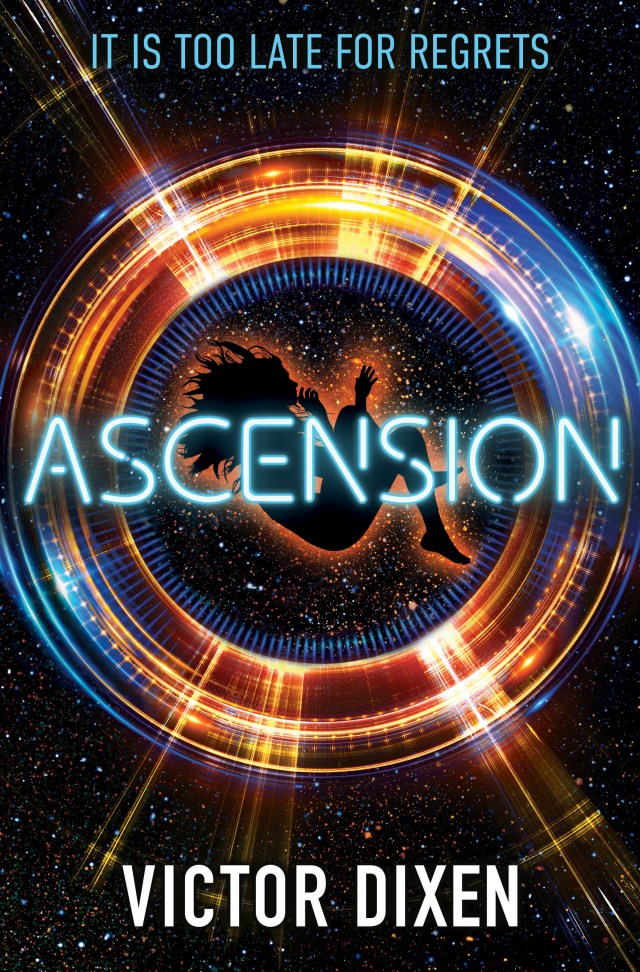
Ascension by Victor Dixen

Ascension Cover

Publisher: Hot Key Books

English Edition Translated by Daniel Hahn

Publication Date – 28 June 2018

Amazon     Book Depository

The first book in the bestselling French Phobos series is finally here.  Ascension is a fun guilty pleasure read geared towards a young adult audience that explores the dark side of reality television.

In the near future, a private company has bought NASA and is about to send the first humans to Mars as part of the Genesis program.  However, this will not be a typical voyage to another planet; it will be the most ambitious reality television show of all time.  The international group of young astronauts has been chosen through a worldwide contest, and the entire voyage into space will be broadcast back to Earth to be viewed by the masses.  Not only will these six young men and six young women colonise Mars but they will also be expected to pair up into couples by the time they reach Mars through an insane bought of speed-dating.

The boys and girls will be placed into separate bays of the same spaceship and will only be allowed to interact with the person of their choosing for six minutes each week.  In these six minutes they will meet and try to seduce their counterparts and attempt to determine who their perfect match is.  By the end of their trip, each of them must choose a partner to marry and live with once they reach the red planet.

For one of the contestants, Léonor, the Genesis program is her chance to escape from a planet where she has only ever experienced pain.  The one-way trip is the biggest opportunity of her life and she is eager for glory and love.  But as they move further away from Earth, Léonor begins to learn that this journey is far more dangerous than she had expected.  A deadly conspiracy surrounds this journey and it is far too late for regrets.

Ascension is written by Victor Dixen, a French author who has contributed multiple series to the Young Adult genre.  His previous works included a reimagination of classic fairy tales in the Animale series, and the science fiction based The Strange Case of Jack Spark series.  Ascension is part one of his exciting Phobos series, which was first published in France back in 2015.  Phobos will be the first of Dixen’s series to be translated into English, with the next two books in the series, Distortion and Collison both set to be published in English within the next year.

Ascension is a fantastic book with a lot of parts to it that make for a highly compelling and interesting read.  The overarching concept of a space exploration being turned into a reality television contest is a little crazy, but Dixen has some great explanations for this plot set-up that sound actually plausible and realistic.  With the current political craziness around the world and humanity’s constant fascination with reality television, you can’t help but think that this could be a distinct possibility.

Dixen is a talented author who is able to perfectly recreate the feel of a large-scale reality television show within his book, with all of the worst parts included.  The male and female contestants are kept apart from each other for the whole journey and are constantly aware of the world watching them through all the cameras, and they act accordingly.  Dixen shows off the various ways the producers are trying to manipulate the contestants, such as misleading messages from their host and group showings of each contestant’s ratings and accrued prize money, all in the name of creating drama.  There are also a number of scenes that show large groups of people watching the show and becoming obsessed with it in a way reminiscent of the early days of Big Brother and American Idol.  There are fun inclusions to show this off, such as having scenes where people back on Earth change their hairstyles and looks to match their favourite contestant, the contestants’ home countries showing massive support for them, and a fun scene where a cynic has to listen to other people gossip about the show.

While the parts of the book reminiscent of a typical reality television show are fantastic by themselves, they are taken to a whole other level when they are seen in conjunction with the backstage production meetings scenes.  Reality television show production meetings are probably already fairly sinister but Dixen is really able to amp this up by showing the show’s producers and host engaged in some ominous discussions involving deaths, murder, manipulation and their own bonuses.  Ascension contains a great main antagonist in Serena McBee, the host.  Serena is pretty much the ultimate villain for young people, as she acts like their friend while she tries to manipulate them, thinking she knows everything about them and how to control them.  All of these sinister surroundings create a compelling read that will really draw the reader in.

I have to admit that when I started to read Ascension the last thing I thought I would be interested in would be the potential relationships between the contestants.  However, Dixen puts significant effort into introducing the 12 contestants and describing their personalities and histories, ensuring the reader becomes invested in their futures.  While Léonor is the main character that the author focuses on, the reader is also shown many of the dating segments that the other contestants are involved with to dramatic effect.  There are also a number of discussions between the female characters as they discuss their tragic histories, their hopes for the future and who their preferred partners will be.  As a result, the reader does find themselves really caring about the characters becoming extremely interested in who will end up with whom.

Dixen also enhances his terrific narrative inclusions, sinister overtones and compelling character interactions with a range of useful visual elements included in the text.  These include flyers for the show, tables with the results of the contestants’ prize money and survey results, and detailed technical diagrams of the spaceship and the Mars habitations.  The diagrams of the ship help the readers visualise the ship and habitats, while the flyers and tables make them feel like part of the show’s audience.  These elements are well used within Ascension and are a great addition to the book.

Ascension by Victor Dixen is an exciting and invigorating young adult read that can now finally be enjoyed by an English-speaking audience.  Readers will love how the author has included an extremely realistic reality television setting into a dramatic science fiction story filled with all the emotion and manipulation you would expect from the trashiest of dating shows out there.  This crazy and brilliant read should captivate the young adult audience of the English-speaking world, just like it did with its French-speaking audience, and I will be keeping an eye out for the next two parts of this series.

My Rating:

Four stars

Amazon     Book Depository

Empire of Silence by Christopher Ruocchio

Empire of Silence Cover.jpg

Publisher: Gollancz

Publication Date – 3 July 2018

Amazon     Book Depository

First time author Christopher Ruocchio boldly introduces himself with his five-star debut, Empire of Silence, an extraordinary and spellbinding science fiction epic.

In the far future, humanity has left Earth behind and made its home in the stars by colonising thousands of the planets.  However, expansion was halted when the humans encountered the Cielein, the only other race in the galaxy with the ability to travel through space.  For years, the humans and the Cielein fought a brutal and devastating war against each other, until one man changed everything.

That man is Hadrian Marlowe, who, for the best of reasons, destroys a sun and burns every last Cielein from the stars.  This destruction also results in the deaths of four billion humans, including the Emperor of Sollan Empire.  After this infamous act, Hadrian is considered throughout the galaxy as both humanity’s greatest hero and its most terrible villain, known as The Sun-Eater, Starbreaker, Palekiller and Deathless.  But how did one man who was neither a soldier nor a hero seize such a responsibility and commit such atrocities?  The Sun Eater series is the chronicle of Hadrian’s life, of which Empire of Silence is the first part.

Born the eldest son of a noble house, Hadrian fled his family and his overbearing father to escape his future as a member of the Chantry, The Stella Empire’s state religion.  When the ship he chartered is mysteriously abandoned en route to his destination, Hadrian finds himself stranded on the wrong planet with no means of escape and none of his family’s resources available to him.  Forced to fight his way up from the gutters, Hadrian attempts to survive on this strange new world by any means necessary.  Starting out as a beggar and thief, Hadrian eventually embarks on a career as a gladiator in the hope of making enough money to buy a ship.  But when his true identity is revealed, Hadrian must find a way to survive in a foreign court, where powerful enemies lurk around every corner.

However, all of Hadrian’s problems become immaterial when the Cielein arrive above the planet, searching for something.  Drafted into a war he never wanted to be involved in, Hadrian seeks to understand the Cielein, but finds only mysteries and secrets.  Hadrian’s path to becoming The Sun-Eater is set, and his journey begins here.

Empire of Silence is the first volume in Ruocchio’s incredibly ambitious debut series, The Sun Eater.  Featuring fantastic storytelling and a galaxy-wide setting that is breathtaking in its scope and content, this is an outstanding first book and an excellent start to a series with real potential.

Many readers will be interested to know that Empire of Silence is already receiving quite a few comparisons to Patrick Rothfuss’s highly regarded fantasy epic, The Name of the Wind.  It is an easy comparison to make, as there are a large number of similarities between the two books.  Both books contain utterly compelling content designed to capture the reader’s imagination; however, the major similarity is the use of a chronicle format to tell their massive, character-driven epics.  Like The Name of the Wind, Empire of Silence is told solely from the point of view of the protagonist, Hadrian, and takes the form of a written retrospective explaining the terrible act that makes him infamous throughout the galaxy.  The series will completely explore Hadrian’s life, examining every action that leads up to this event.

The chronicle format is a superb choice for the Empire of Silence’s epic story.  Not only does it allow the author to produce a complex and extremely detailed epic storyline but it also allows him to add to the story’s gravitas by having the narrator comment on and reflect on his actions in hindsight.  This great format also allows the author to show off his protagonist in a range of different circumstances.  Because of various science fiction elements, Hadrian is destined to have an extremely long life span and a great many opportunities for adventure.  Within Empire of Silence alone, Ruocchio portrays Hadrian performing a range of different roles, including the presumed heir to a planet, a scholar, a fugitive, a beggar, a thief, a gladiator, a companion and tutor to noble children, an amateur archaeologist, a translator, a torturer, a negotiator and an irregular member of the military.  Each of the different roles that Hadrian plays influences his mindset and viewpoint, which allows the reader to see him evolve in front of their eyes.  It is also interesting to note that Ruocchio has not pre-emptively indicated how many books will be in his series, a mistake some other authors using a chronicle format have made before.  This will allow him to tell the whole story he envisioned without compromising on pacing, world-building or character development in order to reach a hasty conclusion, and will no doubt result in a much more complete and enjoyable series.

The overall plot of Empire of Silence contains various storytelling elements that are masterfully combined throughout the book.  It contains everything from science fiction elements and action sequences to long discussions of the history of the galaxy in which the series is set.  There is also a series of significantly dramatic storylines, such as Hadrian dealing with the difficulties of having a self-interested and manipulative father and an uncaring family.  There are some great coming-of-age moments within the storyline as Hadrian first seeks independence from his family and their history and then tries to find his own way on a new world where he has none of his power and influence.  The reader gets to witness several powerful scenes in which Hadrian’s life changes dramatically and he desperately attempts to claim some sense of normality or sanity in this new world.  Of particular note are some very emotional scenes during Hadrian’s first encounters with the Cielcin.  In these scenes, Hadrian is forced to contend with his own curiosity, conscience and morality while stuck between his own species, represented by the cruel and domineering Empire, and the aliens that somehow appear to bear much more humanity.  This results in some truly spectacular scenes that make this book impossible to put down.

One of the most impressive and enjoyable aspects of Empire of Silence is the vast and imaginative universe in which the story is set.  Ruocchio has an extremely interesting vision of the future that readers will find quite intriguing.  The entirety of the first book is set within the Sollan Empire, which represents the largest faction of humans in the future galaxy.  This civilisation, whilst retaining some advanced technology, such as spaceships, has reverted socially and culturally following a catastrophic event many years before.  There is a rigid class system, with the nobles wielding considerable power and disregard for the ordinary people.  A religious organisation holds sway over much of the empire, using inquisitor-like tactics to control the population and prevent what they consider heresy, which includes an aversion to advanced technology.  An interesting twist to this is the large number of cameras and drones that they and the nobles use to continually survey and intimidate the populace.  The Empire’s culture appears to be strongly inspired by the ancient Roman and Greek civilisations, and their various influences can be seen throughout the book.  This is an excellent setting for such an expansive story, and the reader gets to experience a unique and compelling combination of science fiction advancements and old school ideals.

Aside from the main setting of the Sollan Empire, Ruocchio has also stacked his universe with a range of characters, aliens, mysteries and side storylines that prove to be massively intriguing for the reader.  Several of these of mysteries and side stories are explored to an extent throughout the book; however, many are left open and will carry through to later books in the series.  The protagonist interacts with a massive of number of characters, which plays into the overall concept of him having a busy life.  In order to assist the reader in keeping track of the cast of thousands, who sometimes have limited scenes within the story, Ruocchio has provided extensive indexes.  Not only do these indexes contain details of all the characters the protagonist encounters but they also contain a huge amount of history, definitions and other useful information to help the audience absorb this massive new universe.

In one of the most impressive and elaborate science fiction novels of the year, first-time author Christopher Ruocchio has shown himself to be one of the brightest new stars in the science fiction genres.  Empire of Silence contains an absolutely amazing story that makes full use of its original and immense overarching setting, and is guaranteed to capture the reader’s imagination.  This is epic science fiction at its very best, and I cannot wait for the second book in Ruocchio’s The Sun Eater series.

My Rating:

Five Stars

Amazon     Book Depository

The Fire Court by Andrew Taylor

The Fire Court Cover

Publisher: Harper Collins

Australian Publication Date – 19 March 2018

World Publication Date – 5 April 2018

Amazon     Book Depository

Bestselling author Andrew Taylor returns to the 1660’s and the scorched city of London with the thrilling murder mystery, The Fire Court.

It has only been a few short months since the Great Fire of London ravaged the city, killing many and destroying a large number of houses and buildings.  The city is now finally rebuilding itself, aided by the Fire Court, an incorruptible institution that examines legal cases around the rebuilding and ensures the best result for the city.  While the Fire Court is supposed to be neutral in all cases, there are some who seek to use it their advantage.

James Marwood, a low-level government official, is one of the few people in London doing better now than before the fire.  However, James is still caring for his ailing father, a convicted traitor whose mind has been affected by his time as a prisoner.  When his father claims to have found a murdered woman at the site of the Fire Court, James initially assumes that his father imagined the situation.  But when his father is run down in the street and killed, James begins to suspect he may have actually witnessed a murder.

As James begins to look into this possibility, he soon finds evidence that connects his suspicions to an upcoming Fire Court case that will decide who will rebuild a number of profitable properties.  His investigation once again leads him to an old acquaintance of his, Cat Lovett, the daughter of a regicide.  James previously helped Cat escape retribution for her father’s crimes, and he now turns to Cat and her new employer to gather information on the upcoming case.

When more people connected to the case turn up dead and their investigation is hampered by influential members of the court, James and Cat begin to suspect that the Fire Court may not be as incorruptible as they thought.  It soon becomes clear that death is once again stalking the streets of London and this time they will not escape unscathed.

The Fire Court is the follow-up to Taylor’s 2016 hit, The Ashes of London.  Taylor is a veteran author and has significant experience writing a range of different genres and novel types.  He has produced over 40 novels since 1982, mainly focusing on crime fiction, with some of his more recent books featuring captivating historical elements.

Taylor’s last book, The Ashes of London, was a fantastic piece of historical crime fiction that made full use of its distinctive setting of the Great Fire of London.  Having the characters solve a crime and explore the city during the immediate aftermath of such a devastating historical event was masterstroke from Taylor which has resulted in a superb and memorable piece of literature.  In The Fire Court, Taylor returns to this fascinating period to show how much rebuilding happened in the six months after the destructive fire.  The focus on the historical Fire Court that was instituted in the aftermath of this event is the most intriguing part of Taylor’s new book, and readers will be extremely interested in learning more about this unique bit of history.  Taylor does a tremendous job of introducing the role that the Fire Court played in the rebuilding of the city and how it worked.  The reader is treated to several scenes that feature cases before the court, showing how the verdicts were reached.  Several of the Fire Court’s actual judges are included as characters, which is a nice touch of historical realism.  Overall, the examination and inclusion of the historical Fire Court is a notable piece of this novel and readers will appreciate how Taylor has interlaced his complex murder mystery with this interesting historical setting.

In addition to the fire-related historical elements, Taylor has also done an outstanding job of displaying what the city of London would have looked like in the 1660s.  During their investigation of the crime the protagonists visit large and varied swathes of the city which are vividly described, which brings readers right in to the middle of this vibrant and bustling city.  This base historical setting is well written, and readers will enjoy this incredible romp back in time.

The central plot of this novel revolves around a powerful murder mystery storyline and investigation.  The Fire Court is told from the perspective of three separate narrators – James, Cat and Jemima – each of whom tries to find answers in their own way.  The investigation into the murder is very intense, and what initially starts as a single potential murder spirals into a series of killings as the culprits attempt to cover up their crimes.  This overall storyline is well written, filled with suspense, and very compelling.  Readers will be captivated by the way fire is used by both the protagonists and the antagonists throughout the book.  The use of such a tool is significant, as all the London-based characters know the power of fire and its destructive potential.  It is a potent symbol of criminal wrongdoing in this series, and the audience will be shocked by how it affects the lives of the protagonists in this book.  In addition to the symbolic use of fire, Taylor also includes a significant twist at the conclusion of the investigation that will leave the reader reeling and thinking for a very long time.

Taylor has produced a remarkable and enjoyable murder mystery that makes full use of its unique setting.  Readers will love the detailed examination of the aftermath of London’s most destructive fire and will find themselves enthralled by an excellent mystery with one hell of an ending.  This is a highly recommended read from an exceptional author.

My Rating:

Four stars

Amazon     Book Depository

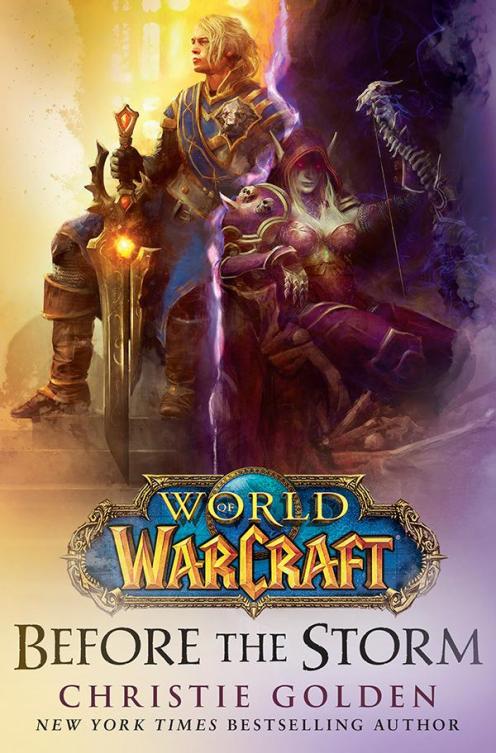
Word of Warcraft: Before the Storm by Christie Golden

Before the Storm Cover.jpg

Publisher: Titan Books

Publication Date – 12 June 2018

Amazon

War is once again coming to Azeroth in the brand new World of Warcraft novelisation from the queen of tie-in books and Blizzard Entertainment’s new in-house novelist Christie Golden.

The world of Azeroth is constantly at war, and for generations its inhabitants have known nothing but conflicts and threats.  Perhaps the greatest enemy that the people of Azeroth ever faced were the demonic Burning Legion, who are the root of many of the world’s great conflicts.  Now, after a devastating campaign, the Burning Legion has finally been defeated, although Azeroth’s victory came at a great cost.  As his final act of destruction, the leader of the Burning Legion, the Titan Sargeras, struck a great blow against Azeroth, plunging his gigantic sword into the surface of the planet and leaving a gaping wound in the side of the world.

Now both factions of Azeroth, the Alliance and the Horde, can finally recover and come to terms with the destruction caused by their demonic foes and the dramatic changes that have rocked their hierarchies.  Following the death of his father, young Anduin Wrynn has inherited the throne of the human kingdom of Stormwind, and serves as the new leader of the Alliance.  At the same time, the Horde is now under the sway of its new Warchief, the banshee queen of the Forsaken, Sylvanas Windrunner.  Both new leaders must come to terms with the running of their respective factions and the current peace blessing the land.

But there is always tension simmering between the Alliance and the Horde, and many predict that a new conflict is just around the corner, especially when both sides make a startling discovery: the blow from Sargeras’s sword has caused the very essence of Azeroth to bleed forth from the ground.  This new substance, known as Azerite, is extremely powerful, containing the very strength of Azeroth, and with the potential to be used as a mighty weapon by whichever side controls it.

As both factions investigate the wound in Azeroth and this strange new material, King Anduin seeks to finally forge peace between the Alliance and the Horde.  In order to achieve this peace, Anduin embarks on an ambitious plan to win the Forsaken to his cause and gain the trust of Sylvanas.  But Sylvanas has her own vision for the future of Azeroth, and woe betide anyone who stands between the Dark Lady and her goals.  Will peace finally be achieved, or will the discovery of Azerite result in a new war between the Alliance and the Horde?  And what role will Calia Menethil, long lost sister of the Lich King Arthas Menethil, play in this new era?  One thing is certain: the Battle for Azeroth starts here.

Before the Storm is the latest tie-in book to the massive Warcraft video game franchise.  People who have never played these games may be surprised to know that this franchise has a rich narrative history.  The original Warcraft games came with a substantial amount of lore and plot that were in some ways just as revolutionary as the game’s mechanics.  This tradition of great storytelling has continued over the years, and every single one of the games has contained a range of intricate and compelling storylines.  Many of these stories are incredibly elaborate and have great potential for future adaptations.  For example, this reviewer would be especially keen to see the corruption of Arthas and the rise of the Lich King told on the big screen.

The game’s narrative tradition has also resulted in a huge number of tie-ins that are mostly targeted towards fans of the game.  There are currently over 30 Warcraft books, as well as a number of comics and even some manga.  The vast majority of these adaptations are considered canon, and have been subsequently referenced in the plot of the games, including the franchise’s main game, the MMORPG World of Warcraft.  For example, in one of the previous novels, The Shattering: Prelude to Cataclysm, Cairne Bloodhoof a major character from Warcraft III: Reign of Chaos and the leader of the Taurens in World of Warcraft, is killed off, and this carried through to the game in several different ways.  Before the Storm is the latest book in this extended universe, and has been released as a tie-in for the upcoming Battle for Azeroth expansion, which is out in August.

The author of this latest novel, Christie Golden, has a bibliography of over 50 books, and has substantial experience writing tie-in books for big franchises.  In addition to her debut Ravenloft trilogy, Golden has written 15 Star Trek novels, five Star Wars books, and a number of full-length and short story tie-ins for franchises such as Assassin’s Creed, Invasion America, Buffy the Vampire Slayer and Angel.  Golden has also written a number of books for Blizzard, with five books based on Starcraft and 10 based around the Warcraft games.  Her previous Warcraft novels include stories that help cement the franchise’s established lore, the official novelisation of the recent Warcraft movie, and novels that have established the plot prior to several of World of Warcraft’s expansions.  For example, her 2014 novel, War Crimes, heavily set up the Warlords of Draenor expansion, while also presenting an elaborate novel that highlighted the crimes of the previous expansions main antagonist.  Golden has incredible knowledge of Warcraft’s lore and narrative history, having provided significant contributions to it in the past, and readers will appreciate the way that this new book connects with several of her previous Warcraft novels.

Before the Storm is a fun and exciting fantasy novel that has been expertly set within the World of Warcraft universe.  The narrators visit a number of key locations that feature within the games and Golden has done an amazing job of describing these distinctive and well-explored background settings.  There are some great locations used within the story, including several of the game’s main cities, such as Stormwind, Ironforge, Orgrimmar and the Undercity.  People familiar with the latest expansions will also love the addition of the Netherlight Temple, the priest class hall, as a key setting within this book, as it is such a unique and niche location within the game.

A large proportion of the novel is told from the perspectives of the leaders of the Alliance and the Horde, Anduin Wrynn and Sylvanas Windrunner.  If the awesome trailer for Battle for Azeroth is anything to judge by, the next World of Warcraft expansion will focus heavily on these two characters as they lead their factions into a large-scale war against each other.  Golden has made sure to explore both of these respective characters’ mindsets and examine potential future motives for the upcoming in-game conflict.  Other parts of the story are told from the perspective of a range of minor characters, many of whom are actually interactable NPCs within the game.  This range of perspectives gives a wide angle viewpoint of the story being told in both the book and the game, and allows the author to show off the different motivations and differences between the two rival factions.  Players will also love to see this story woven around minor NPCs they may have interacted with in the game, especially as this book may explain why they may have moved or disappeared in future versions of the game.  This is a great adaptation of the current World of Warcraft universe and Golden has successfully transplanted several key and iconic aspects of the game into this book, creating an excellent addition to this extended universe.

While a number of the different Warcraft races are featured within Before the Storm, many readers will enjoy Golden’s focus on the undead playable race, the Forsaken.  While many of the franchise’s previous novels have featured Forsaken characters, Golden has chosen to do a deeper examination of this race now that their ruler is the Warchief of the Horde.  There are some particularly interesting discussions about the role the Forsaken play within Azeroth and how the other races view them.  Readers will be intrigued by the examination about their current level of humanity, and whether they can still maintain connections to the family they had before they died, and will be intrigued by Golden’s fascinating analysis.

As an official World of Warcraft tie-in, Before the Storm is naturally a desirable read for those who are familiar with the franchise and the game’s current storylines.  As mentioned above, there are a ton of elements that will appeal to those gamers currently awaiting the next expansion, as this book ties in to its central storyline.  However, Golden makes sure to elaborate on a range of prior events in the franchise and this will ensure that former players will be able to jump in and follow from when they were last familiar with the story.  In addition, Golden’s writing is fairly accessible, and the game elements don’t massively overwhelm the story, ensuring that readers unfamiliar with the games will be able to enjoy this fantastic fantasy adventure without getting too lost.

Christie Golden has once again created a fun and electrifying novelisation of the Warcraft universe.  Before the Storm is a great tie-in to the upcoming game release, Battle for Azeroth, and serves as an excellent precursor of the exciting stories that will feature within the new expansion.  Making full use of the franchise’s significant lore and a range of iconic settings, Golden has produced a deep and thrilling fantasy tale that that will massively appeal to all fans of the Warcraft games.

My Rating:

Four stars

Amazon

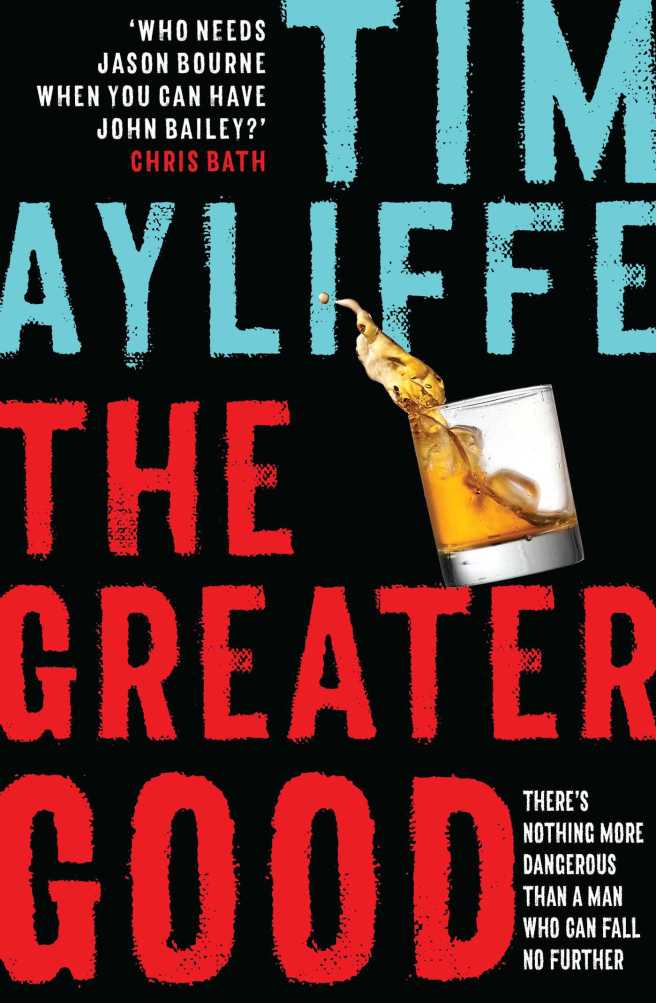
The Greater Good by Tim Ayliffe

The Greater Good Cover

Publisher: Simon & Schuster

Publication Date – 23 April 2018

Amazon

Australian author Tim Ayliffe presents a fantastic debut thriller set in iconic Sydney that delves into the heart of politics and the role of the media in the modern world.

John Bailey was a brilliant war correspondent for the Australian paper, The Journal.  However, his life took a downward turn when he was kidnapped in Iraq and tortured for several months.  Now, years later, Bailey is living a life of alcoholism and self-destruction, only occasionally contributing articles to The Journal.

However, when a prostitute is found murdered in her high-end Sydney apartment, his editor and old friend, Gerald Summers, sends him to investigate the crime, claiming that Bailey is the only person he trusts to report the story.  The prime suspect in the case is an influential political advisor who had a close relationship with the victim.  When Bailey encounters the advisor, he claims to have information that will clear his name, while at the same time implicating his boss, the defence minister.

After a run-in with an old friend in the CIA, Bailey soon realises that there is much more to this story than a simple murder.  Investigating further, he soon discovers that the murder was committed to cover up a massive conspiracy that the defence minister is linked to.  When witnesses to the crime start turning up dead and the police are pressured to drop their investigation, Bailey is determined to uncover the truth and publish the full story.  But powerful people are invested in keeping this case quiet, and Bailey soon finds himself in their crosshairs.

This is an exciting and high-energy first book from Ayliffe, who makes full use of his journalistic experience and political insights to create a smashing thriller with a tangible Australian presence.  The investigation into the conspiracy and its associated murders works well as the heart of this story, and readers are invited along on a wild thrill ride as the protagonists rush through this murky world of Australian politics and espionage in a quest to find the truth.

The character of Bailey serves as a great central narrator for this frenetic story, and readers will love the maverick approach he has to investigating the case and the lack of restraint of manners he has when it comes to dealing with Sydney’s political and financial elite.  Ayliffe also spends a significant amount of time attempting to humanise his main character by examining his past as a prisoner and the effects his PTSD has had on his life and career.  There are some great, emotional scenes as Bailey attempts to get over his problems with the help of other characters, and Bailey comes across as a much more grounded and damaged protagonist as a result.  The other main narrator in The Greater Good is Sharon Dexter, who serves as the official police investigator and Bailey’s main love interest.  Her investigation focuses more on cover-ups, sexism, and corruption in the police force, and these parts of the book serve as a great counterpoint to the sections featuring Bailey.

Ayliffe has made full use of his political knowledge and insight throughout this book.  A large amount of the plot revolves around both Australian and international politics, and readers will be amazed at the potential conspiracy he is able to create.  Various Australian political elements are dragged into the story and play a key part of the plot.  These include discussions about pre-selections of federal seats, government spending and the role of several federal government agencies.  World politics and the current status of Australia on the world stage are also examined within the story.  There is a large focus on the expanding role of China, and the discussion about whether Australia should strengthen its relationship with this new world power or whether it should maintain its current relationship with the United States.  This discussion is a key part of understanding the plot, and plays out in the book in a similar manner to current debates on the subject within Australia.  This adds a real sense of realism to the story and makes readers, especially those familiar with current Australian news and politics, very thoughtful.

Throughout The Greater Good, the main characters are attempting to obtain evidence of a conspiracy so that they can print it in their newspaper, The Journal.  As a result, the role of print media in keeping government’s honest and uncovering political corruption is examined in some detail.  It is clear that Ayliffe, a career Australian journalist, is very supportive of the media remaining in this role, and many of his characters are quite critical of attempts to stall the publication of these stories.  This allegorical analysis of the current role of media in politics and society is an intriguing part of the book and many readers will find this exceedingly relevant in light of recent world events.

Readers also need to keep an eye out for Ayliffe’s clever and entertaining inclusion of characters that are clearly based on real life Australian personalities.  For example, the fictional Australian Prime Minister is described as an athletic man who is known for his fun runs and surfing, in a way reminiscent of former Prime Minister Tony Abbott.  In addition, certain plot twists towards the end of the book will also remind the audience of another previous Prime Minster.  Another example is a minor character who is introduced as a prominent talk show radio host.  This character appears to be a composite creation of several of Australia’s right-wing radio commentators and comes across in a very similar manner to these real life presenters.  These cheeky additions are a fun inclusion that will amuse readers with even a passing knowledge of these Australian personalities.

In many ways The Greater Good can be considered a love letter to the author’s home city of Sydney, as it contains a number of different locations and references that will be quite familiar to Sydneysiders.  The narrator visits a number of different suburbs within Sydney, including Palm Beach, King Street, Finger Wharf at Woolloomooloo, Bondi and Chinatown, and also frequents some real life Sydney venues, such as Harry’s Café de Wheels.  Not only is the food, geographical location and description of this Sydney café described in the text, but the author has also included a write-up of the restaurant’s owners and its history.  In addition to furnishing the story with real life Sydney locations, Ayliffe also includes brief references to events and occurrences that Australians would recognise the significance of, such as Australian rugby, lockout laws and the current ice epidemic.  While none of these locations or occurrences is essential to the plot, they do add a certain sense of reality to the entire novel, and Australian readers will enjoy seeing locations and scenarios that they recognise and understand.

Tim Ayliffe’s debut novel, The Greater Good, is a fun and exhilarating political crime thriller that is guaranteed to electrify and entertain in good measure.  Making full use of Ayliffe’s extensive knowledge of Australian politics, culture and media, this very topical book is an excellent read for Australian audiences and those international readers keen to explore Australia’s potential for thrillers.

My Rating:

Four stars

Amazon